History of Handbags: From Ancient Pouches to the Modern It Bag
A Short History in Brief: The Bag Follows the Life
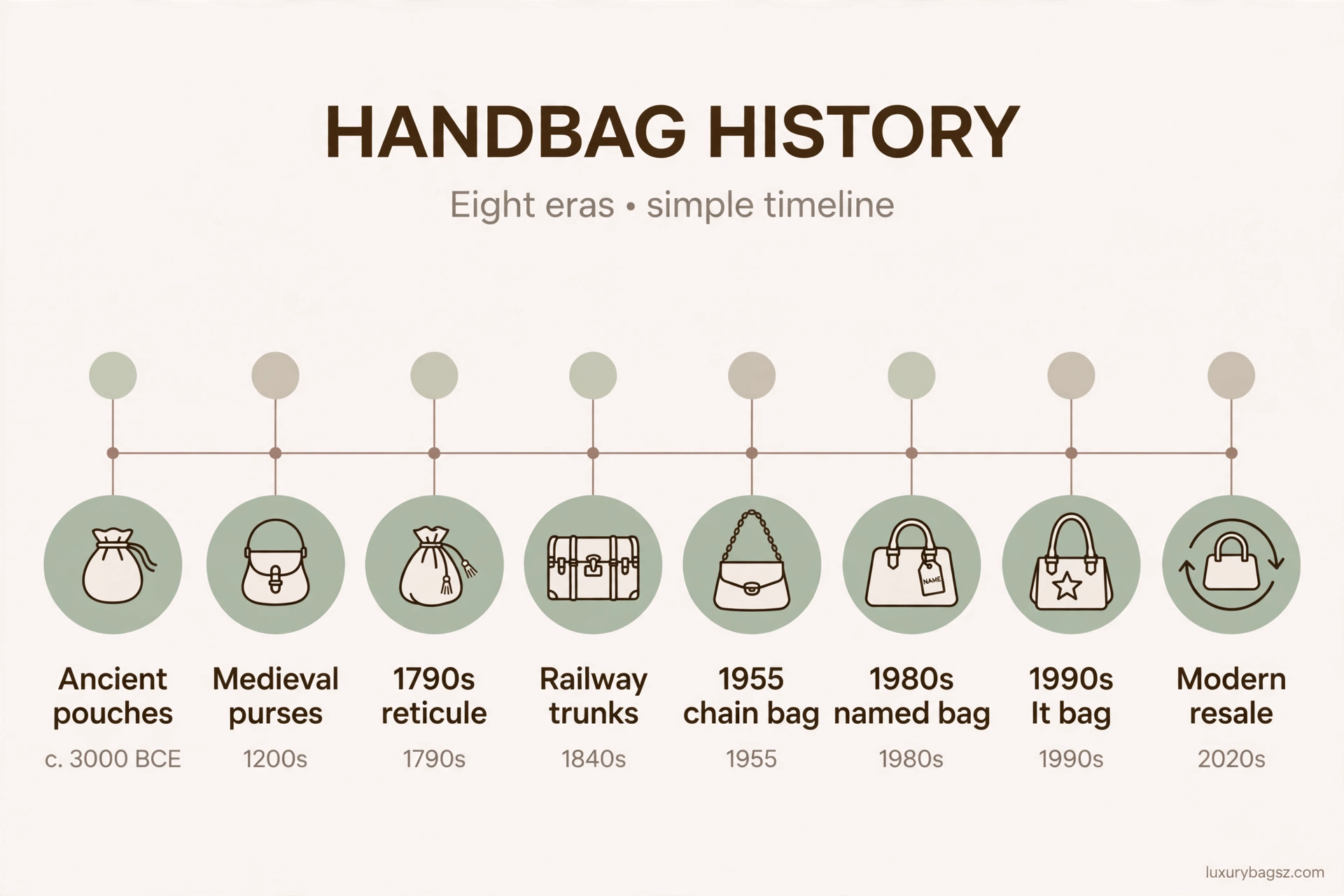
Handbags began as simple pouches for tools, coins and food, worn on belts by men and women alike. They became fashion objects only when clothing lost its pockets and travel, work and city life created new things to carry. The short answer to how we got the modern handbag is this: the reticule made the bag visible, the railway made it luggage, and the twentieth century made it a signature. Every icon since follows that pattern. The heritage case maker is profiled in our Globe-Trotter luggage guide.
Key Takeaways
- The earliest bags were practical belt pouches used by everyone, not fashion items.
- In the late 1700s, slim dresses killed sewn-in pockets and the reticule was born.
- Rail travel created demand for trunks, hand luggage and eventually the soft travel bag.
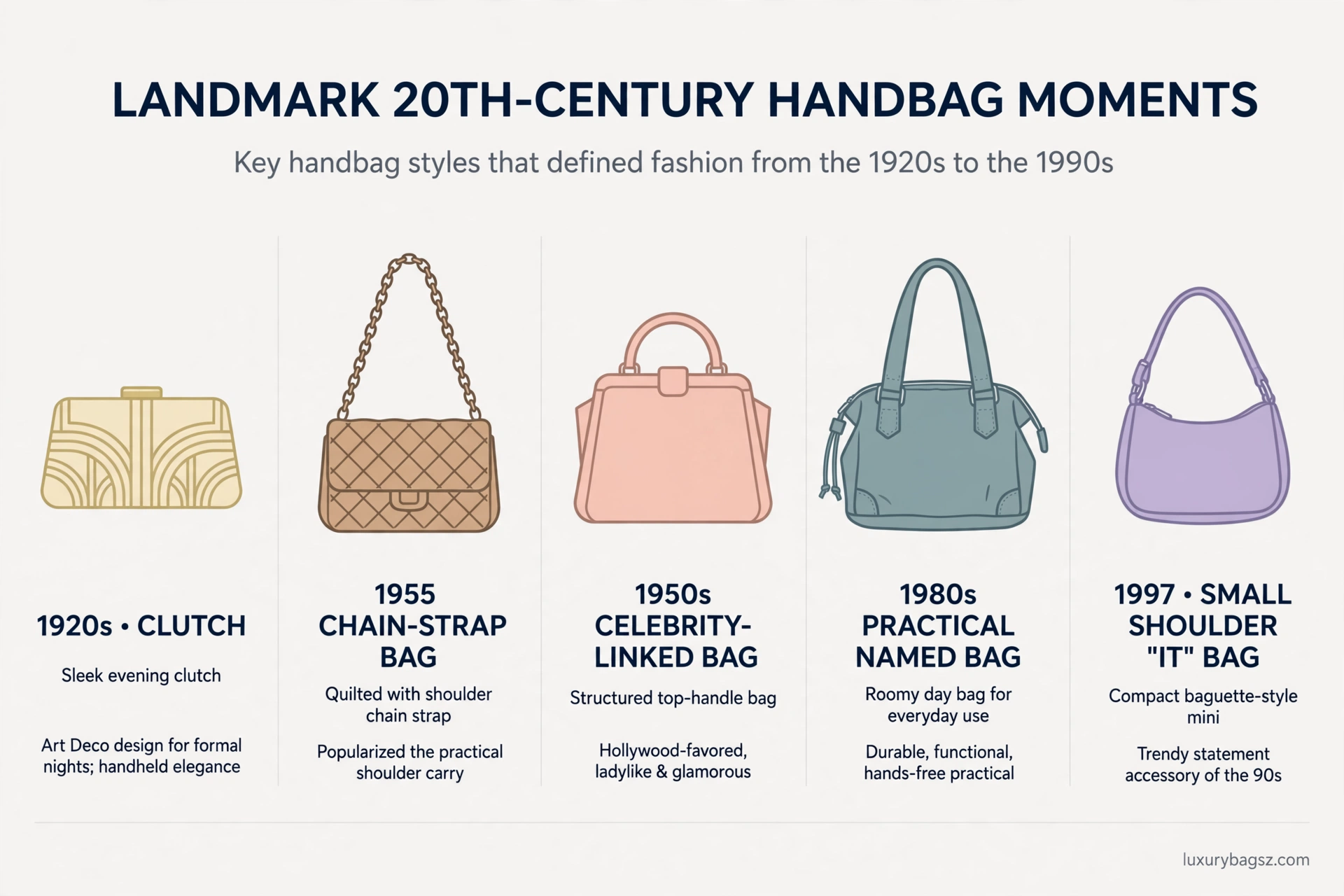
- The 1920s to 1950s produced the clutch, the chain-strap bag and the celebrity-named bag.
- The 1990s and 2000s created the It bag, waiting lists and the modern resale market.
- Today's classics are revivals: houses constantly reissue shapes from their own archives.
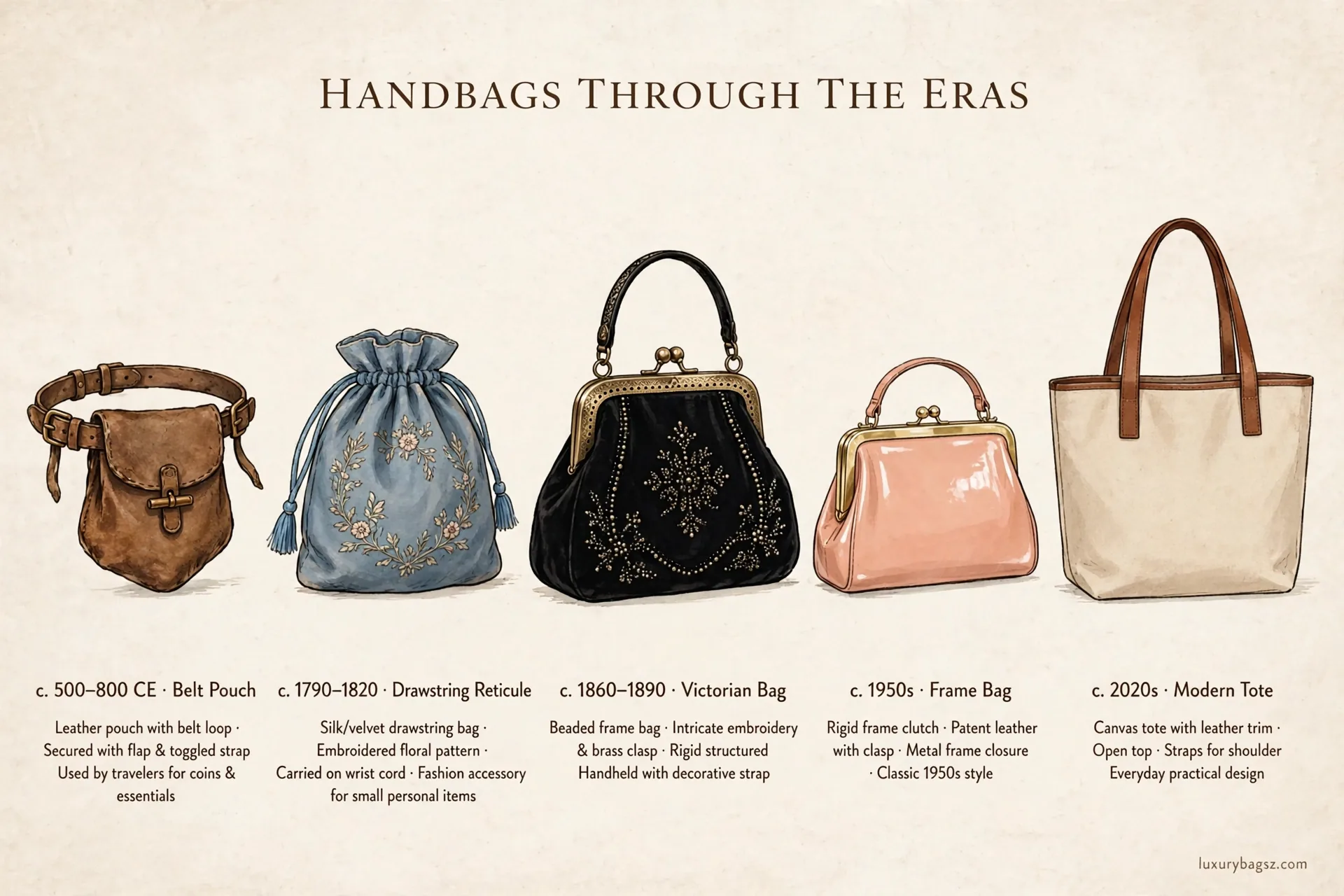
Frame and clasp designs also have deep roots: metal frame purses appear in late medieval and early modern dress, the ancestors of the frame bags and clasp clutches still sold today.
Pouches, Purses and the First Carriers
Long before fashion, there were pouches. Ancient carriers, including the belt pouch found with Ötzi the Iceman, held tools, flint and tinder: a repair kit and fire kit in one small bag. Across ancient Egypt, Greece and Rome, small drawstring pouches carried coins and personal items. In medieval Europe, purses hung from belts for both sexes, and elaborate gift purses were exchanged at weddings and court. The word purse originally meant the bag itself, often made of leather or cloth. Status showed in materials and embroidery, but the basic form, a soft pouch on a cord, stayed constant for centuries. Pockets changed everything twice. Sewn into men's clothing from the 1600s, they pushed men's bags out of daily use, while women's carrying stayed visible for far longer.
The Reticule: When Dresses Lost Their Pockets
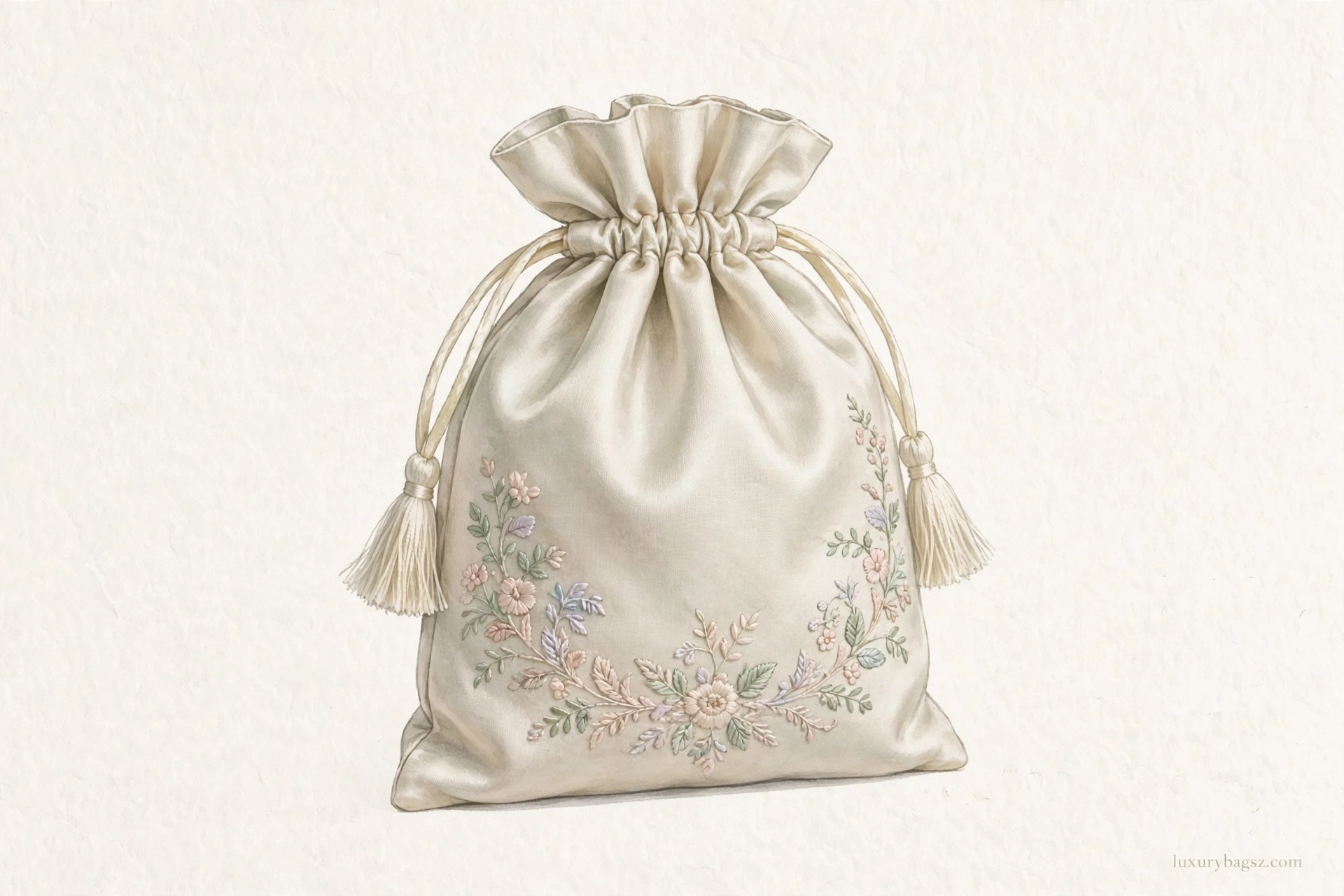
In the 1790s, fashion turned to slim, high-waisted dresses inspired by classical drapery. There was nowhere to hide a pocket, so women carried a small drawstring bag in the hand: the reticule. Early reticules were netted or silk, often homemade, and mocked by some commentators as ridiculous. The nickname did not stop them. The handbag as a visible fashion accessory had arrived. Through the 1800s, chatelaine fittings let women hang small tools and cases from the waist, while miser's purses and beaded bags served evenings and special occasions. By the Victorian era, bags were diversifying fast: work bags, shopping bags, opera bags and travelling bags, each shaped for a task. Specialisation is the real birth of the modern handbag market.
What the Reticule Looked Like and Held
A typical reticule held very little: a handkerchief, coins, perhaps a vial or a fan. It was a bag for a life where most things stayed at home or were carried by someone else. Materials ranged from plain cotton to embroidered silk and fine beadwork. Drawstrings closed the top, and tassels or fringe gave movement as the wearer walked. Its importance is not capacity but visibility. Once the bag moved outside clothing and into the hand, decoration, branding and fashion cycles could attach to it. Modern mini bags and evening pouches are its direct descendants. Every tiny bag that holds a phone and a card is repeating a compromise first made over two centuries ago.
Working women, shoppers and travellers each pushed design in different directions, which is why the 1800s produced such variety: capacious shopping bags beside tiny evening purses in the same shop window.
Railways, Trunks and the Birth of Luggage
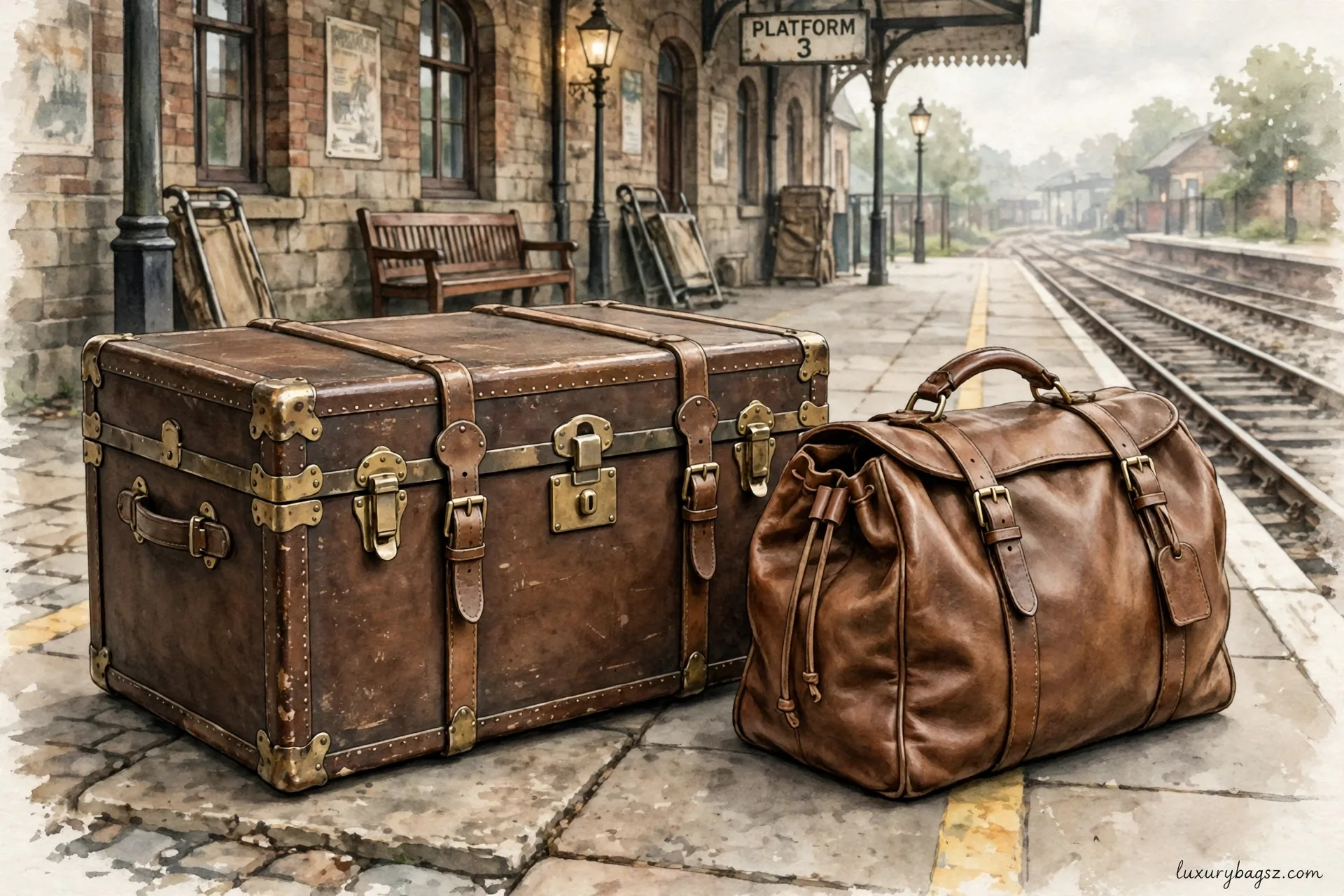
Steam travel in the 1800s created a new problem: journeys were longer, stations were crowded, and travellers needed sturdy cases plus smaller hand luggage for the carriage. Trunk makers answered with stronger, flatter cases that stacked in luggage vans. Hand luggage followed: Gladstone-style bags, carpet bags and early handbags designed to survive a journey. Department stores then put bags in front of ordinary shoppers. What had been a bespoke or homemade item became a stocked, seasonal product with changing styles. This is the moment carrying splits in two. Luggage stays practical, while the handbag becomes fashion, and the two lines have influenced each other ever since.
Louis Vuitton and the Luggage Houses
Louis Vuitton founded his Paris trunk-making business in 1854, and his flat-topped, stackable trunks suited railway travel better than older domed designs. Our history of Louis Vuitton guide tells that story in full. The famous Monogram canvas followed in 1896, created under Georges Vuitton partly to fight copyists. Our Louis Vuitton Monogram history guide explains how a protective pattern became a global signature. Other houses grew from saddlery and luggage too, including Hermès and Gucci. Their handbag lines came later, built on leather skills learned making harnesses, cases and travel goods. By the early 1900s, the soft handbag versions of luggage classics were appearing. The travel DNA still shows in duffles, totes and structured top-handle bags today.
The Twentieth Century: Clutches, Chains and Names
The 1920s brought the clutch and the minaudière, small hard cases for evenings shaped by jewellery and metalwork. Bags became jewellery-adjacent objects, carried to be seen. In February 1955, Chanel introduced the 2.55, a quilted bag on a chain strap that freed the hands. Our Chanel 2.55 history guide covers its design and later reissues. Hermès' Sac à Dépêches, later known worldwide as the Kelly after Grace Kelly was photographed with it in the 1950s, showed the power of a celebrity association. The Birkin followed in the 1980s, born from a chance conversation about a practical bag. Our Jane Birkin bag history guide recounts that origin. From then on, a bag could be a name, a story and a waiting list at once.
Auction results underline the shift: historically important bags, including Jane Birkin's own original Birkin, have achieved record prices, treating handbags as cultural artefacts as well as accessories.

The It Bag Era and the Resale Revolution
The late 1990s named the phenomenon: the It bag. The Fendi Baguette, launched in 1997, is widely credited as the first, carried on screen and collected in hundreds of finishes. The 2000s accelerated the cycle: the Dior Saddle, the Balenciaga Motorcycle bag and the Chloé Paddington each had a moment of frenzy, celebrity photographs and rapid sell-outs. Then resale changed the ending. Instead of fading, past It bags became vintage stock, traded on consignment and auction platforms, and houses began reissuing their own archive hits. That loop still runs today. A reissue revives demand for originals, originals validate the reissue, and handbag history has become a working part of handbag marketing.
Museums now collect handbags seriously, with dedicated exhibitions tracing design, craft and social history. When curators treat a bag as evidence of how people lived, its design story tends to endure.
What History Teaches Today's Buyer
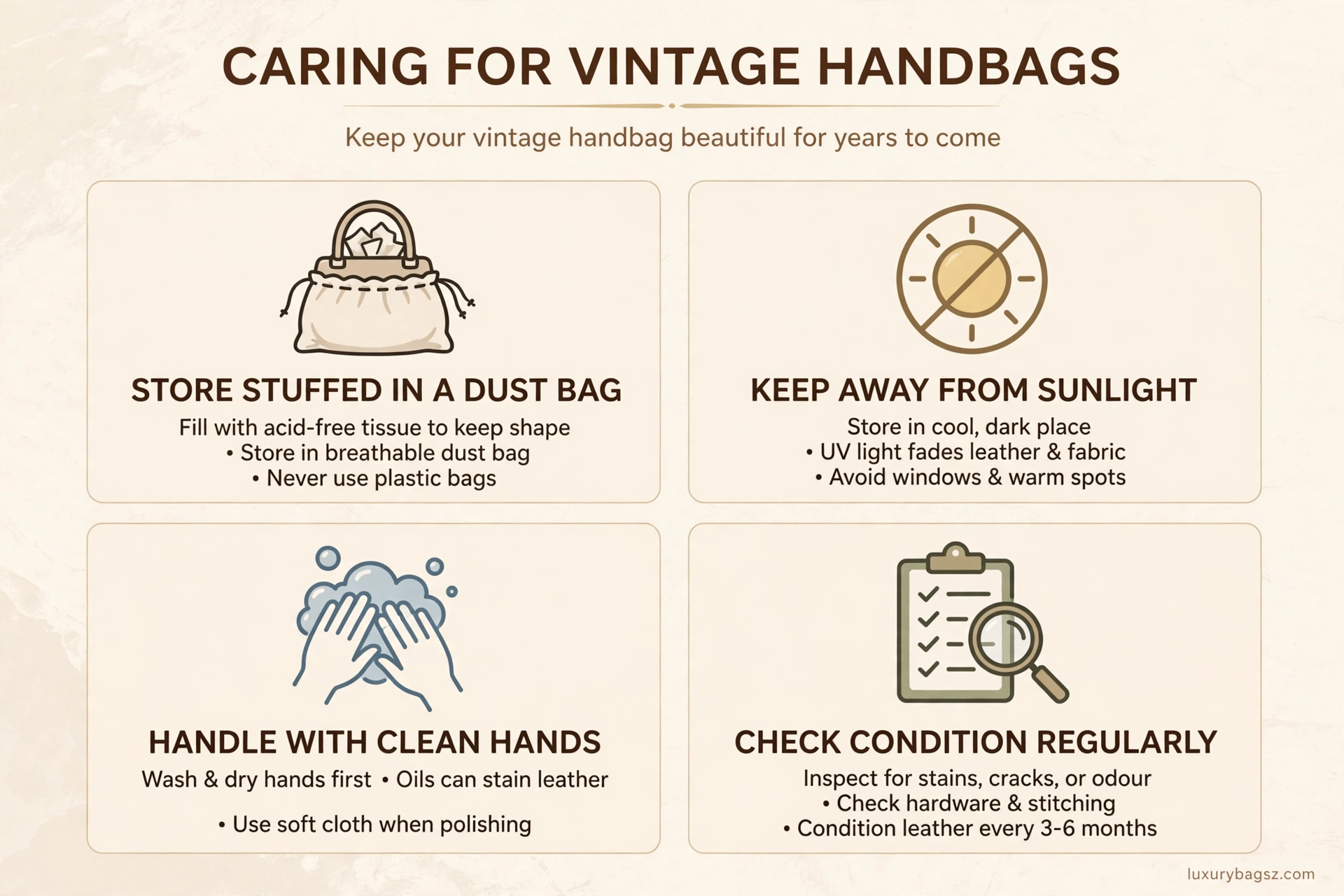
First, shapes survive because they solve a carrying problem. Totes, satchels, crossbody bags and clutches each map to a task, which our designer handbag styles guide breaks down. Second, materials and making outlast moments. The bags that return decade after decade are usually the well-made ones in classic leathers and canvases, not the most extreme novelty of a season. Third, buy vintage with care. Old bags need honest condition checks, and our vintage designer bags investment guide sets out the risks plainly. Finally, expect revival. If a shape defined an era and was well made, it will likely return. Buying the best example you can afford, in a colour you will carry, is the oldest winning strategy in this history.
Frequently Asked Questions
What was the first handbag?
There is no single first handbag. The earliest known carriers were simple belt pouches, such as the one found with Ötzi the Iceman, holding tools and tinder thousands of years ago.
Why did women start carrying handbags?
When slim, high-waisted dresses replaced pocketed clothing in the 1790s, women needed somewhere visible to carry small items. The hand-carried reticule filled that gap.
What is a reticule?
A reticule is a small drawstring bag, usually silk, net or beaded, carried in the hand in the late 1700s and 1800s. It held little more than a handkerchief and coins.
When did designer handbags begin?
Luggage and saddlery houses such as Louis Vuitton, founded in 1854, and Hermès built the skills and client base first. Branded fashion handbags followed from the late 1800s onward.
What was the first It bag?
The Fendi Baguette, launched in 1997, is widely credited as the first It bag. Its small shape, many finishes and on-screen fame defined the category.
Why is the Chanel 2.55 important?
Launched in February 1955, the 2.55 put a quilted handbag on a chain shoulder strap, freeing the hands. It set a template that countless bags still follow.
How did the Kelly and Birkin get their names?
The Kelly took its popular name from Grace Kelly, photographed with the bag in the 1950s. The Birkin was created in the 1980s after Jane Birkin described her ideal bag.
Did men carry handbags historically?
Yes. Belt pouches and purses were normal for men for centuries. Sewn-in pockets in men's clothing from the 1600s gradually replaced them in daily use.
Are vintage handbags a good buy?
Well-made classics in good condition can hold value and are often excellent quality for the price. Check condition, authenticity and repair history carefully before buying.
What handbag shapes have lasted longest?
Totes, satchels, frame bags, clutches and drawstring pouches have all survived for a century or more in some form, because each solves a clear carrying task.
Conclusion: A Practical Object That Became a Signature
The handbag's history is a story of needs changing in public: pockets lost, railways built, evenings out, work to attend, phones to carry. Each era answered with a shape, and the best shapes never left. That is why the classics feel inevitable. They were not designed as trophies. They were designed to carry a life, and they have been doing it, in one form or another, for thousands of years.