

What Is a Hermes Birkin Bag?
The Birkin in Brief
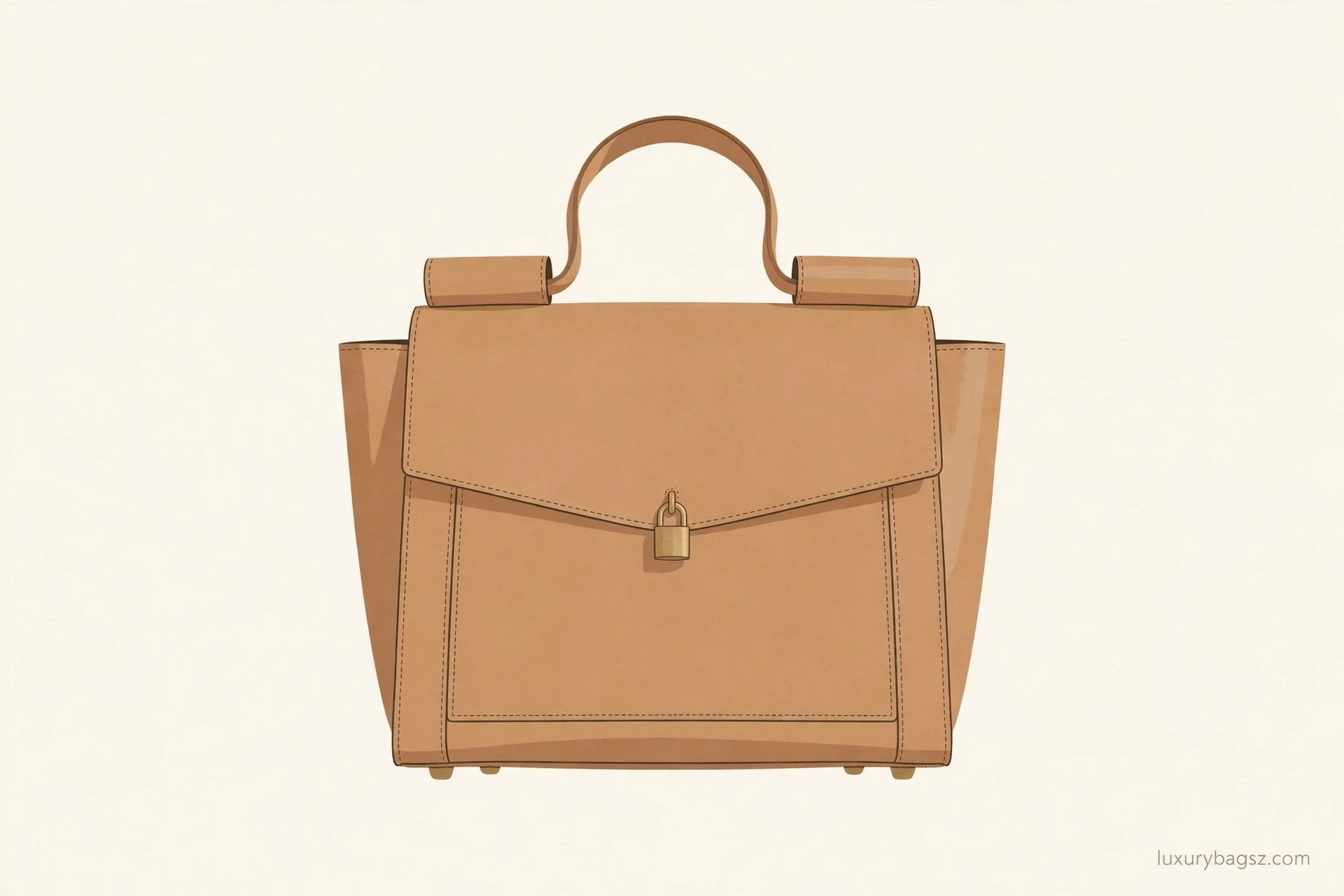
A Hermes Birkin bag is a structured leather tote with two short rolled handles, a front flap, and a padlock. It is carried in the hand or on the crook of the arm, not on the shoulder.
The bag is named after the British-French actress and singer Jane Birkin. Hermes introduced it in the mid-1980s, and it has barely changed since.
Prices start high and climb fast with size, leather, and rarity. As reported for 2026, a Togo leather Birkin 25 retails for about $13,500 in the US.
Key Takeaways
- A Birkin is a hand-carried structured tote: two handles, a flap, two straps, a turn-lock plate, a padlock, and four feet.
- Standard sizes are 25, 30, 35, and 40 centimetres, measured across the base. The 25 and 30 draw the most demand.
- The standard Birkin has no shoulder strap. Shoulder-carry versions are separate, rarer offshoots.
- 2026 retail prices reported by Sotheby's for Togo leather are $13,500 (25), $14,900 (30), and $16,300 (35).
- On resale, small Birkins in neutral colours and clean condition usually ask above retail. Condition and completeness matter.
- Sources disagree on the flight year, the making hours, and some dimensions. Those disagreements are stated plainly below.
Anatomy is not trivia to me; it is my checklist wearing a friendlier name. When a Birkin reaches my hands I work its parts in order — the turn-lock plate for smooth travel, the padlock for honest weight, the four feet for even seating, the clochette and keys for their finish. A part that feels light, rough or loose reopens every other question. I wrote our guide to spotting a fake Birkin around the stitching and blind stamp; this guide’s anatomy is the same discipline from the front. Learn what each part should feel like, and a Birkin starts grading itself for you.
Part 1: The Short Answer
A Birkin is Hermes' most famous bag, and its shape is the whole point. It is a wide, structured tote that stands upright on its own, with a flap that folds over the top.
Two short handles sit at the top, sized for hand or arm carry. There is no long strap on a standard Birkin, and no zip across the top.
Inside, the layout is simple: one large open compartment, one zip pocket, and one open pocket. Many owners add an organiser insert because the main compartment is undivided.
The look is quiet. There is no large logo on the outside, and the branding is a small, neat stamp. That restraint is a big part of why the bag reads as luxury rather than advertising.
It also helps to say what a Birkin is not. It is not a shoulder bag, not a backpack, and not a bag Hermes sells online. Anyone offering a brand-new Birkin through a website checkout is not selling a boutique bag.
Part 2: The 1984 Origin Story
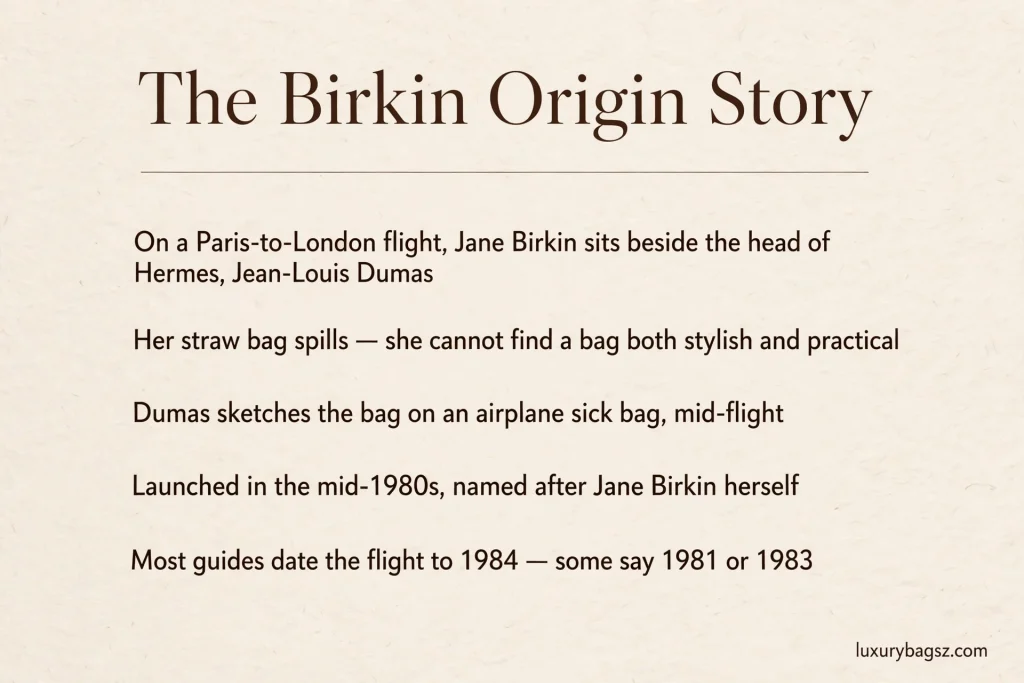
The Birkin story starts on a Paris-to-London flight, where Jane Birkin sat beside Hermes chief Jean-Louis Dumas. Her straw bag spilled, and she said she could not find a stylish bag that was also practical.
Dumas sketched an early version of the bag on an airplane sick bag during that flight. The sketch became the Birkin, named after Jane Birkin herself.
Here the sources disagree, and the disagreement matters. Most guides, including Sotheby's and BagUSeek, date the flight to 1984. SACLÀB dates it to 1981, and other writers say 1983.
What is not disputed is the sequence: the flight conversation, the sketch, and a bag launched in the mid-1980s. The first prototype mixed a wider body with a deeper one and reportedly included a shoulder strap.
Production Birkins dropped that strap. The hand-carried format that resulted is the bag people know today, and it has stayed close to that first design ever since.
Jane Birkin herself carried her Birkins hard, not carefully. Her well-worn black Birkin 35 became almost as famous as she was, covered in stickers and charms and stuffed full.
She also auctioned several of her personal Birkins for charity causes, including AIDS research and disaster relief. That habit tied the bag to generosity rather than mere display.
The shoulder-strap idea never fully died. Jean-Paul Gaultier designed a Shoulder Birkin in 2004, and BagUSeek notes a revival in indigo denim and Swift leather in 2024.
Those shoulder versions are separate offshoots, not standard Birkins. If a listing promises a shoulder strap on an ordinary Birkin 25 or 30, treat that claim with suspicion.
Part 3: Anatomy of the Bag
Every Birkin shares the same core hardware, and learning the names helps when reading listings. The two rolled handles are short and sturdy, built for hand or arm carry.
The front flap is held by two leather straps called sangles. These thread through a rotating metal plate called the touret, which turns to secure the flap.
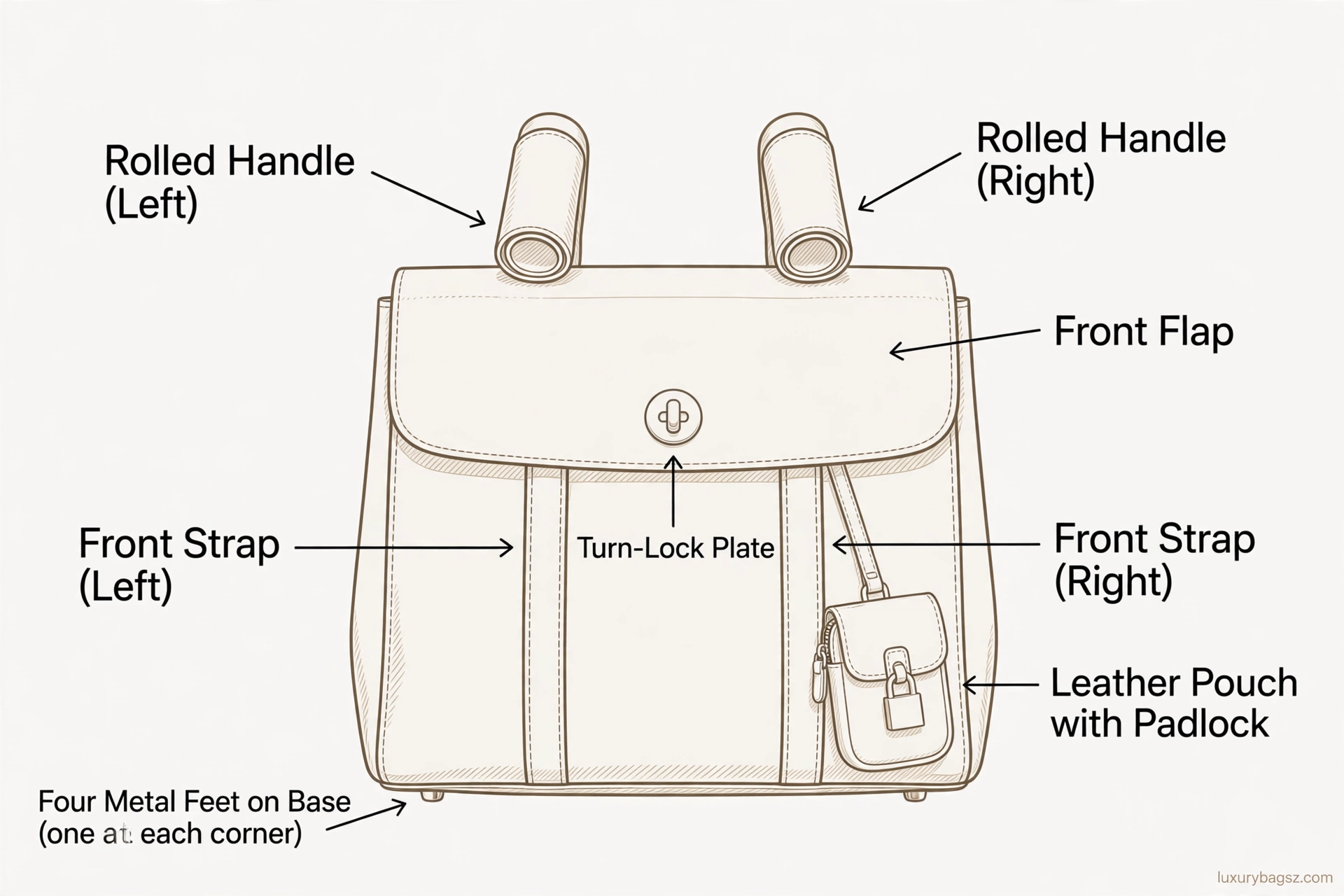
The bag also comes with a padlock and two keys, kept in a small leather pouch called the clochette. The clochette hangs from a handle, and the lock is more decorative than defensive.
Four small metal feet, called clous, lift the base slightly off surfaces. They protect the bottom corners when the bag is set down on a table or floor.
Inside, the lining is usually grained goatskin. The single zip pocket suits small valuables, while the open pocket holds a phone or card case within easy reach.
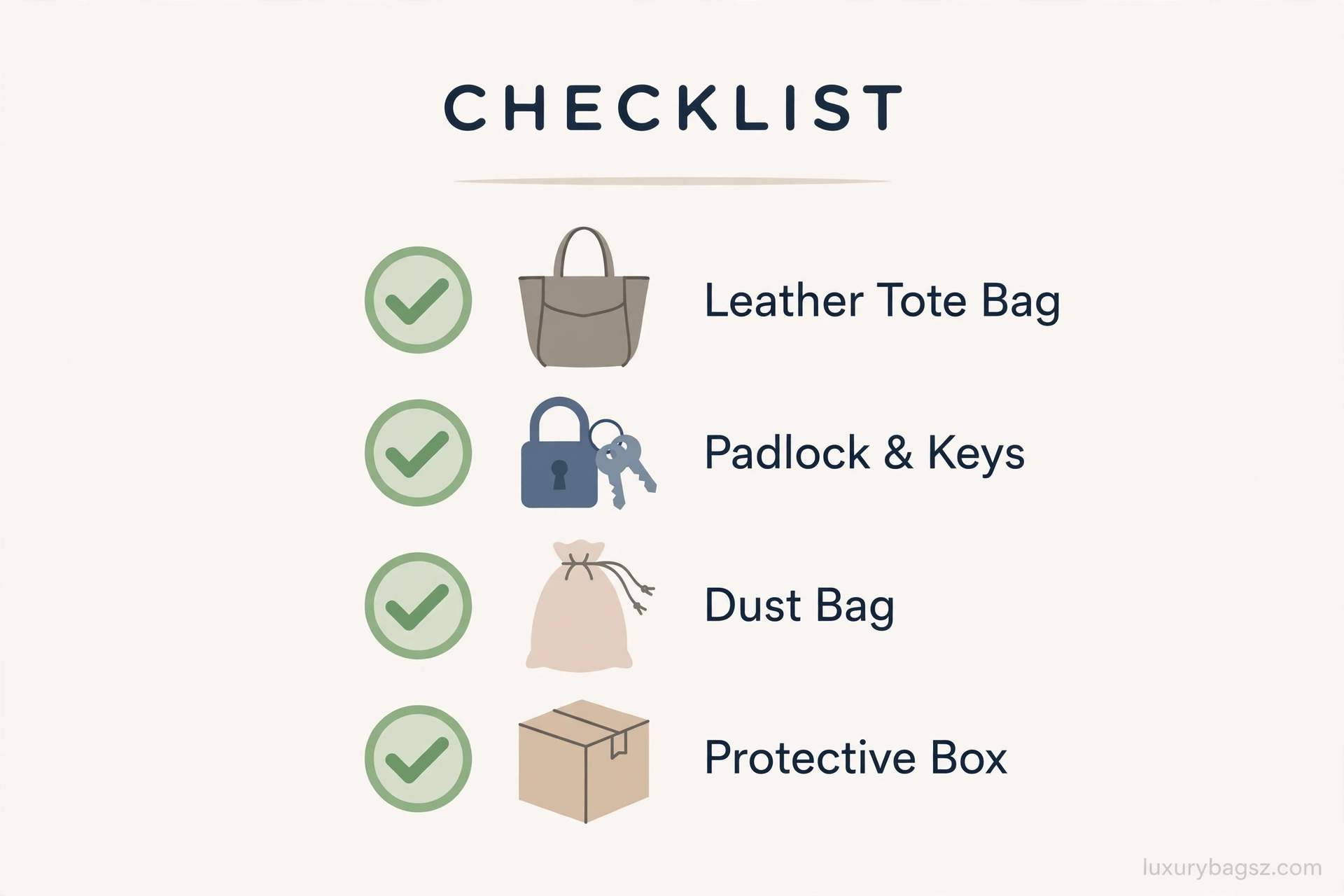
The full set is part of the anatomy too. A new Birkin arrives with its lock, keys, and clochette, plus a dust bag, an orange box, and care paperwork. Recent bags often add a raincoat and a felt protector, small extras that resale buyers now check for.
Part 4: Retourne or Sellier
Birkins come in two builds, and the difference is in the stitching. Retourne is the classic build, with seams stitched inside so the edges look soft and rounded.
Sellier is the structured build, with stitching visible on the outside. The result is sharper corners, a flatter front panel, and a more formal look.
Retourne softens and relaxes a little with wear, which suits a casual, slouchy look. Sellier holds its shape better over time, which suits humid climates and crisp outfits.
Sotheby's notes that the Sellier first appeared as a limited edition in 2010 and returned in 2020. On resale, Sellier versions often command a premium because fewer are made.
The trade-off is real. Sellier's sharper corners can show wear sooner in crowded places, while Retourne's softer edges hide daily knocks better.
For a first Birkin, Retourne is the safer everyday choice. For a formal, structured look, Sellier is the one to hunt for.
Climate can settle the choice. Sellier's rigid shape survives humidity better, while Retourne's softer build can relax further in heat. If you live somewhere humid and want a crisp bag, lean Sellier.
Part 5: Sizes at a Glance
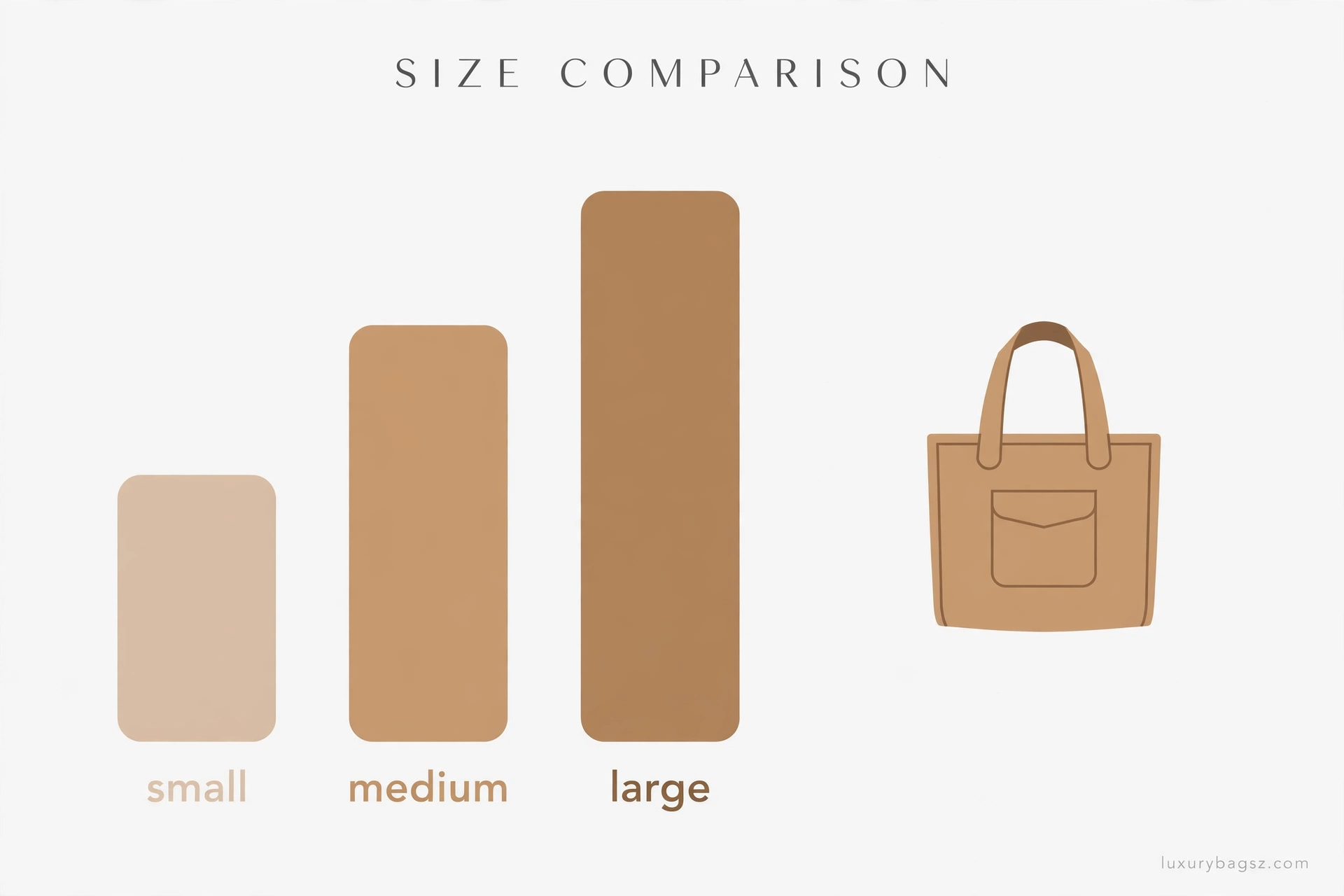
Birkin sizes are named for their width in centimetres, measured across the base. The standard range is 25, 30, 35, and 40, with rarer sizes above and below.
The Birkin 25 measures about 25 x 20 x 13 cm. It holds a phone, wallet, keys, sunglasses, and a few small extras, and it reads as the dressiest of the standard sizes.
The Birkin 30 measures about 30 x 22 x 16 cm. It adds room for a small tablet or pouch, and most guides call it the easiest everyday Birkin.
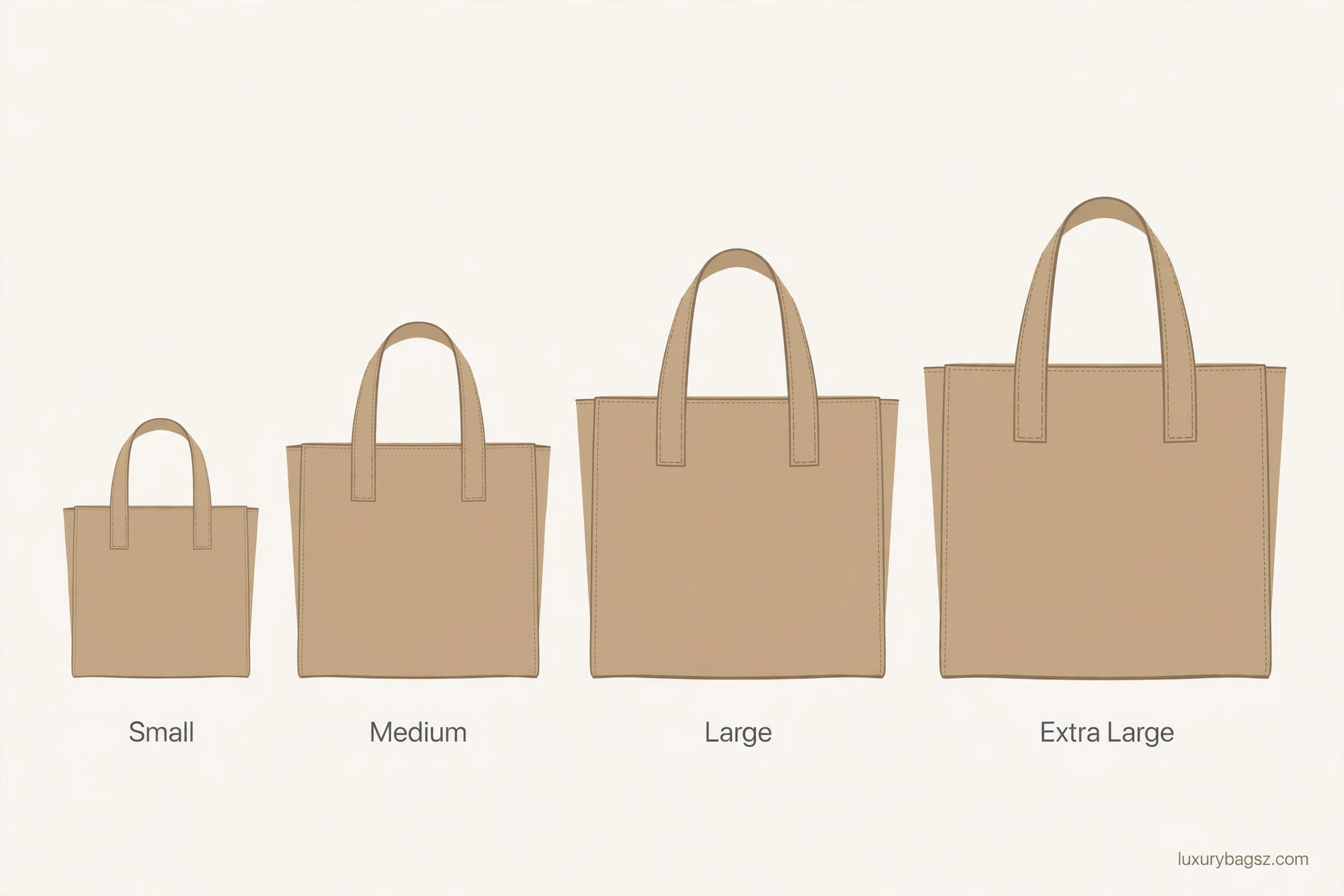
The Birkin 35 measures about 35 x 25 x 18 cm. It works as a true work bag, holding a book, a water bottle, and a full-size tablet with room to spare.
The Birkin 40 measures about 40 x 30 x 21 cm. It suits travel and weekend trips, and it can carry a 13-inch laptop, documents, and a light layer.
A plain warning on dimensions: sources disagree on some heights. PurseBop lists the Birkin 30 at 30 x 24 x 16 cm, not 30 x 22 x 16 cm, and SACLÀB lists the Birkin 25 depth as 19 cm, not 20 cm.
Treat the table above as the most widely repeated figures, and measure a real bag before buying for an exact fit. Rare sizes include the micro Birkin 15 and the Faubourg Birkin 20, both highly collectible.
Travel sizes go further still. Birkin 45 and 50 versions sit closer to luggage than to day bags, and the older Haut à Courroies travel format overlaps with them. For everyday decisions, only 25 through 40 truly matter.

Part 6: Choosing Your Size
The 25 is the pick when the look matters more than capacity. It feels compact and dressy, and it is currently the strongest size on resale.
The 30 is the pick for most first-time buyers. It still looks polished, but it is far easier to live with day to day than a 25.
The 35 is the pick when you genuinely carry a full daily load. It works as a work bag, but it feels noticeably larger and heavier in the hand.
The 40 is the pick for travel or for buyers who want a statement bag. Demand is narrower, so resale depends more on condition and colour.
Think about your hands, not just your belongings. A Birkin is hand-carried, so a heavier, larger bag is felt on every outing in a way a shoulder bag is not.
What fits is worth spelling out, because listings rarely do. A 25 takes a phone, a compact wallet, keys, sunglasses, and a lipstick, but little else.
A 30 adds a small tablet or a pouch without strain. A 35 adds a book, a water bottle, and a full-size tablet, while a 40 adds a laptop and travel layers.
Weight deserves its own warning. Leather, hardware, and contents add up fast, and a fully loaded 35 or 40 is genuinely heavy in the hand over a long day.
If you need hands-free carry every day, a Birkin is the wrong tool. A Lindy in the right size or an Evelyne bag gives you a strap, which the standard Birkin never will.
Try before you commit whenever you can. A 30 that looks neat in photos can still feel wide on a smaller frame, and a 25 that looks tiny can surprise you with what it swallows. Arm fit matters as much as litre capacity.
Part 7: Leathers That Define the Feel
Leather choice changes how a Birkin wears more than any other decision. The same bag can look softer, sharper, heavier, or more formal depending on the hide.
Togo is the most common everyday choice. It is a grained calfskin with a soft, pebbly texture, good scratch resistance, and shape that holds well without feeling stiff.
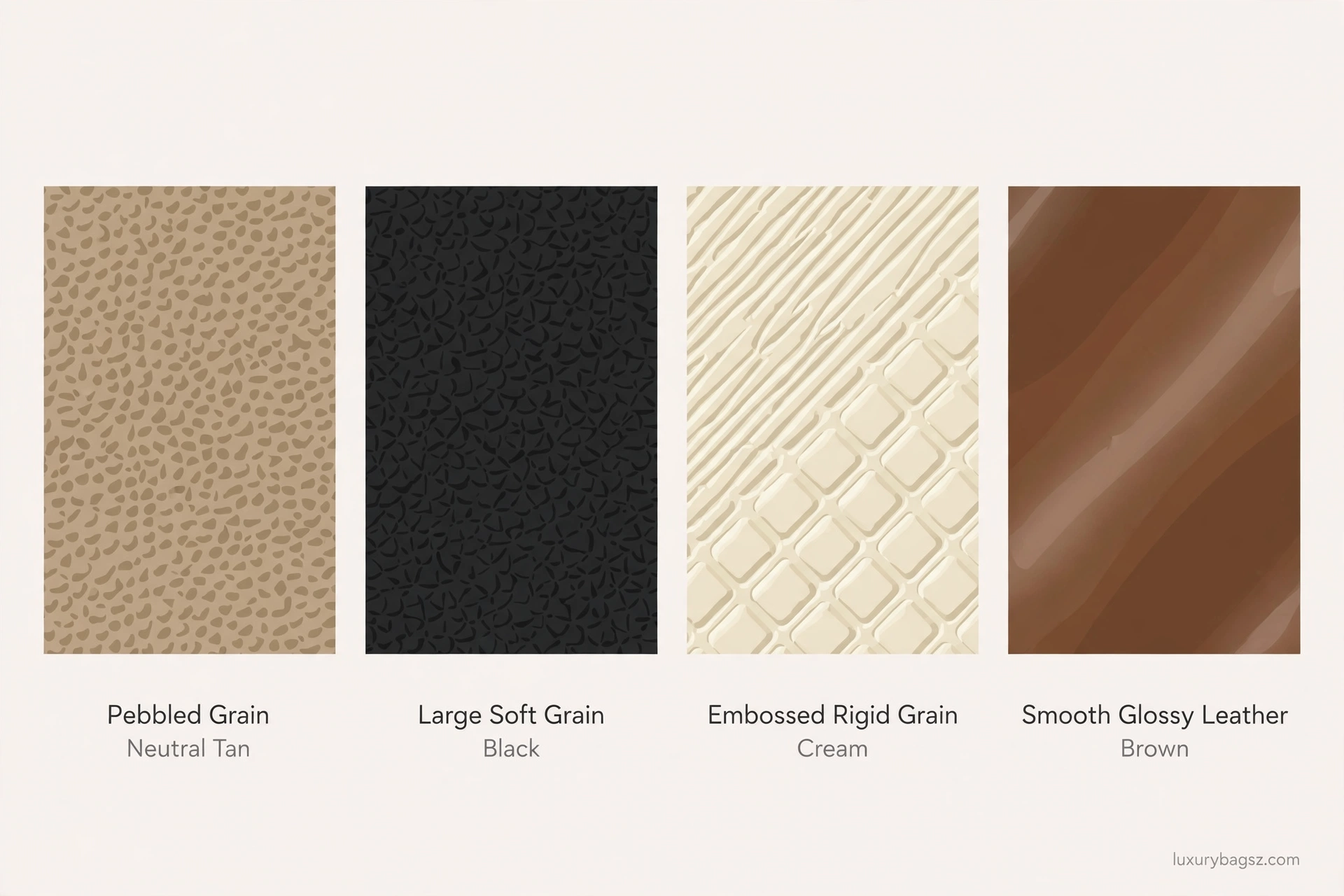
Clemence is heavier and softer than Togo, with a larger grain. It gives a relaxed, slouchy look over time, which some owners love and others avoid.
Epsom is embossed, lightweight, and rigid. It holds its shape superbly, resists water and scratches, and is common on structured Sellier Birkins in bright colours.
Swift is smooth and fine-grained, showing colour beautifully but marking more easily. Box calf is the heritage glossy leather: elegant, polished, and quick to show scratches.
Sotheby's notes that Togo arrived in 1997, while the first Birkin appeared in calfbox leather. Vintage Box calf bags develop a mirror-like patina that collectors prize.
For daily use, Togo is the lowest-maintenance classic. For a crisp, formal bag, Epsom in Sellier is hard to beat. For vintage character, Box calf is the connoisseur's pick.
Colour deserves the same thought as leather. Neutrals such as Noir, Gold, and Etoupe suit almost any wardrobe and hold resale best, which is why guides push them for a first Birkin.
Seasonal and bold colours are more statement-driven. They can be beautiful, but they narrow the resale audience, and some bright shades show wear sooner than dark neutrals.
Hermes releases a curated palette each year, so the exact shade you want may not be in boutiques at all. That is one more reason resale, with its wider colour range, appeals to picky buyers.
Part 8: Exotic Skins and Hardware
Exotic Birkins sit in a different price tier from standard leather bags. Crocodile, alligator, ostrich, and lizard are the main skins, each with its own marks and care needs.
Crocodile is the most expensive, in Niloticus and Porosus varieties. Sotheby's notes the two are told apart by symbols beside the Hermes stamp, though the symbols are tiny.
Alligator is slightly less costly, with larger, softer plates and a poreless texture. Ostrich is the most durable entry-level exotic, marked by its distinctive quill follicles.
Lizard has extremely fine, small scales and takes vivid colour well. It is usually used on smaller Birkins, and its fragility makes it rarer in production.
The Himalaya is the most famous exotic Birkin of all. It is Niloticus crocodile dyed in a white-to-grey gradient that recalls snow-capped mountains.
Hardware is usually gold-tone or palladium. Special bags use rose gold, ruthenium, or matte black hardware, and diamond-set hardware pushes prices into six figures.
Hardware colour is mostly a style choice, and Sotheby's notes it has minimal impact on value. Leather, size, condition, and rarity drive price far more.
Limited editions are where Birkin prices leave ordinary logic behind. Sotheby's names the Faubourg, Shadow, and Picnic Birkins among the collectible editions.
The Faubourg mini Birkin 20 recreates the Hermes flagship storefront in leather, and SACLÀB sold one for €256,000. The Shadow uses trompe-l'oeil shading for a painted-on look.
The So Black edition, from Jean-Paul Gaultier's 2010 collection, blacks out every piece of hardware. These editions are made in tiny numbers and rarely appear at retail.
Exotic care is stricter than leather care. Crocodile and alligator need protection from water and direct sun, and lizard is fragile enough that daily hard use is unwise.
Part 9: Prices in 2026
Hermes does not publish Birkin prices on its website, because the bag is sold in boutiques only. The figures below come from 2026 guides by Sotheby's and BagUSeek, and they agree with each other.
A Togo Birkin 25 retails for about $13,500 in the US and €9,600 in Europe. A Togo Birkin 30 retails for about $14,900 in the US and €10,600 in Europe.
A Togo Birkin 35 retails for about $16,300 in the US and €11,600 in Europe. Prices rise with exotic skins, special editions, and diamond hardware.
On resale, Sotheby's reports most leather Birkin 25 and 30 bags selling between $20,000 and $30,000. Older leather Birkin 35 bags can start around $15,000.
Exotic Birkins command far more. Ostrich versions often sell for $25,000 to $35,000, while crocodile and alligator versions usually exceed $40,000.
At the top end, a store-fresh diamond Himalaya Birkin can fetch more than $400,000 at auction. Jane Birkin's own 1984 prototype sold for $10.1 million at Sotheby's in 2025.
One disagreement to flag: a smaller guide lists the prototype sale as $1,010,000, which looks like a missing zero against the $10.1 million reported by Sotheby's and BagUSeek. The $10.1 million figure is the one to trust.
Birkin 40 retail prices are not consistently published. One third-party survey puts a Togo Birkin 40 at about $20,300, but that figure is unverified and should not be quoted as a retail price.
Prices are still climbing, not flattening. Sotheby's reports the average Birkin 30 in Togo at $22,300 on its platform in 2025, up 6% on 2024 and 9% on 2023, with Birkin sales up over 70% in a single year.
Part 10: Buying at Retail Without Rewriting the Rules
Buying a Birkin at retail is the hardest part of owning one, and this guide does not repeat the full buying playbook. The dedicated guides on this site cover that ground in depth.
In short, there is no public official waitlist and no online sale. Retail access usually depends on a boutique relationship built over time, plus flexibility on size, leather, and colour.
The Hermes quota rules limit how many quota bags one client can buy in a year, which is why even established clients cannot simply order several Birkins at once.
Booking a visit is its own skill, and the guide to getting a Hermes bag appointment walks through it step by step.
If you want to compare channels before committing, the comparison of buying Hermes online versus in store sets out what each route can and cannot offer.
The honest summary is this: retail takes patience and flexibility, while resale takes money and careful checking. Neither route is wrong, and the right one depends on how specific your dream combination is.
Resale has its own trade-off worth naming. You pay more than retail for popular combinations, but you choose the exact size, leather, and colour, and you take it home at once. Auction houses suit rare or vintage pieces, while established resellers suit standard bags.
Part 11: Pre-Owned Checks That Matter
Resale is the fastest way to get a specific Birkin, but it is also where mistakes cost the most. Start with the shape: a genuine Birkin stands upright on its own, handles included.
Check handles and corners first, since darkening, rubbing, and softened structure show there earliest on heavily used bags. Then check the touret, plaque, and feet for scratches, plating wear, and dents.
Look inside for ink marks, staining, transferred dye, and storage odour. Ask whether the bag has had Hermes spa work, edge repainting, or reshaping, since repairs change value.
SACLÀB states that the handle height from the top of the bag is exactly 12.7 cm on a genuine Birkin. That is a useful cross-check, though it should never replace a full authentication.
Completeness matters for price. A stronger full set means the box, dust bag, clochette, lock, two keys, care paperwork, and often a raincoat or felt protector.
Bags missing the padlock or clochette usually sell for less, as SACLÀB notes. On peer marketplaces, insist on strong photos, authentication, and a return path before sending serious money.
One caution that never changes: a price far below market is a warning, not a bargain. If an offer looks too good to be true, walk away and buy from a trusted reseller instead.
Two stamp details help on any listing. Hermes Birkins do not come with authenticity cards, so a card in the photos proves nothing and its absence proves nothing either.
Instead, look for a clear, well-proportioned "Hermes Paris" stamp, and a date stamp code that marks the year of making. SACLÀB notes, for example, that the letter Y marks 2020.
Special-order bags may carry extra marks, such as a horseshoe for a special order. Fakes often get the stamp font or placement wrong, which is why close, clear photos matter.
Part 12: Care, Storage, and Everyday Life
A Birkin wears well, but it is still leather, lining, and metal. The main enemies are water, abrasion, overloaded corners, and careless storage.
Store the bag lightly stuffed in its dust bag, away from direct sun, moisture, and heat. Support the handles, and do not pull the sangles tight around the front hardware for long periods.
Rain matters more than most owners expect. Birkin bags are not waterproof, and Box calf marks especially easily, while Togo and Clemence are more forgiving.
Handle darkening is normal on lighter leathers, since hand oils build up over time. A twilly or handle wrap slows that down, and the guide to wearing a twilly on a bag handle shows how to do it neatly.
Hardware scratches with use, and that is normal too. Avoid leaving protective plastic on for years, since trapped moisture can cause problems of its own.
Hermes spa service can clean, reshape, and repair parts of the bag. If a bag gets heavy use, ask a boutique what can be refreshed before wear gets worse.
Three habits are worth avoiding outright. Do not overload the bag until the handles strain, do not leave it in a hot car, and do not use it as a rain bag.
Patina is the one change to accept rather than fight. Box calf and Barenia darken and shine where handled, and many collectors prize that ageing rather than seeing it as damage.

Frequently Asked Questions
What is a Birkin bag?
A Birkin is Hermes' structured leather top-handle tote. It has two short handles, a front flap, two sangles, a touret turn-lock plate, a padlock, and four feet.
Why is the Birkin bag so expensive?
Each Birkin is made by one Hermes artisan over many hours, using premium leather and hand saddle-stitching. Production is limited and the bag is sold only through boutiques.
What sizes does the Birkin come in?
The main sizes are 25, 30, 35, and 40 centimetres, measured across the base. Travel versions in 45 and 50 exist, plus rarer mini sizes such as the 15 and 20.
Do Birkin bags have a shoulder strap?
Standard Birkins do not come with a shoulder strap. They are carried in the hand or on the crook of the arm, and the original prototype's strap was dropped from production.
What is the difference between Retourne and Sellier?
Retourne Birkins have seams stitched inside, giving softer, rounded edges. Sellier Birkins have stitching on the outside, giving sharper corners and a more rigid shape.
Which leather should I choose for a Birkin?
Togo is the most forgiving everyday leather, resisting scratches and holding its shape. Epsom suits a structured look, while Clemence gives a softer, relaxed silhouette.
How much does a Birkin bag cost in 2026?
As reported for 2026, a Togo Birkin 25 retails for about $13,500 in the US, a 30 for about $14,900, and a 35 for about $16,300. Exotics and rare editions cost far more.
Is the Birkin bag strong on resale?
Many Birkin 25 and 30 bags sell above retail, especially in neutral colours and durable leathers. Size, leather, colour, hardware, condition, date stamp, and completeness all matter.
What comes with a new Birkin bag?
A new Birkin usually arrives with the orange box, dust bag, clochette, padlock, two keys, and care paperwork. Many recent bags also include a raincoat and a felt protector.
How long does it take to make a Birkin bag?
Sources disagree plainly here: Sotheby's says at least 18 hours, other guides say 18 to 24 hours, and SACLÀB says about 40 hours. The honest answer is that published figures range from 18 to about 40 hours, depending on leather and complexity.
The Birkin, Chosen by How You Carry
The Birkin is a simple idea executed to an extreme: a structured tote, made by hand, in superb leather, with almost no visible branding. That simplicity is why it has lasted four decades without a redesign.
Choose the size by how you actually carry, not by what photographs best. Pick Togo for daily life, Epsom for structure, and an exotic only when you accept its care needs and price.
Buy at retail if you have patience and flexibility, and buy pre-owned if you want a specific combination now. Either way, check condition and completeness before paying, and remember that the cheapest Birkin on offer is rarely the bargain it appears to be.
Four decades without a redesign is the fact I keep coming back to. I have handled Birkins across more than ten years of checking bags, and the design’s refusal to change is exactly why the checks in this guide still work: size, leather and construction, judged the same way on a 1990s bag as on a new one.






