How to Care for a Hermès Birkin or Kelly Bag: A Maintenance Guide
How to Care for a Hermès Birkin or Kelly Bag: A Maintenance Guide
Birkin Care Is What Happens Between Cleans
Good Birkin care is mostly decided while the bag is in use, not at the sink. Rotation, protected handles, a sensible load and quick checks after each carry prevent most wear that owners later pay to repair.
The same routine protects a Kelly. Both bags share leathers, hardware and saddle stitching, so the habits below apply to either. Where the models differ, this guide says so.
This guide covers maintenance in use only. For washing steps, follow our Birkin cleaning guide, and for set-up at home, our Kelly storage guide.
Key Takeaways
- Rest each bag at least one full day between carries, longer after a heavy or wet day.
- Wrap handles in a Twilly before skin, lotion or sanitiser can darken the leather.
- Use a liner and pouches, carry less than the bag holds, and never force the closure.
- Match bag to weather and leather. Leave Box Calf and Swift at home in rain.
- Inspect corners, edge resin, stitches, handles and hardware monthly, while fixes are small.
- Use the Hermès Spa as planned maintenance, keep receipts, and never send a bag for patina alone.
Rotate, Rest and Let the Leather Recover
Leather is skin. Carrying stretches it, warms it, loads the handles and presses the base. Given a day or two unloaded, fibres settle, light creases relax and dampness leaves the bag.
Carried daily without rest, a bag slouches faster, corners rub on the same points, and handle darkening builds unnoticed. Rotation is the cheapest maintenance you will ever do.
A Cadence You Can Actually Keep
- One bag, light use: carry two or three days a week at most, with a rest day between outings.
- Two or three bags: rotate daily or every second day, so each rests more than it works.
- After a long, heavy or hot day: rest the bag two full days before carrying it again.
- After rain exposure: rest it until fully dry, then one extra day before the next carry.
- Before a long rest: empty it, wipe it down, and check it over using the checklist below.
If you own one Birkin or Kelly and use it daily, build in two no-carry days a week. That change slows corner wear, slouch and handle darkening more than any product.
Protect the Handles Every Time You Carry
Handles darken because skin oil, sweat, hand cream and sanitiser soak into unprotected leather. The change is gradual, uneven and, once deep, hard to reverse. Pale colours show it first.
A Birkin has two handles and no strap, so hand contact is constant. A Kelly has one handle plus a strap, but its top handle takes the same oils whenever you lift it by hand.
Twillys and Handle Wraps, Used Properly
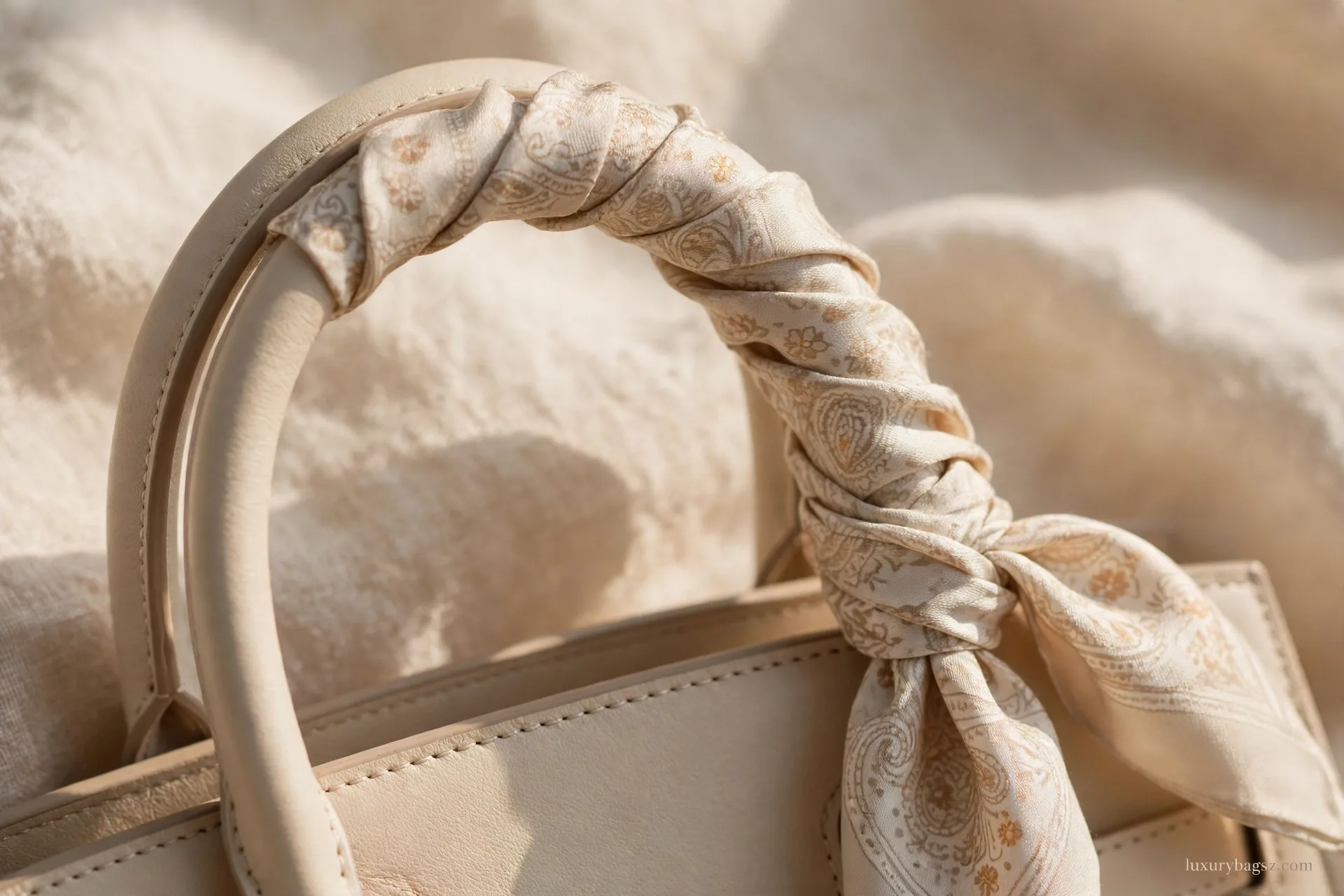
Wrap both Birkin handles, or the Kelly top handle, in a silk Twilly or plain handle wrap before regular use. Wrap evenly, without tight knots pressing into the leather, and change the wrap when it looks grubby.
A dirty wrap defeats its purpose, holding oil against the handle all day. Keep a spare pair, wash wraps in rotation, and check the leather beneath on rest days.
Bare-handle habits help too: apply hand cream well before leaving and let sanitiser dry fully. In summer, when hands sweat most, wraps stop being optional.
Keep the Shape While You Carry
Shape loss rarely starts on a shelf. It starts in use, with heavy loads, sharp objects pressing into the lining, and closures forced over an overfilled interior. Load discipline keeps both bags structured longer.
If you are still choosing between the two models, our Kelly vs Birkin comparison explains how their shapes and closures behave differently in everyday carry.

Liners, Pouches and Load Discipline
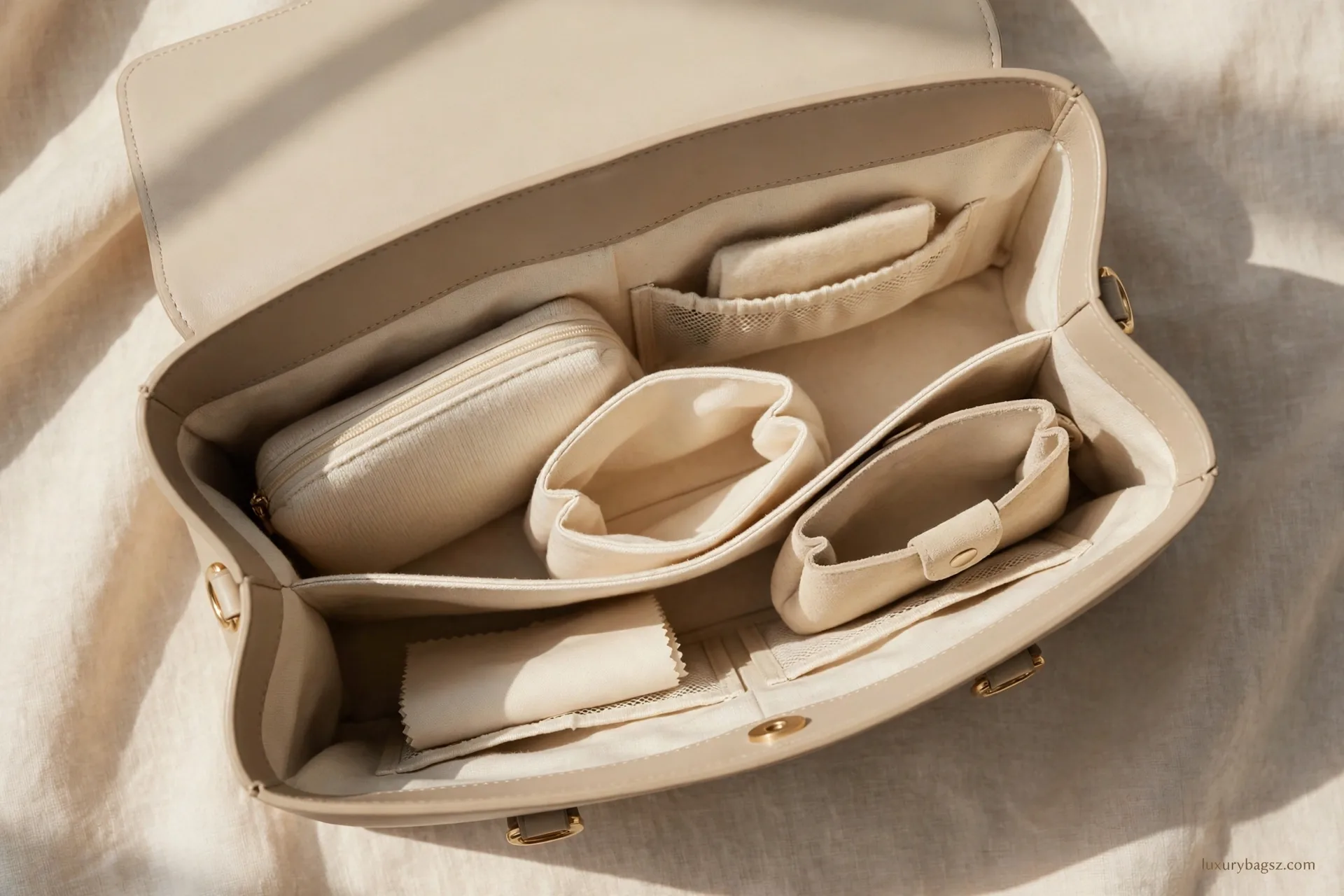
- Use a light, correctly sized liner to spread weight and stop press marks.
- Keep keys, pens, lipstick and coins in soft pouches, never loose against the leather.
- Put the heaviest item in the centre of the base, not against one side panel.
- Stop loading while the flap or sangles still close without force.
- Never hang a loaded Kelly by its strap over a chair back.
- Empty the bag fully on rest days, not loaded overnight.
Prevention matters most inside, because the Hermès Spa is widely reported not to refurbish interiors. A liner and pouches protect the one part official care cannot restore.
Watch the silhouette as you load. If sides bulge, the base dips or the Kelly flap will not sit flat, something comes out. Carry at eighty per cent of capacity.
Care by Leather: What Changes in Daily Use
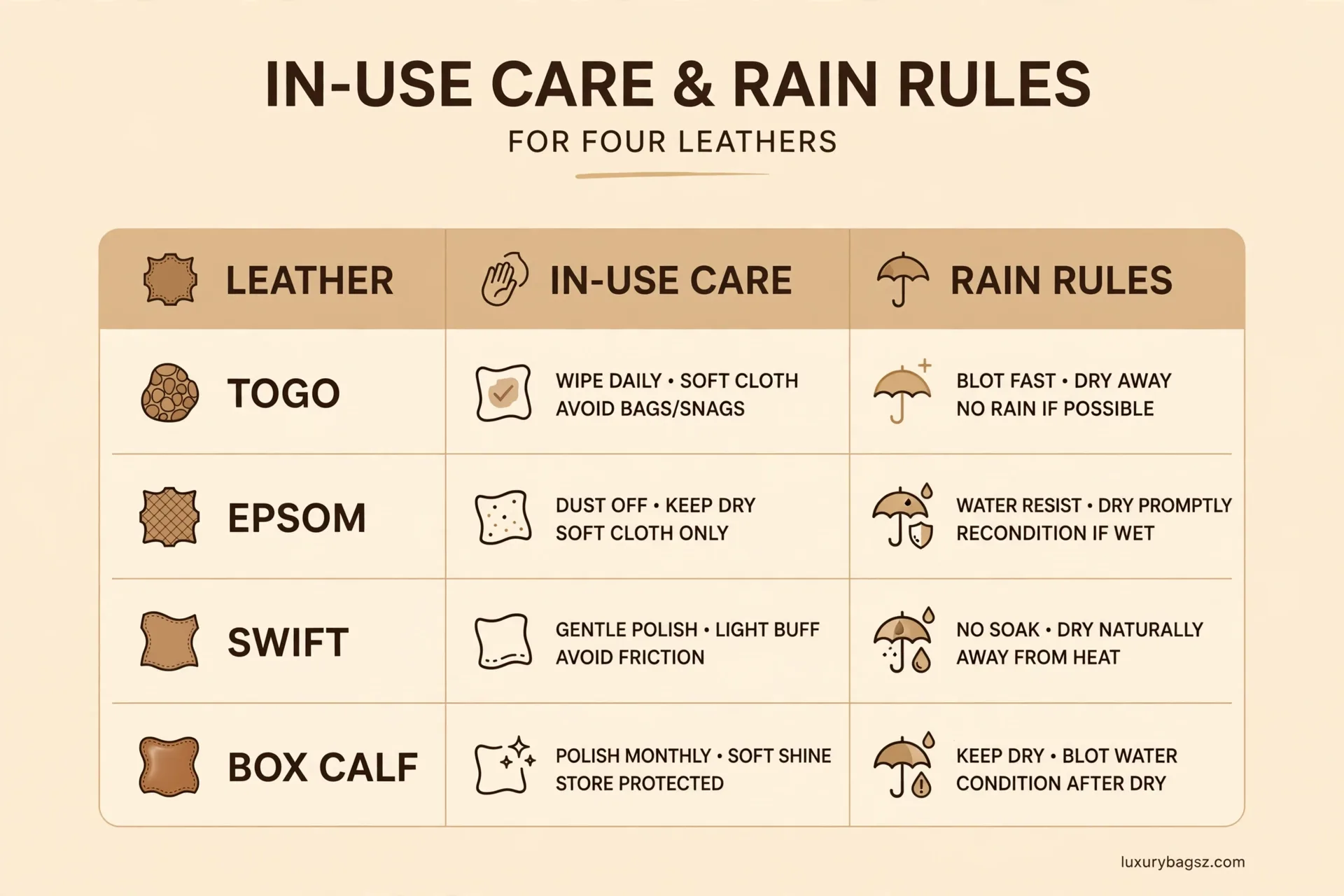
There is no single Birkin care routine, because Hermès leathers behave very differently in use. Use our Hermès leathers guide to identify yours, then follow the matching routine below.
Togo and Clemence: The Forgiving Grained Leathers
Togo is firm, pebbled and scratch-resistant, and holds its shape well, making it the easiest everyday choice. Clemence has a similar grain but is softer and heavier, so it slouches sooner and needs stricter load discipline.
For both, wipe with a soft, dry cloth after each carry and condition only rarely: no more than once or twice a year for most owners, and many bags need less. Over-conditioning softens Clemence further.
Epsom: Structured, Light and Low-Maintenance
Epsom is embossed, with a crisp, even surface. It resists scratches, shrugs off light splashes better than smooth leathers and holds a sharp Sellier outline. Its weakness is flexing, so avoid bending corners or forcing the flap.
Maintain Epsom with a dry or barely damp cloth. It needs very little conditioning, as creams sit on the embossed surface. If corners look dry or scuffed, ask the boutique first.
Swift and Box Calf: Beautiful, and the Least Forgiving
Swift is smooth and luminous, but marks easily and shows water spots readily. Box Calf is glossy and structured, develops a prized patina, yet scratches visibly and dislikes water even more.
Carry these leathers on dry days, away from denim dye and rough surfaces. Condition sparingly, at most once every twelve to eighteen months, only with a boutique-approved product.
Exotics sit outside home routines: wipe dry only, keep from water, heat and creams, and take any mark straight to the boutique.
Rain-Day Decisions: Carry, Cover or Leave at Home
Decide before you leave, not under a doorway. Check the forecast, look at your leather, and choose honestly. A bag left at home needs no rescue routine at all.
- Usually safe in light rain: Togo and Epsom, covered, for short exposure only.
- Carry with real caution: Clemence, which tolerates splashes but slouches more when damp.
- Leave at home in rain: Swift, Box Calf, pale colours in any leather, and all exotics.
- Heavy rain forecast: leave every Birkin and Kelly at home and carry something else.
The Rain Cover, and What to Check Afterwards
Many Birkins and Kellys came with a fitted rain cover, the bâche, kept folded inside the bag. Use it at the first sign of rain, not after spotting. If yours is missing, carry a light cover that closes fully.
Beyond blot-and-dry, follow up once home. Check base corners, handle undersides, flap edges and inside the gussets, where water collects quietly and marks leather as it dries.
Check again next day for tidelines, stiff patches, darkened handles, cloudy hardware or a musty smell. Rest the bag, empty and open, until fully dry, and photograph any mark.
Look After the Hardware Without Over-Polishing
Birkin and Kelly hardware is plated metal, not solid gold or palladium throughout. It tarnishes slowly, dulls with fingerprints and scratches with contact. Gentle wiping preserves plating. Aggressive polishing wears it away.
Wipe the turnlock, pontets, plaques and feet with a soft, dry cloth after carries. Keep the cadena lock in its own pouch rather than swinging against the leather, where it scratches both bag and itself.
Film, Scratches and When It Becomes a Spa Question
New bags arrive with protective film on the hardware. Once you use the bag, remove film that lifts, because moisture trapped beneath peeling film can dull the metal it was meant to protect.
Faint scratches on feet and plaques are normal wear, not damage, and buyers expect them. Do not chase a showroom finish with metal polish, which can strip plating.
It becomes a Spa question when plating flakes, tarnish will not lift with a dry cloth, or a turnlock or foot feels loose. Note it at inspection and raise it at the boutique.
The Early-Warning Inspection: Catch Wear While It Is Small
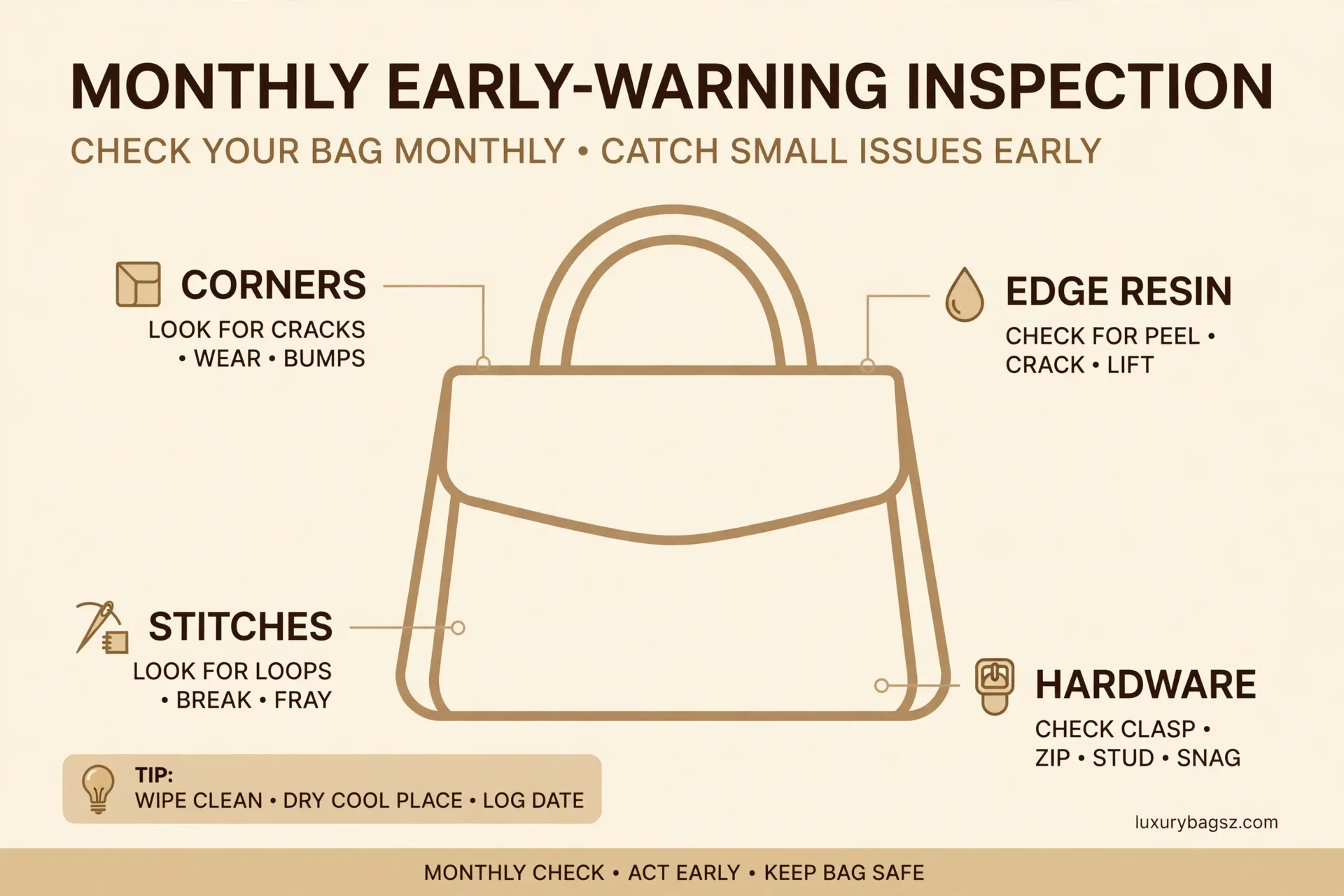
Once a month, or after every ten carries, inspect the bag in daylight with clean, dry hands. Turn it slowly, open and close it, and compare each side. Small asymmetries are often the first sign of change.
Keep dated phone photographs of corners, handles and hardware. They show whether a mark is stable patina or active wear, and later support a Spa conversation or resale listing.
| Check | Healthy sign | Early warning | Action |
|---|---|---|---|
| Corners | Colour and grain intact | Rub, colour loss, flattened grain | Rest and rotate; note for Spa if spreading |
| Edge resin | Smooth, sealed, even | Cracking, lifting or peeling | Stop flexing it; ask the boutique |
| Stitches | Tight, even stitching | Loose, frayed or raised stitch | Do not pull it; book a boutique visit |
| Handles | Even colour, firm shape | Dark patches, softness, stretch | Wrap handles; rest the bag longer |
| Hardware | Bright, firm, smooth action | Dull patches, flaking, loose turnlock | Wipe dry; raise at boutique if it persists |
| Shape | Upright, even sides and base | Leaning, bulging sides, dipping base | Reduce load; add rest days |
Edge resin deserves special attention on a Kelly, whose flap opens against its edges all day. Peeling resin exposes raw leather, and moisture then speeds wear. Early resin work is minor. Late work is not.
Sellier vs Retourne: Where Maintenance Differs
A Retourne bag is stitched and turned inside out, giving soft, rounded edges and a relaxed outline. A Sellier is stitched outside, giving sharp edges, visible stitching and a formal shape. Construction changes what wears first.
Sellier corners and edges take knocks directly, and its resin works harder, so inspect them more often and keep the bag off rough walls and floors. Epsom Sellier holds its line but shows corner rub clearly.
Retourne bags forgive bumps but slouch sooner, especially in Clemence and Swift. Load discipline and rest days matter most, and base piping needs checking where the softer structure meets the ground.
The Kelly shows the contrast most clearly, as it is widely made in both forms. A Birkin is usually Retourne. Inspect the construction you actually have, not the other one.
The Hermès Spa as a Maintenance System
Owners call the official Hermès after-sales service the Spa. You start at a boutique, where the bag is examined and the work, estimate and expected waiting period are confirmed for that bag. There is no fixed public price list.
What the Spa Does, and What It Does Not Do
Reported Spa work includes cleaning, conditioning, restitching loose seams, edge resin renewal, corner colour touch-ups, and repair of hardware, handles, straps and closures, by Hermès artisans.
Its limits matter as much. The Spa is reported not to refurbish interiors, not to reverse deep handle darkening fully, and not to promise a like-new result. Each bag is assessed first.
Nor is it an authentication service for bags bought elsewhere. Ask what will change, what will stay, and whether honest patina will be softened, before approving anything.
Process, Turnaround and Cost Drivers
The usual route is boutique drop-off, examination, a written estimate, your approval, then workshop repair and return for collection. Do not post a high-value bag without confirmed Hermès instructions.
Turnaround is quoted case by case and is widely reported at several weeks to several months, sometimes longer for complex or Paris workshop work. Never book it just before you need the bag.
Cost is driven by the work: cleaning and conditioning cost far less than handle replacement, extensive restitching or hardware work. Owners report basic treatments in the low hundreds, major repairs well beyond.
When Not to Send a Bag, and Keeping Records
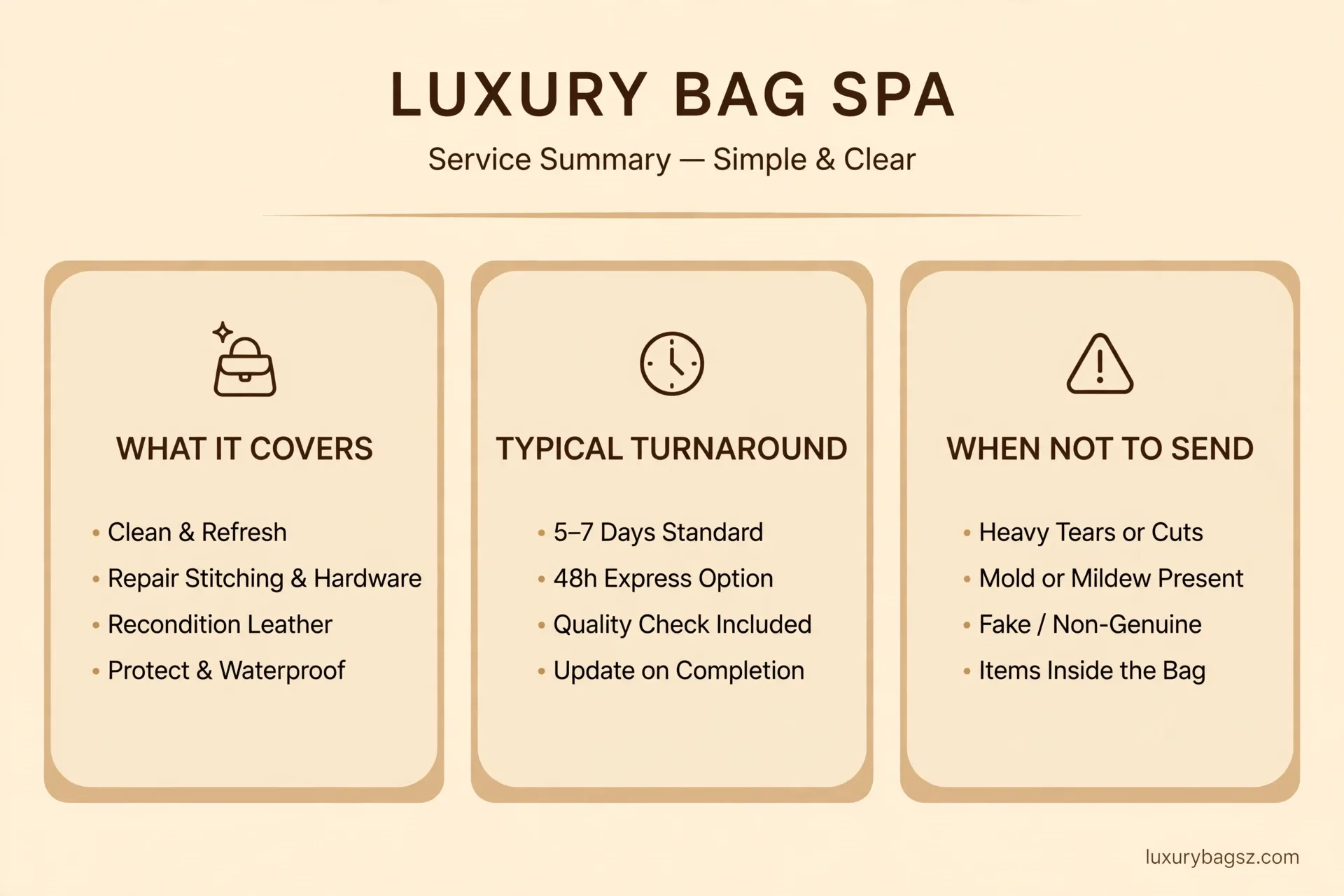
Do not send a bag for light patina, faint foot scratches or one stable scuff. You lose it for months, pay for work that changes little, and may soften character buyers value. Wait until one visit addresses several real needs.
Also pause if you plan to sell immediately, if earlier outside repairs need disclosing first, or if you have not seen a written estimate. A Spa visit is a decision, not a reflex.
Most owners use the Spa every few years, guided by wear, not the calendar. Go when stitching loosens, resin peels, corners lose colour or hardware needs attention, grouped into one visit.
Keep every Spa estimate, invoice and receipt with the bag’s documents, alongside dated inspection photographs. Official records reassure buyers and support a stronger resale conversation.
Frequently Asked Questions
How often should I rest a Birkin or Kelly between uses?
At least one full rest day between carries, and two after a heavy, hot or wet day. If it is your only bag, build in two no-carry days weekly.
Do Twillys really stop handles from darkening?
They greatly slow it, by blocking contact with skin oil, sweat and hand cream. They only work if clean, so wash or rotate wraps regularly.
Which Hermès leather is easiest to maintain daily?
Togo, for most owners. It resists scratches, holds its shape and needs only a dry wipe and rare conditioning. Epsom is a close second. Swift and Box Calf need most care.
Can I carry a Birkin or Kelly in the rain?
A Togo or Epsom bag under its rain cover survives light rain briefly. Leave Swift, Box Calf, pale colours and exotics at home in rain, and every model in heavy rain.
How often should a bag go to the Hermès Spa?
There is no fixed schedule. Most owners go every few years, when inspection shows loosening stitches, peeling resin, corner colour loss or hardware problems. Patina alone is no reason.
Does a Spa visit increase resale value?
Not automatically, and the cost is not always recovered. Well-chosen repairs make a bag more presentable, and official records reassure buyers. Decide on need, not a promised premium.
Final Verdict
Caring for a Birkin or Kelly is a rhythm, not a rescue mission. Rotate, protect the handles, carry light, match leather to weather, and inspect monthly so small wear stays small.
Use the Hermès Spa deliberately, for real repairs grouped into one visit, and keep every record. That rhythm keeps a loved bag in use for decades, and holds its value.