

How to Store Luxury Clothing and Accessories: Bags, Shoes, Silk and Jewellery
Storage in Brief: Clean, Stuffed, Dark and Dry
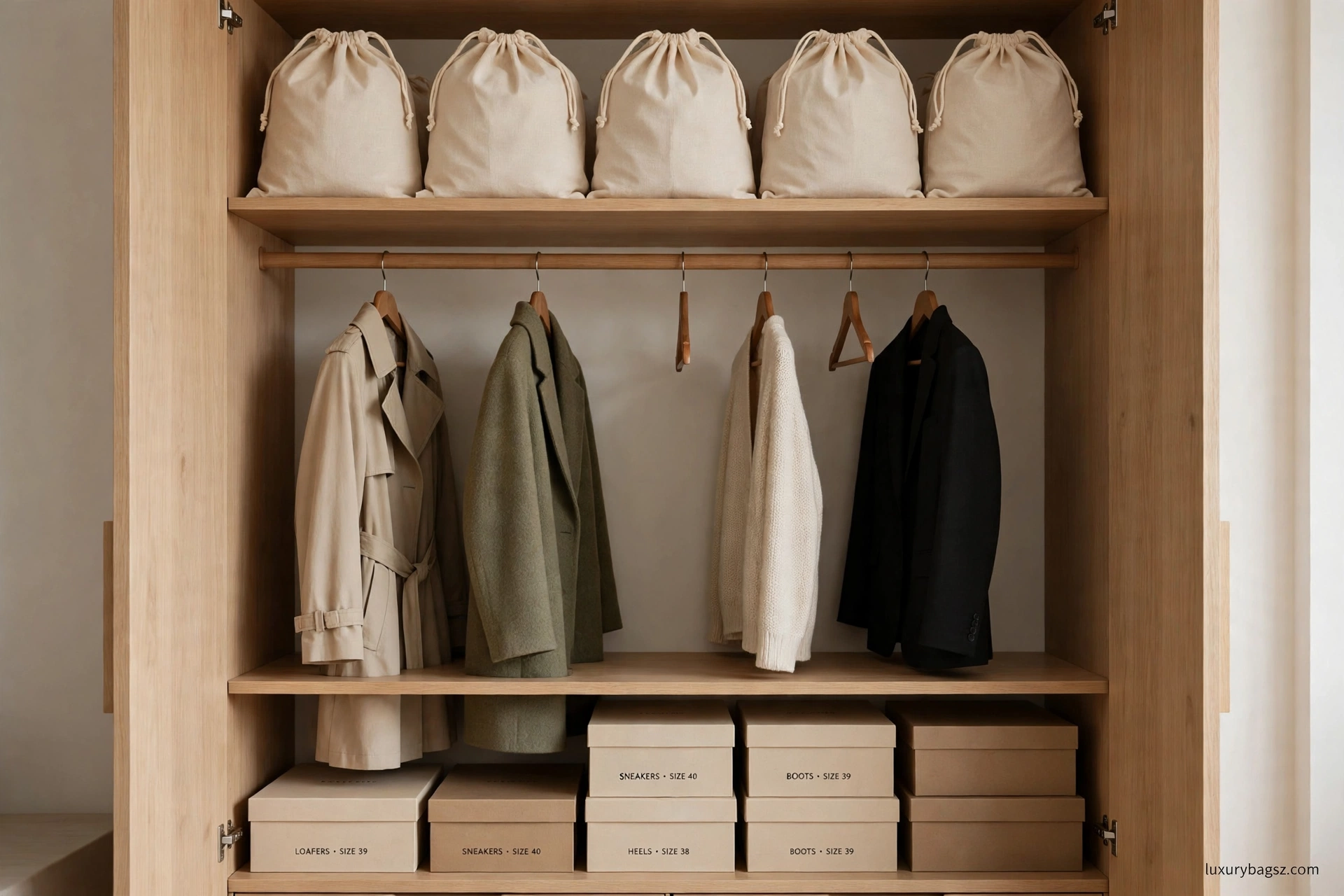
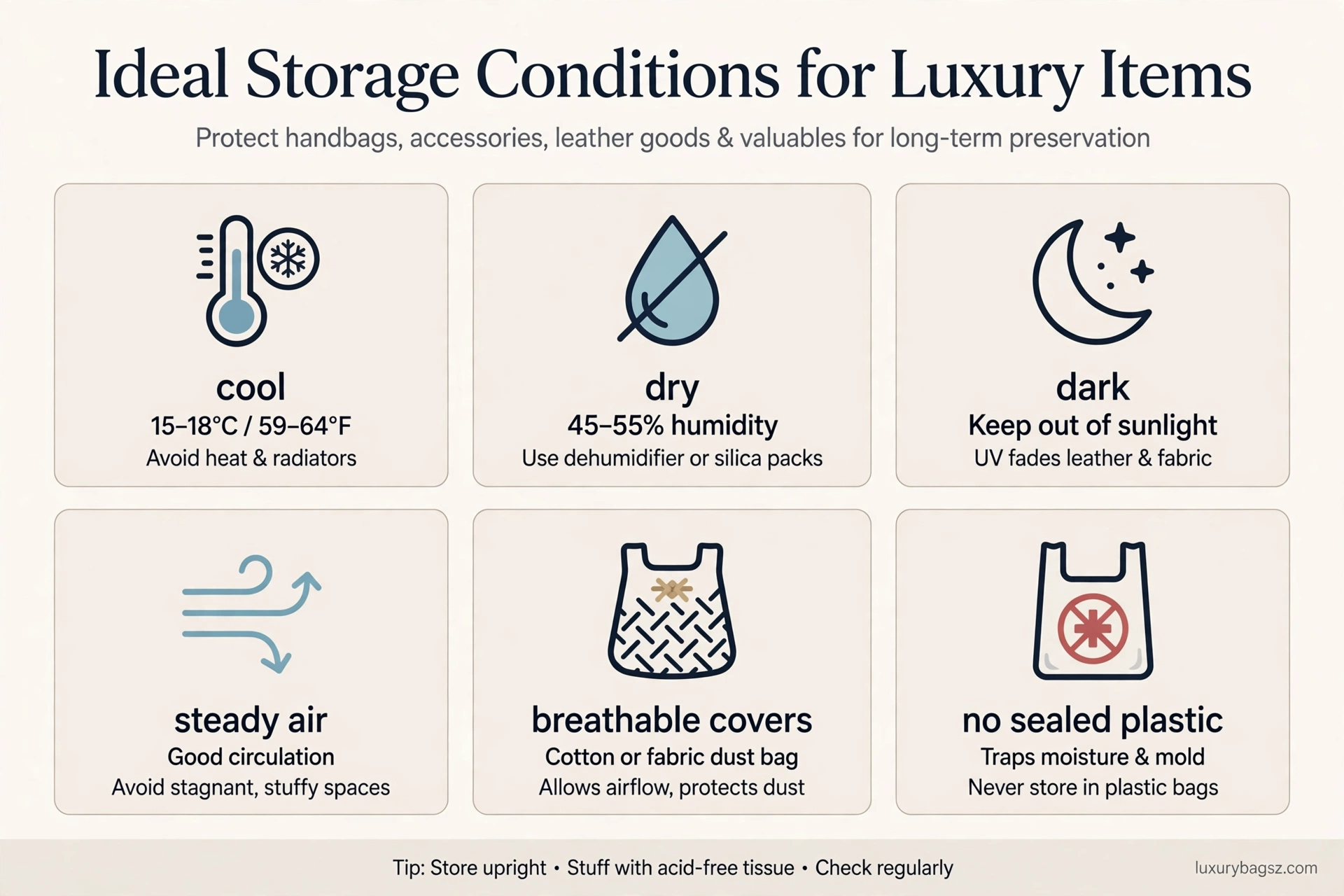
Store luxury clothing and accessories clean, lightly padded to hold shape, in breathable covers, in a cool, dry, dark place with steady air. That single routine prevents most fading, mould, creasing and cracking. Never store anything dirty, never seal leather or silk in airtight plastic, and never hang heavy bags or knits for months. Those three mistakes cause more damage than wear itself.
Key Takeaways
- Clean everything before storing it, and let it dry fully in open air first.
- Stuff bags lightly, box shoes with trees, and fold knits and silk flat.
- Use cotton dust bags and acid-free tissue, never airtight plastic for leather.
- Aim for cool, dry and dark: steady conditions matter more than fancy furniture.
- Store jewellery separately in soft pouches so pieces cannot scratch each other.
- Check stored pieces every few months and air the cupboard regularly.
Make a habit of the two-minute reset: empty pockets, shake out crumbs and dust, and let a worn piece air overnight before it goes back into a cupboard. Storage problems rarely start in storage; they start at this moment.
The Rules That Apply to Everything
Dirt stored is damage stored. Skin oils, perfume and food traces attract insects, set stains and feed mould, so cleaning before storage is not optional for luxury pieces. Air matters as much as covers. Breathable cotton and tissue let moisture escape, while sealed plastic traps it against leather and fibres, inviting mildew and sticky coatings. Light fades, heat dries, and damp swells. A normal wardrobe away from radiators, steamy bathrooms and sunlit windows already meets most luxury storage needs at home. Consistency beats perfection. Conditions that swing daily between hot and cold, or dry and damp, stress materials far more than a steady, slightly imperfect room.
Setting Up the Space
Choose an interior cupboard or drawer unit where possible, since exterior walls carry more damp and temperature swing. Line shelves with clean cotton or acid-free paper. Leave small gaps between items so air can move. Overpacking crushes shapes, traps moisture and hides early signs of mould or insect activity until damage is advanced. Silica gel sachets can help in a damp-prone cupboard, but they are a supplement, not a fix. If a room smells musty, solve the room first before trusting it with valuable pieces. Keep food, cosmetics and scented products away from storage. Luxury materials absorb odours readily, and removing a perfume or smoke smell from leather or silk is difficult.
Storing Handbags Properly
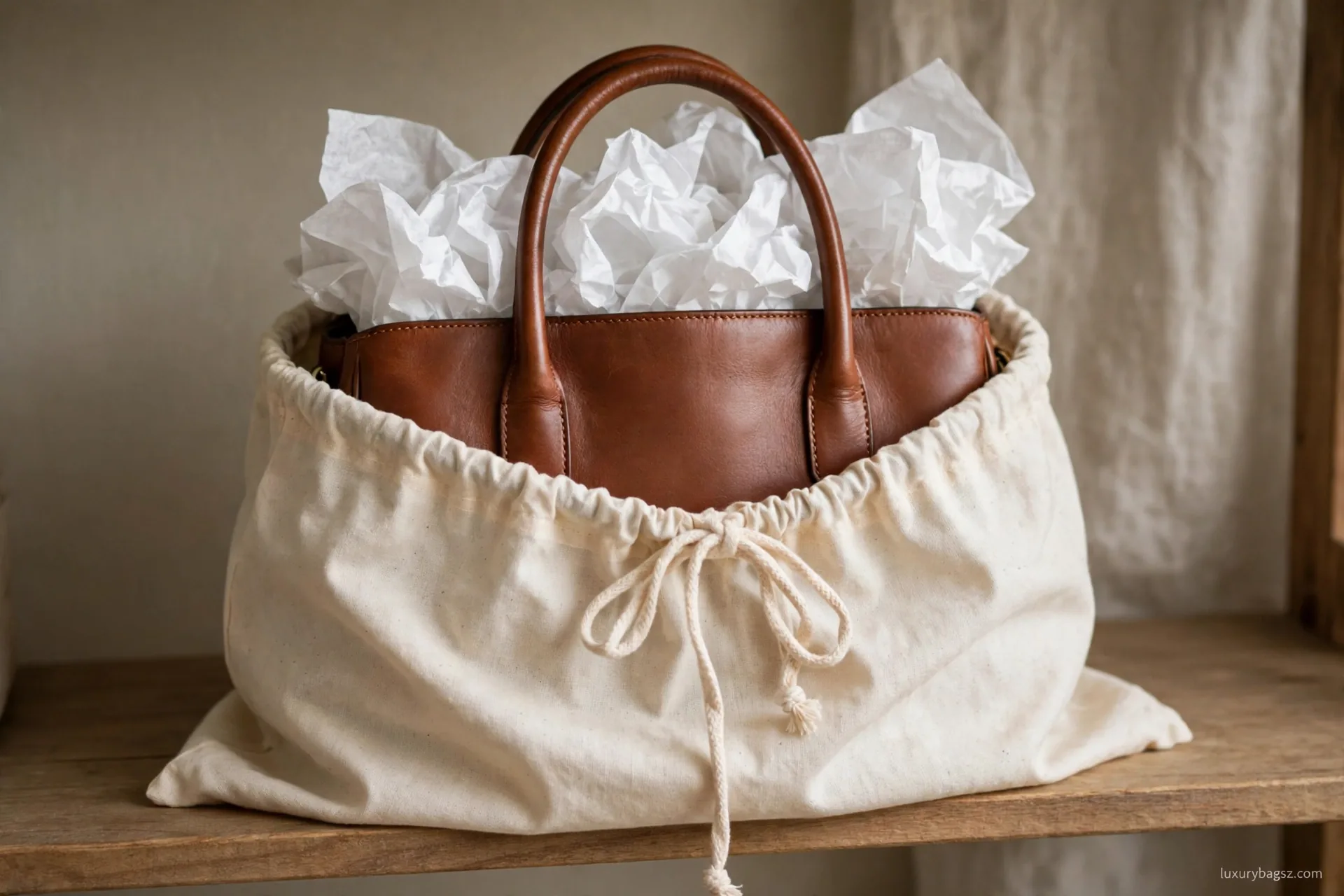
Empty the bag fully, including pockets, then wipe inside and out. Stuff it lightly with acid-free tissue or a soft cotton insert so walls stand as they do in use. Fasten closures, tuck straps inside or lay them flat, and place the bag upright in its cotton dust bag. Our Louis Vuitton bag storage guide shows brand-specific examples. Structured bags need shelf room, not stacking. Our Chanel Classic Flap storage guide explains chain and flap protection in detail. For top-handle bags, our Hermès Kelly storage guide covers handle wrapping and hardware care. Never hang a bag by its handles for storage.
Tailoring benefits from rest as much as leather does. A suit or coat hung in moving air for a day between wears keeps its shape and freshness far better than one returned straight to a crowded rail.
Storing Clothing: Knits, Tailoring and Delicates
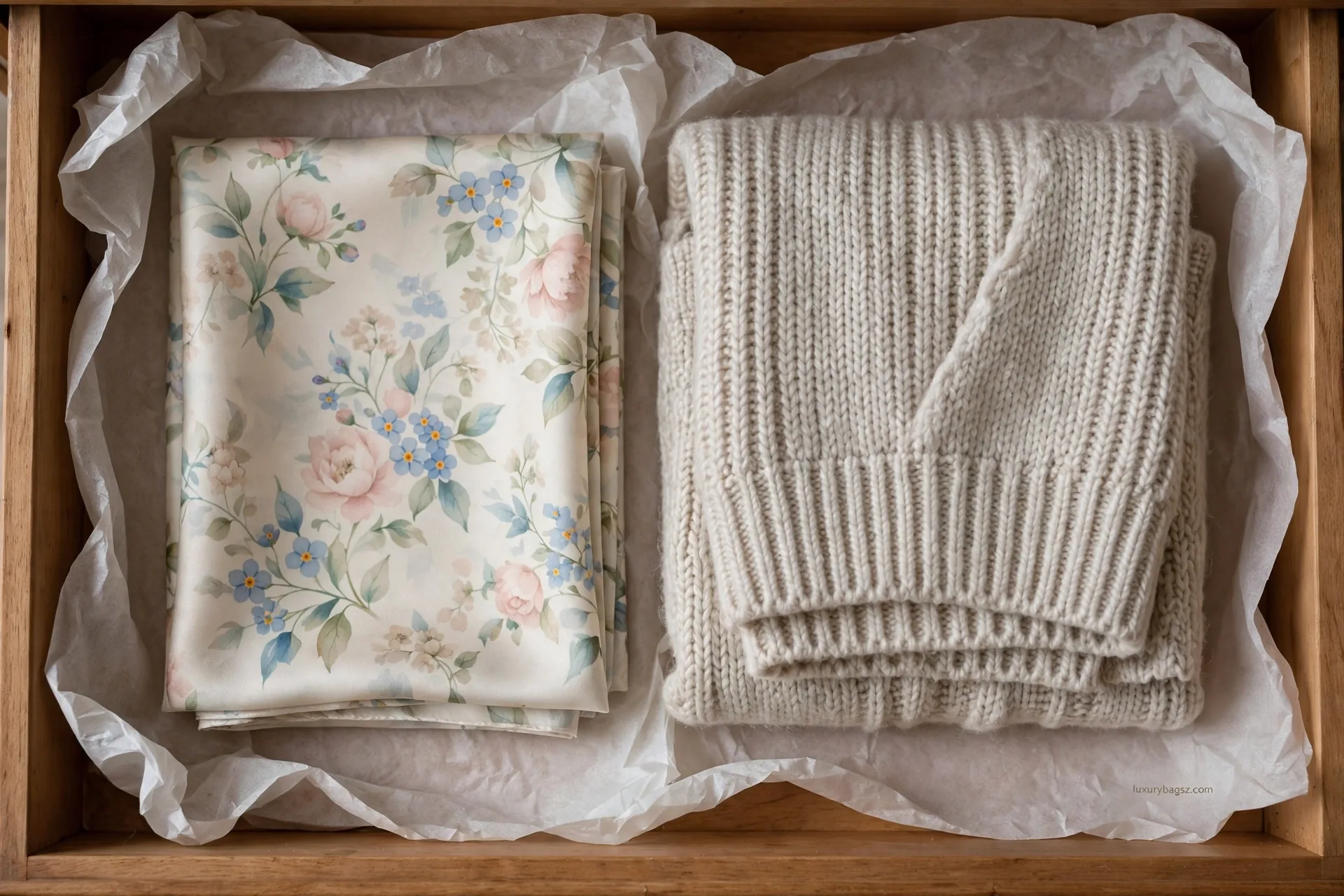
Hang tailored jackets and coats on wide, shaped hangers that support the shoulder. Wire hangers distort shoulders and should never touch a luxury garment. Fold knitwear flat with tissue between folds, and store it in drawers or boxes. Hanging knits stretches them under their own weight, and the damage rarely reverses. Our designer clothing care guide covers washing and pressing to pair with this storage advice. Clean, fully dry garments only, every time. For long storage, breathable garment bags protect against dust while letting air move. Add cedar or lavender deterrents for moths, kept from direct contact with fabric.

Storing Silk, Scarves and Evening Pieces
Roll or fold silk scarves with acid-free tissue and store them flat in a drawer or box. Our Hermès silk scarf storage guide gives the crease-free method. Keep silk away from direct light, which fades dyes unevenly, and from rough surfaces or jewellery that can snag threads. A single pull can mark a scarf permanently. Evening and embellished pieces should lie flat where possible, with tissue supporting beading or embroidery. Hanging heavy embellishment stretches straps and seams. If a piece must hang, use padded hangers and a breathable cover, and rest it flat for a day every few months to relieve stress on the shoulders.
Sneakers and delicate shoes deserve the same respect as formal pairs: clean soles before boxing, since grit and damp trapped in a box will mark uppers and feed odour over a season.
Storing Shoes and Boots
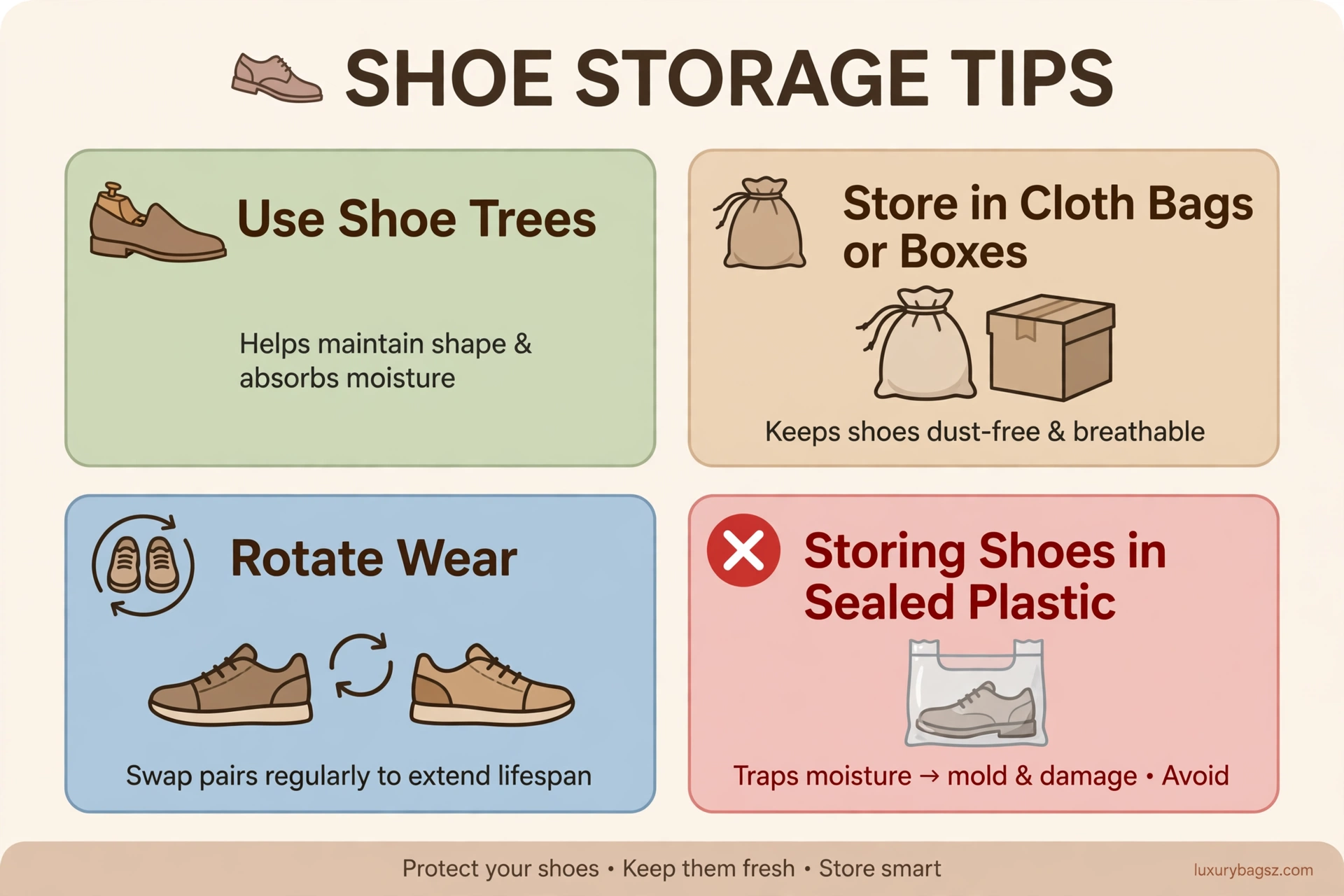
Insert shoe trees as soon as shoes come off, while the leather is warm and holding the shape of the foot. Trees absorb moisture and smooth creases as the shoe rests. Store shoes in cloth bags inside boxes, or on open shelves away from sunlight. Long boots need tall trees or rolled inserts so shafts do not fold and crease. Rotate wear. Leather shoes rested a day between wears last far longer, and storage is simply the long version of that same resting principle. Never leave shoes in a sealed plastic box or a damp hallway cupboard. Trapped moisture feeds mould on linings, and glued soles can fail early in humid storage.
Storing Jewellery, Watches and Small Accessories
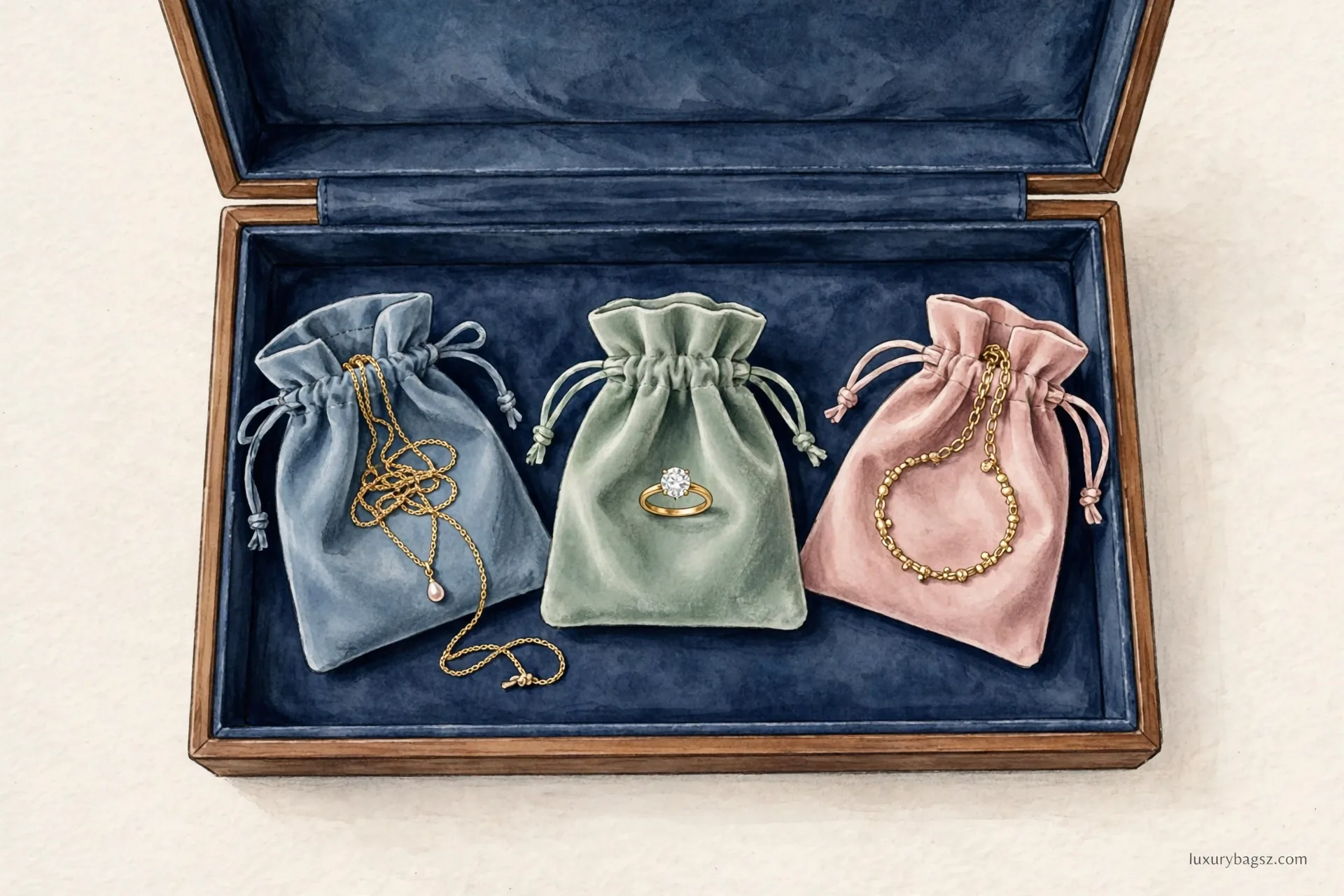
Store each jewellery piece separately in a soft pouch or a divided, lined box. Diamonds scratch other stones and metals, and chains tangle into knots that damage links. Keep jewellery dry and away from bathroom steam, perfume sprays and direct sun. Pearls and opals dislike very dry air, so normal room conditions suit them best. Watches belong in a padded case or watch box, away from strong magnets and damp. Our leather bags and shoes care guide covers leather straps that need the same air as bags. Belts store best rolled loosely or hung flat, never folded sharply. Sunglasses belong in hard cases, not loose in drawers where lenses scratch against other items.
Photograph valuable pieces as you store them, front and back, with any existing marks visible. The record helps you spot new damage early and supports insurance and resale descriptions later.
Seasonal Rotation and Regular Checks
When seasons change, clean and inspect everything before it goes away, and again when it comes back. Early mould spots, loose threads and dry leather are cheap to fix if caught early. Air the cupboard on a dry day every few months, and check dust bags and boxes for damp, insects or odour. A two-minute check protects years of value. Keep a simple list of what is stored where, with dates cleaned. It prevents forgotten pieces sitting for years and helps insurance records if the worst happens. Rotate bags and shoes in storage where you can. Materials age better with occasional gentle use and airing than with years of untouched stillness.
Frequently Asked Questions
What is the best place to store luxury items at home?
A cool, dry, dark interior cupboard with moving air is best. Avoid steamy bathrooms, sunlit rooms, radiators, lofts with big temperature swings and damp basements.
Can I store leather bags in plastic boxes?
No. Sealed plastic traps moisture against leather and can cause mould and sticky or cloudy coatings. Use cotton dust bags and open or breathable storage instead.
How should I stuff a handbag for storage?
Use acid-free tissue or a soft cotton insert, filled lightly so the bag holds its natural shape. Overstuffing stretches seams, and newspaper ink can transfer to linings.
Should knitwear be hung or folded?
Folded flat, always. Hanging lets a knit stretch under its own weight, especially at the shoulders, and that distortion is usually permanent.
How do I protect clothes from moths in storage?
Store everything clean, use breathable covers, and add cedar or lavender deterrents kept away from direct fabric contact. Check stored clothing every few months.
How should silk scarves be stored?
Flat or rolled with acid-free tissue, in a drawer or box away from light and anything that could snag. Avoid folding along the same creases every time.
Do shoes need trees if they are only stored briefly?
Yes. Trees help even for short rests, since they absorb moisture and hold shape as leather cools. They matter most in the first hours after wear.
How should jewellery be stored to avoid scratches?
One piece per soft pouch, or in a divided lined box, kept dry and away from steam and perfume. Hard stones stored touching other pieces will scratch them.
How often should I check stored luxury pieces?
Every few months is sensible, and at each seasonal changeover. Look for mould, odour, insects, dry leather and any shape loss, and air the space at the same time.
Can I store bags hanging by their handles?
No. Hanging stretches handles and straps and distorts the bag's structure over weeks. Store bags upright on a shelf, stuffed lightly, inside dust bags.
Summary: Boring Storage, Beautiful Results
Luxury storage is deliberately dull: clean first, pad lightly, cover breathably, and keep conditions cool, dry and steady. None of it needs special furniture or expensive systems. Do those basics for bags, clothing, shoes and jewellery alike, and your pieces will come out of storage looking as they went in. That quiet consistency is what collectors actually pay for later.






