

Globe-Trotter Luggage: Vulcanised Fibreboard Cases, Sizes, Prices and Checks
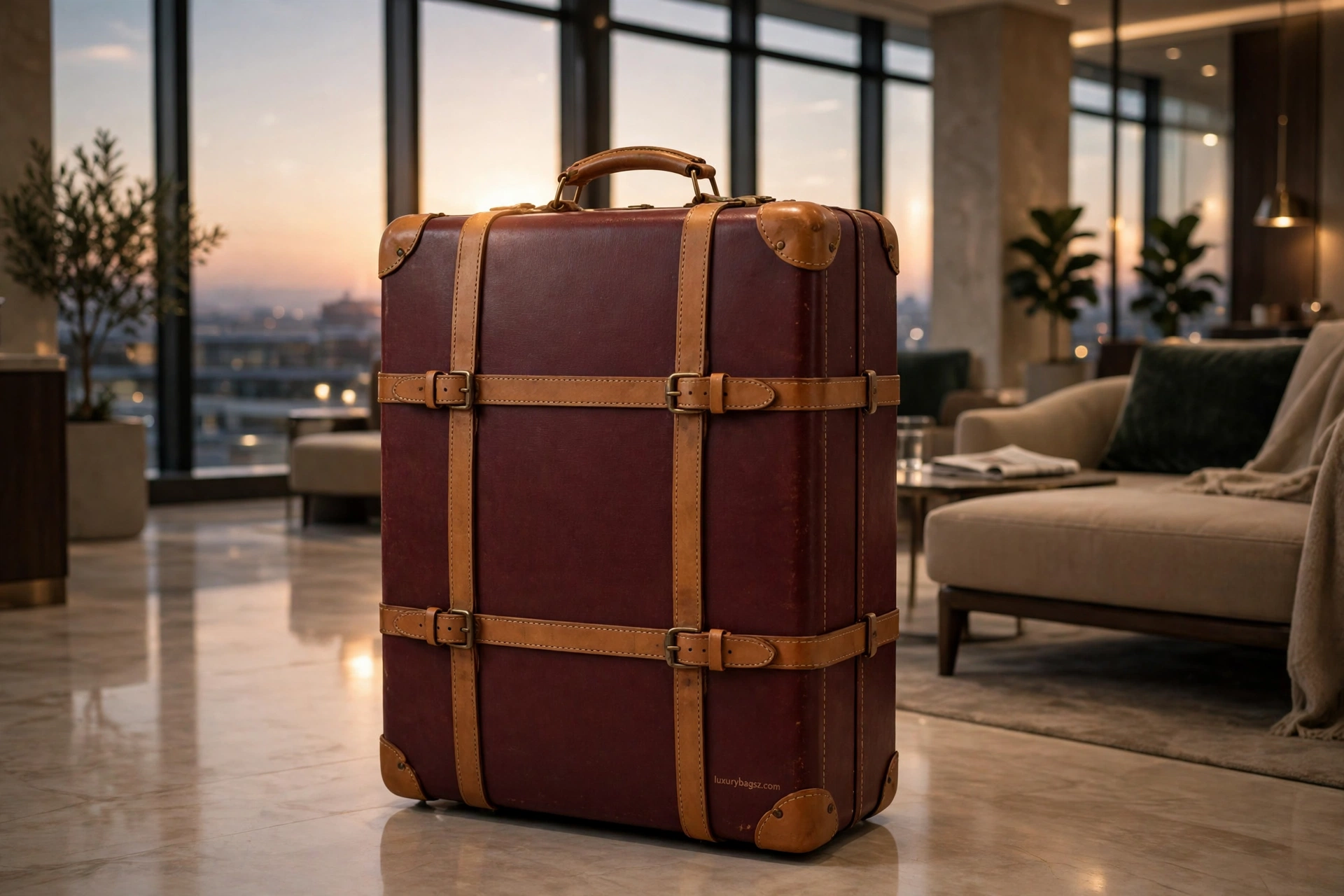
The Case Built From Paper, Leather and Patience
Globe-Trotter makes suitcases from vulcanised fibreboard — layers of paper-based board bonded under pressure — finished with leather corners, handles and straps, handmade in England since 1897.
The material is the point: it is light for its strength, flexes rather than cracks under knocks and earns a patina of travel marks that owners treat as a diary, not damage.
Expect heritage prices, typically from around the low thousands for carry-on cases upward, repairable construction and a silhouette that has barely changed in over a century.
Key Takeaways
- Vulcanised fibreboard is light, strong and repairable — the original Globe-Trotter material since the late 1890s.
- Cases are handmade in Hertfordshire, England, with leather corners and handles.
- The Original and Centenary lines carry the classic look; two and four wheel versions exist.
- Carry-on sizes suit one to three nights; check-in cases suit a week and more.
- Fibreboard marks with travel — owners who need a pristine shell should choose otherwise.
- Pre-owned checks focus on corners, locks, lining and handle attachments.
A Short History From 1897 to the Present
Globe-Trotter was founded in 1897, and its cases were built for the age of steamships and rail, when luggage was handled hard and expected to last for decades.
The company settled in Hertfordshire, England, where its cases are still handmade today using long-standing methods and, by its own account, period machinery for key stages.
The design language settled early: a rectangular board case, leather corners to take the knocks, leather handles and straps and metal locks and rivets.
Explorers, officers and later film stars carried the cases, and the silhouette became a byword for British travel goods that has never needed a logo to be recognised.
Understanding that continuity explains the price and the patience of the buyers: this is luggage bought as furniture for a travelling life, not as a seasonal accessory.
Vulcanised Fibreboard: What It Is and Why It Lasts
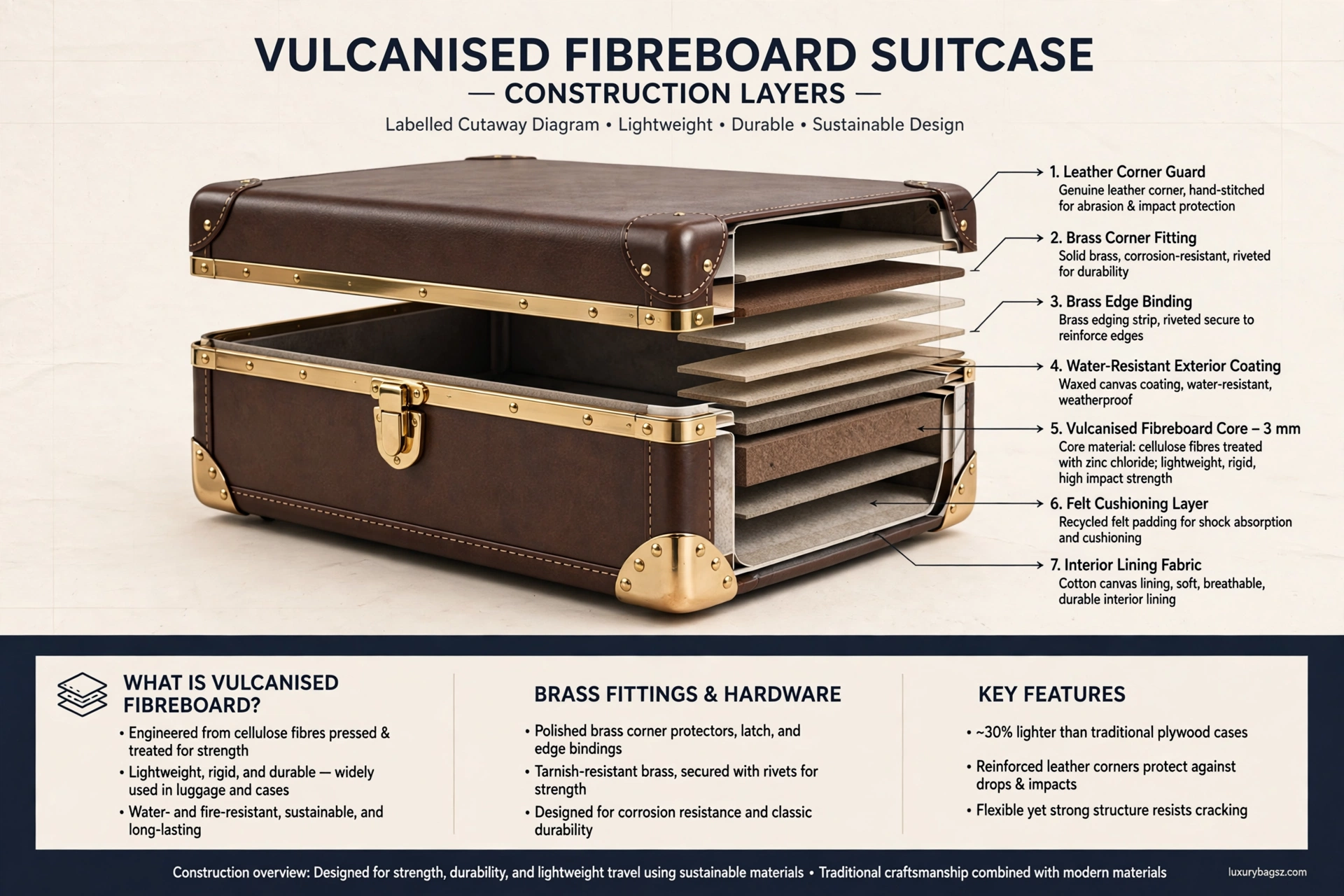
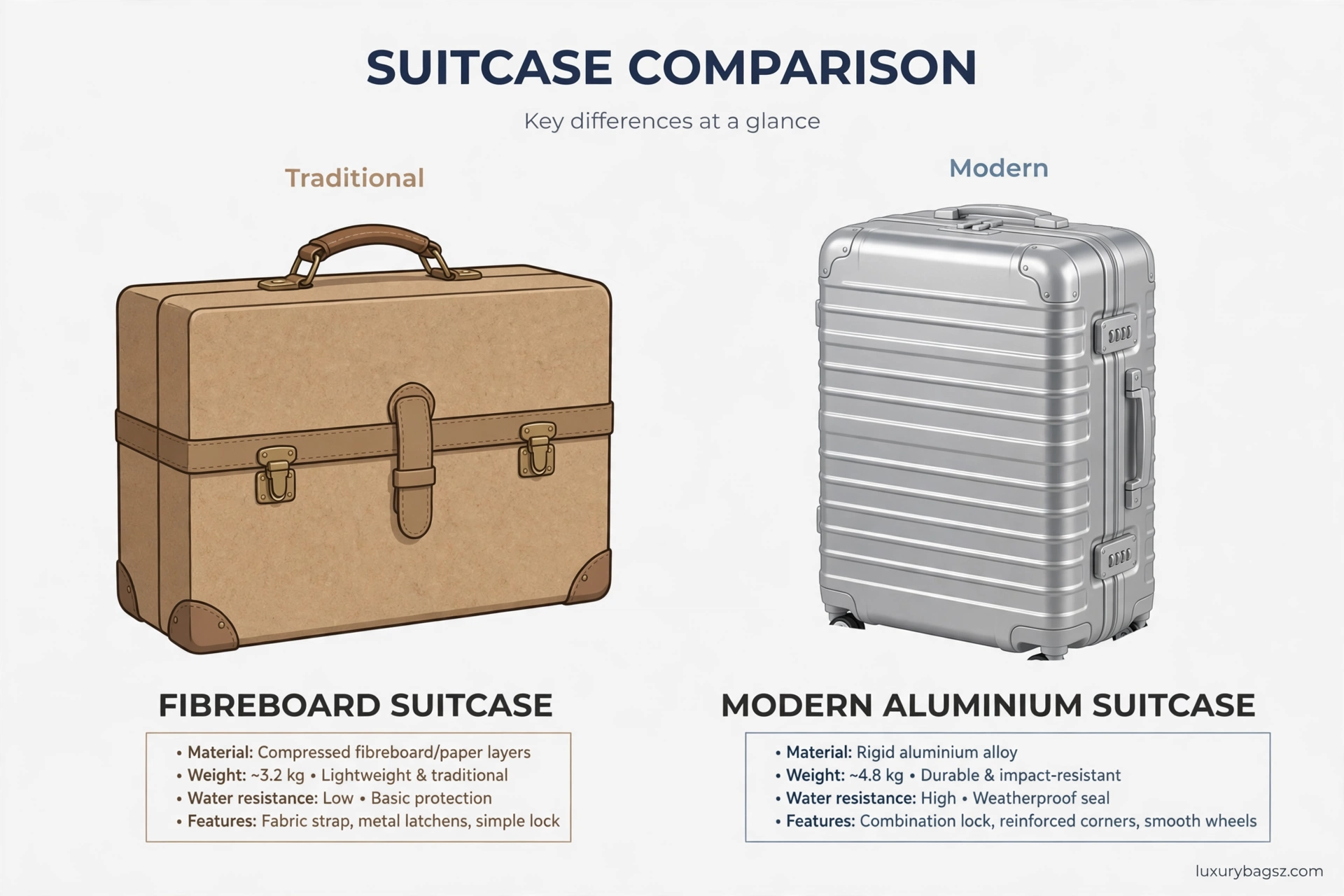
Vulcanised fibreboard is made from multiple layers of a paper-based board, bonded and compressed into a material that is hard, light and surprisingly springy.
Globe-Trotter has long presented it as lighter than aluminium and tougher in use than it looks, because it gives a little under impact instead of denting or splitting.
The corners are the sacrificial part by design. Moulded leather corners cap the eight points that meet platforms, carousels and pavements first.
Riveted leather handles and straps complete the build. Almost every part can be repaired or replaced by the maker or a good luggage repairer, which is the real longevity story.
The board is not waterproof like a sealed plastic shell. Heavy rain is shed by the finish for a while, but the cases are not made to sit on a wet tarmac for an hour.
Inside, traditional cases use a cloth lining with straps, while modern versions add linings and fittings suited to current travel habits.
Weight is the quiet advantage: a fibreboard carry-on typically weighs noticeably less than a comparable aluminium case, leaving more allowance for contents.
The marks it gathers are part of the contract. If scratches and scuffs will distress you, this material will too, and a coated shell will suit you better.
The Main Lines: Original, Centenary and Companions
The Original is the purest form: board, leather corners and handles, minimal extra detail, made in classic sizes from small cases to large check-in trunks.
The Centenary line keeps the same build with a more finished presentation — leather straps and corners in considered colour pairings, such as deep oxblood with black.
Carry-on cases in the range are sized for cabin limits and short trips, while the larger check-in cases and trunks serve a week or a season abroad.
Smaller companions — attaché and vanity cases and watch and jewellery rolls — follow the same construction and complete the matched travelling set.
Colour choice is a long decision on a case kept for decades. Navy, black, brown and oxblood age most gracefully; pale and limited colours show travel soonest.
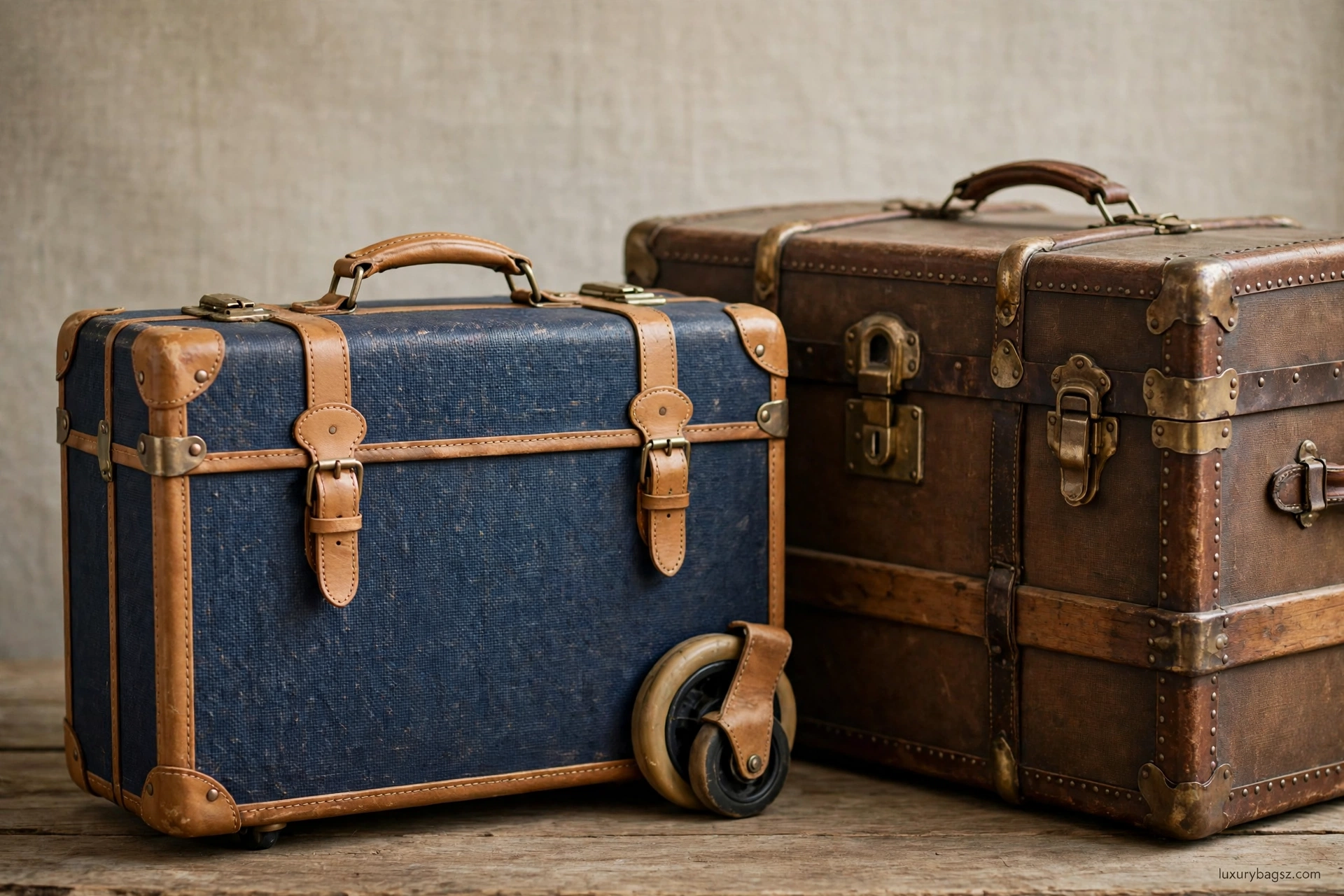
Two-wheel cases keep the vintage posture and roll behind you; four-wheel versions glide upright in modern terminals and are kinder in long queues.
Handles and locks vary slightly by line and edition. Check the exact fittings on the case you buy, as collaborations often change details collectors care about.
Buy the line by use, not by launch story. The plain Original in a deep colour will still look correct at every station and hotel of your next thirty years.

Using One: Packing, Wheels and Airline Reality
The rectangular interior packs like a wardrobe shelf: folded clothes in layers, shoes at the edges and straps crossed to hold the load still.
Traditional cases close with locks and straps rather than a zip. Packing cubes, as our wider travel guide recommends, keep small items from roaming the corners.
Cabin versions are sized against common airline limits, but limits vary by carrier. Measure your exact case, wheels and handles included, against your airline before travel.
Check-in fibreboard travels well but gathers marks in the hold. Many owners keep fibreboard for cabin, car and rail, and send a coated hard case into holds instead.
Weight distribution matters with two-wheel cases: pack heavier items near the wheel end so the case rolls balanced and the handle hand tires slowly.
The leather straps are working parts, not decoration. Fasten both on journeys; they share the load if a lock is knocked and keep the lid line true.
Sizes and What Each One Holds
Attaché and small cases in the range suit documents, overnight essentials or a camera kit, and serve many owners as the daily companion to a larger case.
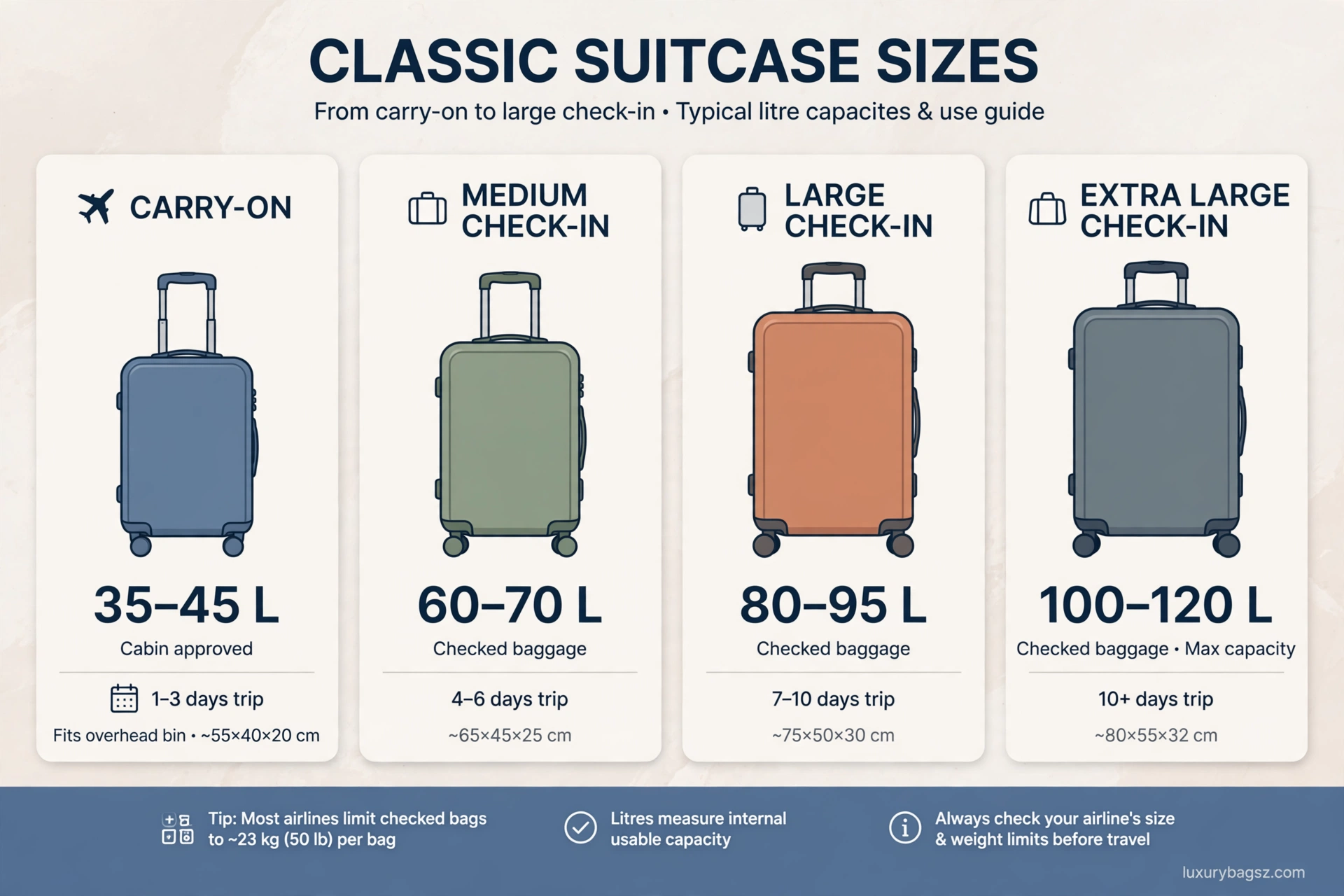
Carry-on sizes, roughly in the 20-inch class, hold one to three nights: two outfits, sleepwear, a wash bag and shoes, packed with the capsule method in our how to travel in style guide.
Medium check-in cases around the 26-inch class hold about a week for a careful packer. The largest cases and trunks near 30 inches and above suit long trips and shared packing.
Pair the case with the right hand luggage from our round-up of the best travel handbags so documents and valuables stay on your person.
Capacity figures vary by line and interior fittings, so treat published litres as a guide and judge by your own packing list and shoe size.
Wheels and handles add to external size on wheeled versions. A case that fits the cabin gauge at home must include them in the measurement.
If you travel mainly by car or rail, the larger traditional sizes come back into their own, free of airline gauges and hold handling alike.
Buy for your most common trip, then hire or borrow for the rare expedition. The mid sizes earn their keep weekly; the trunks earn admiration monthly.
Globe-Trotter or the Alternatives?
Against aluminium cases, fibreboard is lighter and quieter in character, but it marks more readily and lacks the sealed, dented-metal look some travellers prefer.
Against soft luxury holdalls, such as those in our Louis Vuitton Keepall guide, the Globe-Trotter protects contents far better and stacks and stands properly.
Against modern polycarbonate, it is heavier per litre and far more expensive, but repairable in a way a cracked plastic shell simply is not.
The honest summary: you buy Globe-Trotter for material character, British making and lifetime repair, not for specifications per pound spent.
Frequent flyers on tight cabin allowances should count grams carefully. A modern ultralight case may serve a weekly flight routine better.
Collectors should buy the plainest version they love. Limited editions date by theme; the classic colours and shapes are the ones traded and treasured for decades.
Whichever you choose, decide with your real itinerary on the table. Luggage fails or delights in use, never in a showroom.
Prices and Pre-Owned Checks
New carry-on cases typically start in the low thousands in pounds or dollars, with check-in cases, trunks and limited editions rising well above that.
Attaché and small leather goods sit lower, while rare collaborations and carbon or special editions occupy the top of the range. Treat single figures as guides only.
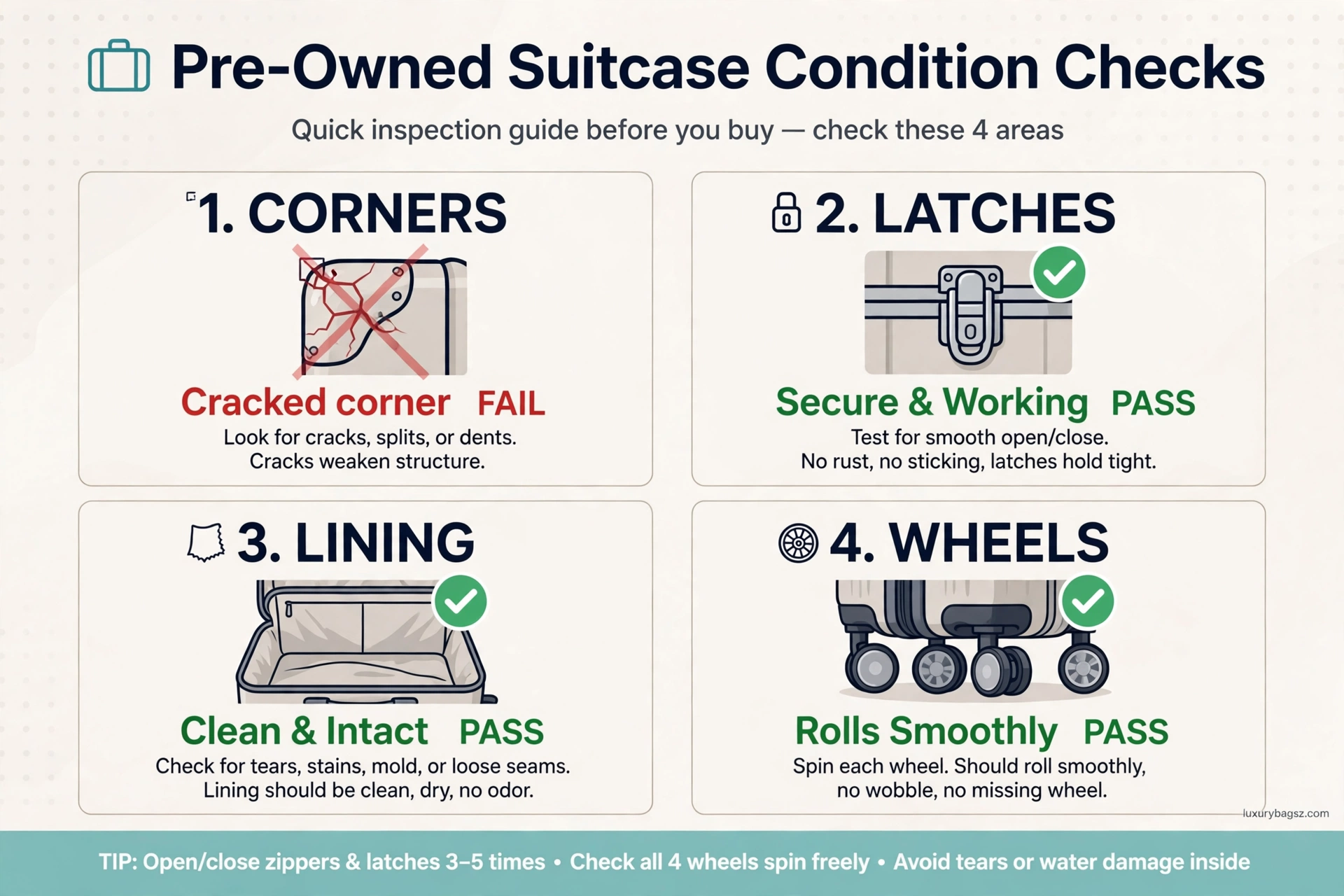
Pre-owned cases offer the classic route in at lower cost. Check the eight leather corners first: cracking, lifting or replaced corners change value and protection.
Work both locks and every handle and strap. Locks should engage cleanly, handles should sit tight at their rivets and straps should be supple, not cracked at the holes.
Smell and inspect the lining. Mildew from damp storage is hard to remove fully and is the most common hidden fault in vintage luggage.
Check the board for soft spots by gentle pressure. A corner that flexes or a panel that feels spongy suggests water damage in the layers.
Ask about repairs and provenance. Maker repairs are a plus and often documented; amateur board repairs are a reason to walk away.
Buy pre-owned from sellers who photograph corners, locks and lining honestly and accept returns. With vintage cases, the seller's candour is the warranty.
Care, Storage and Repairs
Wipe the board with a dry or barely damp cloth and let it dry away from radiators. Heat is fibreboard's enemy in storage as much as water is in travel.
Feed leather corners, handles and straps with a small amount of neutral conditioner a few times a year, and buff metal fittings with a dry cloth.
Store the case empty, unlatched or lightly latched, upright in a dry room. Damp garages and sealed plastic in humid rooms invite mildew in the lining.
Keep a note of the maker's repair service and a good local luggage repairer. Corner renewal and handle work are routine jobs if done before failure.
After a wet journey, empty the case and air it open for a day before closing it. Trapped damp does more harm in a week than the rain did in an hour.
Travel marks need no treatment. Chasing a showroom finish on fibreboard wastes money and erases the record that makes these cases personal.
If a lock fails before a trip, use the straps and a luggage strap as a temporary measure, then book the repair on your return rather than forcing the mechanism.
Frequently Asked Questions
What is vulcanised fibreboard?
It is a material made from layers of paper-based board bonded under pressure. It is light, hard and slightly springy, which is why it suits suitcases.
Are Globe-Trotter cases handmade?
Yes. The cases are handmade in Hertfordshire, England, using long-standing methods for the board work, leather corners, handles and finishing.
How much does a Globe-Trotter suitcase cost?
Carry-on cases typically start around the low thousands, with larger cases, trunks and limited editions costing more. Prices vary by line, size and market.
Is fibreboard as strong as aluminium?
It behaves differently: fibreboard flexes under knocks rather than denting, and its leather corners take the worst wear. It marks more visibly than metal.
Can I take a Globe-Trotter case as cabin luggage?
Yes, the carry-on sizes are made for cabin limits, but limits differ by airline. Measure your case including wheels and handles before you travel.
Do the cases have wheels?
Both traditional two-wheel and carry styles and modern four-wheel versions exist. Choose by terminal distance and how vintage you want the case to feel.
What should I check when buying pre-owned?
Corners, locks, handles, straps, lining smell and board firmness. Maker repairs and honest photographs from the seller are strong positive signs.
Can Globe-Trotter cases be repaired?
Yes — repairability is a core part of the design. Corners, handles, straps and locks can be renewed by the maker or a skilled luggage repairer.
Are the cases waterproof?
No. The finish sheds light rain, but the board is not a sealed waterproof shell. Keep the case out of standing water and dry it open after wet journeys.
Which size should I buy first?
The carry-on, roughly in the 20-inch class, suits the most trips. Add a check-in case later if your travel regularly runs to a week or more.
Globe-Trotter: Honest Marks, Lifetime Case
Globe-Trotter endures because its material, making and repair route were right in 1897 and have never needed reinventing.
Buy the size your real trips demand, in a deep classic colour, and let the corners gather their honest marks. Few objects reward long ownership like this case.
Luggage tells the truth faster than almost anything I check: corners, locks and lining cannot pretend. I read a pre-owned Globe-Trotter the way I read a well-travelled Keepall — honest marks are character, damaged structure is not. Buy the size your real trips demand and let the case collect its years in the open.






