How to Spot Fake Hublot Watches: H-Screws, Dial, Movement and Serial Checks
Spot a Fake in Brief: Start With the Screws
To spot a fake Hublot, start with the six bezel screws: genuine H-heads are deep, crisp and left at random angles, while fakes are often shallow and neatly aligned. Then check the movement, dial printing and serial. Hublot's bold design is copied constantly, but the fine machining is expensive to copy. The closer you look, the more a replica has to confess.
Key Takeaways
- Genuine H-screws are deep and symmetrical, and deliberately not aligned.
- A real UNICO movement shows layered depth and a working column wheel.
- Dial printing is razor sharp, with even spacing and no bleed or fuzz.
- Case materials have the right weight and feel for titanium, ceramic or gold.
- The serial on the case back must match the warranty card or e-warranty.
- Price far below market, missing papers and no returns are classic warnings.
The Bezel Screws: Hublot's Hardest Detail
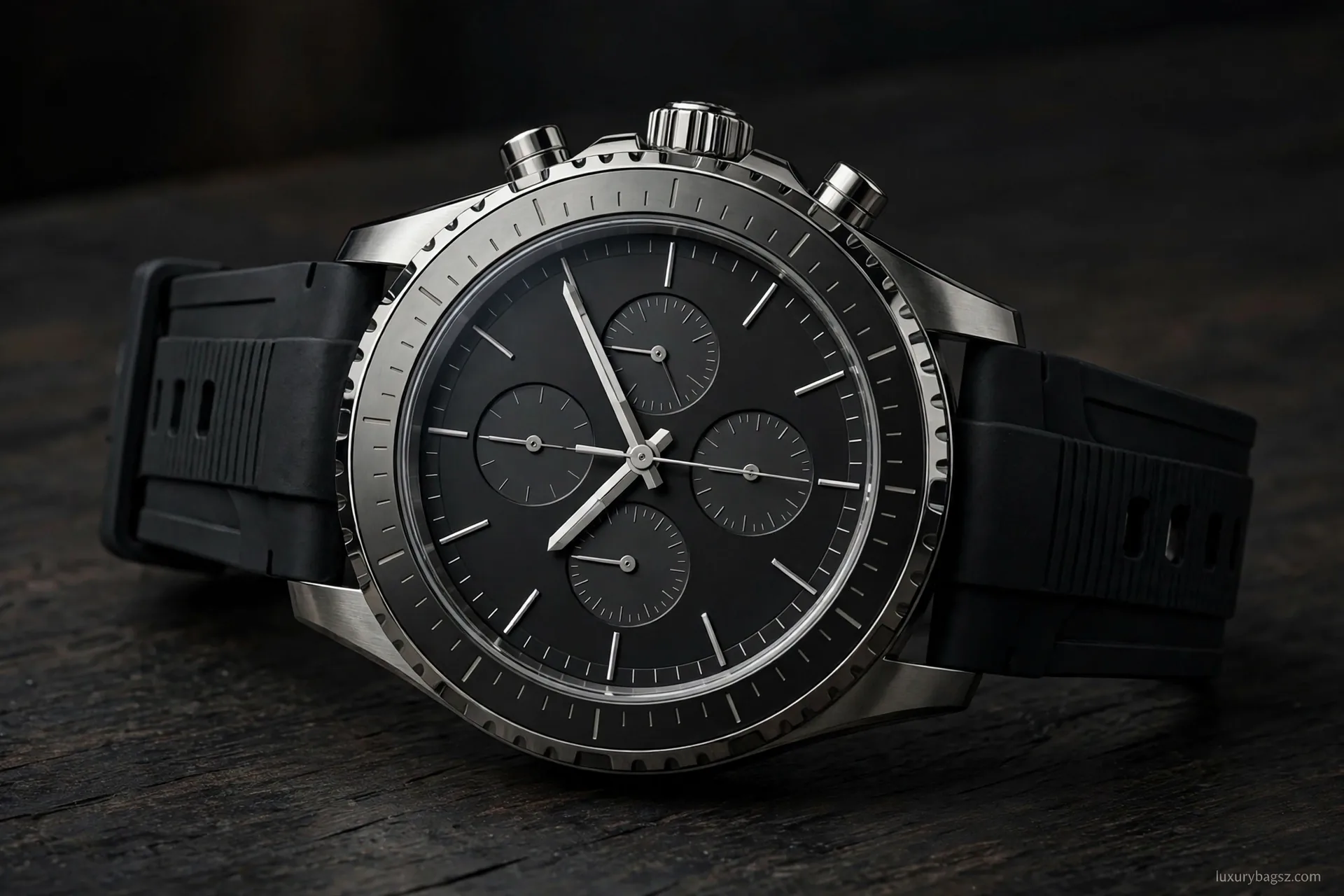
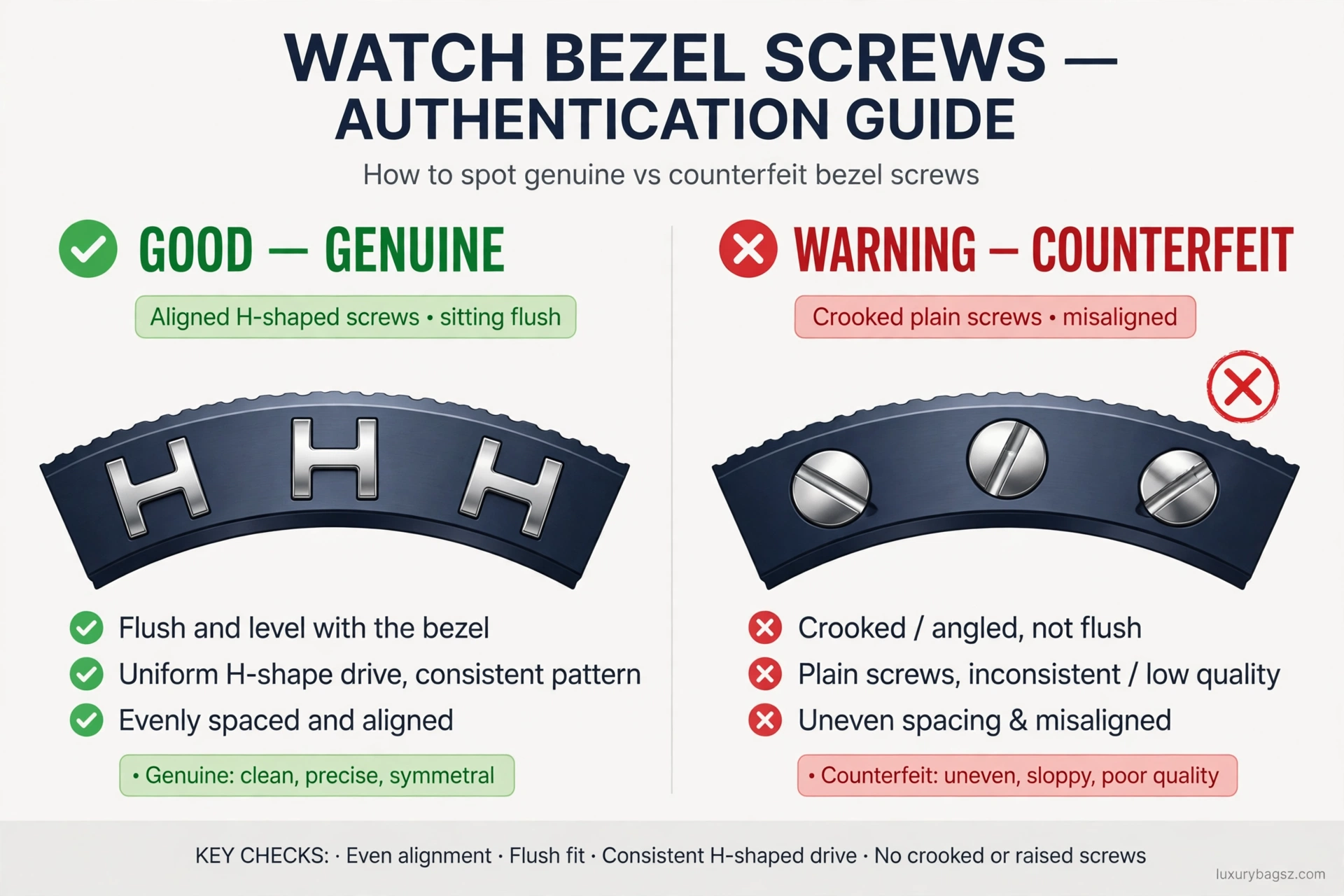
Look at the bezel first. Big Bang and Classic Fusion models carry six H-shaped screws, and each head should be deeply and cleanly machined. The two recesses of the H should match in depth and width, with polished, burr-free edges. Soft or uneven screw heads fail the first test. Crucially, genuine screws point in random directions. Hublot leaves them unaligned on purpose, for an industrial, just-assembled look. A replica often lines every screw up neatly, as if tidiness were the goal. Perfectly aligned, shallow screws are the fastest tell on the watch.
Lighting matters when you run these checks. Inspect under bright, neutral light and turn the watch slowly, because shallow engraving and fuzzy printing hide easily in dim rooms.
Case Shape, Layers and Materials
A genuine case is built like a sandwich, with even layers and clean gaps between bezel, case and back. The proportions should look precise from every angle. Our Hublot facts guide explains the fusion idea behind the brand: ceramic, titanium, carbon, rubber and precious metals combined deliberately. Each material has a telltale feel. Titanium is light, ceramic is hard and cool, and gold is dense. A watch that feels wrong for its claimed material needs questions. Counterfeits often get the case shape slightly square, thick or uneven. Compare side profiles with verified photographs of the exact reference before judging.
Dial Printing and Hands
Bring the dial close, ideally under a loupe. Genuine lettering is crisp and even, with consistent spacing and no bleeding at the edges of characters. The applied brand lettering and markers sit flat and true. Raised, crooked or fuzzy printing belongs to dials made far more cheaply. On logo-printed crystals found on some models, genuine printing carries a fine outline. Plain, flat lettering without that detail is another quiet warning. Hands should be cleanly finished and correctly sized for the reference. Short, long or roughly painted hands show up often on replicas.
Reference photographs are your control sample. Keep verified images of the exact model open beside the watch and compare feature by feature rather than trusting an overall impression.
The Movement: Where Fakes Fall Flat
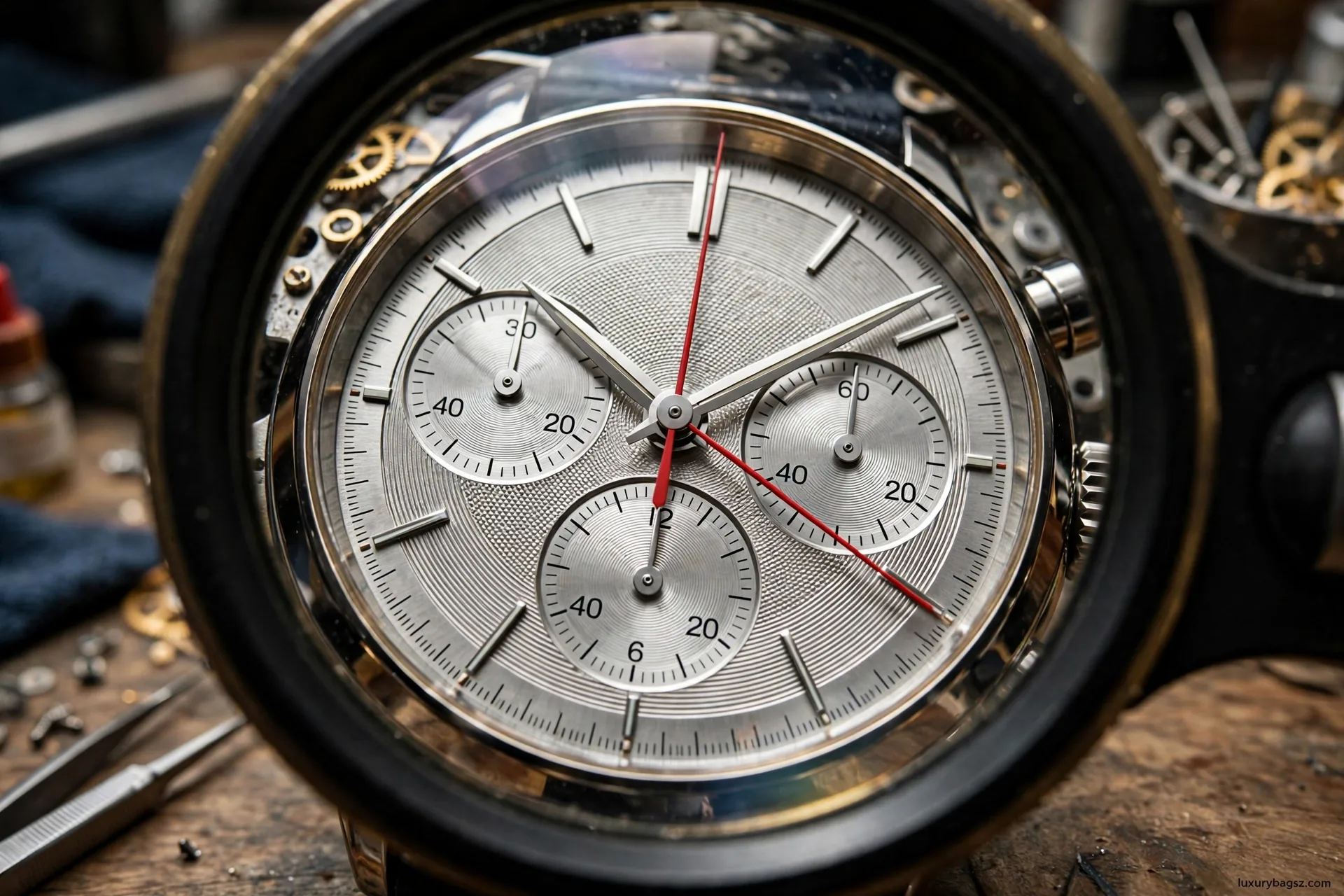
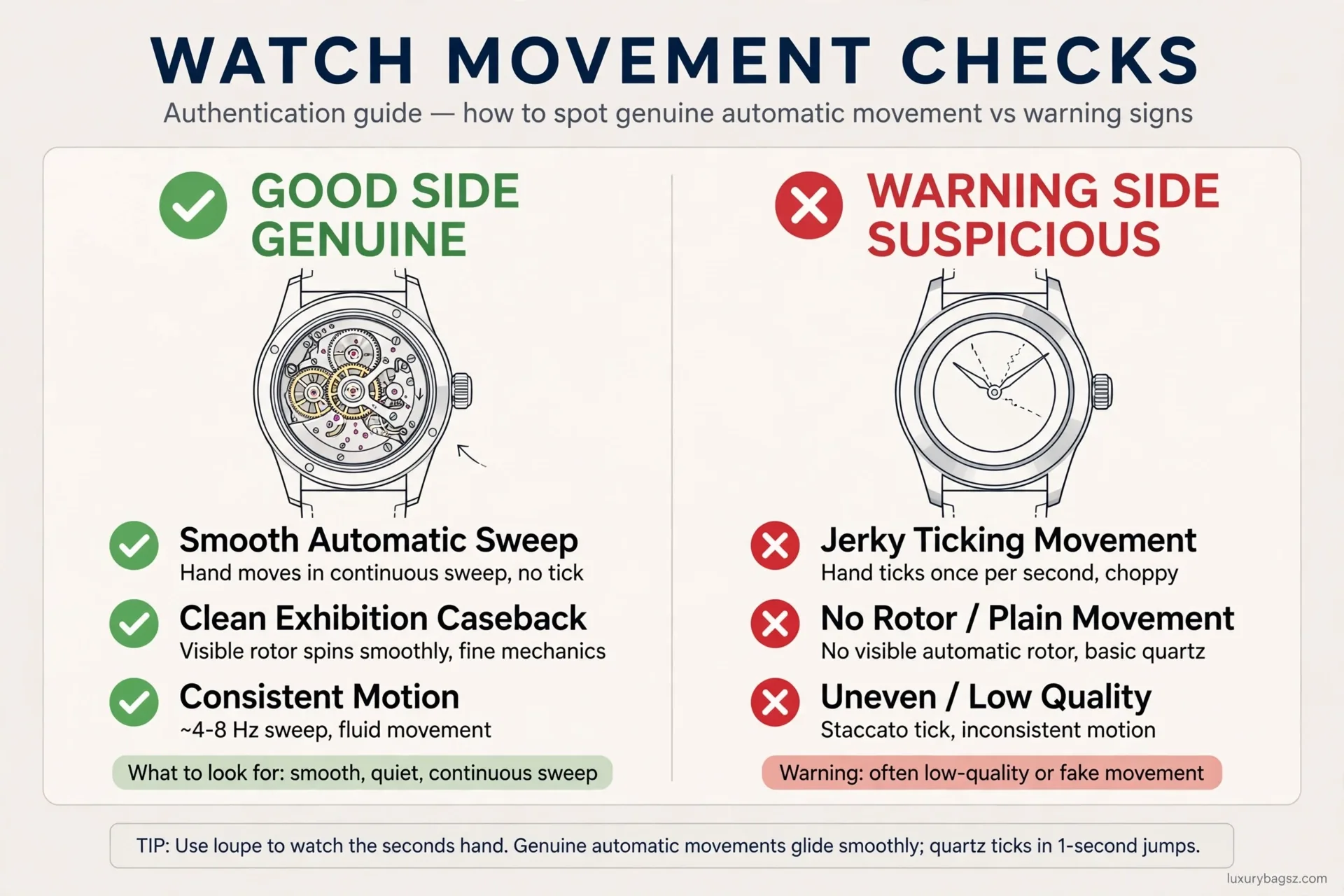
On skeleton models, look for real depth. A genuine UNICO chronograph shows layered bridges, gears and a visible column wheel working in three dimensions. Turn the watch and catch the light at angles. Real components shift in perspective; a printed skeleton pattern stays flat and lifeless. Use the chronograph. Genuine pushers feel crisp, the hands move correctly and the reset returns cleanly. Vague pusher feel and wrong subdial behaviour betray clones. Where a display back is fitted, finishing and engraving should be neat and specific, including the calibre reference correct for that model.

Serial Numbers, Cards and E-Warranty
Find the serial engraved on the case back. It should be deep, sharp and legible, typically six or seven digits, and it must match the warranty record. Our fake Rolex spotting guide teaches the same lesson across brands: a copied number from a real watch proves nothing by itself. Newer pieces use an e-warranty system, and an authorised dealer can verify a watch against brand records. A card and case mismatch ends the deal at once. Be wary of numbers that appear again and again on replica listings. Counterfeiters reuse a small pool of serials copied from photographed genuine watches.
Strap, Clasp and Crown Details
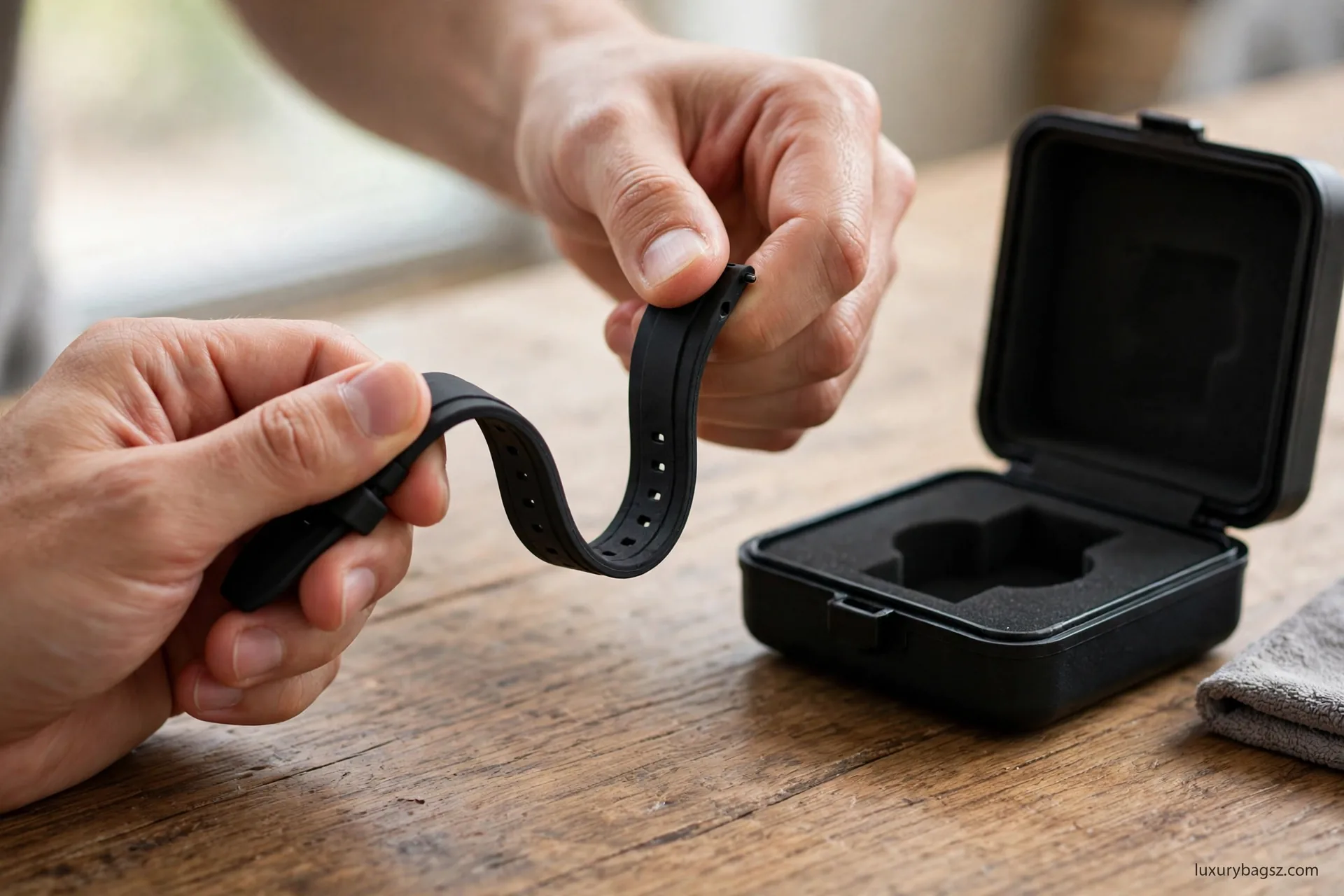
Genuine straps are supple, neatly moulded or cut, and fit the case with no gaps. Stiff, plasticky rubber with rough edges points to a replica. The clasp should carry clean, deep engraving, framed on many models by small H screws. Shallow or crooked clasp lettering is a common shortcut. Work the crown. It should screw and turn with a precise, engineered feel, and any logo detail should be sharp rather than soft or blobby. Even the strap screws and spring bars tell a story. Chewed, loose or ill-fitting hardware rarely belongs to a watch at this price level.
Chronograph behaviour deserves a full cycle, not a quick press. Start, stop and reset more than once, since clone movements often behave correctly once and drift on later runs.
Price and Seller Red Flags
Genuine Hublots cost thousands, even pre-owned. A current model offered for a few hundred pounds or dollars is a replica or a scam, almost without exception. Our investing in luxury watches guide explains why real prices hold a floor. Sellers who know watches know that floor too. Missing papers are not proof of a fake, but missing papers plus a bargain price plus a rushed seller is a pattern to walk away from. Insist on clear photographs of the screws, dial, case back and clasp. Blurry images at this price are a decision, not an accident.

Buying Safely and Getting a Verdict
Buy from authorised dealers or established pre-owned specialists who guarantee authenticity in writing and accept returns without argument. Our pre-owned luxury watches buyer's guide walks through the full safe route, from references to payment protection. For a watch you already own, a watchmaker or brand boutique can open, inspect and verify it properly. That verdict beats any home checklist. Once yours is confirmed genuine, our how to clean a watch guide covers safe care for cases, bezels and rubber straps.
Decoding the Reference Number
The reference on the paperwork is a description of the watch in code, and a fake rarely matches its own description. Hublot references follow a structure: a numeric prefix identifying the family, case size and style, letter pairs describing the case material and bezel, a dial code, and a suffix for the strap type. Resale guides illustrate with examples such as 301.PB.131.RX, a 44 mm Big Bang chronograph in rose gold with a black ceramic bezel, a black carbon-fibre dial and a rubber strap.
Decode the watch in front of you against that structure. If the reference promises a ceramic bezel and the watch wears steel, or names a rubber strap where leather sits, the paperwork and the piece have parted company, and at least one of them is not genuine issue.
Fakes often carry a real reference copied wholesale from a genuine listing, attached to a watch that approximates it. Approximation fails at the details the code specifies: the wrong dial finish for the dial digits, the wrong strap family for the suffix. Read the reference like a checklist rather than a label, and let it interrogate the watch.
Where the reference decodes correctly and completely, it joins the serial as corroboration. Where it decodes to a different watch than the one in the box, no amount of correct printing elsewhere rescues the deal.
The Date Window Under Magnification
Put the date under the loupe you brought for the dial printing. On a genuine piece the date numeral sits perfectly centred in its window, printed sharp and even, in the model’s own typeface, with balanced space around the digit. The window itself is cleanly cut, and the date changes with a decisive snap at midnight rather than a long, lazy drift.
Replica date work cramps. Digits sit too high or too low in the window, lean toward one side, or arrive in a thicker, heavier font than the genuine wheel uses. Because the date advances once a day, sellers show it statically; ask for the crown to be pulled and the date cycled, and watch several numerals pass, not just today’s.
Alignment faults multiply on chronographs, where the date must also agree with the subdial layout around it. One crooked numeral can be an accident of a photograph. A window where every numeral rides high, in the wrong weight, is a manufacturing signature, and it belongs to the copy factory.
Beyond the Bezel: The Case’s Other Screws
The six H-heads get the attention, but the case is a construction held together by many more fasteners: twelve screws build the Big Bang’s sandwich, and the lugs, strap attachments and case back all carry their own hardware. Fakes budget for the famous six and economise on the rest.
Work around the case systematically. Lug screws should be as cleanly machined as the bezel’s, seated flush, with slots and heads free of chewing and burrs. The strap-change system on models fitted with it should operate smoothly, releasing and locking with an engineered click rather than force or wobble.
Check that strap and case meet with the designed fit along the lugs, because replica cases are often a fraction off in the lug geometry, leaving a gap or an overhang no genuine assembly passes. Hardware quality that collapses away from the bezel is the replica’s budget showing, and it is one of the most reliable patterns in this guide: excellence everywhere is expensive, excellence only at the front is a costume.
Finish the circuit at the case back’s own screws and engraving depth. A watch genuine in every screw is a watch whose maker spent money where cameras rarely look. That is precisely the spending the counterfeiter skips.
Measure It: Size and Weight Against the Specification
Callipers settle arguments photographs cannot. Every reference publishes its case diameter and thickness, and a genuine watch matches them to a fraction of a millimetre. Replica cases, built around whatever clone movement was available, routinely come out a millimetre or so thicker, or a shade wider, than the reference they imitate.
Measure across the case without the crown, then the thickness from case back to crystal, and compare with the model’s specification rather than a general impression of size. A Big Bang that measures like a bigger watch than its reference is wearing the wrong case.
Weigh the watch too, against the reference’s material. Titanium, ceramic and gold have expected densities, and a case claiming one material while weighing like another has the same problem as the reference-code mismatches above: the description and the object disagree.
Neither test needs a laboratory: callipers, kitchen scales and the model’s published figures. Fakes survive on buyers never measuring, because everything about them was designed to be looked at, not checked.
Frequently Asked Questions
What is the quickest way to spot a fake Hublot?
Check the bezel screws. Genuine H-heads are deep, crisp and randomly angled. Shallow screws all aligned neatly are the classic replica tell.
Should Hublot screws line up?
No. Hublot deliberately leaves the bezel screws at random orientations. Perfect alignment looks tidy but is wrong for a genuine watch.
Can a serial number prove a Hublot is real?
Not alone, because counterfeiters copy real numbers. The serial must match the warranty record and the exact model, verified by a dealer.
How can I check the movement without opening the watch?
On skeleton models, look for genuine depth, layered parts and a working column wheel. Printed, flat dials with no real mechanics are fakes.
Do all Hublots have the same movement?
No. Movements vary by model, including the in-house UNICO chronograph family. Check that the calibre matches the reference you are examining.
What should a genuine Hublot strap feel like?
Supple, precisely made and gap-free at the case, with a cleanly engraved clasp. Stiff, plasticky straps with rough edges suggest a replica.
Is a cheap Hublot ever genuine?
A very cheap current model is effectively never genuine. Old, damaged watches can sell for less, but they still need expert verification first.
Are papers essential when buying pre-owned?
They strongly help, especially a matching warranty or e-warranty record. Missing papers raise risk and should lower the price you are willing to pay.
Can a boutique authenticate my Hublot?
A brand boutique or authorised dealer can verify serials and inspect the watch. An independent watchmaker can also give a reliable verdict.
Which models are faked most?
Popular Big Bang and Classic Fusion references are copied most heavily. Extra care, full photographs and a returns policy matter most on these.
Final Verdict: Trust the Machining, Not the Story
Fake Hublots copy the silhouette and fail the machining. Deep random screws, a layered real movement, sharp printing and a matching serial expose almost every replica. Buy through sellers who welcome those checks, and get a professional verdict on any watch that costs serious money. Certainty is part of the purchase.