

What Are the Different Styles of Designer Handbags? Totes, Crossbodies, Satchels, and More Explained
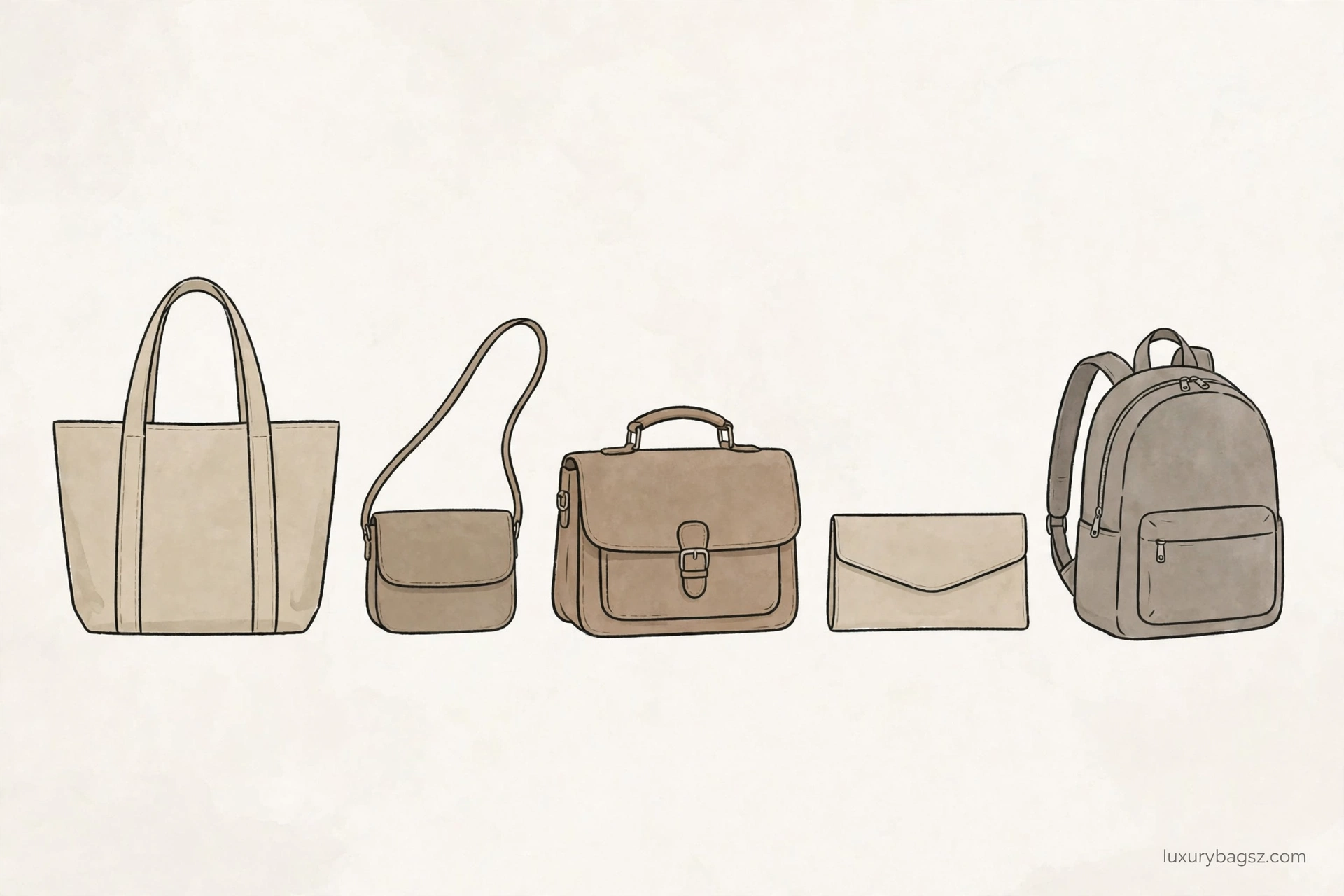
Every Designer Bag Is One of a Few Shapes
Nearly every designer handbag is a variation on a small set of shapes. Learn those shapes and you can read any bag at a glance: how it carries, how much it holds, and which occasions suit it. The brand and the price matter far less than the shape when you are choosing well.
A style is really three choices combined: the body shape, how you carry it, and how it closes. A tote is an open rectangle with two handles, a crossbody is a smaller body on a long strap, and a clutch is a small body with no strap at all. Change one of those three and the same leather becomes a different bag.
This guide covers the styles you will actually meet while shopping, with honest notes on what each one holds, where it works, and where it fails. Start with the shape that fits your day, then worry about the label.
Key Takeaways

- A bag style combines body shape, carry method, and closure; change one and the bag changes character.
- Totes suit heavy daily carry; crossbodies suit hands-free days; clutches suit evenings only.
- Structured bags hold their outline and look formal; slouchy bags feel relaxed and pack more softly.
- Strap drop matters as much as size: test every bag with a winter coat on.
- Open totes need a pouch inside for valuables; zip tops suit travel and crowded streets.
- One tote, one crossbody, and one evening bag cover most lives without a large collection.
- Buy the shape first and the brand second, and check pre-owned condition before paying a premium.
How to Read Any Bag Style in Seconds
Start with the body. Structured bags keep their outline when empty and crease at the corners, while unstructured bags slouch and mould to what is inside. Structure reads formal and polished; slouch reads relaxed and casual, even in the same material.
Next check the carry. Hand-carried bags suit short outings and formal rooms, top handles suit the arm, single straps suit the shoulder, and long straps worn across the body free both hands. The same body carried three ways feels like three different bags across a long day.
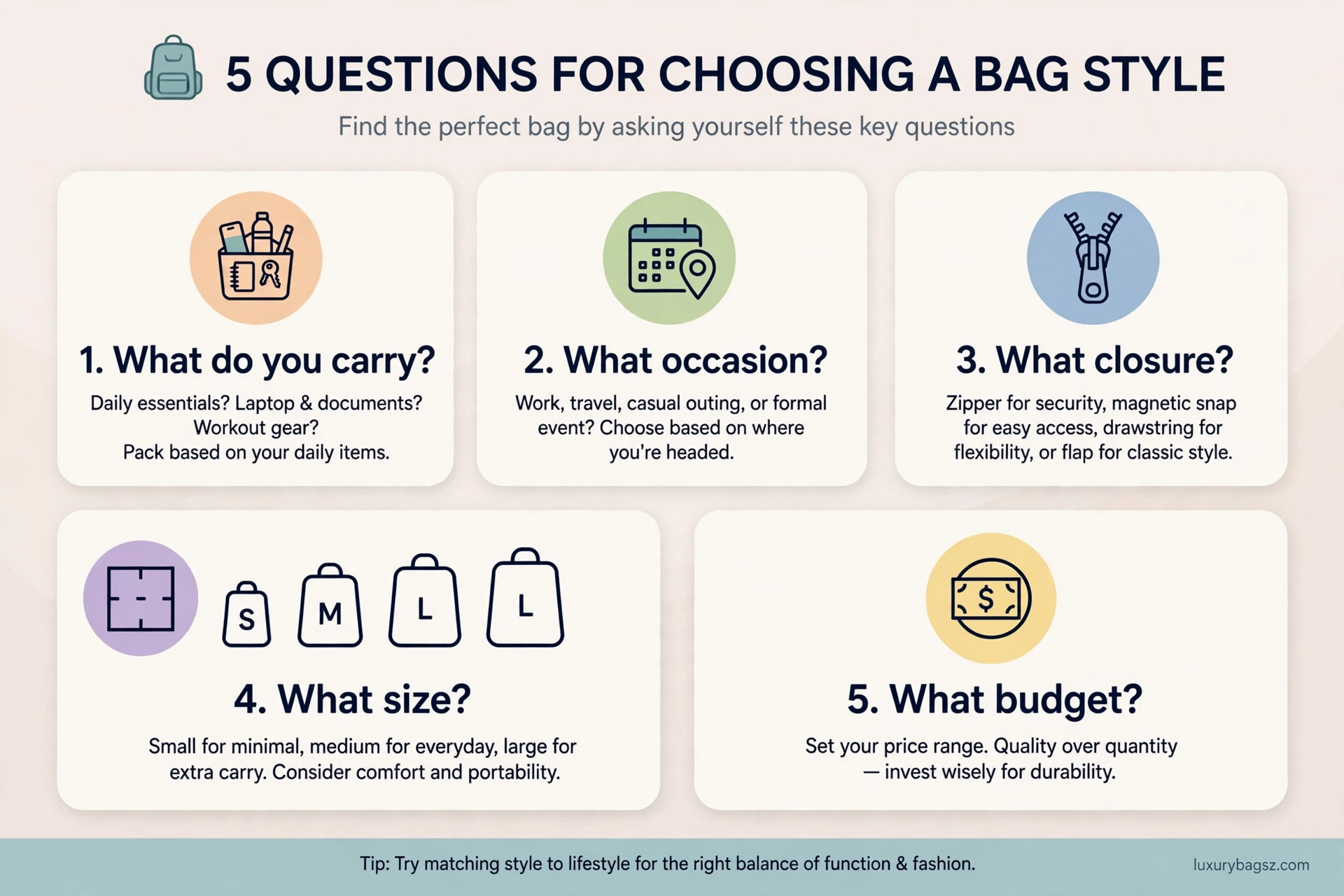
Finally check the closure. Open tops load fast but expose valuables, magnetic snaps add light security, zips suit travel, drawstrings suit soft bucket shapes, and flap-and-turnlock closures suit formal satchels. A bag that fails on closure for your routine will disappoint you no matter how good it looks.
Totes and Shoppers: The Workhorses
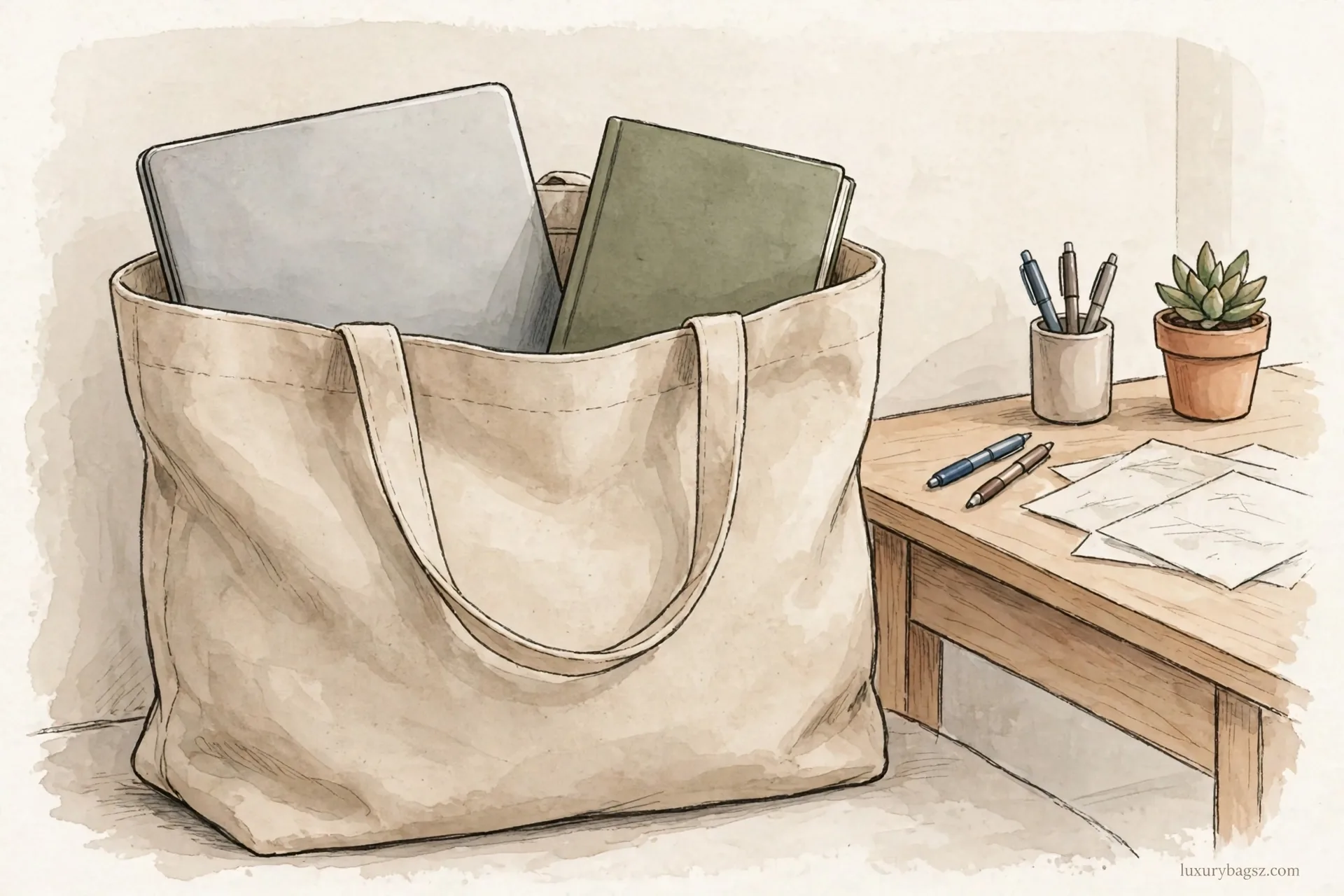
Totes are large, open or lightly fastened rectangles with two parallel handles, carried in the hand or on the shoulder. They hold laptops, notebooks, bottles, and the extras a day accumulates, which is why they dominate work and travel. Shoppers are their softer, larger cousins, often unlined and carried on the shoulder for weekends and markets.
The Louis Vuitton Neverfull is the most famous designer tote, light and roomy with side laces that slim it down. Our Neverfull sizes guide compares its sizes, while the Book Tote sizes guide covers the structured Dior alternative.
The Saint Louis tote offers a lighter, foldable take on the same idea.
Construction separates a tote that lasts from one that sags. Look for a reinforced flat base with feet, panels that are lined rather than raw, and handles attached through the body with rivets or a stitched tab rather than glue. A soft, unlined shopper in canvas or nappa will crease into a permanent V within a season if you carry a laptop in it.
Totes sag when overloaded or stored empty, so pack thoughtfully and store them stuffed. Our guide on how to carry a tote without sagging covers inserts, bases, and packing order. Keep valuables in an inner pouch, since an open top is easy pickings on a crowded street.
Shoulder Bags and Baguettes: The Day-to-Night Middle
Shoulder bags rest on one shoulder with a single strap, holding the bag at hip level. They balance polish and practicality, which makes them the most adaptable daytime shape: smart enough for the office, relaxed enough for dinner. Sizes range from compact flaps to roomy everyday carriers.
The baguette is the shoulder bag's dressier cousin: a small, long rectangle on a very short strap, tucked under the arm. Fendi made the shape famous, and our Baguette guide covers its history and sizes. Baguettes hold a phone, keys, cards, and lipstick, and little else, so they suit light days and evenings rather than work.
The hobo-adjacent shoulder shapes blur into the next group, but the rule holds: if the strap is short and the bag sits at the hip, it is a shoulder bag. The Gucci Jackie, covered in our Jackie guide, shows how a curved shoulder shape can move from casual to formal with a change of material.
Crossbody Bags: Hands-Free and Everywhere
Crossbody bags use a long strap worn across the torso so the bag rests on the opposite hip. That single detail makes them the best travel and errand shape: both hands stay free, the bag stays close, and the zip stays within reach. They come in sizes from tiny phone pouches to large day bags.
The Dior Saddle is the most famous designer crossbody shape, with its curved flap and equestrian roots, covered in our Saddle guide. Smaller crossbodies suit evenings and light days, while larger ones suit sightseeing and school runs. The strap must adjust long enough to clear a winter coat, or the bag will ride too high.
Size a crossbody by your real kit, not by the photo. A bag that holds phone, keys, cards, and sunglasses with room to spare is right for most days. Our guide to crossbody size explains strap drop and body fit, which matter as much as the bag's own measurements.
Top-Handle Bags and Satchels: Structure and Polish
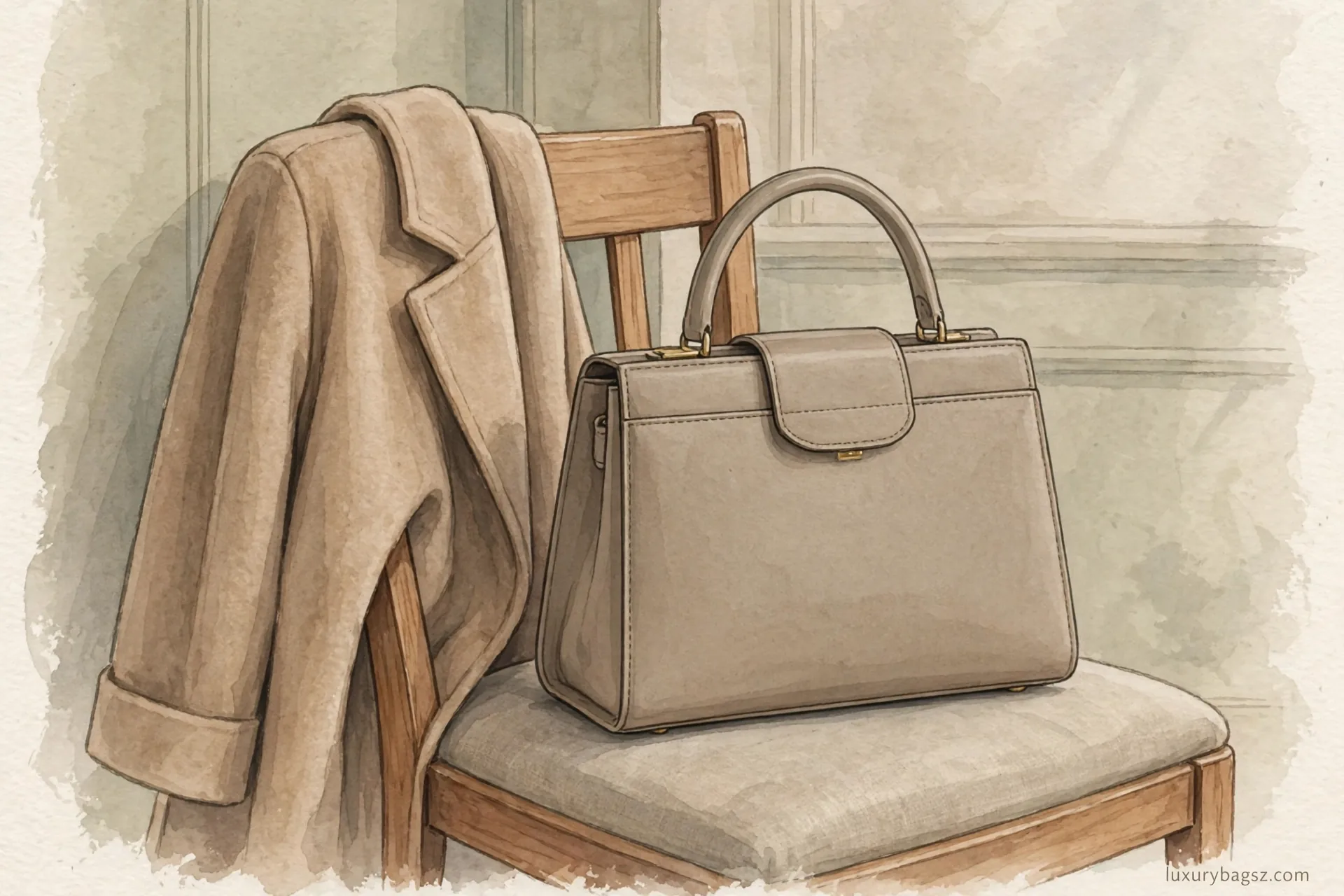
Top-handle bags are structured, carried by a single handle in the hand or on the arm, and they read instantly formal. The Hermès Birkin bag is the most iconic example, while the Kelly bag adds a trapezoidal shape and a detachable shoulder strap. Both suit occasions where polish matters more than capacity.
Satchels share the top handle but add a flat bottom, a rectangular body, and a fold-over flap with clasps or buckles, often with a long shoulder strap too. That mix makes satchels the most organised professional shape: laptops, books, and documents sit flat and protected. They suit work, study, and travel where order matters.
Both styles demand care with weight. A structured leather bag is heavy before you pack it, and overloading strains handles and stitching. Carry the essentials, use the shoulder strap where one exists, and store structured bags stuffed so they keep their outline.
Hobos and Bucket Bags: Soft, Roomy, Relaxed
Hobos are slouchy, crescent-shaped bags with no rigid base, worn on the shoulder. Their unstructured body moulds to what is inside, which reads relaxed and bohemian even in luxury leather. Bottega Veneta's woven hobo shapes, including the Jodie covered in our Jodie bag guide, show how softness can still look expensive.
Bucket bags pair a round base with a drawstring closure and usually a long crossbody strap. Louis Vuitton created the shape in 1932 to carry champagne bottles safely, and the outline survives in most bucket bags sold today. The drawstring suits casual days, though it offers less security than a zip in crowds.
Both styles pack more than they appear to, because soft bodies expand. That same softness means they slump when set down and show wear at the base first. A base insert helps a hobo keep its shape, and a pouch inside a bucket bag keeps small items from sinking out of reach.
Bowlers and Duffles: Travel Shapes With Structure
Bowler bags are practical, spacious shapes with a rounded top and two short handles, borrowed from vintage sporting luggage. Designers from Balenciaga to Prada have made their own versions, and the shape suits buyers who want elegance without a boxy outline. Bowlers work for day trips and weekends, holding more than a satchel of similar size.
Duffles are longer, with rounded ends, carry handles, and usually a shoulder strap. The Louis Vuitton Keepall is the designer benchmark, built for weekend getaways and short trips in durable, weather-resistant materials. Duffles hold a surprising amount, but their soft shape makes finding small items a dig.
Choose a bowler when you want a structured day bag with vintage charm, and a duffle when you need maximum packing for a short trip. Neither suits formal evenings, and both grow heavy fast when fully packed, so test the loaded weight before committing.
Clutches and Evening Minis: Small by Design
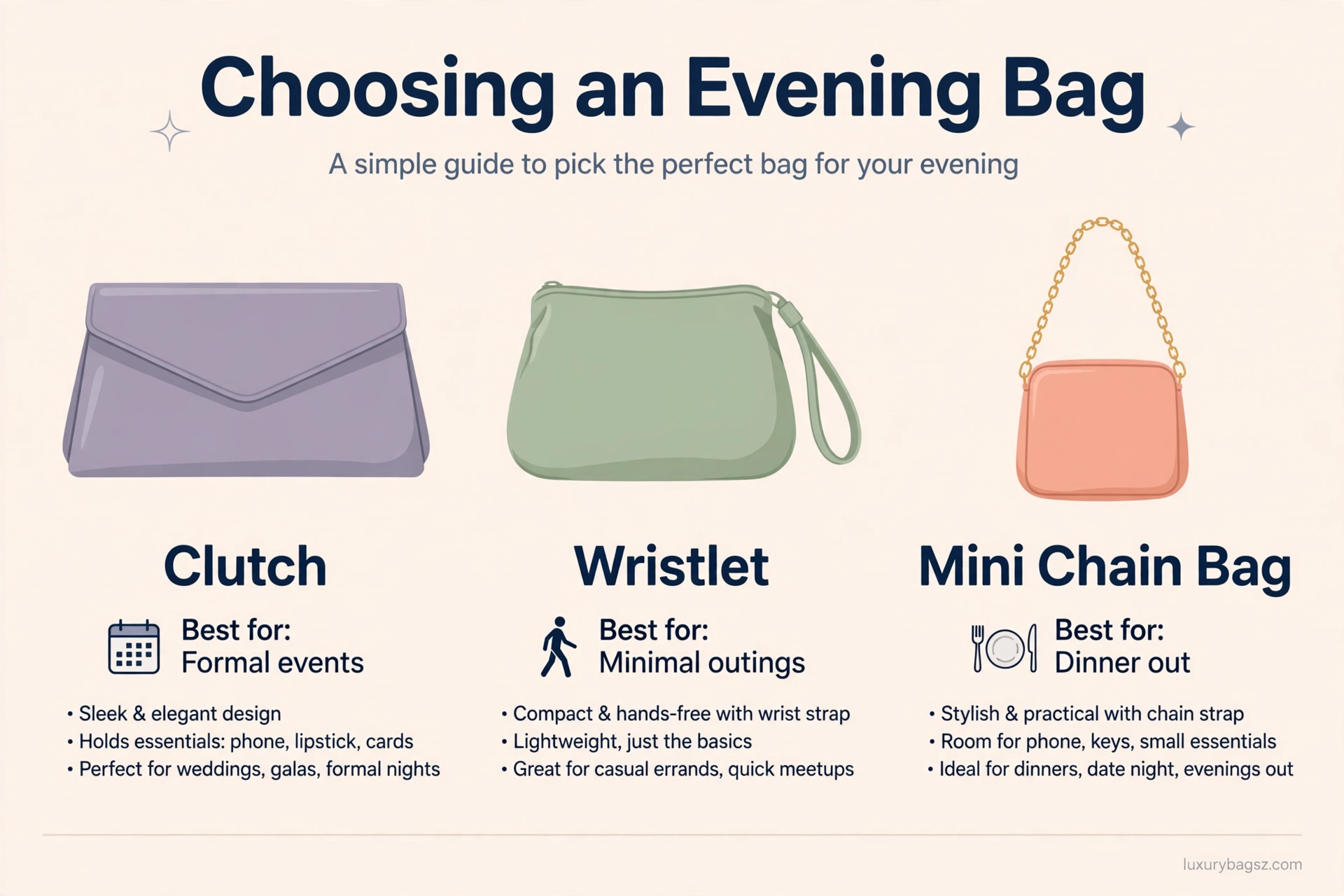
Clutches are compact, handheld bags for evenings and formal events, prioritising style over storage. They hold a phone, cards, keys, and lipstick, and little else, and they come beaded, jewelled, plain, or sculptural. A clutch with a detachable chain or wristlet adds flexibility without changing its evening character.
Evening minis extend the idea: tiny crossbodies, box bags, and minaudières, the rigid decorative cases closer to jewellery than luggage. A box bag holds its shape on a table but gives up room to its rigid walls, while a minaudière holds almost nothing by design. Buy these for the occasion, not for daily use.
The honest test is a night out, not a mirror. If you must leave essentials behind or carry a second bag, the clutch is too small for that evening. A slightly larger evening crossbody that holds everything beats a beautiful clutch that forces compromises.
Backpacks, Belt Bags, Messengers, and Briefcases
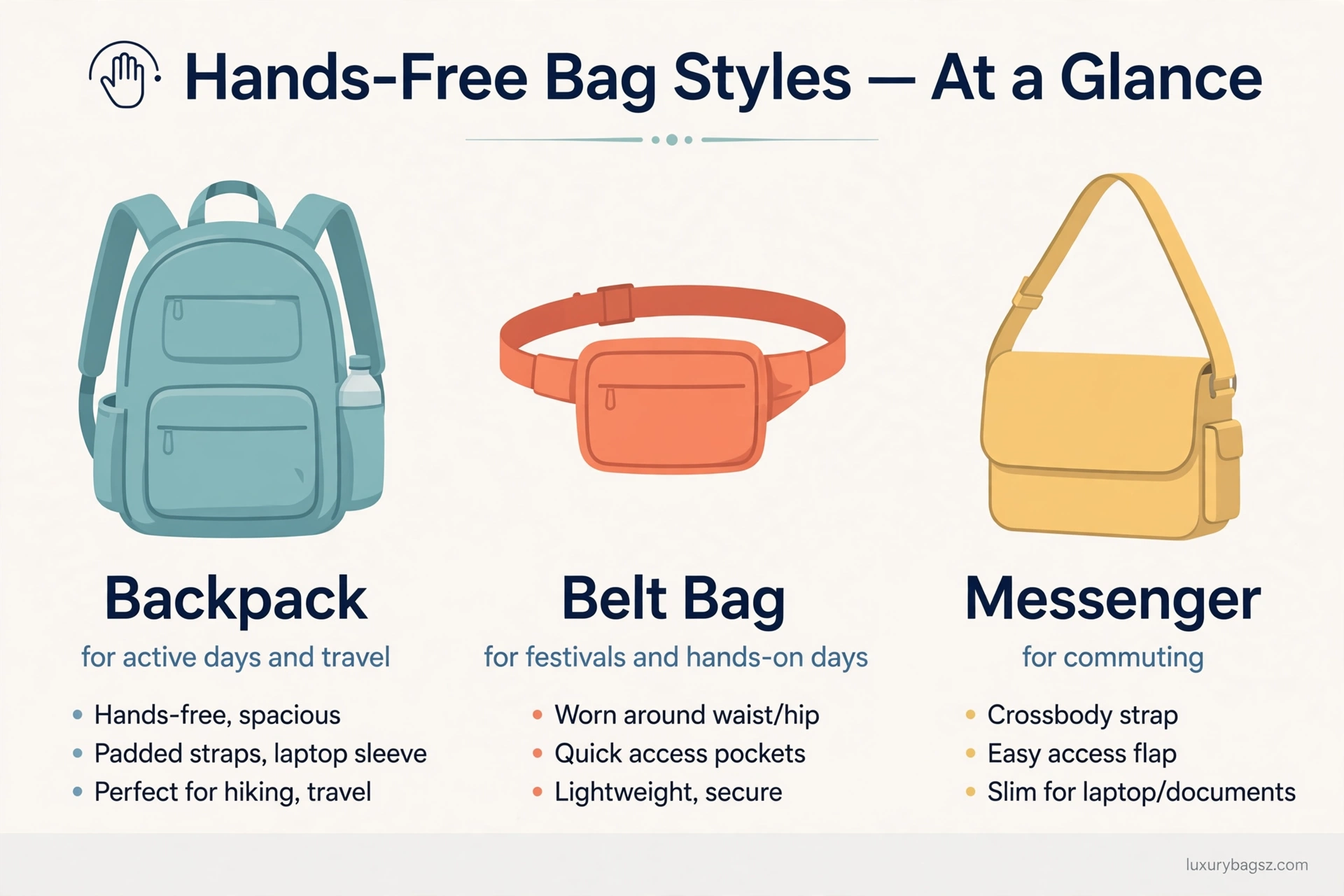
Designer backpacks shrink the school shape into a polished day bag, with two straps, organised pockets, and room for a tablet, bottle, and layers. They suit active days, museums, and travel, and they distribute weight better than any single-strap bag. They read casual, so they rarely suit formal rooms.
Belt bags, also called waist bags, strap around the waist or across the chest and keep essentials close with hands fully free. Once a retro curiosity, they are now a cult designer shape, and they suit festivals, travel, and hands-on days. They hold little, so pair them with a larger bag when the day demands more.
Messengers are square, single-flap bags worn over one shoulder or crossbody, descended from courier bags, while briefcases are slim, structured cases for documents and laptops. Both suit professional carry, with messengers leaning casual and briefcases leaning formal.
The sling is the belt bag's larger cousin, a single-strap pack worn diagonally across the back. It suits days when a belt bag is too small but a backpack feels too much, though it loads one shoulder and suits lighter kits best. Rolling suitcases complete the travel set for longer trips, trading handbag elegance for wheels and volume.
Picking Your Styles: A Small Collection That Covers Life
Most lives need only three shapes: a tote for heavy days, a crossbody for hands-free days, and a small evening bag for formal nights. Add a structured top handle if your work demands polish, and a backpack or duffle if you travel often. Everything beyond that is collecting, which is fine, but it is not need.
Match material to the shape's job. Coated canvas suits totes and travel shapes that take weather and scuffs, leather suits structured and evening shapes that reward care, and suede suits only bags you can protect from rain. A beautiful material on the wrong shape, such as suede on a daily tote, will disappoint fast.
Finally, buy pre-owned shapes with condition in mind. Check corners, bases, straps, and closures first, since those wear before the body does. A well-kept classic shape in a scuffed corner is still a good buy at the right price, but a sagging tote or a fraying strap costs real money to repair.
Flap Bags and Minaudières: Closures as Signatures
A flap bag closes with a fold-over front panel, and the hardware on that panel is usually where the house puts its signature. The archetype is the Chanel 2.55, named for its February 1955 arrival, with a plain rectangular turnlock, an all-metal chain, and a double flap that let women carry a bag on the shoulder.
Our guide to the 2.55 bag covers its history and sizes, but the practical point matters more when shopping. A double flap adds structure and takes away room, while a single flap holds noticeably more for the same outside dimensions. Neither opens quickly, so flap bags suit days without constant ticket and pass checks.
The evening branch of this family splits three ways. An envelope clutch is a flat rectangle with a fold-over flap, a frame clutch has a metal mouth with a kiss clasp, and a box bag is rigid on all sides with a hinged lid. A minaudière goes further still: a rigid jewelled or metal case, closer to jewellery than luggage, holding almost nothing by design.
Micro Bags and Oversized Totes: Scale as a Style
Scale changes a bag so much that it works almost as a style of its own. A micro bag holds a card, a key, and a lipstick, and that is the entire brief. Worn well, it functions as jewellery, with the real carrying done by a pocket or a coat, and it suits evenings and fashion moments rather than daily life.
At the other end, the oversized tote asks a genuine question about load. Anything above roughly four kilograms on a single shoulder strains the body, and the empty bag itself contributes before anything goes in it. If the empty bag already feels heavy, the full one becomes a commitment rather than a convenience.
Scale should also answer to your frame. A very large bag on a small frame reads as luggage, while a micro bag on a tall frame reads as an afterthought. Try both extremes with your usual coat on, and choose the scale that disappears into your outline rather than dominating it.
Photographs hide scale, so judge it in person or against a known reference. A bag beside a laptop or a doorway tells you far more than a styled product shot ever will.
Materials and Construction: What Defines Quality
Two bags in the same shape behave completely differently depending on the leather, the edge finish, and whether the panels are lined. Box calf is smooth and rigid, holds a sharp edge, and shows every scratch, which is why it appears on formal top-handle bags. Grained leathers are pebbled and forgiving, so scuffs disappear into the texture.
Lambskin is the softest and the most easily marked, so save it for occasional wear where softness is the point rather than a liability. Saffiano is calf leather pressed with a cross-hatch and finished with a wax coating, making it the most resistant of the four to rain and handling. For daily rotation, grained or coated leather is the safer choice.
Edges tell you as much as the hide. A painted edge, built up in thin layers and dried between coats, marks a properly finished bag, while a raw cut edge will fray. Check the hardware weight too: plated zinc feels hollow next to plated brass and wears through at the corners first.
Fabric bags follow the same logic. Woven raffia and silk will not take the punishment coated canvas takes, and both need protection from sun rather than water. Whatever the material, the way you care for the bag in its first year decides how it looks in its tenth, as our guide to leather bags and shoes explains.
Shopping Designer Styles Pre-Owned: What Wears First
Pre-owned shopping rewards buyers who check wear points before labels. Corners and bases wear first on totes and structured bags, straps fray at attachment points on crossbodies, and closures loosen on flap bags and buckets. Ask for close photos of all three before paying, not just a front view.
Colour and material move resale value alongside shape. Classic shapes in neutral colours and grained or coated materials tend to resell best, while very trendy colours and delicate suedes depend more on the season.
Our guide to condition grades explains how sellers describe wear, and our safe buying guide sets out the seller checks that matter most. Together they help you judge whether a used price is fair for the wear you can see.
Read the listing as a condition report, not a promise. A well-kept classic shape with a scuffed corner can still be a good buy at the right price, but a sagging tote, a stretched strap, or a failing zip costs real money to repair. Price the repair before you fall for the bag, and walk away when the total passes a better-condition listing.
Finally, test the hardware in person where you can. Zips should run smoothly without catching, clasps should snap shut firmly, and adjustable straps should hold their length under a light pull. Weak hardware on an otherwise lovely bag is a repair bill waiting to happen.
Frequently Asked Questions
What are the main styles of designer handbags?
The main styles are totes, shoulder bags, crossbodies, top-handle bags, satchels, hobos, bucket bags, bowlers, duffles, clutches, backpacks, belt bags, messengers, and briefcases. Most designer bags are variations on these shapes.
What is the difference between a tote and a shopper?
A tote is a structured or semi-structured open rectangle with two handles, while a shopper is usually larger, softer, and often unlined. Both carry a lot, but shoppers feel more casual and fold flatter for travel.
What is the difference between a satchel and a top-handle bag?
A satchel adds a flat bottom, a rectangular body, and a flap with clasps to the top-handle idea, often with a shoulder strap. A pure top-handle bag may have no strap and a simpler, more formal outline.
Are hobo bags still in style?
Yes. Soft, crescent hobo shapes remain popular, especially in woven and slouchy leathers. They suit relaxed outfits best and pair well with casual and bohemian styling rather than formal tailoring.
What bag style is best for travel?
A crossbody suits sightseeing and crowded streets, a tote suits carry-on organisation, and a duffle suits weekend packing. For longer trips, a rolling suitcase plus a crossbody covers most needs.
What is a bucket bag good for?
A bucket bag suits casual days when you want a roomy, soft bag with a drawstring close. It holds more than it looks, though small items sink, so an inner pouch helps.
Can a backpack be a designer bag?
Yes. Designer backpacks use premium materials and refined hardware in the classic two-strap shape. They suit active and casual days best and rarely suit formal occasions.
What is the best first designer bag style?
A medium tote or a medium crossbody makes the best first designer bag for most buyers. Both suit daily life, hold real essentials, and resell well in classic colours and materials.
How do I choose between a clutch and a mini crossbody for evenings?
Choose a clutch for formal events where you carry very little and want a polished look. Choose a mini crossbody when you need hands free or want to carry slightly more without a second bag.
Do designer bag styles affect resale value?
Yes. Classic shapes in popular sizes and neutral colours tend to resell best, while very trendy or very small shapes depend more on the season. Condition, completeness, and brand matter alongside the shape.
Summary
Designer handbag styles are simpler than the shop floor suggests. Learn the dozen shapes, match each one to a real day in your life, and let the brand follow the shape rather than lead it. A tote for heavy days, a crossbody for free hands, and something small for evenings will carry most people through most years.
Shop with your kit, your coat, and your calendar in mind, and the right style becomes obvious. That is the whole secret: the best designer bag is the shape you actually reach for, not the one that photographs best.






