

Designer Wedding Shoes: A Bride’s Guide to Styles, Comfort and Timing
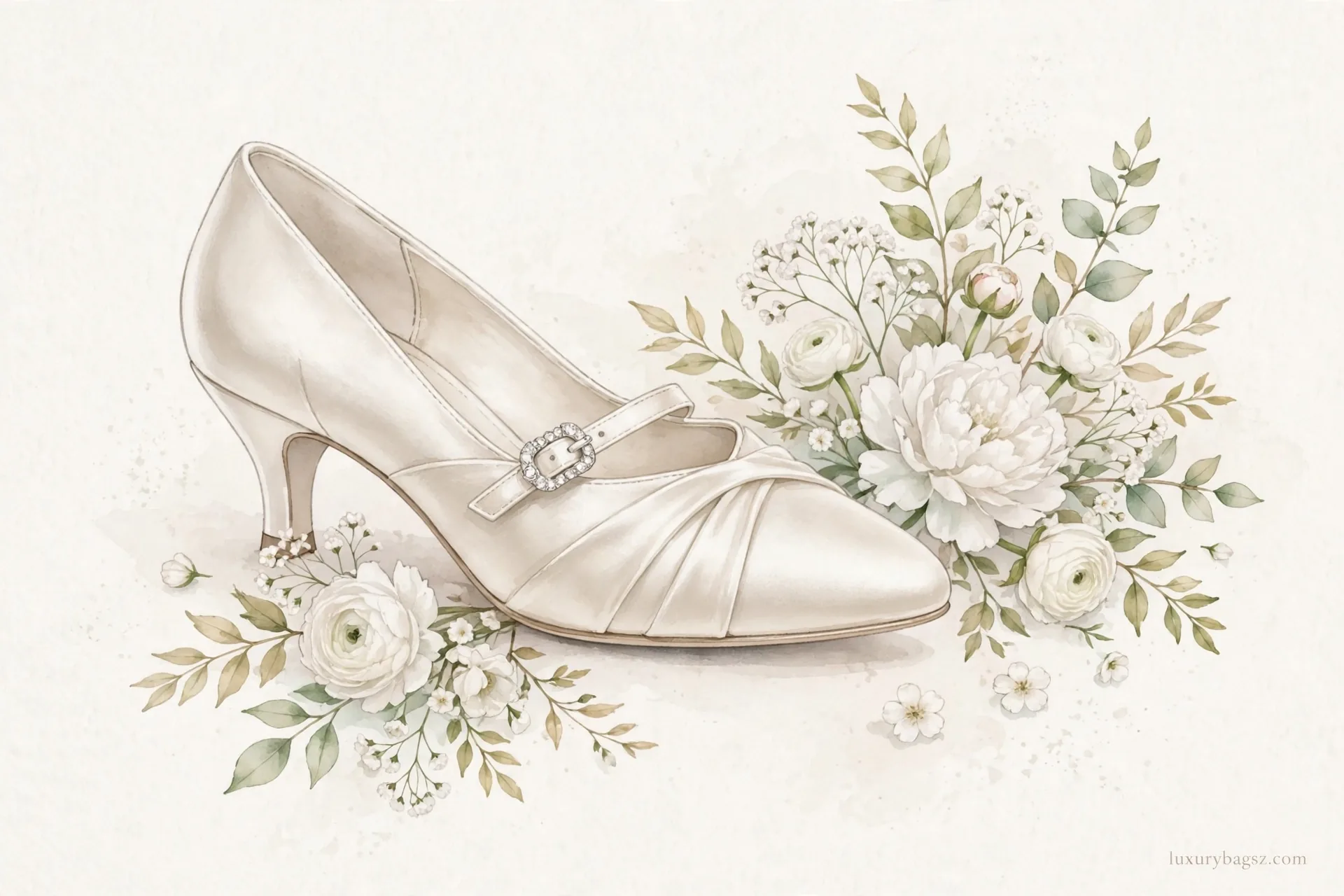
Wedding Shoes in Brief: Buy Early, Choose Comfort, Match the Dress
The right designer wedding shoes are bought before your dress fittings, in a heel height you can wear for eight hours or more, and in a shade of ivory, white or metallic that sits quietly under the gown. Comfort is not the opposite of luxury here; it is what makes the luxury wearable.
Choose the shoes once the dress silhouette is known, take them to every fitting, and break them in at home. A beautiful pair abandoned at 9 p.m. for bare feet was the wrong pair, whatever it cost.
Key Takeaways
- Buy wedding shoes before the first dress fitting; the hem is set to your heel height.
- Block heels and mid heights around 50 to 85 mm suit most brides and most venues.
- Ivory, champagne and soft metallics work under most gowns; blue makes a classic accent.
- Break shoes in at home over several weeks, never on the day itself.
- Pack a dressed spare pair for the evening, even if you never need it.
- Dyeable satin gives plain shoes a second life after the wedding.
When to Buy, and Why It Comes First
Buy the shoes as soon as the dress style is chosen, and always before the first fitting. Seamstresses set the hem to the exact heel you will wear, and changing height later changes the whole line of the gown.
Designer bridal styles sell through in popular sizes around peak season, so ordering early also protects your size. Our designer heels guide is a good primer on the shapes and heights on offer before you commit.
If you are buying pre-owned or ordering from overseas, add weeks, not days. Exchanges at bridal sizes can be slow, and the fitting calendar will not wait.
The Timeline That Keeps It Calm
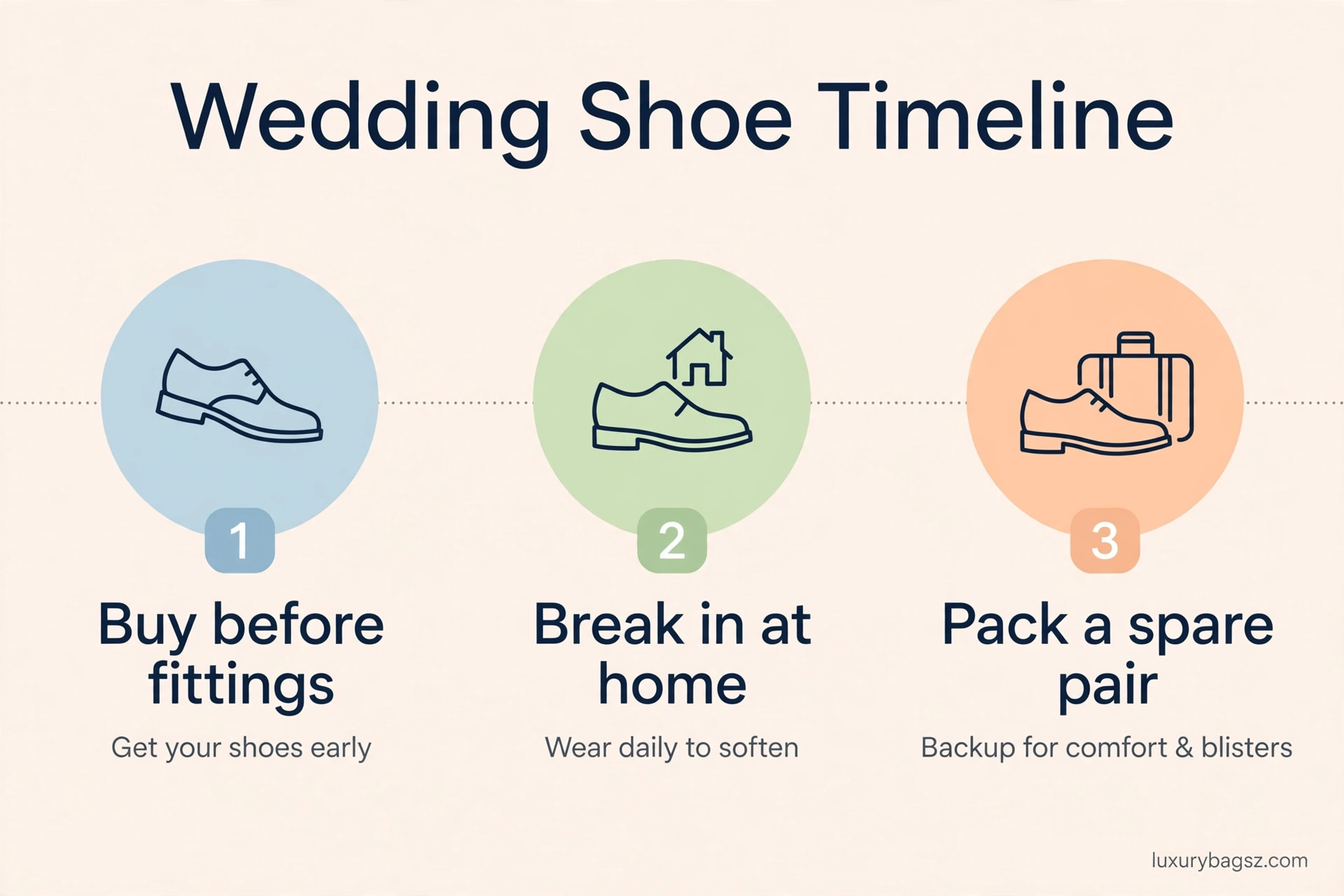
Three to six months out is the comfortable window for buying, which leaves room for exchanges and for the shoes to attend every fitting from the first one onwards.
Use the middle weeks to break the shoes in at home on clean floors. Short, regular wears soften straps and backs without marking soles that will be photographed.
In the final week, add sole grips if your venue has polished floors, pack the shoes with the dress, and place a dressed spare pair in your getting-ready bag.
Styles That Work Under a Gown
Satin pumps are the classic: closed, smooth and easy under lace or mikado. A jewel buckle or pearl trim adds the detail that shows in photographs when the hem lifts.
Block-heel sandals suit garden, beach and barn venues, where thin heels sink or slip. For full fairytale dresses, the embellished styles in our fairytale and special-occasion shoes piece are built for exactly that brief.
Slingbacks and low kitten heels serve brides who rarely wear heels. They read formal, stay comfortable, and are the styles most likely to be worn again afterwards.
The Blue Shoe, and Other Colour Choices
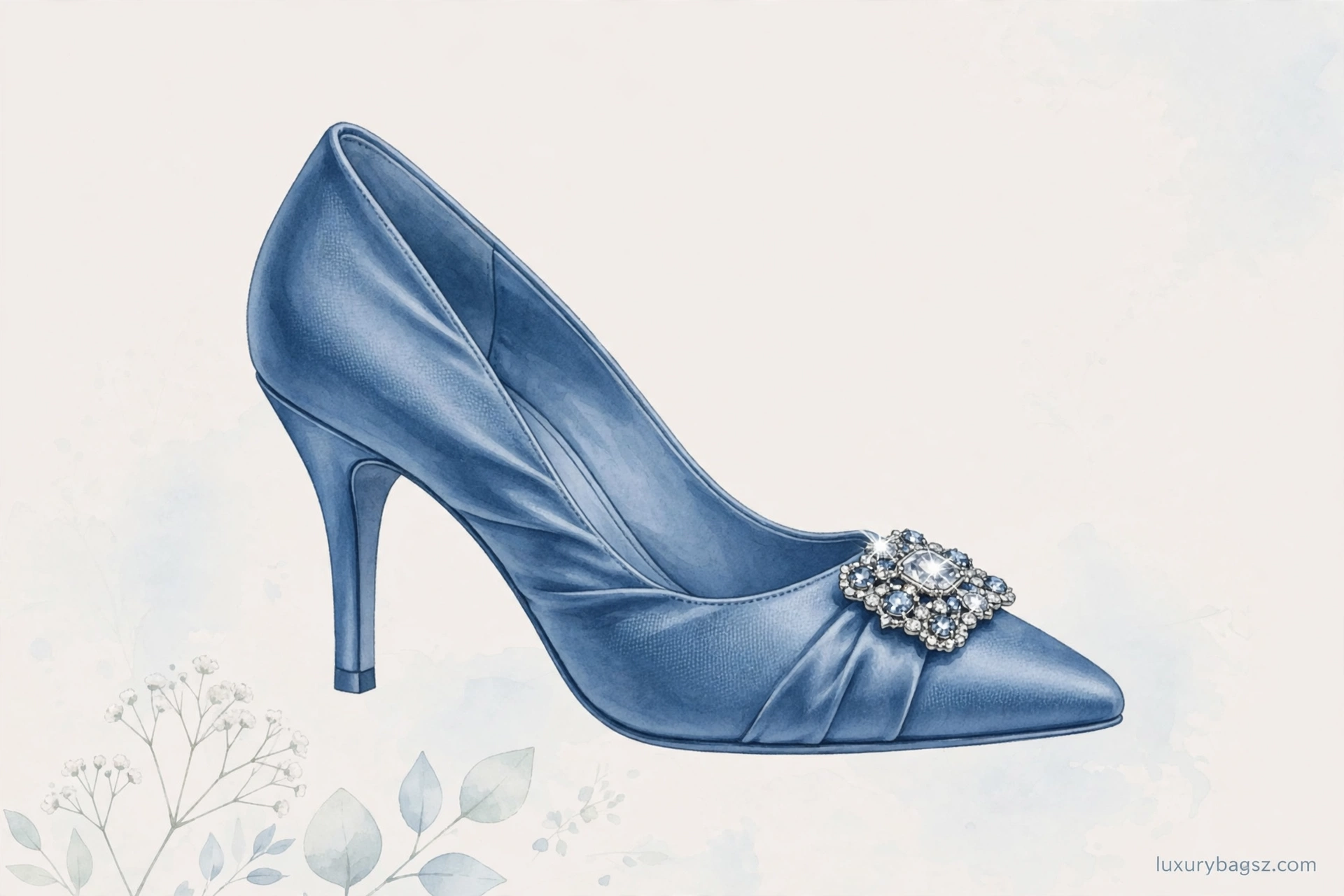
Something blue is the oldest trick in bridal dressing, and a blue satin pump does it elegantly. Pale and dusty blues sit happily under ivory and white gowns alike.
Metallics are the practical romantics' choice: gold and champagne work like neutrals on the day and join your party wardrobe afterwards. Our guide to perfect party shoes shows how the same metallic pair covers evening events long after the wedding.
Match dyeable satin carefully if you go that route, and always dye from a fabric swatch of the dress rather than a photograph, because screens shift colour.

Fit: The All-Day Rules
Fit wedding shoes in the late afternoon, when feet are slightly swollen, and stand in them for a full ten minutes in the shop. Any pinch present at minute ten will be a crisis at hour six.
Sizes vary by house, so use brand guidance where it exists, as in our notes on how to size Jimmy Choo shoes, and never assume your usual size transfers between Italian and French labels.
Walk on hard floors, climb a step or two, and practise your first-dance turns. The shoe should move with the foot, not clamp it, and the heel should never lift free.
Pre-Owned Bridal Shoes: The Quiet Bargain
Wedding shoes are often worn once, indoors, for a single day, which makes pre-owned bridal pairs some of the best-value designer shoes anywhere. Savings of half or more are common.
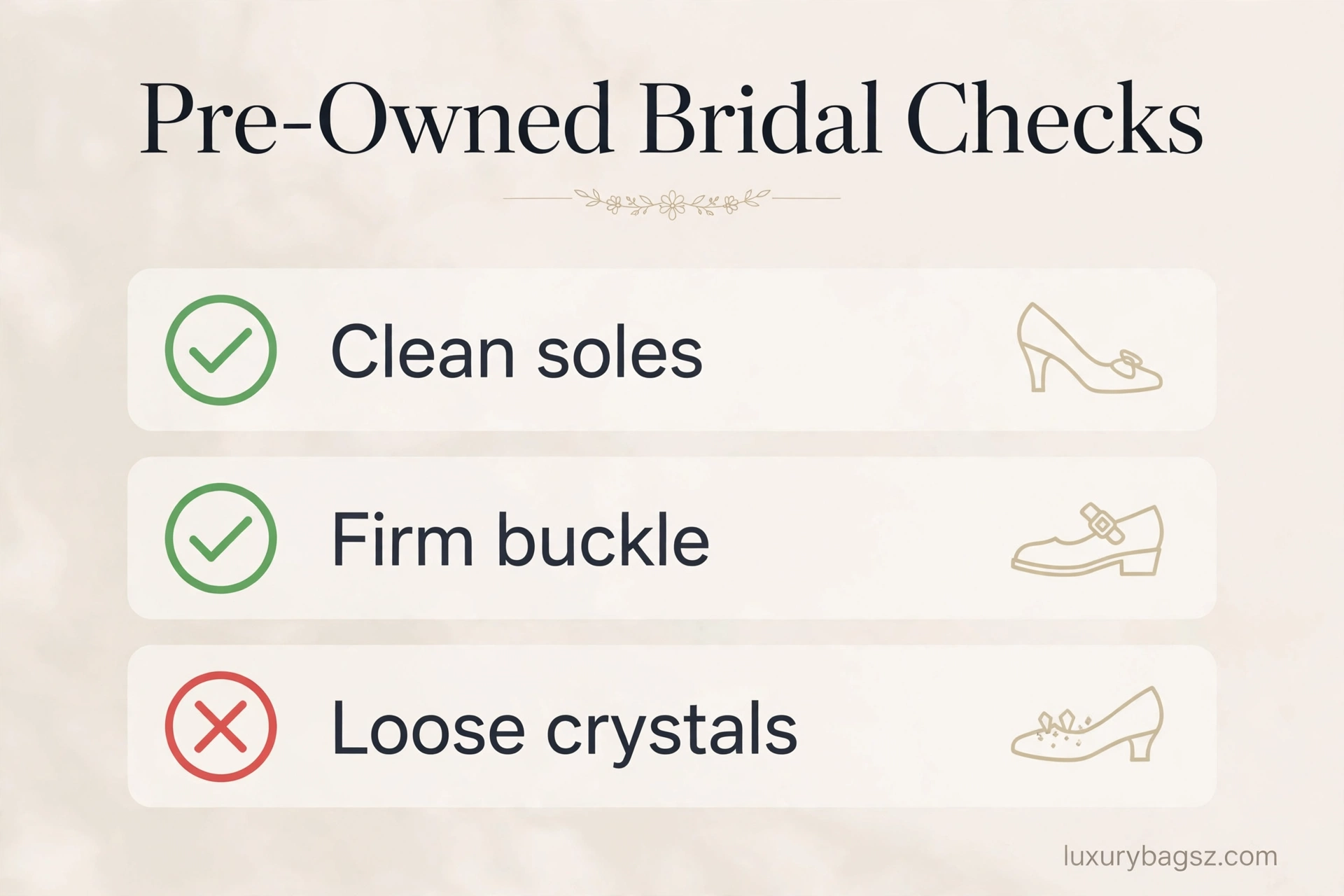
Check them as you would any used designer pair, using our guide on how to grade designer shoe condition: soles, insole marks, satin water spots and buckle stones all tell the truth.
White and ivory satin shows marks honestly, so ask for sole and heel photographs in daylight. A professional clean can lift light marks; deep water stains on satin rarely come out.
Day-Of Comfort Kit and Care
Pack blister plasters, a mini sewing kit for straps, clear heel protectors for lawns, and spare heel tips if your pair came with them. Small things, but each one saves a photograph.
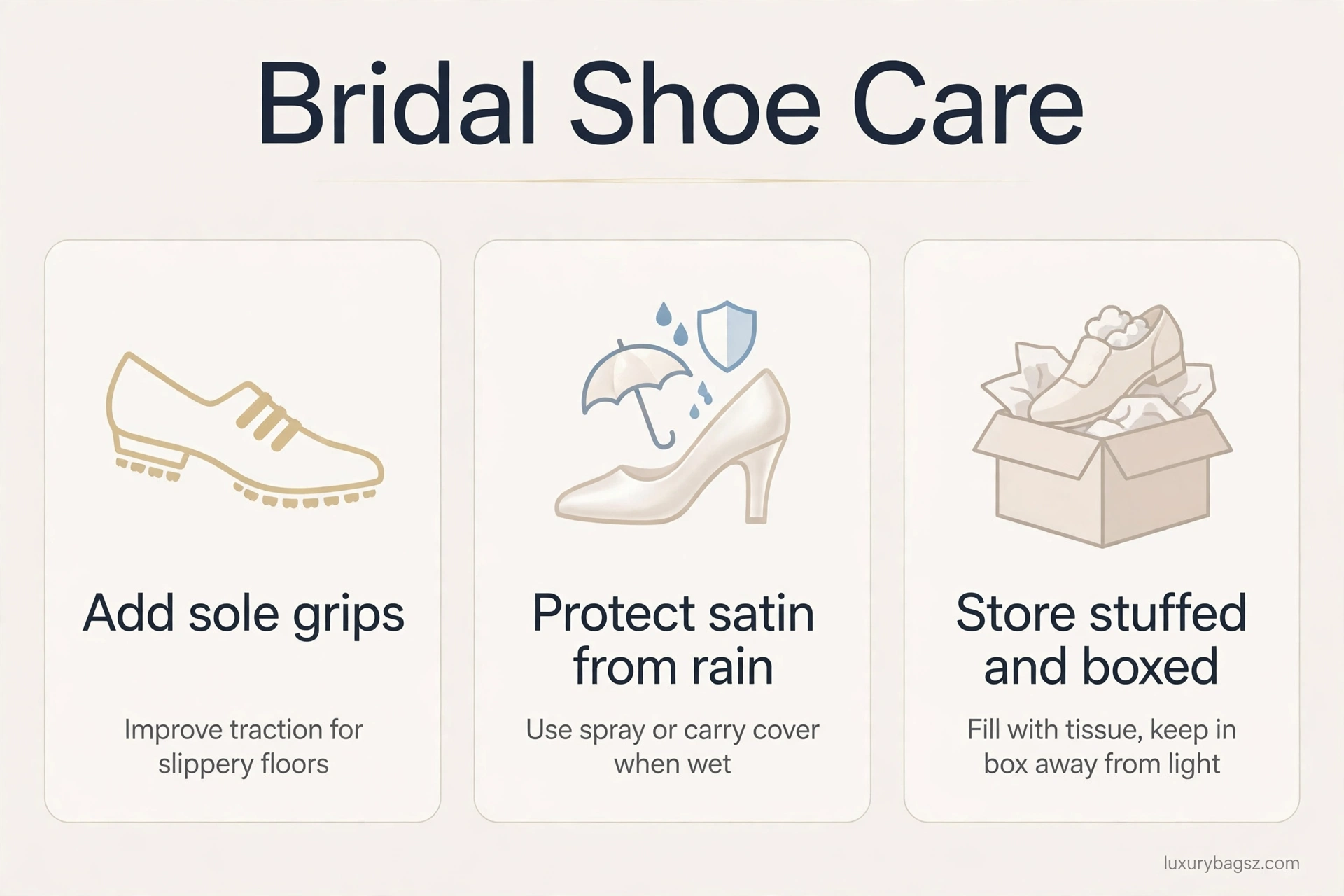
Sole grips are worth adding before the day if your ceremony involves marble, polished wood or wet stone. Test them at home so the slightly different feel is not a surprise.
After the wedding, wipe satin gently with a dry cloth, stuff the shoes with tissue, and store them boxed away from light. Ivory satin yellows in sunlight over time.
Prices and Where the Value Sits
Typical new designer bridal shoes run from around $600 to $1,300, with heavily embellished pairs above that. Dedicated bridal collections from evening houses sit in the same band.
Value sits in rewear potential: metallics, low heels and classic pumps earn second lives at parties and other weddings. If this is also your first designer pair, our guide to how to buy your first designer shoes covers the budgeting side in full.
Dyeing plain satin after the day is the other value move. A navy or black dye turns a one-day shoe into an evening staple for a modest cost.
Venue by Venue: Matching Heels to Ground
Grass is the famous trap. Stilettos sink with every step, which ruins the walk down an outdoor aisle and the photographs with it. Block heels, wedges and flats keep you on top of a lawn, and clear heel protectors rescue a slim heel you refuse to give up.
Sand is harder still. No heel works on a beach; brides who marry on sand wear embellished flats or go barefoot for the ceremony and keep the heels for the boardwalk, the photographs and the reception.
Polished stone, marble and old wooden floors punish smooth leather soles rather than heels. The fix is grip, not height: rubber half-soles or sole grips fitted a week ahead, tested at home, so the aisle walk is boring in the best way.
Cobbles and gravel sit between the two problems, unstable and sole-chewing at once. A block heel or a sturdier stacked heel walks them safely; delicate satin stilettos come home with shredded heel leather.
Winter weddings add wet leaves, ice and slush to the list. Closed shoes beat sandals, leather beats satin, and a pair of boots for travelling between venues protects the real shoes until the moment they are needed.
Dress Silhouette and Hem: Pairing Shoes to the Gown
Under a full ballgown or a long A-line dress, the shoe is mostly a comfort decision, because guests see it only in flashes when you walk or sit. Spend on fit and height accuracy rather than embellishment nobody will see.
Fitted silhouettes such as mermaid and trumpet gowns show the shoe’s outline through movement and often reveal the toe when you climb steps. A smooth, closed shoe in a matching tone keeps the line clean.
Tea-length, midi and short dresses put the shoes on full display, and here the shoe becomes part of the outfit rather than a secret under it. This is the case for the embellished, coloured or statement pair, because it will be photographed all day.
Jumpsuits and tailored bridal suits pair best with a sharp pump or a heeled sandal with a clean strap. Anything too soft or romantic fights the tailoring.
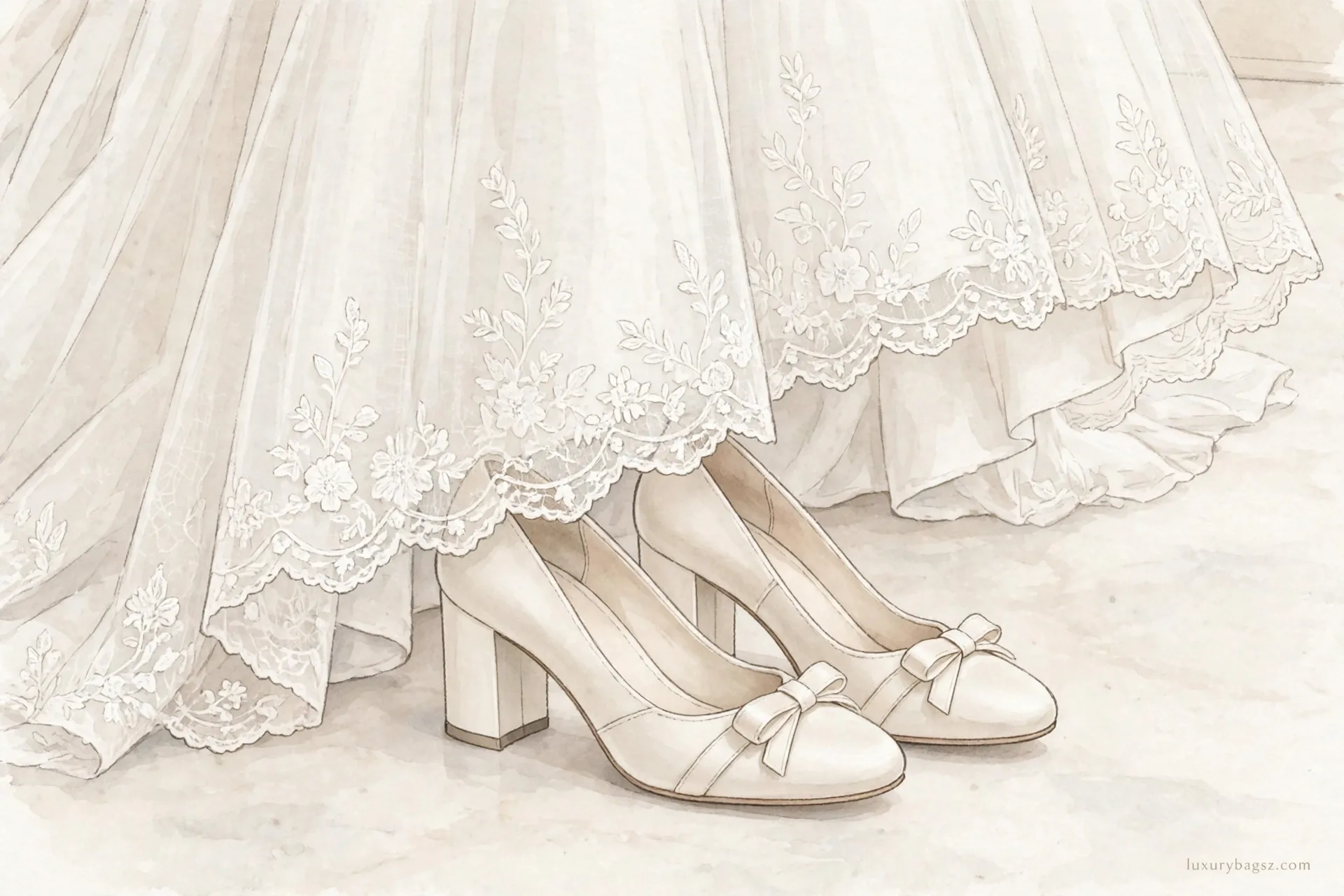
Whatever the silhouette, the hem is tailored to the shoe, so the pair you wear to fittings is the pair you marry in. Swapping to a different height on the day leaves the dress pooling on the floor or floating above it.
Breaking Them In: A Four-Week Plan
Week one is for the house only. Wear the shoes on carpet for twenty minutes in the evening, twice, with the socks or tights you plan for the day. Note every rub point while it is still information rather than injury.
Week two adds hard floors and stairs. Most strap edges and heel backs soften in this window; a strap that still cuts by the end of week two is telling you to exchange, not to endure.
Week three is a full rehearsal: an hour on your feet, including standing still, which is harder on feet than walking. This is when gel pads, heel grips or a cobbler’s small stretch earn their place.
Week four is rest and preparation. Add sole grips if you planned them, pack the comfort kit, and stop experimenting. Shoes that reach the wedding already friendly are the whole point of the plan.
If a pair still hurts at the end of week three, believe it. Exchange sizes, change styles or promote the spare pair, because wedding-day adrenaline hides pain for hours and then presents the bill during the dancing.
The Two-Shoe Strategy
Many brides quietly plan two pairs: the ceremony shoes, chosen for the dress and the photographs, and a reception pair chosen for dancing. Done well, nobody notices the swap and your feet get a second evening.
The rule that makes it work is height. The reception pair must match the ceremony pair’s heel height closely, or the hem you had tailored will drag or swing. A platform party sandal at the same effective height is the classic swap.
Flats are the honest third option, not a failure. An embellished flat for the last hours beats bare feet on a sticky dance floor, and it keeps the dress hem where it belongs if the flat’s sole is thick enough to mimic a low heel.
Tell your photographer and your maid of honour about the swap in advance. The spare pair then appears when you want it, instead of after a search through bags at midnight.
Bespoke and Made-to-Order Bridal Shoes
Several evening houses offer made-to-order bridal services: you choose the style, heel height, material and finish, and some add a personal detail such as initials or the wedding date on a small plaque under the sole.
The appeal is real. You get the exact height your hem needs and a shoe that exists in your size rather than the size that happened to remain in stock.
The costs are time and commitment. Made-to-order pairs take weeks to months, carry a premium over ready-to-wear, and are usually final sale, so the ordering must happen early and the sizing must be certain.
Order bespoke only after the dress is chosen and your size in the house is proven with a ready-to-wear fitting. A beautiful, unwearable final-sale shoe is the most expensive outcome in bridal footwear.
Weather-Proofing the Plan
Rain is the most likely disruption and satin is its favourite victim. A protector spray helps against light splashes but will not save satin in a downpour, so the real plan is transport: boots or covers until you are under cover, then the shoes.
Outdoor photographs on wet grass stain pale soles and heels in minutes. Carry the shoes to the spot, change on solid ground, and keep an old towel in the photographer’s path rather than discovering the mud afterwards.
Heat swells feet more than any other factor. Summer brides should fit shoes late in the day, choose straps that can loosen a notch, and keep the spare pair half a size more forgiving if the design allows.
Cold does the opposite and makes shoes feel loose. Insoles chosen for a winter wedding should be tested in cold conditions too, because a grip insert bought in a warm shop behaves fine but your feet inside it will not swell to fill the shoe.
After the Wedding: Dyeing, Storage and Second Lives
Plain satin shoes dye beautifully, and a navy, black or deep green dye converts a one-day pair into an evening shoe you will actually wear. Use a specialist dyer, take a dress swatch for colour matching, and accept that metallic trims and crystals stay their original colour.
Leather pairs need less reinvention. A classic pump in ivory leather softens into a summer work shoe with nothing more than a clean and a fresh set of heel tips.
Store wedding shoes stuffed with tissue, boxed, and out of sunlight, whether or not you plan to wear them again. Ivory satin yellows unevenly in light, and a crushed toe box never fully recovers its shape.
If you sell them, sell soon and honestly. Bridal shoes in popular sizes sell well while the style is current, and photographs of the soles, insoles and any marks, plus the box and dust bag, are what buyers pay for.
Mistakes Brides Make With Wedding Shoes
Buying the shoes before the dress is the first. The dress decides the height, the formality and how much of the shoe shows, so shoes bought in a vacuum are a gamble that fittings then expose.
Choosing a height you never wear is the second. Your wedding is the worst day to debut a heel height your body does not know, and the photographs will show the careful walking even if your feet stay silent.
Ignoring your partner’s height is the quiet third. Many brides want a particular line in photographs, and a very high heel can change that line more than expected. It is a preference, not a rule, but it deserves one thought before the order.
The last mistake is treating the shoes as a day-only purchase. The pairs brides love afterwards are the ones chosen with a second life in mind: a dyeable satin, a wearable metallic, a classic pump. Buy the wedding shoe, but let it be a shoe.
The Iconic Bridal Styles, House by House
Jimmy Choo treats bridal as a headline collection rather than a side line, with satin pumps, crystal-strap sandals and glitter finishes across several heights. If you want the shoe to sparkle in photographs, this is the house most brides start with.
Manolo Blahnik’s Hangisi, with its crystal buckle on satin, is the modern bridal icon — and in blue it doubles as the something blue, which is why the blue version outsells every other colour for weddings.
Christian Louboutin sells the red sole as much as the shoe. Bridal versions of its classic pumps and sandals photograph dramatically, but the house’s cuts run narrow and its highest heels are honest event shoes, so fit them with the all-day rules, not the photograph, in mind.
Roger Vivier brings the jewelled buckle heel in lower, kinder heights, and suits brides who want decoration without altitude. Aquazzura does the delicate strappy sandal better than almost anyone, in bridal whites and metallics that rewear easily.
Loeffler Randall’s pleated bow heels became a bridal staple by being pretty at a walkable height and a friendlier price than the heritage houses. For many brides they are the pair that proves designer bridal does not have to mean four figures.
Bridal Sizing Traps
Satin does not stretch the way leather does. A leather pump that pinches on day one may ease by the wedding; a satin pump that pinches on day one will pinch at the altar, so size satin honestly and never count on give.
Buy two sizes when you are between them and returns allow it, and judge both at the end of the day. Bridal sizes in popular styles sell out, so the exchange you assume will exist in six weeks may not.
Feet change across a long engagement more than brides expect: training, weight changes and pregnancy all alter fit. If your life includes any of those, delay the final size decision and keep the receipt window in mind when you order.
Ordering from overseas adds one more trap, because a size that looks converted on a chart may be the house’s own conversion, which differs. Buy from your own region where you can, or confirm the exact size printed inside the shoe before the return window closes.
The First Dance Test
More wedding shoes fail at the first dance than at the ceremony. Dancing adds turns, backward steps and a partner’s feet to avoid, all on a floor that may be polished wood, crowded and slightly sticky by evening.
Practise the dance, or at least its turns, in the actual shoes during the breaking-in weeks. A heel that catches on a backward step, or a strap that loosens when you pivot, will announce itself at home if you give it the chance.
If the dance matters to you more than the photographs do, let it choose the shoe: a secure strap, a heel you can turn in, and a sole with some grip beat a fragile stiletto every time.
Tell the band or DJ nothing; tell your feet everything. Brides who plan the swap to the reception pair usually time it for just before the dance, which is exactly when tired feet most need the rescue.
Frequently Asked Questions
When should I buy my wedding shoes?
Before your first dress fitting, ideally three to six months before the wedding. The hem is set to your heel height, and early buying leaves time for exchanges and breaking in.
What heel height is best for a bride?
Most brides do best between 50 and 85 mm. It gives shape under the gown while staying wearable for a long day of standing, photographs and dancing.
Can I wear flats on my wedding day?
Yes. Pointed, embellished or metallic flats look fully bridal, especially under long gowns where only the toe shows. They are also the safest choice for outdoor venues.
How do I break in wedding shoes?
Wear them at home on clean floors for short spells over several weeks. This softens straps and backs without marking the soles, and reveals any rubbing point early.
Are blue wedding shoes a good idea?
They are a classic way to add something blue, and pale blue satin sits well under ivory and white. Keep the shade soft so it complements rather than fights the dress.
Should I buy a spare pair for the evening?
Yes. A dressed flat or low sandal in a matching metallic takes ten minutes to swap into and saves the end of the night if the main pair starts to pinch.
Can wedding shoes be dyed afterwards?
Dyeable satin styles can, usually to navy, black or a deep jewel tone. Use a specialist, dye from a swatch, and accept that embellished or leather styles cannot be dyed.
Are pre-owned wedding shoes worth it?
Very often, yes. Many pairs were worn once indoors. Check soles, insoles, satin marks and buckle stones carefully, and budget for a professional clean if needed.
What shoes suit a beach or garden wedding?
Block heels, wedges or dressed flats. Thin stilettos sink into sand and lawns, and clear heel protectors only partly solve the problem on soft ground.
How much do designer wedding shoes cost?
Typically around $600 to $1,300 new, with crystal-covered pairs higher. Pre-owned pairs in near-new condition commonly sell for half that or less.
Final Verdict: Comfort Is the Luxury
Buy early, fit them to the dress and the venue, and choose the height you can forget about. The best designer wedding shoes are the ones still on your feet, unnoticed, when the last song plays.






