Where to Buy Pre-Owned Designer Bags in Tokyo: Districts, Shops and Risks
Where to Buy Pre-Owned Designer Bags in Tokyo: Districts, Shops and Risks
Start in Ginza for Hermès, Omotesando for Vintage Chanel
For pre-owned designer bags Tokyo is strongest when you shop by district, not by wandering. Ginza suits Hermès and flagship resellers, Omotesando suits vintage Chanel, and Shinjuku and Shibuya suit volume chains where you can compare ten bags in an hour.
Prices, grades and rules vary sharply between a boutique and a chain floor, even for the same model. Learn the grade first, check the price second, and keep your passport with you for the tax refund process below.
Key Takeaways
- Shop by district: Ginza for Hermès, Omotesando for Chanel, Shinjuku and Shibuya for choice.
- Grades are not standardised. An A in one chain is not an A in another, so read the flaw notes.
- Since 1 November 2026 you pay full price in store and claim the tax back on departure.
- Licensed dealers make Tokyo comparatively safe, but flea markets and private sellers sit outside that system.
- Exotic leathers can need CITES paperwork to take home, not just a receipt.
A One-Day Route Through the Bag Districts
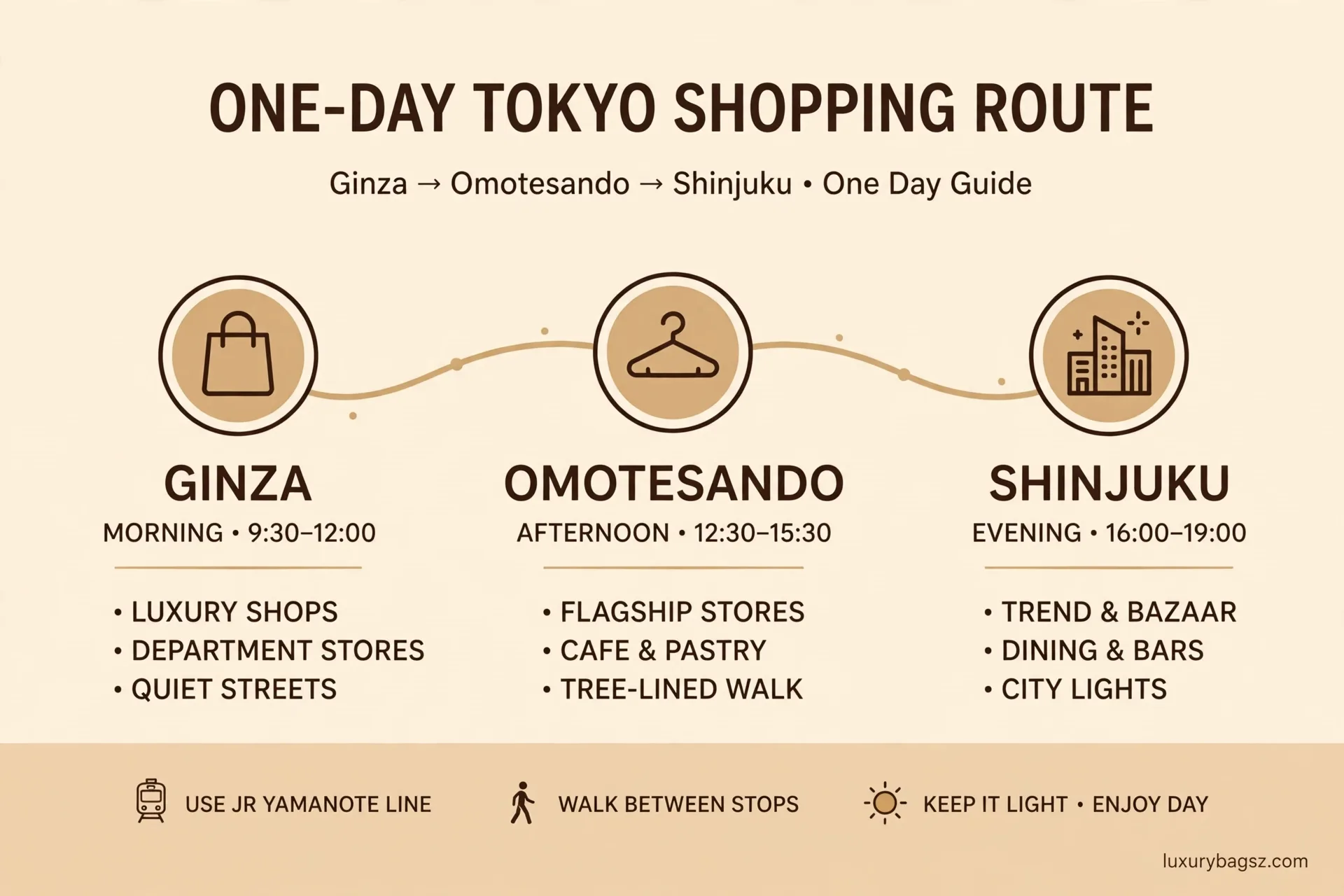
Start in Ginza, move to Omotesando after lunch, and finish in Shinjuku or Shibuya. Do the formal bags first, while you are fresh, and the high-volume floors last, when you know fair prices.
Ginza for Hermès and Flagship Resellers
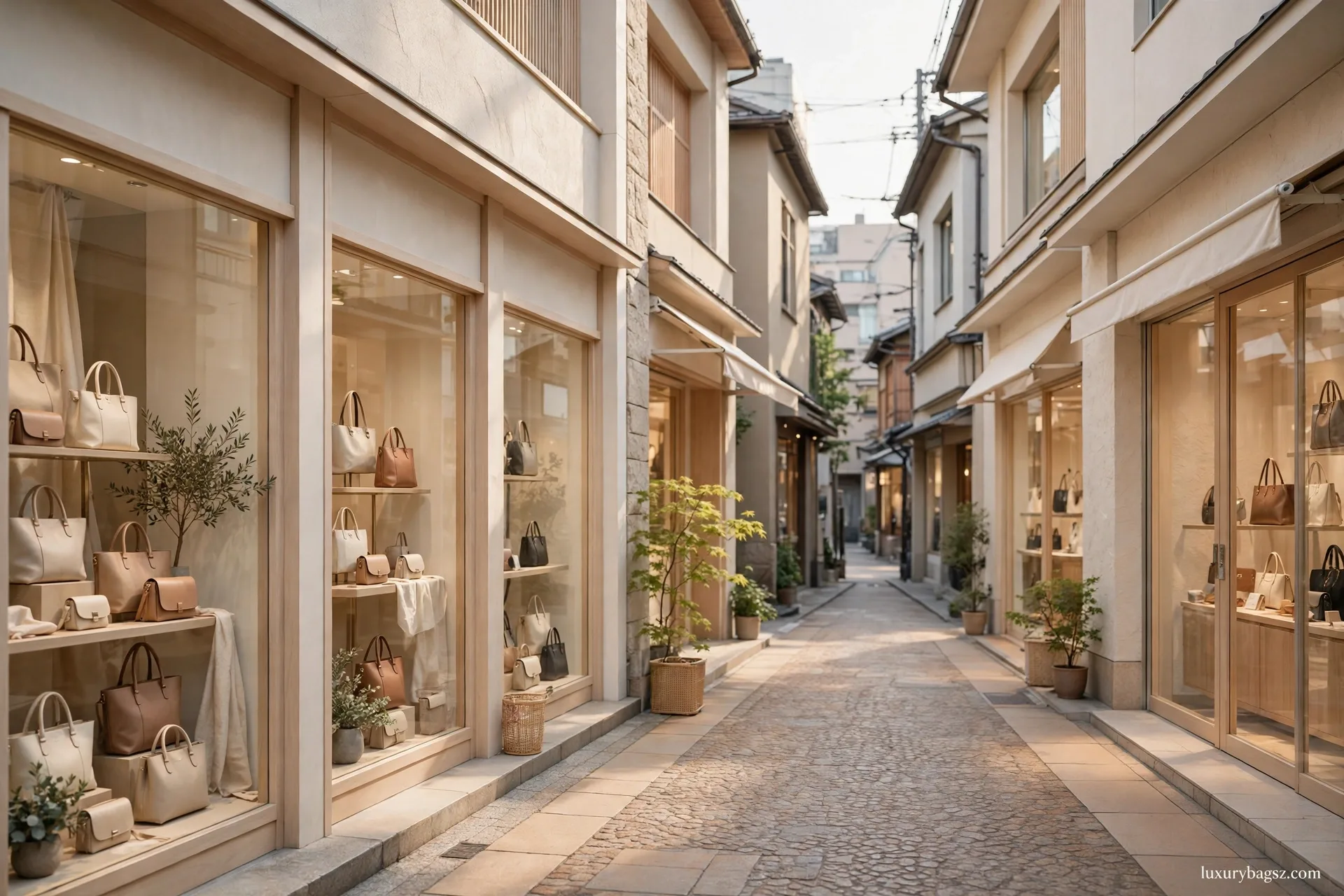
Ginza is the polished end of resale. Brand Off’s main store devotes a floor to Birkin and Kelly bags, Allu’s flagship spreads Hermès over several floors, and Daikokuya and Komehyo both have strong branches here.
Come here for an unused or near-unused bag, full sets and calm service. Expect the highest asking prices in the city. It suits a planned, high-value purchase best.
Omotesando and Aoyama for Vintage Chanel
Omotesando and neighbouring Aoyama are vintage Chanel territory. Amore is known for classic flaps and rare 1990s pieces, Vintage Qoo holds thousands of items over several floors, and Allu also trades here.
Come here for older Chanel, limited colours or discontinued shapes. Book ahead where a boutique offers reservations, because the best-known rooms queue at weekends.
Shinjuku and Shibuya for Volume and Choice
Shinjuku and Shibuya are where the chains cluster. Komehyo, Daikokuya, Brand Off and Ragtag all trade within a short walk of the stations, so you can compare the same Speedy or flap across grades in one visit.
Come here for choice, ticketed prices and a first purchase. Floors are busier than Ginza, but for Louis Vuitton, Gucci and Prada staples this is usually the deepest stock in Tokyo.
Daikanyama and Koenji for Smaller Boutiques
Daikanyama offers quieter, edited boutiques such as Hedy, with neutral everyday bags rather than trophy pieces. Koenji, a vintage neighbourhood, mixes small luxury corners with general vintage clothing shops.
Come here if you enjoy hunting and do not need a specific model today. Stock is thinner and prices can be softer, so allow these stops spare time, not a deadline.
The Shop Landscape, by Type
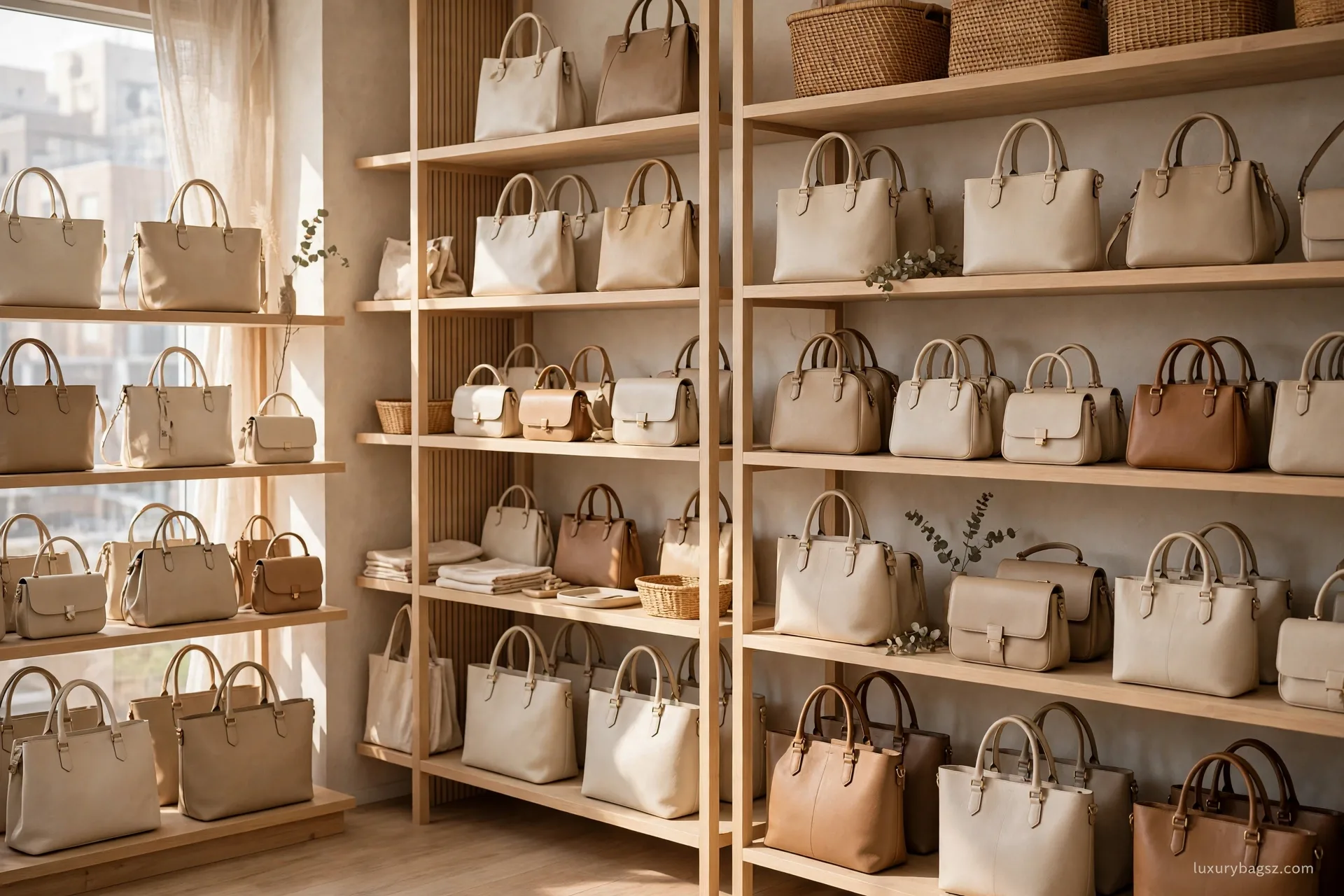
Curated vintage boutiques buy narrowly and present beautifully. Amore, Vintage Qoo and Allu focus on sought-after Chanel and Hermès, often in excellent condition. You pay for selection, presentation and rarity.
Chains buy broadly and grade at scale. Komehyo is Japan’s largest second-hand luxury retailer, Brand Off is strong on Hermès and watches, Daikokuya competes hard on price, and Ragtag leans younger and more fashion-led.

How Japanese Condition Grades Work
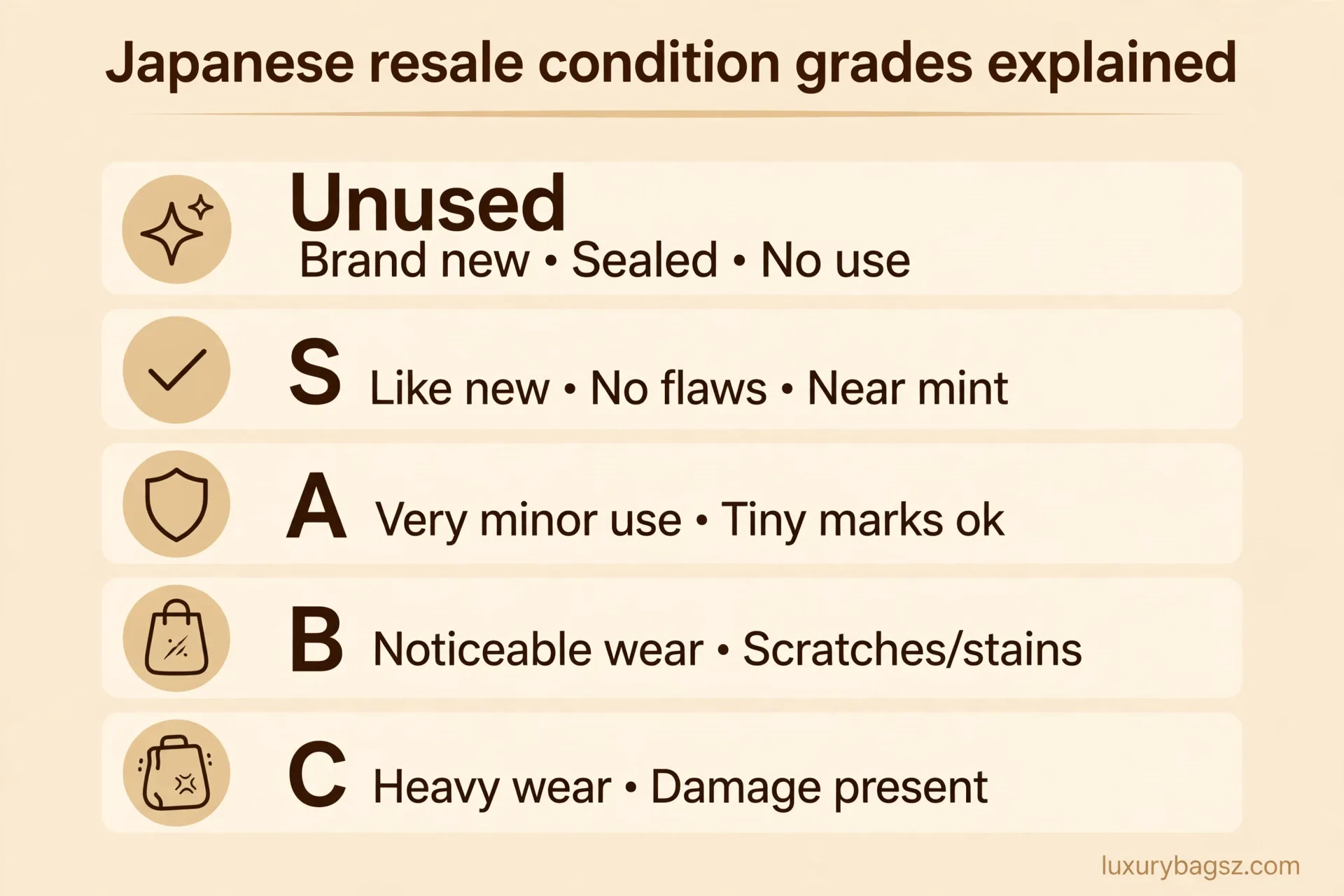
Most Tokyo resellers grade with letters, topped by a word you will see everywhere: unused. It means the bag was sold on without being carried, not that it is new from the brand boutique. Tags and protective film may remain.
| Grade | Usual meaning | What to check |
|---|---|---|
| S | Unused or like new at many shops | Film, tags and full set |
| A | Very light use, minor signs only | Corners and interior marks |
| B | Clear use, visible wear | Rubbing, stains and shape |
| C | Heavy use or damage noted | Repairs, odour and hardware |
The catch is that no national scale exists. Komehyo, for example, lists new, unused, then used S, A, B and C. Another shop may add AB or SA steps, or call S new rather than lightly used, so the same letter can shift.
Always read the shop’s own flaw notes and ask staff to show you each fault in person. Corners, handles and interiors decide value. For the checks to run anywhere, read buying a pre-owned bag safely before you travel.
What Three Reference Bags Cost in Yen
Treat these as observed ranges, checked in November 2026, not a price list. Leather, colour, year and inclusions can move one bag by hundreds of thousands of yen.
A Louis Vuitton Monogram Speedy 30 is the easiest benchmark. B-grade examples with lock and key were listed by Komehyo at ¥100,000, ¥110,000 and ¥120,000, tax included, in October 2026. Cleaner A-grade Speedy bags sit higher, broadly to around ¥250,000.
For Chanel, flap examples in Japanese live listings in October 2026 included a lambskin Jumbo at ¥650,000 and a Mini flap at ¥740,000. Older, smaller or more worn chain bags cost far less, and black caviar in top grades costs more.
For Hermès, Komehyo and Daikokuya Birkins and Kellys generally start around ¥1.5 million for common leathers and sizes, a guide published in October 2026 found. Rare sizes, colours and exotics climb steeply from there.
Buy-back lists show the spread. Daikokuya’s October 2026 list put used Kelly 32 bags at about ¥770,000 to ¥1,510,000 to buy in, while Komehyo put a lightly used Kelly 25 at ¥2,800,000. Shop prices sit above buy-back.
Why Japan Feels Safer, and Where That Stops
Japan’s resale trade is licensed. Under the Secondhand Goods Business Act, dealers need a permit from a prefectural public safety commission, must verify who sold them each item, and must keep transaction records.
Counterfeit goods also carry serious legal risk for a licensed dealer, and big chains add in-house authenticators. A named Ginza chain store is a very different risk from an anonymous listing.
Protection stops where licensing and accountability stop. Flea market stalls, peer-to-peer auction apps, social media sellers and private deals offer no chain guarantee, and condition photos can hide odour, repairs or a swapped strap.
Even in a good shop, do your own checks. Follow how to authenticate a pre-owned bag on stitching, hardware, stamps and codes, and keep the receipt and any shop certificate with the bag.
Tax-Free Shopping After 1 November 2026
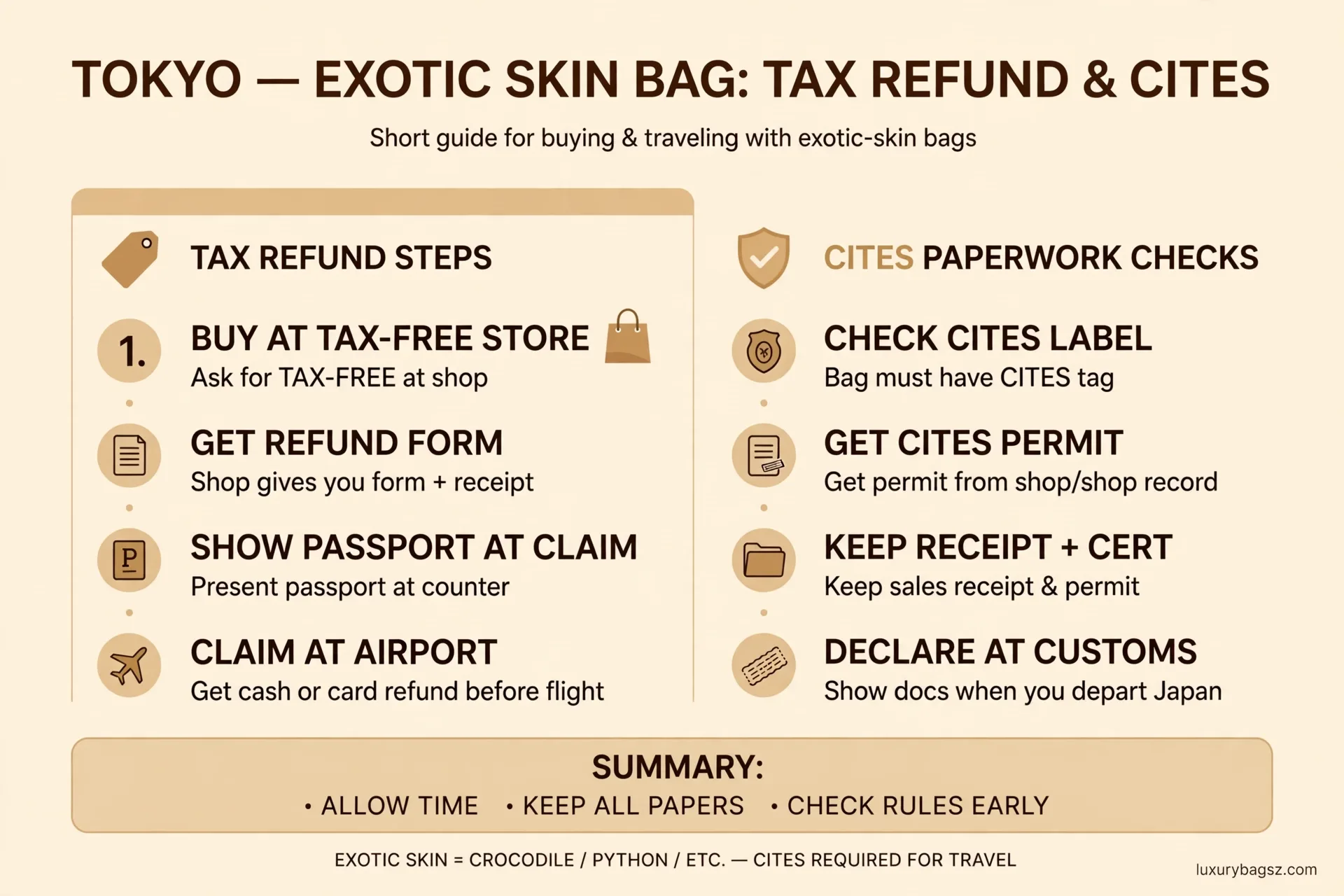
Japan changed the system on 1 November 2026, as set out by the National Tax Agency and the Japan Tourism Agency and checked for this guide on 18 November 2026. The old instant discount at the till has gone.
You now pay the full tax-inclusive price in store. Staff record the sale against your passport, and you register how the shop will refund you, by card, bank transfer, app or, where offered, cash at departure.
On leaving Japan, present your passport at a customs terminal at the airport or seaport, before you check bags in, so the goods can be confirmed as leaving. Customs may ask to see them, so keep purchases accessible in hand luggage.
The refund follows after customs confirmation, paid by the shop or its operator, not by customs. Allow extra time: a bag already checked in cannot be shown and may lose its refund. Card refunds can take weeks.
The basics still apply. You must be a temporary visitor staying under six months, spend at least ¥5,000 before tax at one shop on one day, and complete customs confirmation within 90 days of purchase. The old ¥500,000 consumables cap has gone.
The Practical Risks and Hidden Costs
Shop Rules That Surprise Visitors
Some boutiques ban photography and filming, limit how many bags you may handle, or will not let you try a bag on, wear it or fill it. Staff may hold the bag, turn it and open it for you instead. Ask first, and do not argue the rule.
Prices at the big chains are fixed, so do not expect haggling. Smaller shops may move a little on a slow, lower-grade piece, but a polite single ask is the limit.
Payment, Language and Carrying It Home
Major chains take major cards, but some small boutiques prefer cash or limit cards on negotiated prices. Tell your bank before you travel, because a single high-value foreign purchase is exactly what fraud systems block.
Large Tokyo branches usually have workable English, yet flaw notes may be in Japanese only. Use a translation app on the condition card, photograph the grade tag, and confirm returns in writing, as many resale sales are final.
At home, your own customs rules apply. Declare the bag where required and expect duty or tax above your personal allowance. Keep the shop receipt, refund record and any authentication papers together for that conversation.
Exotics and CITES
Crocodile, alligator, python, lizard and ostrich bags sit under CITES, the treaty controlling trade in protected species. Most handbag exotics need an export permit or re-export certificate, and some destinations also need import clearance.
A pre-owned exotic without matching paperwork can be seized, however genuine it is. Before paying, ask the shop what CITES documents come with the bag and whether they cover your home country, or choose a standard leather instead.
Buying From Abroad After You Leave
The hunt does not have to end at the airport. Komehyo, Brand Off, Daikokuya and Allu all sell online, and export sales are normally priced without Japanese consumption tax, with shipping shown at checkout and home-country duty down to you.
Official chain stores are the safer route from abroad, because the grade, branch and return terms sit behind a named business. That mirrors the wider choice in where to buy designer fashion once you are home.
Proxy buyers and auction routes add risk. A proxy buys in your name on Yahoo! Auctions or Mercari, so a fake, a wrong grade or a missing accessory can leave you with fees, no return and a seller you cannot reach.
For a contrast, compare it with the Dubai bags edit, where the market and stock feel very different. Then set alerts with the Tokyo chains for the model you missed.
Frequently Asked Questions
Is Tokyo cheaper than buying pre-owned at home?
Often, but not always. Deep stock and careful grading can help, yet rare colours and unused Hermès can cost more in Tokyo than at home. Compare the exact model and grade first.
Which district is best for a first purchase?
Shinjuku or Shibuya, for most people. The chains cluster there, prices are ticketed, and you can compare several grades of the same bag quickly. Move to Ginza once you know the model and condition you want.
What does an unused tag really mean?
It means the shop took the bag in unused or unworn. It is not the same as buying new from the brand, and box, tags and film vary. Check the full set listed on the ticket before you pay.
Can I still get the tax back on a pre-owned bag?
Yes, at a registered tax-free shop, if you qualify as a temporary visitor and meet the ¥5,000 minimum. Since 1 November 2026 you pay in full first, then claim the refund after customs confirmation on departure, within 90 days.
Can I negotiate the price in Tokyo resale shops?
Not at the big chains, where prices are fixed and ticketed. A small independent shop may move slightly on a lower-grade piece that has sat unsold, but treat any discount as a bonus, not a plan.
Should I buy an exotic bag in Tokyo?
Only with the right paperwork. Ask for the CITES export or re-export documents, confirm your home country will accept them, and keep every paper with the bag. Without them, a genuine exotic can still be seized at the border.
Final Verdict
Tokyo rewards a planned buyer. Go district by district, learn each shop’s grading before you compare prices, keep your passport ready for the new refund system, and walk away from any exotic without its papers.