Hermès Carnets d’Équateur Tableware: Pieces, Prices and Care
The Short Answer on Carnets d'Équateur
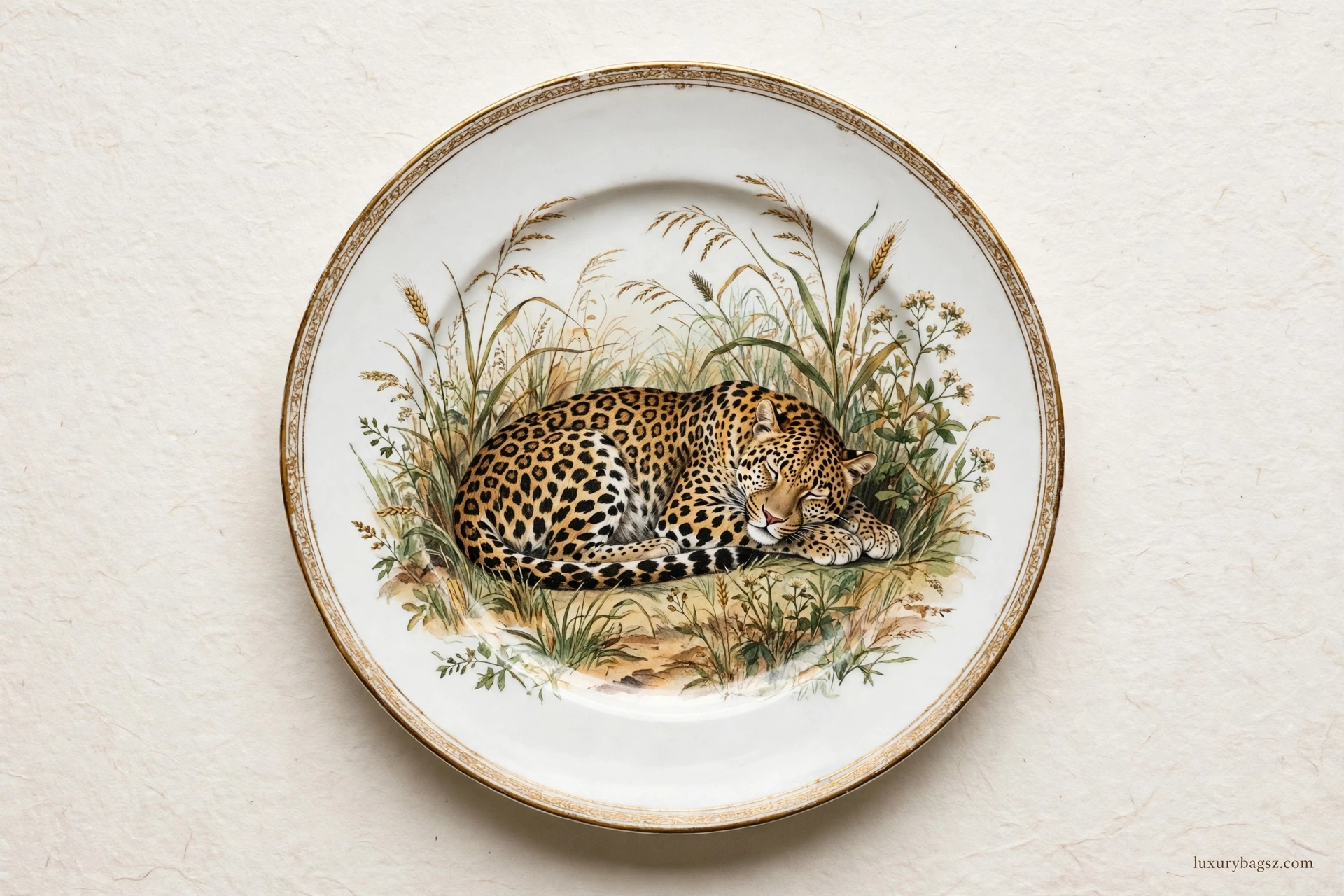
Carnets d'Équateur is Hermès porcelain as natural history: leopards, toucans, deer and jungle plants drawn from the work of artist and naturalist Robert Dallet, on white porcelain with a fine gold rim.
Hermès states the service comprises 41 pieces for lunch, dinner, tea and coffee, plus decorative pieces. European anchors include the dinner plate at €195, the presentation plate at €315 and the large round platter at €1,500.
It is tableware for people who love pictures. Each piece carries a different animal scene, so a set table feels like opening a sketchbook at the equator.
Key Takeaways
- Carnets d'Équateur is designed from Robert Dallet's wildlife art: big cats, birds and deer in lush settings.
- Hermès lists 41 pieces across lunch, dinner, tea and coffee, plus decorative objects.
- European price anchors: dinner plate €195, presentation plate €315, oval platters €500 to €640, large round platter €1,500.
- Decoration is screen-printed and hand-applied with a gold thread, and the porcelain is made in France.
- Pieces mix beautifully because every design differs: the service is a collection of scenes, not a repeated print.
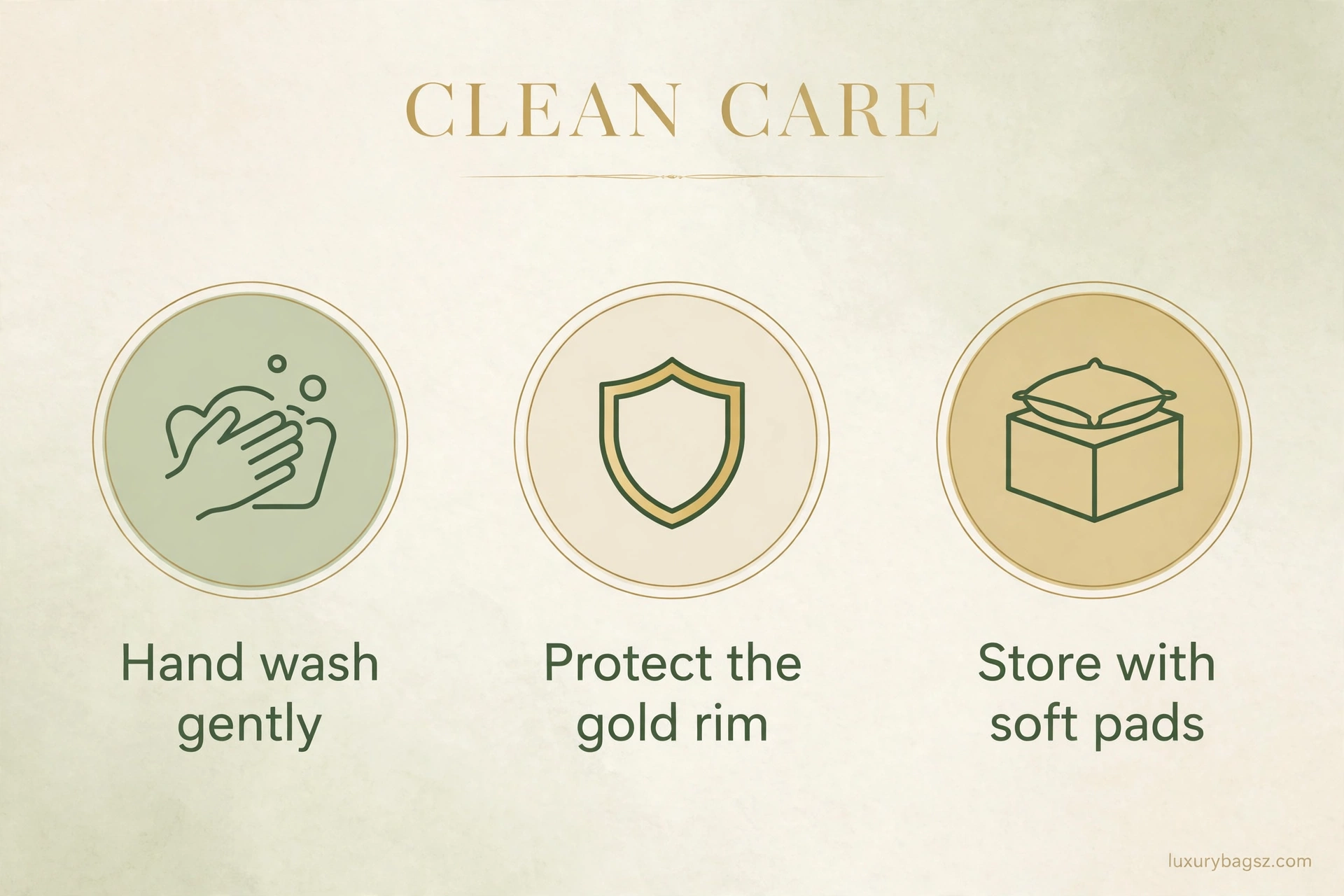
- Hand wash to protect the gold rim, stack with pads, and keep pieces out of ovens and freezers.
Robert Dallet and the Sketchbook Idea
The name means notebooks from the equator, and that is the spirit: pages from a travelling naturalist's sketchbook, transferred to porcelain.
Robert Dallet was a French artist devoted to wildlife, famous for his studies of big cats. Hermès has drawn on his archive across scarves and objects, and this service is his world at table scale.
Leopards rest in grass, tigers stretch, toucans and parrots flash among leaves, and deer stand in open savanna. The drawing is precise and gentle at once, scientific and dreamy.
Gold threading outlines the scenes and rims the pieces, giving the natural history a jewel finish. It is decoration with a subject, which is why collectors speak of pieces, not just plates.
If you are new to the house's porcelain, our primer on what Hermès tableware is covers how these ranges are made and why they cost what they do.
The 41 Pieces: What the Service Includes
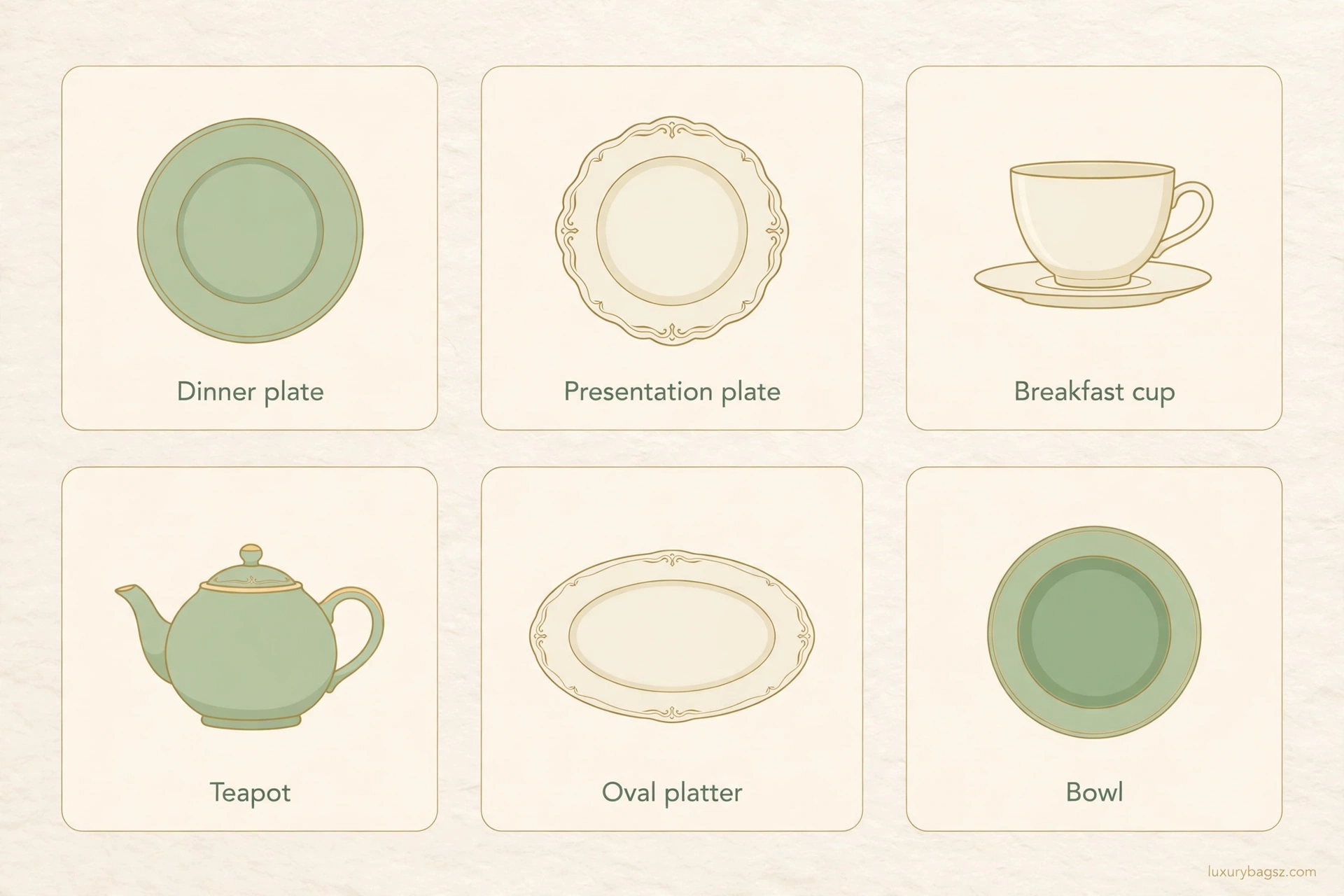
Hermès describes a service of 41 pieces covering lunch, dinner, tea and coffee time, plus a few decorative pieces. That breadth makes it one of the most complete wildlife services in porcelain.
Plates include a presentation plate at 32 cm, dinner plates at 27 cm with different animal designs, dessert plates, and bread and butter plates for formal settings.
Serving pieces are led by platters: a large round platter at 44 cm, and oval platters in large (42 by 30.5 cm) and small (36 by 26.4 cm) models, alongside bowls in several sizes.
Tea and coffee are well served with breakfast cups, tea cups, a teapot and lidded pieces, and resale listings show sugar bowls and small bowls carrying the cat designs.
Decorative pieces round out the range for sideboards and desks. Because each design differs, owners often display a favourite plate rather than storing the whole service away.
Tea and Coffee: The Collector's Corner
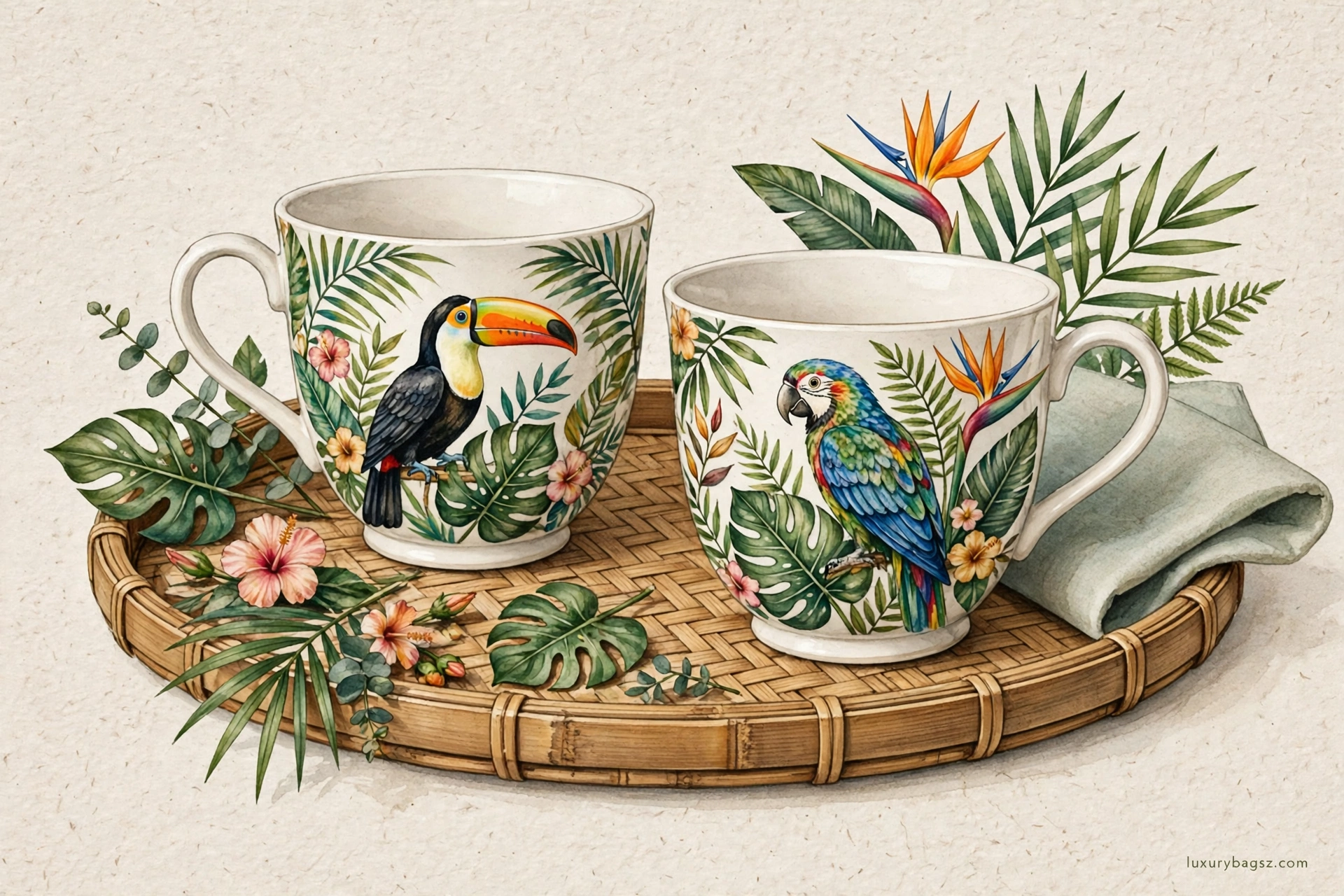
The cups are where many Carnets collections begin. Breakfast cups pair leopards with toucans, and the scenes change from piece to piece, so a shelf of cups reads like a small gallery.
A Singapore consignment listing priced a set of two breakfast cups and saucers at SGD 700 against retail, which shows both the demand and the discount patient buyers can find.
Coffee-bar owners film these cups often, pairing them with trays and building morning rituals around them, because the designs reward being looked at slowly.
Lidded cups and the sugar bowl carry the same jungle world, and the teapot, listed in Australia at AU$1,865 in one catalogue view, anchors a full service.
Start here if you drink tea or coffee daily. A pattern you see every morning earns its price faster than one saved for annual dinners.

Prices: Anchors From the Boutique Lists
Use the European boutique figures Hermès publishes as your anchors, remembering that US and Asian prices sit higher once taxes and market positioning are counted.
The dinner plate is €195 and the presentation plate €315 in current European listings. Oval platters are €500 for the small model and €640 for the large, and the large round platter is €1,500.
A large bowl was listed at AU$825 in Australia, while another catalogue view showed a large bowl at a much higher figure, a reminder to confirm the exact piece and size before comparing prices.
Cups and smaller pieces sit in the low hundreds in most markets, with breakfast cup sets around SGD 700 for two on resale against higher retail.
Statement serving pieces are the summit. Budget platter money as you would a piece of art for the table, because in this service that is honestly what it is.
Setting a Table That Tells Stories
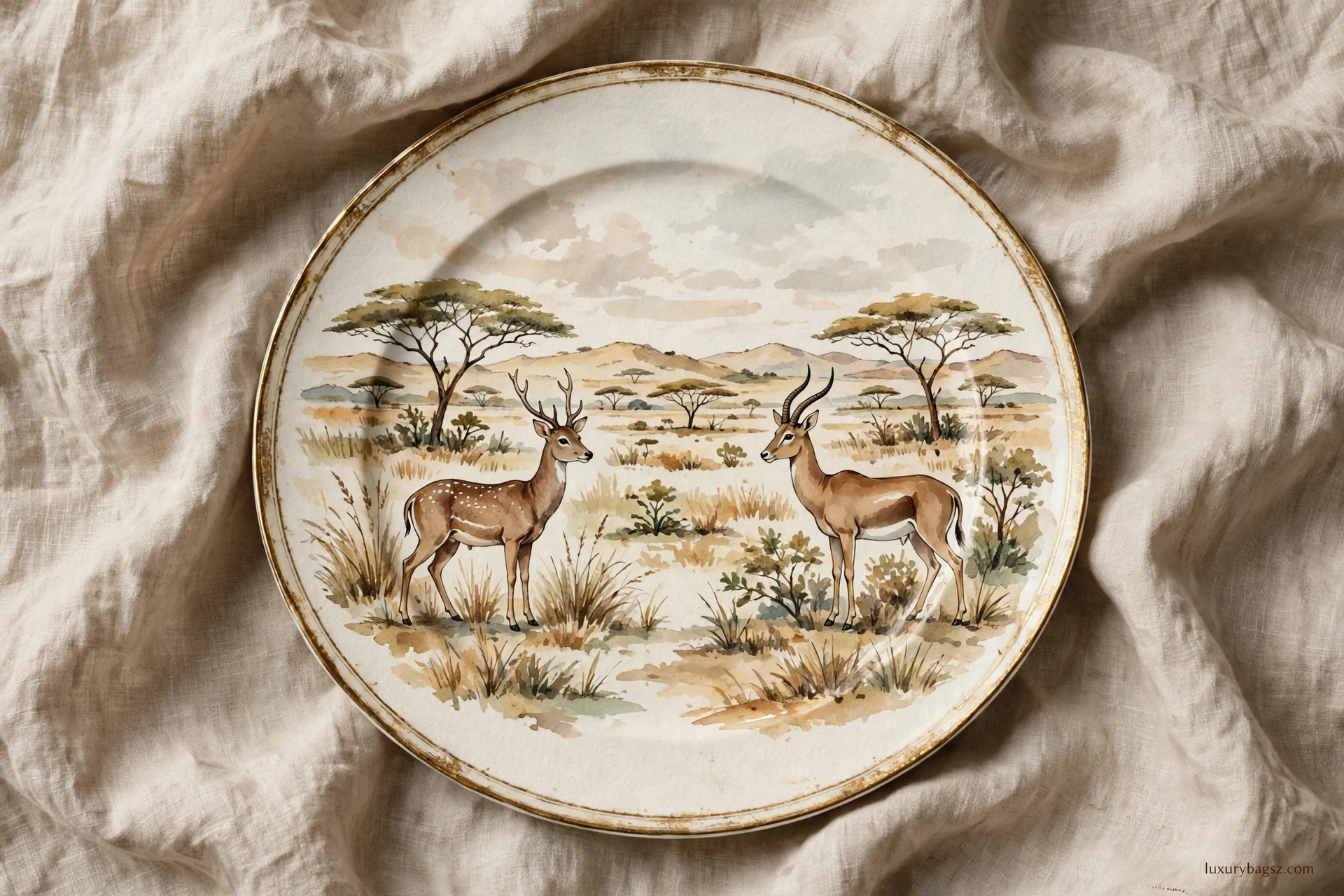
A Carnets table works best when the scenes can be seen. Serve food that leaves the centre of the plate visible, or use the animal plates for dessert and display courses.
Mixing is natural here: no two designs match, so the table reads as a curated whole. Keep linen, glass and flatware quiet in natural tones to let the pictures speak.
For a striking centrepiece, stand the large round platter upright behind the setting or lay it under a simple glass vase. Its savanna scene carries a whole sideboard.
Children and guests alike lean in to look, which makes this pattern a conversation engine at long lunches. Few table services give a host that gift.
If a full service is beyond reach, a wall or shelf of four to six dessert plates gives the same pleasure daily, at a fraction of the cost of place settings.
Carnets Among the Hermès Patterns
Against the black and white geometry of the Hermès H Deco tableware, Carnets is warm, pictorial and organic: art rather than architecture.
Against the ceremonial Hermès Cheval d'Orient tableware, it shares a love of animals but trades Persian formality for a naturalist's sketchbook lightness.
Against the sunny simplicity of the Hermès Soleil d'Hermès tableware, it is the richer, more detailed choice, and generally the pricier per piece.
Choose Carnets if pictures move you. Owners tend to be collectors by temperament, adding a new animal each year and remembering where each piece came from.
It also gifts exceptionally well, because one plate is a complete present: a single leopard, beautifully drawn, that needs no matching set to justify itself.
Care: Gold Rims and Fine Detail
Hand wash in warm water with a mild detergent and a soft sponge. The gold thread and detailed decoration should never meet an abrasive pad or a harsh cycle.
Dry with a soft cloth to keep the glaze bright, and inspect rims as you put pieces away: early notice of a tiny chip lets a restorer help before it spreads.
Stack plates with felt pads or cloth between them, store bowls with padding, and avoid nesting cups tightly. Cupboard contact is the main enemy of fine porcelain.
Keep the service away from oven heat, freezers and sudden temperature changes. Porcelain is strong in daily use but dislikes thermal shock.
Display pieces out of direct sunlight where you can. The colours are lightfast for normal rooms, but a lifetime of sun through glass is a test no decoration needs.
Buying Well: Collecting Piece by Piece
Decide your collecting route first: a working dinner service, a tea and coffee corner, or a display group of plates. Each route spends the same money very differently.
Boutiques and the official site show the current range for your market, and staff can confirm which animal designs a plate carries before you commit.
On resale, this pattern is active and fairly priced against retail for common pieces, as the Singapore cup listings show. Rare scenes and large platters hold value best.
Check the base stamp, the rim gold and the scene's condition in photographs, and confirm the exact dimensions: several pieces share names across sizes.
Above all, buy the animal you love. In a service built from pictures, affection is the practical criterion: the piece that delights you is the piece you will use for decades.
Frequently Asked Questions
Who designed Carnets d'Équateur?
The service is designed from the work of Robert Dallet, the French naturalist artist famed for his wildlife studies, especially big cats. Hermès describes the range as designed by Dallet.
How many pieces are in the Carnets d'Équateur service?
Hermès states the service comprises 41 pieces, covering lunch, dinner, tea and coffee, plus a few decorative pieces. Most owners collect a subset rather than the full service.
How much is a Carnets d'Équateur dinner plate?
In current European listings the dinner plate is €195, and the larger presentation plate is €315. Prices in other markets are higher after taxes and local positioning.
What is the largest piece in the range?
The round platter, large model, at 44 cm across and €1,500 in European listings. Oval platters run to 42 cm in length, at €640 for the large model.
Is Carnets d'Équateur dishwasher safe?
Hand washing is the recommended care, to protect the hand-applied decoration and the gold thread. A soft sponge, mild detergent and prompt drying keep pieces at their best.
What animals appear on the porcelain?
Big cats such as leopards and tigers, tropical birds including toucans and parrots, deer and antelope, all drawn in Dallet's natural history style among jungle and savanna plants.
Can I mix Carnets d'Équateur with other patterns?
Yes, and mixing within the service is the norm, since every piece carries a different scene. It also sits well with plain white porcelain and quiet natural linen.
Is Carnets d'Équateur made in France?
Yes. The porcelain is made in France, with decorations screen-printed and applied by hand using a gold thread, as Hermès states in its product descriptions.
What is a good first Carnets purchase?
A breakfast cup and saucer, or a single dinner plate with a favourite animal. Both are used and seen daily, sit at the accessible end of the range and start a collection naturally.
Do Carnets pieces hold value on resale?
Common pieces trade at fair discounts to retail, while large platters and sought-after scenes hold value well. Condition of the gold rim and scene is what buyers pay for.
Final Verdict
Carnets d'Équateur turns a table into a naturalist's sketchbook: Robert Dallet's leopards, birds and deer on French porcelain, 41 pieces deep, with dinner plates at €195 and great platters at €1,500.
Collect it by affection, piece by piece, and hand wash the gold-rimmed scenes you own. No other Hermès pattern rewards simply looking at the table quite like this one.