What to Know About Saint Laurent: History, Bags, Prices and Buying Guide
Saint Laurent at a Glance
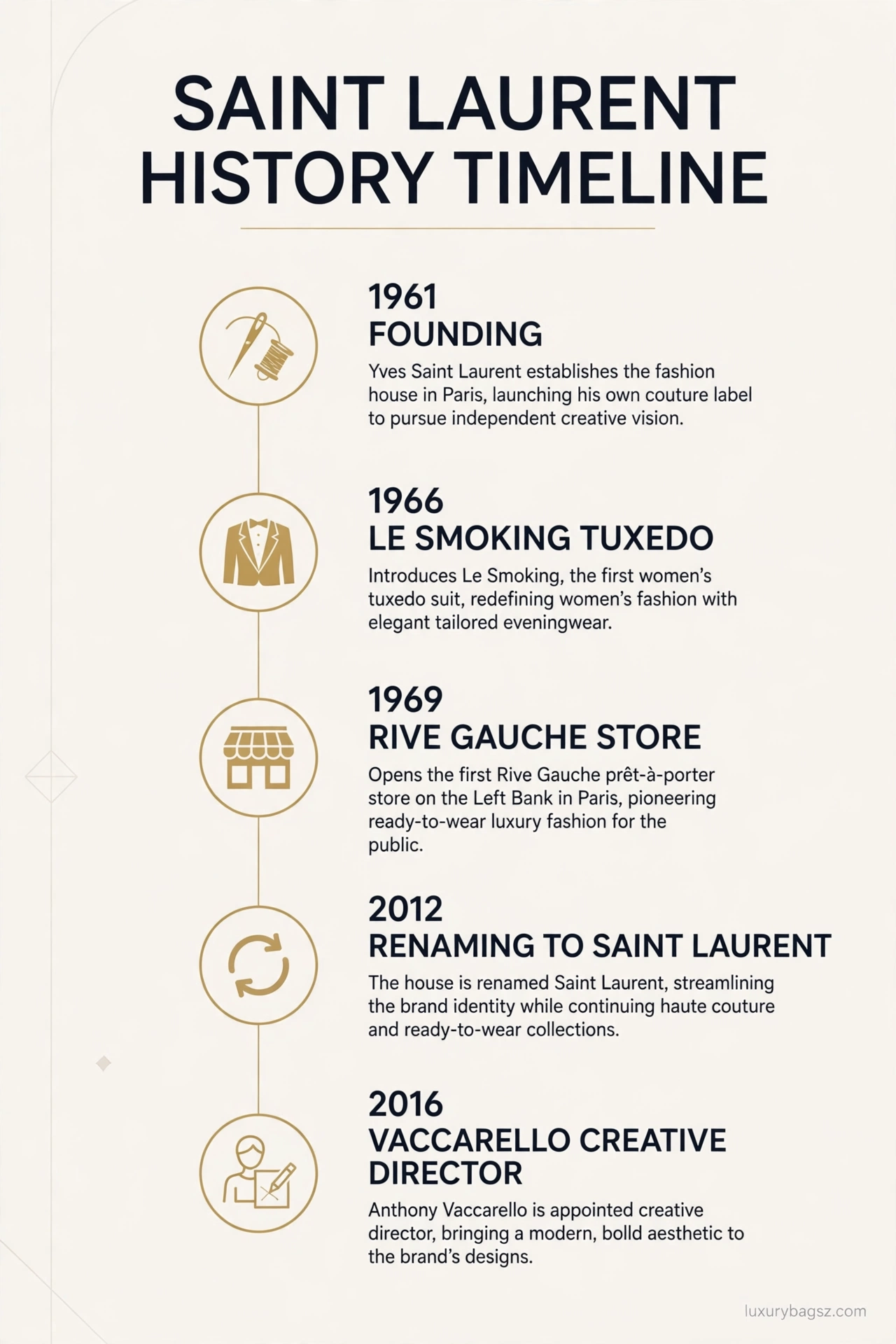
Saint Laurent is Paris cool made wearable: the house that put women in tuxedos, opened the first ready-to-wear boutique by a French couturier, and turned the YSL monogram into streetwear shorthand. Yves Saint Laurent founded it in 1961 after a meteoric rise at Dior, and it has stayed at fashion's sharp edge ever since.
The house's icons are Le Smoking, the women's tuxedo suit of 1966, and bags like the Sac de Jour, the Loulou, and the Niki, each carrying the interlocking Cassandre monogram. Under Anthony Vaccarello since 2016, Saint Laurent has grown into a multi-billion-euro house without losing its left-bank edge.
For buyers, Saint Laurent offers Paris luxury below the very top houses' prices, with bags generally from the low thousands upward. Classic black leather bags hold value best, seasonal colours soften, and the monogram, stitching, and serial stamp are the checks that catch fakes. Every bag named here has its own full guide in our complete Saint Laurent guide collection.
Key Takeaways

- Yves Saint Laurent was born in Oran, Algeria, in 1936 and joined Dior at 18.
- He became Dior's successor at 21 in 1957 and showed the Trapeze dress in 1958.
- He founded his own house in 1961, with his first collection in January 1962.
- Le Smoking, the women's tuxedo suit, arrived in 1966 and redefined evening wear.
- Rive Gauche, opened in 1969, was the first ready-to-wear line by a French couturier.
- The Cassandre YSL monogram was designed by A.M. Cassandre in 1963.
- Hedi Slimane dropped "Yves" from the ready-to-wear name in 2012; Anthony Vaccarello leads the house since 2016.
- Bestselling bags include Sac de Jour, Loulou, Niki, Monogram wallet on chain, and Envelope satchel.
The Boy From Oran Who Dressed Paris
Yves Saint Laurent was born in Oran, Algeria, in 1936, and he later traced his creativity to the art and culture of North Africa set against Paris. His earliest designs survive in his old studio at 5 avenue Marceau, now the Musée Yves Saint Laurent Paris, including sketches and paper dolls dressed in fabric snipped from his mother's textiles.
Both his parents were trained musicians, and his favourite childhood pastime was staging plays with his sisters, playing the couturier and head designer. The theatre instinct never left his work, which always carried drama alongside tailoring.
At 16, in 1953, he entered the International Wool Secretariat competition, now the Woolmark Prize, and won third prize from a jury including Hubert de Givenchy and Christian Dior. The next year he won first place in the dress category, while a 21-year-old Karl Lagerfeld won first in coats.
French Vogue editor Michel de Brunhoff showed the young designer's sketches to Dior, who hired Saint Laurent as an assistant in 1955, when he was barely 18 and had completed only one term at the Ecole de la Chambre Syndicale. The apprenticeship would last barely two years before history intervened.
The Dior Years: Successor at 21
At Dior, Saint Laurent quickly won his mentor's confidence and took on real responsibility, designing headdresses for a 1956 costume ball, Le bal des têtes, and some 40 dresses per collection as Dior's assistant. His talent was obvious to everyone in the studio.
In October 1957, Dior died of a heart attack at 52. At 21, Saint Laurent's childhood dream came true: he was named Dior's successor, the youngest couturier to lead a great Paris house. His first Dior show in 1958 broke from his predecessor entirely.
The show's star was the Trapeze dress, a fluid silhouette in which the body disappeared beneath the fabric, the opposite of Dior's cinched waists and structured jackets. Critics embraced it, and Saint Laurent's name was made overnight.
The Dior chapter ended abruptly. Drafted into the army in 1960, Saint Laurent suffered a breakdown during training, was hospitalised, and learned from his hospital bed that Marc Bohan would replace him at Dior. The dismissal came with a breach-of-contract payment of 680,000 francs, which funded his own house.
The House Is Born: 1961 and Le Smoking
With the Dior payment and a $70,000 investment negotiated by Pierre Bergé from Jesse Mack Robinson, Saint Laurent launched his own brand. His first collection in January 1962 introduced a women's peacoat inspired by naval uniforms, a sign of the menswear borrowing that would define him.
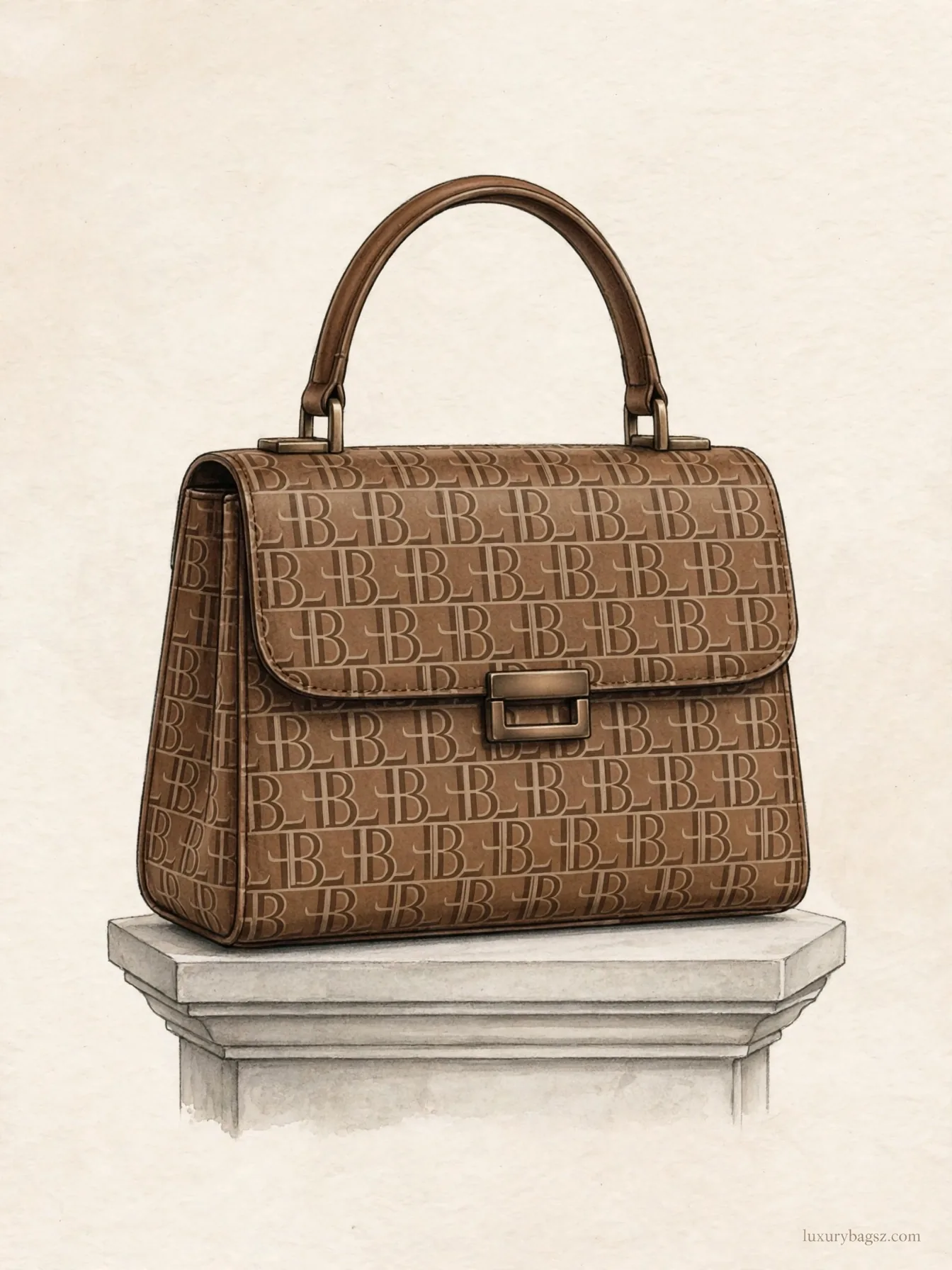
In 1963, poster artist A.M. Cassandre designed the interlocking Yves Saint Laurent monogram, the YSL logo that still marks the house's bags and hardware. It gave the young brand an instant visual signature, elegant and unmistakable.
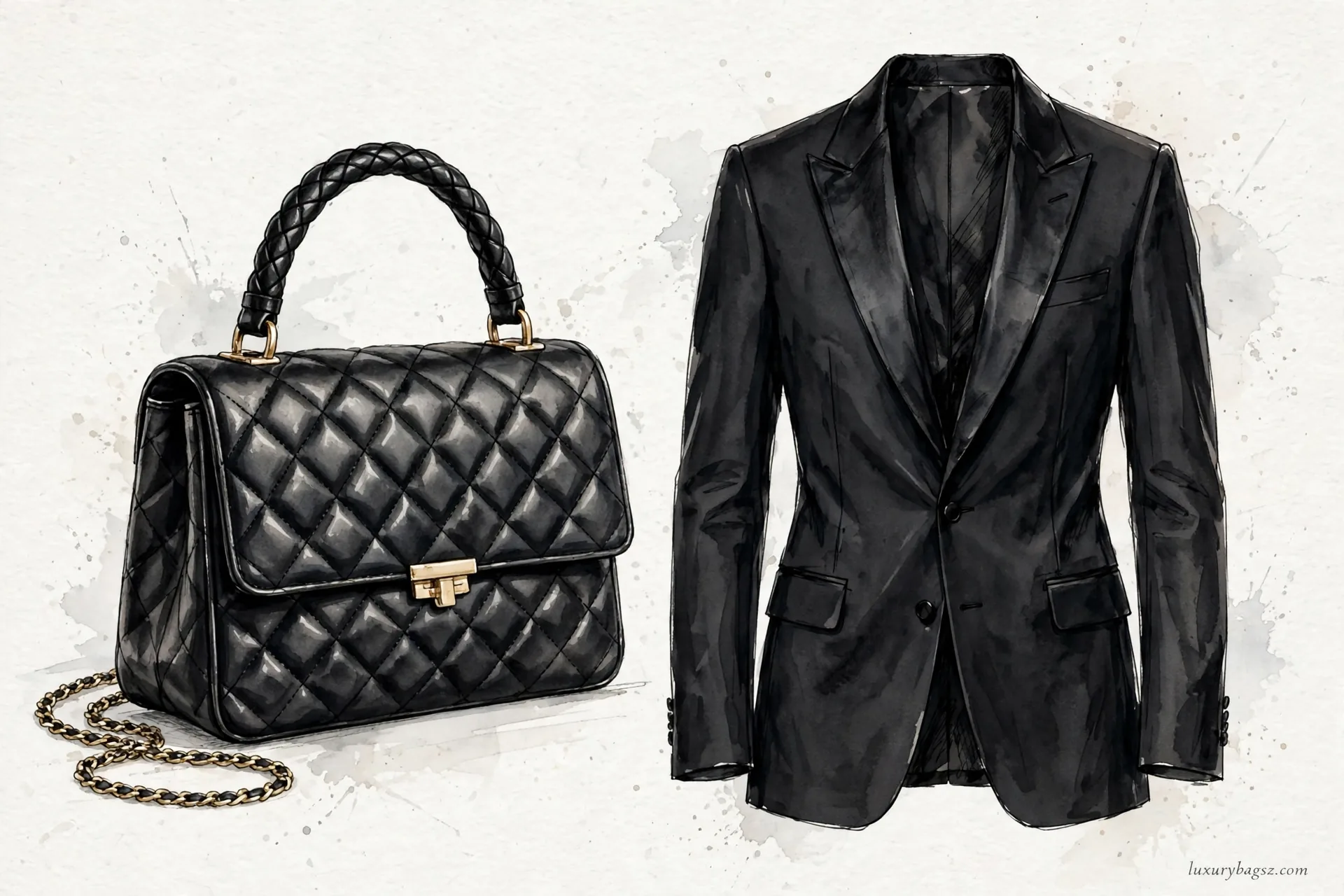
Then came 1966 and Le Smoking, the women's tuxedo suit, the house's defining moment. Saint Laurent took a masculine dinner suit and fitted it to the female figure in a way that highlighted rather than hid her, revolutionising the idea of menswear as womenswear.
Le Smoking scandalised and seduced in equal measure. Restaurants turned away women in trousers, while fashion embraced the suit as liberation made elegant. It remains the house's founding myth, revived in nearly every creative director's tenure since.
Rive Gauche and the Bags That Followed
In 1969, Saint Laurent opened his first store, Saint Laurent Rive Gauche, named for its place on the left bank of the Seine, where young Paris creatives lived. Its opening show marked the first time a French couturier had successfully launched a ready-to-wear line.
The store, a former antiques shop, drew crowds who waited hours to buy, and its launch collection was compared to Chanel for innovation. Ready-to-wear brought Saint Laurent to a younger, wider audience, and the Rive Gauche name still appears on the house's shopping totes today.
Handbags were never Saint Laurent's first love the way they were for other houses. In the 1960s and 1970s, YSL bags were made by suppliers including Madame Leroux and Madame Perrin, using Moroccan leather, snakeskin, lizard, straw, and even tortoise skin, sometimes shaped like books or trimmed with horns.
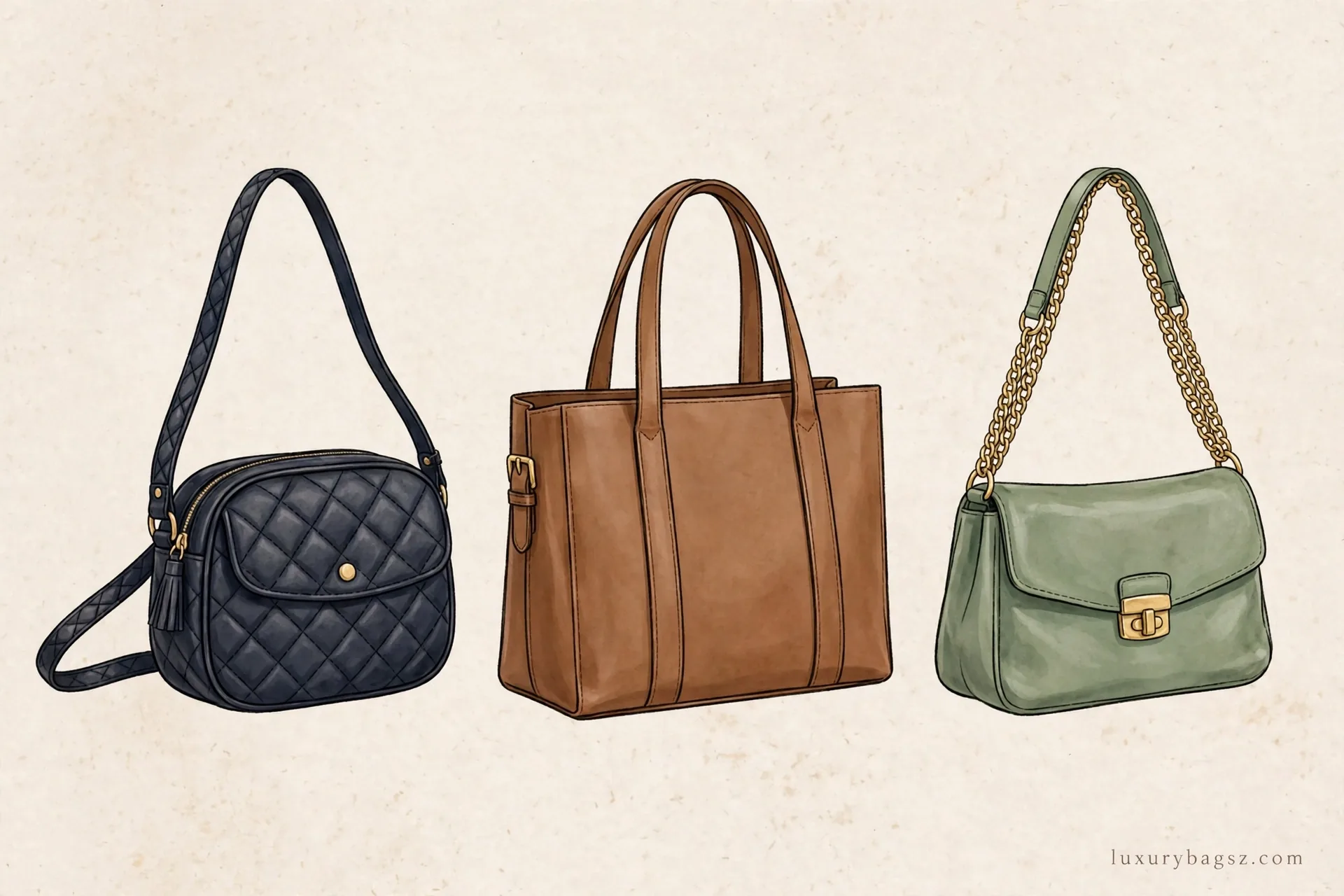
The modern icons came later. The Sac de Jour is a structured tote in calfskin and croc-embossed leather, the Loulou is a quilted crossbody named for muse Loulou de la Falaise, and the Kaia runs from regular sizes to novelty minis. Our guides to the YSL Niki bag and the YSL Loulou vs Kate comparison cover two of the most-bought styles in detail.
Creative Directors After Yves
Yves Saint Laurent officially stepped down in 2002, and a roll call of major designers followed. Alber Elbaz handled women's ready-to-wear for three seasons from 1998 to 1999, while Hedi Slimane directed collections and art direction from 1997 and relaunched YSL Rive Gauche Homme before leaving for Dior Homme in 1999.
When Gucci acquired a majority stake in 1999, Tom Ford led ready-to-wear while Saint Laurent kept couture. Ford left in 2004, and Stefano Pilati led the brand through Saint Laurent's death in 2008 until 2012.
In 2012, Kering, the parent group, appointed Slimane creative director. He revived the brand and dropped "Yves" from the ready-to-wear logo, returning to the Saint Laurent Rive Gauche name, while the cosmetics line kept Yves Saint Laurent. Slimane left in 2016, and Anthony Vaccarello, the current creative director, took over.
Vaccarello's era brought the Niki, the Le 5 à 7, and the Icare, plus archive revivals like the Mombasa, and the house grew from about a billion euros a year to around 2.9 billion. For buyers, Slimane-era and Vaccarello-era bags dominate resale, and both eras trade well.
Materials: Calfskin, Quilting, and Hardware
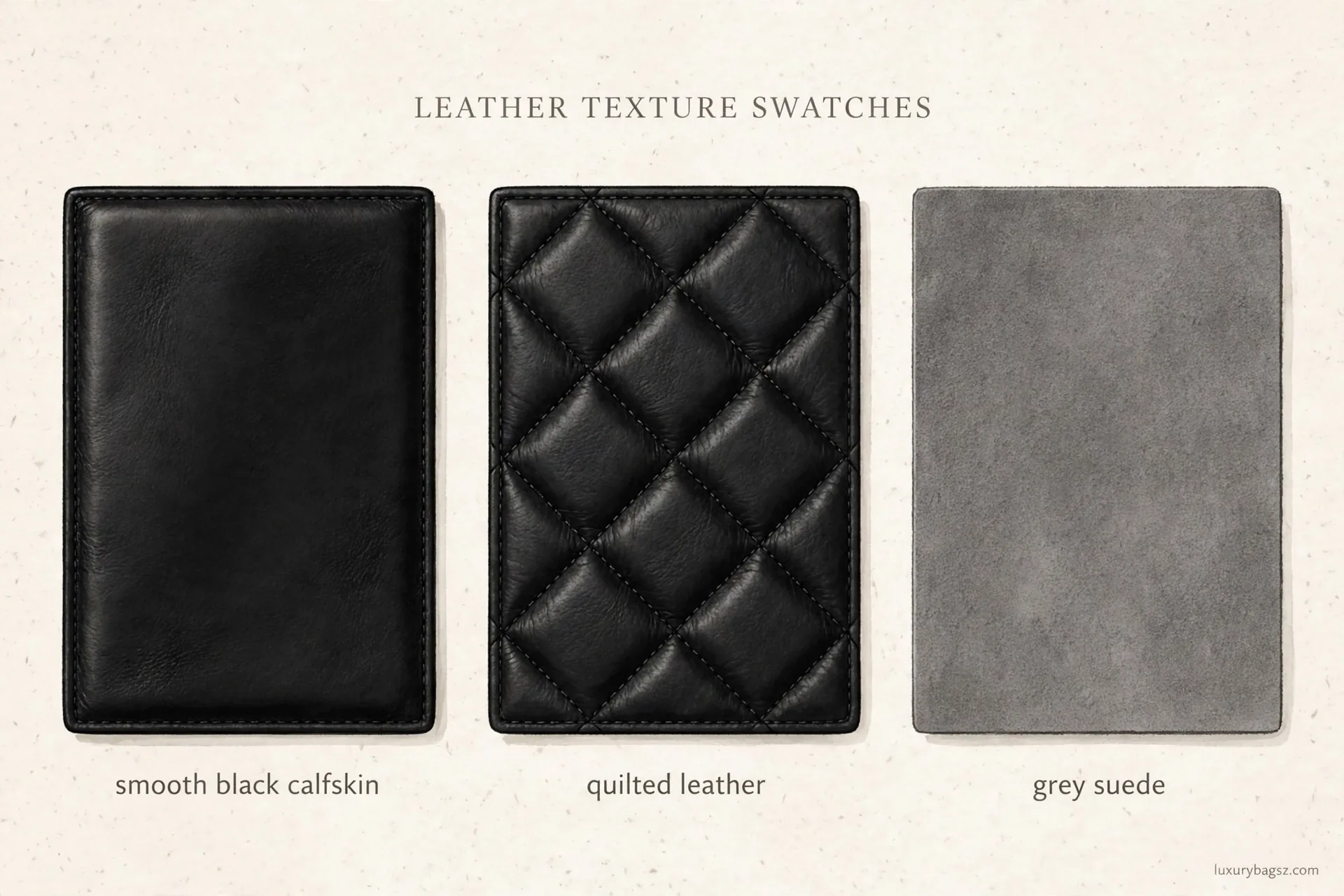
Saint Laurent bags are made in Italy, mostly in calfskin in smooth, grained, quilted, and croc-embossed finishes. Smooth calfskin looks most formal and shows scratches most readily, while grained leather and the crinkled leather of the Niki forgive daily wear far better.
Quilting defines the Loulou and the Monogram lines. The Y-quilted leather gives structure and a soft, slightly slouchy shape, and it hides minor scuffs better than flat leather. Suede appears in seasonal styles but stains and wears faster, so it suits occasional bags.
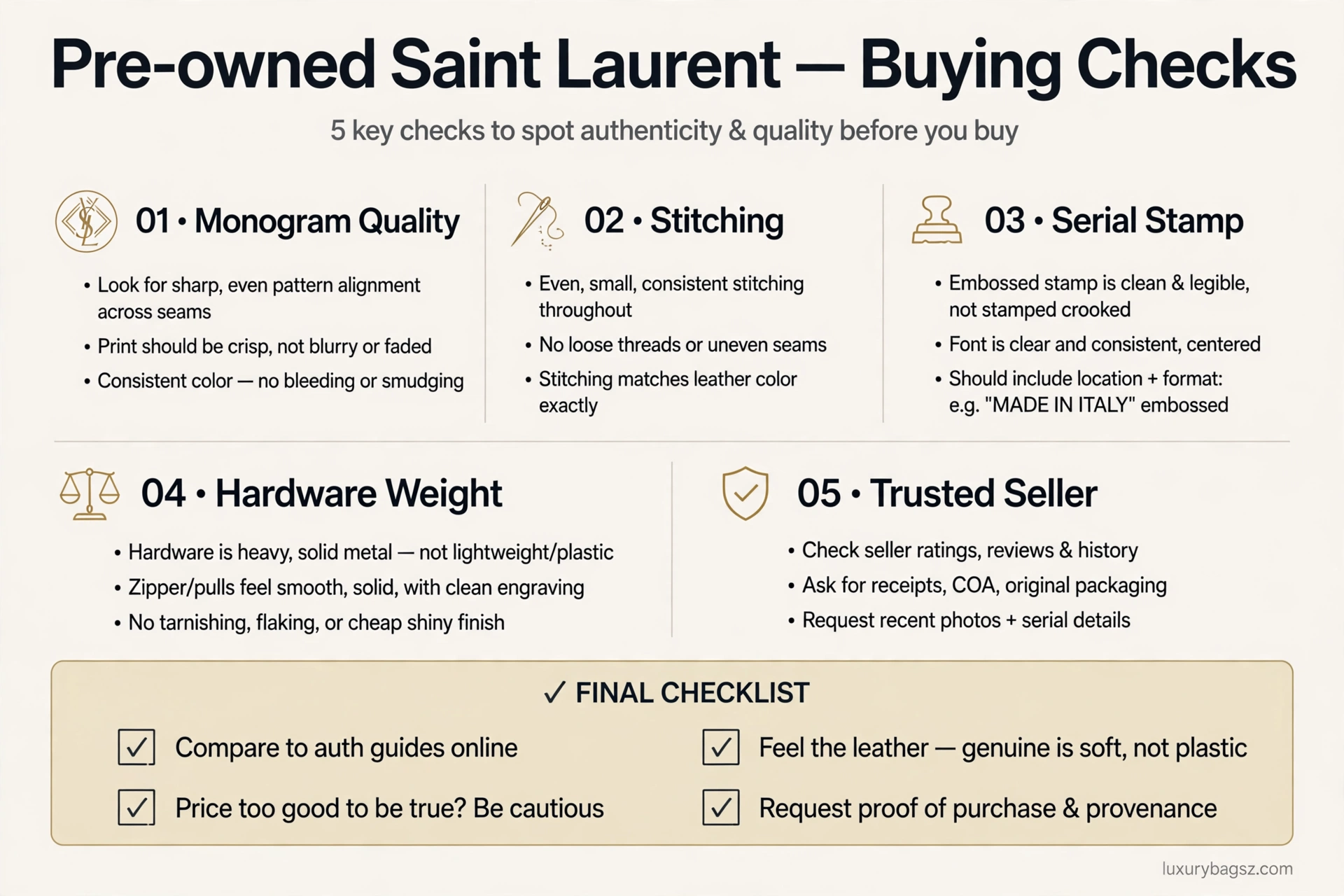
Hardware is the house's jewellery. The Cassandre monogram in gold or silver-tone metal anchors most bags, and chain straps mix leather and metal. Check that hardware feels weighty and evenly finished, since light or rough hardware is a common fake tell.
Exotic skins, including crocodile and python, appear in premium styles at much higher prices. They need specialist care and carry legal and resale complications in some markets, so confirm the rules before buying exotic pre-owned.
Sizing: From Nano to Large
Saint Laurent sizing runs from nano and mini bags through small, medium, and large, and the same name can span very different capacities. A Nano Sac de Jour is a compact daily bag, while a Large Sac de Jour is a genuine work tote, so always check dimensions, not just the name.
The Loulou illustrates the range well. The toy and small sizes suit evenings and light days, the medium is the most-bought everyday size, and the large works as a day-to-shoulder bag. Guides list the medium Loulou in black with gold hardware starting near $1,950.
Wallet-on-chain styles, like the Monogram Kate, bridge bags and small leather goods. They hold a phone, cards, and keys, and they suit evenings, but they will not carry a full daily kit. Buy them as a second bag, not an only bag.
Before buying, measure your daily carry: phone, wallet, keys, sunglasses, and any work items. Compare those measurements with the bag's listed interior dimensions, and remember that structured bags like the Sac de Jour hold less flexibly than slouchy styles like the Niki.
What Saint Laurent Costs
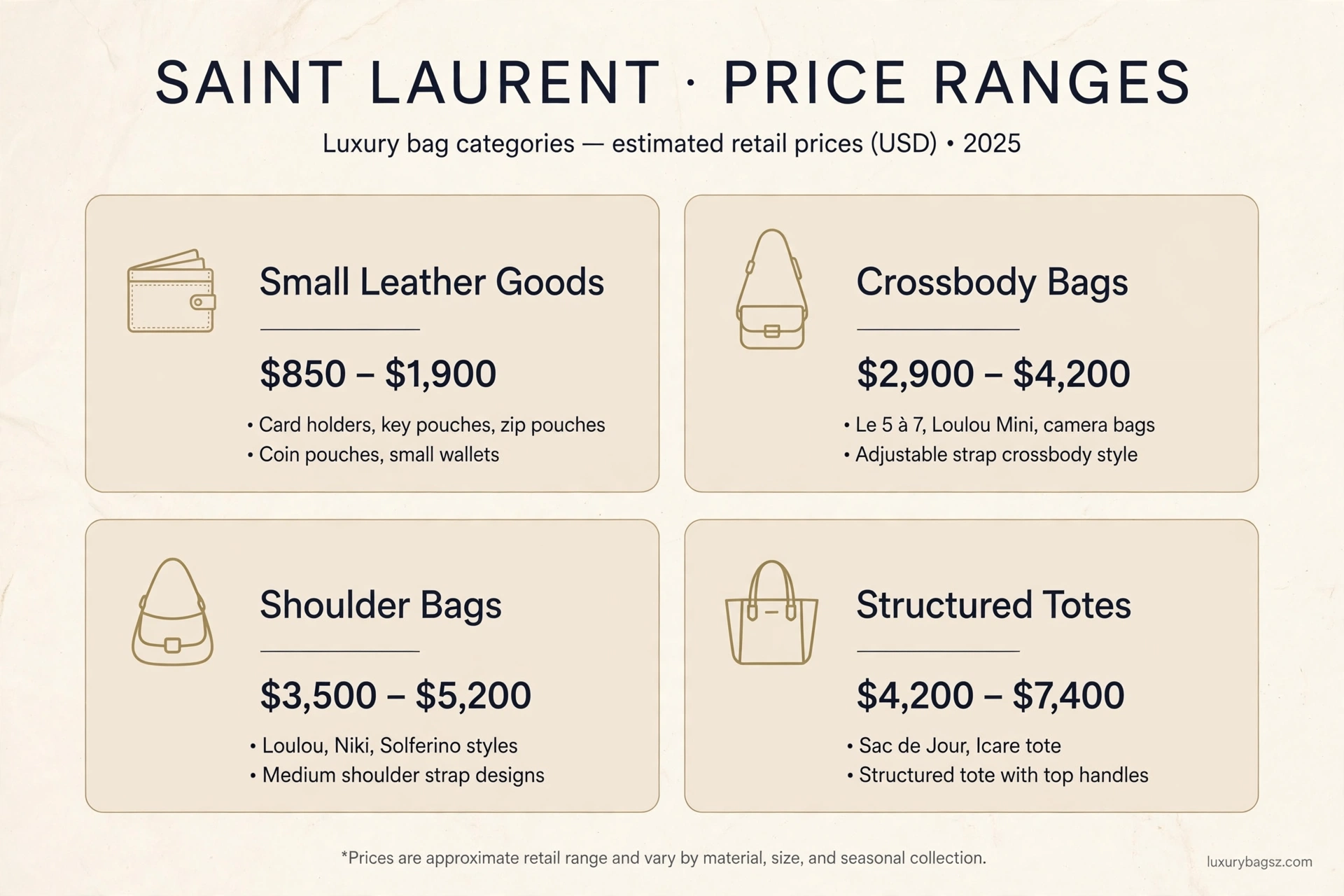
Saint Laurent bags generally run from about $1,200 to $4,500, with limited editions and exotics higher. Guides list entry styles like the mini Lou camera bag near $1,150, midrange Loulou and Sunset styles from about $2,000 to $3,000, and larger structured totes above $4,000 in exotic leather.
Current guide prices include the Sac de Jour Nano near $2,700 in black calfskin, the Niki Medium near $3,200, and the medium Loulou near $1,900 to $1,950 in black with gold hardware. Prices rise regularly, so confirm today's retail before budgeting.
Resale splits by model. Guides report Sac de Jour, Kate, and Niki retaining roughly 60 to 75 percent of retail, while Cassandre logo styles and seasonal pieces fall to about 40 to 55 percent. Rebag's buying team reports many Saint Laurent bags selling at 75 to 80 percent of retail on its platform, a reminder that channel and condition move the number.
Small leather goods and jewellery sit below bags. The Arty ring, covered in our YSL Arty ring guide, trades as an affordable entry to the house, while fine jewellery and shoes run higher. Always budget for care and, for bags, a protective insert if you carry heavy items.
Buying Saint Laurent Pre-Owned: Checks That Matter
Saint Laurent is heavily copied, so checks matter. Start with the seller: buy from a house, dealer, or platform that authenticates in-house and allows returns, and avoid deals far below market or sellers who refuse detailed photos.
Study the monogram first. The Cassandre YSL should be crisp, evenly formed, and correctly proportioned, with clean edges on hardware and leather stamps. Off-centre logos, mushy lettering, or wrong fonts are the most common fake tells.
Check stitching, lining, and the serial stamp. My Saint Laurent serial number guide shows where the tag hides in each model and how its digits are read. Real Saint Laurent stitching is even and tight, lining is clean with a correct brand print, and the serial stamp should match the era's format, remembering that the 2012 renaming changed stamps. Our guide to how to spot a fake Saint Laurent bag covers the full checklist.
Ask for the full set: dust bag, box, cards, and receipt where available. Missing papers do not prove a fake, but a complete set supports authenticity and resale. For the wider discipline, read how to buy a pre-owned designer bag safely and how to authenticate a pre-owned designer bag.
Saint Laurent, Celine, and the Paris Minimalists
Buyers often group Saint Laurent with Celine, and the link is real: Hedi Slimane led Saint Laurent from 2012 to 2016 and Celine from 2018 to 2024, giving both houses a similar sharp, minimal French voice. Our guide to what to know about Celine covers its Triomphe and Luggage lines.
The houses differ in mood. Celine leans quieter and more architectural, with the Luggage and Triomphe as its anchors, while Saint Laurent leans edgier and more rock-and-roll, with chains, quilting, and the monogram worn openly.
Gucci offers a third flavour: Italian, maximalist, and logo-rich, covered in our guide to what to know about Gucci. Where Gucci shouts, Saint Laurent smirks, and where Celine whispers, Saint Laurent talks in a low, confident voice.
For a first Paris bag, choose by wardrobe. If your closet is black, tailored, and slightly rebellious, Saint Laurent fits naturally. If it is neutral, minimal, and quiet, Celine may serve you better, and both hold resale well in classic colours.
Caring for Saint Laurent Leather
Leather care starts with prevention. Keep bags out of direct sun and rain where possible, avoid overfilling structured styles, and store bags stuffed lightly, upright, in their dust bags, away from radiators and damp corners.
Clean gently and by material. Wipe smooth calfskin with a soft, dry cloth, brush suede only with a suede brush, and never use heavy cream on suede or quilted finishes without testing a hidden spot first. Our guide to how to care for leather bags and shoes covers the full routine.
Chain straps need their own care. Keep chains from scratching the leather by tucking them inside the bag for storage, and wipe metal hardware with a dry cloth after wear in rain or humidity. Tarnished hardware can be cleaned professionally, but harsh polishes damage plating.
For stains, act fast and gently: blot, never rub, and take serious marks to a leather specialist rather than experimenting with home remedies. A professional clean costs less than a ruined panel, especially on light colours and suede.
Is Saint Laurent Worth It, and Who Should Buy
Saint Laurent is worth it for buyers who want Paris edge without the very top houses' prices or waitlists. The bags are well made in Italy, the monogram is instantly read, and classic black leather styles hold resale better than most fashion houses manage.
It is a weaker fit for buyers who want whisper-quiet luxury or the most durable workhorse leather. Saint Laurent's smooth calfskin marks more easily than grained leather, and its chains and monogram announce the brand rather than hiding it.
First-time buyers should start with a medium Loulou in black with gold hardware or a Sac de Jour Nano in black calfskin. Both are daily-wearable, hold value well, and pair with nearly any wardrobe, from tailoring to denim.
Collectors should chase Slimane-era classics and Vaccarello's Le 5 à 7 and Icare, plus archive revivals like the Mombasa. Whatever you buy, keep the dust bag and cards, check the monogram before paying, and wear the edge with confidence.
YSL Beauty, Fragrance, and the Name Split
One confusion trips up nearly every new Saint Laurent buyer: the name split. In 2012, Hedi Slimane renamed the fashion house's ready-to-wear line Saint Laurent, while the beauty and fragrance line, owned under a different arrangement, kept the name Yves Saint Laurent. Both names are genuine, and both appear on real products.
The beauty line's most famous product is the Touche Éclat highlighter pen, alongside Libre, Black Opium, and Y fragrances. These are widely available and moderately priced, and they introduce many buyers to the house long before a bag purchase.
For bag buyers, the split matters when checking stamps and labels. A bag stamped Saint Laurent Paris dates from the Slimane era onward, while older pieces carry Yves Saint Laurent marks, and beauty products will say Yves Saint Laurent regardless of era. Neither mark alone proves or disproves authenticity.
Fragrance makes a sensible first purchase: Libre or Black Opium for women, Y for men, each carrying the house's edgy Paris character at a fraction of a bag's price. They hold no resale value, so buy them to wear, not to collect.
Shoes, Sunglasses, and Small Leather Goods
Beyond bags, Saint Laurent's shoes, sunglasses, and small leather goods extend the house's edge into daily life. The Wyatt boots, Opyum pumps, and Tribute sandals are the best-known shoes, each carrying the house's sharp, slightly rebellious tailoring.
Sunglasses, with bold frames and the Cassandre monogram on the temples, are a popular entry point. They are made under licence, so judge them on frame quality and lens clarity rather than assuming the same craftsmanship as the bags, and buy from authorised sellers to avoid copies.
Small leather goods include wallets, card holders, belts, and phone cases in the same calfskin and monogram hardware as the bags. They suit buyers who want the house daily without a bag budget, and they make strong gifts because sizing is rarely an issue.
Shoes deserve a fit warning: Saint Laurent shoes often run narrow, and sizing varies by style, so try before buying or confirm the return policy. A beautiful shoe that hurts is a wasted purchase, however strong the brand.
Vintage Saint Laurent: What Collectors Chase
Vintage Saint Laurent rewards buyers who know the eras. Slimane-era pieces from 2012 to 2016, especially the Sac de Jour in early colours and the first Niki bags, are the most actively traded vintage category, alongside Tom Ford-era pieces from 1999 to 2004.
The Mombasa bag, revived by Vaccarello from Tom Ford's archive, shows how archive revivals move vintage prices: the original Mombasa climbed before the reissue even reached stores. Archive knowledge pays directly in this house.
Rive Gauche vintage, from the 1970s through the 1990s, carries a different charm: looser shapes, older leathers, and the original left-bank spirit. Condition varies widely, so inspect corners, handles, and linings closely, and expect honest wear on pieces forty years old.
Buy vintage Saint Laurent from specialists who date stamps correctly. The 2012 renaming changed marks, and a seller who cannot explain a stamp's era should not be selling the bag. Pay for era knowledge, especially on higher-priced vintage.
Styling Saint Laurent: Building Around One Bag
Saint Laurent bags style best with a wardrobe that shares their attitude: black tailoring, slim denim, leather jackets, and sharp boots. The bags are not shy, so pairing them with an already loud outfit can tip into costume, while pairing them with simple clothes lets the bag lead.
A black Loulou with gold hardware works across nearly everything, from a work suit to weekend denim, which is why it is the most-bought style. A Sac de Jour suits structured workwear and travel, while a Niki suits softer, slouchier days with its crinkled leather.
Colour strategy matters. Black is the safest first Saint Laurent bag, since it holds resale best and matches most wardrobes. A second bag can be bolder: oxblood, dark green, or a seasonal colour that suits your closet, bought knowing resale will be softer.
Hardware colour is the other choice. Gold hardware reads warmer and more classic, silver reads cooler and more modern, and mixing metals across bag, jewellery, and belt buckles is fine if one metal dominates. Choose the metal you already wear most.
A Buyer's Shortlist by Budget
At an entry budget, start with small leather goods or a mini bag: a Monogram card holder, a Kate wallet on chain, or a mini Lou camera bag. Each carries the Cassandre monogram and the house's edge without a full bag price.
At a midrange budget, a medium Loulou in black with gold hardware is the classic buy. It is the most-purchased and most-resaleable Saint Laurent bag, it suits daily wear, and it pairs with nearly any wardrobe.
At a higher budget, a Sac de Jour in smooth or grained calfskin, or a Niki Medium in crinkled leather, is the statement purchase. Choose smooth calf for formal work and grained or crinkled leather for forgiving daily wear, and keep the dust bag and cards.
At any budget, the rule stays the same: buy the classic black leather style first. Saint Laurent's classics have carried resale and style for years, while seasonal colours and logo-heavy experiments have not, and the pre-owned market reflects that gap plainly.
Saint Laurent on the Runway: Shows That Mattered
Saint Laurent's runway history is a series of shocks that became classics. The 1958 Trapeze show at Dior broke the cinched waist, the 1966 Le Smoking show put women in tuxedos, and the 1969 Rive Gauche opening made ready-to-wear a couturier's business.
Later shows kept the provocation alive. The 1971 collection drew on 1940s retro glamour and divided critics, while the Mondrian dresses of 1965 turned abstract art into wearable colour blocks. Each scandal settled into the canon within a few seasons.
Under Slimane, shows became rock-and-roll spectacles with slim tailoring and music-driven casting, while Vaccarello's shows returned to Parisian night glamour with sharp shoulders and long legs. The through-line is confidence: Saint Laurent shows never apologise.
For bag buyers, runway history explains why certain styles return. Archive revivals like the Mombasa and the Le 5 à 7 come from show moments, and knowing the moment helps you judge whether a revival is a classic returning or a trend passing through.
The Left Bank Look: How to Wear It Today
The left bank look is Saint Laurent's enduring style gift: intellectual, slightly rebellious, and always tailored. It pairs a sharp jacket with slim trousers or denim, a simple top, and one strong accessory, usually a bag or a pair of boots.
Building the look starts with fit, not labels. A well-cut black blazer, dark slim jeans, and clean boots carry a Saint Laurent bag better than a head-to-toe logo outfit, which fights the bag for attention. Let one piece lead and the rest support.
Colour stays restrained in the classic left bank wardrobe: black, navy, grey, cream, and oxblood, with a single accent colour at most. That restraint is why Saint Laurent's black bags sell best; they fit the wardrobe the house itself invented.
For work, add structure: a Sac de Jour with a tailored suit reads serious without stiffness. For evenings, a Loulou or Kate wallet on chain with a tuxedo-inspired jacket carries Le Smoking's spirit without copying it literally.
Shopping Saint Laurent: Boutique, Outlet, or Pre-Owned
New Saint Laurent is best bought in the boutique, where the full bag range, leather choices, and hardware options are available, and where staff can explain sizing across nano to large. Department stores carry a narrower range but offer easier returns.
Outlets offer genuine savings, often 30 to 50 percent, on past-season styles and colours. They suit buyers who want a classic shape in a non-current colour, but they rarely carry the newest icons, and outlet stock varies too much to plan around.
Pre-owned is where Saint Laurent shines for value. Classic black Loulou, Sac de Jour, and Niki bags trade actively, and a careful pre-owned buy saves a third or more against retail. Seasonal colours and logo styles save even more, for the same reason resale is softer.
Whatever the channel, verify before paying: monogram crispness, stitching, lining, and serial stamp, plus the dust bag and cards. A bargain that fails those checks is not a bargain, and returns matter more than discounts.
Saint Laurent Care Calendar: A Yearly Routine
A simple yearly routine keeps Saint Laurent bags in good order. Every month, wipe leather with a soft, dry cloth after wear, empty the bag fully, and check corners, handles, and chain links for wear. Monthly attention catches small problems early.
Every six months, condition smooth calfskin lightly if it looks dry, brush suede only with a suede brush, and clean hardware with a dry cloth. Test any conditioner on a hidden spot first, and never use heavy cream on quilted or suede finishes without testing.
Once a year, book a professional clean for bags carried daily, and have handles, stitching, and edge paint inspected. A specialist can reinforce a handle before it fails, which costs far less than a rebuild after it breaks.
Store bags stuffed lightly, upright, in their dust bags, with chains tucked inside to avoid scratching leather. Keep them out of sun and damp, and rotate bags so no single style carries every day of the year.
Saint Laurent and Paris Today: The Flagship Experience
A visit to Saint Laurent's Paris flagships is the best way to understand the house, because its whole story sits in the city that made it. The boutiques on the left bank and the Champs-Élysées carry the full bag range, the latest runway pieces, and the leather and hardware choices in person.
Flagship visits suit serious buyers best. Trying a Sac de Jour, a Loulou, and a Niki side by side teaches more about size, weight, and structure than any size chart, and staff can explain leather differences and hardware options across the range.
For casual visitors, the flagships are still worth an hour. The window displays, the runway pieces, and the monogram range give a fast education in the house's edge, and the left bank setting itself recalls the Rive Gauche store that started ready-to-wear.
If Paris is out of reach, Saint Laurent's boutiques in London, New York, Tokyo, and other capitals offer a similar experience. Wherever you visit, go with your daily carry measured, a shortlist of styles, and time to try bags on properly, since structure and strap drop matter more than photographs suggest.
Frequently Asked Questions
Who founded Saint Laurent?
Yves Saint Laurent founded the house in Paris in 1961 with Pierre Bergé, after leaving Dior. His first collection under his own name appeared in January 1962.
Why is it called Saint Laurent and not Yves Saint Laurent?
Hedi Slimane dropped "Yves" from the ready-to-wear name in 2012, returning to the Saint Laurent Rive Gauche name. The YSL monogram stayed, and cosmetics still use Yves Saint Laurent.
What is Le Smoking?
Le Smoking, from 1966, is the women's tuxedo suit Yves Saint Laurent designed, fitting a masculine dinner suit to the female figure. It remains the house's defining design moment.
What are the most popular Saint Laurent bags?
Rebag's buying team lists the Sac de Jour, Classic Monogram wallet on chain, Loulou shoulder bag, Classic Monogram Envelope satchel, and Niki chain flap bag as bestsellers.
How much do Saint Laurent bags cost?
Guides put most bags between about $1,200 and $4,500, with the medium Loulou near $1,950, the Sac de Jour Nano near $2,700, and the Niki Medium near $3,200. Exotics and limited editions run higher.
Do Saint Laurent bags hold their value?
Classic styles hold value best: guides report Sac de Jour, Kate, and Niki retaining roughly 60 to 75 percent of retail, while logo and seasonal styles fall to about 40 to 55 percent.
How can I tell if a Saint Laurent bag is real?
Check a crisp, correctly proportioned Cassandre monogram, even stitching, clean lining print, and an era-correct serial stamp. Buy from an authenticating seller and ask for the full set.
Who is Saint Laurent's current creative director?
Anthony Vaccarello has led the house since 2016, following Hedi Slimane (2012 to 2016), Stefano Pilati (2004 to 2012), and Tom Ford's ready-to-wear tenure from 1999.
Are Saint Laurent bags made in Italy?
Yes. Saint Laurent handbags are made in Italy, mostly in calfskin, with quilted, grained, smooth, and croc-embossed finishes, plus seasonal suede and exotic skins.
What should a first-time Saint Laurent buyer choose?
A medium Loulou in black with gold hardware or a Sac de Jour Nano in black calfskin is the safest start. Both are daily-wearable, versatile, and among the strongest resale performers.
Summary
Saint Laurent turned a boy from Oran into Paris's sharpest voice: the tuxedo for women, the first ready-to-wear boutique, and bags that carry the left bank's edge into daily life. Under Vaccarello, that edge has only grown.
Buy the classic black leather style that fits your carry, check the monogram and stitching before paying, and keep the dust bag and cards. Worn well, Saint Laurent does not chase trends; it outlasts them.