Saint Laurent Serial Numbers: How to Read the Tag in Your YSL Bag
The Tag in Plain English: What That Number Actually Tells You
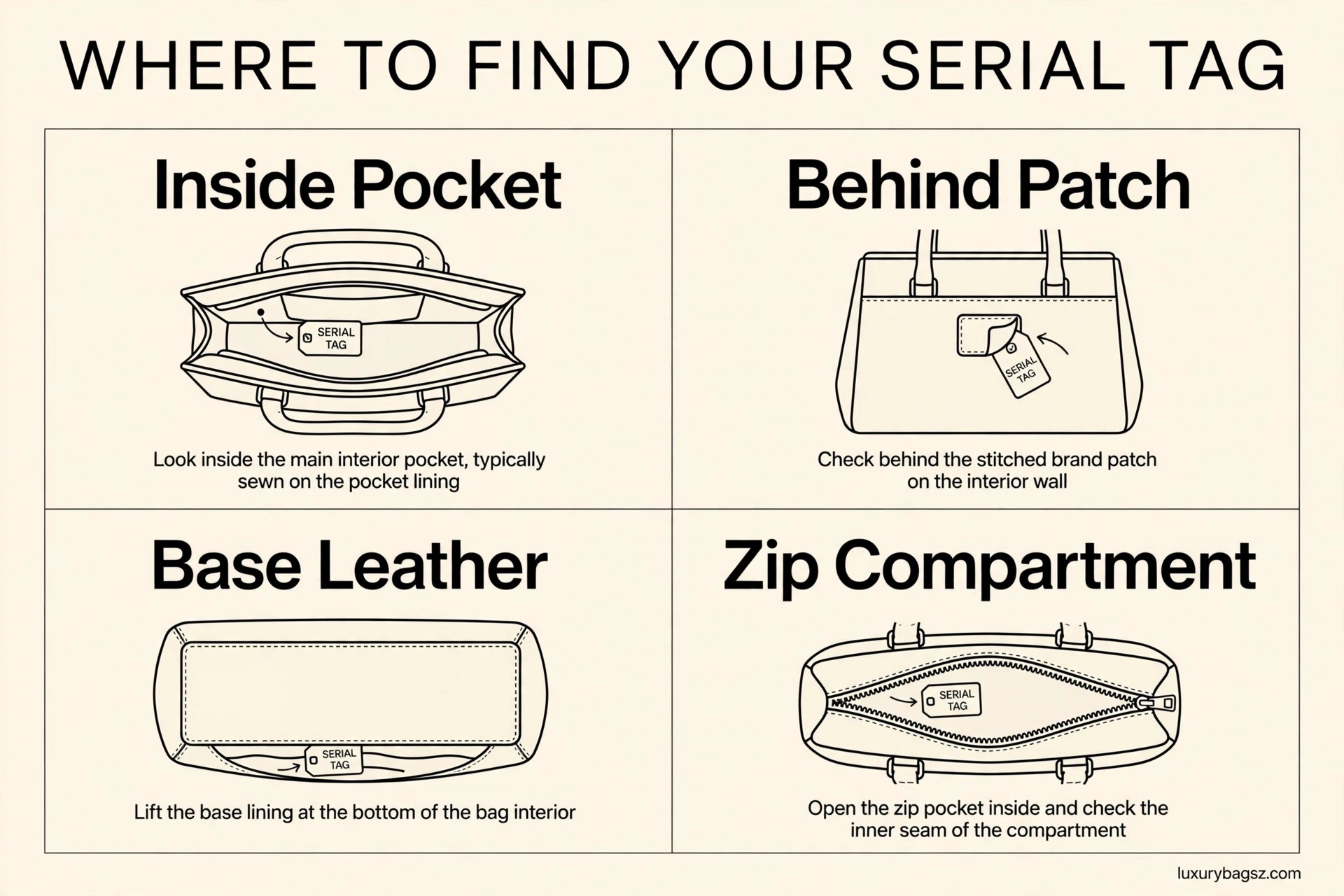
A Saint Laurent serial number sits on a small leather tag inside the bag, usually inside a pocket, behind the interior patch, or stamped into the lining. On a modern bag it reads in one line: three letters, six digits, a dot, then four more digits.
Reputable guides read the six digits as the style number and the final four as a month-and-year code. Saint Laurent has never published an official decoder, so treat that reading as a useful convention, not a brand guarantee, and never as proof on its own.
Key Takeaways
- Look inside a pocket, behind the interior patch, or along a seam first. The tag is tonal leather and easy to miss.
- Modern format: three letters, a six-digit style number, a dot, and four digits widely read as month then year.
- Older Yves Saint Laurent bags usually carry twelve digits in two groups of six, split by a single dot.
- The style number should match the number on the authenticity card and the model in your hands.
- A correct number never proves a bag is real. Fakes copy genuine codes, so check the logo, hardware, and stitching too.
- There is no public Saint Laurent database to look a number up in. Anyone offering one is not offering the real thing.
Where the Serial Tag Hides
On most modern bags the number is debossed or heat-stamped on a small rectangular leather tab sewn into the lining. The leather usually matches the bag’s colour, which is why owners often swear their bag has no number at all.
Start with the interior zip pocket, then check behind the stamped interior patch and along the seams. On some bags the code sits on the reverse of that patch, so lift it gently and look at the back before you give up.
A torch helps more than you would expect. The stamp can be shallow, the lining dark, and the tag tucked flat against a seam. Photograph it once you find it, because a clear photo is what any authenticator will ask for first.
Loulou
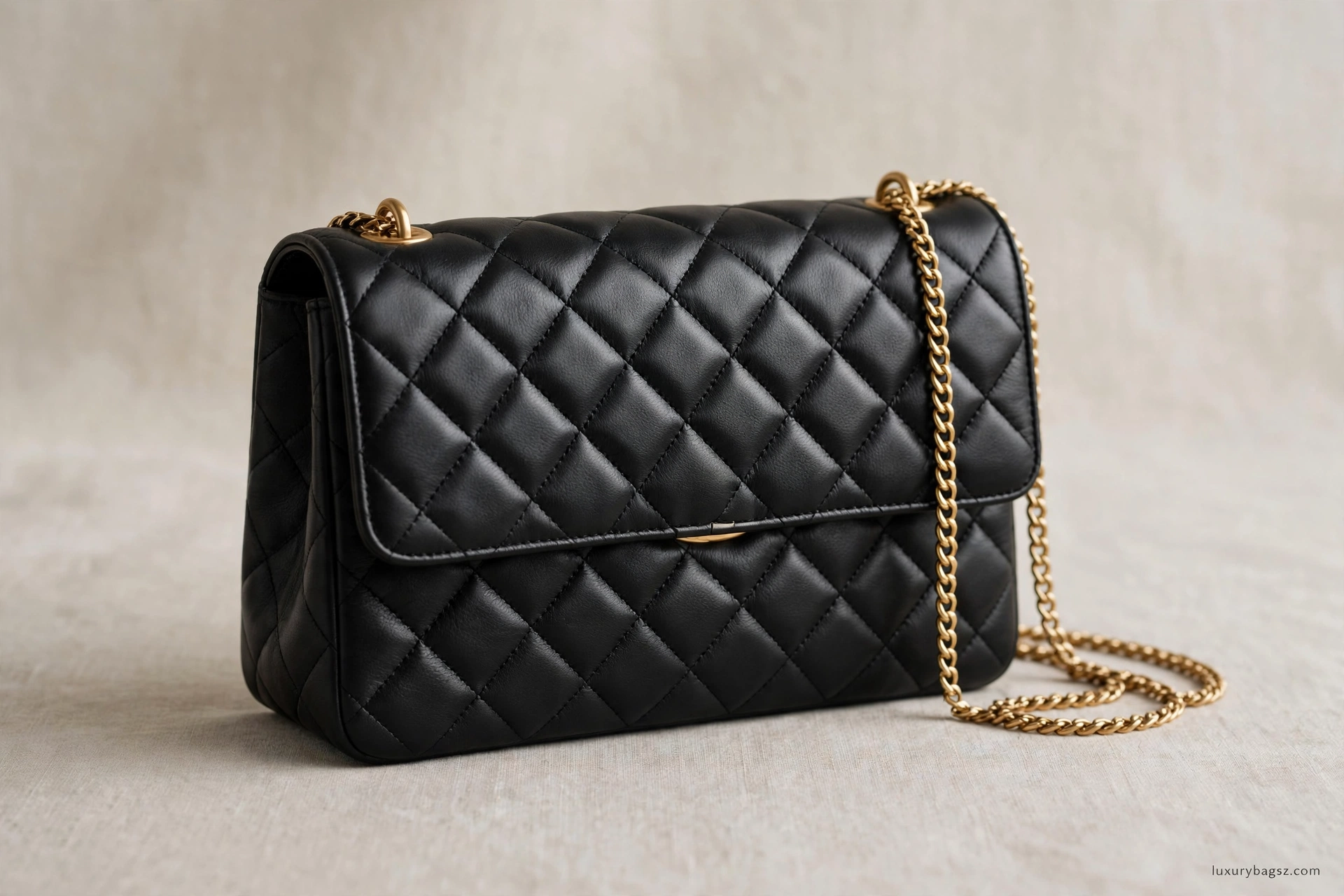
On the Loulou, look inside the interior zip pocket and on the leather tab near the interior patch. Sizes and linings vary, so check both spots. The quilted body gives you other clues too, but the tag is normally inside, not under the flap.
Kate
The Kate is slim, so its tag is small and easy to overlook. Check inside the interior pocket and along the lining seam, and feel for a stiff little rectangle with your fingertips. A shallow stamp on a small Kate can be hard to read in poor light.
Sac de Jour
On the Sac de Jour, guides commonly place the code stamped into the interior leather, often near the base or inside a pocket, depending on size and year. Work slowly around the structured interior, because the stamp can sit low and flat against the leather.
Niki
On the Niki, start with the interior zip compartment and the leather tag inside it. The slouchy body and fabric lining hide a tonal tag well, so empty the bag fully and check each compartment in turn rather than peering into a full bag.
Sunset
On the Sunset, check inside the main compartment, often near the zip pocket or behind the inner pocket. The structured compartments hide the tab against a wall, so open each compartment in turn rather than checking only the largest one.
| Model | First places to check |
|---|---|
| Loulou | Inside the zip pocket; tab near the interior patch |
| Kate | Inside the small interior pocket; along the lining seam |
| Sac de Jour | Stamped into interior leather, near the base or in a pocket |
| Niki | Leather tag inside the zip compartment |
| Sunset | Leather tab inside the main compartment, near the zip pocket |
These are starting points, not promises. Placement shifts with size, lining, and production year, so a tag in a slightly different spot is not, by itself, a problem. A missing tag on a modern bag is a far bigger concern than a moved one.
Small bags and wallets on chain follow the same habit in miniature. The tag shrinks with the bag and often hides inside the smallest pocket or behind a card slot panel. If a seller says a small style never carries one, ask for pocket photos before you accept that claim.
How to Read the Number, Part by Part
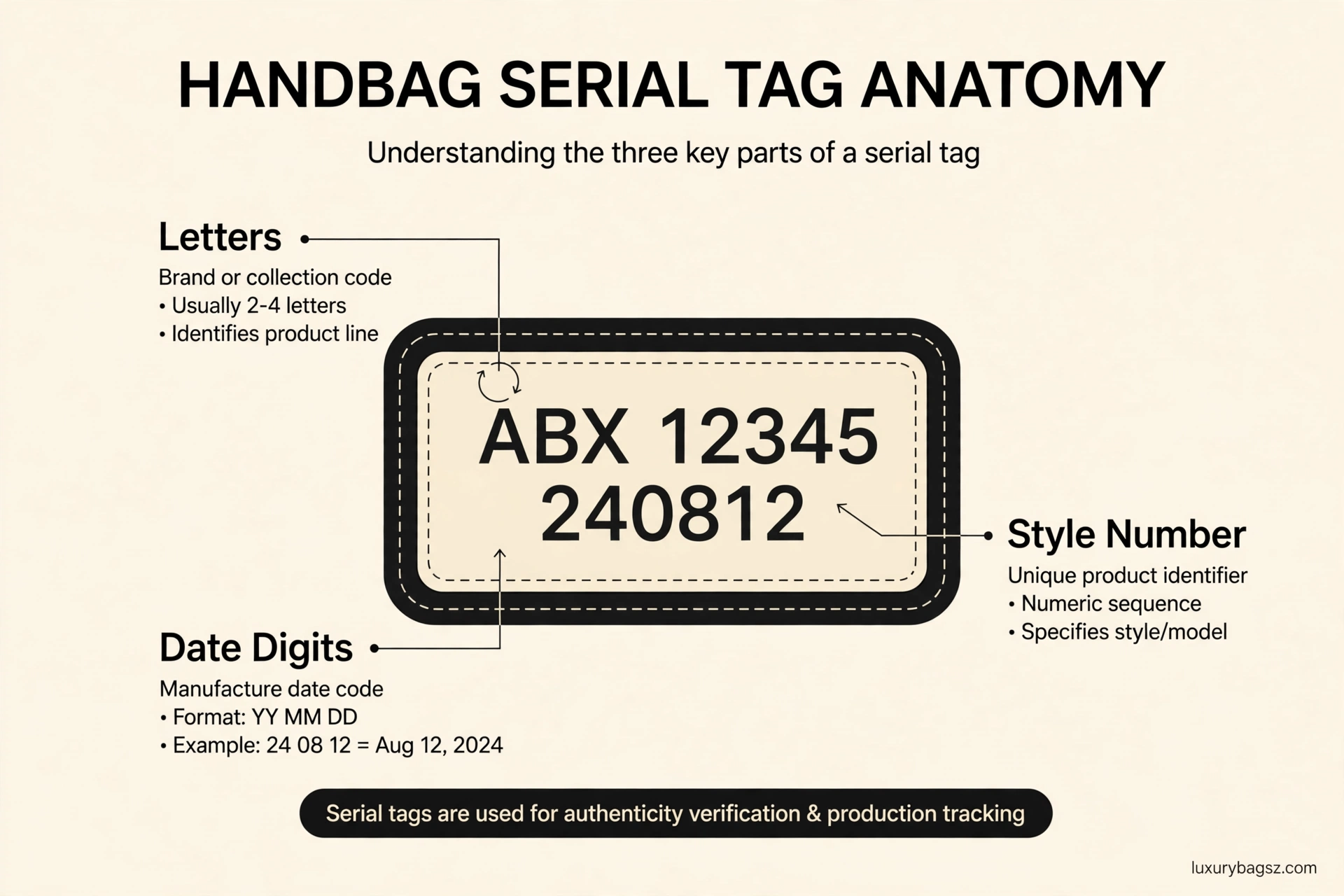
Take the widely used example PMR657228.0422. Reputable checker guides split it into three parts: a three-letter prefix, a six-digit style number, and four final digits after the dot. Read it exactly as stamped, letters and dot included.
- Three letters: often linked to a workshop or production batch. Saint Laurent has never published a key for them, so no one can honestly name a factory from the letters alone.
- Six digits: the style number. It identifies the model family and is shared by every genuine bag of that style, so it is not unique to your bag.
- Four digits after the dot: widely read as month then year, so 0422 is read as April 2022. Helpful, but it remains a convention, not an official brand rule.
Some listings and cards show extra digits alongside the style number for colour or material variants. Listings describe those suffixes inconsistently, so do not build a verdict on them. The style match and a plausible date matter far more.
Now try the older layout. A vintage code such as 123456.789012 splits into two groups of six with one dot and no letters. Authenticators generally treat the first group as the style reference and make no confident date claim from the second group at all.
The style number is your most practical check. It should suit the model, size, and shape in front of you, and it should match the number printed for the bag elsewhere, including its card. A Loulou wearing a code for a different model needs explaining.
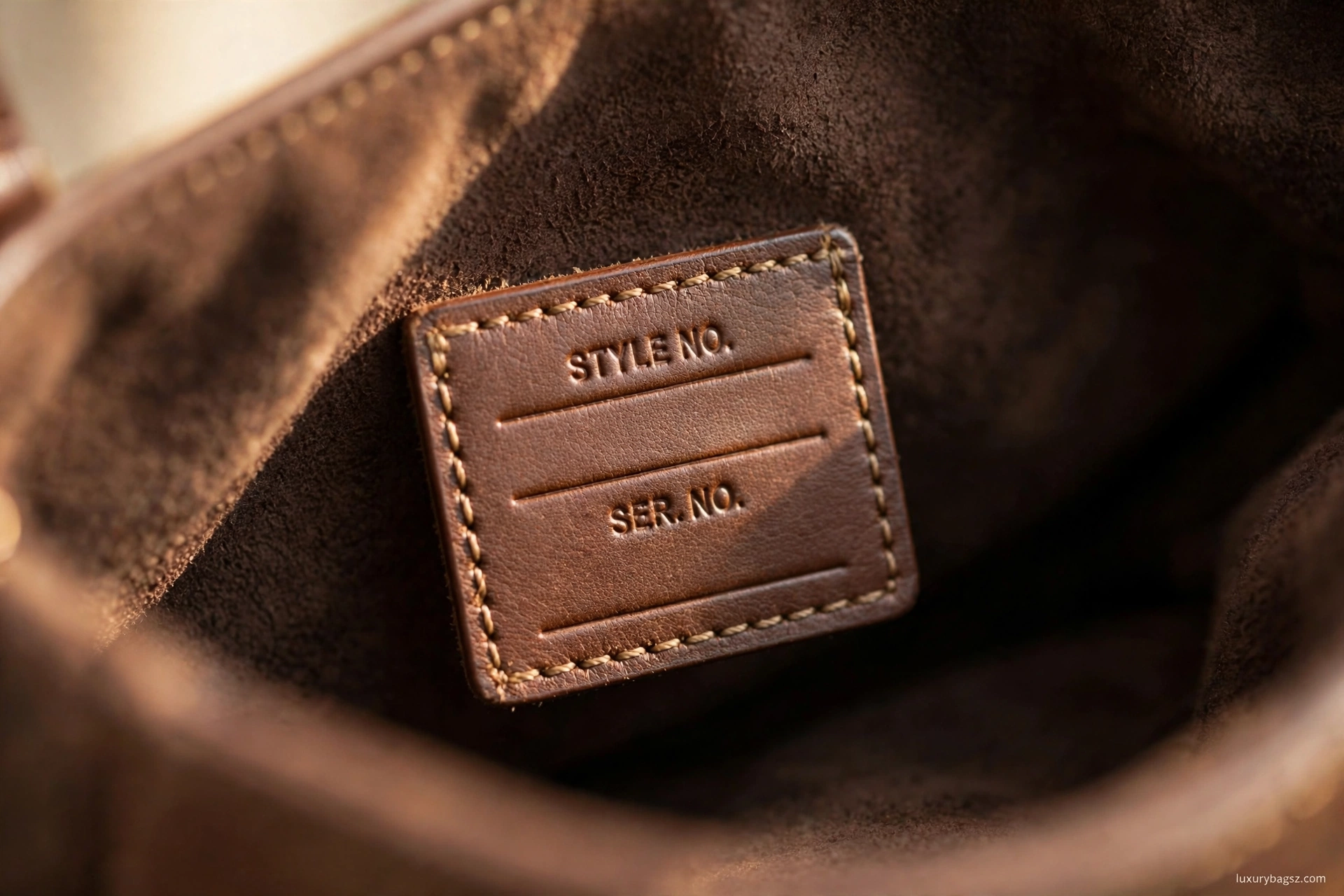
How the code is stamped matters as much as what it says. Expect one line, even spacing, a fine and consistent typeface, and an even depth you can feel with a fingernail. The characters should sit level, not climb, crowd, or fade at one end.
Other houses hide their logic differently, which is why cross-brand habits mislead buyers. My guide to Gucci serial numbers shows a two-part stamp with its own rules. Learn each house on its own terms and never borrow a decoder.
How the Tag and Format Changed Over Time
The single most useful habit is matching the number to its era. In 2012 the house was renamed from Yves Saint Laurent to Saint Laurent Paris, and the interior wording and the code format changed at roughly the same time. The two must agree.
| Era | Interior wording | Typical format |
|---|---|---|
| Before about 2000 | Yves Saint Laurent | Short numeric code, or none on some vintage pieces |
| About 2000 to 2012 | Yves Saint Laurent | Twelve digits in two groups of six, split by a dot |
| 2012 to now | Saint Laurent Paris, later Saint Laurent | Three letters, six digits, a dot, then four digits |
For the older twelve-digit layout there is no reliable public key for dating, however confidently a listing claims one. Read the first group as the style reference, check that the format suits the era, and let the bag’s construction carry the rest of the judgement.
Very old Rive Gauche pieces may carry a minimal code or none at all. On those bags, authentication rests on typography, materials, and construction rather than a number. Do not condemn a genuine vintage piece for failing a rule written for modern bags.
Wording helps you place a bag within the modern era too. Bags from the years after the rebrand most often read Saint Laurent Paris, while more recent production commonly shortens the stamp to Saint Laurent. Treat that as a soft guide, because changeovers are never tidy.
The mismatch is the tell. A post-2012 model such as the Loulou or Niki cannot honestly carry a vintage layout or old wording, and a bag stamped with the new name should not wear the short old format. Fakes often mix details copied from different reference bags.
The Made in Italy Line and the Authenticity Card
On many bags the words made in Italy appear below or near the serial number, in the same restrained style. Wording and capitalisation vary a little by model and year, so judge the quality of the stamp rather than hunting for one exact layout.
Saint Laurent handbags are made in Italy, so a bag stamped with a different country of origin is a serious problem. Small leather goods are a separate matter. For handbags, that one line agreeing with the rest of the bag is a basic consistency check.
Full sets often arrive in a black envelope holding a care booklet and cards, including a small black authenticity or control card. The style number on the card should match the style number on the tag. Photograph both together when you check a listing.
Cards help, but they prove less than sellers claim. Cards are copied, swapped between bags, and sold on their own, and plenty of genuine pre-loved bags have lost theirs. A matching card supports a good bag. A missing card, alone, condemns nothing.
As Jessica, founder of Luxury Bagsz and a handbag specialist, I have examined 500+ bags over 10+ years in the bag industry. The sets that worry me are rarely missing one card. They are the sets where card, tag, wording, and model all tell slightly different stories.
Checks to Run Alongside the Number
A number is one witness, never the whole case. I personally check bags the same way every time: number first, then logo, hardware, stamp, stitching, and leather. When all six agree, confidence follows. When two disagree, I slow right down.
The Cassandre Logo
The interlocking logo is precise work. Guides note that the top of the Y should sit slightly taller than the S and L, with the letters overlapping in a set order. A logo with all three letters at one height, thin arms, or a loose and rattling fit deserves suspicion.
The Interior Stamp
The heat stamp should be pressed into the leather, clean and level, never printed on the surface or stuck on. On the straight lettering, the N and T of LAURENT join at the top, PARIS sits smaller beneath, and the R in PARIS has a straighter leg than the R in LAURENT.
Hardware, Zips, and Chains
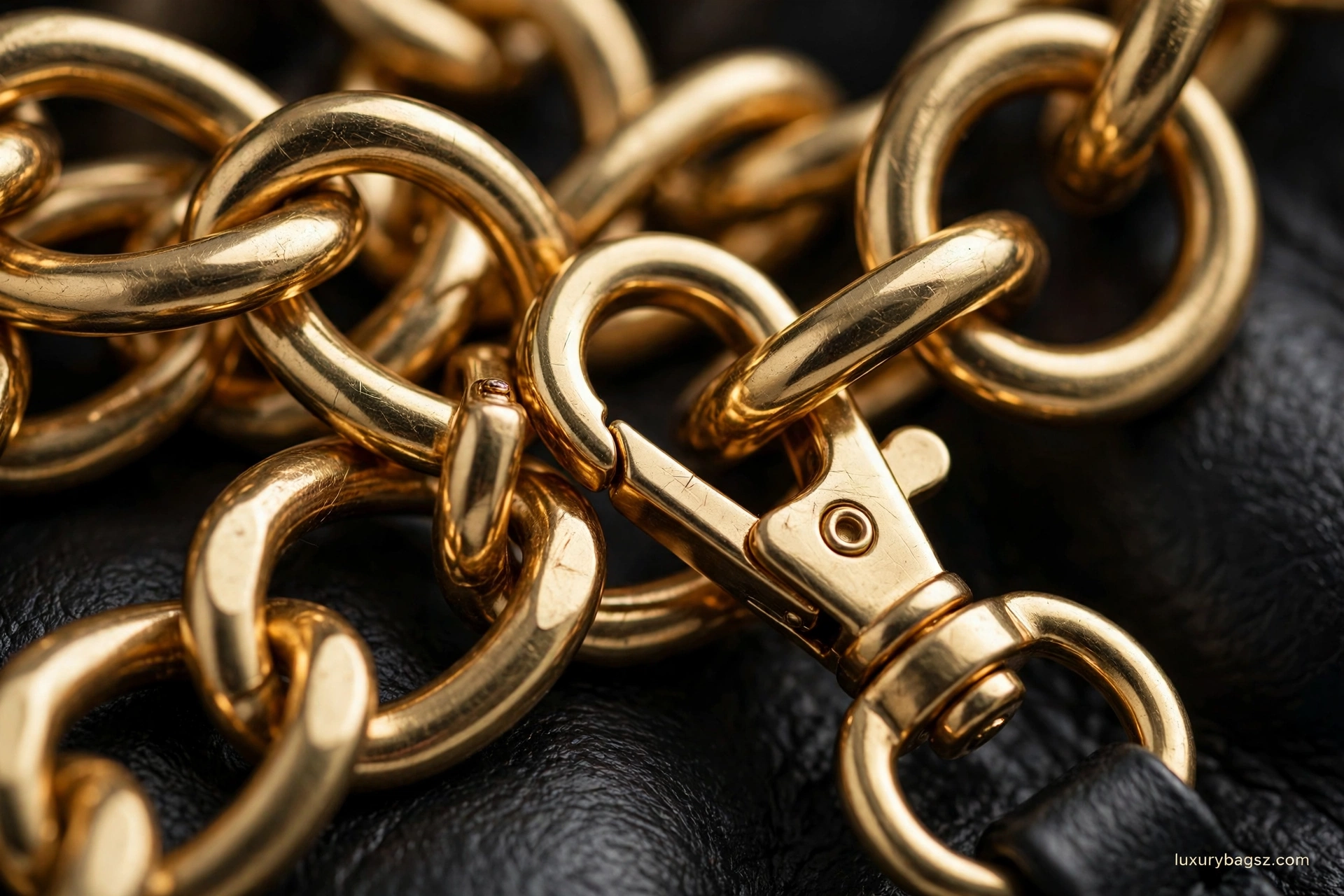
Genuine hardware feels substantial, with crisp and evenly spaced engraving. Chains use flat, smooth-edged links with real weight, zips run smoothly, and zip pulls often carry the house’s slight bend near the base. Light, brassy, or sharply finished metal is a warning.
Stitching, Quilting, and Leather
Stitching should be even in length and tension, with no loose threads. On quilted styles the chevron lines should meet cleanly and stay symmetrical. Leather should feel supple and smell like leather, not chemicals. My visits to leather factories in Spain and France taught me how hard that finish is to fake cheaply.
That wider view is also what protects your money over time. The models in my guide to Saint Laurent bags worth investing in hold value best when every detail, not just the code, stands up to close inspection years later.
Fake-Number Red Flags
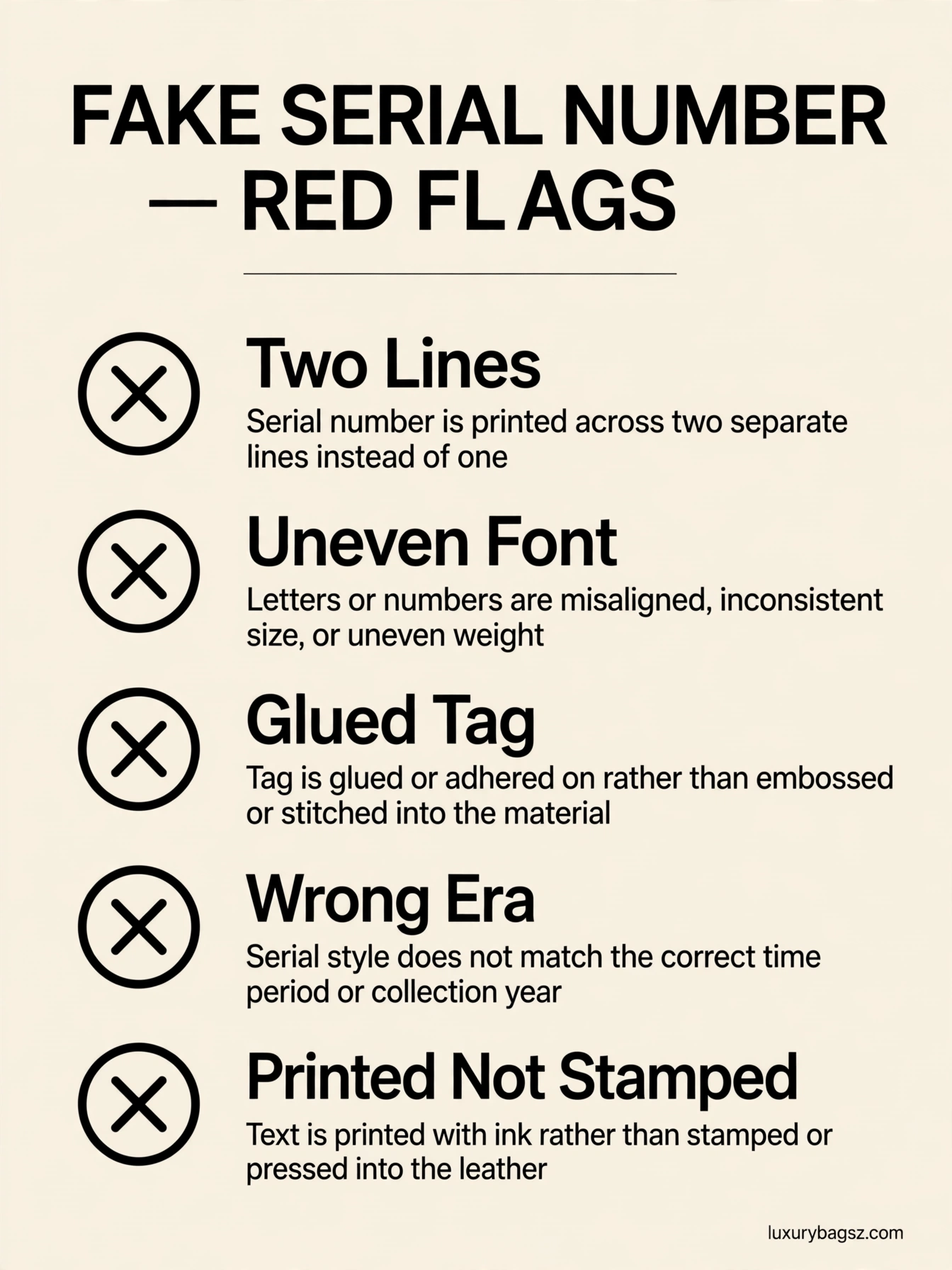
Most fake numbers fail on workmanship before they fail on maths. Work through this list slowly, in good light, and compare each point against the rest of the bag rather than judging the tag in isolation on a phone screen.
- The code spreads over two lines instead of sitting in one even line.
- The font looks bold, uneven, smudged, or different in depth from one character to the next.
- The tag is glued in, made of fabric or coated material, or stitched loosely and unevenly.
- The number looks printed or painted on the surface instead of pressed into leather.
- The format belongs to the wrong era for the wording, model, or design in front of you.
- The style digits name a different model, or the final four digits form no plausible month and year.
- The style number disagrees with the number on the card that came with the bag.
- The seller offers a lookup certificate or database result as proof. No public database exists.
One flag is a question, not a verdict. Stamps wear, photos distort, and older bags follow older rules. Two or three flags together, especially a wrong-era format beside a poor stamp, is the pattern that should stop a purchase until an expert has seen the bag.
Remember the opposite trap as well. The best copies borrow a genuine code from a real bag, so a perfect-looking number can sit inside a fake. That is why authenticators weigh the number last in importance, behind construction they can see and feel.
How to Photograph the Tag for a Check
Most failed checks fail on the photo, not the bag. Empty the bag, open the pocket fully, and hold the tag flat in daylight. Turn off the flash, which blows out shallow stamping, and take one straight shot plus one angled shot that shows the depth.
Keep your fingers off the digits and include the made in Italy line and a little lining in the same frame, so the reader can judge placement as well as characters. If the stamp will not read on camera, say so honestly rather than sending a blur.
When the Number Is Not Enough
Get a professional opinion when the bag is expensive, the seller resists clear photos, or any two checks disagree. Ask for straight, unfiltered photos of the tag, the stamp, the logo, the zip pulls, and the base, taken in daylight without a case on the phone.
A boutique visit is not a shortcut either. Staff may spot an obvious problem, but Saint Laurent does not issue written authentication for bags bought elsewhere, so a verbal nod in a shop is not a certificate you can resell with.
In my own work I use Entrupy, including its microchip checks, alongside hands-on inspection of leather, engraving, stitching, and hardware. Technology helps, but it supports the eye rather than replacing it. You can read how I work in my authentication process before you buy.
Buy from sellers who accept returns and who show the actual bag, not stock photos. Keep the listing photos, the card photos, and your own tag photo together. If a dispute ever opens, that small folder is worth more than any promise in a chat thread.
Frequently Asked Questions
Where is the serial number on a Saint Laurent bag?
Usually on a small leather tag inside the bag: inside a pocket, behind the interior patch, on the reverse of that patch, or stamped into the lining or base leather. The tag normally matches the bag’s colour, so search seams and pockets carefully with a torch.
Can I look up a Saint Laurent serial number online?
No. Saint Laurent keeps no public database, and free checker tools only test whether a code fits a known format. A format match is a screening result, not an authenticity verdict, because counterfeiters copy genuine codes onto fake bags every day.
What do the last four digits of the serial number mean?
On modern bags they are widely read as month then year, so 0422 reads as April 2022 and 1219 as December 2019. Saint Laurent has never confirmed that reading officially, so use it to test plausibility against the model’s era, not as a dated certificate.
Do all Saint Laurent bags have a serial number?
Modern bags and most bags from about 2000 onwards carry one. Some very old vintage pieces carry a short code or none at all, and those bags are judged on typography, materials, and construction instead. A modern bag with no code at all is a different and worrying case.
Should the serial number match the authenticity card?
The style number should match, yes. That agreement is a good consistency check when you photograph tag and card together. Remember that cards can be copied or swapped, and genuine bags often lose theirs, so treat the card as supporting evidence, never the whole proof.
Can a fake bag have a correct serial number?
Yes, and the better fakes usually do. Copying a real code costs nothing, which is why the same style number appears on many genuine bags and many fakes. Always weigh the stamp quality, logo proportions, hardware weight, stitching, and leather alongside the digits.
What if the serial number has worn faint?
Shallow stamps fade, especially inside well-used pockets. Tilt the tag under a lamp, feel for the impression with a fingertip, and photograph it at an angle. A faint but evenly formed code on a sound bag is normal wear. A bold, fresh code on a heavily worn bag is odder.
Final Verdict
Read a Saint Laurent tag in three moves: find it, split it into letters, style number, and final digits, then test it against the bag’s era, wording, card, logo, and hardware. A number that agrees with everything around it earns trust. One that argues with its own bag does not.
Treat the code as the start of the conversation, never the end of it. Check slowly, photograph clearly, and walk away from any bag whose story changes depending on which detail you read. The right bag tells the same story everywhere you look.
Keep your tag photo with the bag’s papers from the day it arrives. It costs you a minute, it helps any future authenticator, and it protects you if you ever sell the bag on. Good records are part of owning a luxury bag well, just like careful storage and gentle use.