

What to Know About Gucci: History, Bags, Prices and Buying Guide
Gucci at a Glance
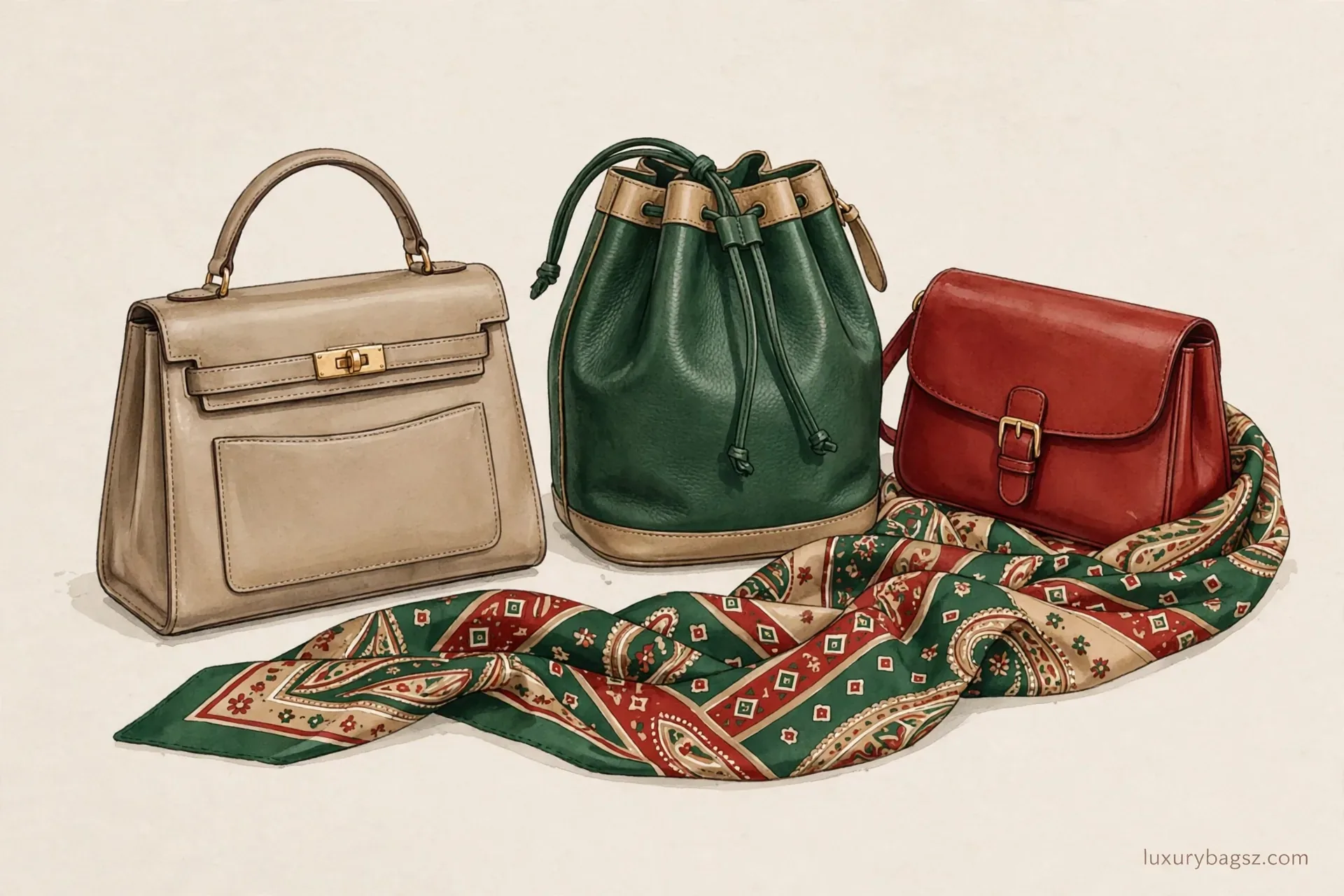
Gucci is Italy's most famous fashion house: a Florentine leather-goods business founded in 1921 that grew into a global luxury brand covering bags, shoes, clothing, jewellery, and beauty. Its codes are instantly recognisable, from the green-red-green Web stripe to the interlocking GG monogram and the horsebit.
The house has reinvented itself several times, from aristocratic luggage maker to 1990s sex-charged glamour under Tom Ford, to maximalist eclecticism under Alessandro Michele, to a cleaner, more classic direction in recent years. Each era left iconic bags that still sell well pre-owned.
For buyers, Gucci offers breadth: entry-level small goods, mid-priced canvas bags, high-end leather handbags, and a huge shoe and ready-to-wear range. Prices vary widely, fakes are common, and knowing the codes, materials, and serial-number system will save you money and trouble. The full set sits in our complete Gucci guide collection, grouped by bags, authenticity checks and shoes.
Key Takeaways
- Gucci was founded in Florence in 1921 by Guccio Gucci, inspired by luxury luggage he saw as a porter in London.
- Signature codes include the Web stripe, the GG monogram, the horsebit, and the bamboo handle.
- Iconic bags include the Bamboo, Jackie 1961, Horsebit 1953, Dionysus, and GG Marmont lines.
- Gucci is owned by Kering and sells worldwide through boutiques, department stores, and online.
- Prices range from a few hundred for small goods to several thousand for leather handbags.
- Serial numbers, stitching, hardware, and materials are the key pre-owned checks.
- Gucci rarely discounts core bags, so deep discounts on new pieces deserve scepticism.
- Classic models in neutral colours resell best; loud seasonal pieces are harder to move on.
From a Florence Workshop to a Global House
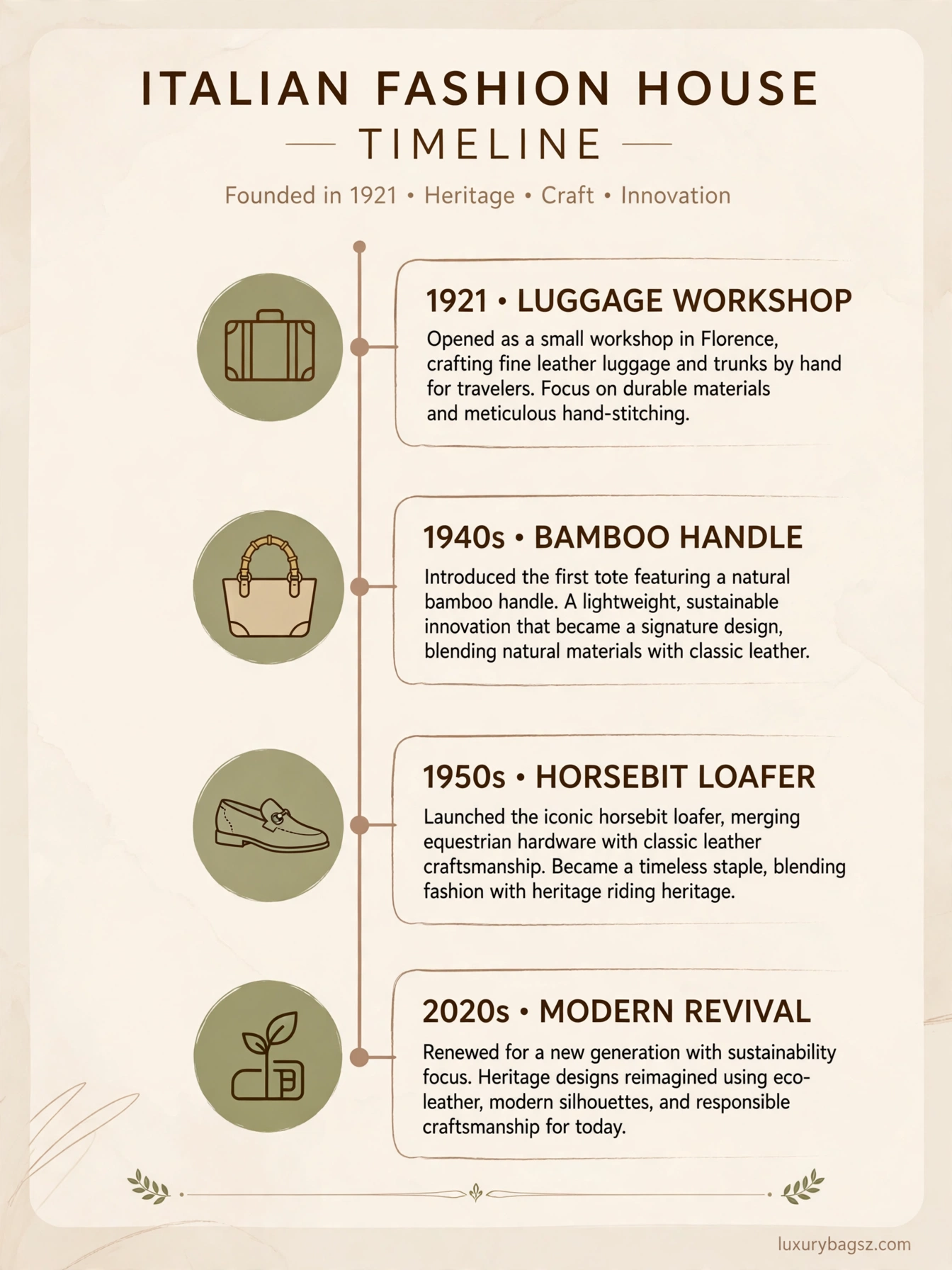
Guccio Gucci founded his shop in Florence in 1921 after working as a porter at London's Savoy Hotel, where he admired the fine luggage of wealthy guests. He returned to Italy determined to make luggage of the same calibre, using Tuscan leather craftsmanship that Florence was already famous for.
Early Gucci sold trunks, cases, and travel goods to aristocrats and travellers passing through Florence. Quality was the pitch: sturdy construction, fine leather, and practical design. The business grew through the 1920s and 1930s, adding handbags and accessories as travel habits changed.
Guccio's sons joined the business and expanded it after the Second World War, opening stores in Milan, Rome, and then New York in 1953. That American expansion mattered enormously, because it introduced Gucci to Hollywood stars and wealthy American travellers who carried the brand home with them.
By the 1960s, Gucci was a byword for Italian luxury. Grace Kelly, Jackie Kennedy, and Audrey Hepburn all carried Gucci, and the house's designs from that era, including the bag later named for Jackie Kennedy, remain in production today in updated forms.

War, Bamboo, and the Birth of the Codes
Wartime shortages shaped Gucci's most famous design. When leather was scarce, the house turned to bamboo for bag handles, heating and bending the cane into the curved shape that became the Bamboo bag in 1947. A constraint became a signature, and bamboo remains a Gucci code today.
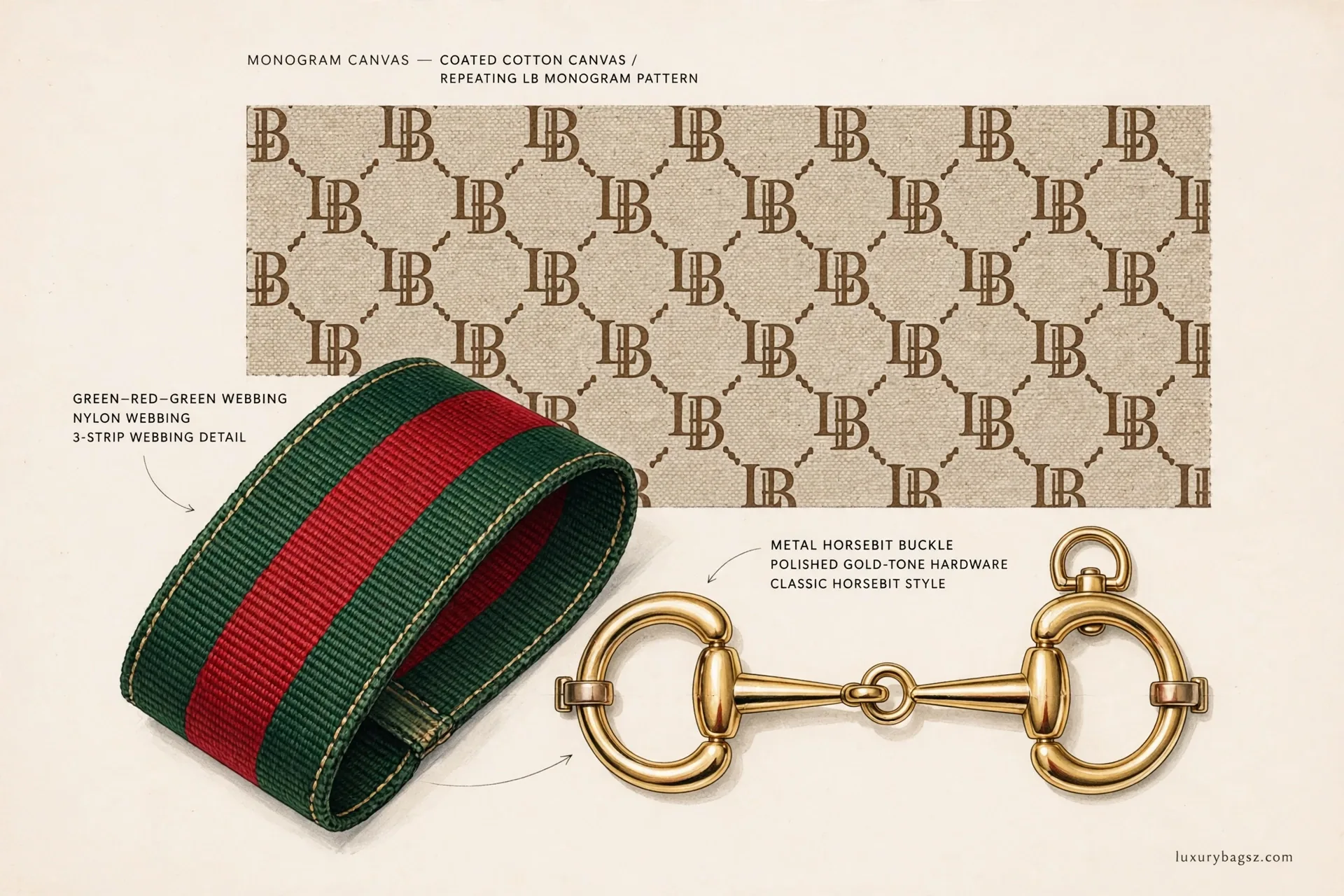
The Web stripe, green-red-green, came from saddle girths and equestrian heritage, a nod to the horse world that also produced the horsebit. The horsebit, a metal snaffle shape, first appeared on loafers in 1953 and later migrated to bags, belts, and jewellery, becoming one of fashion's most copied motifs.
The GG monogram, interlocking Gs for Guccio Gucci, developed as a canvas pattern for luggage and bags. It gave Gucci a recognisable coated canvas to rival other houses, and it remains central to the range in both classic beige and newer colourways.
These codes matter for buyers because they are the first things fakes get wrong. Stripe width, monogram alignment, horsebit weight, and bamboo finish all repay close inspection, and genuine pieces show a consistency that copies rarely achieve.
The Family Years: Growth, Feuds, and Overexpansion
The 1970s and 1980s brought rapid expansion and serious trouble. Gucci opened stores worldwide and licensed its name widely, which boosted revenue but diluted the brand. Too many products, from lighters to mugs, carried the name, and exclusivity suffered.
Family disputes compounded the problem. Guccio's descendants fought over control, and the business drifted creatively while rivals sharpened their identities. By the early 1990s, Gucci was financially strained and creatively tired, a remarkable fall for a house that had defined Italian luxury.
The turnaround began when the family sold control and new management brought in Tom Ford as creative director in 1994. Ford stripped back the licensing excess, sharpened the image, and made Gucci sexy, glamorous, and modern again. Sales recovered dramatically, and Gucci became a fashion leader rather than a heritage relic.
That revival also set a pattern Gucci has repeated since: periodic reinvention by a strong creative director, followed by a period of consolidation. Buyers who understand which era a piece comes from can judge its style, quality, and resale appeal far better.
The Codes, Explained for Buyers
The Web stripe is the simplest code to spot: green, red, and green bands, usually on canvas, leather trim, or a bag strap. Width and colour tone vary slightly by era and product, but the stripe should look clean, evenly woven or printed, and symmetrical. Muddy colours or uneven bands are warning signs.
The GG monogram appears as GG Supreme canvas, a coated canvas with interlocking Gs, and as leather embossed or printed with the motif. On genuine canvas, the pattern aligns sensibly and the coating feels smooth, not plastic-shiny. On leather, the embossing should be deep and even.
The horsebit is a metal snaffle bit, used on loafers, bags, and belts. Genuine hardware feels weighty, shows clean casting, and carries crisp engraving where present. Light, hollow, or roughly finished hardware is a common fake tell, and it is easy to check in person.
Bamboo handles should feel smooth, warm, and solid, with a natural variation in tone. Each handle is shaped from cane, so slight differences are normal, but cracks, rough joints, or a plastic feel are not. If a bamboo bag feels light and hollow, inspect it carefully.
Materials: Canvas, Leather, and What to Expect
GG Supreme canvas is Gucci's workhorse material: a coated canvas that resists water and scuffs, used for totes, backpacks, and travel pieces. It is lighter than leather and easier to maintain, which makes it a good daily choice, though it will not develop the patina that leather lovers prize.
Leather ranges from smooth calfskin to grained, pebbled, and exotic finishes. Marmont bags use matelasse chevron leather, Dionysus bags use suede and printed canvas variants, and Jackie bags use smooth and grained leathers. Each leather ages differently, so ask about care before choosing.
Suede appears on linings and some bags, and it needs more care than canvas or smooth leather. Keep suede away from water and light colours away from dark clothing, which can transfer dye. A suede protector spray, tested first, helps for bags you will carry often.
Exotic leathers, including python and crocodile in some lines, sit at the top of the price range and come with care and legal considerations for travel. If you buy exotic pre-owned, check paperwork and condition carefully, because repairs are costly and specialist.
The Iconic Bags, and Which One Suits You
The Jackie 1961 is a hobo-style shoulder bag with a piston closure, beloved since Jackie Kennedy carried the original. It suits buyers who want a soft, elegant everyday bag with history. Our Jackie 1961 guide covers sizes and prices in detail.
The Horsebit 1953 line, including loafers and bags, centres on the snaffle motif and a clean, equestrian feel. It suits buyers who prefer understated hardware and classic shapes over logos. The Horsebit 1953 guide is a good next read for this line.
The Dionysus, launched under Alessandro Michele, pairs a curved flap with a tiger-head clasp and often a Web stripe or embroidered detail. It suits buyers who want a statement shoulder bag with a bohemian edge. Our Dionysus guide covers its many variants.
The GG Marmont uses chevron matelasse leather and a Double G clasp, and it is one of Gucci's most recognisable modern bags. It suits buyers who want a soft, youthful, logo-visible bag in many sizes and colours. Our GG Marmont guide details the range.
Beyond these, the Bamboo top-handle, the Soho, the Ophidia, and the Gucci Diana offer further choices, from formal top-handles to canvas shoulder bags. Start with the icon that matches your daily needs, not the one with the most advertising behind it.
Shoes, Ready-to-Wear, and the Wider World
Gucci shoes are a major business, led by the Horsebit loafer, the Princetown slipper, and a wide sneaker range. Loafers suit buyers who want a classic that works with tailoring and denim alike, while sneakers appeal to a younger, more casual audience. Sizing varies by style, so try before you buy where possible.
Ready-to-wear spans tailoring, knitwear, dresses, and statement pieces, with quality varying by item. Tailoring and knitwear tend to offer the best longevity, while heavily logoed or seasonal pieces date faster. Check fabric labels and construction, especially on suits and coats.
Jewellery and watches use the house codes in metal: horsebit rings, GG pendants, and interlocking motifs. These pieces suit buyers who want Gucci without a bag, and they make good gifts because sizing is simpler than clothing. Silver pieces are the most accessible entry point.
Beauty and fragrance extend the brand further, with perfumes and makeup sold widely. They are not the core of a Gucci wardrobe, but a fragrance is a low-risk way to test whether the house's aesthetic suits you before committing to a bag.
Gucci Under Tom Ford, Frida Giannini, and Michele
Tom Ford's Gucci (1994 to 2004) was sleek, sexy, and adult: velvet suits, satin shirts, and sharp tailoring that made Gucci the hottest label of the late 1990s. Vintage Ford-era pieces are now collectible, especially tailoring and evening wear in good condition.
Frida Giannini (2006 to 2015) softened the house, emphasising heritage codes, equestrian details, and a more romantic, Italian feel. Her era produced many of the modern classics, including refined versions of the Jackie and Bamboo, and it suits buyers who prefer classic over provocative.
Alessandro Michele (2015 to 2022) brought maximalism: embroidery, clashing prints, vintage references, and a gender-fluid attitude that attracted a huge young audience. Dionysus, Marmont, and the garden-inspired pieces define this era, and they dominate the pre-owned market today.
Since 2023, Gucci has moved towards a cleaner, more classic luxury under Sabato De Sarno, followed by further creative change in 2025. Buyers should expect the range to keep evolving, with heritage bags remaining available alongside newer, quieter designs.
Prices, and How Gucci Pricing Works
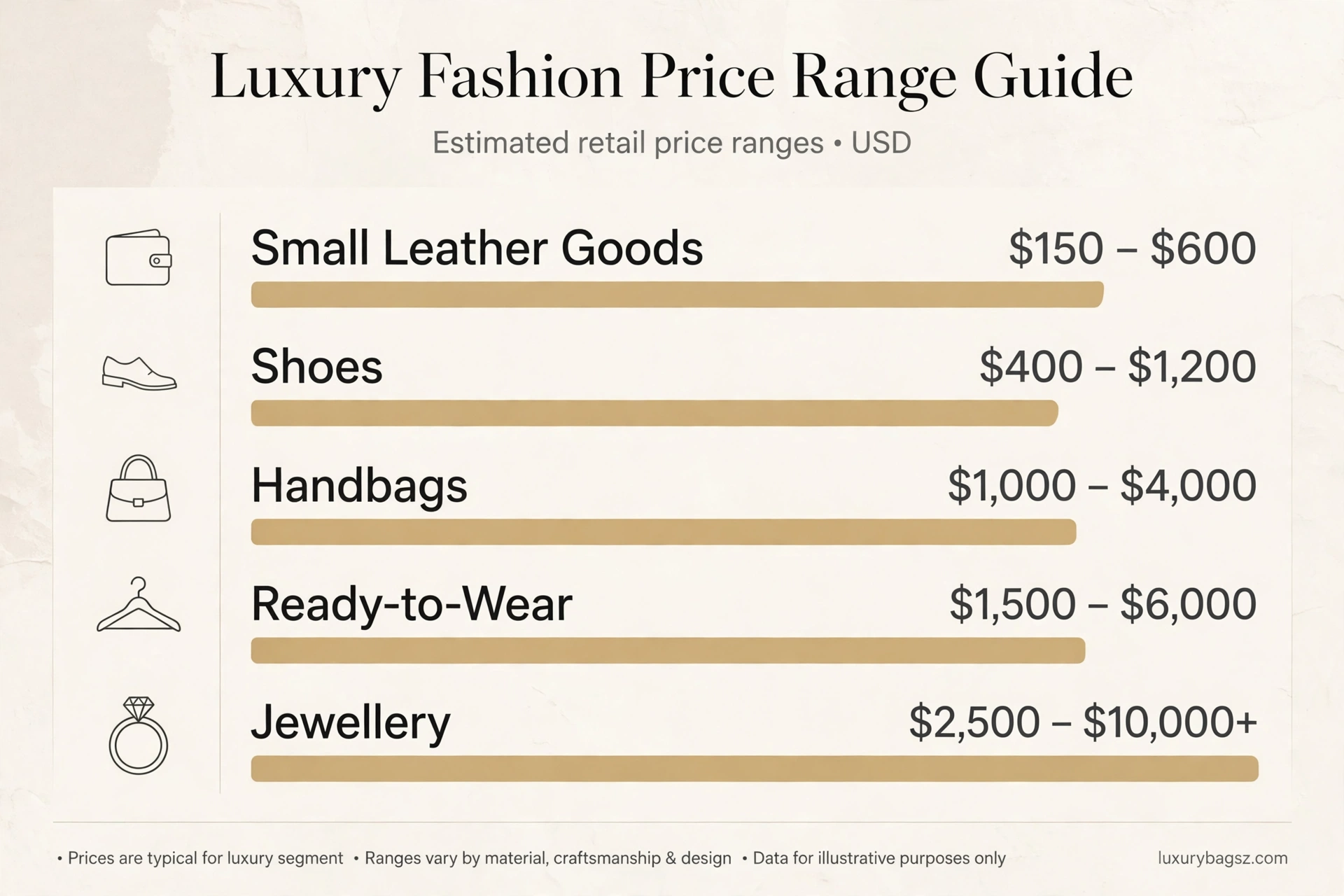
Small leather goods, such as card holders and wallets, are the entry point, typically in the low hundreds. Canvas bags and smaller leather bags run into four figures, while large leather handbags, exotic pieces, and ready-to-wear tailoring climb well beyond that.
Prices vary by market, with Europe often cheaper than some other regions before tax refunds, and prices rising over time across the industry. Always check current boutique prices for the exact model, because online price lists go out of date quickly.
Gucci holds occasional private sales and outlet stock exists, but core bags are rarely discounted deeply. A new core bag at half price from an unknown seller is a red flag, not a find. Outlets carry past-season and made-for-outlet pieces, which differ from boutique stock.
Cost per wear favours classic bags in neutral colours. A Jackie or Marmont carried daily for years costs less per outing than a seasonal bag worn twice, and it resells better too. Budget for the bag you will carry, not the bag that photographs best.
Where to Buy, and What to Expect
Gucci sells through its own boutiques, department stores, and its official online shop in many markets, which makes buying easier than for houses with no online store. Boutiques offer the fullest range and personal service, while online suits buyers who know their model and size.
Department stores carry a curated range and may offer promotions or loyalty benefits, but they rarely stock the full boutique selection. For rare colours or sizes, a boutique is usually the better bet, and staff can check other stores or order for you.
Outlets offer past-season stock at lower prices, but inspect carefully: outlet pieces may use different materials or construction from boutique equivalents. Ask what is different, and do not assume an outlet bag is identical to the boutique version.
For pre-owned, use reputable dealers, consignment stores, and auction houses with authentication. Avoid sellers who refuse detailed photos, pressure you to pay off-platform, or cannot explain a serial number. A good dealer welcomes scrutiny.
Sizing and Fit: Bags, Shoes, and Clothing
Bag sizing at Gucci is generous in naming but varies by line, so always check dimensions. A Marmont small, medium, and large differ significantly in capacity, and a Dionysus small will not hold what a medium Ophidia tote will. Measure your daily carry before choosing.
Shoe sizing varies by style. Horsebit loafers tend to fit true to size for many buyers, but some find them narrow, while sneakers often run larger or smaller depending on the model. Try in store, or order from a retailer with easy returns, and wear the socks you will pair them with.
Clothing sizing is Italian, which generally runs smaller than American sizing, so many buyers size up. Tailoring is cut slim in recent collections, while Michele-era pieces often ran more relaxed. Check garment measurements and the house's size guide, and do not assume your size in one Gucci line matches another.
When buying pre-owned clothing, ask for flat measurements and compare with a garment you own that fits well. Label sizes alone mislead, especially across eras, and knitwear stretches with wear.
Buying Pre-Owned Without Getting Caught Out
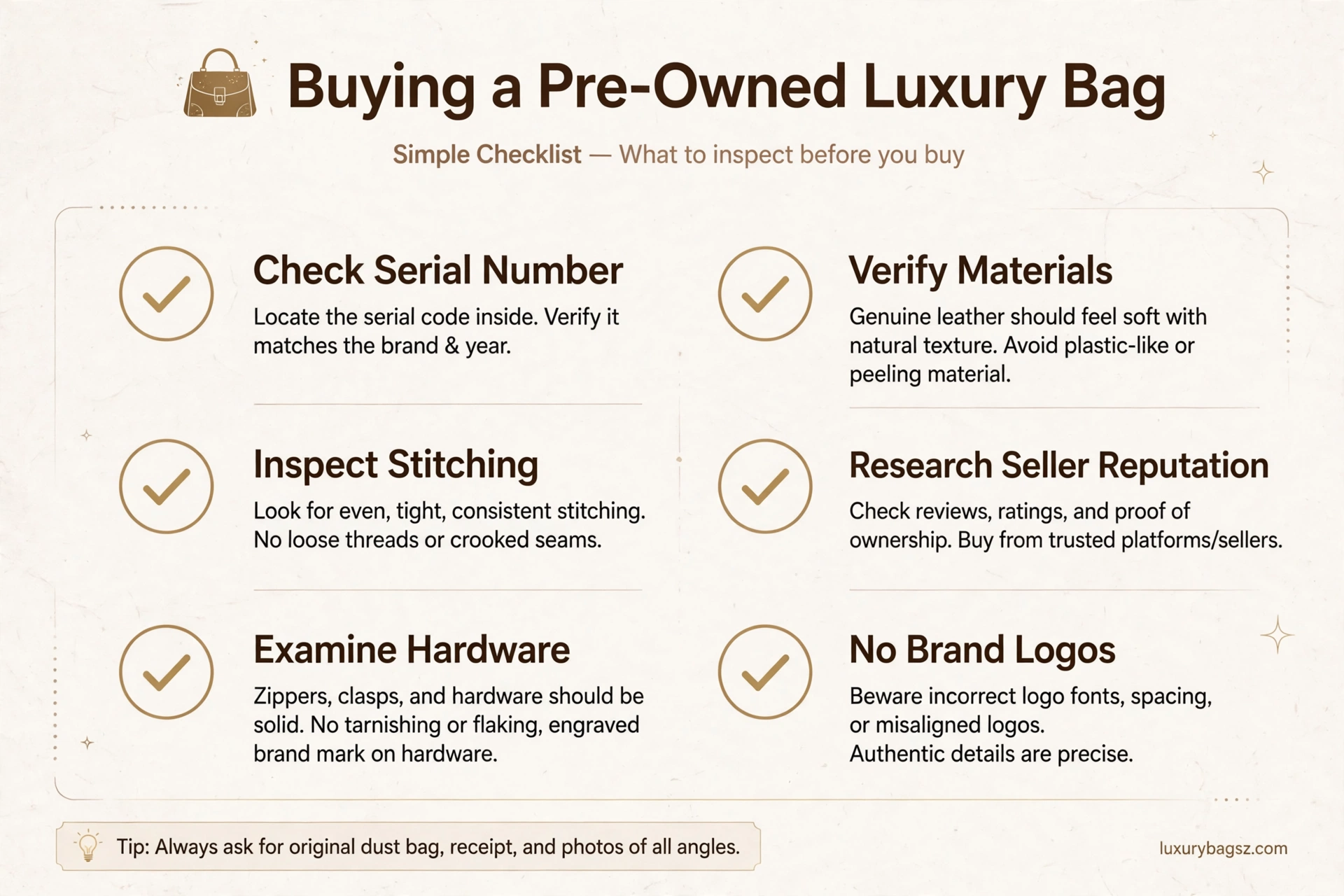
Pre-owned Gucci is plentiful, which helps prices but also attracts fakes. Start with the serial number: most modern Gucci bags carry a leather tag with a serial number, and our Gucci serial numbers guide explains the format by era. A missing, inconsistent, or poorly stamped tag deserves investigation.
Stitching should be even, tight, and consistent in colour. Hardware should feel weighty with clean engraving. Canvas pattern should align sensibly, leather should feel genuine rather than plastic, and linings should match the expected material for the model and era.
Our guide on how to spot a fake Gucci bag walks through these checks model by model, and our general guides on buying pre-owned safely and authenticating pre-owned pieces cover seller checks. Use them together, and get an independent opinion when the price or the piece justifies it.
Condition matters as much as authenticity. Check corners, handles, base, interior, and zips, and price repairs into your offer. A genuine bag in poor condition can cost more to restore than a better example bought at a higher price.
Caring for Gucci Bags and Shoes
Canvas bags need little care: wipe with a soft, dry cloth, blot spills promptly, and keep away from prolonged sun. Leather trim can be wiped gently, and a conditioner should be used sparingly and tested on a hidden spot, since over-conditioning darkens light leathers.
Smooth leather bags benefit from regular wiping, stuffing to hold shape, and dust-bag storage. Avoid overloading, which strains handles and distorts shape, and keep bags away from damp, heat, and dye-transfer risks from dark denim or new leather jackets.
Suede needs a brush and protector spray, and should be kept dry. For suede bags and shoes, a suede eraser handles light marks, but deep stains belong to a professional cleaner. Do not use water freely on suede, which marks easily.
Shoes need trees for leather styles, rotation to rest between wears, and prompt resoling when soles wear thin. Horsebit loafers last for years with resoling and edge care, while sneakers need cleaning after wear and should be kept out of the washing machine unless the maker advises otherwise.
Gucci Versus Louis Vuitton, Prada, and Saint Laurent
Against Louis Vuitton, Gucci offers more fashion variety and a stronger ready-to-wear and shoe range, while Louis Vuitton offers tighter canvas heritage and a more uniform global price and stock system. Canvas buyers who want variety lean Gucci; buyers who want a single iconic tote often lean Louis Vuitton.
Against Prada, Gucci is louder and more decorative, while Prada is more minimal and intellectual. Prada's nylon and Saffiano bags suit buyers who prefer understatement, while Gucci's monogram and Web stripe suit buyers who enjoy visible branding.
Against Saint Laurent, Gucci is broader and more colourful, while Saint Laurent is sleeker and more Parisian-rock in feel. Both make excellent leather shoulder bags, so the choice often comes down to hardware, shape, and which house's recent collections appeal more.
Choose Gucci if you enjoy Italian glamour, visible codes, and a wide range. Choose a rival if you want quieter branding, stricter minimalism, or a narrower, more focused bag range.
Collecting Gucci: Vintage Eras Worth Knowing
Tom Ford-era vintage is the most collectible recent Gucci, especially tailoring, evening wear, and bags from the late 1990s. Condition and provenance matter, and pieces with original dust bags and receipts command premiums among collectors.
Michele-era pieces dominate resale volume, which keeps prices accessible but also means rare colourways and limited editions stand out. Embroidered and garden-themed pieces from this era attract collectors who enjoy maximalism, while plain Marmont bags appeal to everyday buyers.
Older pieces, from the 1960s to the 1980s, include Bamboo bags, early Jackie bags, and luggage that shows the house's craft heritage. These pieces need careful condition checks, especially for bamboo, leather drying, and interior wear, but they offer history that new bags cannot match.
Collecting advice stays simple: buy what you love, prioritise condition, and learn one era well before branching out. A focused collection of well-chosen pieces beats a scattered haul of impulse buys.
Common Mistakes First-Time Gucci Buyers Make
The first mistake is buying a logo before a bag. A heavily branded seasonal piece may thrill for a month and tire for years, while a classic shape in a neutral colour earns its price daily. Start classic, add statement pieces later.
The second mistake is trusting a bargain that is too good. Gucci's distribution and pricing make deep discounts on new core bags unlikely, and the cheapest listing is often the riskiest. Pay for a vetted seller, not just a low price.
The third mistake is ignoring size. A small Marmont looks charming in photos and holds far less than buyers expect, while a large tote can overwhelm a small frame. Measure your daily carry and compare with official dimensions.
The fourth mistake is neglecting care, especially for suede and light leathers. A little regular care preserves value, while neglect shows quickly on corners, handles, and light colours. Learn the care routine for your material before the first outing.
The fifth mistake is buying without checking returns. Pre-owned and outlet purchases sometimes carry strict return terms, and a bag that does not fit your life is an expensive ornament. Confirm returns before paying, not after delivery.
Gucci for Different Lifestyles
For office life, a structured leather tote or a Jackie bag in a neutral colour works best. It holds a laptop sleeve, documents, and daily essentials without looking casual, and it pairs with tailoring and smart dresses alike.
For travel, GG Supreme canvas totes and backpacks offer light weight and durability, while a Bamboo top-handle suits a smarter trip. Pack canvas pieces flat where possible, use pouches for small items, and keep leather trim away from rough surfaces.
For evenings, a small Marmont, a Dionysus mini, or a bamboo clutch adds glamour without bulk. Choose a size that holds phone, keys, card holder, and lipstick, and leave the rest at home, because an overstuffed evening bag loses its shape and charm.
For casual days, sneakers, a canvas crossbody, and simple denim let Gucci codes add polish without formality. Keep the rest of the outfit plain so the Gucci piece stands out, rather than competing with other logos.
Sustainability, Repairs, and Longevity
Gucci has invested in repair services and in more responsible materials, including certified and recycled inputs in some lines. Repair through boutiques can restore handles, zips, and edges, though costs and times vary, and older pieces may need specialist work.
Buying pre-owned is itself a sustainable choice, extending a bag's life and reducing demand for new production. A well-maintained Gucci bag can serve several owners over decades, which is the strongest sustainability argument the house has.
Longevity depends on material and care. Canvas and grained leather age gracefully with basic care, while light smooth leather and suede demand more attention. Choose materials that match your lifestyle, not just your wishlist, if you want a bag to last.
When a bag reaches the end of its life with you, resell through a reputable channel rather than discarding it. Good condition notes and honest photos help the next buyer, and they protect the resale value that makes Gucci ownership more affordable over time.
Is Gucci Worth It in 2026?
Gucci remains worth it for buyers who love its codes and its breadth. No other house offers the same combination of Florentine leather heritage, iconic bags across price bands, and a shoe and clothing range that lets you build a full wardrobe in one brand.
It is less compelling if you want quiet luxury or strict minimalism, because Gucci's identity is visible and decorative by design. Buyers who prefer understatement will find better fits at Prada, Loewe, or quieter houses, and they should not force Gucci to be something it is not.
Value is strongest in classic bags, loafers, and tailoring bought in neutral colours and cared for well. Seasonal statement pieces can delight, but they should be bought for pleasure, not for resale, because their values fall faster.
Start with one classic: a Jackie, a Marmont, or a Horsebit loafer, in a colour you will wear daily. If it earns its place, Gucci's wider world will still be there when you are ready for a second piece.
Starting Small: Gifts and Entry Pieces
If a full handbag feels like too much for a first Gucci purchase, small leather goods offer a gentler start. A card holder, zip wallet, or belt lets you test materials, hardware, and the house's aesthetic at a fraction of a bag's price, and these pieces make excellent gifts because sizing is simple.
Belts deserve special mention, because a Gucci Web belt with a Double G buckle is one of the brand's most recognisable accessories. It works with jeans, trousers, and dresses, and it introduces the house codes without committing to a bag. Check buckle weight and stitching carefully pre-owned, since belts are widely copied.
Scarves and silk accessories offer another entry point. A silk scarf in a Flora or GG print adds colour to a plain outfit, packs easily for travel, and suits buyers who want Gucci's print heritage rather than its leather. Care for silk gently, dry clean when needed, and store away from sun.
Sunglasses and small jewellery pieces round out the entry range. They carry the codes in a compact form, suit a wide range of buyers, and work as gifts for occasions. As with bags, buy from authorised or vetted sellers, because small accessories are faked in large numbers too.
Starting small is smart shopping, not settling. A well-chosen entry piece tells you whether Gucci's colours, hardware, and feel suit your daily life, and it makes the later decision about a handbag far easier and far less risky.
Frequently Asked Questions
When was Gucci founded?
Gucci was founded in Florence in 1921 by Guccio Gucci, after his time as a porter in London inspired him to make fine luggage. The house grew from travel goods into a full luxury brand.
What is Gucci famous for?
Gucci is famous for its Web stripe, GG monogram, horsebit, and bamboo handle, plus iconic bags including the Jackie 1961, Dionysus, GG Marmont, and Bamboo. Its shoes and ready-to-wear are also major lines.
Is Gucci a luxury brand?
Yes, Gucci is a major luxury house owned by Kering, with luxury pricing, global boutiques, and craftsmanship to match. Its small goods and canvas pieces offer more accessible entry points.
What is GG Supreme canvas?
GG Supreme is Gucci's coated monogram canvas, used for totes, backpacks, and travel pieces. It is durable, water-resistant, and lighter than leather, making it a practical daily material.
How can you tell if a Gucci bag is real?
Check the serial number format for its era, even stitching, weighty hardware with clean engraving, canvas alignment, and leather quality, and buy from a vetted seller. No single check is enough alone.
Does Gucci go on sale?
Gucci rarely discounts core bags deeply, though outlets and private sales offer past-season stock. A large discount on a new core bag from an unknown seller is a warning sign.
What is the most popular Gucci bag?
The GG Marmont, Dionysus, and Jackie 1961 are among the most popular modern Gucci bags, each serving a different taste. The Bamboo remains the most historic icon.
Is Gucci worth the price?
For classic bags, shoes, and tailoring in neutral colours, Gucci offers good cost per wear and decent resale. Seasonal statement pieces should be bought for pleasure rather than investment.
How do you clean a Gucci canvas bag?
Wipe with a soft, dry cloth, blot spills promptly, and avoid harsh cleaners and prolonged sun. Treat leather trim gently and test any conditioner on a hidden spot first.
Does Gucci repair bags?
Yes, Gucci boutiques offer repair services for many issues, including handles, zips, and edges, subject to assessment, cost, and time. Older or heavily worn pieces may need specialist work.
Conclusion
Gucci suits buyers who enjoy Italian glamour with history: a house that turned luggage into legend, survived family feuds and overexpansion, and reinvented itself for every generation since 1921. Start with a classic bag in a neutral colour, verify serial numbers and hardware if buying pre-owned, and care for canvas and leather simply and regularly.
Take time in a boutique to handle the materials, compare sizes with your daily carry, and check how a bag feels loaded rather than empty. That hands-on step prevents most regrets, whether you buy new, pre-owned, or through an outlet. Keep receipts, store the bag in its dust bag, and revisit the range only when a new piece truly earns its place in your wardrobe. If you want quiet minimalism, look elsewhere.
If you want a brand with breadth, colour, and character, Gucci is hard to beat.






