How Online Bag Authentication Services Work: Photos, Experts, AI and Certificates
A Straight Answer Before You Upload a Single Photo
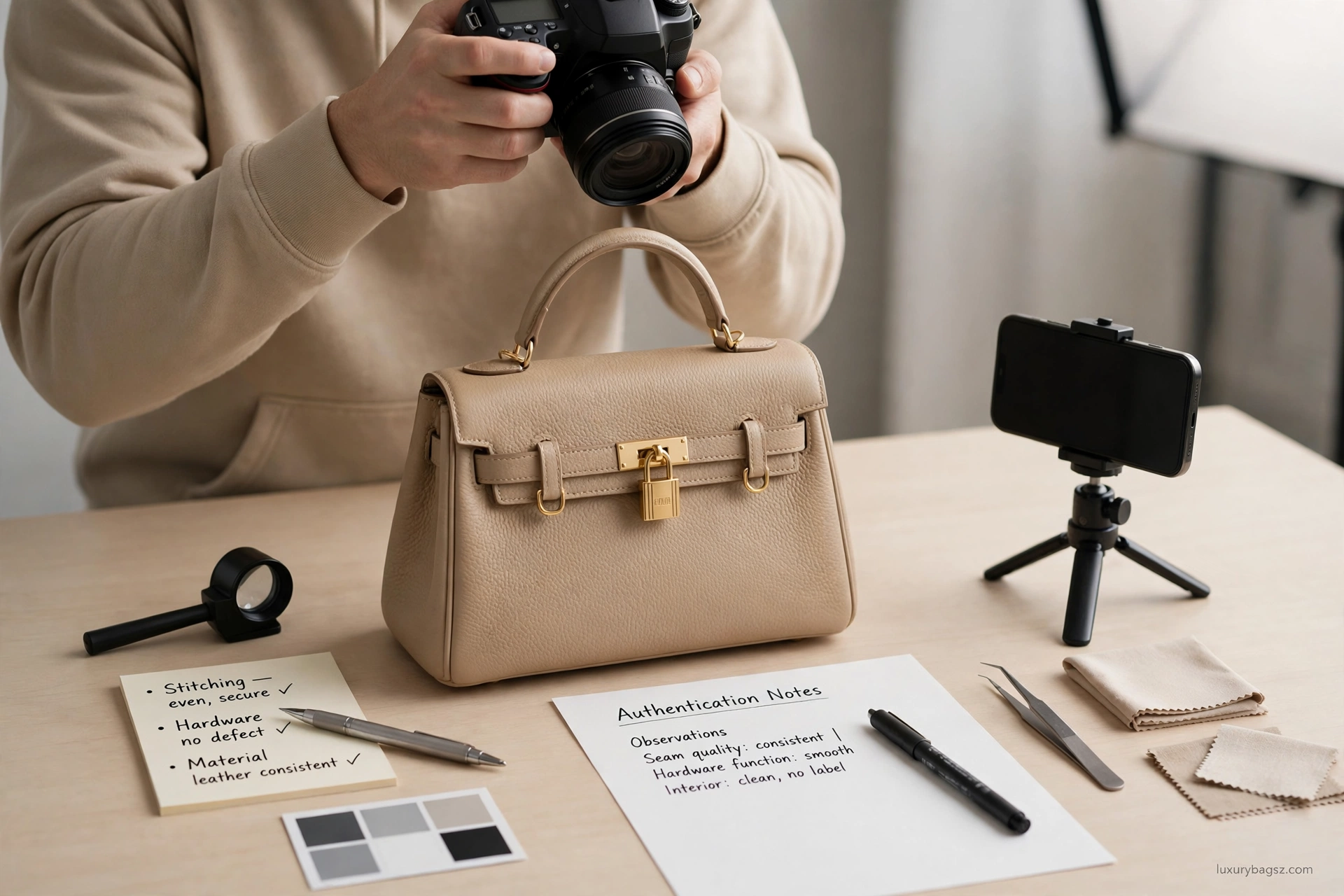
An online authentication service checks your bag from photographs. You upload a guided set of images, experts or software study the details, and you receive a verdict with a certificate you can keep or share.
The bag normally stays with you throughout. Only marketplace checks and a few hands-on options involve the physical item travelling anywhere.
I am Jessica, founder of Luxury Bagsz and a handbag specialist with more than ten years in the bag industry. I check bags personally, and this guide explains how paid services work so you can judge them fairly.
Key Takeaways
- You submit guided photographs, not the bag itself, for most online services.
- Human experts read brand details, while AI tools compare microscopic patterns against large databases.
- Reported prices run from about $10 to $55 per bag, with certificates sometimes charged as an extra.
- A certificate records an expert opinion on one item. It is not a brand guarantee or a valuation.
- Pay when money, a sale or a dispute depends on the answer. Start with free checks for low-value curiosity.
The Journey From Upload to Certificate
Every reputable service follows the same broad journey, even when the branding differs. Understanding the journey helps you spot where a weak service cuts corners and where your own photographs matter most.
- Create an account, choose the brand and item type, and pay or load credits.
- Follow the photo guide and upload each requested view in focus and in good light.
- Wait while experts, software, or both study the submission and ask for extra views if needed.
- Receive a verdict of authentic, counterfeit or unidentified, with reasons in some cases.
- Download or order the certificate and keep it with your own copies of the photographs.
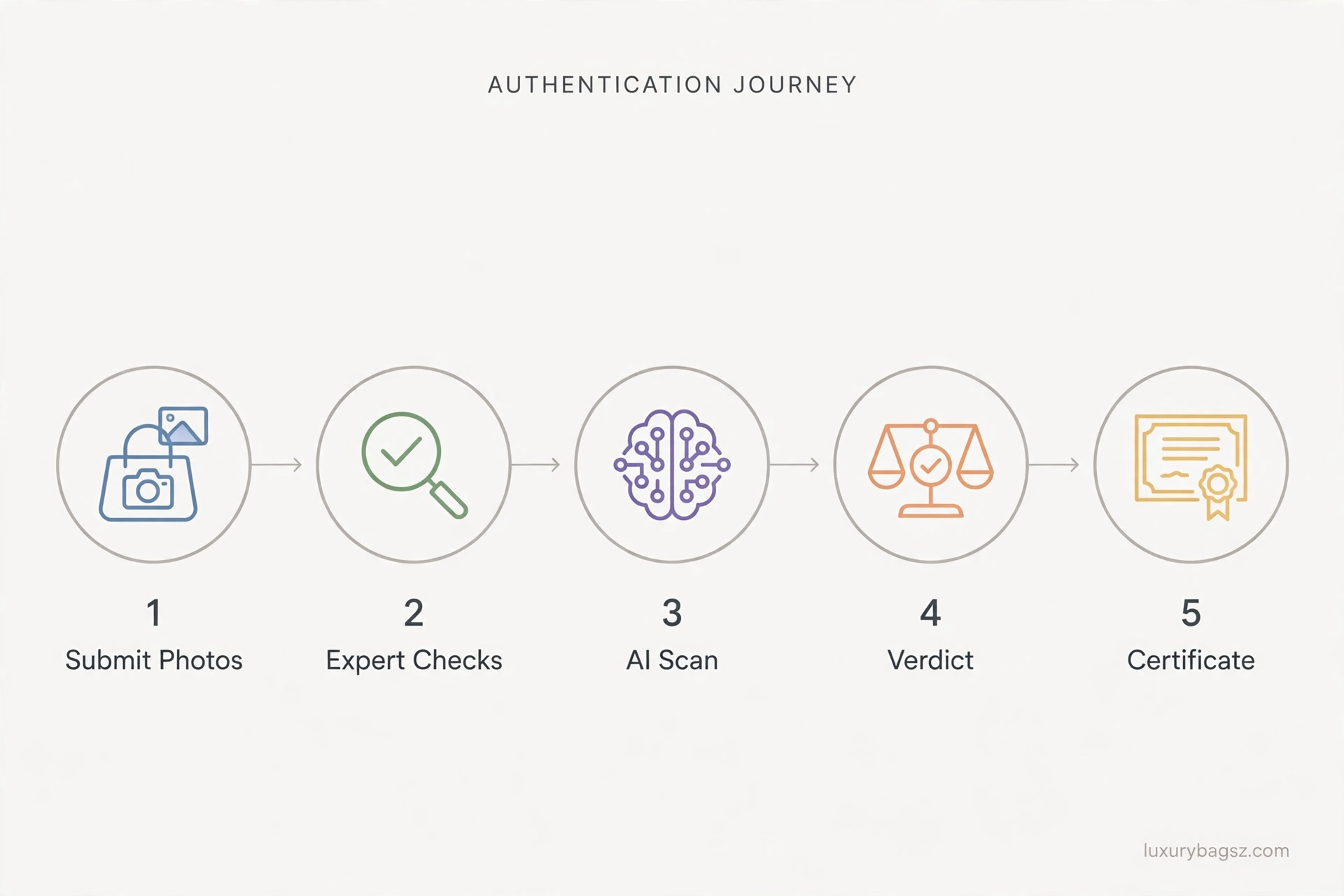
The middle stage decides quality. Good services use more than one reviewer, or pair a reviewer with a database check, so one tired pair of eyes never settles a valuable bag alone.
Keep everything you are sent: the verdict, the certificate link and the exact photographs submitted, stored against the bag. If a buyer questions it months later, that bundle is your evidence.
The Photographs Services Ask For and Why
Authenticators can only judge what they can see, so the photo list is strict. A blurry stamp or a cropped code is the commonest reason for delay, a request for more images, or an unidentified result.
- Front, back, sides and base, straight on, to check shape, symmetry and pattern placement.
- Heat stamp or logo plaque, close and sharp, to check letter shapes, spacing and depth.
- Date code, serial number, blind stamp or microchip plate, to check format and era.
- Every hardware engraving, zip pull and fastening, to check fonts, finish and weight cues.
- Stitching at a corner and inside a pocket, to check count, angle and thread quality.
- Interior lining, labels and edge paint, to check materials and finishing for the model and year.
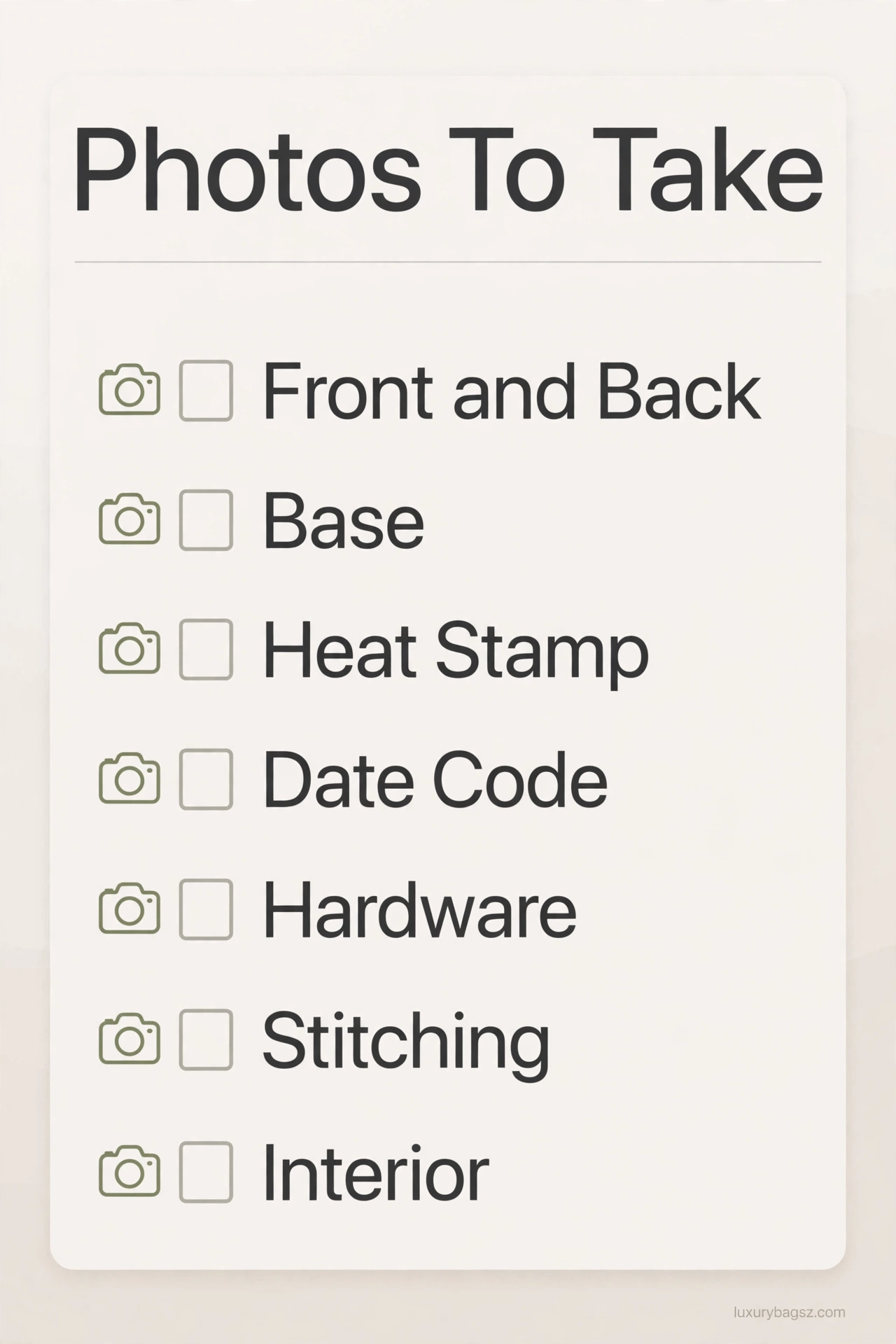
Each view answers a different question. The stamp tests the house font. The code tests whether the claimed year is possible. The stitching tests workshop habits counterfeiters still find hardest to copy.
Era rules explain why the code photograph matters so much. Louis Vuitton used date codes until early 2021 and microchips from March 2021, so a date code on a 2024 bag, or a chip on a 2005 bag, cannot be right.
Chanel used a serial sticker and a matching card until 2021, then moved to a metal microchip plate. Hermès uses a blind stamp, not a serial number, and does not issue an authenticity card, so a card offered as Hermès proof is itself a warning.
Photograph in daylight against a plain background, with the bag empty and unstuffed. Never filter or edit the images. An honest, slightly imperfect photograph helps you far more than a polished one that hides detail.
Human Experts, AI Tools and Microscopy
What Human Experts Do Best
Human-led services employ brand specialists, some with boutique or workshop backgrounds. They read context a photograph alone cannot give, such as whether a construction quirk suits a particular year or a single craftsman.
That judgement matters most on vintage pieces and complex bags. Our guide to spotting a fake Hermès Kelly shows how many small, era-specific details a specialist weighs before giving any verdict at all.
What AI and Microscopy Add
AI-led tools work at a scale no eye can match. As Entrupy describes its own system publicly, guided images are captured at high magnification and compared against millions of records of genuine and counterfeit items.
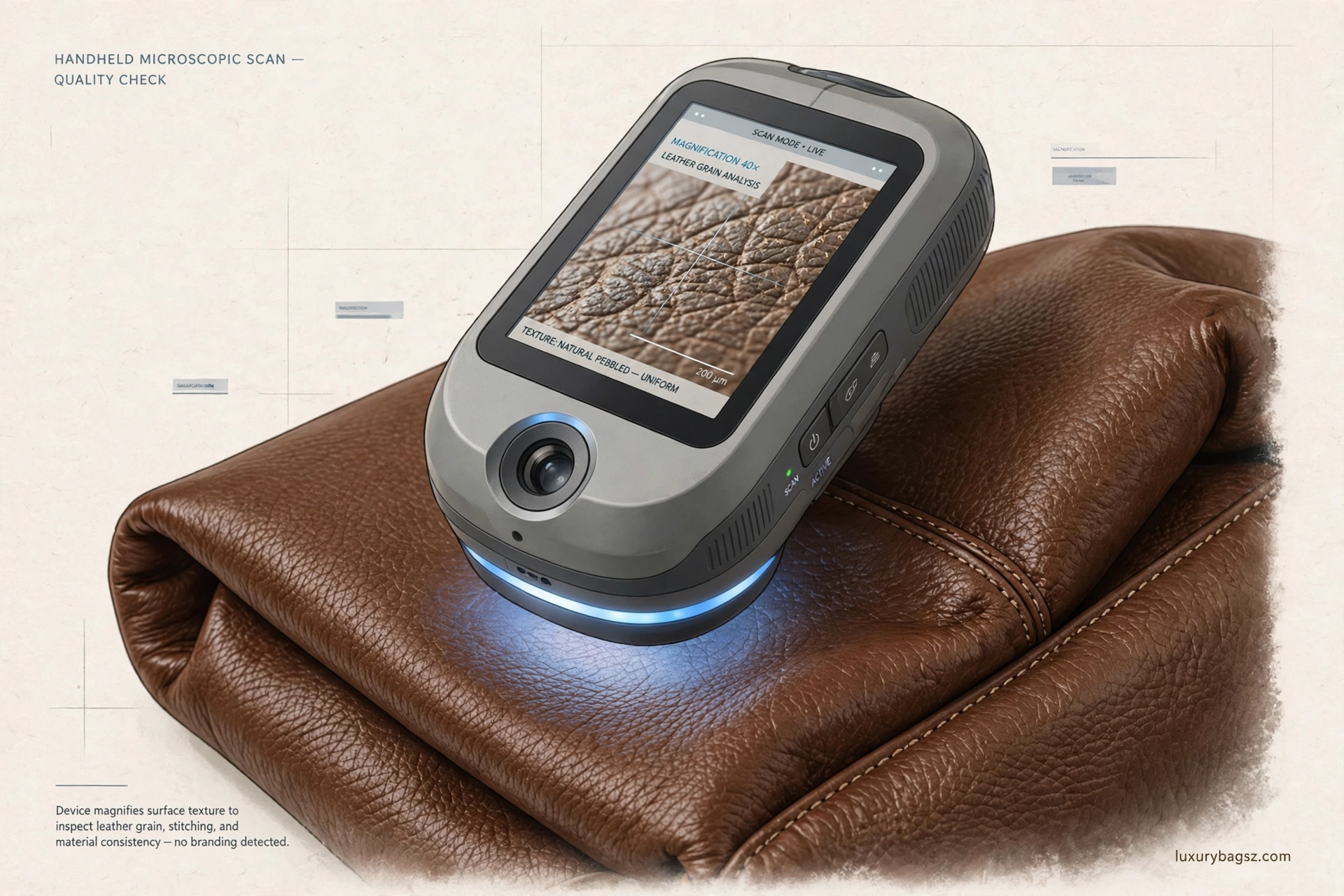
The comparison looks for microscopic patterns in leather, canvas and hardware. Entrupy states that expert eyes also review its results, and it offers a financial guarantee when a verified item later proves counterfeit.
You cannot send ordinary phone photographs to Entrupy directly. Its checks run through verified businesses holding the app and equipment, which is why shops and resellers offer the scan as part of their own intake.
In my own work I use the Entrupy app, including its microchip checks, alongside hands-on inspection. After examining more than 500 bags, I trust the pairing: the scan for patterns, and the person for context.
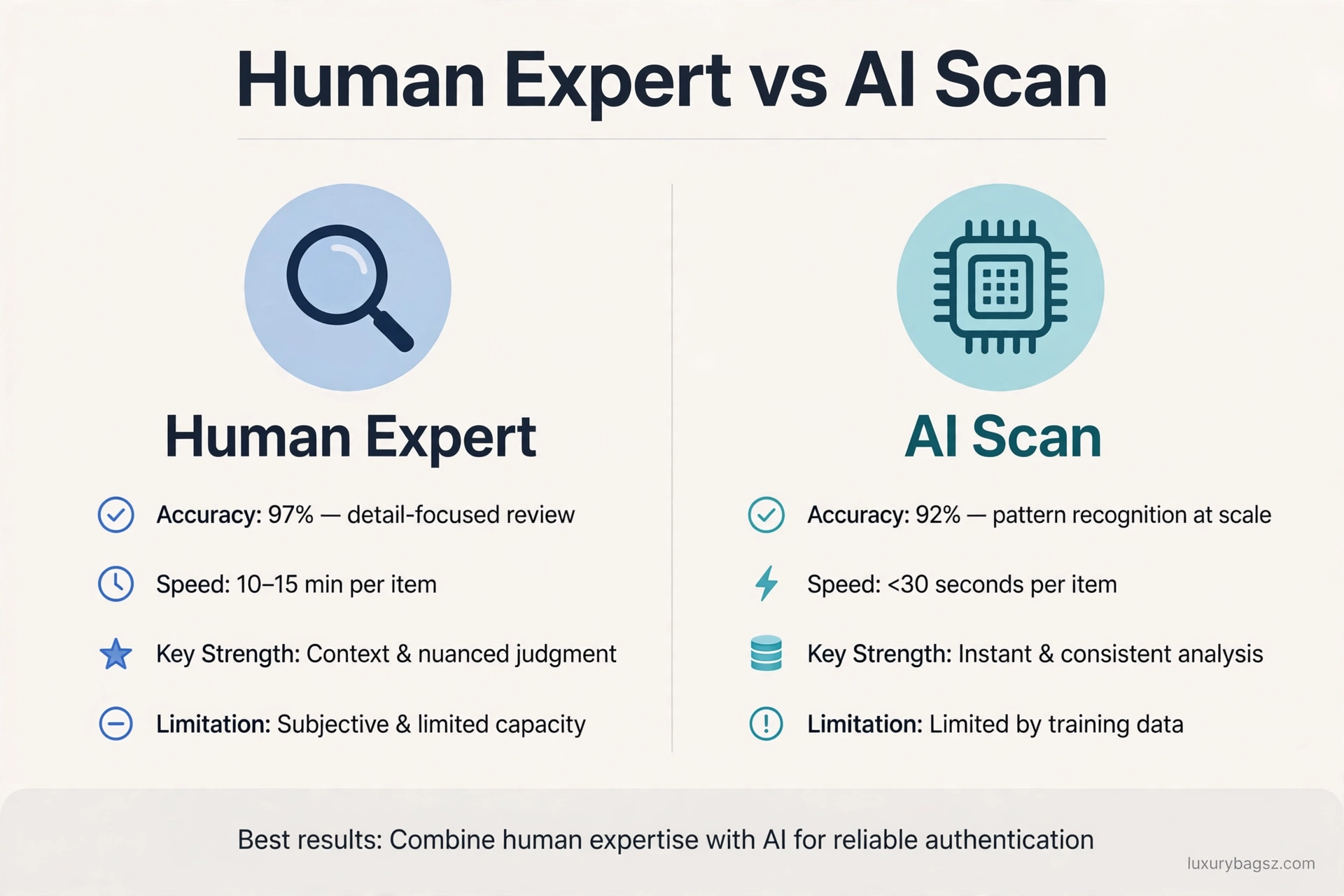
Neither route wins on every bag. AI is fast and consistent on common models with deep data behind them. Humans are stronger on rare, old or altered pieces. Many strong services now combine both, deliberately.
What It Costs and How Long It Takes
Prices below are the ranges services themselves report on their public pricing pages. Treat them as a guide to the market, not a quote, and check the full cost including any certificate or rush fee before paying.
| Type of service | Reported price range | Reported turnaround |
|---|---|---|
| Photo-based expert review | About $10 to $35 per bag | About 30 minutes to 24 hours by tier |
| Premium brands such as Chanel and Hermès | About $25 to $55 per bag | About 30 minutes to 12 hours by tier |
| Certificate or written statement add-on | About $10 extra where charged | Issued with or just after the verdict |
| Entrupy scan via a verified business | Set by the business; plans start near $139 monthly | Often minutes once the scan is complete |
Speed costs money everywhere. A standard answer within a day sits at the bottom of each range, while a thirty-minute or one-hour promise sits at the top. Plan ahead and the standard tier is usually enough.
Turnaround clocks start when the service has usable photographs, not when you pay. Submitting a complete, sharp set first time is the simplest way to get the speed you were promised without paying for a rush tier.
What a Certificate Is and Is Not Worth
A certificate of authenticity is a dated record of one service’s opinion on one specific bag. Good certificates carry a unique number or code, the item photographs and a verification link anyone can check later.
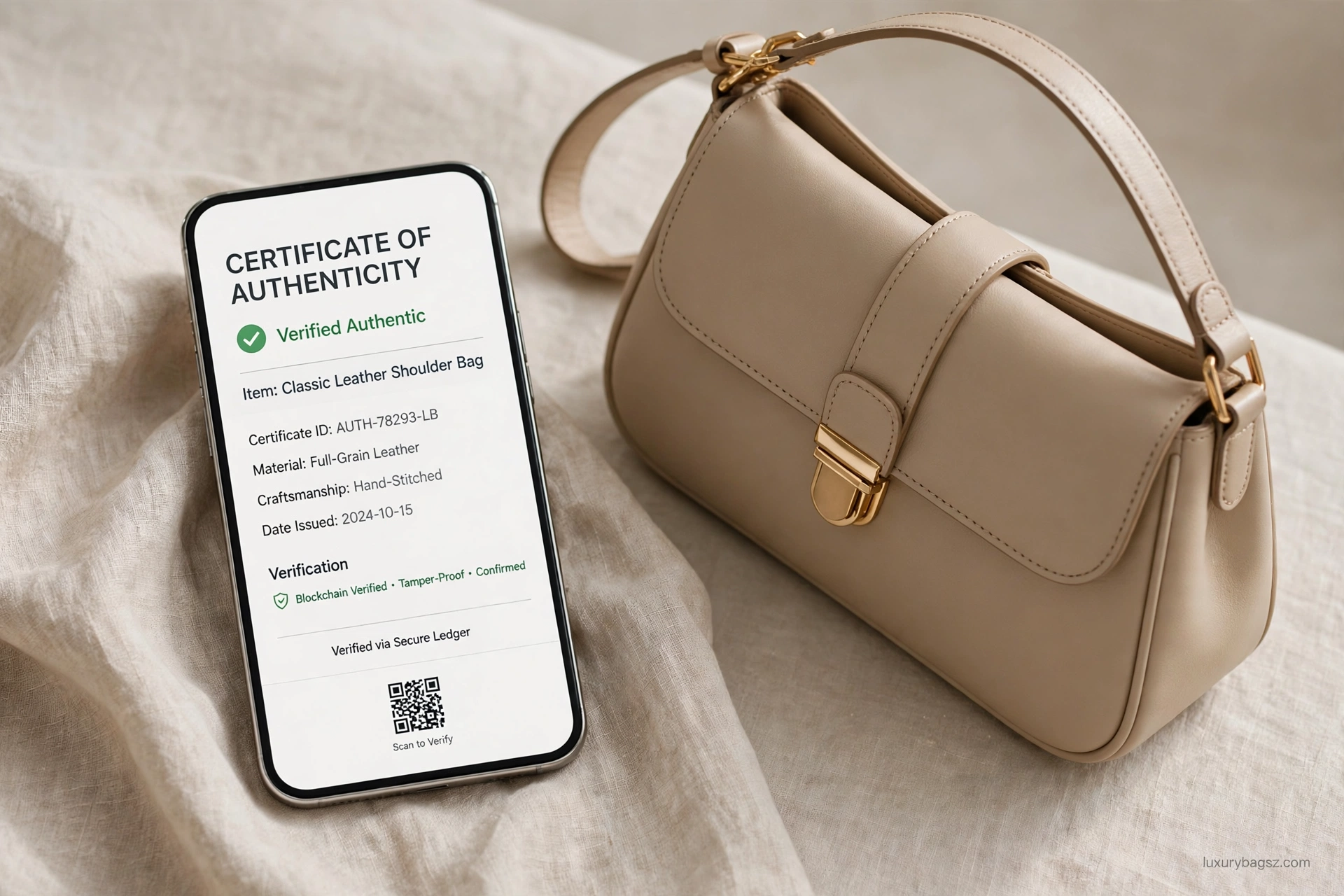
That record has real value in a sale or a claim. Buyers pay with more confidence, marketplaces take the document seriously, and a seller can show the bag was checked before listing rather than argued about afterwards.
It is not a promise from the brand itself. The houses do not authenticate third-party bags, and no certificate turns an opinion into a factory guarantee. It also says nothing about condition, repairs or market value.
Always match the certificate to the bag in front of you. Check that its photographs, codes and details fit, because a genuine certificate borrowed from another item proves nothing at all.
If the verdict is counterfeit, expect a written statement, not a certificate. Services such as Real Authentication list the discrepancies found, and that statement is the document PayPal, eBay and card claims are built on.
Accuracy Limits and What Happens in a Dispute
Entrupy publishes an accuracy figure of 99.86 per cent for its system. Read that as the company’s own claim, reported on its own pages, not as an independent test. No method, human or digital, is perfect.
Photo-based verdicts judge the photographs supplied. Poor images, unsupported brands, rare vintage construction and heavy alterations all raise the chance of an unidentified or mistaken result.
When services disagree, take a second independent opinion and keep it alongside the first. For a marketplace or card claim, submit both results, your photographs and the certificate through the platform’s own process.
Outcomes differ by provider. Some refund the fee when an error is proven. Entrupy describes a stronger route, buying back an item it verified wrongly, after its dispute process. Read the exact terms before you rely on either.
An unidentified result does not always mean a lost fee. Some services refund it in full, and Real Authentication describes risk-free ordering when its experts cannot reach a confident determination, so check that term before you submit.
Authentication Built Into Marketplaces
Large resale platforms run their own checks instead of asking you to buy one. Depending on the platform, in-house teams inspect the physical bag before listing, in transit to the buyer, or before money is released.
Programmes of this kind, such as eBay’s Authenticity Guarantee on eligible bags above a set value, cost the buyer and seller nothing extra. The trade-off is choice: the platform picks the method, and you cannot reuse its verdict elsewhere.
Consignment platforms check each bag within their selling fees. Their verdict protects that one transaction. If you later sell the same bag privately, a portable certificate of your own is still useful.
Details vary by platform beyond eBay. Vinted charges the buyer about £10 for its optional item verification, and Vestiaire Collective builds its check into its seller fees, as those platforms describe their own services.
When Paying Is Worth It and When a Free Check Is Enough
Pay when the answer changes a decision. A purchase above a few hundred pounds or dollars, a bag you plan to sell, an inherited piece you may insure, or any live dispute all justify a modest fee for a documented verdict.
Start free when the stakes are low. Forums, community groups and your own careful checks screen out obvious fakes on an inexpensive bag, and several services offer a free or low-cost first look.
For very valuable bags, two independent services cost less than one mistake. I have visited leather factories in Spain and France, and even trained hands respect a second opinion when the money at risk is large.
For a single very valuable Hermès or Chanel bag, a named single-house specialist can be worth adding to a generalist check. Bababebi covers Hermès only and Zekos covers Chanel only, and both are used on high-value pieces.
Luxury Bagsz is an educational site, and we do not sell a reader authentication service. My own authentication process page shows the checks I use, so you can follow them yourself or brief any service clearly.
Red Flags of Fake Authentication Mills
Popularity has attracted mills that sell paper, not judgement. They issue impressive certificates for bags nobody properly examined, and their documents collapse the moment a marketplace asks a hard question.
- An instant authentic verdict with no request for detailed photographs.
- No named method, no reviewer process and no way to verify a certificate.
- A guaranteed pass, a bulk discount on certificates, or a verdict before payment clears.
- Certificates covering any brand, any era and any item with equal confidence.
- No unidentified outcome. Honest services refuse a verdict when evidence is thin.
- Pressure to buy a valuation, a card and a rush upgrade before any checking begins.
Compare that with how luxury authentication technology is described by the tools themselves: guided images, a database or expert review, and a result that can come back unidentified. Mills skip every one of those steps.
Before paying anyone, search the service name with the word dispute or complaint. A short history and a copied logo are warnings. Established services show their process, pricing and terms in plain view.
Frequently Asked Questions
Can a bag be authenticated from photographs alone?
Yes, for most modern bags, provided the photographs are complete and sharp. Experts judge stamps, codes, stitching, hardware and materials from the images. Very rare, vintage or altered bags may still need hands-on inspection.
Do the designer brands authenticate bags themselves?
No. The major houses do not offer an authentication service for third-party or second-hand bags. A boutique may repair an item, which implies acceptance, but staff will not issue a verdict or a certificate for a resale purchase.
What does an unidentified result mean?
It means the evidence was not strong enough for a verdict. Causes include poor photographs, an unsupported model or unusual construction. It does not mean the bag is fake. Better photographs or a different service may settle it.
How much should I expect to pay?
Most photo-based services report prices between about $10 and $55 per bag, depending on brand and speed. Certificates or written statements can add about $10. Technology scans through a business are priced by that business.
Will a certificate help me sell my bag?
Usually, yes. A verifiable certificate with matching photographs reassures buyers and supports your listing price. Keep the certificate linked to the exact bag, and share the verification link rather than a screenshot wherever possible.
What if two services give different answers?
Treat the bag as unsettled and do not sell it on the strength of one result. Seek a further independent opinion, preserve every document, and use the combined evidence if a marketplace or payment claim becomes necessary.
Final Verdict
Online authentication is a simple idea done well or badly: clear photographs, skilled eyes or proven software, an honest verdict and a record you can verify later. Choose services that show each of those steps openly.
Match the spend to the risk. Use free checks to learn and to screen, pay for a documented verdict when real money moves, and double up on the bags where a single mistake would genuinely hurt.