How to Authenticate a Pre-Owned Designer Bag Before You Buy
Authentication in Brief
Two bags explain why authentication is a bundle and not a test. The first carries a real code inside a fake bag. The second is a genuine vintage piece missing a feature every modern bag should have. Either one defeats a single-check verdict, in opposite directions.
The bundle is this: material, stitching, hardware, stamps, codes, lining, packaging and price, agreeing with each other and with the bag's claimed model and era. You can see how each check is carried out in our authentication process — the same process behind this guide, built on more than ten years in the bag industry and over 500 bags examined by hand.
For high-value bags, add a professional check: photo authentication catches obvious fakes, while physical inspection catches sophisticated ones. If that check confirms a fake, our guide to recovering your money after a fake bag sale explains the platform, chargeback and reporting steps.
Key Takeaways
- Check the whole bag against its exact model and era: material, stitching, hardware, stamps, codes, lining, and packaging must agree.
- Request the authentication photo set before paying: stamp, code, zipper pull, hardware engraving, stitching macro, and lining tag.
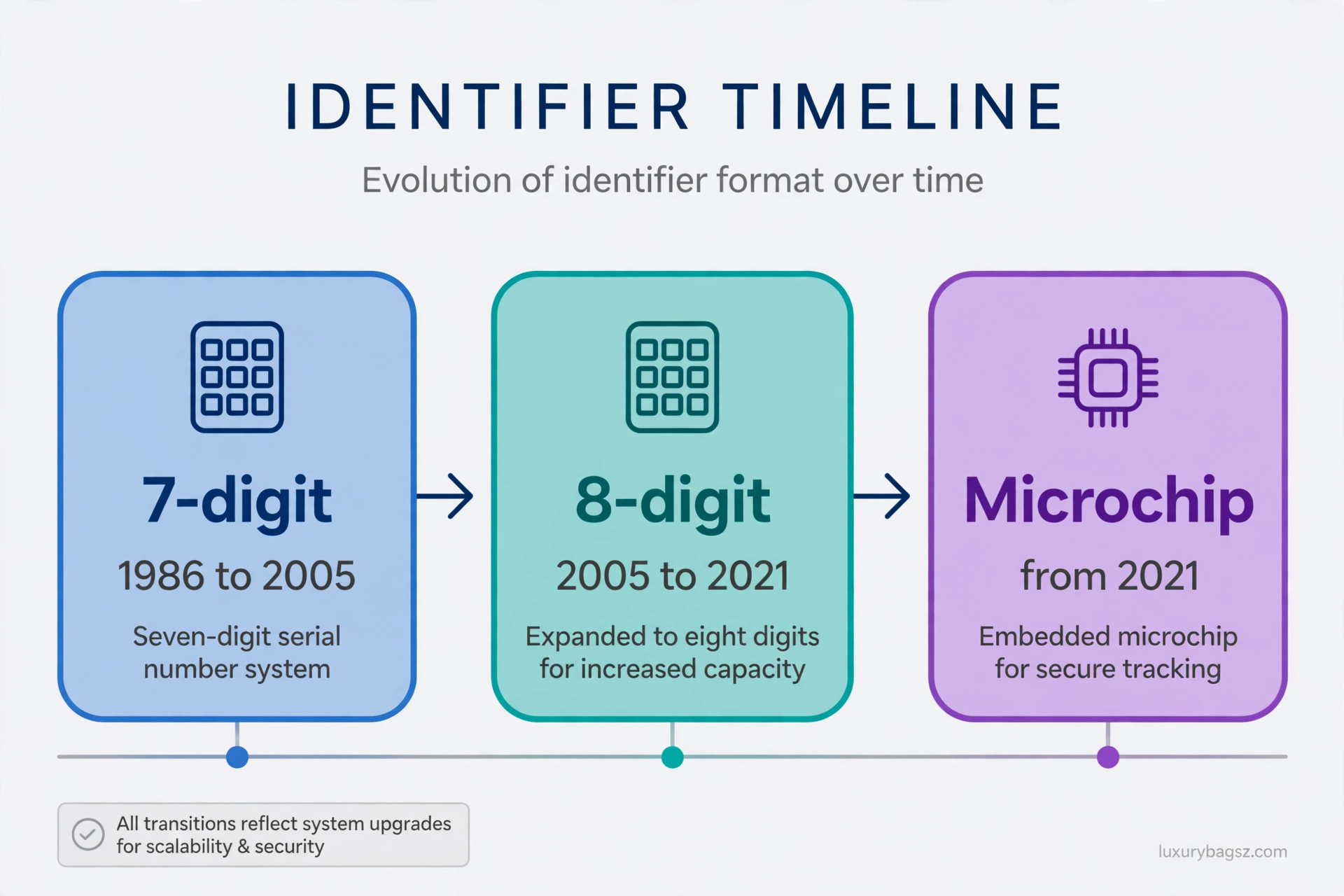
- Codes changed over time: Chanel moved from 7-digit to 8-digit codes to microchips, and Louis Vuitton moved from date codes to microchips in 2021.
- A real code, card, or box does not prove a real bag, because counterfeiters copy all three.
- Well-made fakes can pass several basic checks, so a bag that passes the easy tests still deserves a professional view at high value.
- If you already bought a fake, stop using it, get a written independent opinion, and claim in writing inside the platform and card deadlines.
Every pre-owned bag that reaches me gets the same first minute. I pick it up and judge the material before the logo, because genuine leather behaves in ways PU and PVC cannot copy — it creases, recovers and smells like hide, knowledge I brought home from leather factories in Spain and France. Then I work in a fixed order: stitching, hardware weight, engravings, stamps and date codes, and for recent bags a microchip read through the Entrupy app. Five hundred bags in, that order has never once been the thing that let me down.
What Authentication Can and Cannot Do
Authentication answers a narrow question: is this bag, as a physical object, consistent with genuine production by the claimed brand, model, and era? It does not answer whether the bag is a good buy, fairly priced, or in good condition. Photo authentication can catch wrong fonts, stitching, hardware, and codes, but it cannot feel leather weight or smell materials, so a photo pass is reassuring, not conclusive.
Physical authentication goes further: handling the bag lets an authenticator weigh hardware, feel grain, and examine stitching under magnification. Authentication is also not appraisal: an authenticator tells you whether the bag is genuine, while an appraiser tells you what it is worth.
Start With the Exact Bag, Not the Brand in General
Name the model, size, material, colour, hardware finish, and claimed year before checking anything: markers vary by model and era. Find a known genuine example of the same model and era from a reputable reseller's archive, and keep its photos beside the listing.
Check proportions first — a fake often gets overall shape slightly wrong — then materials: genuine leather feels supple with natural grain variation, while fake leather often feels thin or unnaturally uniform. Write down every inconsistency: one may be production variation, but three pointing the same way are a pattern.
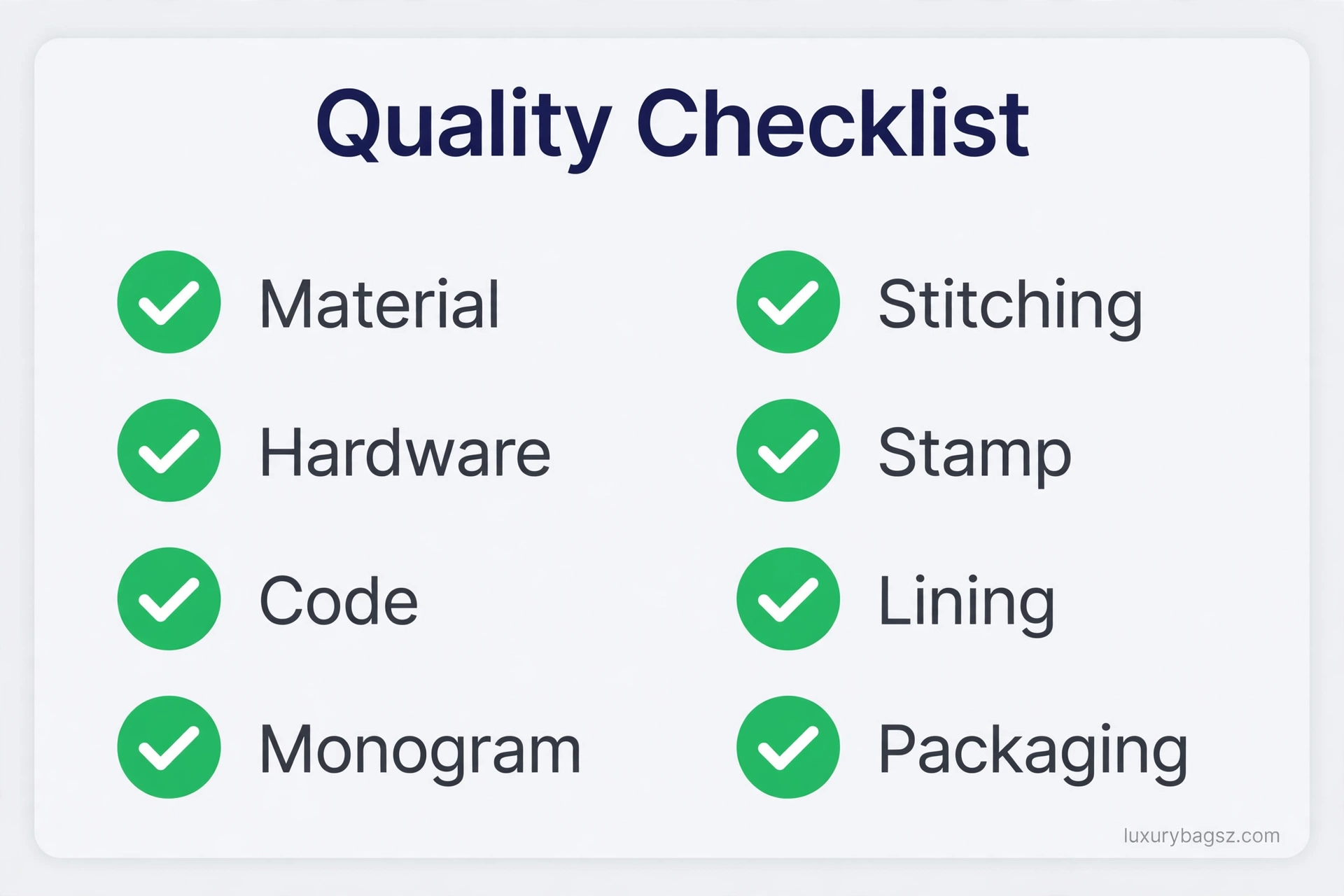
The Eight Universal Checks
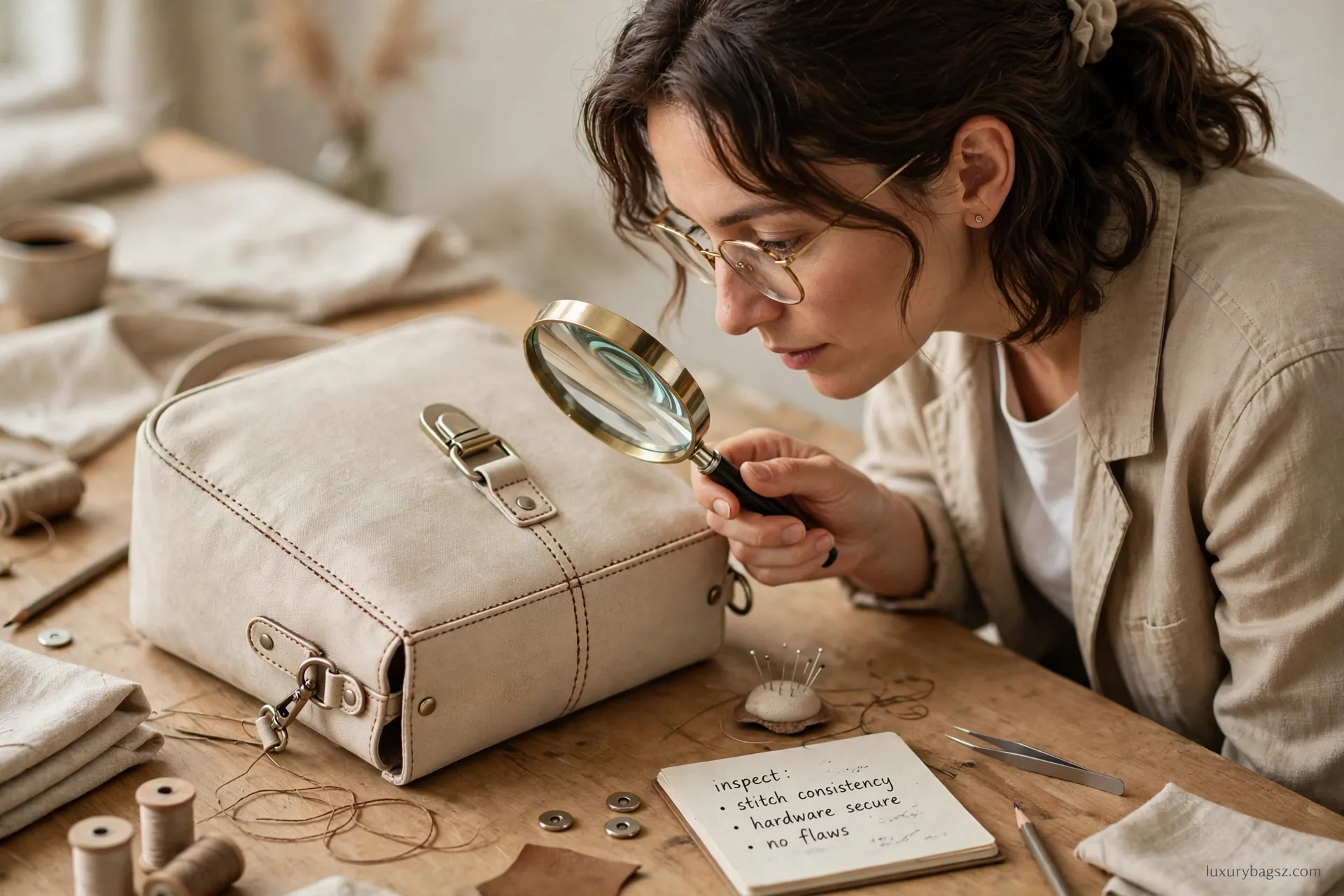
Leather and material: natural grain, consistent dye, clean edges, smooth glazing; coated canvas should show crisp printing and clean folds, not blurry monograms or cracking at stress points. Stitching: even, straight, consistent in length and angle, with no loose threads or wandering lines; inconsistency within one bag warns more than any absolute number.
Hardware: heavy, smooth, sharply engraved, with clean fonts; light, rough, or blurry hardware is a classic fake tell, weighed with other signs. Logo and heat stamp: fonts, spacing, depth, and placement must match the genuine example for that model and era. Monogram alignment at seams must follow the house's known pattern. Date codes, serial numbers, and microchips must fit the claimed era (see the date codes and era timelines section).
Lining: quality fabric or leather, clean seams, correct labels. Packaging last, deliberately: counterfeiters replicate it well, so it supports a verdict without ever deciding it alone.

Stitch Counts: A Warning About Quoted Numbers
Stitch counts are quoted widely online, and inconsistently, so treat any single number with care. One well-read guide gives Chanel stitch density figures that conflict internally between its own text and table — one per inch, the other per centimetre — and the conversion does not reconcile. Quoting either figure as a pass-or-fail test would misjudge genuine bags, so this guide sets no stitch-count threshold for Chanel.
The same guide's claim of exactly five stitches per Louis Vuitton leather tab may describe a specific tab, not a universal rule. What matters is consistency: even length, angle, and spacing across the whole bag, including hidden areas where fakes often stitch carelessly.
The Photos to Request Before You Pay
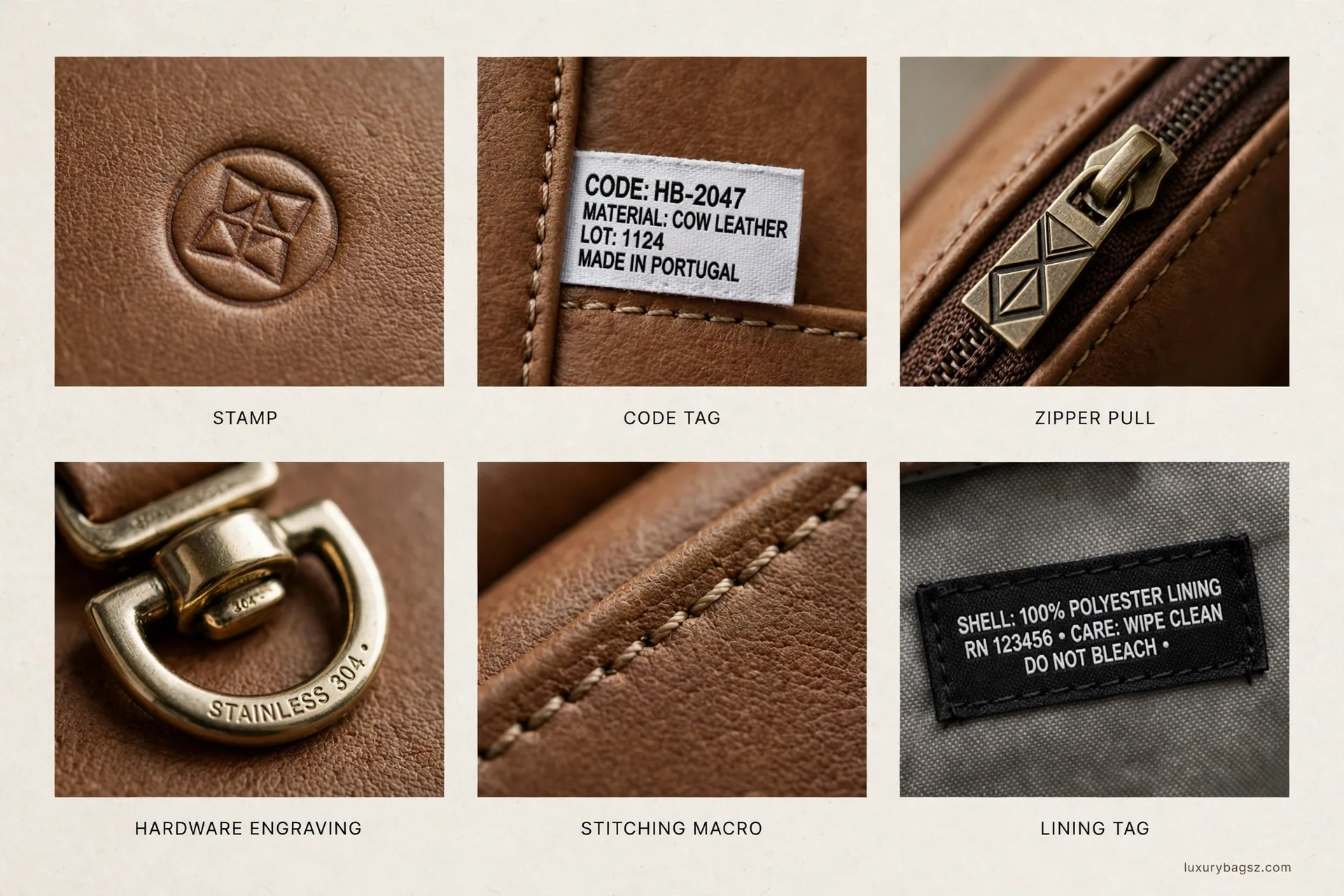
Request a daylight photo set, without flash, covering every authentication zone. Ask for the heat stamp or logo in macro, the date code, serial number, or microchip marker the same way, plus any interior label or lining tag: blurry code photos are a refusal in disguise.
Ask for a zipper pull close-up showing maker marks, hardware engraving on clasps, buckles, and feet, a stitching macro from a straight seam and a corner seam, a monogram alignment shot at a seam, and a full front, back, side, base, and interior set. Add a photo of the full set and a short video of zips running and clasps closing.
Brand Markers: Louis Vuitton, Chanel, and Hermès
Louis Vuitton bags carry date codes, not serial numbers, for most of their history: after 1990, two letters plus four numbers, such as AR1004 (factory plus production date). Louis Vuitton moved to microchips in 2021, so a post-2021 bag should not carry a printed date code in the old format.
Chanel runs in three eras: 7-digit codes 1986–2005, 8-digit 2005–2021, metal plates with microchips from 2021 onward; a sticker-era bag should have a matching card, while a microchip-era bag will not. Hermès markers centre on the blind stamp (year and workshop), saddle stitching with a distinctive slanted rhythm, and heavy, sharply engraved hardware.
For model-specific Hermès checks, see our guides on the Kelly bag, the Evelyne bag, the Lindy bag, and the Geta bag.
For Chanel model differences, see our Classic Flap vs Boy comparison.
Brand Markers: Gucci, Dior, Prada, Fendi, Saint Laurent, and Goyard
No competitor guide covers these houses in depth, so here are starting markers to research for your exact model. Gucci serial numbers sit on an interior leather tag, usually two-part (style group plus supplier group). Dior date codes appear on an interior tag or label, with formats that changed over time, and heat stamp font varies by model.
Prada markers include the interior plaque or label, zipper hardware, and nylon or leather quality; a glued rather than stitched plaque, or wrong spelling or spacing, is a serious warning. Fendi markers include interior label, serial format, and hardware engraving. Saint Laurent markers include heat stamp, serial tag, and hardware finish.
Goyard markers include the hand-painted monogram pattern, edge painting, and interior stamp; the pattern should show hand-painted variation, not printed uniformity. For every house here, compare with a genuine example of the exact model and era, zone by zone.
Date Codes, Serial Numbers, and Era Timelines
Build a small era timeline for your bag before judging its code. For Chanel: 7-digit codes 1986–2005, 8-digit 2005–2021, metal plates with microchips from 2021 onward. For Louis Vuitton: printed date codes until the microchip change in 2021. Work a decoding example rather than trusting a code at face value: a Louis Vuitton code such as AR1004 should decode to a factory and date fitting the bag's claimed year and model production window.
A code decoding to a year after the model was discontinued, or before it was launched, fails even if the format looks right. Check code location and style, not just characters: codes sit in specific places by model, and a code in the wrong place, font, or material warns even when the characters decode plausibly. Check consistency across the bag: code, card, receipt date, and hardware era should all point to the same period.
Remember that codes can be copied, so a correct code is one passing check among many, never a verdict.
Microchips and NFC: How a Buyer Actually Verifies One
Microchips changed authentication after 2021 for Chanel and Louis Vuitton, but no competitor guide explains how a buyer verifies a chip in practice. A microchip is embedded in the bag, replacing the printed code or sticker, carrying an identifier the brand can associate with production.
It is not a public barcode any phone app can read and verify independently, and no universal consumer app verifies Chanel or Louis Vuitton microchips at the time of writing. Brand boutiques and authorised authenticators have their own routes, not open to every buyer. What a buyer can check is presence and presentation: plate or housing, placement, and engraving should match genuine examples of the same model and era.
A missing chip on a post-2021 bag is a warning, and an unverifiable chip removes one authentication leg, so other checks must carry more weight. Do not pay a premium for a 'chip verified' claim naming no verifier, method, or document.
Superfakes: When the Easy Checks Pass
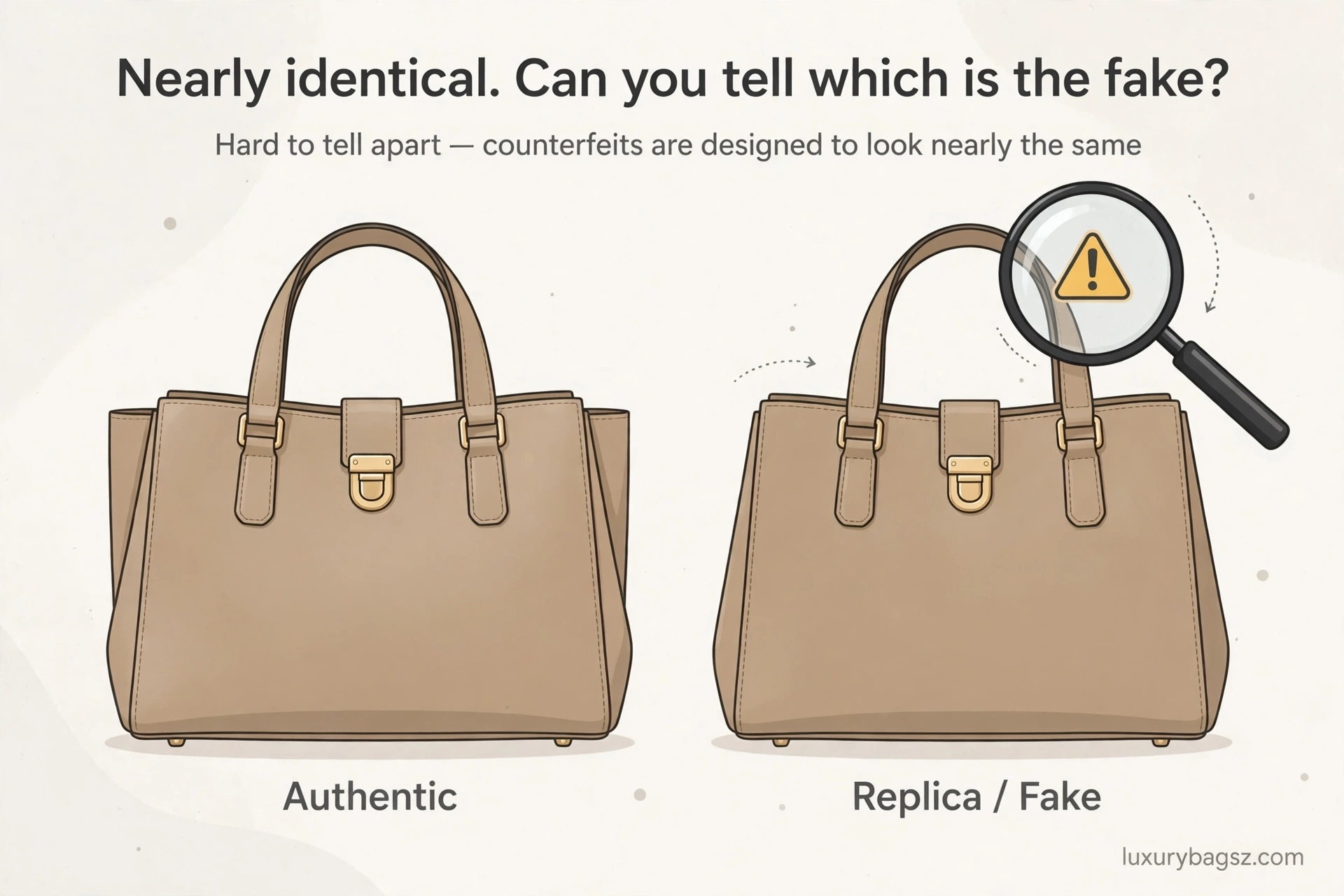
Most guides frame fakes as sloppy: uneven stitching, light hardware, chemical smell, wrong fonts. That picture is outdated for the best counterfeits, which copy materials, stitching, hardware, and codes with considerable skill. A well-made fake can pass several universal checks at once, so judging by the easy checks alone will pass it.
The checks that still discriminate tend to be hardest to copy: microscopic stitching rhythm, exact hardware alloy and plating behaviour, precise font and spacing under magnification, interior construction details, and material ageing behaviour. These need magnification, comparison samples, and experience. Price is a prompt to check harder, not a verdict: a superfake sold near market price passes the price test by design.
Use tiered checks: basic checks for every bag, professional photo checks for mid-value bags, physical checks for high-value bags or where basic checks disagree.
Professional Authentication: Services Compared
Entrupy is the most named service in the competitor set, combining AI image analysis with microscopic examination; one seller cites a claimed 99.1 percent accuracy figure. Treat that as a vendor claim, not an independent finding, since it is repeated in material that also sells Entrupy certificates.
Published costs disagree in scope: general guides cite roughly $10 to $75 per item, one thrifting guide cites $25 to $75 for Entrupy or Authenticate First, and one seller cites $75 CAD for an Entrupy certificate at checkout. Confirm current fee, brands covered, and method before relying on any figure.
Photo services suit remote purchases but depend entirely on photo quality; physical services suit high-value purchases and disputes. eBay's Authenticity Guarantee for eligible handbags of $500 or more is free to the seller and runs on physical inspection after sale. Ask whether a certificate stays with the bag, names its codes, and can be verified by a future buyer.
If You Already Bought: A Step-by-Step Recovery
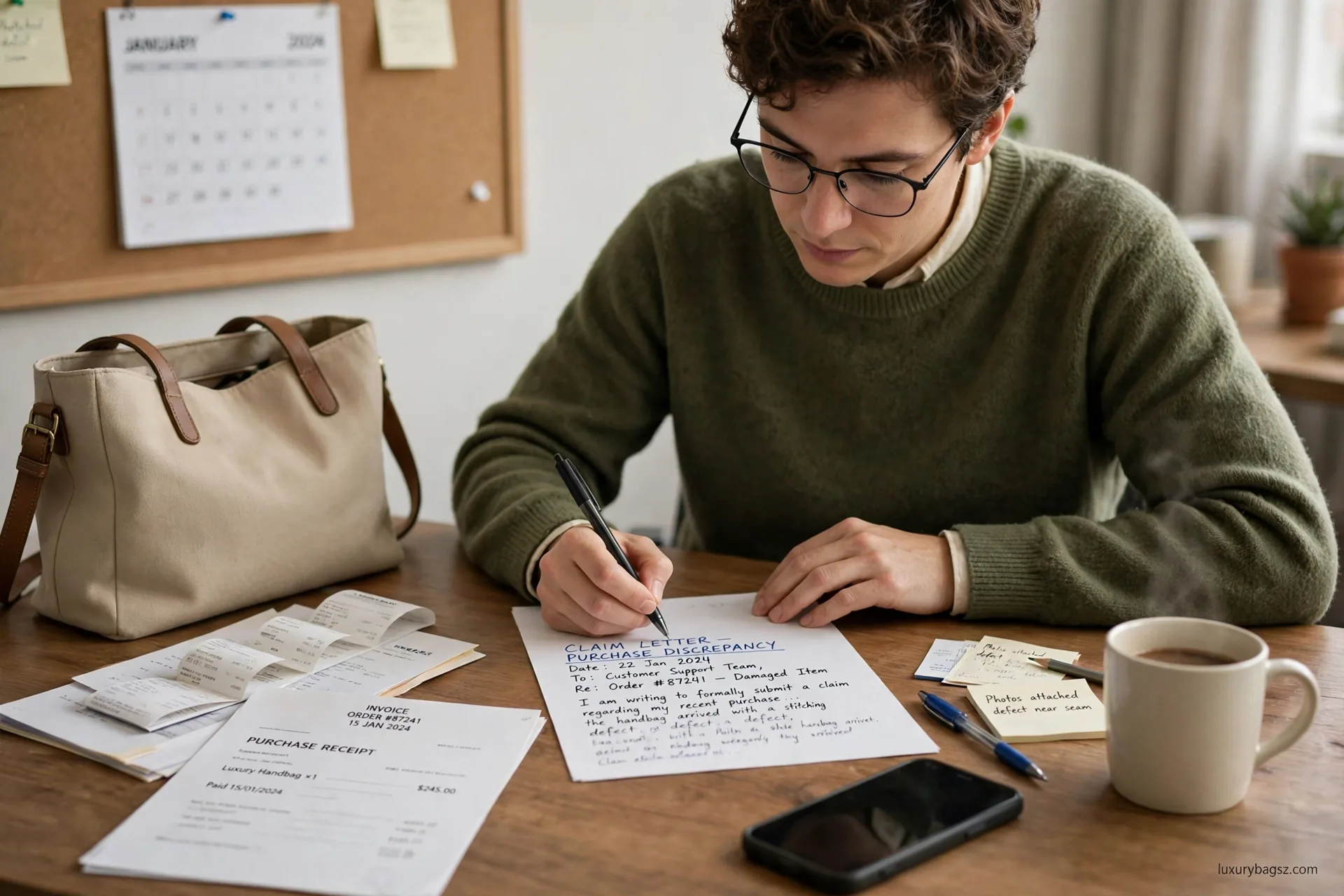
First, stop using the bag and preserve everything: packaging, tags, listing, messages, seller photos, and your arrival photos. Do not clean, repair, or alter the bag, since alteration weakens a dispute. Second, get an independent authentication in writing: a professional opinion carries weight with platforms and card issuers that personal suspicion does not, and it is worth the fee on a high-value bag.
Third, contact seller and platform in writing, citing the authentication result and the listing's authenticity claim, asking for a return and refund under the platform's policy, and keep every reply with dates. Fourth, escalate inside the platform's dispute window if the seller refuses, then file a card chargeback with your evidence pack if the platform route fails.
Note the two clocks separately: the return window and the chargeback window are different deadlines, and missing either can end a valid claim. Fifth, report the seller to the platform, and keep copies for at least a year. One caution: do not resell a bag you believe is fake as genuine, even to recover your money. That passes the loss to another buyer and creates a second dispute with your name on it.
If the bag is fake, the remedy is a refund, not a resale.
Authentic but Altered, and Your Own Authentication Habit
A bag can be genuine and still altered: a replaced zip, redyed panels, or new handles make it authentic but not original, and it should be described that way. Ask sellers directly whether any part has been replaced, refinished, or repaired, and by whom, and price altered bags as altered. Restoration affects authentication itself, since redyeing can hide wear and replaced hardware can remove era markers.
Keep a reference file for each brand you buy — genuine example photos, code eras, hardware details, stamp fonts — and practise on genuine bags first: knowing genuine makes fake easier to spot. Record every authentication commissioned, with service, method, result, and certificate. Finally, accept uncertainty: some vintage pieces cannot be authenticated conclusively from available evidence.
In those cases, walk away or price the doubt, rather than forcing a verdict.
Frequently Asked Questions
Can I authenticate a designer bag from photos alone, and what photos should I request?
Photo checks catch obvious fakes: wrong fonts, uneven stitching, blurry hardware, and codes that do not fit the era. They cannot feel leather weight, smell materials, or weigh hardware, so a photo pass is reassuring rather than conclusive. For a high-value bag, add a physical check.
Ask for daylight photos without flash: heat stamp or logo in macro, date code or microchip marker, interior label or lining tag, zipper pull maker marks, hardware engraving, stitching macros from a straight seam and a corner seam, and monogram alignment at a seam. Add full front, back, side, base, and interior views, a photo of the full set, and a short video of zips running and clasps closing.
How do Chanel code eras and Louis Vuitton date codes work?
Chanel used 7-digit codes from 1986 to 2005, 8-digit codes from 2005 to 2021, and metal plates with microchips from 2021 onward. A sticker-era bag should have a matching card, while a microchip-era bag will not. A code from the wrong era for the claimed bag fails, whatever its format.
Louis Vuitton bags carry date codes, not serial numbers, for most of their history. After 1990 the format is two letters plus four numbers, such as AR1004, giving factory and production date. Louis Vuitton moved to microchips in 2021, so a post-2021 bag should not carry a printed date code in the old format.
Does a real code, card, or box prove a bag genuine?
No. Counterfeiters copy codes, cards, and boxes, so a correct code is one passing check among many, never a verdict. Judge the whole bag: material, stitching, hardware, stamps, code, lining, and packaging must agree with each other and with the claimed model and era.
Should I trust stitch counts quoted online?
Treat any single stitch-count figure with care. One well-read guide gives Chanel figures that conflict internally between per-inch and per-centimetre measures, and its Louis Vuitton tab figure may describe one tab rather than a universal rule. Judge stitching by consistency across the whole bag, including hidden areas.
What is a superfake, and how do I catch one?
A superfake is a well-made counterfeit that copies materials, stitching, hardware, and codes well enough to pass several basic checks at once. The checks that still discriminate need magnification, comparison samples, and experience: stitching rhythm, hardware alloy and plating, font precision, and interior construction.
Use tiered checks: basic checks for every bag, professional photo checks for mid-value bags, physical checks for high-value bags.
How much does professional authentication cost, and how is it different from an appraisal?
Published costs disagree in scope: general guides cite roughly $10 to $75 per item, one thrifting guide cites $25 to $75 for Entrupy or Authenticate First, and one seller cites $75 CAD for an Entrupy certificate at checkout. Confirm the current fee, brands covered, and method before relying on any figure. Entrupy's claimed 99.1 percent accuracy is a vendor claim, not an independent finding.
Authentication tells you whether the bag is genuine: consistent with real production by the claimed brand, model, and era. Appraisal tells you what the bag is worth. A certificate of authenticity does not price a bag, and a valuation does not prove it genuine.
I already bought a bag I think is fake. What do I do?
Stop using it and preserve everything: packaging, tags, listing, messages, seller photos, and your arrival photos. Get an independent authentication in writing, then claim in writing through the seller and platform, citing the result. Watch two separate clocks: the return window and the card chargeback window. Never resell a bag you believe is fake as genuine.
Final Verdict
Authentication rewards patience and punishes shortcuts. Check the exact model and era, demand the full photo set, and let every check vote: one inconsistency may be production variation, but a pattern pointing one way is your answer.
For a high-value bag, or whenever basic checks disagree, pay for a professional view before you pay the seller — or walk away. A bag that cannot be authenticated conclusively is not a bargain at any price; it is a doubt you would carry every time you carried the bag.