Moynat Bags Guide: Réjane, Gabrielle, Prices and Authentication Basics
Moynat Bags Guide: Réjane, Gabrielle, Prices and Authentication Basics
Why Moynat Is the Quiet Answer to Loud Luxury
Moynat is a Paris trunk maker founded in 1849, and its bags are best understood as small trunks. The Réjane and Gabrielle lead the range, prices sit in the low thousands, and pre-owned pieces need careful checking because public guidance is thin.
There are no large logos and very little advertising. What you pay for is hand finishing, full leather linings and hardware shaped like trunk fittings. That mix suits buyers who want quality that whispers rather than shouts.
I am Jessica, founder of Luxury Bagsz and a handbag specialist. In more than ten years in the bag industry, the houses that age best are usually the quiet ones. Moynat is a clear example, provided you buy the right model in the right condition.
Key Takeaways
- Moynat was founded in Paris in 1849 and began as a trunk maker, five years before Louis Vuitton.
- The Réjane, first created in 1903, is the signature bag, followed closely by the Gabrielle.
- Core leather bags are usually estimated in the $3,500 to $5,200 range by editorial price guides.
- Sizes run from Nano at about 14.5 cm wide to MM at about 30 to 31 cm wide on the main icons.
- Pre-owned Réjane and Gabrielle bags often sell well below boutique estimates on large resale sites.
- No single stamp or code proves a Moynat bag, so match several details and seek expert help.

A Trunk Maker Long Before It Made Handbags
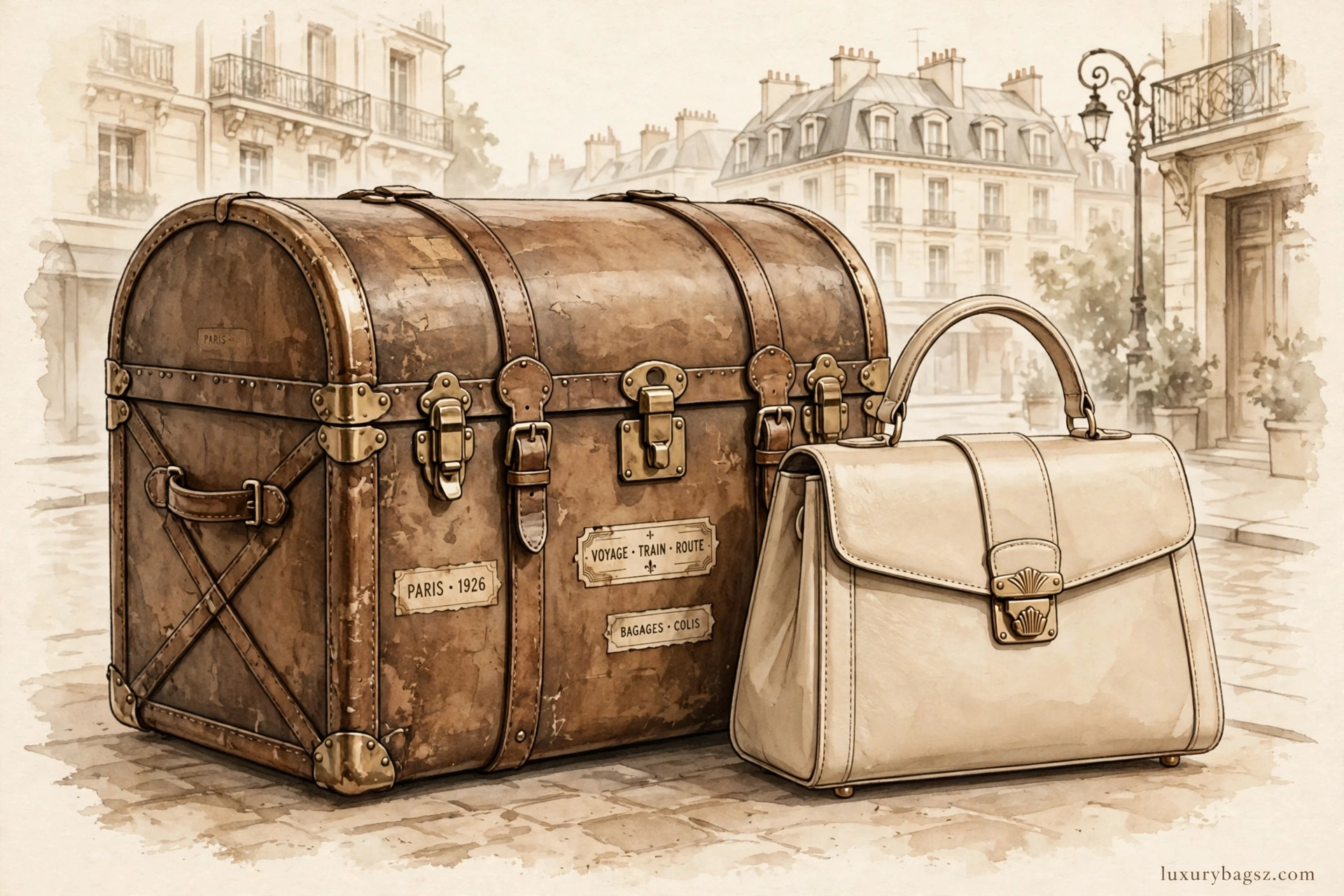
Moynat began in 1849 when Pauline Moynat joined forces with the Coulembier family of trunk manufacturers. House histories place Pauline at the centre of the business, which is rare in a trade then dominated by men.
The first atelier opened in Paris in 1849, and a boutique followed in 1869 near the Comédie-Française. The house became an official supplier to the theatre, and its client list shaped the bags that came later.
Innovation built the name. Moynat patented waterproof packaging in 1854 using gutta-percha, brought out the lightweight English Trunk in 1873, and patented the curved Limousine Trunk in 1902 to sit flush on early car roofs.
Closure, Silence and a Careful Revival
Demand for grand trunks faded, and Moynat closed its boutique in 1976. The name then slept for decades, while its trunks kept changing hands among collectors who valued the curved shapes and fine stud work.
Groupe Arnault, Bernard Arnault’s family holding company, acquired Moynat in 2010. The house relaunched in 2011 with a flagship at 348 Rue Saint-Honoré in Paris, close to where the story had started.
Ramesh Nair, who had spent a decade at Hermès, became the first creative director of the revival. Reports from the time describe tiny output, around thirty bags a week, each made by hand rather than on a line.
The revival also leaned on the archive. Between 1905 and 1925 the house worked with Henri Rapin, a painter linked to Art Nouveau and Art Deco, and his monogram designs still shape Moynat canvas today.
That archive runs deep. Valois Vintage Paris notes gold medals at the Paris exhibitions of 1867, 1878, 1889 and 1900, plus more than twenty patented designs from the founding era alone.
The Icons Worth Learning First
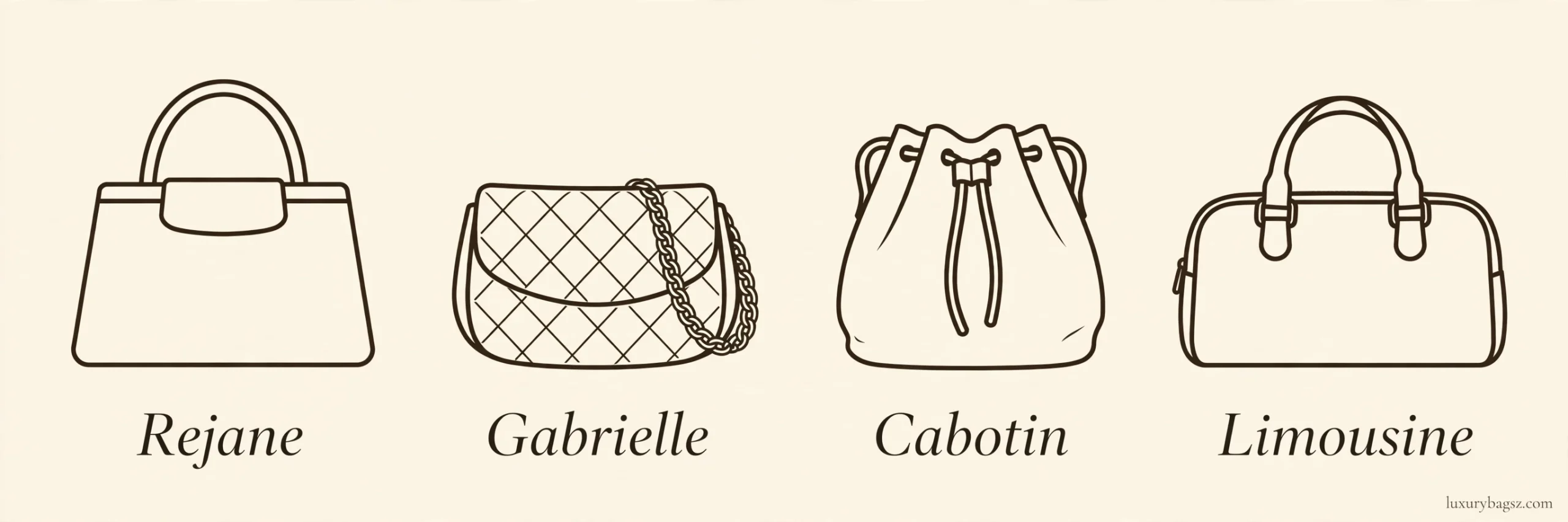
Four names explain most of Moynat. Two are everyday handbags, one is a trunk in miniature, and one is the heritage piece that gave the others their curves. Learn these shapes and most listings become easy to read.
Réjane, the Signature Top Handle
The Réjane was first created in 1903 for Gabrielle Réjane, a celebrated Belle Époque actress and friend of the house. It is often described as the first handbag named after a contemporary celebrity, and it still leads the range.
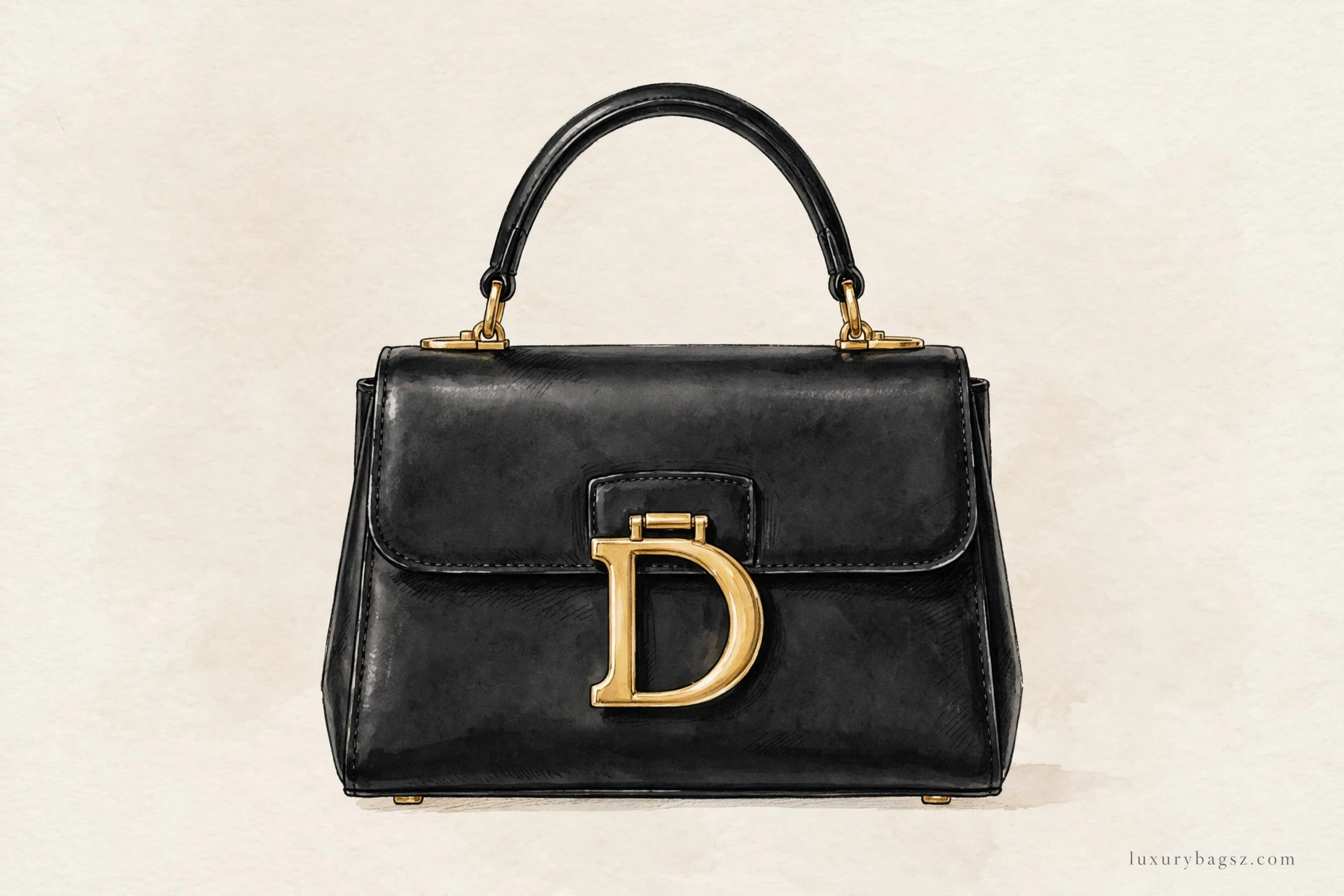
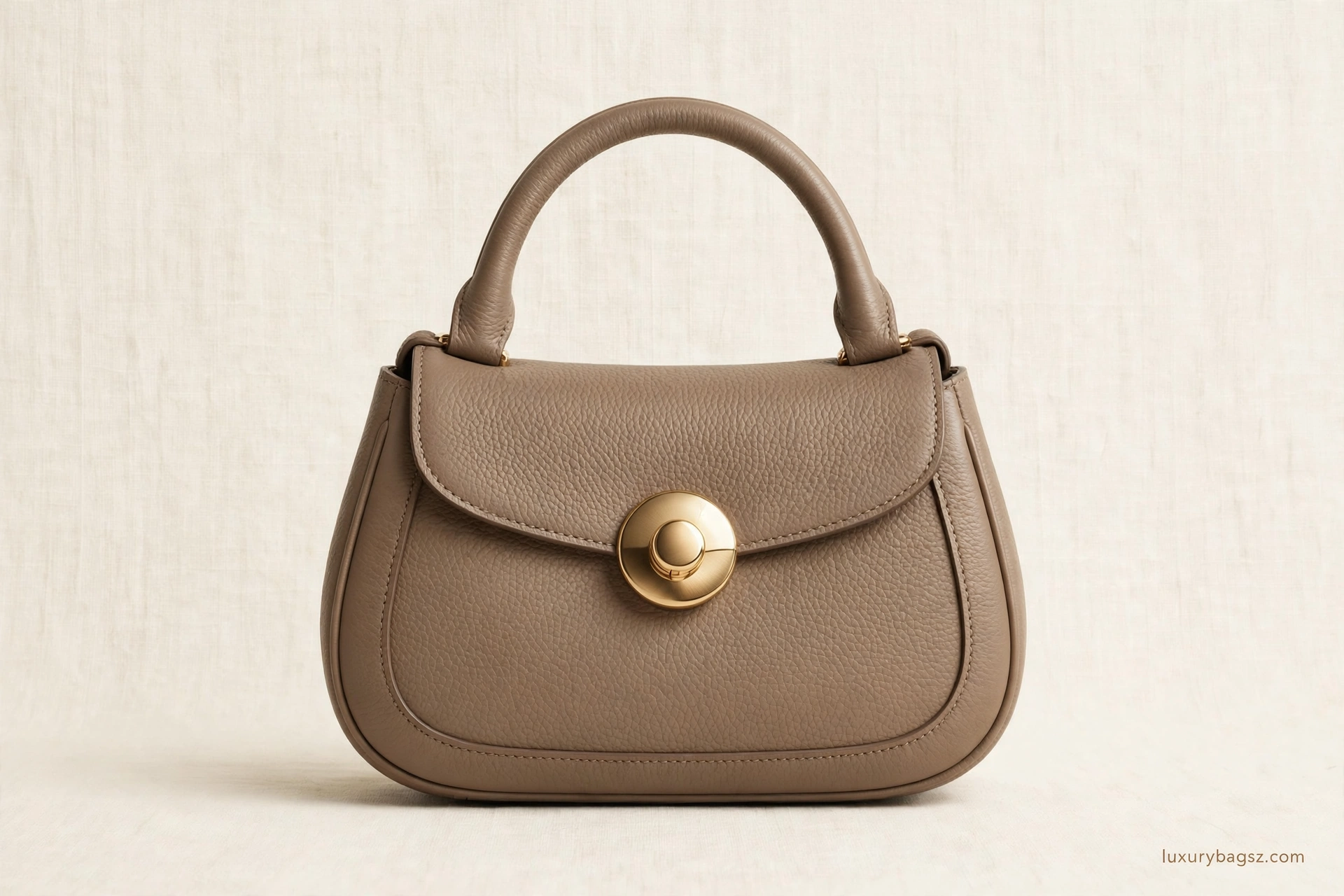
Its shape is a structured trapezoid with a single top handle and a detachable shoulder strap. The flap closes with a round turn-lock on a bridge plate, engraved with the house name, like a small piece of trunk jewellery.
Black and taupe are the steady colours, with gold-tone or palladium hardware, and seasonal shades join them each year. One oft-told house story has the actress travelling with a purple crocodile trunk, pure theatre in luggage form.
House accounts say one artisan makes a Réjane from start to finish in about twenty hours. That pace explains the price, the limited colours each season, and why good pre-owned examples rarely sit unsold for long.
Gabrielle, the Softer Sister
The Gabrielle is also named for the same actress, using her first name. It keeps the trapezoid body but cuts the flap into a shallow point, which gives it a slightly softer and more modern face than the Réjane.
Its clasp is the detail to learn. Two polished chevron pieces meet to form a stylised M, described by the house as a twist lock. The curved seams above and below echo the lines of the old Limousine trunks.
Most Gabrielle bags use Carat Calf outside and Perla Calf inside, so the bag is leather throughout. A clutch version also exists. For many first-time buyers, this is the easiest Moynat to live with every day.
Cabotin, a Trunk You Carry by Hand
The Cabotin is a rectangular top-handle bag with a contoured top, and fans often compare it to a vintage lunchbox. Authentication guides describe two trunk-style clasps on straps laid across the flap.
Those twin clasps recall the patented trunk locks the house was known for in the 1900s. Each clasp is engraved with the house name over the city name, in wide capitals, and the finish should match across the bag.
Limousine, the Curve Behind Everything
The Limousine began as a trunk, patented in 1902 with a gently curved base shaped for the roofs of early motor cars. It remains a made-to-order heritage piece, offered in case and suitcase formats by the house.
You will also meet the name on smaller travel pieces in resale listings. Whether trunk or bag, the point is the same curved line. Once you see it, the arcs on the Gabrielle and Réjane make complete sense.
Other Names You Will Meet in Listings
The Flori is a half-moon saddle bag with a trunk-style lock and a small leather key holder. Editorial guides price it below the two icons, and it suits buyers who prefer a softer, curved shoulder shape.
The Pauline and the slouchier Gaby also appear often in resale. So do the Oh! Tote and its successor the M Tote in Canvas 1920, the lightest way into the house and the easiest to find at lower prices.
The M Tote itself comes in PM, MM and GM sizes. Its canvas is a triple-layered linen and cotton blend with a matte, textile feel, heavier and more structured than coated canvas, and the bag stands upright on its own.
Sizes and Leathers, Translated Into Plain Terms
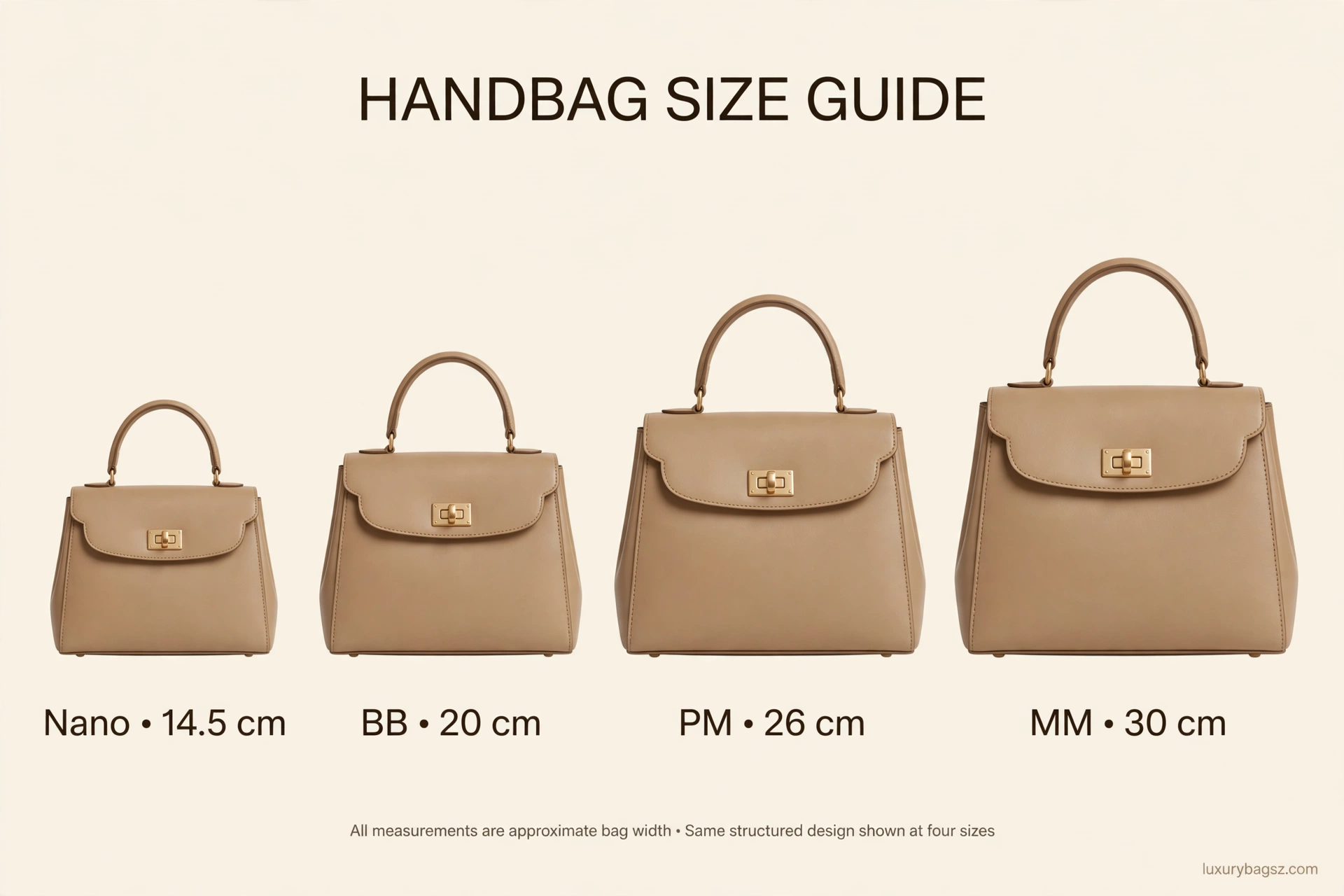
Moynat uses the familiar French size ladder, and widths are the quickest way to compare. Collector size charts put the Réjane Nano at about 14.5 cm, the BB at 20 cm, the PM at 26 cm and the largest near 30 cm.
The Gabrielle follows a similar ladder, at about 21 cm for the BB, 26 cm for the PM and 31 cm for the MM. In practice, BB suits evenings and light days, PM is the true everyday size, and MM carries the most.
Owners often compare the Réjane with the Hermès Kelly, as both are structured top handles. One long-term owner’s comparison found the larger Réjane wider and roomier than a Kelly 28, whilst sitting slightly lower.
| Model | Main sizes | Approx. widths | Best for |
|---|---|---|---|
| Réjane | Nano, BB, PM, MM | 14.5 to 30 cm | Polished everyday carry |
| Gabrielle | Clutch, BB, PM, MM | 21 to 31 cm | Softer daily use |
| Cabotin | Mainly one compact size | Varies by edition | Trunk lovers and collectors |
The Leathers You Will Meet Most Often
Taurillon is a grained bull-calf leather with a soft, natural pebble. Owners describe it as richer but heavier. It suits the Réjane well, though large sizes in Taurillon can feel weighty by the end of a day.
Carat Calf has a fine printed grain, a firmer hand and a lighter feel. Forum owners compare it with Hermès Epsom for scratch resistance, which is why so many Gabrielle bags use it for daily wear.
Inside, Perla Calf lining is the house standard on leather bags, often in a peach, apricot or soft beige tone. Canvas 1920, the monogram canvas linked to Henri Rapin’s archive designs, covers the totes instead.
The Hand Finishing Behind the Price
Leather marquetry is the technique collectors mention first. Instead of layering coloured hides on top of each other, artisans cut each piece to the same thickness and fit them together like a jigsaw, so the surface stays perfectly flat.
It can look printed at a glance, but it is a structural mosaic made entirely by hand. The Flori is a favourite showcase for it, which is why patterned Flori bags reward a close look at every join.
Edges get the same patience. Craft guides describe up to eight layers of hand-painted edge finish, sanded and heat-sealed between coats, where most houses apply two or three coats that can crack and peel over time.
Seams use saddle stitch, worked with two needles and one thread. Each stitch locks on its own, so the seam holds even if a single stitch breaks, unlike a machine seam that can unravel from one break.
What Moynat Bags Cost in Boutiques
Moynat does not widely publish prices online, so guides rely on boutique checks. JustSvara’s early 2026 estimates put the Réjane at $3,800 to $5,200 and the Gabrielle at $3,500 to $4,800, depending on size and leather.
A September 2026 price snapshot from ShopBack gave higher European figures, with the Réjane BB at €4,700 to €5,200 and the Gabrielle at €3,800 to €4,200. Treat both sets as guides, not fixed lists.
Exotics sit far above those ranges. Valois Vintage Paris describes Réjane pricing from about €3,000 for a mini to over €10,000 for exotic versions, and crocodile examples appear in resale at similar heights.
Entry points sit lower. The same editorial guide estimates the Flori at $2,800 to $3,600 and the canvas M Tote at $1,100 to $1,500, which makes the tote the usual first step into the house.
For context, those figures place a core Moynat below many headline Hermès prices, which is part of the appeal. Our guide to Hermès handbag prices shows how quickly the larger house climbs beyond this level.
The Pre-Owned Market, Where Moynat Gets Interesting
Resale is where patience pays. On The RealReal, leather Réjane PM bags in good to excellent order have recently been listed around $1,850 to $2,775, against estimated retail figures of about $4,000 to $4,900.
Gabrielle bags show a similar pattern, with PM examples around $2,995 to $3,175 in recent listings. Cabotin bags vary more, because editions differ and buyers know the model less well than the two icons.
Fashionphile tells the same story from the other side of the market. A black Taurillon Réjane BB was listed there at $2,795, whilst a grey Réjane MM sat far lower, showing how much colour and size move the price.
One 2026 resale guide estimates retention of 80 to 100 per cent for the Réjane and 75 to 90 per cent for the Gabrielle. My own reading is calmer: strong colours in top condition hold up, whilst unusual shades wait longer.
Liquidity is the honest caveat. Moynat sells in small numbers, so fewer buyers search for it each week. The same quiet logic shapes our view of investment-worthy Goyard bags, where rarity helps only when demand is present.
Vintage is a separate world. Valois Vintage Paris puts golden-era trunks and cases, from 1849 to 1976, at €5,000 to €50,000 at auction. Condition and original fittings decide where a trunk lands in that wide range.
Authentication Basics for a House With Thin Public Records
Moynat has very little published authentication material, and good copies exist. LuxeDetect, which has handled many verified bags, warns that fakes can pass the obvious checks. Use the points below to rule out careless copies, not to rule a bag in.
Stamps, Logos and the Small Code Tab
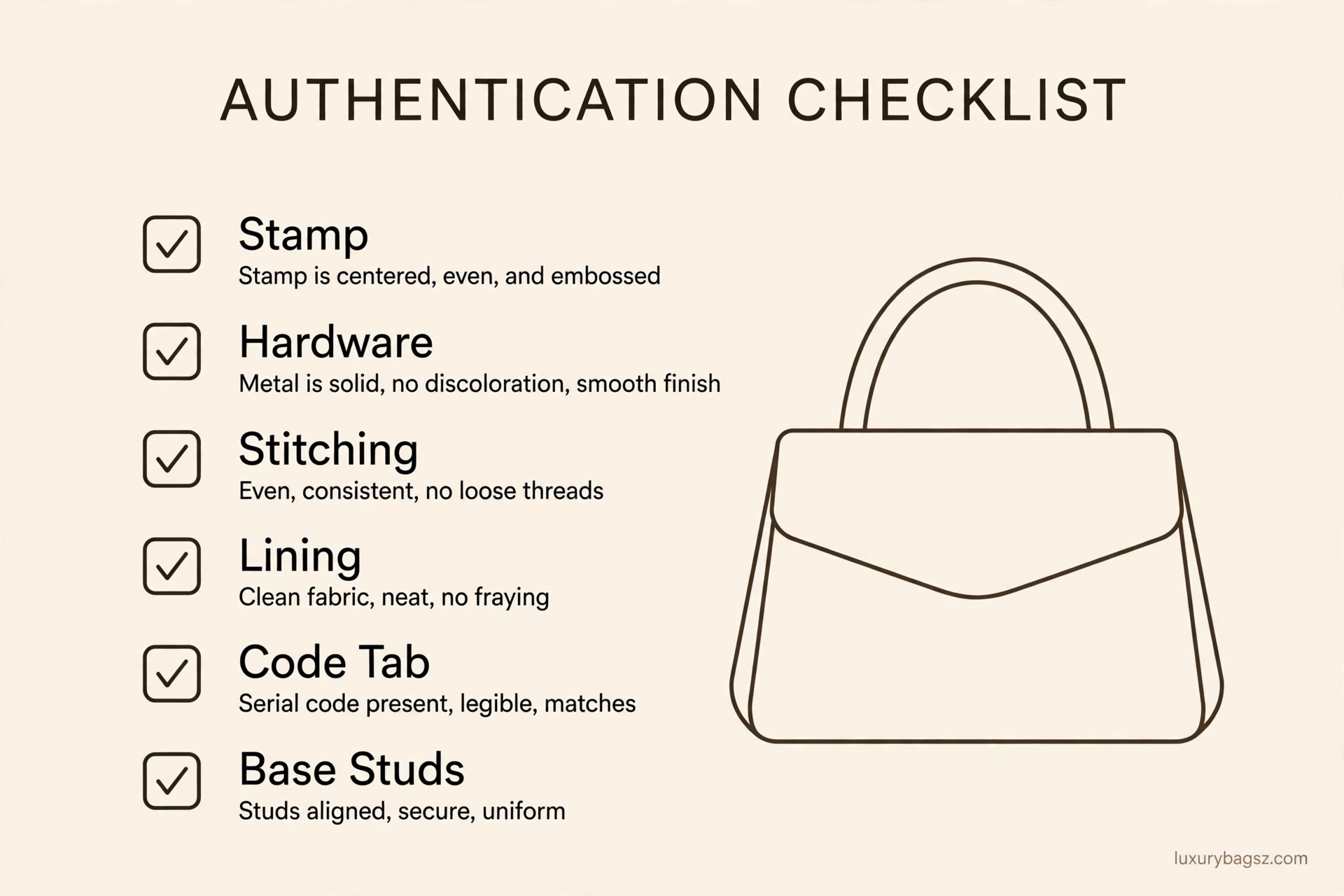
Most genuine bags carry an interior heat stamp in three centred lines, giving the house name, the city and the country of origin. On the Réjane it usually sits on the leather strip above the zipped pocket inside.
The stamp is normally fine foil that matches the hardware colour, or a blind stamp on pale linings. Heavy, bright foil with thick letters deserves a closer look, as does uneven spacing between the lines.
Two logo styles are both genuine. Plain wide capitals appear on stamps and clasps, whilst a tall, condensed Art Deco version appears on dust bags, medallions and some locks. Seeing both on one bag is normal.
Medallions need the same calm approach. Their ring wording changes by piece, from travel wording on metal medallions to a shorter luggage wording on domed buttons. Even, centred lettering matters more than matching another model.
Many bags also hide a small leather tab inside, often near a zipped pocket, heat-embossed with a code. Readable genuine codes in LuxeDetect’s archive follow a letter plus four digits pattern, such as T2090 or B1125.
Do not try to date a bag from that code, as Moynat has not published its meaning. France is the usual origin on leather bags, yet verified canvas totes say Italy and one verified leather tote says Spain.
Hardware, Stitching, Lining and the Base
On a Réjane, check two separate pieces. The round turn-lock on the flap should read cleanly around its face, and the shield-shaped strap clasp should carry the same wording in stacked lines, with a swivel hook.
On a Gabrielle, the chevron clasp carries the name along one arm and the city along the other. The strap clips repeat the wording and have a shallow M notch. Engraving should look crisp, even and properly deep.
Stitching on genuine bags is fine, even and consistent in spacing, inside and out. The leather grain should look natural and uniform across every panel, not flat on one panel and coarse on the next.
Linings are leather on the main bags, and colour varies by design, so lining shade alone proves little. Underneath, larger bags stand on five square studs, whilst smaller sizes have four at the corners only.
Packaging proves nothing on its own. Genuine sets use a brown cotton dust bag, a branded envelope, a care booklet and a materials card, and LuxeDetect found close copies of all of them with fake bags.
How Professional Services Approach Moynat
Services that cover Moynat ask for a strict photo set. Legit App lists full views, the serial code inside the lining, leather texture, metal engraving and the strap buckle, then uses expert review with AI support.
Vereev gives similar advice in plainer terms. Photograph one bag well, show its construction and markings together, and never treat a single code, receipt or logo as a verdict on its own.
When I check a bag myself, I work through the same order I set out in our authentication process, then use Entrupy, including its microchip checks, before giving a view. With over 500 bags examined, Moynat still earns that full routine.
Buying Tips That Save Money and Regret
- Ask for clear photos of the front lock, strap clasps, interior stamp, code tab and base before paying.
- Compare the bag with a verified example of the same model and size, not a different size.
- Budget for slower resale, and buy the bag because you love it, not as a quick trade.
- Favour black, taupe and other core colours in PM sizes for the widest future buyer pool.
- Check corners, handle bases and edge paint closely, as condition drives Moynat value hard.
- Use a seller or service that offers a written authenticity view and a clear returns route.
Visiting leather factories in Spain and France taught me how much of a bag’s truth sits in its edges and lining. With Moynat, look there first. A tidy exterior with tired corners is rarely the bargain it first appears to be.
Care is simple and strict. The house advises storing canvas bags in their dust bag, away from light and heat, cleaning with a soft cloth and natural soap, and keeping creams, perfume and ink well away.
Two storage habits protect value. Never fold a canvas bag away, as creases can become stubborn, and support the shape with a soft insert rather than newspaper, which can transfer ink. If a bag gets wet, pat it dry rather than rubbing it.
Seek professional repair early if edge paint lifts, handles loosen, cracks appear near the flap fold, or a clasp sits out of line. Avoid household glue and oiling coated canvas, which can stain it for good.
For vintage trunks, favour gentle conservation over full restoration. Travel marks and patina form part of a trunk’s provenance, and collectors often value honest wear over a showroom finish.
Frequently Asked Questions
Is Moynat older than Louis Vuitton?
Yes. Moynat was founded in Paris in 1849, five years before Louis Vuitton began in 1854. Both houses began with trunks for the new age of rail travel, then moved into handbags as travel habits changed.
Which Moynat bag should a first-time buyer choose?
Most first-time buyers suit the Réjane PM or the Gabrielle PM. Both carry daily essentials, hold their shape and are the easiest sizes to resell later. Choose the Gabrielle if you prefer a softer, lighter daily feel.
Do Moynat bags hold their value?
Core models in core colours hold value better than seasonal editions, and one resale guide rates the Réjane highest in the range. Even so, the buyer pool is small, so a fair price can still take time to achieve.
Does a Moynat bag made outside France mean it is fake?
No. Most leather bags are stamped as made in France, but authenticators have verified genuine Moynat pieces made in Italy and in Spain. Judge the stamp by its quality and layout, not by the country alone.
Can a dust bag or card prove a Moynat bag is real?
No. Genuine bags come with a brown dust bag, an envelope, a care booklet and a materials card, but close copies of that packaging have been found with fake bags. Treat a full set as a nice extra, never as proof.
Why are Moynat prices so hard to find online?
The house sells through a small number of boutiques and does not widely publish its prices online. Most published figures come from boutique visits and editorial checks, so expect small differences between sources and seasons.
Final Verdict
Moynat suits the buyer who values craft over recognition. Start with a Réjane or Gabrielle in a core colour and a practical size, buy the best condition you can afford, and have any pre-owned piece checked properly before money changes hands.
Do that, and you gain a bag with a genuine 1849 story, trunk-maker bones and a calm presence few modern logos can match. It is quiet luxury in its most literal form, and it rewards owners who plan to keep it for years.