How to Buy a Pre-Owned Designer Bag Safely: A 2026 Buyer’s Guide
The Safe Buy in Brief
A safe pre-owned purchase is a slow purchase. Check the seller, check the bag, check the price against sold listings, and check the return policy before you pay.
The order matters. A genuine bag from a seller with no returns is still a risk, and a cheap bag with blurry photos is still a risk, even if the seller seems friendly. If two or more checks fail, walk away.
This guide covers every brand, not one house. The checks work for Chanel, Louis Vuitton, Hermès, Gucci, Dior and the rest, with brand-specific photo requests where they change the answer.
Key Takeaways
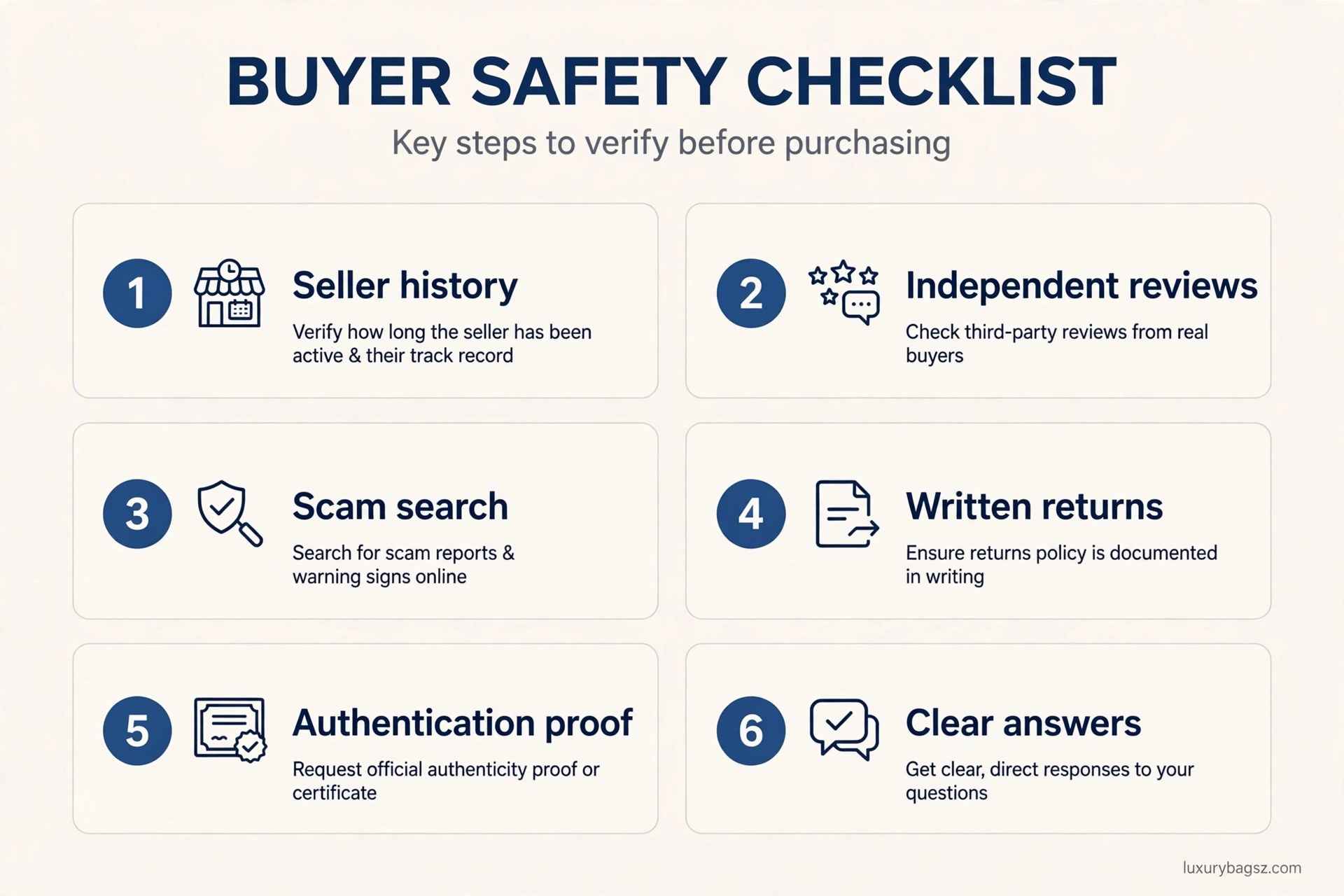
- Vet the seller first: years in business, independent reviews, and a search for the seller name plus "scam" or "counterfeit".
- Request the full photo set before paying: corners, handles, hardware, lining, stamps, codes, and every flaw, in daylight.
- Benchmark against sold prices for the exact model, size, and condition, never against asking prices.
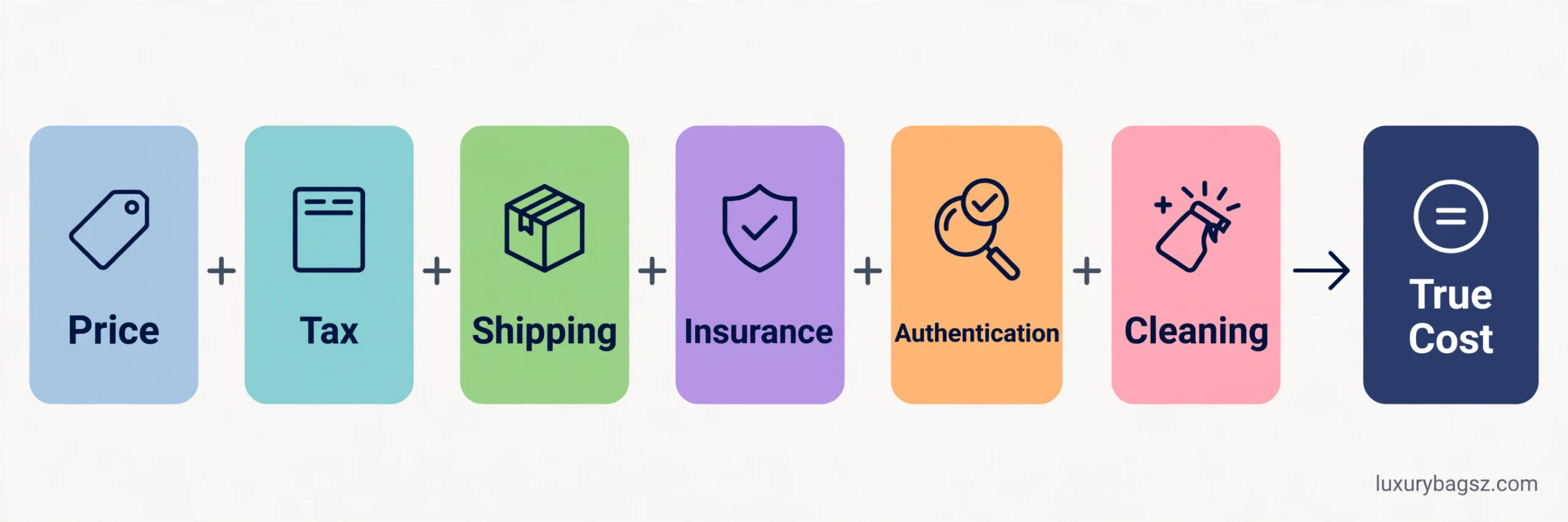
- Add tax, shipping, insurance, authentication, and likely cleaning or repair to the headline price to find the true cost.
- Pay by a method with buyer protection, on the platform, never by wire, crypto, gift card, or friends-and-family transfer.
- Photograph the unboxing on arrival, compare it with the listing, and act inside the return window if anything is wrong.
Start With the Bag, Not the Bargain
Decide the exact bag before browsing: model, size, material, colour, and hardware finish. Vague shopping is how buyers end up with the wrong size or a colour they would never have chosen new.
Check the model's dimensions from a reliable guide, and measure a bag you already own for comparison. A bag that looks roomy in photos can be tiny in real life.
Set a maximum all-in budget now, including the extras in the true cost section, and decide your dealbreakers in advance. Odour, a replaced strap, or a missing lock may be fine for one buyer and fatal for another.
Choose Where You Buy, Because the Rules Change With the Venue
A specialist reseller, a consignment platform, a peer marketplace, and a private seller are four different purchases, even for the same bag. Each changes who authenticates, who pays for returns, and who answers if the bag is fake.
Specialist resellers and consignment platforms usually authenticate in-house and publish a return policy. That protection costs money, and their prices usually show it.
Peer marketplaces give more choice and often lower prices, but the seller sets the description and photos. Platform buyer protection still helps, yet it has deadlines and evidence rules you must follow exactly.
Our guide to buying Hermès online vs in store shows how the same venue choice plays out for one house.
Vet the Seller Like a Reference Check
Start with time in business. A seller with years of visible history and mixed, human reviews is safer than a new account with a perfect score. Real sellers accumulate the odd complaint and answer it.
Search the seller name plus "scam", "fraud", and "counterfeit", and read independent review sites rather than testimonials on the seller's own page. Our full checklist for spotting a legitimate designer bag reseller turns these searches into a complete vetting routine. Look for patterns, not single angry reviews.
Check social presence and contact details. An established seller usually has a findable business identity and regular public activity. A shop that exists only as "message me" deserves extra caution.
Ask the Questions That Expose Problems
Ask where the bag came from, how long the seller has owned it, and why they are selling. Honest answers have detail; invented stories stay vague.
Ask who authenticated the bag, by what method, and what proof exists. "Authenticated" alone means nothing. You want a name, a method, and a document you can check.
Ask what is included: box, dust bag, receipt, authenticity card, strap, lock, and keys. Missing pieces do not prove a fake, but they change value and resale options.
Ask about damage in plain language: "What damage does it have, exactly?" beats "Is it in good condition?" every time. Ask about the return policy in writing, including who pays return shipping and what happens if an independent check disputes authenticity.
Request the Photos That Actually Prove Something
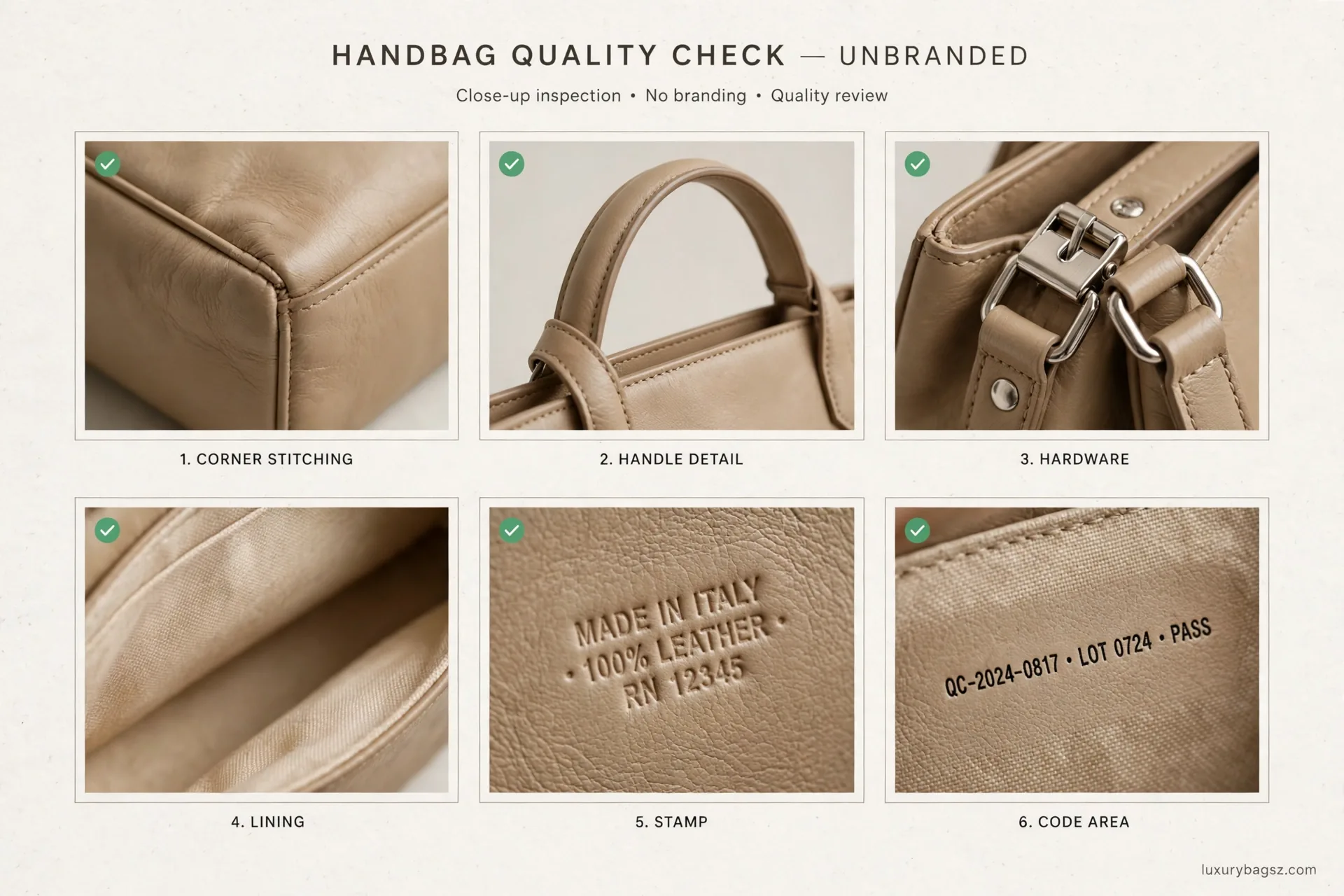
Never buy from a single front photo. Request daylight photos, without flash, of the front, back, both sides, base, and interior, plus a close-up of every flaw the seller mentions.
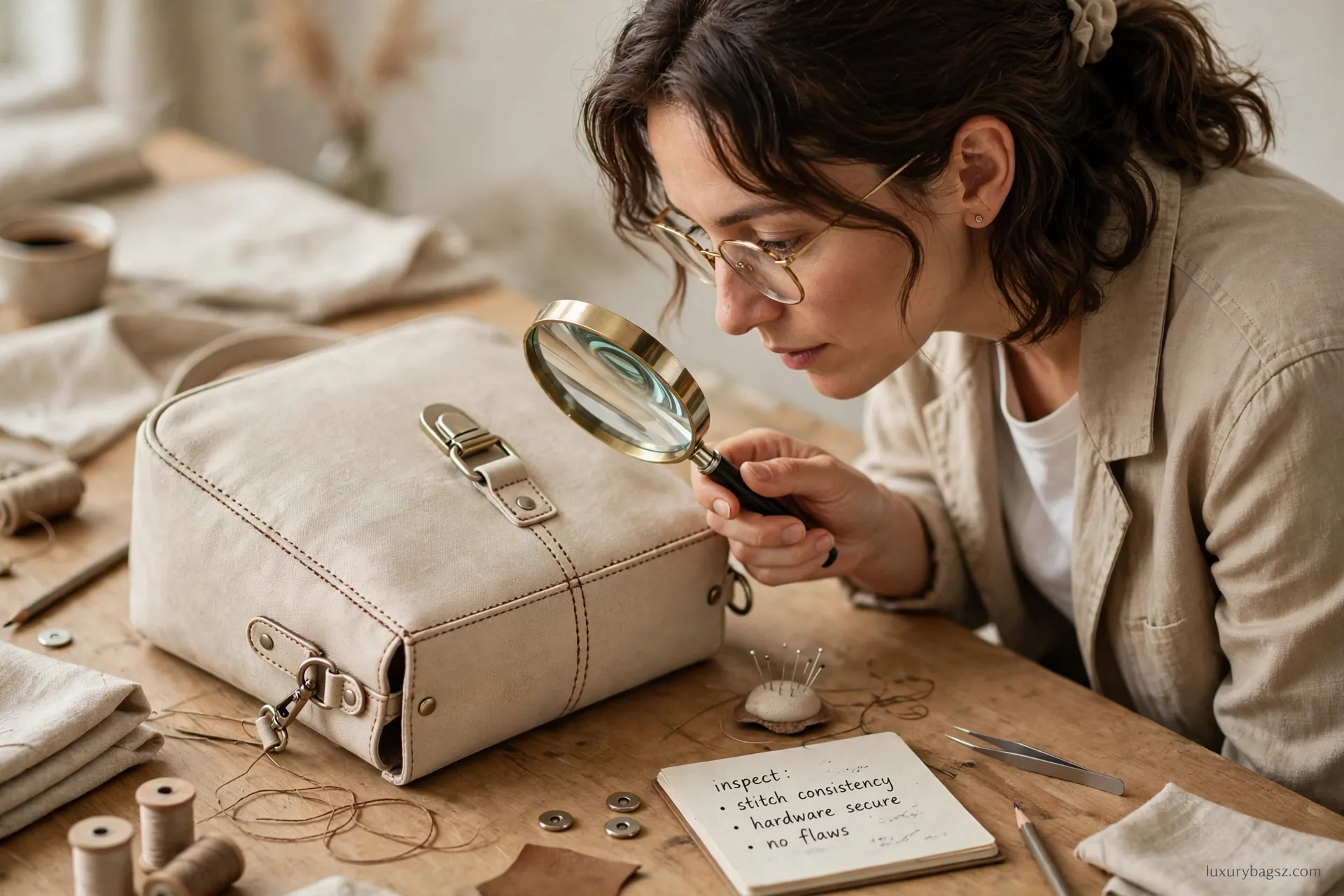
Corners come first. The base corners take the most impact, so ask for a macro shot of each one. Scuffing, colour loss, or exposed piping there is the most honest wear signal on any bag.
Handles and straps come next: full length, both sides, and the joins. Darkening where hands grip, cracking, and replaced handles all show here, and strap repairs are among the costliest fixes.
Hardware follows: clasps, buckles, zips, and feet in close-up, with any engraving legible. Inside, ask for the lining, pockets, and any interior label, stamp, or code, plus a shot of the bag standing empty to judge structure.

Use Brand-Specific Checks, Not Generic Advice
Generic advice — even stitching, heavy hardware, good leather — catches sloppy fakes and misses good ones. Each house has markers that matter more than the generic list.
For Hermès, ask for the blind stamp, saddle stitching, and hardware engraving. Our guides on how to spot a fake Hermès Kelly bag and the fake Evelyne bag show which details to compare for those shapes.
For Chanel, ask for quilting alignment, clasp and chain, and the serial sticker or microchip era marker. A sticker-era bag should have a matching card; a microchip-era bag will not, and that difference is era-correct, not a red flag.
For Louis Vuitton, ask for the date code or microchip, monogram alignment at seams, and glazing on handles and trim. Louis Vuitton moved from date codes to microchips in 2021, so a 2023 bag with a printed date code should worry you.
Benchmark the Price Against Sold Listings, Not Asking Prices
A price is only "too good to be true" against a number. Find that number by searching sold and completed listings for the exact model, size, material, colour, and condition grade.
Asking prices run well above sold prices. One selling guide reports asking prices running 20 to 40 percent above market, so a listing matching the cheapest asking price may still be overpriced.
Use at least three sold comparisons, and throw out outliers at both ends. Adjust for condition and completeness honestly: a bag without its box, dust bag, and receipt is not comparable with a full-set bag at the same headline price.
If the listing sits far below your sold range with no explanation — damage, missing set, or an urgent sale — treat the gap as a warning, not a win. Genuine sellers price near the market because they know the market.
Work Out the True Cost Before You Pay
The headline price is only the first line of the bill. Add sales tax or import duty, shipping, and insurance, and the total can jump by hundreds on a high-value bag.
Add an independent authentication fee if you plan one. Published costs vary: general guides cite roughly $10 to $75 per item, with one seller citing $75 CAD for an Entrupy certificate at checkout. Confirm the current fee before you rely on it.
Add likely cleaning or repair. A professional spa clean is modest; a handle replacement, re-lining, or hardware repair is not. If the listing shows wear needing work, get a repair estimate before you buy, not after.
For a popular Chanel shape, our Classic Flap vs Boy comparison shows how far new prices have moved, which is why an old "bargain" price may no longer be a bargain. If the all-in saving shrinks below about a quarter of retail, ask whether the risk and missing warranty are worth it.
Pay in a Way That Lets You Get Your Money Back
Pay on the platform, through its checkout, with a credit card or a payment service offering buyer protection. That gives you two routes back: the platform's dispute process and a card chargeback.
Never pay by wire transfer, cryptocurrency, gift card, or a friends-and-family transfer. None can be reversed if the bag is fake or never arrives, and a seller who insists on them is telling you how the deal will end. If a fake does slip through, follow our guide to what to do if you were sold a fake designer bag — the order of steps decides whether you get the money back.
Never move a marketplace deal off the platform to "save fees". Off-platform payment also removes platform protection, and it is the most common pattern in pre-owned fraud reports.
Keep every record: listing screenshots, seller photos, messages, receipt, and tracking number. Keep the bag's packaging until the return window closes, since throwing away the box on day one can weaken a return claim.
Learn the Red Flags That Should Stop You Cold
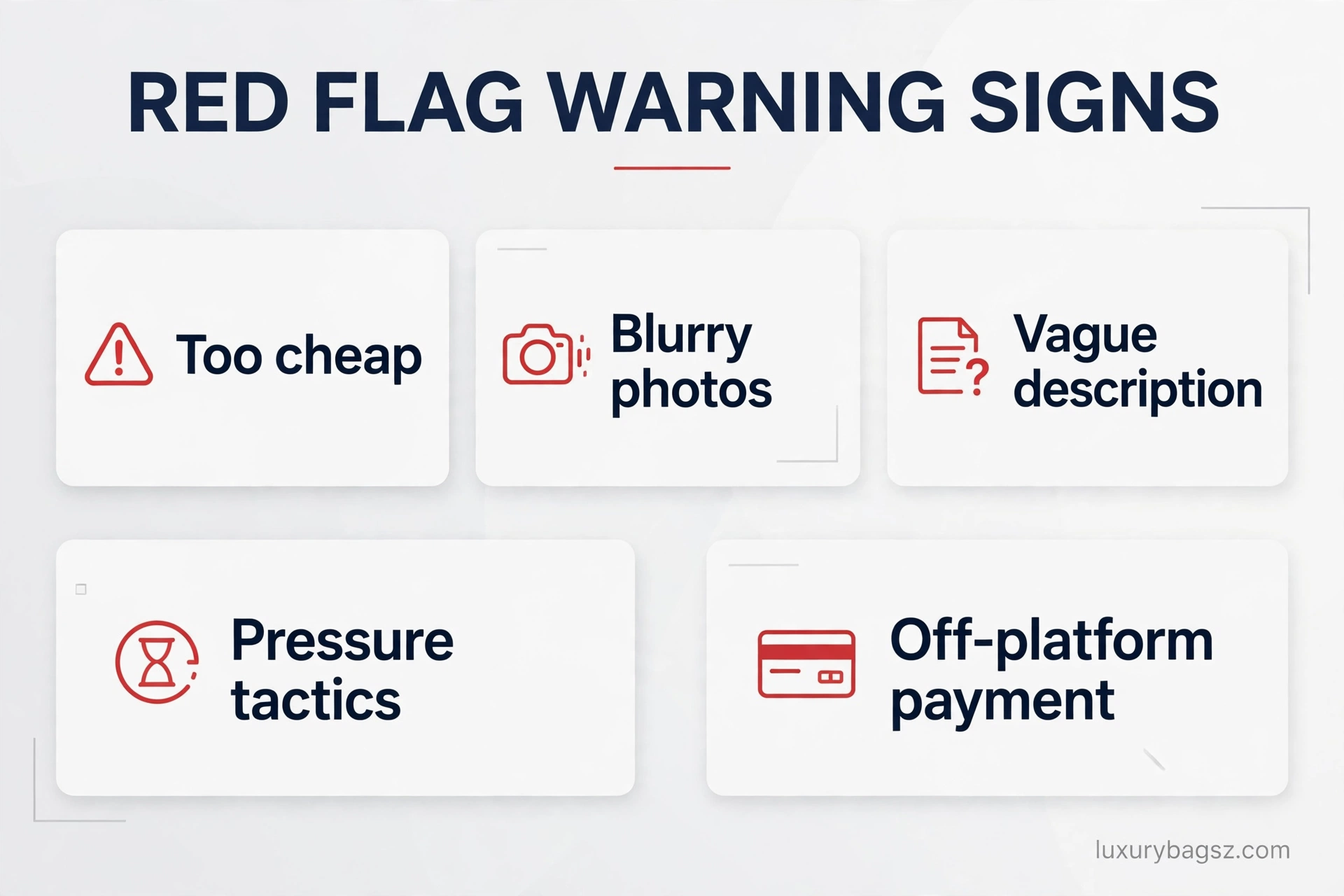
A price far below sold prices with no explanation is the oldest red flag and still the most reliable. Genuine urgency exists, but it comes with an explanation and evidence.
Refusal to send extra photos, or photos that stay blurry after you ask, is a stop sign. A genuine seller with the bag in hand can photograph any detail you name within a day.
Vague descriptions hide problems. "Gently used" with no mention of corners, handles, hardware, or lining is not a description; it is a gap. Pressure tactics — a countdown, another buyer waiting, a discount expiring tonight — are designed to skip your checks.
Buying in Person Is Different, Not Automatically Safer
In person, you gain senses photos cannot give. Smell the leather: genuine leather smells natural, while fake leather often smells chemical. Feel the weight: authentic hardware is heavy and smooth.
Test everything with your hands. Open and close every zip, press every clasp, check stitching under good light, and look inside every pocket. Put the bag down and see whether it holds its shape empty.
The trade-off is returns. Thrift stores, estate sales, and many consignment shops sell as seen, with no return if you later doubt authenticity. If the price is high, ask whether you can photograph the bag and return with an authenticator's view before paying, or buy only where the shop offers a written authenticity guarantee.
Inspect on Arrival, and Act Fast If It Is Fake
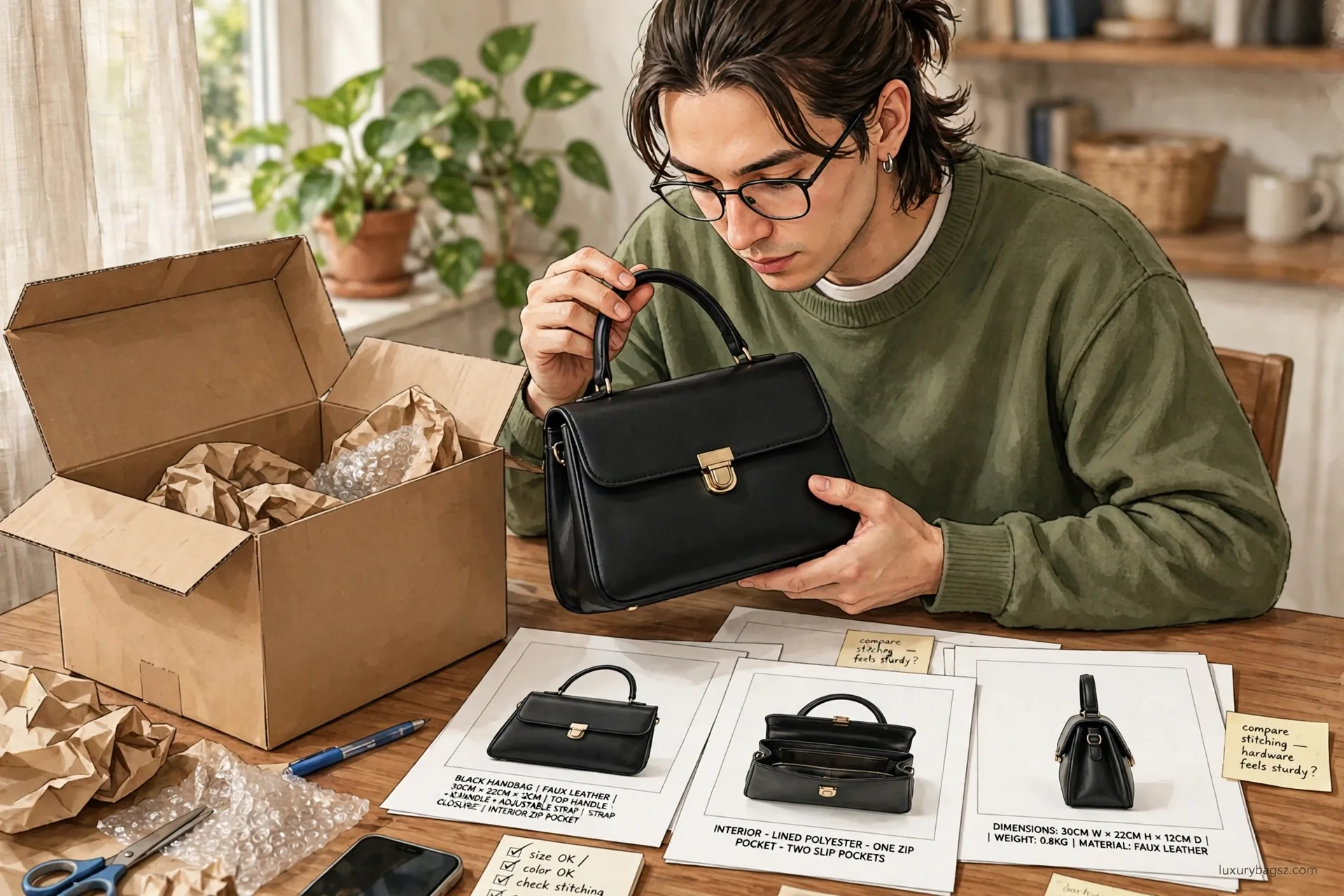
Open the parcel in a well-lit room, and photograph the outer box, inner packaging, and bag before handling it much. Compare the bag with the listing photos point by point: corners, handles, hardware, lining, stamp, and code.
Test function at once: zips, clasps, straps, and structure. Check for odour, especially smoke or heavy perfume, which can mask other smells and be hard to remove. If anything is wrong, contact the seller in writing the same day, inside the return window, and keep the bag unused and packed.
If the bag arrives fake, follow this order: stop using it and preserve everything; get an independent authentication in writing; contact seller and platform in writing citing that result; escalate within the platform window, then file a card chargeback. Note the two clocks separately: the return window and the chargeback window are different deadlines.
Do not clean or "fix" a disputed bag before the case closes. Altering it can be used against you, so leave it exactly as it arrived until the case is decided.
Restoration, Disclosure, and Records
Not all restoration is bad, but undisclosed restoration always is. A professional clean or light conditioning is normal care; redyeing, repainting, replaced hardware, and re-lining change the bag.
Ask directly: has the bag been redyed, repainted, re-lined, or had any part replaced, including handles, zips, and hardware? Ask who did the work and whether receipts exist. Treat a replaced handle as a value and authenticity warning, and redyed leather with special care, since dye can hide wear and repairs.
Keep the file you build today for a future resale: listing, seller photos, authentication result, receipt, and arrival photos, plus the box, dust bag, card, strap, lock, and keys stored together. A full set routinely sells for more than a bare bag, and honest records stop you pricing a future sale on a guess.
Frequently Asked Questions
Is it safe to buy a pre-owned designer bag online?
Yes, when you buy through a reputable seller or platform, check sold prices, request full photos, pay with buyer protection, and keep the return window in mind. Risk comes from skipping checks, not from pre-owned itself.
How can I tell if a pre-owned bag is fake before buying?
Compare brand-specific markers — stamps, codes, stitching, hardware, and monogram alignment — against the exact model and era, and request the close-up photos listed in the photos section. For high-value bags, add an independent authentication.
What photos should I ask a seller for?
Front, back, sides, base, interior, every corner, handles and joins, hardware close-ups, stamp, code or chip marker, and every flaw, in daylight without flash.
Should I trust a certificate of authenticity?
Treat it as supporting evidence, not proof. Check who issued it, by what method, and whether it matches the bag's code and description. Fake bags can carry copied cards and certificates.
Is a bag without a box or receipt automatically fake?
No. Boxes, dust bags, and receipts get lost, and their absence alone does not prove a fake. It does lower value and resale options, so price it in and check the bag itself harder.
What payment method is safest for a pre-owned bag?
A credit card or buyer-protected payment service, paid through the platform's checkout. Avoid wire transfers, crypto, gift cards, and friends-and-family payments, which cannot be reversed.
What should I do first when the bag arrives?
Photograph the unboxing, compare the bag with the listing photos, test zips and clasps, and check for odour. Report any problem to the seller in writing the same day, inside the return window.
Can I return a pre-owned bag if it is not as described?
It depends on the seller and platform policy, which is why you must read it before paying. Platform buyer protection and card chargebacks are separate routes with separate deadlines, so act quickly and keep evidence.
Are in-person pre-owned purchases safer than online ones?
They are different, not safer by default. You can touch, smell, and test the bag, but sales are often final, so a bad buy has no return route. Online platform protection can be stronger than a final in-store sale.
How much cheaper should a pre-owned bag be than new?
Use sold prices for the same model, size, and condition, then add tax, shipping, insurance, and likely repair to find the true saving. As a sanity check, a saving under about a quarter of retail rarely justifies the risk and missing warranty.
Summary
Safe pre-owned buying is a habit, not a talent. Vet the seller, demand the photos, benchmark sold prices, count the true cost, pay with protection, and inspect on arrival.
Most bad purchases fail more than one of those checks, which is why the two-red-flag rule works. One doubt deserves a question; two doubts deserve a walk-away.
Buy the bag you researched, from a seller who answered plainly, at a price the sold market supports. Everything else is noise, and noise is how fakes and bad deals get sold.