How to Spot a Fake Louis Vuitton Bag: 12 Checks
Fake or Real: The Short Answer
Judge a Louis Vuitton the way its own history forces you to: loosely at first. Genuine bags vary by era, factory and wear, so one odd detail on an otherwise consistent bag is a question, not a verdict — while three failures pointing the same way end the discussion.
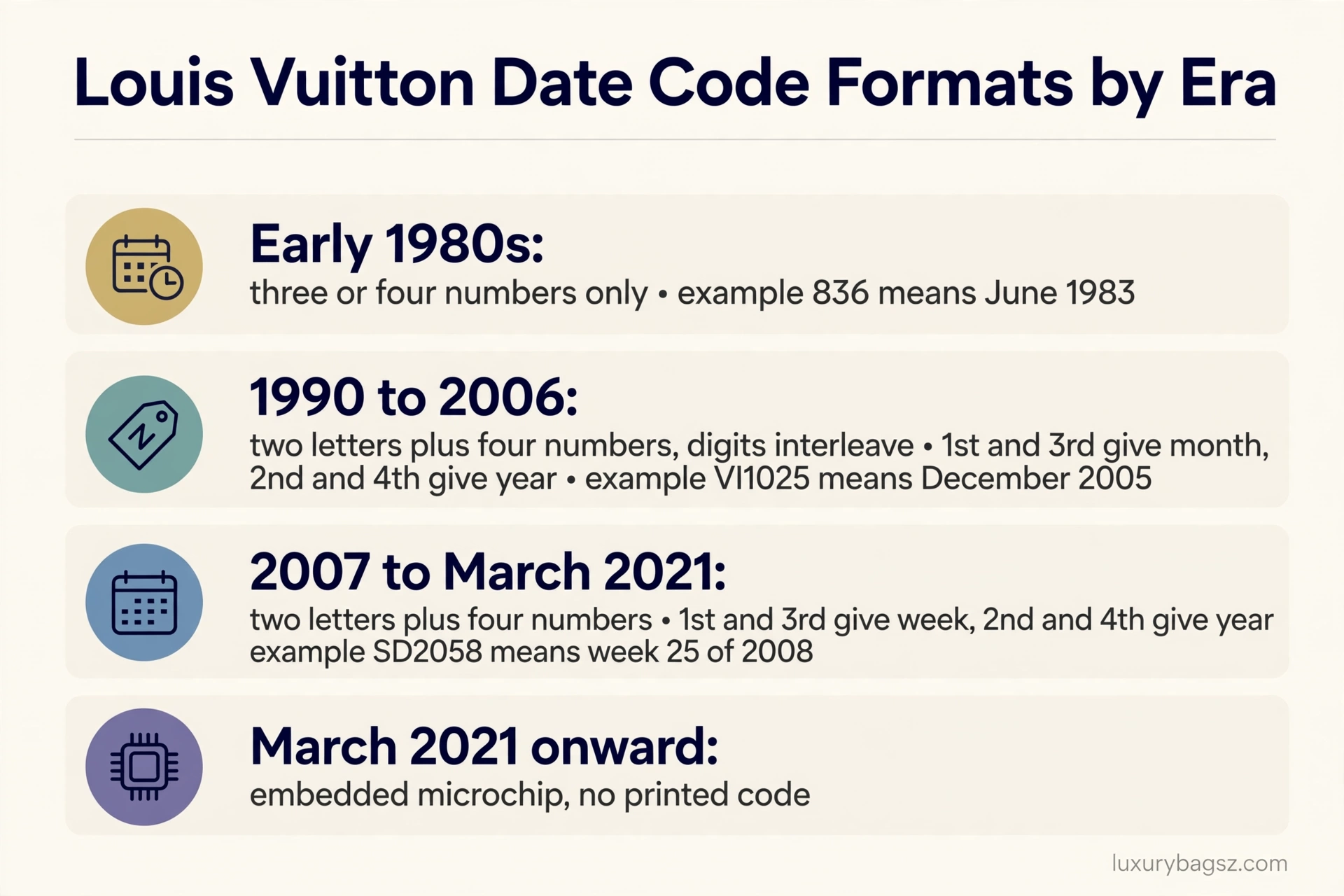
The verdict comes from the stack agreeing: canvas, stamp, stitching, hardware, date code or chip era, vachetta, interior and packaging. Date codes are one of the checks Jessica runs on every Louis Vuitton she handles, precisely because a code only means something read against the bag’s era — and on chip-era bags the code hunt ends at a microchip instead.
So count the failures before you decide. If three or more checks fail, walk away; if only one looks odd, weigh it against everything else the bag is telling you.
A Louis Vuitton bag tells me its age before it tells me anything else, so the date code is where I begin. I read the format against the era the seller claims — the letter and number pattern has to belong to that period, and on anything made after March 2021 I should be finding a microchip for the Entrupy app instead of a printed code. A correct code proves nothing by itself, since fakers copy real ones; it simply earns the bag my next checks, starting with the heat stamp’s letterforms.
The Stacking Principle
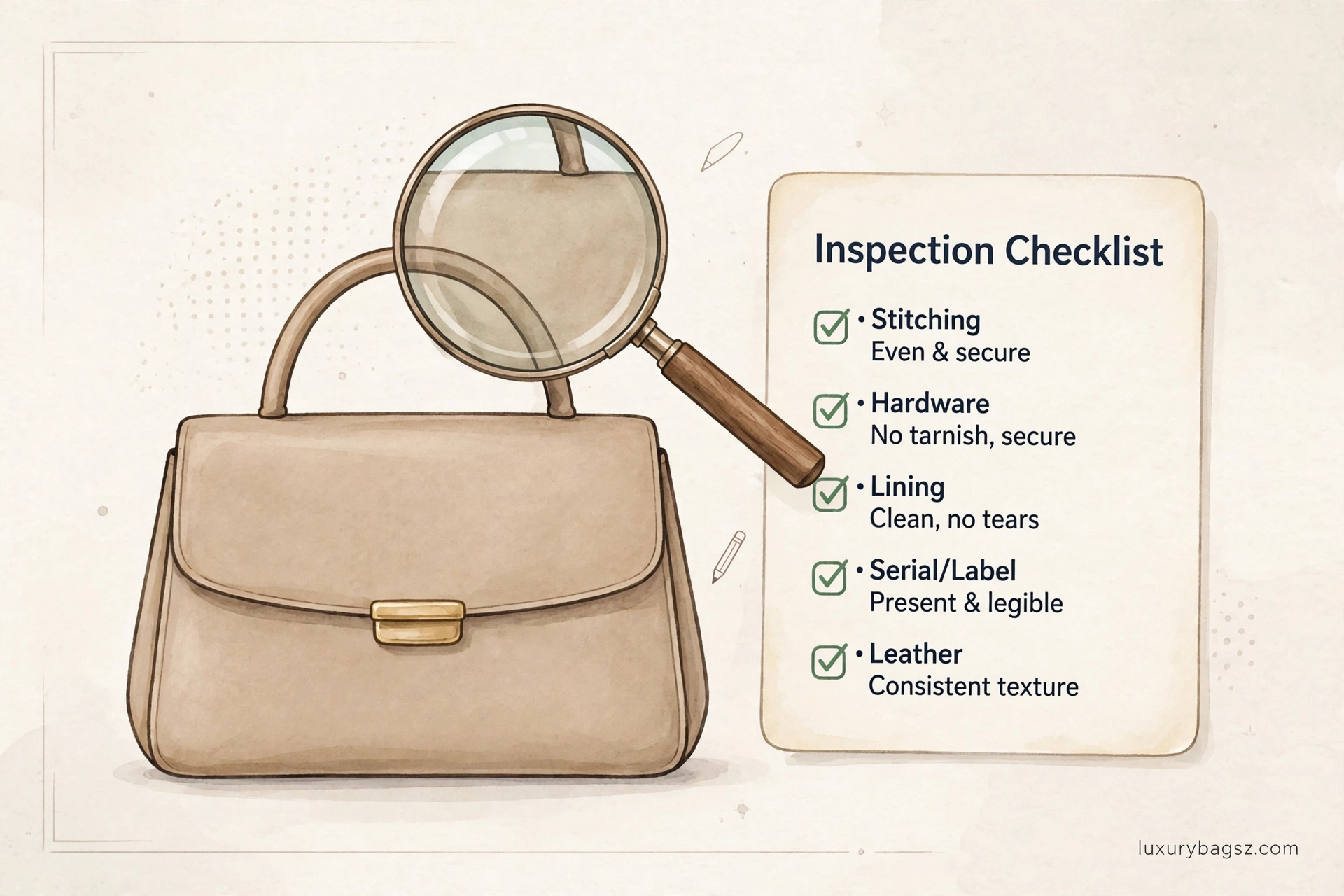
Gaby's Bags, the strongest competitor guide, frames authentication as stacking signals, and that framing is right: a counterfeit may pass the checks people photograph while failing the checks people feel, like weight, stitching discipline and honest leather ageing. Work through the twelve checks in order, noting passes and failures.
The same stacking method works across brands, as readers of the how to spot a fake Hermes Kelly bag guide will recognise: no single tell decides, the whole bag does.
Check 1: The Canvas and Monogram
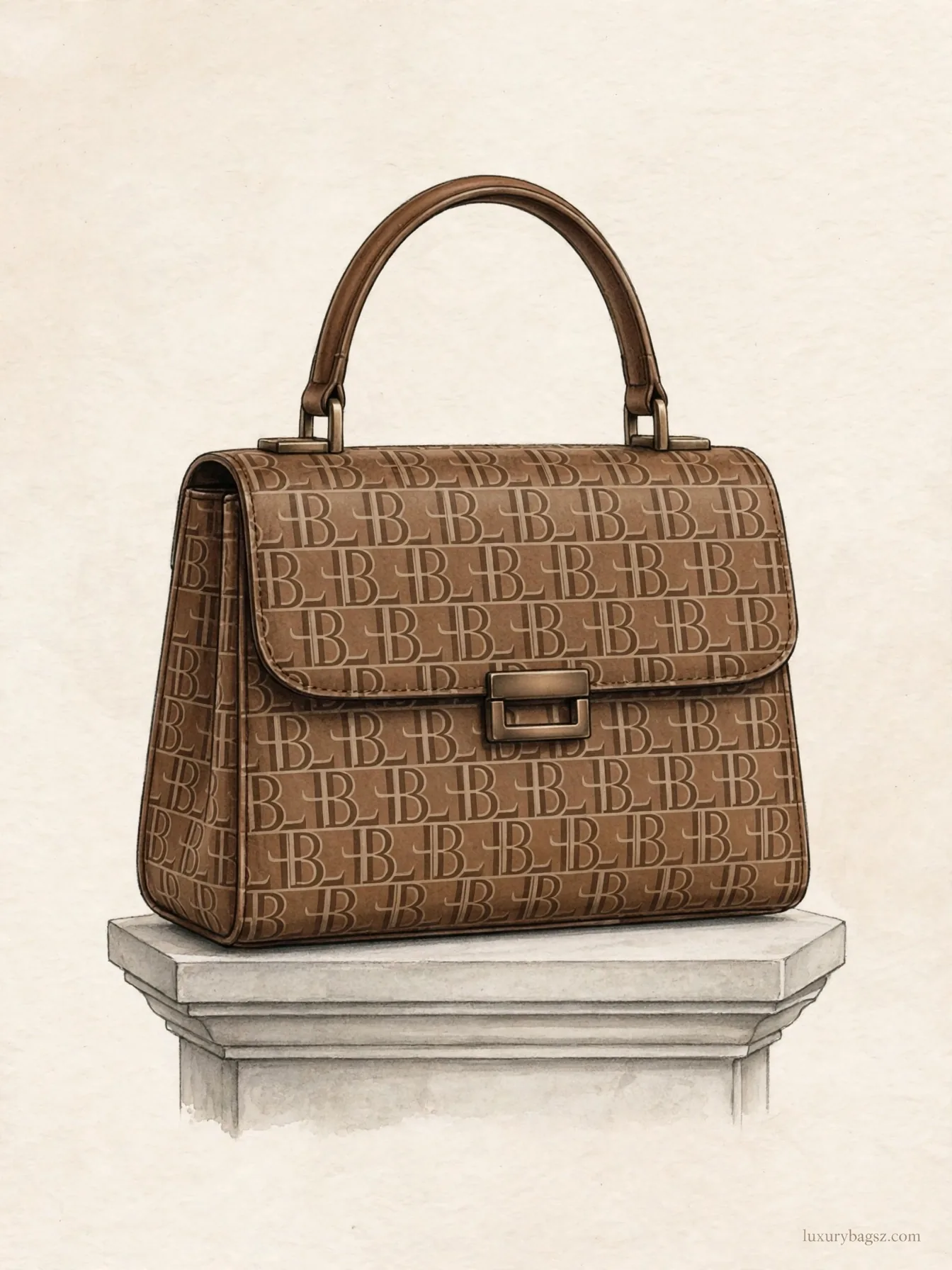
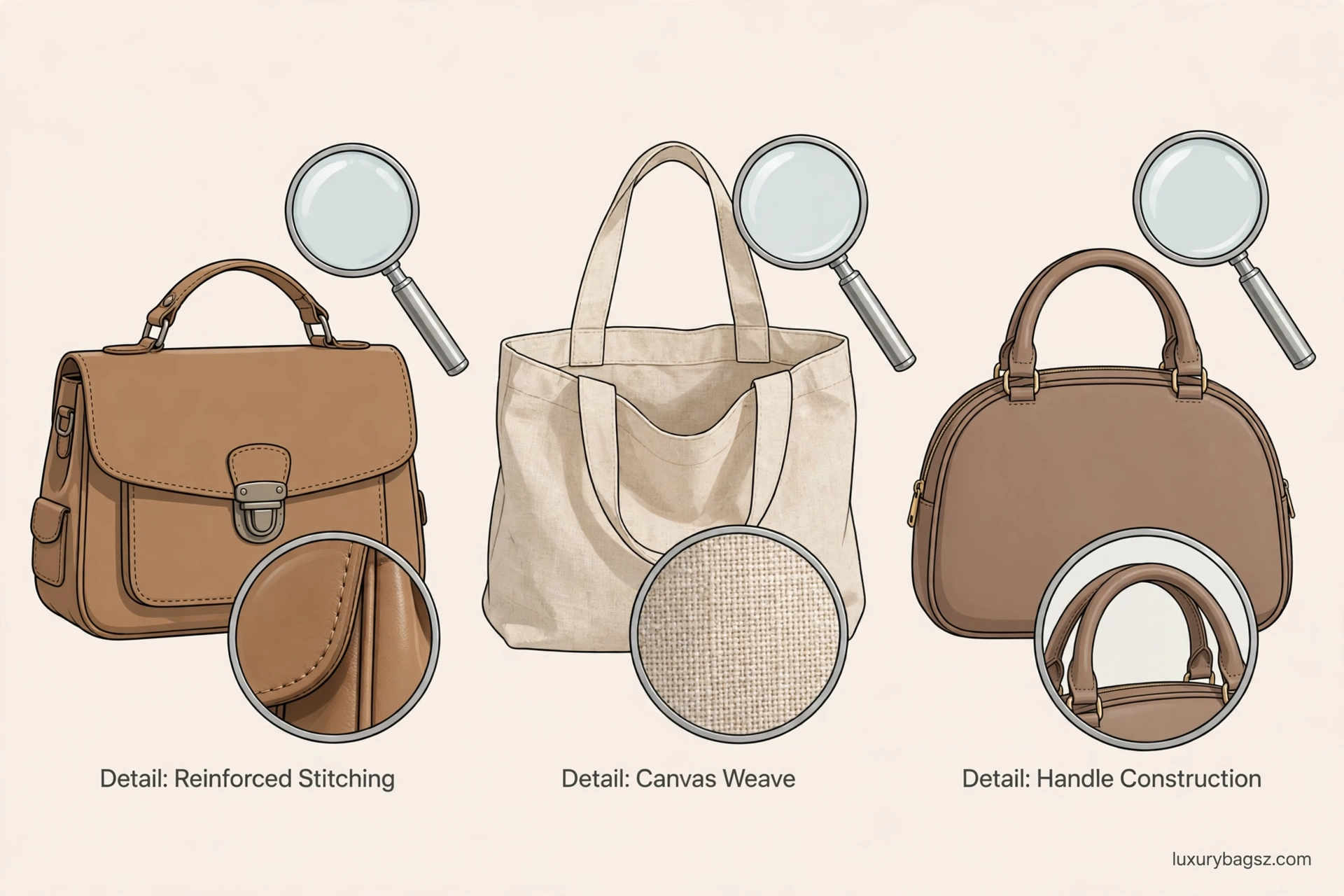
Genuine Monogram canvas has crisp edges, consistent colour and motifs sitting straight and evenly spaced, mirroring neatly across the central seam. The exception is the single-panel Speedy: cut from one continuous panel, its Monogram runs upside down on one side, and that is correct. Counterfeiters sometimes fix this, so a Speedy upright on both sides is wrong.
One competitor guide contradicts itself on this point; this guide follows Gaby's and Whoppah.
Check 2: The Heat Stamp
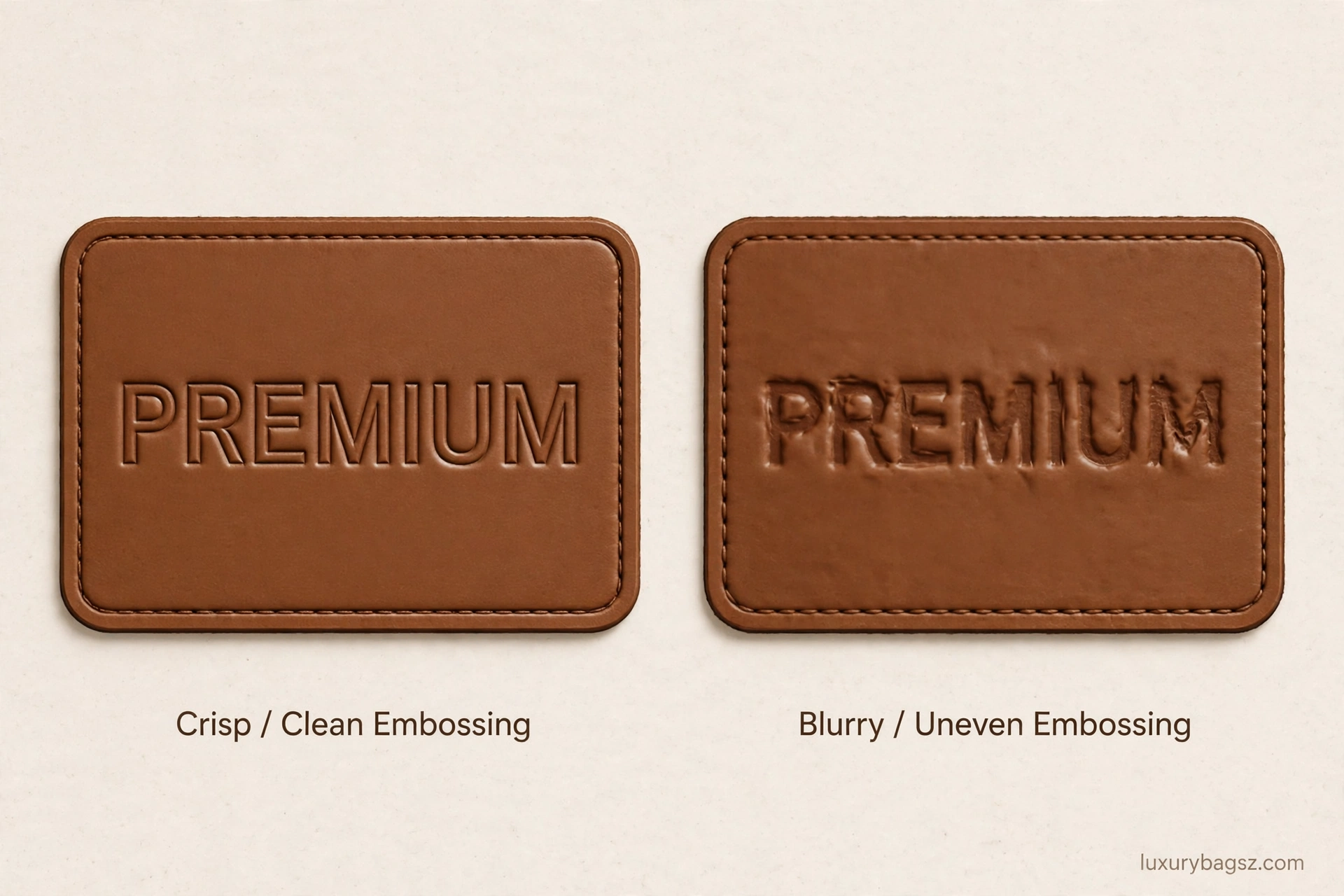
Genuine lettering is crisp, evenly spaced and struck to a consistent depth, sitting level on the leather. Look for round, almost circular Os and the two Ts in VUITTON sitting close together with their tops nearly touching. The made-in line, in lowercase made, may read France, Spain, USA or Italy: all four are legitimate, since Louis Vuitton has produced in the USA since the 1980s. Sloppy spacing, tilted baselines and mushy edges are warnings.
Check 3: The Stitching
Genuine stitching is even and regular, with constant stitch length, straight lines, and matching stitch counts on matching panels, such as the two sides of a handle. On Monogram trim the thread is traditionally slightly mustard-yellow linen; thread far off that shade deserves a closer look. One thin competitor checklist claims 5 to 8 stitches per inch in brown thread, which conflicts with the stronger guides and is flagged here as uncorroborated.
Wandering seams and skipped stitches are warnings.
Check 4: The Hardware
Handle every metal part: genuine hardware feels solid and substantial, while counterfeit hardware often feels light or hollow. Plating should be smooth and even; genuine brass develops patina but should not flake. Engraving on zippers and lock plates should be crisp, deep and evenly spaced, since crisp engraving is costly to copy. A light padlock with soft engraving on an otherwise convincing bag is a common place where a counterfeit saves money.

Check 5: The Zip
Work the zip end to end: a genuine zip runs smoothly, with a pull that sits solidly rather than rattling, and teeth that mesh evenly without catching. One thin guide claims genuine zips are YKK or ECLAIR with LV branding, but the stronger guides say only that zips should be smooth, era-correct and LV-engraved, so this guide does not use the YKK claim as a test.
A stiff vintage zip is not automatically fake; what matters is even, age-consistent stiffness versus damaged teeth.
Check 6: The Date Code or Microchip
Louis Vuitton bags do not have serial numbers. The date code checker reads the code that replaced them, era by era. From the early 1980s until March 2021 they carried a date code recording factory and date; since March 2021 they carry an embedded RFID microchip instead. Formats are covered in full in standard date-code references. A correct code proves little, because counterfeiters copy valid codes, but a wrong code can disprove a bag, especially when its era contradicts the model's launch date.
For chip-era bags, phone apps may detect a chip's presence but cannot verify its data, and counterfeiters embed dummy chips, so detecting a chip proves nothing.
Check 7: The Vachetta and Its Patina
Fresh vachetta starts pale and darkens toward warm honey, which collectors prize as patina. Healthy patina is coherent: handles, trim and piping darken at a similar rate, with small water spots accepted as normal life. A 1990s daily driver with paper-pale trim is suspicious, as are handles far darker than the surrounding trim. Coated, plasticky leather that never ages is a warning of its own.
Large, dark staining is a condition issue to price, not an authentication issue.
Check 8: The Interior and Lining
Genuine linings are neatly fitted, with clean seams and squarely sitting pockets, while counterfeit linings often bunch, gap or show glue. Pocket construction varies by model and era: a vintage Speedy may have no pocket, a later one a single hanging pocket, and an Epi version two side pockets, so pocket presence alone never decides. Interior stamps should match the exterior stamp in font and crispness.
A strong glue or chemical smell counts against a bag in person, never for it.
Check 9: Model-Specific Tells
No top competitor guide gives per-model checks, which is the biggest gap this guide fills. On a Speedy, check the single-panel Monogram rule, side tabs, padlock and base sag. On a Neverfull, check side laces, pouch inclusion by era, hook closure and striped lining. On a Pochette Metis, check S-lock weight, click and back engraving. On an Alma, check dome structure and handle attachments.
For special editions, confirm the edition's own details rather than judging against the standard bag, as the Louis Vuitton Richard Prince bag illustrates.
Check 10: Material-Specific Tells
Monogram fakes fail on print sharpness and colour, often looking soft or too orange. Damier Ebene fakes fail on checker alignment at seams. Damier Azur fakes fail on pale-canvas tone, which is hard to copy exactly. Epi fakes fail on texture and rigidity, Empreinte fakes on embossing depth. Lining materials, textile, microfibre or Alcantara-type, each have their own feel; a plasticky lining is a warning regardless of material.
Check 11: Packaging, Dust Bags and Papers
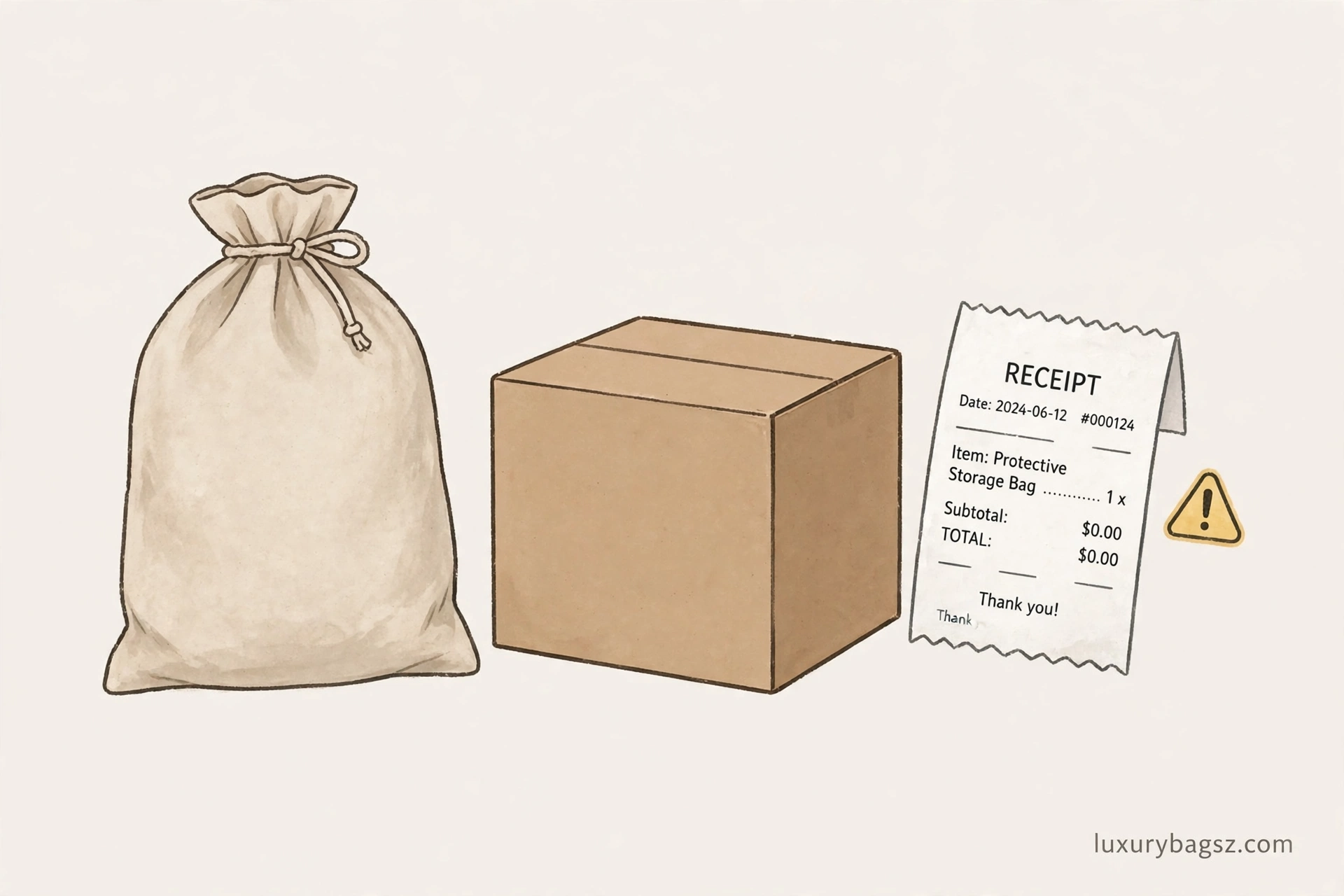
Louis Vuitton does not issue authenticity cards, and any card claiming to certify a bag is itself a fake tell. Receipts are easy to forge, easy to buy, and a genuine receipt can travel with a fake bag. Dust bags are sold separately every day, so a pristine dust bag proves very little; it can only count against a bag when wrong, never for it when right. You can see how each check is carried out in our authentication process.
Genuine bags do not arrive with plastic on the handles or price and brand tags tied to the handles.
Check 12: The Seller and the Photographs
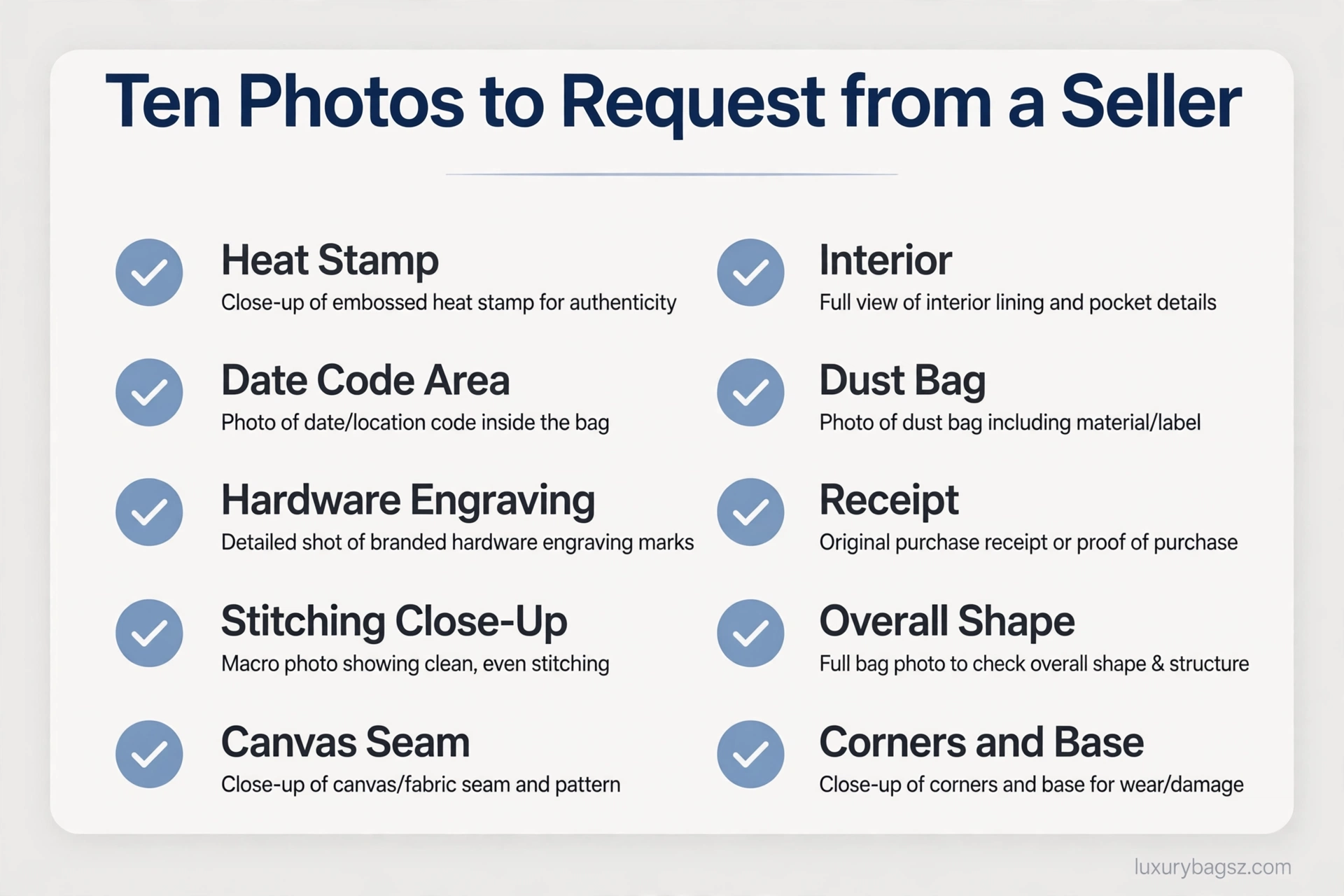
Request ten photographs before paying: heat stamp, date-code tab or chip-era interior, hardware engraving, stitching close up, canvas seam, interior and lining, dust bag, receipt if claimed, overall shape, and corners and base. Refusal of any one, especially the date-code area or heat stamp, is a reason to walk away. Watch for prices far below market, stock photographs, vague answers about age, and language like mirror quality.
Louis Vuitton never discounts its bags, so any outlet-find or seasonal-sale tale is wrong before you reach the stitching.
If You Already Bought a Suspected Fake
Act quickly, because return and payment-dispute windows close. Contact the seller in writing, stating the specific checks that failed, and keep the listing, photographs and messages. Get professional authentication promptly, since a written certificate carries weight with sellers and payment providers. If the seller will not refund, start a payment dispute within its window, and do not let a seller's promise outlast that deadline.
Never resell a bag you believe is fake as if it were real.
Frequently Asked Questions
Is a Louis Vuitton date code a serial number?
No; it is a production code shared by many bags, and a correct code proves little, while a wrong code can disprove a bag.
Does every real Louis Vuitton have a date code?
No; pre-early-1980s bags pre-date the system, and post-March 2021 bags use microchips instead.
Is upside-down Monogram on a Speedy a fake sign?
No, on a single-panel Speedy it is correct; upright on both sides is suspicious.
Do Louis Vuitton bags come with authenticity cards?
No; any card claiming to certify a bag is itself a warning sign.
Can I check a microchip with my phone?
You may detect a chip's presence, but you cannot verify its data, and dummy chips exist, so presence proves nothing.
Is made in USA Louis Vuitton fake?
Not on that basis alone; the USA, France, Spain, Italy and Germany are all legitimate production countries.
What is the single most reliable check?
There is none; the heat stamp, stitching and hardware together are the most reliable group.
Should I trust a receipt?
Only as supporting detail; receipts are easy to forge and can travel with a fake bag.
What photographs should I request from a seller?
Heat stamp, date-code area, hardware, stitching, canvas seam, interior, dust bag, receipt, overall shape, corners and base.
What should I do if I already bought a fake?
Contact the seller in writing, get professional authentication, and start a payment dispute within its window.
Conclusion
Twelve checks, stacked honestly, catch most fakes before money changes hands: canvas, stamp, stitching, hardware, zip, date code or chip, vachetta, interior, model tells, material tells, packaging and the seller's photographs. No one check carries the verdict, and that is a strength, because a counterfeit must pass all twelve at once. Buy slowly, and pay through a channel with buyer protection.