How to Care for Leather Bags and Shoes: Cleaning, Conditioning, Protection and Storage
Leather Care in Brief
Leather bags and shoes last decades when they are cleaned gently, conditioned sparingly, protected from water and sun, and stored with support. Most damage does not come from one accident. It comes from small habits repeated over years: overstuffing a bag, leaving shoes damp in a closed box, or using a harsh cleaner on a delicate finish.
The single most important rule is to match the care to the leather in front of you. Smooth leather, suede, nubuck, patent and exotic leathers do not share one routine. A method that revives a sturdy grained tote can stain or flatten suede, and a product that is safe on a shoe upper can darken a pale handbag.
Start by identifying the leather, then clean it, then decide whether it needs conditioner at all. Protection comes next, and storage is what preserves all of that work between wears. Repairs are cheapest when they are caught early, and some jobs belong to a professional from the start.
This guide covers general care across leather types for both bags and shoes. It deliberately does not repeat two narrower guides in full: one devoted to a single conditioning product, and one devoted to a particular brand of leather boots. Where those guides fit naturally, they are linked below, so you can go deeper on those topics without this guide turning into a copy of either.
Key Takeaways
- Identify the leather first: smooth, grained, suede, nubuck, patent and exotic leathers need different care.
- Dry dusting and a soft brush do most of the work; deep cleaning is occasional, not weekly.
- Condition smooth leather lightly and infrequently; never condition suede or nubuck with creams or oils.
- Test every product on a hidden spot first, and let it dry fully before judging the result.
- Water, sun, heat and overstuffing cause more long-term damage than ordinary wear.
- Stuff bags, use shoe trees, and store pieces upright in a cool, dry place out of direct light.
- Scuffs, loose stitching and worn soles are cheapest to fix early; structural damage needs a professional.
- Keep receipts, care cards and dust bags with the piece; they help future repairs and resale.
Identify the Leather Before You Touch It
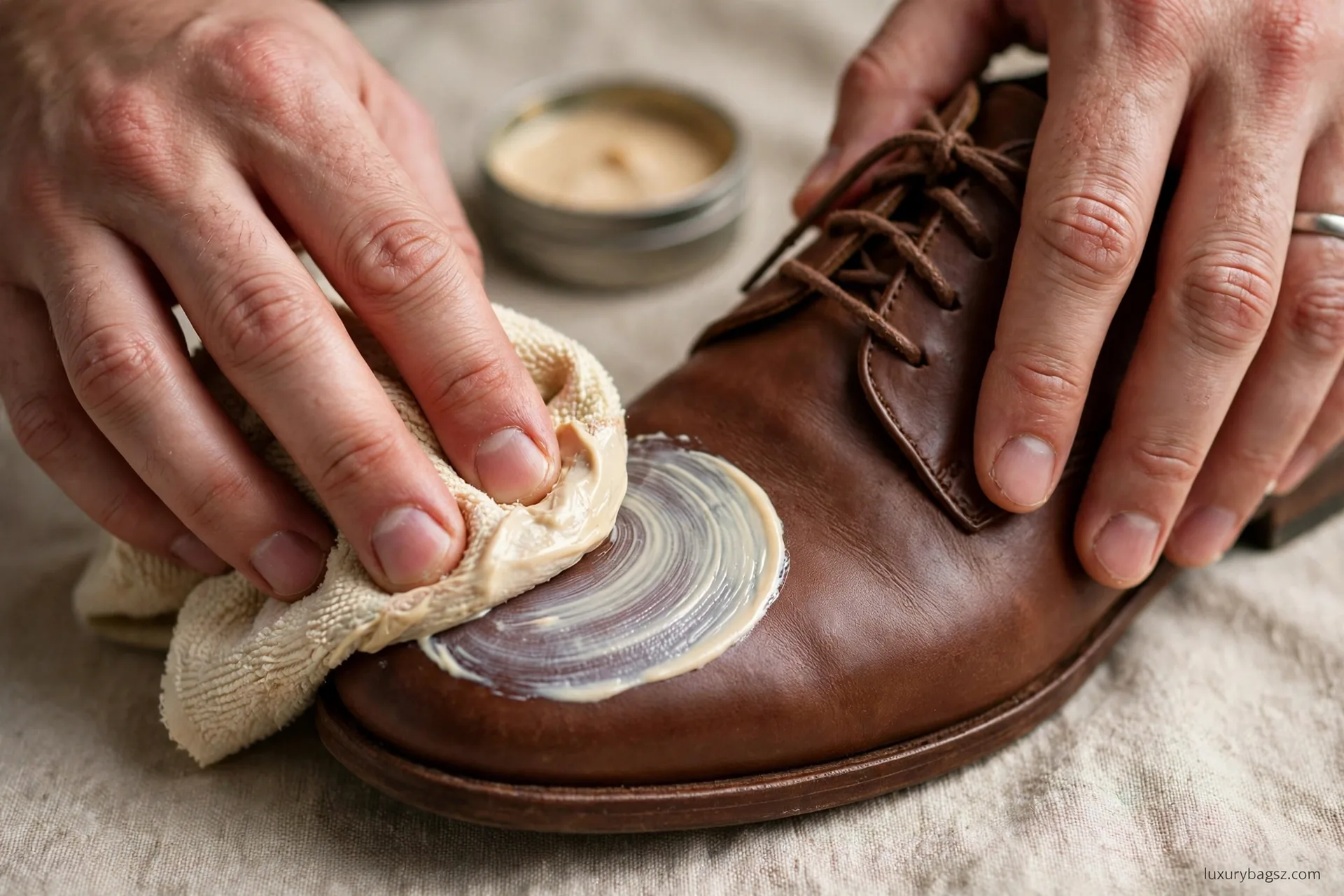
Look, touch and read before you clean anything. Smooth leather has a visible grain and a slight sheen, and it feels firm and cool. Grained leather, such as pebbled leather, has a raised, uneven texture that hides small scratches well. Both are the most forgiving leathers to care for at home.
Suede feels soft and velvety because its surface is buffed, and it shows finger marks when you brush it one way and then the other. Nubuck looks similar but is buffed on the grain side, so it feels finer and slightly firmer than suede. Both soak up water and oil fast, which is why they need dry methods first.
Patent leather is coated to a high shine. It resists water well but scratches, scuffs and colour transfer show easily, and heat can make it sticky or cloudy. Exotic leathers, such as crocodile, python and ostrich, have distinctive scales or pores and often need specialist care; when in doubt, ask a restorer before applying anything.
Check the care card, the inside label and the maker's guidance first. A maker may warn against water, solvents or particular products on a specific finish. If the piece is vintage, very pale, or already damaged, treat it as delicate until a professional tells you otherwise.
A simple identification trick helps with suede and nubuck: run a fingertip lightly across the surface. If the nap shifts and the shade changes, you are looking at a buffed leather, and creams and oils are off the table. For smooth leather, a drop of water on a hidden spot that darkens briefly and then fades is normal; a drop that leaves a lasting dark mark is a warning to keep the piece dry and seek advice.
Build a Small, Safe Leather Care Kit
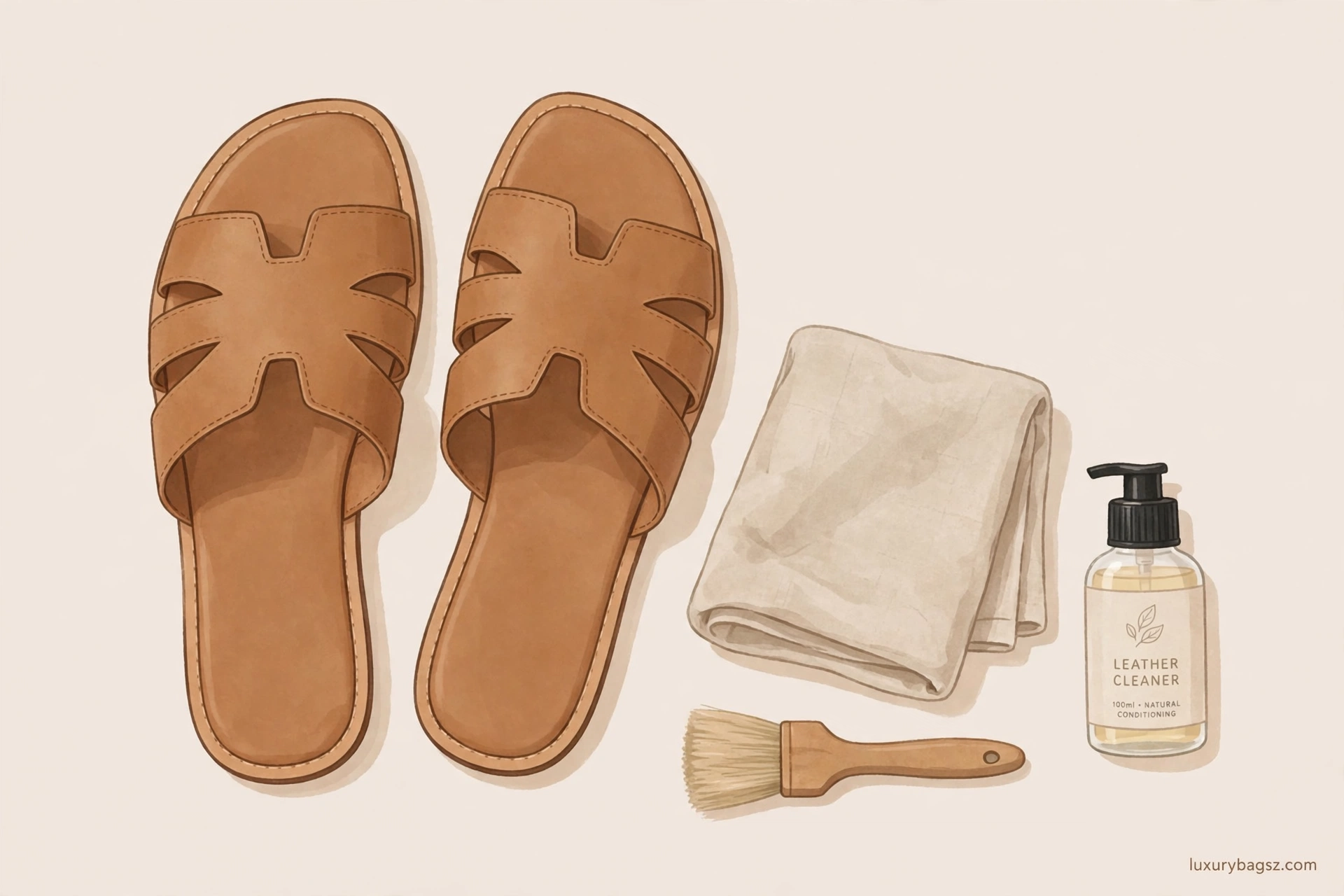
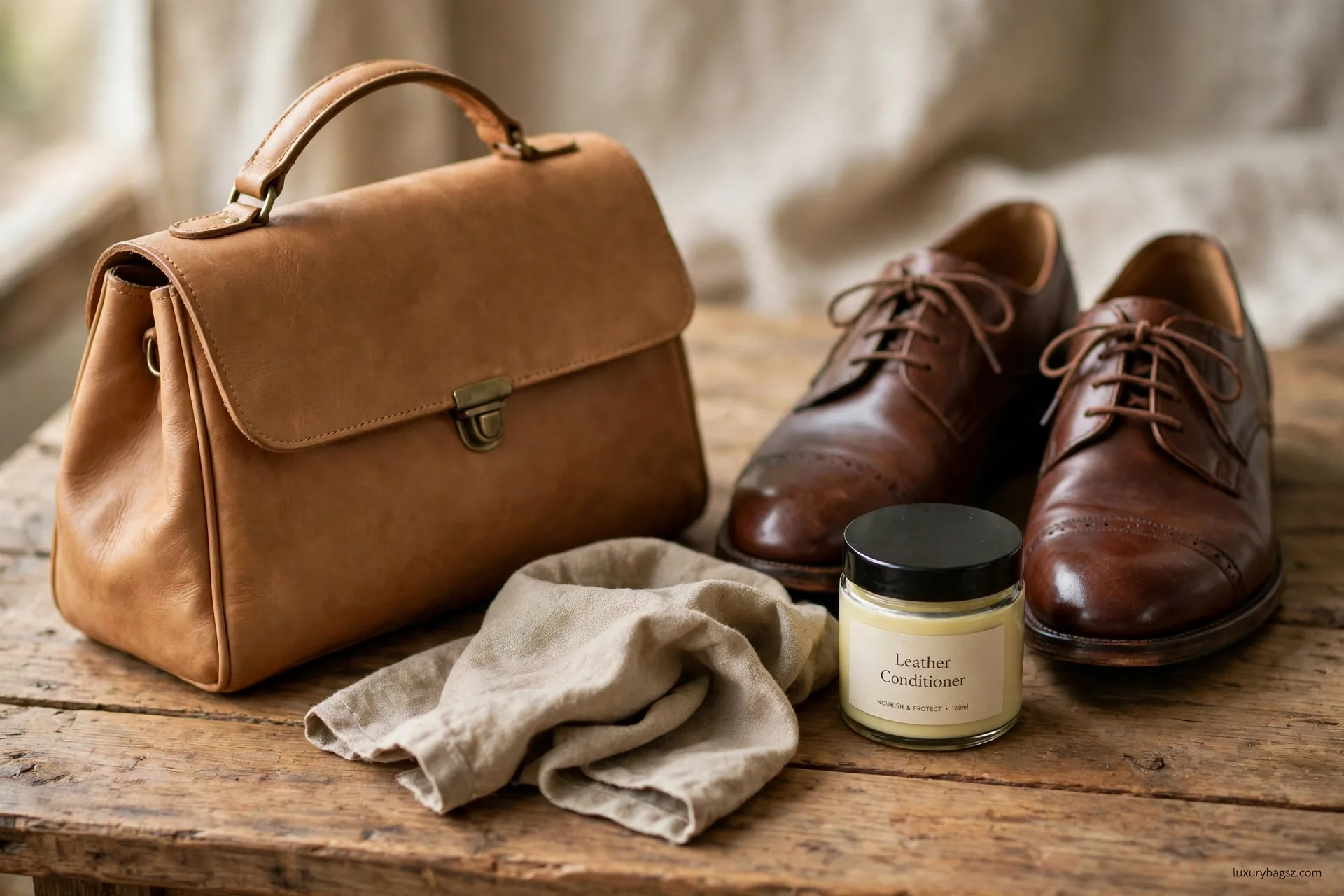
You do not need a shelf of products. A good kit is small, and every item in it should have a clear job. Start with two soft, lint-free cloths, one for dusting and one for product application, plus a soft horsehair brush for shoes and a suede brush or eraser for buffed leathers.
Add a gentle leather cleaner made for smooth leather, a conditioner made for smooth leather, and a protector spray that suits the leather type. Suede and nubuck need their own protector spray, not a cream. Keep shoe trees, preferably cedar, for shoes, and acid-free tissue or soft inserts for bags.
Avoid household shortcuts. Baby wipes, kitchen cleaners, vinegar, alcohol, nail polish remover and furniture polish are all common causes of damage. They may clean a mark quickly and leave a stain, a dry patch or a stripped finish behind. If a product does not say it is made for your leather type, do not use it on a piece you value.
Store your kit away from heat and direct sun, and keep cloths clean. A dirty cloth grinds grit into leather, which is how fine scratches appear during an otherwise gentle clean. Wash or replace cloths regularly, and keep separate cloths for dark and pale leathers so colour does not transfer.
Daily Habits That Prevent Most Damage
Leather care is mostly prevention. After each wear, give a bag or a pair of shoes a quick brush or wipe to remove dust and surface dirt. Dirt left on leather attracts moisture and works into creases, where it slowly abrades the finish every time the piece flexes.
Rotate your pieces. Wearing the same bag or shoes every day never gives leather time to dry out and recover its shape. Even one rest day between wears helps, because leather absorbs moisture from hands, feet and the air, and it needs air circulation to release it.
Keep leather away from radiators, hair dryers and direct sun. Heat dries leather, fades colour and can crack a finish, while sun bleaches one side of a bag left near a window. Rain is not a disaster on most smooth leather if the piece is dried properly, but repeated soaking without drying is.
Do not overstuff a bag. A bag packed beyond its shape stretches handles, strains stitching and distorts the base. Carry what fits comfortably, and use an inner organiser rather than forcing a laptop, a bottle and a jacket into a small tote. For shoes, loosen laces before putting them on and taking them off; forcing feet in and out breaks down heel counters and creases vamps.
Watch where leather rests. Dark denim, printed magazines and coloured tissue can transfer dye onto pale leather, especially in heat. Patent leather is particularly prone to colour transfer and to sticking to other surfaces, so store patent pieces separately and never stack them against printed materials.
How to Clean Smooth and Grained Leather
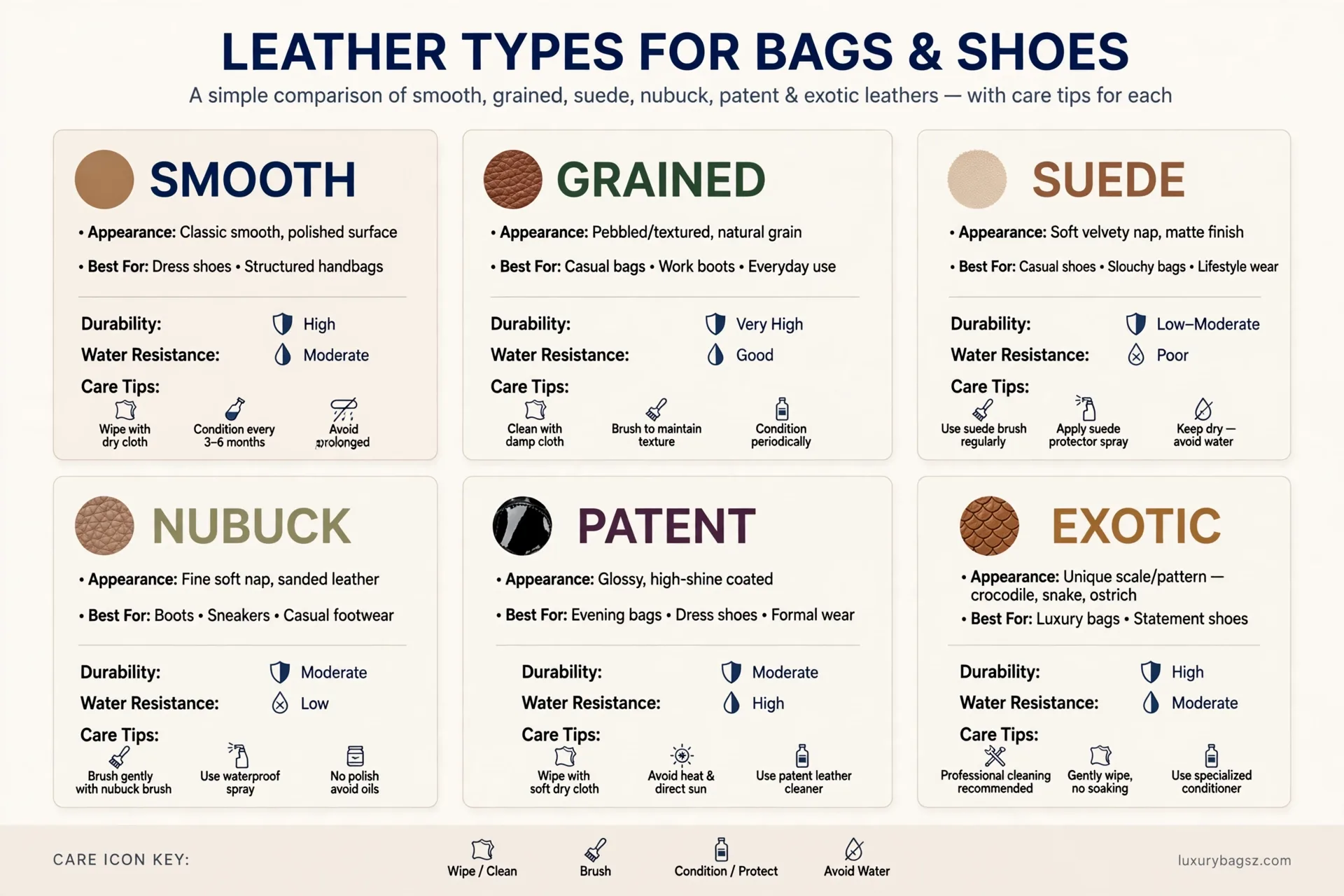
Clean smooth and grained leather in gentle stages. Start dry: brush shoes lightly and wipe bags with a dry soft cloth to lift dust. This step alone removes most surface dirt and should be done after every few wears.
For a deeper clean, dampen a soft cloth lightly, never soaking wet, and wipe the surface in small circles. For soiled areas, apply a small amount of gentle leather cleaner to the cloth, not directly to the leather, and work it in lightly. Wipe away residue with a second, barely damp cloth, then let the piece air-dry away from heat.
Stains need patience, not force. Blot a fresh spill immediately with a dry cloth; do not rub, because rubbing spreads the stain and pushes it deeper. For water spots on smooth leather, lightly dampening the whole panel and letting it dry evenly sometimes evens the mark, but on pale or delicate leather this can backfire, so test first or seek advice.
Grease marks are a judgement call. A small grease mark on a dark, sturdy leather sometimes fades as the leather absorbs it, while on pale leather it may stay. Powders and home remedies are widely suggested online, and results vary; a professional cleaner is the safer choice for a valuable pale piece.
Never use a brush with stiff bristles on a handbag, and never scrub. If a mark does not lift with two gentle passes, stop. Repeated scrubbing thins the finish and creates a shiny, worn patch that is harder to fix than the original mark.

How to Clean Suede, Nubuck and Patent Leather
Suede and nubuck need dry care first. Brush with a suede brush in one direction to lift the nap and remove dust, then use a suede eraser gently on marks. Work lightly and check often; aggressive erasing thins the nap and leaves a smooth, bald patch.
Water on suede leaves marks because it moves dirt and natural oils as it dries. If suede gets wet, blot it, stuff it or support its shape, and let it air-dry fully before brushing the nap back up. A suede protector spray, applied to clean, dry suede and allowed to dry, helps future rain bead rather than soak in.
Nubuck follows the same dry-first rule, with an even lighter hand, because its finer nap shows wear sooner. Never apply cream, oil or wax conditioner to suede or nubuck. These products flatten the nap, darken the colour unevenly and are very difficult to remove.
Patent leather cleans differently again. Wipe it with a soft, barely damp cloth to remove dust and fingerprints, and dry it immediately. For scuffs, a gentle patent cleaner or a tiny amount of petroleum jelly rubbed lightly is sometimes suggested, but test on a hidden spot first, since results vary by coating.
Store patent pieces apart from other leathers and printed materials. Patent can transfer colour onto pale neighbours and can stick to plastic and to other patent surfaces in warmth. A soft cloth or dust bag between pieces prevents both problems.
Conditioning: Less, Less Often, and Only the Right Leathers
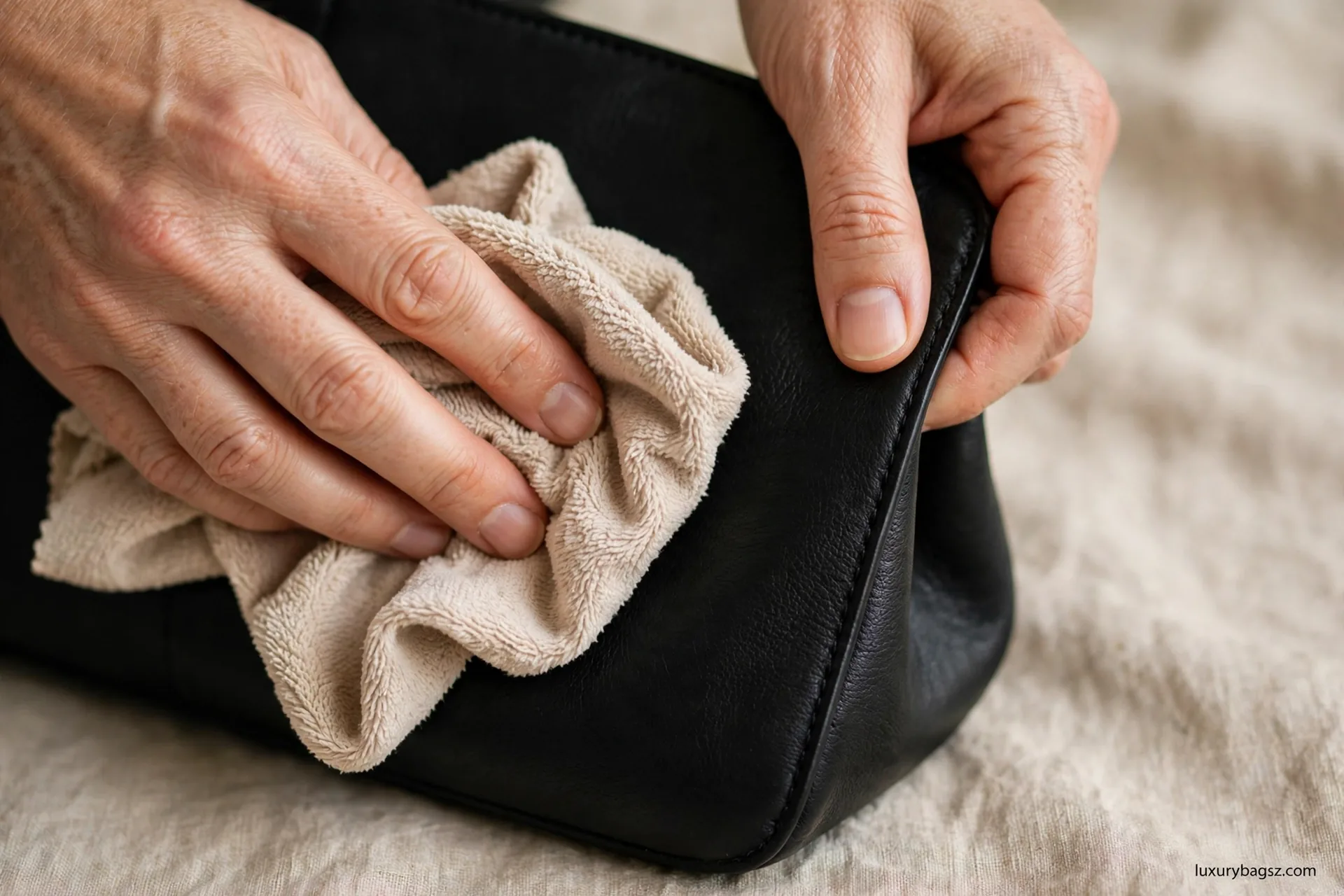
Conditioner replaces oils that leather loses over time, keeping it supple and slowing cracks. It is not a weekly ritual. Most smooth leather bags and shoes need conditioning only a few times a year, and some well-kept pieces need it even less often.
Over-conditioning is a real risk. Too much product leaves a sticky surface, attracts dust, darkens colour and can soften leather so much that it loses shape. A thin, even layer, worked in with a soft cloth and left to absorb, is enough. Buff away excess after the recommended time; leather should feel soft, not tacky.
Condition only smooth and grained leathers, and only after cleaning. Never condition suede, nubuck, patent or most exotics with standard creams or oils. New leather often arrives already conditioned from the tannery, so a brand-new piece rarely needs conditioner immediately; wait until it shows dryness, such as a dull, papery feel or fine surface dryness in creases.
Colour change is the main surprise. Conditioner almost always darkens leather temporarily, and on pale leather the change can be lasting. Always test on a hidden spot, such as an inside flap or the tongue of a shoe, and wait a full day before deciding.
If you are unsure which product suits a particular bag, the Saphir Renovateur guide explains that product's method in detail, and it is worth reading before you substitute a different cream.
Season matters too. Condition before a period of heavy use or before winter storage, not after a soaking. Leather should be clean and fully dry before conditioning, because conditioner applied over dirt or dampness seals both in.
Protecting Leather From Rain, Sun and Stains
Protection is a thin, invisible layer that buys you time. A protector spray for smooth leather, or a dedicated suede protector for buffed leathers, helps rain bead and makes spills easier to blot. Apply it to a clean, dry piece in a ventilated area, in light, even passes, and let it dry fully before use.
Reapply after deep cleaning or after a season of heavy wear, because protection wears off. Do not layer multiple products at once; a cleaner, a conditioner and a protector used on the same day can interact and leave a tacky or cloudy finish. Space them out and let each layer dry.
Rain routines matter more than any spray. If a bag or shoes get soaked, empty them, blot with a dry cloth, support the shape, and air-dry at room temperature. Never use a radiator, a hair dryer or direct sun to speed drying; fast, uneven drying stiffens leather and can crack it. Stuffing wet shoes with newspaper absorbs moisture, but change the paper as it dampens, and switch to shoe trees once the worst wetness is gone.
Salt stains on winter shoes need prompt attention. Wipe salt away with a barely damp cloth as soon as you are indoors, then let shoes dry and brush them. Salt left to dry draws moisture and can leave white rings and stiff patches that are hard to reverse.
Sun protection is simple: do not display leather in a sunny window or leave it in a hot car. Colour fades unevenly, and heat dries and weakens leather and adhesives. A bag kept on a sunny shelf can fade on one side within a season, while the shaded side stays rich.
Storage That Keeps Shape and Finish
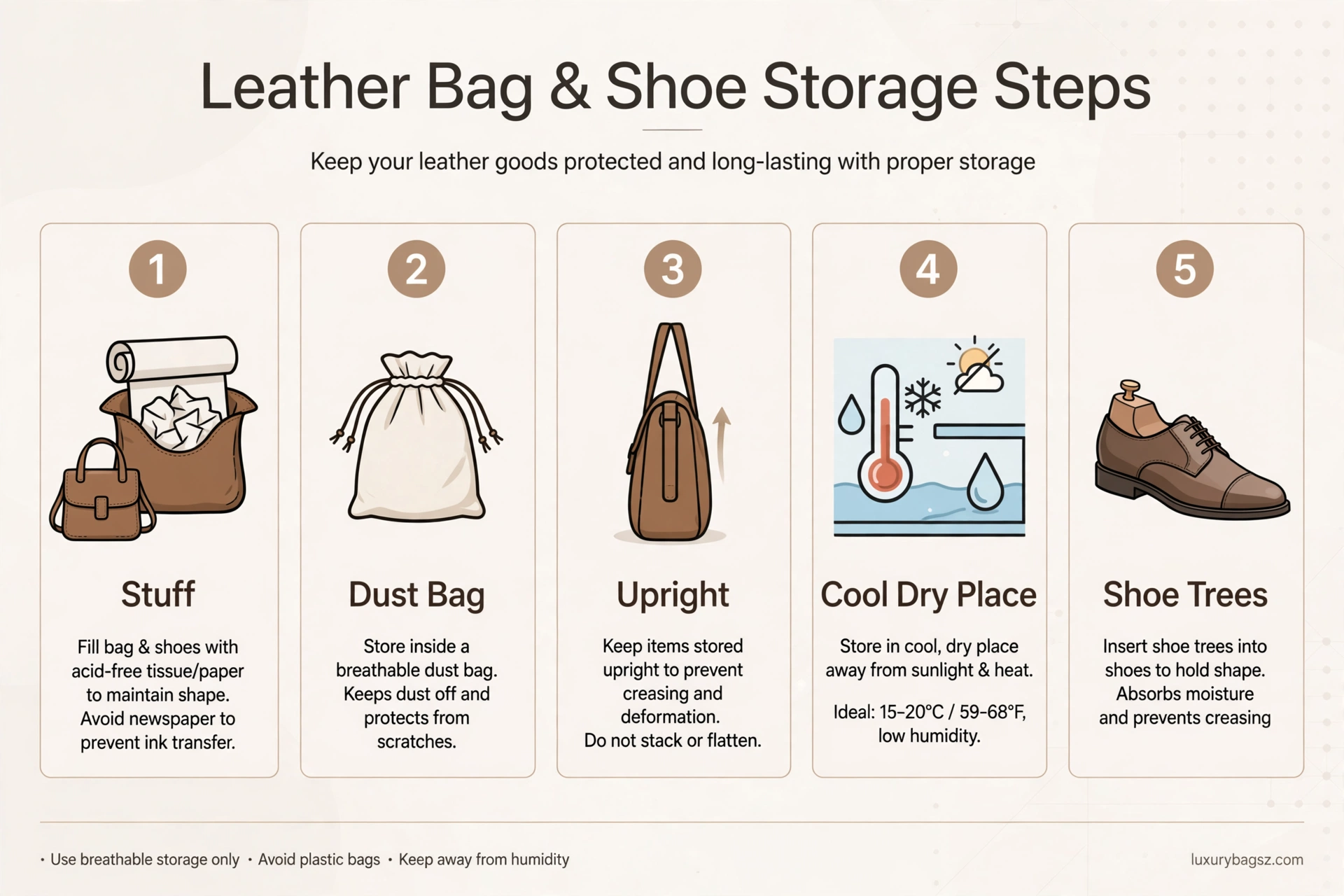
Good storage is where long life is won or lost. Store bags upright, stuffed lightly with acid-free tissue or soft inserts so they hold their shape without stretching. Keep the original dust bag on, with handles tucked inside or arranged so they do not press creases into the body.
Shoes need shoe trees. Cedar trees absorb moisture and hold shape, which prevents deep creases across the vamp and collapse at the heel. If you do not have trees, stuff shoes lightly with tissue, but never use newspaper directly against pale leather for long periods, since print can transfer.
Keep pieces in a cool, dry, ventilated place, away from basements, attics and bathrooms where humidity swings. Leather hates both damp and bone-dry heat. A wardrobe with air circulation is better than a sealed plastic box, which traps moisture and encourages mould. If you must use a box, choose a breathable one and check the piece every few months.
Hang nothing heavy from a bag's handles in storage, and do not stack heavy bags on top of soft ones. Handles stretch under weight even when a bag is not being carried. For shoes, store pairs together, not piled, and keep light-coloured shoes away from dark shoes and printed boxes.
Before storing a piece for a season, clean it, let it dry, and check for marks or loose stitching. A stain stored for six months is harder to remove than a fresh one, and a loose stitch stored under weight can become a tear. A quick check now saves a repair later.
Shoes Need Different Attention From Bags
Shoes live a harder life than bags. They flex thousands of times, meet pavements, rain and salt, and absorb foot moisture. That is why shoe care leans more on brushing, trees and sole care, while bag care leans more on shape, handles and hardware.
Brush shoes after wear and rotate them so each pair dries fully between outings. Inspect soles and heels regularly: a worn heel tip changes how you walk and wears the sole unevenly, while a small, cheap heel-tip replacement protects a much more expensive resole.
Keep shoe hardware in mind too. Metal eyelets, buckles and zips benefit from a wipe and an occasional check for looseness. On bags, hardware needs a different touch: wipe metal parts with a dry soft cloth, and keep creams and sprays off them, since products can dull plating or leave residue in engraving.
Soles deserve a note of their own. Leather soles need rest days and dry storage; rubber soles handle wet weather better but still benefit from cleaning. Avoid walking leather-soled shoes through standing water when you can, and let them dry fully before the next wear.
Where the Hermès leather boots care guide goes deeper on that brand's boots, the principles here still apply: clean, dry, support, protect. Boots simply add height, laces and heavier soles to the same routine, and they repay the same patience.
When to Repair at Home and When to See a Professional
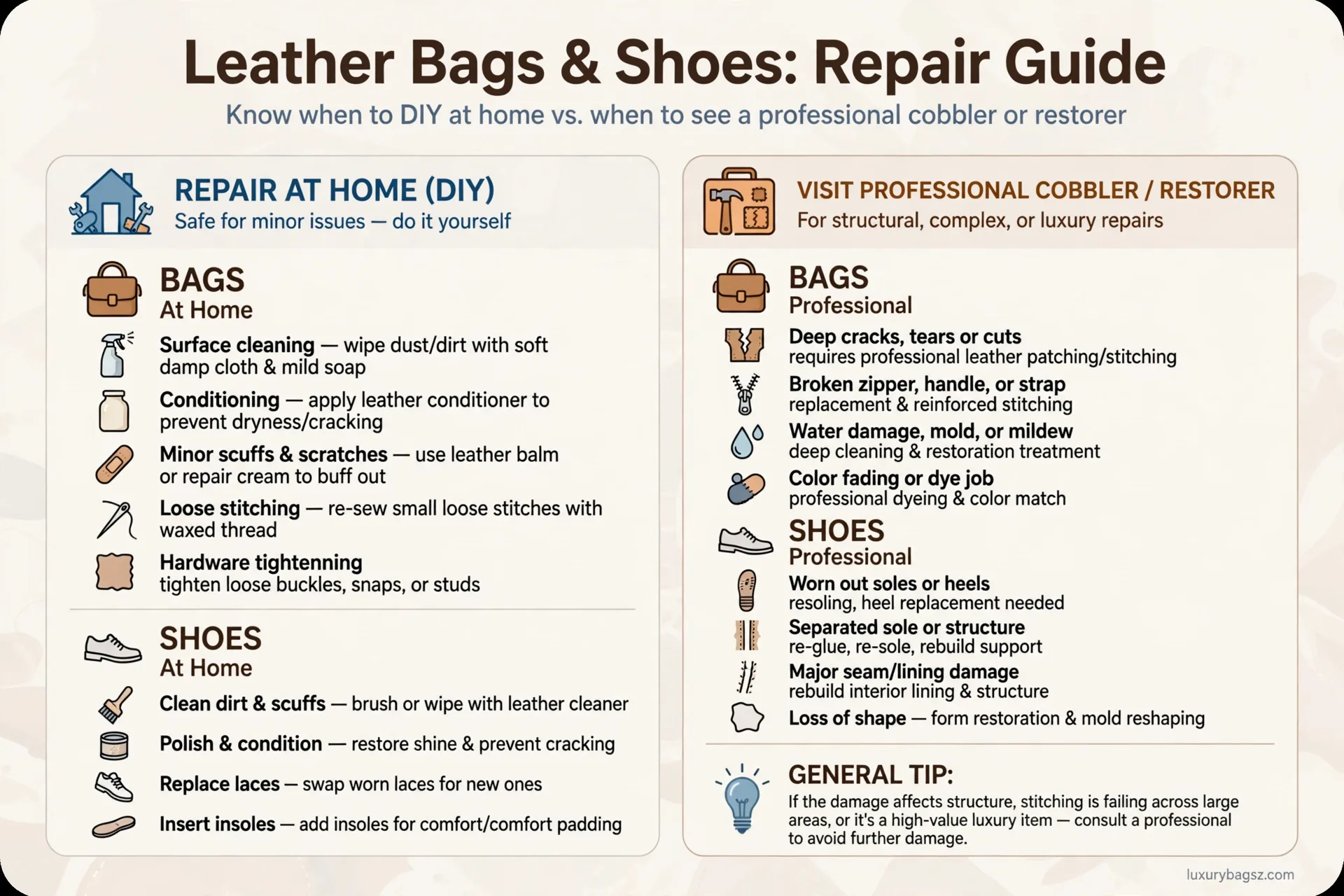
Home repairs suit small, surface problems. A light scuff on smooth leather can be buffed gently or touched with a matching cream. Loose thread ends can be trimmed carefully, and a scuffed heel tip can be noted for a cobbler before it becomes sole damage.
Stop and seek help for anything structural. Torn seams, broken handles, cracked leather, deep cuts, large stains, colour loss over a wide area, and damaged linings are professional jobs. A home attempt on a torn handle can make a clean repair impossible, because extra holes and glue complicate the restorer's work.
Choose your professional carefully. Ask whether they have worked on your leather type and on pieces of similar value, and ask to see examples. A good cobbler or leather restorer will tell you honestly when a repair will show, when a colour match is approximate, and when replacement of a part is better than patching.
Cost is part of the decision. Replacing heel tips, restitching a seam or touching up an edge is usually inexpensive. Rebuilding a bag handle, relining a bag or recolouring a large panel costs more and should be weighed against the piece's value and how much you wear it. For a much-loved everyday piece, repair usually wins; for a barely worn piece with major damage, a quote first is wise.
Keep a repair record. Note the date, the work done and the restorer's name. Future buyers and future restorers both value that history, and it helps you track whether a recurring problem, such as a handle that keeps loosening, needs a different fix rather than the same repair again.
Common Mistakes, and What to Do Instead
The most common mistake is cleaning too aggressively. Harsh products, stiff brushes and repeated scrubbing damage finishes faster than dirt ever would. Gentle, repeated light cleaning beats one harsh session every time.
The second mistake is conditioning everything. Suede, nubuck and patent do not take cream conditioner, and even smooth leather suffers from too much product. Condition lightly, rarely, and only the leathers that accept it.
The third mistake is drying leather with heat. Radiators and hair dryers feel efficient, but they stiffen and crack leather. Room-temperature air drying, with shape support, is slower and far safer.
The fourth mistake is storing leather badly: sealed plastic, damp rooms, direct sun, stacked weight and unstuffed bags. Storage damage often appears months later as mould, fading, flattened shape or stuck patent, when the cause is long forgotten.
The fifth mistake is ignoring small damage. A loose stitch, a worn heel tip or a small scuff is cheap and easy now. Left alone, each one grows into a structural repair. A monthly two-minute inspection of your most-worn pieces catches almost all of these early.
A Simple Care Calendar
Daily: brush or wipe after wear, empty bags, loosen shoe laces, and let pieces air before putting them away. Weekly: rotate pieces, check for scuffs or loose stitching, and wipe hardware with a dry cloth.
Monthly: deep-clean the pieces you wear most, brush suede and nubuck, and check shoe soles and heel tips. Quarterly: condition smooth leather only if it feels dry, reapply protector spray after cleaning, and inspect stored pieces for damp, mould or fading.
Twice a year: review your whole collection. Clean stored pieces, replace tissue, check dust bags, and book any repairs you have been postponing. Yearly: consider a professional clean or condition for your most valuable pieces, and update your records of repairs and products used.
This calendar is a guide, not a rule. A daily-worn work shoe needs more attention than a special-occasion bag, and a dry climate needs less conditioning than a wet one. Let the leather tell you: dull, stiff or papery means it needs care, while soft, even and clean means it can wait.
Climate and lifestyle should shape the calendar, not override it. In a wet winter, shoes need more frequent brushing, drying and salt checks, while bags need more protector attention and rain routines. In a hot, dry summer, smooth leather may need conditioning a little sooner, and sun protection matters more than rain protection.
Travel changes the rhythm too: a trip means dust, rain, hotel radiators and cramped packing, so give pieces a full clean, dry and shape check when you return, rather than putting a travel-worn bag straight back into storage. The calendar works best when it bends to real use and stays regular enough that no piece is forgotten for a year.
Hardware, Linings, Edges and Interiors
Leather gets most of the attention, but hardware, linings and edges often fail first. Metal hardware on bags and shoes should be wiped with a dry soft cloth after wear, especially after rain or contact with skin products. Perfume, hand cream and sweat can dull plating over time, and once plating wears through, it cannot be wiped back.
Keep creams, conditioners and sprays off hardware. Product residue collects in engraving, around rivets and under buckles, where it hardens and dulls the finish. If product does reach hardware, wipe it off promptly with a dry cloth, and use a soft, dry brush for engraved details rather than a liquid metal polish, which can damage nearby leather.
Zips deserve a gentle touch. Keep grit out of zip teeth by brushing them lightly, and never force a stiff zip. Forcing a zip strains the surrounding leather and stitching, and a torn zip tape is a professional repair. If a zip sticks, check for trapped fabric or a bent tooth first, and let a repairer handle anything beyond a simple snag.
Linings need care too. Empty bags fully and shake out dust and crumbs, then wipe a fabric lining lightly with a dry cloth. Leather linings can be wiped with a barely damp cloth and left to air. A damp or stained lining left unchecked can mark the leather from inside, and food, pens and cosmetics stored loose in a bag are frequent causes of interior stains that later show through.
Edges are a quiet warning sign. Edge paint on bags and edge dressing on shoe soles wear with use, and small chips are normal. When edge paint starts to peel widely or a sole edge feels rough and frayed, book a repair before moisture reaches the fibres underneath. Edge touch-ups are quick professional jobs when caught early, and they protect the structure beneath.
Interiors of shoes matter as well. Remove insoles occasionally where they are designed to come out, and let them air separately. Wipe the inside of shoes lightly if they feel damp, and never store shoes with wet insoles trapped inside. Odour that persists after drying may mean the insole needs replacing, which is a simple job for most cobblers and far cheaper than replacing a pair.
Finally, keep an eye on stitching wherever leather meets hardware. Handles, straps, belt loops and shoe eyelet rows carry stress, and a single loose stitch in these places spreads under load. Trimming a loose end is fine, but restitching a load-bearing seam is a professional job, because the original holes and tension matter for a repair that holds.
Frequently Asked Questions
How often should I clean leather bags and shoes?
Brush or wipe after every few wears, and deep-clean only when a piece is visibly dirty or every month or two for daily-worn items. Over-cleaning strips finish and dries leather, so gentle, infrequent deep cleaning beats frequent harsh cleaning.
How often should I condition leather?
A few times a year is enough for most smooth leather, and only when it feels dry. New leather rarely needs conditioner straight away, and suede, nubuck and patent should never be conditioned with creams or oils.
Can I use water on leather?
A barely damp cloth is safe for most smooth leather, but soaking is not. Suede and nubuck should be kept as dry as possible, and any wet leather should be blotted and air-dried at room temperature, never with heat.
What should I never use on leather?
Avoid baby wipes, kitchen cleaners, vinegar, alcohol, nail polish remover, furniture polish and stiff brushes. These can strip finish, stain or dry leather, and the damage often shows only after the surface dries.
How do I remove a stain from a leather bag?
Blot fresh spills at once without rubbing, then clean gently with a suitable leather cleaner on a cloth. If the mark does not lift after two gentle passes, stop and seek a professional, especially on pale or valuable leather.
Can I put leather shoes in the washing machine?
No. Machine washing soaks leather, weakens adhesives and stitching, and distorts shape. Clean leather shoes by hand with brushing and a barely damp cloth, and let them air-dry with shoe trees.
How should I store leather bags long term?
Stuff lightly, keep the dust bag on, store upright in a cool, dry, ventilated place away from sun, and check every few months. Avoid sealed plastic boxes, damp rooms and stacking heavy items on soft bags.
Do shoe trees really help?
Yes. Cedar shoe trees absorb moisture, hold shape, reduce creasing and prevent heel collapse. They are one of the cheapest ways to extend the life of good shoes, especially leather-soled pairs.
When should I take leather to a professional?
For torn seams, broken handles, deep cuts, cracked leather, large stains, wide colour loss or damaged linings. Home attempts on structural damage can make a professional repair harder and more expensive.
Does conditioner darken leather?
Usually, yes, at least temporarily, and on pale leather the change can last. Always test on a hidden spot and wait a full day before conditioning a visible area, especially on light colours.
Conclusion
Leather care rewards patience more than products. Identify the leather, clean gently, condition lightly and only where it belongs, protect against rain and sun, and store each piece with support and air. Catch small damage early, and hand structural work to a professional you trust.
Follow that rhythm and a good bag or pair of shoes will not just survive years of wear; it will age well, carrying the soft sheen and comfortable shape that only well-kept leather develops. The payoff is quiet but real: fewer replacements, fewer emergency repairs, and pieces that still look and feel right a decade after you bought them, which is the truest test of any care routine.
Begin with the piece you reach for most, give it a proper clean, a light condition where it belongs, and a supported place to rest, and let that one success set the standard for everything else you own. Good leather does not ask for much, but it remembers everything you do for it, and everything you neglect, for years.