What to Know About Omega: History, Watches, Prices and Buying Guide
Omega at a Glance
Omega is the most storied tool-watch brand in the world. It timed the Olympic Games, passed NASA's brutal tests, and went to the Moon. It also makes some of the most wearable everyday luxury watches you can buy, at prices well below its Holy Trinity rivals.
The brand's range runs from the Moonwatch chronograph to the Seamaster dive family, the Constellation dress line, and the De Ville collection. Most current models use in-house Co-Axial movements tested as Master Chronometers, which means strong magnetic resistance and tight accuracy.
Buying an Omega is refreshingly straightforward compared with Rolex or Patek Philippe. Most references are available from authorised dealers without years-long waiting lists, and pre-owned prices usually sit below retail. That makes Omega the sensible first luxury watch for many buyers, and a rewarding one for collectors.
Key Takeaways
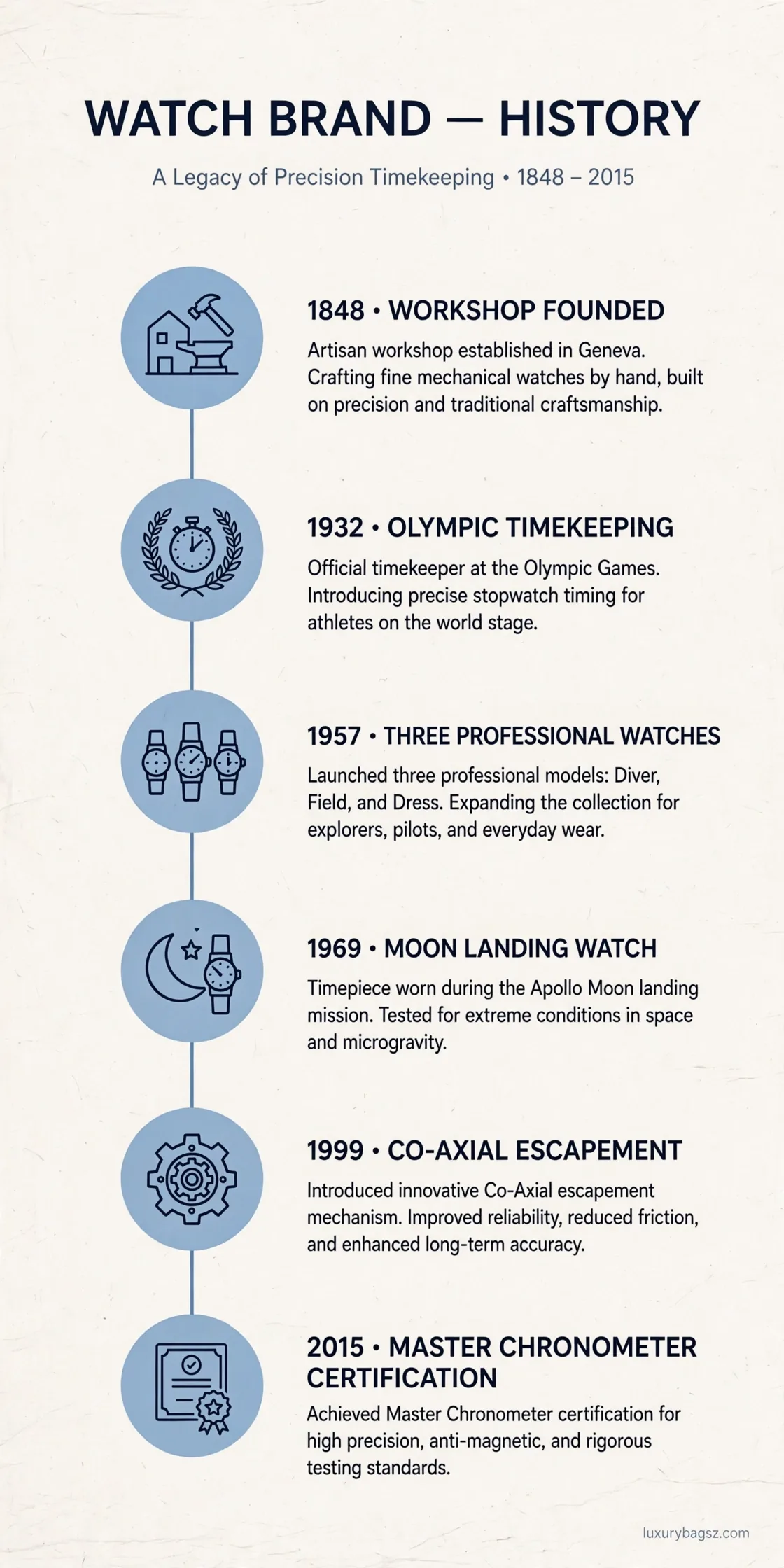
- Omega traces to a workshop founded by Louis Brandt in La Chaux-de-Fonds in 1848, and took its name from the Omega calibre of 1894.
- Omega has been official Olympic timekeeper since 1932, and the Speedmaster was worn on the Moon in 1969.
- The 1957 trio, Speedmaster, Seamaster 300 and Railmaster, still shapes the modern catalogue.
- Co-Axial escapements arrived in series production in 1999, and Master Chronometer certification with METAS began in 2015.
- Current families: Speedmaster, Seamaster, Constellation and De Ville, plus the Swatch collaboration MoonSwatch.
- Retail entry points in October 2026, per HORANDO, start around €2,620 for De Ville and Constellation, €4,590 for Seamaster, and €6,300 for Speedmaster.
- Pre-owned Omegas usually trade below retail, unlike most popular steel Rolex models, so condition and originality matter more than hype.
- Key pre-owned checks: papers and box, serial and reference numbers, dial originality, service history, and a reputable seller.
From La Chaux-de-Fonds to Biel: 1848 to 1894
Louis Brandt founded a workshop assembling precision watches in La Chaux-de-Fonds in 1848. At the time, Swiss watchmaking was organised around small workshops and home-based specialists, and Brandt's business grew by coordinating that network well.
Brandt died in 1879, and his sons Louis-Paul and César moved production to Biel in 1880. Biel remains Omega's home today, and the move gave the company room to industrialise while keeping its watchmaking standards.
In 1894, the company introduced a calibre named Omega. It was a 19-ligne movement designed for easier repair, with parts that could be interchanged rather than hand-fitted one by one. The calibre was a commercial success, and the company adopted Omega as its brand name.
That practical instinct, make a better movement and make it serviceable, runs through Omega's whole history. The brand rarely chases decoration for its own sake. It solves a problem, proves the solution in public, and then sells it.
Olympic Timekeeping, War, and the Seamaster's Birth
Omega became official timekeeper of the Olympic Games in 1932, at Los Angeles. It was the first time a single company timed every event at the Games, and the role demanded accuracy that could be defended in public.
The Olympic relationship has continued ever since, with only a few interruptions in the early years. For buyers, it matters because it explains Omega's obsession with timing precision, photo-finish cameras, and electronic timing equipment.
During the Second World War, Omega supplied watches to Allied forces, including the British military. Those wartime pieces, simple, legible, and tough, set the template for Omega's later tool watches.
In 1948, Omega launched the Seamaster. It was the company's centenary year, and the first Seamaster was a dressy, water-resistant watch rather than a dive instrument. The name would later cover everything from dress watches to 600-metre divers, which is why Seamaster history needs care.
The 1957 Trio: Speedmaster, Seamaster 300, Railmaster
1957 was Omega's great year. The company launched three professional watches at once: the Speedmaster chronograph, the Seamaster 300 dive watch, and the Railmaster anti-magnetic watch. Each was built for a job, not for show.
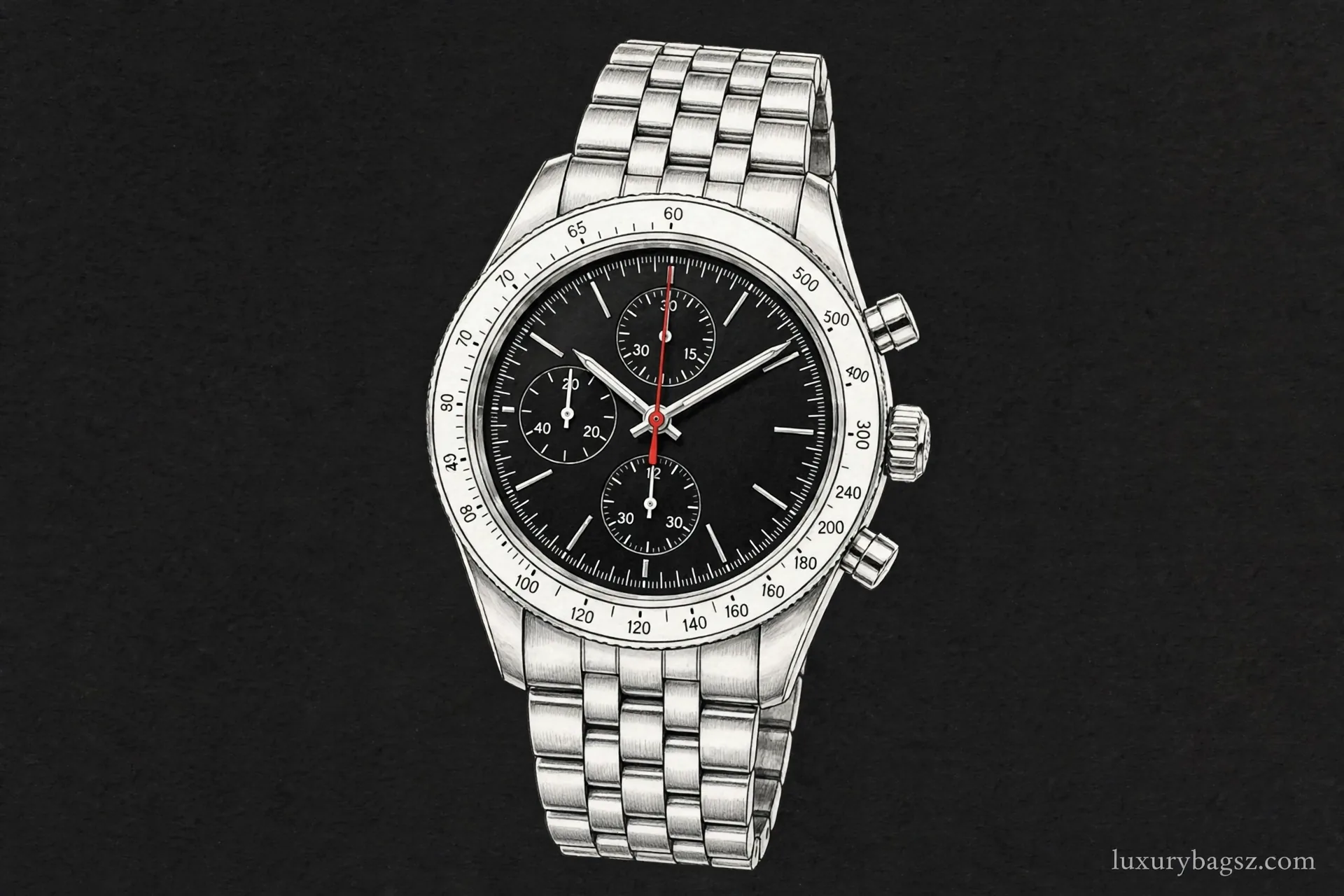
The Speedmaster was a racing and motorsport chronograph, with a tachymeter bezel and a broad, legible dial. Nothing about it suggested space travel yet. It was simply a strong, clear chronograph.
The Seamaster 300 was Omega's first professional dive watch, with a rotating bezel, high water resistance, and luminous markers. It gave divers a timing tool they could read underwater, and it set the pattern for every later Seamaster diver.
The Railmaster was built for railway workers and anyone working near strong magnetic fields. Its soft-iron inner case shielded the movement from magnetism, a problem that ruined ordinary watches near electrical equipment.
All three are still in production in modern form, which is rare in watchmaking. When you buy a modern Speedmaster or Seamaster 300, you are buying a direct descendant of a 1957 tool watch, not a retro invention.
The Moonwatch Story: NASA Tests and Apollo 11
The Speedmaster's fame began with NASA. In the early 1960s, NASA needed a watch for manned spaceflight, and it tested chronographs from several makers under extreme heat, cold, shock, vibration, and vacuum.
The Speedmaster passed, and in 1965 NASA flight-qualified it for all manned missions. Astronaut Wally Schirra had already worn his own Speedmaster in space in 1962, on the Mercury Sigma 7 mission, which made the choice feel natural.
On July 20, 1969, Buzz Aldrin wore a Speedmaster on the surface of the Moon during Apollo 11. Neil Armstrong's Speedmaster stayed inside the lunar module as a backup timer, because the module's clock had failed.
That is why the Speedmaster is called the Moonwatch, and why it remains the only watch worn on the Moon. Later missions carried Speedmasters too, including Apollo 13, where the crew used one to time a critical engine burn.
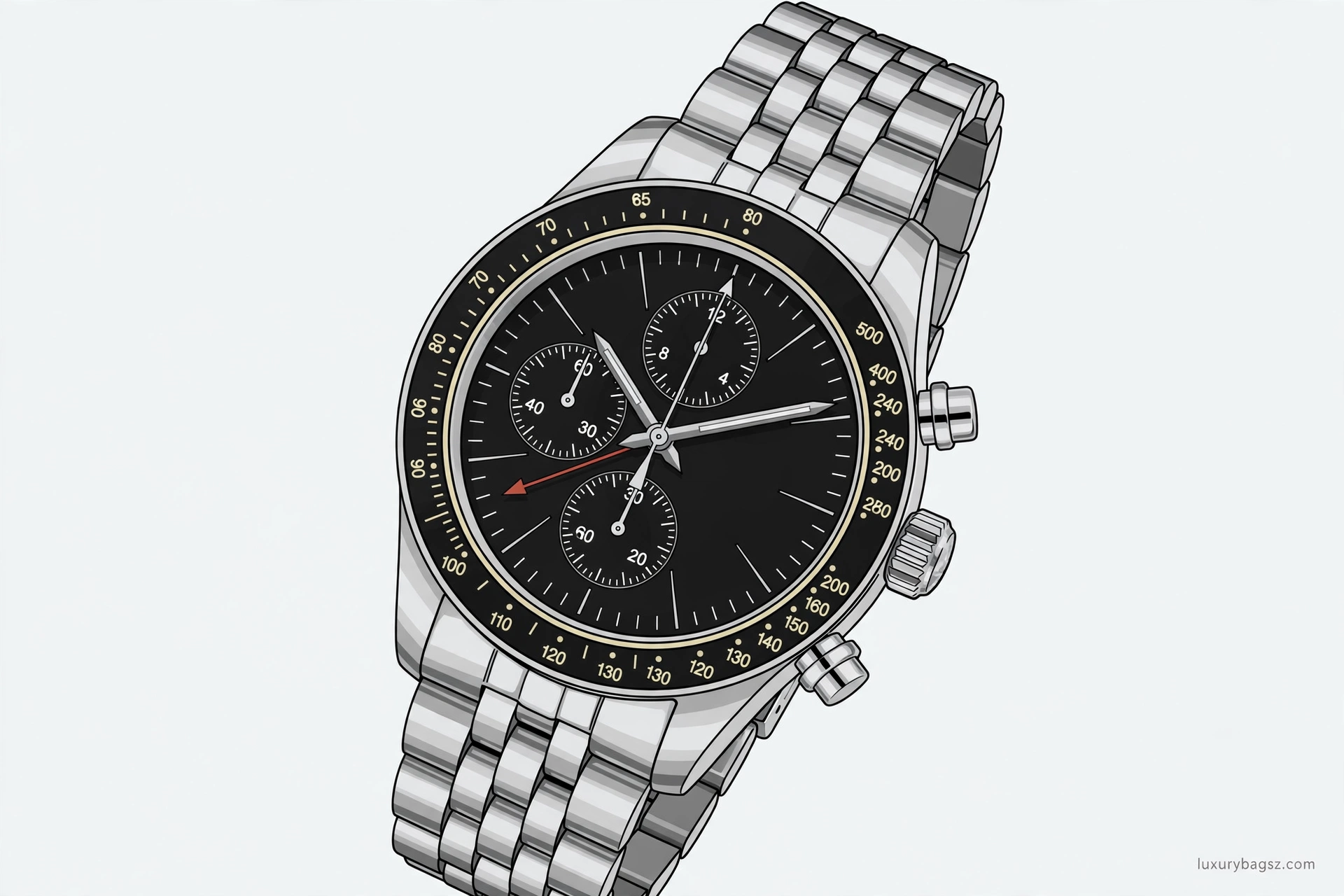
Modern Moonwatch models keep the essentials: a hand-wound chronograph, a black dial, a tachymeter bezel, and a 42 mm steel case. The current calibre 3861 adds Co-Axial technology and Master Chronometer certification, but the watch still looks like its 1969 ancestor.
The Seamaster Family: Divers, Aqua Terra, and Heritage
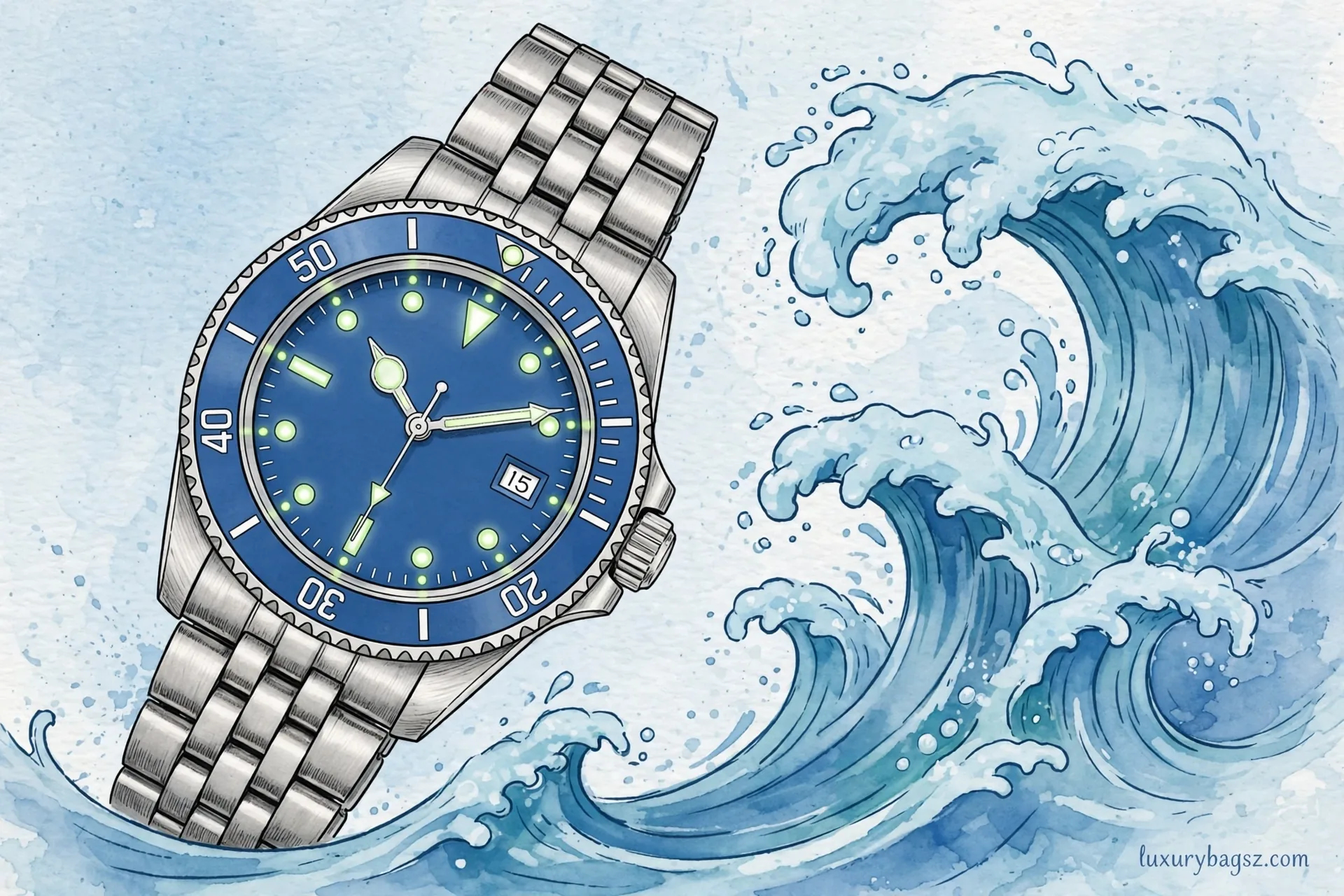
The Seamaster is Omega's largest family, and it splits into clear groups. The Diver 300M is the James Bond watch, worn by the character since GoldenEye in 1995, with a 42 mm case, a helium escape valve, and 300 metres of water resistance.
The Planet Ocean is the professional diver, rated to 600 metres, with a thicker case and a more tool-like feel. It suits buyers who want a serious dive watch rather than a dressy diver, and it comes in 39.5 mm and 43.5 mm sizes.
The Aqua Terra is the everyday Seamaster, with 150 metres of water resistance, a clean dial, and a teak-pattern texture inspired by yacht decks. It is the Seamaster for office life, weekends, and travel, and it comes in 38 mm and 41 mm sizes.
The heritage Seamaster 300 revives the 1957 diver with a slimmer case, a sandwich dial, and vintage styling. It suits collectors who love the original tool-watch look but want modern reliability and a warranty.
Choosing among them is about water, wrist, and wardrobe. The Diver 300M is the versatile middle, the Planet Ocean is the serious tool, the Aqua Terra is the daily wearer, and the heritage 300 is the collector's pick.

Speedmaster Beyond the Moonwatch: '57, Reduced, and Dark Side
The Speedmaster family is much wider than the Moonwatch alone. The Speedmaster '57 revives the original 1957 design with straight lugs, a thinner profile, and a modern automatic movement, in a 40.5 mm case.
The Speedmaster Reduced, made from the late 1980s until about 2009, was a smaller automatic version at 39 mm. It suits smaller wrists and buyers who want Moonwatch looks without hand-winding, though its automatic movement is a different proposition for servicing.
The Dark Side of the Moon uses a black ceramic case, giving the Speedmaster a modern, stealthy character. Ceramic resists scratches far better than steel, but it cannot be polished like steel if it chips, so it suits careful owners.
The Speedmaster 38 is a compact version with a smaller case and a range of dial colours. It suits buyers who find the 42 mm Moonwatch too large, and it opens the Speedmaster to wrists that the full-size model overwhelms.
Special editions appear regularly, marking anniversaries, missions, and partnerships. Some hold value well, others do not, so buy a special edition because you love it, not because you expect a premium.
Constellation and De Ville: The Dress Side of Omega
The Constellation, launched in 1952, is Omega's chronometer dress watch. Early models are famous for pie-pan dials, with a faceted dial that catches light, and for the observatory medallion on the case back.
Modern Constellations keep the distinctive claws on the bezel, the half-moon facets, and a star at the dial. They come in 39 mm and 41 mm sizes for men, plus smaller sizes, in steel, gold, and two-tone.
The De Ville is Omega's classic dress line, with slim cases, clean dials, and leather straps. The Trésor models are especially elegant, with thin cases and restrained dials that suit formal wear and smaller wrists.
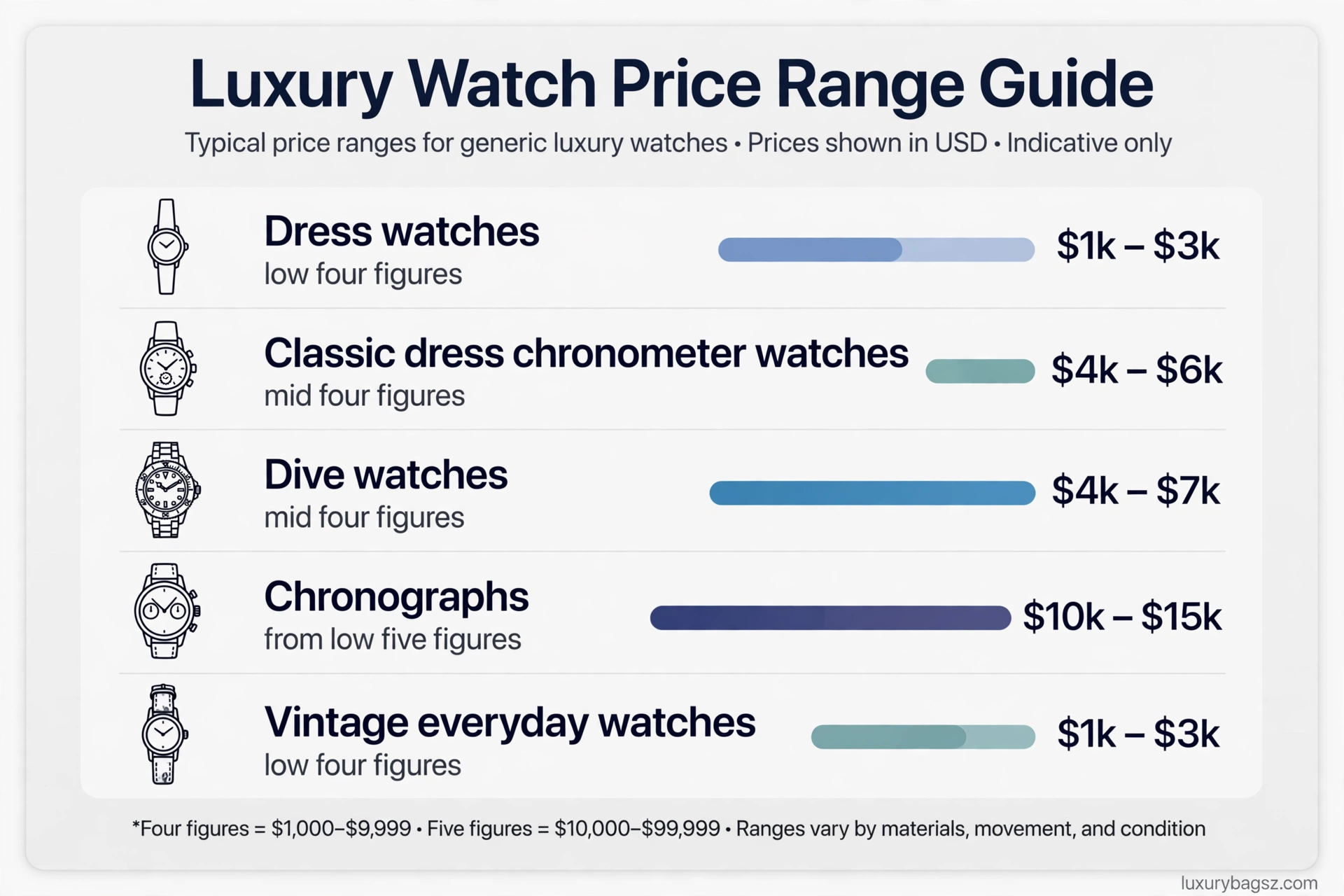
Vintage Constellations and De Ville dress watches are among the most affordable entries into vintage Omega. A dealer guide from DuMarko puts everyday vintage Seamaster and De Ville dress watches around $1,400 to $2,500, and Constellations around $2,350 to $7,900.
For a first dress watch, a modern De Ville Trésor or a Constellation in steel offers Omega quality without sports-watch bulk. For vintage charm, a pie-pan Constellation rewards careful buying and an original dial.
Movements Explained: Co-Axial and Master Chronometer
Omega's modern movements centre on the Co-Axial escapement, invented by British watchmaker George Daniels. It reduces sliding friction between the escapement parts, which should mean longer service intervals and steadier accuracy over time.
Omega brought the Co-Axial escapement into series production in 1999. Early versions needed refinement, but the modern Co-Axial calibres are mature, reliable, and widely serviced by Omega's network.
Since 2015, Omega has also had its watches tested as Master Chronometers by METAS, the Swiss Federal Institute of Metrology. The tests check accuracy, magnetic resistance to 15,000 gauss, water resistance, and power reserve, on the finished watch rather than the bare movement.
Magnetic resistance matters in daily life, because phones, speakers, bag clasps, and laptops all generate magnetic fields. A Master Chronometer should keep running accurately where an older watch might gain minutes.
Key calibres to know: the 3861 in the Moonwatch, with a 50-hour power reserve; the 8800 and 8900 in Seamasters, with 55-hour and 60-hour reserves; and the 8500 family that preceded them. When buying pre-owned, ask which calibre is inside, because it affects servicing and value.
Sizing and Wear: Finding Your Omega Fit
Omega sizing is generous by dress-watch standards, because most models are sports watches. The Moonwatch is 42 mm, the Diver 300M is 42 mm, and the Planet Ocean runs 39.5 mm or 43.5 mm.
Smaller options exist across the range. The Aqua Terra comes in 38 mm, the Speedmaster 38 suits smaller wrists, and the Constellation and De Ville lines offer smaller cases for dress wear.
Try before you buy, because case thickness and lug length matter as much as diameter. A 42 mm Moonwatch wears smaller than a 43.5 mm Planet Ocean, because the Planet Ocean is thicker and heavier on the wrist.
Bracelet versus strap changes wear dramatically. Steel bracelets suit daily wear and swimming, rubber straps suit diving and summer, and leather straps suit formal occasions but should be kept dry.
For wrists under about 16 cm, start with 38 mm to 41 mm models. For wrists between 16 cm and 18 cm, most Omega sports models work. Above 18 cm, the 42 mm and 43.5 mm models wear most naturally, and smaller models can look lost.
Prices in 2026: Retail and Pre-Owned Reality
Omega pricing is transparent compared with Rolex, because most models are available at retail. HORANDO's October 2026 price list gives useful entry points, all in euros and for new, unworn watches.
De Ville and Constellation models start around €2,620. Seamaster models start around €4,590. Speedmaster models start around €6,300. Those are starting prices, not typical prices, and gold, ceramic, and complicated models run far higher.
Pre-owned Omegas usually trade below retail, which is good news for buyers and bad news for flippers. A MintCover comparison from January 2026 put Singapore secondary prices for a Seamaster Diver 300M and a Moonwatch roughly 14 to 44 percent below retail, depending on model.
Vintage prices behave differently. Everyday vintage dress watches are affordable, as the DuMarko figures in the dress watches section show, but early Speedmaster Professionals, Seamaster 300s, and Railmasters command serious premiums when original.
The MoonSwatch, Omega's 2022 collaboration with Swatch, costs around $260 and is not a luxury watch, despite its Speedmaster looks. It introduced many younger buyers to Omega, but it should never be priced or sold as a genuine Speedmaster.
Where to Buy: Boutiques, Dealers, and Pre-Owned
Omega sells through its own boutiques and authorised dealers worldwide. Availability is generally good, and a dealer can usually order a reference that is not in stock, though popular models may take weeks.
Boutique staff can explain movements, sizes, and servicing, and they can size a bracelet properly. Ask about warranty terms, servicing intervals, and what is included in the box, and keep all paperwork from day one.
Authorised dealers sometimes offer modest discounts on slower models, but not on popular ones. Be wary of large discounts from unknown online sellers, because they often signal grey-market stock, missing warranty, or worse.
Reputable pre-owned dealers offer immediate availability at market prices, with authentication and a dealer warranty. Choose dealers with watch expertise, clear return terms, and a published authentication process.
Auction houses suit rare vintage Omegas, but they demand knowledge of condition, originality, and estimates. A first-time buyer is usually better served by a dealer than by an auction room.
Buying Pre-Owned: Authentication and the Checks That Matter
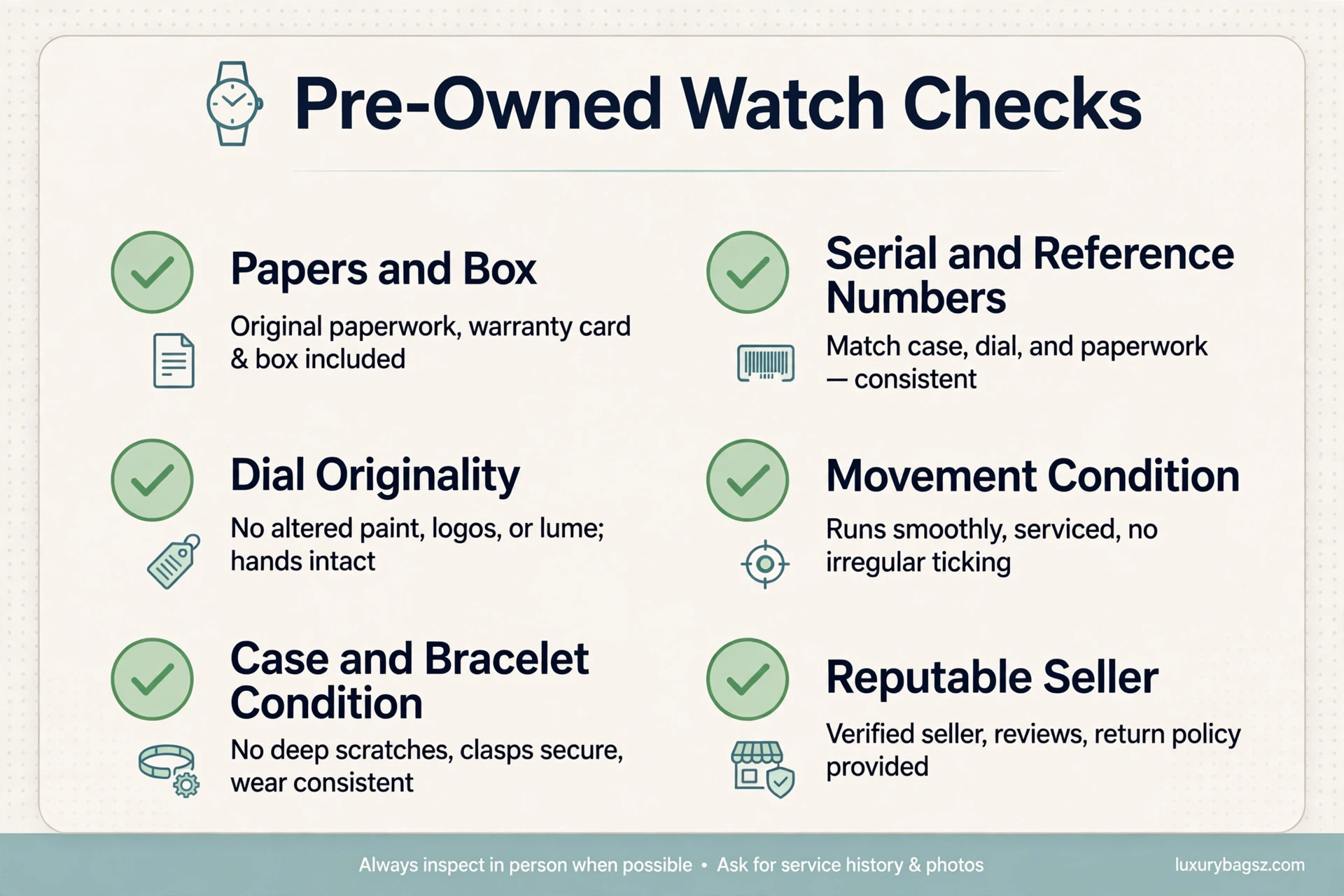
Pre-owned Omega buying rewards documentation. A full set, watch, box, papers, and spare links, sells faster and for more than a bare watch, and it supports authenticity.
Reference and serial numbers should match papers and the era of the watch. Omega's Extract from the Archives, obtainable from the Omega Museum, confirms production details for vintage pieces and is worth getting for important watches.
Dial originality is the biggest vintage trap. Refinished dials, replacement hands, and service parts all reduce value, and a dealer guide stresses checking whether the dial, hands, and movement are still original on every vintage Omega.
Condition checks include case polishing, bezel wear, bracelet stretch, crown function, and movement performance. An over-polished case loses sharp edges, a stretched bracelet is expensive to fix, and a watch that has not been serviced in years needs a budget for one.
Seller discipline matters as much as the watch. Our general guides on buying pre-owned safely and on authenticating pre-owned pieces cover seller checks, and they apply to watches too.
For the same reason, our guide to spotting a fake Rolex stresses buying the seller, and that discipline protects Omega buyers just as well.
Servicing, Care, and Daily Wear
Omega recommends servicing roughly every 5 to 8 years, depending on model and use, through authorised service centres. A full service is a significant cost, so ask for service history before buying pre-owned and budget for the next service.
Daily care is simple. Rinse a dive watch in fresh water after swimming, keep leather straps dry, and wipe the case and bracelet with a soft cloth. Check water resistance before swimming, even on a Seamaster, if the watch has not been pressure-tested recently.
Magnetism is less of a worry on modern Master Chronometers, which resist 15,000 gauss, but vintage Omegas have no such protection. Keep vintage pieces away from speakers, phones, and magnetic bag clasps.
Our guide on cleaning a watch covers cases, crystals, bracelets, straps, and water resistance in detail, and its advice applies directly to Omega ownership. Never open the case yourself, and never let an unqualified repairer work on a Co-Axial movement.
Insurance matters at this price level. Insure the watch for replacement value, photograph it, record serial and reference numbers separately, and check whether your policy covers loss outside the home and during travel.
Omega Against Rolex, Patek Philippe, and Audemars Piguet
Against Rolex, Omega offers comparable tool-watch toughness, better availability, and lower prices, while Rolex offers stronger resale and wider recognition. A Seamaster buyer gets more watch for the money, while a Submariner buyer gets a more liquid asset.
Against Patek Philippe, Omega offers sports watches and everyday wearability, while Patek offers finer finishing, grand complications, and greater exclusivity. Our Patek Philippe guide covers that world in detail, and many collectors own both houses for different moods.
Against Audemars Piguet, Omega offers breadth, from dress to dive to space, while Audemars Piguet's Royal Oak defines a single sports-luxury idea with great intensity. Our Royal Oak history and sizes guide covers that rival, and the comparison shows how different a one-icon brand feels beside Omega's wide range.
Choose Omega if you want history, toughness, availability, and value. Choose a rival if you want the strongest resale, the finest finishing, or a single iconic design above all else.
Common Mistakes First-Time Omega Buyers Make
The first mistake is buying a Moonwatch for a small wrist without trying it. At 42 mm with long lugs, it overwhelms some wrists, and the Speedmaster 38 or an Aqua Terra 38 may suit daily wear far better.
The second mistake is buying vintage without checking dial originality. A refinished dial can halve a vintage Omega's value, and a seller who cannot explain the dial's history deserves scepticism, not trust.
The third mistake is ignoring servicing costs on a bargain pre-owned watch. A cheap Seamaster that needs a full service, a new bracelet, and a pressure test is not cheap at all once the work is priced in.
The fourth mistake is treating a Moonwatch as a dive watch, or a dress De Ville as a sports watch. The Moonwatch is rated to only 50 metres, and a De Ville on leather should stay dry. Match the watch to the activity.
The fifth mistake is buying a MoonSwatch and believing it is an investment Omega. It is a fun, plastic tribute that introduced many people to the Speedmaster, but it is not a luxury watch and should not be collected as one.
Omega for Different Lives
For daily professional wear, an Aqua Terra in 38 mm or 41 mm is hard to beat. It is legible, tough, water-resistant enough for rain and swimming, and quiet enough for any office.
For adventure and diving, a Seamaster Diver 300M or Planet Ocean is the natural pick. The Diver 300M suits most divers and daily wearers, while the Planet Ocean suits those who want maximum depth rating and presence.
For formal occasions, a De Ville Trésor or a Constellation in steel or gold complements tailoring without bulk. These watches sit flat under a cuff, which is the point of a dress watch.
For collectors, early Speedmasters, Seamaster 300s, Railmasters, and pie-pan Constellations offer depth and history. Learn one family well before buying broadly, and insist on originality and documentation.
For a first luxury watch on a budget, a pre-owned Aqua Terra or a vintage De Ville offers Omega quality at the lowest entry cost. Buy from a vetted dealer, get it serviced, and wear it daily.
Olympic Timing: What Omega Actually Does at the Games
Omega's Olympic role goes far beyond putting its name on the clock. The company develops photo-finish cameras, starting blocks with false-start detection, and timing systems that split seconds into thousandths.
At swimming events, touchpads in the pool record finishes to the hundredth of a second. At athletics, cameras capture thousands of frames per second at the finish line, so judges can separate athletes the eye cannot.
That technology feeds back into watches. The demand for legible, instant timing shaped the Speedmaster's broad hands and clear subdials, and the demand for reliability shaped Omega's movement testing.
For buyers, the Olympic link is a quality signal, not a reason to pay more. It shows Omega tests its timing in public, under pressure, where failure is visible. Few watch brands accept that kind of exposure.
Women's Omega Watches: Constellation, De Ville, and Aqua Terra
Omega's women's range is broader than many buyers realise. The Constellation in 28 mm and 29 mm, with diamond bezels and mother-of-pearl dials, is a jewellery watch with a serious movement inside.
The De Ville Trésor in smaller sizes suits formal wear, with slim cases and leather straps that sit neatly under a cuff. The Ladymatic, with a self-winding movement and a distinctive case, offers a sportier dress option.
The Aqua Terra in 34 mm and 38 mm suits women who want a daily sports watch rather than a jewellery piece. Its 150-metre water resistance and steel bracelet handle real daily life, from rain to swimming.
Buying advice is the same as for men's models: try sizes in person, check bracelet fit, and insist on papers when buying pre-owned. A women's Omega in excellent condition with a full set holds value better than a bare watch, just as men's models do.
Limited Editions, Collaborations, and the Hype Trap
Omega releases limited editions constantly, marking Olympic Games, space anniversaries, James Bond films, and sailing events. Some, like the Apollo 11 anniversary Speedmasters, attract genuine collector interest.
Others are simply dial and strap variations with a limited number engraved on the case back. Those may sell out at launch and then trade near retail, because the limitation was marketing rather than real scarcity.
The MoonSwatch deserves its own warning. It is a Swatch product with Speedmaster styling, sold through Swatch stores, and it is not an Omega watch in any mechanical sense. Resellers who price it like a Speedmaster are exploiting newcomers.
A safer rule: buy a limited edition because you love the watch and will wear it. If it appreciates, that is a bonus. If it does not, you still own a watch you enjoy, which is more than a hype purchase guarantees.
The Vintage Omega Market in Detail
Vintage Omega rewards patience and study. The most collectible families are early Speedmaster Professionals, especially those with calibre 321, Seamaster 300s from the late 1950s, Railmasters, and pie-pan Constellations.
Calibre 321 Speedmasters, made before the switch to calibre 861 in the late 1960s, command the highest premiums, because collectors prize the column-wheel chronograph and its space history. Later calibre 861 and 1861 models are more affordable and still genuine Moonwatch descendants.
Seamaster 300 vintage models need careful checking of bezel, dial, and hands, because replacement parts are common and diving watches lived hard lives. A watch with honest wear and original parts beats a restored watch with shiny new components.
Railmasters are rarer than Speedmasters and Seamaster 300s, which makes them harder to price and harder to find in good condition. Their anti-magnetic cases and clean dials appeal to collectors who value understatement.
Start vintage buying with a dealer who specialises in Omega, get an Extract from the Archives for important pieces, and learn one family deeply before spending serious money. Vintage Omega is a hobby that rewards homework.
Insurance, Storage, and Passing an Omega On
Storage matters for mechanical watches. Keep them in a watch box away from magnetism, damp, and direct sun, and wind manual watches regularly even when not worn, to keep lubricants distributed.
A watch winder helps for automatics with complications, though a simple three-hand Omega can simply be reset when worn. Winders are a convenience, not a necessity, and a cheap winder that magnetises a watch does more harm than good.
Insurance should reflect replacement value, not purchase price alone, because pre-owned premiums change values. Photograph the watch, record serial and reference numbers separately, and keep papers in a safe place away from the watch itself.
Passing an Omega on is part of the brand's appeal. A Moonwatch given to a child or grandchild carries the Moon landing story with it, and a full set with service records protects both sentimental and financial value for the next owner.
When selling, use a reputable dealer or auction house, provide full documentation, and be honest about condition, servicing, and replaced parts. Transparency achieves better prices and protects your reputation in a small collector world.
Reading an Omega Reference Number
Omega reference numbers look long, but they decode neatly once you learn the pattern. A modern reference such as 310.30.42.50.01.001 breaks into groups that describe the collection, case, and dial.
The first group identifies the collection and model family. The second group covers the case material and finish. Later groups describe the dial, bezel, and bracelet or strap, ending with a variant code.
Older references are shorter. A vintage Speedmaster reference such as 145.022 tells you the model family and the case, while the serial number, found on the movement or case back depending on era, dates the watch.
Reference numbers protect you twice. First, they stop you comparing unlike watches, because two Speedmasters with different references can differ in movement, size, and price by thousands. Second, they expose misdescribed listings, because a claimed Moonwatch with a Seamaster reference is either a mistake or a misrepresentation.
Learn the reference of the exact watch you want before shopping. Write it down, search it specifically, and ask every seller to confirm it in writing. That one habit prevents more bad purchases than any other single check.
Dealers and the Omega website list current references openly, and vintage reference guides cover older models. Cross-check a seller's reference against at least one independent source before paying, especially for vintage pieces where a single digit changes the watch.
Straps, Bracelets, and the Cost of Getting Fit Wrong
Bracelet fit decides whether a watch gets worn. An Omega steel bracelet should fit snugly enough to stay put, with room for the wrist to expand slightly in heat, and it should be sized with the correct links and screws.
Ask for spare links when buying pre-owned, because a bracelet without spares cannot be resized for a larger wrist. Replacement links from Omega are available but cost money and take time, and a watch that cannot be sized is a watch you cannot wear.
Rubber straps suit Seamaster divers and summer wear. Omega's rubber straps with deployant clasps are comfortable and secure, but they wear with use and need replacement every few years under heavy wear.
Leather straps suit De Ville and Constellation dress watches, but they should be kept dry and replaced when cracked or soft. A worn leather strap makes an expensive watch look cheap, while a fresh strap transforms it.
NATO-style fabric straps suit tool watches and casual wear, and they add security, because the watch stays on the wrist even if a spring bar fails. They change the watch's character completely, which is why many owners keep one for weekends.
Budget for straps and sizing in your purchase. A bracelet adjustment at a dealer, a new rubber strap, or a quality leather strap all cost money, and they are part of ownership, not optional extras.
A First-Time Buyer's Checklist
Define your use first: daily wear, diving, formal occasions, space history, or collecting. That decision narrows the range from dozens of references to a handful, and it prevents buying a dress watch for a life that needs a diver.
Set a total budget, not just a watch budget. Include taxes, insurance, a strap or bracelet adjustment, and a service if buying pre-owned without recent history. A watch bought at your limit with no budget left for care is a false economy.
Visit an authorised dealer, try watches in person, and ask about availability, warranty, servicing, and total ownership costs. Handling a Moonwatch, a Diver 300M, and an Aqua Terra side by side teaches more than hours of reading.
If buying pre-owned, insist on a full set where possible, verify reference and serial numbers, check dial originality, and get an independent inspection for expensive pieces. Use vetted dealers with clear returns, and walk away from listings that resist scrutiny.
Finally, insure the watch, record its details separately, and plan servicing from day one. An Omega bought carefully and cared for properly is not just a watch, but a companion for decades, and a story worth passing on.
Omega and the Quartz Crisis
The quartz crisis of the 1970s and 1980s nearly destroyed Swiss mechanical watchmaking. Cheap, accurate quartz watches from Japan undercut mechanical watches on price and accuracy, and many Swiss brands collapsed.
Omega survived, but not unscathed. Production fell, the range narrowed, and the company passed through difficult ownership years before joining the Swatch Group, which gave it stability and investment.
The crisis explains why so many 1970s Omegas exist at affordable prices today. Quartz-era mechanical watches were made in smaller numbers, and some models from that period are now collected for their odd dials and cases.
It also explains Omega's later strategy. The brand rebuilt around its mechanical icons, the Speedmaster and Seamaster, invested in Co-Axial technology, and used Olympic timing and space heritage to justify mechanical watch prices.
For buyers, quartz-era Omegas need extra care. Some 1970s models used movements and parts that are harder to service today, so check serviceability before buying an unusual quartz-era piece, however tempting the price.
Famous Wearers and Cultural Moments
Omega's cultural footprint is unusually broad. Buzz Aldrin's Moonwalk is the most famous, but the brand's screen and sporting history gives every collection a story.
James Bond has worn a Seamaster since GoldenEye in 1995, through every actor since Pierce Brosnan. The Diver 300M became Bond's watch, and special Bond editions mark each film, with varying collector interest.
Elvis Presley, John F. Kennedy, and Prince William have all been associated with Omega watches, from dress models to Seamasters. Celebrity association adds romance, but it should not add a premium to an ordinary model without provenance.
In sport, Omega's Olympic timing puts its name beside world records, while its sailing and golf partnerships keep the Seamaster and Speedmaster visible beyond watch circles. That visibility supports demand, but it does not guarantee resale value.
Buy the watch, not the celebrity. A Seamaster is worth buying because it is a superb dive watch, not because a fictional spy wore one. The story is a bonus, and bonuses should never be the reason for a purchase.
Warranty, Boutiques, and the Buying Experience
Omega's international warranty covers manufacturing defects for five years on most current models, which is generous by luxury watch standards. Keep the warranty card safe, because it is part of the full set and supports resale.
Warranty terms vary slightly by market and by era, so check the card and booklet that come with your watch rather than assuming a single global rule. Grey-market watches may lack a valid warranty, which is one reason large discounts from unknown sellers deserve scepticism.
Boutique buying is unhurried compared with Rolex. Staff can show the full range, explain movements, and order references that are not in stock. Building a relationship helps for limited editions, but it is not a precondition for buying a standard model.
Ask the boutique to size the bracelet before you leave, to explain the warranty and service process, and to confirm what is included in the box. A second strap, a travel case, or a tool kit sometimes comes with a model, and missing items should be noted at purchase.
For pre-owned buyers, ask the dealer what warranty they offer in place of the manufacturer's cover. A reputable dealer typically offers at least a year, sometimes two, and that cover is worth real money on a watch that may need attention.
Keep every receipt, warranty card, and service invoice together. A complete paper trail is the cheapest insurance you can buy, and it pays back directly when you sell or pass the watch on.
Frequently Asked Questions
When was Omega founded?
Omega traces to a workshop founded by Louis Brandt in La Chaux-de-Fonds in 1848. Production moved to Biel in 1880, and the brand took its name from the Omega calibre of 1894.
Why is the Speedmaster called the Moonwatch?
Because it was flight-qualified by NASA in 1965 and Buzz Aldrin wore one on the surface of the Moon during Apollo 11 on July 20, 1969. It remains the only watch worn on the Moon.
What is the difference between a Seamaster Diver 300M and a Planet Ocean?
The Diver 300M is rated to 300 metres, with a 42 mm case and a helium escape valve, and it suits daily wear and diving. The Planet Ocean is rated to 600 metres, with a thicker case in 39.5 mm or 43.5 mm, and it is the more serious professional dive tool.
What is a Co-Axial escapement?
It is an escapement invented by George Daniels that reduces sliding friction in the movement, aiming for longer service intervals and steadier accuracy. Omega brought it into series production in 1999.
What is Master Chronometer certification?
It is a METAS certification, begun in 2015, testing the finished watch for accuracy, magnetic resistance to 15,000 gauss, water resistance, and power reserve. It goes beyond standard chronometer testing of the bare movement.
How much does an Omega cost in 2026?
Per HORANDO's October 2026 list, new models start around €2,620 for De Ville and Constellation, €4,590 for Seamaster, and €6,300 for Speedmaster. Gold, ceramic, and complicated models cost far more, and pre-owned prices usually sit below retail.
Is Omega a good investment?
Most modern Omegas depreciate below retail, so buy for wear and enjoyment, not profit. Early Speedmasters, Seamaster 300s, Railmasters, and original-dial vintage pieces are the exceptions, and they reward expertise and patience.
How often should an Omega be serviced?
Roughly every 5 to 8 years through an authorised service centre, depending on model and use. Ask for service history when buying pre-owned, and budget for the next service in your offer.
How do you spot a fake Omega?
Check papers and serial and reference numbers, dial originality, movement quality, case finishing, and bracelet fit, and buy from a reputable dealer with clear returns. An independent watchmaker's inspection is money well spent on any expensive piece.
Is the MoonSwatch a real Omega?
No. The MoonSwatch is a 2022 Swatch collaboration made of bioceramic, priced around $260, with Speedmaster styling. It is a fun tribute, not a luxury Omega watch, and it should never be sold or priced as a genuine Speedmaster.
Conclusion
Omega suits buyers who want real history without the waiting-list games. A Moonwatch carries the Moon landing, a Seamaster carries the Olympics and James Bond, and both carry modern Co-Axial movements tested to Master Chronometer standards.
Start with the life you actually live. An Aqua Terra for daily wear, a Diver 300M for diving and weekends, a Moonwatch for the love of space history, a De Ville for formal occasions. Try sizes in person, insist on papers and originality when buying pre-owned, and budget for servicing from day one.
Buy the watch you will wear, not the one with the most hype, and Omega will reward you for decades. Few brands combine this much genuine achievement, everyday toughness, and fair pricing, and that combination is why Omega remains the sensible heart of luxury watch collecting.