How to Spot a Fake Goyard Bag: 10 Checks
The 10 Checks at a Glance
Three checks gate everything else on a Goyard: the canvas, the serial, then the stamp. If any two of those three fail, walk away — no matter how good the price looks or how convincing the seller sounds. The full run is ten checks: canvas texture, Y-dot alignment, serial format and placement, heat stamp, pouch snap, stitching, handle and edge finish, weight, dust bag and extras, and the price-and-seller test. The full checklist sits in our authentication process. The serial needs its limits understood before it is trusted. My Goyard date code guide sets out the tested reading of the digits and where the stamp hides on each model. Goyard publishes no public date-code key and no online verification tool, and counterfeiters copy genuine serials routinely — so a correct-looking serial is supporting evidence only, and a pass on it excuses no failure elsewhere. Buy pre-owned only from sellers who provide daylight close-ups of every check in this guide. A seller who refuses photos, rushes you, or hides behind stock images is making your decision for you.Key Takeaways
- Feel the canvas first: genuine Goyardine is raised and textured, never slick like vinyl.
- The dots at the centre of each Y must touch or slightly overlap. Gaps there are a classic fake tell.
- Genuine serials are 3 letters followed by 6 digits, thinly heat-stamped, never bold, deep or inked.
- Goyard issues no authenticity card, certificate or QR code. Any plastic card is a fake tell.
- Weigh a Saint Louis: PM about 8.81 oz, GM about 12.35 oz. Heavy fakes fail the scale.
- Two failed checks are enough. Walk away and keep your money for a bag that passes all ten.
Goyardine is where my hands do the work. The canvas is coated, but the Y pattern on a genuine piece is built up in layers you can feel — the dots sit slightly raised, with the irregularity of a stencil worked by hand. I run a fingertip across the chevrons before I look at the serial number, because printed copies feel flat and look too perfect, a lesson the leather and canvas workshops I have visited in France made very plain. Only then do I check that the dots align where panels meet.
Why Goyard Fakes Are So Convincing
Goyard is a counterfeiter’s dream target. The bags are expensive, sold only in boutiques, never sold online by the house, and instantly recognisable from across a room. Demand outruns boutique supply, and that gap is where fakes thrive. The chevron looks simple in a photograph, which fools buyers into thinking it is easy to judge. In hand, the genuine pattern is layered with a raised feel that cheap copies flatten. Photographs hide that difference, which is why close-up checks matter. Super-fakes copy the obvious tells first: the pattern, the stamp wording, the pouch. They fail on the quiet details instead, such as handle edge finish, pouch-strap ring stitching, and weight. This guide is built around those quiet details for exactly that reason.Before You Start: The Photo Brief
Never authenticate from a single front photograph. Ask the seller for daylight photos, taken outside or by a bright window, with no filters and no flash washout. Flash flattens the canvas texture that is your first and best check. Request in order: full front and back, side seams, chevron close-up at a corner, Y dots, heat stamp, serial, pouch snap front and reverse, handles and edges, stitching at a handle anchor, and the dust bag logo. If the seller sends only stock photos, or photos borrowed from another listing, stop there. A genuine seller with the bag in hand can take these photos in five minutes. A seller who cannot is either not holding the bag or does not want you to see it closely.Check 1: Canvas Texture
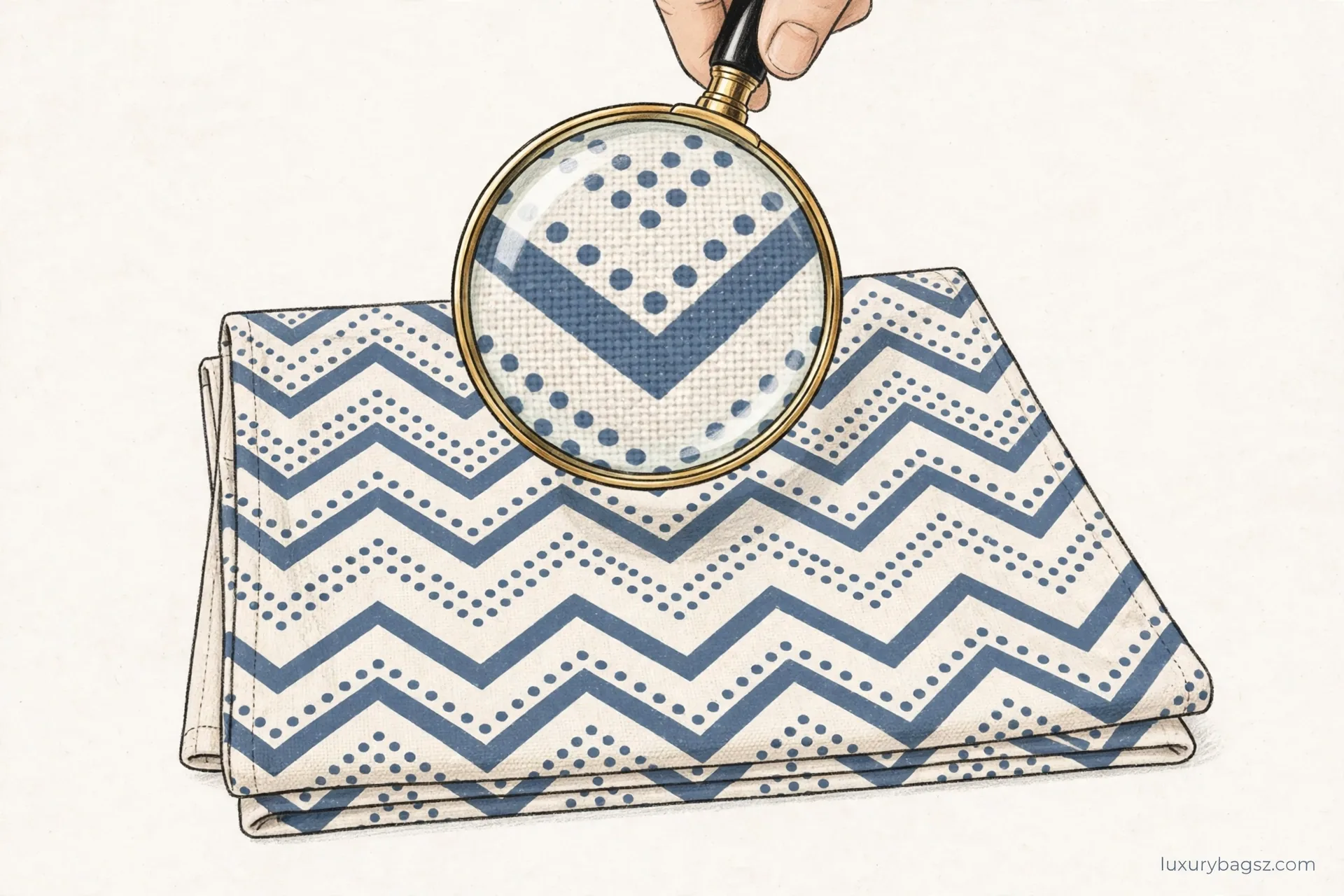
Run your fingertips across the canvas. Genuine Goyardine has a subtle three-dimensional texture, with micro-bumps from its layered painted pattern. It feels slightly rough and dry, never slick, glossy or plasticky. LegitGrails describes ground colour plus three screen-printed layers; Zalora and Libas describe hand-screening or hand-painting. The process wording conflicts, but the texture conclusion agrees: raised, not flat. Fakes usually fail here in one of two ways. Cheap fakes feel smooth and vinyl-like, with the pattern printed on the surface. Better fakes add texture, but it feels uniform and mechanical, without the slight natural variation of a hand-finished print. On a heavily worn bag, texture is a supporting check, not a verdict, since the painted layer thins at folds and corners.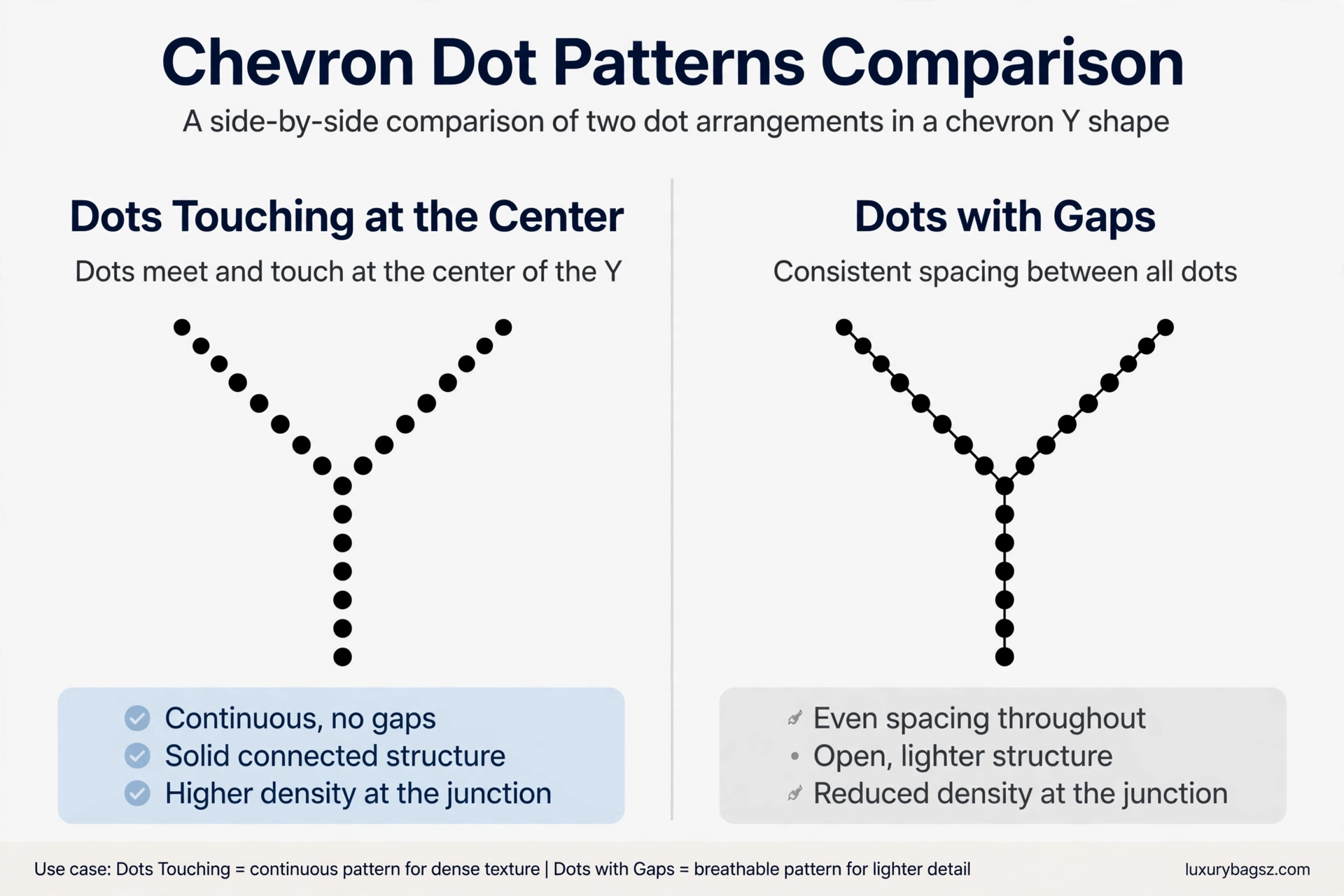
Check 2: The Y-Dot Alignment
Look closely at the chevron pattern, which is built from interlocking Y shapes made of small dots. On a genuine bag, the dots in the middle of the Y must touch or slightly overlap. Zalora states this plainly, and it is one of the most reliable visual tells available. Replicas almost always fail here, leaving visible, awkward gaps between the dots at the centre of the Y. The gap is small, so you need a close-up photograph or a magnifier in hand. From a normal viewing distance, a fake pattern can look perfect. Check alignment at the seams and corners as well. On a genuine bag, the Y motif runs cleanly and symmetrically, with logical alignment where panels meet. A pattern that jumps, breaks or crowds at a seam suggests the panels were cut and sewn without regard for the motif. Also read the pattern lettering, HONORE, GOYARD and PARIS: clean, sharp and slightly raised on a genuine bag, never blurry or boxy.Check 3: The Serial Number, Format First
Every genuine Goyard bag carries a serial number, and the format is consistent: three letters followed by six digits, for example MAE 020182 as cited by Zalora. The letters are an internal house code, and the digits follow it, but Goyard publishes no public key for decoding them. The stamp itself matters as much as the characters. Genuine serials are heat-stamped into the leather in a simple, thin, sans-serif font, making a clean, precise and discreet impression. If the serial looks deeply burned, bold, oversized or inked on rather than embossed, it is a fake tell. Genuine serials are never printed, only embossed: if the number looks inked on, beware. Fonts vary slightly by era and site, so judge thinness and discretion over any single typeface. A correct-looking serial proves very little on its own. Counterfeiters copy genuine serial numbers onto fakes, so a real-format serial on a fake bag is common. Treat the serial as a filter that catches bad fakes, not as a certificate that passes good ones.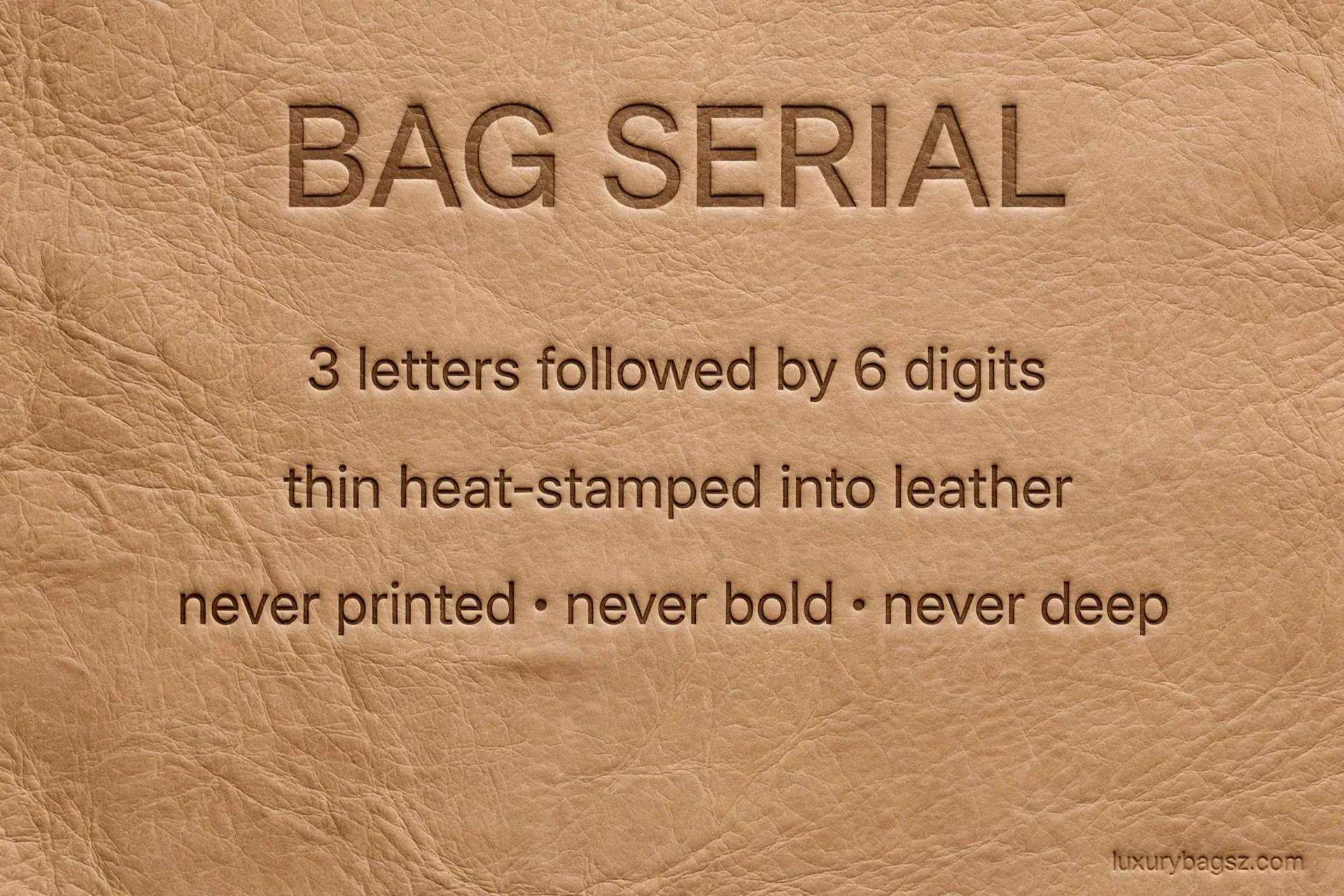

Check 4: Serial Location by Model
Serial location varies by model and by year, and no competitor guide maps it model by model. This part does what they do not, using the locations the sources actually confirm and flagging the ones they do not. On a Saint Louis or an Anjou, check the leather strap connecting the detachable pouch to the bag. That is the location Zalora and Madison Avenue Couture both confirm for current bags. Older Saint Louis totes may instead carry the serial inside an interior pocket, so an interior-pocket serial on an older bag is not automatically wrong. On an Artois, look for a small leather tab inside the interior pocket, per Zalora. The Artois is a structured, zippered bag, so its interior pocket tab is a natural and consistent home for the serial. For Belvedere, Saïgon and small leather goods, sources read here confirm no single location. Expect an interior leather tab, and verify placement against a known genuine example or a trusted authenticator before paying. A missing serial needs care, because sources disagree here. Madison Avenue Couture says every genuine bag has one, but Libas and LegitGrails say older and vintage pieces may carry no serial, and LegitGrails calls a missing serial weak evidence either way. On a recent bag, a missing serial is a fail; on an older bag, judge everything else and do not let the serial alone decide.Check 5: The Heat Stamp
Inside the pouch flap, or on the interior leather of the bag, you will find the house stamp. Zalora gives the three-line form as GOYARD, PARIS, MADE IN FRANCE. LegitGrails gives a longer form, GOYARD, MALLETIER DEPUIS 1853, PARIS, plus a made-in line. Both can be genuine, because wording and layout vary by model and era. What must not vary is the quality of the impression: clean, even, well-spaced lettering at a modest depth. Fakes usually stamp too deep, too thick and too heavy, as if depth proved authenticity. Goyard’s own style is understated, and a dramatic, deeply burned stamp is a warning. Goyard manufactures in France, so a stamp or tag claiming Made in Italy or Made in China is a plain fail. Check the spelling and spacing too: proportional word spacing and correct typography matter, and counterfeit stamps often crowd letters or use the wrong weight for the house name.Check 6: The Pouch Snap
The detachable pouch, or pochette, carries one of the sharpest small tells in this guide. Its silver snap button features an embossed capital G, and on a genuine bag that G must sit perfectly upright. Check the reverse of the snap as well. Madison Avenue Couture notes that the inside of the pochette should read Goyard Paris, exactly vertical, on the reverse side of the button. Fakes often get the front G right and the reverse text crooked, misspelled or carelessly placed. Also check the small leather ring that encircles the pouch strap. On a genuine Saint Louis, it must be round and secured with a single stitch, with the ends meeting cleanly. A misshapen ring, doubled stitching or a ring that gaps open is a workmanship fail.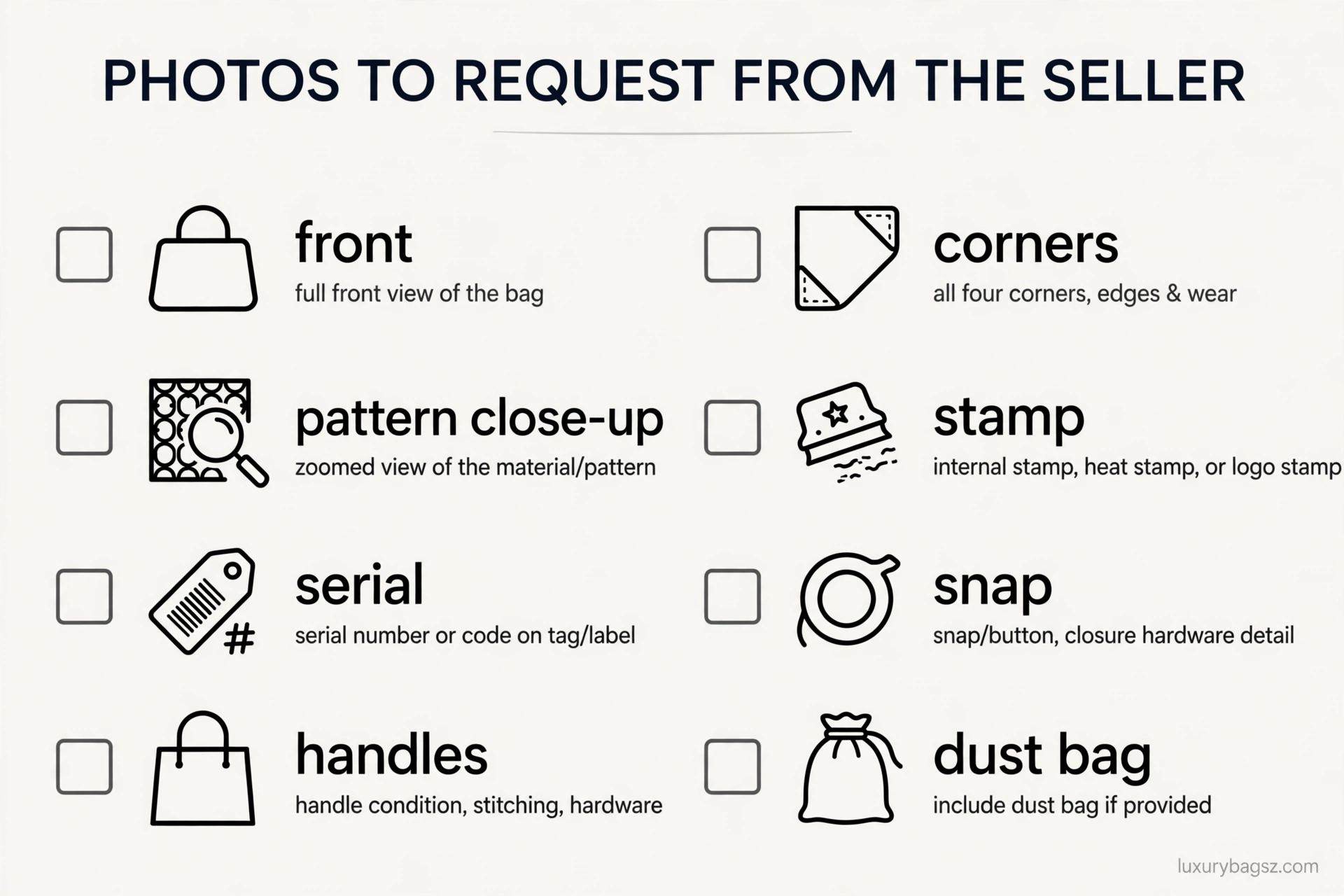
Check 7: Stitching
Genuine Goyard stitching is small, neat and precisely placed, with even stitches anchored firmly at stress points. On Saint Louis totes, the stitching is white, except on black Goyardine bags, which are stitched in black. That colour rule is a quick, checkable fact. Look first at the handle anchors, where stitching takes the most strain. Stitches should be uniform in length and spacing, with no loose threads, no wandering lines and no doubled-back repairs. A handle anchor with uneven or fraying stitching has either been repaired or was never well made. Check the pouch strap stitching and the ring stitch described in the previous part. Then check the top edge and the side seams for the same evenness. Fakes often pass a quick glance at stitching but fail when you follow one seam all the way around, because consistency across a whole bag is harder to copy than a single neat stretch. Vintage bags deserve a fairer eye: honest, even, age-consistent wear at stitching is not a fake tell. Sources disagree on stitching colour, so do not treat any one rule as absolute: Madison gives white stitching, black on black bags, while Libas describes yellow thread on most classic natural-trim bags. Judge evenness and consistency first, and colour only against a known genuine example of the same model.Check 8: Handles and Edge Finish
Handles separate good fakes from genuine bags more reliably than most buyers expect. Genuine Goyard handles are smooth calfskin, soft and supple with a luxurious feel, and they are never coated or covered in plastic. If the handles feel thick, stiff or plasticky, or if the leather has a moulded vinyl look, that is a fake tell. On edge finish, genuine handles have raw, unseamed natural-leather edges, while fakes often use moulded vinyl without a raw edge. Check the underside of the handles too, where wear and poor finishing show first. Genuine handles darken gently and evenly with use at the grip. Fakes often show cracking, peeling or a shiny coating that flakes, especially at the bend where the handle meets the bag. Handle edges need the Madison correction stated plainly: genuine Goyard handles have raw, unseamed natural-leather edges, while many fakes use moulded vinyl without a raw edge. A plasticky, moulded edge is the warning, not a raw one.
Check 9: The Weight Test
Weigh the bag, because the scale catches what the eye misses. Madison Avenue Couture gives exact Saint Louis figures: PM measures about 11″ x 5.9″ x 13.4″ and weighs just 8.81 oz, while GM measures about 13.4″ x 7.9″ x 15.7″ and weighs just 12.35 oz. If a Saint Louis tote weighs noticeably more than those figures, it is probably not genuine, because most fakes use heavier, cheaper coated canvas and thicker trims. A kitchen scale is enough, and a seller who refuses to weigh the bag is refusing one of the cheapest checks available. Note the ordering trap: Madison lists dimensions in a different order from PurseBlog’s width x height x depth, so check which dimension is which before comparing. Weight alone never proves a bag genuine, since a careful fake can be built light; use it as a fast filter.Check 10: Dust Bag, Extras and the Price Test
Goyard does not issue plastic or paper authenticity cards. If a seller offers a plastic credit-card-style certificate, that card is proof of a replica, not proof of authenticity. The same applies to elaborate “Goyard certificates” and QR codes, which Libas confirms the house does not issue. The genuine dust bag is mustard-yellow with a crisp black logo, made from thick, high-quality fabric, and a genuine boutique purchase also brings a purchase receipt. Older bags may have a brown dust cover matching a brown box, so an older brown dust bag is not automatically wrong, but it must match the bag’s era. Judge the dust bag itself. Flimsy polyester, overly bright yellow, faded or blurry logo printing, and thin fabric all point to a fake set. A correct dust bag never authenticates a bag on its own, since dust bags are easy to buy separately, but a wrong dust bag lowers confidence fast. Finally, judge price and seller together: a far-below-range price or an off-platform-only seller is itself a warning.Model by Model: Saint Louis, Anjou, Artois, Belvedere and Saïgon
No competitor guide maps serial, stamp and interior for all five models side by side. The table below does it with the locations the sources confirm, and it says plainly where confirmation runs out.| Model | Serial location (confirmed) | Interior | Closure and build |
|---|---|---|---|
| Saint Louis | Pouch strap (current); interior pocket (older) | Unlined, reversible, plain weave reverse | Open top, featherweight |
| Anjou | Pouch strap | Leather-backed reverse face | Open top, reversible, dressier |
| Artois | Small leather tab inside interior pocket | Structured, interior pocket | Top zip, reinforced base, not reversible |
| Belvedere | Not confirmed in sources read; expect interior leather tab | Crossbody with flap (verify against a known genuine example) | Flap closure; check strap and flap hardware closely |
| Saïgon | Not confirmed in sources read; expect interior leather tab | Structured top-handle bag (verify against a known genuine example) | Rigid, structured; check frame, handles and feet closely |
Where Super-Fakes Still Fail
Super-fakes pass the first glance, the pattern photograph and often the stamp wording. They fail on the combination of small things, and this part collects the failures that appear only when you check the whole bag. First, the pouch-strap ring stitching. A genuine ring is round, secured with a single stitch, ends meeting cleanly. Super-fakes often double-stitch, gap, or use a ring that is slightly oval or flattened, because the ring is a tiny part that factories rush. Second, handle edge finish. Genuine edges are raw, unseamed natural leather, per Madison Avenue Couture. Super-fakes use moulded vinyl edges without a raw edge, which look fine in a photograph and feel wrong the moment you run a finger along them. Third, weight combined with canvas hand. A super-fake can match the pattern and still weigh too much, because its canvas and trim are heavier. A bag that looks right, feels slightly slick, and weighs heavy has failed three checks at once, even if no single check screams fake on its own. Fourth, interior finishing: loose threads, exposed glue and uneven interior stamps are workmanship failures, and a messy interior on an otherwise convincing bag is a strong warning. Two or more of these quiet failures fail the bag, even if pattern and stamp look good.If You Already Bought a Fake
Stop using the bag as genuine, and stop reselling it as genuine. Passing a fake on to another buyer, even unknowingly at first, creates the same harm you just suffered, and it can leave you liable with the next buyer and the platform. Gather your evidence while it is fresh: listing screenshots, seller messages, payment receipt, and your own daylight close-ups of every failed check, noted in plain language. Contact the seller and the platform promptly for a return on counterfeit grounds, citing the specific failed checks. A documented, check-by-check claim beats a general complaint that a bag “feels fake”. If the seller refuses, escalate through the platform’s dispute process and your payment provider, keeping every message in writing. A third-party authentication report is worth the fee at Goyard prices. Goyard runs no public authentication service for pre-owned purchases, and a boutique visit will not produce a dispute certificate. Use a recognised third-party authenticator for paperwork.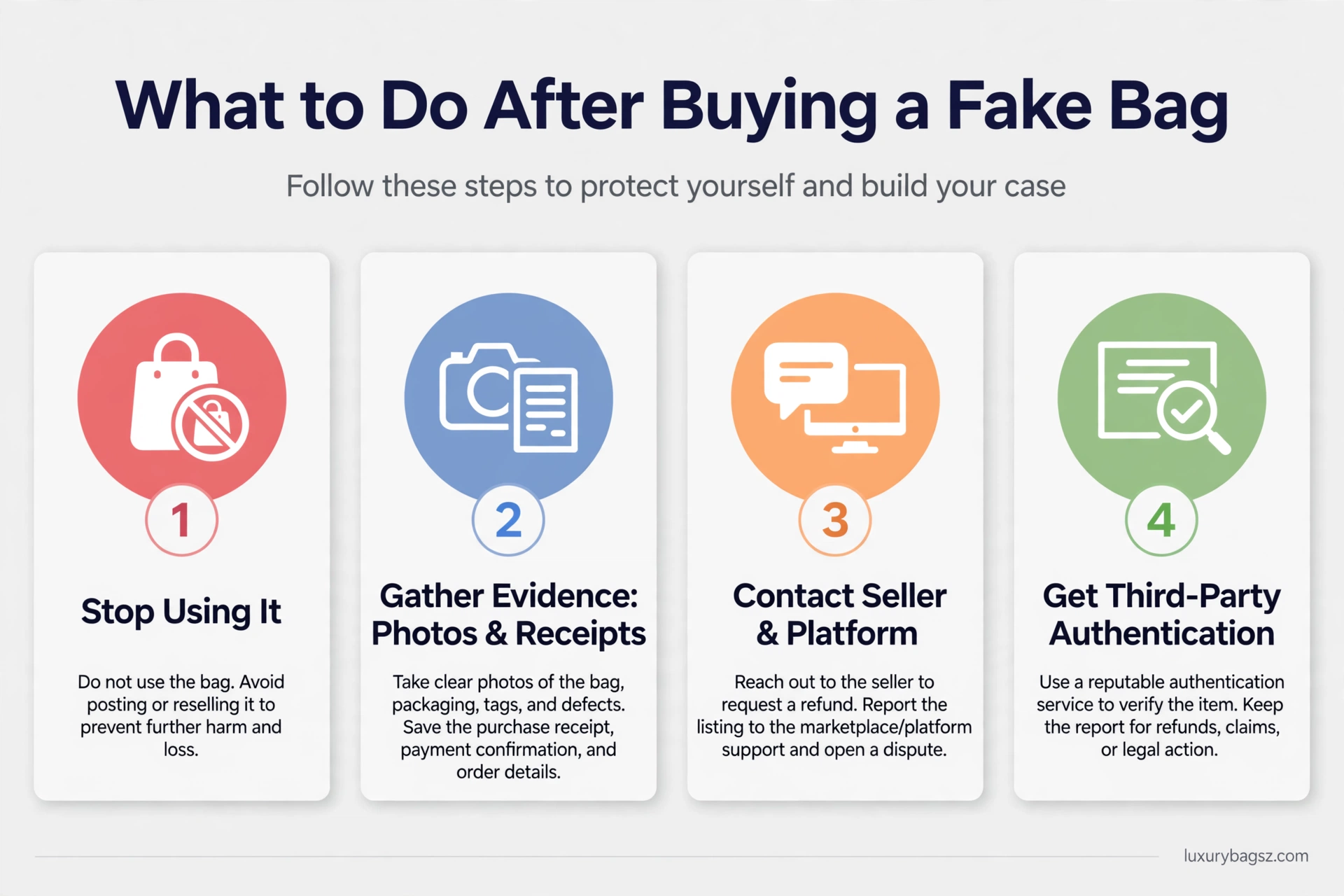
Frequently Asked Questions
What is the Goyard serial number format?
Three letters followed by six digits, thinly heat-stamped in a clean sans-serif font. A deeply burned, bold or inked-looking serial is a fake tell, and a correct-looking serial alone never proves a bag genuine.Where is the serial on a Saint Louis?
On current bags, the leather strap connecting the detachable pouch to the bag. Older totes may carry it inside an interior pocket instead, and older pieces may carry no serial at all.Does Goyard issue an authenticity card?
No. Goyard issues no authenticity card, certificate or QR code. A plastic card or elaborate certificate offered with a bag is proof of a replica, not proof of authenticity.How can I tell a fake Goyardine canvas?
Genuine canvas feels raised and textured, not slick, and the dots at the centre of each Y must touch or slightly overlap. Gaps there are a classic fake tell, visible only in close-up.How much should a Saint Louis weigh?
A genuine PM weighs about 8.81 oz and a GM about 12.35 oz, per Madison Avenue Couture. A noticeably heavier tote is probably fake, because counterfeit canvas and trim are usually heavier.Can Goyard verify my bag’s serial?
Goyard publishes no public date-code key and runs no online verification tool. A boutique may offer general guidance, but dispute paperwork needs a recognised third-party authenticator.Are all Goyard bags made in France?
Yes, Goyard manufactures in France, so a stamp or tag claiming Made in Italy or Made in China is a plain fail. Check the heat stamp wording, spacing and depth alongside the country claim.What photos should I ask a seller for?
Daylight close-ups of the canvas at a corner, the Y dots, the heat stamp, the serial, the pouch snap front and reverse, the handles and edges, stitching at a handle anchor, and the dust bag logo. Refusal to provide them is itself a warning.What if only one check fails?
One failed check deserves a second look, especially on a vintage bag where wear explains variation. Two failed checks are enough to walk away.I already bought a fake. What do I do first?
Stop using or reselling it as genuine, gather listing screenshots, messages, payment proof and close-ups of the failed checks, then claim a return through the seller, the platform and your payment provider, with a third-party report if needed.The Goyard Rule: Two Failures and I Walk Away
A genuine Goyard passes all ten checks, not just the photogenic ones. Canvas texture, Y-dot alignment, a thin three-letter serial, a restrained heat stamp, an upright pouch snap, even stitching, finished handles, correct weight, a proper dust bag and a credible seller together make a bag you can buy with confidence. If two checks fail, walk away, whatever the price and whatever the seller says. Another genuine Goyard will always come up for sale, but money paid for a fake is much harder to recover. Buy the bag that passes, and let the checks, not the bargain, decide.My own first touch is the canvas. Genuine Goyardine feels raised and painted under my fingertip, and after examining more than 500 bags I have yet to meet a copy that gets that texture right — which is why it is check one, and why two failures anywhere end the conversation.