

How to Spot a Fake Fendi Handbag: FF Pattern, Hologram and RFID, Serial and Hardware Checks
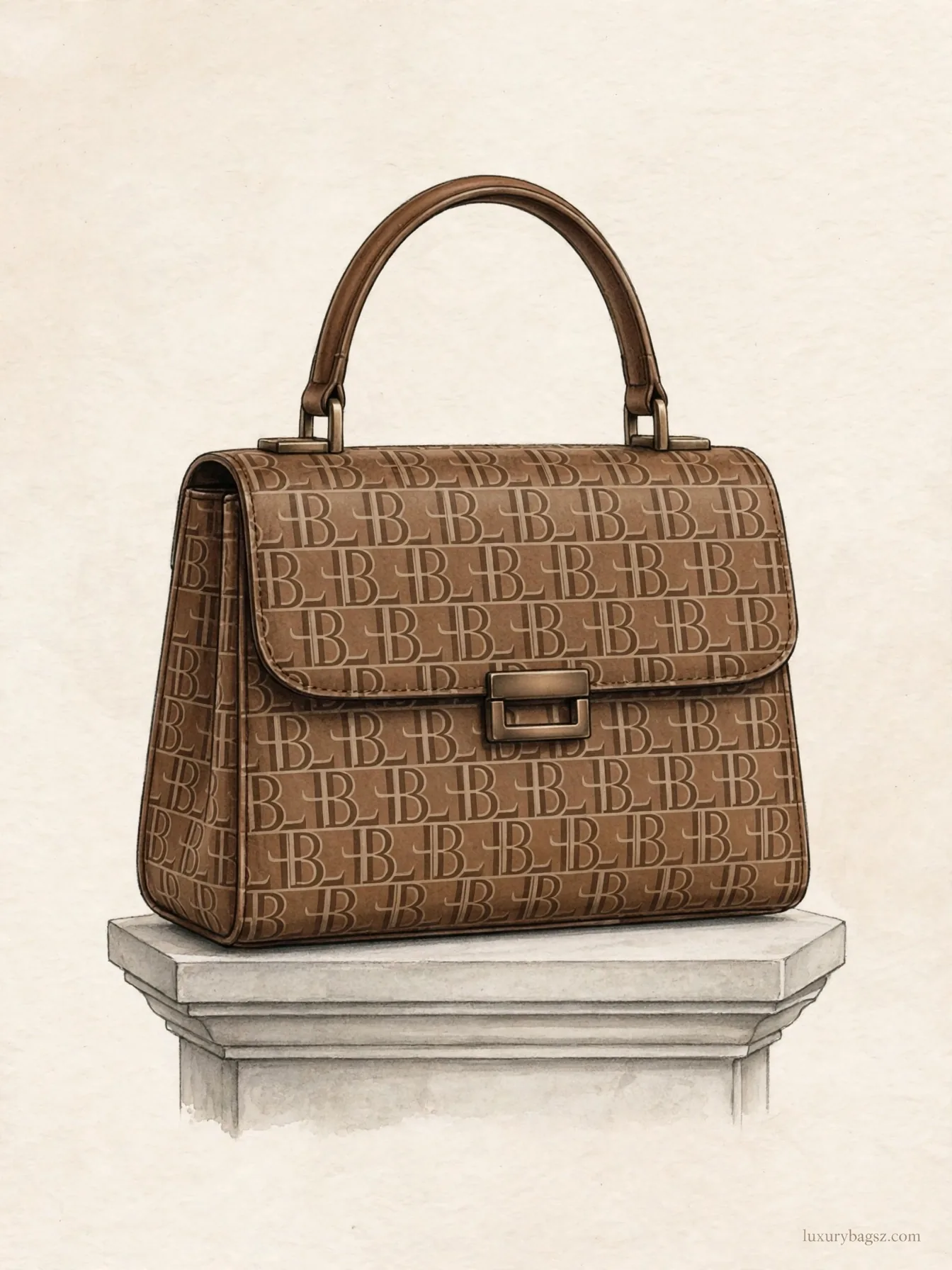
The Fendi Verdict in Brief: Pattern, Tag, Then Era
Read the pattern, then the tag. A real Fendi shows a crisp, tight FF pattern that lines up at the seams, plus a leather serial tag that suits its era. A fake often blurs the pattern, prints it on loose jacquard, or carries a serial on fabric. A hologram on a recent bag, or a missing one on a mid-2000s bag, also fails.
Key Takeaways
- The FF Zucca pattern is crisp, tight and aligned where panels meet.
- A printed exterior should not come with the same print as its lining.
- The interior tag is leather or a metal plaque, never plain fabric.
- Serial numbers run long, in groups split by dashes, matching the card.
- Bags from around 2004 to 2010 used hologram stickers; later bags use RFID tags.
- Hardware Fs are staggered on the clasp rectangle, never directly opposite.
On a Fendi, my eyes go to a seam before anywhere else. I follow the FF pattern across the join: on a genuine Zucca bag the motif stays crisp, tight and aligned where the panels meet, while a fake lets it blur, drift or restart clumsily. Then I check that the interior tag is leather or a metal plaque rather than fabric, and that the serial grouping matches the bag’s era. I buy pre-owned bags myself, so I work through these checks in the same order I would want a reader to — pattern first, because pattern is what Fendi cannot hide.
Know the Fendi Styles Being Copied
The Baguette, Peekaboo, First and classic Zucca canvas bags draw the most copies, so learn the real proportions of the style in front of you first. Our Fendi Baguette bag guide shows the true shape of the most copied style, including how flat its pattern should sit. Structured styles should hold their shape when set down empty. A supposedly structured bag that slumps or twists was not built to house standard. Copies also get size slightly wrong. Check the measurements against the official figures for the style; a centimetre or two adrift is meaningful at this level.
The FF Pattern: Crisp, Tight and Aligned
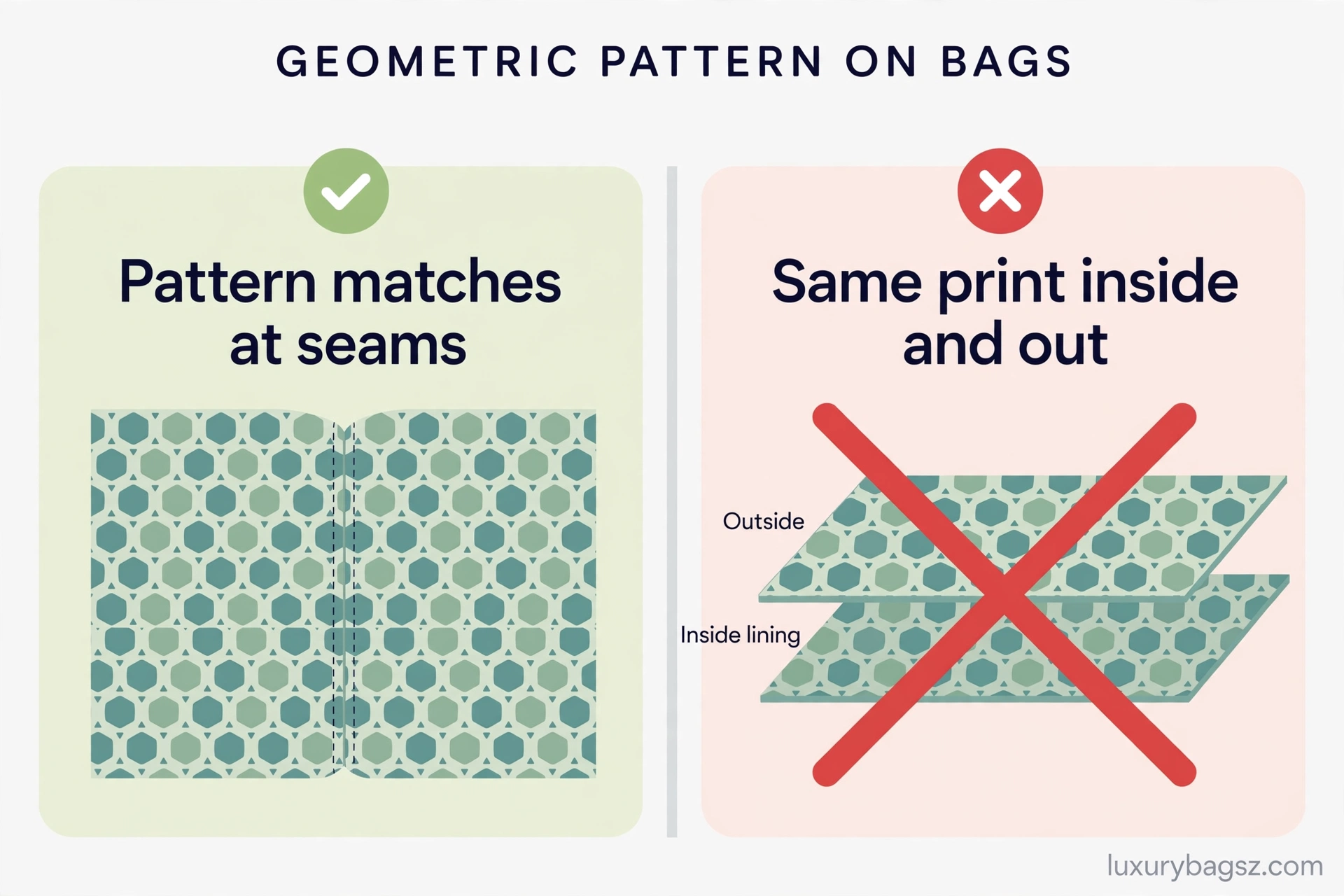
Study the Zucca pattern up close. On genuine jacquard the weave is tight and the Fs are sharp, even and consistent in size across the whole bag. The two Fs in the metal logo are staggered on either side of the rectangle, never directly opposite each other. That offset is a house habit copies regularly miss. Where panels meet, the pattern should line up sensibly. A pattern that jumps, drifts or turns blurry at the seams shows cheaper cloth and cheaper cutting. Hold the rule for interiors too: a bag with the FF print outside should not have the same FF print inside. That pairing is a well-known shortcut on fakes.
Leather, Canvas and Overall Build
Genuine leather styles use calfskin, lambskin or similar fine hides that feel smooth and supple, with a natural smell rather than a chemical one. Flex a corner gently. Real leather creases softly and recovers; coated fake material cracks, shines like plastic or keeps a sharp fold line. Canvas styles should feel sturdy and dense, not thin or papery. Our Fendi Peekaboo bag guide shows the leather standard on a flagship style. Edges and corners tell the truth about build. Neat, even edge paint and firm corners belong to the house; drips, gaps and soft collapsing corners do not.
Stitching and Lining
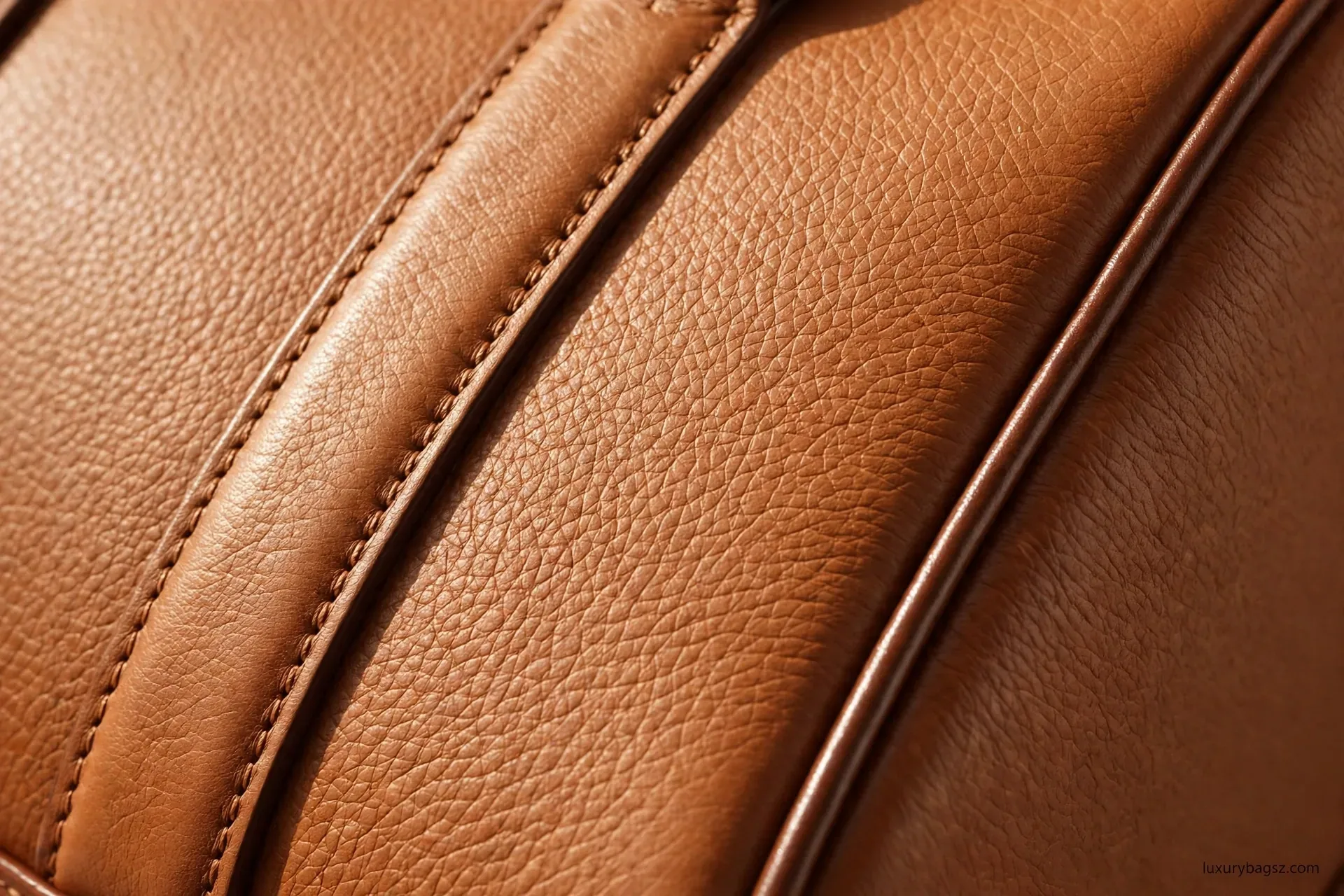
Stitching should be precise and symmetrical, with even spacing and no loose threads, especially around the clasp, handles and tag. Thread on copies often looks fuzzy, overly thick or oddly shiny beside the leather. Compare stitch quality at the tag with stitch quality at the base. Lining should be quality leather, suede or fine fabric, fitted smoothly. Read our what to know about Fendi guide for the house finishing standard. A loud printed lining under a printed exterior, thin lining that bunches, or glue visible at pocket edges all point away from a genuine bag.

Serial Number, Hologram and RFID by Era
Find the serial. On genuine bags it is embossed on a leather tag or behind the interior logo tag, running long, in letter and number groups split by dashes. The number should match the authenticity card when both survive. My Fendi serial number guide walks through a full code block by block. A serial printed on plain fabric, or one that is very short, does not fit house practice. Match the era next. Bags from around 2004 to 2010 carried a hologram sticker with a code; from the early 2010s many bags moved to an RFID tag sewn inside. An RFID tag should contain a real chip, not just a printed lookalike. A hologram proudly fitted to a recent style is the wrong technology for its claimed age. You can see how each check is carried out in our authentication process.
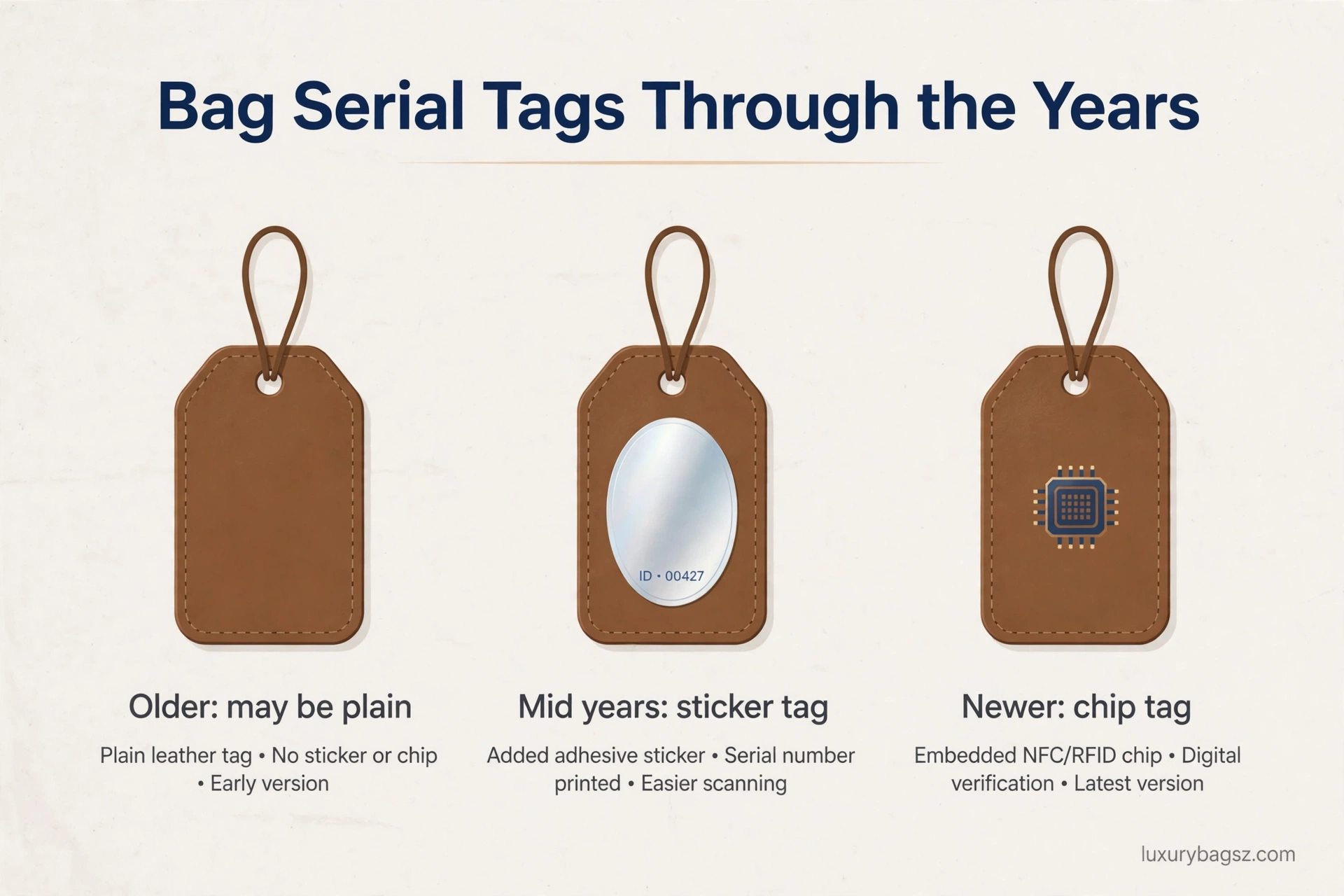
Bags made before the 1980s may have no serial at all. Age changes the rules, so judge the number system against the era the seller claims for the bag.
Hardware: Clasp, Zips and Engraving
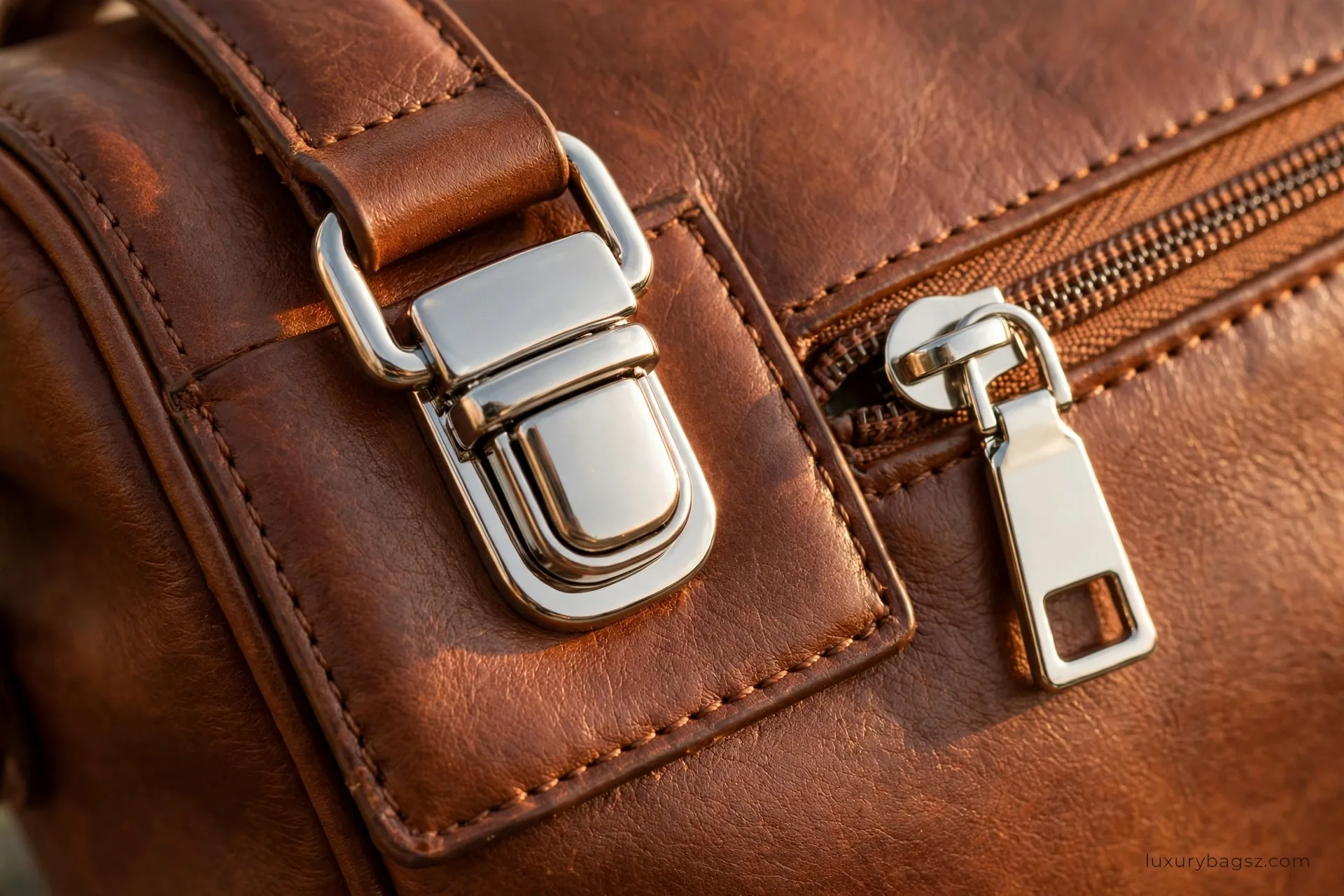
Hardware should feel solid, with a smooth, even finish and clean engraving. Feather-light clasps, flaking tones or rough casting are early warnings. On the famous clasp, check the staggered Fs again in metal. Copies often make the Fs huge, square or directly opposed, and the finish too smooth and bright. Zip pulls should carry the house mark or clean engraving, and zips should glide. Our popular Fendi handbags guide shows the hardware across key styles. Screws, where visible inside the clasp area, should be neat single-slot types on many styles. A mix of cheap screws and glue is not house workmanship.
Interior Tag, Cards and Dust Bag
Inside, look for a leather tag embossed with the house name and country line, or a metal plaque engraved with the same wording, matching the hardware tone. Lettering should be crisp and proportioned. Thick, swollen letters, or a tag made of fabric carrying the serial, are details copies get wrong again and again. Cards and dust bags support the verdict only. Our what is a Fendi First bag guide shows a modern style and its expected presentation. Price finishes the picture. A current flagship at a small part of its retail value, with no receipt and no returns, is a story the checks rarely rescue.
Buying a Pre-Owned Fendi Safely
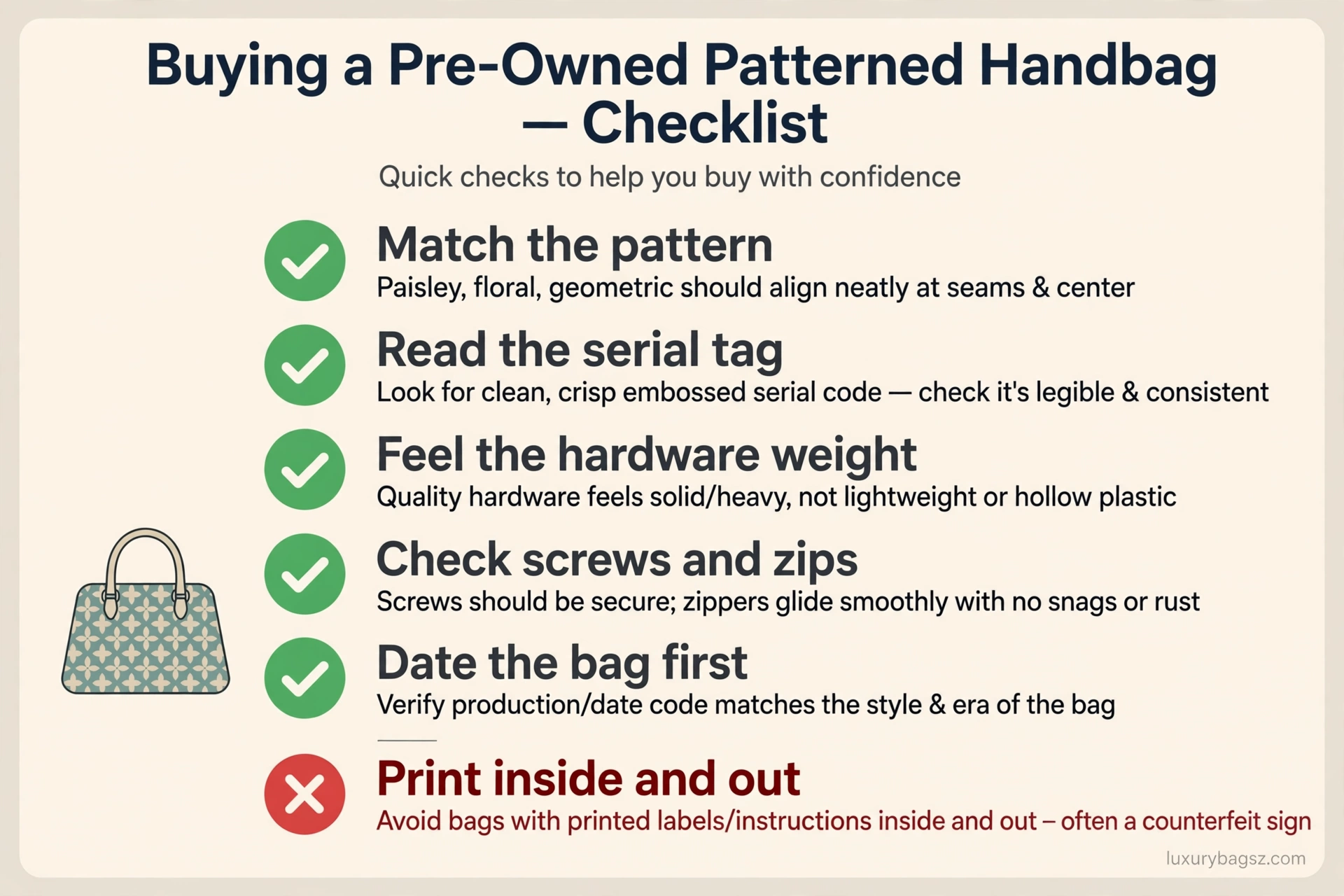
Ask for photographs of the pattern at the seams, the back of the interior tag, the serial and the era tag before paying. Those four views settle most listings. Buy from resellers who name the era of the bag honestly. A seller who knows whether a bag should carry a hologram or an RFID tag is a safer seller. Work in order: pattern, materials, stitching, serial and era, hardware, tag, then packaging and price. A bag should pass across the board, not on one good detail. Our Fendi tote bags guide rounds out the range, so you can place an unfamiliar style inside the family before judging it.
The Anatomy of the Letter F
Zoom into a single F, because the letter has an anatomy copies flatten. In the genuine monogram each F carries two horizontal bars of unequal design: the lower bar is shorter and thinner than the bar above it. That deliberate asymmetry repeats identically in every block of the pattern.
The blocks themselves obey spacing law: same size throughout the bag, equidistant from one another, aligned so they would stack cleanly end to end. Authentication guides comparing pairs note the copies’ letters crowding closer together, with bars of equal weight where the genuine letter is deliberately uneven.
Apply the test at three places: the woven pattern, any printed pattern, and the metal logo. A letterform can be approximately right in one medium and wrong in another on the same bag, and that inconsistency is itself the finding. Genuine production holds the letter’s anatomy everywhere it appears.
This is slow looking, best done with a phone camera’s zoom in daylight. It is also the kind of detail copy factories, working from small photographs, most reliably get wrong.
Zucca and Zucchino: The Two Scales of the Pattern
The famous pattern comes in two official scales, and naming them sharpens every check. Zucca is the large-scale version; Zucchino is the same double-F design rendered smaller, used on different styles and often on smaller bags and accessories.
Scale is a specification, not a mood. A style documented in Zucchino wearing a large-scale print, or a Zucca style shrunk to the small scale, is wearing the wrong cloth whatever its other qualities. Verify the scale for the exact model and era before judging alignment or spacing.
The two scales also behave differently at seams: the large pattern must compose its big blocks across panels deliberately, while the small pattern reads as texture and should stay ruthlessly even. Judge each by its own standard rather than a generic idea of neatness.
Sellers sometimes use the names loosely, which is forgivable; the bag using them wrongly is not. Pattern scale joins era technology as a fact the listing and the object must agree on.
The RFID Tag in the Hand: Eight Digits and a Real Chip
For bags of the RFID era, examine the tag as an object, not a picture. The genuine tag is a fabric label sewn into the bag carrying an eight-digit number, with the chip embedded inside the tag itself. You can usually feel the chip’s small, firm presence within the fabric.
Copies reproduce the tag’s look, digits included, but typically omit the working chip, because the chip is the expensive part. A tag that feels like plain cloth throughout, on a bag claiming the RFID years, has failed the era test this guide keeps returning to.
Reading the chip needs the house’s equipment, in practice a Fendi boutique, so treat the home checks as screening: right tag, right digits, chip present, era correct. A boutique scan then confirms what the screening suggested. A seller resistant to a boutique visit for a high-value recent bag is answering your question by refusing it.
Remember the boundary years from the serial chapter: hologram bags and RFID bags are different generations. A bag cannot honestly carry both stories at once.
The Serial Number’s Middle: The Art Number
Read the long serial as a sentence rather than a string. Authentication references note that its middle group functions as the style or art number, identifying the model, and it is this group that must agree with the authenticity card, which also names the model and colour beside its barcode.
That gives buyers a concrete cross-examination: the bag’s shape, the card’s model name, the card’s colour and the serial’s middle group should all describe the same object. A card naming a different colour than the bag in your hands is not a clerical detail; it is the paperwork describing another bag.
Copy the number exactly when you record it, dashes and all, without correcting characters that look odd. Format discipline matters because authenticators compare the whole string’s structure, and a helpfully normalised transcription destroys the evidence you collected.
And hold the line this guide set at the start: the number supports, it never certifies. Copied numbers exist on copied bags, which is why the serial is read after the pattern, leather and stitching have already voted.
Vintage Fendi: Selleria and the Pre-Serial Eras
Older Fendi plays by older rules, and the deepest line is the Selleria: hand-stitched bags whose large, visible saddle stitching is the product’s signature. On genuine Selleria the stitching is bold but disciplined, even in its handmade rhythm; copies imitate the size of the stitches and miss their regularity.
Era technology rules relax in the right direction as bags age: no serial before the 1980s, no hologram before 2004, and construction details that differ from modern production honestly. The vintage fake’s favourite trick is newness: crisp, unworn perfection on a supposedly forty-year-old bag, with modern hardware habits hiding in the details.
Judge vintage by coherence: materials that could be its age, wear that matches its story, and none of the later technologies worn as costume. A genuinely old Fendi, honestly worn, passes tests that a pristine time-traveller fails.
Style-Specific Tells: Peekaboo and Baguette
Two flagship styles carry tells of their own. The Peekaboo is built around a frame that lets the bag smile open: its twist locks on both sides should turn smoothly and symmetrically, the interior divider should stand as designed, and the whole structure should feel engineered rather than stuffed. Copies soften the frame, and a Peekaboo that cannot hold its famous posture has failed its defining test.
The Baguette is a proportion test: a compact underarm bag whose flap, clasp placement and short strap geometry are precisely documented across its many versions. Copies stretch it, deepen it or hang the strap at the wrong drop, small errors that read instantly beside reference photographs of the exact version.
For both, the method is the model homework from this guide’s first chapter, deepened: authenticated listings of the same style, size and era, compared fitting by fitting. Flagship styles are copied hardest precisely because their details are famous, so their details are where the verdict lives.
Frequently Asked Questions
What is the fastest check on a Fendi handbag?
The FF pattern and the interior tag together. The pattern should be crisp and aligned at seams, and the tag should be leather or metal, never plain fabric.
How should the metal FF logo sit?
The two Fs are staggered on either side of the rectangle, never directly opposite each other. Copies often place them straight across or make them huge and square.
Where is the serial number on a Fendi bag?
Embossed on a leather tag or behind the interior logo tag, in letter and number groups split by dashes. It should match the authenticity card when both survive.
Which bags have holograms and which have RFID?
Bags from around 2004 to 2010 typically carry a hologram sticker with a code. From the early 2010s many styles moved to an RFID tag with a real chip inside.
Can a Zucca print bag have a Zucca print lining?
No, that pairing is a well-known fake shortcut. A bag with the FF print on the exterior should not carry the same print as its interior lining.
What does genuine Fendi leather feel like?
Smooth, supple and natural-smelling, creasing softly and recovering well. Coated material that cracks, shines like plastic or smells chemical points to a copy.
Do all Fendi bags have serial numbers?
Bags made before the 1980s may have none. From the modern era a long, dashed serial on leather is standard, so judge the system against the claimed age.
What hardware details matter most?
Weight, finish and engraving. The clasp should feel solid with staggered Fs and clean marks. Light, flaking or overly bright hardware is a strong warning.
Can the dust bag or card prove a bag?
No. Cards and dust bags are copied and swapped between bags. They support a bag that already passes the pattern, tag, serial and hardware checks.
Who can authenticate a Fendi bag for me?
An authenticator who handles the house regularly. Send seam pattern views, the tag back, serial, era tag and clasp photographs, plus the claimed year of the bag.
My Fendi Rule: Match the Technology to the Year
Copies work hard on the famous pattern and the clasp, then forget the calendar: a hologram where an RFID tag belongs, or a fabric tag where leather should be. Check pattern, build, stitching, serial and era together. When the technology inside the bag matches its claimed age, and the making matches too, the bag earns trust.
Era-matching is the check I lean on hardest after more than ten years of this work. Hologram, RFID, serial format — each belongs to its years, and a bag whose technology disagrees with its claimed age is a bag I put down, however good the Zucca looks.


