How to Spot a Fake Bottega Veneta Bag: Weave, Leather, Stamp and Tag Checks
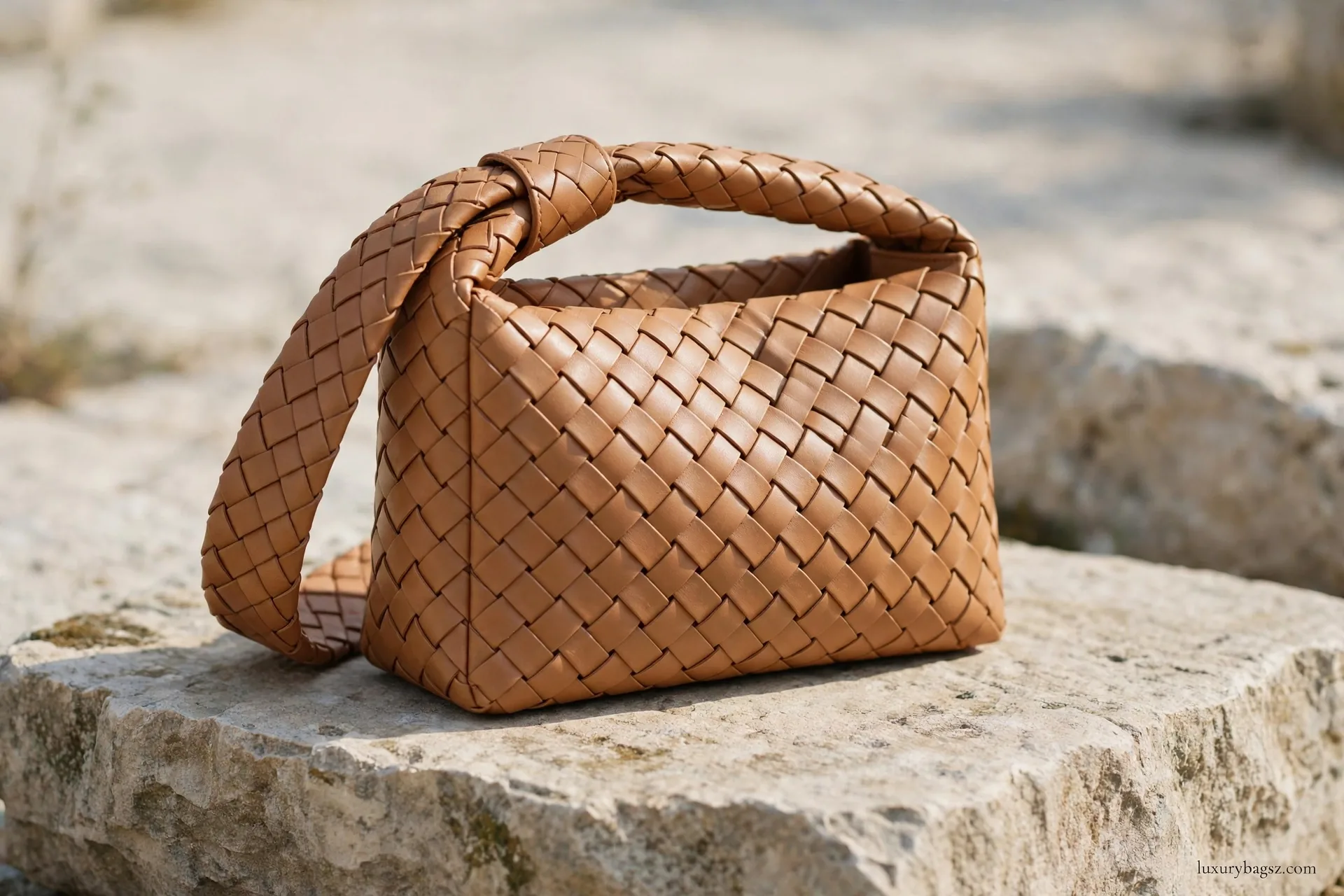
The Bottega Verdict in Brief: The Weave Tells the Truth
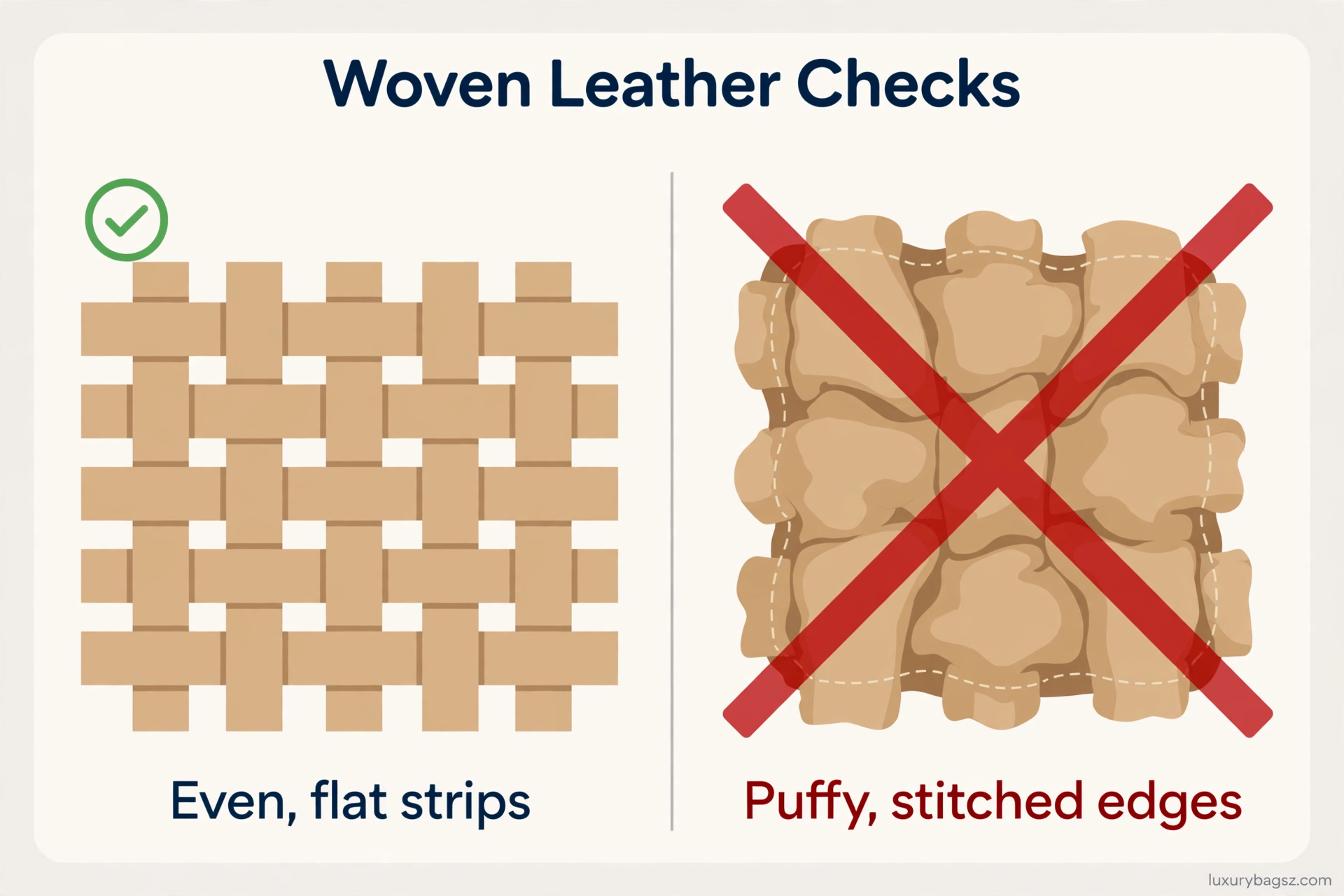
Start with the weave. On a real Bottega Veneta bag the Intrecciato strips are even, flat and supple, pressed together without stitching along their edges. On a fake the weave usually gives it away. Strips vary in width, sit puffy or stiff, and you may see thread holding them down, plus a plasticky shine.

Bottega Veneta gives me no logo to hide behind, so I start with my thumb. I run it along the edge of the Intrecciato weave: genuine strips sit flat and even, pressed together with no stitching holding their edges down, and the leather feels buttery rather than coated. The moment I find thread along a strip edge, uneven widths or a plasticky shine, I am already suspicious. Having examined more than 500 bags by hand, I can say the weave is the most honest surface in this whole guide — copies can print a pattern, but they cannot weave one cheaply.
A House With No Logo to Hide Behind
Bottega Veneta built its name on craft rather than logos, which makes the making itself the test. There is no monogram to compare, only leather, weave and finish. Learn the key shapes first. Our Bottega Veneta Jodie bag guide shows how the woven hobo should slouch and hold its knot. Proportions are your first filter. A copy often gets the size slightly wrong, makes a soft style too rigid, or lets a structured style collapse at the corners. Hold the bag empty and then filled. A genuine piece changes shape gracefully between the two states. A fake tends to look the same stiff way in both.
The Intrecciato Weave: Width, Tension and Edges
Measure with your eyes across one panel. Classic strips are typically around 1.2 cm wide, and the width should stay consistent from edge to edge. The weave must sit flat and even over curves and corners. Bubbling, lifting strips or gaps where the leather should meet are classic copy failures. Now look for thread along the strip edges. Genuine weave is pressed and held by its own build, so visible stitching holding strips down is a major warning. Compare a known style in our Bottega Veneta Cassette bag guide, where the larger weave should still look calm, flat and regular.
Leather Quality: Buttery, Supple and Quiet
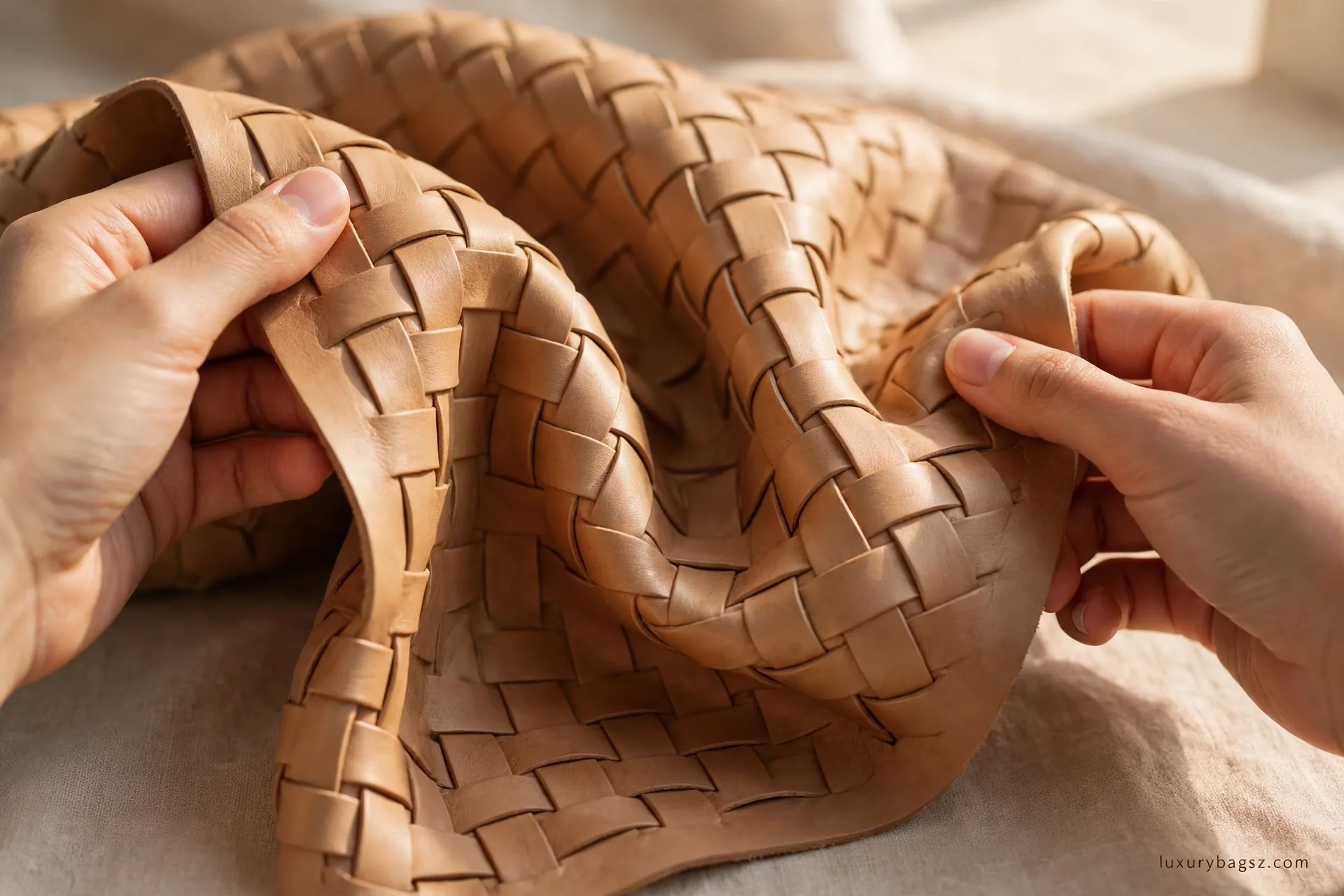
Press the leather gently and let go. Real nappa or calfskin yields softly and recovers smoothly, with a natural grain and a low, even sheen. Smell helps too. Genuine leather smells warm and natural. A sharp chemical or sweet plastic smell, felt before you even look closely, points to cheaper material. Flex a woven panel in your hands. It should move with a flowing drape, like cloth made of leather. Stiff, board-like movement means thicker, poorer strips. Our Bottega Veneta Pouch guide shows the soft gather of the real thing, a useful contrast to the puffy look of copies.
Stitching and Interior Finishing
Away from the weave, stitching should be tight, even and matched in colour to the leather. Loose ends, fraying or wandering lines do not belong on this house. Inside, linings in leather, suede or fine fabric sit smooth and well fitted. Bunched lining, exposed glue or rough pocket edges are strong warnings. Check the base and corners with your fingertips. Genuine finishing feels considered everywhere, including places a photograph rarely shows a buyer. Zip pockets should open without catching. A zip that snags on its own lining suggests the inside was assembled quickly and cheaply.
The Heat Stamp and Serial Tag
Find the interior stamp. It reads the brand name above the country line, blind pressed into leather or suede, with crisp capitals and even spacing. Lettering that is printed, smudged, too deep or unevenly spaced is a common fake tell. The country line should be thinner than the brand name above it. Then find the serial tag, usually sewn into a seam inside a zip pocket. Its style changed across eras, so the format must suit the age of the bag. Our how to care for Bottega Intrecciato leather guide shows genuine interiors, which helps you judge stamp and tag placement.
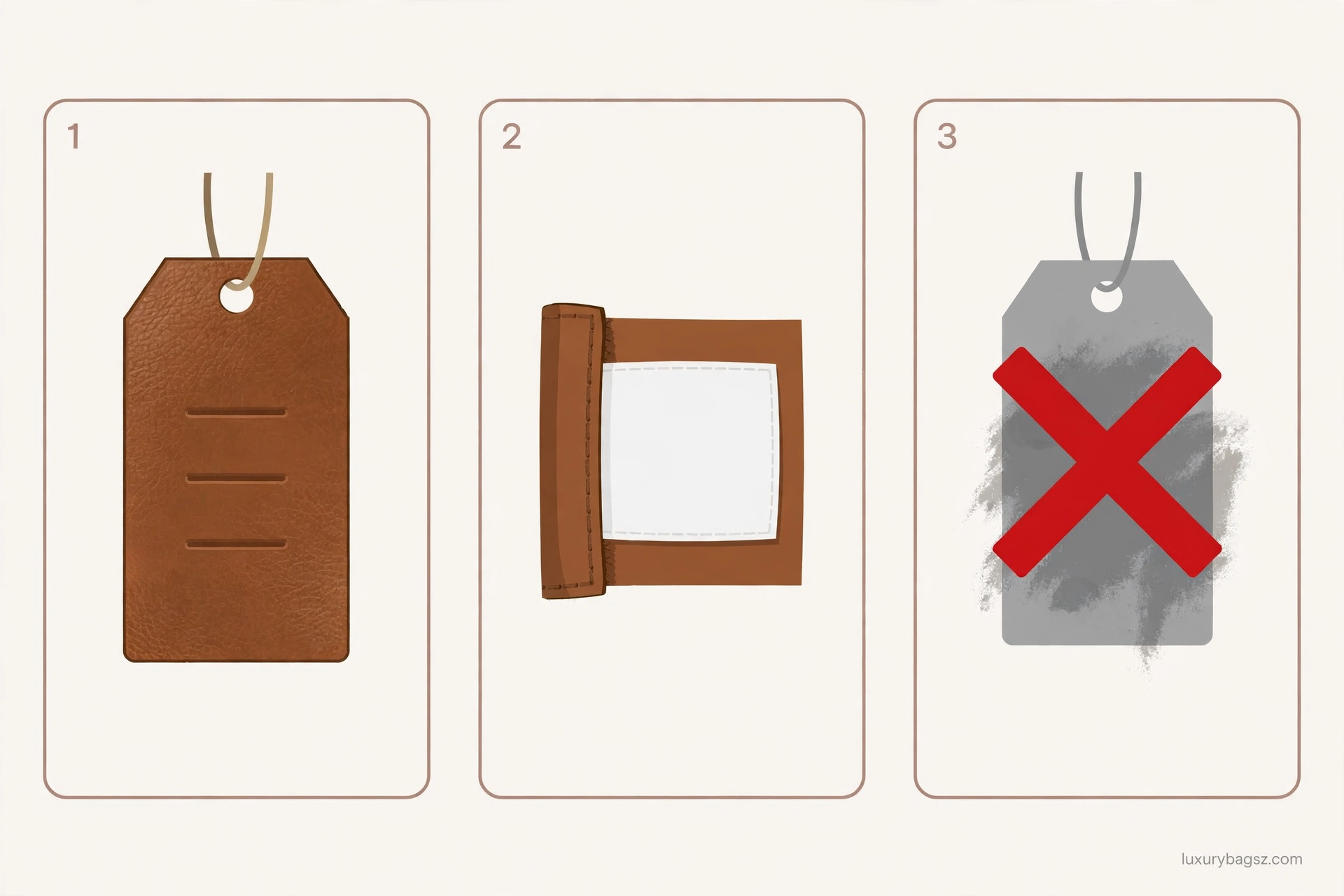
A missing tag on an older bag is not proof of a fake. My Bottega Veneta serial number guide explains what each line on the tag can and cannot tell you. Tags are lost and formats vary, so weigh it beside the weave, leather and stamp evidence.
Zips, Hardware and the Quiet Finish
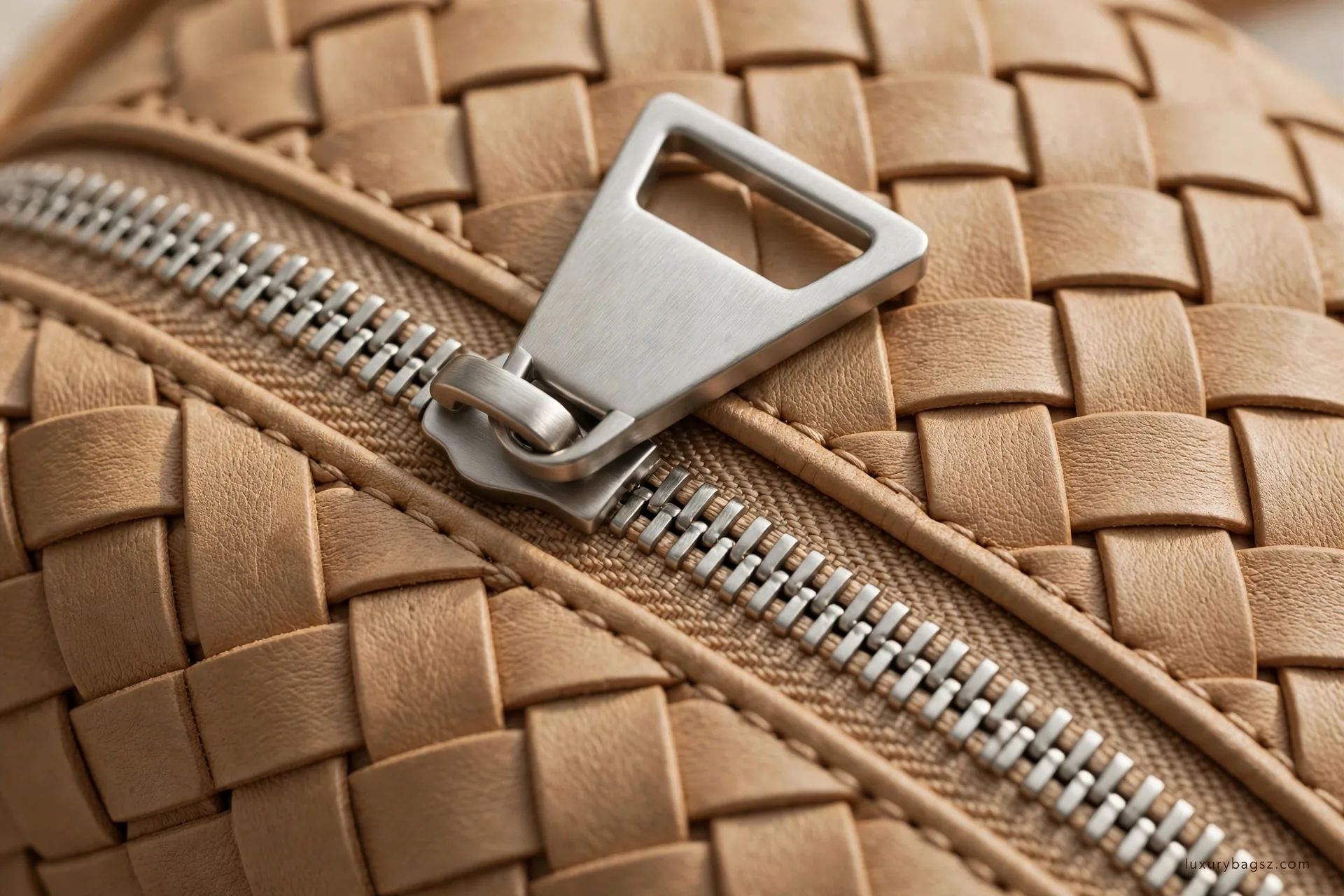
Hardware on a real bag feels solid and works smoothly, with a matte or softly brushed finish. Feather-light metal, flaking or a mirror shine should worry you. Quality zips, often from makers such as Riri or Lampo on many styles, glide without snagging. A gritty zip with thin teeth is cheap hardware giving itself away. Engraving, where a style carries it, should be clean and even. Read more house background in our what to know about Bottega Veneta guide. Remember the house style: branding stays discreet. A loud logo plate or shiny monogram hardware on a supposedly classic woven bag does not fit the brand at all.
Dust Bag, Cards and Price Flags
A genuine set usually includes a well-made dust bag and tidy paperwork. Flimsy fabric, huge blurry lettering or misspellings support a fake verdict, but never prove one alone. Cards can be copied and bags can be separated from their sets. Judge the bag first and let packaging agree or disagree at the end. Price is the loudest flag. These bags cost thousands new and hold strong resale value, so a new-looking woven bag at a tiny price needs a very good explanation. Sellers who will not photograph the stamp, tag or weave up close are telling you something. Honest sellers of genuine bags expect exactly those requests.
The Safe Way to Buy Pre-Owned
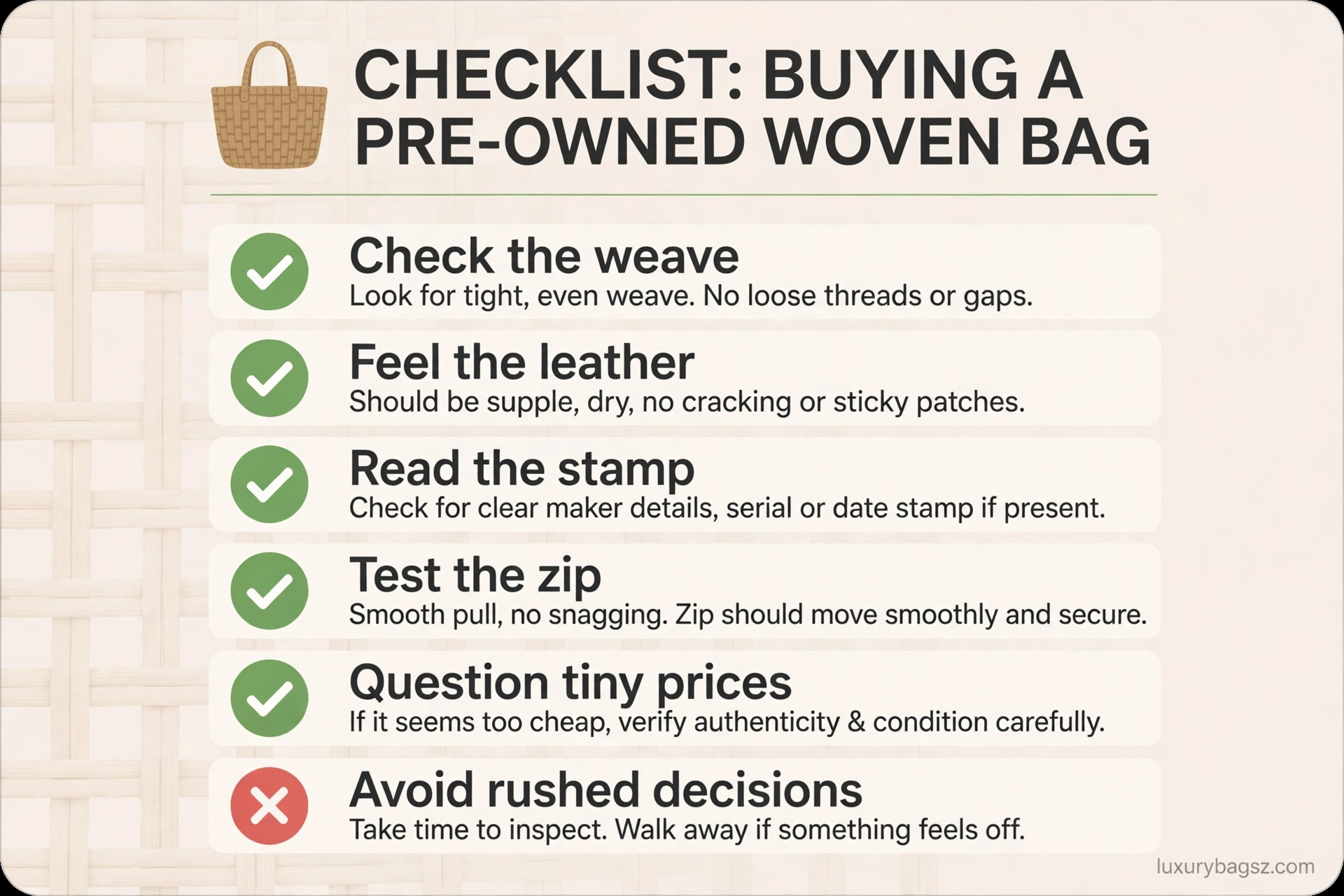
Shortlist sellers who show the weave in daylight, state the era of the bag and accept returns. Then work through weave, leather, stitching, stamp, tag and hardware in order. For a costly piece, use a professional service before the return window closes. Woven bags are a specialism, so choose an authenticator who handles the house often. Our how to authenticate a pre-owned designer bag guide sets out the wider routine that sits behind these checks. Keep your own photographs of the tag and stamp after buying. They support insurance, future servicing and an honest resale description later on. For the method behind the checks, see how we check bags.
The Serial Tag Through Its Eras
The tag chapter deserves its own detail, because Bottega Veneta’s labelling changed across distinct periods and a tag judged by the wrong era fails honest bags and passes copies. Many genuine vintage pieces predate serial numbering entirely and never carried a number; on an older woven bag, a missing tag is history, not evidence.
The classic serial flag is a small, narrow, paper-like fabric tag, roughly an inch and a half long, sewn into a seam inside a zip pocket or compartment. One face carries the house logo; the reverse carries lines of text in a block font, opening with the words Originality Certified above the serial number, with a longer code recording model, leather, colour and year details.
From the Daniel Lee era onward, the interior tag carries a unique serial number and often shows a deliberately raw, slightly frayed edge rather than a cleanly cut one, a detail copies frequently tidy up by mistake. On some small leather goods the tag is being phased out, so its absence on a tiny accessory is not automatically suspicious.
The heat stamp described earlier is a separate mark from this flag: the blind-embossed brand and country lines on leather or suede inside the bag. A complete interior shows both, each in its proper place, and a bag whose seller photographs only one of them has shown you half the paperwork.
Reading the Code: What It Tells You and What It Cannot
Treat the code as a biography, not a verdict. Its parts can tell you the model the bag claims to be, the leather and colour it was made in and roughly when, and your first check is agreement: the bag in your hands should be the bag the code describes, in size, material and colour.
A code that decodes to a different model or a colour the bag plainly is not ends the inspection kindly and early. A code that agrees has earned the bag the rest of this guide’s checks, nothing more, because counterfeiters replicate code formats accurately and a correct format is now the easiest part of a fake to produce.
Font details on the flag reward a close look: the genuine printing sits in a particular block style, in grey rather than harsh black, with letterforms specialists compare character by character. Blurry, jet-black or unevenly spaced printing on the flag is a recognised copy habit.
No online checker settles the question either. Databases and decoding tools describe codes; they do not inspect leather. The weave, the stamp, the stitching and the hardware remain the court, and the code is a witness, helpful and cross-examinable.
Beyond the Weave: Smooth Leather and Special Styles
Not every Bottega Veneta bag is woven, and the copies of the smooth styles hide behind that fact. Plain-leather bags from the house are authenticated on the same principles minus the weave: panel cutting, edge finishing and construction discipline.
Edges are the smooth bag’s weave. Genuine edge paint or turned edges are even, sealed and coloured to match, without drips, gaps or the thick glossy coating cheap production uses to hide raw material. Corners should be shaped, not stuffed, and the bag’s silhouette should hold its designer’s intention empty and filled, as the first part of this guide advised testing.
Embossed and padded variations of the weave itself deserve a word: the padded styles should still look calm and regular, their cushioning even from square to square. The bubble-like, over-inflated surface seen on copies of the padded Cassette is the weave failing its flatness test in a new costume.
Suede, raffia and seasonal materials follow the house rule rather than the material: whatever the surface, the making is quiet, precise and consistent, and any bag that is loud in its shortcuts has identified itself.
Model-Specific Traps: The Knot, the Frame and the Handle
General checks catch general copies; famous shapes earn bespoke ones. On the Jodie, study the knot. On a genuine bag the handle is a continuous woven tube and the knot is formed from that tube itself, sitting as a natural, soft sculpture of the same weave. Copies frequently cheat the knot as a separate, stiffer piece, glued or stitched onto a plain handle, and the join shows under close looking and feels different in the hand.
On framed and structured styles, test the architecture: the bag should open and close on its frame with a clean, even action, the weave should run unbroken across panels rather than being pieced from offcuts at the sides, and the base should sit level. Structural copies save leather exactly where panels meet, and the seams confess it.
Handles and straps across all styles should be woven or finished to the same standard as the body, with no thinner strips, no shortcut edges and no hardware rings that twist loose in their mounts. A bag is authenticated as a whole object: the part the product photographs cropped out is the part to ask for.
When a listing shows the glamour angles only, request the knot, the base, the interior stamp and the tag in daylight. On famous shapes, the bespoke details are where copies are laziest, because they are where casual buyers never look.
Frequently Asked Questions
What is the single best check on a Bottega Veneta bag?
The weave. Even, flat strips of consistent width with no stitching along their edges are very hard to copy. Puffy, uneven or thread-held weave is the clearest fake sign.
How wide are genuine Intrecciato strips?
On classic pieces they are typically around 1.2 cm, and the width stays consistent across a panel. Maxi styles use wider strips, which should still be perfectly even.
Should the weave have stitching on it?
No. Genuine strips are pressed and held by the build of the weave itself. Visible thread running along strip edges to hold them down is a major warning sign.
What does the interior stamp look like?
The brand name above a thinner country line, blind pressed into leather or suede. Letters are crisp capitals with even spacing, never printed, smudged or overly deep.
Where is the serial tag?
Usually sewn into a seam inside an interior zip pocket or compartment. Formats changed across eras, so a tag must suit the age and style of the specific bag.
Is a missing serial tag proof of a fake?
No. Older bags may lack one, and formats vary by era. Treat a missing tag as missing evidence and lean harder on the weave, leather, stamp and hardware.
What zips do genuine bags use?
Many styles use quality zips from makers such as Riri or Lampo, and they glide smoothly. A gritty, snagging zip with thin teeth suggests cheap hardware.
How should the leather smell and feel?
Warm, natural and buttery, yielding softly and recovering smoothly. A sharp chemical smell, stiff board-like feel or plasticky shine points to poorer material.
Can the dust bag prove a bag is real?
No. Dust bags and cards are easy to copy or swap between bags. Good packaging supports a genuine bag, but the weave and leather decide the verdict.
What price should make me walk away?
A new-looking woven bag offered at a small part of its retail or strong resale value, with no clear reason, is a classic flag. Ask for proof or walk away.
Summary: Let the Weave Speak First
Bottega Veneta gives you no logo to check, so the craft has to speak: even strips, flat pressed weave, buttery leather and a crisp, quiet stamp inside. Run weave, leather, stitching, stamp, tag and hardware in that order. When the weave and leather both fail, no dust bag, card or discount can rescue the bag.