

What to Know About Tiffany & Co.: History, Rings, Prices and Buying Guide
Tiffany & Co. at a Glance
Tiffany & Co. is America's first great jewellery house and its most romantic one. Founded in New York in 1837 as a stationery and fancy goods shop, it became the home of the six-prong engagement ring, the Blue Box, and a yellow diamond so famous it has its own name.
The house's genius was making luxury feel American: fixed prices, sterling silver standards, and designs meant for real life, from Elsa Peretti's silver bean to the Return to Tiffany heart. Then Hollywood sealed it, when Audrey Hepburn gazed into the Fifth Avenue window in Breakfast at Tiffany's.
For buyers, Tiffany spans the widest range in luxury jewellery, from silver pendants in the low hundreds to diamond rings in the tens of thousands. Classics hold value best, silver trades softly, and the certificate, hallmarks, and Blue Box matter more than most buyers expect.
Key Takeaways

- Tiffany & Co. was founded in New York in 1837 by Charles Lewis Tiffany and John B. Young.
- The first shop, at 259 Broadway, sold stationery and fancy goods, not jewellery.
- The Tiffany Setting, a six-prong solitaire from 1886, changed engagement rings forever.
- The Tiffany Diamond, cut to 128.54 carats, is one of the world's great yellow diamonds.
- The house set the .925 sterling silver standard in America and made the first US stopwatch.
- Icons include Return to Tiffany, Tiffany T, HardWear, Elsa Peretti, and Schlumberger.
- The robin's-egg Blue Box became the official Pantone colour 1837 Blue in 2001.
- LVMH acquired Tiffany in January 2021, and the Fifth Avenue flagship remains its home.
A Stationery Shop That Became a Jewellery House
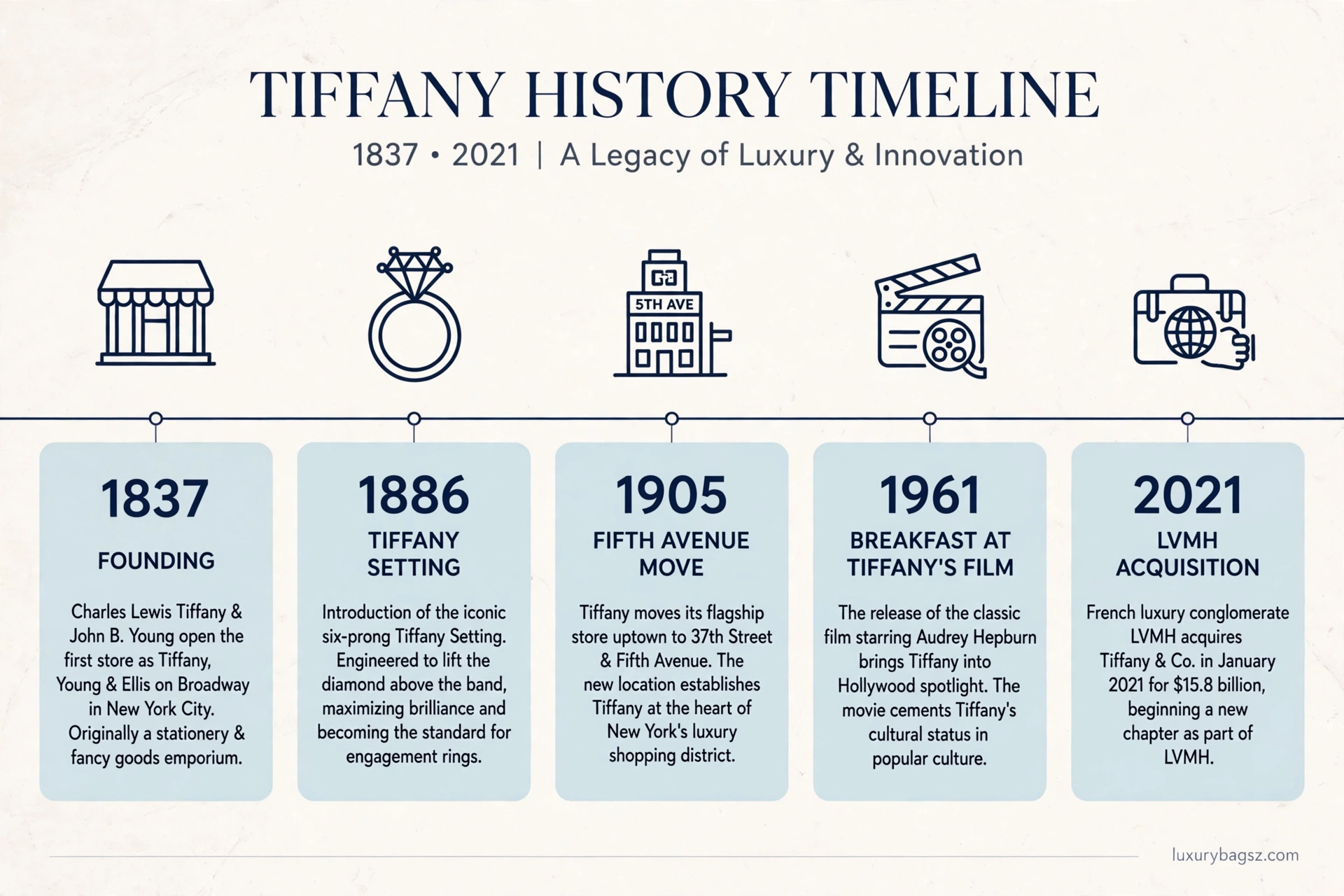
Charles Lewis Tiffany and John B. Young opened their shop at 259 Broadway in Manhattan in 1837. It was promoted as a "stationery and fancy goods emporium," and jewellery came later, as the business found its trade.
In 1845, Tiffany sent out the first direct mail catalogue in the United States, putting luxury goods within reach of buyers far from New York. That catalogue survives today as the annual Tiffany Blue Book, the house's high-jewellery showcase.
Charles Tiffany travelled to Europe in 1848 and bought diamonds from aristocrats selling off jewels in revolutionary times. He brought them back to America, letting wealthy Americans buy fine gems at home for the first time instead of travelling to Paris or London.
The house also set standards early. Tiffany adopted the .925 sterling silver standard from Britain for use in America, setting a precedent other American firms followed. In 1853, Charles Tiffany gained control of the firm and renamed it Tiffany & Co., now a fine jewellery house in its own right.
Presidents, Trophies, and American Symbols
Tiffany reached the White House early. In 1862, President-elect Abraham Lincoln bought a seed pearl necklace and earring set for his wife Mary Todd Lincoln for the inaugural ball, giving the young house its first presidential moment.
The firm kept collecting American firsts. It made the Tiffany Timer in 1866, the country's first stopwatch, and began producing gold jewellery in 1868, opening a new luxury category for American buyers who had mostly known silver.
Tiffany's design work spilled into national symbols. The house redesigned the Great Seal of the United States in 1885, the version that appears on the one-dollar bill, and it designed the cross for the US Navy Medal of Honor.
Sport added two more icons. Tiffany created the seven-pound Vince Lombardi Super Bowl trophy for the first Super Bowl in 1967, and the two-foot-tall, 16-pound NBA Championship trophy in 1978. Even the New York Yankees' interlocking NY logo traces to a Tiffany design for an NYPD medal of honour, adopted by the team in 1909.
The Tiffany Setting: Six Prongs That Changed Rings
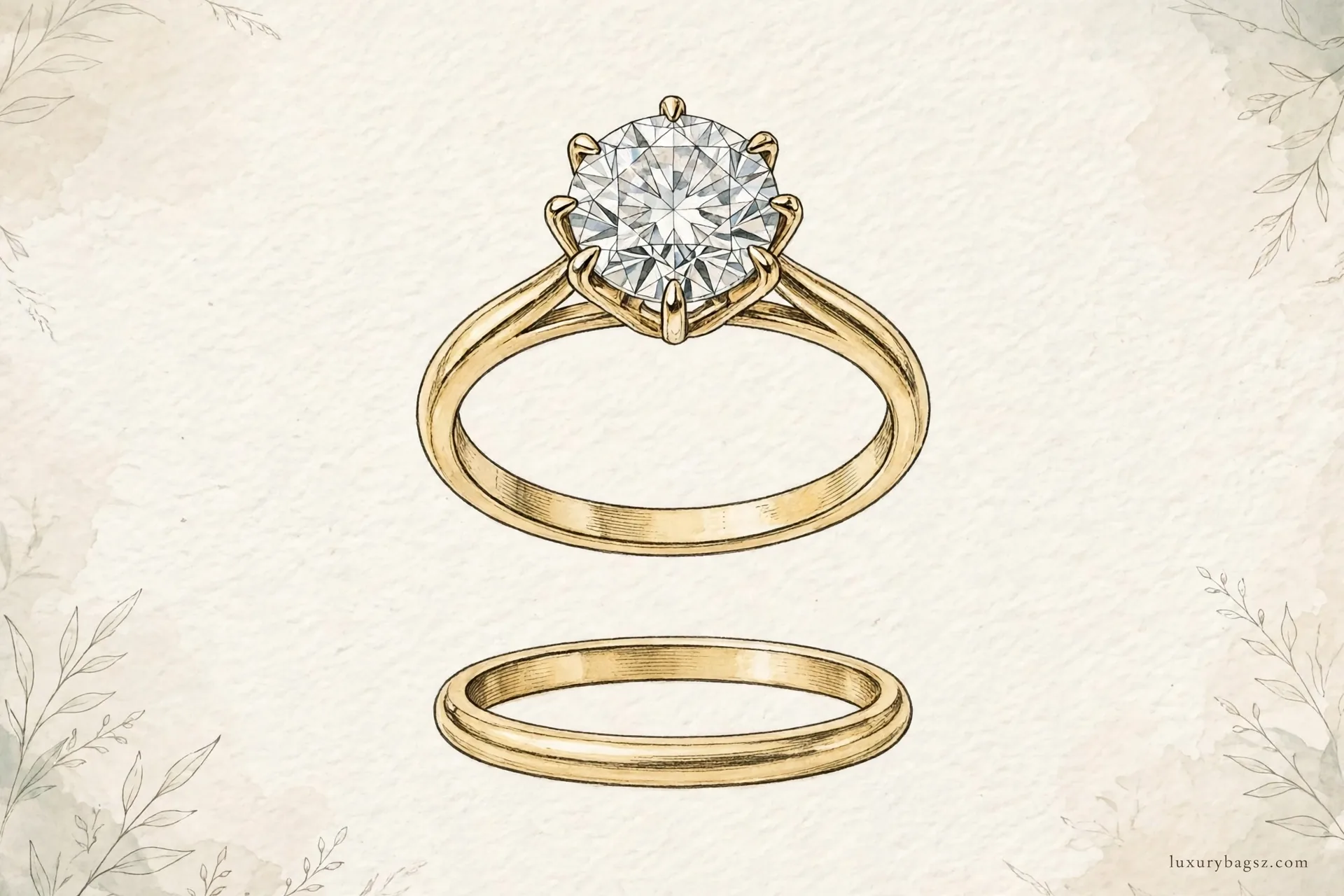
In 1886, Charles Lewis Tiffany unveiled the Tiffany Setting, and engagement rings never looked back. Six prongs lift a single diamond above the band, so light enters the stone from all sides and the diamond appears to float.
Before the Setting, diamonds sat low in heavy mounts that hid much of the stone. The new mount made the diamond the whole design, and it became the template for the modern solitaire, copied by nearly every jeweller since.
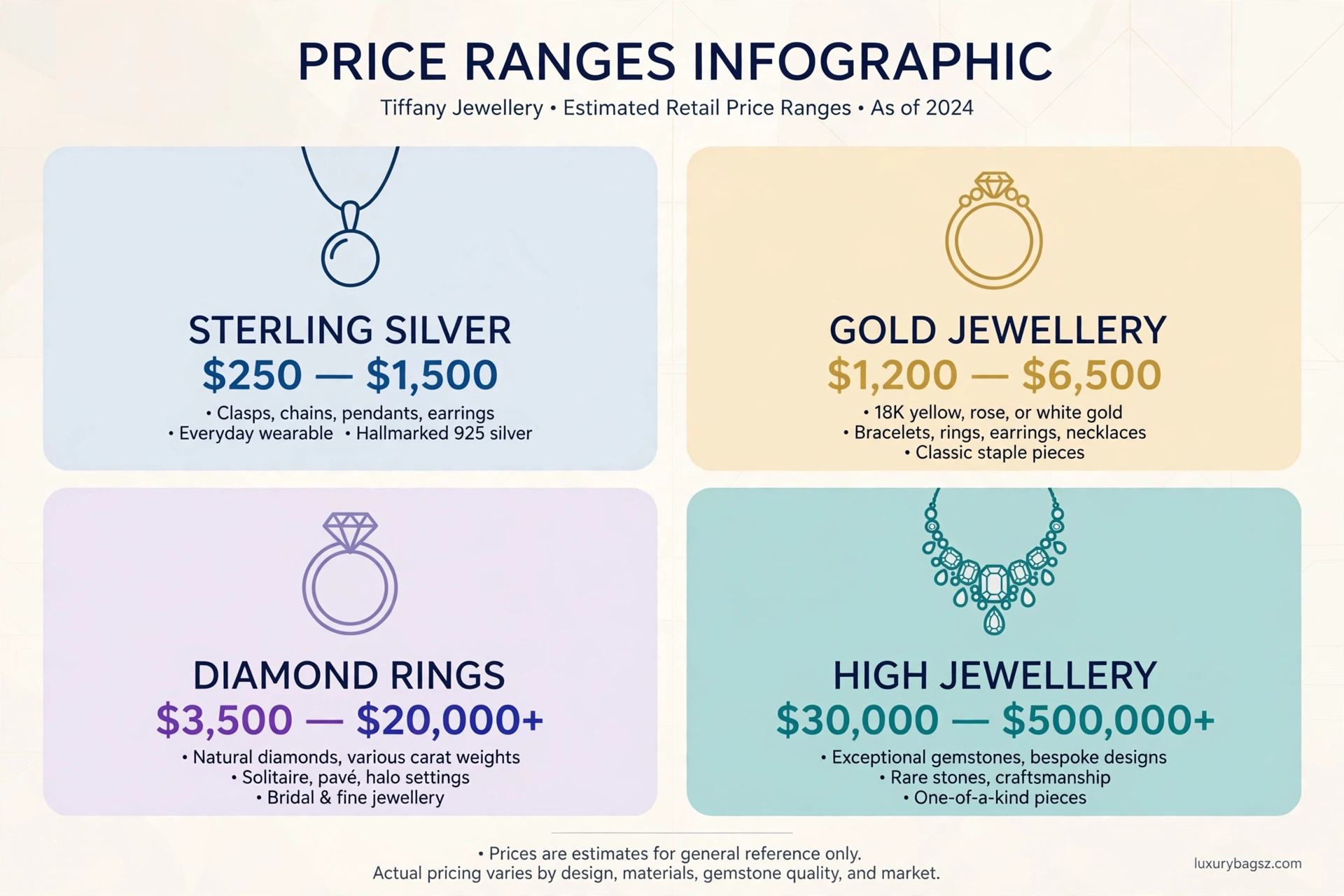
The Setting still anchors Tiffany's bridal range today, in platinum and gold, with round, princess, cushion, and other cuts. Guides report new Tiffany engagement rings starting near $3,000 for smaller stones and rising well past $50,000 for larger ones, with the centre stone setting the price.
Buyers should note what the premium buys: Tiffany's diamond grading, its certificate, and the house's service and warranty. A comparable stone elsewhere may cost less, but it will not carry the Tiffany name, box, or buy-back story.
The Tiffany Diamond: 128.54 Carats of Yellow
One of the world's great yellow diamonds was found in South Africa's Kimberley mines in 1877, weighing 287.42 carats in the rough. Charles Lewis Tiffany bought it the following year for $18,000, a purchase that earned him the nickname "King of Diamonds."
The rough stone went to Paris, where chief gemologist Dr. George Frederick Kunz supervised its cutting into a cushion-shaped brilliant of 128.54 carats with 82 facets. It measures about an inch wide, and it remains one of the largest fancy yellow diamonds ever cut.
The stone has been set only four times. Two of those settings were by Jean Schlumberger, including the Bird on a Rock mount shown at his Paris retrospective in 1995, and the necklace Audrey Hepburn wore in publicity photos for Breakfast at Tiffany's.
Lady Gaga wore the diamond at the 2019 Academy Awards, set with yellow and white diamonds in platinum and 18-karat gold. One published estimate puts its worth near $30 million, while Tiffany executives call it priceless. It now sits on display at the Fifth Avenue flagship.
The Collections That Define Tiffany
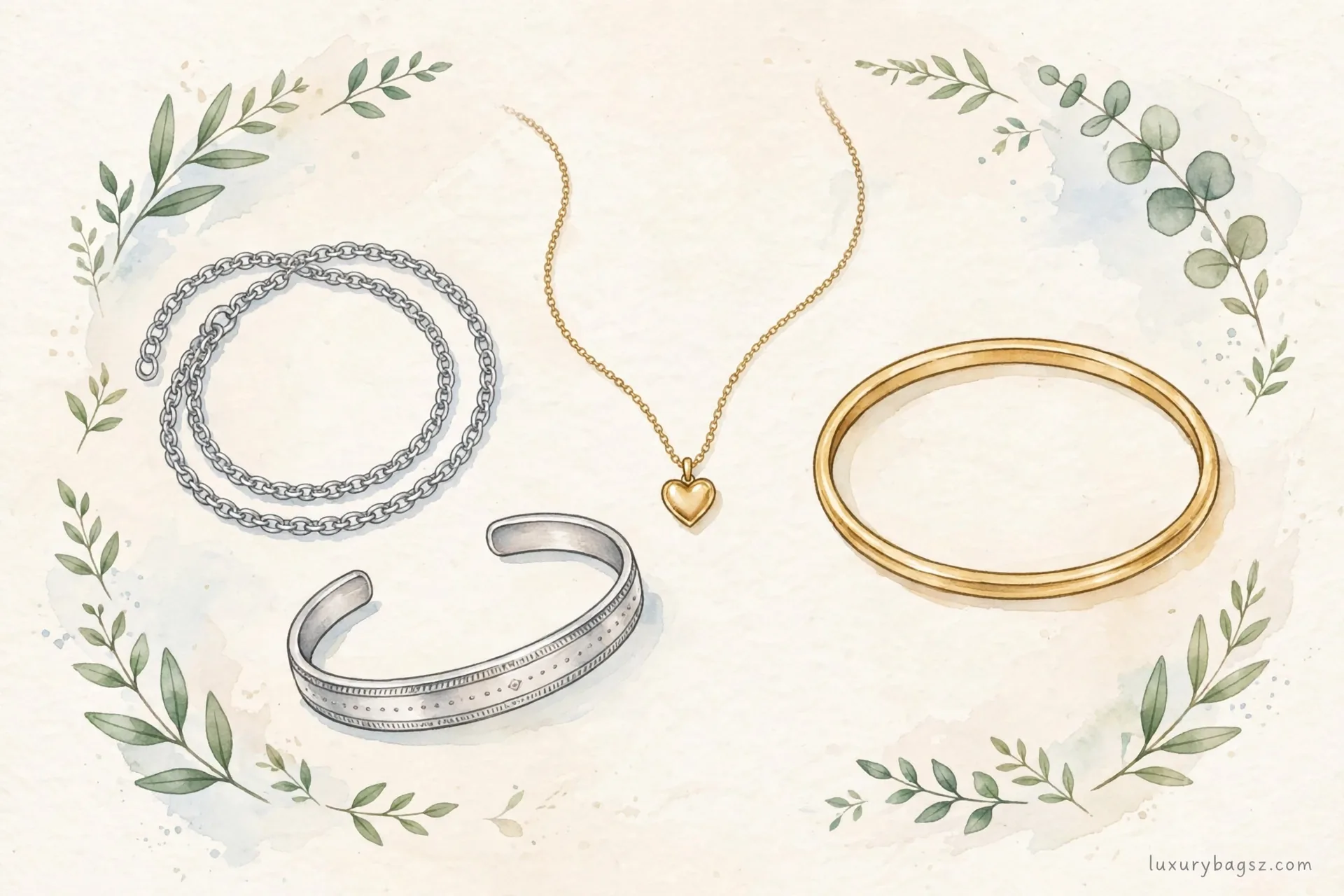
Return to Tiffany is the house's best-known everyday line. The key ring debuted in 1969, a heart engraved "Please return to Tiffany & Co. New York" with a serial number, and the pendant and bracelet versions remain bestsellers in sterling silver.
Elsa Peretti, hired in 1974, gave Tiffany its modern edge. She brought silver back to the house with fluid, wearable designs like the Open Heart, the Bean, and Diamonds by the Yard, jewellery meant for daily wear rather than occasions.
Tiffany T, launched in 2014 with two T motifs at bracelet and ring ends, marked a newer, bolder era, while Tiffany HardWear, from 2017, drew on the house's archive chains for an industrial New York look. Tiffany Keys, unveiled in 2009, symbolised hope and new beginnings.
High jewellery and artist lines sit above these. Jean Schlumberger, who joined in 1956, made playful, fantastical pieces with enamel and coloured stones, while Paloma Picasso, from 1980, turned New York graffiti strokes into gold. The Victoria collection uses four hand-cut diamond petals as its flower motif.
Designers, Stones, and the House's Own Discoveries
Charles Tiffany's son Louis Comfort Tiffany became the house's first design director after his father's death in 1902. His colourful, Art Deco-era aesthetic shaped the house's early twentieth-century look, and he remains a towering figure in American design.
Dr. George Frederick Kunz, the first gemologist on staff at an American retailer, gave the house scientific weight. The gemstone kunzite was named after him in 1903, and he supervised the cutting of the Tiffany Diamond itself.
Tiffany also introduced stones to the wider market. It launched tanzanite, a deep blue stone from the base of Mount Kilimanjaro, in 1968, and named tsavorite, a green stone found near Tsavo National Park on the Kenya-Tanzania border. For its 175th anniversary in 2012, the house released Rubedo, its own pink-toned metal.
Later creative leadership kept the house current. John Loring became design director in 1979 and remains design director emeritus, Andy Warhol designed holiday cards in the 1950s and early 1960s, and Reed Krakoff, formerly of Coach, served as artistic director from 2017 to 2021.
What Tiffany Costs
Tiffany's range is unusually wide, which is part of its appeal. Guides report basic sterling silver pendants starting around $250, gold pieces from about $1,500 to $10,000 and beyond, and diamond engagement rings from around $3,000 to well over $50,000.
Silver is the entry point and the softest resale category. Return to Tiffany silver bracelets and pendants trade pre-owned for a fraction of retail, so buy silver for wear, not for return. Gold Tiffany T, HardWear, and Elsa Peretti gold pieces hold up better.
Diamond rings deserve a budget conversation before a boutique visit. Guides note that a one-carat Tiffany ring can run from about $9,500 to $35,000 depending on stone quality and setting, a premium of roughly 50 to 60 percent over a comparable non-branded stone, paying for the name, grading, and service.
Pre-owned prices vary widely by line and condition. Classic solitaires and Schlumberger vintage pieces hold value best, while fashion silver softens. Our guide to how to price designer jewellery for resale explains how to set a realistic number before you list.
Buying Tiffany Pre-Owned: Checks That Matter
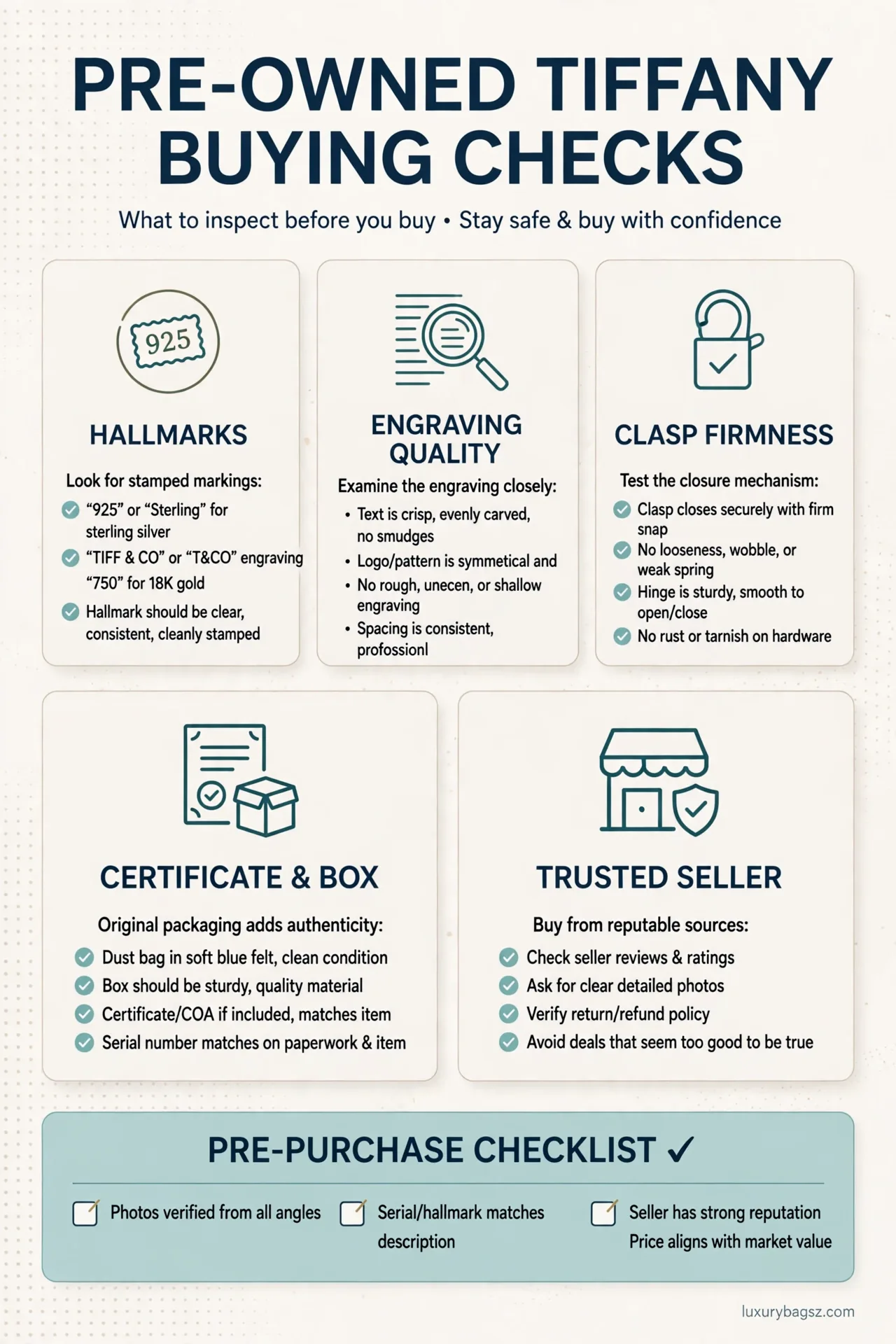
Tiffany is one of the most copied jewellery brands, so checks matter even for silver. Start with the seller: a house, dealer, or platform that authenticates in-house and allows returns beats a bargain from an unknown seller every time.
Hallmarks are the first physical check. Sterling pieces should carry the .925 mark and a Tiffany & Co. stamp, with crisp, even lettering. Blurry engraving, misspelled stamps, or missing marks are warnings, and Return to Tiffany pieces should carry a serial number.
Examine clasps, chains, and finishes. Real Tiffany clasps close firmly and evenly, silver has a consistent polish, and gold pieces feel weighty for their size. Light, hollow-feeling hardware or rough chain links suggest a copy.
Ask for the full set: Blue Box, pouch, receipt, and the Tiffany Diamond Certificate for diamond pieces, which the house says certifies authenticity and grading under its Full Lifetime Warranty.
For wider selling mechanics, read how to resell luxury jewellery and how luxury consignment works.
The same seller-check discipline applies to bags, as our guide to how to buy a pre-owned designer bag safely shows. Our dedicated guide to how to authenticate Tiffany jewellery covers the line-by-line tells.
Caring for Tiffany: Silver, Gold, and Diamonds
Silver tarnishes, and Tiffany silver is no exception. Store silver pieces in the pouch or box, keep them dry, and polish gently with a silver cloth. Avoid dipping heavily, which can dull finishes, and keep silver away from rubber bands and harsh chemicals.
Gold needs less work. Wipe gold pieces with a soft, dry cloth after wear, store them separately from harder gems, and keep perfume and lotion off the metal. A yearly professional clean keeps settings and clasps in good order.
Diamond pieces need setting checks. A loose prong on a Tiffany Setting solitaire risks the stone itself, so have prongs inspected once a year, especially on rings worn daily. Our guide to how to clean gold and diamond rings covers safe home cleaning between professional visits.
Tiffany's own servicing and warranty support is part of the purchase premium. Keep receipts and certificates with the piece, and use the house's cleaning and repair service for anything beyond a gentle wipe, rather than a general jeweller unfamiliar with the setting.
Tiffany, Cartier, and the Question of Rivals
Buyers often weigh Tiffany against Cartier, and the two houses suit different moods. Cartier leans Parisian, architectural, and gold-led, with icons like the Love bracelet, whose story we tell in our Cartier Love bracelet history guide, and whose fakes we cover in how to spot a fake Cartier Love bracelet.
Tiffany leans American, romantic, and silver-friendly. Its entry prices run lower, its bridal story runs stronger, and its designs feel more personal than monumental. A Tiffany silver heart and a Cartier gold bangle are not rivals so much as different wardrobes.
For engagements, the choice often comes down to the Setting against Cartier's solitaire styles. Tiffany's six-prong mount maximises light and carries a century of proposals with it, while Cartier's designs offer more varied bands and stone layouts.
Neither house is a guaranteed investment. Buy the piece that fits the wearer's life, keep the box and certificate, and treat resale as a safety net rather than the reason to buy.
Hollywood, the Blue Box, and the Flagship
Breakfast at Tiffany's, the 1961 film starring Audrey Hepburn as Holly Golightly, gave Tiffany a starring role no advertisement could buy. Based on Truman Capote's 1958 novella, it won an Academy Award for best song and was named culturally significant by the US Library of Congress.
The Blue Box became a symbol of its own. Tiffany's robin's-egg blue was formalised with Pantone as 1837 Blue in 2001, and the box now signals a proposal, an anniversary, or a milestone before it is even opened. Few packages in luxury are so instantly read.
The flagship story mirrors the house's rise. After Union Square, Tiffany moved uptown in 1905 to 37th Street and Fifth Avenue, then in 1940 to 727 Fifth Avenue, its famous flagship, where the Tiffany Diamond now draws hundreds of visitors a day.
The house has changed hands more than once: it was acquired by Avon in the late 1970s after a brief Disney period, and LVMH completed its acquisition in January 2021 after a year of negotiation. Through each change, the Blue Box and the Setting stayed constant.
Is Tiffany Worth It, and Who Should Buy
Tiffany is worth it for buyers who value American heritage, bridal symbolism, and jewellery made for daily wear. The Setting, Return to Tiffany, and Elsa Peretti silver are genuine icons, and they suit a wider range of budgets than most luxury houses allow.
It is a weaker fit for buyers chasing pure stone value per dollar. The Tiffany premium, often half as much again over a comparable stone, buys the name, grading, service, and box, not a larger diamond. If stone size matters most, a non-branded jeweller stretches further.
First-time buyers should start with sterling silver: a Return to Tiffany pendant or an Elsa Peretti Open Heart. Both are affordable, wearable daily, and unmistakably Tiffany, and they teach you the house's quality before a gold or diamond purchase.
For engagements, visit the boutique with a firm budget and a shortlist of cuts. The Setting in platinum with a round brilliant is the classic choice, and it is classic for a reason: it has carried proposals since 1886.
The Blue Box and the Art of Gifting
The Blue Box is Tiffany's secret weapon, and it changes how gifts land. A proposal, an anniversary, or a graduation gift arrives pre-loaded with meaning when the box is robin's-egg blue, because the recipient reads the house's whole story before opening it.
That power cuts both ways for buyers. A Tiffany gift signals effort and budget in a way a generic box cannot, but it also sets expectations: the contents must match the box. A tiny silver pendant in a Blue Box delights; a non-Tiffany item placed inside one confuses and cheapens both.
For gifting, silver is the safe classic. A Return to Tiffany heart pendant, an Elsa Peretti Open Heart, or a Tiffany T bracelet suits most recipients, most ages, and most budgets, and each is wearable daily rather than saved for occasions.
Engraving adds a personal layer, but it has a cost: engraved pieces are usually final sale and harder to resell. Engrave only when you are certain the piece is a keeper, and keep the receipt and certificate even for gifts, in case of sizing or repair needs.
Tiffany Watches and Home Objects
Beyond jewellery, Tiffany makes watches, home objects, and accessories that carry the same American polish. The Atlas watch, with Roman numerals echoing the flagship's clock, is the best-known timepiece, while the Tiffany Timer heritage gives the watch line a genuine story.
Home objects include sterling silver frames, barware, and desk pieces, often engraved for weddings and anniversaries. They suit buyers who want Tiffany in daily life without wearing jewellery, and they make strong wedding gifts because they are both useful and ceremonial.
Prices for home objects run from accessible silver pieces to substantial sterling statements. They rarely appreciate, so buy them for use and sentiment, not as investments, and remember that sterling home pieces tarnish and need the same care as silver jewellery.
For collectors, vintage Tiffany home silver and early twentieth-century pieces carry the house's craftsmanship story well. Look for crisp hallmarks, original finishes, and period-correct engraving, and avoid over-polished pieces that have lost their detail.
Vintage and Estate Tiffany: What Collectors Chase
Vintage Tiffany splits into two worlds: Schlumberger and artist pieces, which collectors chase fiercely, and mid-century silver, which trades more gently. Schlumberger's enamel and gemstone designs from the 1950s onward are the blue-chip vintage category.
Elsa Peretti's early silver, Paloma Picasso's graffiti gold, and 1970s Return to Tiffany pieces form the next tier. They are wearable, recognisable, and plentiful enough to buy well, but rare colourways and early production runs command premiums.
Condition matters enormously for vintage silver. Heavy polishing rounds edges and thins engraving, while dents and repairs cut value sharply. Favour pieces with crisp stamps, even patina, and original clasps over shinier pieces that have been aggressively restored.
Estate sales and specialist dealers beat general auctions for Tiffany. A specialist will know the difference between a 1969 Return to Tiffany original and a later reissue, a gap that matters for both price and pride. Pay for that knowledge on anything above silver entry prices.
Tiffany for Men
Tiffany's men's range is quieter than its women's lines but genuinely strong, led by the Tiffany T, HardWear, and Atlas families in silver, gold, and steel. Cufflinks, money clips, rings, and bracelets suit men who want luxury that reads as personal rather than loud.
The Tiffany Setting's influence reaches men's bands too. Plain platinum and gold bands with Tiffany's finishing and warranty appeal to grooms who want a wedding ring from the same house as their partner's engagement ring, with matching service support.
Watches and accessories round out the men's offer. Atlas watches, sterling key rings, and leather goods carry the house's polish into daily carry, though leather goods compete with dedicated leather houses and should be judged on leather quality, not just the name.
For men's gifts, silver is again the safe entry: a Tiffany T bracelet or an Atlas cufflink pair. Both are daily-wearable, age well, and avoid the sizing risk of rings, making them the lowest-regret Tiffany gifts for men.
A Buyer's Shortlist by Budget
At an entry budget, start with sterling silver: a Return to Tiffany pendant, an Elsa Peretti Open Heart, or a Tiffany T bracelet. Each is unmistakably Tiffany, wearable daily, and priced within reach of a first luxury purchase.
At a midrange budget, move to gold: a Tiffany T ring or bracelet in 18-karat gold, a HardWear bracelet, or a Schlumberger-inspired gold piece. Gold holds value better than silver and suits buyers ready for a longer-term piece.
At a higher budget, the Tiffany Setting solitaire is the defining purchase. Choose the centre stone with care, favouring cut quality over size, and keep the certificate, box, and warranty papers together, since they support both service and resale.
At any budget, the rule stays the same: buy the classic, not the novelty. Return to Tiffany, Peretti, T, and the Setting have survived decades, while seasonal fashion pieces have not, and the pre-owned market prices that gap honestly.
Tiffany and the American Wedding
Tiffany owns the American wedding in a way no other jeweller does. The Tiffany Setting, since 1886, has carried more proposals than any other single design, and the Blue Box has become shorthand for the moment itself, recognised before it is opened.
The house's bridal range extends beyond the solitaire. Wedding bands in platinum and gold, anniversary rings, and Diamonds by the Yard necklaces let couples build a matching set over years, each piece carrying the same grading and service promise.
Budget planning matters more than romance admits. Couples should agree a total bridal budget, including bands, before choosing a centre stone, since the stone's size drives the price fastest. Cut quality matters more than carat weight for how the ring looks on the hand.
For grooms, Tiffany's plain bands and Atlas pieces offer a matching house story without a matching price. Keep both rings' certificates and receipts together, and insure the set once purchased, since replacement without papers is far harder.
The Blue Book: High Jewellery Up Close
The Blue Book is Tiffany's annual high-jewellery catalogue, descended from the first direct mail catalogue the house sent in 1845. Each edition showcases one-of-a-kind pieces, major coloured stones, and the house's most ambitious craftsmanship.
Blue Book pieces are not boutique stock. They are shown by appointment and at exhibitions, and many sell to collectors before the public ever sees them. For most buyers, the Blue Book is inspiration and education rather than a shopping list.
Its value for ordinary buyers is in showing the house's range. A Blue Book necklace with a rare coloured stone explains why Tiffany's grading and sourcing matter, and why its premiums exist, far better than any advertisement could.
If you attend a Blue Book exhibition, go to learn. Study stone combinations, settings, and proportions, and carry those lessons back to the boutique, where the same design language appears at accessible prices in silver and gold.
Shopping Tiffany: Boutique, Online, or Pre-Owned
New Tiffany is best bought in the boutique or from the house's own online store, where grading, certificates, and warranty are guaranteed. Boutiques also offer sizing, engraving, and cleaning services that online-only sellers cannot match.
Pre-owned suits classics best. Tiffany Setting solitaires, Schlumberger vintage, and gold Tiffany T pieces trade actively, while silver fashion pieces trade softly and reward patient buyers with deep savings. Always verify hallmarks and serial numbers before paying.
Department stores and authorised retailers carry a narrower Tiffany range but offer the same authenticity. They suit buyers who want to see silver and gold pieces in person without a boutique visit, though high jewellery stays boutique-only.
Whatever the channel, keep the Blue Box, pouch, receipt, and certificate. They prove authenticity, support service claims, and add real value at resale, especially for diamond pieces where the certificate is half the story.
Tiffany Care Calendar: A Yearly Routine
A simple yearly routine keeps Tiffany pieces bright. Every month, wipe silver and gold with a soft cloth after wear, and store pieces separately in pouches so harder gems do not scratch softer metals. Monthly care prevents most tarnish.
Every six months, check clasps, chains, and prongs. Silver clasps loosen with daily use, and diamond prongs wear on rings worn every day. A quick inspection catches a loose stone before it is lost, which is the costliest Tiffany accident.
Once a year, book a professional clean and prong inspection for rings worn daily, and a full service for watches. Use the house's service where possible, since its jewellers know the Setting and its warranty terms, and keep service receipts with the certificate.
Store silver away from humidity and rubber bands, gold away from harsh chemicals, and diamonds away from other diamonds. A little routine care keeps the Blue Box promise intact for decades.
Tiffany and New York Today: The Flagship Experience
A visit to the Fifth Avenue flagship is the best way to understand Tiffany, because the house's whole story sits in one building. The flagship at 727 Fifth Avenue, home since 1940, holds the Tiffany Diamond on display, the Blue Book exhibitions, and the full bridal range under one roof.
Flagship visits suit serious buyers best. Engagement ring shoppers can compare cuts, settings, and bands side by side, while high-jewellery clients can view Blue Book pieces by appointment. Staff can explain grading, certificates, and warranty terms in depth.
For casual visitors, the flagship is still worth an hour. The window displays, the ground-floor silver and gold ranges, and the diamond's display draw hundreds of visitors a day, and trying pieces on teaches more about scale and weight than any photograph.
If New York is out of reach, Tiffany's other flagships and boutiques worldwide offer a similar experience at smaller scale. Wherever you visit, go with a shortlist and a budget, and ask about cleaning and service, since the house's aftercare is part of what the premium buys.
Frequently Asked Questions
Who founded Tiffany & Co.?
Charles Lewis Tiffany and John B. Young founded the firm in New York in 1837. It began as a stationery and fancy goods shop at 259 Broadway before becoming a fine jewellery house.
What is the Tiffany Setting?
The Tiffany Setting, unveiled in 1886, is a six-prong mount that lifts a single diamond above the band so light enters from all sides. It became the template for the modern solitaire engagement ring.
How much is the Tiffany Diamond worth?
One published estimate puts it near $30 million, while Tiffany executives consider it priceless. The 128.54-carat yellow diamond, cut from a 287.42-carat rough stone, is displayed at the Fifth Avenue flagship.
What is Tiffany Blue?
Tiffany's robin's-egg blue packaging colour was formalised with Pantone as 1837 Blue in 2001. The Blue Box is now one of luxury's most recognised symbols.
How much do Tiffany engagement rings cost?
Guides report new Tiffany engagement rings starting near $3,000 for smaller stones and rising past $50,000 for larger ones. A one-carat ring commonly runs from about $9,500 to $35,000 depending on quality.
Does Tiffany jewellery hold its value?
Classic diamond pieces and vintage Schlumberger hold value best. Sterling silver fashion pieces trade for a fraction of retail pre-owned, so buy silver for wear rather than return.
How can I tell if Tiffany jewellery is real?
Check crisp .925 and Tiffany & Co. hallmarks, firm clasps, consistent polish, and, for Return to Tiffany, a serial number. Buy from an authenticating seller and ask for the box and certificate.
Is Tiffany owned by LVMH?
Yes. LVMH acquired Tiffany & Co. in January 2021 after a year of negotiations, adding the American house to a group that also owns Louis Vuitton, Dior, and Bvlgari.
What is Rubedo metal?
Rubedo is a pink-toned metal Tiffany released in 2012 for its 175th anniversary. It appears in jewellery alongside the house's sterling silver, gold, and platinum lines.
What should a first-time Tiffany buyer choose?
A sterling silver Return to Tiffany pendant or an Elsa Peretti Open Heart is the classic start. Both are affordable, daily-wearable, and unmistakably Tiffany.
Conclusion
Tiffany & Co. turned a stationery shop into America's jewellery story: the six-prong ring, the Blue Box, and a yellow diamond the world knows by name. Few houses span so much ground, from a silver heart to a $30 million stone.
Buy the classic that fits your budget, check the hallmarks, and keep the box and certificate. With Tiffany, the romance is real, and so is the resale gap between icons and fashion pieces, so choose the icon.






