

What to Know About Rolex: History, Watches, Prices and Buying Guide
Rolex at a Glance
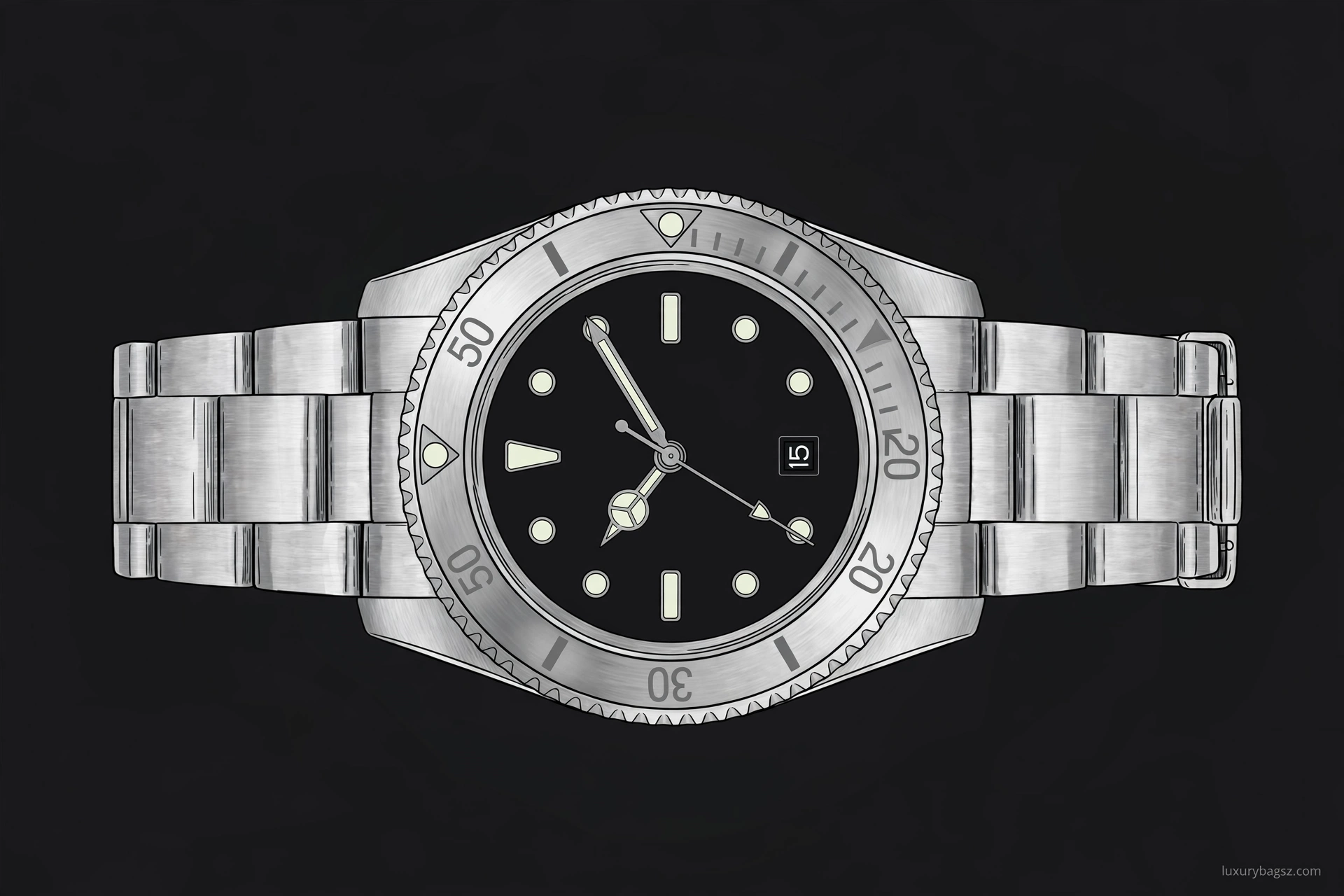
Rolex is the most recognised luxury watch brand on earth, and the most liquid. Its watches are worn by divers, pilots, racers, presidents, and film stars, and its steel sports models often trade above retail on the secondary market.
The brand's genius is consistency. A Submariner from 2026 looks like a Submariner from 1966, a Datejust is still a Datejust, and every model is built to be worn daily for decades, then serviced and worn again.
Buying a Rolex is unlike buying any other watch, because availability is the hard part. Authorised dealers allocate scarce steel sports models to known clients, waiting lists run from months to years, and pre-owned prices reflect that scarcity directly.
This guide covers the history, every major model family, real 2026 prices, waiting lists, and the pre-owned checks that protect you. It is written for a first-time buyer, but collectors will find the reference and pricing detail useful too.
Key Takeaways
- Rolex was founded in London in 1905 by Hans Wilsdorf, moved to Geneva in 1919, and the Rolex name was registered in 1908.
- The Oyster waterproof case arrived in 1926, the Perpetual self-winding rotor in 1931, and the Datejust in 1945.
- Icons include the Submariner (1953), GMT-Master (mid-1950s), Day-Date (1956), Daytona (1963), and Sea-Dweller (1967).
- Every current Rolex uses an in-house movement tested to the Superlative Chronometer standard, tighter than standard chronometer certification.
- Retail in 2026 runs from roughly $6,000 for an Oyster Perpetual to over $40,000 for a gold Day-Date, with steel sports models often trading above retail pre-owned.
- Rolex does not publish production figures, but industry analysts estimate roughly 800,000 to 1,000,000 watches a year.
- Authorised dealer waiting lists in 2026 run from months for a Datejust to roughly five years for a Daytona or GMT-Master II.
- Key pre-owned checks: papers and box, serial and reference numbers, dial originality, service history, and a reputable seller.
London, 1905: Wilsdorf's Radical Idea
Hans Wilsdorf, a German businessman, founded Wilsdorf and Davis in London in 1905 with his brother-in-law Alfred Davis. Their idea was radical for the time: make wristwatches that were as accurate as pocket watches.
In 1905, wristwatches were considered jewellery for women, while men carried pocket watches. Wilsdorf believed wristwatches would become the standard, and he set out to prove they could be precise, reliable, and elegant.
He sourced high-quality Swiss movements and fitted them into cases built for daily wear. The business grew quickly, because Wilsdorf understood marketing as well as watchmaking, and he promoted accuracy as a selling point.
In 1908, Wilsdorf registered the name Rolex. He wanted a name that was short, easy to pronounce in any language, and easy to fit on a small dial. The name's origin is often debated, but its practicality is not.
Operations moved to Geneva in 1919, after wartime taxes made London less attractive for a Swiss-focused business. Geneva remains Rolex's home, and the move completed the brand's transformation into a Swiss watchmaker.
The Oyster Case and the Channel Swim
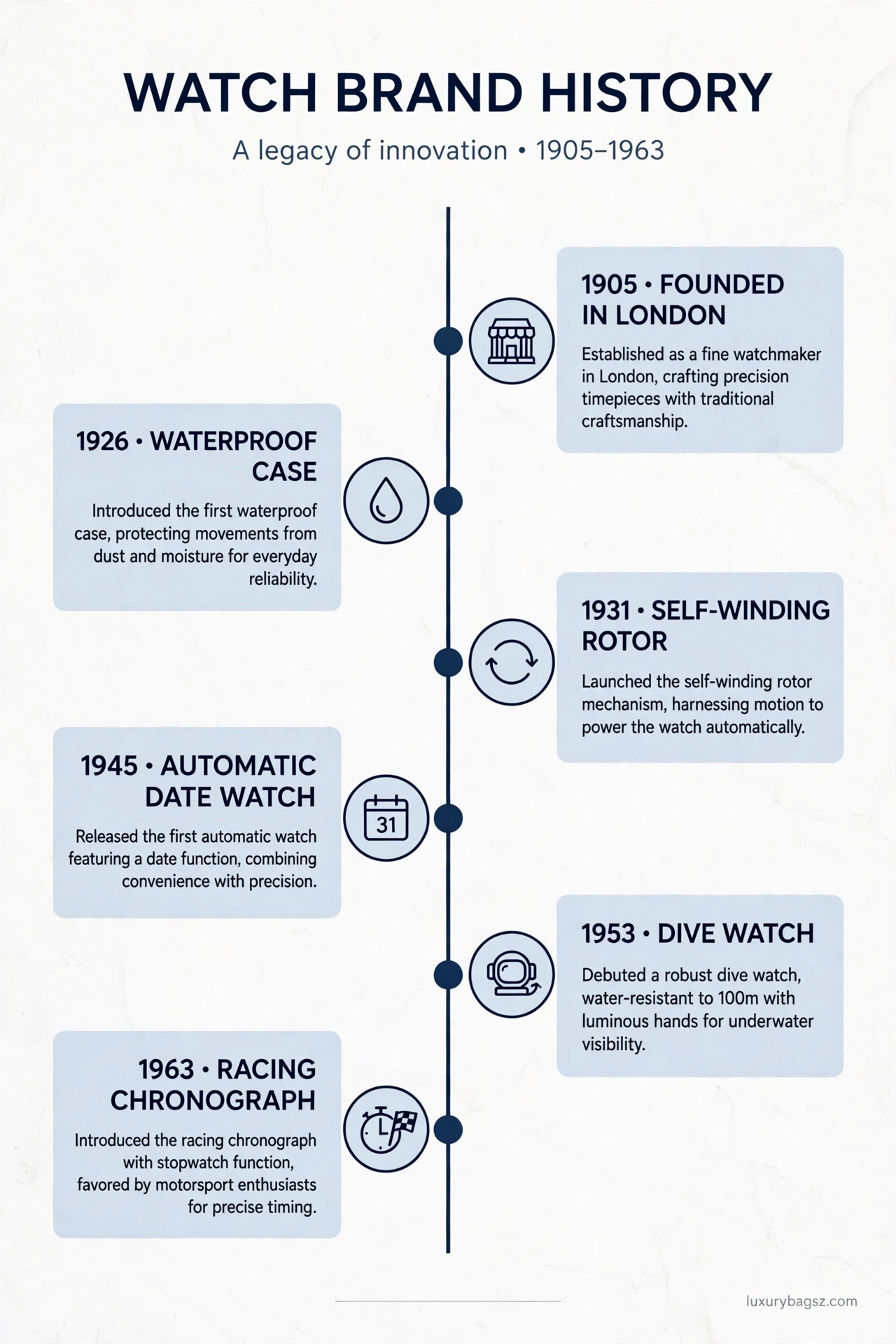
In 1926, Rolex patented the Oyster case, the first waterproof wristwatch case. It used a screw-down bezel, case back, and winding crown to seal the movement from water and dust, like an oyster's shell.
The proof came in 1927, when Mercedes Gleitze swam the English Channel wearing an Oyster. The watch survived more than ten hours in the water, and Rolex advertised the feat widely, with Gleitze's testimonial on the front page of a London newspaper.
That publicity established Rolex's formula: prove a watch in public, under extreme conditions, and let the achievement sell it. The same formula later carried the Submariner, the GMT-Master, and the Daytona.
The Oyster case remains the foundation of almost every Rolex today, from the Oyster Perpetual to the Submariner. Water resistance ratings vary by model, but the sealed-case principle is the same across the range.
Perpetual, Datejust, and the Everyday Revolution
In 1931, Rolex introduced the Perpetual rotor, a self-winding mechanism that winds the watch from the wearer's movement. It freed owners from daily hand-winding, and it made automatic watches practical for everyday life.
The Datejust arrived in 1945, marking Rolex's 40th anniversary. It was the first wristwatch with a date that changed automatically at midnight, shown through a window at 3 o'clock with a Cyclops magnifier on the crystal.
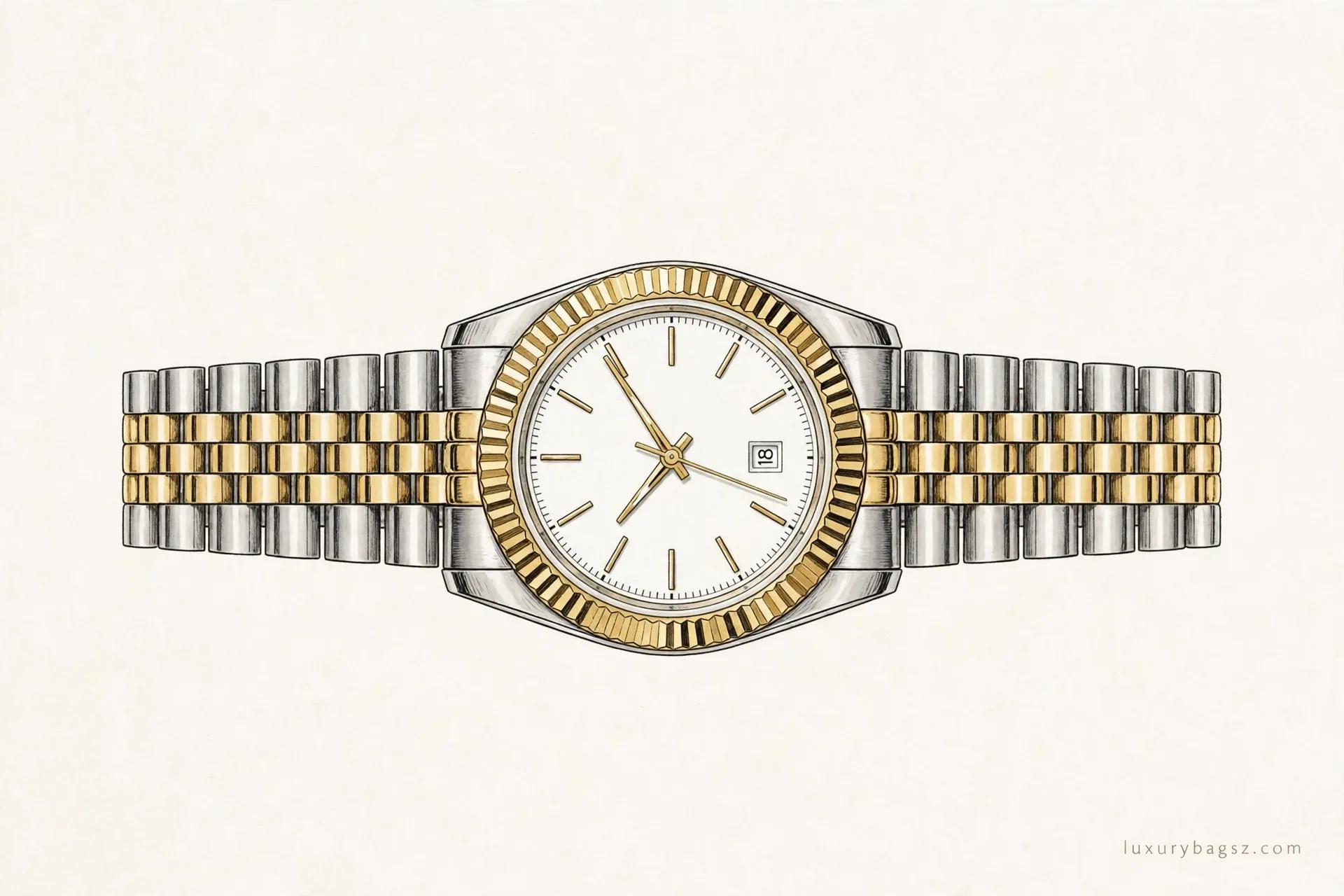
The Datejust also introduced the Jubilee bracelet, a five-link design made for the anniversary model. The Jubilee remains a Datejust signature today, alongside the Oyster bracelet option.
Together, the Oyster case, the Perpetual rotor, and the Datejust date created the modern Rolex formula: waterproof, self-winding, and useful. Every later Rolex builds on those three ideas, and no rival has matched their combination so consistently.
For buyers, this history matters because it explains Rolex's design conservatism. The brand improves movements, materials, and bracelets, but it rarely changes a successful design, which is why vintage and modern Rolex models look so alike.
Submariner: The Dive Watch That Defined a Category
The Submariner arrived in 1953, at the Basel Watch Fair, as one of the first wristwatches purpose-built for diving. The first model, ref. 6204, was rated to 100 metres, with a rotating bezel, luminous markers, and a robust Oyster case.
By 1969, the Submariner Date, ref. 1680, added a date window, creating the two Submariner lines that still exist today: no-date and date. The no-date line runs 6204 to 5513 to 14060 to 114060 to the current 124060, while the date line runs 1680 to 16610 to 116610 to the current 126610.
The modern Submariner is 41 mm, rated to 300 metres, with a Cerachrom ceramic bezel, Chromalight lume, and a Glidelock clasp that adjusts without tools. It is the benchmark dive watch, and the model against which every luxury diver is measured.
Sean Connery wore a ref. 6538 Submariner as James Bond in Dr. No in 1962, giving the watch screen fame that predates Omega's Bond association by decades. Later Bonds wore other brands, but the Submariner's Bond link remains part of its story.
Retail for a Submariner Date sits around $10,250 in 2026, per pricing guides, while secondary prices run far higher, reflecting waiting lists. The no-date model retails around $9,100, making it the cheaper entry into the Submariner line.
GMT-Master: The Pilot's Watch
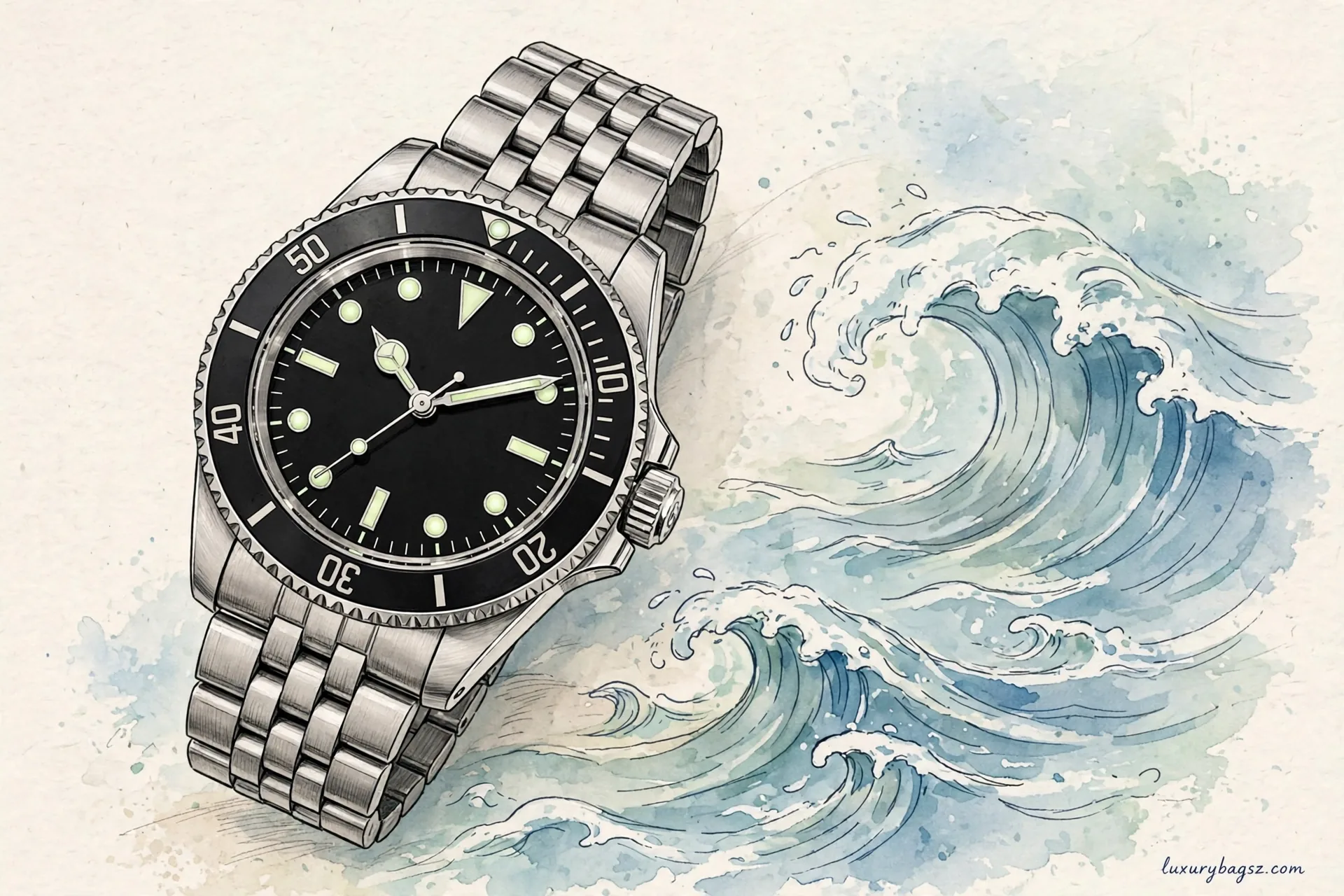
The GMT-Master was developed in the mid-1950s with Pan American Airways, for pilots crossing time zones. Its fourth hand and 24-hour bezel let a pilot read home time and local time at a glance.
The first reference, 6542, arrived in the mid-1950s, with a Bakelite bezel in red and blue, later nicknamed Pepsi. Sources vary on whether the launch year was 1954 or 1955, so this guide gives the reference and the era rather than insisting on one year.
Later GMT-Masters added independent hour-hand adjustment, letting travellers change local time without stopping the watch. The modern GMT-Master II keeps that function, with a Cerachrom bezel in colour combinations including Pepsi (red and blue), Batman (black and blue), and Sprite (black and green).
GMT-Master II retail sits around $10,700 to $11,800 in 2026, depending on configuration, while secondary prices run far higher, especially for Pepsi and Batman models. Waiting lists for popular GMT models run to years at many dealers.
For travellers, the GMT-Master II remains the most useful Rolex complication. It tells two or three time zones, wears like a sports watch, and suits daily life far better than a chronograph or an annual calendar.
Daytona: From Racing Failure to Grail
The Cosmograph Daytona arrived in 1963 as a racing chronograph, with a tachymeter bezel for measuring speed. It was named for the Daytona International Speedway, and it was designed for drivers who needed to time laps.
Early Daytonas sold slowly, and dealers discounted them. The turnaround came through collecting, especially the Paul Newman Daytona, with its exotic dial, which became one of the most valuable wristwatches ever sold, reaching nearly $18 million at auction.
Modern Daytonas use in-house chronograph movements, with a Cerachrom bezel and a 40 mm case. Retail sits around $16,100 for a steel model in 2026, while secondary prices run roughly double, reflecting waiting lists of up to five years.
The Daytona is the hardest Rolex to buy at retail, and the most likely to disappoint a buyer who expects investment returns. Its premium depends on hype, condition, and completeness, and it can narrow as fast as it widens.
Buy a Daytona because you love chronographs and racing history, not because you expect a guaranteed profit. A Daytona worn daily for decades is a better purchase than a Daytona bought as a lottery ticket.
Datejust and Day-Date: The Everyday and the Presidential
The Datejust remains Rolex's best-selling watch and the most versatile model in the range. It comes in 28 mm, 31 mm, 36 mm, and 41 mm, in steel, Rolesor (steel and gold), and gold, with smooth, fluted, or diamond bezels.
Datejust retail runs around $7,650 to $8,650 for common steel and Rolesor configurations in 2026, with gold and diamond models far higher. Secondary prices sit close to retail for most Datejust models, making it the most fairly priced Rolex to buy pre-owned.
The Day-Date, launched in 1956, is the precious-metal flagship, available only in gold or platinum, with a day display spelled out in full at 12 o'clock. It is nicknamed the President for its bracelet, and it has been worn by presidents, leaders, and executives.
Day-Date retail starts around $38,850 for a yellow gold model in 2026, rising past $50,000 for platinum and diamond versions. It is a formal watch, not a sports watch, and it suits buyers who want Rolex prestige without a waiting list.
Our dedicated Rolex 1908 guide covers Rolex's modern dress line, which replaced the Cellini in 2023. The 1908 suits buyers who want a Rolex dress watch without the Day-Date's price or the Datejust's ubiquity.
Oyster Perpetual, Explorer, and Air-King: The Entry Points
The Oyster Perpetual is Rolex's simplest watch and its entry point, with time only, no date, and a clean dial. It comes in 28 mm, 31 mm, 34 mm, 36 mm, and 41 mm, with colourful lacquer dials that make it the most playful Rolex.
Oyster Perpetual retail runs around $5,800 to $8,000 in 2026, depending on size, making it the cheapest new Rolex. Secondary prices sometimes sit above retail for popular colours, but most Oyster Perpetual models trade near retail.
The Explorer, launched in 1953 after the Everest expeditions, is a minimal tool watch with a 36 mm or 40 mm case, a highly legible dial, and 100 metres of water resistance. It suits buyers who want Rolex toughness without a bezel, a date, or a complication.
The Explorer II, from 1971, adds a 24-hour hand and a fixed 24-hour bezel for cave explorers and polar travellers who cannot tell day from night. It is 42 mm, with a white Polar dial or a black dial, and it suits larger wrists.
The Air-King, revived as a 40 mm pilot-inspired model, offers a distinctive black dial with large numerals. It is often the most available Rolex sports model, making it a realistic first Rolex for buyers who cannot wait for a Submariner.
Sea-Dweller, Yacht-Master, Sky-Dweller, and the Wider Range
The Sea-Dweller, launched in 1967 for saturation divers working with COMEX, added a helium escape valve that lets helium escape during decompression without popping the crystal. The modern Sea-Dweller is 43 mm, rated to 1,220 metres, and it suits divers who want more than a Submariner.
The Deepsea, the Sea-Dweller's larger sibling, is 44 mm and rated to 3,900 metres, with a Ringlock case system. It is a serious instrument, and it wears large, so it suits bigger wrists and buyers who genuinely dive deep.
The Yacht-Master, from 1992, is a sailing watch with a rotatable bezel, available in steel, Rolesor, and gold, plus a 42 mm RLX titanium version. Retail starts around $14,000 for precious-metal and Rolesium versions, and it suits buyers who want a sporty Rolex with a softer character than a Submariner.
The Sky-Dweller, from 2012, is Rolex's most complicated current watch, with an annual calendar and a second time zone shown by an off-centre disc. Retail starts around $16,600 for steel and gold Rolesor, rising past $50,000 for solid gold.
The 1908 dress line, the Cellini's successor, and the Land-Dweller, a 2025 integrated-bracelet model at $14,900 for a 40 mm version, complete the modern range. Together, they show Rolex expanding beyond its sports icons without abandoning them.

Materials: Oystersteel, Gold, and Cerachrom
Rolex materials are part of its value proposition, because the brand makes and tests them itself. Oystersteel is Rolex's name for 904L stainless steel, which resists corrosion better than the 316L steel most watchmakers use, and it polishes to a brighter finish.
Rolesor combines steel and gold on the same watch, usually a steel case and bracelet with a gold bezel, crown, and centre links. It offers gold presence at a steel-plus price, and it suits buyers who want warmth without a full gold watch.
Rolex gold comes in yellow, white, and Everose, a proprietary rose gold that resists fading. Everose is used across the range, from Datejust to Day-Date, and it holds its colour better than standard rose gold alloys.
Cerachrom is Rolex's ceramic for bezel inserts, used on the Submariner, GMT-Master II, and Daytona. It resists scratches and fading from sunlight, but it can chip if struck hard, and a chipped bezel needs replacement rather than polishing.
Chromalight is Rolex's luminous material, which glows blue in the dark and lasts longer than older lume. It matters for divers and travellers who read their watch at night, and it is one of the small details that separate modern Rolex from vintage models.
Movements and the Superlative Chronometer Standard
Every current Rolex uses an in-house movement, designed, made, and assembled by Rolex. That vertical integration supports quality control, parts supply, and servicing, and it is why Rolex can service watches from the 1960s today.
Movements are first tested by COSC, the Swiss chronometer testing body, for accuracy over 15 days in several positions and temperatures. Rolex then regulates the finished, cased watch to its own Superlative Chronometer standard, which allows minus 2 to plus 2 seconds a day, tighter than COSC alone.
Key movement families include the 32xx series in most modern models, with a 70-hour power reserve, and the 4131 chronograph calibre in the Daytona, with a 72-hour reserve. The 1908 uses calibre 7140, a slim dress movement with a 66-hour reserve.
Power reserve matters for rotation. A 70-hour reserve means a watch left on Friday still runs on Monday, while a shorter reserve needs resetting. For a daily wearer, that difference is convenience, not accuracy.
When buying pre-owned, ask which calibre is inside and when it was last serviced. A watch with a modern 32xx movement, documented service, and a full set is a different purchase from an older watch with an undocumented movement.
Reading a Rolex Reference Number
Rolex reference numbers identify the model, material, and bezel, and they are the fastest way to compare listings. A reference such as 126610LN breaks down as generation, model family, and variant codes.
The letters after the numbers matter. LN means a black bezel, BLRO means a blue and red bezel, and BLNR means a blue and black bezel. Those letters can change a GMT-Master II's price by thousands.
Material codes appear in the reference too, with different numbering for steel, Rolesor, and gold models. A Datejust 126200 is steel, while a 126233 is Rolesor, and the price difference follows the material, not just the size.
Vintage references are shorter, with four or five digits, such as 5513 for a no-date Submariner or 1675 for a GMT-Master. Learning the reference chain for the model you want prevents comparing unlike watches.
Our dedicated Rolex serial number check guide covers finding, dating, and verifying serial numbers in detail. Since around 2010, Rolex has used random serial numbers, so serial alone no longer dates a modern watch, and papers and purchase history matter more.
Sizing and Wear: Finding Your Rolex Fit
Rolex sizing is straightforward, because most models come in several sizes. Datejust models run 28 mm to 41 mm, Oyster Perpetual models run 28 mm to 41 mm, and sports models run 36 mm to 44 mm.
The Submariner at 41 mm suits most wrists, the GMT-Master II at 40 mm wears slightly smaller, and the Daytona at 40 mm wears compactly thanks to its slim profile. The Sea-Dweller at 43 mm and the Deepsea at 44 mm suit larger wrists.
Try before you buy, because bracelet fit matters as much as case size. Rolex bracelets adjust with the Glidelock clasp on divers, the Easylink comfort extension on Datejust models, and micro-adjustments on Oyster bracelets.
Bracelet choice changes wear dramatically. The Oyster bracelet suits sports models, the Jubilee suits Datejust dress wear, the President suits Day-Date formality, and Oysterflex rubber suits Yacht-Master sportiness.
For wrists under about 16 cm, start with 36 mm to 40 mm models. Between 16 cm and 18 cm, most Rolex models work. Above 18 cm, the 41 mm to 43 mm sports models wear most naturally, and smaller models can look lost.
Bracelets, Clasps, and the Details That Matter
Rolex bracelets are engineered, not decorative, and their details affect daily comfort. The Glidelock clasp on the Submariner and Sea-Dweller adjusts in small increments without tools, so the bracelet fits over a wetsuit or on a hot day.
The Easylink extension on Datejust and Oyster bracelets adds 5 mm at a press, giving instant comfort adjustment. It is a small feature that owners use daily, and it is worth checking that it works on any pre-owned watch.
The President bracelet, with its semi-circular links, is exclusive to the Day-Date and some Datejust models. It is comfortable and distinctive, but it shows wear clearly, so check link stretch and clasp function carefully when buying pre-owned.
Oysterflex, a rubber strap with a metal core, suits the Yacht-Master and some Daytona models. It is comfortable and secure, but it wears with use and needs replacement every few years under heavy wear.
Ask for spare links when buying pre-owned, because a bracelet without spares cannot be resized for a larger wrist. Replacement links from Rolex are available but cost money and take time, and a watch that cannot be sized is a watch you cannot wear.
Prices in 2026: Retail by Model
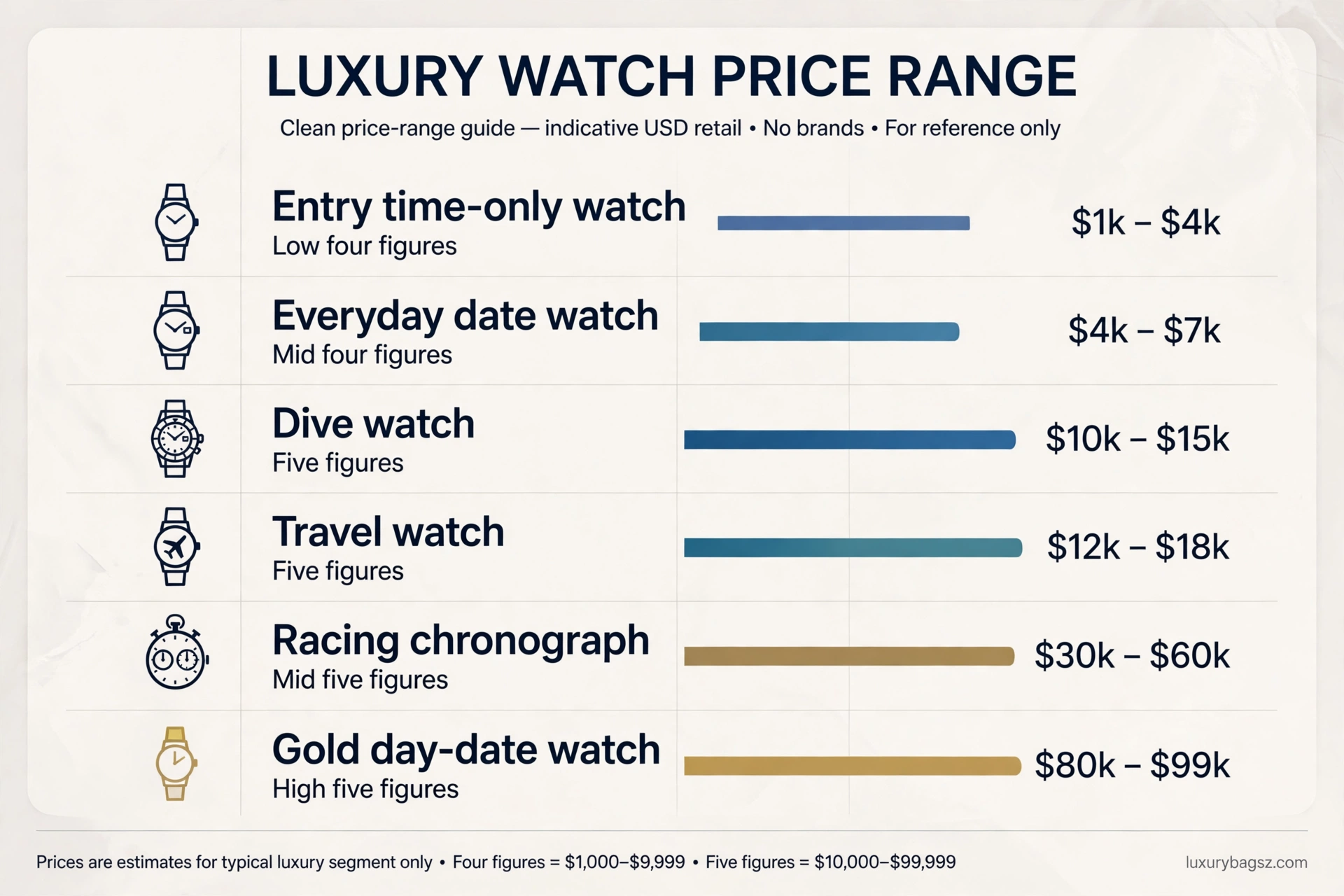
Rolex retail prices in 2026, drawn from pricing guides, give a clear ladder. The Oyster Perpetual runs roughly $6,000 to $8,000, the Datejust roughly $8,000 to $12,000, and the Explorer roughly $7,900 to $8,400.
The Submariner Date retails around $10,250, the no-date around $9,100, and the GMT-Master II around $10,700 to $11,800 depending on bezel and bracelet. The Sea-Dweller runs $12,000 to $13,000, and the Yacht-Master starts around $14,000.
The Daytona retails around $16,100 for a steel model, the Sky-Dweller around $16,600 for Rolesor, and the Day-Date around $38,850 for yellow gold, rising past $50,000 for platinum and diamond versions.
Those are retail prices, not what most buyers pay for popular steel sports models. Availability, not the price list, decides the real cost, which is why the secondary market part below matters more than the retail table.
Rolex implements annual price adjustments, typically 3 to 6 percent, reflecting inflation, material costs, and currency movements. Prices also vary by market with local taxes and duties, so a US price is not a global price.
The Secondary Market: Premiums, Discounts, and Reality
Popular steel sports Rolex models trade above retail, because demand exceeds supply. A Singapore comparison from January 2026 put a Submariner Date roughly 40 to 55 percent above retail, a Daytona 85 to 110 percent above, and a GMT-Master II 60 to 80 percent above.
US figures tell a similar story at different levels, with a Submariner Date secondary average around $13,500 to $16,000 against a $9,150 to $10,250 retail, and a GMT-Master II Batman around $14,000 to $18,000 against a $10,650 to $10,700 retail. Currency, market, and condition explain the differences.
Datejust models trade close to retail, roughly 5 to 18 percent above in Singapore figures, and Oyster Perpetual models trade near retail for most colours. Those models are the fairest Rolex buys pre-owned, because you pay for the watch, not the queue.
Premiums are not guaranteed. They vary by reference, condition, completeness, and market mood, and they can narrow sharply. A buyer who pays double retail for a Daytona at peak hype may wait years to break even, if the premium fades.
Treat secondary prices as market prices, not investment promises. Buy the reference you want, in the condition you can verify, at a price you can accept if the premium halves, and you will never regret the purchase.
Buying New: Authorised Dealers, Waiting Lists, and Tactics
Buying new means buying from an authorised dealer, because Rolex does not sell directly online. Finding a dealer is easy, but obtaining a popular steel sports model is not, because allocation depends on availability and client relationships.
Waiting lists in 2026 run from six to twelve months for models such as the Air-King or Datejust, up to roughly five years for the Daytona and GMT-Master II, per buying guides. Dealers rarely guarantee timelines, and they prioritise established clients.
Building a dealer relationship means buying, servicing, and engaging with the dealer over time, not demanding a scarce watch on a first visit. Dealers remember genuine collectors, and they allocate accordingly. Patience and politeness matter more than pressure.
Consider a less in-demand model first, such as a Datejust or an Oyster Perpetual, to build purchase history. That history helps for a later sports model, and you gain a watch you can wear while you wait.
Never pay a dealer a premium above retail for a new watch, and never buy a new Rolex from an unknown online seller promising immediate stock. Both routes risk grey-market stock, missing warranty, or outright fraud.
Buying Pre-Owned: Papers, Serials, and Condition
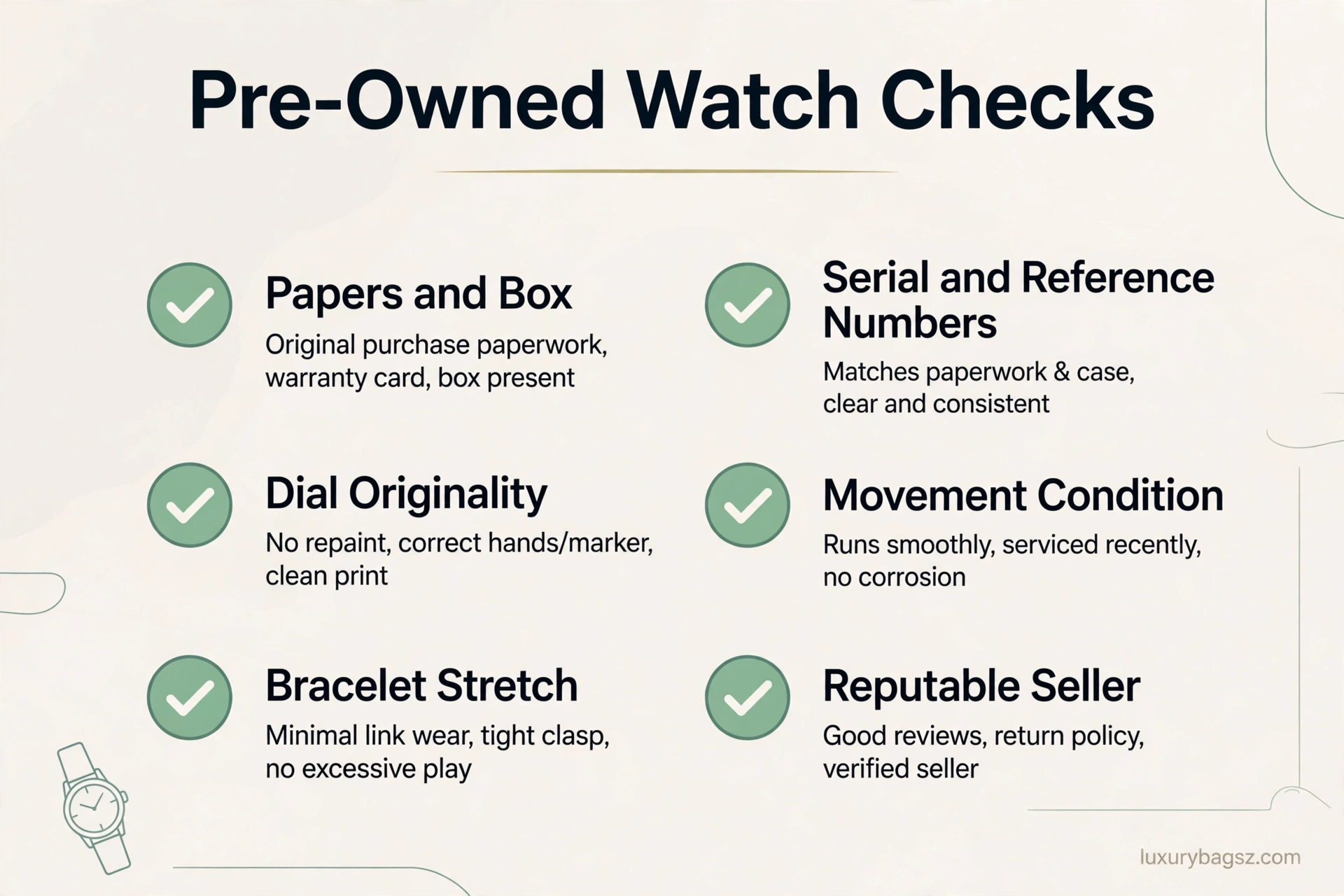
Pre-owned Rolex buying rewards documentation. A full set, watch, box, papers, warranty card, and spare links, sells faster and for more than a bare watch, and it supports authenticity.
Reference and serial numbers should match papers and the era of the watch. Since around 2010, Rolex serials are random, so serial alone cannot date a modern watch, and the warranty card's purchase date matters more. Our serial number check guide explains the eras in detail.
Condition checks include case polishing, dial originality, hands, bezel function, bracelet stretch, crown function, and movement performance. An over-polished case loses sharp edges, a refinished dial loses value, and a stretched bracelet is expensive to fix.
Service history matters. Rolex suggests servicing approximately every ten years, at a cost around $800 to $1,200 for a standard model, more for complications. A watch without recent service needs that budget priced into the offer.
Seller discipline matters as much as the watch. Our general guides on buying pre-owned safely and on authenticating pre-owned pieces cover seller checks, and they apply to watches too. Use vetted dealers with clear returns, and walk away from listings that resist scrutiny.
Fakes and Super Clones: The Checks That Still Work
Rolex is the most counterfeited watch brand in the world, and modern super clones copy weight, movement decoration, and even serial numbers. No single check proves authenticity, and a combination of checks, plus a trusted seller, is the only safe approach.
Start with the basics: dial printing quality, hand and marker alignment, bezel action, crown threading, bracelet fit, and the Cyclops magnification, which should enlarge the date by about two and a half times. Fakes often fail on magnification, bezel feel, or bracelet finish.
Check the movement through a watchmaker, not through a case back, because modern Rolex case backs are solid. A watchmaker can verify the calibre, its finishing, and its service history, and that inspection is money well spent.
Our dedicated guides to spotting a fake Rolex and a fake Rolex Datejust cover the full checks, including weight, lume, rehaut engraving, and clasp codes. Read them before buying any pre-owned Rolex.
If a deal looks too good, it is. A Submariner at half market price from an unknown seller is not a bargain, but a fake, a stolen watch, or a scam. Pay the market price to a vetted dealer, and sleep well.
Servicing, Care, and Daily Wear
Rolex suggests servicing approximately every ten years, depending on model and use, through authorised service centres. A standard service costs around $800 to $1,200, more for chronographs and complicated models, and it includes a warranty on the work.
Daily care is simple. Rinse a dive watch in fresh water after swimming, keep leather straps dry, and wipe the case and bracelet with a soft cloth. Check water resistance before swimming if the watch has not been pressure-tested recently.
Our guide on cleaning a watch covers cases, crystals, bracelets, straps, and water resistance in detail, and its advice applies directly to Rolex ownership. Never open the case yourself, and never let an unqualified repairer work on a Rolex movement.
Magnetism is a quiet enemy of mechanical watches, from phones, speakers, and bag clasps. If a watch suddenly runs fast, magnetism is a likely cause, and demagnetisation is a quick service-centre fix.
Insurance matters at this price level. Insure the watch for replacement value, photograph it, record serial and reference numbers separately, and check whether your policy covers loss outside the home and during travel.
Finance, Insurance, and the Total Cost of Ownership
Buying a Rolex on finance spreads the cost, but it adds interest and risk. A watch bought on credit at a premium price, then sold below that price, leaves a debt larger than the asset, which is a poor outcome for any buyer.
Our dedicated Rolex on finance guide covers monthly payments, total cost, and risks in detail. Read it before signing any finance agreement, and compare the total repaid, not just the monthly figure.
Total ownership cost includes the watch, taxes, insurance, servicing, and straps or bracelet work. A Submariner at retail plus insurance and a service over ten years costs thousands more than its sticker price, and that total should shape your budget.
Insurance should reflect replacement value, which for popular steel models means secondary market value, not retail. A Submariner insured at retail but worth far more pre-owned is underinsured, and a claim will not replace it.
Buy within your means, insure from day one, and service on schedule. A Rolex bought carefully and cared for properly costs less over decades than a cheaper watch replaced every few years.
Rolex Against Omega, Patek Philippe, and Audemars Piguet
Against Omega, Rolex offers stronger resale and wider recognition, while Omega offers comparable toughness, better availability, and lower prices. A Seamaster buyer gets more watch for the money, while a Submariner buyer gets a more liquid asset.
Against Patek Philippe, Rolex offers tougher daily wear, wider availability, and stronger brand recognition, while Patek offers finer finishing, more complex movements, and greater exclusivity. Our Patek Philippe guide covers that world in detail.
Against Audemars Piguet, Rolex offers a broader range and deeper service network, while Audemars Piguet's Royal Oak defines a single sports-luxury idea with great intensity. Our Royal Oak history and sizes guide covers that rival.
Choose Rolex if you want the most recognised, most liquid, toughest luxury watch. Choose a rival if you want finer finishing, better availability, or a quieter collector community.
Common Mistakes First-Time Rolex Buyers Make
The first mistake is chasing a Daytona or GMT-Master II without understanding the range. A Datejust or Oyster Perpetual may suit your life better, be obtainable sooner, and cost far less in premium.
The second mistake is buying pre-owned without papers or inspection. A bare watch at a tempting price can hide a refinished dial, a replaced movement part, or a service history that wipes out the saving.
The third mistake is paying a peak premium for a hype model. Premiums narrow, tastes change, and a watch bought at double retail needs years of appreciation just to break even. Buy at a price you can live with if the premium halves.
The fourth mistake is wearing a dress watch as a sports watch, or vice versa. A Day-Date on leather is not a swimming watch, and a Deepsea, while supremely capable, is too large for formal cuffs. Match the watch to the activity.
The fifth mistake is buying for investment alone. Some Rolex models have appreciated, but values can fall, servicing and insurance eat returns, and a watch bought only for profit is rarely worn or enjoyed.
Rolex for Different Lives
For daily professional wear, a Datejust in 36 mm or 41 mm is hard to beat. It is legible, tough, water-resistant enough for rain and swimming, and quiet enough for any office.
For adventure and diving, a Submariner or Sea-Dweller is the natural pick. The Submariner suits most divers and daily wearers, while the Sea-Dweller suits those who want maximum depth rating and presence.
For travel, a GMT-Master II is the obvious choice, with two or three time zones, a rotating bezel, and sports-watch versatility. It suits pilots, executives, and anyone who crosses time zones regularly.
For formal occasions, a Day-Date or a 1908 dress watch complements tailoring without bulk. The Day-Date signals Rolex prestige, while the 1908 offers dress elegance at a lower price.
For a first Rolex on a budget, an Oyster Perpetual or an Air-King offers the brand's quality at the lowest entry cost. Buy from a vetted dealer or an authorised dealer, get it serviced, and wear it daily.
A First-Time Buyer's Checklist
Define your use first: daily, diving, travel, formal, or collecting. That decision narrows the range from dozens of references to a handful, and it prevents buying a Daytona for a life that needs a Datejust.
Set a total budget, not just a watch budget. Include taxes, insurance, and a service if buying pre-owned without recent history. A watch bought at your limit with no budget left for care is a false economy.
Visit an authorised dealer, try watches in person, and ask about availability, waiting lists, warranty, and servicing. Handling a Submariner, a GMT-Master II, and a Datejust side by side teaches more than hours of reading.
If buying pre-owned, insist on a full set where possible, verify reference and serial numbers, check dial originality, and get an independent inspection. Use vetted dealers with clear returns, and walk away from listings that resist scrutiny.
Finally, insure the watch, record its details separately, and plan servicing from day one. A Rolex bought carefully and cared for properly is not just a watch, but a companion for decades, and a story worth passing on.
Rolex and the Quartz Crisis
The quartz crisis of the 1970s and 1980s nearly destroyed Swiss mechanical watchmaking, as cheap, accurate quartz watches undercut mechanical watches on price and accuracy. Many Swiss brands collapsed, and even survivors cut production sharply.
Rolex survived by leaning on its icons, its Oyster case, and its reputation for toughness. The Submariner, Datejust, and Day-Date kept selling to buyers who valued mechanical craft over quartz convenience, and Rolex invested in its own manufacturing rather than outsourcing.
The crisis explains why some 1970s Rolex models, such as quartz Datejust models, exist at lower prices today. Those models are genuine Rolex watches, but they lack the mechanical movement collectors prize, and they should not be priced as mechanical equivalents.
It also explains Rolex's later conservatism. The brand learned that changing a successful design risks alienating loyal buyers, so it improves movements and materials while keeping designs recognisable across decades.
For buyers, quartz-era Rolex models need extra care. Check the movement type, serviceability, and parts availability before buying an unusual quartz-era piece, however tempting the price, because a watch that cannot be serviced is a poor purchase.
Famous Wearers and Cultural Moments
Rolex's cultural footprint is unmatched. Paul Newman's Daytona, Steve McQueen's Explorer II, and Fidel Castro's GMT-Master are all part of watch lore, and each association adds romance, though not necessarily value, to ordinary models.
Presidents and leaders have worn Day-Dates for decades, giving the model its Presidential nickname. That association suits the Day-Date's formal character, but it should not add a premium to a standard Day-Date without provenance.
In sport, Rolex sponsors golf, tennis, sailing, and motorsport, putting its name beside major events. That visibility supports demand, but it does not guarantee resale value for any single model.
In film, the Submariner's Bond link, the GMT-Master's pilot heritage, and the Daytona's racing story give every collection a narrative. Those stories sell watches, but they should never be the sole reason for a purchase.
Buy the watch, not the celebrity. A Submariner is worth buying because it is a superb dive watch, not because an actor wore one. The story is a bonus, and bonuses should never be the reason for a purchase.
The Vintage Rolex Market in Detail
Vintage Rolex rewards patience and study. The most collectible families are early Submariners, GMT-Masters, Daytonas, and Explorer models, especially those with original dials, hands, and bezels.
Tropical dials, which have faded from black to brown with age and sunlight, command premiums when the fading is natural and even. Artificially faded dials exist, so a tropical dial needs expert verification, not just a seller's claim.
Patina on lume, the creamy colour of aged tritium markers, is prized when it matches across dial and hands. Mismatched lume, where hands glow differently from markers, signals replacement parts and reduces value.
Double-red and single-red Sea-Dwellers, named for the red text on their dials, are among the most collected vintage Rolex models. Their premiums depend on dial variant, condition, and completeness, and they deserve specialist advice.
Start vintage buying with a dealer who specialises in Rolex, get an independent inspection, and learn one family deeply before spending serious money. Vintage Rolex is a hobby that rewards homework, and fakes punish those who skip it.
Frequently Asked Questions
When was Rolex founded?
Rolex was founded in London in 1905 by Hans Wilsdorf as Wilsdorf and Davis. The Rolex name was registered in 1908, and operations moved to Geneva in 1919.
Why is the Submariner so expensive pre-owned?
Because demand exceeds supply at retail, and authorised dealers allocate scarce steel models to known clients with waiting lists. Secondary prices reflect that scarcity, with popular models trading well above retail.
What is the difference between a Submariner Date and no-date?
The Date model adds a date window with a Cyclops magnifier, while the no-date keeps a symmetrical dial without a date. The date line runs through ref. 1680 to the current 126610, and the no-date line runs through 5513 to the current 124060.
What is a Superlative Chronometer?
It is Rolex's standard for a finished, cased watch, allowing minus 2 to plus 2 seconds a day, tighter than COSC certification of the bare movement alone. Every current Rolex is tested to this standard.
How long is the waiting list for a Rolex?
It varies by dealer, reference, and client history. In 2026, guides put waits at six to twelve months for an Air-King or Datejust, and up to roughly five years for a Daytona or GMT-Master II.
Is a Rolex a good investment?
Some steel sports models have appreciated above retail, but premiums vary and can fall, and servicing and insurance cost money. Buy a watch you love wearing, and treat appreciation as a bonus.
How often should a Rolex be serviced?
Rolex suggests approximately every ten years, depending on model and use, through authorised service centres. A standard service costs around $800 to $1,200, more for chronographs and complications.
Can you buy a Rolex online?
Rolex sells through authorised dealers, not general online shops. Pre-owned dealers sell online, but insist on full documentation, matching serial and reference numbers, and independent inspection.
How do you spot a fake Rolex?
Check dial printing, hand alignment, bezel action, crown threading, bracelet fit, Cyclops magnification, and movement quality through a watchmaker. Our dedicated fake Rolex guides cover the full checks, and buying from a vetted dealer matters most.
How do you care for a Rolex?
Keep it clean with a soft cloth, rinse after swimming, check water resistance before diving, avoid shocks and magnetism, and service through authorised centres. Insure it for replacement value.
Final Verdict
Rolex suits buyers who want the most recognised, toughest, most liquid luxury watch in the world. A Submariner for diving, a Datejust for daily life, a GMT-Master II for travel, and a Daytona for racing history cover almost every life, and every one of them can be serviced for decades.
Start with the watch that fits your life, not the one with the longest waiting list. A Datejust or Oyster Perpetual bought today and worn daily beats a Daytona promised in five years, and it teaches you what you actually want from Rolex.
Buy from an authorised dealer or a vetted pre-owned dealer, insist on a full set and verified numbers, and budget for servicing and insurance from day one. Patience prevents costly mistakes at this price level, and it is rewarded with a watch that holds its place.
Keep the full set together, service on schedule, and wear the watch rather than locking it away, because a Rolex earns its meaning on the wrist, not in a safe. A watch chosen with patience and maintained with care will mark decades of your life faithfully, and it will be ready for the next generation when the time comes.






