What Is Hermès Ready-to-Wear? The Women’s and Men’s Clothing Lines Explained

Ready-to-Wear Is Hermès Beyond the Bag
Hermès ready-to-wear is the house's clothing: seasonal collections for women and men covering coats, tailoring, knitwear, dresses, shirts, trousers and leather pieces, made to the same hand-finished standard as its bags.
It is one of the house's historic crafts, not a side line. Clothing sits inside the ready-to-wear and accessories group alongside shoes, belts, gloves and hats.
If bags are how most people meet Hermès, clothing is where long-term clients quietly spend. This guide explains what each line includes, who designs it and what it costs.
Key Takeaways
- Hermès ready-to-wear covers full women's and men's wardrobes, from coats and tailoring to knitwear, silk dresses and leather pieces.
- Women's ready-to-wear is designed by Nadège Vanhée; the men's line was led for 37 years by Véronique Nichanian.
- Fabrics lean on natural fibres: cashmere, fine wool, silk, cotton and the house's own leathers.
- Prices typically start around four figures for shirts and knitwear and rise well beyond that for coats and leather.
- Fit is precise rather than oversized, and French sizing is the reference on labels.
- Pieces are seasonal and often boutique-led, so popular sizes in core colours sell through quickly.
What Ready-to-Wear Means at Hermès
Ready-to-wear simply means clothing made in standard sizes for the season, as opposed to made-to-measure or couture. At Hermès it is a core craft with its own ateliers and runway shows in Paris.
The women's and men's lines each have a dedicated artistic director, their own shows and their own design language. They share the house codes: equestrian references, silk prints, fine leather and a restrained palette lifted by strong colour.
Our overview of luxury clothing brands shows where Hermès sits in that landscape: less logo-led than most rivals, and more focused on fabric and cut.
Clothing also feeds the rest of the house. A silk print may appear on a dress, a scarf and a shirt in the same season, which is why clients often build outfits across the store.
The women's shows run twice a year in Paris, and the collections are large: day tailoring, knitwear, silk dresses, leather and evening pieces all appear in one wardrobe. Clients buy across it rather than chasing single statement items.
Prints deserve a mention of their own. The silk design studio's artwork moves between scarves and clothing, so a motif you meet on a carré in spring may return on a dress or a shirt the following season.
The Women's Line: Nadège Vanhée's Wardrobe
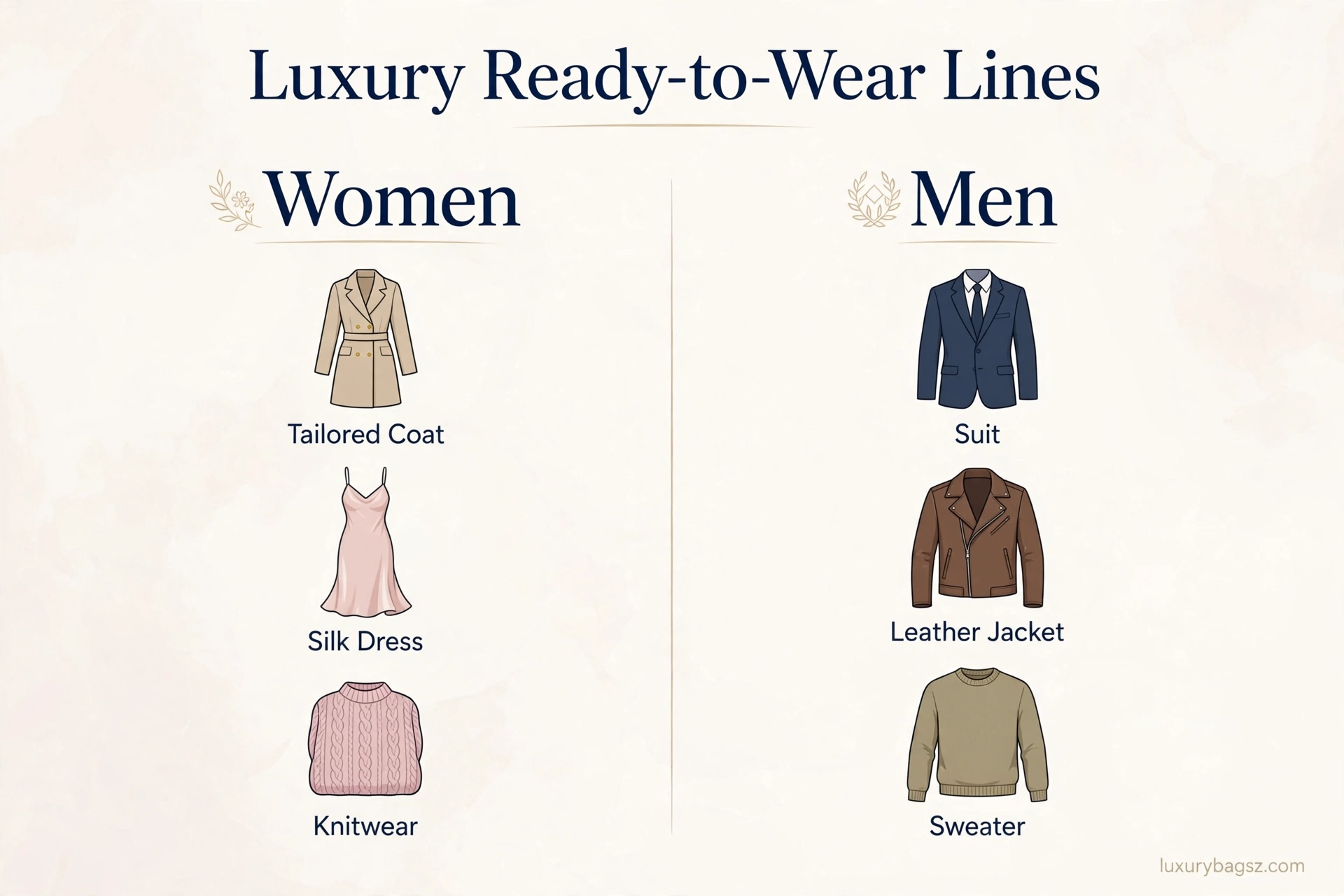
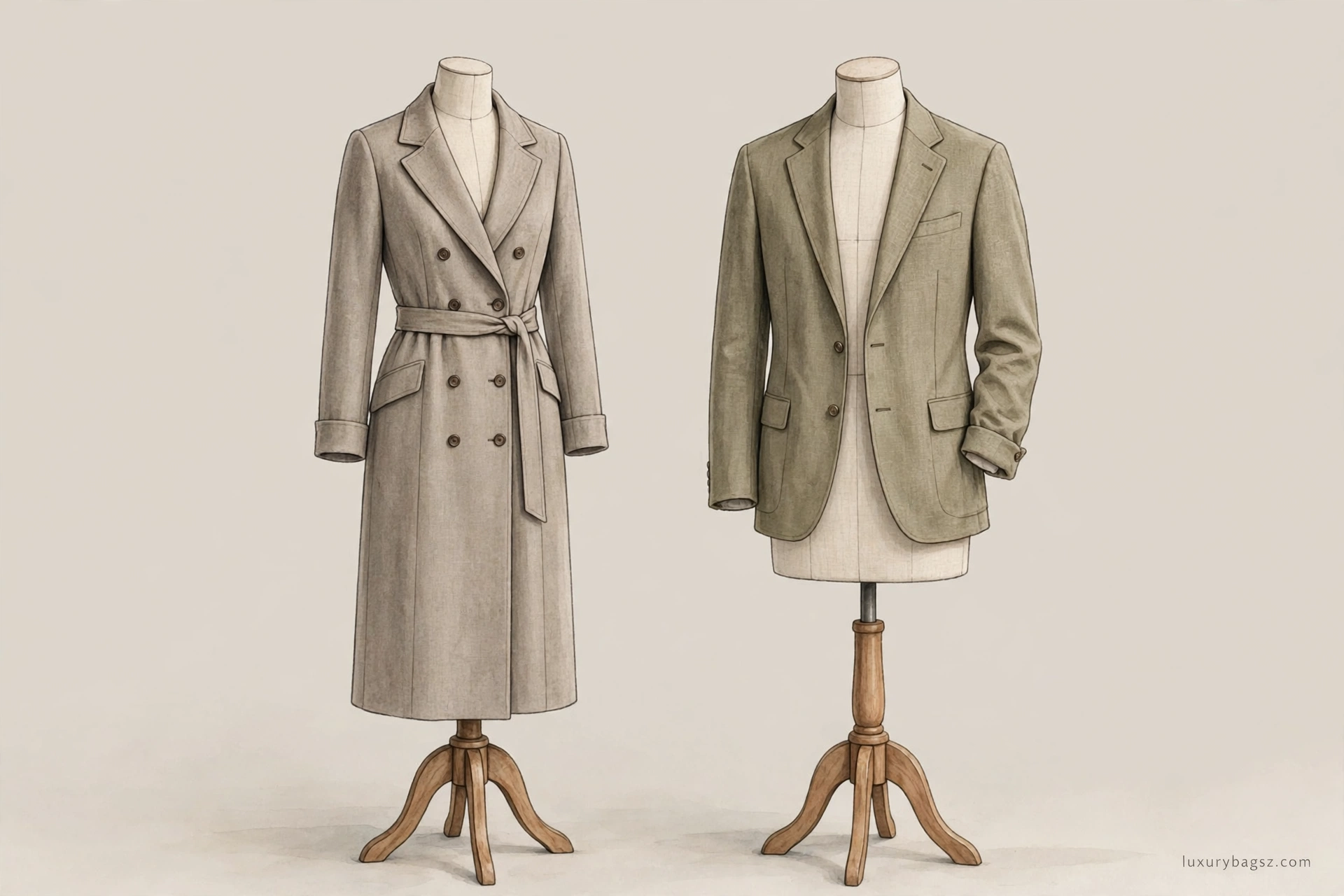
Nadège Vanhée has designed women's ready-to-wear since 2014. Her Hermès woman wears long lean coats, leather trousers and skirts, crisp shirting, fine knitwear and fluid silk dresses.
Signature pieces return in new forms each season: the tailored coat, the leather shirt dress, the printed silk blouse and the riding-inspired jacket. Colours favour warm neutrals, deep browns and blacks, with one or two vivid accents.
The mood is polished but never stiff. Trousers are cut to move, knitwear is soft rather than sculpted, and evening pieces stay understated compared with most Paris houses.
The Men's Line: 37 Years of Véronique Nichanian
Véronique Nichanian led menswear from 1988 and presented her final collection, Winter 2026, in January 2026 to a standing ovation. The current range, piece by piece, is covered in our guide to Hermès men’s clothing. Few designers in fashion have held one post for so long.
Her men's wardrobe is built on ease: soft tailoring, generous knitwear, leather jackets and blousons, relaxed trousers and immaculate shirting. Leather appears everywhere, from full suits to perforated summer pieces.
Grace Wales Bonner has been announced as her successor, so the men's line is entering a new chapter. The craft base, fabrics and ateliers stay the same even as the design voice changes.
For outerwear research, our guide to designer coats to invest in sets out what separates a coat that lasts decades from one that lasts seasons.
Seasonality is real in this range. Summer brings cotton, linen blends and fluid silk; winter brings double-faced wool, cashmere and heavier leather. Planning a purchase around the season you will wear it most is simple but often skipped advice.
Fabrics and How the Clothes Are Made
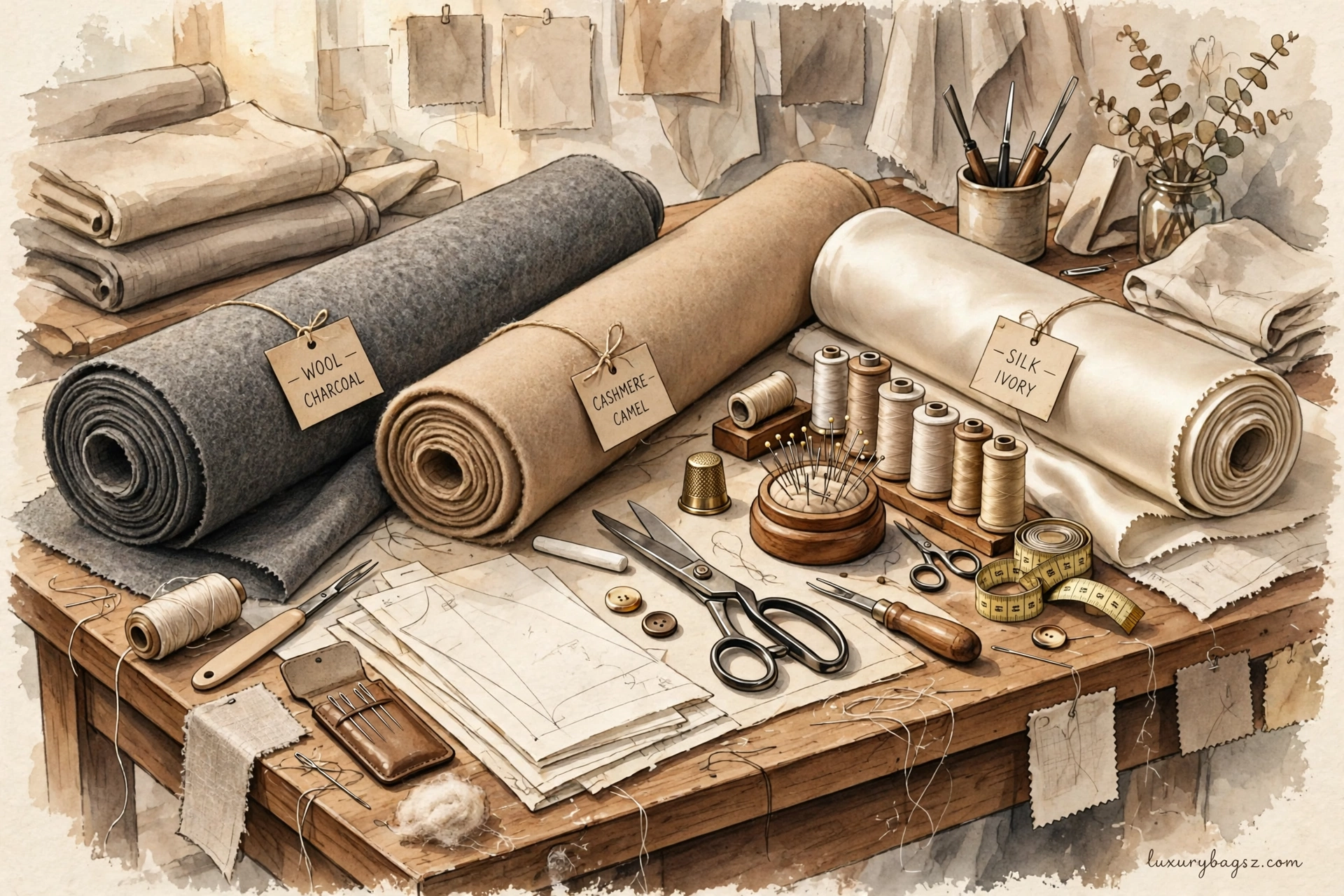
Hermès clothing starts with fabric. Cashmere, double-faced wool, silk twill, cotton poplin and lambskin recur across both lines, often woven or finished to the house's own specifications.
Leather clothing is a house strength because the same craft culture makes the bags. Jackets and trousers in leather are cut for movement, lined lightly and finished with hand-rolled or hand-stitched details where the design calls for it.
Construction is quiet but exacting: matched patterns on prints, clean inside finishing, real horn or metal buttons on many pieces and hems that can usually be altered by the boutique tailor.
Nothing is designed to shout. Logos are rare on the clothing itself; recognition comes from cut, colour and details such as the Chaîne d'ancre motif used as a print, button or knit pattern.
A useful reality check: a full Hermès outfit — coat, knit, trousers and a silk piece — can cost as much as a sought-after bag. Clients who dress head-to-toe in the house treat clothing as their main Hermès spend, not an extra.
What It Costs, in Plain Terms
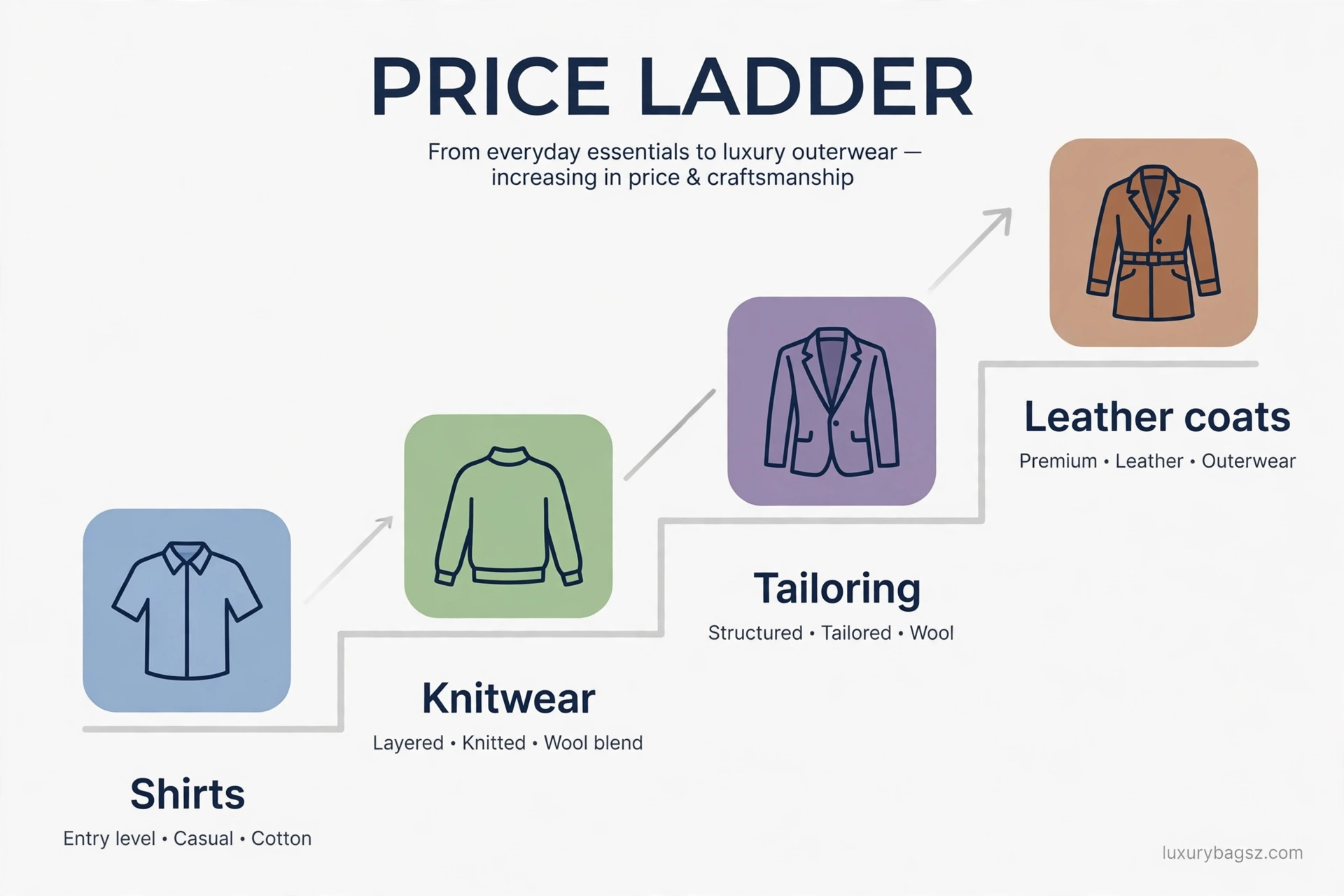
Ready-to-wear is priced like the rest of Hermès: firmly at the top of the market. Shirts and lighter pieces typically start around the high hundreds to low thousands of dollars.
Knitwear commonly sits in the low thousands, tailored jackets and dresses higher, and coats and leather pieces at the top, where five figures are possible for exceptional skins or hand-finished showpieces.
Prices vary by market, fabric and season, and Hermès adjusts them periodically. Treat any single figure you see quoted as a guide for that season, not a permanent list.
Boutique tailoring advice is part of the value. Staff will often suggest trying a tailored piece sitting down as well as standing, since Hermès cuts favour a clean line that should still let you move, drive and work comfortably.
Fit and Sizing
Women's pieces use French sizing, typically 34 to 46, and the cut is precise: shoulders are defined, waists are placed and trousers run long. Many clients size up in tailored pieces for the intended ease.
Men's sizing runs in French chest and trouser measures alongside S to XXL on knitwear and shirting. Nichanian's cut is relaxed through the body but clean at the shoulder, so a looser fit is usually the design, not a sizing error.
Leather pieces fit closest of all and soften with wear. If you are between sizes in a leather jacket or trouser, boutique staff usually advise on how that skin will give.
Keep purchase records and care labels together. If you resell or insure the wardrobe later, proof of boutique purchase and the fabric details on the label answer most questions before they are asked.
Care: Keeping the Clothes at Their Best
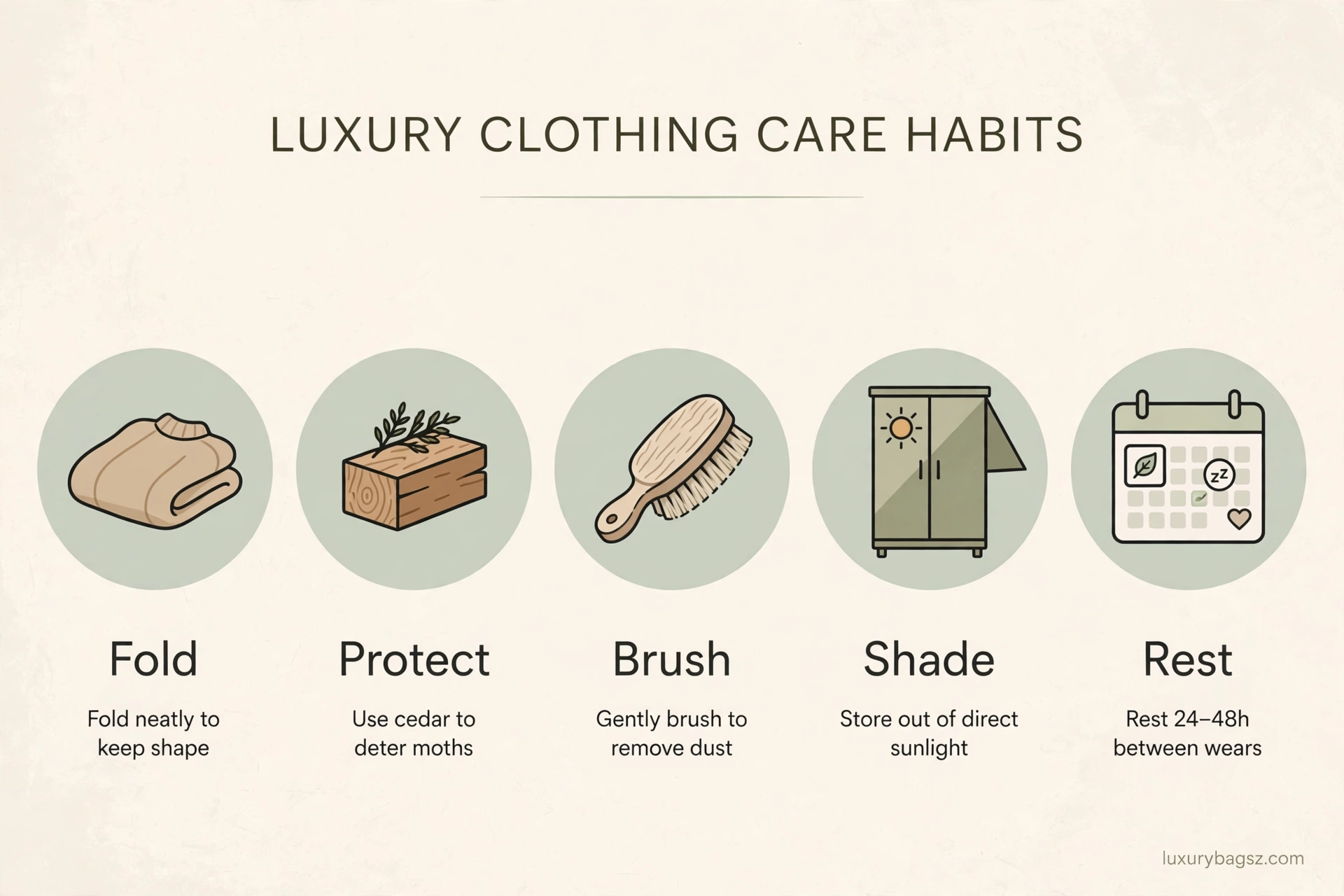
Fine natural fibres reward simple habits: rest garments a day between wears, fold knitwear rather than hanging it, and keep cedar or lavender protection in the wardrobe during moth season.
Dry-clean sparingly and only with a cleaner used to luxury fibres and leather. Leather clothing needs a specialist, never a standard laundry service.
Our fuller guide to how to care for designer clothing covers storage, stain first aid and when to use a specialist.
Ask about upcoming deliveries if your size is missing. Core pieces are replenished through the season, and a boutique can often locate a size from another store. Popular colours in middle sizes are the combinations that vanish first.
How to Buy Your First Piece
Start with a piece you will wear weekly: a knit, a shirt or a coat in a core colour. These show the fabric quality most honestly and cost less than a leather showpiece.
Buy in a boutique where you can try two sizes and ask about alterations. Core colours such as black, navy, grey and warm brown return often; seasonal colours and prints are the ones that disappear.
Pre-owned ready-to-wear can be good value because clothing resells softer than bags, but check fabric condition, alterations and moth damage carefully before you commit.
Frequently Asked Questions
Is Hermès ready-to-wear worth the price?
For fabric quality and finishing, it sits at the very top of the market. Whether it is worth it depends on wear: a coat or knit worn for a decade justifies itself far better than a seasonal piece worn twice.
Who designs Hermès women's clothing?
Nadège Vanhée has been artistic director of women's ready-to-wear since 2014. Her collections are known for lean tailoring, leather pieces and fluid silk.
Who designs Hermès men's clothing?
Véronique Nichanian led the men's line from 1988 to her final Winter 2026 collection. Grace Wales Bonner has been announced as her successor.
Does Hermès clothing run true to size?
Generally yes in French sizing, with a precise tailored cut. Knitwear and men's pieces carry more ease; leather fits closest and softens with wear.
Why is there so little branding on Hermès clothes?
The house has always favoured craft over logos. Recognition comes from cut, fabric, colour and small codes such as the Chaîne d'ancre motif rather than monograms.
Can Hermès clothing be altered?
Boutiques can usually arrange standard alterations such as hems and sleeve lengths. Major re-cutting is not offered, so buy the closest fit first.
Is Hermès ready-to-wear a good resale buy?
Pre-owned clothing usually sells well below retail, which makes it a value route in. Condition, alterations and fabric damage matter more than the season name.
What is the best first Hermès clothing piece?
A cashmere or fine-wool knit, a silk shirt or a classic coat in a core colour. Each shows the house's fabric standard and pairs with most of a wardrobe.
Does Hermès make clothing for children?
The house focuses on adult women's and men's lines. Baby gifts and small accessories exist, but there is no full children's clothing collection.
Where is Hermès ready-to-wear made?
Much of it is made in France, with knitwear and some categories produced by specialist ateliers in Europe. The country of manufacture is printed on each garment's label.
Ready-to-Wear: Finishing You Can Feel
Hermès ready-to-wear is the house's craft applied to the wardrobe: superb fabrics, quiet design and finishing that rewards a close look. Start with knitwear, shirting or a coat, buy the fit carefully, and the piece should serve for years.
Finishing is my home ground: I judge bags by seams, edges and the parts nobody photographs, and Hermès clothing asks for exactly that judgement. The branding is quiet because the making is loud. Start with knitwear or a coat, buy the fit with care, and the standard this house sets for its bags will be hanging in your wardrobe.