How to Spot a Fake Rolex | 12 Checks & Super Clone Guide
Five Fast Checks Before You Trust a Rolex
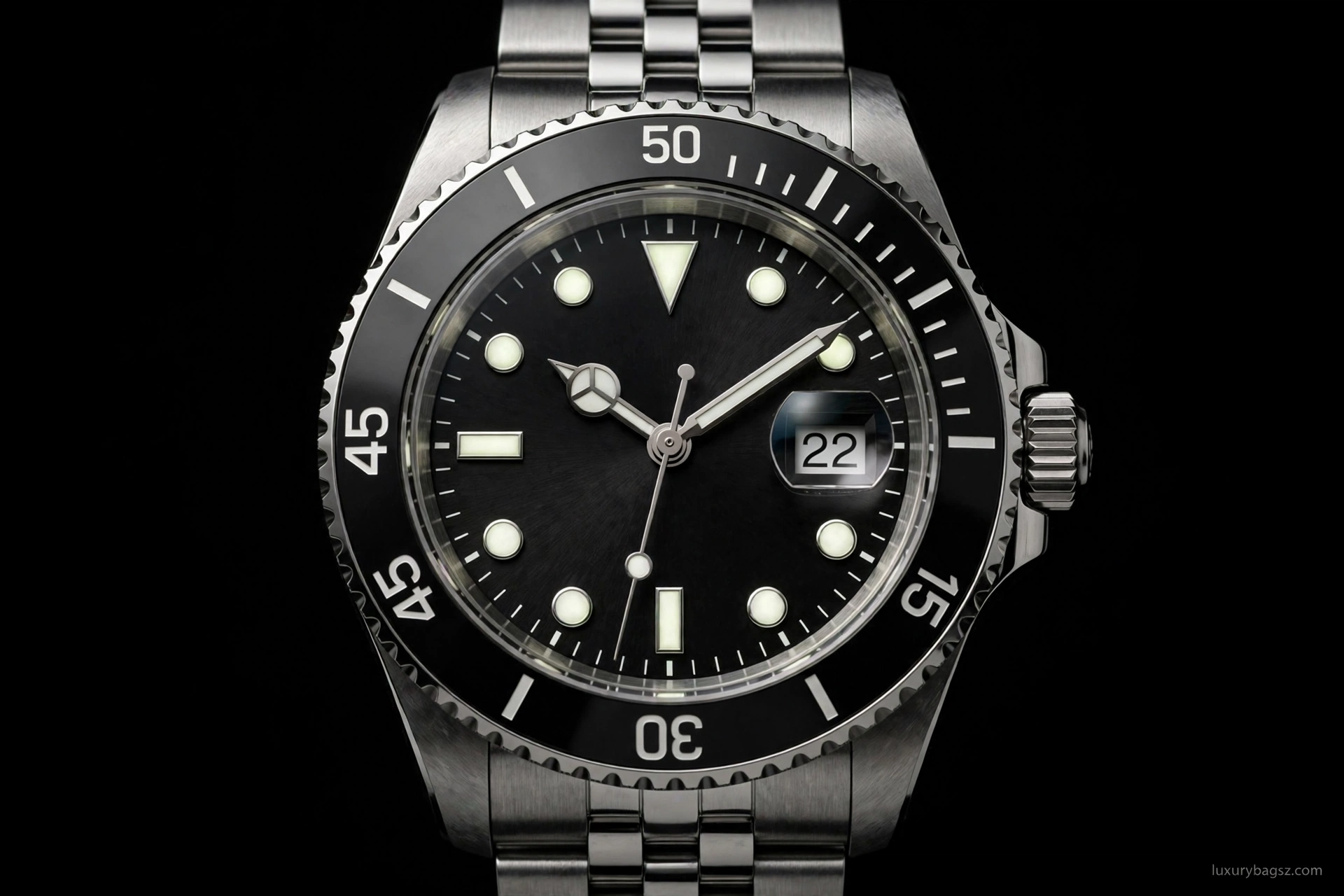
Start with the date lens, dial, inner bezel ring, crystal and caseback together. On a date model the Cyclops should enlarge the numeral 2.5 times so it fills the lens, dial lettering should look crisp and evenly aligned, and the rehaut should carry fine repeated engraving with the serial at 6 o’clock.
Look for a tiny laser-etched crown in the crystal at 6 o’clock, barely visible without magnification, and expect a plain solid caseback on most modern pieces. Fail two or more of these checks and walk away; even passing all five rules out only cheap fakes, because super clones can still require professional authentication.
A how to spot a fake rolex guide has to be honest first: a cheap fake is easy to spot, a good fake is not, and a super clone is designed to pass a casual inspection. If you are buying a Rolex for thousands of dollars, a single check — the Cyclops, the weight, the sweep — is not enough. You need a set of checks, used together, and for a valuable purchase, professional authentication on top of them.
This guide gives you that set. It starts with a 60-second verdict you can use in a shop or on a listing, then explains the 12 checks in order, then covers super clones, model-specific differences, a photo checklist to send a seller, and what to do if you have already bought one.
This guide is general information only. It is not an authentication service, and it is not affiliated with, endorsed by, or sponsored by Rolex. Do not open a watch case yourself, and do not test water resistance yourself — both can damage a genuine watch and void a warranty. For a valuable purchase, get independent authentication from a certified watchmaker or an authorised Rolex service centre.
Table of Contents
Key Takeaways
- No single external check proves a Rolex genuine. Super clones pass many of them.
- The fastest checks are: Cyclops magnification 2.5x, dial printing crispness, rehaut engraving, micro-etched crown at 6 o’clock, and a solid caseback.
- A modern Rolex beats about 8 times a second, so the seconds hand looks like a sweep, but it is still stepping in tiny increments — and super clones sweep too.
- Most modern Rolex casebacks are plain and smooth, not engraved. A heavily engraved caseback is a warning sign, with only rare vintage exceptions.
- There is no public Rolex serial database for private authentication. A serial only helps confirm approximate production year against the reference, through a dealer or professional.
- Papers, boxes, and warranty cards are counterfeited too. They support provenance only after the watch itself is authenticated.
- If you already bought a fake, do not resell it as genuine. Keep your receipt, photos, and messages, and check the platform’s dispute time limits.
60-Second Verdict: The 5 Fastest Checks
Use these first, in this order. If a watch fails two or more, walk away or get professional authentication before you pay anything.
- Cyclops date: On a date model, the date should fill the Cyclops lens and be magnified 2.5 times, clear and bold, not small or distorted. Note the exceptions: a Sea-Dweller and Deepsea have a date but no Cyclops, and a Daytona has no date window at all.
- Dial printing: Text should be crisp, evenly spaced, and perfectly aligned, with no smudging, bleeding, or uneven fonts. The crown logo should be crisp and polished, not dull or lifeless.
- Rehaut engraving: On modern watches, the inner bezel ring between the dial and crystal should be finely laser-engraved with ROLEX repeated around it, plus the serial number at 6 o’clock. It should be fine and precise, not printed, painted, shallow, or misaligned.
- Micro-etched crown: Since 2002, a tiny crown is laser-etched into the crystal at 6 o’clock. It should be almost invisible to the naked eye and appear as a perfect outline under a loupe. A crude, visible, or misplaced crown is a warning sign.
- Caseback: With rare vintage exceptions, a Rolex has a solid, smooth caseback, not a transparent exhibition back. If you can see the movement through the back, it is almost certainly not a genuine modern Rolex.
If all five pass, you still have not proven the watch genuine. You have only ruled out cheap fakes. The full checks below are what separate a good fake from a genuine watch.

Why Fakes Are Harder Now: Super Clones
A super clone is the highest grade of counterfeit. It is not a cheap quartz watch with a Rolex logo. It uses an automatic movement with a smooth sweep, a case and bracelet that approach genuine weight, a rehaut engraving, and a Cyclops that looks right at a glance.
Super clones are built specifically to pass casual inspection, and they are the reason so many old “one check and you are safe” guides are now dangerous.

What still gives a super clone away, most of the time, is detail under magnification and detail as a complete package:
- Movement finishing under a loupe: Even the best super clone movements show rough edges on bridges, incorrect colours, or non-Rolex rotor markings when compared with a genuine calibre. This is why movement inspection by a professional is the conclusive test.
- Cyclops quality: Super clones consistently underperform here. The date still appears slightly small, less crisp, or less perfectly centred than on a genuine watch.
- Bracelet taper and end links: Genuine Rolex bracelets taper in specific ways and sit flush against the case. Super clone bracelets often have incorrect taper angles, small gaps at the end links, or a clasp that feels loose, sticky, or imprecise.
- Paperwork as a package: A super clone is rarely accompanied by convincing original documentation as a complete set — box, papers, card, receipt, and service records that all match the same watch. A single card, on its own, proves very little.
The lesson is not to panic, and it is not to trust a super clone story either way. It is to use all the checks together, and to get professional authentication before you pay a super clone price for what might be a super clone watch.

The same problem appears with vintage luxury bags, where sources disagree on material, origin, and end date, and a single stamp cannot settle it. For a worked example of that problem on another luxury item, see Cambon bag.
The 12 Checks, in Order
Check 1: Cyclops lens and date
On date models, the Cyclops is a raised, convex lens over the date window. It should feel like a substantial bump, not flat, and it should magnify the date 2.5 times so the numeral fills the lens. A date that looks small, distorted, or weakly magnified is a strong warning sign.
Exceptions matter here, and they are a good test of whether a guide knows Rolex at all. A Daytona has no date window, so a Daytona with a date is wrong. A Sea-Dweller and Deepsea have a date function but no Cyclops lens, so the absence of a Cyclops on those models is correct, not a red flag.

Check 2: Dial and printing
Rolex dials are made to very tight tolerances, and counterfeiters consistently fail on printing. Check that all text — ROLEX, OYSTER PERPETUAL, the model name — is crisp, evenly spaced, and perfectly aligned, with no smudging or bleeding at the edges. Markers should be perfectly shaped and uniformly applied, and they should line up: on a Submariner, for example, the triangular hour marker should sit directly beneath the lume dot on the bezel at 12 o’clock.
On mono-coloured Submariners, such as all-green or all-blue models, the dial and bezel should match in shade, not just in colour. A shade mismatch is a warning sign.
Check 3: Lume, by era
Lume is one of the best era checks, because the correct glow depends on the watch’s age:
- Modern Rolex, from 2008: Chromalight, which glows a distinctive electric blue and should last several hours after charging with light.
- Older modern Rolex, before 2008: SuperLuminova or Luminova, which glow green.
- Vintage Rolex: Tritium-based paint, which will have little or no glow now, and will often have developed a slight brown or cream patina.
A modern watch with a green glow, a vintage watch with a bright blue glow, or lume on the hands that does not match the lume on the markers, are all warning signs. Charge the lume with natural or artificial light and check that it does not fade after a few minutes — genuine Chromalight should last hours, not minutes.

Check 4: Rehaut engraving
Since 2002, and standard from 2007 onward, genuine Rolex watches have the serial number laser-engraved on the rehaut — the inner bezel ring between the dial and crystal — at 6 o’clock, with ROLEX repeated around the ring. This engraving is extremely fine and difficult to replicate. On counterfeits it is often absent, shallow, printed rather than engraved, or misaligned.
On watches produced before 2007, the serial is between the lugs at 6 o’clock instead, which brings us to the next check.
Check 5: Serial and reference numbers
Every genuine Rolex has a unique serial number and a reference (model) number. The reference is engraved at the 12 o’clock lug position. The serial is on the rehaut on modern watches, and between the lugs at 6 o’clock on pre-2007 watches.
To check them, you need to remove the bracelet or push the spring bars to expose the engravings — do this carefully, or ask a dealer or watchmaker to do it. Genuine engravings are deep, fine, and sharply defined, and they catch the light clearly when you tilt the watch. Counterfeit engravings are often shallow, rough, misaligned, or made of little dots from a cheap manufacturing process.
Then cross-check, not just read: the serial should point to an approximate production year that matches the watch’s stated age, and the reference should match the model being presented. A Submariner serial paired with a Daytona reference is an immediate red flag.
There is no public Rolex serial database for private authentication. Anyone who tells you to “just look it up online” and treats that as proof is oversimplifying. For definitive serial verification, contact an authorised Rolex dealer or a certified professional appraiser.
Check 6: Micro-etched crown on the crystal
Since 2002, Rolex adds a tiny crown etched into the crystal at 6 o’clock, at a size so small it is almost invisible to the naked eye. Under a loupe, it should appear as a perfect outline. Replicas often get this wrong: wrong spot, crude etching, or a crown that is clearly visible without magnification.
If you can see the crown clearly with the naked eye, that is a warning sign, not a pass. The genuine version is meant to be hard to see.
Check 7: Movement
This is the most reliable check, and the hardest for counterfeiters to replicate accurately — which is why it should be done by a professional, with the caseback removed by a watchmaker, not by you at home.
On a genuine Rolex, the seconds hand moves in fine steps, about 8 beats per second on modern movements, so it looks close to a sweep. A hand that jumps once a second is a quartz movement, and it is not a genuine modern mechanical Rolex — with one exception: the discontinued Rolex Oysterquartz, which was quartz by design. Do not apply the “ticking equals fake” rule to an Oysterquartz without checking the model first.
With the caseback removed, a genuine movement is finished to exacting standards: bevelled edges, clean bridges, and a rotor engraved with the Rolex crown. Rough finishing, uneven engravings, and incorrect rotor markings suggest a fake.
The movement number, engraved in gold-coloured lettering on the movement itself, should also match the correct calibre for that model — a Sky-Dweller, for example, should have a Calibre 9001 or 9002, and a time-and-date model from the recent era will often have a Calibre 3135 or its replacement, the 3235. Better counterfeiters have even copied details like the blue Parachrom hairspring and dark-red reversing wheels, so movement alone, without a professional eye, is still not a guarantee.
For a general example of how authentication limits and serial myths work on another luxury item, see VIP gift bags.
Check 8: Caseback
With rare vintage exceptions, Rolex watches do not have transparent casebacks. If a watch is presented as a modern Rolex and you can see the movement through the back, it is almost certainly fake. Genuine modern Rolex casebacks are solid and, in most cases, smooth and unmarked.
This is where competitors contradict each other, so be clear: some guides claim a genuine caseback is engraved with “ROLEX SA GENEVA SWITZERLAND”, the model reference, and material markings. That is not the modern rule. Most modern Rolex casebacks are plain.
A heavily engraved caseback, a logo engraved on the back, or a serial number engraved on the back should be verified against known references for that specific model, not accepted as a pass. Exceptions include some vintage ladies’ Datejust models and casebacks customised by a previous owner, not by Rolex — and a customised caseback affects value, even if the watch itself is genuine.

Do not open the caseback yourself to check this. Ask a dealer or watchmaker to remove it, and to refit it correctly, with the seals checked.
Check 9: Crown and winding
The crown — the small winding piece on the side of the watch — is a detail counterfeiters often get wrong, because it is small and hard to make well. On a genuine Rolex, the crown is intricately made, with crisp knurling (the grooves that help you grip it) and a finely detailed crown logo. A smooth, plain, or brushed-over crown, or a logo that looks flat or blurry, is a red flag.
Winding should also feel right: smooth, precise, and with a firm click when the crown is pulled out or pushed in. On modern Daytonas, pulling out the crown should reveal the Triplock system, including a special rubber gasket that fakes commonly miss. Do not force a crown that feels stuck or gritty — get it checked instead.
Check 10: Bracelet and clasp
Modern Rolex bracelets are superbly executed: silky to the touch, with no coarse edges, and with end links that sit flush against the case, with no small gaps showing. A President bracelet with a concealed clasp is one of the hardest bracelets to replicate, and it is a good place to look closely.
Check the clasp in three ways: engravings should be finely engraved, with consistent font and even depth, not shallow, uneven, or blurry; the mechanism should open and close with a firm, precise click, not loose, sticky, or imprecise; and on GMT-Master II and Submariner Date models, the Glidelock adjustment should move in 2mm increments with a defined click at each position. A Glidelock that is imprecise or non-functional is a warning sign.
Also check that the bracelet is correct for the model. A wrong bracelet does not necessarily mean a fake bracelet, but it can mean a watch assembled from parts, and it will affect value.
Check 11: Weight, materials, and feel
Genuine Rolex watches are made from Oystersteel (904L stainless steel), 18k gold, or platinum. These materials produce a specific weight and feel. A genuine steel Submariner, for example, weighs approximately 155g with bracelet. Counterfeits using cheaper alloys typically feel noticeably lighter, hollow, or flimsy.
Finishing matters as much as weight: the case and bracelet on a genuine Rolex alternate between brushed and polished surfaces with precise transitions. On counterfeits, those transitions are often blurred or imprecise, and polished surfaces may appear greasy rather than mirror-finished.
Weight alone does not prove anything — super clones approach genuine weight — but a watch that feels light, sharp-edged, or hollow, combined with other failures, is a strong warning sign. Handle as many genuine Rolex watches as you can, in a boutique or at a watch event, so you learn the feel, not just the look.
Check 12: Box, papers, and tags
A Rolex box, like the watches themselves, is a premium product. The dark green material coating the wooden box should be genuine leather, smoothly applied, with a polished gold crown logo on the lid. Fake boxes often use imitation leather, with air bubbles spoiling the look, a dull logo, and sometimes a chemical smell from the glue.
If it comes with a warranty booklet, flick through it and look for poor print quality, cheap paper, and misspelt words. The difference between a fake and an original booklet can be stark. Always check that the serial number on the accompanying card matches the serial on the watch — you will find it on the rehaut or between the lugs, as above.
But remember the core rule: papers alone do not prove a Rolex real. Counterfeiters make hologrammed cards, booklets, and plastic tags too, and papers can be separated from the watch they came with. Treat box and papers as supporting evidence only, after the watch itself has been authenticated.
Model-Specific Checks
A generic checklist will miss model-specific tells. These are the ones buyers most often get wrong:
- Submariner: The most counterfeited Rolex in the world by volume, followed by Daytona and GMT-Master II. Check dial/bezel shade match on mono-coloured models, triangle marker alignment at 12 o’clock, and Glidelock function. A steel Submariner at about 155g with bracelet is a useful weight reference, but not a proof on its own.
- Daytona: No date window. A Daytona with a date is wrong. Check that the chronograph functions work — some fakes have non-functional chronographs — and check the Triplock crown gasket, as above.
- GMT-Master II: Check the bezel action, the Glidelock adjustment in 2mm clicks, and the GMT hand function. A GMT that does not track a second time zone correctly is a warning sign.
- Datejust: The most common dress Rolex, and the one most often paired with the wrong bracelet or a customised caseback. Check the Cyclops, the fluted bezel if present, and that the bracelet matches the reference.
- Sea-Dweller and Deepsea: Date function, but no Cyclops. Do not mark these down for missing a Cyclops. Check the helium escape valve on the Deepsea, and the depth rating markings, which should match the reference — a Submariner is 300m, a Deepsea goes much deeper, and a generic “100m” claim on an Oyster case is not a model check on its own.
- Vintage models: Lume, serial location, and caseback rules all change by era. A vintage watch with bright blue Chromalight, a rehaut serial on a pre-2007 watch, or a micro-etched crown on a pre-2002 watch, are all era mismatches, not passes.

Photos to Ask a Seller For: 10-Photo Checklist
Before you pay, ask for these 10 photos, in this order. A seller who will not provide them, or who pressures you to pay quickly, is a red flag in itself.
- Front, straight on, showing dial, crown logo, and printing
- Date window through the Cyclops, close up, showing magnification
- Rehaut engraving, showing ROLEX and serial at 6 o’clock
- Crystal at 6 o’clock under magnification, showing the micro-etched crown if visible
- Serial and reference engravings between the lugs, with bracelet removed or pushed aside
- Caseback, showing it is solid and smooth (or, for vintage, showing any markings clearly)
- Crown close-up, showing knurling and logo detail
- Bracelet end links and clasp, showing fit, engraving, and mechanism
- Lume shot in the dark, after charging with light, showing colour and evenness
- Box, papers, and card together, showing serial match, plus a photo of the watch on the seller’s wrist for scale and condition

Questions to ask the seller
- What is the exact reference, serial period, and production year, and how was it dated?
- Has the watch been serviced, repaired, polished, or had parts replaced, and if so, where and when?
- Does it come with box, papers, card, and receipt, and if not, why not?
- What is the return policy if independent authentication fails?
- Will you allow authentication by a certified watchmaker before payment is released, or through a platform with buyer protection?

What NOT to Do at Home
- Do not open the case yourself. You can damage the seals, the movement, or the case, and you can void a warranty. Movement inspection is a professional job.
- Do not test water resistance yourself. A genuine Rolex is water-resistant to at least 100m in an Oyster case, and a Submariner to 300m, but an unserviced or old Rolex may have lost that quality, and a home test can flood a genuine watch. If you need a pressure test, take it to a professional watchmaker.
- Do not rely on weight alone. Super clones approach genuine weight. Weight is a supporting check, not a proof.
- Do not rely on the “platinum dust” claim. One short guide claims Rolex coats watches in platinum dust to make them shimmer, and that counterfeiters cannot copy it. That claim does not appear in other reputable guides, and it should not be used as a check.
- Do not clean a watch, strap, or bracelet with harsh chemicals or a stiff brush at home. Gentle, dry-first cleaning and spot-testing are the safer principles for delicate luxury materials in general. For a general example of that dry-first approach on another delicate material, see suede brush, and for why spot-testing matters before you use any cleaner on leather, see clean Chanel bags. Neither guide is a Rolex cleaning guide — if a watch needs cleaning beyond a soft cloth, ask a professional watchmaker.
- Do not trust a serial lookup website as proof. There is no public Rolex serial database. A website that claims to “verify” a serial for you is not Rolex, and it is not a substitute for professional authentication.
- Do not buy from a seller who will not show you the movement, the serial, or the clasp, or who pressures you to pay quickly. That pressure is itself a red flag.

Safe Buying Rules
- Buy from an authorised Rolex dealer, a trusted pre-owned dealer with authentication, returns, and a reputation you can check, or a platform with buyer protection — especially for a watch over $1,000, which most Rolex are.
- Get independent authentication for a valuable purchase, and understand its limits: an authenticator can check markers, movement, and photos, but they cannot guarantee a watch’s full history.
- Do not pay a near-new price for a watch with a dirty dial, worn lume, rubbed bracelet, or mismatched papers, no matter how good the photos look from a distance. Ask for close-up photos of those exact wear points before you pay.
- If a price looks too good to be true for the reference and condition, treat it as a warning sign, not a bargain. The most counterfeited models — Submariner, Daytona, GMT-Master II — are also the ones most often listed at “too good” prices.
- Keep everything: receipt, photos, seller messages, platform listing, and authentication report. You will need them if you have to dispute, resell, or insure the watch.
For a formal occasion, a Rolex is usually worn as part of a quiet, polished look, not as the loudest thing in the room. Pair it with simple, well-fitted clothes rather than trying to make the watch do all the work. For a guide to getting the formal side right, see dress shoes. The same quiet-not-loud principle applies to scent: a soft skin scent suits a formal look better than a loud perfume, as explained in the Glossier perfume review.
If You Already Bought a Fake
If you suspect you already bought a fake Rolex, do not panic, and do not resell it as genuine.
- Stop wearing it as genuine, and do not resell it as authentic until you have it checked. Reselling a known fake as genuine can create legal problems for you, even if you were the victim first.
- Keep everything: receipt, listing photos, seller messages, box, papers, and any authentication report. Do not throw away the box or papers, even if they are fake — they are evidence.
- Get professional authentication from a certified watchmaker or an authorised Rolex service centre, in writing if possible.
- Check the platform’s time limits for a dispute immediately. Many platforms have short windows, and a delay can cost you the refund.
- Contact the seller in writing, with the authentication report, and ask for a refund. Keep the conversation in writing, on the platform if possible.
- Report the seller to the platform, and, if the amount is large, consider reporting to local consumer protection or law enforcement, with your evidence.
- If you cannot get a refund, do not try to “get your money back” by reselling it as genuine to someone else. That passes the loss to another buyer and creates a new problem.

Frequently Asked Questions
What is the quickest way to spot a fake Rolex?
Look at the date through the Cyclops lens. A genuine Rolex magnifies it 2.5 times so the numeral fills the lens. Most counterfeits magnify far less. But remember the exceptions: a Daytona has no date, and a Sea-Dweller/Deepsea has a date but no Cyclops.
Does the second hand of a real Rolex tick?
A modern Rolex beats about 8 times a second, so the seconds hand moves in fine steps that look close to a sweep. A hand that jumps once a second is a quartz movement and is not a genuine modern mechanical Rolex — except for the discontinued Oysterquartz, which was quartz by design. Super clones also sweep, so a sweep alone does not prove a watch genuine.
Can papers prove a Rolex is real?
No. Warranty cards, boxes, and booklets are counterfeited too, and papers can be separated from the watch they came with. They support provenance once the watch itself has been authenticated, not before.
Is there a Rolex serial number lookup tool?
No. Rolex does not maintain a public serial number database for private authentication. Serial verification for a purchase requires an authorised Rolex dealer, a certified watchmaker, or a professional appraiser.
What is a super clone Rolex?
The highest grade of counterfeit, using an automatic movement with a smooth sweep, near-genuine weight, rehaut engraving, and a plausible Cyclops. Super clones are identified by movement finishing under a loupe, Cyclops crispness, bracelet taper and end-link fit, and the absence of convincing documentation as a complete package. No super clone passes professional authentication by a certified watchmaker.
What is the most faked Rolex?
The Submariner, by volume, followed by Daytona and GMT-Master II. They are targeted because of high market value, broad recognition, and strong resale demand.
Should I test water resistance to check if a Rolex is real?
No, not at home. A genuine Oyster-case Rolex is water-resistant to at least 100m, but an unserviced or old Rolex may have lost that quality, and a home test can damage it. Get a professional pressure test if you need one.
Can I spot a fake Rolex from photos alone?
Photos can rule out cheap fakes, and a good 10-photo checklist (Section 5) will catch many problems. But photos cannot replace movement inspection, and they cannot prove a super clone genuine. For a valuable purchase, get professional authentication before payment is released, if the platform allows it.
Final Verdict
Spotting a fake Rolex is not about one magic check. It is about using a set of checks together, knowing the exceptions, and knowing when to stop and get professional help.
If you remember three things, you will buy better than most Rolex buyers: check the exact watch, not just the model name, because serial location, lume, and caseback rules change by era; check condition and paperwork as a package, not as single items, because fakes copy single markers; and check authentication as a set, not as a single stamp or serial number, because super clones are built to pass single checks.
Buy a Rolex in good condition, with matching papers and a return policy that allows authentication, from a seller who will show you the full set of photos and accept a return if authentication fails, and you will have a much better chance of getting a genuine watch — and of keeping it genuine, with its value intact, for years to come.