What to Know About Vacheron Constantin: History, Watches, Prices and Buying Guide
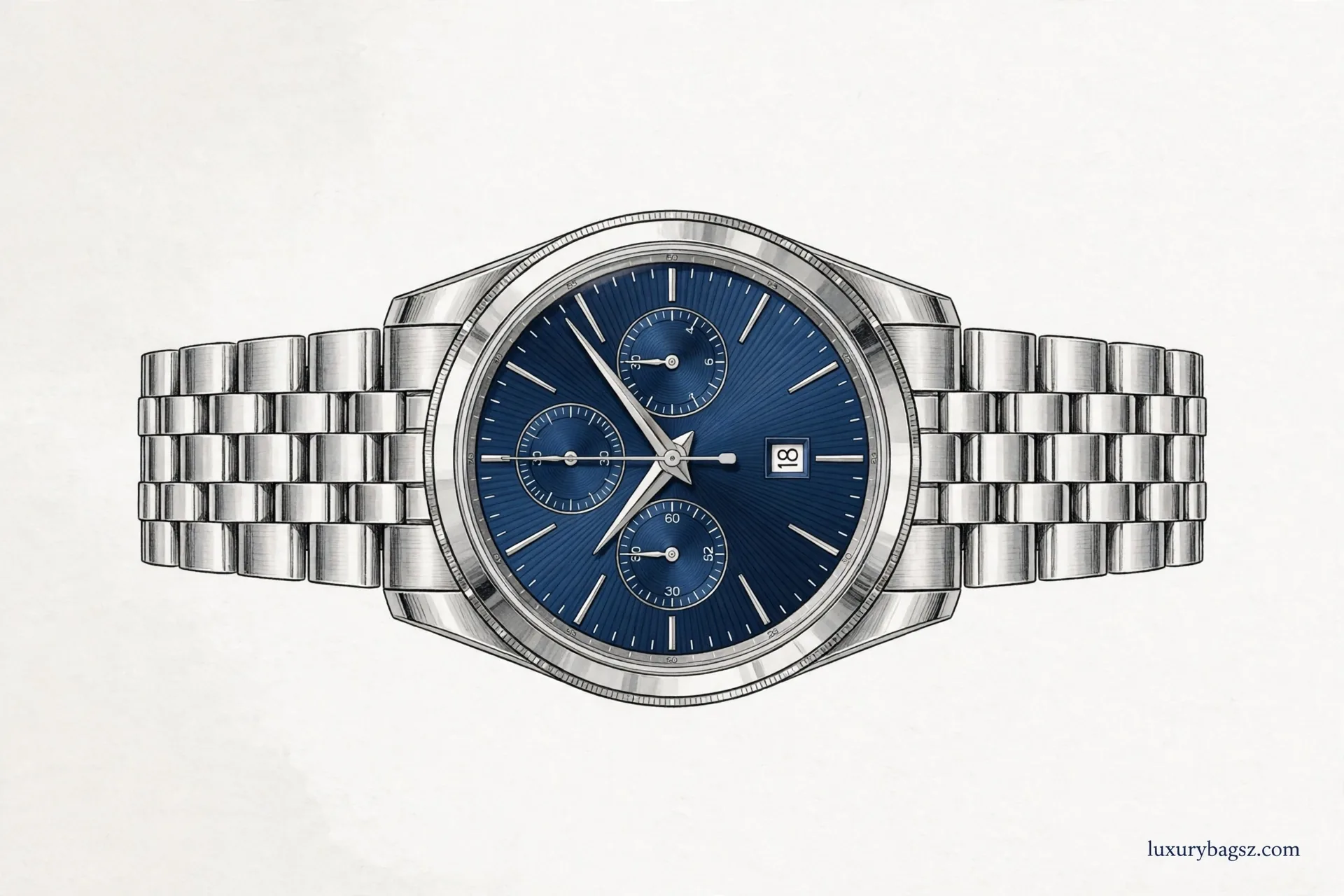
Vacheron Constantin at a Glance
Vacheron Constantin is the oldest watchmaker still in continuous operation, founded in Geneva in 1755 and never interrupted since. It is one third of watchmaking's Holy Trinity, beside Patek Philippe and Audemars Piguet, and the only one of the three with that unbroken record.
The house covers everything from the pure dress lines of the Patrimony to the steel sports luxury of the Overseas, and on to grand complications made by its Les Cabinotiers workshop. Every movement carries the Hallmark of Geneva, a guarantee of finishing and origin.
Buying a Vacheron is a quieter experience than buying a Rolex or a Patek. Waiting lists are shorter, most current references trade below retail pre-owned, and the brand rewards collectors who value craft over hype. That makes it one of the most interesting buys in high watchmaking today.
Key Takeaways
- Vacheron Constantin was founded in Geneva in 1755 by Jean-Marc Vacheron, and François Constantin joined in 1819.
- The house motto, from Constantin's 1819 letter, is "Do better if possible, and that is always possible."
- Vacheron has operated continuously since 1755, the longest unbroken record in Swiss watchmaking.
- The Maltese cross, adopted as the house emblem in 1880, appears on bezels, bracelets, and rotors.
- Core collections: Overseas, Patrimony, Traditionnelle, Historiques, Fiftysix, Métiers d'Art, and Égérie.
- The Overseas launched in 1996 as heir to the 1977 222, and its third generation arrived in 2016.
- Retail runs from roughly $14,000 for a steel Fiftysix to seven figures for Cabinotiers grand complications.
- Most current references trade below retail pre-owned, with the steel Historiques 222 as a notable exception.
- Every Vacheron movement carries the Hallmark of Geneva, and annual production runs around 30,000 to 35,000 watches.
Geneva, 1755: The Oldest Watchmaker Still Running
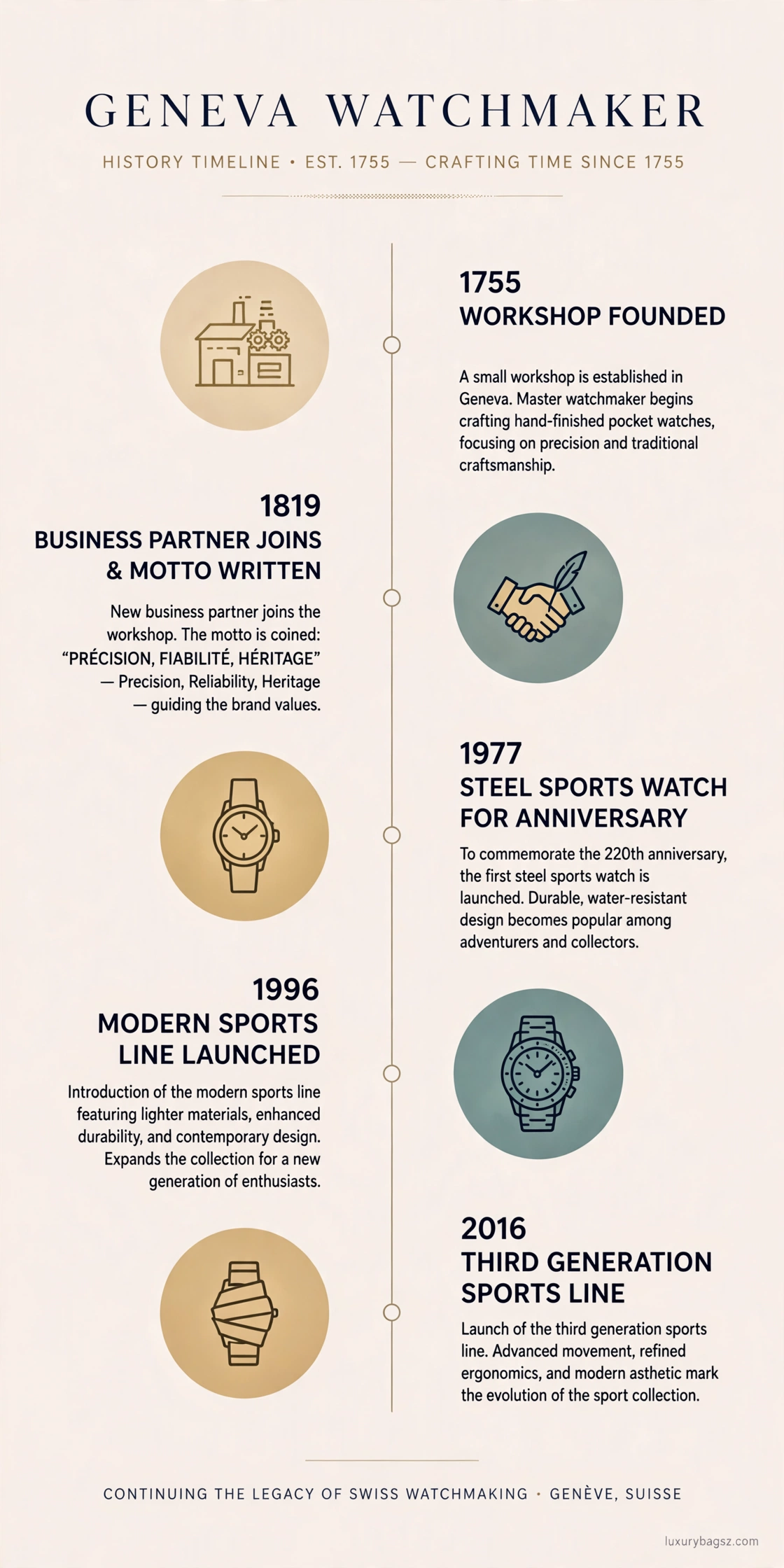
Jean-Marc Vacheron, a young Geneva watchmaker, founded his workshop in 1755. Geneva was already a watchmaking centre, with skilled artisans, a tradition of fine finishing, and a network of suppliers that suited ambitious makers.
The claim that matters is continuity. Vacheron Constantin has made watches without interruption since 1755, through wars, depressions, and the quartz crisis. No other Swiss watchmaker can say the same without a gap.
Early Vacheron watches were pocket watches of high quality, made for clients across Europe. The house built its reputation on finishing and complication, not on volume, and that priority has never changed.
For buyers, continuity is practical, not just romantic. It means archives, service records, and a living tradition of restoration, so even a vintage Vacheron can usually be documented and serviced by the house itself.
Constantin Joins, and a Motto Is Born
In 1819, François Constantin, a businessman with international contacts, joined the firm, and the house became Vacheron Constantin. Constantin travelled the world selling watches, while the Vacheron family made them, a division of labour that built the brand globally.
Constantin's 1819 letter to a colleague contained the line that became the house motto: "Do better if possible, and that is always possible." It is a demanding motto, and Vacheron treats it as a standard, not a slogan.
The partnership also brought organisation. Constantin systematised sales, records, and client relationships, which is why Vacheron's archives are so complete today. A buyer researching a vintage piece benefits directly from that nineteenth-century paperwork.
The Maltese cross became the house emblem in 1880. It originally marked a component shape in the movement, and it now appears on the Overseas bezel, on bracelet links, and on winding rotors, as a quiet signature.
Two Centuries of Complications
Vacheron spent the nineteenth and twentieth centuries building complicated watches for royalty, explorers, and collectors. Pocket watches with perpetual calendars, minute repeaters, and astronomical displays established the house's technical reputation.
Famous clients included Pope Pius IX, the Duke of Windsor, and later Hollywood figures such as Arnold Schwarzenegger and John Travolta, according to brand guides. Celebrity owners add colour, but the watches themselves are the point.
The house survived the quartz crisis without closing, unlike many rivals, by leaning on its heritage, its complications, and its loyal clients. That survival is why the 1755 continuity claim holds, and why Vacheron collectors trust the brand's long view.
In 1996, Vacheron joined the Richemont group, which gave it investment and stability while keeping its Geneva manufacture and identity. Richemont ownership also explains the brand's modern retail network and its presence at Watches and Wonders.
The 2015 reference 57260, made for the house's 260th anniversary, remains the most complicated wristwatch ever made, with 57 complications and over 2,800 parts. It was a unique commission, not a production model, but it shows what the Les Cabinotiers workshop can do.
The Hallmark of Geneva, Explained Simply
Every Vacheron Constantin movement carries the Hallmark of Geneva, or Poinçon de Genève. It is a certification awarded only to movements made in Geneva that meet strict standards for finishing, construction, and origin.
The Hallmark checks details most owners never see: bevelled bridge edges, polished screws, jewel settings, and the quality of the movement's decoration. A watch that carries it has passed independent inspection, not just the maker's own quality control.
For buyers, the Hallmark is a quick authenticity and quality signal. A claimed Vacheron without the Hallmark on its movement deserves questions, because genuine modern Vacheron movements carry it as a matter of course.
The Hallmark also explains part of Vacheron's price. Hand-finishing to Hallmark standard takes time and skill, and it cannot be rushed or automated away. You are paying for hours of bench work, not just a name on the dial.
The 222: The Sports Watch That Started It All
In 1977, Vacheron celebrated its 222nd anniversary with a steel sports watch called, simply, the 222. It was designed by Jorg Hysek, with a slim barrel-shaped case, a notched bezel echoing the Maltese cross, and an integrated bracelet.
The 222 arrived in the middle of the quartz crisis, when Swiss brands were told steel sports watches were a mistake. Like the Royal Oak and the Nautilus, it proved the opposite, and it became a horological icon after production ended in the mid-1980s.
The original 222 used a Jaeger-LeCoultre-based movement, was thin for a sports watch, and looked nothing like Vacheron's dress pieces. That break with tradition is exactly why collectors love it: it showed Vacheron could be bold without losing its identity.
Vacheron reissued the 222 in 2022 in yellow gold to mark the original's 45th anniversary, and it sold out at retail almost immediately. A steel version followed in January 2025 at $32,000 US retail, later rising to $36,500, with a 37 mm tonneau case and a blue matte dial.
Pre-owned steel 222s trade well above retail, around $50,600 according to WatchCharts figures quoted in September 2026, while yellow gold trades below its $86,500 retail. That split is a useful lesson: steel hype and gold reality often diverge.
Overseas: Three Generations of Steel Sport
The modern Overseas launched in 1996 as the heir to the 222, designed by a team including Dino Modolo and Vacheron's Vincent Kaufmann. The first generation, ref. 42040, was a 37 mm steel sports watch with a tonneau case and a notched Maltese-cross bezel.
First-generation movements were outsourced: the time-only model used a calibre based on a Jaeger-LeCoultre movement, and the chronograph used a Vacheron-finished version of the Frédéric Piguet 1185. Collectors still prize the chronograph for that column-wheel movement.
The second generation arrived in 2004, with a more modern design, a bracelet featuring a half Maltese cross motif, and a fuller collection including a Dual Time from 2006, a chronograph, and a perpetual calendar. It made the Overseas a complete line, not a single model.
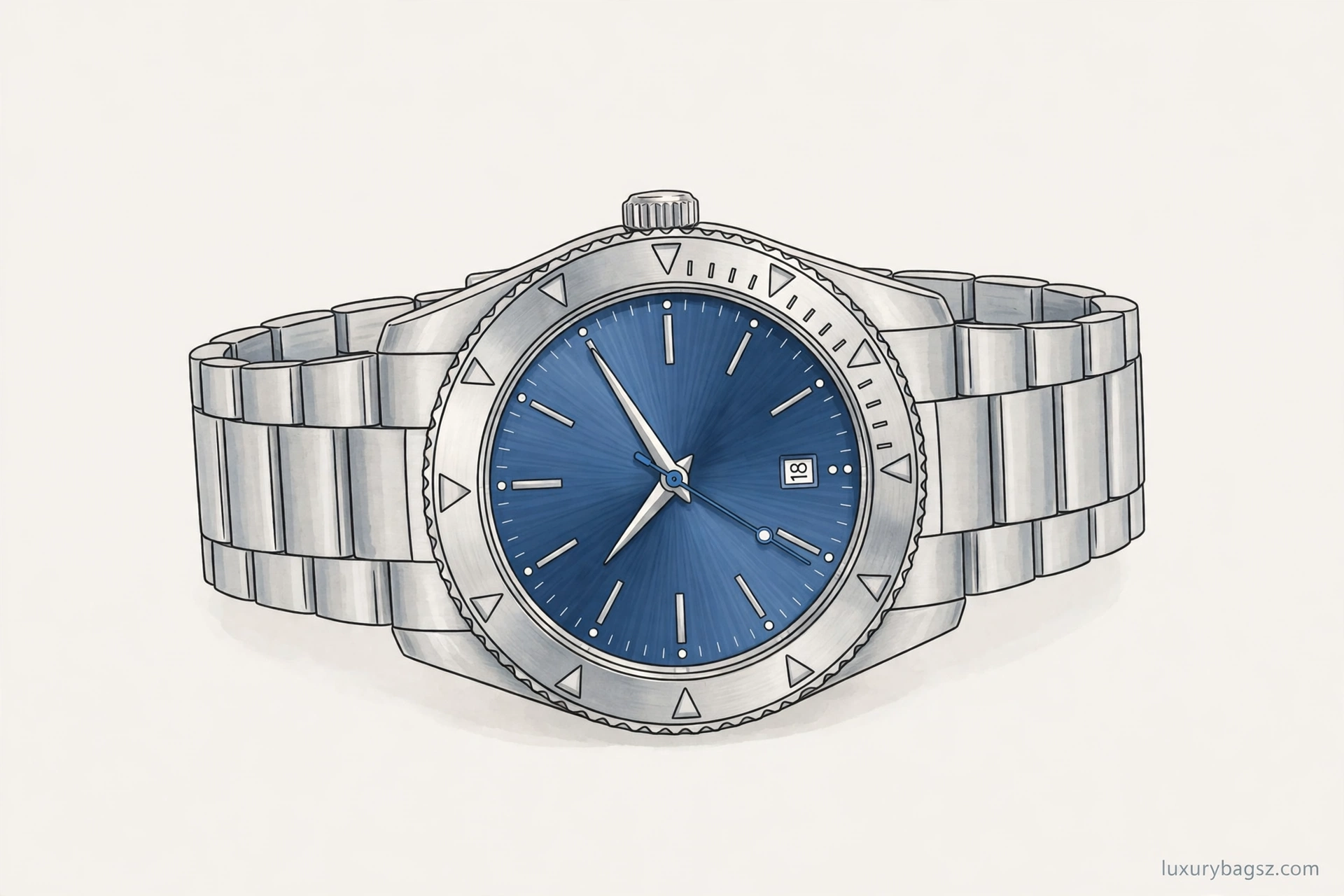
The third generation arrived in 2016 as ref. 4500V, later the 4520V, and it was a genuine redesign. The case came down to 41 mm, the bracelet gained a tool-free quick-release system with steel, rubber, and leather straps in the box, and movements became fully in-house with display case backs.
Current Overseas highlights include the Self-Winding 4520V at 41 mm, the Dual Time 7900V, the Chronograph 5500V at 42.5 mm, and the 34.5 mm Self-Winding 4600V from 2023. Water resistance is 150 metres across the line, which suits daily wear and swimming.

Overseas Sizes, Straps, and the Quick-Release System
The Overseas quick-release system is the line's best practical feature. Bracelet, rubber strap, and leather strap swap without tools, using a release mechanism in the lugs, so one watch covers office, weekend, and travel.
The box includes three straps for most steel models: steel bracelet, rubber, and leather. That matters for value, because a pre-owned Overseas without its full strap set is incomplete, and replacement straps from Vacheron are expensive.
Sizes run from 34.5 mm to 42.5 mm, plus high complications. The 34.5 mm Self-Winding suits smaller wrists and buyers who want a sport watch without bulk, while the 41 mm is the standard choice and the 42.5 mm Chronograph suits larger wrists.
The 34.5 mm line grew in 2026 with a burgundy steel version at $26,600 retail and a pink gold model with a golden dial at $59,500. Those prices show how metal and dial choices move an Overseas by tens of thousands within the same case size.
Try the bracelet and straps in person, because the Overseas wears larger than its diameter suggests, thanks to its integrated bracelet and wide bezel. A 41 mm Overseas on a smaller wrist can look bigger than a 41 mm round dress watch.
Patrimony: The Pure Dress Watch
The Patrimony is Vacheron's classical dress line: a thin round case, applied baton indices, no extra dial furniture, and a leather strap. It is gold-only in current production, with no steel Patrimony available new.
The flagship Self-Winding is 40 mm at roughly 8 mm thick, on calibre 2450 with a 40-hour power reserve, retailing around $22,000 to $23,000 in pink gold. A 36.5 mm version exists for smaller wrists, opening the line beyond its standard size.
Manual-winding Patrimony models come in 39 mm, 40 mm, and 42 mm cases, with the 39 mm at roughly 6.8 mm thick the slimmest of the three. Retail runs $22,000 to $28,000 depending on size and metal.
Complicated Patrimony models include the Moon Phase Retrograde Date at 42.5 mm, the Retrograde Day-Date on the same case, and the Perpetual Calendar Ultra-Thin at 41 mm and under 9 mm thick, retailing above $90,000.
Patrimony suits formal life, tailoring, and collectors who already own sports watches. It is the watch for buyers who want Vacheron craft without complication or bulk, and it teaches the house's finishing standards at the lowest gold price.
Traditionnelle: High Horology in a Dress Case
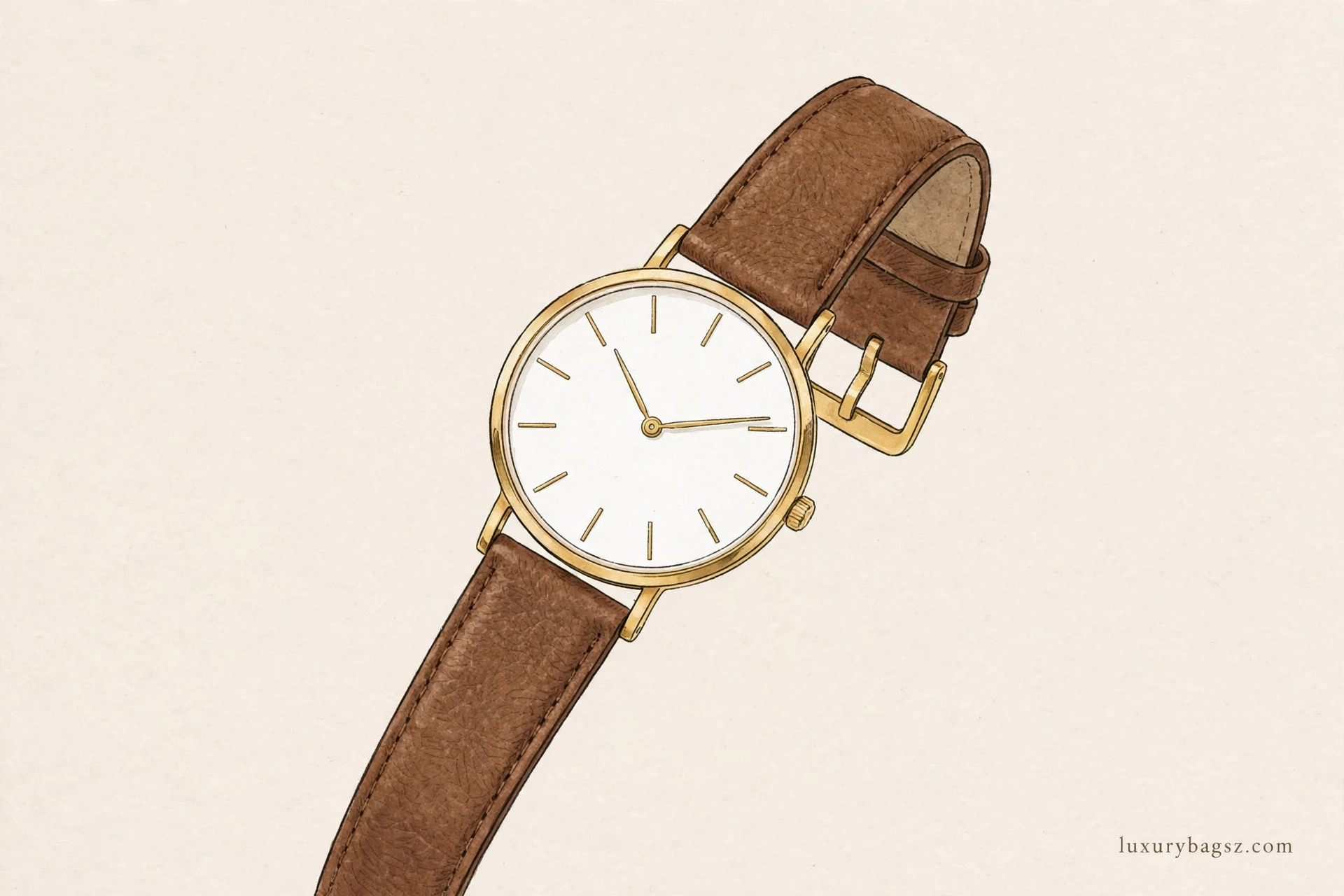
The Traditionnelle puts complicated movements in a dress format, with a fluted bezel, dauphine hands, and a case design closer to an eighteenth-century pocket watch than to a modern wristwatch.
The entry point is the Manual-Winding, in 33 mm, 38 mm, and 40 mm cases across pink gold, white gold, and platinum, retailing $22,000 to $28,000. A 30 mm quartz piece exists as the smallest reference in the line.
Mid-tier complications include the Self-Winding, the Moon Phase, and the Complete Calendar, running roughly $30,000 to $60,000 depending on metal and complication. The Complete Calendar's openface platinum version exposes the movement at the dial side.
Perpetual calendar tiers run from roughly $90,000 to $250,000, including an Ultra-Thin at 36.5 mm, a Retrograde Date Openface, and a Perpetual Calendar Chronograph at 43 mm in platinum.
Tourbillon models run from roughly $200,000 to $700,000, including standard tourbillons, retrograde date openface versions, chronographs, and high-jewellery pieces. These are collector watches, not daily wearers, and they deserve specialist advice before purchase.
Historiques: The 222, American 1921, and Cornes de Vache
Historiques is where Vacheron reissues designs from its archive, and the current line houses three families: the 222, the American 1921, and the Cornes de Vache 1955.
The American 1921 is a driver's watch, with a dial rotated 45 degrees so the crown sits at the 1 o'clock position and the time reads naturally with a hand on a steering wheel. Current production covers 40 mm and 36.5 mm in pink and white gold, retailing around $38,000 in pink gold.
The Cornes de Vache 1955 reissues Vacheron's 1955 chronograph reference 6087, named for its cow-horn lugs. It is 38.5 mm on calibre 1142, a column-wheel chronograph, retailing around $50,000 in pink gold and $40,000 in steel.
The 222 reissue, covered in the 222 section, completes the trio, and its steel version is the most actively traded modern Vacheron on the secondary market. Together, the three families let a buyer own Vacheron history without buying vintage.
Historiques suits collectors who love vintage design but want modern reliability, a warranty, and a service network. A reissue will never be a vintage original, but it is a far easier watch to own and wear.
Fiftysix: The Entry Point
The Fiftysix is Vacheron's entry line, inspired by the 1956 reference 6073, with sector-dial styling and lugs shaped like the arms of the Maltese cross. It offers an integrated bracelet feel at the lowest Vacheron price.
Retail starts around $14,000 for a steel Self-Winding, making the Fiftysix the natural first Vacheron. The Self-Winding 4600E is 40 mm in steel, with a date and a clean dial that suits daily wear.
The Complete Calendar version adds day, date, month, and moon phase, and it runs far higher in price, especially in gold. It suits buyers who want a useful complication without stepping up to Patrimony or Traditionnelle pricing.
Fiftysix trades below retail pre-owned in most cases, which makes a pre-owned example a strong value buy. Check the full set and service history, because a discounted Fiftysix without papers is a weaker purchase than a full-set one at a fair price.
For a first Vacheron, the Fiftysix is the sensible door. It teaches the house's finishing, carries the Hallmark of Geneva, and leaves budget for a second watch later, whether an Overseas or a Patrimony.
Métiers d'Art, Égérie, and Les Cabinotiers
Métiers d'Art covers artistic crafts: enamel, engraving, gem-setting, and guilloché, often in tribute series celebrating civilisations, cultures, and art forms. Prices run from around $50,000 to $500,000, and each piece is closer to art than to a timepiece.
Égérie is the women's line, with contemporary design, moon phases, and diamond-set options. The Moon Phase at 37 mm in pink gold is the best-known reference, retailing roughly $25,000 to $80,000 depending on configuration.
The smaller Malte line uses tonneau cases in a dress format, with manual-winding and moon-phase models retailing roughly $30,000 to $150,000. It suits buyers who want a shaped case rather than another round watch.
Les Cabinotiers is Vacheron's workshop for unique pieces and grand complications made to order. The 57260, with 57 complications, came from this workshop, and its commissions trade case by case at major auction houses.
These lines reward study more than impulse. A Métiers d'Art or Cabinotiers piece should be bought with expert advice, full documentation, and a clear understanding that resale depends on a small pool of collectors.
Sizing and Wear: Finding Your Vacheron Fit
Vacheron sizing spans dress slimness and sports presence, so one rule does not fit all lines. A 40 mm Patrimony wears smaller than a 41 mm Overseas, because the Patrimony is thin on leather while the Overseas is thicker on a bracelet.
Try watches in person with the bracelet or strap sized correctly. A watch that flops or pinches will not be worn, however beautiful, and bracelet sizing matters as much as case size for Overseas models.
Lug-to-lug length matters for smaller wrists. If the lugs overhang the wrist, the watch looks oversized even if the diameter seems modest. The 34.5 mm Overseas and the 36.5 mm Patrimony exist precisely for wrists that larger models overwhelm.
Strap choice changes wear dramatically. Leather suits formal occasions, rubber suits sport and travel, and bracelets suit daily wear. The Overseas quick-release system makes swapping easy, while Patrimony and Traditionnelle models reward a second leather strap for variety.
For wrists under about 16 cm, start with 34.5 mm to 38 mm models. Between 16 cm and 18 cm, most Vacheron references work. Above 18 cm, the 41 mm Overseas and 42.5 mm complications wear most naturally.
Prices in 2026: Retail Ranges by Collection
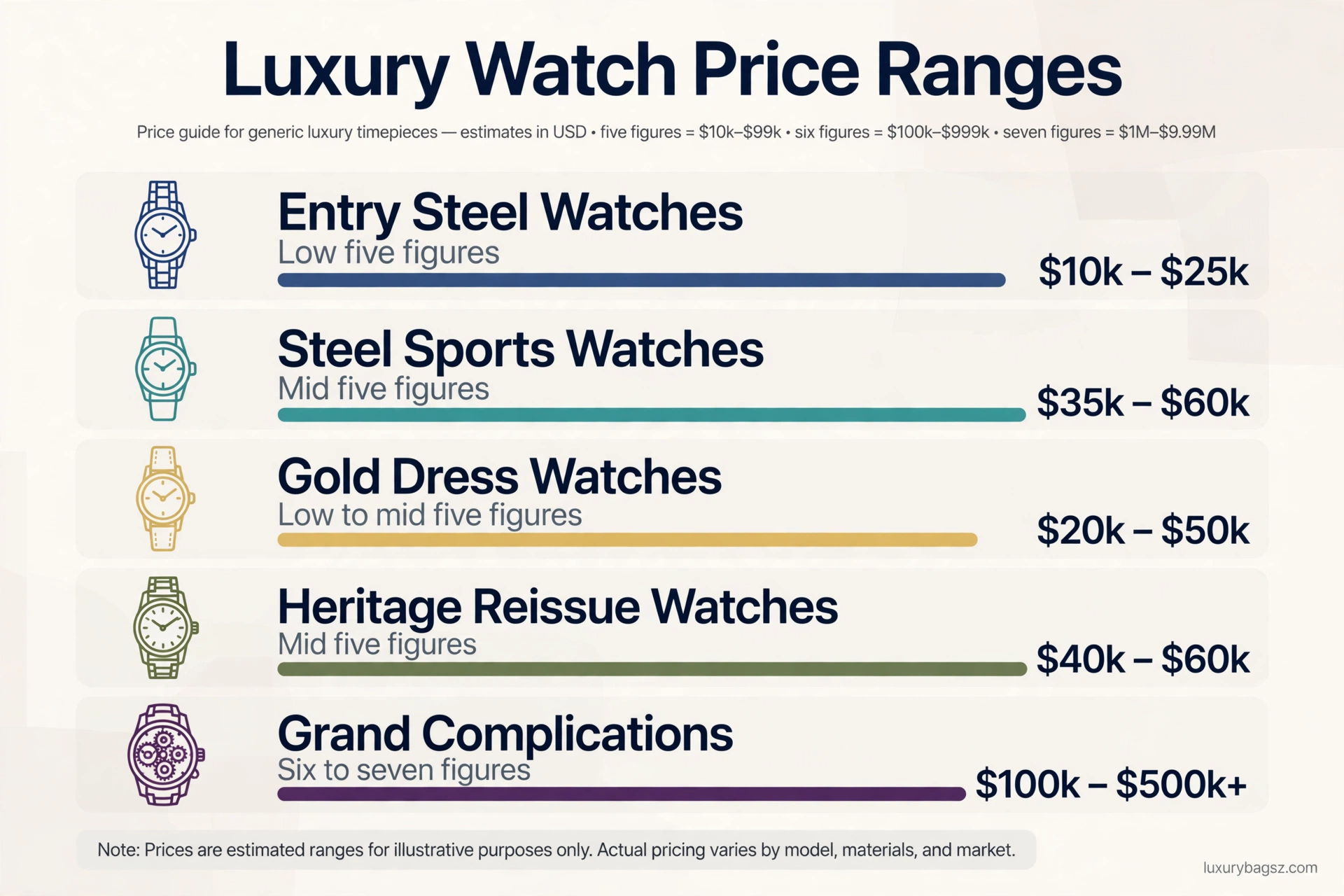
Vacheron retail pricing runs from roughly $14,000 for a steel Fiftysix to seven figures for Cabinotiers grand complications, per the WatchesOff5th 2026 guide. That range is wider than most buyers expect, and it rewards careful collection-by-collection comparison.
Overseas steel models start around $26,000 to $29,200 for the Self-Winding, with the Dual Time around $32,000 to $33,000 and the Chronograph around $33,000. Gold and complicated Overseas models run from $90,000 to $700,000.
Patrimony starts around $22,000 in pink gold for time-only models, rising past $90,000 for the Perpetual Calendar Ultra-Thin. Traditionnelle runs a similar entry range, rising to $700,000 for tourbillon families.
Historiques runs $32,000 to $200,000, with the steel 222 at $36,500 retail and the yellow gold at $86,500. Fiftysix runs $14,000 to $110,000, and Égérie runs $25,000 to $80,000.
Secondary prices tell a different story. Most current references trade below retail pre-owned, according to Morgan Stanley and WatchCharts data for the second quarter of 2026. The steel 222 is the exception, trading well above retail, while yellow gold 222 trades below it.
Where to Buy: Boutiques, Dealers, and Allocation
Vacheron sells through its own boutiques and authorised dealers, not through general online shops. Availability is generally better than Patek Philippe or Rolex, and most references can be ordered, though popular Overseas models may take time.
Boutique service is knowledgeable and unhurried. Staff can explain references, movements, and servicing, show pieces in person, and advise on sizing and strap choices. Ask about warranty, servicing intervals, and what is included, and keep all paperwork from day one.
Building a dealer relationship helps for limited editions such as the 222 reissue, but it is not a precondition for buying a standard Overseas or Patrimony. Vacheron allocation is gentler than its Holy Trinity rivals, which is part of its appeal.
Reputable pre-owned dealers offer immediate availability at market prices, which usually sit below retail for current models. That makes pre-owned Vacheron one of the best value propositions in high watchmaking, provided documentation is complete.
Auction houses suit rare vintage and Cabinotiers pieces, but they demand knowledge of condition, originality, and estimates. A first-time buyer is usually better served by a dealer than by an auction room.
Buying Pre-Owned: Papers, Seal, and Condition
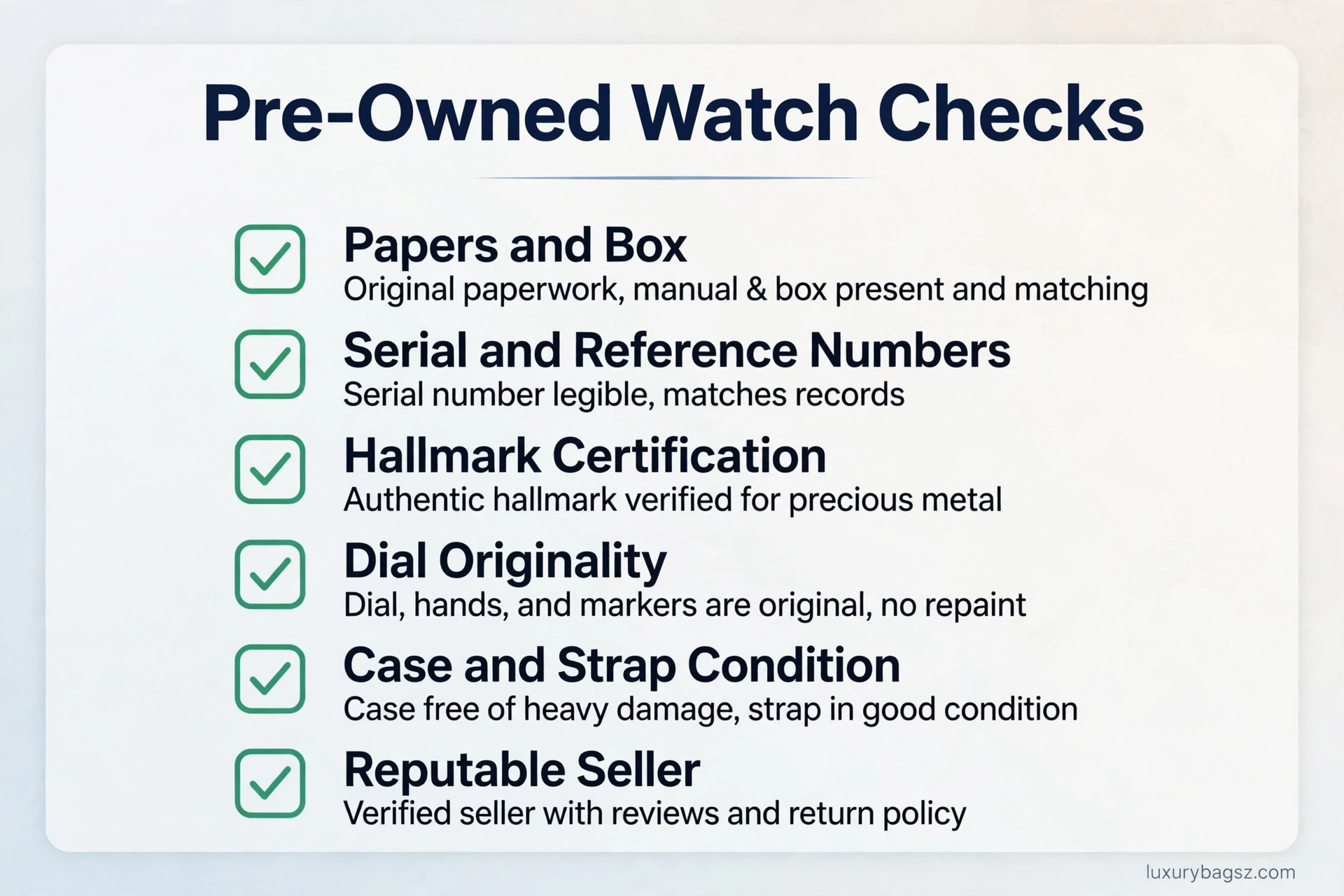
Pre-owned Vacheron buying rewards documentation. A full set, watch, box, papers, and all three Overseas straps where applicable, sells faster and for more than a bare watch, and it supports authenticity.
Reference and serial numbers should match papers and the house's records for the era. Vacheron's archives are unusually complete, thanks to Constantin's nineteenth-century organisation, so a seller who cannot document a watch deserves scepticism.
Check the Hallmark of Geneva on the movement where visible, and ask for service history. Over-polished cases lose sharp edges, refinished dials lose value, and replaced parts, while sometimes necessary, should be disclosed.
Condition checks include case polishing, dial originality, hands, crown, bracelet or strap wear, and movement performance. An independent watchmaker's inspection is money well spent on any Vacheron at these prices.
Seller discipline matters as much as the watch. Our general guides on buying pre-owned safely and on authenticating pre-owned pieces cover seller checks, and they apply to watches too.
For the same reason, our guides to spotting a fake Patek Philippe and a fake Audemars Piguet Royal Oak stress buying the seller, and that discipline protects Vacheron buyers just as well.
Servicing, Care, and Daily Wear
Vacheron recommends regular servicing through authorised service centres, with intervals depending on model and use. Servicing is expensive and can take months, especially for complications, but it protects accuracy, water resistance, and long-term value.
Daily care is simple: keep the watch clean with a soft cloth, avoid shocks, magnetism, and extreme temperatures, and check water resistance before swimming, even for Overseas models. Leather straps should be kept dry and replaced when worn.
Our guide on cleaning a watch covers cases, crystals, bracelets, straps, and water resistance in detail, and its advice applies directly to Vacheron ownership. Never open the case yourself, and never let an unqualified repairer work on a Hallmark movement.
Magnetism is a quiet enemy of mechanical watches, from phones, speakers, and bag clasps. If a watch suddenly runs fast, magnetism is a likely cause, and demagnetisation is a quick service-centre fix.
Insurance matters at this price level. Insure the watch for replacement value, keep photographs and serial numbers separately, and check whether your policy covers loss outside the home and during travel.
Vacheron Against Patek Philippe, Audemars Piguet, and Rolex
Against Patek Philippe, Vacheron offers equally fine finishing and a slightly more understated identity, while Patek offers stronger market demand and resale for popular models. Our Patek Philippe guide covers that rival in detail.
Against Audemars Piguet, Vacheron offers a broader range from dress to grand complication, while Audemars Piguet's Royal Oak defines a single sports-luxury idea with great intensity. Our Royal Oak history and sizes guide covers that rival, and many collectors own both houses for different moods.
Against Rolex, Vacheron offers finer finishing, more complex movements, and greater exclusivity, while Rolex offers tougher daily wear, wider availability, and stronger brand recognition. Rolex is the practical luxury watch, and Vacheron is the connoisseur's watch.
Choose Vacheron if you value finishing, history, and quiet craft over hype. Choose a rival if you want the strongest resale, a single iconic sports design, or a watch the wider world recognises instantly.
Common Mistakes First-Time Vacheron Buyers Make
The first mistake is chasing a steel 222 at a premium without understanding the range. A standard Overseas or a Fiftysix may suit your life better and be obtainable far more easily, at or below retail.
The second mistake is buying pre-owned without papers or inspection. A bare watch at a tempting price can hide a refinished dial, a replaced movement part, or a service history that wipes out the saving.
The third mistake is ignoring servicing costs. A perpetual calendar or tourbillon costs far more to service than a time-only watch, and servicing intervals matter for accuracy and value. Budget for servicing as part of ownership.
The fourth mistake is wearing a dress watch as a sports watch, or vice versa. A Patrimony on leather is not a swimming watch, and an Overseas, while sportier, still deserves care around shocks and magnetism.
The fifth mistake is buying for investment alone. Most current Vacheron references trade below retail, so buy a watch you love wearing, and treat any appreciation, such as the steel 222's premium, as the exception, not the rule.
Vacheron for Different Lives
For formal professional life, a Patrimony Self-Winding in pink gold on leather is the classic choice. It complements tailoring, sits under a cuff, and signals taste without noise.
For daily wear with versatility, an Overseas in steel suits most occasions, from office to weekend to travel. Its quick-release straps handle daily use, and its 150-metre water resistance adds practicality.
For collectors, Traditionnelle complications, Historiques reissues, and Métiers d'Art offer depth and fascination. These watches reward study, and they suit buyers who already own a daily watch and want something special.
For women, the Égérie, the 34.5 mm Overseas, and smaller Patrimony models offer Vacheron quality in designs made for smaller wrists. Try these in person, because case shape and bracelet design matter as much as diameter.
For a first Vacheron on a budget, a steel Fiftysix or a pre-owned Overseas offers the house's finishing at the lowest entry cost. Buy from a vetted dealer, get it serviced, and wear it daily.
A First-Time Buyer's Checklist
Define your use first: formal, daily, travel, or collecting. That decision narrows the range from dozens of references to a handful, and it prevents buying a grand complication for a life that needs a steel sports watch.
Visit an authorised dealer, try watches in person, and ask about availability, warranty, servicing, and total ownership costs. Handling a Patrimony, an Overseas, and a Fiftysix side by side teaches more than hours of reading.
If buying pre-owned, insist on a full set where possible, verify reference and serial numbers, check the Hallmark of Geneva, and get an independent inspection. Use vetted dealers with clear returns, and walk away from listings that resist scrutiny.
Finally, insure the watch, record its details separately, and plan servicing from day one. A Vacheron bought carefully and cared for properly is not just a watch, but a companion for decades, and a gift for the next generation if you wish.
Vacheron Movements: The Calibres to Know
Vacheron's in-house calibres are the heart of its modern watches, and a few numbers cover most of the catalogue. The 5100 powers the Overseas Self-Winding, with a 60-hour power reserve and a 22k gold rotor engraved with a compass rose.
The 5200 powers the Overseas Chronograph, a column-wheel chronograph with a 52-hour reserve and twin registers. Column-wheel chronographs are more highly regarded than cam-operated ones, because their action is smoother and their construction more refined.
The 2450 powers the Patrimony Self-Winding, with a 40-hour reserve, while the 1088/1 powers the 34.5 mm Overseas, with a 22k gold compass-rose rotor. Smaller calibres suit smaller cases, and Vacheron scales its movements rather than forcing a large calibre into a small watch.
The 1142 powers the Cornes de Vache chronograph, a hand-wound column-wheel movement with horizontal clutch, descended from a classic Lemania design. It suits collectors who value traditional chronograph construction over automatic convenience.
Perpetual calendar calibres, such as the ultra-thin 1120 QP family, pack day, date, month, leap year, and moon phase into cases under 9 mm thick. That thinness is a Vacheron signature, and it is far harder to achieve than a thick calendar in a large case.
When buying pre-owned, ask which calibre is inside and when it was last serviced. A watch with the right calibre, documented service, and Hallmark finishing is a different purchase from a watch with a swapped or undocumented movement.
The Vintage Vacheron Market
Vintage Vacheron rewards expertise. The most collectible families are 1950s dress watches, Cornes de Vache chronographs from the 1950s, 222 sports watches from 1977 to the mid-1980s, and complicated pocket watches from the nineteenth century.
Originality decides value. A vintage Vacheron with its original dial, hands, and movement parts commands a premium, while a refinished dial or replaced crown reduces value sharply. Vacheron's archives help here, because production details can often be confirmed.
Condition matters more than rarity alone. A rare reference in poor condition, with a polished case and a damaged dial, is a weaker buy than a common reference in excellent, original condition with papers.
Auction houses in Geneva and New York host the most active vintage Vacheron trade, and their lot essays teach a new collector more than any single guide. Read auction results for the exact reference you want, not for the brand in general.
Start vintage buying with a specialist dealer, get the watch inspected, and learn one family deeply before spending serious money. Vintage Vacheron is a hobby that rewards homework, and the archives reward those who use them.
Watches and Wonders 2026: What Is New
Watches and Wonders 2026 brought notable Vacheron releases, covered in boutique visits and dealer guides. The Overseas line gained new dial and material executions in the 34.5 mm case, including a burgundy steel version and a pink gold model with a golden dial.
A platinum Overseas Self-Winding Ultra-Thin at 39.5 mm, with a salmon dial and calibre 2550, was limited to 255 pieces. Limited platinum Overseas models attract collectors, but their premiums depend on real demand, not just the limited number.
The Overseas Dual Time gained a Cardinal Points edition in titanium, with four dial colours and a case engraved with compass points around the dial perimeter. Each variant carries a distinct rotor engraving, with the blue version showing a Mount Everest motif.
For buyers, new releases matter in two ways. They set the current retail reference point for pre-owned pricing, and they sometimes make the previous version a better value buy, as dealers clear earlier stock.
Do not pay a premium for a 2026 novelty unless you love it specifically. Most novelties become standard catalogue items, and their early premiums fade as supply normalises.
Vacheron for Women in Detail
Vacheron's women's range deserves more attention than it usually gets. The Égérie Moon Phase, at 37 mm in pink gold, pairs a moon-phase complication with diamond-set options and a contemporary dial design.
The 34.5 mm Overseas suits women who want a steel sports watch rather than a jewellery piece, and its quick-release straps let one watch cover office, weekend, and evening. Its 150-metre water resistance adds real practicality.
Smaller Patrimony models, at 36.5 mm, suit women who want a classical dress watch, while Traditionnelle models in 33 mm and 36 mm offer complications in smaller cases.
Diamond-set Patrimony Self-Winding Jewellery models, at 37 mm in white gold, sit as the jewellery expression of the dress line, with prices varying by stone configuration. They suit buyers who want Vacheron craft with a jewellery presence.
Try women's models in person, because case shape and bracelet design matter as much as diameter for comfort. A 34.5 mm Overseas on a bracelet wears differently from a 37 mm Égérie on leather, even though the numbers look close.
The Three-Way Decision: Overseas, Royal Oak, Nautilus
Many buyers choose among the Overseas, the Royal Oak, and the Nautilus, and the decision reveals what they value. The Royal Oak is the original, with the strongest design statement and the longest waiting lists. The Nautilus is the most hyped, with the highest premiums.
The Overseas is the connoisseur's choice: equally fine finishing, Hallmark certification, quick-release straps, and availability at or below retail for most references. It lacks the other two's hype, which is exactly why it offers better value.
Wear differs too. The Royal Oak's octagonal bezel and integrated bracelet make a bold statement, the Nautilus's porthole case is softer and rounder, and the Overseas's notched bezel and Maltese-cross bracelet are the most understated of the three.
Resale differs most. Royal Oak and Nautilus steel models often trade above retail, while Overseas models usually trade below, except the steel 222. A buyer who prioritises resale should weigh that honestly, while a buyer who prioritises wearing should not.
Try all three in person if possible. The right choice is the one that fits your wrist, your wardrobe, and your patience for waiting lists, not the one with the longest queue.
Insurance, Storage, and Passing a Vacheron On
Storage matters for mechanical watches. Keep them in a watch box away from magnetism, damp, and direct sun, and wind manual watches regularly even when not worn, to keep lubricants distributed.
A watch winder helps for automatics with complications, especially perpetual calendars that are fiddly to reset. A simple three-hand Vacheron can simply be reset when worn, and a winder is a convenience, not a necessity.
Insurance should reflect replacement value, not purchase price alone, because pre-owned premiums change values. Photograph the watch, record serial and reference numbers separately, and keep papers in a safe place away from the watch itself.
Passing a Vacheron on is part of the house's culture, and its motto about doing better extends to stewardship. A full set with service records and archive documentation protects both sentimental and financial value for the next owner.
When selling, use a reputable dealer or auction house, provide full documentation, and be honest about condition, servicing, and replaced parts. Transparency achieves better prices and protects your reputation in a small collector world.
Geneva Seal, Patek Seal, and COSC: What Certifications Mean
Watch certifications confuse buyers, because several exist and they test different things. The Hallmark of Geneva tests the movement's origin, finishing, and construction, and it applies to the movement inside the watch.
The Patek Philippe Seal, introduced in 2009, tests the whole watch, including case, dial, and rate accuracy, to standards Patek sets itself. It is stricter in scope than the Hallmark, because it covers the finished watch, not just the movement.
COSC chronometer certification tests the bare movement for accuracy over 15 days, in several positions and temperatures. It says nothing about finishing, and a COSC certificate does not mean a watch is beautifully made.
Rolex's Superlative Chronometer standard tests the finished watch to tighter accuracy than COSC, after casing. Omega's Master Chronometer tests the finished watch for accuracy, magnetism, and water resistance.
For Vacheron buyers, the Hallmark is the relevant mark, and it should be present on genuine modern movements. Do not compare a Hallmark with a COSC certificate as if they were rivals, because they measure different qualities, and a fine watch can carry one, both, or neither depending on its maker.
Straps, Bracelets, and the Cost of Completeness
Overseas completeness includes three straps: steel bracelet, rubber, and leather, plus the tools and box. A pre-owned Overseas missing straps is incomplete, and replacement straps from Vacheron cost serious money, so price incompleteness into any offer.
Bracelet fit decides whether a watch gets worn. An Overseas bracelet should fit snugly with room for the wrist to expand in heat, and it should be sized with the correct links. Ask for spare links when buying pre-owned.
Rubber straps suit sport and summer, leather suits formal occasions, and the quick-release system makes swapping easy. Keep leather dry, replace it when cracked, and rinse rubber after swimming in salt water.
Patrimony and Traditionnelle models use leather straps that transform the watch. A fresh, high-quality strap makes a dress watch look new, while a worn strap makes an expensive watch look cheap, so budget for strap replacement as part of ownership.
Keep every strap, link, and tool that came with the watch. Completeness is the cheapest value protection you can buy, and it pays back directly when you sell, because the next buyer wants the full set too.
Warranty, Boutiques, and the Buying Experience
Vacheron's international warranty covers manufacturing defects, and its length varies by market and era, so check the card and booklet that come with your watch rather than assuming a single global rule. Keep the warranty card safe, because it is part of the full set.
Grey-market watches may lack a valid warranty, which is one reason large discounts from unknown sellers deserve scepticism. A valid warranty from a boutique or authorised dealer is worth real money, especially on a complicated watch.
Boutique buying is unhurried. Staff can show the full range, explain movements, and order references that are not in stock. Building a relationship helps for limited editions such as the 222 reissue, but it is not a precondition for a standard model.
Ask the boutique to size the bracelet before you leave, to explain the warranty and service process, and to confirm what is included in the box. Missing straps, tools, or booklets should be noted at purchase, not discovered later.
For pre-owned buyers, ask the dealer what warranty they offer in place of the manufacturer's cover. A reputable dealer typically offers at least a year, and that cover is worth real money on a watch that may need attention.
The Art of the Vacheron Dial
Vacheron dials reward close looking, because their restraint hides real craft. Patrimony dials use applied baton indices, slim dauphine hands, and a small Maltese cross, with nothing extra to distract the eye.
Enamel dials in the Métiers d'Art line use grand feu enamel, fired at high temperatures, with colours that will not fade over decades. A single flawed firing ruins the dial, which is why enamel pieces cost what they do.
Guilloché dials, cut by hand on a rose engine, create geometric patterns that catch light as the wrist moves. Machine-stamped patterns look similar at a glance, but hand guilloché has depth and variation that stamping cannot match.
Openface models expose the movement at the dial side, turning the calibre into the dial itself. That approach suits collectors who want to see finishing, but it makes the dial harder to read, so it suits evening wear more than daily use.
When buying, inspect the dial under magnification. Printing should be crisp, indices aligned, and hands free of corrosion or replacement mismatch. A dial that looks perfect at arm's length but flawed under a loupe is a dial to question.
Value Retention: Where Vacheron Wins and Loses
Vacheron value retention varies sharply by line, and honest buyers should know the pattern. Steel Overseas models hold value reasonably, especially limited editions and the steel 222, while gold dress models depreciate more.
Patrimony in pink gold trades below retail pre-owned in most cases, because dress watches have a smaller buyer pool than sports watches. That makes a pre-owned Patrimony a strong value buy for a wearer, and a weak buy for a flipper.
Traditionnelle complications hold value better than time-only dress models, because their movements are rarer and their buyers more knowledgeable. Tourbillons and perpetual calendars depend on condition and completeness more than on the reference alone.
Fiftysix models, as the entry line, depreciate most in percentage terms, but lose least in absolute money, because their starting price is lowest. A pre-owned Fiftysix is often the smartest Vacheron purchase of all.
The rule is simple: buy Vacheron to wear, not to profit, and let the steel 222's premium be the exception that proves it. A watch worn for decades owes you nothing, even if it sells below what you paid.
Frequently Asked Questions
When was Vacheron Constantin founded?
Vacheron Constantin was founded in Geneva in 1755 by Jean-Marc Vacheron. François Constantin joined in 1819, giving the house its current name and its motto about always doing better if possible.
Why is Vacheron Constantin called the oldest watchmaker?
Because it has operated continuously since 1755 without interruption, the longest unbroken record in Swiss watchmaking. Other historic houses closed, paused, or restarted, while Vacheron kept making watches.
What is the Hallmark of Geneva?
It is a certification for movements made in Geneva to strict finishing and construction standards. Every Vacheron Constantin movement carries it, and it signals independent inspection, not just the maker's own quality control.
What is the difference between the Overseas and the 222?
The 222 was Vacheron's 1977 steel sports watch, designed by Jorg Hysek, and production ended in the mid-1980s. The Overseas, launched in 1996, is its modern heir, with three generations, the latest from 2016 with quick-release straps and in-house movements.
How much does a Vacheron Constantin cost in 2026?
Retail starts around $14,000 for a steel Fiftysix, around $26,000 to $29,200 for a steel Overseas Self-Winding, and around $22,000 for a Patrimony in pink gold. Grand complications run into six and seven figures.
Do Vacheron watches hold their value?
Most current references trade below retail pre-owned, so buy for wear, not profit. The steel Historiques 222 is a notable exception, trading well above retail, while its yellow gold version trades below retail.
How often should a Vacheron Constantin be serviced?
Service intervals depend on model and use, and Vacheron recommends regular servicing through authorised centres. Ask your dealer for guidance for your reference, and budget accordingly, especially for complications.
Can you buy Vacheron Constantin online?
Vacheron sells through authorised dealers and boutiques, not general online shops. Pre-owned dealers sell online, but insist on full documentation, the complete strap set for Overseas models, and independent inspection.
What is Les Cabinotiers?
It is Vacheron's workshop for unique pieces and grand complications made to order. Its most famous creation, reference 57260 from 2015, has 57 complications and over 2,800 parts.
How do you care for a Vacheron Constantin?
Keep it clean with a soft cloth, avoid shocks, magnetism, and extreme temperatures, check water resistance before swimming, and service through authorised centres. Insure it for replacement value.
Conclusion
Vacheron Constantin suits buyers who want watchmaking at its finest without the loudest hype. A Geneva house in continuous operation since 1755, with the Hallmark of Geneva on every movement, the Overseas for daily wear, the Patrimony for formal life, and grand complications for collectors, offers a range few rivals match.
Start with a watch that fits your life: a Fiftysix for a first Vacheron, an Overseas for versatility, or a Patrimony for formal elegance. Learn it, service it, wear it, and let Vacheron's wider world open gradually.
Keep the full set together, service on schedule, and wear the watch rather than locking it away, because a Vacheron earns its meaning on the wrist, not in a safe. A watch chosen with patience and maintained with care will mark decades of your life faithfully, and it will be ready for the next generation when the time comes.