

Rolex Serial Number Check | Find, Date & Verify It Correctly
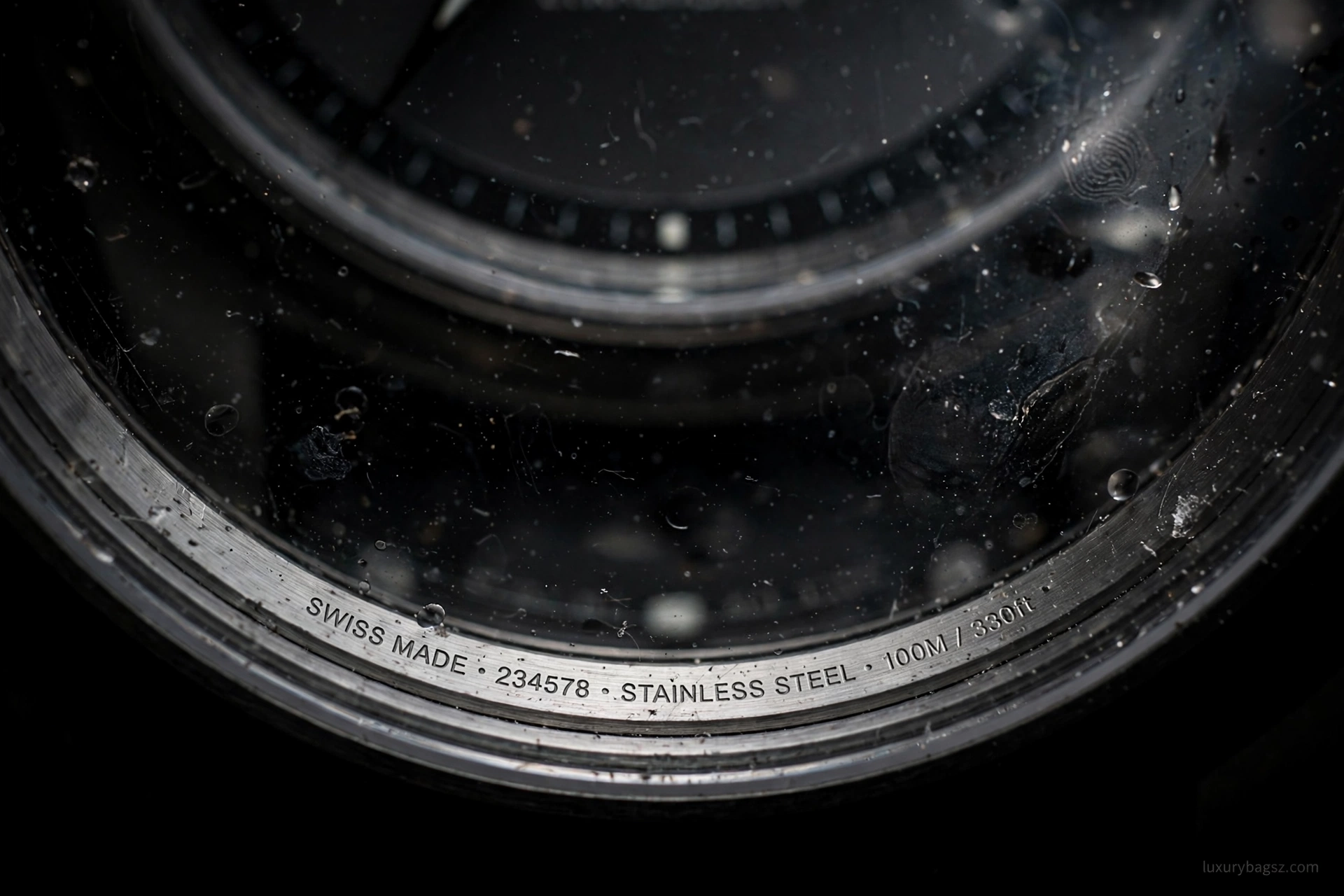
A rolex serial number check is the first thing many buyers do, and the first thing many buyers get wrong. They type a number into a website, get a year, and treat that year as proof the watch is genuine. It is not. A serial number can estimate when a Rolex case was made, and it can show whether the watch, its papers, and its claimed age line up. It cannot, on its own, prove a watch is genuine, prove it is not stolen, or tell you the exact date it was sold.
This guide shows you how to do the check properly. It starts with where to find the serial by era, then explains the three serial systems Rolex has used, then gives you a step-by-step check, a full letter-prefix chart, and the traps: random serials mistaken for letter serials, copied serials, duplicate numbers from the 1950s restart, service cases, and the privacy risk of posting a full serial online.
This guide is general information only. It is not an authentication service, and it is not affiliated with, endorsed by, or sponsored by Rolex. For a valuable purchase, get independent authentication from a certified watchmaker or an authorised Rolex service centre. Do not remove a bracelet, open a case, or scrub an engraving yourself if you are not confident doing it safely.
Key Takeaways
- Rolex has never published an official serial chart or a public serial lookup. Every chart online is reverse-engineered from dealer and collector records, so every date it gives is an estimate, usually to within about a year.
- Location depends on era: between the lugs at 6 o’clock before about 2005, both places from about 2005 to 2008, and on the rehaut at 6 o’clock from about 2008 onward.
- Three systems: numeric serials from 1926 to 1987, letter-prefix serials from 1987 to 2010, and random 8-character serials from 2010 onward that carry no date at all.
- A random serial that starts with a letter is not a letter-prefix serial. Do not date a modern watch from its first letter.
- A serial that matches a chart does not prove a watch genuine. Counterfeiters copy real serials from auction listings and forum photos.
- Production year is not sale date. A case can sit in stock, and a watch can be sold years after its case was made. The warranty card date is the better guide for modern watches.
- Never post a full serial number publicly. It can be copied onto a fake, or used to create fake papers for another watch.
What a Rolex Serial Number Is — and Is Not
A Rolex serial number is a unique production identifier engraved on the case. It is not the same as the reference number, which is the model code. Every Datejust 1601, for example, shares the reference 1601, but each individual watch has its own serial. Dating uses the serial. Identification, valuation, and parts use the reference.
That distinction matters, because people often look up the wrong number. On a Rolex, the reference sits between the lugs at 12 o’clock, and the serial sits between the lugs at 6 o’clock on older watches, or on the rehaut on modern watches. A short 4- or 5-digit number between the lugs is usually the reference, not the serial — although early Rolex watches can also have short numeric serials, so check location, period, and reference together, and do not identify a number by length alone.
What a serial check can tell you
- An approximate production period for a watch made before about 2010.
- Whether the watch’s claimed age, reference, dial style, bracelet, and clasp code all belong to the same era.
- Whether the serial on the watch matches the serial on the warranty card, chronometer certificate, and service papers, exactly.
What a serial check cannot tell you
- Whether the watch is genuine. A correct-looking serial can be engraved on a fake, copied from a real watch.
- Whether the watch is stolen, or whether it is a “franken-watch” assembled from genuine parts of different watches.
- The exact date the watch was sold, its condition, its service history, or its market value.
- Anything at all about a modern random serial, beyond the fact that it places the watch in 2010 or later.
For a general example of how serial myths work on another luxury item, where a serial alone is also treated as proof when it is not, see VIP gift bags.
Where to Find Your Rolex Serial Number, by Era
Rolex moved the serial from the outside of the case to the inside ring under the crystal in the mid-2000s, partly to make it harder to remove and harder to fake. Use this table first, before you open any chart.
| Production period | Where the serial is | Format |
|---|---|---|
| Before about 2005 | Engraved on the case between the lugs at 6 o’clock, hidden by the bracelet | Numbers only until 1987, then one letter plus six digits |
| About 2005 to 2008 | Transition period: you may find it between the lugs, on the rehaut, or in both places | One letter plus six digits |
| About 2008 to 2010 | On the rehaut, the inner ring between the dial and crystal, at 6 o’clock | One letter plus six digits |
| 2010 to today | On the rehaut at 6 o’clock | Random mix of eight letters and numbers |
How to read it safely
- On the rehaut: Look through the crystal at 6 o’clock, with a loupe or magnifying glass, in angled light. The serial sits alongside the repeating “ROLEX ROLEX ROLEX” engraving around the inner ring. You do not need to remove the bracelet for this.
- Between the lugs: The bracelet has to come off to see it. Removing spring bars without the right tool can scratch the lugs, damage the bracelet, or launch a spring bar across the room. If you are not confident, ask a jeweller or watchmaker to do it, and ask them to photograph the engraving for you.
- On the warranty card: If the original papers survive, the serial is printed on the warranty card or certificate. That is the quickest place to read it, but it is also the easiest place to fake — so always cross-check the card against the watch itself, never the card alone.
- If the engraving is worn: Do not scrub it, polish it, or use a wire brush. That destroys the engraving and a large share of the watch’s value. Photograph it at a raking angle with a single light source instead — shadow reveals shallow engraving that flat light flattens out. If it is still illegible, get a professional to read it.

A location mismatch is itself a red flag
A random-era serial engraved between the lugs rather than on the rehaut is a warning sign, because by then Rolex had stopped engraving the case there. A letter-prefix serial that only appears on the rehaut on a watch claimed to be from before 2005 is also worth questioning. Location, format, and claimed age must all agree.
The Three Serial Systems, Explained
Rolex has used three serial systems since the 1920s. Once you know which one your watch uses, dating it takes seconds — and, for a modern watch, you will know immediately that dating from the serial is impossible.
System 1: Numeric serials, 1926 to 1987
Purely numeric serials, climbing steadily through the decades, from roughly four to six digits early on to seven digits later. A published lookup chart can date these watches to within a year or two, but with two traps:
- The 1950s restart. Rolex reached serial 999,999 in the mid-1950s and, rather than move to a seven-digit number, restarted the count near zero. Every serial below about 999,999 therefore belongs to two watches — one from the first series beginning in 1926, one from the second beginning in the mid-1950s. The reference number, the stamp inside the caseback, the movement calibre, or a British hallmark will tell you which of the two you have. A chart alone cannot.
- Copied charts, copied errors. Most charts in circulation are not independent. Several well-known chart pages publish an identical table, with the same figures, the same missing years, and the same typographical errors. One widely copied table even lists 1978 as beginning at a lower serial than 1977, which would mean Rolex counted backwards for a year. Where independent charts disagree, the gap through the mid-1980s can be as much as 460,000 units — more than half a year of production. Treat any serial-derived date as approximate to within a year, and treat anyone offering you a precise month with suspicion.

System 2: Letter-prefix serials, 1987 to 2010
A single letter prefix followed by six digits. The letter marks the approximate production period. This is the easiest system to read, and it covers most watches that reach the second-hand market today.
Rolex never issued serials beginning with B, I, J, O, or Q. A prefix from that set is a counterfeit tell, not an obscure variant. The full chart is in Section 5.
Letter-prefix years overlap at the edges, because cases were made in batches and sold over time. A serial near a boundary can belong to either year. That is normal, not a red flag on its own — but it is a reason not to treat a chart year as exact.
System 3: Random serials, 2010 to today
From about 2010, Rolex uses random, scrambled, 8-character serials mixing letters and numbers throughout, such as “OT23Q257” or “345X29VN”. These are deliberately non-sequential and cannot be decoded to a production year.
This is the trap most buyers fall into. Because some random serials begin with letters, they can be mistaken for older letter-prefix serials. A seller who claims an exact year from a random serial is guessing — or bluffing. For a modern watch, the date on the warranty card is your best guide, backed up by the reference, the dial, and the clasp code, not by the serial.
The same dating-by-serial logic, with the same limits, appears on other luxury items. For a worked example where an 8-digit serial is used to place a bag in a production window, and where conflicting claims have to be checked against the exact item, see Cambon bag.

Rolex Serial Number Check, Step by Step
Use these steps in order, and write down what you find at each step. A check that skips a step is not a check.
Step 1: Photograph the serial, in sharp angled light
Photograph the serial where it sits — on the rehaut, or between the lugs if a professional has removed the bracelet — so every character is legible. Photograph the reference at 12 o’clock as well. Keep the photos private. Do not post them publicly, for the reason in Section 7.
Step 2: Check the format against the era
Ask three questions before you open a chart:
- Is the length right? Numeric up to 7 digits, letter-prefix 1 letter + 6 digits, random 8 mixed characters.
- Is the character set right? No B, I, J, O, or Q prefix in the letter era.
- Is the location right for the claimed production year? See the table in Section 2. A mismatch here is a red flag before you even date it.
Step 3: Date it, if it can be dated
For a numeric or letter-prefix serial, match it against a reputable production chart, such as the one in Section 5, and treat the result as an approximate production period, not a sale date. For a random serial, stop here — there is no date to find, and any website that gives you one from the serial alone is not giving you a Rolex date.

Then sanity-check the result against the model: a 1990s serial on a watch sold as a 2020 model, or a serial era that predates the reference’s launch, means something is wrong. A reference that was not made in that year, or a bracelet with a clasp code from a different decade, means the watch has been assembled from parts or is a replica.
Step 4: Match the serial against every document, exactly
Every document should agree exactly: warranty card, chronometer certificate on older watches, and any service records. A mismatch is disqualifying, not a minor detail. Missing paperwork is different — missing paperwork is common on a pre-owned watch, and it simply means the physical checks matter more. Mismatched paperwork is a genuine red flag.
Check the card itself, too: poor print quality, cheap paper, misspelt words, and a serial that does not match the watch are all warning signs. And remember that a modern warranty card’s NFC chip, where present, is not proof on its own either — counterfeiters have copied NFC chips onto fake cards, just as they have copied serial numbers onto fake watches.
Step 5: Cross-check the other numbers, not just the serial
A proper serial check is really a numbers check. Compare:
- Reference number at 12 o’clock — does it match the model being presented, and was that reference made in the serial’s era?
- Clasp code — does the bracelet clasp code belong to the same decade as the serial, or does it point to a different decade?
- Movement number — if a professional has opened the case, does the movement calibre match the reference, and is the movement number consistent with the watch’s era?
- Country code and date codes on US papers — on older US paperwork, red date codes and country codes should also line up with the serial’s era, or need an explanation.
A watch that passes the serial check but fails the clasp code or movement check has not passed. It has failed in a different place.
Step 6: Check for a stolen watch, separately
A serial check does not check theft. Before a private purchase, search the serial yourself in a stolen-watch registry, such as The Watch Register, and keep a record of the exact number submitted, the date and time, and the result wording. Do not accept a seller’s screenshot of an old result — perform the search on the day you intend to pay or collect the watch. A certificate is dated evidence of a search, not a permanent guarantee, and a clean result does not prove a watch genuine.
Step 7: Get professional authentication for any purchase where the money matters
For a four- or five-figure purchase, pay for professional authentication: an authorised dealer, a reputable watchmaker, or a marketplace authentication service. It is cheap insurance.
A professional can check engraving quality, dial, case, movement, and parts in a way no online chart can, and can tell you whether a mismatch is a service replacement, an incorrect listing, or a more serious inconsistency. For the full physical checks that go with a serial check, see fake Rolex.

Rolex Serial Number Chart: Letter-Prefix Years
This chart covers the letter-prefix era, 1987 to 2010, which is the era most second-hand buyers actually need. Years are approximate, and transition years overlap. For numeric serials before 1987, use a full numeric chart from a reputable dealer, and treat the result as approximate to within a year, for the reasons in Section 3.
| First letter | Approximate year | First letter | Approximate year |
|---|---|---|---|
| R | 1987 to 1988 | P | 2000 |
| L | 1989 | K | 2000 to 2001 |
| E | 1990 | Y | 2001 to 2002 |
| X or N | 1991 | F | 2003 to 2005 |
| C | 1992 | D | 2005 to 2006 |
| S | 1993 to 1994 | Z | 2006 to 2007 |
| W | 1995 | M | 2007 to 2008 |
| T | 1996 | V | 2008 to 2009 |
| U | 1997 to 1998 | G | 2010 |
| A | 1999 | Random, 8 mixed characters | 2010 onward, no date |
Worked examples:
- A serial beginning with “D” points to a watch produced around 2005 to 2006.
- A serial beginning with “R” dates to the late 1980s, around 1987 to 1988.
- A serial beginning with “M” dates to 2007 or 2008.
- A serial such as “OT23Q257” is a random serial, not a letter-prefix serial, even though it begins with a letter. It cannot be dated from the chart.

Why Your Serial Does Not Fit the Chart
If your serial does not seem to fit any chart, check these five reasons before you assume it is fake:
- It is a random serial. If your serial mixes letters and numbers throughout, it is a post-2010 random serial and will not appear in any year chart. Check the warranty card date instead.
- It falls in an overlap year. Production years blur at the edges because cases were made in batches and sold over time. A serial near a boundary can belong to either year.
- The case was replaced. A watch that received a new case during service carries the service case’s serial, which may not match the watch’s original era. Ask for service records, and ask a professional whether the case is a service case.
- It is worn, polished, or altered. On older watches, decades of polishing can soften the engraving between the lugs. A serial that looks re-engraved, tampered with, or unevenly cut is a warning sign worth having checked by a professional, not a reason to scrub it yourself.
- It is not a Rolex serial at all. On vintage non-Oyster models, such as Precision dress watches and many ladies’ models, there may be no serial between the lugs at all, and any number inside the caseback is usually a case-maker’s number that does not decode to a year. For these watches, the hallmark is the only route to a date, and if the case carries no hallmark there is no reliable way to date it at all. A specialist can place such a watch in a rough period from its case style, dial, and movement, but that is an estimate, not a date.

Serial Traps
Trap 1: The same serial on multiple watches
If an exact serial search reveals the same number on multiple unrelated watches, treat it as a serious warning sign.
Counterfeiters copy genuine serial numbers from auction listings and forum photographs, and several watches circulating with the same serial is a known pattern. That is also why you should never post your own watch’s full serial publicly — you are giving counterfeiters a real number to copy.
Trap 2: A genuine case, a franken-watch inside
A genuine case with a genuine serial can carry a replacement dial, non-original hands, or an aftermarket bezel. Serial checks say nothing about that. Only a movement and parts inspection does.
A later dial, bezel, bracelet, or set of hands may be a genuine Rolex service replacement rather than evidence of a fake, but replacement parts can materially affect originality and collector value, so ask for service records and get a professional to identify any non-original parts in writing.
Trap 3: Production year versus sale date versus warranty card date
These are three different dates, and watch makers often blur them. The serial gives an approximate production period for the case. The warranty card gives the date the watch was sold, or at least the date the card was issued.
A case made in 2005 can be sold in 2007, and a watch with a 2008 serial can carry a 2010 card. That gap is normal. What is not normal is a card dated before the case was made, or a reference that did not exist in the serial’s year.
Trap 4: A “verified” serial from a website that is not Rolex
No third-party checker can confirm from a number alone that a watch exists in Rolex’s records, because Rolex does not offer a public serial lookup, and it does not publish its production records.
Any site claiming to “verify your Rolex is genuine” from the serial is overstating what the number can do. A lookup tool can estimate a production year from a chart. It cannot authenticate a watch, confirm ownership, or prove the watch is not stolen.
Trap 5: Engraving quality, not just engraving content
Fuzzy, uneven, misaligned, or dot-matrix markings may signal a counterfeit, even if the characters themselves spell out a plausible serial. Genuine Rolex engravings are deep, fine, and sharply defined, and they catch the light clearly when you tilt the watch.
Counterfeit engravings are often shallow, rough, misaligned, or made of little dots from a cheap manufacturing process. Photograph the engraving in angled light, and compare it with known genuine examples for the same era, not just with a chart.
Trap 6: Masking a serial in a listing
Some sellers mask part of a serial in listing photos, to prevent copying. That is understandable, but it means you cannot complete a serial check from the listing alone.
Ask the seller for the full serial privately, with a clear photo, and for a photo of the serial on the warranty card, before you pay. A seller who will not provide the full serial privately, or who pressures you to pay quickly, is a red flag in itself.


What to Do If You Already Bought, or Are About to Buy
Before you pay
- Ask for the full serial privately, with a photo of the engraving and a photo of the warranty card, and check them against each other.
- Ask for the reference, clasp code, and service history, and check all three against the serial’s era.
- Search the serial in a stolen-watch registry on the day you intend to pay, not from a seller’s old screenshot.
- Get professional authentication if the price, the model, or any mismatch gives you doubt. Do not release final payment when a seller refuses an agreed inspection or changes the terms.
If you already bought and the serial does not line up
- Stop, and do not resell the watch as genuine until you have it checked.
- Keep everything: receipt, listing photos, seller messages, box, papers, and any authentication report.
- Get professional authentication in writing, and ask the authenticator to separate three findings: whether the watch is a Rolex, whether the claimed configuration is correct, and what condition or service issues were found. A positive answer to the first question does not automatically answer the second.
- Check the platform’s dispute time limits immediately, contact the seller in writing with the report, and report the seller to the platform if the seller will not refund.
Frequently Asked Questions
Can I check a Rolex serial number online for free?
Yes, for an approximate production year, using a published chart or a free lookup tool built from dealer and collector records. No, for authentication: there is no free official Rolex database, and no third-party tool can confirm from a serial alone that a watch is genuine.
Does Rolex have a serial number database?
Rolex may maintain internal production and service records, but it does not offer a public consumer lookup tool that provides factory-confirmed production dates or authentication results. Serial verification for a purchase requires an authorised Rolex dealer, a certified watchmaker, or a professional appraiser.
What year is my Rolex by serial number?
Usually only approximately. Numeric and letter-prefix serials can help date a watch made before about 2010, to within about a year. Modern randomised serials generally cannot reveal a reliable production year at all — use the warranty card date instead.
Where is the serial number on a Rolex?
On a modern Rolex, on the rehaut at 6 o’clock, visible through the crystal. On a Rolex made before about 2005, between the lugs at 6 o’clock, hidden by the bracelet. From about 2005 to 2008, you may find it in both places. From about 2008, the rehaut is the sole location.
Is a Rolex serial number the same as the reference number?
No. The serial is unique to the individual watch and is used for dating. The reference is the model code, shared by every watch of that model, and is used for identification, valuation, and parts. On a Rolex, the reference sits between the lugs at 12 o’clock, and the serial at 6 o’clock on older watches, or on the rehaut on modern watches.
Can a fake Rolex have a real serial number?
Yes. Counterfeiters copy real serial numbers from auction listings and forum photographs, and engrave them on fakes, sometimes with fake papers to match. That is why a serial match is a starting point, not a proof, and why you should never post a full serial publicly.
Why can’t I find my serial number in the chart?
Most often because it is a random serial, because it falls in an overlap year, because the case was replaced during service, because the engraving is worn or altered, or because it is not a Rolex serial at all — on vintage non-Oyster and many ladies’ models, the number inside the caseback is a case-maker’s number, not a dating serial.
Should I share my Rolex serial number online?
No. Share it privately, only with a dealer, authenticator, or seller you trust, for a specific check or purchase. A full serial posted publicly can be copied onto a fake watch or fake papers.
Final Verdict
A Rolex serial number check is worth doing, but only if you do it for what it actually is: a consistency check, not a verdict.
Check the location first, check the format second, date it only if it can be dated, and then check it against the reference, the clasp code, the papers, and the claimed age, all together. If everything lines up, you have a watch that is consistent with its story — and you still need a professional eye for a valuable purchase, because a copied serial lines up too. If anything does not line up, pause the purchase, and get that mismatch explained in writing by a professional, before you pay.
That is the difference between a serial check that helps you, and a serial check that tricks you into confidence you do not have.






