Rolex Sky-Dweller Guide: Annual Calendar, References, Prices and Buying Checks
The Sky-Dweller in Brief
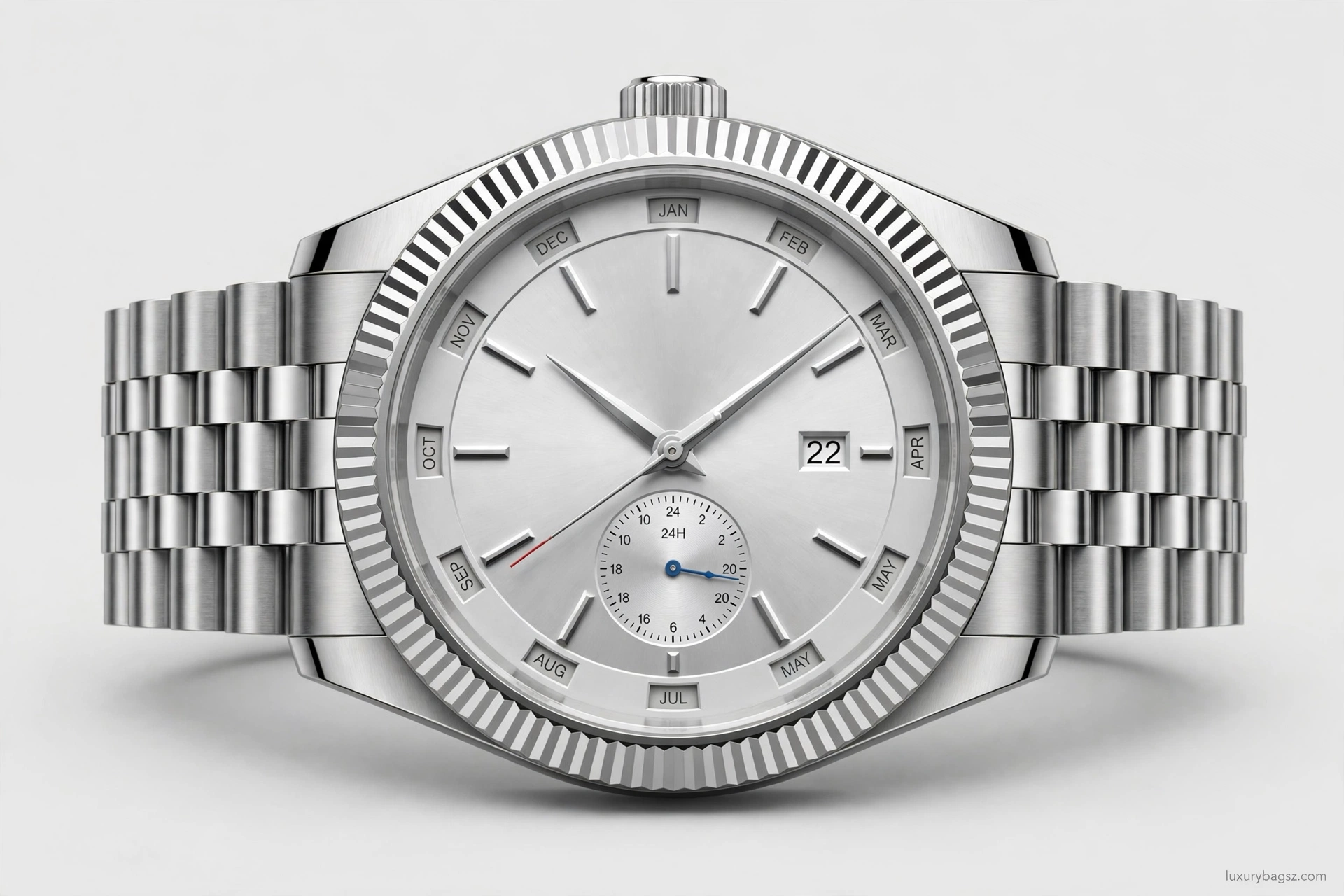
The Rolex Sky-Dweller is the brand's most complicated modern watch. Launched in 2012, it pairs an annual calendar with a second time zone, all set through a rotating fluted bezel called the Ring Command. No other Rolex combines those two functions.
Buy the current white Rolesor ref. 336934 if you want the classic Sky-Dweller. It is 42 mm, runs calibre 9002, and offers the complication at the lowest entry price. Blue and mint green dials command the highest premiums.
Every Sky-Dweller is 42 mm, water-resistant to 100 metres, and carries an 18k gold bezel, even on steel models. That size and weight divide buyers sharply, so try one before assuming it will suit your wrist.
Key Takeaways

- Launched in 2012 as Rolex's first new model line in twenty years, and its first annual calendar.
- Calibre 9001 in the 326 generation, updated to calibre 9002 in the 336 generation from 2023.
- Annual calendar handles 30- and 31-day months automatically; only February needs a manual date correction.
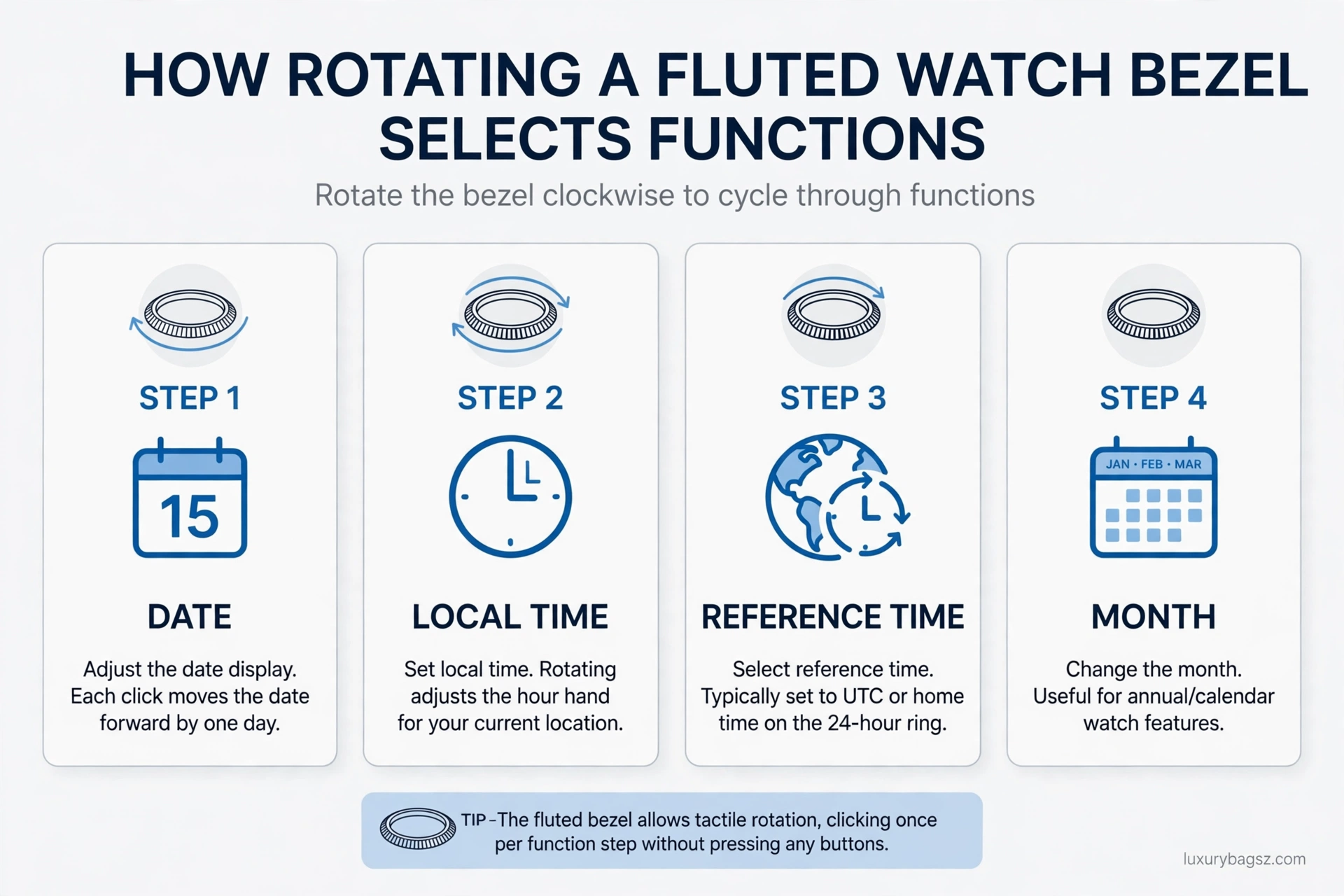
- Ring Command bezel selects date, local time, reference time, and month by rotating the bezel.
- Current retail from about $17,750 for ref. 336934 to about $64,900 for Everose ref. 336935.
- Pre-owned steel and two-tone models often trade near retail, unlike steel Daytonas.
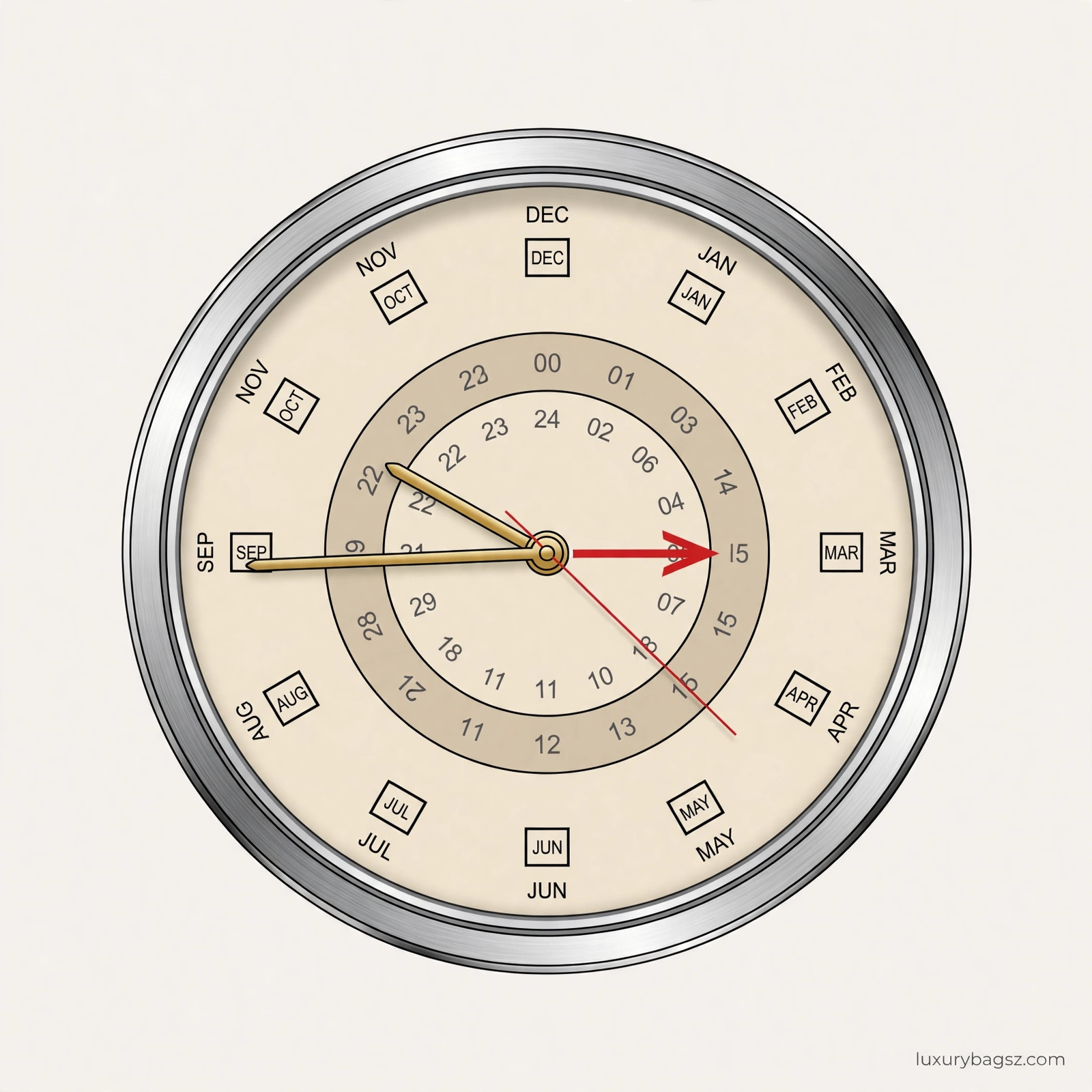
- Month windows sit beside the hour markers; the red arrow points to a 24-hour home-time disc.
Why the Sky-Dweller Exists
Rolex introduced the Sky-Dweller in 2012 for travellers, not pilots. The GMT-Master already served pilots with a second time zone. The Sky-Dweller added a full annual calendar to that travel job, so a frequent flyer could read home time, local time, date, and month at once.
It broke a twenty-year gap since the Yacht-Master of 1992, Rolex's previous new model line. That gap matters, because Rolex rarely launches new lines. When it does, the watch usually carries real technical ambition rather than a cosmetic change.
Rebag notes the Sky-Dweller quickly became a favourite of travellers and public figures, naming David Beckham and Will Smith among its wearers. Celebrity wear alone proves little, but it shows how fast the watch entered mainstream luxury conversation.
The honest question is whether you need an annual calendar. If you travel across time zones often, the answer may be yes. If you rarely leave your home time zone, the complication is impressive engineering you will seldom use.
The Annual Calendar, Explained Simply
An annual calendar knows the difference between 30-day and 31-day months. It advances the date correctly through April, June, September, and November without your help. Only February, with 28 or 29 days, needs a manual correction once a year.
That mechanism is called the Saros system, and it uses the month display to drive the date. Twelve small windows sit beside the hour markers, one per month. The current month shows in a distinct colour, so you can read the month without counting markers.
A perpetual calendar goes further and handles February and leap years too. The Sky-Dweller is not a perpetual calendar, and sellers who call it one are wrong. The distinction matters for price, because true perpetual calendars cost far more.
For daily use, the annual calendar is the sweet spot. You set it once and forget it for eleven months. The single February correction takes seconds, and the watch reminds you by showing the wrong date, not by breaking.
The Ring Command Bezel
The fluted bezel is not decoration; it is the control system. Rotating it selects which function the crown adjusts: date, local time, reference time, or month. Turn the bezel, then turn the crown, and the chosen function moves.
That design removes the need for extra pushers or hidden correctors. Everything happens through one bezel and one crown. It is elegant, but it takes learning, so read the manual before assuming the watch is faulty.
The bezel is 18k gold on every Sky-Dweller, even steel models. That gold bezel explains part of the price and much of the watch's presence. It also means the bezel, not the case metal, sets the watch's warm tone.
Practice the bezel positions at home, not at an airport. A traveller who fumbles the Ring Command while rushing will set the wrong time zone. Learn the clicks, then trust the system when it matters.
Reading the Dial
Centre hands show local time, the time where you are standing. A date window sits at 3 o'clock, magnified by a Cyclops lens. That layout will feel familiar to any Rolex wearer, which is deliberate.
The second time zone lives on a 24-hour disc, read by a red arrow, usually shown as an inverted triangle. That disc shows home time while the centre hands show local time. The distinction between home and local is the watch's core travel trick.
Month windows ring the dial beside each hour marker. Only the current month stands out, so a glance tells you the month without reading tiny text. Early models used Roman numerals, but later models moved to baton markers for a cleaner look.
The dial can look busy at first, especially with the month windows and the 24-hour disc competing. Spend a week with it, and the layout settles. If it still feels crowded after a week, the Sky-Dweller may simply not be your watch.
The Movement: Calibre 9001 to 9002
The original Sky-Dweller used calibre 9001, an automatic movement with about 72 hours of power reserve. It runs at 28,800 beats per hour and carries Superlative Chronometer certification. Rebag notes it integrates the bezel, annual calendar, and GMT functions into one system.
The 2023 refresh moved to calibre 9002 in the 336 generation. Functionally, the two calibres are near identical for the wearer. Both offer the Saros calendar and Ring Command bezel, so do not pay a large premium for 9002 alone.
Complexity has a service cost. A Sky-Dweller service involves more parts and more testing than a simple time-and-date Rolex. Budget accordingly, and prefer Rolex service for calendar work, since independent shops may lack the correct parts.
Accuracy should meet Rolex's Superlative Chronometer standard of minus two to plus two seconds per day. If your Sky-Dweller drifts beyond that, or the calendar jumps wrongly, it needs service rather than a bezel adjustment. Do not force the mechanism.
Generations: 326 and 336 References
First-generation references start with 326 and run from 2012 to 2023. Gold models include 326938 in yellow gold, 326939 in white gold, and 326935 in Everose gold, each on a matching bracelet. Leather-strap versions carried 326138, 326139, and 326135.
Rolesor versions arrived in 2017: yellow Rolesor 326933 and white Rolesor 326934. Those two-tone models lowered the entry price and widened the watch's audience sharply. A Jubilee bracelet option followed in 2021 for Rolesor and steel models.
Current references start with 336 and run from 2023 onward. They include 336934 in white Rolesor, 336933 in yellow Rolesor, 336935 in Everose gold, and 336938 in yellow gold. Some sources also list a 336932 Everose Rolesor variant, so verify any 336932 claim against the seller's papers.
Leather straps are discontinued across the range. A leather-strap Sky-Dweller is therefore a pre-owned-only choice, and strap availability for servicing deserves a question before buying. Bracelet models are the safer long-term bet.
Size, Weight, and the 42 mm Question
Every Sky-Dweller is 42 mm, with a thickness near 14 mm and a lug-to-lug span over 50 mm. Those numbers make it one of the largest Rolex watches, and it wears that way. Small wrists should try it in person, not judge from photos.
The Jubilee bracelet transforms the watch for many buyers. It drapes better than the Oyster bracelet and softens the case's bulk. Several reviewers name the Jubilee as the key to daily comfort, and that advice matches the watch's weight distribution.
Water resistance is 100 metres, which covers swimming in principle. In practice, most owners treat a gold-bezel annual calendar as a travel and office watch, not a swim watch. Have gaskets checked at service before relying on the rating.
Weight is substantial, especially in full gold. Steel and Rolesor models feel heavy but manageable for most wrists. Gold on a bracelet can tire a smaller wrist over a long day, so test wear time, not just a shop-mirror glance.

Bracelets and Dials
Bracelet options include Oyster, Jubilee, and Oysterflex, plus the discontinued leather strap. Oyster reads sportier and more solid, while Jubilee reads dressier and more fluid. Oysterflex, a rubber strap with a metal core, suits gold models for a modern, casual feel.
Dial colours span black, white, silver, gold, blue, chocolate, and more. Blue dials command the strongest demand, with some guides reporting blue models trading at about twice retail in earlier years. Mint green, on current models, carries a similar premium over black or white dials.
Dial colour is the single biggest price variable within one reference. Guides report blue or mint green 336934 models costing $5,000 to $7,000 more than black or white versions. That gap reflects demand, not function, since the movement is identical.
Choose the dial you enjoy, but know the premium you are paying. A black-dial Sky-Dweller offers the same complication at a lower price. A blue dial buys desirability, which helps resale but costs more upfront.
Prices in 2026
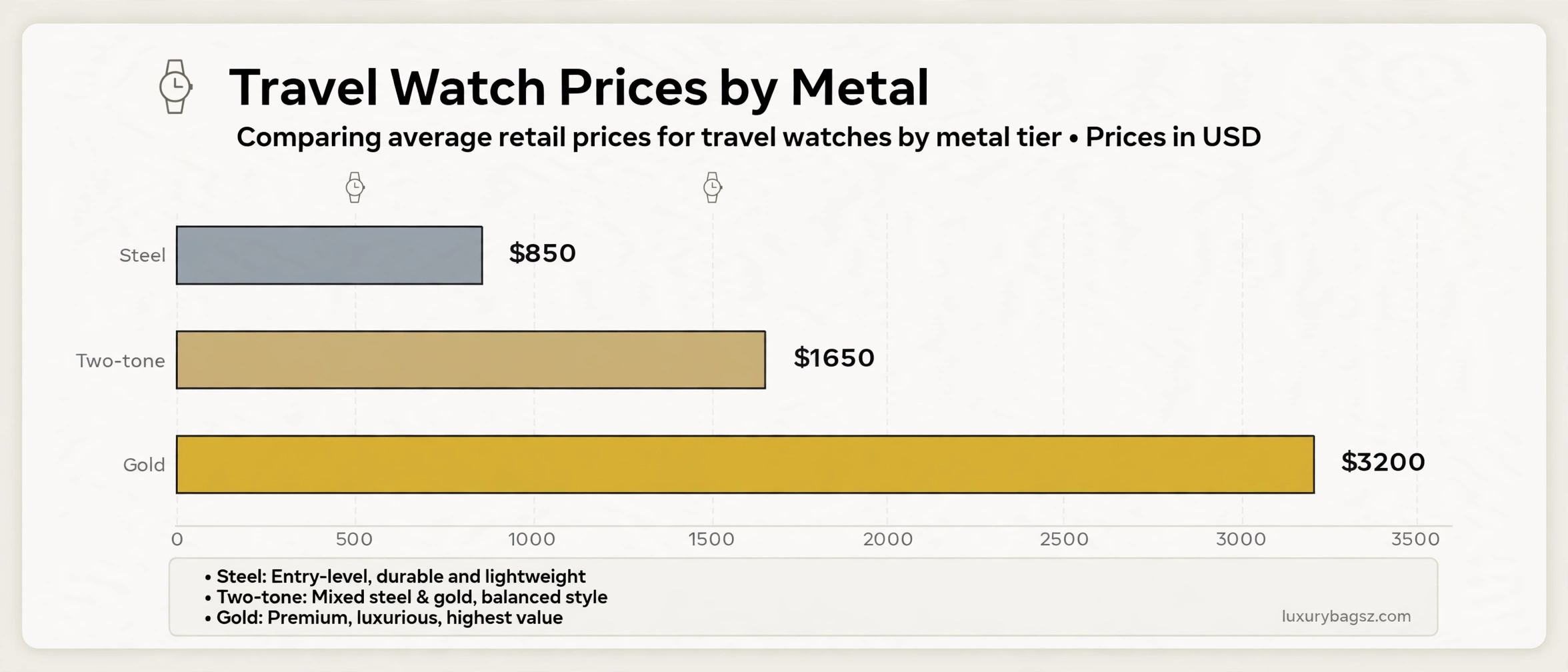
Retail prices for current models, per recent buying guides, run from about $17,750 for ref. 336934 to about $24,050 for ref. 336933. Gold models climb to about $53,450 for ref. 336239 on Oysterflex and about $64,900 for Everose ref. 336935 on bracelet. Older guides list lower starting figures near $15,650, reflecting pre-2026 pricing.
Pre-owned ranges vary by source, so treat them as bands. Steel 326934 models trade roughly $13,000 to $18,000 in some guides, while current 336934 and 336933 models trade roughly $15,000 to $22,500. Full gold models range roughly $28,000 to $45,000 or more, depending on metal and dial.
Unlike the steel Daytona, the steel Sky-Dweller often trades at or slightly below retail. That makes it one of the few Rolex complications that offers genuine pre-owned value. Buyers who want the complication without the Daytona premium should note that gap.
Wait times for popular blue and green dials run roughly six to twelve months at authorised dealers, per recent dealer commentary. Two-tone models may wait less, while some gold configurations trade below retail despite easier availability. Rolex publishes no universal waitlist, so all wait figures are dealer estimates.
Sky-Dweller Against Other Complicated Rolexes
The GMT-Master II offers a second time zone without an annual calendar, at a smaller size and often a higher premium. Choose it if you want travel function in a sportier, more liquid package. Choose the Sky-Dweller if the calendar matters as much as the second zone.
The Day-Date offers a full day and date display with a President bracelet, but no second time zone. It suits buyers who want calendar prestige without travel function. The Sky-Dweller suits buyers who cross time zones and want the calendar as a bonus.
Against Patek Philippe annual calendars, the Sky-Dweller offers Rolex robustness and service reach at a lower price. Our guide to Patek Philippe covers that brand's history and pricing for comparison. Patek calendars carry more prestige, but they cost more and service through fewer channels.
The Sky-Dweller's weakness is size. At 42 mm, it excludes smaller wrists that a 40 mm GMT-Master or a 36 mm Datejust would suit. No complication compensates for a watch that never leaves the box because it feels too large.
Pre-Owned Checks Before You Pay
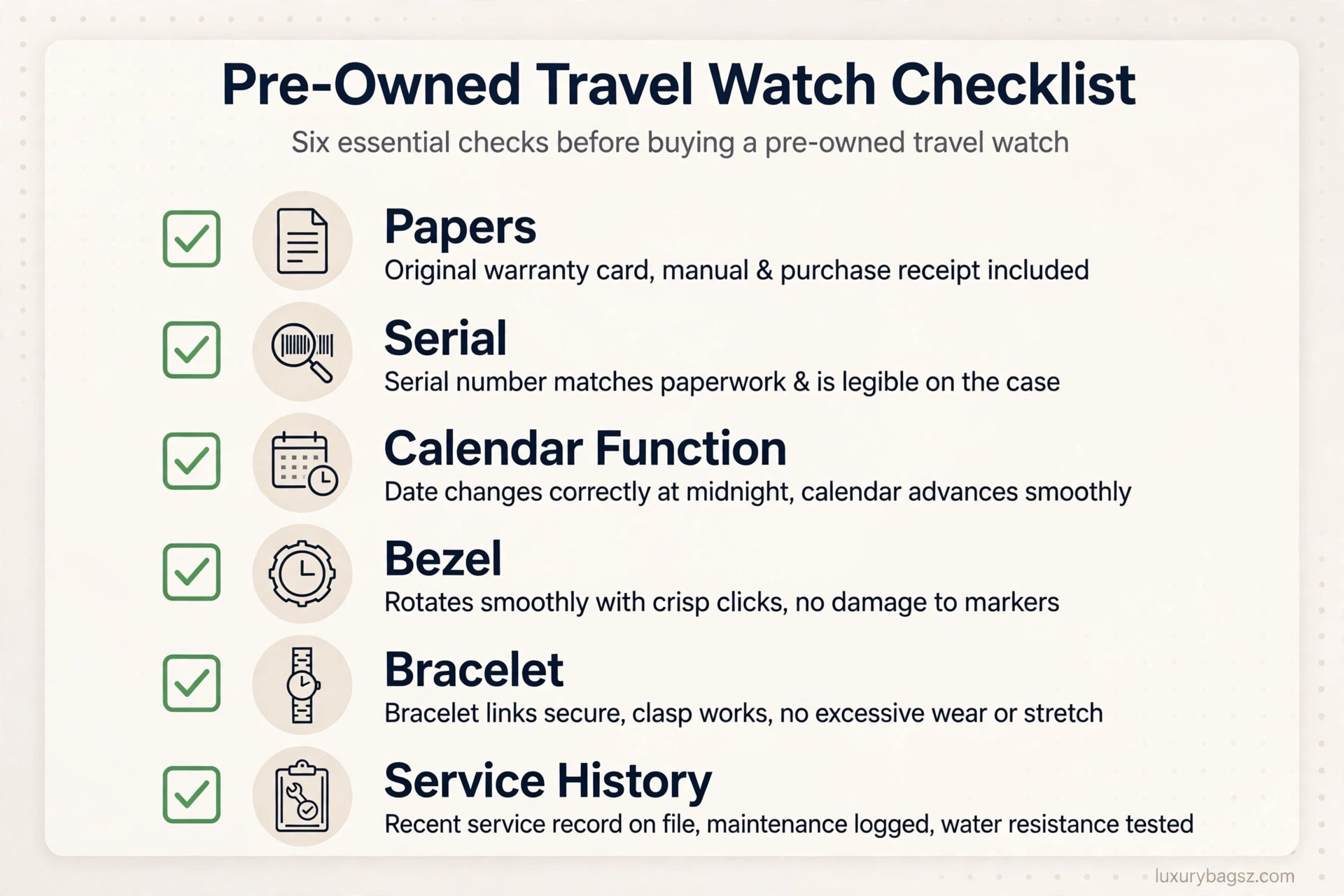
Test every function, not just the time. Set the local time, the reference time, the date, and the month through the Ring Command bezel. A calendar that jumps wrongly, or a bezel that slips between positions, needs service and a price reduction.
Verify the serial and reference against the papers, using our guide to a serial number check. Confirm the generation: a 326 watch should carry calibre 9001, while a 336 watch should carry calibre 9002. A mismatch deserves a direct question.
Check the gold bezel for dents and over-polishing, since fluting shows damage clearly. Inspect the bracelet for stretch, especially on Jubilee models, and confirm spare links are included. A tight bracelet without spare links is a watch you may not be able to wear.
Use our general fake Rolex checks for weight, printing, and movement tells, and buy from a dealer with a written return policy. For a watch this complex, independent authentication is money well spent, not an optional extra.
Care, Service, and Running Costs
Clean the case and bracelet with a soft cloth and lukewarm water, then dry fully. Our guide to how to clean a watch covers steel, gold, and bracelet care by material. Never force the bezel or crown if either feels gritty; dirt in the Ring Command mechanism needs professional cleaning.
Service intervals run roughly every ten years for modern Rolex movements, but calendar watches deserve earlier attention if any function drifts. Keep service receipts with the papers, since a documented calendar service supports resale more than a generic service stamp.
Set the annual calendar correctly after February, and only adjust the date when the hands sit away from midnight. Changing the date near midnight can strain the calendar mechanism. The manual gives the safe window; follow it rather than guessing.
Store the watch away from magnets and damp rooms. A winder keeps the calendar correct during breaks, but it is optional. If the watch stops, reset local time, reference time, date, and month in order, using the bezel positions as the manual directs.
Who Should Buy Which Sky-Dweller
Frequent travellers should target the white Rolesor 336934, ideally on a Jubilee bracelet. It offers the full complication at the lowest entry price, with the most liquid resale. Blue or mint green dials suit buyers who accept the premium for desirability.
Value buyers should consider a pre-owned 326934 on an Oyster bracelet. It offers the same functions as the current model at a lower price, with calibre 9001 rather than 9002. The functional difference is minimal, so the saving is real.
Gold buyers should weigh Oysterflex against bracelet carefully. Oysterflex feels lighter and more modern, while a full gold bracelet carries more presence and more weight. Either way, expect softer secondary prices than steel, so buy gold for wearing, not for flipping.
Smaller wrists should think twice before any Sky-Dweller. The 42 mm case and 50 mm lug span suit medium to large wrists best. If it feels large in the shop, it will feel larger after eight hours, whatever the dial colour.
Setting the Sky-Dweller Correctly
Setting a Sky-Dweller starts with the bezel, not the crown. Rotate the fluted bezel to the position for the function you want: date, local time, reference time, or month. Only then does the crown adjust that function, which prevents accidental changes.
Set local time first, since it drives the date display. Then set the reference time, which is usually home time, on the 24-hour disc. Finally, check the month windows to confirm the calendar shows the correct month after your adjustments.
Avoid setting the date near midnight, when the calendar mechanism is engaged. The manual gives a safe window for date changes, and following it prevents strain on the calendar gears. A few minutes of patience protects a complex movement.
After any long break, reset in order: local time, reference time, date, then month. Skipping the order can leave the month window mismatched with the date. If the month looks wrong after setting, recheck the bezel position before assuming a fault.
Travellers should practise the full setting routine at home before a trip. Airport setting under time pressure leads to errors, especially with the reference time. A calm practice run makes the real changeover quick and reliable.
A Week With a Sky-Dweller
Day one with a Sky-Dweller is about learning the bezel. You will rotate it through its positions, set both time zones, and watch the month windows respond. That learning curve is steeper than a simple date watch, but it passes quickly.
By midweek, the second time zone becomes genuinely useful if you work across zones. Checking home time on the 24-hour disc while reading local time from the centre hands feels natural after a few days. Without cross-zone contacts, the disc stays decorative.
Weight becomes the main talking point over a week. The 42 mm case and gold bezel feel substantial, especially on a Jubilee bracelet that distributes weight well. Oyster bracelet wearers notice the heft more, since the bracelet is stiffer and less draping.
Legibility improves with familiarity. The month windows and 24-hour disc look busy on day one, then settle into a readable pattern. If the dial still feels crowded after a week, the Sky-Dweller's information density may simply exceed your taste.
By week's end, judge the watch by one test: did the annual calendar save you any effort? If you crossed a month boundary without touching the date, it did. If you never noticed the calendar, a simpler GMT watch might serve you equally well.
Sky-Dweller Servicing Explained
A Sky-Dweller service starts with function testing across every bezel position. The watchmaker checks date, local time, reference time, and month changes before opening the case. Any calendar fault found here shapes the work that follows.
The movement's complexity means servicing takes longer than a simple time-and-date watch. Calendar gears, the Saros mechanism, and the Ring Command linkage all need inspection and lubrication. Expect a longer turnaround and a higher cost than a Datejust service.
Gaskets are replaced at full service, followed by a pressure test. That test matters even if you never swim, since dust and moisture affect calendar mechanisms over time. Ask for the pressure-test result with the service receipt.
Polishing needs care on the fluted gold bezel. Over-polishing softens the flutes and dulls the bezel's light play, which is central to the watch's look. Agree polishing scope in advance, and consider skipping bezel polishing on well-preserved examples.
After service, test every function yourself over several days. Change the date, switch time zones, and check the month window after midnight. Report faults immediately, while the service warranty covers the calendar work.
Keep service receipts with the original papers. A documented calendar service reassures pre-owned buyers far more than a generic service stamp. For a watch this complex, paperwork is part of the value, not an accessory.
Sky-Dweller Myths, Corrected
One myth says the Sky-Dweller is a perpetual calendar. It is not; it is an annual calendar that needs a manual February correction. That distinction matters for price and for setting, so correct any seller who claims otherwise.
Another myth says the Ring Command bezel is fragile. It is a robust Rolex mechanism designed for regular use, though grit or impact can affect its feel. Normal rotation through its positions is exactly what it was built for.
A third myth says the Sky-Dweller is only for pilots. It was designed for travellers generally, not for cockpit use specifically. Business travellers, who cross zones without flying the plane, are its true audience.
A fourth myth says steel Sky-Dwellers are hard to find at retail. Popular blue and green dials do wait months, but black and white dials are often more available. Dial choice, not the model name, drives most of the wait.
A fifth myth says the 42 mm size suits everyone because Rolex made it. It suits medium to large wrists best, and smaller wrists should try it for a full day before buying. No complication compensates for a case that overwhelms the wrist.
A sixth myth says calibre 9002 makes 326 models obsolete. The functional difference for wearers is minimal, since both calibres offer the same calendar and bezel functions. Pre-owned 326 models remain a smart value choice.
A seventh myth says gold Sky-Dwellers hold value like steel ones. Gold models often trade below retail, while steel models hold nearer to it. Buy gold for wearing pleasure and presence, not for an assumed premium.
An eighth myth says the annual calendar never needs attention. It needs one February correction each year, plus correct setting after any long stop. That single annual task is easy, but forgetting it leaves the date wrong for days.
A ninth myth says the Sky-Dweller is too complicated to use daily. After a week of practice, the bezel positions become second nature. Daily use needs only time and date reading; the calendar and second zone work quietly in the background.
Sky-Dweller Ownership Checklist
Before paying, run through a short ownership checklist. Confirm the reference, generation, and serial match the papers. Test every bezel position, the date, the month, and both time zones. Each check takes minutes and prevents months of regret.
After buying, photograph the watch, the serial, and the papers, and store copies separately from the originals. That record helps with insurance claims and future resale. Update the photos after any service that changes parts.
Set a service reminder for ten years, or sooner if any calendar function drifts. Note the date in your calendar now, while the purchase is fresh. A reminder costs nothing and protects a complex movement that costs far more to repair neglected.
Review your insurance annually against current secondary prices. Dial colour moves Sky-Dweller values sharply, and a valuation from purchase day soon lags reality. An annual update keeps your cover matched to replacement cost.
Wear the watch regularly, but rotate it with rest days. Daily wear keeps the calendar correct, while rest prevents bracelet wear from becoming the only story. Balance is the simplest care routine there is.
Clean the watch gently after wearing it in heat or dust. A soft cloth and lukewarm water remove most grime without chemicals. Dry it fully before storage, and never force a gritty bezel; let a watchmaker clean the mechanism.
Keep the box, papers, and spare links together in one safe place. A complete set sells for more and reassures buyers, while scattered papers invite doubt. Completeness is a habit, not a last-minute search.
Finally, enjoy the Sky-Dweller for what it is: Rolex's cleverest modern complication, built for travellers. Cross a time zone, watch the calendar handle the month, and remember why the golden bezel turns at all.
Frequently Asked Questions
When was the Rolex Sky-Dweller introduced?
In 2012, as Rolex's first new model line in twenty years and its first annual calendar. It was designed for travellers who need two time zones plus a calendar.
What is the Ring Command bezel?
A rotating fluted bezel that selects which function the crown adjusts: date, local time, reference time, or month. Turn the bezel to choose, then turn the crown to set.
What is an annual calendar?
A calendar that handles 30- and 31-day months automatically. Only February needs a manual correction once a year, unlike a simple date watch that needs correcting five times a year.
What is the difference between calibre 9001 and 9002?
Calibre 9001 powers the 326 generation from 2012 to 2023, while calibre 9002 powers the 336 generation from 2023 onward. For the wearer, the functions are near identical.
How big is the Sky-Dweller?
42 mm across, about 14 mm thick, with a lug-to-lug span over 50 mm. It is one of the largest Rolex watches and suits medium to large wrists best.
How much does a Sky-Dweller cost in 2026?
Current retail runs from about $17,750 for ref. 336934 to about $64,900 for Everose ref. 336935. Pre-owned steel models often trade near or below retail.
Does the Sky-Dweller have a perpetual calendar?
No. It has an annual calendar, which handles 30- and 31-day months but needs a manual February correction. A perpetual calendar also handles February and leap years.
Can you swim with a Sky-Dweller?
It is rated to 100 metres, but most owners treat it as a travel and office watch. Have gaskets checked at service before relying on the rating for swimming.
What should I check before buying a pre-owned Sky-Dweller?
Test the bezel positions, date, month, and both time zones. Verify the serial and generation, check the gold bezel for damage, and confirm spare links are included.
Should I buy a 326 or 336 Sky-Dweller?
Buy a 336 if you want the current model and latest finishing. Buy a 326 if you want the same functions at a lower pre-owned price, since the functional difference is minimal.
Summary
The Sky-Dweller is Rolex's cleverest modern watch: an annual calendar and a second time zone, run through a single golden bezel. It is large, heavy, and unapologetic about both, which is why it divides opinion so cleanly.
Buy the white Rolesor 336934 for the classic entry, or a pre-owned 326934 for the same functions at less money. Test every bezel position, verify the generation, and try the 42 mm case for a full day before paying. A Sky-Dweller that fits your wrist and your travel life is a watch you will reach for constantly; one that does not is engineering you admire from a box.
Keep this guide handy when you travel with the watch, especially the bezel positions, until setting both time zones feels automatic. A Sky-Dweller rewards the owner who learns it properly, and that learning takes a week, not a lifetime. Once learned, the annual calendar and second time zone fade into the background, leaving a large, confident watch that handles every trip without fuss or extra buttons.