

What to Know About Patek Philippe: History, Watches, Prices and Buying Guide
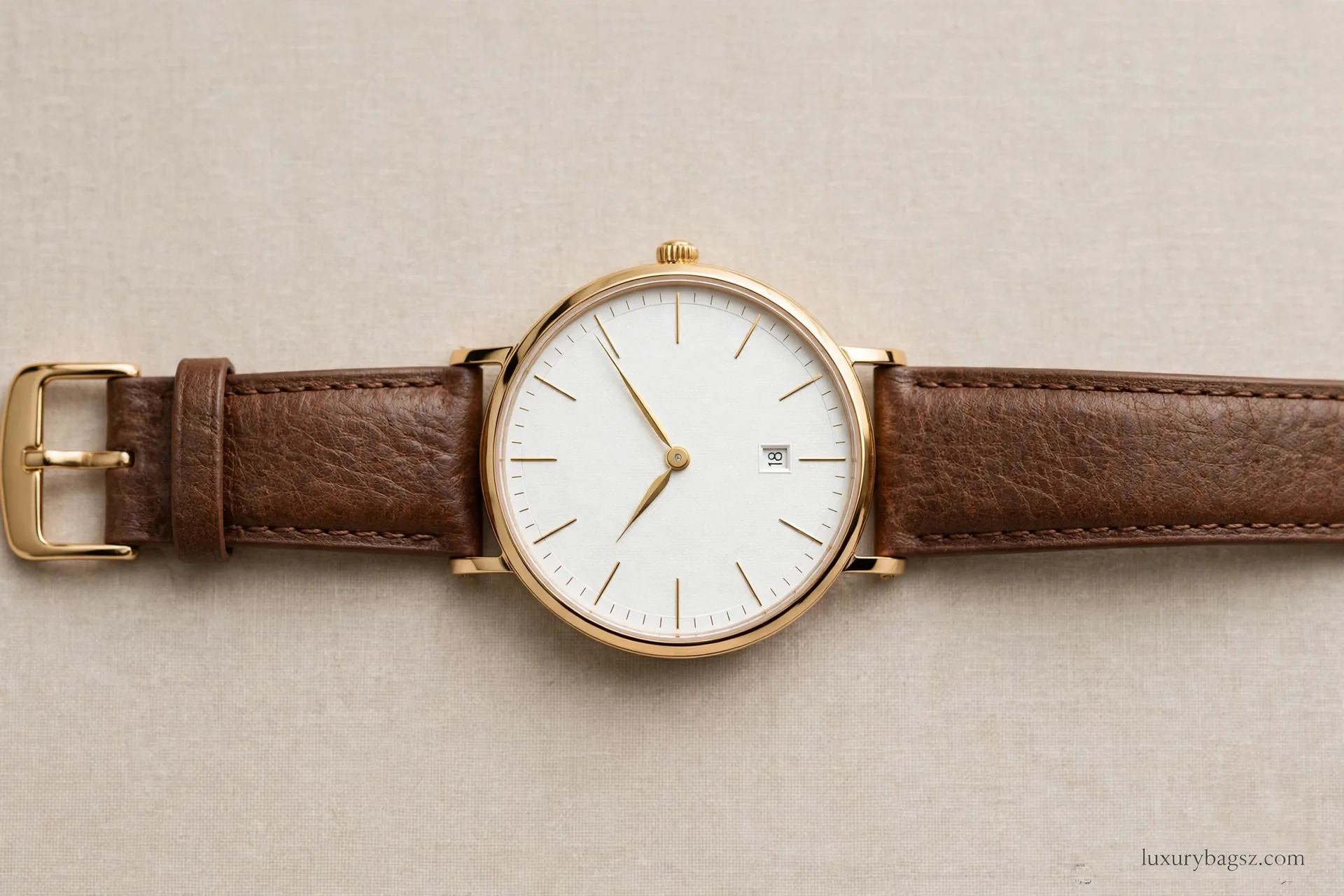
Patek Philippe at a Glance
Patek Philippe is watchmaking's most revered name: a Geneva house founded in 1839 that has remained family-owned for nearly a century and that makes some of the finest mechanical watches in the world. Its slogan, that you never actually own a Patek Philippe but merely look after it for the next generation, captures how collectors think about the brand.
The house covers everything from the pure dress simplicity of the Calatrava to the steel sports luxury of the Nautilus and Aquanaut, and on to grand complications that combine perpetual calendars, minute repeaters, and chronographs in a single case. Prices start in five figures and climb into seven for the rarest pieces.
Buying a Patek Philippe is unlike buying most luxury goods. Popular steel models carry waiting lists, authorised dealers allocate scarce pieces to known clients, and the pre-owned market often prices popular models above retail. Knowledge of references, papers, and servicing is essential before spending this kind of money.
Key Takeaways
- Patek Philippe was founded in Geneva in 1839 by Antoine Norbert de Patek and Francois Czapek.
- Jean Adrien Philippe joined in 1845, bringing his crown-winding system, and the house took its current name in 1851.
- The Stern family has owned Patek Philippe since 1932, keeping it independent and family-run.
- Icons include the Calatrava, Nautilus, Aquanaut, World Time, and Grand Complications.
- The Geneva Seal and in-house movements mark the house's quality standards.
- Popular steel sports models often sell pre-owned above retail due to scarcity and waiting lists.
- Papers, Extract from the Archives, serial and reference numbers, and condition are the key pre-owned checks.
- Servicing through authorised channels protects value, though it costs significantly and takes time.
Founding in Geneva, and the Crown-Winding Breakthrough
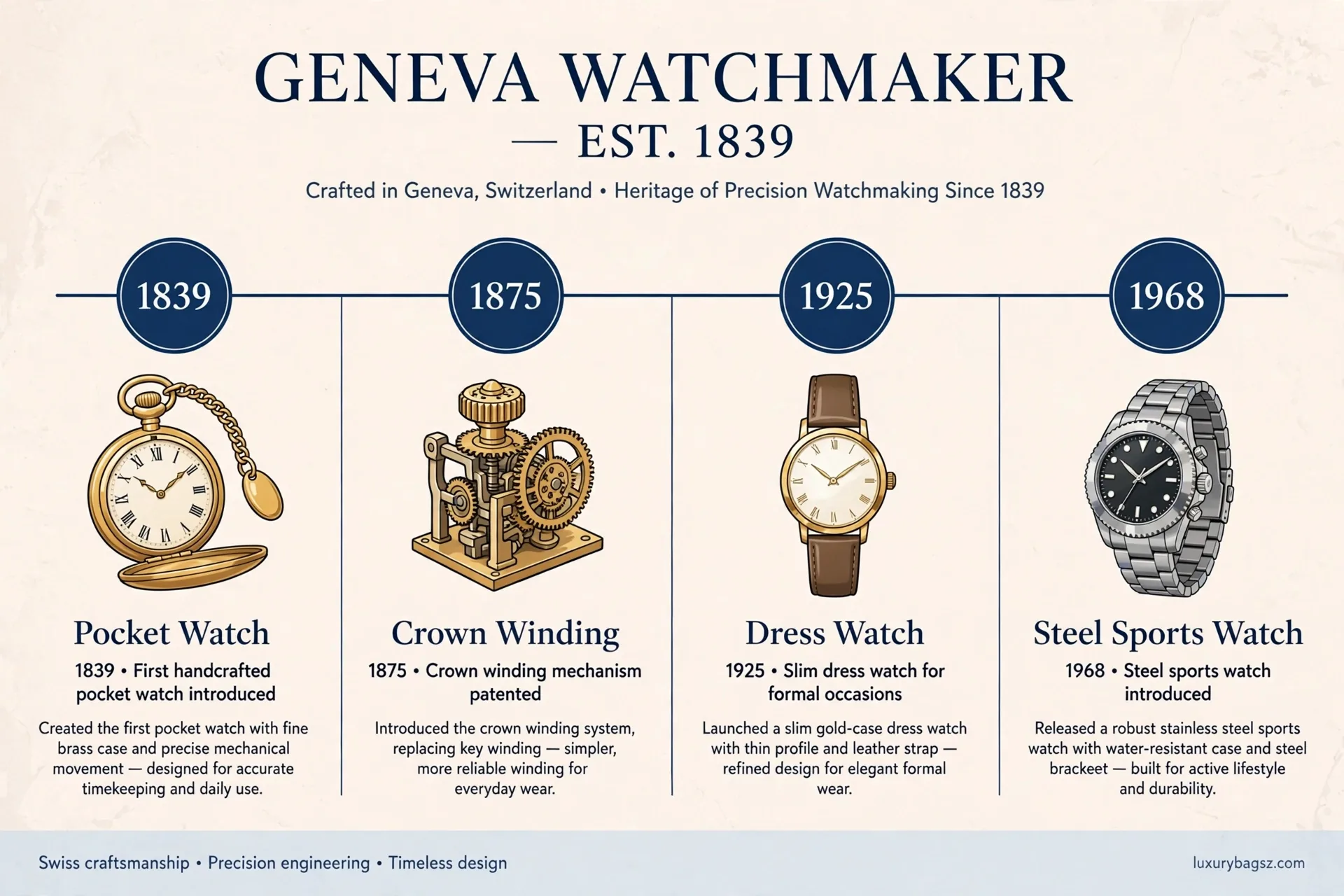
Antoine Norbert de Patek, a Polish nobleman who had settled in Geneva, founded Patek, Czapek and Co in 1839 with Francois Czapek, a Czech watchmaker. Geneva was already a watchmaking centre, with skilled artisans, suppliers, and a tradition of fine finishing that suited ambitious newcomers.
The early business made pocket watches of high quality, but its breakthrough came through Jean Adrien Philippe, a French watchmaker who had invented a crown-winding and hand-setting system. Before his invention, watches were wound with a key, which was fiddly and easy to lose. Philippe's system let owners wind and set a watch from the crown, a convenience we now take for granted.
Philippe joined the firm in 1845, Czapek left, and in 1851 the company became Patek Philippe and Co. The partnership combined Patek's commercial vision with Philippe's technical genius, and that combination of business and craft has defined the house ever since.
Early clients included royalty and aristocrats across Europe, and the house won medals at exhibitions for its finishing and innovation. By the late nineteenth century, Patek Philippe was already regarded as one of Geneva's finest makers, a reputation it has guarded ever since.
The First Wristwatch, and the Stern Family Rescue
Patek Philippe made its first Swiss wristwatch in 1868 for Countess Koscowicz of Hungary, a bracelet watch that predated wristwatches becoming common for men by decades. At the time, wristwatches were considered jewellery for women, while men carried pocket watches, so the commission was forward-looking.
The twentieth century brought crisis. The Great Depression hit luxury watchmaking hard, and in 1932 the Stern family, who made watch dials and were already suppliers to Patek Philippe, bought the company. Charles Stern and his brother Jean took control, saving the house and beginning family ownership that continues today.
Under the Sterns, Patek Philippe refocused on quality and classic design. The Calatrava, launched in 1932 with reference 96, embodied the new direction: a round, clean, Bauhaus-influenced dress watch that remains the template for Patek dress watches today.
Later Stern generations, Henri, Philippe, and Thierry Stern, each preserved independence while modernising production. Thierry Stern, the current president, has maintained the family's refusal to sell to a luxury group, a decision that collectors regard as central to the brand's identity.
The Calatrava: The Pure Dress Watch
The Calatrava is Patek Philippe's dress-watch archetype: a round case, a clean dial, slim hands, and a leather strap, with nothing extra. Reference 96, from 1932, set the formula, and modern Calatravas, including references 5196 and 5227, refine it with in-house movements and careful finishing.
Calatrava dials favour legibility and restraint. Applied hour markers, dauphine hands, and a small seconds subdial or date, depending on reference, give the watch a quiet elegance that suits tailoring and formal occasions. There is no lume-heavy sportiness here, and no clutter.
Sizes have grown over time, from the original 31 millimetres to modern 39 millimetres and beyond, but the proportions remain slim and wearable. A Calatrava sits flat under a cuff, which is the point: it should complement a suit, not compete with it.
For first-time Patek buyers, the Calatrava is often the most sensible entry point. It is more available than steel sports models, it teaches the house's finishing standards, and it holds value reasonably well in classic configurations, though it rarely commands the premiums of a Nautilus.
Movements, Finishing, and the Geneva Seal
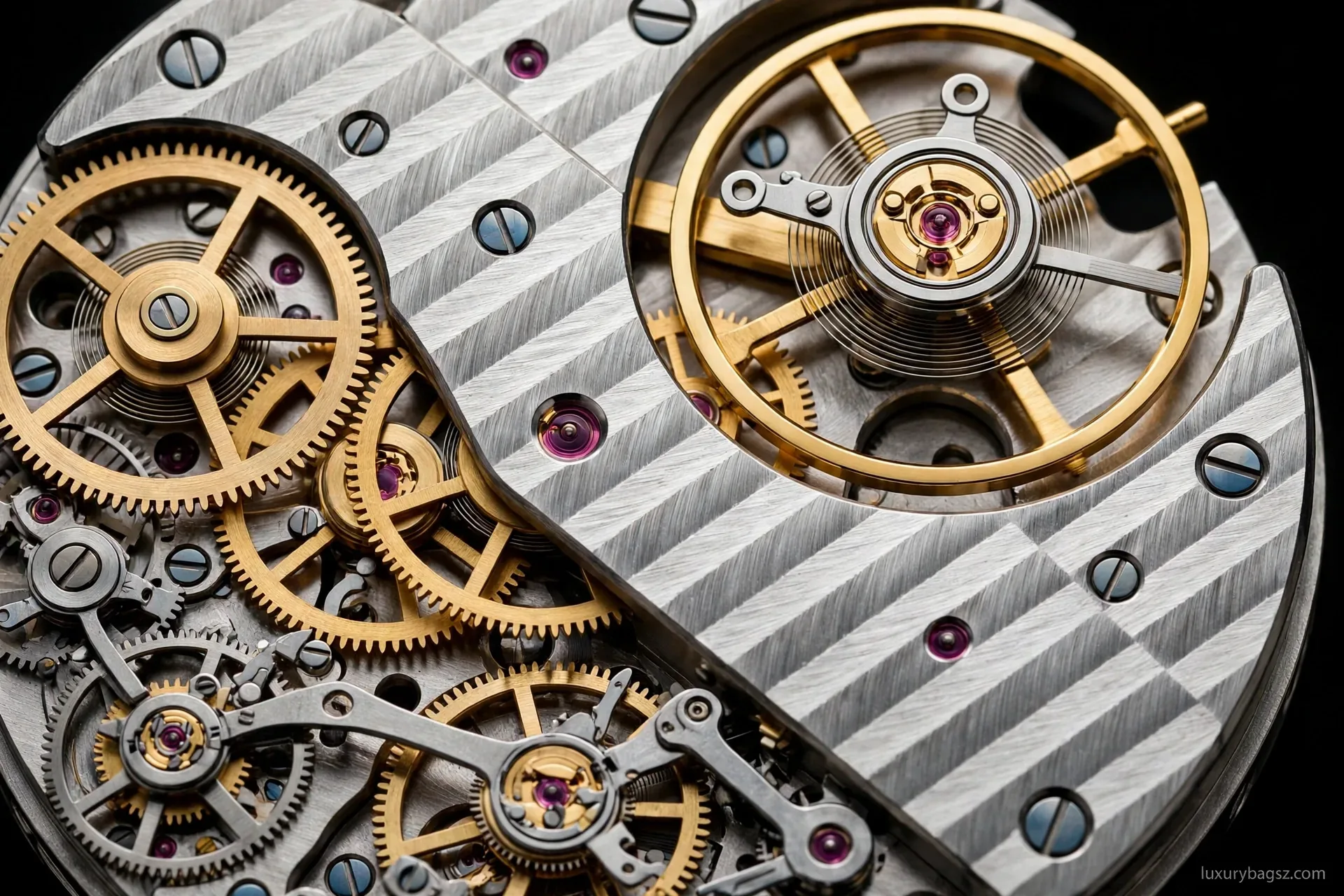
Patek Philippe movements are made in-house in Geneva, with a focus on finishing that collectors inspect closely. Bridges show Geneva striping, edges are bevelled and polished, screws are polished, and jewels sit in polished sinks. These details are invisible to most wearers, but they define the house's quality claim.
The Geneva Seal, or Poincon de Geneve, is a hallmark awarded to movements made in Geneva that meet strict finishing and construction standards. Patek Philippe movements long carried the Seal, and in 2009 the house introduced its own Patek Philippe Seal, which sets even stricter standards for the whole watch, including case, dial, and rate accuracy.
Calibres range from simple hand-wound and automatic time-only movements to highly complex grand complications. The house is famous for perpetual calendars, minute repeaters, split-seconds chronographs, and world-time mechanisms, often combined in a single watch that takes months to assemble and regulate.
For buyers, movement knowledge matters less than condition and servicing. A well-maintained Patek movement will run for generations, while a neglected one can need a costly overhaul. Always ask for service history, and budget for authorised servicing as part of ownership.
Complications, Explained Simply
A complication is any watch function beyond telling hours and minutes. Patek Philippe's core complications include the date, annual calendar, perpetual calendar, moon phase, chronograph, world time, and minute repeater, each adding mechanical complexity and cost.
The annual calendar, invented by Patek Philippe and patented in 1996, needs correction only once a year, at the end of February. It sits between a simple date and a full perpetual calendar in complexity and price, and it suits buyers who want useful complexity without grand-complication cost.
The perpetual calendar tracks day, date, month, leap year, and moon phase, needing no correction until 2100 in most cases. It is a Patek signature, appearing in references such as the 3940, 5140, and 5320, and it represents a major step up in price and prestige.
The minute repeater chimes the time on demand using tiny gongs, a function that dates to an era before electric light, when owners needed to hear the time in the dark. Patek repeaters are among the finest made, with clear, musical tones, and they sit at the top of the range in price.
World time, invented in a modern form by Louis Cottier for Patek Philippe in the 1930s, shows the time in many cities at once via a rotating city ring. It suits travellers and collectors who love the romance of global travel, and modern World Time references remain popular.
Nautilus and Aquanaut: Steel Sports Icons
The Nautilus, designed by Gerald Genta and launched in 1976 as reference 3700, was a shock at the time: a steel sports watch priced like a gold dress watch, with a porthole-inspired case and an integrated bracelet. It created the luxury steel sports category that now dominates collecting.
The Nautilus range today includes time-and-date models, chronographs, annual calendars, and travel-time versions, in steel, gold, and two-tone. The most famous, reference 5711, was discontinued in 2021, which intensified demand and pushed pre-owned prices far above its final retail price.
The Aquanaut, launched in 1997, offers a younger, more casual take on the same idea: a rounded octagonal case, a textured tropical strap, and a sportier feel. It suits buyers who find the Nautilus too formal or too hard to obtain, and its own waiting lists have grown as its popularity has risen.
Choosing between them is partly taste and partly availability. Our Nautilus vs Aquanaut comparison covers sizes, prices, and wear in detail. Both suit daily wear better than a dress Calatrava, but both demand care, insurance, and patience to acquire at retail.
World Time, Gondolo, and the Wider Range
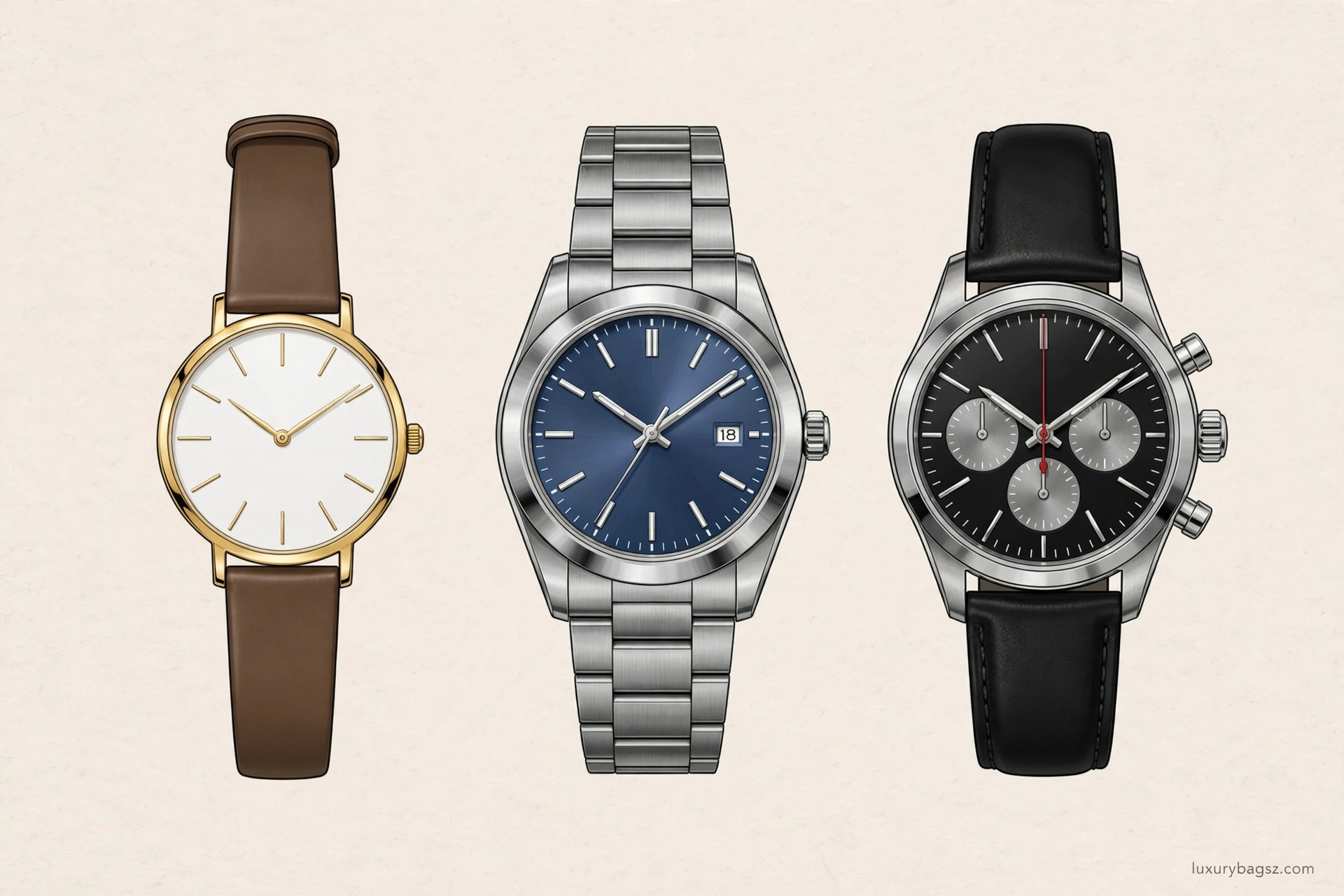
World Time watches, with their city rings and 24-hour scales, remain a Patek signature for travellers. Modern references pair the mechanism with enamel dials, cloisonne maps, or clean modern designs, and they suit collectors who want a complication with daily usefulness.
The Gondolo collection covers shaped cases, rectangular and tonneau forms that recall early twentieth-century elegance. These watches suit buyers who want something different from a round dress watch, and they often offer better availability than the most famous lines.
The Twenty-4 collection, originally for women, offers quartz and automatic models with a distinctive manchette bracelet design. It suits buyers who want a Patek Philippe daily watch with a jewellery feel, and it broadens the house beyond its traditionally male collector base.
Ladies' complications, including diamond-set Calatravas, annual calendars, and moon phases, have grown in importance. Patek Philippe's women's range rewards the same attention to finishing and movement as its men's range, and it deserves consideration from any buyer, not just as an afterthought.
How Patek Philippe Is Made Today
Patek Philippe manufactures in Geneva, with workshops for movements, cases, dials, and assembly, plus a museum and archives that support collectors and researchers. Production volumes are small compared with mass-market luxury watch brands, which is central to scarcity.
Each watch passes through many hands: movement makers, finishers, assemblers, regulators, and quality controllers, with grand complications taking far longer. A minute repeater or perpetual calendar chronograph may spend months in assembly and testing before it leaves Geneva.
The house also makes many components in-house, including hairsprings and balance wheels, which gives it control over quality and supply. That vertical integration is expensive, but it supports the finishing and accuracy standards behind the Patek Philippe Seal.
For buyers, small production means waiting lists and allocation, not mass availability. A popular model may take months or years to obtain at retail, and authorised dealers allocate based on purchase history and relationships, which frustrates new buyers but protects the brand's exclusivity.
Prices, Waiting Lists, and the Secondary Market
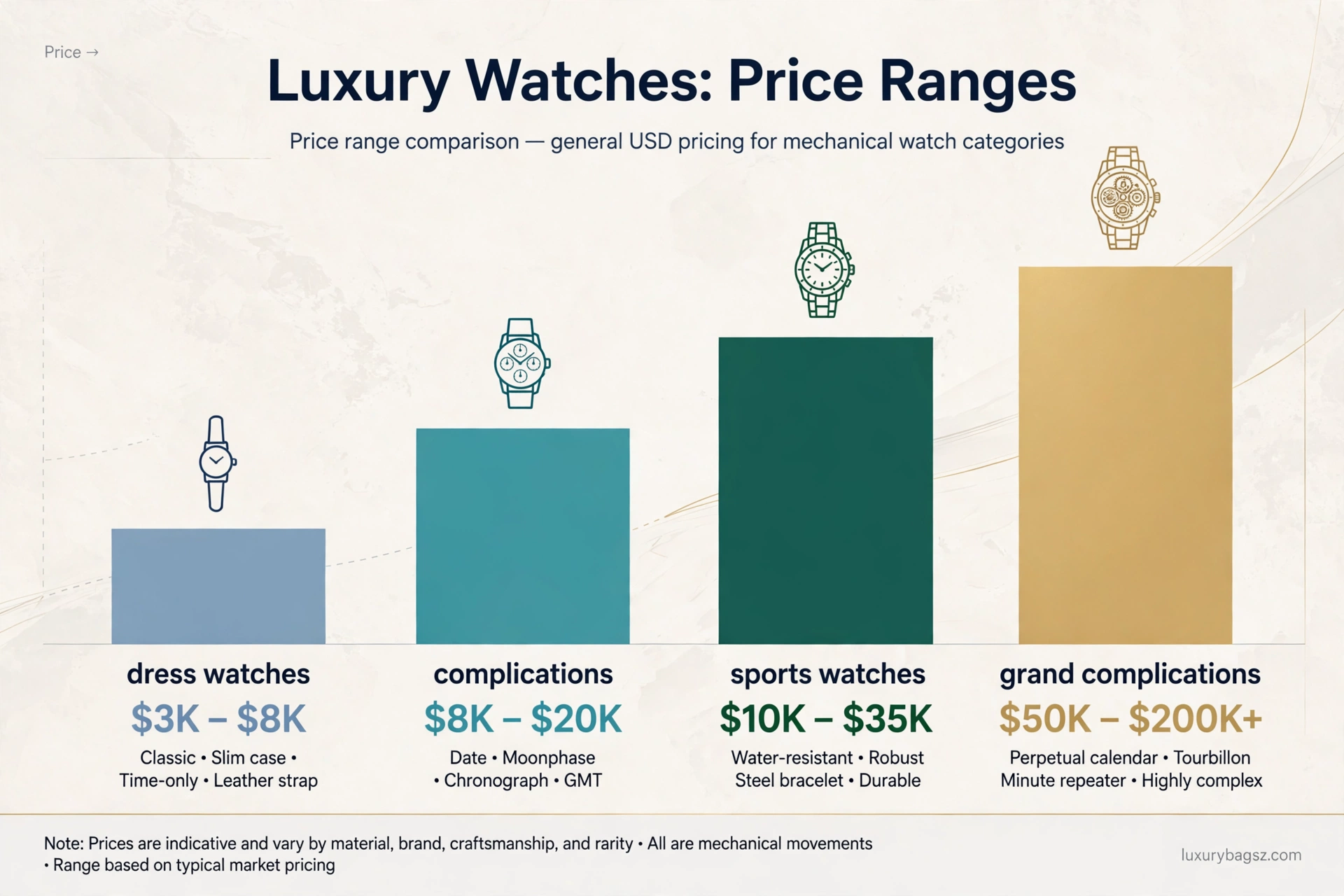
Entry-level Patek Philippe watches, such as time-only Calatravas and Aquanauts in steel, start in five figures in major currencies. Annual calendars and World Time models climb higher, while perpetual calendars, chronographs, and grand complications run into six figures and beyond.
Waiting lists apply to the most popular steel sports models, especially Nautilus and Aquanaut references. Authorised dealers cannot guarantee timelines, and they prioritise established clients, which means new buyers may wait years or turn to the pre-owned market.
Pre-owned prices for popular steel models often exceed retail, sometimes substantially, because scarcity and demand collide. That premium is not guaranteed: it varies by reference, condition, completeness, and market mood, and less popular models may sell below retail.
Grand complications and rare pieces behave differently. They command high prices from a small pool of collectors, and their values depend on condition, provenance, and completeness. Buying a grand complication is a specialist decision that deserves expert advice and thorough documentation.

Where to Buy, and the Authorised Dealer Relationship
Patek Philippe sells through authorised dealers and its own salons, not through general online shops. Finding a dealer is easy; obtaining a scarce model is not, because allocation depends on availability and, for popular pieces, on the dealer's client relationships.
Building a dealer relationship means buying, servicing, and engaging with the dealer over time, not demanding a scarce watch on a first visit. Dealers remember genuine collectors, and they allocate accordingly. Patience and politeness matter more than pressure.
Boutique service is knowledgeable and unhurried. Staff can explain references, movements, and servicing, show pieces in person, and advise on sizing and strap choices. Ask about warranty, servicing intervals, and what is included, and keep all paperwork from day one.
For buyers who cannot wait, reputable pre-owned dealers offer immediate availability at market prices. Choose dealers with watch expertise, clear return terms, and authentication processes, and insist on full documentation for any expensive purchase.
Sizing and Wear: Finding Your Patek Fit
Watch sizing is about case diameter, thickness, lug-to-lug length, and wrist size together, not diameter alone. A 39-millimetre Calatrava wears smaller than a 40-millimetre Nautilus, because the Nautilus case is thicker and its bracelet adds presence, while the Calatrava sits slim on leather.
Try watches in person whenever possible, with the strap or bracelet sized correctly. A watch that flops or pinches will not be worn, however beautiful, and bracelet sizing matters as much as case size for sports models. Ask the dealer to size the bracelet before judging fit.
Lug-to-lug length matters for smaller wrists: if the lugs overhang the wrist, the watch looks oversized even if the diameter seems modest. Conversely, a larger wrist can carry a Nautilus or Aquanaut easily, while a small dress watch may look lost.
Strap choice changes wear dramatically. Leather suits formal occasions, rubber or composite straps suit sport and travel, and bracelets suit daily wear. Patek Philippe offers strap options for many references, and a second strap can transform a single watch across occasions.
Buying Pre-Owned Without Getting Caught Out
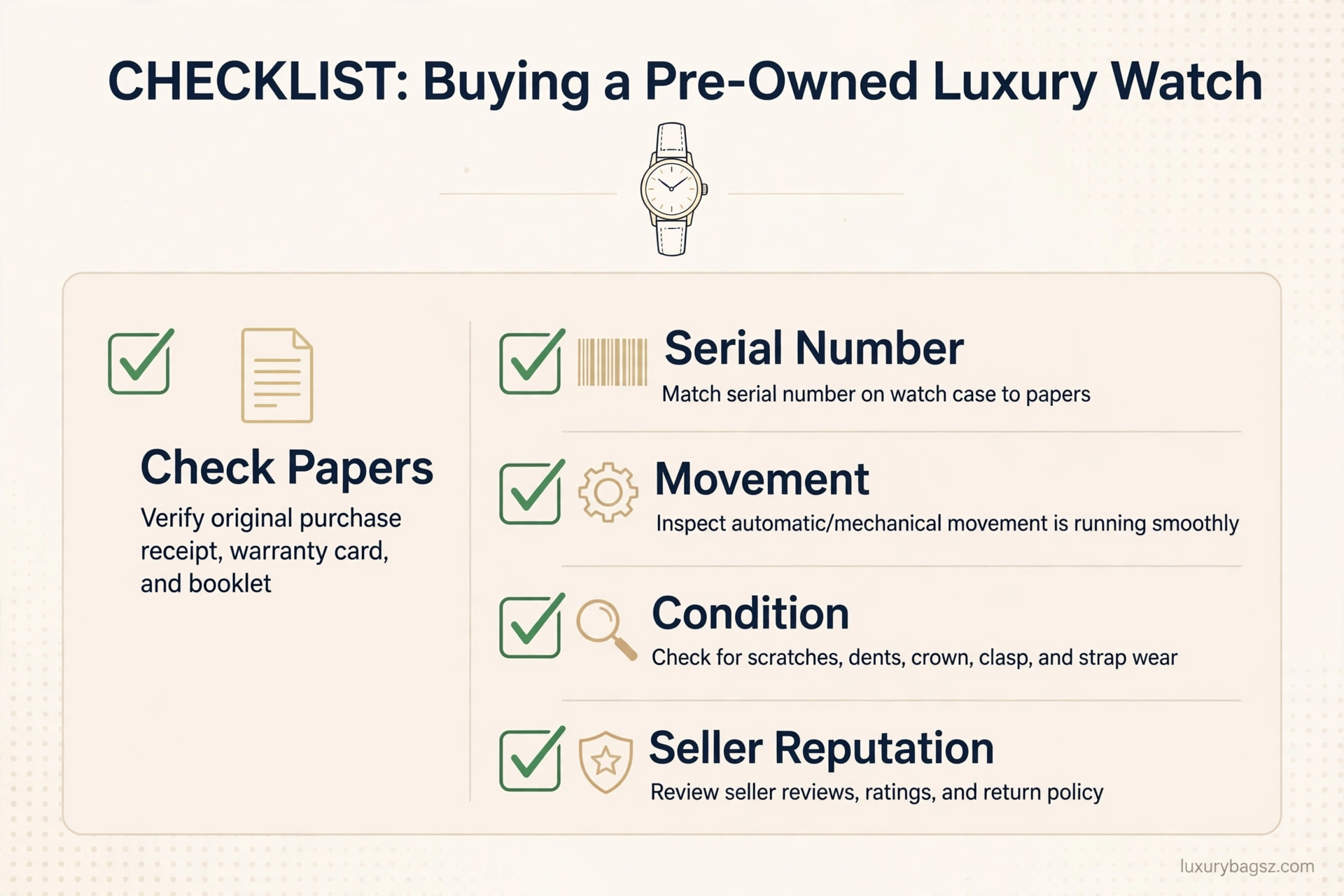
Pre-owned Patek Philippe buying rewards documentation. A full set, watch, box, papers, and any additional straps or links, sells faster and for more than a bare watch, and it supports authenticity. Ask for the full set, and price incompleteness into your offer.
Reference and serial numbers, found on the case and movement, should match papers and the house's records for the era. Patek Philippe's Extract from the Archives, obtainable for a fee, confirms production date and original details for a given watch, and it is a valuable document for collectors.
Condition checks include case polishing, dial originality, hands, crown, bracelet or strap wear, and movement performance. Over-polished cases lose sharp edges, refinished dials lose value, and replaced parts, while sometimes necessary, should be disclosed. An independent watchmaker's inspection is money well spent.
Seller discipline matters as much as the watch. Our general guides on buying pre-owned safely and on authenticating pre-owned pieces cover seller checks, and they apply to watches too, because a reputable dealer with clear returns is worth more than a small saving from an unknown seller.
Servicing, Care, and Daily Wear
Patek Philippe recommends regular servicing through authorised service centres, with intervals depending on model and use. Servicing is expensive and can take months, especially for complications, but it protects accuracy, water resistance, and long-term value.
Daily care is simple: keep the watch clean with a soft cloth, avoid shocks, magnetism, and extreme temperatures, and check water resistance before swimming, even for sports models. Leather straps should be kept dry and replaced when worn, while bracelets benefit from occasional professional cleaning.
Magnetism is a quiet enemy of mechanical watches, from phones, speakers, and bag clasps. If a watch suddenly runs fast, magnetism is a likely cause, and demagnetisation is a quick service-centre fix. Do not open the case yourself, and do not let an unqualified repairer work on a Patek movement.
Insurance matters at this price level. Insure the watch for its replacement value, keep photographs and serial numbers separately, and check whether your policy covers loss outside the home and during travel. A watch you cannot afford to lose uninsured is a watch you should insure before wearing daily.
Patek Philippe Versus Rolex, Audemars Piguet, and Vacheron
Against Rolex, Patek Philippe offers finer finishing, more complex movements, and greater exclusivity, while Rolex offers tougher daily wear, wider availability, and stronger brand recognition. Rolex is the practical luxury watch; Patek is the connoisseur's watch.
Against Audemars Piguet, Patek offers a broader range from dress to grand complication, while Audemars Piguet's Royal Oak defines a single sports-luxury idea with great intensity. Our Royal Oak history and sizes guide covers that rival in detail, and many collectors own both houses for different moods.
Against Vacheron Constantin, the third member of watchmaking's traditional Holy Trinity, Patek offers stronger market demand and resale for popular models, while Vacheron offers equally fine finishing and a slightly more understated identity. Both reward collectors who value craft over hype.
Choose Patek Philippe if you value finishing, complications, family ownership, and heritage. Choose a rival if you want tougher daily wear, a single iconic sports design, or a quieter collector community.
The Museum, Archives, and Collector Culture
The Patek Philippe Museum in Geneva houses one of the world's finest watch collections, spanning five centuries of watchmaking, including early Patek pieces, enamelling, and rare complications. Visiting it is the best education a new collector can get, and it explains the house's standards better than any brochure.
Archives support collectors through the Extract from the Archives, which confirms a watch's production details. That service, plus the house's publications and exhibitions, gives Patek collecting a scholarly depth that few brands match, and it helps buyers verify pieces with confidence.
Collector culture around Patek is passionate and knowledgeable, with forums, clubs, and auctions dedicated to references, dial variants, and provenance. New collectors should read widely, handle watches in person, and learn one collection well before buying broadly.
Auctions play a major role, with rare Patek pieces setting world records for wristwatches. Auction results influence pre-owned prices, but they reflect rare, perfect examples, not everyday pieces, so do not judge a standard Nautilus by a grand-complication record price.
Common Mistakes First-Time Patek Buyers Make
The first mistake is chasing a waiting-list watch without understanding the range. A Nautilus is wonderful, but a Calatrava or Aquanaut may suit your life better and be obtainable sooner. Buy the watch you will wear, not the one with the longest list.
The second mistake is buying pre-owned without papers or inspection. A bare watch at a tempting price can hide a refinished dial, a replaced movement part, or a service history that wipes out the saving. Pay for documentation and inspection.
The third mistake is ignoring servicing costs. A grand complication or perpetual calendar costs far more to service than a time-only watch, and servicing intervals matter for accuracy and value. Budget for servicing as part of ownership, not as an afterthought.
The fourth mistake is wearing a dress watch as a sports watch, or vice versa. A Calatrava on leather is not a swimming watch, and a Nautilus, while sportier, still deserves care around shocks and magnetism. Match the watch to the activity.
The fifth mistake is buying for investment alone. Popular models have appreciated, but values can fall, tastes change, and servicing and insurance eat returns. Buy a watch you love wearing, and treat any appreciation as a bonus.
Patek Philippe for Different Lives
For formal professional life, a Calatrava in white or yellow gold on leather is the classic choice. It complements tailoring, sits under a cuff, and signals taste without noise. Choose a size that fits your wrist and cuff, not the largest available.
For daily wear with versatility, a Nautilus or Aquanaut in steel suits most occasions, from office to weekend to travel. Their bracelets and straps handle daily use better than dress leather, and their water resistance adds practicality, though they still deserve care.
For collectors, grand complications, World Time, and perpetual calendars offer depth and fascination. These watches reward study, with mechanisms that take years to fully appreciate, and they suit buyers who already own a daily watch and want something special.
For women, the Twenty-4, ladies' Calatrava, and diamond-set models offer Patek quality in designs made for smaller wrists and jewellery-like wear. Try these in person, because case shape and bracelet design matter as much as diameter for comfort.
Insurance, Storage, and Passing a Watch On
Storage matters for mechanical watches. Keep them in a watch box or winder, away from magnetism, damp, and direct sun, and wind manual watches regularly even when not worn, to keep lubricants distributed. A watch winder helps for automatics with complications, especially perpetual calendars that are fiddly to reset.
Insurance should reflect replacement value, not purchase price alone, because pre-owned premiums change values. Photograph the watch, record serial and reference numbers separately, and keep papers and receipts in a safe place away from the watch itself.
Passing a watch on is part of Patek culture, and the house's slogan encourages it. If you plan to pass a watch to family, keep its full set, service records, and Extract from the Archives together, because completeness protects both sentimental and financial value for the next owner.
When selling, use a reputable dealer or auction house, provide full documentation, and be honest about condition, servicing, and any replaced parts. Transparency achieves better prices and protects your reputation as a seller in a small collector world.
Is Patek Philippe Worth It?
Patek Philippe is worth it for buyers who value finishing, heritage, and mechanical artistry at the highest level, and who will wear and maintain the watch properly. No other house combines family ownership, in-house movements, grand complications, and sports icons in quite the same way.
It is less compelling if you want a tough, worry-free daily watch at a lower price, because Rolex and other makers offer that more practically. Patek ownership involves waiting lists, servicing costs, and insurance, and buyers should accept those realities before committing.
Value is strongest in classic references, full sets, and excellent condition. Steel sports models command premiums today, but premiums can change, so buy for love and wear, not for a guaranteed return. A watch worn daily for decades is worth more than a safe queen bought for speculation.
Start with one watch that fits your life: a Calatrava for formal wear, an Aquanaut for versatility, or a Nautilus if you can obtain one. Learn it, service it, wear it, and let Patek Philippe's wider world open gradually.
A First-Time Buyer's Checklist
Define your use first: formal, daily, travel, or collecting. That decision narrows the range from dozens of references to a handful, and it prevents buying a grand complication for a life that needs a steel sports watch.
Visit an authorised dealer, try watches in person, and ask about availability, warranty, servicing, and total ownership costs. Handling a Calatrava, Nautilus, and Aquanaut side by side teaches more than hours of reading.
If buying pre-owned, insist on a full set where possible, verify reference and serial numbers, obtain an Extract from the Archives for important pieces, and get an independent inspection. Use vetted dealers with clear returns, and walk away from listings that resist scrutiny.
Finally, insure the watch, record its details separately, and plan servicing from day one. A Patek Philippe bought carefully and cared for properly is not just a watch; it is a companion for decades and, if you wish, a gift for the next generation.
Frequently Asked Questions
When was Patek Philippe founded?
Patek Philippe was founded in Geneva in 1839 by Antoine Norbert de Patek and Francois Czapek. Jean Adrien Philippe joined in 1845, and the house took its current name in 1851.
Why is Patek Philippe so expensive?
Prices reflect in-house movements, hand finishing, small production, family ownership, and scarcity, especially for steel sports models and grand complications. Servicing and quality control add further cost.
What is the most famous Patek Philippe watch?
The Nautilus is the most famous modern Patek, followed by the Calatrava as the classic dress watch and the Aquanaut as the casual sports icon. Grand complications are the most prestigious.
What is the Geneva Seal?
The Geneva Seal is a hallmark for movements made in Geneva to strict finishing standards. Patek Philippe later introduced its own Seal, setting stricter standards for the whole watch.
How long is the waiting list for a Nautilus?
Waiting lists vary by dealer, reference, and client history, and dealers rarely guarantee timelines. New buyers may wait months or years for popular steel models at retail.
Is a Patek Philippe a good investment?
Some popular models have appreciated, but values vary and can fall, and servicing and insurance cost money. Buy a watch you love wearing, and treat appreciation as a bonus.
How often should a Patek Philippe be serviced?
Service intervals depend on model and use, and Patek recommends regular servicing through authorised centres. Ask your dealer for guidance for your reference, and budget accordingly.
Can you buy Patek Philippe online?
Patek Philippe sells through authorised dealers and salons, not general online shops. Pre-owned dealers sell online, but insist on full documentation and independent inspection.
What is an Extract from the Archives?
It is a document from Patek Philippe confirming a watch's production date and original details, obtainable for a fee. It helps collectors verify important pieces.
How do you care for a Patek Philippe?
Keep it clean with a soft cloth, avoid shocks, magnetism, and extreme temperatures, check water resistance before swimming, and service through authorised centres. Insure it for replacement value.
Conclusion
Patek Philippe suits buyers who want watchmaking at its finest: a family-owned Geneva house that has made extraordinary mechanical watches since 1839, from the pure Calatrava to the iconic Nautilus and the marvels of grand complications. Start with a watch that fits your life, build a dealer relationship or buy pre-owned from a vetted seller with full papers, and budget for servicing and insurance from day one.
Take time to try references in person, compare how they sit on your wrist, and learn the movement and servicing needs before you commit. That patience prevents costly mistakes at this price level. If you want a worry-free beater watch, look elsewhere. If you want a companion for decades and a gift for the next generation, Patek Philippe is hard to beat, and it will reward careful ownership every day.
Keep the full set together, service on schedule, and wear the watch rather than locking it away, because a Patek Philippe earns its meaning on the wrist, not in a safe. A watch chosen with patience and maintained with care will mark decades of your life faithfully, and it will be ready for the next generation when the time comes.






