How to Clean a Watch: Cases, Crystals, Bracelets, Straps and Water Resistance
Clean Dry First, and Keep Water in Check
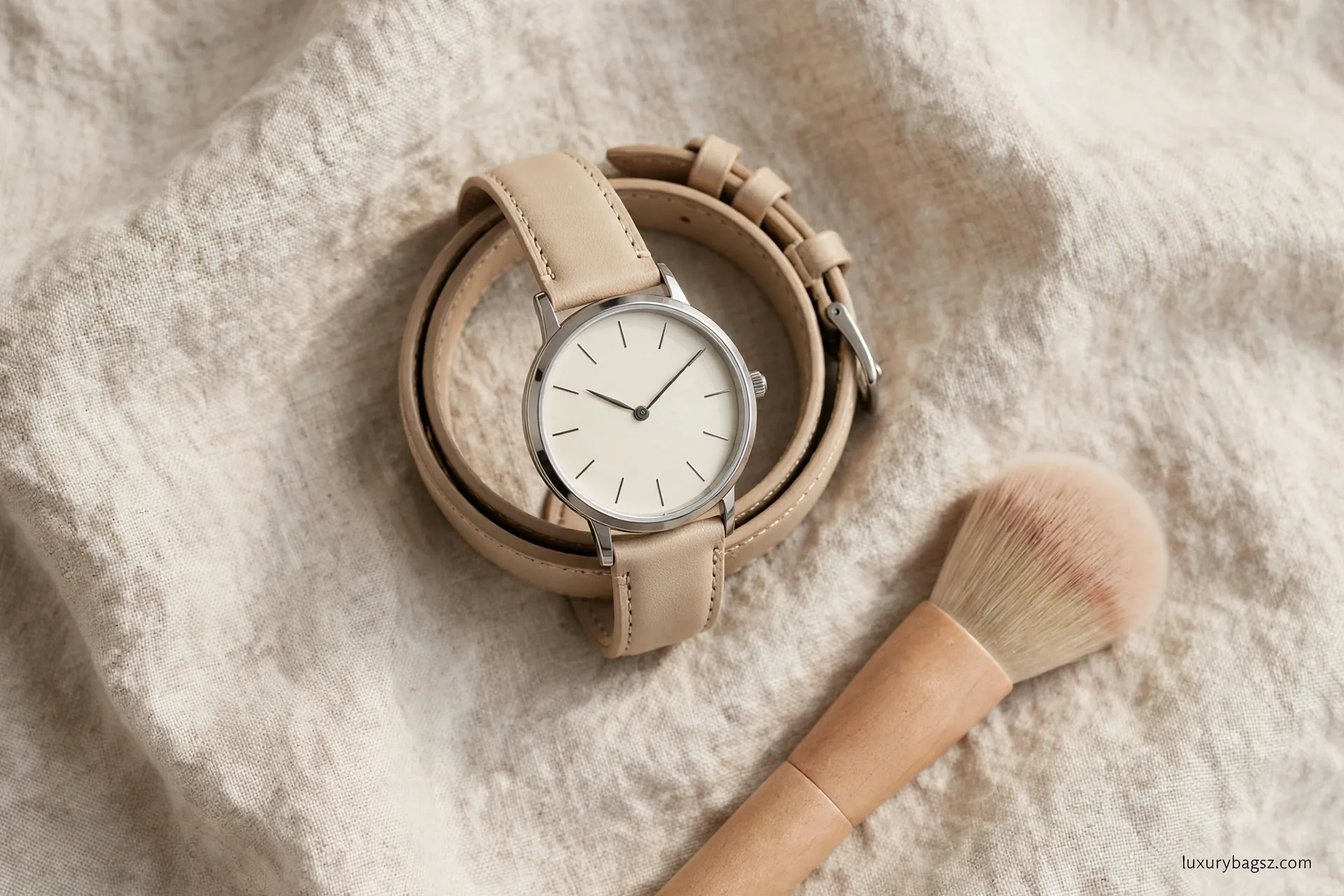
Start dry, then use water only where the watch allows it. First work out what you have — case metal, crystal, strap or bracelet type, and how resistant it is to water — because a steel diver and a gold dress piece on leather need entirely different handling.
Brush loose grit away, then wipe the case and crystal using a microfibre cloth that is only just damp, drying straight afterwards. A metal bracelet gets its proper wash off the watch head, in mild soapy water; leather stays dry or barely damp; rubber and fabric can take gentle soap but must dry completely.
If resistance is unknown, old or untested, do not immerse the watch at all. Never open the case yourself, and leave ultrasonic cleaning of a complete watch and any abrasive polishing to a watchmaker.
Watch Cleaning in Brief
A watch collects skin oils, dust, sweat and grime every day, in places you rarely see: between bracelet links, under the bezel, around pushers and in the clasp. Regular gentle cleaning keeps a watch looking sharp, comfortable and hygienic, and it lets you spot wear, loose parts and water damage early, when they are cheapest to fix.
This guide covers everyday cleaning you can do at home: cases, crystals, metal bracelets, leather, rubber and fabric straps, and the routines that keep each part safe. It does not cover opening a watch, servicing a movement or polishing out deep scratches, all of which belong to a watchmaker with the right tools and a dust-free bench.
No watch-cleaning guide existed in this series before this one, so this guide starts from first principles and stays practical. Follow the material in front of you, keep water away from anything uncertain, and hand anything structural, internal or valuable to a professional without hesitation.
Key Takeaways
- Identify the watch first: case material, crystal type, bracelet or strap, and water resistance rating.
- Never submerge a watch with unknown, aged or untested water resistance, or a leather strap.
- Clean cases and crystals with a soft, barely damp microfibre cloth, and dry immediately.
- Metal bracelets can be brushed with mild soapy water only when removed from the watch head, or when resistance is certain.
- Leather straps need dry or barely damp cleaning only, and should be kept away from water and heat.
- Rubber and fabric straps tolerate gentle soap and water, but must be dried fully before wear.
- Never open a watch case, use ultrasonic cleaners on an assembled watch, or polish with abrasive compounds at home.
- Service intervals, pressure tests and professional cleaning protect water resistance and movement health.
Know Your Watch Before You Clean It
Start by identifying the watch: brand and model where known, case material, crystal type, bracelet or strap material, and movement type. Steel, gold, titanium, ceramic and coated cases all clean differently, and a coating or plating can be damaged by abrasive cloths or harsh cleaners that steel would tolerate easily.
Specific model guides help here, since they explain a watch's construction, sizes and details in depth. For one famous steel sports watch, the Royal Oak guide shows how case shapes, bracelet links and finishes vary, which helps you recognise the parts you are cleaning and handle brushed and polished surfaces differently.
Check the crystal type if you can. Sapphire crystals are very scratch-resistant and tolerate gentle cleaning well, mineral crystals scratch more easily and need a softer touch, and acrylic crystals, common on vintage watches, scratch readily but can be polished by a professional. A crystal that already has deep scratches should not be polished at home, since home polishing can distort the crystal and damage coatings.
Note the movement type and age. A modern quartz watch and a vintage mechanical watch need the same external care, but a vintage watch's seals, gaskets and crown are more likely to be aged, so its water resistance is less trustworthy. Age alone is a reason to clean dry and to ask a watchmaker about a pressure test before any wet cleaning.
Build a Gentle Watch Cleaning Kit
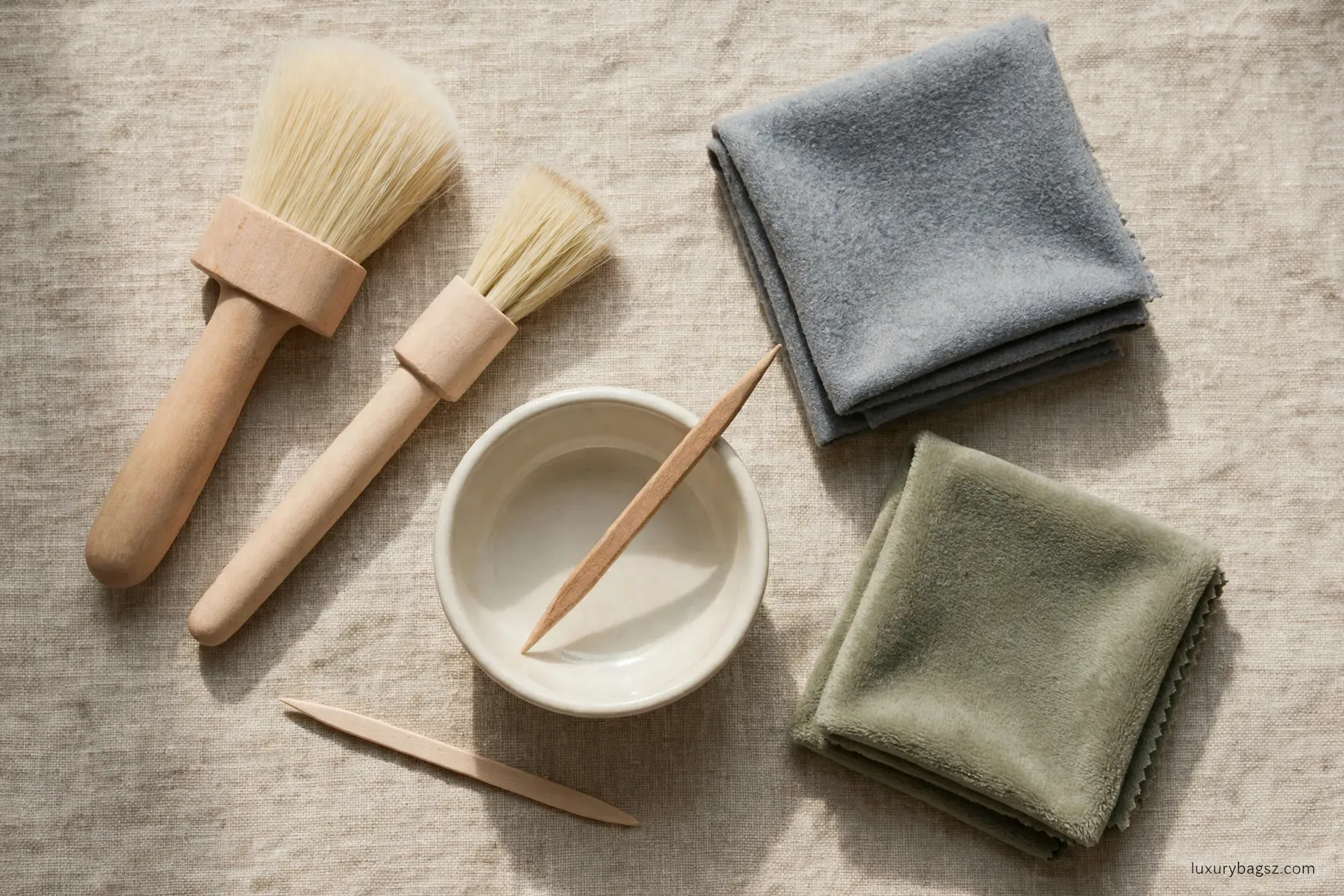
A watch kit is small, soft and dry-first. Start with several microfibre cloths, one for wiping and one for buffing, a very soft brush, such as a soft toothbrush reserved for watches, and a wooden or plastic pick for debris between bracelet links. Add a small bowl, mild liquid soap, and clean, cool water for the few parts that can be washed.
Avoid abrasive materials entirely. Paper towels, rough cloths, scouring pads, metal brushes and polishing compounds scratch cases, crystals and bracelets, often permanently. Avoid household cleaners, alcohol, acetone, vinegar and ultrasonic cleaners for assembled watches, since these damage coatings, gaskets, dials and movements in ways that are expensive to reverse.
Keep a loupe or a magnifying glass if you have one, since it helps you see debris between links, wear on clasps and marks on crystals that the naked eye misses. A loupe also helps you check your work, since a watch that looks clean at arm's length may still hold grime at the bracelet junctions.
Store the kit clean and dry, with separate cloths for different metals where you clean several watches. A cloth used on a steel bracelet should be cleaned before it touches a gold or coated case, since trapped grit and metal particles scratch softer surfaces readily.
The Safe Cleaning Order: Dry First, Wet Last
Always clean dry before wet. Start by brushing the whole watch gently with a soft, dry brush, working around the case, bezel, lugs, bracelet or strap, and clasp. Dry brushing removes dust and surface dirt that would otherwise turn to gritty paste when wet, and it reveals marks that need targeted attention.
Next, wipe the watch with a dry microfibre cloth, buffing lightly to remove oils and fingerprints. For many daily-worn watches, dry brushing and wiping are enough for a routine clean, and they carry no water risk at all. A watch that looks clean after dry cleaning does not need wet cleaning that week.
Only then, if the watch's materials and water resistance allow it, move to a barely damp cloth for the case and crystal, and to soapy water for a removed metal bracelet. Work in small areas, dry each area immediately, and never let water sit on a watch, in a crown, or under a bezel. Standing water finds its way past aged seals faster than a quick wipe ever will.
Finish by drying fully with a clean microfibre cloth, checking the watch in good light, and letting it air briefly before wearing or storing. A watch that is put away damp, especially on a leather strap, develops odour and mould, while a watch dried fully stays fresh and comfortable.
Cleaning the Case and Crystal
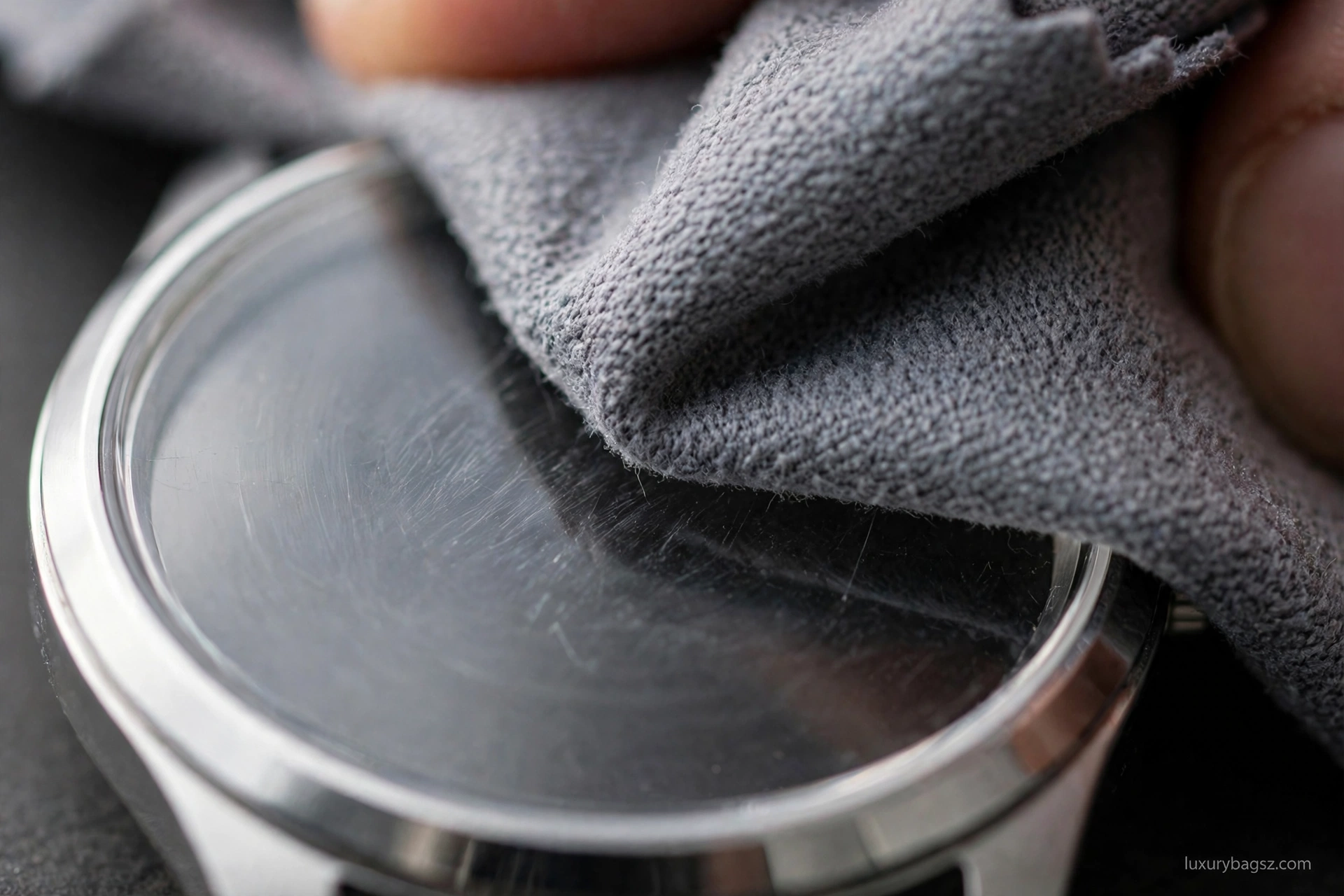
Cases clean best with a soft, barely damp microfibre cloth, followed immediately by a dry microfibre cloth. Wipe gently, following the case's finish: brushed surfaces should be wiped along the brushing direction, not across it, since wiping across brushed metal creates visible cross-scratches. Polished surfaces show fingerprints readily, so buff them lightly with a dry cloth after wiping.
Pay attention to the areas that collect grime: the junction between case and bracelet or strap, the bezel edge, the crown and pushers, and the case back rim. Use a soft brush dry, or a wooden pick very gently, to dislodge debris from these junctions, without forcing anything under a bezel or into a crown. Never use a metal tool on a watch case, since it scratches instantly.
Crystals need the softest touch of all. Wipe a crystal with a clean microfibre cloth, barely damp if needed, and buff dry. For sapphire and mineral crystals, a dedicated lens or crystal cleaner, applied to the cloth rather than the watch, can help with stubborn smudges, but avoid sprays that could enter the case through the crown or pushers.
For acrylic crystals, use only a soft cloth and water, since solvents and abrasives cloud acrylic permanently.
Scratches on crystals are a professional matter. Light scratches on acrylic can sometimes be polished by a watchmaker, while sapphire scratches usually mean crystal replacement, since sapphire resists polishing. Do not attempt crystal polishing at home with compounds or pastes, since uneven polishing distorts the crystal and can damage anti-reflective coatings.
Bezels, Crowns, Pushers and Clasps
Bezels, crowns and pushers are functional parts, and they need care as well as cleaning. A rotating bezel collects grit under its edge, which makes it stiff or gritty. Brush around the bezel gently with a soft, dry brush, and rotate it slowly while brushing to dislodge debris, without forcing a bezel that is stuck, since forcing it can damage its mechanism.
Crowns and pushers should be handled gently and never operated while wet, since operating a crown or pusher under water can breach seals. Screw-down crowns should be fully screwed down before any wet cleaning, and they should be checked for cross-threading or stiffness, which are signs to see a watchmaker rather than to force. A crown that feels gritty, loose or stiff needs professional attention, not cleaning.
Clasps and buckles collect skin oils and grime, and they benefit from the same gentle wiping as the case. Check clasps for wear while cleaning: a clasp that no longer snaps firmly, a buckle pin that wobbles, or a bracelet link that moves excessively all signal wear that could lead to a dropped watch. A clasp that fails on your wrist is far more costly than a clasp repaired in a shop.
Hinged and folding clasps have small springs and pins that grit can jam. Brush these areas dry, wipe them gently, and never oil a clasp at home, since oil attracts dirt and can migrate into the bracelet or onto the strap. If a clasp sticks or feels weak, a watchmaker can clean, adjust or replace it quickly.
Cleaning a Metal Bracelet
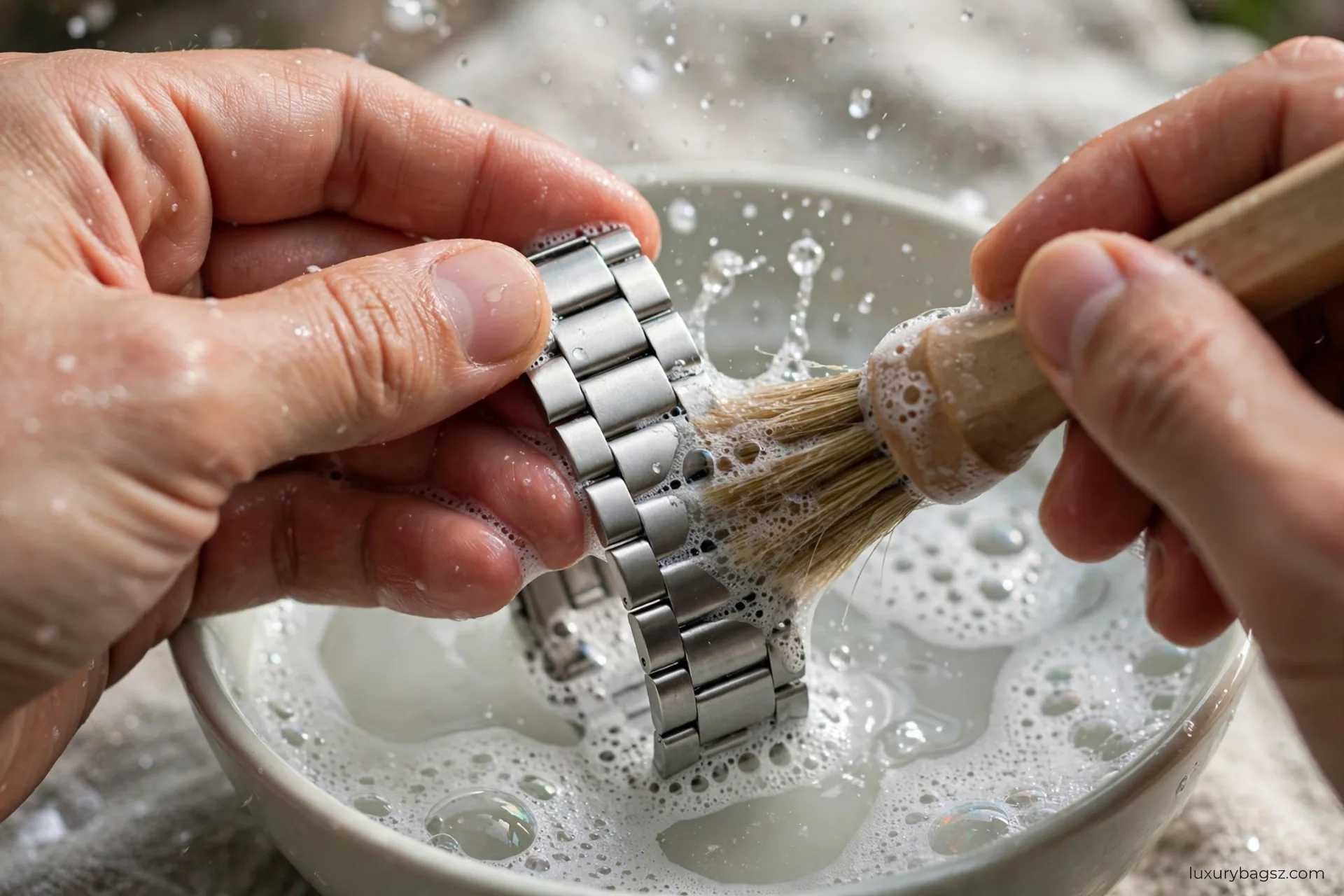
Metal bracelets hold the most grime on a watch, since skin, sweat and dust collect between links. The safest deep clean removes the bracelet from the watch head, so the head never touches water. Removing a bracelet needs the right spring-bar tool and a steady hand, and if you are unsure, a watchmaker can remove and refit it in minutes for a small fee.
Once removed, a steel or titanium bracelet can be soaked briefly in cool water with a small amount of mild soap, brushed gently with a soft brush between links, rinsed in clean water, and dried fully with a cloth and air. Gold bracelets need a gentler hand, since gold is softer and scratches readily, and plated or coated bracelets need the gentlest treatment of all, since harsh brushing wears plating.
Metal bracelet cleaning shares methods with jewellery care, and the fashion jewellery cleaning guide covers gentle metal cleaning principles that transfer well to bracelets.
If the bracelet cannot be removed, or water resistance is uncertain, clean it in place with a barely damp cloth and a soft brush, keeping water away from the watch head, crown and pushers. Work link by link, drying as you go, and never submerge an assembled watch to clean its bracelet, since water that enters the case damages the movement far more than a dirty bracelet ever would.
After cleaning, dry the bracelet fully, including between links, before refitting or wearing. A bracelet that looks dry on the outside can hold water between links for hours, and that trapped water causes odour, skin irritation and, on some metals, discolouration. Air the bracelet in a ventilated place, and check between links with a dry cloth before you consider it done.

Cleaning a Leather Strap
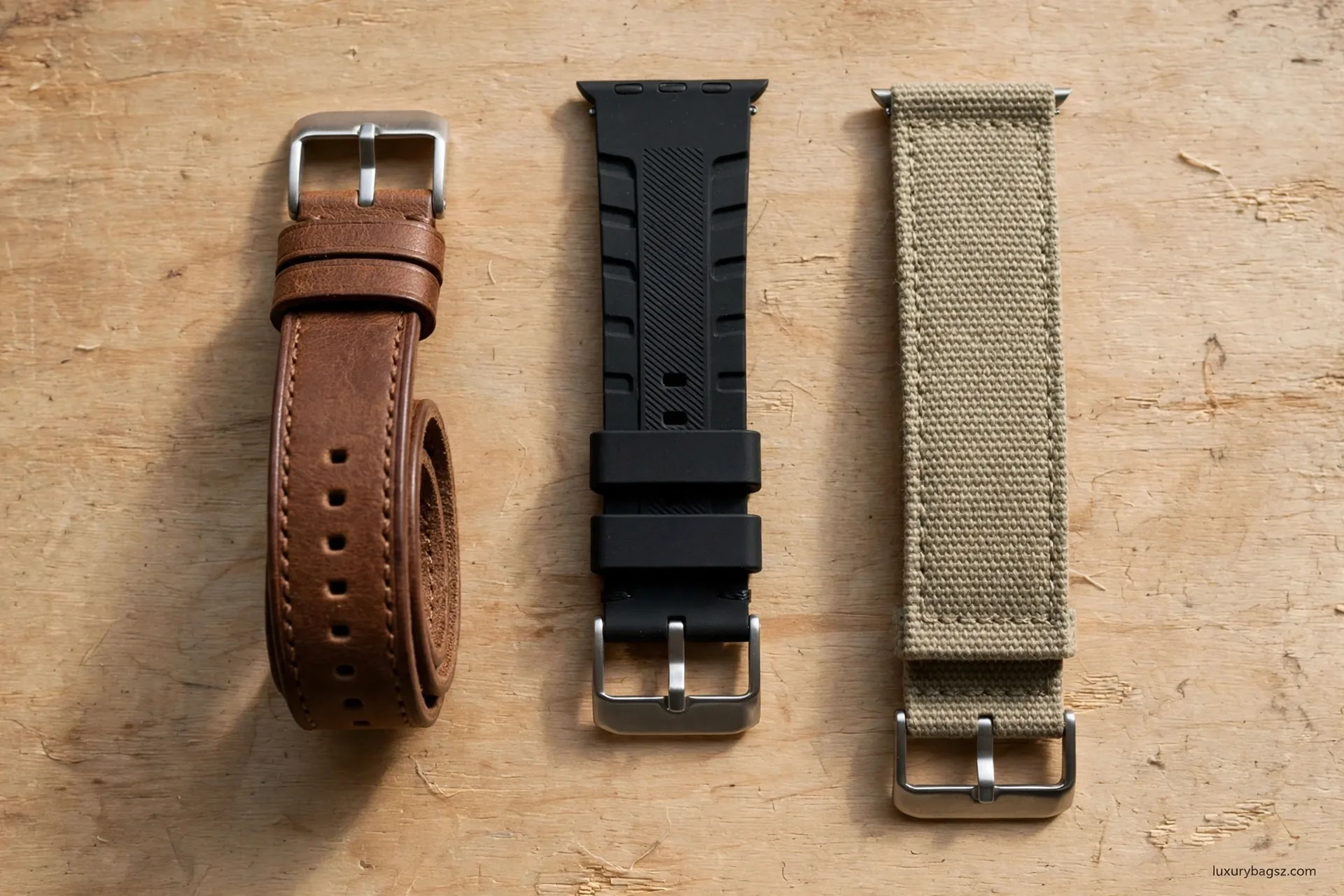
Leather straps should never be submerged, soaked or washed under running water. Water darkens, stiffens and weakens leather, damages stitching, and leaves marks that cannot be removed. A leather strap that has been soaked repeatedly will crack, fade and lose shape far sooner than one kept dry.
Clean a leather strap dry first: brush it gently with a soft brush to remove dust, then wipe it with a dry or barely damp soft cloth, working along the strap rather than across stitching. For marks, a small amount of gentle leather cleaner on a cloth, tested on the underside of the strap first, can help, but stop if colour transfers or the leather darkens unevenly.
Let a leather strap air fully after any damp cleaning, away from heat and sun, before wearing it again. A strap worn damp stretches, smells and moulds, while a strap dried fully keeps its shape and comfort. Condition a leather strap only rarely, with a product made for watch straps or small leather goods, applied thinly and tested first, since conditioner darkens leather and can soften a strap too much for secure wear.
Replace a leather strap when it shows cracking, deep staining, torn stitching or a stretched, weakened shape, since a failing strap risks dropping the watch. Straps are consumables, and a good replacement strap, fitted properly, protects a watch worth far more than the strap itself.
Rubber, Silicone, Fabric and NATO Straps
Rubber and silicone straps tolerate gentle soap and water better than leather, and they are the easiest straps to keep clean. Remove the strap from the watch where you can, wash it in cool water with mild soap, brush gently, rinse thoroughly, and dry fully with a cloth and air. Avoid hot water and harsh cleaners, which can harden rubber and fade colours over time.
Fabric straps, including canvas and nylon, also wash with mild soap and cool water, but they absorb water and take longer to dry. Wash fabric straps separately from the watch head, rinse thoroughly, press water out gently without wringing, and air-dry them flat, away from heat and sun. A fabric strap worn damp smells and stretches, so full drying matters as much as cleaning.
NATO straps, which pass under the watch head, deserve attention at the loops and keepers, where dirt and sweat collect. Remove the strap, wash it as a fabric strap, and check the hardware for wear while it is off. A worn NATO keeper or a frayed strap end should be replaced, since NATO straps are inexpensive and their failure risks the watch.
For all strap types, check spring bars, pins and holes while the strap is off. Worn spring bars, enlarged lug holes and stretched strap holes all weaken the connection between watch and strap, and they are cheap to replace before they fail. A strap change is a good moment for a full inspection, not just a clean.
Vintage Watches and Special Cases
Vintage watches need the gentlest routine of all, because their seals, crystals, dials and straps have aged together. Clean a vintage watch dry only, with a soft brush and a dry microfibre cloth, and never submerge it, steam it or use solvents on it. A vintage dial, in particular, can be damaged by moisture, heat and cleaning products that a modern dial would tolerate.
Gold, plated and coated cases need a soft touch, since gold scratches readily and plating wears thin with abrasive cleaning. Wipe these cases with a dry or barely damp microfibre cloth only, without brushes, compounds or polishing cloths impregnated with abrasive, unless a watchmaker advises otherwise. A polishing cloth made for jewellery can be too abrasive for a plated watch case, so check its guidance before use.
Ceramic cases resist scratches well but can chip if knocked, and they should be wiped with a soft cloth only, without abrasive tools. Wooden, carbon or specialist cases follow their maker's guidance, and when guidance is missing, dry cleaning is the safe default. For any watch with sentimental or high monetary value, professional cleaning is worth the fee, since a mistake on such a watch costs far more than the clean would have.
Special complications, such as chronographs, calendars and moon phases, do not change external cleaning, but they do raise the stakes of water entry, since a damaged movement with complications costs more to repair. Keep crowns and pushers dry and unoperated while cleaning, and hand any watch with a complication and uncertain resistance to a watchmaker for advice before wet cleaning.
Water Resistance: What the Rating Really Means
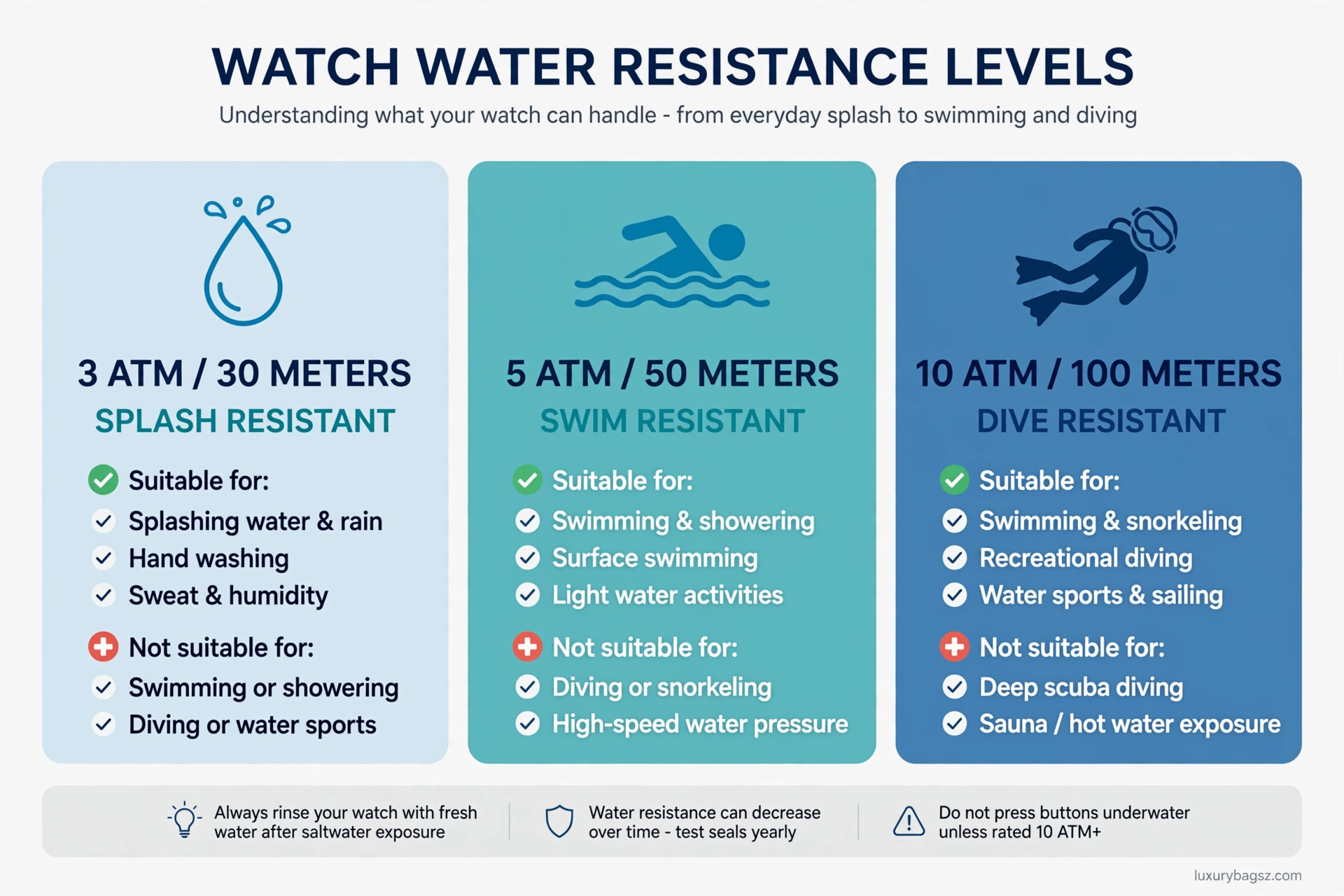
Water resistance ratings confuse many owners, because the numbers do not mean what they seem to say. A rating of 30 metres does not mean the watch can be worn at 30 metres depth; it means it passed a static pressure test, and in practice it suits splashes and rain only. A rating of 50 metres suits light swimming, 100 metres suits swimming and snorkelling, and 200 metres and above suits diving, with the exact guidance varying by maker.
Ratings also age. Gaskets and seals dry, harden and wear with time, heat, sunlight and use, so a watch rated for swimming five years ago may no longer be safe to swim with today. A pressure test by a watchmaker, usually done during service, is the only reliable check of current resistance, and it should be repeated after any case opening, crystal replacement or crown work.
For cleaning, the practical rule is simple: if the watch is rated for swimming and has been pressure-tested recently, a careful wet clean of the case is reasonable. If the rating is low, unknown, aged or untested, clean dry only, and keep the watch away from running water, showers, saunas and pools. Showers deserve a special warning, since hot water, soap and steam age seals faster than cool water alone, even on watches rated for swimming.
Never operate crowns or pushers under water, never wear a watch in a sauna or hot tub unless the maker explicitly allows it, and never assume a vintage or inherited watch is water-resistant because its dial says so. When resistance is uncertain, a watchmaker's test costs little and protects a great deal.
What Never to Do When Cleaning a Watch
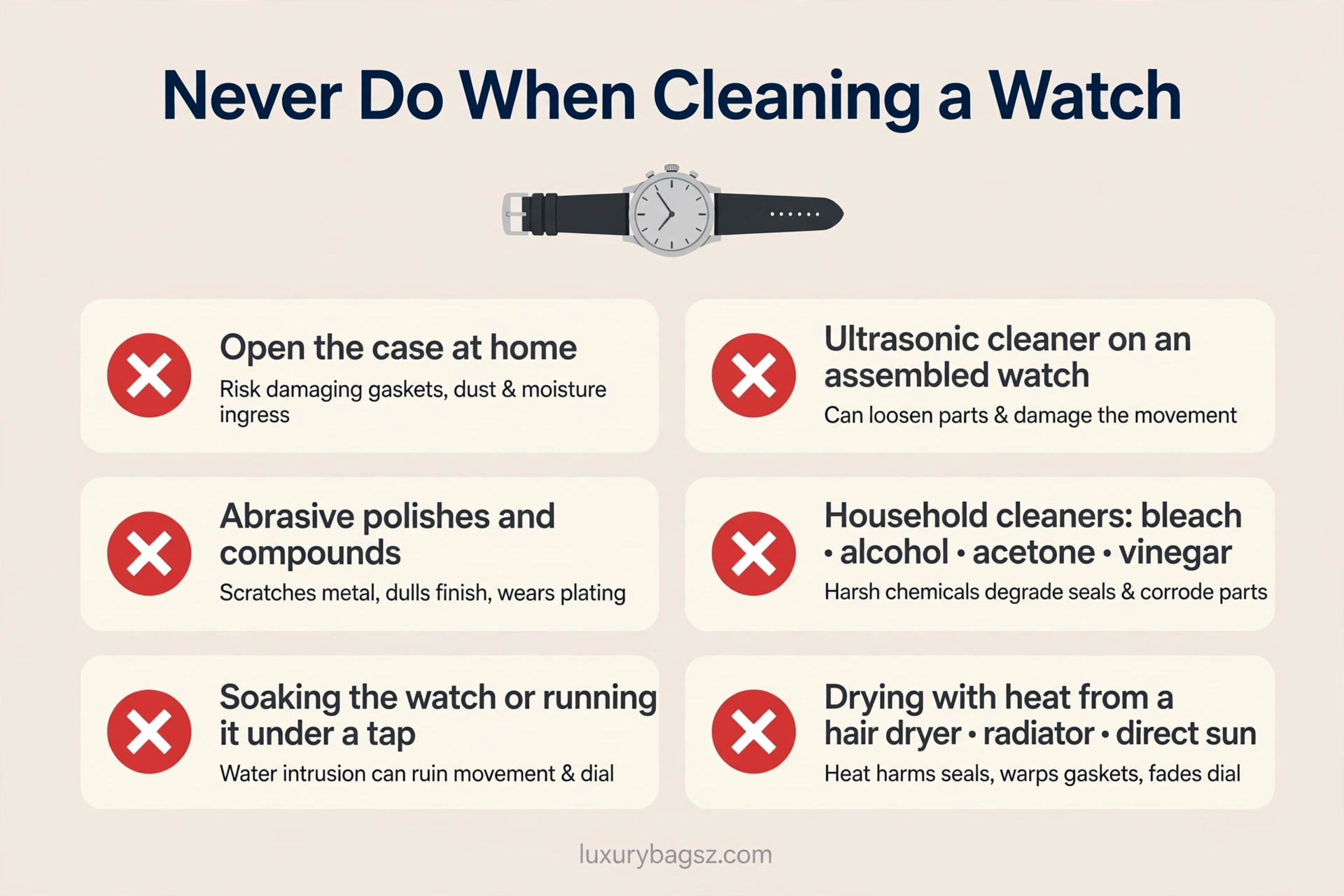
Some cleaning methods damage watches so reliably that they belong on a never list. Never open a watch case at home, since dust, moisture and fingerprints enter the movement, and closing a case without proper tools and a new gasket compromises resistance. Never use an ultrasonic cleaner on an assembled watch, since vibration and cleaning solution damage movements, dials and seals.
Never use abrasive polishes, compounds or impregnated cloths on a watch case or crystal unless a watchmaker advises it for that specific watch, since these remove metal, wear plating and distort crystals. Never use household cleaners, bleach, alcohol, acetone or vinegar on a watch, since these damage coatings, gaskets, leather and dials, often invisibly at first and expensively later.
Never soak a watch to clean it, never run it under a tap, and never dry it with heat, whether a hair dryer, a radiator or direct sun. Heat ages seals, cracks leather, warps straps and fades dials, while soaking finds every weakness in a seal at once. A watch cleaned dry and wiped gently lasts longer than a watch cleaned aggressively and dried fast.
Never force a stiff crown, bezel, pusher or clasp, and never ignore a watch that has fogged, leaked or stopped after contact with water. Fogging under a crystal means moisture has entered, and the watch needs a watchmaker promptly, before moisture corrodes the movement. Quick action after water entry saves movements that delay would ruin.
Servicing, Pressure Tests and Professional Cleaning
Home cleaning keeps a watch looking good, but it does not replace servicing. Mechanical watches generally need servicing every three to five years, depending on maker guidance and use, while quartz watches need battery changes and seal checks at battery intervals. Servicing includes movement cleaning, lubrication, seal replacement and pressure testing, none of which can be done at home.
Professional cleaning, often done during service, includes ultrasonic cleaning of a removed bracelet, case cleaning with proper tools, crystal inspection and gasket replacement. A watchmaker can also polish light case scratches safely, replace a scratched crystal, and advise on strap replacement and water resistance, all with tools and parts a home cleaner lacks.
Ask a watchmaker about pressure testing if you swim with a watch, if the watch is more than a few years old, or if it has been opened for any reason. A pressure test is quick, inexpensive and reassuring, and it tells you whether wet cleaning and swimming are safe, or whether seals need replacing first.
Keep service records with the watch, including dates, work done and parts replaced. Service history protects value, guides future care, and helps a future buyer or watchmaker understand the watch's condition. A watch with a documented service history is worth more and is easier to maintain than an identical watch with unknown history.
Storage, Rotation and Daily Wear Habits
Storage protects a clean watch. Store watches in a clean, dry place, away from direct sun, heat, magnets and strong vibrations, with each watch separated so cases and crystals do not scratch each other. A watch box, roll or pouch with soft lining suits most watches, while a winder suits automatic watches worn in rotation, provided it is used according to the maker's guidance.
Rotation helps mechanical watches, since a watch left unworn for months may need winding and checking before wear, and its lubricants settle. Wear a watch regularly, or wind it occasionally if stored, and check it after long storage for fogging, stiffness or strap wear before relying on it. A watch that has stored well needs only a wipe and a check, not a full clean.
Daily wear habits shape cleaning needs. Rinse a dive or sports watch with fresh water after swimming in salt water or chlorinated pools, where the maker allows wet cleaning, since salt and chlorine age seals and dull finishes. Wipe a dress watch after wear to remove skin oils, and keep watches away from perfumes, cosmetics and cleaning products, which mark cases, straps and crystals.
Travel with watches carefully: carry them in a padded roll or case, keep them away from luggage zips and hard objects, and check crowns are screwed down and clasps are closed before packing. A watch damaged in transit needs a watchmaker, while a watch packed with care arrives ready to wear.
A Simple Watch Care Calendar
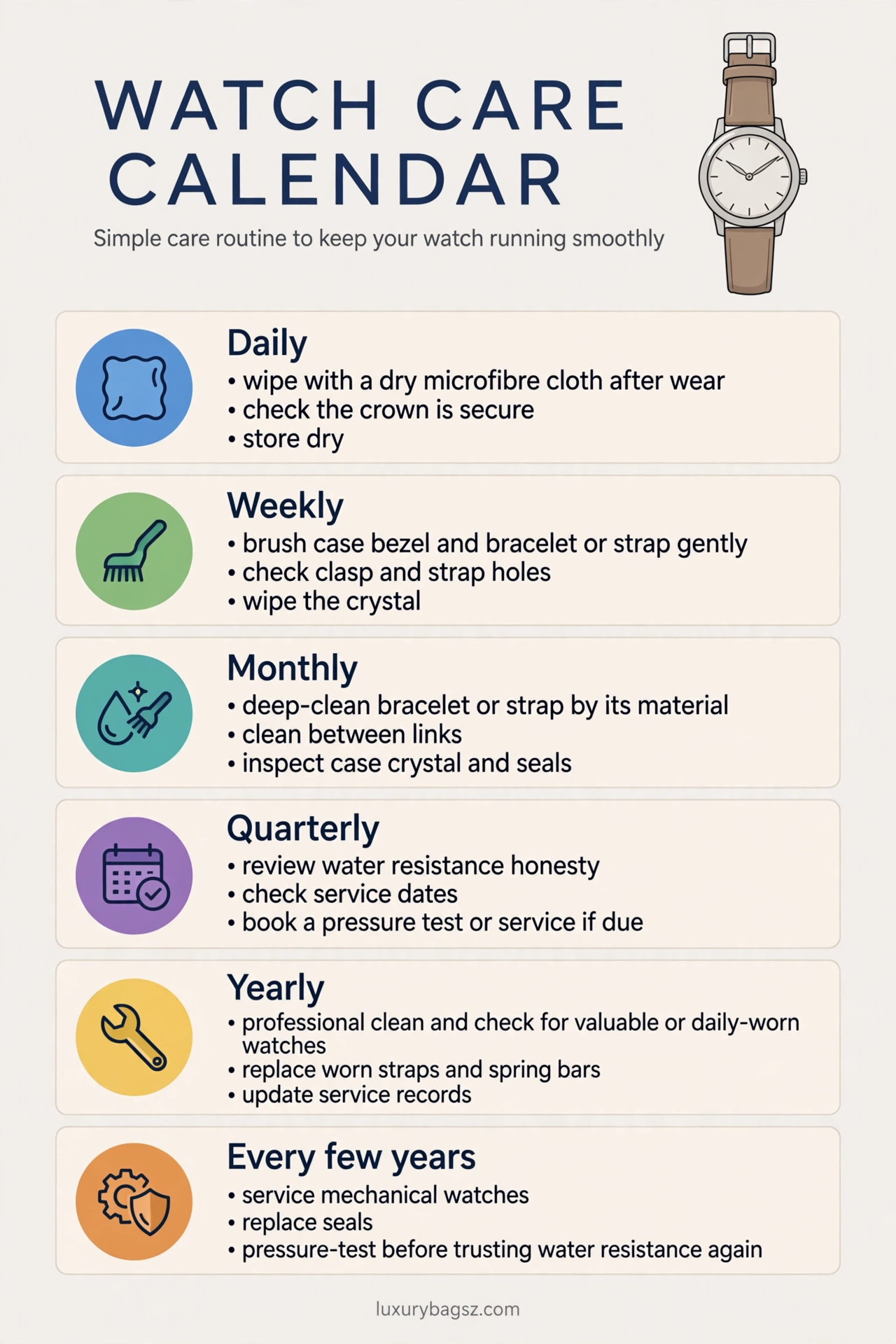
Daily: wipe the watch with a dry microfibre cloth after wear, check the crown is secure, and store it dry. Weekly: brush the case, bezel and bracelet or strap gently, check the clasp and strap holes, and wipe the crystal.
Monthly: deep-clean the bracelet or strap by its material, clean between links, and inspect the case, crystal and seals for wear, scratches or fogging. Quarterly: review water resistance honesty, check service dates, and book a pressure test or service if due, especially before a holiday involving swimming.
Yearly: consider a professional clean and check for valuable or daily-worn watches, replace worn straps and spring bars, and update service records. Every few years: service mechanical watches according to maker guidance, replace seals, and pressure-test before trusting water resistance again.
This calendar bends with wear. A daily-worn sports watch needs monthly bracelet cleaning, while a special-occasion dress watch may need only seasonal wiping. Let the watch tell you: grime between links means clean, a stiff crown means see a watchmaker, and fogging means see a watchmaker at once.
Frequently Asked Questions
Can I clean my watch with water?
Only if its water resistance is known, recent and sufficient, and only carefully, with a barely damp cloth for the case and soapy water for a removed metal bracelet. If resistance is unknown, aged or untested, or the watch has a leather strap, clean dry only and ask a watchmaker about a pressure test.
How do I clean a metal watch bracelet?
Remove it from the watch head where you can, soak it briefly in cool water with mild soap, brush gently between links, rinse, and dry fully, including between links. If it cannot be removed, clean it in place with a barely damp cloth and brush, keeping water away from the watch head.
Can I clean a leather watch strap with water?
No. Never soak or wash a leather strap under running water, since water darkens, stiffens and weakens leather and damages stitching. Brush it dry, wipe it with a dry or barely damp cloth, let it air fully, and replace it when it cracks, stains deeply or stretches.
What should I use to clean a watch crystal?
A clean microfibre cloth, barely damp if needed, followed by a dry buff. Avoid paper towels, rough cloths and abrasive compounds, which scratch crystals, and avoid sprays that could enter the case through the crown or pushers. Deep crystal scratches need a watchmaker, not home polishing.
Does a 30-metre water resistance rating mean I can swim with my watch?
No. A 30-metre rating means the watch passed a static pressure test, and in practice it suits splashes and rain only. Swimming generally needs at least 50 to 100 metres, depending on maker guidance, and any rating ages as seals wear, so a recent pressure test is the reliable check.
Can I use an ultrasonic cleaner on my watch?
No, not on an assembled watch. Ultrasonic cleaning vibrates the movement, damages dials and seals, and lets solution into places it should never reach. Ultrasonic cleaning is safe only for a removed metal bracelet, done by a professional with the right equipment, never for a whole watch at home.
How often should a watch be serviced?
Mechanical watches generally need servicing every three to five years, depending on maker guidance and use, while quartz watches need battery changes and seal checks at battery intervals. Servicing includes movement cleaning, lubrication, seal replacement and pressure testing, and it protects both accuracy and water resistance.
What should I do if my watch fogs up inside?
Take it to a watchmaker promptly, without delay and without trying to dry it with heat. Fogging means moisture has entered the case, and moisture corrodes movements quickly. Quick professional action saves movements that delay would ruin, so do not wait to see if fogging clears on its own.
Can I polish scratches out of my watch case at home?
No, not safely. Home polishing compounds remove metal unevenly, wear plating and coatings, and distort brushed finishes. Light scratches can sometimes be polished safely by a watchmaker with the right tools, while deep scratches may need professional refinishing or acceptance as wear character.
How should I store watches I do not wear often?
Store them clean and dry, separated so cases and crystals do not scratch each other, away from sun, heat, magnets and vibration, in a lined box, roll or pouch. Check stored watches periodically for fogging, strap wear and stiffness, and wind mechanical watches occasionally or use a winder according to maker guidance.
Conclusion
Cleaning a watch well is mostly restraint: identify the watch, clean dry first, use water only where resistance and material allow it, and dry everything fully. Cases and crystals need a soft cloth, metal bracelets need a removed, soapy clean, leather straps need to stay dry, and rubber and fabric straps need gentle washing and full drying.
Never open a case, never use ultrasonic cleaners on an assembled watch, and never trust an aged water resistance rating without a pressure test. Keep that discipline, service on schedule, and a good watch will stay sharp, comfortable and reliable for decades, rather than suffering the slow damage that careless cleaning causes.