Influential Women Who Changed Fashion: From Chanel to the Wrap Dress and Beyond
Influential Women in Fashion at a Glance
Influential women changed fashion by designing for real life. They freed women from corsets, shortened hemlines, made workwear elegant and turned rebellion into style. Their ideas still shape what we wear today.
This guide covers pioneers across a century. It starts with Coco Chanel and Jeanne Lanvin, moves through Mary Quant and Diane von Furstenberg, and ends with modern voices in sustainability and avant-garde design. Each woman changed more than a silhouette: she changed what women could do in their clothes.
You do not need to know every name to benefit. The ideas below appear in high-street shops, luxury houses and vintage stores alike. Once you spot them, you will see their influence everywhere.
Key Takeaways

- Coco Chanel popularised comfortable, jersey-based daywear and the little black dress.
- Diane von Furstenberg's wrap dress, launched in the 1970s, became a symbol of working women.
- Mary Quant is closely linked to the miniskirt and the youthquake of 1960s London.
- Vivienne Westwood brought punk attitude and British history into high fashion.
- Rei Kawakubo and Stella McCartney show two modern paths: avant-garde form and sustainable luxury.
Coco Chanel: Comfort as Luxury
Gabrielle "Coco" Chanel, born in 1883, built a house that still leads fashion. She began with hats in 1910, then opened clothing shops in Deauville and Biarritz. Her early jersey daywear felt radical because it moved with the body.
She did not invent every piece linked to her name. The little black dress existed before her, and tweed had menswear roots. Her genius was to popularise those pieces, refine them and make them feel modern. She paired simple shapes with costume jewellery, pearls and a confident attitude.
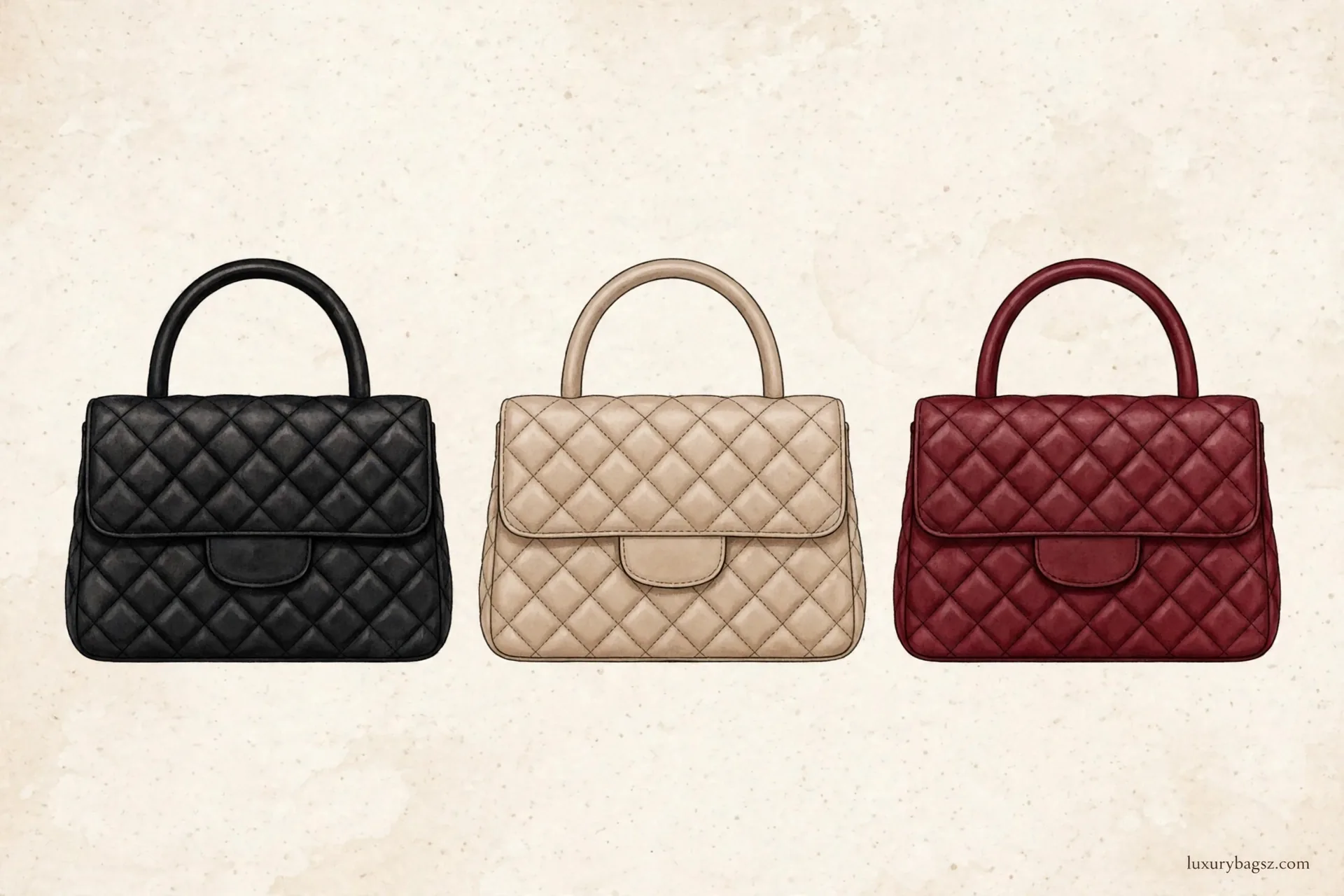
Her legacy includes the tweed suit, the quilted bag and Chanel No. 5. For the bag story in detail, see the Chanel 2.55 bag guide. Chanel proved that comfort and luxury could live in the same outfit, a lesson every modern designer still uses.
Diane von Furstenberg and the Wrap Dress
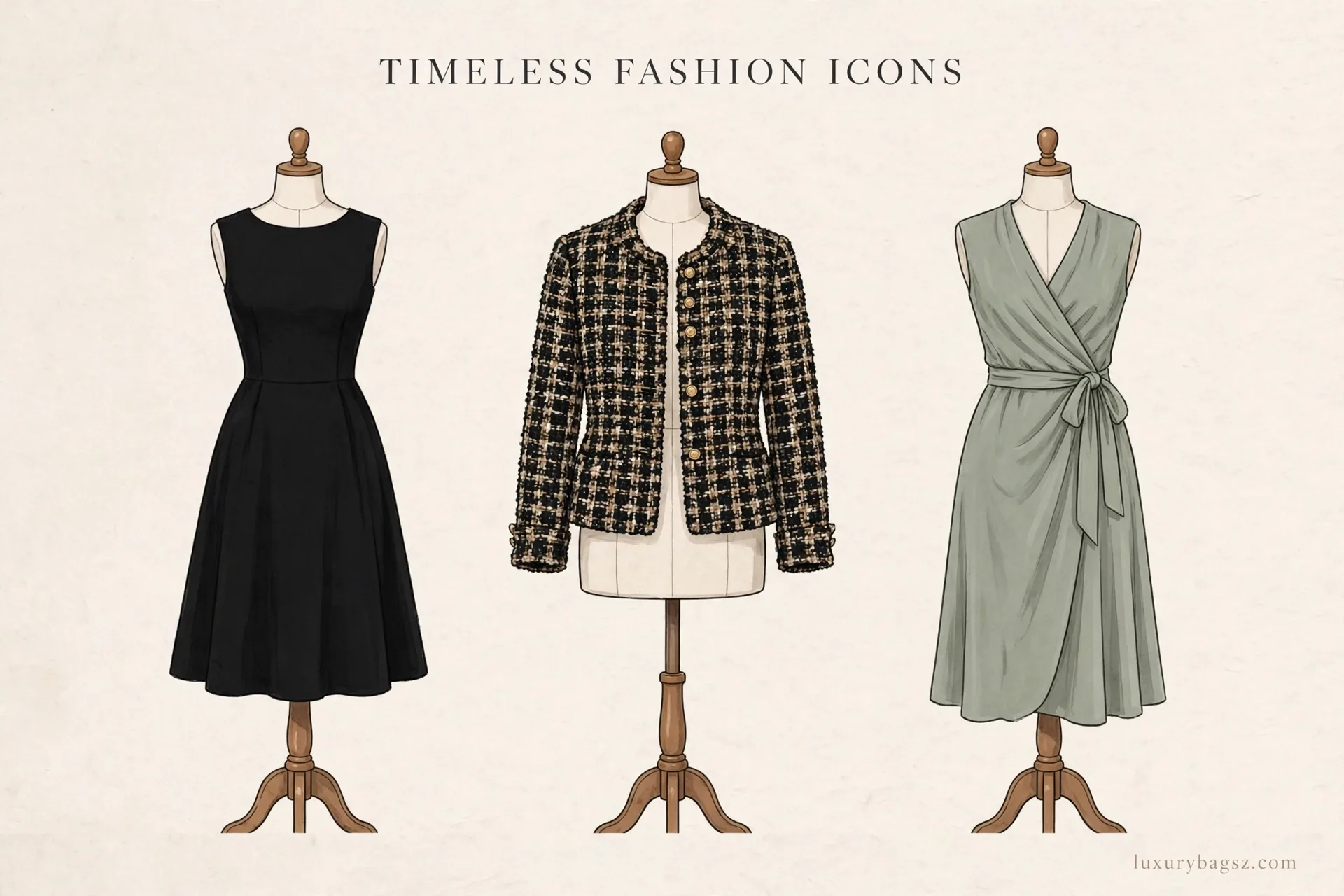
Diane von Furstenberg launched her brand in New York in 1972. Her wrap dress, introduced in 1974, used soft jersey that wrapped around the body and tied at the waist. It fitted many body shapes, needed little fuss and suited a working day.
The dress became a symbol of 1970s independence. Women entering offices and public life needed clothes that were smart, comfortable and easy to wear. The wrap dress answered that need with one simple shape, and it has been revived many times since.
Her wider influence includes leadership in American fashion. She later chaired the Council of Fashion Designers of America for many years. Read more in the Diane von Furstenberg profile, which traces the wrap dress across four decades.
Mary Quant and the Youthquake
Mary Quant opened her London boutique Bazaar in the 1950s and became a face of 1960s youth fashion. She is closely linked to the miniskirt, though historians debate who first shortened hemlines. What is clear is that Quant made short, bold, youthful clothes commercially famous.
Her designs used bright colour, simple shapes and playful details. Hot pants, coloured tights and geometric prints all fitted a generation that wanted fun, not formality. Young women could now dress for dancing, work and street life in the same spirit.
Quant also changed how fashion was sold. Her boutique felt young and accessible, not stiff or grand. That shop model helped turn fashion into youth culture, a shift that still drives high-street retail today.
Elsa Schiaparelli and Surrealist Fashion
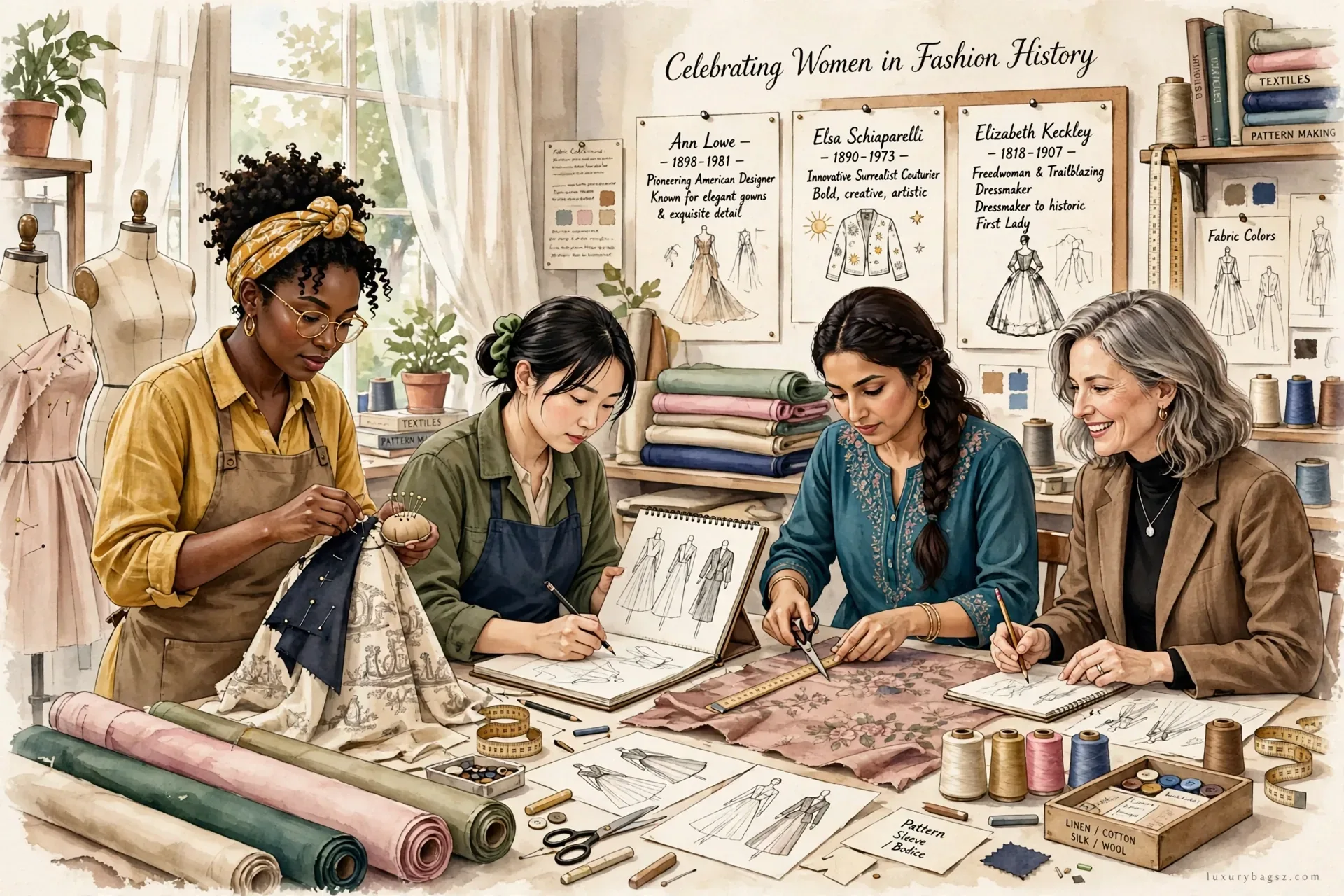
Elsa Schiaparelli brought art into fashion in the 1930s. She worked with surrealist artists, including Salvador Dalí, and turned strange ideas into wearable pieces. Lobster prints, shoe hats and bold colours made her collections famous.
Her work mattered because it gave fashion an intellectual edge. Clothes could be witty, strange and artistic, not only pretty. That freedom later helped designers such as Vivienne Westwood and Rei Kawakubo push boundaries.
Schiaparelli also pioneered strong branding, from shocking pink to inventive buttons. Her house closed for decades, then returned, showing how a bold vision can outlive its founder. Her story reminds us that fashion can be art as well as clothing.
Vivienne Westwood and Punk Power
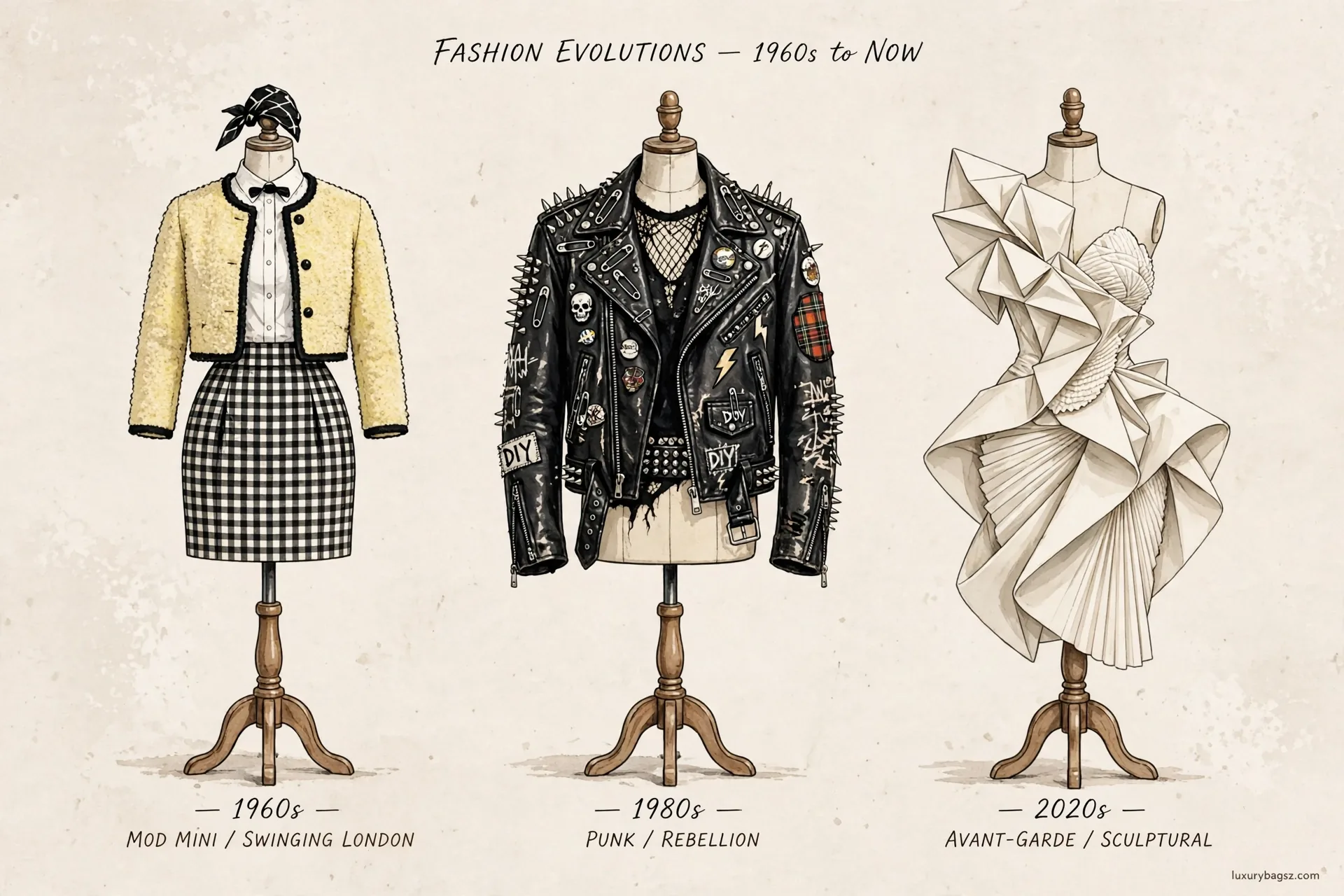
Vivienne Westwood turned punk into fashion in 1970s London. With Malcolm McLaren, she sold provocative clothes from their King's Road shop. Safety pins, tartan, torn fabric and bold slogans challenged polite taste.
Later, Westwood moved into high fashion without losing her edge. She mixed British history, corsetry and tailoring with punk attitude. Her shows often carried political messages, from climate action to free speech.
Her influence is visible in streetwear, tartan revivals and protest style. She proved that fashion could carry a message and still be beautifully made. That blend of craft and rebellion remains a powerful model for young designers.
Rei Kawakubo, Stella McCartney and New Paths
Rei Kawakubo, founder of Comme des Garçons, challenged beauty itself. Her sculptural, asymmetric designs often hid the body rather than flattering it in a classic way. Critics were shocked at first, yet her ideas reshaped avant-garde fashion.
Stella McCartney took a different path, building luxury without leather or fur. Her work shows that sustainable choices can still feel refined and desirable. She uses innovative materials and honest supply chains, pushing the industry to change.
Both women show that influence need not follow one formula. One changed form, the other changed materials. Together they point to a future where fashion values ideas, ethics and craft as much as glamour. Their calm, quality-led approach also echoes modern quiet luxury.
How to Wear Their Ideas Today
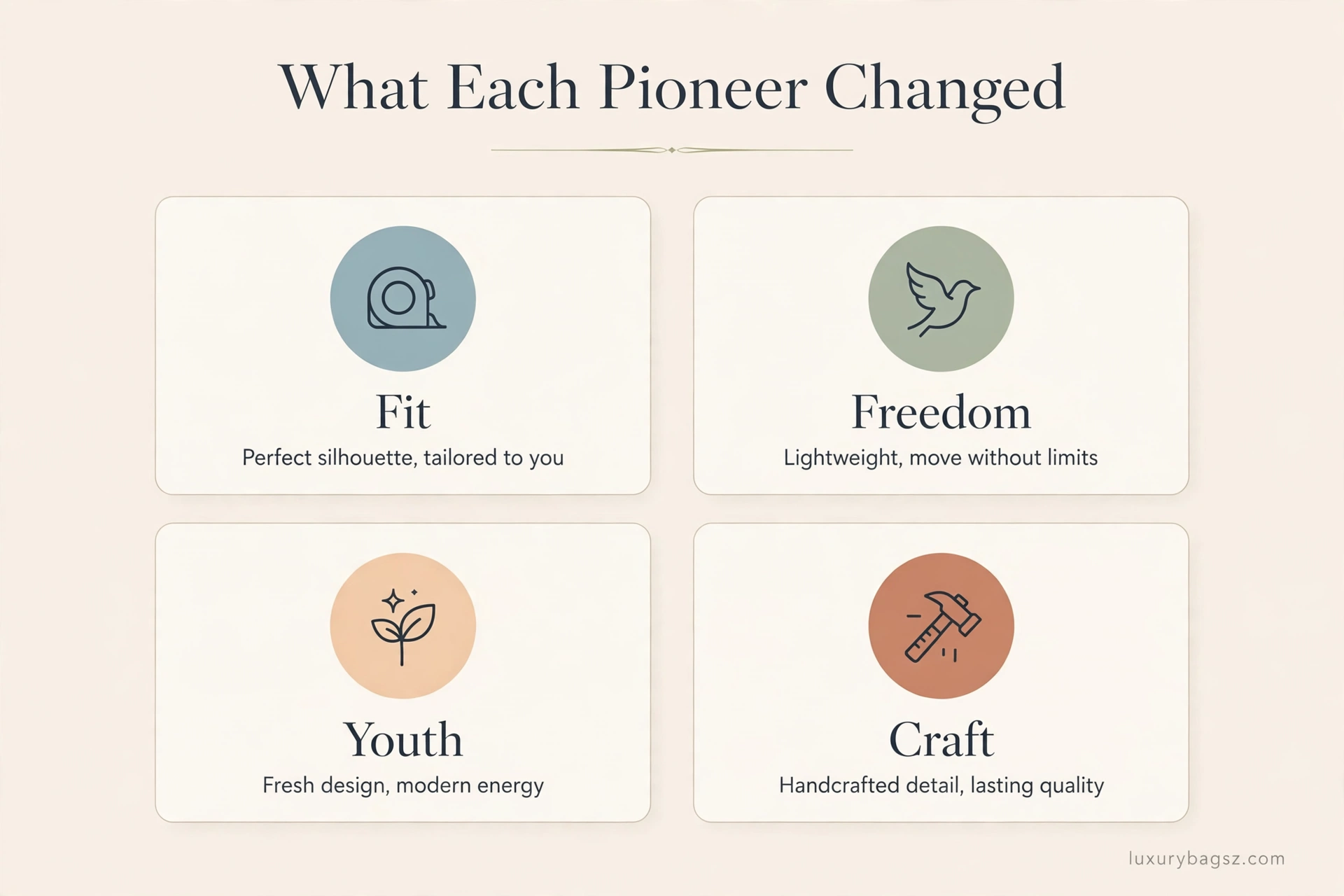
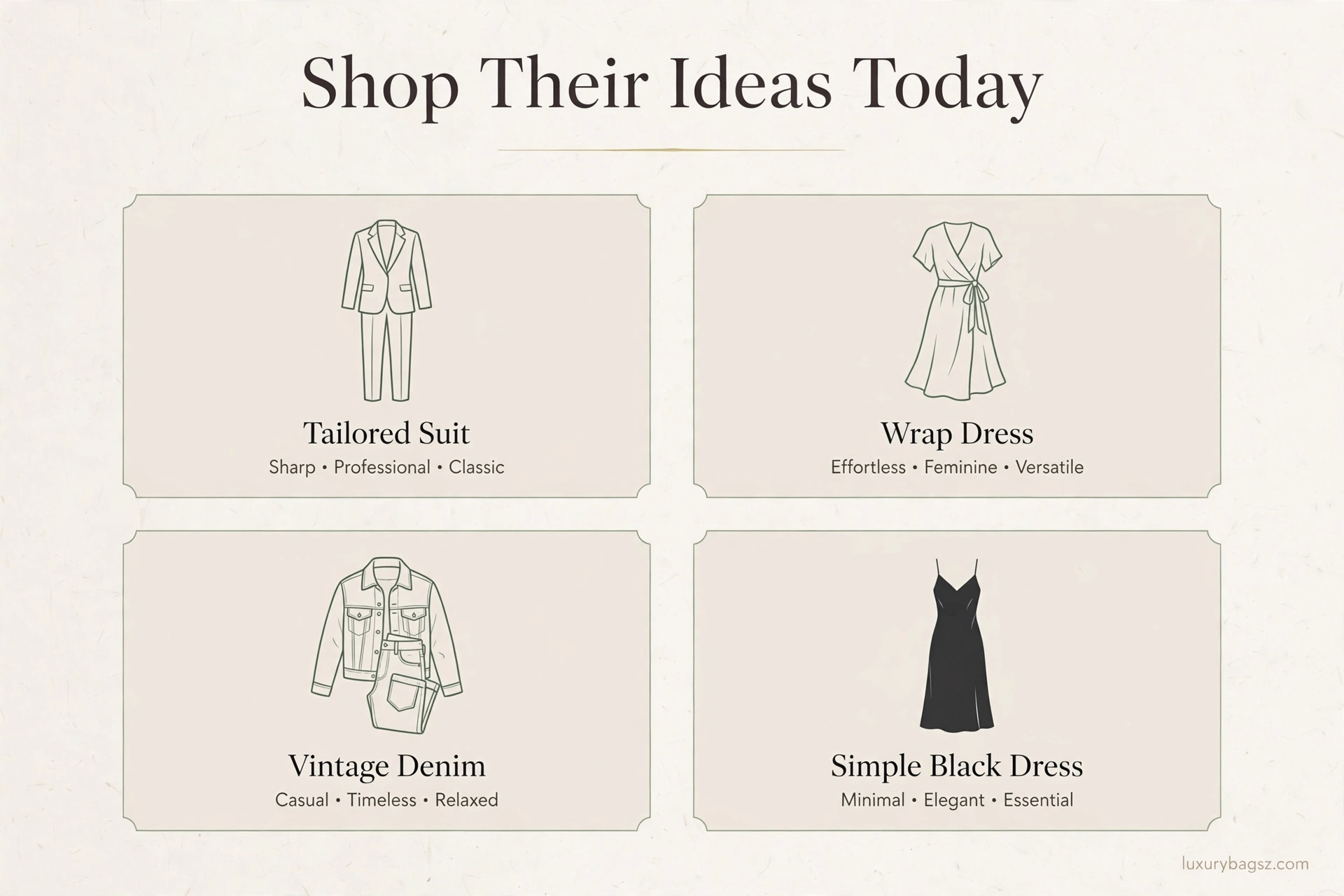
Start with one pioneer idea, not five at once. A wrap dress gives easy polish for work, while a simple black dress covers evenings. A tailored suit nods to Chanel, and vintage denim nods to youth culture.
Check fit before brand. A wrap dress should tie neatly without gaping, and a suit should sit well at the shoulder. Pre-owned pieces, including a classic Hermès Kelly bag, can add heritage without a new luxury price.
Keep accessories simple so the silhouette leads. Pearls suit a Chanel-inspired suit, while boots suit a punk-inspired jacket. The goal is to borrow an idea, not to wear a museum costume.
Jeanne Lanvin and Madeleine Vionnet: The Founders Before Chanel
Two Frenchwomen built foundations the century stood on. Jeanne Lanvin founded her house in 1889, earlier than any rival in this article, beginning with clothes for her young daughter that Paris mothers demanded for their own children. She grew the business into a lifestyle universe: womenswear, childrenswear, fragrance and interiors, wrapped in a signature Lanvin blue drawn from a fresco she admired.
Lanvin’s lasting lesson is the brand world: she showed that a fashion house could be an entire aesthetic, sold across categories, decades before the modern luxury conglomerate. Her embroidered robes de style also kept romantic, feminine dressmaking alive through the garçonne years.
Madeleine Vionnet changed the engineering instead. Her bias cut, fabric sliced diagonally so it pours over the body, freed 1930s evening dress from structure entirely: no corsetry, just cloth obeying gravity and geometry. Designers still call her the architect of fashion, and every bias-cut slip dress since is her descendant.
Together they complete the founding picture Chanel usually monopolises: Lanvin built the business model, Vionnet the technique, Chanel the modern wardrobe. Modern fashion needed all three.
Miuccia Prada: Intellect, Nylon and the Modern Luxury Business
Miuccia Prada took over her family’s Milan leather-goods firm in 1978 and promptly insulted luxury’s material code: her breakthrough bags of the mid-1980s were made from black industrial nylon, the Pocono fabric used for parachute-style applications, trimmed with leather and a discreet triangle plaque.
The nylon bag made luxury modern, practical and slightly perverse, and it sold in quantities that rebuilt the company. From there Prada became fashion’s intellectual engine: collections that critics called ugly chic deliberately mixed the awkward and the exquisite, teaching the industry that taste could argue rather than merely please.
Her business influence matches the design influence. Prada showed that a heritage house could be run as an ideas laboratory without losing commercial power, and her second line, Miu Miu, gave younger, more playful dressing a luxury platform of its own.
Every designer who now treats a collection as an essay, and every luxury bag made from technical fabric, is working in a field Miuccia Prada opened. She proved a woman could inherit a house and still be its radical.
Claire McCardell and Donna Karan: American Ease
American fashion’s founding mother is Claire McCardell, who in the 1940s designed for women who lived active, unstaffed lives. Her popover dress, separates, ballet flats as daywear and plentiful pockets treated practicality as elegance. While Paris paused for war, McCardell effectively invented American sportswear, the relaxed, mixable wardrobe the world now defaults to.
Four decades later Donna Karan modernised the same philosophy for the executive era. Her 1985 Seven Easy Pieces, built around a bodysuit and interchangeable separates, dressed working women as a system rather than a daily puzzle. It was design from inside the customer’s diary: boardroom, school run, evening, one wardrobe.
Between them they explain why so much of modern dress is American in logic even when it is European in label: clothes designed around a woman’s actual day, by women who were living it. The wrap dress in this article’s second chapter belongs to the same family tree.
The Wearers: Hepburn, Kelly and Diana
Not every woman who changed fashion designed anything. Some changed it by being photographed. Audrey Hepburn’s partnership with Hubert de Givenchy made a new silhouette famous: slim trousers, flat shoes, the little black dress of Breakfast at Tiffany’s and an elegance based on ease rather than ornament. She showed that style could be a personality, not a performance.
Grace Kelly carried a different argument: polished restraint. The Hermès bag she shielded her pregnancy with in 1956 became the Kelly bag by public naming, proof that a wearer’s life could rename a product. Her wedding dress influenced bridal design for decades, and royal dressing as communication begins with her generation.
Diana, Princess of Wales, completed the lesson in the media age. She learned, in public, to use clothes as language: diplomacy in her choices of colour and local designers abroad, independence in the famous black dress worn on a night of unwelcome headlines. Every public figure who now dresses strategically is using a grammar she helped write.
The wearers matter to this article’s argument because they complete the circuit: designers propose, but women in public life decide what the proposal means. Influence in fashion has always flowed in both directions.
The Editors: Vreeland and Wintour, Fashion’s Other Power
A second non-designing power deserves its place: the editors. Diana Vreeland, at Harper’s Bazaar and then Vogue, turned the fashion magazine from a catalogue into a fantasy with a point of view, championing new faces, new places and the idea that style was a form of imagination anyone could practise.
Anna Wintour’s long editorship of American Vogue industrialised that power: the September issue as an economic event, the Met Gala transformed into fashion’s biggest stage, and a cover policy that merged celebrity culture with designer fashion permanently. Designers’ fortunes have risen and stalled on her approval for over three decades.
Between them, the editors explain the system the designers in this article worked inside: who gets photographed, funded and stocked is decided off the runway as much as on it. Any honest history of women changing fashion has to count the women who controlled the spotlight among its authors.
Sonia Rykiel and Jil Sander: Knitwear Freedom, the Power of Less
Two quieter revolutions complete the modern picture. Sonia Rykiel, working from her Paris boutique from the late 1960s, made knitwear sensual and free: the poor boy sweater fitted to the body, seams worn outside, no hems, stripes everywhere, and clothes designed to move, sit and live in rather than pose. She dressed the Left Bank’s intellectual women and gave French cool its uniform.
Jil Sander, in Hamburg from the same era onward, argued the opposite case with equal force: luxury as subtraction. Her precisely cut coats, perfect white shirts and unadorned tailoring taught a generation that quality of cloth and cut could be the whole statement, an idea that runs directly into today’s minimalist and quiet-luxury wardrobes.
Rykiel freed the body inside soft clothes; Sander disciplined the silhouette into calm. Between them they cover the two tempers of modern dressing, expressive ease and rigorous restraint, and both tempers were set by women designing against the decorated, structured fashion they inherited.
Frequently Asked Questions
1. Who is the most influential woman in fashion? Many lists place Coco Chanel first, for popularising comfortable daywear and modern luxury. Others argue for different pioneers, depending on whether they value design, business or cultural impact.
2. Did Coco Chanel invent the little black dress? No, black dresses existed before her. Chanel popularised a simple, elegant version in the 1920s, and her name became linked to the style through magazines and her own designs.
3. When was the wrap dress created? Diane von Furstenberg introduced her wrap dress in 1974, after launching her brand in 1972. The jersey design tied at the waist and suited many body shapes.
4. Who invented the miniskirt? Mary Quant is most closely linked to the miniskirt in popular history, though André Courrèges also showed short hemlines. Historians debate a single inventor, so credit is best shared.
5. What did Vivienne Westwood change? Westwood brought punk style into fashion and later mixed it with British tailoring and history. She also used fashion for political messages, including climate and free-speech causes.
6. Who founded Comme des Garçons? Rei Kawakubo founded Comme des Garçons in Japan. Her avant-garde designs challenged classic ideas of beauty, fit and femininity from the 1980s onward.
7. Is Stella McCartney fully sustainable? No brand can claim perfect sustainability, and McCartney herself frames her work as progress. She avoids leather and fur and uses innovative materials, which sets a strong industry example.
8. Which pioneer suits a work wardrobe best? Chanel tailoring and the wrap dress suit most offices, since both are smart and comfortable. Add a structured bag and simple shoes for a complete work look.
9. Can I mix these styles? Yes, but keep one idea dominant per outfit. A wrap dress with simple jewellery works, while a punk jacket with tailored trousers balances edge and polish.
10. Where should I start with vintage pieces? Start with a well-made blazer, a simple black dress or a wrap dress in good condition. Check seams, zips and fabric, and choose classic colours that mix with clothes you already own.
Final Verdict: Influence Means Freedom
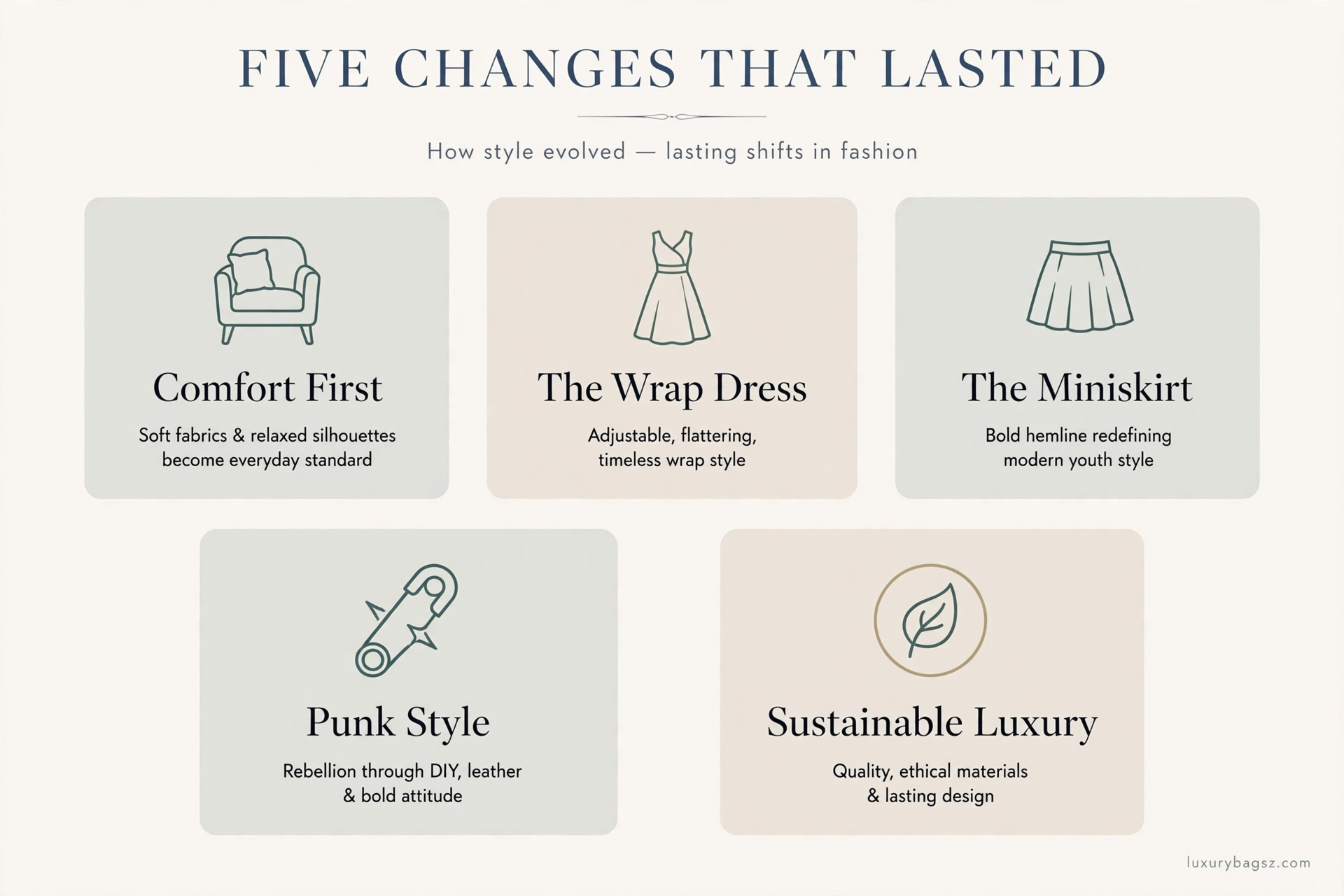
The women in this guide share one gift: they gave women more freedom. Comfort, work-ready shapes, youth style, artistic daring and sustainable luxury all expanded what a woman could wear and do.
Pick the freedom that fits your life. Wear it well, care for it, and let the clothes serve your day. That practical spirit is the true legacy of these pioneers.