

Iconic Omega Watches: Speedmaster, Seamaster, Constellation and De Ville Explained
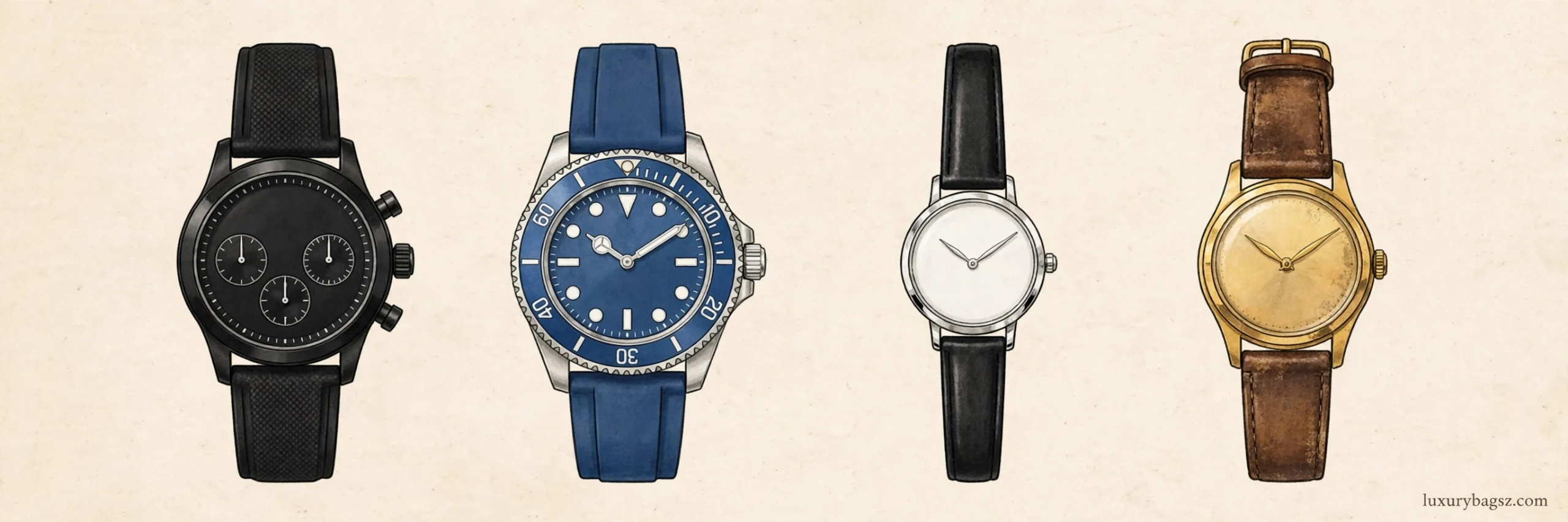
Omega's Icons in Brief: Four Families Carry the Name
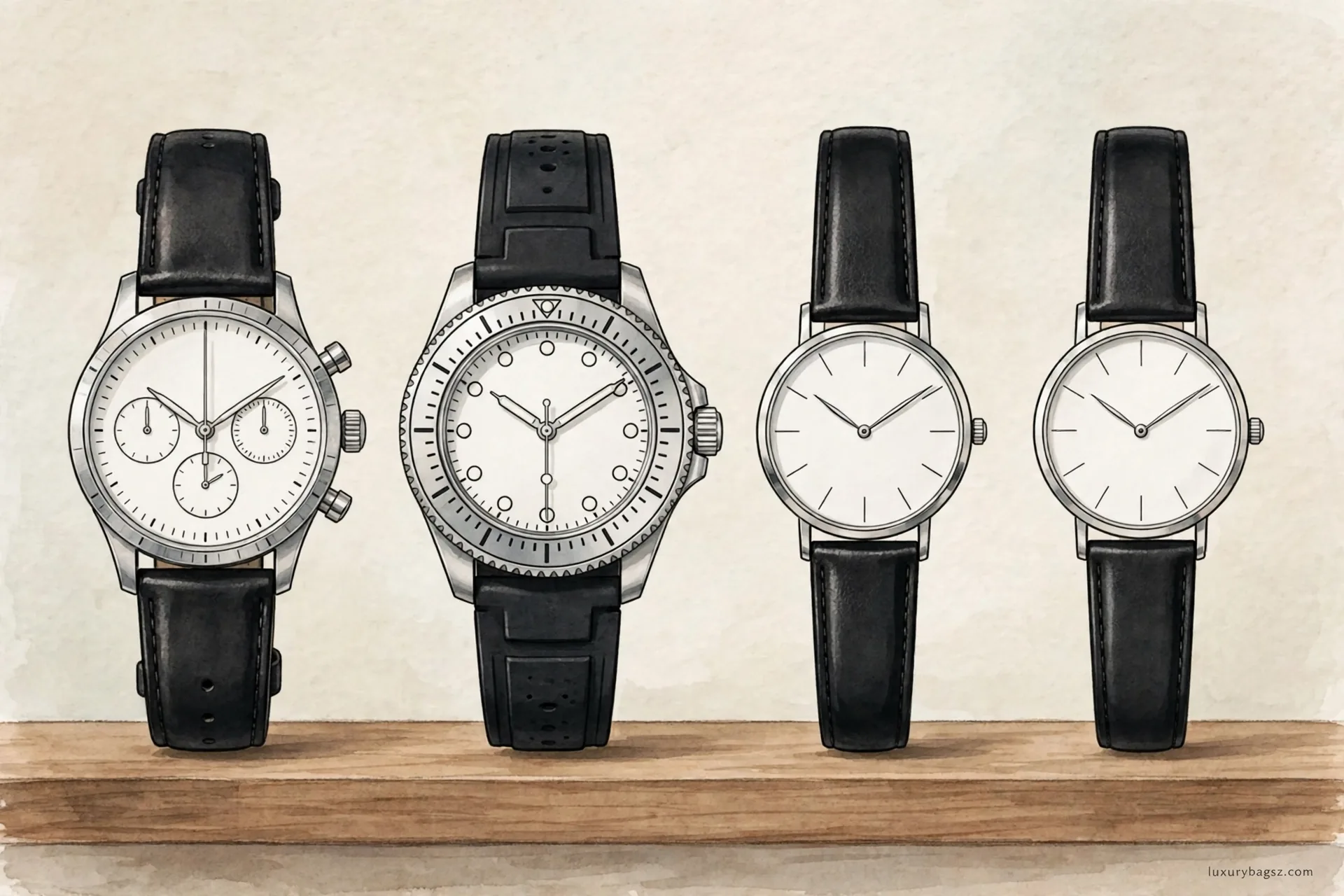
Omega's fame rests on a handful of families: the Speedmaster that went to the Moon, the Seamaster that defined the elegant dive watch, the Constellation that stood for precision, and the De Ville that carried the dress side. The short answer for a buyer is to choose by story and use together. Pick the family whose history you enjoy wearing, in the size and condition that suits your life, and you will have chosen the right iconic Omega.
Key Takeaways
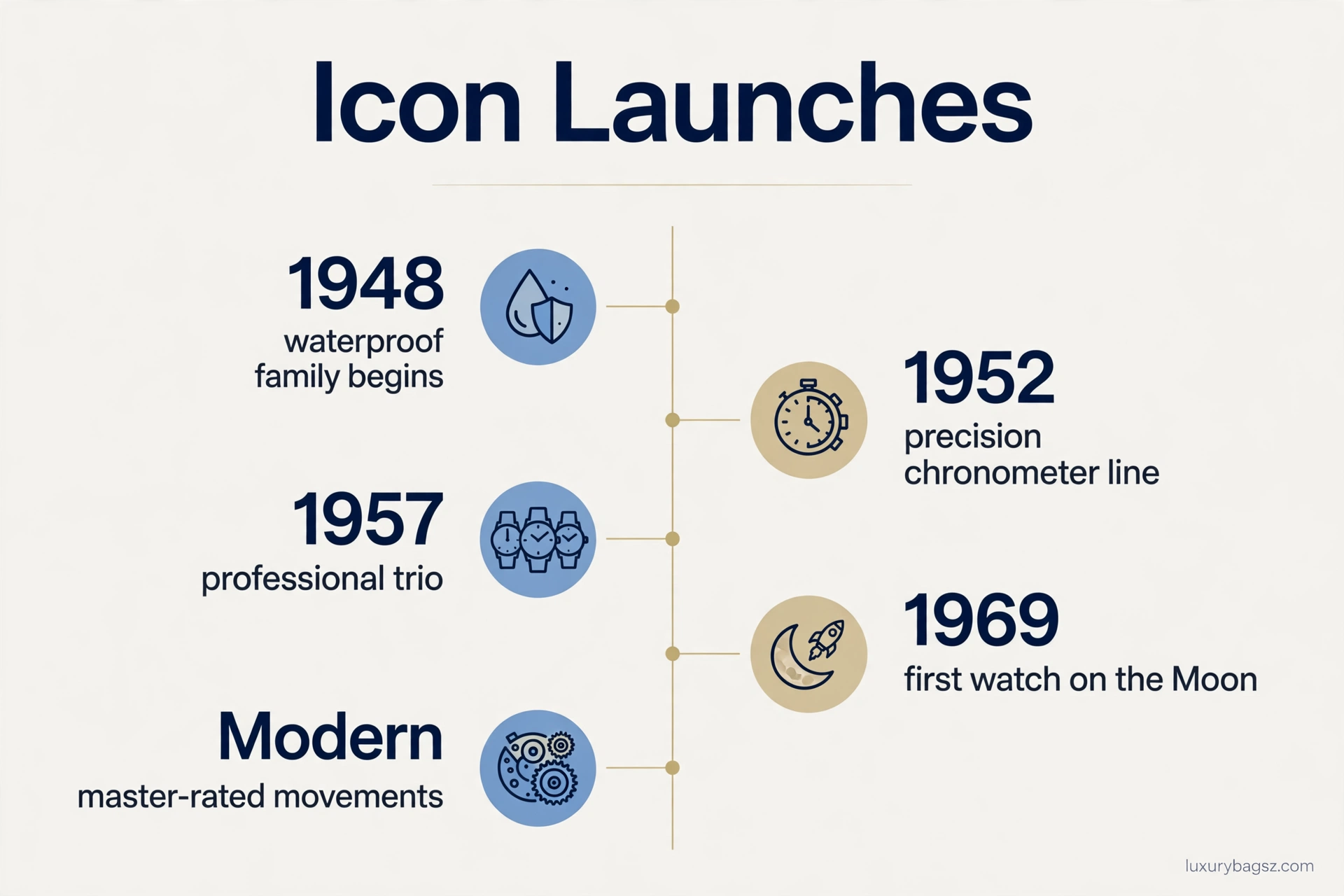
- The Speedmaster, launched in 1957, became the Moonwatch after NASA flight qualification in the 1960s.
- The Seamaster began in 1948 and grew from a dressy waterproof watch into a full dive family.
- The Constellation, from 1952, was Omega's precision flagship, famous for pie-pan dials.
- De Ville became the dress line in its own right during the 1960s.
- The Railmaster, also from 1957, was built to resist magnetism for engineers and scientists.
- Condition, originality and service history decide value more than age alone.
Why Omega Produced So Many Icons
Volume helped preservation, too. Because Omega sold these families in serious numbers across many countries, good examples survive worldwide, spare parts and knowledge circulate freely, and a new collector can research almost any model thoroughly before buying. Omega combined industrial scale with genuine technical ambition. It timed the Olympics from 1932, pursued chronometer precision seriously and built watches tough enough for professionals, all at once. That breadth explains the range of icons. Our overview of what to know about Omega watches sets out the brand background, from its 19th-century origins to its modern position inside the Swatch Group. Few brands cover space, sea, science and dress watchmaking with equal credibility. Omega's icons are not one watch repeated; they are four or five distinct answers to distinct jobs.
The Speedmaster: Racing Watch, Then Moonwatch
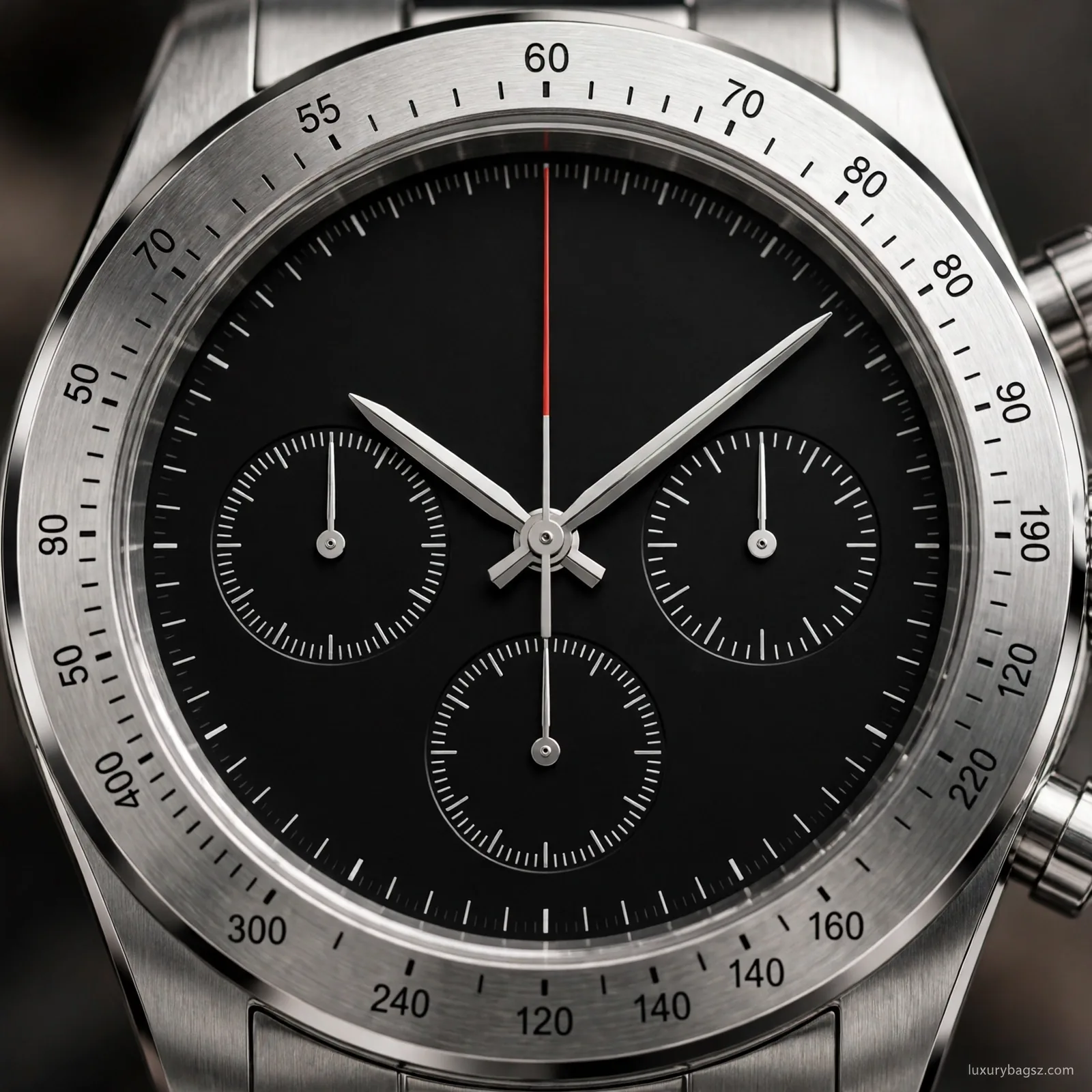
The Speedmaster arrived in 1957 as a racing chronograph, notable for putting its tachymeter scale on the bezel rather than the dial. Nothing about its launch pointed at space. NASA's testing changed everything. In 1965 the Speedmaster was flight-qualified for manned space missions, and in 1969 it became the first watch worn on the Moon, a story told in depth in the dedicated Speedmaster article in this series. The design stayed remarkably stable, which is why vintage and modern examples read as one family. That continuity, plus the Apollo story, makes it the most collected Omega of all.
The Seamaster: From Dressy Waterproof to Dive Icon
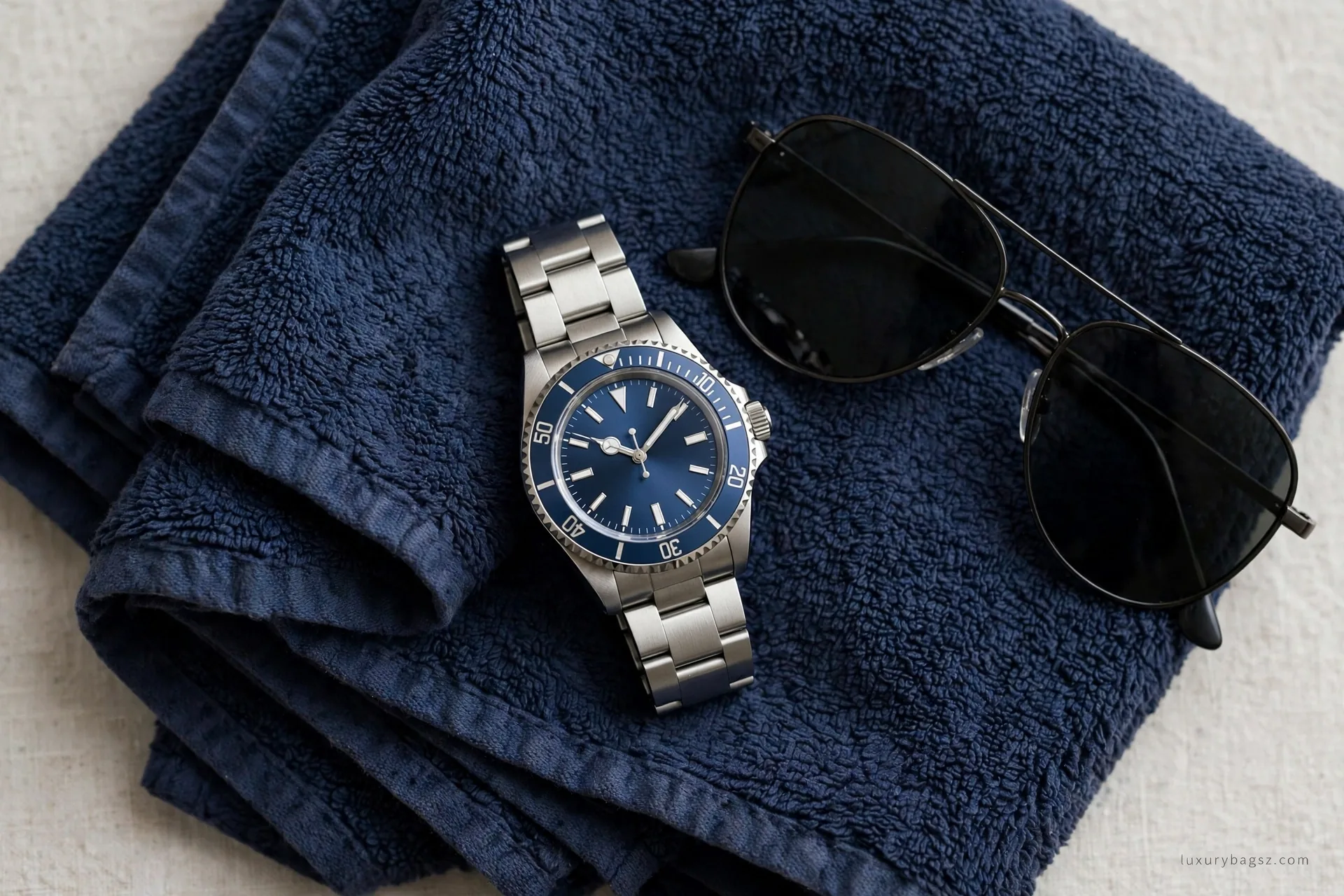
The Seamaster began in 1948 as a water-resistant everyday watch, using sealing knowledge Omega had gained from military watchmaking. Early examples look like dress watches, because that is what they were. The family turned professional in 1957 with a dedicated 300-metre dive model, and later generations added the bold, recognisable dive styling most buyers picture today. A long association with James Bond films from the 1990s cemented its public fame. Against rivals such as those in our Rolex Submariner guide, the Seamaster competes on design variety and value. It is the Omega most owners choose for genuine daily and water use.
The Constellation: Precision as Identity
The observatory medallion deserves a moment of its own. Many vintage Constellation case backs carry a relief of an observatory under stars, a direct reference to the precision trials where Omega repeatedly set records in its chronometer era. The Constellation launched in 1952 as a chronometer line, named for its observatory connection, with a star on the dial and an observatory medallion on many case backs. Collectors love the early pie-pan dials, whose sloping outer track gives the dial a shallow dish shape. These 1950s and 1960s models represent Omega's dress watchmaking at its most refined. Later Constellations changed character, moving through integrated designs to the clawed cases of the 1980s Manhattan style. Each era has its followers, but the pie-pan chronometers remain the connoisseur's choice.
De Ville and Railmaster: The Quiet Icons
De Ville began as a Seamaster variant in the early 1960s and became a standalone dress line later that decade. Slim cases, plain dials and elegant proportions made it Omega's formal answer. The Railmaster, launched in 1957 alongside the Speedmaster and the professional Seamaster, was built for people working near magnetic fields, with a case designed to shield the movement. Neither line chases headlines, and both reward buyers who prefer understatement. Vintage Railmasters in particular have gained collector attention precisely because they were overlooked for years.

The Threads That Connect Them
Serviceability ties the families together in a way collectors feel years later. Omega supported its movements with parts and documentation at a scale few rivals matched, so a 1960s icon can usually be kept running by a good independent watchmaker. Precision runs through every family. Omega built its name on chronometer performance long before marketing departments needed stories, and modern Master Chronometer testing continues that claim with magnetic resistance. Design discipline is the second thread. Each icon keeps recognisable proportions and details across decades, so an owner can move between a 1960s original and a modern descendant without the design language breaking. The third thread is honest tool-watch roots. Even the dress lines descend from watches built to be sealed, accurate and serviceable, which is why old Omegas so often survive in wearable condition.
Buying an Iconic Omega Today
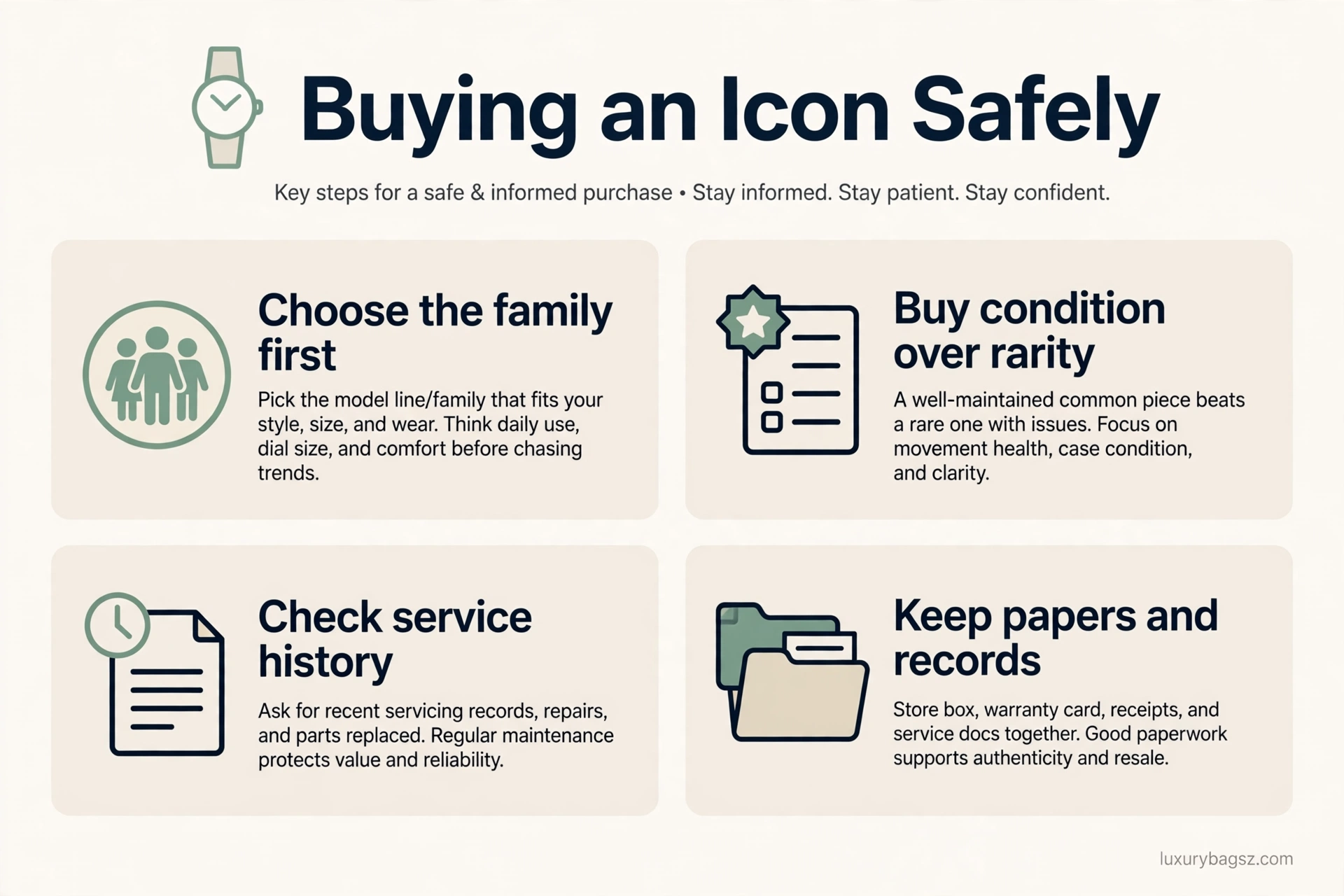
Papers matter differently by era. For a modern piece, a full set with cards supports warranty and resale; for a 1960s watch, an extract or a documented service history may tell you more than any surviving box ever could. Decide family first, then era. A modern Master Chronometer model buys warranty and easy ownership; a vintage original buys character and requires patience, a service budget and tolerance for patina. Originality decides vintage value: dial, hands and case finish should belong together and look honestly aged. Our how to clean a watch guide helps new owners care for a purchase without polishing away the finish collectors pay for. Buy the best condition you can afford rather than the rarest story you can find. With Omega, supply is good, so waiting for a clean example is a strategy, not a delay.
Which Icon Suits Which Buyer
Budget sorts the choice further. Vintage Constellation and De Ville models deliver icon status for the least money, Seamasters span the widest range, and the finest vintage Speedmasters command the strongest prices of the families gathered here. Choose the Speedmaster if you want the deepest story and a chronograph you will actually time things with. Choose the Seamaster if one watch must do everything, including swimming, without fuss. Choose the Constellation for dress with genuine precision heritage, and the De Ville or Railmaster for quiet taste. Cross-shopping rivals helps too: our Rolex Daytona guide shows the Speedmaster's great chronograph rival and clarifies which temperament suits you. There is no wrong family here, only wrong condition and wrong size. Get those two right and any iconic Omega becomes the watch the rest of a collection gets measured against.
Frequently Asked Questions
What is Omega's most iconic watch?
The Speedmaster Moonwatch is the most famous, thanks to NASA qualification and the Moon landings. The Seamaster runs second in public recognition, helped by its film associations.
When was the Omega Seamaster launched?
The Seamaster began in 1948 as a water-resistant everyday watch. It became a true dive family from 1957, when a dedicated professional model joined the range.
What is a pie-pan Constellation?
It is an early Constellation whose dial has a sloping, faceted outer track, like an upturned pie pan. These 1950s and 1960s chronometers are among the most collected vintage Omegas.
Why is the Railmaster less famous?
It was a specialist watch for people working near magnetic fields, sold in smaller numbers and overshadowed by the Speedmaster from the same 1957 professional launch. Collectors now prize that rarity.
Are iconic Omegas good investments?
Strong examples of the main families hold interest and value well, but returns are never guaranteed. Buy the best condition you can, keep papers and service records, and treat value as a bonus.
Should I buy vintage or modern?
Modern buys ease: warranty, water resistance and parts support. Vintage buys originality and charm, with servicing responsibility. Many collectors own one of each for those different pleasures.
What does Master Chronometer mean?
It is Omega's modern certification, tested by the Swiss metrology institute METAS, covering accuracy and resistance to strong magnetic fields, applied across much of the current range.
How can I check a vintage Omega is original?
Compare dial, hands, case and movement against known examples of the same era, and be suspicious of mismatched ageing. An independent watchmaker's inspection is money well spent.
Which iconic Omega is best for daily wear?
A modern Seamaster is the easiest daily choice, with strong water resistance and versatile styling. A modern Speedmaster suits those who prefer a chronograph and mostly dry use.
Do all Speedmasters have the Moon connection?
The Moonwatch line descends directly from the watches NASA qualified and flew. Other Speedmaster variants share the name and design roots but were not themselves flown models.
Final Verdict: Choose the Story You Will Actually Wear
Omega's icons divide neatly: space, sea, precision, dress and science. Each family earned its fame doing a real job well, which is why none of them feels like a marketing invention. Try them on, weigh story against daily use, and buy condition over rarity. An iconic Omega chosen that way stops being a list entry and becomes your watch, which is the entire point.






