

How to Spot a Vintage Omega: Original Dials, Redials, Frankenwatches and Case Checks
Spotting a Good One in Brief: Originality Is the Whole Game
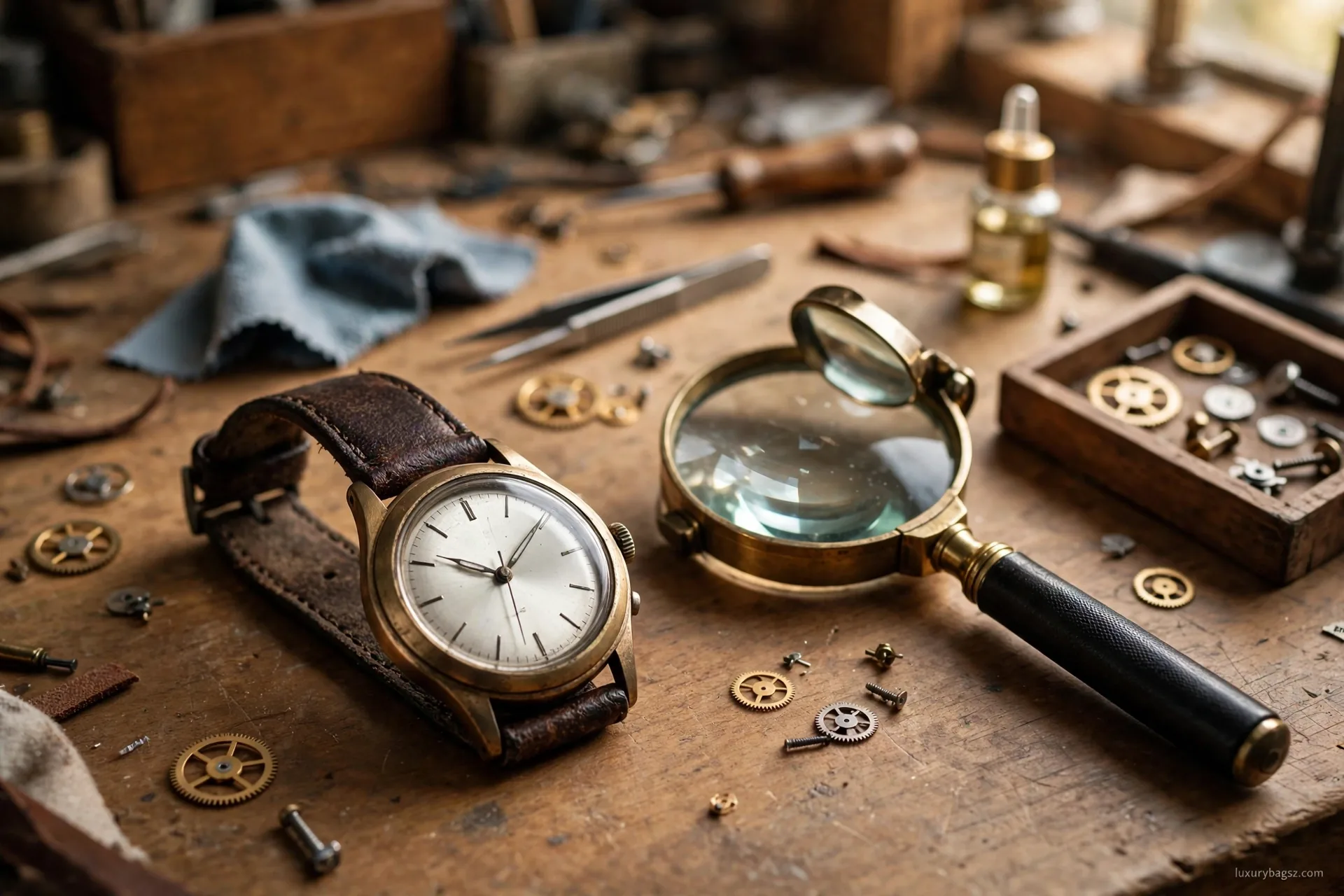
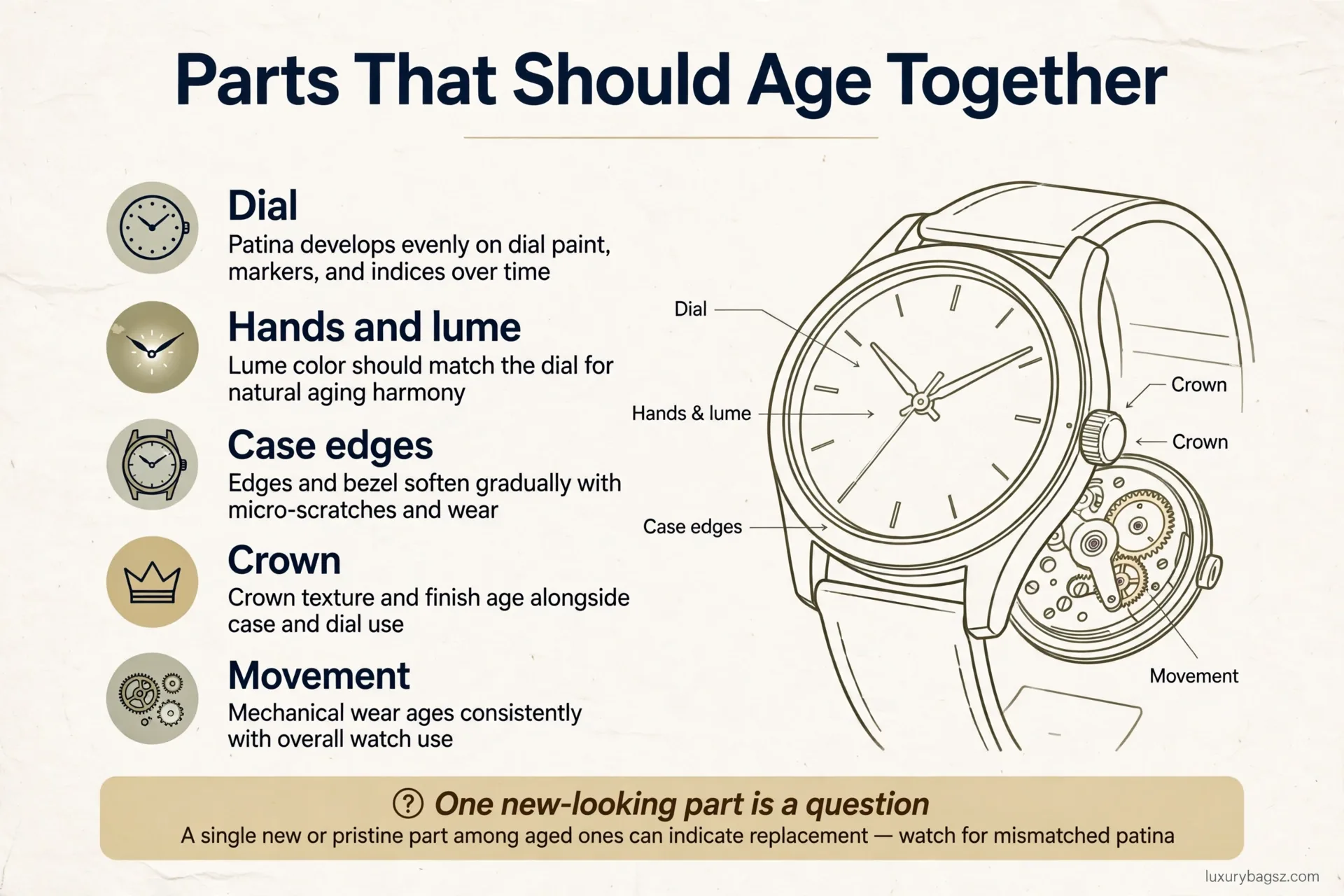
Spotting a vintage Omega is less about catching fakes than about judging originality. Most problem watches are genuine Omegas with a repainted dial, replaced hands, a swapped movement or a case polished until its shape softened. The short answer is to check that everything ages together: dial, hands, lume, case and movement should all tell the same story of the same decades. When one part looks brand new and the rest look sixty years old, ask hard questions.
Key Takeaways
- The commonest vintage Omega problems are redials, wrong hands and mixed parts, not outright fakes.
- An original dial with honest patina is worth more than a shiny repainted one.
- Lume on dial and hands should match in colour and age.
- Heavy polishing rounds case edges and thins lugs, and it lowers value.
- A movement that does not match the case era makes a frankenwatch, however pretty it looks.
- Sharp photographs, movement pictures and a returns policy protect you more than seller promises.
Know What You Are Really Checking
Outright counterfeit vintage Omegas exist, but the everyday risk is different: a real watch made wrong by later repairs or deliberate dressing-up. Learning the difference saves you from both fear and overpayment. General fake-spotting method still helps. Our guide on how to spot a fake Rolex teaches the habit of comparing details against known-correct examples, and that habit transfers directly to Omega. Brand grounding matters too. Our overview of what to know about Omega watches gives the family and era context you need before judging whether a dial or case shape is even plausible.
The Dial: Where Value Lives
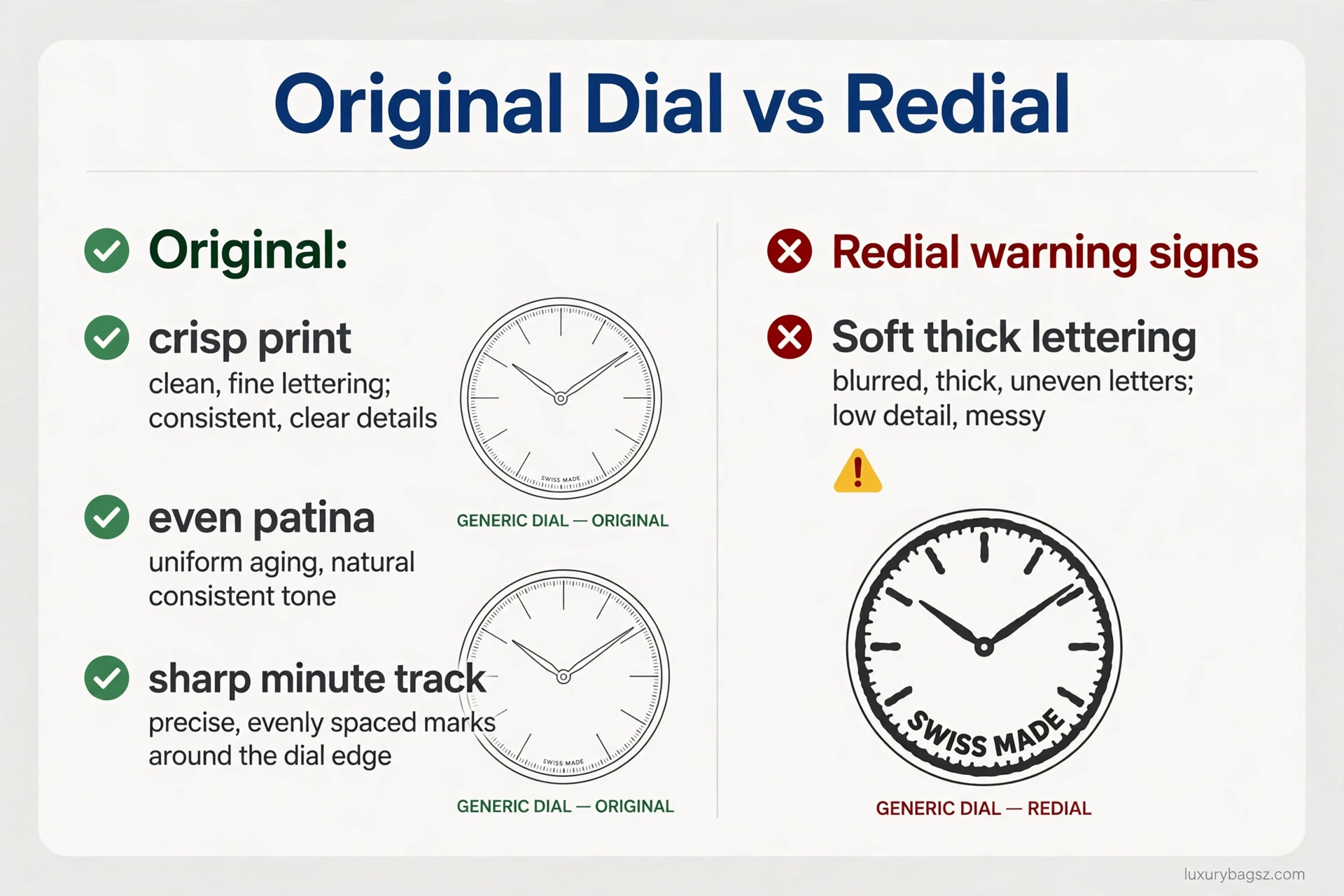
Lighting changes everything, so examine dial photographs taken in daylight and at angles, not only straight-on studio shots. Tilted views expose repaint texture, uneven lacquer and marker repairs that a flat, flattering photograph is designed to hide. Study the printing first. Original dial text is crisp, evenly inked and correctly spaced, with fonts that match known examples of the model and era. Repainted dials often show soft, thick or slightly uneven lettering. Check the minute track and subdial edges for the same sharpness. A redial often loses the fine outer track or renders it unevenly, and luminous markers may sit proud or off-centre compared with factory work. Patina is not a flaw. Even ageing, gentle tropical change and small marks consistent with the case's condition support originality, while a perfect, glowing dial in a worn case should make you pause.
Hands and Lume Must Agree
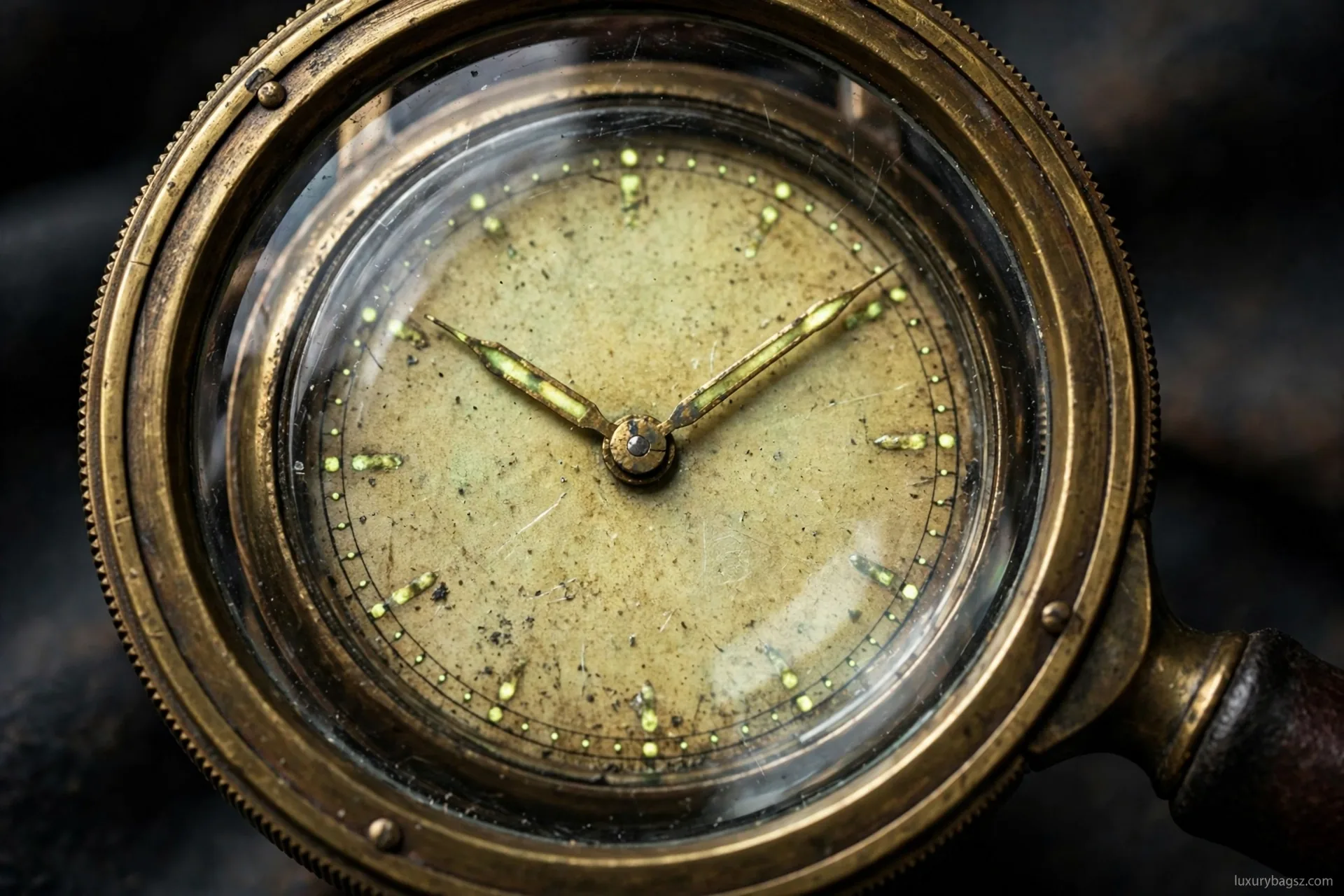
Hands should match the dial in style, length and age. Correct hands reach their markers properly; replacements are often slightly short, too modern in finish or shaped differently from era photographs. Lume tells the truth quickly. Original luminous material on dial and hands ages to similar tones, while replaced hands often glow differently or look starkly brighter and greener than the dial plots. In darkness, a mismatch shows at once. If the hands blaze and the dial barely responds, something has been changed, and the price should reflect that even if the watch is otherwise honest.
The Case: Shape, Edges and Polishing
Inside the case back, look for watchmakers' service marks: small scratched dates and initials recording past work. A pattern of regular marks suggests a maintained life, while a virgin interior on a supposedly serviced watch raises its own question. Vintage cases were finished with distinct facets and brushed surfaces. Compare the example in front of you with reference photographs, looking for bevels that should be sharp and lugs that should hold their thickness. Heavy polishing rounds everything: edges melt, lug tips thin and brushed grain disappears into a uniform shine. A lightly worn, unpolished case is worth more than a mirror-finished one, however counterintuitive that feels. Check the case back for correct style and markings, and the crown for the right form for the era. Crowns are wear parts and often replaced, which is acceptable when disclosed and correct in style.
The Movement: The Frankenwatch Test
Condition inside matters alongside correctness. Look for rust near the crown tube, mismatched screw heads, damaged bridges and signs of careless opening, all of which predict bills even when the calibre itself is the right one. Ask for movement photographs, or have a watchmaker open the watch before money becomes final. The movement should suit the case's era in type, finish and general condition. A frankenwatch mixes parts from different watches: a later movement in an early case, or a dial and movement married into a case they never left a factory in. Each part may be genuine; the watch is not. Serial ranges can roughly date a movement, and reference material online lets you sanity-check that range against the case style. Treat mismatches as a reason to walk away, not to negotiate harder.
Bracelets, Straps and Completeness
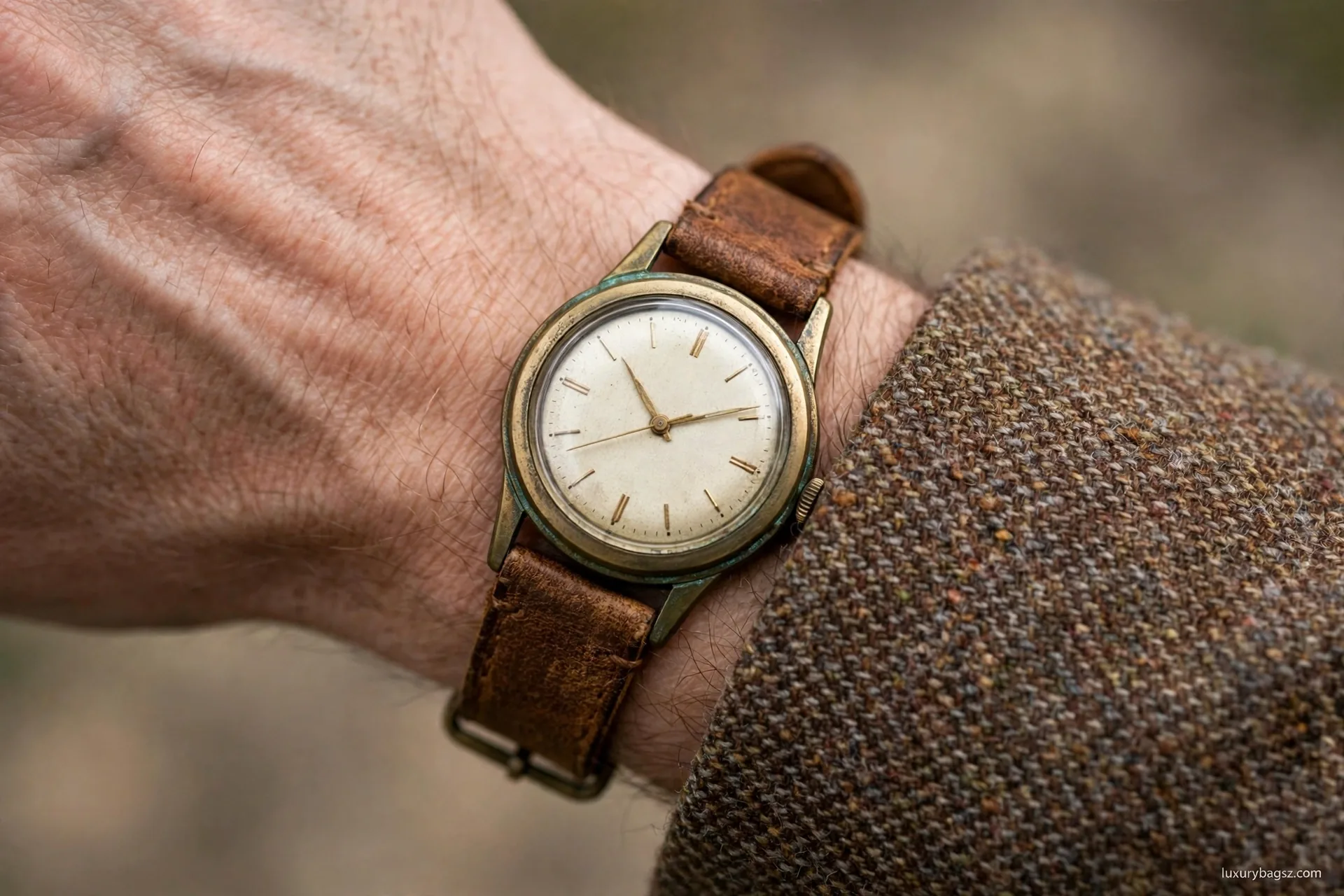
Most vintage Omegas reach you on a later leather strap, which is normal and no cause for concern. Original bracelets, where they exist, add value, but stretched links and replaced clasps should be priced honestly. Boxes and papers are uncommon for mid-century pieces and their absence proves nothing either way. A too-complete story on an ordinary model deserves the same calm scrutiny as the watch itself. Judge completeness by the watch: dial, hands, case and movement correct together beats a dressed-up set with accessories. Accessories can be bought later; originality cannot.

Seller Questions That Reveal Everything
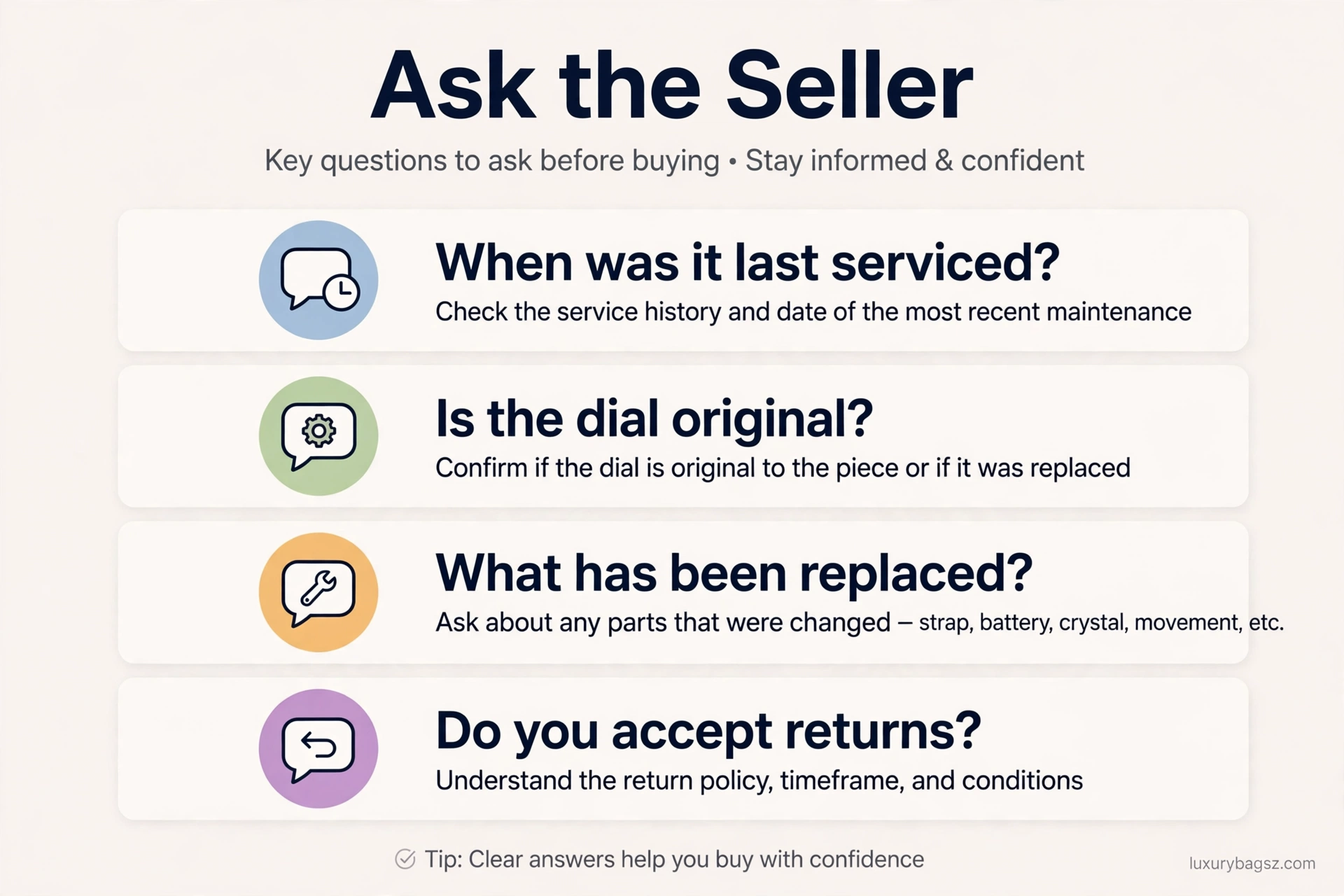
Photographs are a question, too. Ask for any missing angle: the movement, the case back interior, the dial in daylight. A seller who happily reshoots is behaving like someone with nothing arranged to hide from a careful buyer. Ask when the watch was last serviced, by whom, and what was replaced. Honest sellers answer plainly, and a recent service by a named watchmaker is a genuine selling point worth paying for. Ask whether the dial is original, directly. Vague answers about a watch being "all correct" without addressing the dial usually mean the seller either cannot or will not confirm the thing that matters most. Confirm returns in writing before paying. A seller confident in a vintage watch offers an inspection window; a seller who refuses any return is telling you something about the watch.
After You Buy: Verify, Service, Enjoy
Keep your own records from day one: purchase details, photographs, service invoices and the names of who worked on the watch. That file protects your future resale and turns your diligence into the next buyer's confidence. Have your watchmaker inspect a new purchase during the returns window: movement condition, originality of parts and any hidden corrosion. That check converts hope into knowledge while you can still act. The vintage-versus-new trade-offs mirror those in our buying vintage designer bags versus new guide: character and value against warranty and ease. Watches add servicing to that bargain, so budget for it. Finally, care for the watch gently. Our how to clean a watch guide covers safe cleaning that will not strip patina or soften case edges, the very things you paid a premium to preserve.
Frequently Asked Questions
What is the biggest risk when buying a vintage Omega?
A repainted dial is the commonest value killer, followed by mixed parts. Outright fakes exist, but most disappointed buyers own a genuine watch that is less original than described.
How can I tell if a dial has been repainted?
Look for soft or uneven lettering, a sloppy minute track, lume that sits oddly and a finish that looks too perfect for the case's age. Compare with known original examples of the same model.
Does patina lower a vintage Omega's value?
Usually the opposite. Honest, even patina on an original dial supports authenticity and is prized. Damage, stains and corrosion are different from patina and do lower value.
What is a frankenwatch?
A watch assembled from parts of different watches: perhaps a later movement in an early case. The parts may each be genuine Omega, but the combination never left the factory together.
How do I check the hands are original?
Compare their shape, length and finish with era photographs, and check that their lume matches the dial's in colour and ageing. Mismatched glow in the dark is a quick giveaway.
Is a polished case a problem?
Heavy polishing is. It rounds edges, thins lugs and removes original finishing, and collectors pay less for it. Light, sympathetic cleaning in a service is a different matter.
Should the movement match the case?
Yes. The movement type and its approximate serial range should suit the case's era. A clear mismatch suggests a marriage of parts and is grounds to decline the watch.
Are box and papers important for vintage Omega?
They are pleasant but uncommon for mid-century watches, and their absence is normal. Judge the watch itself first; accessories never rescue a wrong dial or movement.
What questions should I always ask a seller?
Ask about the last service and who did it, whether the dial is original, what has been replaced, and whether returns are accepted. Judge the answers as much as the watch.
Can a watchmaker verify a vintage Omega?
Yes. An independent watchmaker can open the case, assess the movement and compare parts against the era. Have it done inside the returns window whenever possible.
Final Verdict: Buy the Watch That Ages as One Piece
The vintage Omega to buy is the one whose dial, hands, case and movement have clearly lived the same life. Originality you can see beats a story you are asked to believe. Check the dial under good light, make the lume agree, refuse heavy polishing, and use the returns window for a watchmaker's verdict. Follow that discipline and vintage Omega buying becomes a pleasure, not a gamble.






