

Omega Speedmaster Guide: The Moonwatch Story, Sizes, Hesalite Versus Sapphire and Buying Checks
The Speedmaster in Brief: A Racing Watch That Went to the Moon
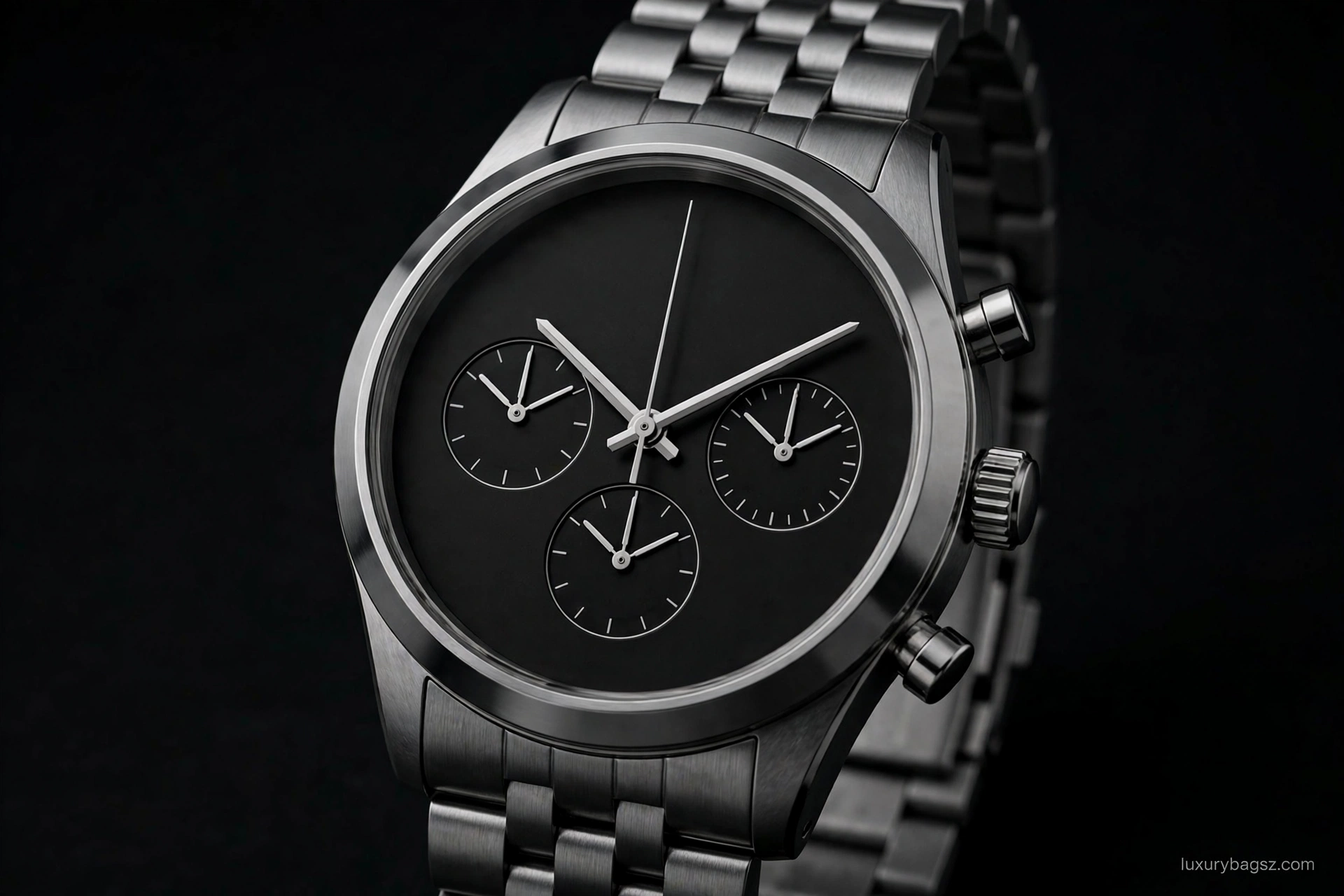
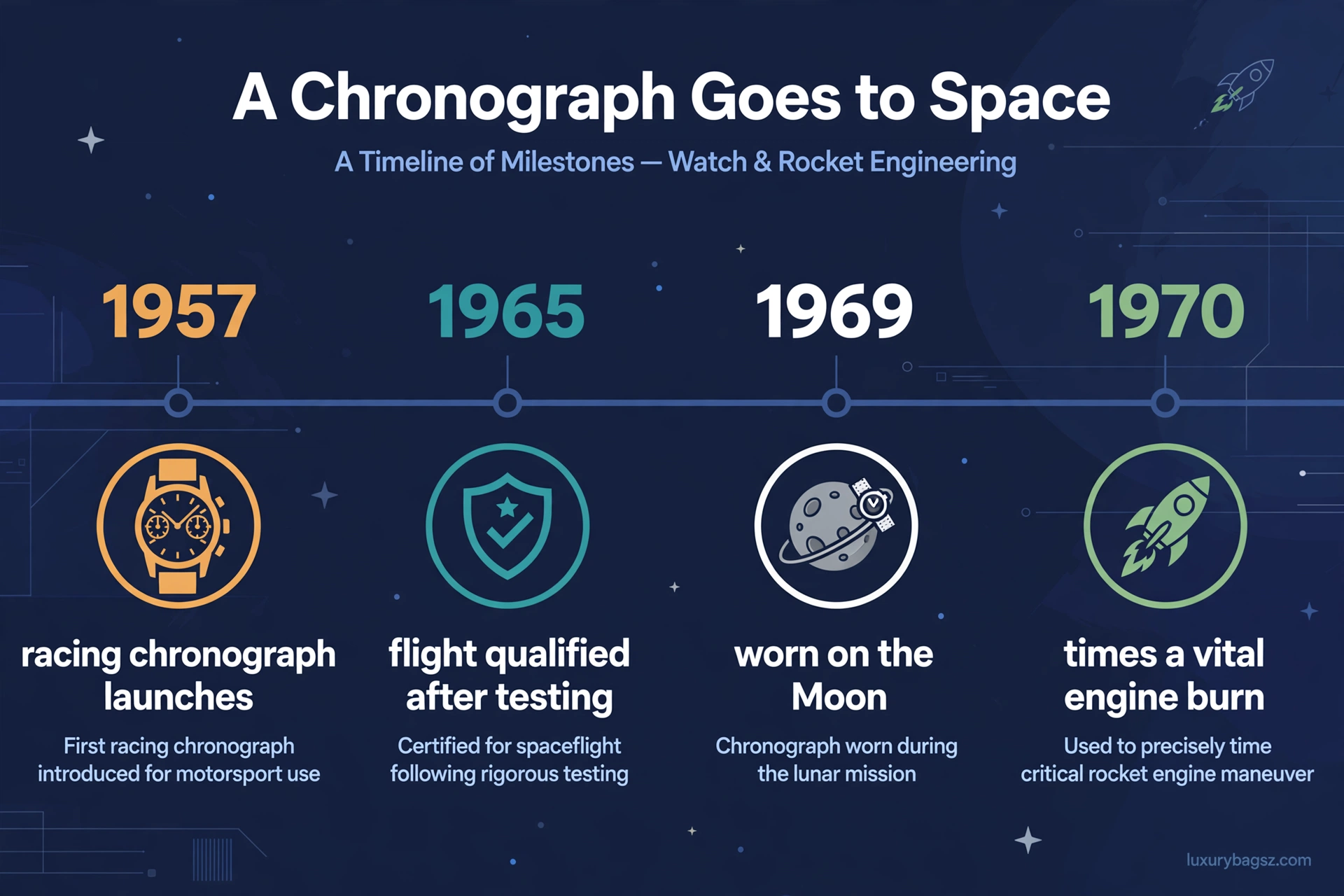
The Omega Speedmaster began in 1957 as a racing driver's chronograph. It became the Moonwatch because NASA tested it, qualified it in 1965 for manned space flight, and astronauts wore it to the Moon in 1969 and through the Apollo programme. The short answer for buyers is that the classic Moonwatch remains the heart of the range: a hand-wound chronograph of around 42 mm, in steel, with a black dial whose layout has barely changed in over half a century. Choose crystal, condition and era to suit you, and the rest is enjoyment.
Key Takeaways
- The Speedmaster launched in 1957 as a racing chronograph with its tachymeter on the bezel.
- NASA flight-qualified it in 1965, and it was worn on the Moon during Apollo 11 in 1969.
- It famously timed a critical engine burn during the Apollo 13 mission in 1970.
- The classic Moonwatch is hand-wound, around 42 mm, and famously conservative in design.
- Buyers choose between traditional acrylic-style crystal and modern sapphire versions.
- Pre-owned value follows condition, originality and service history more than hype editions.
From Racetrack to Launchpad
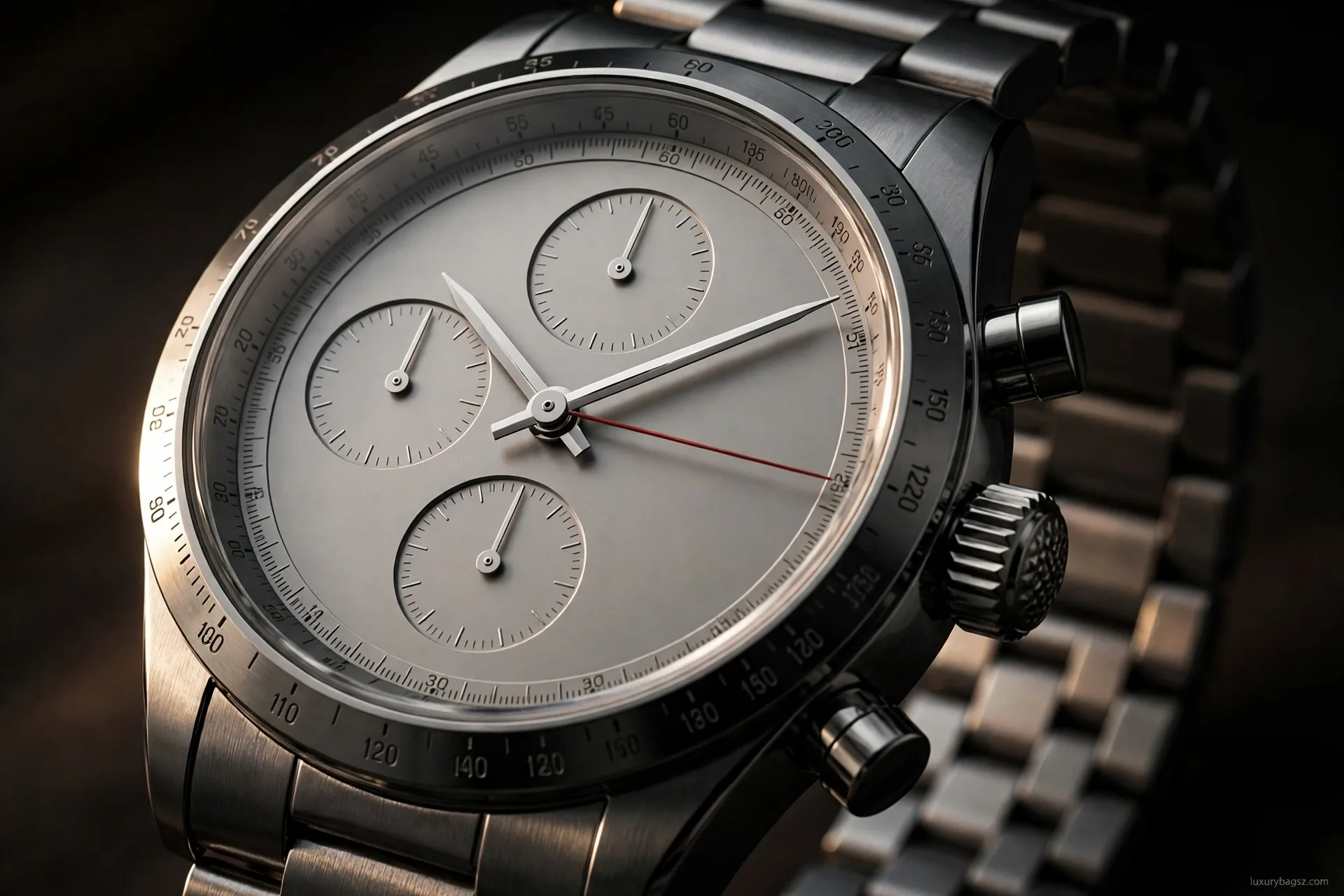
The Speedmaster was designed for timing laps, not orbits. Its innovation at launch was moving the tachymeter scale to the bezel, freeing the dial and making the scale easier to read at speed. Omega's wider story helps explain what happened next. Our guide to what to know about Omega watches covers the brand's precision reputation, which is why its watches were bought and tested when NASA needed a chronograph. Astronauts were already wearing Speedmasters privately in the early 1960s. When formal testing came, the watch was effectively auditioning with experience on its side.
NASA Testing, Apollo 11 and Apollo 13
The qualification itself is worth picturing: watches were heated, frozen, pressurised, depressurised, vibrated and shocked in sequence. The Speedmaster was not chosen for charm; it was the chronograph still working accurately when the testing finally stopped. NASA put candidate chronographs through severe trials of heat, cold, shock, pressure and vibration. In 1965 the Speedmaster emerged flight-qualified for all manned space missions, the only watch to do so. In July 1969, a Speedmaster was worn on the Moon's surface during Apollo 11, earning the Moonwatch name permanently. It has flown on missions ever since, an unbroken working history no marketing can invent. In 1970 the watch's finest hour came on Apollo 13, when the crew used a Speedmaster to time a crucial engine burn that helped bring them home. NASA later honoured Omega for that role, and collectors have prized the story ever since.
The Design That Barely Changed
The Moonwatch formula is fixed: a black dial, three subdials, baton markers, a steel case with twisted lugs and a tachymeter bezel. Changes across decades are measured in details, not in concept. That conservatism is the appeal. A modern Moonwatch and a 1960s original are recognisably the same watch at a glance, which makes the family unusually coherent for collectors and easy to live with daily. Around the classic sit wider Speedmaster variants: automatic models, smaller cases, ceramic and precious-metal editions and commemorative pieces. They share the name and styling, but the hand-wound Moonwatch is the reference point for all of them.
Size and Fit: The 42 mm Question
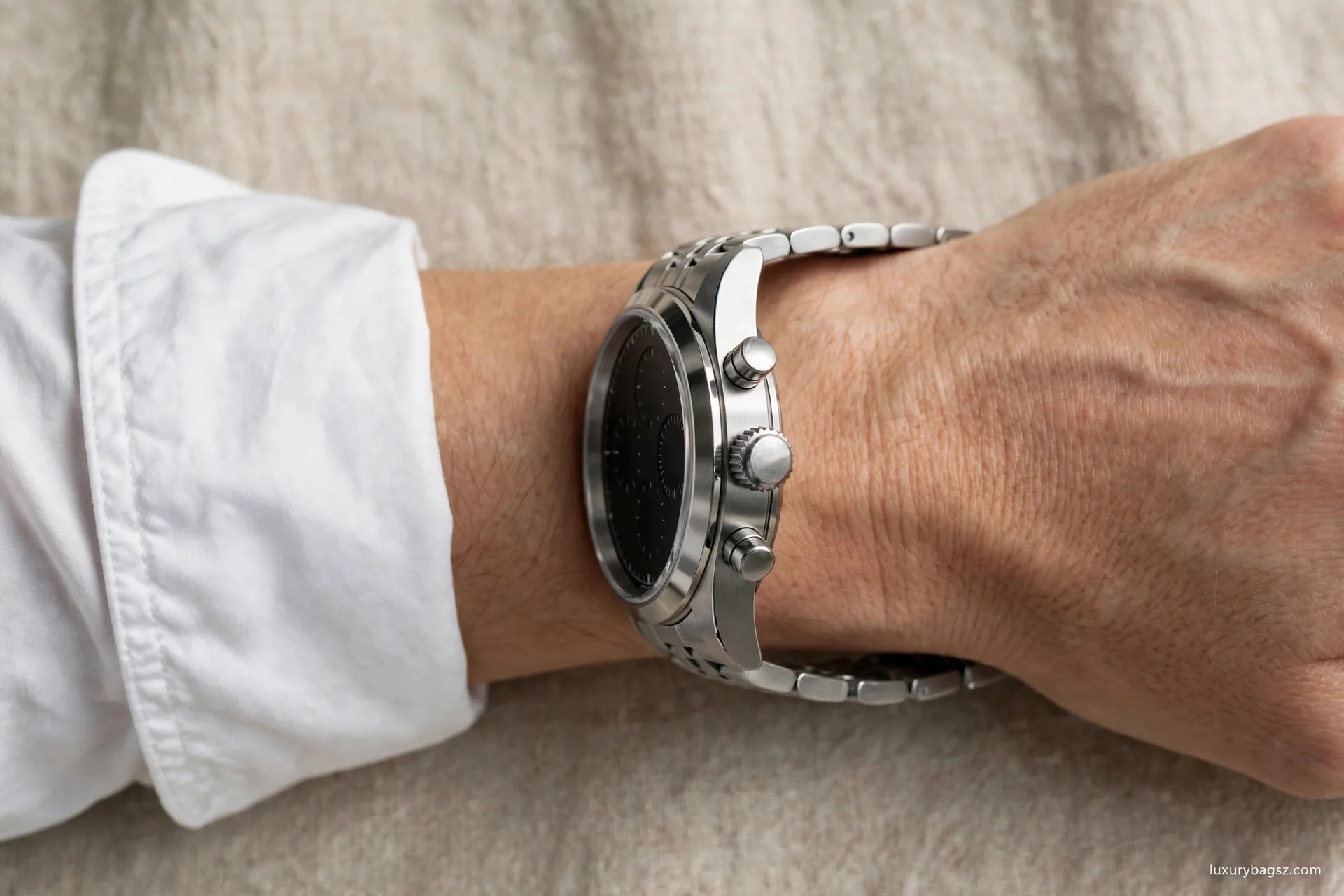
Thickness shapes comfort as much as diameter. The Moonwatch sits relatively flat for a chronograph, which is why it slides under cuffs that bulkier rivals catch on, and why owners often report forgetting its headline size entirely. The classic Moonwatch case measures around 42 mm, which sounds large beside vintage chronographs. In practice its modest lug-to-lug length and slim profile make it wear smaller than the number suggests. On the bracelet it feels balanced and tool-like; on a leather or textile strap it lightens and leans vintage. Many owners keep both, changing the watch's character in minutes. Smaller Speedmaster variants exist for slimmer wrists, including reduced-size automatic models. Try the classic first, because its fit surprises most people, and its proportions are the ones the design was drawn around.
Hand-Wound: Living With the Ritual
The Moonwatch is hand-wound, a deliberate link to the watches NASA qualified, since an automatic rotor was unproven in weightlessness at the time. Winding takes seconds each morning and quickly becomes ritual. Expect a power reserve of roughly two days on modern versions, varying by movement generation. The chronograph pushers have a mechanical firmness owners tend to love, and the watch keeps time to chronometer standards in current form. There is no date on the classic model, which purists defend and some buyers miss. If a date is essential, look at the wider Speedmaster family rather than expecting the Moonwatch to change.

Hesalite Versus Sapphire
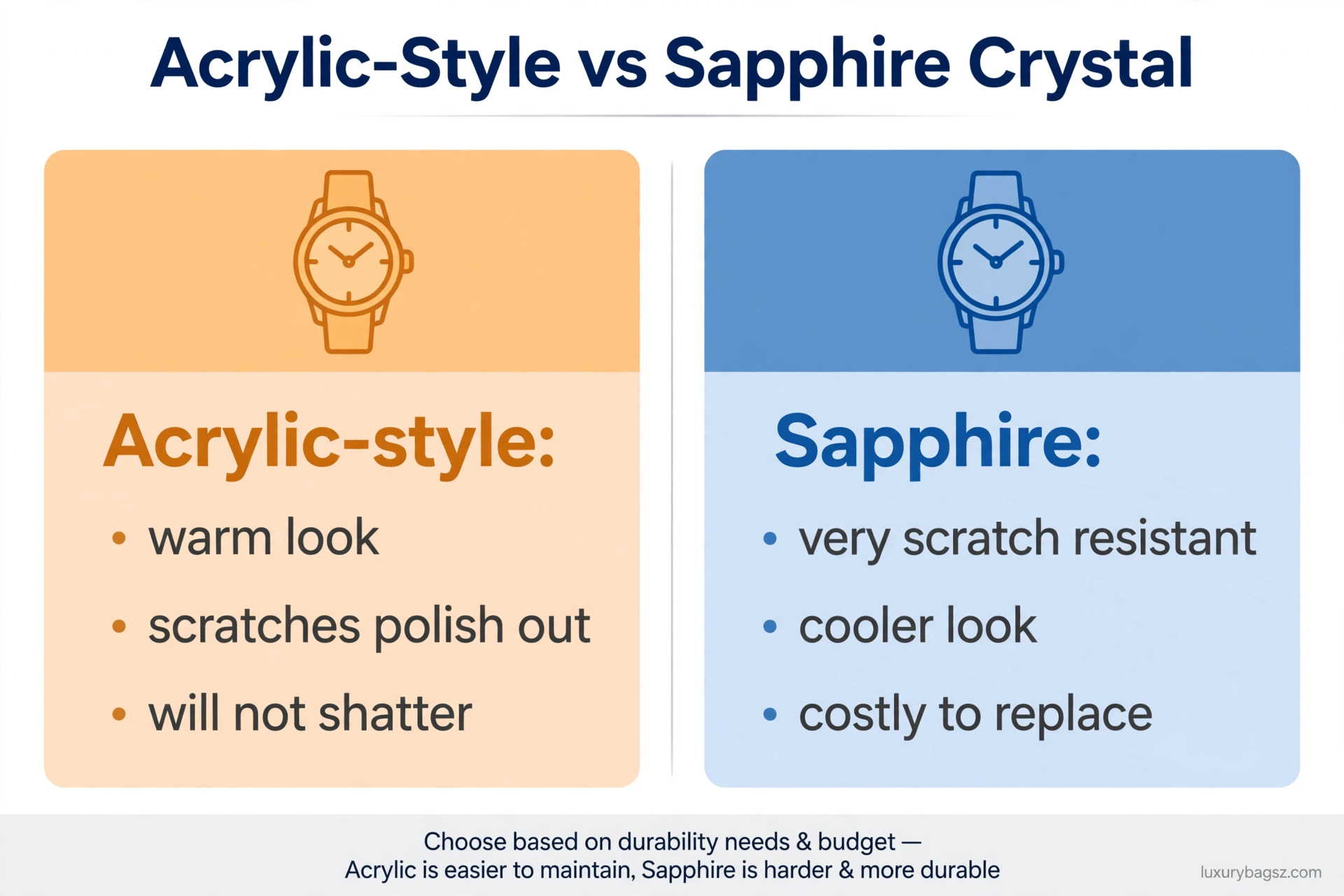
There is a maintenance angle, too. An acrylic-style crystal can be refreshed cheaply for years, while a scratched sapphire means full replacement at real cost. Over a decade of clumsy wear, the traditional option can be the economical one. The traditional crystal is an acrylic-style material, often called Hesalite, chosen historically because it does not shatter into fragments. It scratches more easily than sapphire, but light scratches polish out at home. Sapphire versions resist scratches and often add a display back showing the movement. They cost more and read slightly cooler and more modern on the wrist, which some owners prefer. Neither choice is wrong. Traditionalists pick the acrylic-style crystal for warmth and authenticity; practical daily wearers often pick sapphire and stop thinking about it. Decide by how you actually treat your watches.
Vintage Versus Modern, and Pre-Owned Checks
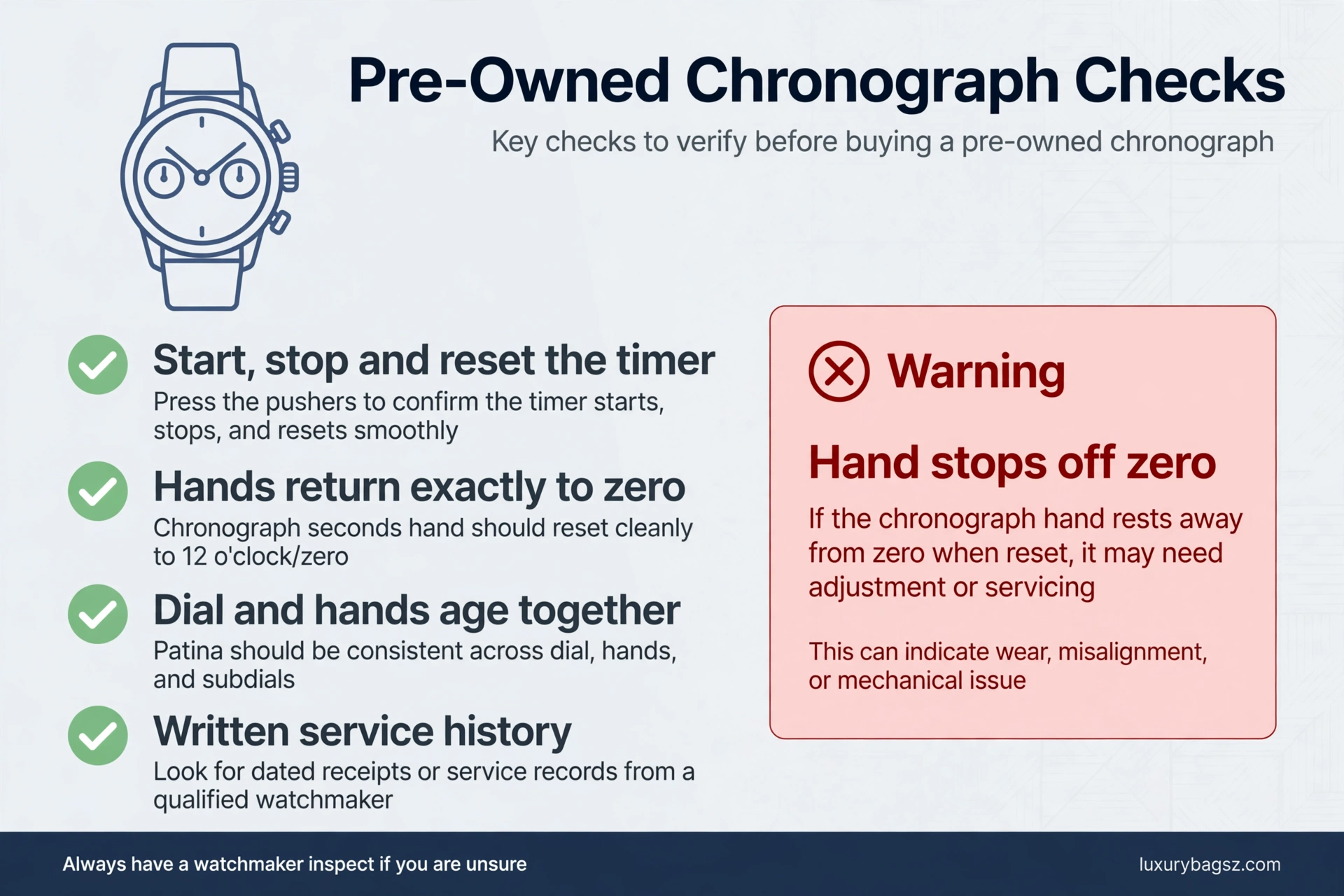
Commemorative editions deserve cool heads. Snoopy, anniversary and mission-themed models can be delightful, but buy them because you love the detail, not because limited language promises returns that the wider market may never agree to pay. Vintage Speedmasters offer the original details and collector depth, at prices that rise steeply with condition and originality. Modern versions offer warranty, accuracy and water resistance you can use without worry. On any pre-owned example, test the chronograph fully: start, stop and reset should be crisp, with hands returning exactly to zero. Check dial and hands for matching age, and ask for service history in writing. The wider discipline in our F.P. Journe collecting guide applies here: buy condition and coherence, keep records, and let special editions tempt you only after the basics are right.
The Speedmaster Beside Its Rivals
Community is an underrated part of ownership. Speedmaster owners gather around weekly traditions, strap experiments and mission history, and that culture keeps knowledge, parts and enthusiasm circulating in a way that quietly supports every owner's watch. The Speedmaster's eternal comparison is the Daytona, covered in our Rolex Daytona guide. Both began as racing chronographs; the Daytona took the luxury route, the Speedmaster kept its tool character and its space story. That difference shows in ownership: the Speedmaster is easier to buy, easier to service and happier on straps, while carrying a story arguably greater than any rival's. For many collectors it is the first serious chronograph for exactly those reasons. Care is simple either way. Our how to clean a watch guide covers bracelet and case cleaning, and a Moonwatch kept serviced and sensibly dry will outlast its owner's collecting fashions.
Frequently Asked Questions
Why is the Speedmaster called the Moonwatch?
Because it was the first watch worn on the Moon, during Apollo 11 in 1969, after NASA flight-qualified the model in 1965 for all manned space missions.
Was the Speedmaster designed for space?
No. It was launched in 1957 as a racing chronograph. NASA selected it later through testing, and astronauts had already worn it privately before formal qualification.
What happened with Apollo 13?
After an explosion crippled the craft in 1970, the crew used a Speedmaster to time a critical engine burn that helped bring them home safely. NASA later honoured Omega for its role.
What size is the Omega Speedmaster Moonwatch?
The classic model is around 42 mm, with a compact lug-to-lug that wears smaller than expected. Smaller and larger Speedmaster variants also exist across the wider family.
Should I choose Hesalite or sapphire?
Choose the acrylic-style Hesalite for traditional warmth and polishable scratches, or sapphire for scratch resistance and, on many versions, a display case back. Both are legitimate Moonwatches.
Is the Speedmaster automatic?
The classic Moonwatch is hand-wound, by design and by history. Automatic Speedmasters exist in the wider family, including reduced-size models, but they are not the NASA-qualified configuration.
Does the Moonwatch have a date?
The classic model has no date, keeping the dial faithful to the flown watches. Buyers who need a date should look at other Speedmaster variants.
Is a vintage Speedmaster a good buy?
Good original examples are deeply collectible, but prices reward condition and punish replaced parts. Buy the best-documented example you can, with a service history you can verify.
Can I swim in a Speedmaster?
Modern Moonwatches carry a modest water resistance rating suited to care, not diving. Treat the watch as splash-resistant in practice and keep vintage examples away from water entirely.
How often does a Speedmaster need servicing?
Follow Omega's guidance for the specific model, typically every several years. Regular servicing keeps the chronograph action crisp and protects vintage value.
Final Verdict: The Chronograph With the Greatest Story, Still a Tool
The Speedmaster earns its fame twice: once in NASA's test chambers and on the Moon, and again every day as a legible, wearable, honestly priced chronograph that never needed redesigning. Buy the classic Moonwatch in the crystal you prefer, or a vintage example in verified condition, and wear it hard. It was built to be used in the harshest place humans have been, and it shows.






