How to Spot a Fake Hermès Calvi
Spotting a Fake Calvi in Brief
Measure it before you admire it. A genuine Calvi measures 7 by 10.5 cm, and the fakes are usually betrayed by small drifts rather than one dramatic flaw: the size a little off, the stitching leaning the wrong way, a snap that feels cheap, or a stamp pressed too deep.
From the measurement, work through the palladium snap, the slanted stitching, the smooth edge paint, the leather grain and the crisp blind stamp — all twelve checks in this guide, taken together, with the seller and the price judged alongside. Where doubt remains after that, get a professional opinion.
If you only remember one thing from this guide, remember the card rule. Hermès issues no authenticity cards as a general rule, so a card offered with a Calvi is a warning sign, while a missing card proves nothing at all. Treat any authenticity card as a red flag, not as proof.
Key Takeaways
- A genuine Calvi is 7 x 10.5 cm, with two card pockets, a palladium snap, and a leather lining.
- Epsom is the most commonly listed leather, with Box, Swift, Evercolor, and older Mysore versions also reported.
- Hermès lists two card slots, not a fixed card count, and reviewers disagree on how many cards fit in practice.
- No single check proves authenticity: size, snap, stitching, edge paint, grain, stamp, and lining must agree.
- Hermès issues no authenticity cards as a general rule, so a card is a red flag and a missing card proves nothing.
- A price far below boutique, a seller who hides stamp photos, or a rushed sale are all reasons to walk away.
- If you already bought a suspect Calvi, keep everything, act inside the return window, and get a professional opinion.
Part 1: What a Genuine Calvi Is
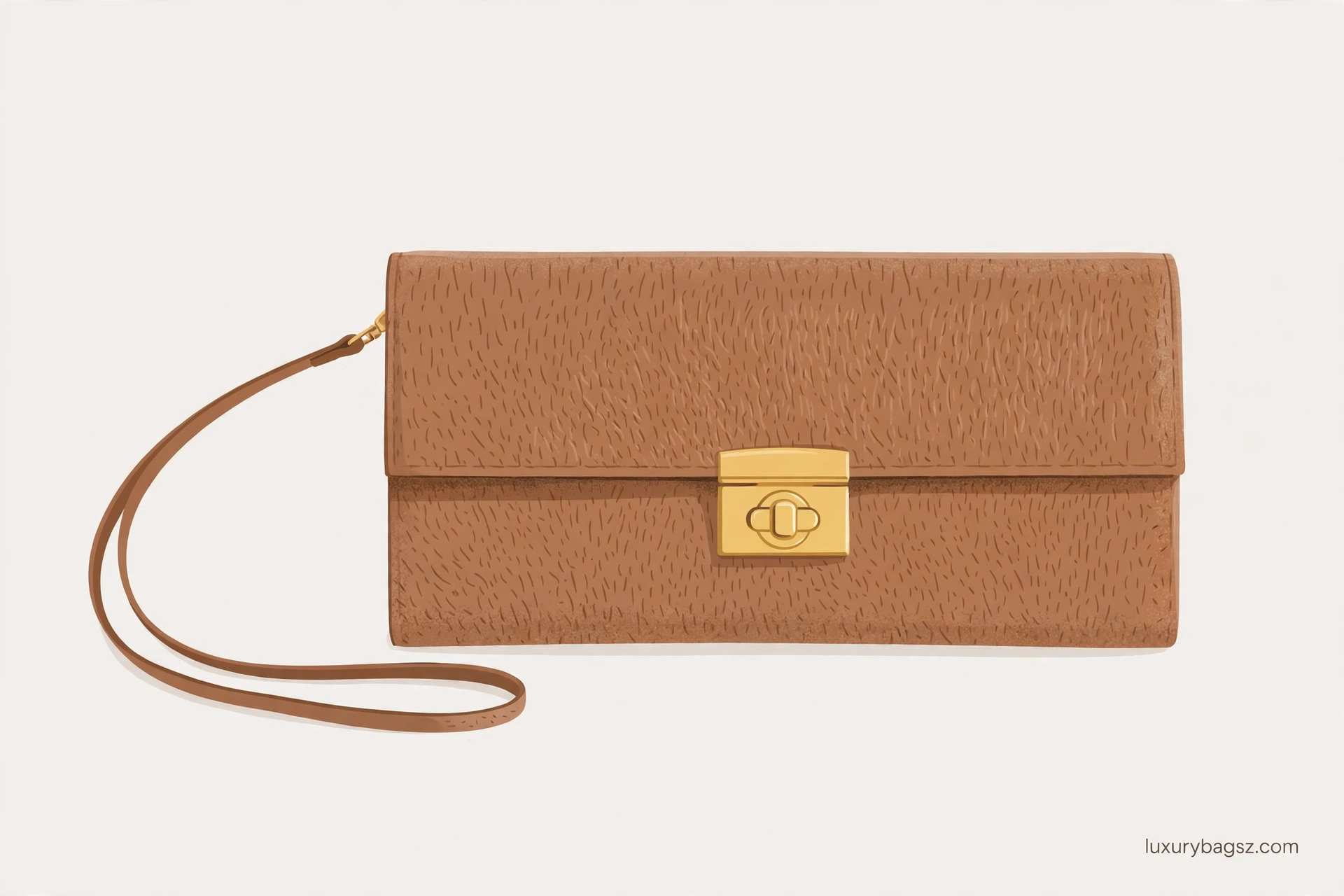
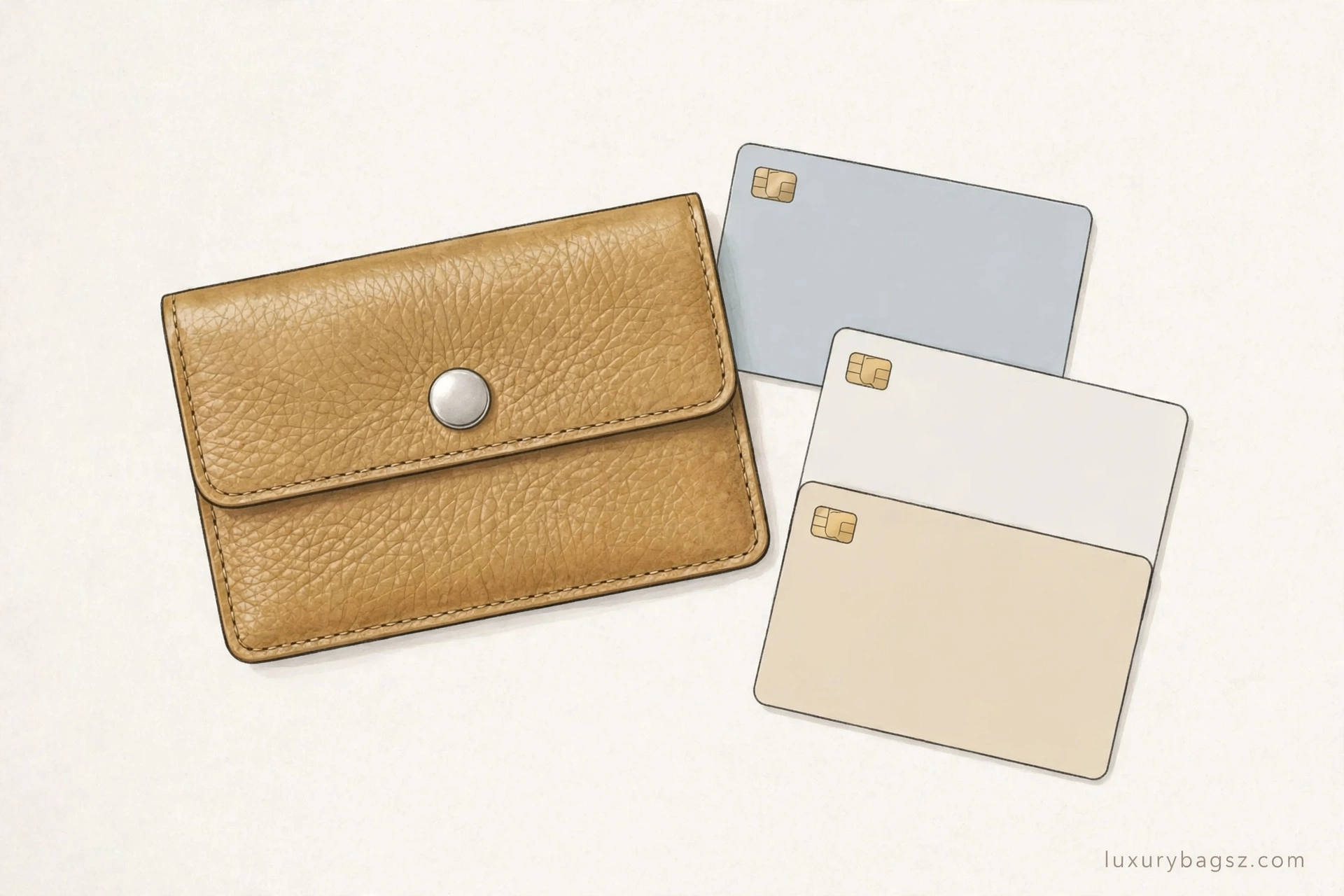
The Calvi is a slim leather card holder with a snap closure and two card pockets, one on each side. It is made for cards and folded notes, not for coins, not for a phone, and not for a full wallet load.
Hermès lists the Calvi at 7 cm wide by 10.5 cm tall, or 2.8 by 4.1 inches. The brand warns that handmade dimensions may vary slightly, so a millimetre or two of difference is normal, not a flaw on its own.
The snap on current listings is palladium-plated, giving a cool silver tone. The lining is leather, usually smooth, so cards slide in and out without catching at the pocket mouth.
Epsom calfskin is the leather most often listed for the Calvi. Box, Swift, and Evercolor versions are also reported, and Mysore goatskin appears in older listings, so leather alone never settles a case.
There is no visible logo on the outside of a genuine Calvi. The Hermès name is stamped discreetly inside, in small lettering, and a loud printed logo on the outside is a warning sign, not a feature.
The Calvi is not a bifold wallet, and it is not the Calvi Duo. The Duo adds an inner snap pocket and is slightly larger, so a Duo sold as a Calvi, or priced as one, is a listing error or a trap.
Knowing the genuine article matters because fakes copy the look, not the craft. They get the shape roughly right, then fail on stitching angle, edge paint, grain, or stamp depth, which is where your checks should focus.
Part 2: The Ground Rule Before You Check Anything
The most important habit in authentication is also the least exciting: never decide on one check. A good fake can pass a size check, and a genuine handmade piece can fail a photo check through bad lighting alone.
Think of the twelve checks as votes, not verdicts. When most of them point the same way, you have a useful answer. When they split, or when one check is badly wrong, that is when you pause and get help.
Fakes also vary in quality, from crude copies with plastic-feeling leather to careful copies that need a trained eye. A guide can teach you the crude and middling ones, but it cannot turn you into an authenticator overnight.
Provenance counts as evidence too. A boutique receipt, a clear buying history, and a seller with a long record all support a piece, while a new account, a vague story, and a refusal to show photos all count against it.
Be honest about your own limits as well. Checking from photos is harder than checking in hand, and leather feel, snap action, and smell cannot be judged from a screen. Say so, and ask for more evidence.
Finally, remember that authentication guides describe typical genuine pieces. Handmade variation, wear, repair, and age all move a real Calvi away from textbook condition, so judge the whole piece, not one detail in isolation.


Note: this video is a general Hermès wallet authentication guide, not a Calvi-specific video. Its leather, stitching and stamp checks apply to the Calvi checks in this guide, which is why it is used here.
Part 3: Check 1 — Size and Dimensions
Start with a ruler, because size is the easiest check to do and the hardest to argue with. A genuine Calvi measures 7 cm by 10.5 cm, or about 2.8 by 4.1 inches, when closed and empty.
Measure the closed holder flat, without cards inside, and without pressing it down. Cards, stuffing, and a heavy hand all change the reading, and a loaded Calvi will always measure a little wider than an empty one.
Allow a millimetre or two either way for handmade variation, which Hermès itself acknowledges. A Calvi at 7.1 cm is not fake on that evidence alone, and a perfect 7 cm is not proof of authenticity either.
Be suspicious of a gap larger than that, especially a holder that is a full centimetre out. Small leather goods are cut to a pattern, and a large size error points to a copy made from photos rather than from the real pattern.
Watch out for model mix-ups as well. Some resellers list Calvi Duo measurements, about 10.5 by 7.3 cm, against a Calvi listing, and careless guides copy the error. Always check which model a measurement belongs to before judging it.
If a seller will not give measurements, or gives only a photo next to a coin for scale, ask for a ruler photo. A genuine seller with the piece in hand can provide one in a minute, while a reluctant seller is telling you something.
Part 4: Check 2 — Shape and Symmetry
A genuine Calvi is flat and rectangular, with straight sides and neatly rounded corners. When closed and empty, it lies flat on a table without rocking, curling, or lifting at one corner.
Look at the outline first, because copies often get the outline slightly wrong. One side may bulge, one corner may be squarer than the other, or the flap may sit off-centre over the body.
Open it and check that the two pockets mirror each other. Uneven pocket depths, a pocket mouth that puckers, or a fold that sits crooked all suggest cutting and assembly that falls short of the original standard.
Check the snap position too, because it should sit centred on the flap and meet its socket straight. A snap that sits visibly off-centre, or a flap that closes at an angle, is a shape flaw worth weighting heavily.
Wear can bend a genuine Calvi, so do not condemn a well-used piece for a gentle curve. The question is whether the shape looks made that way, or worn that way, and wear usually shows as softening rather than as lopsided cutting.
Photos can distort shape through lens angle, so ask for a straight-on shot of the closed holder on a flat surface. A photo taken at a steep angle hides asymmetry, and a seller who only offers angled shots may be hiding it on purpose.
Part 5: Check 3 — The Palladium Snap
The snap is the only hardware on a Calvi, which makes it one of the best checks you have. On current listings it is palladium-plated, so it should look like cool silver, not warm gold and not brassy yellow.
Press it and listen for a clean, firm click, with both halves meeting flush. A snap that catches, grinds, sits proud of the leather, or needs force to close deserves a closer look, especially on a piece claimed to be little used.
Look at the snap face under good light for plating wear. A genuine snap can wear with heavy use, but brassy metal showing through on a supposedly new piece suggests cheap plating rather than honest wear.
Check the back of the snap as well, inside the pocket area, where it should sit neat and secure. A loose, wobbly, or roughly finished snap back is a workmanship flaw, and workmanship is exactly where copies fall short.
Beware of a snap that looks right but feels wrong, because weight and action are hard to photograph. If you are buying in person, open and close the snap several times, and compare its feel with the firm, quiet action of a well-made closure.
The same snap habits help on other small Hermès pieces, and a guide to spotting a fake Hermès belt shows how hardware checks transfer across models. Hardware is a small detail, but it is one that cheap copies rarely get fully right.

Part 6: Check 4 — Stitching
Stitching is the check that experienced buyers look at first, because it is hard to fake well and easy to see in a good photo. Genuine stitching is even, slightly slanted, and consistent in length from stitch to stitch.
Count the slant direction along one edge, and check that it stays the same all the way round. Stitches that change angle, change length, or wander off a straight line all point to machine work that does not match the original hand standard.
Look closely at the corners, where sloppy work shows first. Doubled stitches, bunched thread, loose ends, or thread that dives into the leather at a corner are all warning signs, even on an otherwise tidy piece.
Thread colour should match or complement the leather, not clash with it. A bright white thread on a dark leather, or a thread colour that changes between edges, is a mismatch worth questioning before you pay.
Glue showing along a stitched edge is another warning sign, because neat handwork does not need visible glue to hold. A thin dark line of adhesive beside the stitching suggests the edge was glued first and stitched as decoration.
Photograph stitching in daylight, or ask the seller for a daylight close-up, because warm indoor light hides uneven thread. If a seller only sends soft, distant shots of the edges, treat that as a missing check, not as a passed one.
Part 7: Check 5 — Edge Paint
Edge paint is the smooth coating on the cut edges of the leather, and on a genuine Calvi it should look even, thin, and clean. Run your eye along each edge and look for a finish that matches the leather colour.
Bumps, drips, cracks, or a thick ridge of paint all suggest rushed finishing. Edge paint that has cracked badly on a young piece is also suspicious, because good paint flexes with the leather rather than flaking off.
Check where edges meet at corners and folds, because that is where paint pools or thins out on copies. A corner with a blob of paint on one side and bare leather on the other has not been finished to the same standard.
Colour matters too, since edge paint usually matches or complements the leather. Paint in a clearly different colour, or paint that changes shade along one edge, is a flaw that should make you pause and ask questions.
Wear does affect edge paint over years, especially at the corners of a pocket-carried piece. The difference is that genuine wear looks like gentle thinning, while poor finishing looks lumpy, cracked, or uneven from the start.
In photos, ask for a close, straight shot of one long edge and one corner. Edge paint is a small detail, and a seller photo taken from a metre away will not show it, so a refusal to provide a close-up is itself information.
Part 8: Check 6 — Leather Grain
Leather grain is where many fakes fail, because each Calvi leather has a distinct surface that is hard to copy cheaply. Learn the leather claimed in the listing first, then judge whether the surface in front of you matches it.
Epsom has a small, regular, machine-printed grain, with a dry hand and a firm shape. It looks even across the whole holder, and its printed pattern is one of the easier grains to recognise once you have seen it.
Box calfskin is smooth and glossy, with a deep colour and almost no visible grain. A piece claimed as Box that shows a printed or pebbled grain is a mismatch, and that mismatch alone should stop the purchase.
Swift is soft, smooth, and slightly supple, with a fine, even surface that feels lovely but marks easily. Evercolor sits between Epsom and Swift, with a fine grain and a little more give, so it should never look heavily pebbled.
Mysore goatskin, reported in older listings, has a grained goat surface that differs from calf leathers. Sources disagree on which leathers are currently in production, because Hermès rotates small leather goods by season and region.
That disagreement matters for buyers, because a seller claiming a leather that is not in current production is not automatically lying. Older stock and pre-owned pieces carry older leathers, so check the claimed age against the leather, not just the leather alone.
A guide to which country makes leather for Hermès bags is useful background here, because leather sourcing and finishing explain why genuine grain varies. Grain should match the claimed leather type, and any clear mismatch is a strong warning sign.
Part 9: Check 7 — The Blind Stamp
The blind stamp is the small, uninked mark pressed inside a genuine Calvi, and it carries two pieces of information: a craftsman mark and a year letter. It should look crisp and clean, but not deep or sunken.
There are two different marks to keep apart, and confusing them is a common beginner error. The brand stamp reads as the Hermès name, while the blind stamp is the small craftsman and year mark, usually found elsewhere inside the piece.
Check the stamp’s clarity first, because a genuine stamp is sharp at the edges without gouging the leather. A stamp that looks blurred, doubled, unevenly deep, or pressed so hard it distorts the surrounding leather deserves suspicion.
Next, check that the year letter matches the seller’s claimed age for the piece. Ask the seller what year they claim, then compare, and be wary of any seller who cannot or will not state an age at all.
Do not trust a decoder chart alone, because year-letter systems have changed over the years and charts online disagree with each other. A chart can support a check, but it cannot replace a professional opinion when the stamp looks wrong.
Also remember that a correct-looking stamp proves very little on its own, because stamps are among the easier details to copy. A good stamp supports a genuine piece, but it never rescues a piece that fails on stitching, grain, or snap.

Part 10: Check 8 — Lining and Pockets
Open the Calvi and look at the lining, which should be smooth leather that matches the quality of the outside. Rough, papery, or plastic-feeling lining is a strong warning sign on a piece claimed to be genuine.
Check that both pockets are the same depth and finish, with clean pocket mouths and no loose lining at the edges. One pocket deeper than the other, or lining that bunches when a card slides in, points to assembly that falls short.
Slide a card into each pocket and feel how it moves. On a genuine Calvi, cards glide in smoothly and sit snug without forcing, while a tight, scratchy, or uneven pocket suggests lining or cutting that is not up to standard.
Look at the inside folds as well, because the Calvi’s design depends on folded leather sitting flat. Thick, stiff, or bulky folds inside a slim holder suggest cheaper leather or extra layers added to mimic structure.
Colour inside can differ from outside on two-tone or Verso versions, which is a design choice, not a flaw. What matters is quality: the inner leather should feel as good as the outer leather, not like an afterthought.
Smell is a weak check, and this guide will not oversell it, because leather smell fades and varies. A strong chemical or plastic smell on a new piece is worth noting, but a faint smell on an old piece proves nothing either way.
Part 11: Check 9 — The Card Trap
This is the most important warning in the whole guide, so read it twice. Hermès issues no authenticity cards as a general rule, so a card offered with a Calvi is a red flag, not a bonus, and a missing card proves nothing.
Sellers who lean on a card, a certificate, or a fancy box as proof are selling paper, not leather. A printed card costs almost nothing to make, while good leather, neat stitching, and a correct stamp are much harder to copy well.
The trap works because buyers want reassurance, and a card feels like reassurance. It feels official, it photographs well, and it gives a nervous buyer something to hold onto, which is exactly why counterfeiters include one.
Some sellers genuinely believe a card helps, because other luxury brands do issue cards. That does not make the card real evidence, and a well-meaning seller with a card is still a seller whose evidence you should discount entirely.
What about a Calvi with no card at all? That is the normal situation, and it should not worry you. Judge the leather, stitching, stamp, snap, and grain instead, and get a professional opinion if any of those checks feels off.
The same rule applies to certificates, booklets, and glossy shopping bags offered as proof. Presentation items are easy to buy separately and easy to copy, so they add display value only and never replace a check of the piece itself.

Part 12: Check 10 — Packaging Traps
Packaging traps are the card trap’s close cousins, and they work the same way: impressive extras distract from an unimpressive piece. A dust bag, a box, and tissue paper are all easy to obtain, and none of them proves authenticity.
A genuine Calvi may come with a dust bag, and a pre-owned one may not, because dust bags get lost, kept, or swapped over years of ownership. Treat a dust bag as a nice extra, and treat its absence as normal, not as evidence either way.
Watch for packaging that looks too new for the piece it holds. A worn, older Calvi in a crisp, brand-new box with fresh tissue deserves a question, because the box and the piece should tell a roughly consistent age story.
Also watch for sellers who photograph the packaging more carefully than the piece. A listing with five shots of a box and one soft shot of the Calvi is showing you the wrong evidence, and you should ask for the right evidence before paying.
Beware of receipt traps as well, since receipts can be faked, borrowed, or mismatched. A receipt helps when its details match the piece, the date, and the seller’s story, but a receipt alone never proves that this exact holder came from that purchase.
The rule for all packaging is simple: enjoy it if it is there, ignore it if it is not, and never let it outweigh a failed check on the leather itself. Packaging is the easiest part of a fake to get right.
Part 13: Check 11 — Price Traps
Price is not a leather check, but it is one of the most reliable warning signals, because genuine Calvis hold their value well. A price far below boutique for a supposedly perfect piece usually means a flaw, a fake, or a different model.
Use dated single listings, not averages, when you judge a price. Single listings found on 1 November 2026 include $460 for an Epsom Calvi in the United States, £480 for a Box Calvi in the United Kingdom, and A$740 for an Epsom Calvi in Australia.
Those three figures are three different facts, not a global price, because region, leather, and date all change the number. Blending them into one average would hide exactly the differences a buyer needs to see.
On the pre-owned market, expect a discount for wear, age, and missing extras, but not a collapse. A mint Calvi at half the boutique price is not a bargain to celebrate, it is a listing to investigate, starting with the stamp and stitching photos.
Another price trap is the wrong-model price, where a Calvi Duo is listed at a Calvi price, or a standard Calvi is priced like an exotic version. Check the measurements and the inner snap pocket, because those two details separate the models at a glance.
Exotic Calvi versions, when they genuinely appear, are priced far above standard leather versions. If an exotic Calvi is priced like a standard Epsom one, that is a warning sign, not a lucky find, and it deserves a professional check.
A guide to spotting a fake Hermès Evelyne bag covers the same pricing habit in bag form, and the mindset transfers directly. A price that makes you excited before you have checked the piece is a price that should make you careful.
Part 14: Check 12 — Seller Photos and Seller Behaviour
The twelfth check is not about the Calvi at all, it is about the person selling it. A genuine seller with the piece in hand can show you everything, while a fake seller needs you to buy before you look closely.
Ask for clear photos of the stamp, the stitching, the snap, both pockets, and the edge paint, all in daylight. A seller who provides them promptly is behaving like someone with nothing to hide, which is a point in their favour.
A seller who refuses those photos, sends only one styled shot, or claims the piece is already packed for shipping is not a seller to trust with a luxury purchase. Walk away, because another Calvi will come along, and your money will not come back as easily.
Read the listing words as carefully as the photos. Vague phrases like “guaranteed authentic” without evidence, “bought in Paris” without a date, or “rare colour” without a colour name are all filler, and filler often covers a gap in knowledge or honesty.
Check the seller’s history where the platform allows it, including how long the account has existed and what else it has sold. A new account selling luxury goods at low prices is a classic pattern, and it should raise your guard even if the photos look good.
Pressure tactics are a final warning sign, including claims that another buyer is waiting, that the price rises tomorrow, or that payment must go outside the platform. Genuine sellers rarely need to rush you, while fake sellers almost always do.
A guide to spotting a fake Hermès Geta bag makes the same point about seller evidence, and it is worth reading alongside this guide. Good photos do not prove authenticity, but bad photos, or missing photos, prove that you cannot check, which is reason enough to stop.

Part 15: Checking in Person Versus Checking From Photos
Checking in hand is easier than checking from photos, and buyers should know why before they pay from a screen. In hand, you can feel the leather, test the snap, weigh the holder, and watch how cards slide into the pockets.
From photos, you lose all of that, and you gain only what the seller chose to show. Lighting, angle, and resolution all hide flaws, and a skilled seller can photograph around a weak edge or a shallow stamp without technically lying.
If you must buy from photos, raise your evidence standard, not your risk tolerance. Ask for daylight shots, straight-on shots, close-ups of every check in this guide, and a ruler photo for size, and decline if any of them are refused.
Video helps more than extra photos, because it is harder to hide a wobbly snap or a stiff pocket on camera. Ask the seller for a short clip of the Calvi opening, closing, and holding a card, with the stamp shown in the same clip.
Wherever you buy, inspect the piece in daylight within the return window, and compare it with the listing photos at once. Delays help no one, because a late complaint is harder to prove than a prompt one with dated photos of your own.
If you buy from a resale platform, read its buyer protection rules before you pay, not after a problem appears. Return windows, authentication options, and fee rules differ widely, and the cheapest platform is not always the safest one.
Part 16: What to Do if You Already Bought One
If you suspect a Calvi you already own is fake, start by stopping, not by fixing. Do not clean it, condition it, or try to repair a flaw, because changes you make can hide evidence and weaken a return claim.
Keep everything exactly as it arrived, including the box, dust bag, tissue, receipt, and any card that came with it. Photograph the piece in daylight, including the stamp, stitching, snap, and edges, and keep the listing screenshots and all messages with the seller.
Contact the seller promptly and in writing, stating plainly which checks concern you and asking for a return. A calm, specific message with photos carries far more weight than an angry accusation, and it creates a record the platform can follow.
If the seller refuses, use the platform’s dispute process inside its deadline, and consider a professional authentication report as supporting evidence. A written opinion from a reputable authenticator is much stronger in a dispute than a buyer’s own feeling.
Do not wear or gift a suspect piece while a dispute is open, because use adds wear that muddies the evidence. Store it flat, empty, and away from other leather goods until the dispute is settled, one way or the other.
If the piece turns out to be genuine, you have lost nothing but a little time, and you have learned its details. A guide to Saphir Renovateur explains careful conditioning for genuine leather, and a guide to storing a Hermès Kelly bag sets out the dust bag and humidity habits that scale down well to a small holder.
Part 17: Professional Authentication
Professional authentication is the right move whenever the twelve checks split, or when the price is high enough that a mistake would hurt. It is not an admission of failure, it is the sensible last step of a careful purchase.
A reputable authenticator will ask for detailed photos of the stamp, stitching, snap, edges, lining, and leather grain, or will examine the piece in hand where possible. Give them everything they ask for, because a thin photo set produces a thin opinion.
Understand what an authentication opinion is, and what it is not. It is an expert judgement based on the evidence provided, not a guarantee, and it cannot be stronger than the photos or the piece it was based on.
Be wary of authenticators who promise instant answers from one photo, or who charge far less than established services. Speed and cheapness are selling points for a quick opinion, not for a careful one, and a rushed opinion can be wrong in either direction.
Do not expect a Hermès boutique to authenticate a pre-owned Calvi for you. Boutiques sell new pieces, and they do not run a public authentication desk for the resale market, so a seller who claims boutique authentication should be asked for written proof.
Sibling guides apply the same habits to other models, including the guide to spotting a fake Hermès Kelly bag and the guide to spotting a fake Hermès Lindy bag.
The same method covers footwear too, in the guide to spotting fake Hermès Oran sandals and the guide to spotting fake Hermès sneakers. The details differ, but the method is the same: several checks, honest limits, and help when doubt remains.
Part 18: How Authentication Guides Fail — and How to Judge Them
Many authentication guides fail in the same few ways, and knowing those gaps helps you judge any guide you read next, including this one. The first gap is the single-check promise, where a guide claims one detail, like a stamp, settles the case.
No single detail settles a case, because every detail can be copied to some degree, and genuine pieces vary. A guide that promises certainty from one photo is selling confidence, not accuracy, and confidence is the wrong product here.
The second gap is pricing, where guides quote one price without a region, leather, or date. A United States Epsom price, a United Kingdom Box price, and an Australian price are three different facts, and blending them into one average helps nobody.
The third gap is capacity confusion, where guides give a single card number as if Hermès had published it. Hermès publishes two slots, not a count, and reviewers disagree openly on the practical total, from about six to ten comfortable cards up to far higher squeezed-in claims.
The fourth gap is leather availability, where guides claim every leather is always available. In reality, Hermès rotates small leather goods by season and region, so an older leather on a pre-owned piece is normal, not suspicious on its own.
The fifth gap is the dust bag myth, where guides treat a dust bag as proof of authenticity. Dust bags are easy to copy and easy to buy separately, so a dust bag adds presentation value only, and never replaces a stamp and stitching check.
The sixth gap is the card myth, repeated here because it is the costliest mistake in this market. A printed card, a certificate, and a glossy box are all easy to fake, while good leather, neat stitching, and a correct stamp are much harder to copy well.
If you read another fake-spotting guide after this one, test it against three questions. Does it warn you about the card trap, does it date its prices, and does it admit that no single check proves authenticity?
A guide that passes all three is a guide you can trust for the basics. A guide that fails any of them may still have nice photos, but its advice needs checking elsewhere before you spend money.
Frequently Asked Questions
Does a real Hermès Calvi come with an authenticity card?
No, and this matters more than any other answer here. Hermès issues no authenticity cards as a general rule, so a card offered with a Calvi is a red flag, while a missing card proves nothing at all.
How big is a genuine Calvi?
Hermès lists the Calvi at 7 cm wide by 10.5 cm tall, or 2.8 by 4.1 inches. Handmade variation of a millimetre or two is normal, but a gap of a full centimetre points to a copy or a different model.
What should the blind stamp look like?
The blind stamp should be crisp and clean, but not deep or sunken, and it should carry a craftsman mark and a year letter. The year letter should match the seller’s claimed age, and a blurred or doubled stamp deserves suspicion.
Can you tell a fake Calvi from one photo?
Almost never, because one photo cannot show size, stitching, snap action, grain, stamp, and lining all at once. Ask for daylight close-ups of every check in this guide, plus a ruler photo, before you judge.
Is a cheap Calvi always fake?
Not always, because wear, age, and a motivated seller can lower a genuine price. But a mint Calvi at far below boutique price is a listing to investigate, starting with the stamp and stitching photos, not a bargain to celebrate.
Does a missing dust bag mean a Calvi is fake?
No, because dust bags get lost, kept, or swapped over years of ownership. A dust bag adds presentation value only, and its absence is normal, just as its presence proves nothing on its own.
What leathers should a genuine Calvi be made from?
Epsom is the most commonly listed leather, with Box, Swift, Evercolor, and older Mysore versions also reported. The grain in front of you should match the leather claimed in the listing, whatever that leather is.
Can a Calvi Duo be mistaken for a Calvi?
Yes, and it happens often, because the two look alike from the outside. The Duo adds an inner snap pocket and is slightly larger, so check the measurements and the inner pocket before you pay a Calvi price.
What if a seller refuses to send stamp photos?
Walk away, because a genuine seller with the piece in hand can photograph the stamp in a minute. A refusal is not proof of a fake, but it is proof that you cannot check, which is reason enough to stop.
Who can authenticate a Calvi professionally?
A reputable independent authentication service can, using detailed photos or an in-hand examination. Do not expect a Hermès boutique to authenticate a pre-owned piece, and be wary of instant opinions based on a single photo.
Final Verdict
A fake Calvi is rarely exposed by one dramatic flaw, and that is what makes this market tricky. The copies get the shape roughly right, then fail on the small craft details: the slant of a stitch, the depth of a stamp, the finish of an edge, or the action of a snap.
Your best defence is method, not instinct. Measure the holder, check the snap and stitching, judge the grain against the claimed leather, read the blind stamp against the claimed age, and weigh the price and the seller alongside the piece itself.
Above all, hold the line on the card trap. A card is a red flag, a missing card proves nothing, and no box, dust bag, certificate, or receipt can rescue a piece that fails on the leather itself. Paper is cheap, and good craft is not.
If every check points the same way, you have a sound basis for buying, or for walking away. If the checks split, or if one check is badly wrong, pause and get a professional opinion before money changes hands.
A genuine Calvi is a small, quiet, well-made thing, and it rewards a careful buyer. Buy it slowly, check it thoroughly, and you will end up with a holder that earns its place in your pocket for years.