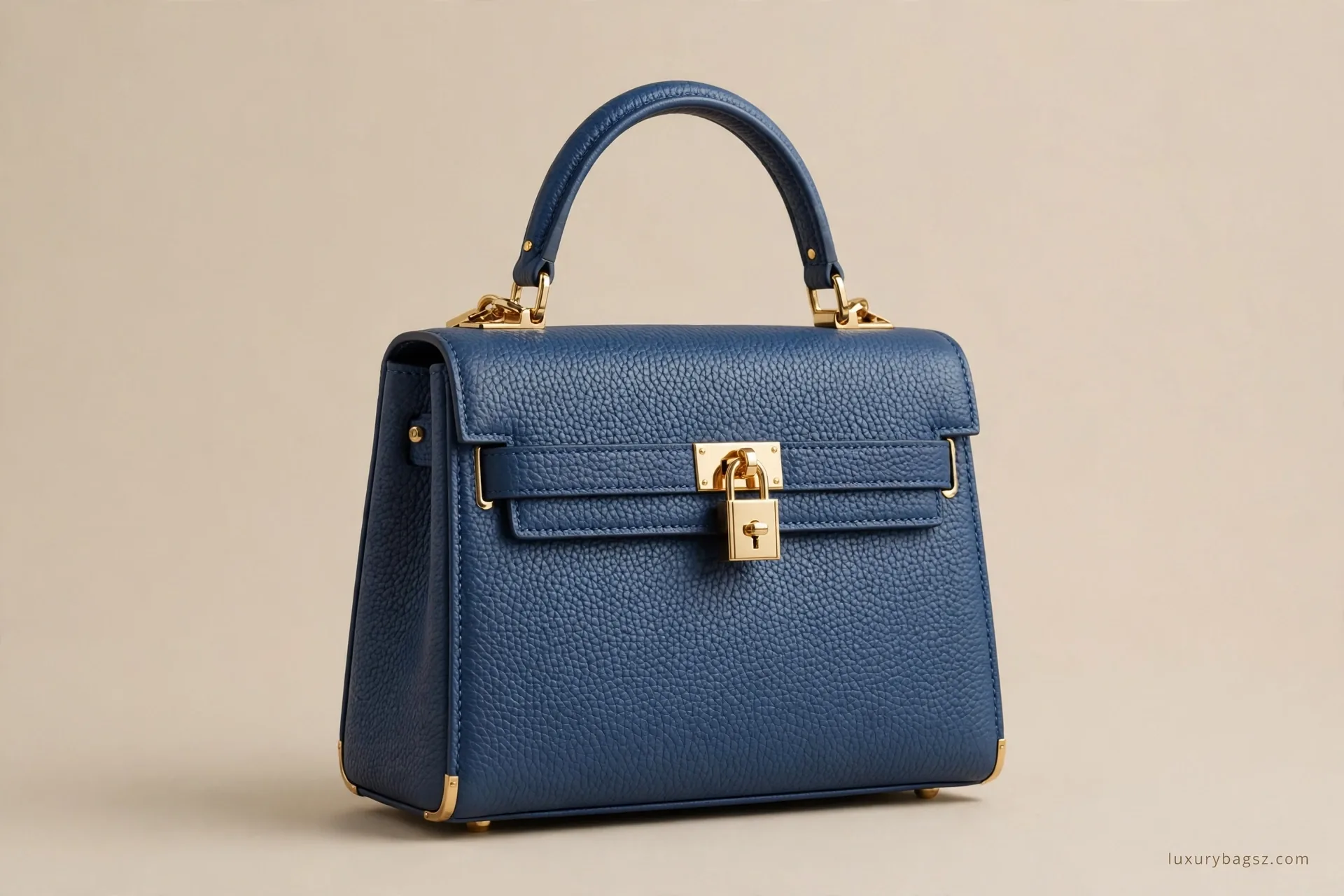
How to Store a Hermès Kelly Bag: Sellier vs Retourne, Upright vs Flat
Storing a Kelly So It Keeps Its Shape
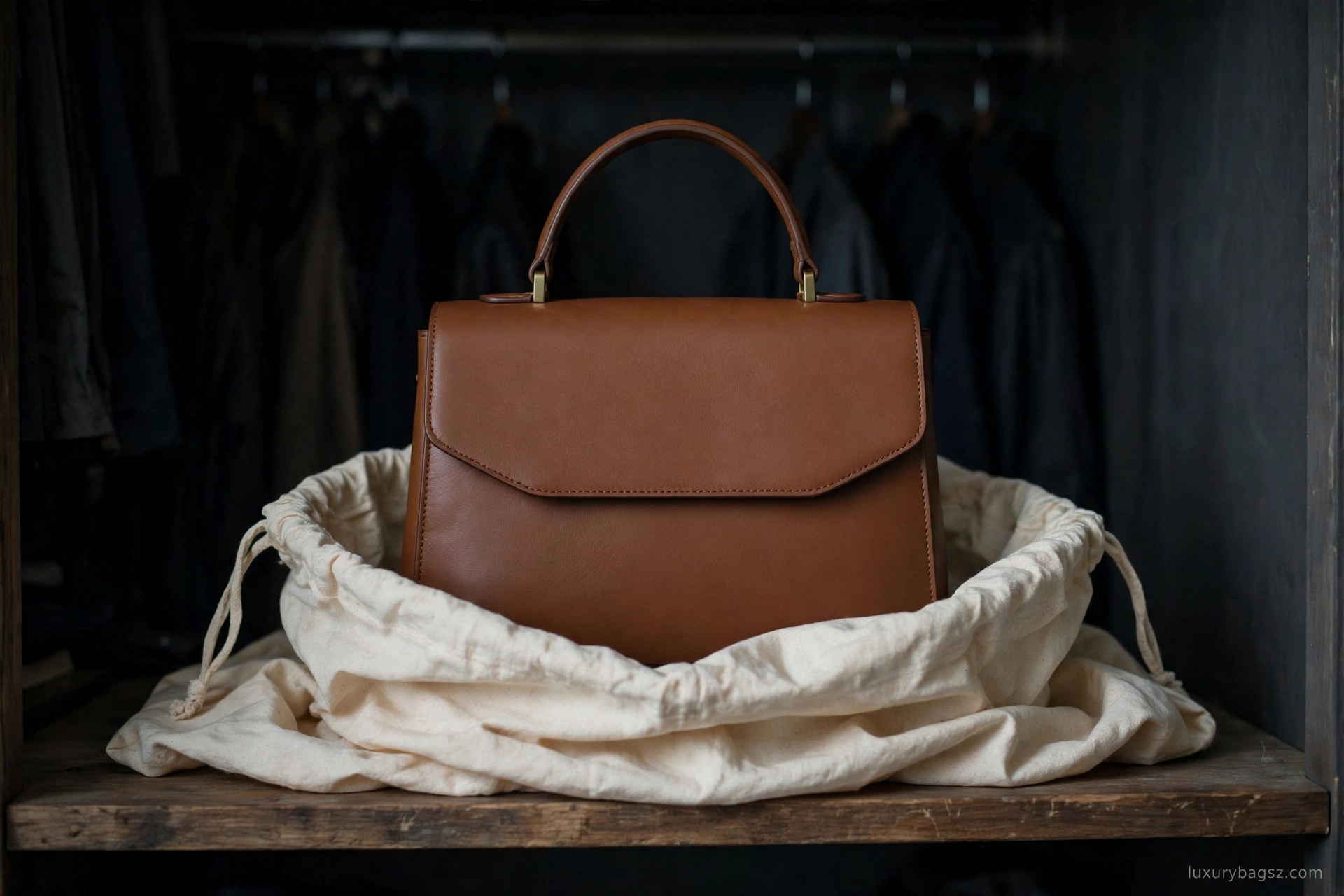
Empty the bag fully, wipe it with a soft dry cloth, then gently fill the interior with acid-free tissue to support its form. Fasten the straps loosely, take off the lock, keys and charms, and slip it into its cotton dust bag, left slightly open so air can circulate.
Keep it on its own shelf somewhere cool, dark and ventilated, aiming for steady humidity near 40 to 55 per cent. A structured Sellier usually stands upright with support inside, while a soft, heavy Retourne often rests better flat on its back or in its box.
How to store a Hermès Kelly bag is not a question with one tidy answer, and that is why so many guides contradict each other. One guide says always store it upright, never flat. Another says flat on its back is best for a soft Kelly. Both can be right, for different bags, and both can be wrong if you apply them to the wrong construction.
A Kelly is a structured, hand-stitched bag, and it ages the way you store it. Gravity pulls a soft leather down. Pressure leaves lines where a pocket, a strap, a piece of hardware, or another bag pressed into it. Light fades colour. Heat dries leather. Damp air grows mould. None of that happens in a day. It happens slowly, over months and years, which is why storage feels unimportant until the damage is already visible.
This guide sorts the advice by what actually matters: Sellier or Retourne, which leather, and which size. It compares upright, flat, and in-the-box storage honestly, gives you a step-by-step routine for after every use, and tells you plainly where sources disagree on humidity and position, so you can choose for your exact bag instead of following a rule that was written for someone else’s.
Key Takeaways
- There is no single best position for every Kelly. Sellier and structured leathers usually do best upright with internal support. Soft Retourne Kellys in heavy leathers often do better flat on their back, or in the box on the original pillow.
- Never hang a Kelly by its handle, never stack bags on top of each other, and never store a Kelly upright with no support inside it.
- Stuff lightly, never tightly. Acid-free tissue or a soft, flexible insert holds the shape. Newspaper, bubble wrap, and rigid shapers can cause ink transfer, trapped moisture, or pressure lines.
- Use the original cotton dust bag, left slightly open for airflow. Never seal a Kelly in plastic or an airtight container.
- Keep it cool, dark, and ventilated, away from sunlight, radiators, and windows. Aim for stable humidity around 40–55%, and avoid big swings.
- Before storage, remove charms and the cadenas lock, fasten the straps loosely, and keep hardware from pressing directly into leather.
- Take the bag out, air it, and inspect it regularly. A bag left untouched for a year is not being preserved. It is being neglected.
Storage is where I see good Kellys quietly ruined. When a Kelly comes off a shelf for me to examine, I can usually tell within seconds how it has been kept: a Retourne slumped without support, straps fastened tight enough to mark the leather, a lock left swinging against the flap. My own habit follows this guide — empty the bag, support it with acid-free tissue, fasten the straps loosely, remove the hardware, and give it air inside its dust bag. After examining more than 500 bags, I can promise that careful storage preserves more value than any cleaning product ever sold. Storage is only half of it: our Birkin and Kelly care guide covers the in-use maintenance that goes with careful storage.
To the Point Answer
If you only have a minute, do this:
- Empty the bag completely and wipe it with a soft, dry cloth.
- Stuff it lightly with acid-free tissue, just enough to hold its shape, not enough to stretch it.
- Fasten the straps loosely, handles upright, and remove the lock, keys, and any charms.
- Put it in its cotton dust bag, dust bag slightly open, on its own shelf.
- Store it in a cool, dark, ventilated spot, away from sun and heat, and choose the position that fits its construction: upright with support for a structured Sellier, flat on its back or in the box for a soft, heavy Retourne.
That routine covers most of the damage storage can cause. The rest of this guide explains why each step matters, and what to change for your leather and size.
Upright vs Flat vs In the Box, Compared
This is the section where guides disagree, so here is the comparison in full, with the trade-off for each method.

Upright, on a shelf, in its dust bag
- Best for: small, light, structured bags, especially Sellier in Epsom or Box.
- Why it works: no pressure on the front or back interior pockets, so fewer pressure lines on the panels. The bag keeps the shape it was designed to hold.
- Risk: gravity. A heavy or soft bag stored upright without internal support will slouch over time. The heavier the leather, and the softer the construction, the faster this happens. One collector guide cites a 10-year-old Clemence Kelly stored upright without support that collapsed structurally over the years. That is an extreme example, but it shows the direction of travel.
- Rule: upright only with support inside. If the bag cannot hold its own shape upright, upright is the wrong choice for it.
Flat on its back, in its dust bag
- Best for: larger bags, Retourne styles, and heavier leathers such as Clemence and Togo, where upright storage encourages slouch.
- Why it works: weight is spread evenly, so the bag does not sag under its own weight.
- Risk: pressure on the interior back pocket. That pocket can press an impression into the back panel over time, and this shows more in lighter, softer leathers than in thick, heavy ones. Protect the back pocket with a soft layer of tissue, and do not put anything on top of the bag.
- Rule: flat is not the same as stacked. Flat means one bag, on its own, on a flat, padded surface, with nothing on top of it.
In the original orange box, on the original pillow
- Best for: long-term storage, and for bags you do not use often, provided the box is stored correctly.
- Why it works: the original pillow supports the bag at a gentle angle, so there is little direct pressure on either interior pocket, and the box protects against dust, light, and accidental knocks. Keeping the box also helps resale value.
- Risk: trapped air. A closed box in a damp or warm spot can trap moisture. That is why several guides say to remove the lid, or leave it ajar, for airflow. A box is not a sealed vault. It is a breathable cover, and it only works if air can move.
- Rule: bag on its pillow, lightly stuffed or with a soft insert, dust bag on, box lid off or ajar, box away from sun and heat, and the bag taken out regularly for airing and inspection.
No method works if the bag is overstuffed, if hardware is pressing into leather, or if the room is damp, hot, or sunlit. Position is only one part of storage. The rest of this guide covers the other parts.

Sellier vs Retourne Storage
Sellier and Retourne are not just style names. They are different constructions, and they fail in different ways in storage.
Sellier storage
Sellier means the stitching is on the outside, the edges are sharp, and the bag is rigid. It is designed to stand up, and it usually does, if it is supported.
- Store upright, on its own shelf, with a soft insert or light tissue inside.
- Keep the edges protected. Do not let another bag, a box edge, or a shelf divider press into a sharp Sellier corner.
- Sellier is often made in Epsom or Box, which hold shape well but can show pressure lines clearly. Avoid anything rigid pressing against a panel.
- If a Sellier starts to lean or slouch in storage, that is a warning. Check the insert, check the shelf, and do not leave it leaning against something else to prop it up, because that creates a new pressure point.
Retourne storage
Retourne means the bag was turned inside out during making, so you see piping instead of external stitching, and the bag is softer and rounder. It is often made in Togo, Clemence, or Chevre.
- Flat on its back, or in the box on the pillow, is often safer than upright, especially for larger or heavier Retourne Kellys.
- If you do store a Retourne upright, it must be well supported inside, and you should check it more often for slouch.
- Retourne leather is softer, so it is more forgiving of a small pressure mark in the short term, and less forgiving of long-term sag. Do not mistake softness for toughness. A soft bag still needs support.
- Protect the piping. Do not fold a Retourne bag, do not squash it into a tight shelf space, and do not let a strap or handle press a line into the piping for months.
In short: Sellier, think upright and protected edges. Retourne, think supported and spread weight, and check for slouch early.

Step by Step: Store a Kelly After Use
Use this routine every time you put a Kelly away, whether for a week or for a season.
Step 1: Empty it completely.
Take out everything, including small items in the interior pocket. Crumbs, receipts, makeup, and pens can stain, attract pests, or press marks into the lining over time. Check the interior pocket and the back zip pocket too.
Step 2: Wipe it down.
Use a soft, dry, lint-free cloth. Dust the surface, the seams, and around the hardware. If the bag got wet, blot gently with a dry cloth and let it air dry naturally in a cool, dry place before storage. Never rub wet leather, and never use heat to dry it.
Step 3: Stuff it lightly.
Use acid-free tissue paper, or a soft, flexible bag insert made for the Kelly size. Fill just enough to hold the shape: the sides should not bulge, the flap should close naturally, and the leather should not feel stretched.
- Do not use newspaper. Ink can transfer, especially to light leather and lining.
- Do not use bubble wrap. It traps moisture and heat against the leather.
- Do not use a rigid shaper, felt, or a hard insert that presses lines into the panels. If an insert is so tight you have to force it in, it is too tight.
- Do not overstuff. Overstuffing stretches leather, strains seams, and can distort the shape more than no stuffing at all.
Step 4: Handle the hardware, straps, and lock.
- Handles upright, not folded flat under the bag and not hanging over a hook.
- Fasten the sangle straps loosely, so the flap holds its shape without the straps pressing hard lines into the leather.
- Remove the cadenas padlock, keys, clochette, and any charms. Store them separately in a soft pouch, not loose inside the bag where they can scratch or press into the lining.
- If hardware must touch leather, put a soft cloth between them. Never wrap hardware tightly in plastic, which traps moisture against metal and leather.
Step 5: Dust bag on, slightly open.
Put the bag in its original cotton dust bag. Leave the dust bag slightly open, or at least not sealed tight, so air can move. If you do not have the original dust bag, use a clean cotton pillowcase in a neutral colour, not a coloured cloth that could transfer dye.

Step 6: Place it on its own shelf.
Give the Kelly its own space. The same shelf discipline applies to the tiny Kelly Doll, whose collectors store each doll upright in its dust bag. Do not stack another bag on top of it, do not wedge it between heavy boxes, and do not store it on a wire shelf that can leave marks. A solid wood or padded shelf is best. Keep it away from direct sunlight, windows, radiators, and heating vents.
Step 7: If using the box, lid off or ajar.
If you store the bag in its original box, rest it on the original pillow, dust bag on, and leave the lid off or slightly ajar for airflow. Store the box itself away from sun and heat, and do not stack heavy boxes on top of it.

By Leather and Size
Different leathers age differently in storage, so the same shelf can be right for one Kelly and wrong for another.
Epsom
Light, stiff, with a pressed cross-hatch grain. Holds shape well, which makes upright storage easier. Shows pressure lines clearly, so avoid rigid inserts and anything pressing into a panel. Keep out of direct sun, which can fade the pressed grain’s colour unevenly.
Togo
Matte, finely pebbled, soft but structured. A good all-rounder for storage. Upright with support works for smaller sizes. Larger Togo Kellys, especially Retourne, benefit from flat or in-box storage to prevent gradual slouch.
Clemence
Soft, heavier, with a larger grain, and the leather most prone to slouching. This is the leather behind the warning about upright storage without support. For Clemence, especially in Kelly 32 or 35, flat on the back or in the box is often the safer long-term choice. Check it more often than a structured leather.
Box calf
Smooth, glossy calfskin, often used for Sellier. Holds shape well, but shows scratches, pressure marks, and colour change clearly. Store upright with soft support, protect the edges, and keep hardware and other bags well away from the surface.
Chevre
Goatskin, light, with a fine grain. Soft and supple, but not heavy, so upright with support usually works. Protect it from damp, which can dull the grain, and from colour transfer from dark clothing or other bags stored touching it.
Swift
Soft, smooth, fine-grained calfskin. Similar to Chevre for storage: upright with support, light stuffing, and protection from pressure and colour transfer.
Exotic leathers: crocodile, alligator, ostrich, lizard
Exotics need the most stable conditions. Keep them in a climate-controlled spot if you can, away from sun and damp, in a cotton dust bag, never in plastic. Do not condition exotic leather with a product made for smooth calfskin unless it is made for that exotic, and do not try to fix a lifted scale or a dry patch at home. For exotics, the cost of a professional opinion is small compared to the cost of a mistake.
By size
- Mini Kelly 20: small and structured, usually Sellier. Upright storage is easy, but the small size makes it tempting to wedge it into a tight space. Give it its own space, even though it is small.
- Kelly 25 and 28: the classic sizes. Follow the Sellier vs Retourne rule above. These sizes are the easiest to store well, because they are light enough for upright storage if supported, and small enough for in-box storage.
- Kelly 32 and 35: larger and heavier, so gravity matters more. Check for slouch early, consider flat or in-box storage for Retourne versions, and never hang them or store them upright unsupported.
Hardware, Handle, and Straps
Hardware damage in storage is slow, quiet, and often permanent, because it happens where you cannot see it: inside the dust bag, over months.
Handles
Never hang a Kelly by its handle, not on a hook, not on a door, not on a bag hanger for long-term storage. Gravity stretches the handle leather and the stitching at the joins over time. Store handles upright, resting naturally, not folded, bent, or pressed flat under the bag.
Straps
Fasten the sangle straps loosely before storage, so the flap keeps its shape. If straps are left loose and flapping, they can press or rub against the leather. If they are fastened too tightly, they can leave a line. Loose, not tight, is the rule. If your Kelly has a detachable shoulder strap, remove it and store it inside the bag, wrapped in soft tissue, or in a separate dust bag, so its hardware does not press into the bag’s leather.
Lock, keys, and clochette
Remove them for storage. A padlock left hanging on a bag in storage can swing, scratch, and press a mark into the leather or the flap. Store lock, keys, and clochette together in a soft pouch, away from the bag, so their numbers stay together and their metal does not touch leather for months.
Hardware impressions
Gold and palladium hardware can leave impressions in leather if it presses against it for a long time, especially in warm conditions. Put a soft cloth between any hardware and leather that must touch, and check the contact points when you inspect the bag. Hardware can also tarnish in humid storage, so a dry, ventilated spot helps metal as well as leather.

Climate: Light, Heat, and Humidity
Climate is the part of storage most guides mention and few explain well, so here are the numbers, with their disagreements stated plainly.
Light
Direct sunlight is the fastest way to fade and dry a Kelly. Even indirect sunlight through a window, over months, can change colour unevenly, especially on lighter leathers. Bright display lighting has the same effect over time. Store Kellys in a cool, dark spot, in a dust bag, away from windows and skylights. A closet is usually better than an open shelf near a window.
Heat
Heat dries leather, makes it stiff, and can cause cracking. Do not store a Kelly near a radiator, a heating vent, a hot car, or an attic that gets hot in summer. A room-temperature closet, roughly 15–24°C (60–75°F), is the range most general guides give. The key word is stable. A bag that swings between hot and cold suffers more than a bag kept at a steady, slightly warm temperature.
Humidity
This is where guides disagree, and the disagreement matters, so here it is in full:
- Rome Station and The Relux give 40–50% relative humidity as ideal for leather.
- General luxury guides and Chubb give 45–55%.
- One Rome Station packaging guide gives 30–40%, but that is for packaging materials, not for leather, and it should not be applied to a bag.
The draft’s position: aim for stable humidity around 40–55%, and avoid big swings. Too dry, and leather becomes brittle and cracks. Too humid, and leather grows mould and mildew, hardware tarnishes, and colours can bleed. A small hygrometer in the closet is cheap and useful, especially in a humid climate.
In a humid climate, or in a damp season, use airflow first: a ventilated closet, a dehumidifier in the room, or air-conditioning, does more than any product inside the bag. Silica gel packets can help in a dust bag, but they must not touch the leather directly, and they must be replaced regularly.
Do not put a liquid moisture absorber inside or next to the bag. If it tips or leaks, the liquid can harden leather permanently. Do not seal a bag in plastic to keep damp out. Plastic traps the damp that is already there, and mould follows.
In a very dry climate, the opposite problem appears: leather dries and stiffens. Do not over-condition to compensate. Condition only occasionally, when the leather genuinely needs it, with a product appropriate for that leather, and let the bag rest after conditioning before storage.
Basements, attics, and bathrooms
Avoid all three for long-term storage. Basements are damp. Attics swing in temperature. Bathrooms swing in both. A stable indoor closet, away from exterior walls that get damp or hot, is a better choice than any of them.

Small Spaces, No Box, and Travel
Not everyone has a walk-in closet and an orange box for every bag. Here is how to store a Kelly well without them.
No original box
You do not need the box to store a Kelly well. A cotton dust bag, light stuffing, its own shelf, and a cool, dark, ventilated spot cover most of it. If you do not have the original dust bag, use a clean cotton pillowcase in a neutral colour. Do not use a coloured or printed cloth, which can transfer dye, and do not use a plastic bag as a substitute dust bag.
No original pillow
If you do not have the original pillow, use acid-free tissue or a soft, flexible insert that fits the Kelly size without forcing. Do not buy a rigid shaper to replace a pillow. A rigid shaper that is too tight is worse than light tissue that is a little loose.
Small shelf space
If space is tight, prioritise in this order: own shelf space over stacking, support inside over a perfect position, and airflow over a closed box. A Kelly squeezed between heavy bags, or stored upright unsupported because there was no room to lay it flat, will suffer more than a Kelly stored flat on a clean shelf with room around it. Do not store a Kelly in a drawer with other items on top of it, and do not store it at the bottom of a pile.
Travel
For short trips, use the dust bag, stuff the bag lightly, and carry it as hand luggage if you can. Do not check a Kelly in loose, do not hang it by its handle on a hook for days, and do not leave it in a hot car. On arrival, empty it, wipe it, and store it properly again. A dust bag in luggage is for protection in transit, not for long-term storage at the destination.
Multiple Kellys
Each Kelly needs its own dust bag and its own shelf space. Do not store two Kellys touching each other, leather to leather, because colour can transfer, especially from dark to light leather, and hardware from one can mark the other. If you must store them close together, keep each one in its own dust bag, with space between them.
Mistakes That Damage a Kelly in Storage
These are the mistakes that show up again and again in collector guides, and they are all avoidable.
- Hanging by the handle. Stretches the handle and the joins.
- Stacking bags. Causes pressure marks, hardware scratches, and flattened shapes.
- Overstuffing. Stretches leather and strains seams. Understuffing a soft bag is also a mistake, because it slouches, but overstuffing is the more common one.
- Rigid inserts and hard shapers. Leave lines that can become permanent, especially in Epsom and Box.
- Plastic bags and airtight boxes. Trap moisture, cause mould, and can make finishes sticky.
- Newspaper stuffing. Ink transfers to lining and light leather.
- Sunlight and heat. Fade colour, dry leather, and cause cracking that cannot be undone.
- Leaving charms, lock, and keys on the bag in storage. They scratch, press, and swing into leather.
- Tight straps. Leave lines across the flap and panels.
- Leaving a bag untouched for a year. Leather stiffens, mould can start unseen, and a small problem becomes a large one before you notice it.
- Conditioning before storage without need. Over-conditioning can soften leather too much, darken it, or leave residue that attracts dust. Condition only when the leather genuinely needs it, and let it rest before storage.
- Storing a wet or dirty bag. Dirt, crumbs, and moisture sealed into a dust bag become stains, smells, and mould. Always empty, wipe, and dry first.
If a Kelly already has a pressure mark, a slouch, or a faded patch from storage, do not try to steam, stretch, or re-shape it at home. Those fixes can make the damage worse. Ask Hermès or a reputable specialist what, if anything, can be done.

Inspection and Rotation Schedule
Storage is not set-and-forget. Use this schedule, and adjust it for your climate. In a humid climate, check more often, not less.
Every use:
Empty, wipe with a dry cloth, check for stains or wet spots, and store properly before the next use. Do not leave a bag full of items between uses.
Monthly:
Take the Kelly out of its dust bag, air it in a cool, dry room for a few hours, and look at it in good light. Check the shape, the handles, the straps, the corners, and the hardware contact points. Refold or replace tissue if it has compressed. Put it back with the dust bag slightly open.
Quarterly:
Do a fuller check. Look inside, including the interior pocket and lining, for mould, musty smell, pests, or colour transfer. Check the dust bag and the shelf for damp or dust. Check silica gel packets if you use them, and replace them if they are saturated. Rotate your collection if you have several bags, so no bag sits in exactly the same position for a year.
Every 6 to 12 months:
Check whether the leather genuinely needs conditioning. Most Kellys do not need conditioning every few months. If the leather feels dry, dull, or stiff, and only then, condition lightly with a product appropriate for that leather, let it rest, and then store it again. If you are unsure about the product, ask a specialist first, especially for exotic leather.
Before a long trip or a long storage period:
Clean, stuff lightly, remove hardware and charms, dust bag on, and note the date you stored it. Set a reminder to air and inspect it within a month, even if you will not use it. A bag stored and forgotten is a bag at risk.

FAQ
Should a Kelly be stored upright or flat?
It depends on construction and leather. Structured Sellier Kellys usually do best upright with internal support. Soft, heavy Retourne Kellys, especially in Clemence, often do better flat on their back or in the box on the pillow. Never hang it, never stack it, and never store it upright with no support.
Can I store a Kelly in its original box or in a plastic bag?
Yes, if the box is stored correctly. Rest the bag on the original pillow, dust bag on, and leave the lid off or ajar for airflow. Store the box away from sun and heat, do not stack heavy boxes on it, and take the bag out regularly for airing and inspection. No. Plastic traps moisture against leather and can cause mould, sticky finishes, and odour. Use a breathable cotton dust bag, left slightly open.
What should I stuff a Kelly with?
Acid-free tissue paper, or a soft, flexible insert made for the Kelly size. Stuff lightly, just enough to hold the shape. Do not use newspaper, bubble wrap, or a rigid shaper.
What humidity is best for a Kelly?
Stable humidity around 40–55% is the range most guides converge on, with different sources giving 40–50% or 45–55%. Avoid big swings, avoid damp basements and bathrooms, and avoid very dry, hot attics. A hygrometer in the closet helps.
How often should I take a Kelly out of storage, and does it need conditioning before long-term storage?
Air and inspect it monthly, do a fuller check quarterly, and rotate your collection every few months. Even a bag you are not using needs air and a look-over. Only if the leather genuinely needs it. Over-conditioning can soften, darken, or leave residue. Clean, dry, and lightly stuffed is usually enough. If the leather feels dry or stiff, condition lightly with an appropriate product, let it rest, and then store it.
Should I remove the lock and charms before storage?
Yes. Remove the cadenas, keys, clochette, and any charms, and store them separately in a soft pouch. Hardware left on a bag in storage can scratch and press marks into leather.
What if my Kelly already slouches or has pressure marks from storage?
Do not try to steam, stretch, or re-shape it at home. Those methods can make the damage worse. Keep storing it correctly to prevent further damage, and ask Hermès or a reputable leather specialist what can be done.
Final Verdict
A Kelly does not need complicated storage. It needs consistent storage: empty, wiped, lightly stuffed, hardware removed, straps loose, dust bag slightly open, its own shelf, cool, dark, and ventilated, in the position that fits its construction.
The mistake is not choosing upright over flat, or flat over in-the-box. The mistake is choosing a position and then ignoring the bag for a year, or stuffing it rigidly, sealing it in plastic, hanging it by its handle, or leaving it in sun and damp. Those are the things that flatten, fade, and mark a Kelly, and they are all avoidable with a routine that takes a few minutes after each use and a quick check each month.
Store it the way it was made to be stored: supported, breathing, and on its own. Then use it. A Kelly that is used, aired, and stored properly will age far better than a Kelly that is sealed away and forgotten.
For storage and cleaning principles on other leather bags, see clean Chanel bags. For how storage and care differ on a vintage bag, see the Cambon bag guide.