How to Clean a Hermès Birkin Bag: The Safe Guide by Leather Type, Stains, and Storage
The Short Answer on Birkin Cleaning
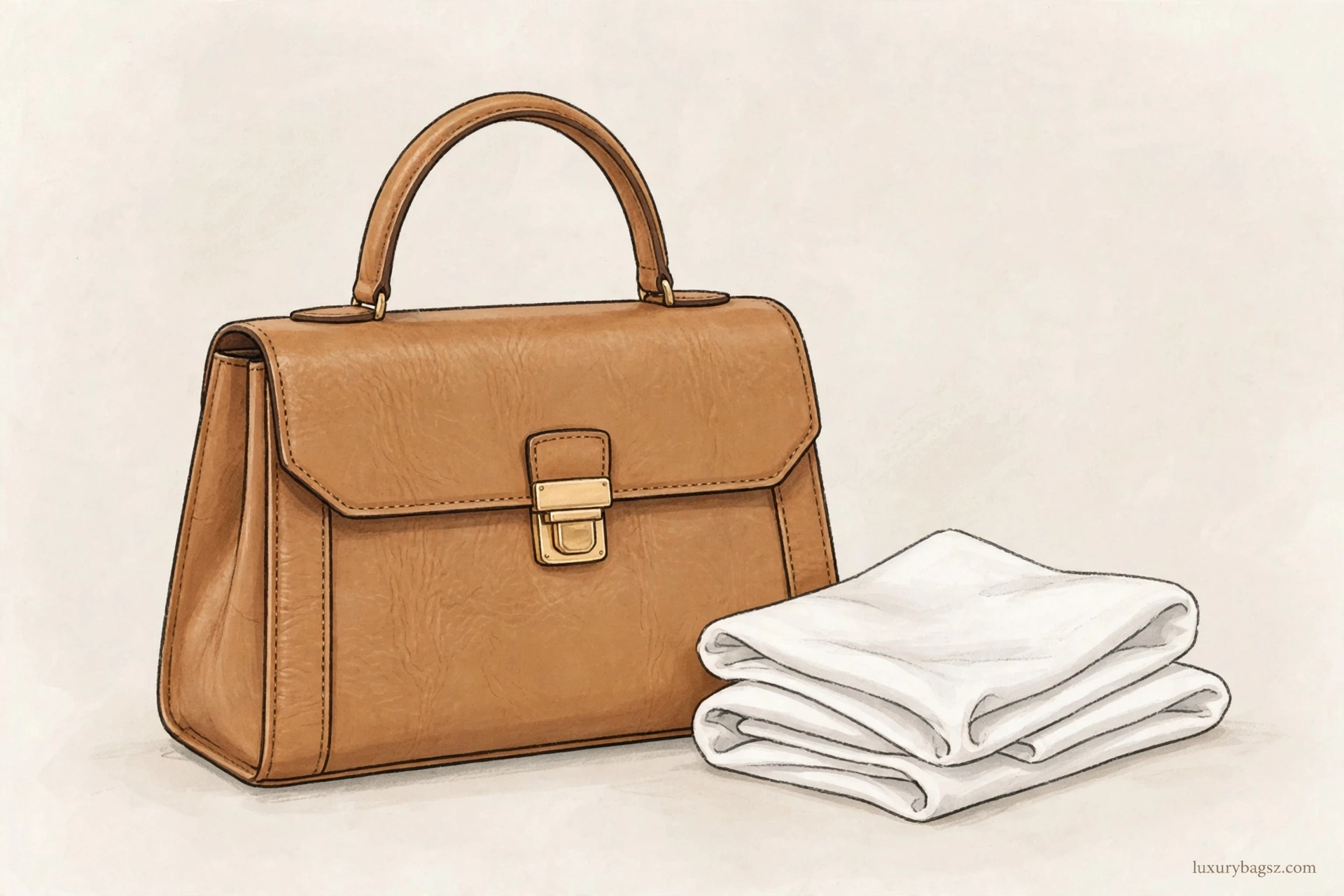
Yes, you can clean a Birkin at home, but only lightly. For most days, that means a soft, dry, white cloth, clean hands, and nothing else.
The rule from Hermès itself is simple: wipe the bag with a dry, fluff-free white cotton cloth after use, then store it away from light, heat, and humidity. It also warns against care products that are not made for Hermès leathers.
That dry wipe is the whole routine for a healthy bag. For the full in-use routine — rotation, rain, handles and hardware — see our Birkin and Kelly care guide. Anything wetter, stronger, or more frequent is an exception, not the habit, and it must match the leather in your hand.
This guide starts there and then gets specific. It covers Togo, Clemence, Epsom, Swift, Box calf, and the leathers that need a professional, so you do not treat a smooth, mark-prone skin the way you treat a tough grained one.
It also states the limits plainly. Some marks fade at home. Some only fade with a professional. Some, like set-in ink, should never be chased harder at home, because the chase does more damage than the mark.
Key Takeaways
- Dry wipe after use with a soft, white, lint-free cloth. That is the safe default for every Birkin leather.
- Never soak, scrub, machine wash, or heat-dry a Birkin. Never use bleach, alcohol, baby wipes, or household cleaners on it.
- Togo and Clemence forgive light handling best. Epsom holds shape well. Swift and Box calf mark easily and need the gentlest hand.
- Blot spills at once, work from the edge inward, and air-dry at room temperature. If a mark stays after drying, stop and get professional advice.
- Exotic skins, suede, and pale, water-sensitive leathers are dry-cloth-only at home. Do not test cleaners on them.
- Store the bag lightly stuffed, upright, in its dust bag, with the straps loose and hardware kept off the leather.
More Birkins are damaged by kindness than by neglect, in my experience. When home care is no longer enough, my designer bag repair and restoration guide explains what the Hermès spa and independent specialists can take on. Owners reach for conditioners, creams and wipes the way they would for a pair of shoes, and I meet the results: darkened handles, softened structure, leather that smells of product instead of leather. My own routine is the dry one this guide leads with — a soft, dry, white cloth after use, clean hands, then straight into proper storage. That is what I do with the bags I own and the hundreds I have examined. Anything wetter or stronger is an exception that must be argued for, leather by leather.
What a Birkin Is Made Of, and Why That Changes Cleaning
A Birkin is not one leather. It is a shape made in many leathers, and each leather reacts differently to water, friction, and cleaner.
If you do not know your leather, find it before you clean anything beyond a dry wipe. The name is usually on the listing, the receipt, or the boutique record for a bag bought new.
Size also matters for handling, though not for the cleaning liquid. A larger bag has more leather to dry evenly, and a heavier bag strains its handles sooner if it is carried wet or overfilled. Our guide to Birkin sizes explains how the sizes compare.
The golden rule is this: the smoother and shinier the leather, the less you should do at home. Grain hides small marks. A smooth surface shows every rub, water spot, and uneven wipe.
The Routine Clean: Dry Wipe, Inside and Out
Start with clean, dry hands. Hand cream, sunscreen, and perfume should be fully dry before you pick the bag up, because handles darken first from hand oils.
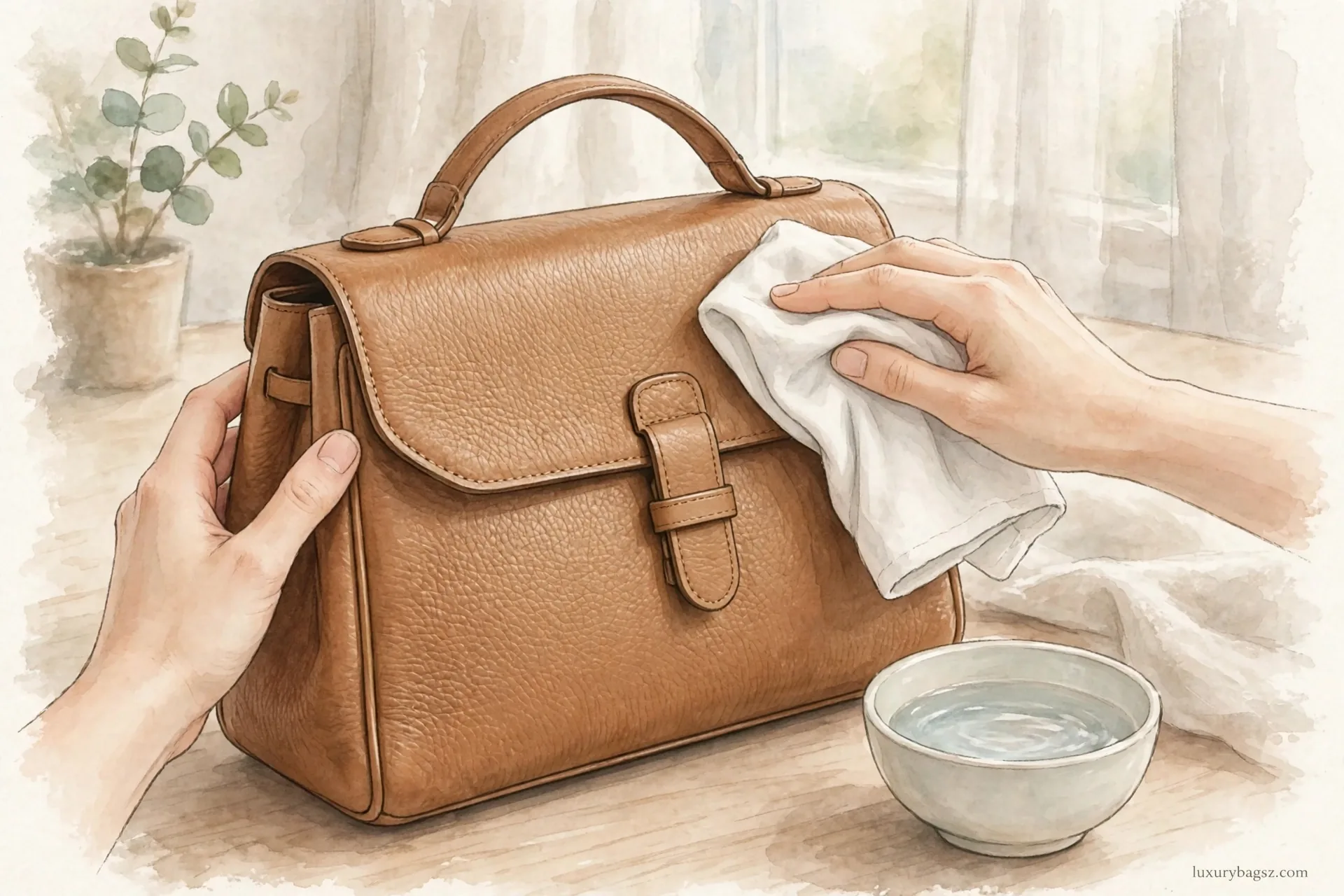
Wipe the outside with a soft, dry, white microfibre or cotton cloth. Use light, even strokes and no pressure. Pay attention to the handles, the flap edge, and the base corners, where dirt and scuffs collect.
Empty the bag and shake it gently upside down over a clean surface. Wipe the lining with a dry cloth, and keep pens, makeup, and liquids in pouches so a leak never reaches the lining directly.
If the bag looks clean after the dry wipe, stop. That is a successful clean. Adding a product to a clean bag does not make it cleaner, and it can change the colour or finish over time.

Cleaning by Leather Type
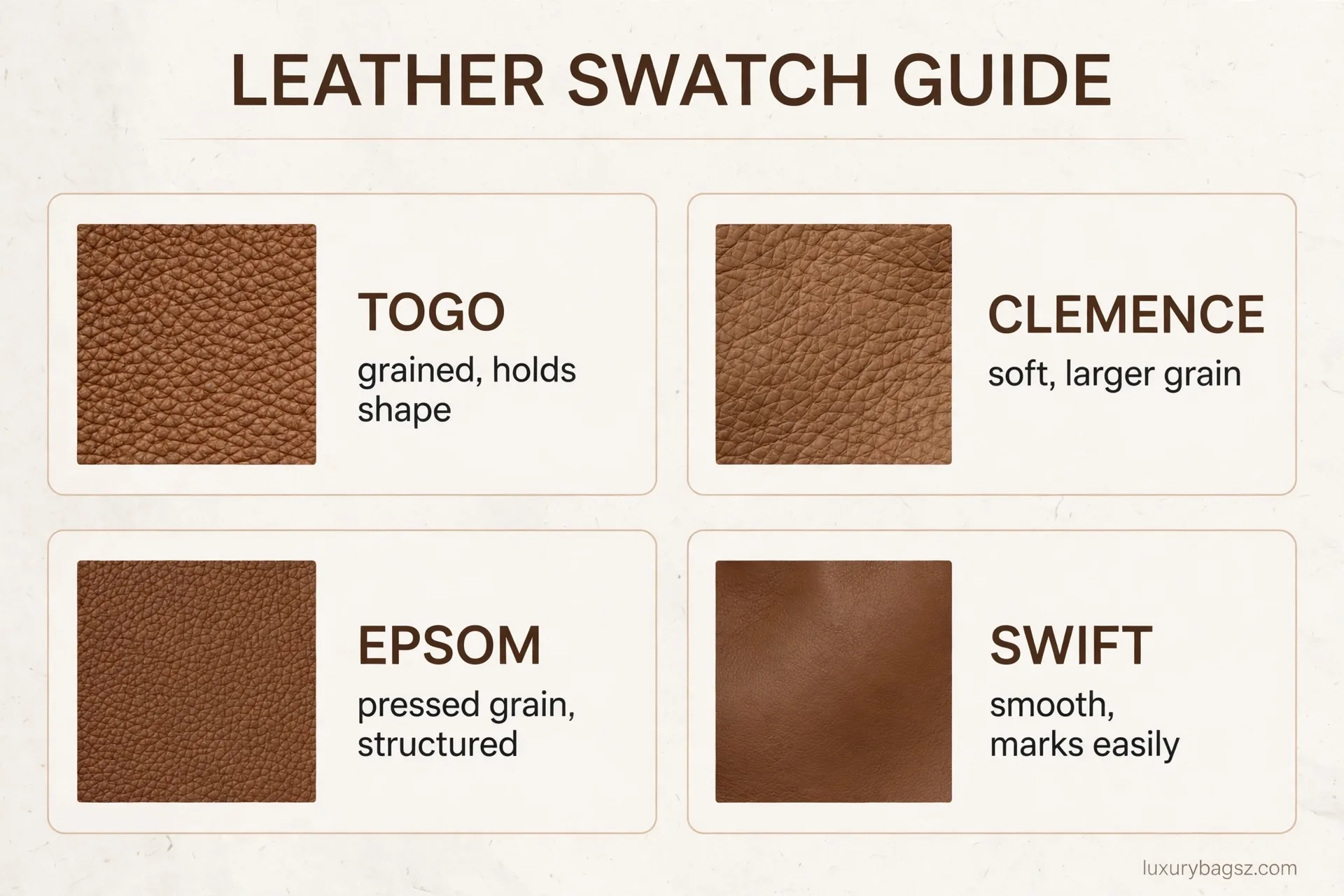
Togo is a grained calfskin with a small, raised pebble grain. It holds its shape well, resists scratches better than smooth leathers, and is the most forgiving Birkin leather at home.
For Togo, the dry wipe is usually enough. For light surface dirt, a barely damp white cloth, wrung until almost dry, may be used on the marked spot only, followed at once by a dry cloth and air-drying.
Clemence, also called Taurillon Clemence, is a softer, slouchier grained calfskin with a larger, flatter grain than Togo. It is scratch-resistant, but it loses shape more easily, so handle it with support under the base.
Clean Clemence the same way as Togo, but be extra careful about pressure and water. Do not press the grain flat, and never let one spot stay wetter than the rest, or a water mark may show as it dries.
Epsom is an embossed leather: its fine grain is pressed into the hide rather than natural. It is light, rigid, scratch-resistant, and holds a crisp, structured shape.
Epsom is easy to wipe clean, and a barely damp cloth usually lifts surface dirt. Its pressed surface still dislikes soaking, harsh cleaners, and heat, so the same minimal-moisture rule applies.
Swift is a smooth, soft, fine-grained leather that takes colour vividly. It scratches more easily than grained leathers, and light scratches can sometimes be buffed softly, but water spots show readily.
For Swift, stay with the dry cloth wherever possible. If you must use moisture, use the least amount, on the smallest spot, and expect a professional to handle anything beyond light surface dirt.
Box calf is a smooth, shiny, structured leather and one of the most delicate Birkin leathers. It marks quickly, shows scratches, and is prone to water stains, so it should be carried in dry weather when possible.
For Box calf, home cleaning is a dry wipe only in practice. Do not test a cleaner on it, and do not try to even out a water mark at home, as that usually spreads the mark.
Conditioner, Cleaner, and When to Use Neither
Sources disagree on conditioner, so here is the honest split. Some care guides say a mild leather cleanser and conditioner help when leather feels dry. Hermès itself advises against products not made for its leathers.
The safe way through that disagreement is narrow. Use a product only if it is made for fine leather bags, only after a patch test on a hidden spot, and only if the bag genuinely needs it.
Patch test like this: put a tiny amount on a white cloth, touch it to a hidden spot such as under a flap, wait until fully dry, and check for darkening, stickiness, or colour change. If anything changes, do not use it.
Apply cleaner or conditioner to the cloth, never straight onto the bag. Work in light circles, wipe off all residue with a clean cloth, and let the bag air-dry fully before storing it.
For general conditioner technique, our guide to Saphir Renovateur explains the thin-coat, buff-off method. Do not assume every product in that guide suits a Birkin: the patch test and the product label decide.
Suede Birkin trims and Veau Doblis suede need a different tool entirely. Use a dry suede brush only, with light strokes in one direction, and no water or leather cream. Our suede brush guide covers the dry-first method.
Stain First Aid: Water, Rain, Oil, and Dye Transfer
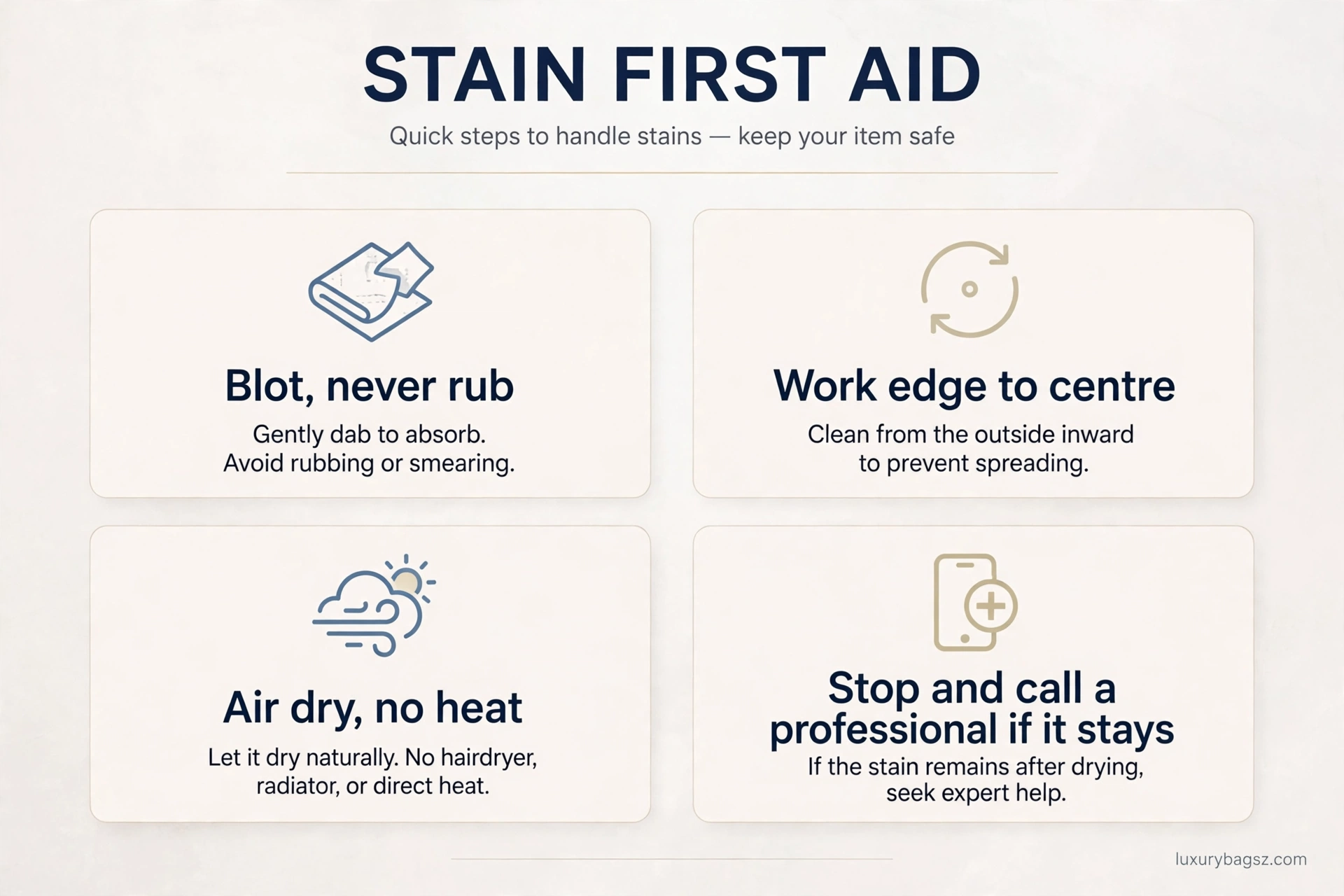
Act fast, but gently. Speed matters more than strength, and rubbing is the mistake that turns a small mark into a large one.
For rain or a splash, blot at once with a clean, dry, white cloth. Work from the outer edge of the wet spot inward, so the mark does not spread, then stuff the bag lightly and air-dry it at room temperature.
Never use a hairdryer, radiator, or direct sun to dry a Birkin. Heat can crack, shrink, or stiffen leather, and uneven drying can leave a ring where the wet edge sat.
For oil or grease, dab with a dry cloth and do not rub. Do not add water, soap, or powder on a first attempt for a Birkin, because each can set the mark or change the finish in a way a professional cannot undo.
For dye transfer, such as dark denim onto pale leather, stop after a dry wipe. Dye transfer into pale leather is one of the hardest marks to fix, and home scrubbing usually drives the dye deeper.
For makeup, blot gently and leave the rest to a professional. Makeup contains oils and pigments that bond with leather, and a strong cleaner often removes colour along with the makeup.
Ink, Scratches, Corners, and Hardware
Ink is the mark to fear most. Do not rub ink, do not test household removers on it, and do not keep trying new products on the same spot.
On grained Togo or Clemence, a professional may have options, but even there, success is not promised. On Box calf, book a professional at once and keep the bag dry until then.
Light surface scratches on Swift sometimes soften with a very gentle buff using a dry cloth. If the scratch is deep, coloured, or through the finish, leave it alone, as buffing will only widen the pale line.
Base corners scuff from being set down on rough surfaces. Wipe them dry, avoid touching up colour at home, and carry the bag rather than resting it on stone, concrete, or wet ground.
Hardware needs only a dry, soft cloth. Wipe fingerprints off after use, keep the lock and keys in the clochette so they cannot press into the leather, and never use metal polish or abrasive cloths.
What to Never Use on a Birkin
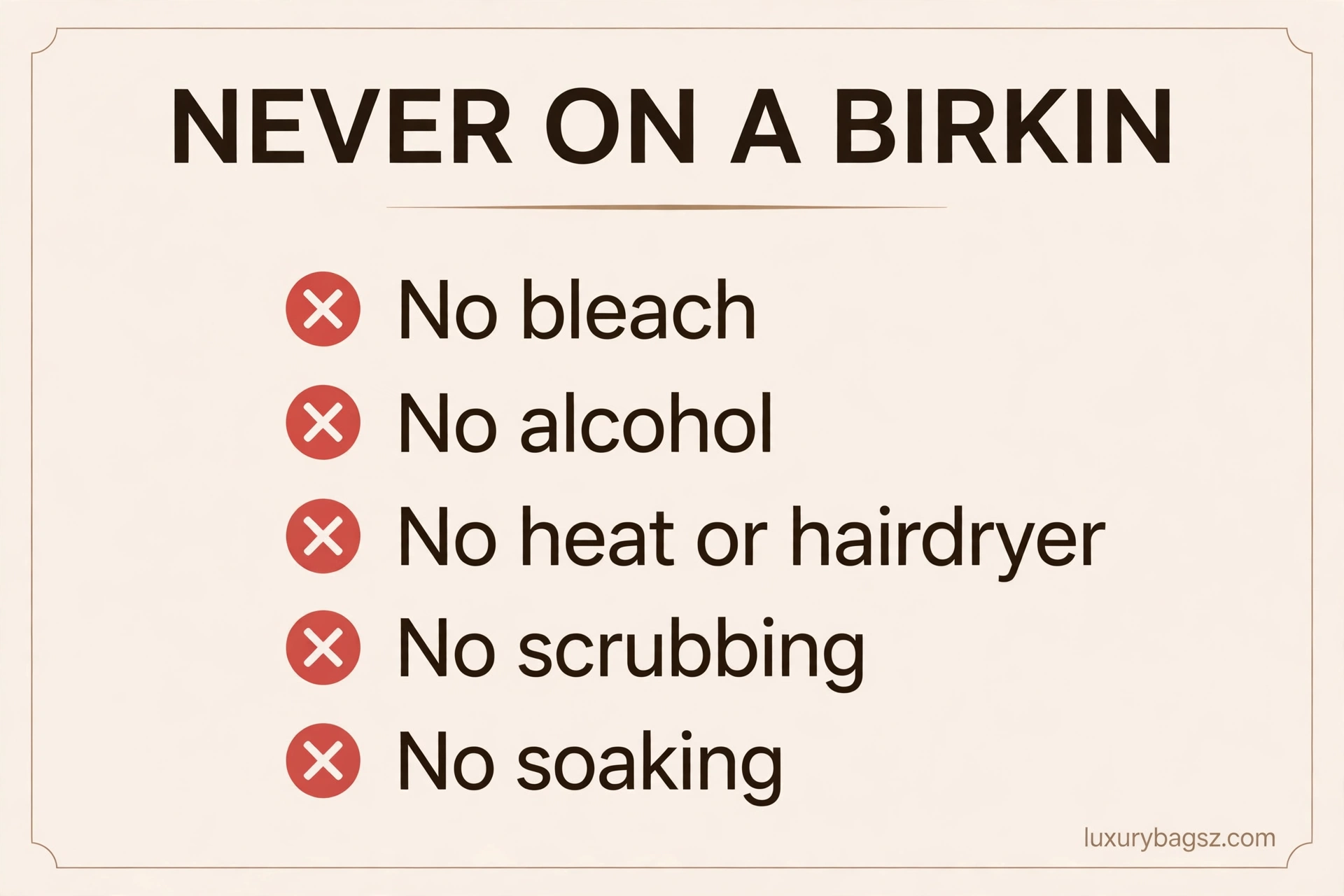
Never use bleach, alcohol, acetone, or any solvent. Never use baby wipes, makeup wipes, or household sprays, even if they feel gentle on skin.
Never use saddle soap, mink oil, or a darkening home remedy on a Birkin unless a Hermès professional tells you to. These products strip natural oils, darken pale leather unevenly, and can leave a sticky or rubbery feel.
Never soak the bag, hold it under running water, or machine wash it. Never steam it, iron near it, or dry it with heat of any kind.
Never scrub with a brush, sponge, eraser, or rough cloth. Friction frays grain, lifts colour, and spreads stains, and on smooth leather it leaves a dull patch that stands out.
Never use a coloured cloth. Dye from a coloured cloth can transfer onto pale leather, especially when the cloth is even slightly damp, so white cloths are the rule.
Exotic Skins and Special Leathers: Dry Cloth Only
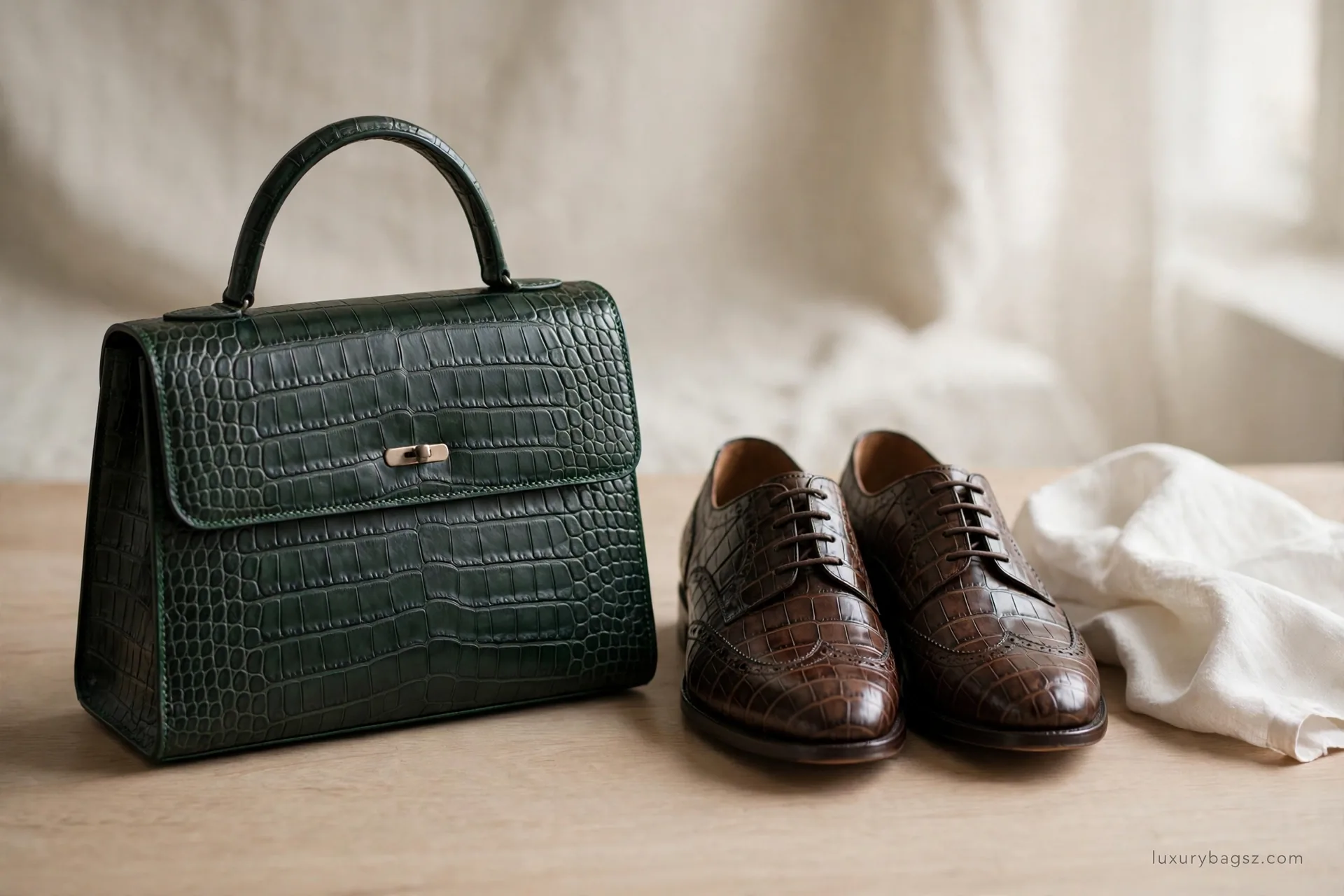
Crocodile and alligator Birkins should only ever be wiped with a dry cloth at home. Their scales dry, crack, and lift if they are wetted, oiled, or cleaned with a general leather product.
Ostrich, with its quill bumps, wears well but is sensitive to oils and colour change. Keep oils, hand cream, and cleaners away from it, and let a specialist handle any mark.
Lizard and other exotic skins follow the same rule: no water, no cleaner, no conditioner at home. If an exotic Birkin is stained or dull, that is a professional job, not a home experiment.
Matte finishes deserve the same caution as exotics. A matte surface shows uneven product application at once, and a shiny patch from conditioner cannot be buffed back to matte at home.
This caution is also a value point. A Birkin in original, well-kept condition holds its standing far better than one with a home colour touch-up, and our guide to Birkin cost shows why condition matters so much to buyers.
Storage That Keeps a Clean Bag Clean
Empty the bag before storing it. Remove everything, wipe it dry, and check the lining and pockets for pens or makeup that could leak later.
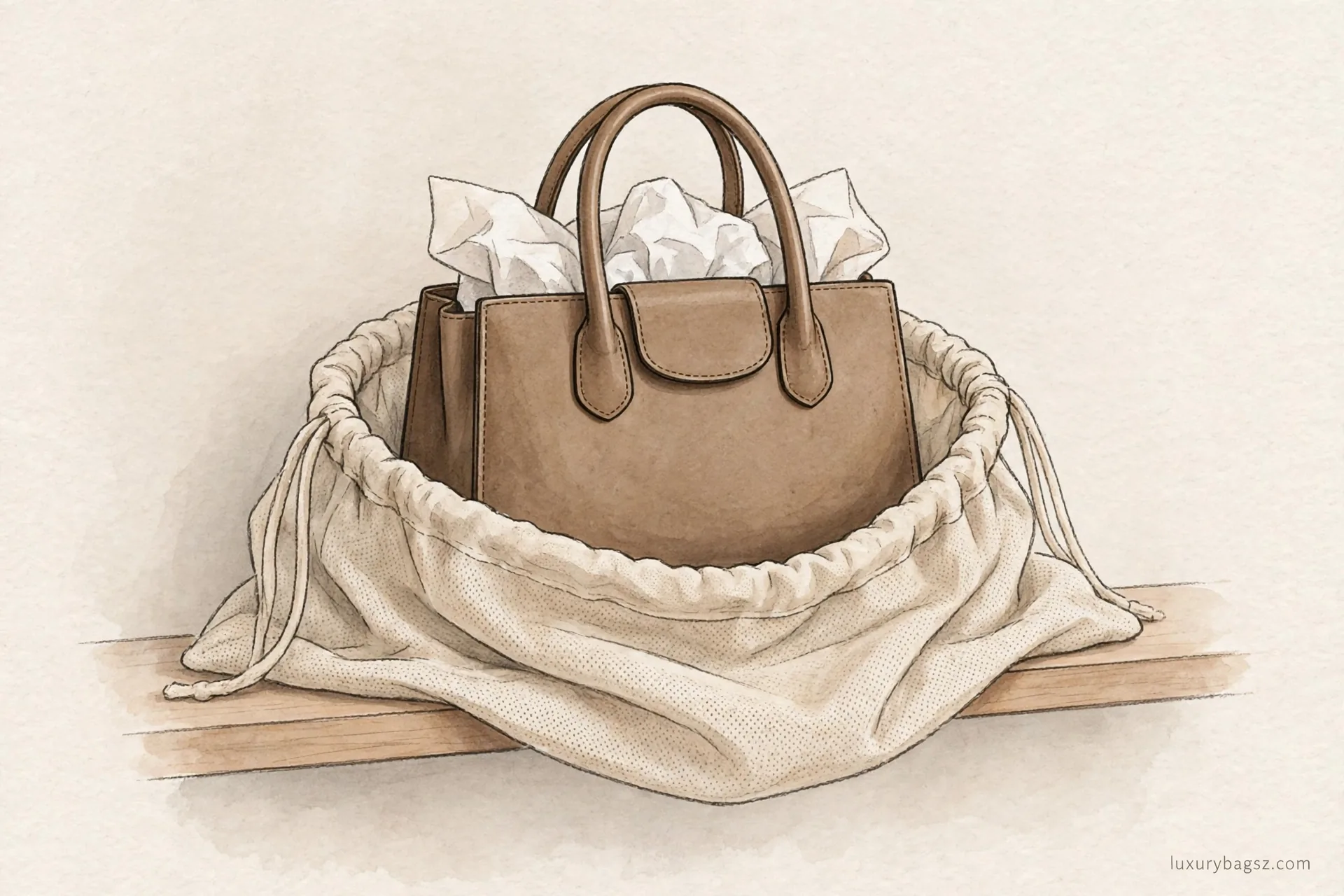
Stuff the bag lightly with acid-free tissue or a soft bag pillow, just enough to hold its shape. Overstuffing stretches the sides and strains the stitching, while no stuffing lets the bag slump.
Store the bag upright on a shelf in a cool, dry place, inside its dust bag. Keep it away from direct sunlight, radiators, damp walls, and sealed plastic boxes, which trap moisture.
Rest the flap naturally with the straps loose. Do not store the bag with the straps cinched tight or the turn-lock under tension, as that presses marks into the front leather over time.
Do not hang a Birkin by its handles for long periods. Hanging stretches the handles and distorts their shape, and it also lets dust settle unevenly on one side.
Professional Cleaning: When to Book It, and What to Ask
Book a professional clean if a mark stays after the bag is fully dry, if ink, dye transfer, or grease is involved, or if the leather feels sticky, dry, or cracked.
Book it sooner for daily-carry bags. Care guides suggest about every 12 months for occasional use, and about every 6 months for an everyday bag, with handles and corners checked at the same visit.
Ask what the cleaner will do before you hand the bag over. Ask whether they have worked on your exact leather, what products they use, and whether they will patch test first.
Before any professional work, photograph the bag in good light, front, back, base, handles, and the marked spot. Those photos protect you if a mark changes during treatment.
If you are buying pre-owned, cleaning history matters too. A bag that has been heavily recoloured or over-conditioned may look good in photos and wear badly, so our fake Birkin checks are worth reading alongside any seller photos.
For storage after a professional clean, the same rules apply as for a Kelly: upright, lightly stuffed, dust bag on, and no stacking. Our guide on how to store a Kelly explains the upright-versus-flat choice in detail.
Frequently Asked Questions
Can I clean my Birkin bag at home?
Yes, lightly. A dry wipe with a soft, white cloth after use is safe for every Birkin leather, and a barely damp cloth may help light dirt on grained leathers like Togo and Epsom.
Can I use water on a Birkin?
Only a tiny amount, on a cloth, on the marked spot, and only on leathers that tolerate it. Blot spills at once, air-dry at room temperature, and never soak, rinse, or heat-dry the bag.
How do I clean Togo leather on a Birkin?
Wipe it dry after use. For light dirt, use a barely damp white cloth on the spot, then a dry cloth, then air-dry. Togo forgives light handling, but it still dislikes soaking and scrubbing.
How do I clean Clemence leather on a Birkin?
Treat it like Togo, but more gently. Clemence is softer and slouchier, so support the base, use light pressure, and keep moisture even and minimal to avoid water marks.
How do I clean Epsom leather on a Birkin?
Wipe it dry, and use a barely damp cloth for surface dirt. Epsom is scratch-resistant and holds shape well, but harsh cleaners, soaking, and heat will still damage it.
How do I clean Swift leather on a Birkin?
Stay with a dry cloth wherever possible. Swift is smooth and marks easily, so use moisture only in the smallest amount on the smallest spot, and leave deeper marks to a professional.
Can I use leather conditioner on my Birkin?
Only rarely, only a product made for fine leather bags, and only after a patch test on a hidden spot. Hermès advises against products not made for its leathers, so when in doubt, skip it.
What should I do if my Birkin gets wet in the rain?
Blot it at once with a dry, white cloth, working edge to centre. Stuff it lightly, air-dry it at room temperature away from sun and heat, and get advice if a mark stays after drying.
How do I remove ink from a Birkin?
Do not try at home. Do not rub ink or test removers on it. Keep the bag dry, photograph the mark, and book a professional who has worked on your exact leather.
How often should a Birkin be professionally cleaned?
About every 12 months for occasional use, and about every 6 months for a daily bag, is the guide most care specialists give. Book sooner if handles darken, corners scuff, or a stain will not lift.
My Birkin Cleaning Rule: Less Than You Think
A clean Birkin is mostly a well-handled Birkin. Dry hands, a dry white cloth, light stuffing, and a cool, dark shelf do more for the bag than any bottle on a shelf.
Learn your leather before you add moisture or a product. Togo and Epsom forgive a careful damp wipe, Clemence needs a softer hand, and Swift, Box calf, and exotics are best left to a dry cloth and a professional.
When a mark stays after drying, stop. That is not a failure of home care, it is the point where home care ends and professional care begins, and respecting that line is what keeps a Birkin beautiful for decades.
If you are still learning the Birkin, start with what a Birkin is before you buy or clean one, and keep this guide beside the bag for the day a spill, a scuff, or a rainy walk tests it.
Dry hands and a dry cloth sound too simple to be the whole answer, but they are most of it. The bags in my own collection that stay pristine are the ones touched least and stored best — the routine in this guide is the one I use on my own preloved bags.