

How to Use the Louis Vuitton Mini Care Set: A Small-Kit Guide for Canvas, Leather, and Vachetta
The Short Answer on a Mini Care Set
A mini care set is a small-format kit for a small job. Used right, it keeps a Louis Vuitton bag clean with very little product, a soft cloth, and a patch test first.
Used wrong, it does the opposite. The same cleaner that suits coated canvas can stain untreated vachetta, and a conditioner meant for finished leather can darken pale trim unevenly.
So start with an honest gap, stated plainly. No official Louis Vuitton mini care set with a published contents list could be verified from sources opened for this guide.
The only listing found under that exact name was a third-party "Louis Vuitton Mini Care Set – 6 Items" listing, with no contents list shown in the sources available. No price for a verified official set is given here, because none could be verified.
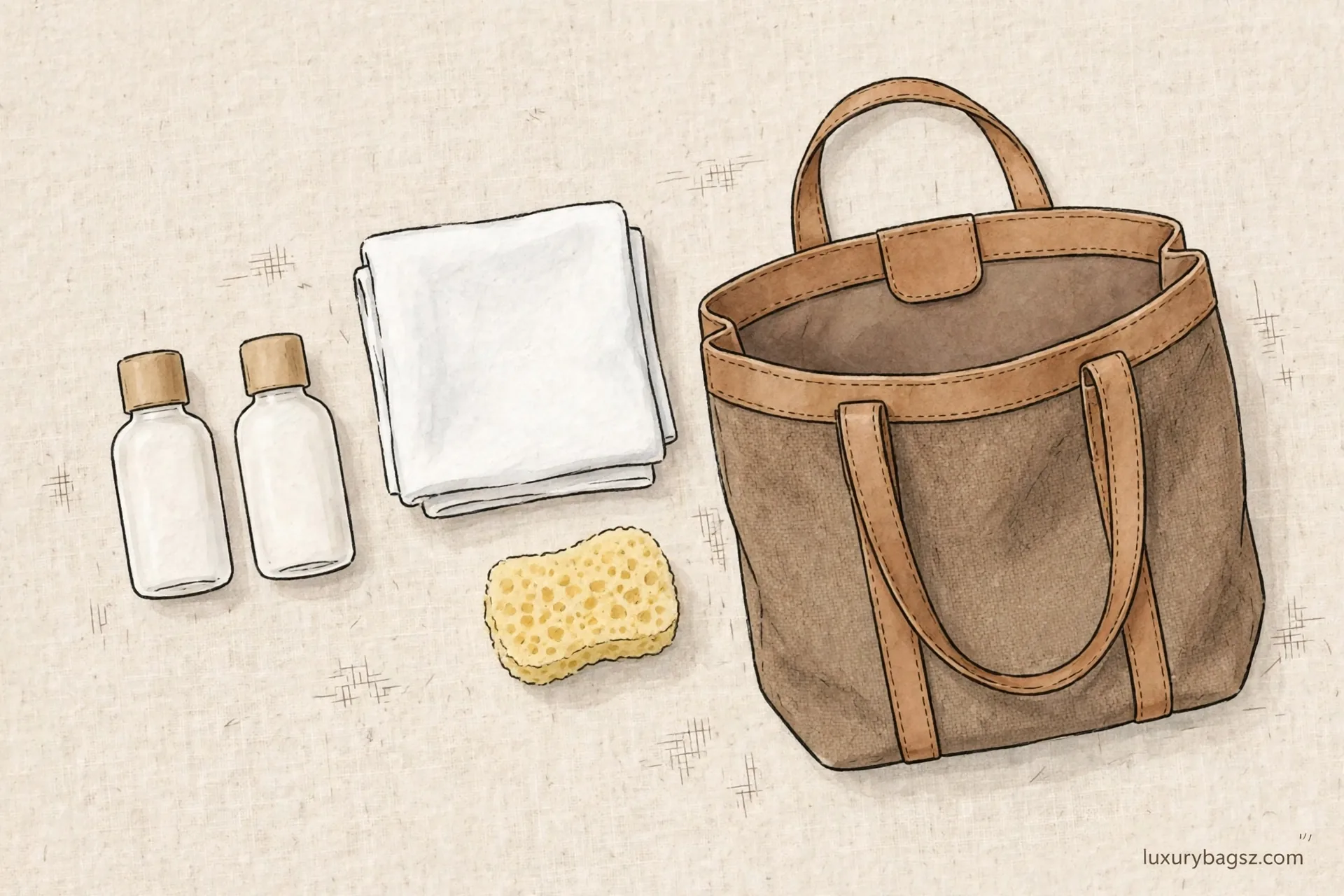
This guide therefore covers only the items a small kit is verified to contain in comparable kits: a gentle leather cleaner, a leather conditioner or moisturiser, a soft cloth, and an applicator or sponge.
If your kit contains an item whose purpose is not printed on its own label, do not guess what it is for. Leave it out, and follow the label of the item you do understand.
Key Takeaways
- Read every label before you start. If an item has no clear purpose on its label, do not use it on the bag.
- Patch test every liquid on a hidden spot first, and wait until it is fully dry before you judge the result.
- Put cleaner and conditioner on the cloth, never straight onto the bag, and use the smallest amount that does the job.
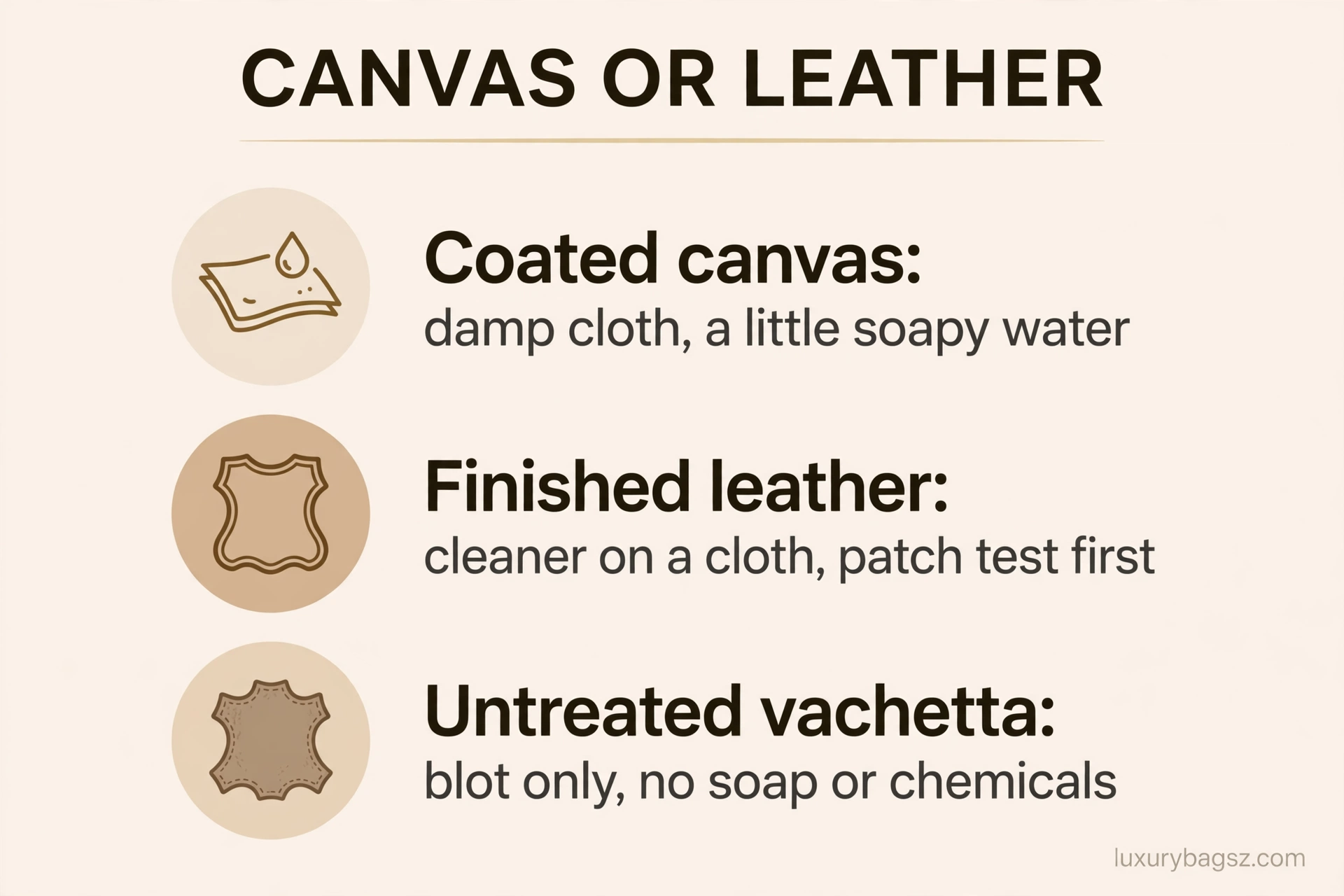
- Coated canvas takes a damp cloth and a little soapy water. Finished leather takes a gentle cleaner on a cloth. Untreated vachetta takes blotting only.
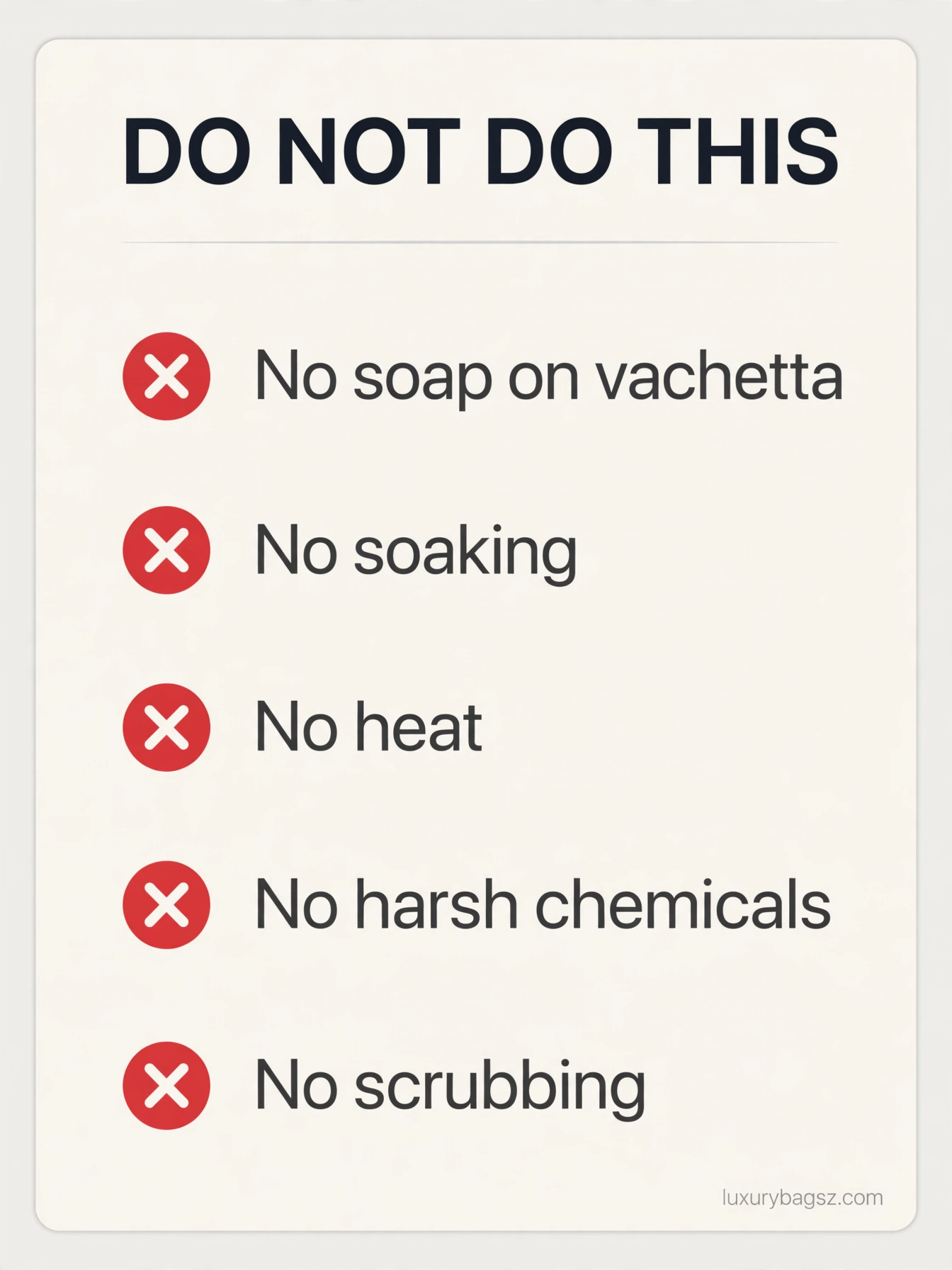
- Never use soap, solvents, mink oil, saddle soap, or harsh chemicals on vachetta, and never soak, scrub, or heat-dry any Louis Vuitton bag.
- When in doubt, stop at a dry wipe. A bag that is only dusty does not need a product at all.
What a Mini Care Set Is, and What It Is Not
A mini care set is best understood as a travel-size version of a normal leather care kit. The bottles are smaller, the cloth is smaller, and the job is routine upkeep, not restoration.
Comparable small kits sold for Louis Vuitton bags typically contain a leather cleaner, a leather moisturiser or conditioner, and a soft cleaning cloth. Some add a sponge or applicator for even application.
Louis Vuitton's own care guidance is stricter than most kit marketing. For many leathers, it says to keep the bag dry, avoid chemicals, and clean surface stains with a soft, damp cloth and water only.
For coated canvas, its guidance allows a damp cloth and slightly soapy water. For natural, untreated leather, it says never to use soap or solvent, and to blot water at once with a lint-free, light-coloured cloth.
That tension is the whole point of this guide. A kit gives you products. Louis Vuitton's guidance tells you where those products should not go. Follow the stricter rule wherever they disagree.
For background on the house and its materials, our Louis Vuitton guide explains the main bag families, and our guide on how to clean LV canvas covers coated canvas in more depth.
Before You Open a Bottle: Identify Your Bag's Materials
Look at your bag before you touch it with a product. Most Louis Vuitton bags mix materials, and each material needs a different step.
Coated canvas is the printed Monogram or Damier surface: a canvas with a coating that resists water better than raw fabric. It is the most forgiving Louis Vuitton surface at home.
Finished leather includes Epi, Empreinte, and other treated leathers with a surface finish. These take a gentle cleaner on a cloth, after a patch test, far better than untreated leather does.
Untreated vachetta is the pale, natural cowhide used for handles and trim on classic bags. It has no surface coat, it darkens with sun, air, and hand oils, and it stains from water alone.
If you are unsure whether a bag is genuine, or whether its materials match the listing, check our fake LV checks before you spend time caring for a bag that may not be what it claims.
The 5-Step Mini Kit Routine
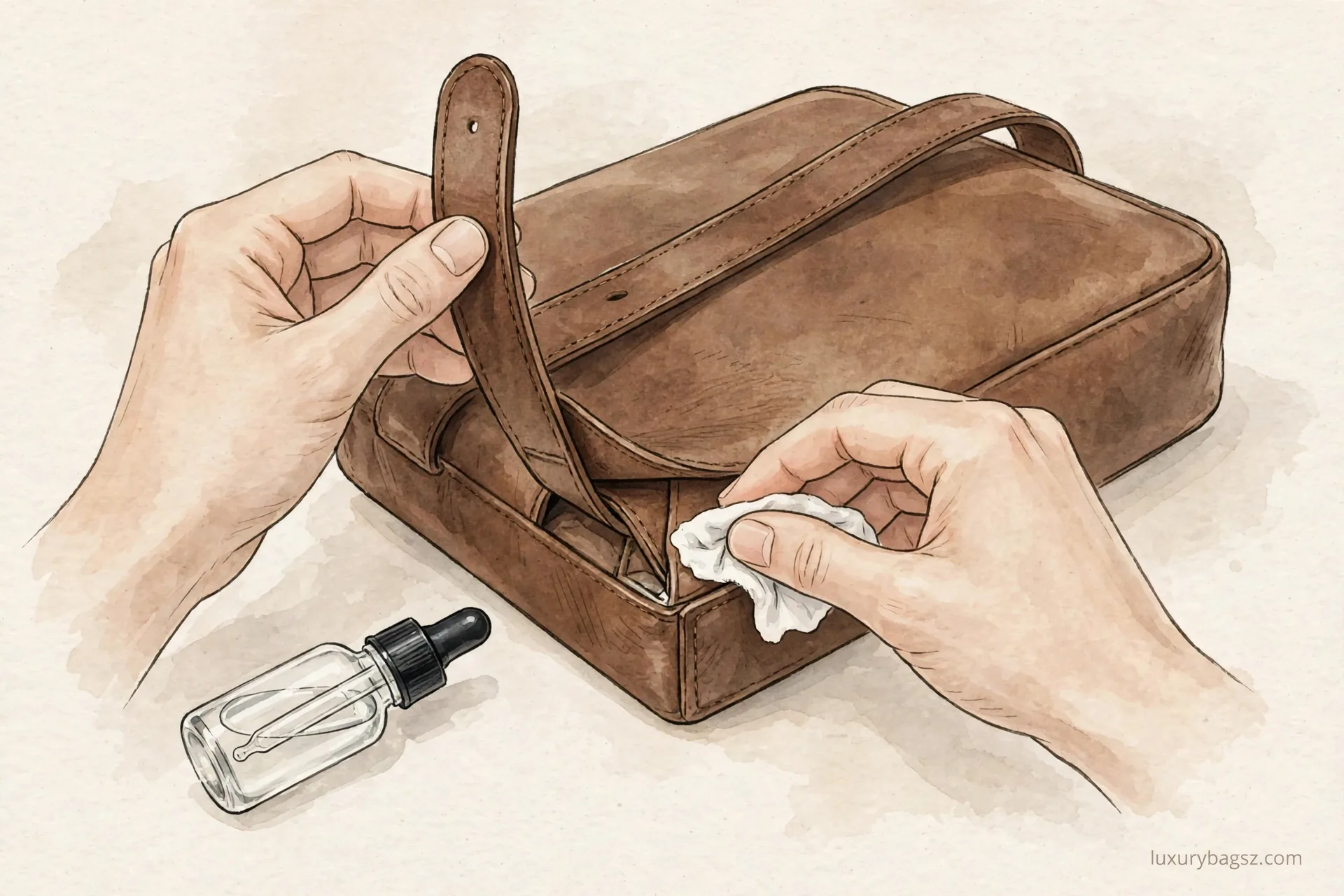
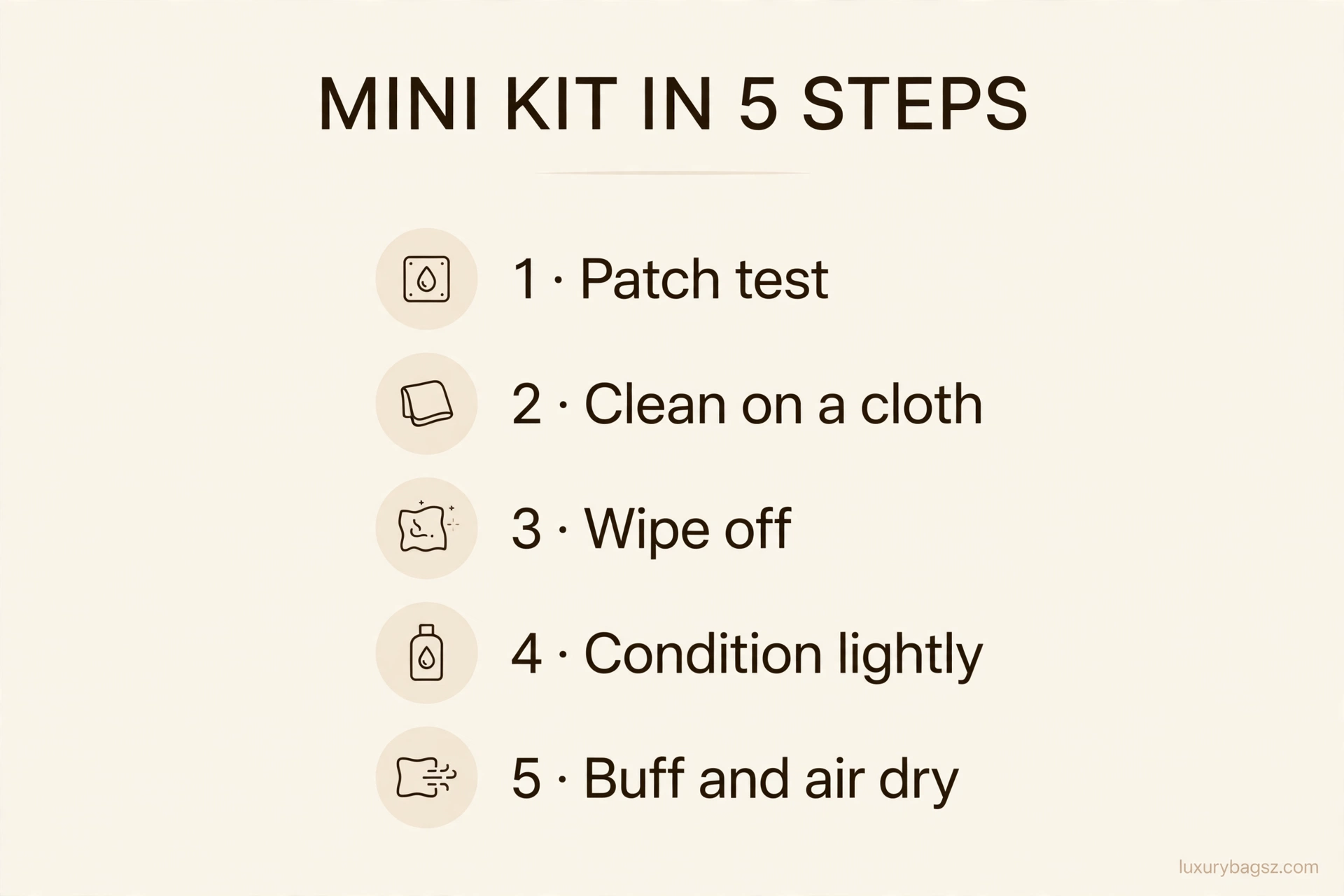
Step 1 is the patch test. Put a tiny amount of cleaner on a white cloth, touch it to a hidden spot such as the underside of a strap, and let it dry fully. Check for darkening, stickiness, or colour change.
Step 2 is cleaning. Put a small amount of cleaner on a clean, white cloth, not on the bag. Wipe the dirty area gently, in light circles, one small area at a time.
Step 3 is wiping off. Use a second clean, slightly damp cloth to lift residue, then a dry cloth to remove moisture. Do not leave cleaner sitting on the leather or canvas.
Step 4 is conditioning, and only where the label allows it. Put a tiny amount of conditioner on a cloth, apply it thinly and evenly to finished leather, and wipe off all excess at once.
Step 5 is buffing and air-drying. Buff lightly with a dry cloth, then leave the bag open and upright in shade at room temperature until it is fully dry. Do not use heat, sun, or a hairdryer.
Using the Cleaner: How Much, Where, and How Often
Less is the rule. A pea-sized amount on a cloth is plenty for a small area, and a second thin pass beats one heavy pass every time.
Apply cleaner to the cloth, then to the bag. Putting liquid straight onto the bag creates a wet spot with a sharp edge, and that edge can dry as a visible ring, especially on leather.
Work in small areas, and keep the cloth barely damp, not wet. If the cloth drips, wring it out. If the bag surface looks wet, you have used too much, so blot it dry at once.
Clean only where the bag is dirty. A full-bag clean every week is too much for most bags. A dry wipe after use, and a cleaner pass only when dirt or a mark appears, keeps the finish intact longer.
Rinse the cloth often, and switch to a clean part of the cloth as it picks up dirt. A dirty cloth spreads grime back onto the bag, and a coloured cloth can transfer dye onto pale trim.
Coated Canvas: The Easiest Material in the Kit
Coated canvas is where a mini kit earns its keep, because the surface is forgiving and the method is simple. Wipe it with a soft, damp, lint-free cloth first, before any product.
For a mark that a damp cloth will not lift, use a cloth dampened with slightly soapy water, wipe gently, then wipe again with a clean, damp cloth to remove soap. Finish with a dry cloth.
Keep the soapy cloth off the leather trim and handles. Soap that suits coated canvas can strip oils from untreated vachetta and leave a pale or patchy mark on the trim.
Do not scrub printed canvas. Scrubbing wears the print, dulls the coating, and can lift colour at edges and corners, where the coating is thinnest and wear shows first.
Do not use mink oil, perfume, alcohol-based solutions, leather lotions, or harsh cleaners on coated canvas. Louis Vuitton warns that such remedies can wear the canvas badly and early.
Handles and trim on a canvas bag are often vachetta, so treat a canvas bag as a two-material bag. The classic example is the Neverfull, whose sizes and trim are covered in our Neverfull sizes guide.
Finished Leather: Epi, Empreinte, and Treated Calfskin
Finished leather has a surface layer that gives it some protection, so a gentle cleaner on a cloth is a reasonable step after a patch test. Keep the amount small and the cloth barely damp.
Wipe in light circles, one panel at a time, and wipe off residue right away. Do not let cleaner pool in creases, stitching, or around hardware, where it dries into a white or sticky line.
Condition finished leather only if it feels dry or looks dull, and only with a thin, even coat. Wipe off all excess, buff lightly, and let the bag air-dry fully before you carry it or store it.
Watch pale and bright colours most closely. Light Epi and light Empreinte show dye transfer from denim, magazines, and other leathers, and a conditioner can darken a pale panel unevenly if it is applied in patches.
For general leather care habits, our guide on how to care for leather bags covers storage, rotation, and handling that matter as much as any product in a kit.
Vachetta: The Material That Changes the Rules
Vachetta is untreated, vegetable-tanned cowhide. It starts pale, and it darkens over time into a honey patina from sun, air, and natural oils. That change is normal, and it is not damage.
Because vachetta has no coat, water alone can stain it. If it gets wet, blot at once with a lint-free, light-coloured, absorbent cloth. Do not rub, and do not try to wash the stain out.
Do not clean vachetta with soap, even when it has darkened a lot. Soap strips the natural oils stored in the leather, and the leather can then feel dry, look rubbery, and crack over time.
Do not use solvents, chemicals, hand sanitiser, oils, or leather treatments on vachetta to darken it faster. Louis Vuitton warns that these can damage the leather and its quality over time.
If vachetta is stained before a patina develops, the official advice is to leave it alone. As the leather darkens naturally, early stains usually become less noticeable, while a cleaning attempt often makes them worse.
For older, evenly patinated vachetta, a specialist vachetta cleaner or conditioner may be used by a professional. At home, the safe kit items for vachetta are a dry cloth and patience, not a bottle.
Using the Conditioner, the Cloth, and the Sponge
The conditioner is the most misused item in a mini kit. It is not a cleaner, it does not remove stains, and it should never be applied to a dirty surface.
Clean first, let the surface dry, and then condition only finished leather that feels dry. Apply a thin layer with a cloth or sponge, work it evenly, and remove every trace of excess.
If the leather looks darker in one spot than another after conditioning, you have applied it unevenly. Do not add more to even it out. Buff lightly, let it dry, and get professional advice if the patch stays.
The soft cloth is for application, wiping off, and buffing. Keep one cloth for cleaner, one for conditioner, and one dry cloth for buffing, so products do not mix on the same cloth.
The sponge or applicator is for even application on larger, flat panels. Use it lightly, with a small amount of product, and never use a rough or abrasive sponge on leather or coated canvas.
Drying, Buffing, and the First Hours After Care
After any kit step, the bag needs still, shaded, room-temperature air. Stand it upright, lightly stuffed, with the handles free, and leave it until it is fully dry to the touch.
Buffing is light and dry. Use a clean, dry, white cloth, and buff with short, gentle strokes. If the surface feels sticky, you left product on it, so wipe it off with a barely damp cloth and buff again.
Do not carry the bag while it is still damp from cleaning or conditioning. Damp leather picks up dirt, dye, and hand oils faster, and a damp bag stored in a dust bag can trap moisture.
When to Stop, and When to Get a Professional
Stop at once if a patch test darkens, stiffens, or changes the colour of the leather. Stop if a mark spreads, if the surface feels sticky after wiping off, or if a water ring appears.
Stop if the mark is ink, dye transfer into pale leather, a deep grease stain, mould, or a crack. These are professional jobs, and home attempts usually make them harder to fix.
A professional cleaner can assess the material, test products safely, and treat a stain without stripping colour. Ask whether they have worked on your exact material before you hand the bag over.
Frequently Asked Questions
What is in a Louis Vuitton mini care set?
No official set with a published contents list could be verified. Comparable kits contain a gentle cleaner, a conditioner, a soft cloth, and sometimes a sponge. Check your kit labels first.
Can I use a mini care set on coated canvas?
Yes, gently. Wipe with a damp cloth first, and use a little soapy water on a cloth for a stubborn mark. Keep soap off leather trim and handles.
Can I use a mini care set on vachetta?
No, not with liquids. Vachetta is untreated, so blot water at once, never use soap or solvents, and leave early stains to fade into the patina. Use a dry cloth only.
Do I need to patch test every time?
Yes, for every liquid, on a hidden spot, before it touches a visible panel. Test again if you change product or bag.
How much cleaner should I use?
As little as possible. Put a small amount on a white cloth, never straight onto the bag, work one small area at a time, and wipe off all residue with a clean cloth.
How often should I clean and condition my bag?
Wipe it dry after use. Use cleaner only when dirt appears, and condition finished leather only when it feels dry. About every three months is a ceiling, not a target.
Can I use the conditioner on canvas?
No. Conditioner is for finished leather only, where the label allows it. It does not clean canvas, and can leave a greasy finish on coated canvas.
What if the kit has an item I do not recognise?
Do not guess. If its purpose is not printed on its own label, leave it out. A guessed product on vachetta or patent leather can do real damage.
Can a mini care set remove water stains from vachetta?
Not reliably at home, and trying often makes them worse. Blot water at once, let it dry naturally, and seek professional advice for a lasting stain.
When should I skip the kit and see a professional?
Skip the kit for ink, dye transfer, deep grease, mould, cracking, or a lasting mark. Also skip it if a patch test changes the colour or feel of the leather.
Summary
A mini care set works when it stays small in every sense: small amounts, small areas, and small ambitions. Dry wipe first, patch test second, and clean or condition only where the label and the material both allow it.
The hard line is vachetta. No soap, no solvents, no oils, and no home remedy will improve untreated leather, and most will harm it. Coated canvas and finished leather are far more forgiving, but they still need a barely damp cloth, not a wet one.
Keep the kit for routine care, keep the bag dry and shaded while it dries, and hand anything deeper to a professional.






