

How to Use Tarrago Super Whitener: White Shoes, Midsoles and Scuffs, Done Right
White Shoes Back to White, Without the Chalky Mess
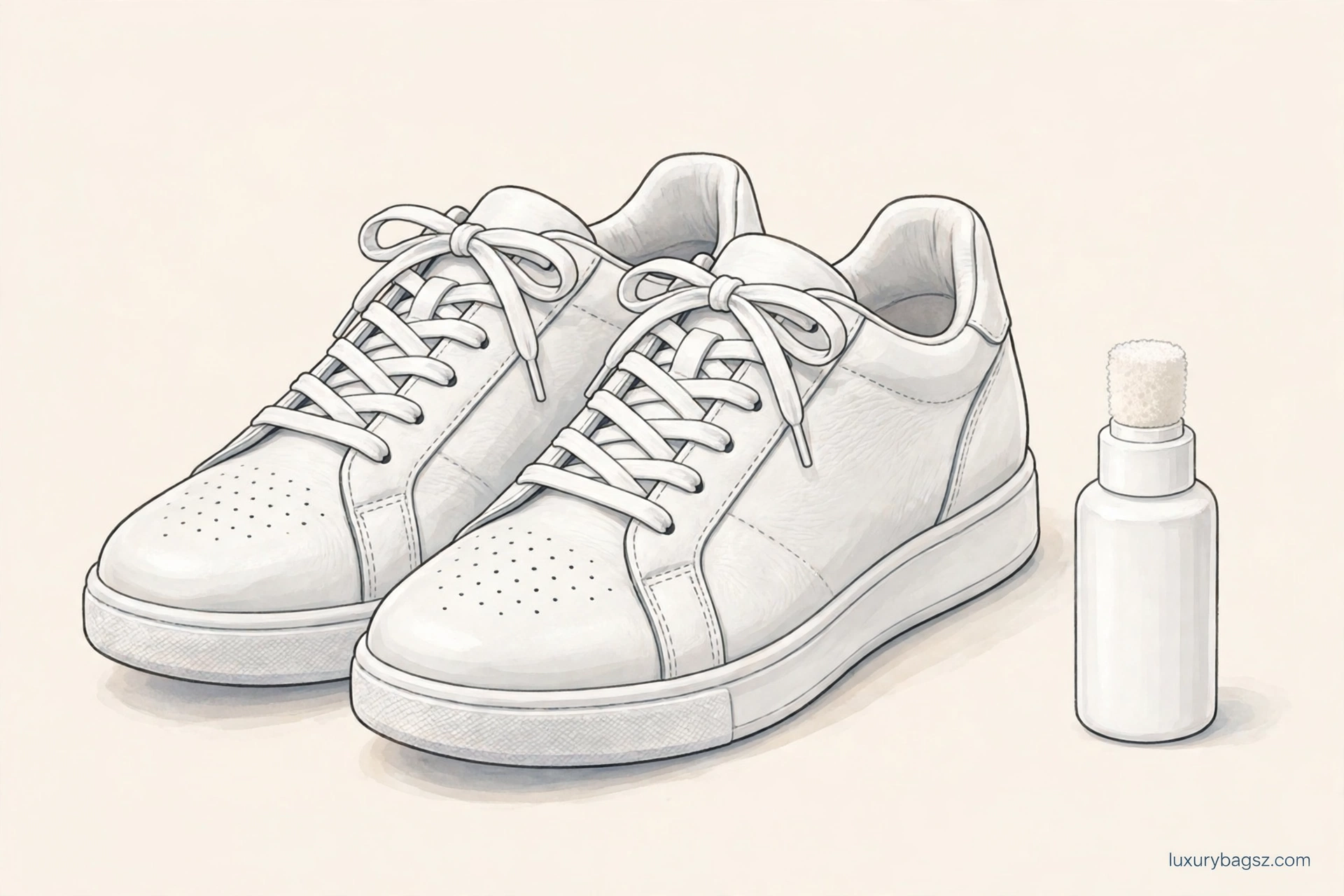
Tarrago Super White is a high-pigment white liquid cream with a built-in sponge applicator. It is made to restore the original white of leather, synthetic leather and canvas footwear, and to cover scratches and marks that cleaning alone cannot shift.
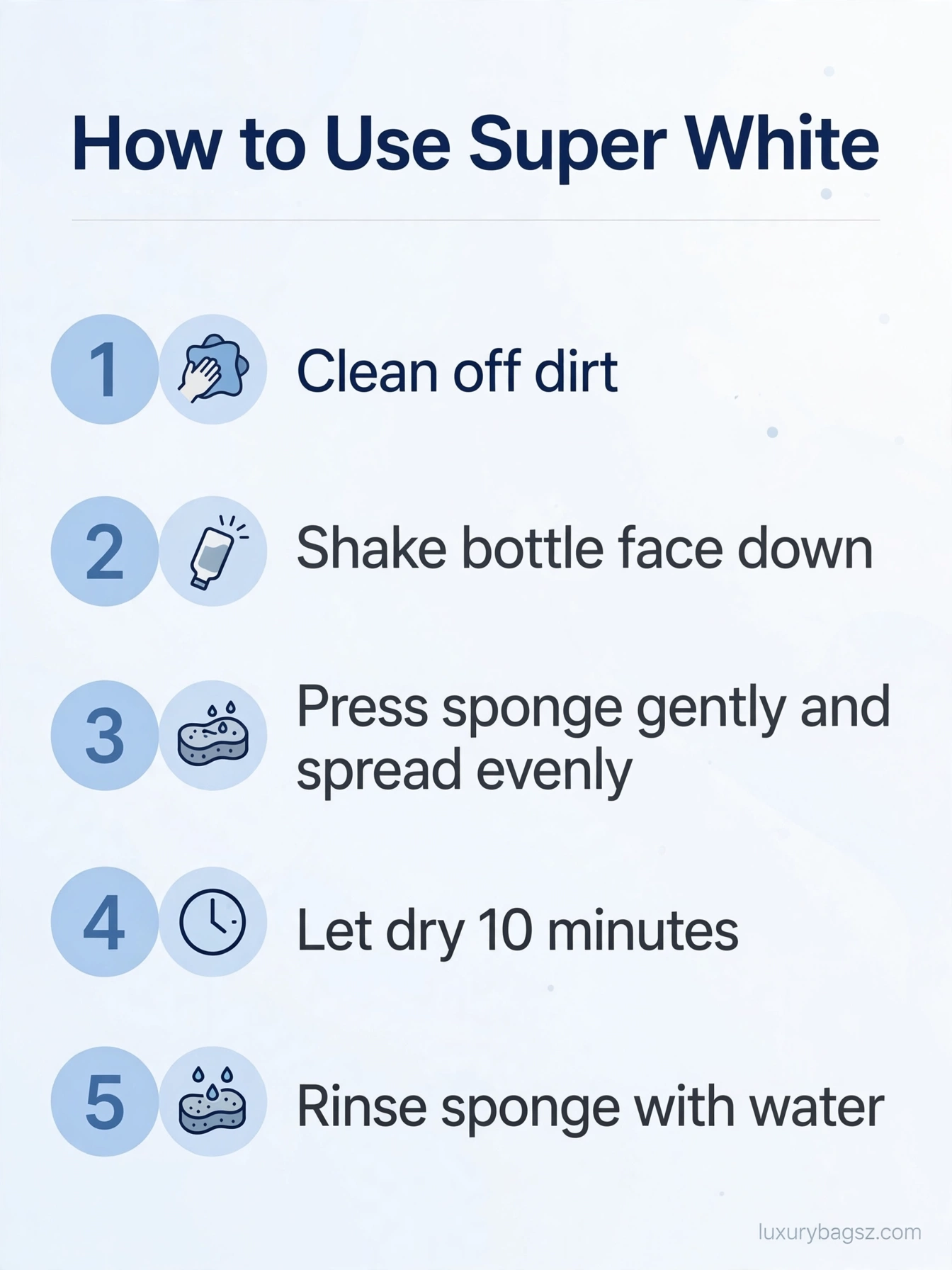
Use it in thin, even coats. Clean first, shake the bottle face down until you hear the small metal ball inside, press the sponge gently onto the shoe, spread without pressing hard, and let it dry for 10 minutes. Once dry, it does not stain or transfer.
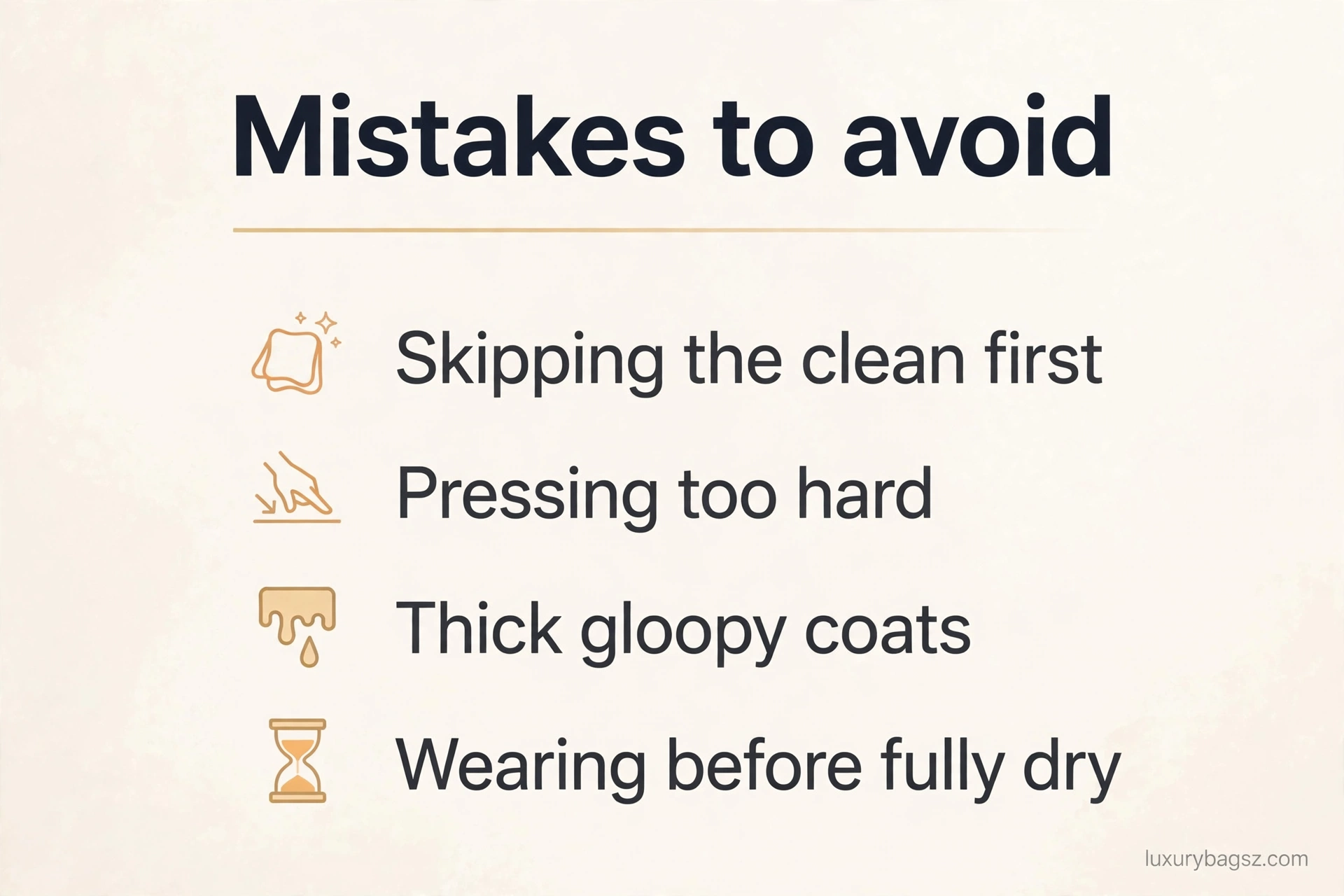
It is not a cleaner, and it is not for every shoe. It will not work on suede or nubuck, it will not rescue deeply yellowed or cracked material, and a thick, rushed coat is how white shoes end up looking painted. Thin coats and patience give the natural finish.
Key Takeaways
- Super White is a pigmented whitener, not a cleaner: clean the shoe first, then whiten.
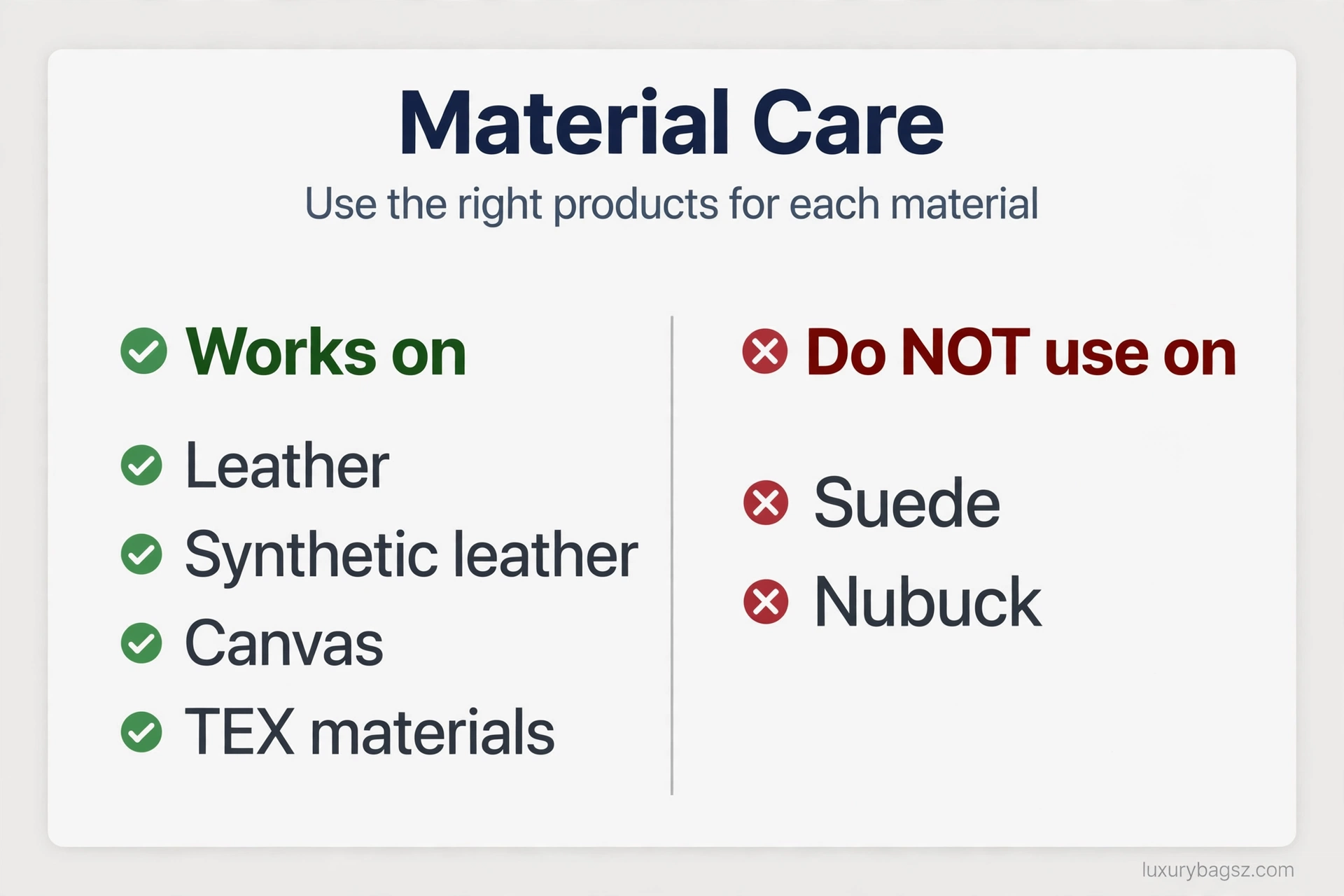
- It suits leather, synthetic leather, canvas and TEX materials. Never use it on suede or nubuck.
- Shake face down, press the sponge gently, and spread in thin, even coats.
- Let each coat dry for 10 minutes, and rinse the sponge with water after use.
- On leather, a rub with a clean cloth adds shine. On canvas, expect slight stiffening.
- It covers scuffs and colour defects, but it cannot repair cracks, peeling or deep yellowing.
What Super White Is, and What It Is Not
Super White is a white liquid cream in a 75 ml bottle with a sponge applicator. Its high pigment content is the whole point: one thin coat covers a surprising amount of scuffing and discolouration, which is why it suits touch-ups as well as full refreshes.
Think of it as white paint made for shoes, not as soap. It sits on the surface and restores colour rather than lifting dirt out of it. That is why the maker tells you to remove all dirt from the surface before you start, and why whitening a dirty shoe gives a patchy, grey result.
It is also not a dye for changing colour. It returns white shoes to white; it does not turn a coloured shoe white in any believable way. Trying to paint over a dark shoe with it will take many coats and still look coated, so do not start that job.
One more honest limit: it cannot fix structural damage. Cracked leather, peeling coating and split canvas will still be cracked, peeling and split underneath a white coat. Whitening hides surface marks, not wear.
Prep: Clean First, Every Time
Brush off loose dust and dirt, then clean the shoe properly before the bottle comes out. For everyday sneakers, follow a normal routine for clean white sneakers first, and let them dry fully before whitening.
Pay special attention to seams, stitching lines and the edge where the upper meets the sole. Dirt trapped in those grooves shows through a thin white coat as grey lines, and no amount of extra cream fixes it neatly afterwards.
Let the shoe dry completely at room temperature. Whitening a damp shoe spreads the cream unevenly and can leave streaks, because wet patches absorb and hold the pigment differently from dry ones.
Remove the laces if you can, and keep them aside. Laces whitened by accident look stiff and coated, and they are far easier to wash or replace than to rescue. Masking tape over logos or trim you want to keep untouched is worth the minute it takes.
The Five Steps, Exactly as the Maker States Them
Tarrago's own directions are short, and they are worth following word for word. First, remove all dirt from the surface. Second, shake the bottle face down until you hear the little metal ball inside, which tells you the pigment is mixed.
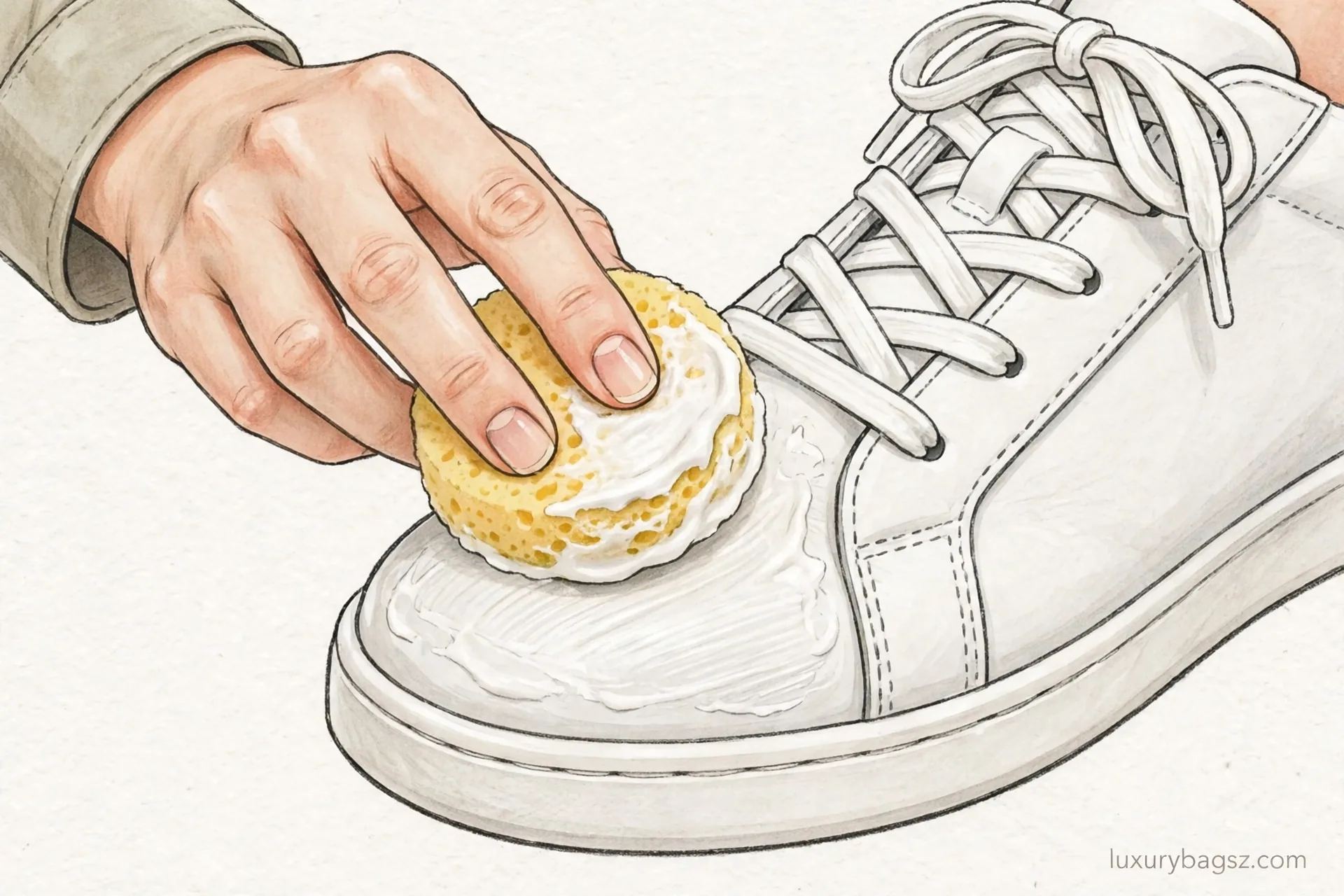
Third, apply the product evenly by gently pressing the sponge on the surface. The key words are gently and evenly: press just enough to wet the sponge, then glide it over the shoe. Pressing hard floods one spot with cream and leaves a thick edge.
Fourth, let it dry for 10 minutes. Fifth, clean the sponge with water after use, so dried cream does not clog it and ruin the next application. If the sponge clogs, Tarrago advises pressing the tube carefully on both sides to get the product flowing again.
If you want shine on leather, rub with a clean cloth once dry. That last touch is optional, and it only applies to leather. Skip it on canvas, where rubbing adds nothing and can disturb the coat.
Leather and Synthetic Leather: Thin Coats Win
White leather trainers are Super White's best use case. Work in small areas, one panel at a time, and feather each stroke slightly into the last so you do not leave hard edges where one coat stops and the next starts.
Judge the result only when it is fully dry. Wet cream always looks brighter and more even than the dried finish, and adding a second coat to a wet first coat is how shoes end up thick and chalky. Ten minutes of waiting saves a full redo.
Most scuffs disappear in one thin coat. A deep scratch or a stubborn mark may need a second thin coat after the first has dried, applied only over the mark itself rather than the whole shoe. Spot work keeps the rest of the shoe looking natural.
Once dry, rub leather lightly with a clean cloth if you want a soft shine. Do not buff hard, and do not reach for a coloured conditioner afterwards, which can tint the fresh white. Let the whitened shoe sit before wearing it.
Canvas Shoes: Expect a Slightly Stiffer Feel
Canvas takes Super White well, and it is a good way to revive white canvas sneakers that washing has left grey. The same thin-coat rule applies, and canvas drinks the first coat faster than leather, so work quickly and evenly.
Tarrago is open about one trade-off: Super White applied on canvas stiffens the fabric a little once dry. It is not damage, but the shoe will feel firmer than before, especially around the toe and sides. Tarrago recommends a coat of its Soft Maker product to soften canvas afterwards.
Do not soak canvas in an attempt to get a deeper white. A saturated shoe dries stiff and can crack at flex points, and the extra cream does not make the white any whiter. Two thin coats, fully dried between them, beat one heavy coat.
Canvas also shows brush and sponge marks more readily than leather, so keep your strokes in one direction across each panel. If a streak shows after drying, a light second coat over that panel only usually evens it out.
Midsoles, Soles and Edges: Where the Rules Differ
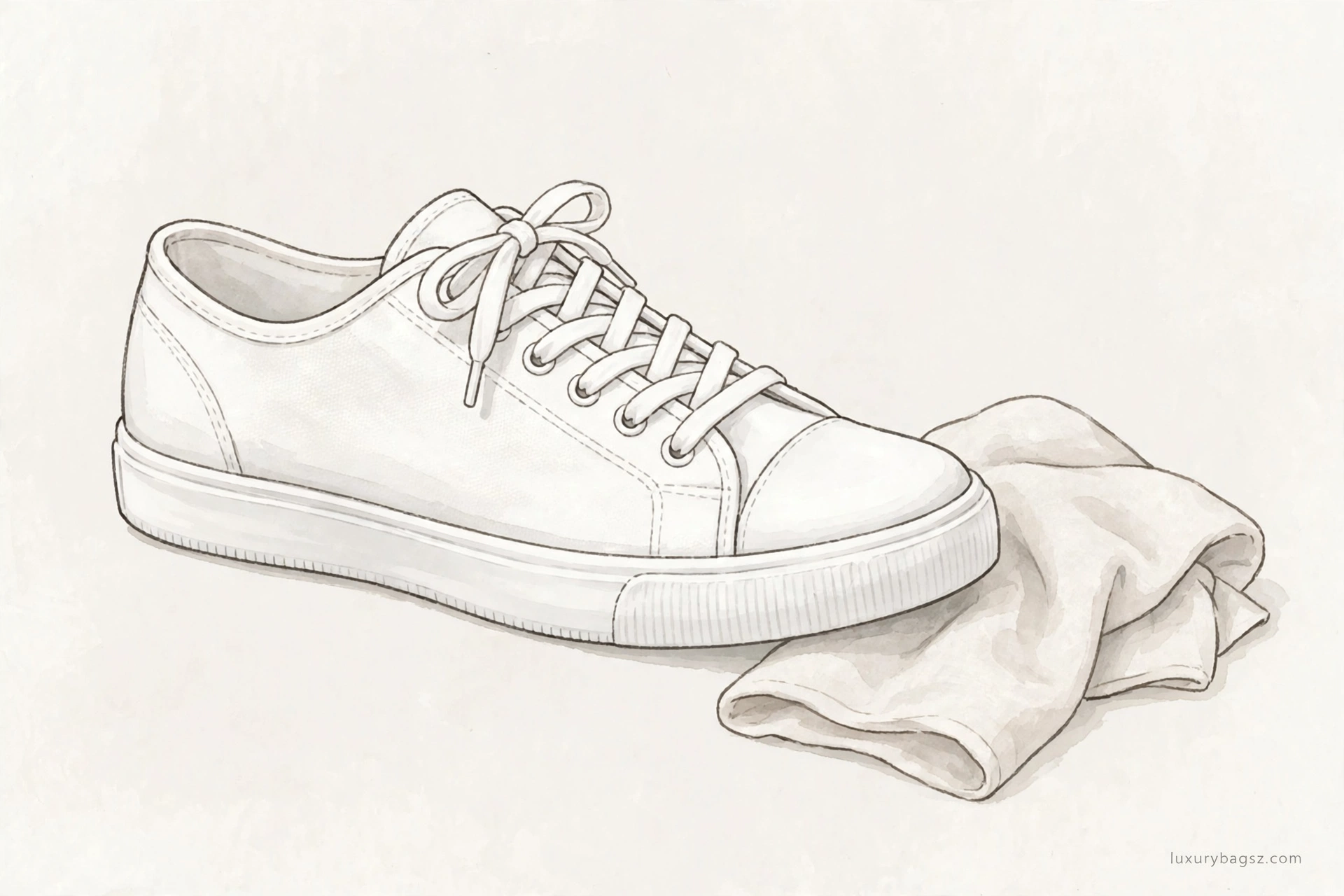
Here the sources disagree, so read this part carefully. Tarrago's own restoration write-up says Super White can also be put on the midsole, though in that project the team chose to keep the rubber's natural colour instead.
That makes Super White a reasonable option for whitening a white midsole edge, applied thinly with the sponge and dried fully. It is not, however, the dedicated tool for yellowed rubber. Tarrago sells a separate midsole cleaner for rubber soles, and that is the better first step for dirty or aged rubber.
Clean rubber first, and only whiten it if cleaning leaves it dull. A whitened midsole on a dirty shoe looks worse, not better, because the white coat highlights every remaining mark. And keep Super White off coloured soles: it will tint them white at the edges.
For scuffed white leather around the sole edge, the sponge tip is genuinely useful, because it reaches the narrow strip a cloth cannot. Just wipe any excess off the sole itself before it dries, so you do not leave a white smear.
What It Cannot Fix, and What to Avoid
Super White cannot fix yellowing that goes through the material, deep cracks, peeling coatings or mould damage. If the white has yellowed all the way through an old midsole or the leather surface is flaking, whitening will cover the symptom for a while, but the underlying wear stays.
Never use it on suede or nubuck. Tarrago states this plainly, and points suede owners to its separate suede and nubuck dye instead. On suede, the cream mats the nap, dries unevenly and is very hard to remove. For suede care basics, a suede brush is the right starting tool, not a whitener.
Sources also disagree on fabric in general: Tarrago lists canvas and TEX materials as suitable, while some retailer listings warn against fabric. The safe reading is to stick to smooth leather, synthetic leather and canvas, and test any other textile in a hidden spot first.
Avoid using it on shoes you have just conditioned with an oil or wax, since the coating can stop the cream from gripping evenly. Avoid heat to speed drying, too: radiators and hair dryers can crack a fresh coat and yellow it. Room temperature and patience work better.
Aftercare: Keeping the White, White
Once dry, Super White does not stain or transfer, so you can wear the shoes normally. Tarrago recommends its Protector spray after application for best results, which helps the fresh white resist new dirt and water marks.
Between wears, brush off dust and wipe marks promptly with a barely damp cloth. Fresh dirt left sitting on a whitened shoe sinks in and dulls the finish, and scrubbing it later can lift the white coat along with the dirt.
Store white shoes away from direct sunlight and away from coloured items that could transfer dye. Sunlight yellows white materials over time, and a whitened shoe stored against a dark bag or box can pick up colour at contact points.
Touch-ups are easy, which is the product's real strength. When a scuff appears, clean the spot, apply one thin coat just over the mark, dry for 10 minutes, and rinse the sponge. Small, quick touch-ups keep shoes looking fresh far longer than waiting for a full redo.

Frequently Asked Questions
What is Tarrago Super White?
It is a high-pigment white liquid cream in a 75 ml bottle with a built-in sponge applicator. It restores the original white of leather, synthetic leather and canvas footwear and covers scratches and colour defects.
How long does Super White take to dry?
Tarrago states 10 minutes of drying time. After that, the product does not stain or transfer. Judge the colour only once fully dry, since wet cream looks brighter than the finished result.
Can I use Super White on suede shoes?
No. Tarrago states clearly that it cannot be used on suede or nubuck. For those materials, Tarrago points to its separate suede and nubuck dye, and a suede brush is the right tool for routine suede care.
Does Super White work on midsoles?
Tarrago's own restoration write-up says it can be put on a midsole, though the team there chose to keep the rubber natural. For yellowed or dirty rubber, a dedicated midsole cleaner is the better first step, with whitening only if needed.
Will Super White make canvas stiff?
Yes, slightly. Tarrago warns that Super White on canvas stiffens the fabric a little once dry, and recommends a coat of Soft Maker to soften it. Thin coats keep the stiffening to a minimum.
How many coats should I apply?
One thin coat covers most scuffs. Add a second thin coat only over stubborn marks, after the first coat has fully dried. Thick coats look painted and chalky, so thin and even always wins.
Do I need to clean shoes before using Super White?
Yes, always. Remove all dirt from the surface first, and let the shoe dry fully. Whitening over dirt traps grey marks under the coat and gives a patchy finish that is hard to fix.
Can Super White fix yellowed shoes?
Only surface yellowing and marks. It restores the original white where the colour loss is on the surface, but it cannot reverse yellowing that runs through the material, or repair cracks and peeling.
How do I stop the sponge from clogging?
Clean the sponge with water after every use, before the cream dries on it. If product stops flowing, Tarrago advises pressing the tube carefully on both sides to free it.
Should I protect shoes after whitening?
Tarrago recommends its Protector spray after application for best results. It helps the fresh white resist dirt and water marks, and it makes later cleaning gentler on the coat.
Final Verdict
Super White earns its place when the job is clear: a white leather, synthetic or canvas shoe that cleaning alone cannot bring back. Clean first, shake face down, spread thinly, dry for 10 minutes, and rinse the sponge.
Respect its limits and it rewards you with shoes that look genuinely fresh, not painted. Use it on suede, rush it, or lay it on thick, and the same bottle will teach you why the instructions are so short.






