How to Care for Reptile Leather: Alligator, Crocodile, Lizard and Snake Skin Care
Reptile Leather Care at a Glance
Reptile leather needs a lighter hand than ordinary smooth leather. Clean it dry first, wipe only in the direction of the scales, condition only with a product made for exotic leather, and keep it away from water, direct sun and heat. That short routine protects the finish, the colour and the scales themselves.
The reason is simple. Reptile leather is made of scales over a thinner, more delicate structure than cowhide, and many alligator and crocodile finishes carry a glazed surface that harsh chemicals can strip. Once scales lift, crack or flake, the damage is hard to reverse, so prevention matters far more than repair.
This guide covers alligator, crocodile, lizard and snake leather, and it states plainly where their care differs. Alligator and crocodile are the sturdiest of the four, lizard is small-scaled and delicate, and snake is the most fragile. If you are unsure which skin you own, treat it as the most delicate option until you know.
Key Takeaways

- Always wipe in the direction of the scales, never against them.
- Dry cleaning comes first; use only a barely damp cloth when dust will not lift dry.
- Condition only with a product made for exotic or reptile leather, and test it first.
- Never use household cleaners, alcohol, solvents or standard shoe polish on reptile leather.
- Blot wet reptile leather at once, then air-dry it at room temperature, away from heat.
- Store reptile leather in a breathable dust bag in a cool, dry place, out of direct sun.
- Alligator and crocodile tolerate care better than lizard, and snake is the most delicate.
- Slightly lifted python scales can be natural, not damage, but new lifting needs a closer look.
- Deep cracks, peeling scales and structural damage belong to an exotic leather specialist.
- Check pre-owned reptile pieces for dryness, lifted scales and uneven finish before buying.
Know Which Reptile Leather You Own
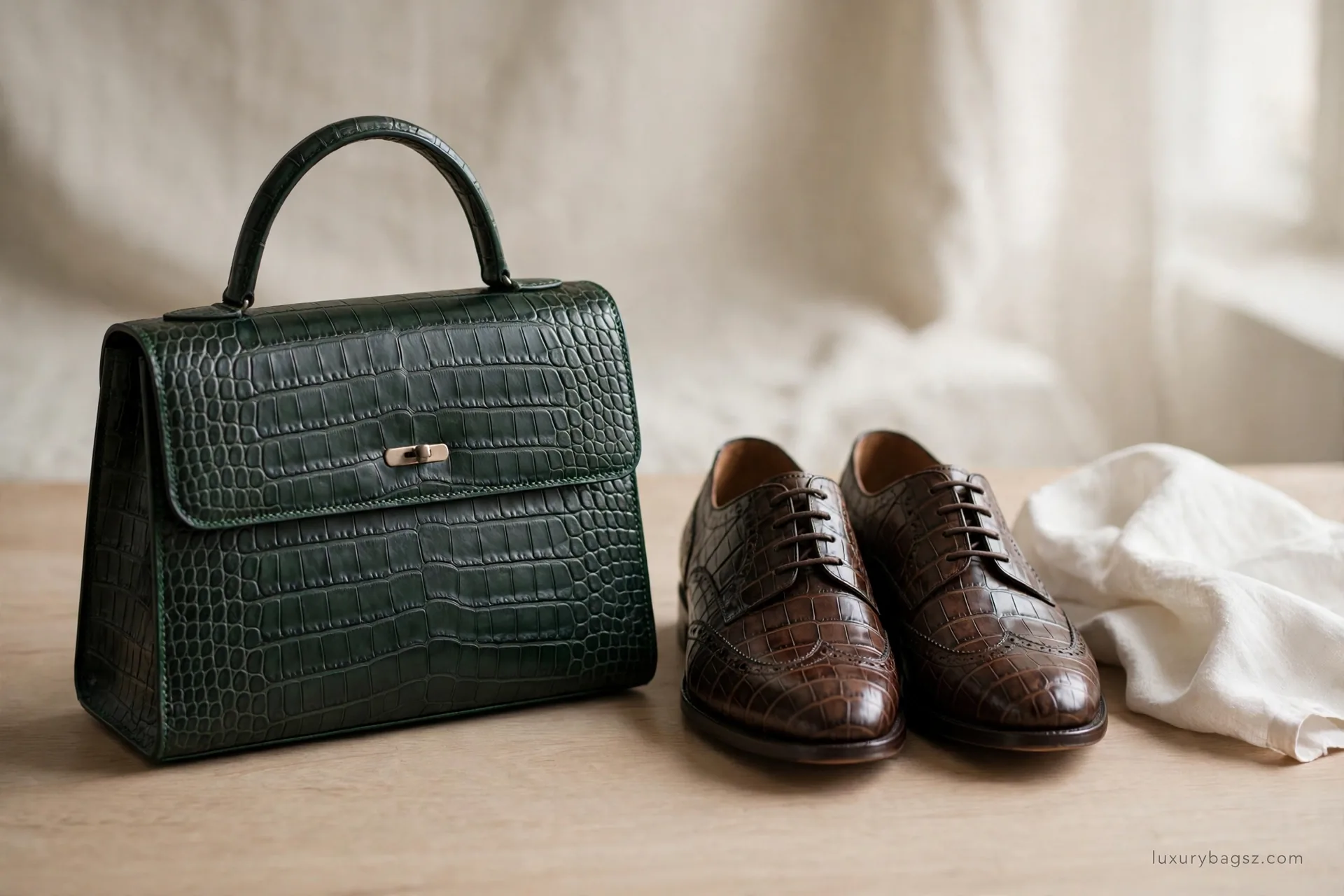
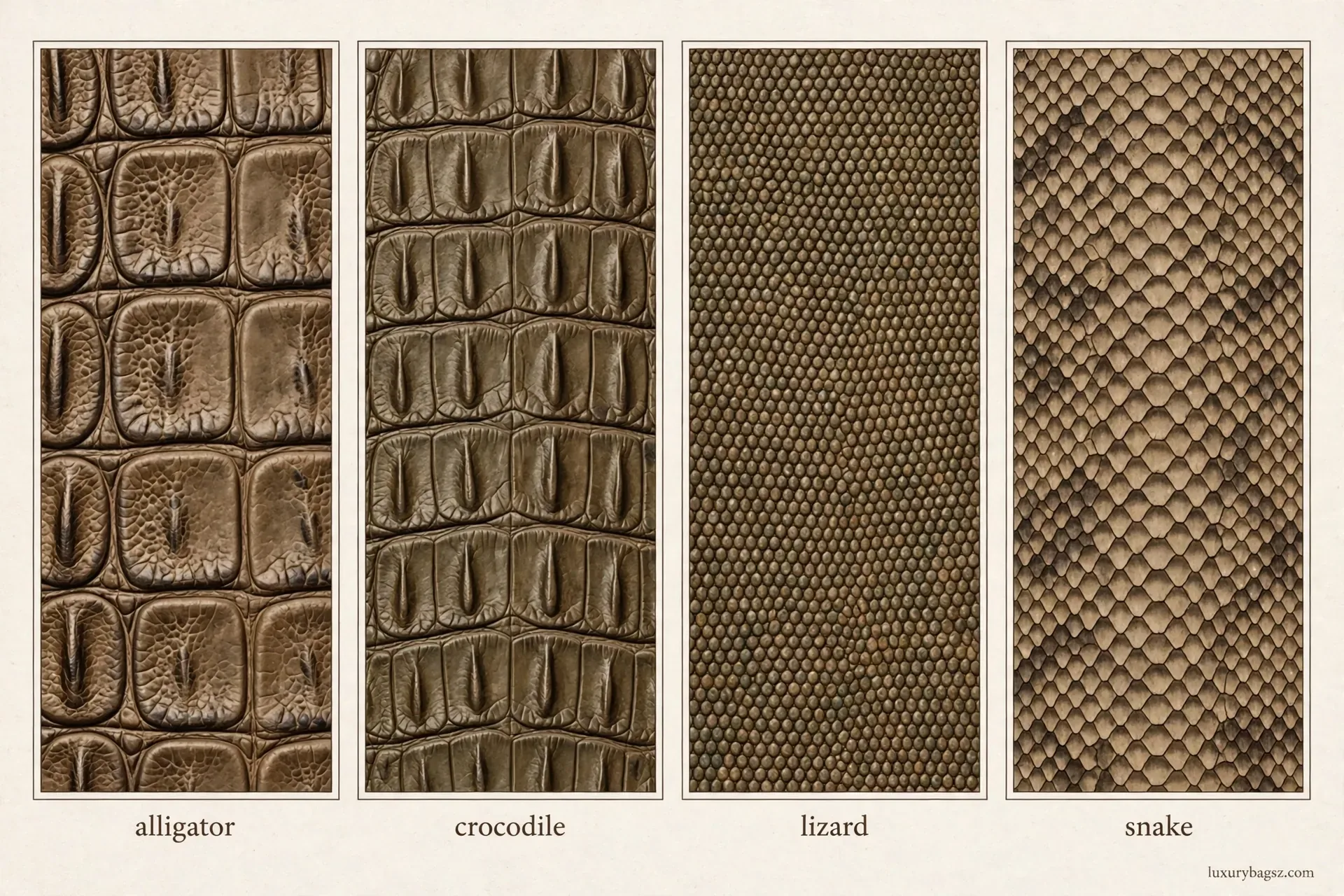
Alligator and crocodile are the sturdiest pair, with larger, firmer scales. Alligator belly leather has regular, rectangular tiles, while crocodile scales often show a small sensory pit in each tile.
Lizard has very small, fine scales, while snake, most often python, has larger, overlapping scales and is the most fragile. Do not copy the leather bags and shoes care guide's creams onto reptile leather unchecked.
Routine Cleaning: Dry First, Gentle Always
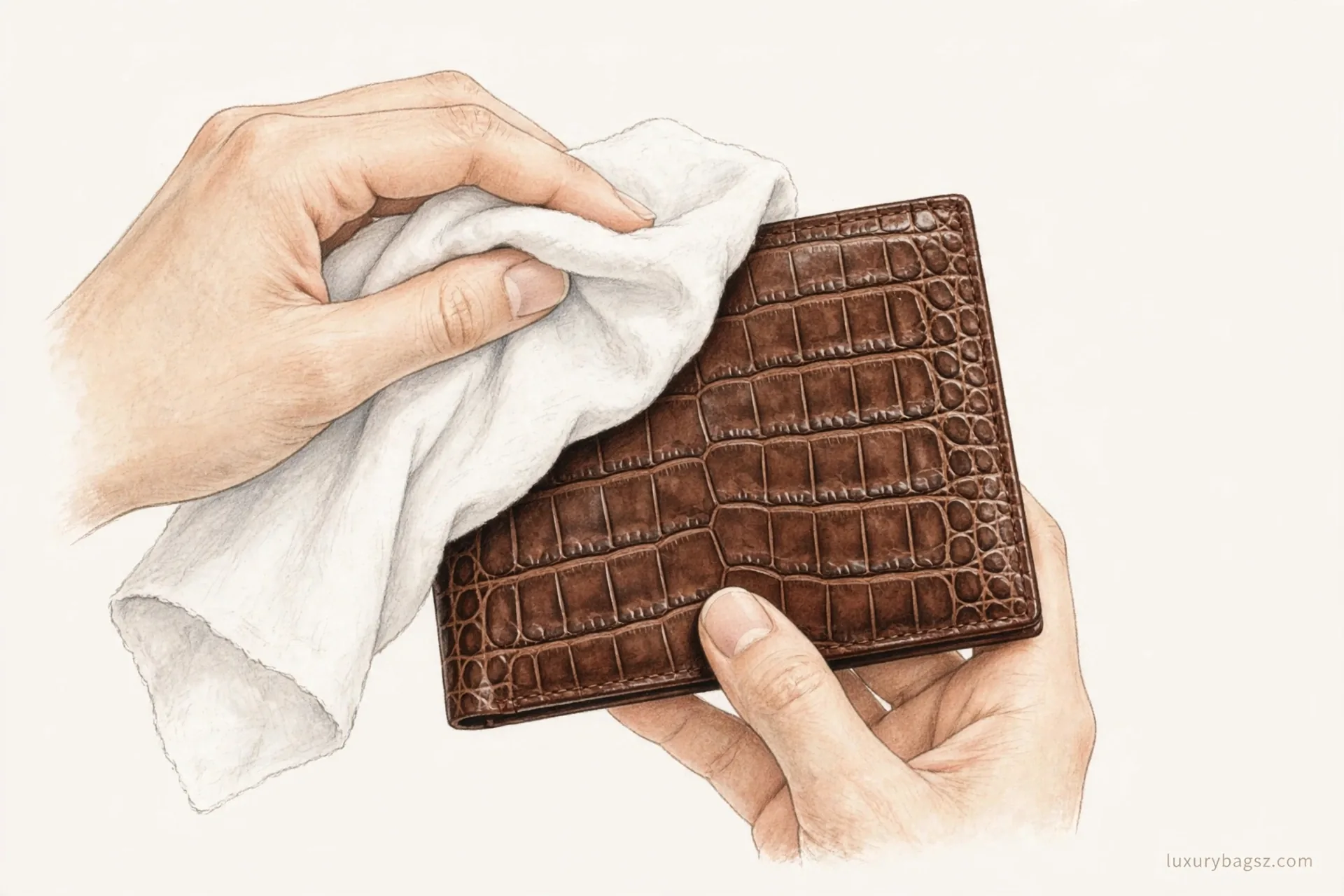
Routine cleaning is mostly dusting. After use, wipe the piece with a soft, dry, lint-free cloth in the scale direction. For dirt that will not lift dry, use a barely damp cloth, wrung out until it stops dripping, wipe gently in the scale direction, and dry at once. Do not soak reptile leather.
For a deeper clean, apply a small amount of cleaner made for exotic leather to the cloth, not directly to the piece, work lightly in the scale direction, and let it air-dry fully before conditioning.
The Scale Rule: Direction Decides Everything
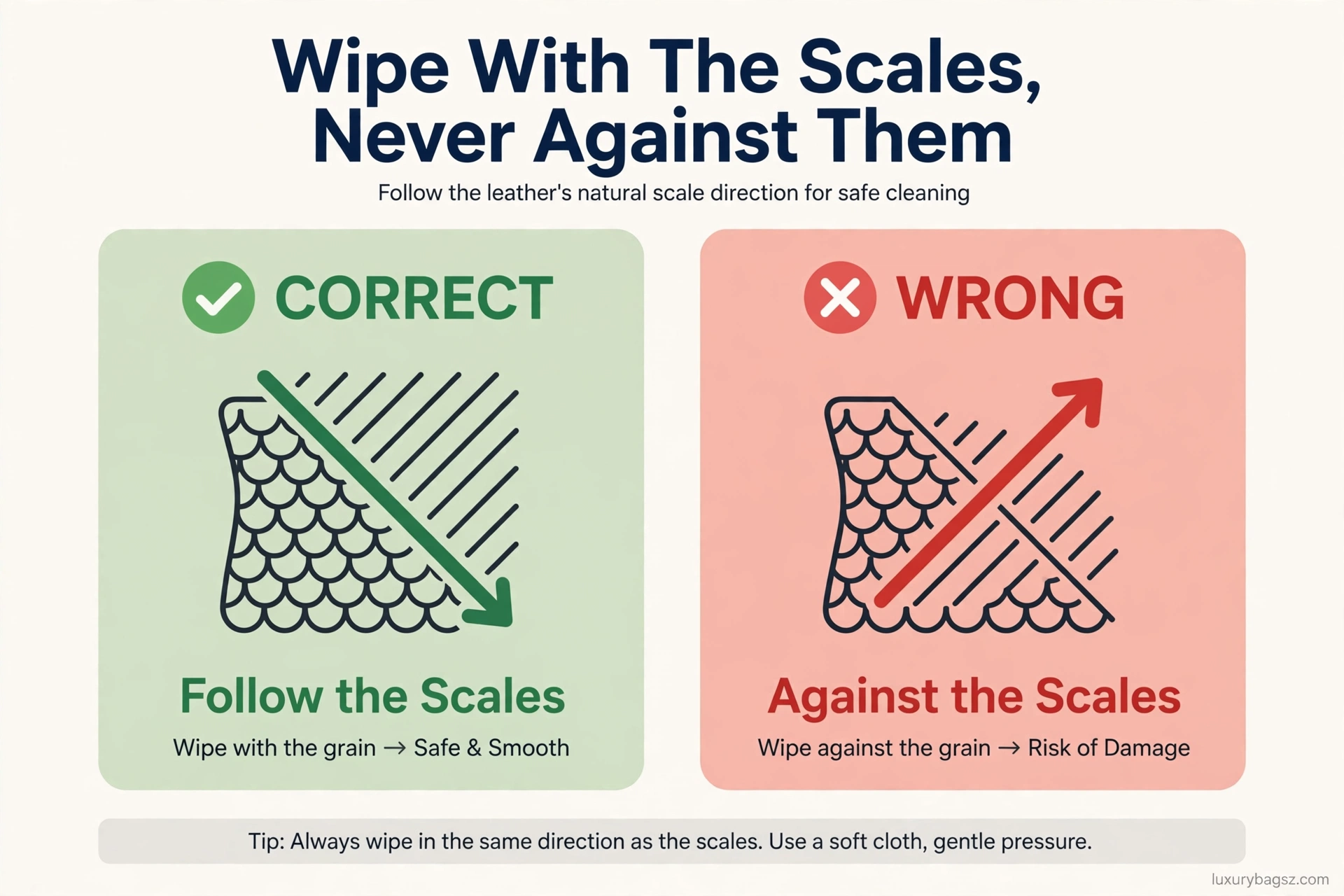
Find the scale direction with a fingertip before you wipe, brush or condition anything. The smooth direction is the direction of the scales, and every stroke must follow it.
Wiping against the scales lifts their edges, and lifted edges catch again on the next wipe, so the damage compounds. Python scales naturally lift slightly in places; new, sharp lifting in one worn area deserves a restorer's view.
Conditioning: What Is Safe and What Is Not
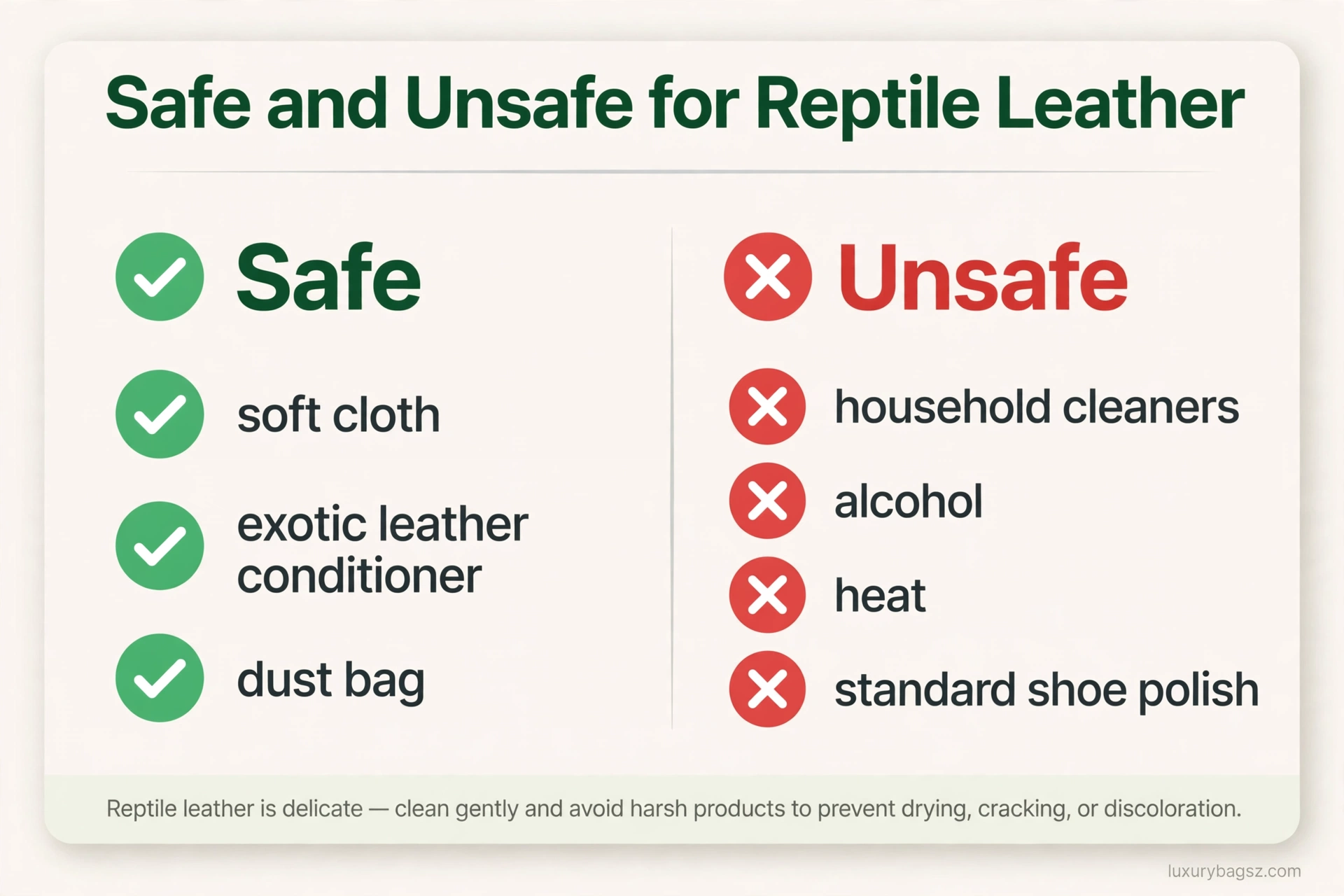
Conditioning replaces oils that time, air and use slowly remove. Without it, reptile leather dries, stiffens and cracks. Use only a conditioner made for exotic or reptile leather, patch-test it on a hidden spot first, and wait until it is fully dry. Standard conditioner, shoe polish and wax polish can damage reptile finishes.
Apply a thin, even layer with a soft cloth, in the scale direction, and let it absorb before buffing lightly.
Lizard and Snake: The Delicate Pair
Lizard leather needs the lightest touch of all the small-scaled skins. For the bags themselves — sizes, prices and authentication — see our guide to lizard and ostrich Hermès bags. Use a barely damp cloth for spot cleaning, and avoid letting water run off the scales into the membrane beneath them.
Snake leather is the most fragile skin in this guide. It is highly absorbent. If snake gets wet, blot gently, dry naturally indoors away from heat and sun, and never brush it hard afterwards.
Water, Sun, Heat and Everyday Wear
Reptile leather is not waterproof. Prolonged moisture spots the finish, dries the skin as it evaporates, and can lead to cracking. When a piece gets wet, blot at once with a soft, dry cloth, without rubbing, support its shape, and air-dry it at room temperature away from sun and radiators. Condition lightly once fully dry, and never put a damp piece into a dust bag or closed box.
Heat and sun dry and crack it. Perfume, hand cream and sunscreen transfer to handles, and dark denim can transfer dye onto pale leather, so wipe handles after use and rotate pieces.
Storage That Keeps Scales Flat and Supple
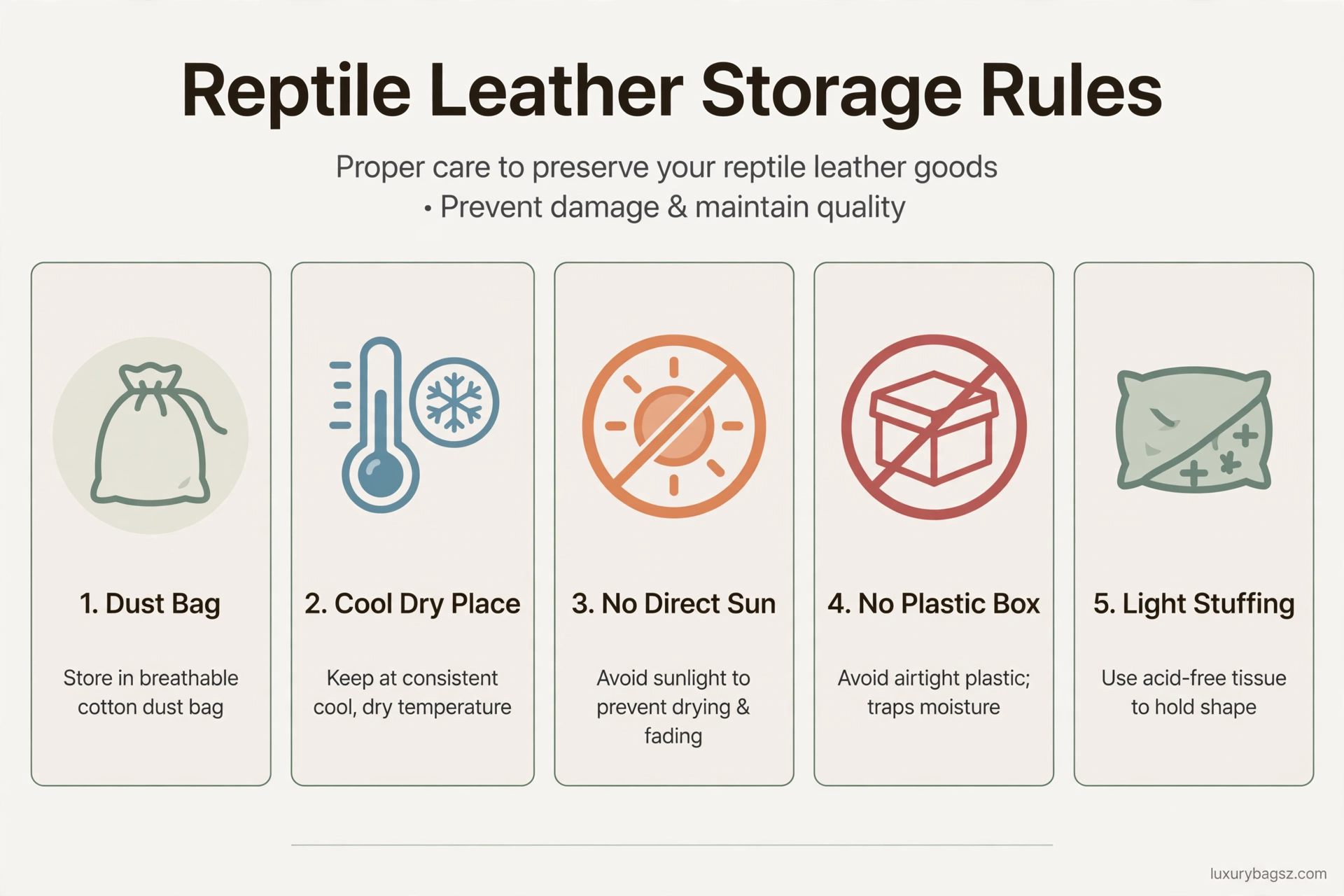
Store reptile pieces in a breathable cotton dust bag, lightly stuffed with acid-free tissue so they hold their shape without stretching. Do not overstuff, because a bag stretched in storage will show strain at handles, seams and scale rows. Keep the place cool, dry and steady: a wardrobe shelf away from radiators and windows beats an attic or garage.
Avoid airtight plastic. Check stored pieces every few months for dryness, lifted scales, mould spots and colour change, and condition lightly if the leather feels dry. See the guide to storing a Hermès Kelly bag for stuffing and handle care.
Scuffs, Marks and When to Stop
Light scuffs on alligator and crocodile can sometimes be eased with exotic conditioner on a soft cloth, buffed gently in the scale direction. Check the result when dry, and stop if it is not improving. Do not use nail polish, super glue or coloured shoe polish, and do not glue a lifted scale down at home.
Water spots, dye transfer and large stains belong to a specialist when gentle cleaning fails twice. Deep cracks, peeling scales and structural damage belong to a specialist from the start.
Frequently Asked Questions
Can reptile leather get wet?
It can get damp, but it is not waterproof. Blot water at once, air-dry at room temperature away from sun and heat, condition lightly once dry, and never store it damp.
How often should I condition reptile leather?
Bags in storage often need conditioning two to four times a year, while shoes in regular wear may need it every few weeks. Supple leather can wait; dull or stiff leather needs care.
Can I use ordinary leather conditioner on alligator leather?
No, not as a routine. Use a conditioner made for exotic or reptile leather, and patch-test it first. Ordinary conditioner and standard shoe polish can damage reptile finishes.
Why do sources disagree about saddle soap on reptile leather?
Some older guides allow saddle soap on alligator boots if all residue is removed, while specialists advise against standard soaps altogether. An exotic leather cleaner is safer.
How do I wipe snake leather without damaging it?
Wipe only in the direction of the scales, with a soft, dry or barely damp cloth, using light pressure. Find the smooth direction with a fingertip first, and never pull at a lifted edge.
Are slightly lifted python scales a sign of damage?
Not always. Even, slight lift is natural for python. New, sharp lifting in one worn area, missing scales, or flaking is different, and deserves a specialist's view.
What should I never use on reptile leather?
Never use household cleaners, furniture polish, alcohol, solvents, nail polish, super glue or standard shoe polish. They can strip a glazed finish, remove colour, or damage scales.
How should I store a reptile leather bag?
Store it lightly stuffed with acid-free tissue in a breathable cotton dust bag, in a cool, dry place away from direct sun and heat. Avoid sealed plastic boxes, and check it every few months.
Can dry, cracked reptile leather be saved?
Light dryness often improves with gentle cleaning and thin layers of exotic conditioner. Deep cracks, brittleness and dry rot are usually beyond home care and need a specialist's assessment.
What should I check on a pre-owned reptile bag?
Check for dryness, cracks between scales, lifted or missing scales, faded patches and uneven shine, and ask how it was stored. Get close photos of handles, corners and flex areas first.
Final Verdict
Reptile leather rewards a gentle, consistent routine. Dust it dry, wipe only with the scales, clean before conditioning, use only exotic leather products, and store it cool, dry and out of sun. Alligator and crocodile forgive small lapses better than lizard and snake, but no reptile skin forgives harsh chemicals, heat or soaking.
Start with the piece you use most. Give it a dry wipe, a patch test, and a thin layer of the right conditioner, then put it away in a breathable dust bag. That one careful round of care keeps scales flat, colour even and leather supple for years.