Hermès Colours Guide: Classic Neutrals, Vibrant Reds and How to Choose
Hermès Colours at a Glance: Start Neutral, Then Add a Red
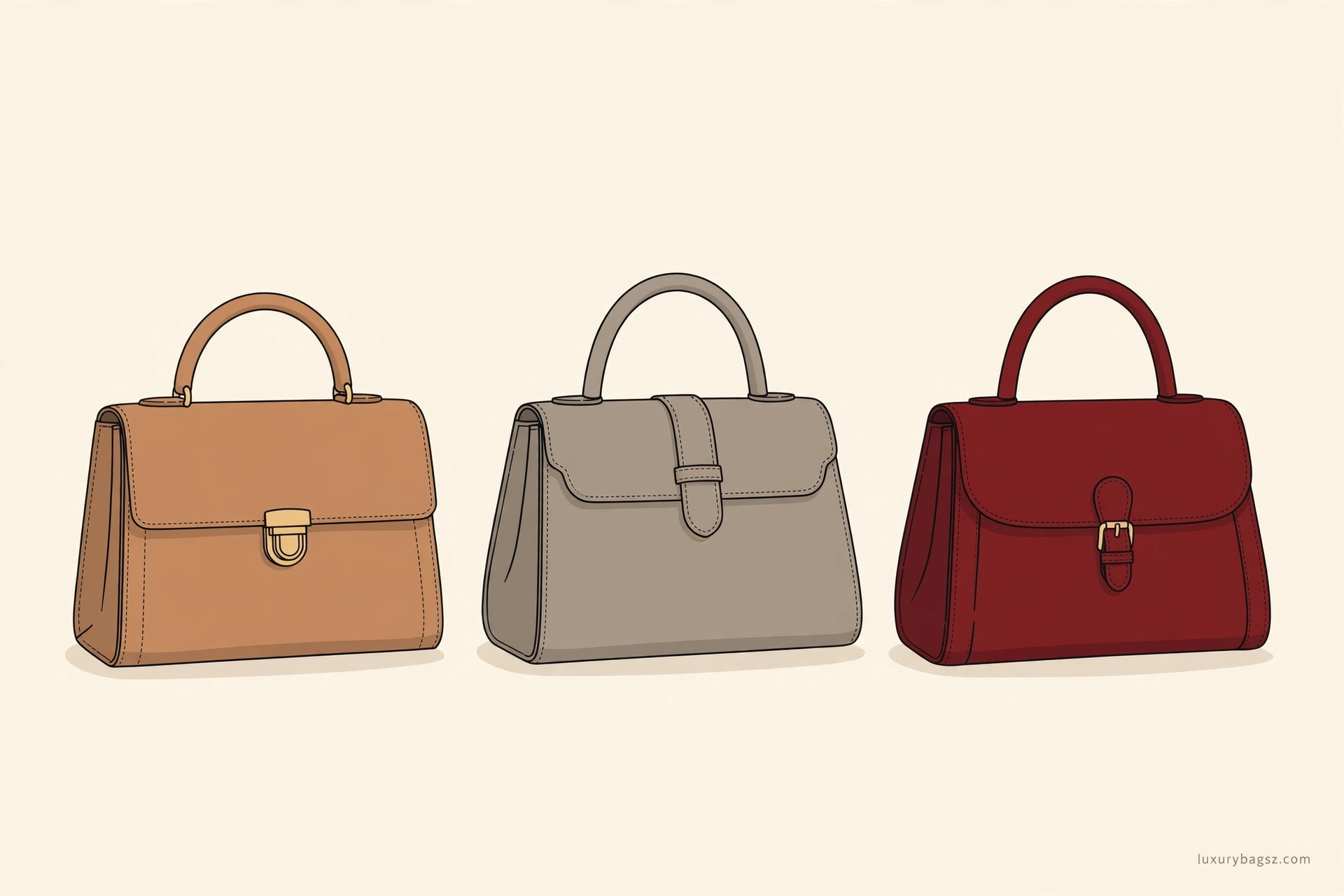
If you buy one Hermès bag, buy it in a colour you can wear with almost everything you own. For most people that means a classic neutral: Noir, Gold or Etoupe. These are the shades that return season after season, that suit both work and weekends, and that tend to be easiest to sell on if you ever change your mind. A vibrant red comes second, not first, because it is a statement shade that needs the right outfit and the right mood.
That order matters because Hermès colours are not like paint swatches. The same named colour looks different on Togo, Epsom and Swift, it shifts with hardware, and some shades only appear for a single season before disappearing for years. Collectors therefore learn colours as a language: each name carries a history, a typical leather, and a reputation on the resale market.
This guide translates that language into plain English, starting with the neutrals, then the reds, and ending with a practical way to choose.
One warning up front. Screen swatches are approximations, not promises. A colour that looks warm on your phone can read cooler in daylight, and two bags in the same named colour from different years can differ slightly. Always judge the actual bag, in natural light, before you buy — especially pre-owned, where photographs and filters can flatter or distort a shade.
Key Takeaways
- Noir, Gold and Etoupe are the safest first Hermès colours, with Craie and Etain close behind.
- Gold is a warm camel tan, not metallic gold, and Etoupe is a grey-brown taupe that reads cooler than Gold.
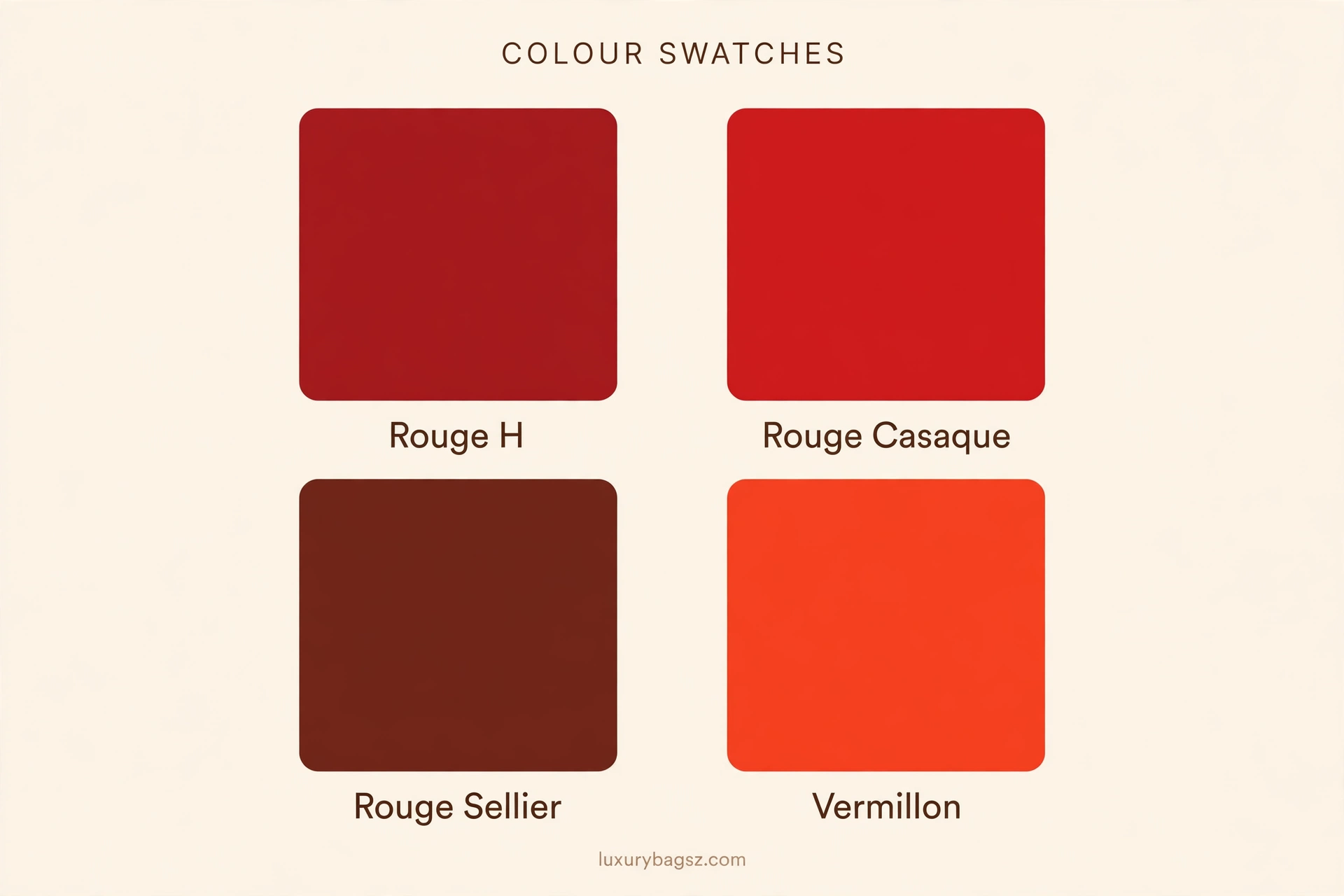
- Rouge H is a deep, brown-tinged wine red from the house archive, while Rouge Casaque is a brighter, clearer red.
- The same colour looks different on each leather, so always check colour and leather together, never colour alone.
- Hardware changes a colour: gold hardware warms a shade up, palladium cools it down.
- Permanent colours return regularly, seasonal colours may never return, so do not wait forever on a seasonal favourite.
Why Hermès Colour Matters More Than at Other Houses
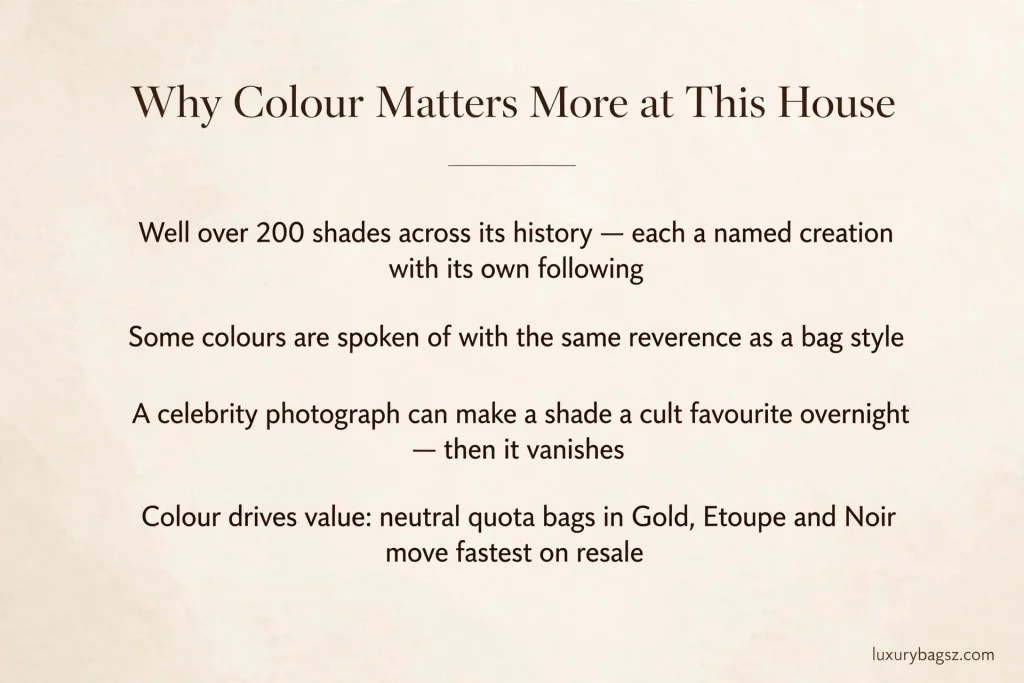
At most brands, colour is a finishing choice. At Hermès, it is half the decision, because the house has created well over 200 shades across its history and treats each one as a named creation with its own following. Some colours, like Gold, are spoken about by collectors with the same reverence as a bag style. Others become cult favourites overnight when a celebrity is photographed with them, then vanish when the season ends. Our Hermès seasonal colours report for 2026 tracks which shades are current, rested and revived.
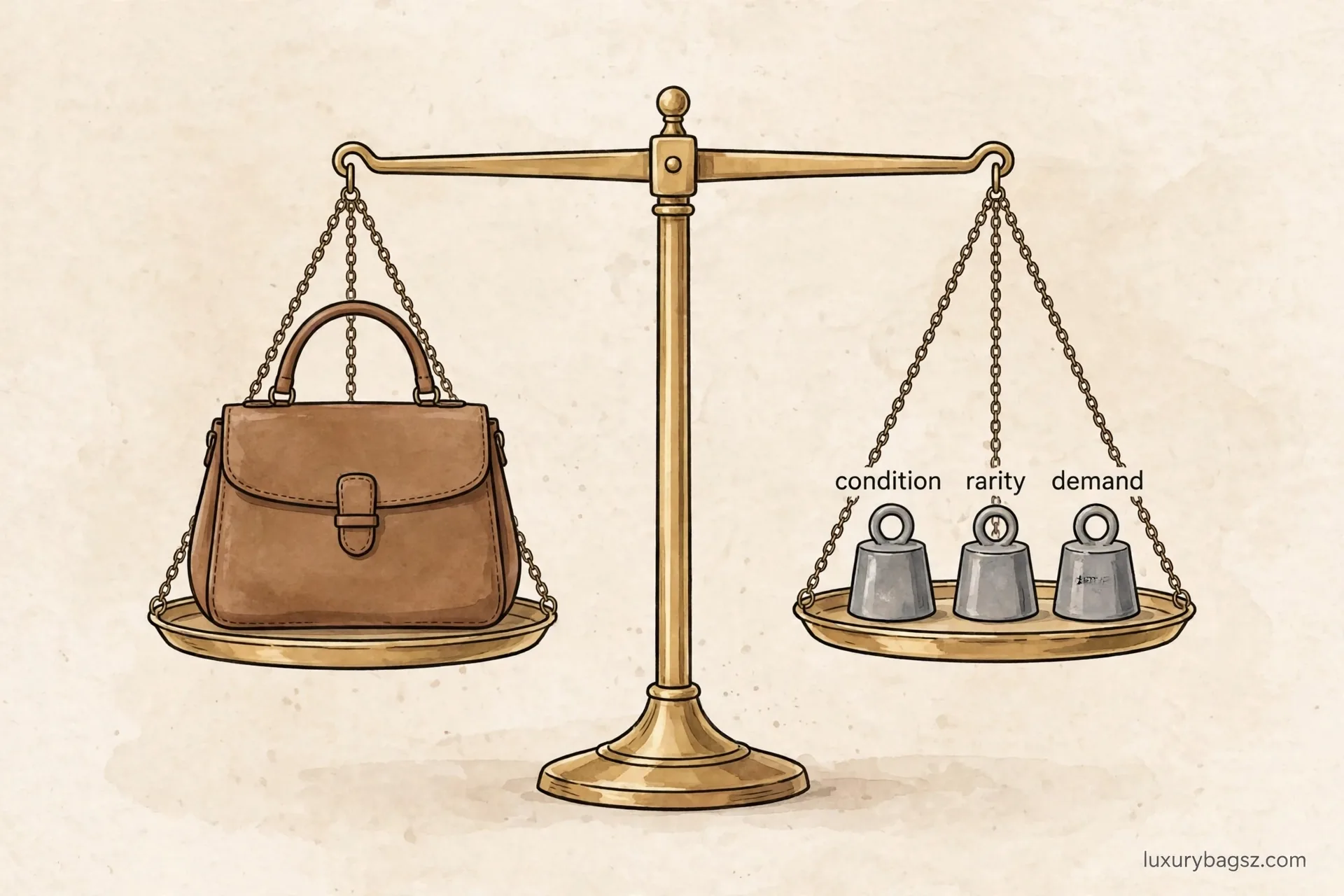
Colour also drives value. Neutral quota bags in Gold, Etoupe and Noir tend to move fastest on the resale market, while seasonal brights can trade at a discount unless the shade gathers a following of its own. That does not mean you should buy only for resale — a bag you never carry is a poor purchase at any price — but it does mean colour is a financial choice as well as a style choice. A neutral first bag protects you on both counts.
There is a third reason colour matters: availability. Hermès does not offer every colour in every bag, leather and size at once. A boutique may offer you a Birkin in a colour you did not ask for, and you must decide quickly whether it is close enough to your dream shade. Knowing your acceptable colours in advance — your first choice, your second choice, and your definite no — makes that moment far less stressful.
Write your list before you walk in, not while you are holding the box.
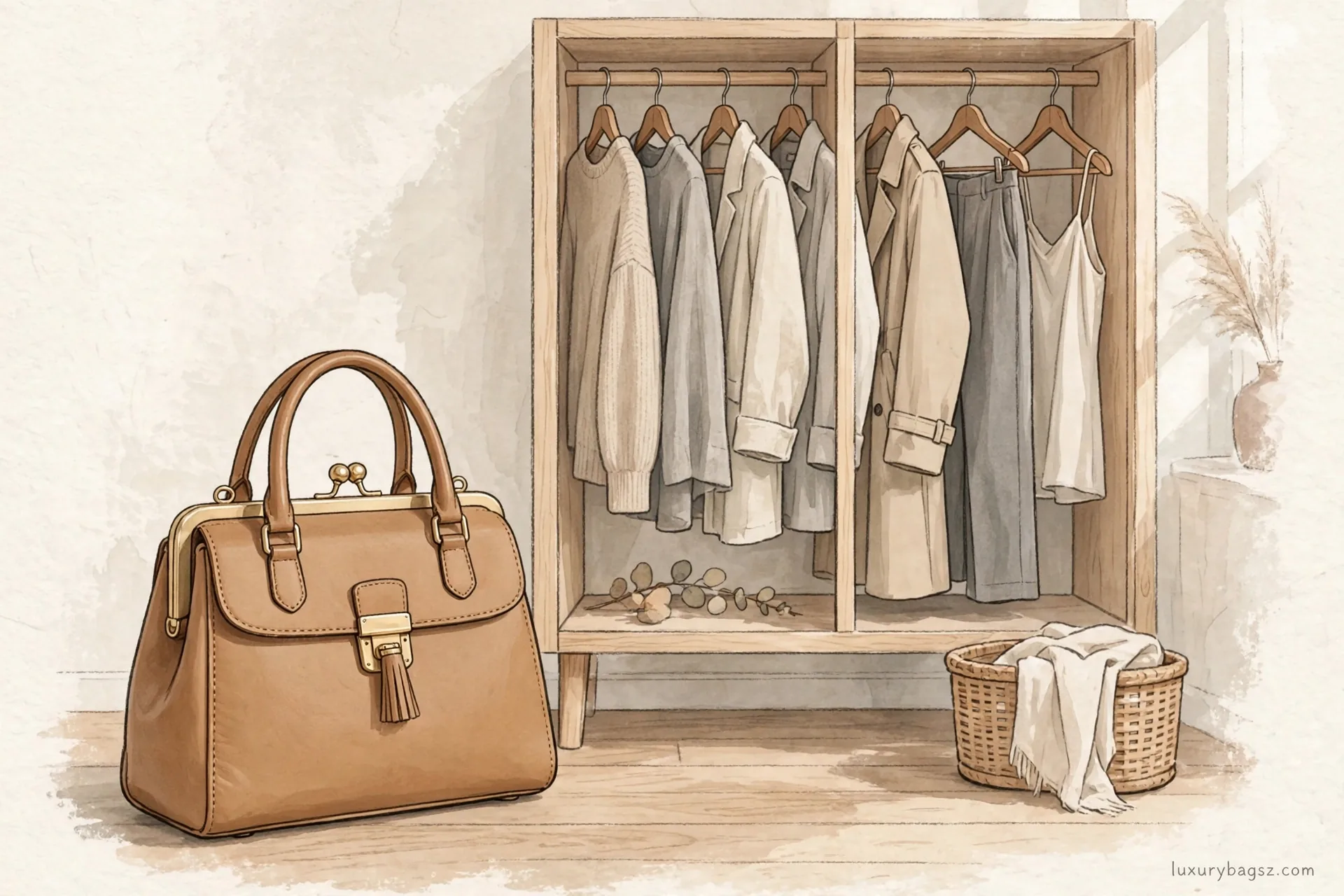
Finally, colour interacts with everything else about the bag. A pale shade shows wear, dye transfer from dark jeans, and scuffs far sooner than Noir. A bright shade demands simpler outfits. A dark shade hides a multitude of sins but can look heavy in summer. The rest of this guide works through those trade-offs shade by shade, so you can match a colour to your real life rather than to a photograph.
The Classic Neutrals: Noir, Gold, Etoupe, Etain and Craie
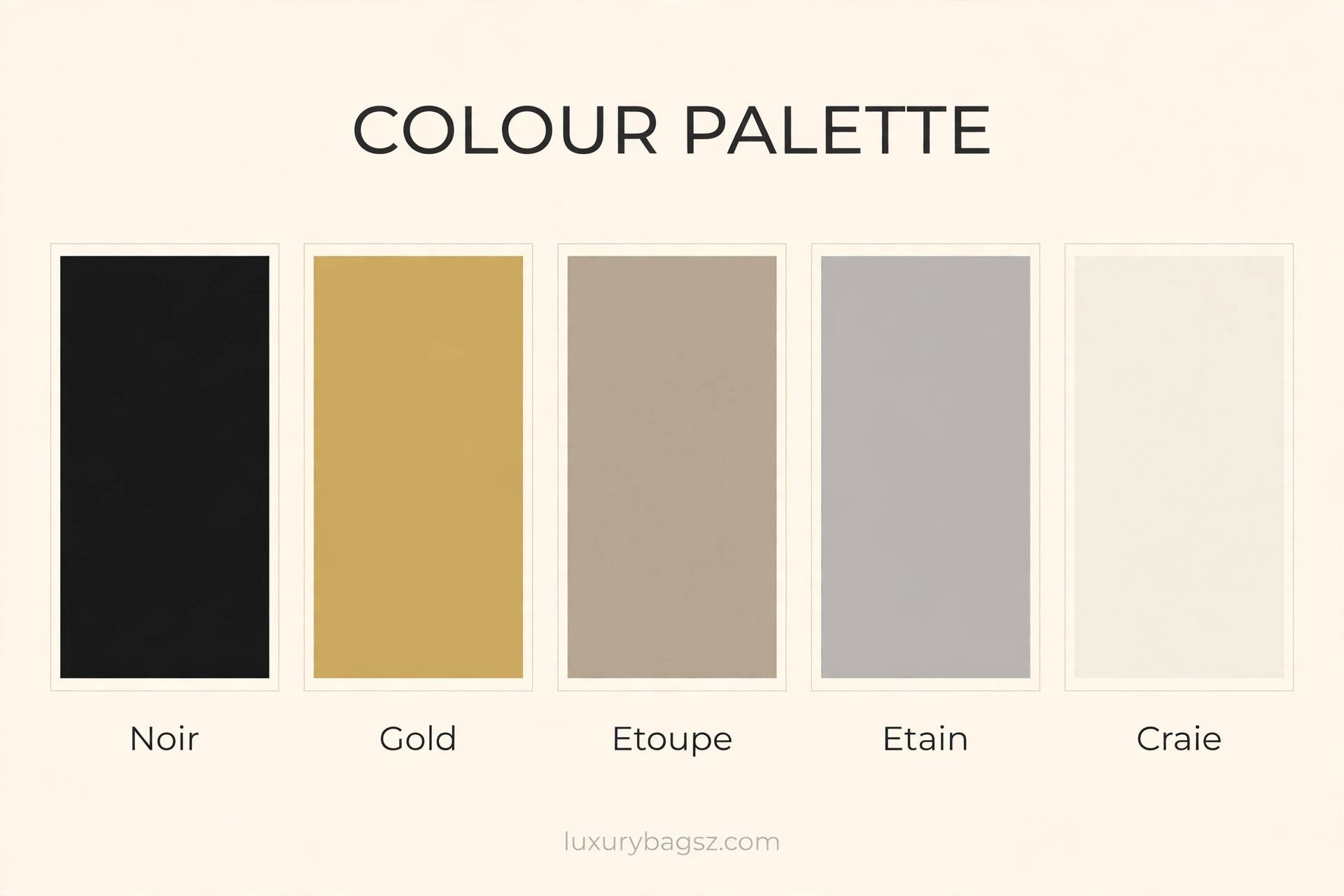
Noir is the simplest choice and often the best one. It is a true, deep black that suits every leather, every hardware finish, and every occasion from a funeral to a first date. The original Birkin made for Jane Birkin was black, and black remains the colour that never dates, never clashes, and never needs explaining.
Its only weakness is that it can look severe in high summer and shows dust and lint on grained leathers, but that is a small price for total versatility.
Gold is the house classic and, by most accounts, the most sought-after neutral. It is a warm, buttery camel tan, popularised in the 1950s by Grace Kelly and her famous Kelly bag. Do not confuse it with metallic gold: on leather it reads as a rich tan with golden undertones, and it looks especially beautiful with gold hardware, which echoes its warmth.
Gold suits warm skin tones and autumn wardrobes particularly well, and it photographs beautifully, which helps on resale.
Etoupe is the quiet one. A grey-brown taupe — sometimes described as greige, a blend of grey and beige — it sits between warm and cool and goes with almost everything without shouting. Collectors praise Etoupe for its chameleon quality: it looks grey in one light, brown in another, and it pairs as happily with palladium hardware as with gold. If Gold feels too warm or too statement for you, Etoupe is usually the answer.
It has been part of the permanent palette for many years, alongside Noir and Gold.
Etain is Etoupe's cooler cousin. Where Etoupe carries a brown undertone, Etain is a purer, cooler grey that suits people who wear a lot of black, white and silver. It reads more modern and a little more formal than Etoupe, and it is a good choice if your wardrobe leans monochrome. Craie, meanwhile, is the chalk white of the group: a soft, slightly warm white that is fresher than stark white but still demands care.
Pale bags stain, transfer dye, and show corner wear, so Craie is best as a second or third bag, or for someone who rotates bags and stores them carefully. Our Hermès history guide explains how this restrained early palette grew into the rainbow the house offers today.
Gold vs Etoupe: The Choice Almost Every First Buyer Faces
Ask any Hermès collector about first-bag colours and this comparison comes up within minutes. Gold vs Etoupe is the house's great neutral debate, and there is no universally right answer — only a right answer for your wardrobe, your skin tone, and your hardware preference. Gold is warmer, richer and more immediately recognisable as Hermès.
Etoupe is cooler, quieter and arguably more versatile across seasons, because it does not pull an outfit towards autumn the way a warm tan can.
Hardware tips the balance for many buyers. Gold hardware on a Gold bag can look almost tonal, a warm-on-warm effect that some love and others find too much. Palladium hardware on Etoupe gives a cooler, more utilitarian feel that suits silver jewellery and grey-heavy wardrobes. If you wear mostly gold jewellery, Gold with gold hardware is the natural pairing. If you wear mostly silver, Etoupe with palladium is the equivalent.
Our Hermès hardware guide works through gold, palladium and rarer finishes in detail.
Leather matters here too. Gold on Togo reads soft and matte, with a gentle pebble that breaks up the colour. Gold on Epsom reads crisper and slightly lighter, because the embossed grain reflects light differently. Etoupe on Clemence, with its larger, flatter grain, can look slouchier and more casual than Etoupe on Togo.
If you cannot decide between the two colours, try both in the same leather and hardware, in daylight, with an outfit you actually wear. The right one usually announces itself within seconds, and the wrong one keeps nagging at you.

Vibrant Reds: Rouge H, Rouge Casaque, Rouge Sellier, Vermillon
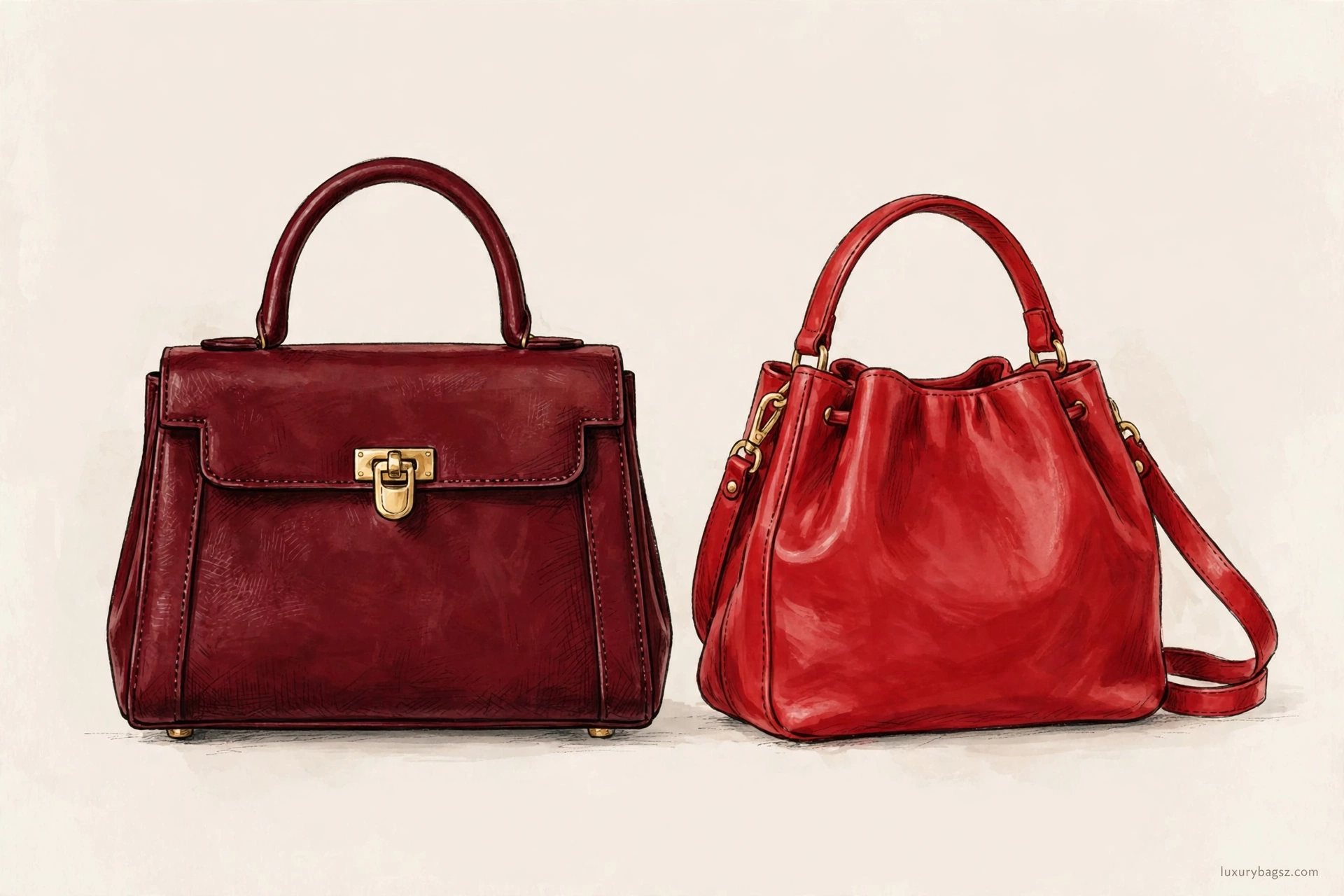
Rouge H is the red to know first. Created in 1925, it is one of the house's signature archive colours: a deep, elegant wine red with a hint of brown, perfect for autumn and winter dressing. On Box Calf leather, vintage Rouge H can read lighter and more cherry-like, while on Epsom it picks up the burgundy tones of the dye more strongly.
It is a red you can wear to work without feeling loud, and it pairs beautifully with navy, charcoal, camel and black.
Rouge Casaque is the brighter sibling. A clear, vivid red with strong presence, it is the shade collectors reach for when they want a bag to be the outfit's centrepiece. It suits summer as well as winter, looks striking against white and denim, and photographs with real punch. Its boldness is also its risk: a bright red bag limits what else you can wear with it, so it works best as a second bag, after a neutral is already in the wardrobe.
Rouge Sellier sits between the two in spirit: deeper and dressier than Casaque, a touch more formal than Rouge H, with a saddlery richness that suits structured bags like the Kelly Sellier. Vermillon, by contrast, is a red-orange vermilion shade, bolder and warmer than the others, inspired by the pigment of the same name.
It is less of a daily colour and more of a collector's accent, and it appears irregularly, so finding one pre-owned in your preferred bag and leather can take patience.
When choosing between reds, think about your existing wardrobe in the same way as for neutrals. If you wear a lot of black, navy and grey, any of these reds will lift an outfit. If you wear a lot of brown and olive, Rouge H will harmonise best, while Casaque may fight with warm earth tones.
And remember that red bags show wear differently: dark reds hide scuffs well, bright reds show corner rubbing sooner, so check edges and handles carefully on any pre-owned red bag.
Beyond Neutrals and Reds: Whites, Greys, Pinks and Seasonal Shades
Craie is only the beginning of the pale story. Blanc is a purer white, Parchemin a pink-toned cream seen since the 1960s, and Nata a creamy off-white with a subtle yellow warmth that first appeared as a seasonal shade in 2019. Each reads differently: Craie has grey undertones, Nata is warmer and creamier, Parchemin is softer and more ladylike.
Pale bags are the hardest to keep pristine, so buy them with your eyes open about cleaning, storage, and dye transfer from dark clothing.
Greys beyond Etain include Gris Tourterelle, a soft dove grey, and Gris Perle, a paler pearl grey. These are excellent if you find Etoupe too brown and Etain too steely: they sit in the middle, quiet and modern. Blues and greens follow the same logic as reds — a dark navy like Bleu Nuit is almost a neutral, while a jewel blue or vivid green is a statement. The whole family is mapped in our guide to Hermès blue colours, from Bleu Nuit to Bleu Électrique.
The same applies to pinks, where soft shades like Rose Sakura have a devoted following and brighter pinks come and go with fashion cycles.
Seasonal colours deserve a special note. Hermès releases new shades each season, retires others, and sometimes revives an old favourite years later. A seasonal colour you love may never be offered again in your bag, which creates real urgency — but urgency is a poor buying guide. If a seasonal shade is not clearly better than a permanent colour you already like, wait.
Permanent colours will still be there next season, and a bag bought in haste in the wrong shade is harder to love than a bag bought patiently in the right one.
How to Choose: A Practical Method That Actually Works
Start with your wardrobe, not with a colour chart. Lay out the five outfits you wear most often and ask which Hermès colour would work with all five. For most people the answer is Noir, Gold or Etoupe, and that answer is worth trusting even if a brighter shade tempts you in the boutique. A bag that works with your real clothes will be carried weekly; a bag that works only with an imagined wardrobe will sit in its dust bag.
Next, decide on hardware before you decide on the exact shade. Gold hardware warms and enriches, palladium cools and modernises, and the two can make the same colour look like two different bags. If you are choosing between Gold and Etoupe, the hardware question often settles it: gold jewellery wearers lean Gold, silver wearers lean Etoupe.
Check your everyday jewellery, your watch, and your belt buckles — the answer is usually already on your wrist.
Then think about leather and lifestyle together. A pale colour in a delicate leather is a high-maintenance combination, while Noir in Togo is close to indestructible by luxury standards. If you carry a bag daily, commute, or travel with it, favour darker colours and tougher leathers. If you rotate bags, drive rather than commute, and store bags stuffed and upright, you can afford a paler or brighter shade.
Our Kelly vs Birkin comparison is also useful here, because the two bags wear colour differently: the Kelly's structure suits darker, more formal shades, while the Birkin's softer shape carries bright colour more casually.
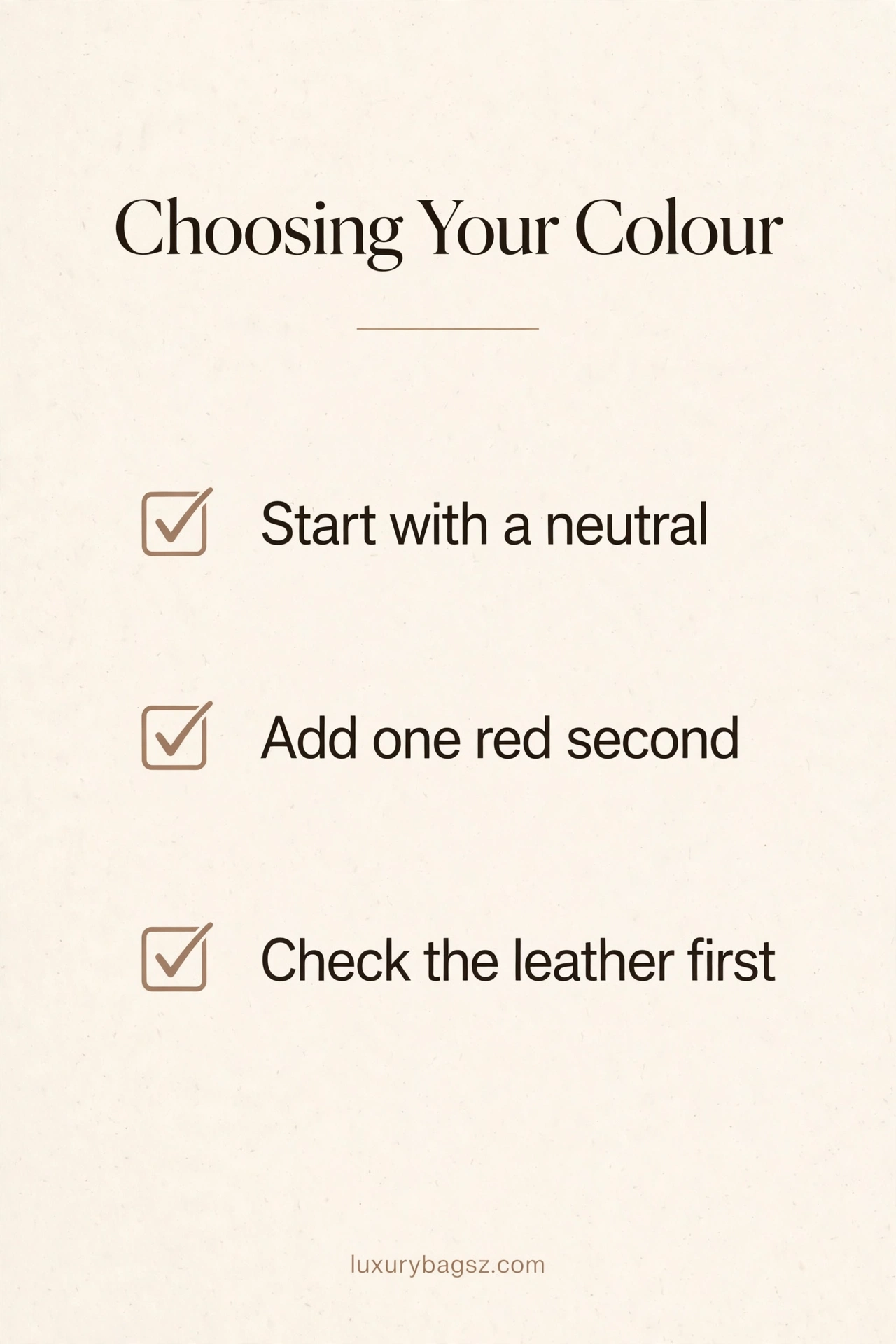
Finally, set your deal-breakers in advance. Decide which colours you would accept if your first choice is not offered, and which you would refuse even after a long wait. This sounds rigid, but it protects you from the most common Hermès regret: accepting a bag in a colour you merely tolerate because you were afraid of waiting longer. A tolerated colour becomes a resold bag within a year, usually at a loss once fees are counted.
Patience, in Hermès colour choice, is usually cheaper than compromise.
Colour, Care and Resale: What to Know Before You Commit
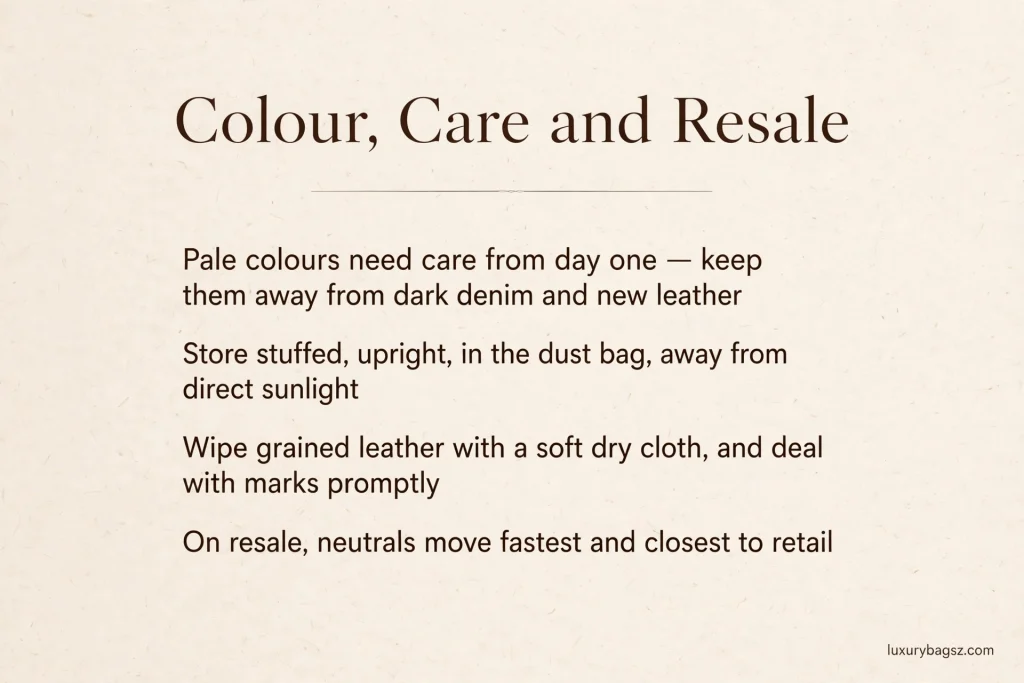
Pale and bright colours need more care than dark neutrals, and the care starts before the first wear. Keep pale bags away from dark denim, new leather jackets, and coloured scarves that can transfer dye. Store bags stuffed, upright, and in their dust bags, away from direct sunlight, which can fade bright shades unevenly.
Wipe grained leathers with a soft, dry cloth, and deal with marks promptly rather than letting them set — but never use harsh cleaners or water on delicate leathers without leather-specific advice.
On resale, the pattern is consistent across most reporting: neutrals move fastest and closest to retail, while seasonal brights are more variable. That does not mean brights are bad buys — a beloved seasonal pink with a following can outperform a neutral — but it does mean brights carry more risk.
If resale matters to you, favour permanent neutrals, classic reds, and well-known combinations of colour, leather and hardware over unusual one-off pairings that only you love.
Sources disagree on some details in this guide, and it is worth saying so plainly. Different colour guides give slightly different histories for when shades entered the palette, and screen swatches vary between sources. Colour codes also appear in some guides as numbers or letters, but those codes are collector-reported rather than published by Hermès, so treat any code you see online as a helpful hint, not an official record.
The shade names themselves — Noir, Gold, Etoupe, Rouge H, Rouge Casaque — are consistent across sources and are the reliable way to identify a colour when buying.
Frequently Asked Questions
What is the best first Hermès colour?
For most buyers it is Noir, Gold or Etoupe. Noir suits everything, Gold is the warm house classic, and Etoupe is the quietest, coolest neutral. Choose based on your wardrobe and jewellery: warm wardrobes and gold jewellery point to Gold, cool wardrobes and silver point to Etoupe, and a need for one bag for every occasion points to Noir.
Is Hermès Gold actually gold in colour?
No. Hermès Gold is a warm camel tan, not a metallic gold. The name describes a buttery tan shade, and it looks best with gold hardware, which echoes its warmth. If you want a metallic finish, that is a different matter entirely, and it appears on hardware and special finishes rather than in the Gold leather colour itself.
What is the difference between Etoupe and Etain?
Etoupe is a grey-brown taupe with a brown undertone, while Etain is a cooler, purer grey without that brown warmth. Etoupe feels softer and more versatile across seasons, Etain feels more modern and formal. If you wear a lot of black, white and silver, Etain may suit you better; if you wear browns and warm tones, Etoupe usually wins.
What is Rouge H?
Rouge H is a deep wine red with a brown hint, created in 1925 and now one of the house's archive signature colours. It is dressy without being loud, suits autumn and winter particularly well, and reads slightly differently by leather: lighter and more cherry-like on vintage Box Calf, more burgundy on Epsom.
Is Rouge Casaque brighter than Rouge H?
Yes. Rouge Casaque is a clear, vivid red with strong presence, while Rouge H is a deeper, darker wine red. Casaque works as a statement second bag, Rouge H works as a nearly-neutral red you can wear to work. If you want one red and you wear a lot of dark clothes, Rouge H is the safer choice.
Does the same Hermès colour look different on different leathers?
Yes, noticeably. The same dye reads softer and more matte on Togo, crisper on Epsom, and deeper on Swift, because each leather absorbs and reflects light differently. Always judge colour and leather together, and never buy a colour based on a photograph of the same shade in a different leather.
What is Craie?
Craie is a chalk-white Hermès shade, slightly warm and softer than pure white. It is popular as a fresh neutral but needs careful handling, since pale leather shows dye transfer, scuffs and corner wear sooner than dark colours. It is best as a second bag for someone who rotates bags and stores them well.
Do Hermès colours affect resale value?
Yes. Neutral colours such as Gold, Etoupe and Noir generally move fastest and closest to retail on the resale market, while seasonal brights vary more. A bright shade with a devoted following can do well, but unusual colours carry more risk. Colour is only one factor, alongside bag style, leather, condition and completeness.
What are permanent Hermès colours?
Permanent colours are shades that return regularly in the bag collection, including Noir, Gold and Etoupe. Seasonal colours appear for a limited run and may never return. If you love a seasonal shade, do not assume it will be available next year, but do not let that urgency push you into a colour you do not truly love.
Should I choose colour or leather first?
Choose them together, but start from your lifestyle. A daily bag in a tough leather and a dark or mid-tone colour is the practical combination, while a special-occasion bag can carry a paler or brighter shade in a softer leather. If forced to prioritise, pick the colour you will love in five years, then find the best leather available in that colour.
Final Verdict: The Colour Order That Rarely Goes Wrong
Buy a neutral first, a red second, and a seasonal bright third — if at all. Noir for total versatility, Gold for warmth and house heritage, Etoupe for quiet coolness: any of those three is a defensible first Hermès colour, and the best one is the one that matches the clothes and jewellery you already wear every day.
Rouge H is the red that behaves most like a neutral, Rouge Casaque the red that behaves most like a celebration, and both deserve a place only after the neutral is secured.
Above all, judge the actual bag, not the name. Colours shift by leather, by hardware, and by light, and no guide — including this one — can replace holding the bag against your coat in daylight. Take your time, set your acceptable colours in advance, and refuse a shade you merely tolerate. The right Hermès colour is the one you will still reach for in ten years, when the season that sold it to you is long forgotten.