Designer Bag Repair and Restoration: What Can Be Fixed, What It Costs and Where to Go
Designer Bag Repair and Restoration: What Can Be Fixed, What It Costs and Where to Go
A Tired Bag Is Rarely a Finished Bag
Most worn designer bags can be repaired. Cracked edge paint, loose stitching, tarnished hardware, faded colour and even a torn lining are all fixable in skilled hands, usually for far less than a replacement bag.
What matters is choosing the right route. A brand spa keeps a bag fully original, while a good independent specialist is often faster, cheaper and willing to take on work a brand will decline.
I am Jessica, founder of Luxury Bagsz and a handbag specialist. After more than ten years in the bag industry and examining over 500 bags, I judge repair work by one test: does it respect the original bag?
Key Takeaways
- Edge paint, stitching, zips, handles, linings, colour and shape can all usually be repaired or restored.
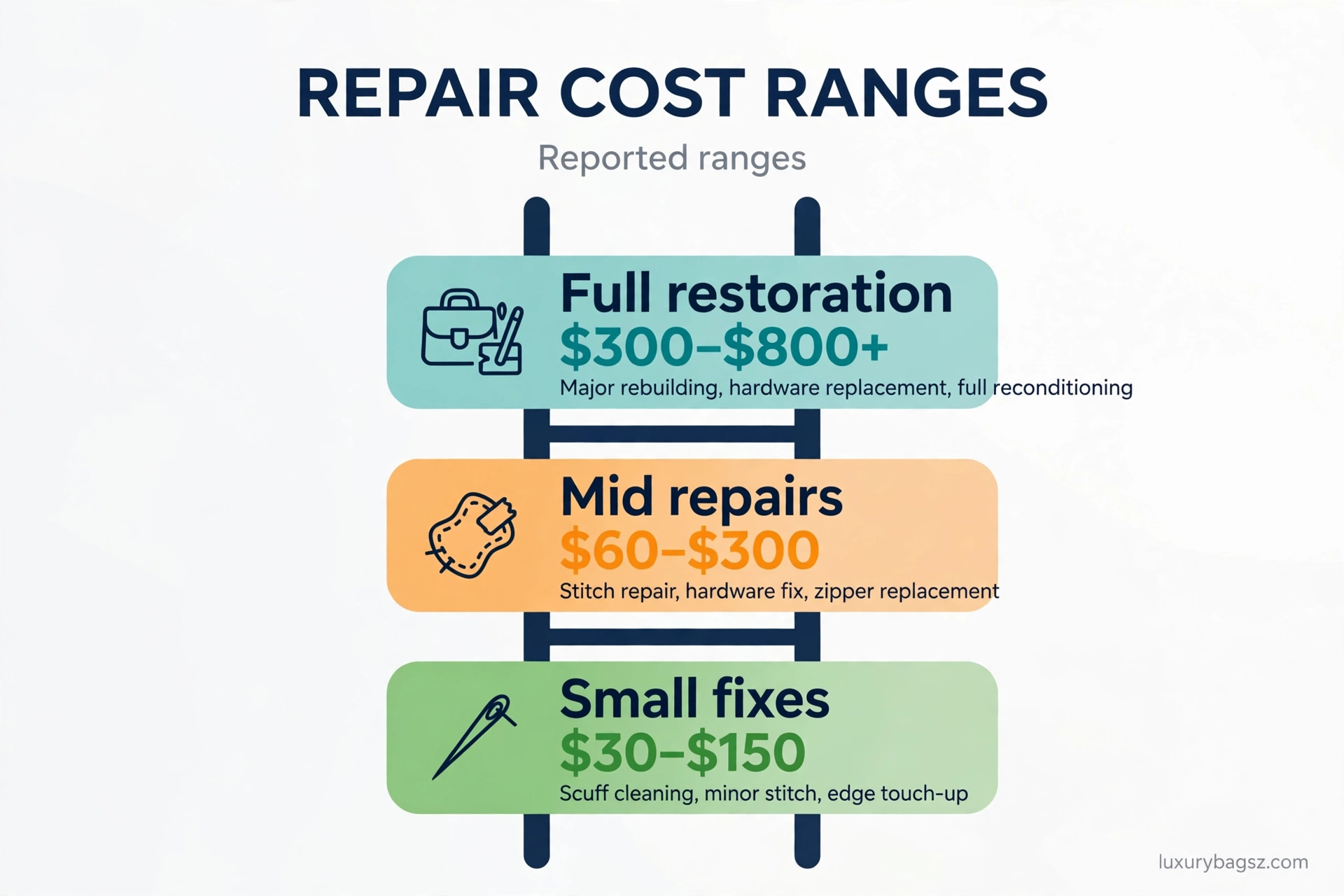
- Reported ranges put small fixes at about $30 to $150 and full restorations at about $300 to $800 or more.
- Brand services use original parts but can take months. Independents often finish in two to eight weeks.
- Cracked, peeling or rotting leather, heavy mould and severe dye transfer on patent often cannot be truly fixed.
- Sympathetic repair protects resale value. A full colour change or non-original parts can reduce it.
- Always agree the work, the parts, the price and the turnaround in writing before you send the bag.

What Repair and Restoration Actually Cover
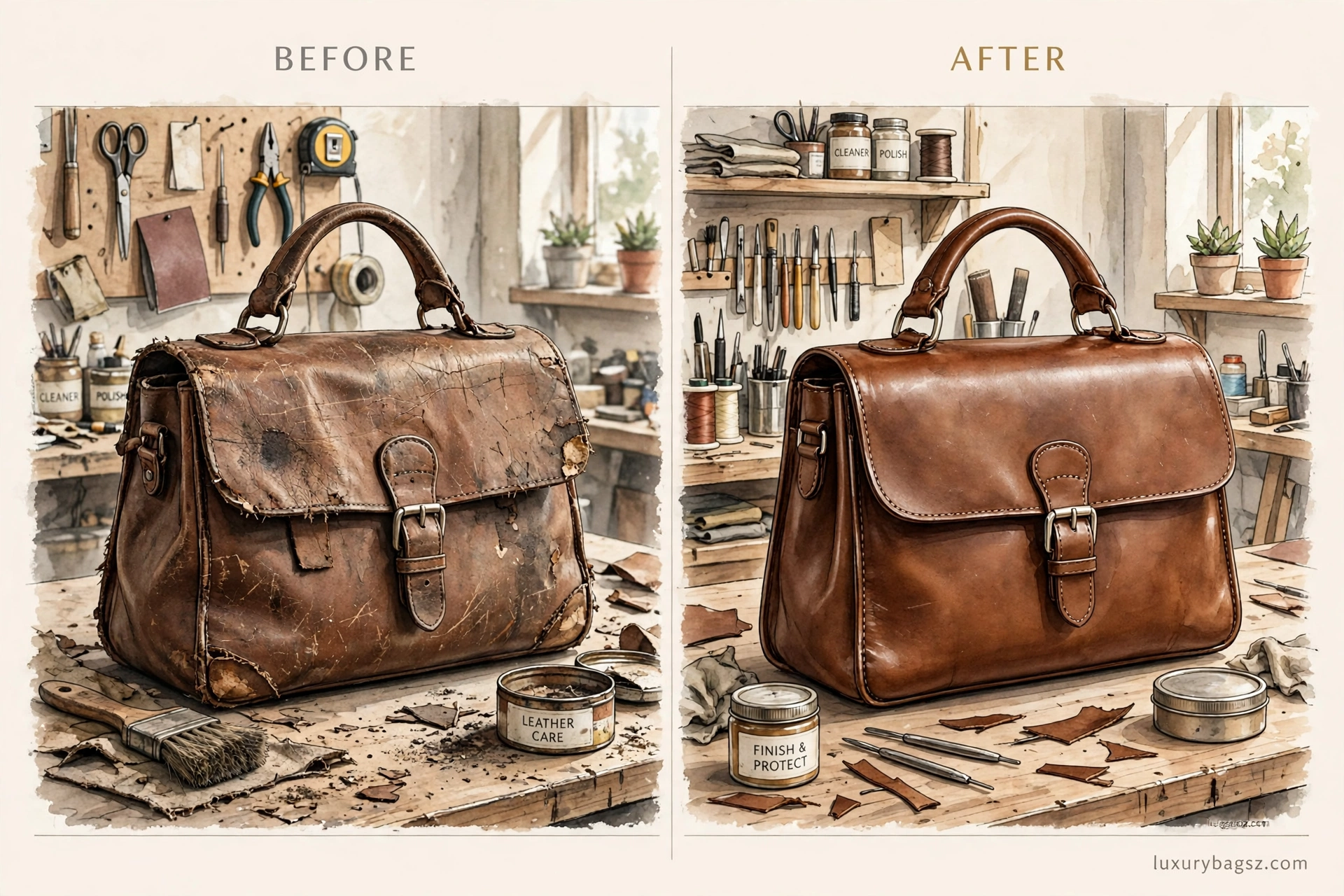
Repair means fixing one failed part so the bag works again. Restoration is broader. It combines cleaning, repair and careful refinishing so the whole bag looks coherent, not just patched in one place.
Edge paint
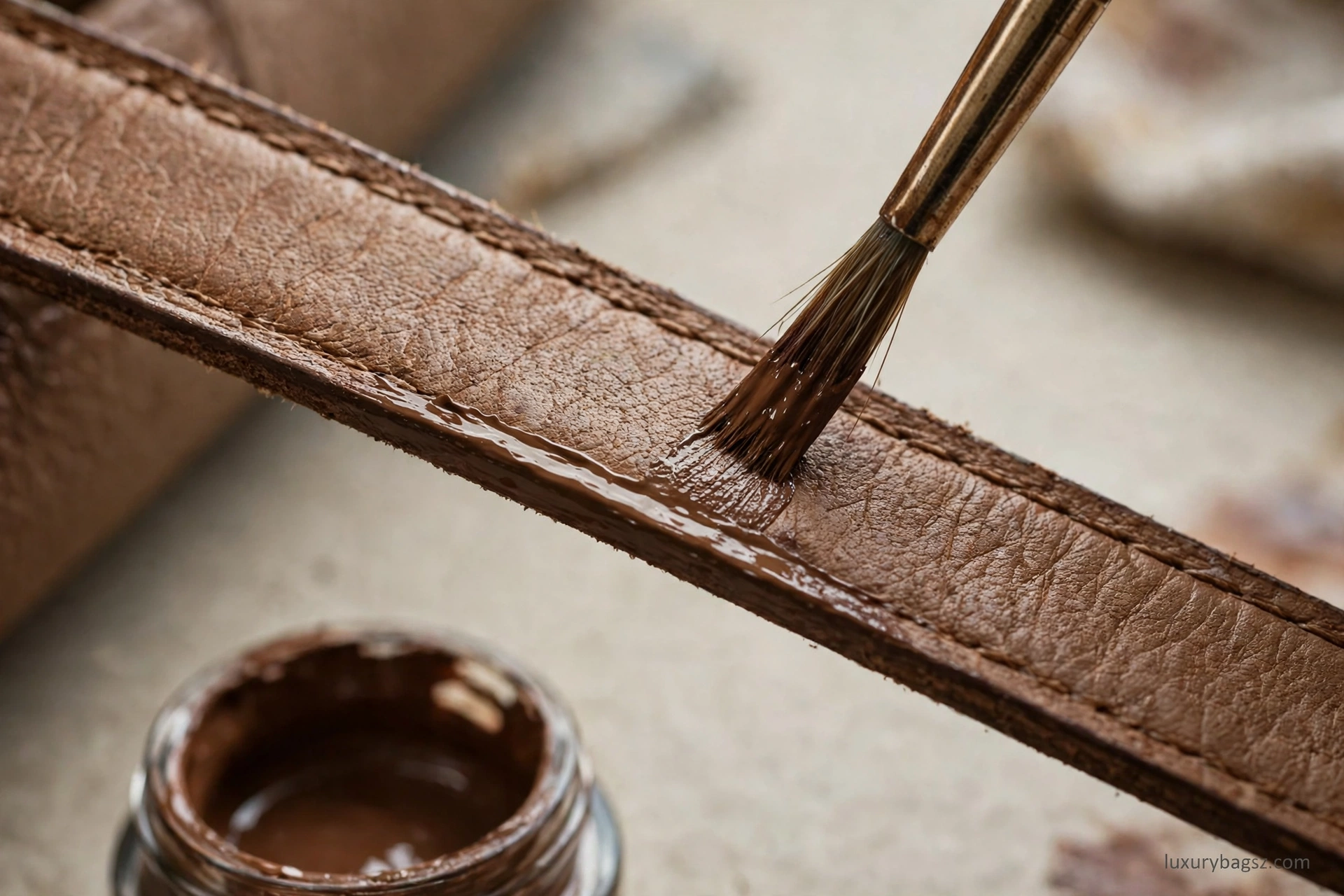
Edge paint seals the cut edges of straps, handles and flaps. When it cracks or peels, the old coating is sanded back and thin new coats are built up, dried and finished to match the original colour.
Stitching
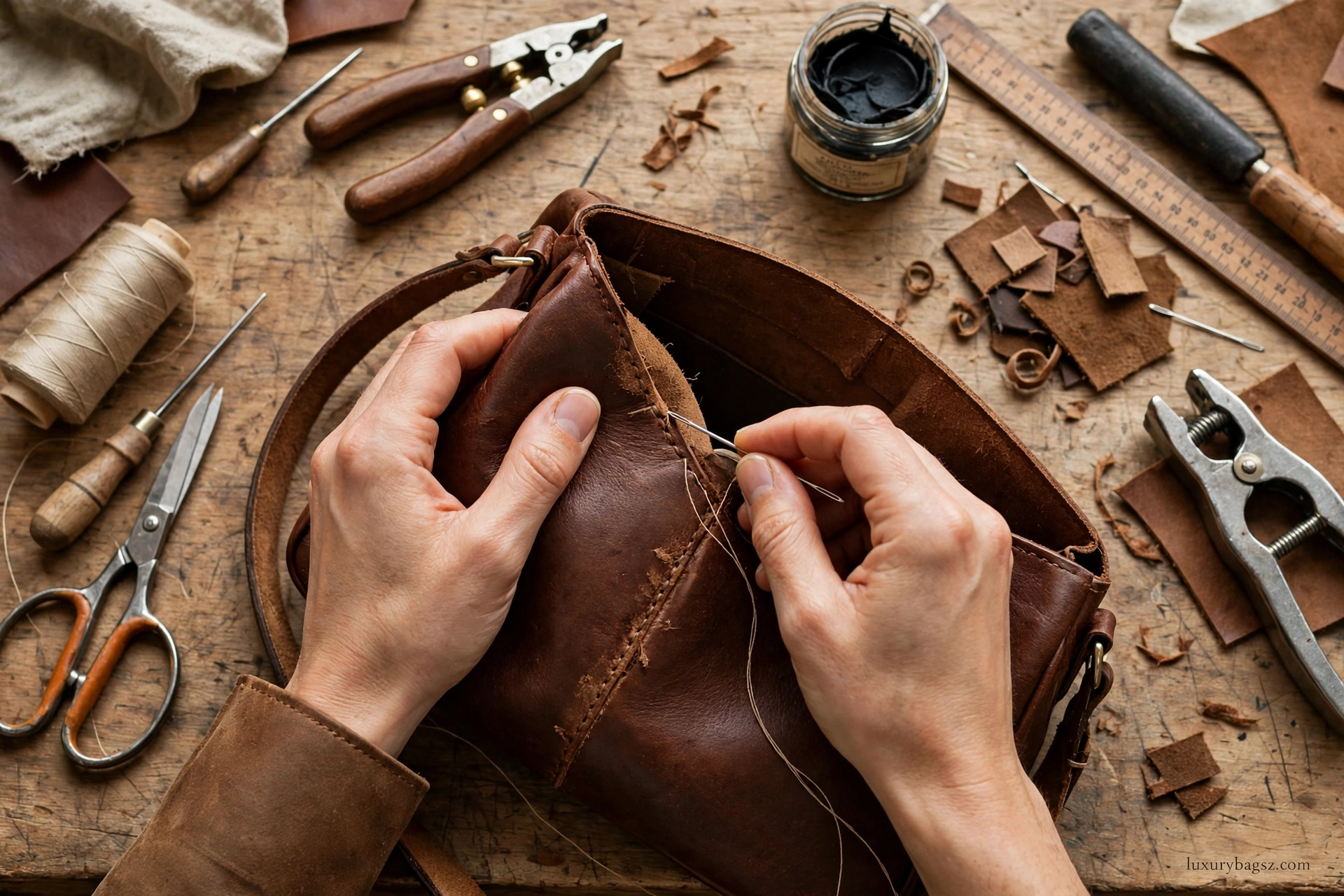
Loose stitching is one of the best-value repairs there is. A short run caught early is quick work. Left under load, the seam opens further, the leather stretches and a small job becomes a rebuild.
Hardware replating and replacement
Dull hardware can often be polished. Worn plating can be stripped and replated in gold, palladium or silver tones. Broken clasps, rings and feet can be replaced, ideally with parts that match the originals.
Lining replacement
A torn lining can be patched, but a sticky, peeling or badly stained lining usually needs replacing. The old lining comes out, a new one is cut and sewn in, sometimes through the bag’s main seams.
Colour restoration
Colour work ranges from a small corner touch-up to a full refinish. The surface is cleaned and prepared, pigment is matched and applied in fine layers, then sealed. A colour change is also possible.
Shape and structure repair
Slouching, collapsed corners and a twisted frame can often be corrected. Restorers reshape the bag, reinforce weak panels and rebuild internal support so it sits properly again instead of folding in on itself.
Handle and zip replacement
Darkened, cracked or stretched handles can be remade in matched leather, and vachetta sets are a classic example. A failed zip can be repaired if only the slider has gone, or fully replaced if the tape has failed.
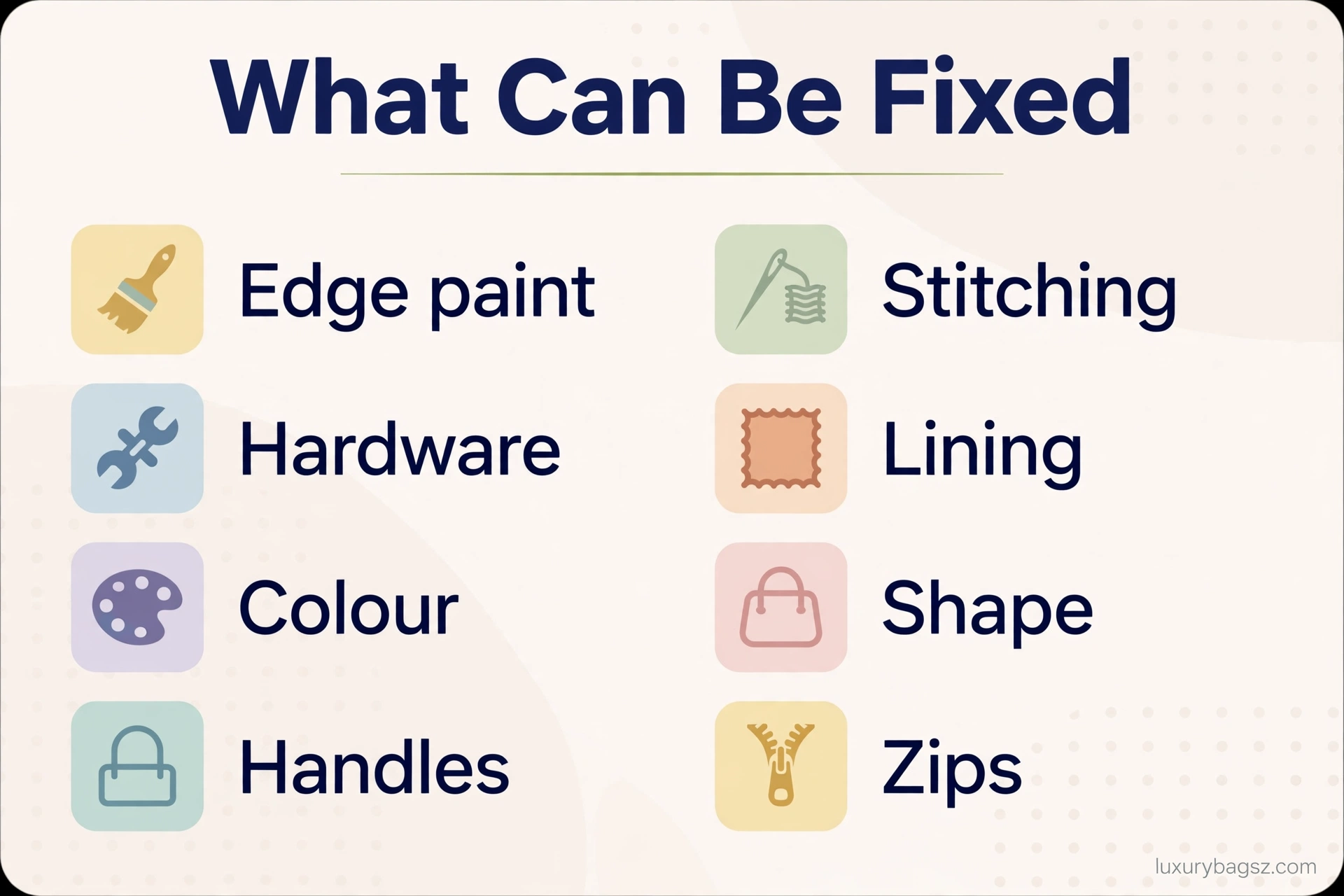
A full restoration usually runs in order. The bag is inspected, deep cleaned, repaired at the base fault, then recoloured or conditioned and sealed, because colour and conditioning will not hold properly on a dirty or unfixed surface.
Brand Spa Services Versus Independent Specialists
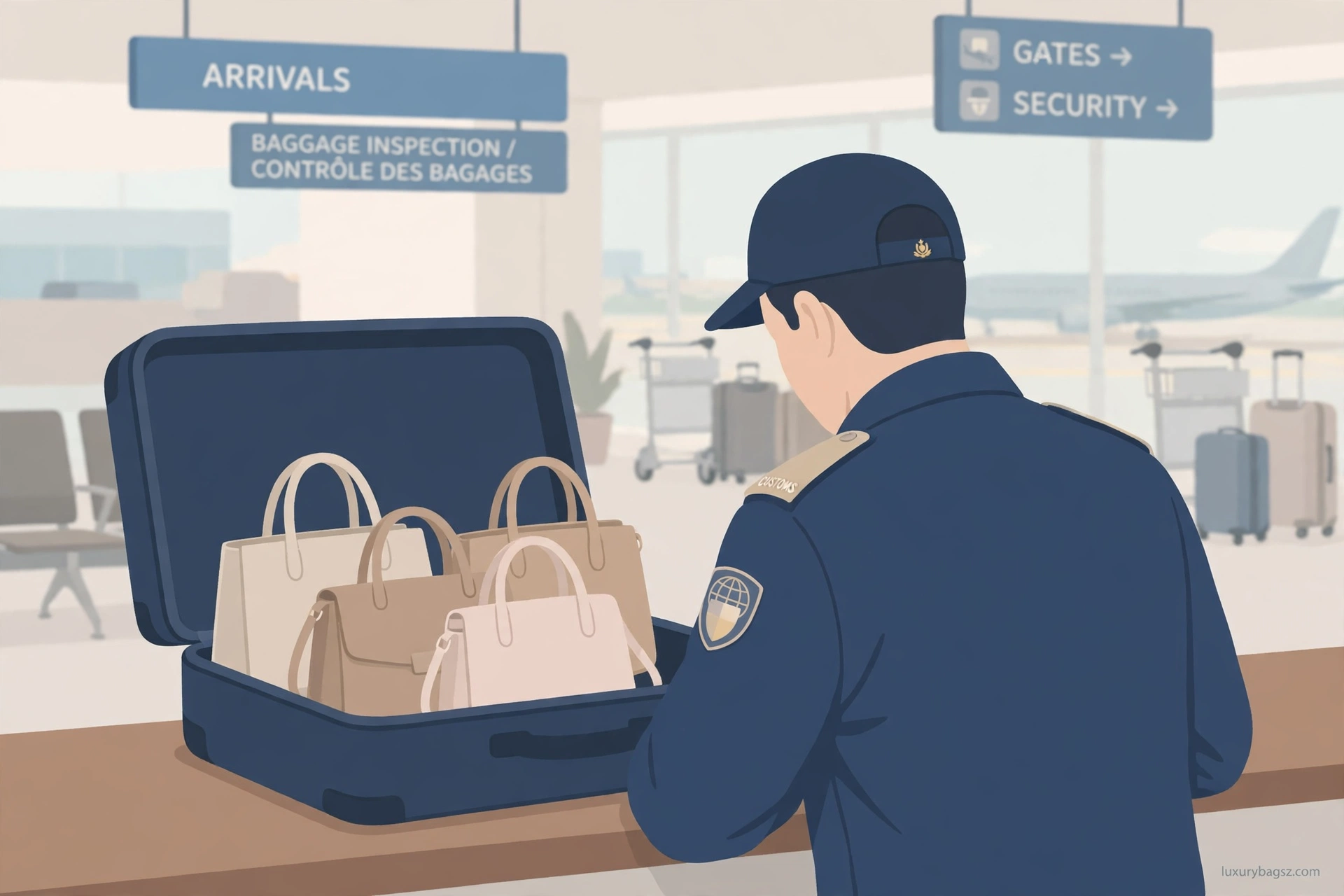
Hermès is the best-known example. Its after-sales service, widely called the Hermès spa, is handled by the maison’s own craftspeople, who clean, condition, touch up corners and repair stitching and hardware.
Gentle home care still matters between services. My guide to cleaning a Hermès Birkin shows what you can safely do yourself and what should be left entirely to the maison.
Chanel and Louis Vuitton also run repair services through their boutiques, as publicly described by both houses. Bags are assessed in store, quoted, and sent to a brand workshop for stitching, hardware and leather work.
When I check bags with Entrupy, including microchip checks, prior repair work is part of what I look for. Neat, honest repair reads well. Poor dye work and mismatched parts are easy to spot and hard to undo.
What Repair Typically Costs
There is no single industry price list, so treat every figure here as a reported range, not a quote. Your price depends on the brand, the leather, the extent of damage and the workshop’s waiting list.
Published guides give a useful anchor. Shinola’s leather repair guide, summarised by Foley + Corinna, lists most single repairs between about $30 and $300, from zip repairs to full zip replacement.
| Repair | Reported range | Typical turnaround |
|---|---|---|
| Edge paint touch-up | $30 to $130 | One to three weeks |
| Stitching repair | $50 to $150 | One to three weeks |
| Hardware swap or polish | $30 to $150 | One to three weeks |
| Zip repair or replacement | $30 to $300 | Two to four weeks |
| Lining repair or replacement | $60 to $300 or more | Three to five weeks |
| Handle or strap replacement | $100 to $500 | Two to four weeks |
| Colour restoration | $260 to $500 or more | Three to five weeks |
| Full restoration | $300 to $800 or more | Four to eight weeks |
Specialist price lists support that spread. Artbag in the United States reports minor repairs at $50 to $150 and comprehensive restorations at $300 to $800 or more, with most work done in four to six weeks.
In Britain, Handbag Clinic prices are bespoke. Reports of its Harrods launch describe minor stitch work from £19.95, a popular full restoration at £255, and complex exotic work above £600.
Brand work can sit higher still. Reported Louis Vuitton ranges include zip replacement at $180 to $350, handle replacement at $150 to $500 and full vachetta replacement at $660 to $1,600.
Deciding whether repair is worth the money
The Handbag Authority guide frames the choice by value. If a quote is under about 30% of what the bag is worth now, repair is usually the sensible call. Between about 30% and 60%, the answer depends on quality and sentimental value.
Above about 60%, that guide suggests selling the bag as it stands and putting the money towards a replacement instead. Classic Hermès, Chanel and Louis Vuitton bags are the exception, because a sound repair protects a much larger resale value.
How Long You Will Be Without Your Bag
Independent specialists are usually the quickest route. Published lead times cluster around two to eight weeks, depending on whether the job is cleaning, colour work, relining or a structural rebuild.
Handbag Clinic states lead times of two to eight weeks. Doria lists two to five weeks across its services. Artbag reports four to six weeks for most restorations, with rush work sometimes available.
Brand services run on a different clock. Bags travel to central workshops, wait their turn and travel back. Allow several months for major brand work, and longer still for exotic skins or rare parts.
What Honestly Cannot Be Fixed
A good restorer will refuse some bags, and that refusal is a sign of honesty. Leather that has dried out and cracked through across large areas cannot be made supple and whole again by any cream.
Peeling coated leather and flaking patent are similar. The failing surface can be stripped and recoloured, but that is a transformation, not a repair, and the finish will never behave like the original.
Coated canvas needs the same honesty. The canvas body on many Louis Vuitton bags is not leather, so cracked or peeling canvas cannot be conditioned back like hide. Restorers usually work on the vachetta trim, while a damaged canvas panel may only be patched.
Severe dye transfer into pale patent, deep ink that has soaked through leather, and mould that has lived in a lining for years may improve with treatment yet rarely disappear completely.
Having visited leather factories in Spain and France, where leather for houses such as Hermès and Chanel is made, I can tell you the material sets the limit. Craft cannot reverse damage inside the hide itself.
How Restoration Affects Resale Value
Light, sympathetic work usually protects value. Cleaned leather, sound stitching, tidy edges and working hardware make a bag easier to sell, because the buyer is not pricing in repairs of their own.
Brand spa work is the easiest to defend at resale, since original parts and brand paperwork support the bag’s story. Keep every receipt and repair document with the bag’s other papers.
Heavy independent work is more nuanced. A full colour change, a replaced lining in a different material or non-original hardware will put off collectors who prize originality, even when the workmanship is excellent.
If selling is likely, read how luxury consignment works before you restore. It explains how condition and originality are judged, so you can repair for the market, not against it.
Questions to Ask Before You Send a Bag
- Will you use original parts, and if not, exactly what will you use instead?
- Is the quote fixed after inspection, and will you confirm it in writing before starting?
- What is the realistic turnaround, and what happens if it slips?
- Is the work guaranteed, and for how long?
- How is the bag insured in transit and while it is in your workshop?
- Can I see before and after examples of this exact repair on this leather?
- Will the work affect how the brand itself will treat the bag in future?
Packing and posting a bag safely
Photograph the bag from every side before it leaves you, including corners, lining, hardware and any existing marks. Keep those dated photos with the written quote, so the bag’s condition on arrival is never a matter of opinion.
Post it stuffed, inside its dust bag, in a sturdy box, by a tracked service insured to its full replacement value. Remove personal items first, and keep the tracking receipt until the bag is safely back in your hands.
Doing It Yourself Versus Sending It Away
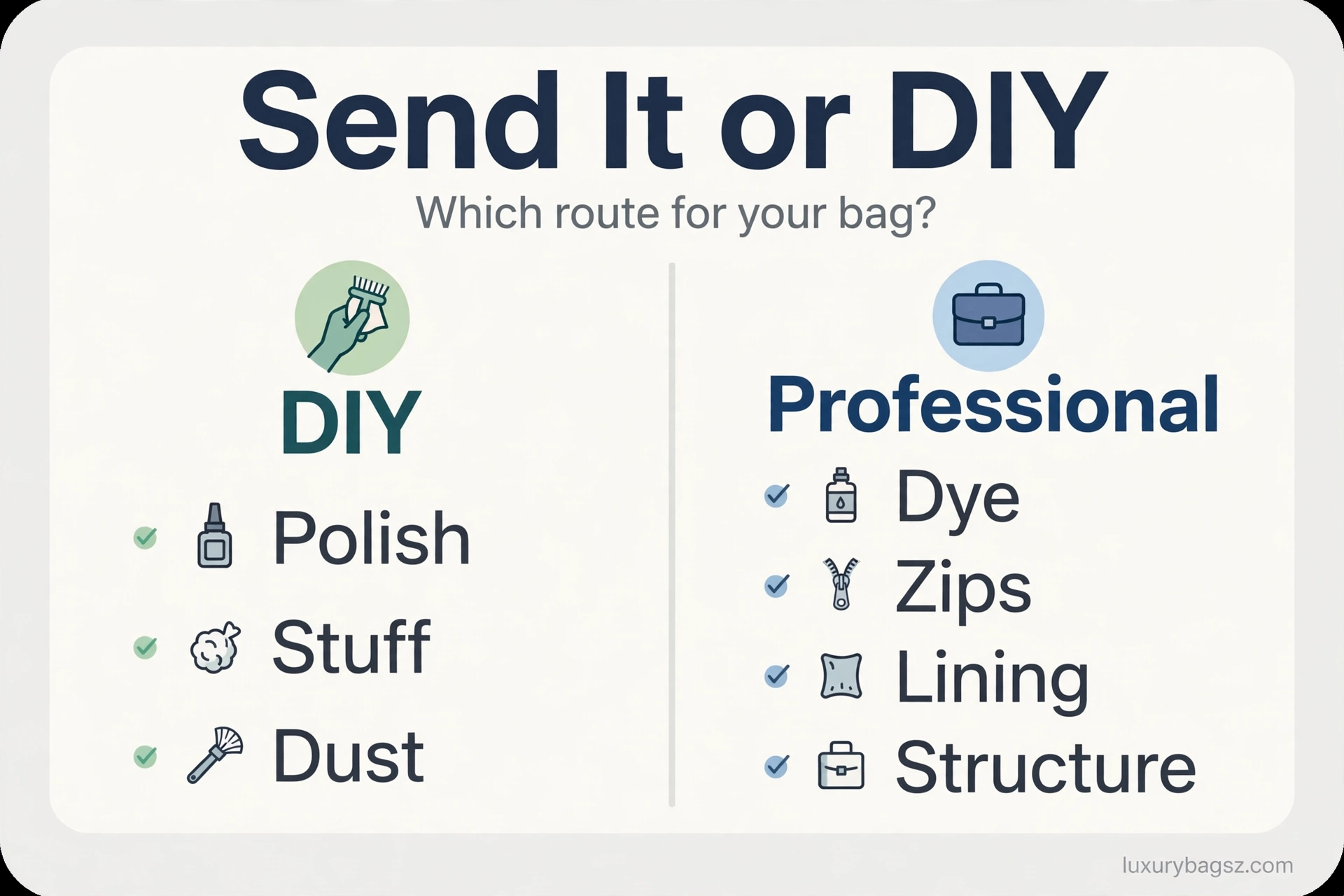
Home care has a clear, safe lane. Dusting, gentle surface cleaning, careful conditioning where the leather allows it, correct stuffing and good storage all belong at home and prevent bigger bills later.
My guide to cleaning Chanel bags draws that line for delicate lambskin and caviar leather, where the wrong product does damage in a single wipe.
Everything structural belongs with a professional. Dye work, edge paint on a valuable bag, zip replacement, relining, replating and reshaping all need tools, materials and practice you cannot improvise.
The costly mistakes I see are nearly always home dye jobs, glue on seams and harsh cleaners on pale leather. Each one turns a modest professional bill into a major restoration, if it can be saved at all.
Frequently Asked Questions
Can a cracked leather bag be restored?
Surface crazing can be conditioned and refinished, but leather cracked through across large areas cannot be made whole again. A restorer can improve the look, yet the weakness in the hide remains.
Will a brand repair a bag bought preloved?
Usually, yes, provided the bag is authentic and has not been heavily altered. Boutiques assess the bag first. Keep any proof of purchase you have, but lack of an original receipt rarely ends the conversation.
Does restoration increase a bag’s value?
It protects value more than it adds it. Sound, tidy bags sell faster and with fewer discounts. Heavy changes, such as a new colour, can narrow the buyer pool even when the work is beautifully done.
Can edge paint be repaired at home?
On an everyday bag, a careful touch-up is possible with the right paint. On a valuable designer bag, have it done professionally. Poorly matched, lumpy edges are obvious and cheapen the whole bag.
How do I know a restorer is trustworthy?
Look for detailed before and after work on bags like yours, a written quote after inspection, insurance, a guarantee and clear answers about parts. Vague promises and pressure to pay in full upfront are warnings.
Should I repair a bag before selling it?
Fix small, honest faults such as loose stitching and worn edges, and clean the bag well. Leave major colour or lining decisions to the next owner unless a consignor advises you otherwise in writing.
Final Verdict
Repair early, repair honestly and repair once. Small faults are cheap, larger restoration is still modest beside replacement cost, and the right workshop will tell you plainly when a bag has reached its limit.
Choose the brand route when originality and paperwork matter most, and a proven independent when you need speed, flexibility or work a brand will not do. Either way, agree everything in writing first.