How to Use a Suede Brush: The Dry-First Guide for Shoes, Bags, and Jackets
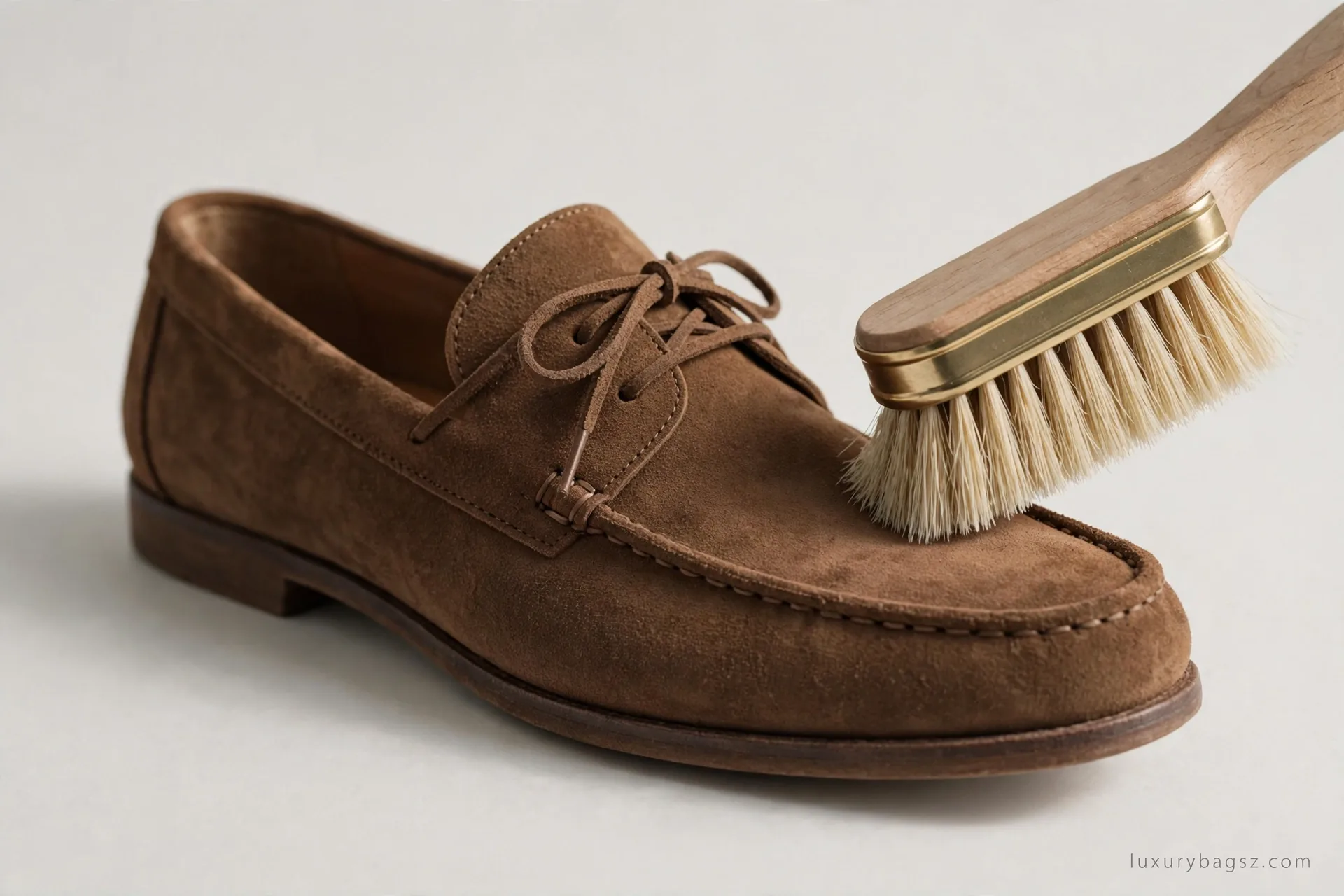
Learning how to use a suede brush correctly is mostly about learning what not to do first. Suede is not smooth leather, and it does not like water, polish, or hard scrubbing. A suede brush works dry, in one direction, with light pressure, and it is used to lift dirt and raise the nap — the soft, fuzzy surface — back up.
Most guides only show suede shoes. This guide covers shoes, bags, and jackets, explains the different brush types, and gives you a stain-by-stain order so you do not make a small mark worse. It also covers the mistakes that flatten suede permanently, and when to stop and get professional help.
Key Takeaways
- Always start dry. Never brush wet suede, and never start with water or a liquid cleaner.
- Brush in one direction, following the nap, with light pressure. Back-and-forth scrubbing pushes dirt in and flattens the nap.
- Brush first, eraser second, brush again. The eraser lifts a scuff, the brush clears the crumbs and raises the nap.
- Do not use smooth-leather polish, conditioner, or a stiff brush on suede. Only suede-specific sprays are safe, and only after cleaning and drying.
- Suede and nubuck are similar, but not identical. Nubuck is finer and smoother, so use even lighter pressure on it.
- If suede is soaked, deeply stained, or colour has changed across a large area, stop and ask a professional. Brushing harder will not fix it.
What a Suede Brush Actually Does
Suede is leather with a napped surface: tiny fibres that lie in one direction. When those fibres get dirty, wet, or pressed flat, suede looks dull, shiny in patches, or dark in spots. A suede brush does three jobs:
- It lifts loose dust and dirt off the surface, before dirt gets ground in.
- It raises flattened fibres back up, so the colour and texture look even again.
- It clears eraser crumbs and loose fibres after spot cleaning, so the surface does not look patchy.
It does not polish, colour, or waterproof suede on its own. It prepares the surface, and it finishes the surface. The middle steps — eraser, spot treatment, protector spray — are separate, and they only work well if the brushing is done correctly.
Brush Types Compared: Pick the Right One
Not every brush sold as a suede brush does the same job. Use this table before you buy or borrow one.

| Brush type | Best for | How it feels | Watch out for |
|---|---|---|---|
| Nylon bristle brush | Everyday dust, light dirt, most suede shoes and bags | Soft to medium, safe for regular use | Too soft for heavy scuffs on its own |
| Brass bristle brush | Stubborn scuffs, matted nap, thicker suede | Stiffer, more aggressive | Use light pressure only; too hard on thin or light-coloured suede, and never on nubuck first |
| Crepe rubber brush | Lifting dirt, refreshing nap, delicate areas | Soft rubber, gentle, good for dust | Does not remove deep marks; use with an eraser for scuffs |
| Horsehair brush | Dusting, finishing, mixed materials | Very soft, good for a final pass | Not a suede-only tool; do not use it to scrub a stain |
| 2-sided brush (nylon + crepe, or nylon + eraser) | All-round home use, travel | One tool, two jobs | Check which side you are using before you start; the eraser side is not a brush |
For most readers, a nylon brush plus a suede eraser is enough. Add a crepe brush if you have light-coloured suede or a bag you brush often. Use a brass brush only for a stubborn, matted area, with very light strokes, and test it first in a hidden spot.

Do not use a wire brush, a stiff shoe brush for smooth leather, or a household scrub brush on suede. Those will scratch, flatten, and shine the nap in a way you cannot undo.

Before You Start: Dry, Test, and Support the Item
Make sure it is completely dry
This is non-negotiable. If suede got wet, let it air dry fully first, ideally overnight, away from direct heat and sunlight. Do not use a hairdryer, radiator, or direct sun. Cleaning wet suede smears dirt, flattens the nap, and can leave a permanent water mark.
For mud, wait until it is completely dry, then brush it away. Trying to clean mud while wet is one of the most common suede mistakes. The full method, from dry brushing to colour transfer, is in our guide to cleaning a suede bag at home.
Spot test first
Test the brush and any eraser or spray in a hidden spot first: inside a bag flap, inside a shoe tongue area, or an inside seam on a jacket. Brush lightly, wait a few minutes, and check for colour change or texture change. If colour lifts or the nap looks different, stop and use a softer brush or no eraser at all.
Support the shape
Stuff shoes with paper or shoe trees, so you are not pressing the suede flat while you brush. For a bag, stuff it lightly so the panel you are brushing is flat and supported, not sagging. For a jacket, lay it flat or hang it on a padded hanger, and brush one panel at a time.
Work in good light, one panel at a time
Brush one panel, check it, then move on. This stops you from brushing the same spot over and over, which is how nap gets worn thin.
How to Use a Suede Brush: Step by Step
Follow these steps in order. Do not skip the dry brush, and do not jump to a liquid cleaner first.

Step 1: Dry brush the whole item, in one direction
Hold the brush flat, use light, even strokes, and brush in one direction, following the nap. For shoes, brush from heel to toe or toe to heel, consistently. For a bag, brush top to bottom on each panel. For a jacket, brush down each panel.
This single step removes most everyday dust and dullness, and it shows you where the real marks are. Brush away from you, outdoors if possible, so dust does not settle back on the item.
Step 2: Brush scuffed areas lightly back and forth, then back in one direction
For a scuff or a flattened patch, use short, light back-and-forth strokes just on that spot to lift the fibres, then finish with strokes in one direction to even the nap. Do not scrub hard. If the scuff does not lift after a few light passes, move to the eraser, not to harder brushing.
Step 3: Use the suede eraser on marks the brush did not shift
Rub the eraser gently over a scuff or dry stain, in small circles or short strokes, with light, even pressure. Work in a small area, not across the whole panel. Brush away the crumbs with the suede brush, in one direction, and check the spot. Repeat once if needed, but do not overwork one spot. Over-erasing thins the nap and can lighten the colour.
For oil or grease, do not start with the eraser. Sprinkle cornstarch or talcum powder on the spot, leave it overnight to absorb the oil, brush it off dry, then use the eraser only if a mark remains. Never rub an oil stain with a damp cloth first; you will push it deeper.
Step 4: Handle water marks by evening the panel, not by spot drying
Water rings are the most common suede mishap. Do not try to dry-spot just the ring. The safer method used by professionals is to lightly dampen the whole panel, not just the stained area, with a clean, barely damp cloth, then let it air dry naturally away from heat, and brush the nap back up once fully dry. This evens the colour instead of leaving a sharp ring edge.
If you are not confident doing this on a valuable item, skip it and ask a professional. A bad water-mark fix is harder to undo than the original mark.
Step 5: Brush again to restore the nap and even the colour
Once the item is clean and completely dry, brush the whole item again in one direction. This is the finishing pass. It lifts the fibres, evens the colour, and removes any eraser residue. If one area looks darker or shinier than the rest, it is usually because the nap is lying flat there. Brush that area lightly, in the same direction as the rest, until it blends.
Step 6: Protect only after cleaning and drying
If you use a suede protector spray, use a suede-specific spray, outdoors or in a well-ventilated area, in light, even coats, from the distance on the can, usually about 15 cm. Let it dry fully, then brush lightly once more. Do not use smooth-leather waterproofing spray, polish, or conditioner on suede. Do not spray a dirty item and hope the spray will clean it; it will seal dirt in.

By Item: Shoes, Bags, and Jackets
Suede shoes
Remove laces if you can, so you can brush the tongue and eyelet area. Stuff the shoes, brush the whole shoe in one direction, then work on scuffs on the toe and heel, which get the most wear. For suede sneakers with mixed materials, do not get suede cleaner on mesh or smooth leather panels; brush suede panels only, and wipe other panels separately.
For dress shoes with suede panels, the same dry-first rule applies. Suede dress shoes should not be polished like smooth leather shoes, even if they are worn with a suit.
Suede bags
Brush one panel at a time, top to bottom, with the bag lightly stuffed. Pay extra attention to handles, corners, and the bottom, where dirt and hand oils build up. Do not brush a bag while it is hanging by one handle; the panel will sag and you will press unevenly.
For smooth leather bags, do not use a suede brush as a general cleaner. Smooth leather needs a different routine. For clean Chanel bags, for example, the guide covers caviar, lambskin, patent, and tweed, and suede methods do not apply to those materials in the same way.
Suede jackets
Lay the jacket flat or hang it, and brush down each panel, following the nap. Work on shoulders, cuffs, and pockets last, as those areas flatten most. Do not brush a jacket while it is crumpled or folded; you will create creases in the nap. After brushing, hang it in a ventilated area, not in a plastic cover, so moisture does not get trapped.
Suede sneakers and nubuck
Nubuck looks like suede but is finer and smoother, with a shorter nap. Use a soft nylon or crepe brush, even lighter pressure, and test first. Brass brushes are too aggressive for nubuck as a first choice. For sneakers, brush suede panels only, and clean soles separately.
Stain Guide: What to Do First, and What Not to Do
| Stain or mark | First step | Do not do |
|---|---|---|
| Dust and dullness | Dry brush in one direction | Do not start with water or spray |
| Scuff | Light back-and-forth brush, then eraser, then brush again | Do not scrub hard in one spot |
| Mud | Let dry fully, then brush away | Do not clean mud while wet |
| Water mark | Let dry, then even the whole panel lightly if confident, air dry, brush again | Do not spot-dry just the ring, do not use heat |
| Oil or grease | Cornstarch or talcum powder overnight, brush off dry, eraser if needed | Do not rub with a damp cloth first |
| Salt (winter) | Dry brush first, then a barely damp cloth if needed, air dry, brush again | Do not soak, do not use heat to dry quickly |
| Light dirt on a bag handle | Dry brush, then eraser lightly | Do not use smooth-leather conditioner on suede |
| Odour | Baking soda inside or over the item for a few hours, brush or vacuum off dry | Do not use alcohol or water-based fabric spray to soak it |
For any stain you have not seen before, or for a large area, test first in a hidden spot, and stop if colour or texture changes.

How to Restore Flattened Nap
Flattened nap is suede that looks shiny, smooth, or dark in patches, usually where it has been pressed, worn, or brushed too hard in the wrong direction.
- Make sure the item is dry.
- Brush the flattened area lightly back and forth, just to lift the fibres, not to scrub.
- Finish with strokes in one direction, matching the rest of the panel.
- Repeat once, with a rest in between, rather than brushing hard in one go.
- If the nap does not lift, do not keep brushing. The fibres may be worn, not just flat, and further brushing will thin them.
A crepe brush is often better for this job than a brass brush, because it lifts fibres without cutting them. Steam is sometimes suggested online for flattened suede, but it is risky for a valuable item: too much heat or moisture can cause water marks and stiffening.
If you try steam at all, use it from a distance, briefly, on a test area only, and let the item dry fully before brushing. For a valuable bag or jacket, a professional is safer.


Mistakes That Ruin Suede
- Brushing wet suede, or cleaning mud while wet.
- Scrubbing back and forth hard across the whole item, instead of in one direction.
- Using water, soap, household cleaner, or smooth-leather cleaner and conditioner on suede.
- Using a stiff brush, wire brush, or smooth-leather brush to scrub a stain.
- Drying with a hairdryer, radiator, or direct sunlight, which stiffens and cracks suede.
- Spraying protector on a dirty item, sealing dirt in.
- Over-erasing one spot until the nap thins and colour lightens.
- Storing suede in a plastic bag or cover, trapping moisture and causing odour or mildew. Use a breathable dust bag instead.
- Using a suede brush on the wrong material. Canvas, mesh, and smooth leather need different care. For example, canvas gift pouches are not suede, so do not treat them as suede. For VIP gift bags, the guide explains what those items actually are, and why a leather-handbag method does not apply to them.

How to Clean the Brush Itself, and How Often to Brush
Cleaning your suede brush
Tap the brush gently to remove dust after each use. For a nylon brush, wash it occasionally with mild soap and water, rinse, and let it air dry fully before using it on suede again. For a crepe brush, rub it on a clean surface to remove dirt, and do not soak it. For a brass brush, tap out dirt and wipe it dry; do not leave it damp, or it can rust and mark suede.
Do not use a dirty brush on light-coloured suede. Dirt trapped in the bristles will transfer and can darken a light panel.
How often to brush
- After every wear, for shoes you wear daily: a quick 30-second dry brush.
- Weekly, for bags and jackets in regular use: a light brush, one panel at a time.
- After any spill, scuff, or rain exposure, once dry: brush, eraser if needed, brush again, then protector if you use it.
- Before storing suede for a season: brush, check for marks, let it dry, and store in a breathable dust bag, not plastic.
Regular light brushing prevents most deep cleaning. Waiting until suede is heavily soiled makes every step harder and riskier.

When to Stop and Get Professional Help
Stop brushing and ask a professional if:
- Suede is soaked through, not just damp on the surface.
- A stain covers a large area, or colour has changed across a whole panel.
- The nap is worn thin, bald in spots, or feels rough after light brushing.
- The item is valuable, vintage, or has mixed materials you are not sure how to separate.
- A water-mark fix, steam, or spot cleaner has already made the area worse.
A professional can clean, re-nap, and recolour suede in a way home brushing cannot, and they can tell you when an item is too worn to restore safely. Brushing harder at home will not turn a worn item back into a new one, and it can make a professional repair harder.
Frequently Asked Questions
Can I use a suede brush on nubuck?
Yes, but use a soft nylon or crepe brush, lighter pressure, and test first. Nubuck has a finer, shorter nap than suede, so it marks more easily.
Can I use a suede brush on smooth leather?
No, not as a cleaner. A soft brush can dust smooth leather, but suede methods, erasers, and suede sprays are not for smooth leather. Smooth leather needs its own cleaner and conditioner.
Should I brush suede wet or dry?
Dry, always. If suede is wet, let it air dry fully first, away from heat, then brush. Brushing wet suede smears dirt and flattens the nap.
Which direction should I brush suede?
In one direction, following the nap, for the main pass and the finishing pass. Use short, light back-and-forth strokes only on a scuff, then finish in one direction to even it.
Can a suede brush remove water stains?
It can help after the item is dry, by evening the nap, but it cannot remove a deep water mark on its own. For a ring, the safer method is to even the whole panel lightly, air dry, and brush again, or ask a professional if you are unsure.
How do I use a suede eraser with a brush?
Brush first to remove dust, rub the eraser gently on the mark, brush again to clear crumbs and raise the nap. Do not overwork one spot, and test the eraser first in a hidden area.
Can I use a suede brush on a suede bag handle?
Yes, with light pressure, one panel at a time, and the bag lightly stuffed. Handles get hand oils and dirt, so brush them regularly, and do not use smooth-leather conditioner on a suede handle.
Do I need suede protector spray after brushing?
Not every time, but it helps after a full clean. Use a suede-specific spray only, after cleaning and drying, in light, even coats, outdoors or in ventilation, then brush lightly once dry.
Conclusion
A suede brush is a simple tool, but it works only when you use it dry, lightly, and in one direction. Brush first, eraser second, brush again, and protect only after cleaning and drying. That order handles most dust, scuffs, and dullness without damaging the nap.
The biggest mistakes are not about the brush itself. They are about rushing: brushing wet suede, scrubbing hard, using the wrong product for smooth leather, or drying with heat. Avoid those, brush regularly and lightly, and suede shoes, bags, and jackets will keep their soft texture and even colour for much longer.
If a mark does not lift after light brushing and one careful eraser pass, stop. That is the point where a professional, not harder brushing, is the right next step.