Hermès In the Loop 18 Bag: The 2022 Bucket Bag — Sizes and Prices
A Structured Bucket for Essentials Only
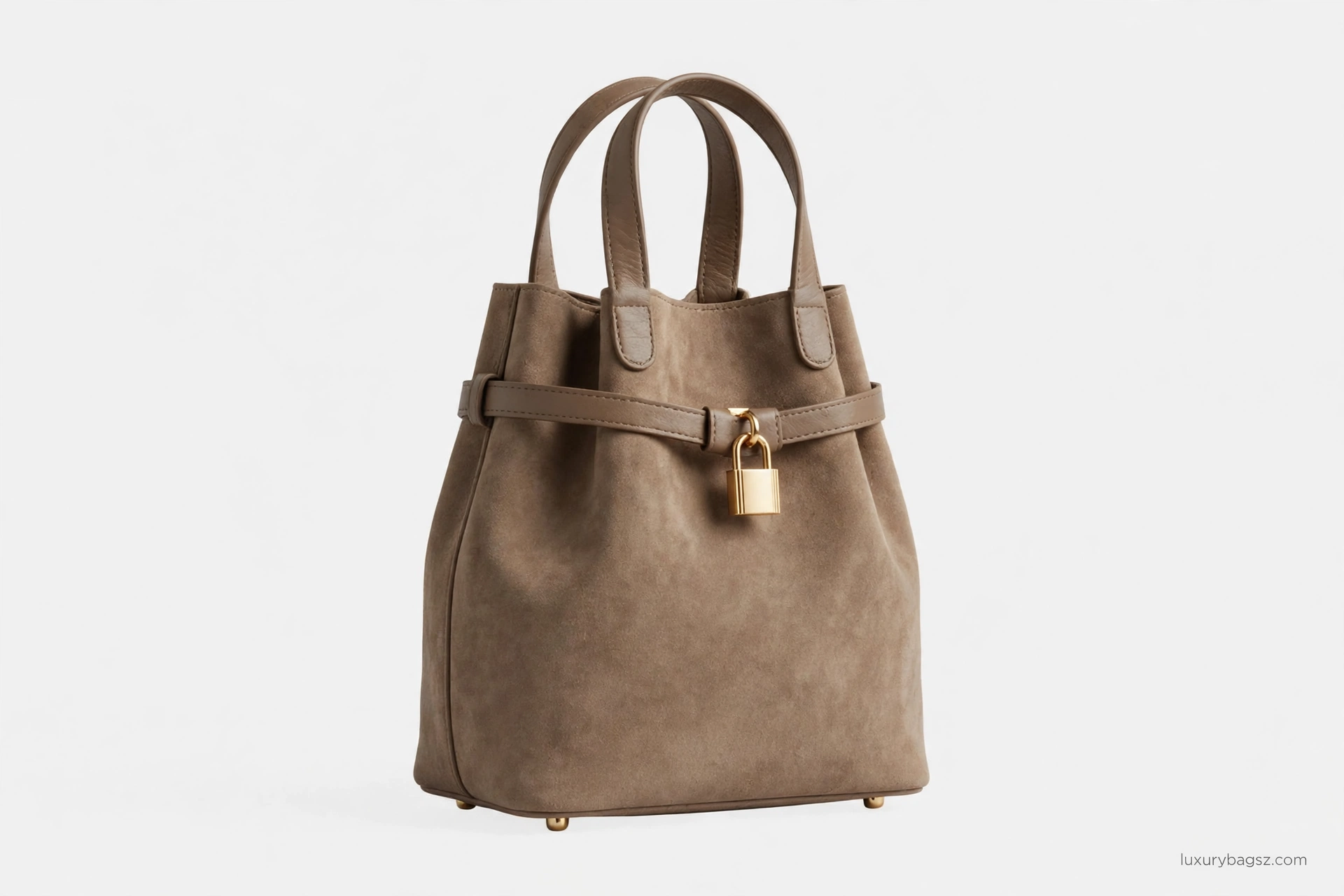
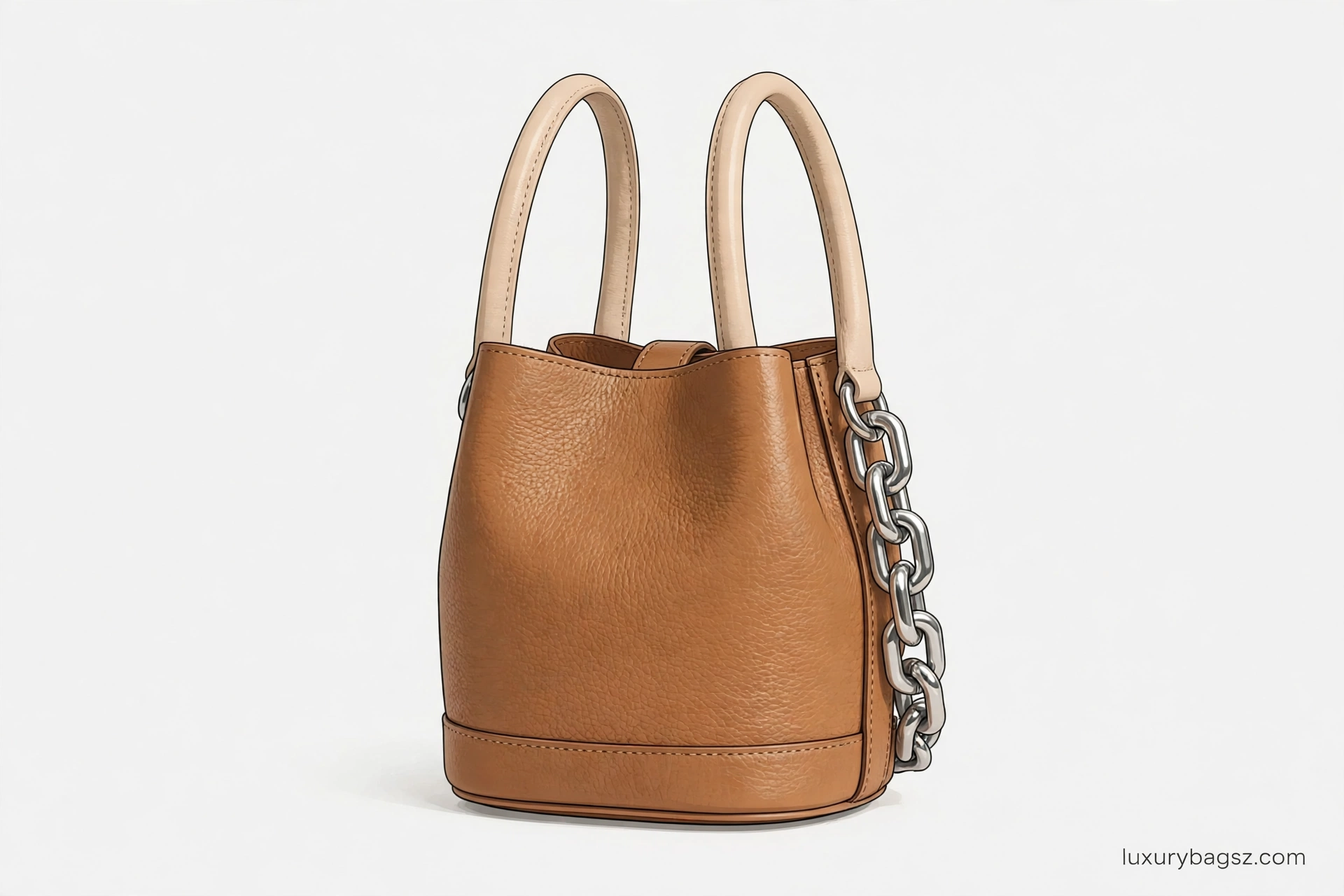
The In the Loop 18 is a compact bucket bag launched in late 2022, built around the Chaine d’Ancre motif first used in 1938. It pairs a Taurillon Clemence body with smooth Swift handles, a firm base and chunky hardware, at roughly 18 cm across.
That size holds little more than a phone, keys, a cardholder and lipstick, and it is carried by hand unless you add a separate strap. It has no feet and its unlined suede interior marks easily. Retail sits at roughly $5,800 at the top end and around $5,000 at the lower end, varying by material and by size.
It is often described as the newest alternative to the Picotin, and that comparison is useful, but it is not exact. The Picotin is a soft, open bucket inspired by a horse’s feed bag, with feet, a lock-through closure, and a casual, slouchy shape. The In the Loop is more structured, more contemporary, and, in one owner’s experience, less secure, less practical without a third-party strap, and more prone to showing wear than the Picotin. That difference matters for buying, because a buyer who expects a Picotin with a different handle will be disappointed, and a buyer who wants a structured, modern bucket will be pleased.
This guide gives the history, the versions, the materials, the 18 vs 23 choice, prices, what fits, real vs fake checks, condition, care, and a pre-owned buying checklist, with the conflicts in the sources stated plainly where they exist.
Key Takeaways
- The In the Loop was introduced in late 2022, inspired by the Chaine d’Ancre motif from 1938, in a compact bucket silhouette with Swift leather handles and a structured base.
- It comes in two main sizes, 18 and 23, most commonly in Taurillon Clemence leather with Swift handles, with Toile variations and a belt-bag variation as well.
- The 18 is a petite, minimalist bag for essentials only — phone, keys, cardholder, lipstick — while the 23 is a functional day bag that also fits a full-sized wallet, sunglasses, and a small makeup pouch.
- Retail is approximately $5,000 to $5,800, depending on size and material, according to Sotheby’s, and the bag is a non-quota bag, generally more accessible at boutiques than a Birkin or Kelly.
- On the secondary market, prices typically remain close to retail, approximately $5,000 to $6,000, with only a modest premium for pristine examples, according to Sotheby’s, while another price guide puts resale at 70 to 90% of retail, depending on condition and colour. That range, not a single price, is the honest picture.
- It is essentially a hand-carry bag without a third-party strap, it has no feet, its interior is unlined suede that gets dirty easily, and its Swift handles are delicate and prone to staining, according to an owner review of the 23. Those are practical limits, not flaws in a single bag.
- Clemence is soft, so without a bag organiser it can sag or wrinkle over time, according to the same owner review. An organiser helps, but a heavy satin organiser adds weight, so a light shaper is often the better choice.
The In the Loop fools people because it looks like a Picotin that went to the gym, so I start underneath, with the base. A genuine 18 has a firm, structured base under its Clemence body, and I press it to check that the shape is built in rather than stuffed for the photograph. Then I turn it inside out in my mind’s eye: the unlined suede interior marks easily, and honest marks differ from the raw, unfinished look of a copy. I have handled both buckets among the hundreds of bags I have examined, and the base plus the interior settle most comparisons.
Table of Contents
The 60-Second Answer
What is the Hermès In the Loop 18? A compact bucket bag introduced in late 2022, inspired by the Chaine d’Ancre motif, in Clemence leather with Swift handles, with a structured base and chunky hardware.
How big is it? The 18 refers to its approximate diameter, about 18 cm, for essentials only. The 23, at about 23 cm, is the day-bag size.
How much is it? Retail approximately $5,000 to $5,800, depending on size and material. Secondary prices are typically close to retail, $5,000 to $6,000 for pristine examples, or 70 to 90% of retail depending on condition and colour, according to different guides.
Is it a quota bag? No. It is a non-quota bag, generally more accessible at boutiques than a Birkin or Kelly, though popular colours such as Etoupe, Nata, and Black often sell out quickly.
Is it worth buying pre-owned? Yes, if you want a structured, modern bucket, you accept that it is hand-carry only without a third-party strap, it has no feet, and its Swift handles and unlined suede interior need care. No, if you need a secure, shoulder-carried, everyday bag with feet and a closed top — in that case, a Picotin, with its lock-through closure and feet, may suit you better.
What should you check first? The leather (Clemence body, Swift handles), the hardware (Chaine d’Ancre form, palladium or gold-tone), the blind stamp and Made in France mark, the handle condition, and whether a third-party strap or organiser is included.
What the In the Loop Actually Is
Hermès’ Chaine d’Ancre motif, first introduced in 1938, is a chain link drawn from a ship’s anchor chain, and it has been used in Hermès jewellery, scarves, and leather goods ever since. The In the Loop, introduced in late 2022, reinterprets that heritage element within a compact bucket silhouette: the bag’s sides tuck in together with Chaine d’Ancre hardware, the base is structured, and the handles are smooth Swift leather.
That design gives the bag two qualities that pull in opposite directions. On the one hand, it is more structured and more contemporary than the Picotin, with a defined shape that maintains its form, streamlined detailing, and hardware that reads as jewellery. On the other hand, it is an open-top bucket, with no feet, an unlined suede interior, and handles that are more delicate than the body leather. Those qualities are not a contradiction. They are the bag: a structured bucket that looks modern and feels luxurious, but that needs more care than a casual bucket.
The bag is also, in one owner’s words, an “IYKYK” Hermès bag — if you know, you know. It is not as widely known as the Picotin, Birkin, or Kelly, and that can be a plus for a buyer who wants Hermès without a logo bag, and a minus for a buyer who wants a bag that is instantly recognised.
The Picotin comparison
- Picotin: Soft, bucket-style, casual, inspired by a horse’s feed bag, with feet, a lock-through closure that can essentially close off the bag, and a slouchy shape that can be carried by hand or, with a third-party strap, over the shoulder.
- In the Loop: More structured, contemporary, with a defined shape, Chaine d’Ancre hardware, Swift handles, no feet, and an open top that is less secure in a crowded area, according to an owner who owns both.
- Shared: Both are open-top buckets for everyday wear, with practical open-top access and compact proportions suited to daily essentials, and both are non-quota bags that are generally more accessible than quota bags.
The Versions: 18, 23, Toile, and Belt Bag
In the Loop 18
- What it is: The smaller, more refined version, at approximately 18 cm in diameter, for essentials only.
- Look: Petite, minimalist, elegant, with a structured bucket shape that holds its form.
- Wear: Best for evening, special occasions, or a minimalist day, where you only need your phone, keys, and a cardholder.
- Price: At the lower end of the $5,000 to $5,800 retail range, depending on material, according to Sotheby’s, with secondary prices close to retail for pristine examples.
In the Loop 23
- What it is: The larger version, at approximately 23 cm in diameter, for daily use.
- Look: More spacious, still sleek and not bulky, with the same circular handle and structured shape.
- Wear: The day-bag size, for a full-sized wallet, sunglasses, phone, and a small makeup pouch, and for day-to-night wear.
- Price: At the higher end of the retail range, with one owner reporting $5,200 before tax for a 23, and secondary prices in the same $5,000 to $6,000 range for pristine examples.
Toile variations
- What they are: Lighter interpretations of the same design, in Toile (canvas) with Swift leather, maintaining the same structural form.
- Look: More casual, lighter in weight, and often in two-tone or monochrome combinations.
- Wear: A more casual, everyday version, with the same open-top and hand-carry limits as the leather versions.
- Price: In the same general range, with exact prices depending on the Toile and leather combination, so check the individual listing.
Belt bag variation
- What it is: A smaller, more compact format that expands the In the Loop design into a belt bag.
- Look: The same Chaine d’Ancre language, in a compact, hands-free format.
- Wear: For hands-free use, with a smaller capacity than the 18.
- Price: Not given in the sources for a specific belt bag, and it should not be priced as an 18. Check the individual listing.
What is not an In the Loop
- Picotin: A different bucket, softer, with feet and a lock-through closure, starting near $3,000, according to general guides. It is not an In the Loop, even though both are buckets.
- Evelyne: A different everyday bag, with a perforated H, a shoulder strap, and a different shape. It is not an In the Loop.
- A generic bucket bag: A bucket bag by another brand, or an unbranded bucket, is not an In the Loop, whatever a seller’s title says.


Materials: Clemence, Swift, Toile, and Hardware
Taurillon Clemence (body)
Most In the Loop bags are in Taurillon Clemence leather, a grained, soft, matte leather that is prized for its versatility and for neutral colours such as Etoupe, Nata, and Black. Clemence is soft, which gives the bag its comfortable, slouchy feel, but it also means the bag can sag or wrinkle over time without something inside it, according to an owner review. That is why an organiser or a light shaper is often recommended, as described in Section 9.
Clemence is also, in general Hermès terms, a leather that shows scratches and marks more than a harder-grained leather such as Epsom, and it should be checked for corner wear, scratches, and sagging in pre-owned photos.
Swift (handles)
The handles are smooth Swift leather, a soft, smooth leather that is more delicate than Clemence and more prone to staining, according to an owner review. That matters because the handles are the part of the bag you touch most, and the part that shows dirt, hand cream, and rain first. One owner notes that if your hands are dirty or wet, you can pick the bag up by a third-party shoulder strap instead of the Swift handles, which is a practical workaround, not a flaw in a single bag.
Swift handles should be checked for darkening, staining, cracking at the attachment points, and wear where the handle meets the hardware.
Toile (canvas variations)
Toile variations use canvas for the body, with Swift leather for the handles and trim. Canvas is lighter than leather, more casual, and easier to clean than Clemence in some ways, but it can also stain, fray at edges, and show wear at corners. Check Toile for stains, fraying, and corner wear, as with any canvas bag.
Hardware
The hardware is the Chaine d’Ancre form, in palladium or gold-tone, depending on the colourway, and it is chunky, on one side of the bag, which one owner notes weighs the bag down a bit on that side. Hardware should be checked for scratches, tarnishing, and, in particular, for the chunky link’s condition, because a scratched or tarnished link is more visible than a small stud.
For general Hermès leather-origin principles, including which countries make leather for Hermès bags and how tanneries differ, see our guide to Hermès leather — the same “no single country” principle applies to the In the Loop’s leathers.

Sizing, Fit, and What Fits: 18 vs 23
In the Loop 18 — essentials only
The 18, at approximately 18 cm in diameter, is a petite, minimalist bag designed for essentials only, making it a perfect evening or special occasion accessory, according to a size guide. It holds, comfortably: a phone, keys, a cardholder, and lipstick. It does not comfortably hold: a full-sized wallet, sunglasses in a hard case, a small makeup pouch, or a water bottle. If you carry more than absolute basics, the 18 will feel too small, and that is not a flaw in the bag — it is the size.
In the Loop 23 — the day bag
The 23, at approximately 23 cm in diameter, provides substantially more room than the 18, easily accommodating daily essentials like a full-sized wallet, sunglasses, phone, and a small makeup pouch, according to the same size guide. It is a mid-sized luxury handbag that combines the collection’s modern style with practical, everyday usability, and it is more versatile for day-to-night wear, while still feeling modern and chic. It may feel too large for certain evening events or formal occasions, and it is slightly heavier due to its size, but for daytime use it is the more practical size.
Carrying: hand-carry, with a third-party strap as a workaround
The In the Loop is essentially a hand-carry only bag without a third-party strap, according to an owner review. The bag has no shoulder strap of its own, and its handles are for hand or arm carry. Once you add a third-party strap (one owner used a 40 cm strap from Etsy, as for a Picotin), the bag can be carried over the shoulder, and the sides tucking in with the Chaine d’Ancre hardware makes that less awkward than expected. However, the opening can be quite big, and items are less secure over the shoulder in a crowded area, because the top is open. A third-party strap’s colour may not exactly match the bag’s colour — one owner notes the Gold strap was a bit darker than the Gold bag — which may bother some buyers, but it is a minor point compared with the security and carry difference.
For general storage and carrying principles for a structured bag, see our guide to store Hermes Kelly — the same upright-with-support, no-stacking principles apply to the In the Loop’s structured base.
Price: What the In the Loop 18 Actually Sells For
Prices below are from guides, owner reports, and listings seen during research. They are not a live price check, and they are not a valuation for a specific bag. A bag’s price on the day you buy depends on its size, material, colour, condition, and whether it includes a box, dust bag, and strap. Always check the individual listing.
Retail
- In the Loop, retail: Approximately $5,000 to $5,800, depending on size and material, according to Sotheby’s. The 18 is at the lower end of that range, the 23 at the higher end, in general terms.
- In the Loop 23, owner report: $5,200 before tax, for a 23 bought from a boutique, according to an owner review. That fits within the Sotheby’s range, and it is a useful anchor for the 23, not a price for the 18.
- Japan retail, guide: In the Loop 18 generally sells for ¥600,000 to ¥800,000, and the 23 for ¥650,000 to ¥850,000, according to a 2025 price guide. Those are yen prices, for a different market, and they should not be converted to dollars without checking the exchange rate on the day.
Secondary market
- Sotheby’s secondary: Prices typically remain close to retail, generally ranging from approximately $5,000 to $6,000, with only a modest premium for pristine examples. That suggests the In the Loop holds its value well, without the large premium of a quota bag.
- Another price guide’s secondary: In the Loop typically resells for around 80 to 90% of its retail price, while buyback offers range from 70 to 90%, depending on condition and colour. For the 18 specifically, resale is usually 70 to 90% of retail, depending on condition and colour, according to the same guide.
- A secondary listing, for context: A Hermès In-the-Loop 18 in Etoupe Taurillon Clemence with Swift leather and palladium hardware, in flawless, unworn condition, made in 2025, was listed with a price history around $4,300 in late 2026 on a secondary price-tracking site. That is a single listing’s price, not a market average, and it should not be used as a price for a different colour, condition, or year.
What the price range tells you
The range — $5,000 to $5,800 retail, $5,000 to $6,000 secondary for pristine examples in one guide, 70 to 90% of retail in another guide, and about $4,300 for a single Etoupe listing — is the point. There is no single price for an In the Loop 18, because a pristine, complete, popular-colour bag, a used bag with handle wear, and a Toile variation are three different markets. A bag at a price far below its size’s range, with no condition reason given, is a warning, not a find. A bag at a price in the normal range from a reputable reseller, with clear photos and a returns policy, is a much safer buy, even if it is not the cheapest listing.
Popular colours such as Etoupe, Nata, and Black often sell out quickly, according to a price guide, so a popular-colour bag may command a modest premium, while a less popular colour may sell at a discount. That colour premium is modest, not the large premium of a quota bag, and it should be checked in the individual listing.
Real vs Fake: Hermès-Specific Checks for the In the Loop
Hermès bags are widely counterfeited, and the In the Loop, as a newer, non-quota bag, is not exempt, because a counterfeiter can copy a bucket shape more easily than a quota bag’s construction. Use the checks below together, never one alone. For general authentication principles, see our guide to fake Rolex — the principle is the same: no single check proves a piece, and a piece that fails several checks should not be bought on a seller’s word alone. For Hermès-specific authentication, including blind stamps, lock numbers, and dust bags, see our guide to fake Hermes Kelly — the same blind-stamp, stitching, and hardware principles apply to the In the Loop.
- The leather must be right. Clemence should be grained, soft, and matte, with a natural grain that varies slightly across the bag, not a uniform, plastic-like grain. Swift handles should be smooth, soft, and even, not shiny, stiff, or plastic-like. Toile should be canvas, with a woven texture, not printed plastic. A leather claim that does not match the photos — for example, a “Clemence” bag with a hard, shiny grain — is a warning.
- The hardware must be right. The Chaine d’Ancre hardware should be chunky, well-finished, and in the correct metal for the colourway (palladium or gold-tone), with no rough edges, no plating that peels to a different metal underneath, and no lightweight feel that suggests hollow hardware. A hardware piece that is light, rough, or in the wrong metal is a warning.
- The stitching must be right. Hermès stitching is saddle stitching, done by hand, with even, slanted stitches, in a thread colour that matches the leather. Machine stitching, uneven stitches, loose threads, or a thread colour that does not match the leather are warnings. Check stitching at the handles, the base, and the hardware attachments, where counterfeiters often cut corners.
- The blind stamp and Made in France mark must be right. Hermès bags carry a blind stamp (a letter for the year, with a shape for the workshop, in newer bags) and a “Hermès Paris Made in France” stamp, in a specific font and placement. Check the blind stamp in photos, and compare it with reputable listings for the same year. A misspelled stamp, a blurry stamp, a stamp in the wrong place, or a stamp that looks newly added to an old bag is a warning. Note: Hermès issues no authenticity cards — a card is a red flag, not a proof, as noted in our Kelly guide.
- The shape and base must be right. The In the Loop should have a structured base that holds its form, sides that tuck in with the Chaine d’Ancre hardware, and a bucket shape that is not too soft or too stiff for its leather. A bag that collapses completely, or that is stiff like cardboard, is a warning, especially if the listing claims Clemence, which should be soft.
- The box, dust bag, and paperwork must match. Original Hermès box, dust bag, and paperwork, where included, should be photographed, not just mentioned, and should match the bag’s period and type. A box alone does not prove a bag, because boxes can be bought separately, but a missing box on a high-value bag is a reason to ask and to price accordingly.
- Price and seller as a check, not a verdict. A bag at a price far below its size’s range, from a seller with no history and no returns, is a warning, not a bargain. A price in the normal range from a reputable reseller, with clear photos and a returns policy, is a much safer buy, even if it is not the cheapest listing.
What not to rely on
- A seller’s claim of “rare,” “limited,” or “quota” for an In the Loop, which is a non-quota bag, not a quota bag.
- A single photo of the whole bag, with no close-ups of leather, hardware, stitching, blind stamp, or base.
- A celebrity or editorial photo of an In the Loop, which proves the bag exists, not that the listing’s bag is genuine.
- A general “Hermès bag” listing that does not show an In the Loop, whatever the title says.
Condition Checklist for the In the Loop 18
Use this checklist on the listing photos, and ask the seller for any photo that is missing.
- Leather: Clemence grain, scratches, corner wear, sagging, and colour evenness.
- Handles: Swift darkening, staining, cracking at attachment points, and wear where the handle meets the hardware.
- Hardware: Chaine d’Ancre link condition, scratches, tarnishing, and metal correctness.
- Stitching: Evenness, slant, thread colour, and loose threads, especially at handles and base.
- Blind stamp: Legibility, correctness for the year, and placement.
- Base: Structured form, scratches from setting the bag down (it has no feet), and sagging.
- Interior: Unlined suede condition, dirt, stains, and odour, because suede gets dirty easily.
- Corners and edges: Wear, scuffs, and colour loss, especially at the base corners.
- Box and dust bag: Present and photographed, not just mentioned.
- Strap and organiser: If included, photographed, with colour match noted, because a third-party strap may not exactly match the bag’s colour.
If a listing does not show a condition point above, that is not proof the bag is bad, but it is a reason to ask before you pay. A reputable seller will provide the photo.
Care and Storage by Material
Clemence
- Clean Clemence gently with a soft, dry cloth. Do not use harsh cleaners, water, or leather conditioners not made for Clemence, which can darken or stain it.
- Keep Clemence out of prolonged direct sunlight and heat, which can fade colour and dry leather.
- Store in a cool, dry place, in a dust bag, with a light organiser or shaper inside to prevent sagging, but not a heavy satin organiser that adds weight.
- Do not stack heavy items on a Clemence bag, and do not store it in a sealed plastic bag in a humid room, which can trap moisture.
Swift handles
- Clean Swift handles gently with a soft, dry cloth, and handle them with clean, dry hands where you can, because Swift is prone to staining from hand cream, perfume, and dirt.
- If your hands are dirty or wet, pick the bag up by a third-party strap instead of the Swift handles, as one owner suggests.
- Store with tissue between the handles and the bag body, so handles do not mark the leather.
Unlined suede interior
- Keep the interior dry and clean, because unlined suede gets dirty easily. Use an organiser to protect the interior, and do not put loose pens, makeup, or food directly into the bag without a pouch.
- Clean suede gently with a suede brush, if at all, and do not soak it in water.
Hardware
- Clean hardware gently with a soft, dry cloth. Do not use metal polishes, which can damage plating.
- Store with tissue between hardware and leather, so hardware does not scratch leather.
General storage
For general storage principles, including keeping a bag upright with support and avoiding stacking, see our guide to store Hermes Kelly for bag storage principles that also apply to the In the Loop’s structured base.

Buying Pre-Owned Safely: The Photo Checklist
Ask for, or check for, these photos before you pay. A seller who cannot provide them is a seller to be cautious about.
- Front, back, both sides, and top of the bag, not just one angle.
- Close-up of the Clemence grain, showing texture and any scratches.
- Close-up of the Swift handles, showing darkening, staining, and attachment points.
- Close-up of the Chaine d’Ancre hardware, showing finish and metal.
- Close-up of stitching at handles, base, and hardware attachments.
- Close-up of the blind stamp and Made in France mark.
- Close-up of the base, showing structure and scratches from setting down.
- Interior photos, showing unlined suede condition.
- Box, dust bag, and paperwork, if included, photographed with the bag.
- A photo of the bag with items inside for scale, if the listing does not give dimensions, so you can judge the 18 vs 23 size.
Buying rules
- Buy from a reputable reseller with a clear returns policy, or from a seller with a strong, checkable history.
- Compare at least two or three listings for the same size before you pay, so you know the range.
- Do not pay by unprotected transfer, especially for a bag in excellent condition or with a popular colour.
- If a listing price is far below the range, ask why. A condition reason (handle wear, interior dirt, missing box) can explain a low price. No reason given is a warning.
- For a high-value bag, consider an independent authentication service before the return window closes, not after it.
For pre-owned buying generally, the same discipline applies to other limited pieces — our guide to the Arty ring works through the same photo, condition, and returns checks for a different kind of limited piece, and our guide to snail jewellery shows how another fragile piece should be judged by condition first.

Frequently Asked Questions
What is the Hermès In the Loop 18, and what is it made of?
A compact bucket bag introduced in late 2022, inspired by the Chaine d’Ancre motif from 1938, in Clemence leather with Swift handles, with a structured base and chunky hardware, at approximately 18 cm in diameter.
Most commonly Taurillon Clemence leather for the body, with Swift leather handles, in palladium or gold-tone hardware, with Toile variations as well.
What is the difference between the In the Loop 18 and 23?
The 18, at about 18 cm, is for essentials only — phone, keys, cardholder, lipstick — while the 23, at about 23 cm, is a day bag that also fits a full-sized wallet, sunglasses, and a small makeup pouch.
How much is the In the Loop 18?
Retail approximately $5,000 to $5,800, depending on size and material. Secondary prices are typically close to retail, $5,000 to $6,000 for pristine examples in one guide, or 70 to 90% of retail depending on condition and colour in another guide.
Is the In the Loop a quota bag?
No. It is a non-quota bag, generally more accessible at boutiques than a Birkin or Kelly, though popular colours such as Etoupe, Nata, and Black often sell out quickly.
Does the In the Loop have a shoulder strap or feet?
No, not as standard. It is essentially a hand-carry bag without a third-party strap, which many owners add for shoulder carry, with the caveat that the open top is less secure in a crowded area.
No. It has no feet, so setting it on the ground can scratch the base, which is why a base protector or careful placement matters.
Is the In the Loop better than the Picotin?
It depends. The In the Loop is more structured and more contemporary, while the Picotin is softer, has feet, and has a lock-through closure that can close off the bag. One owner who owns both picks the Picotin for everyday practicality, and the In the Loop for its structured, modern look.
What should I ask a seller before buying?
Ask for the ten photos in Section 10, the exact size, material, colour, blind stamp, handle and interior condition, and the returns policy. If any of those are refused, reconsider the purchase.
Final Verdict
The Hermès In the Loop 18 is worth buying pre-owned if you buy it for what it actually is: a structured, modern bucket bag, introduced in late 2022, inspired by a 1938 anchor-chain motif, in soft Clemence with delicate Swift handles, in a petite size for essentials only, at a price close to retail, without quota-bag scarcity or quota-bag premiums.
Buy it if you love the structured bucket shape, you have verified the leather, hardware, stitching, and blind stamp, you have seen close-up photos of the handles, base, and interior, and you accept that it is hand-carry only without a third-party strap, it has no feet, and its Swift handles and unlined suede interior need care. Start with a popular neutral colour, from a reputable seller with returns, before you consider a rarer colour or a Toile variation.
Skip it, or wait for a better listing, if the handles are stained or cracked, the base is scratched from setting down, the interior suede is dirty, the blind stamp is wrong or missing, or the price is far below its size’s range with no condition reason. A bucket bag bought badly is not a bargain. It is a bag you will either return, repair at cost, or regret.
Bought well, the In the Loop 18 is one of the most quietly Hermès things you can own: a modern bucket, with a heritage motif, in a size that forces you to carry less and choose better, and a reminder that the most interesting Hermès bag is not always the most famous one. That is the value, and it is worth paying for — once, for the right bag, in the right condition.
For pre-owned buying generally, the same discipline applies to other discontinued and limited pieces — our guide to the Cambon bag works through the same version-by-version price and condition checks for a different discontinued piece, and our guide to Richard Prince shows how another limited-edition collaboration should be judged piece by piece, not by its name alone, and our guide to fake Hermes Kelly shows how another Hermès bag should be judged by its blind stamp, stitching, and hardware first.