How Much Is My Bag Worth? A Realistic Valuation Guide
What Your Bag Is Really Worth, In Plain Terms
Your bag is worth what a buyer will actually pay for that exact model, size, colour and condition today, and that is almost always a range, not a single figure. Most pre-owned designer bags sell well below their current boutique price, whilst a small group of classics can hold much of their value, and a few Hermès pieces sell above retail.
Three numbers get mixed up constantly. The retail price is what the boutique charges now. The resale value is what a buyer pays on the second-hand market. The buyout price is the lower, faster amount a shop pays you outright. This guide explains how each one is worked out, so you can judge any quote calmly.
Key Takeaways
- Worth is a range set by sold prices for your exact specification, never by asking prices or what you originally paid.
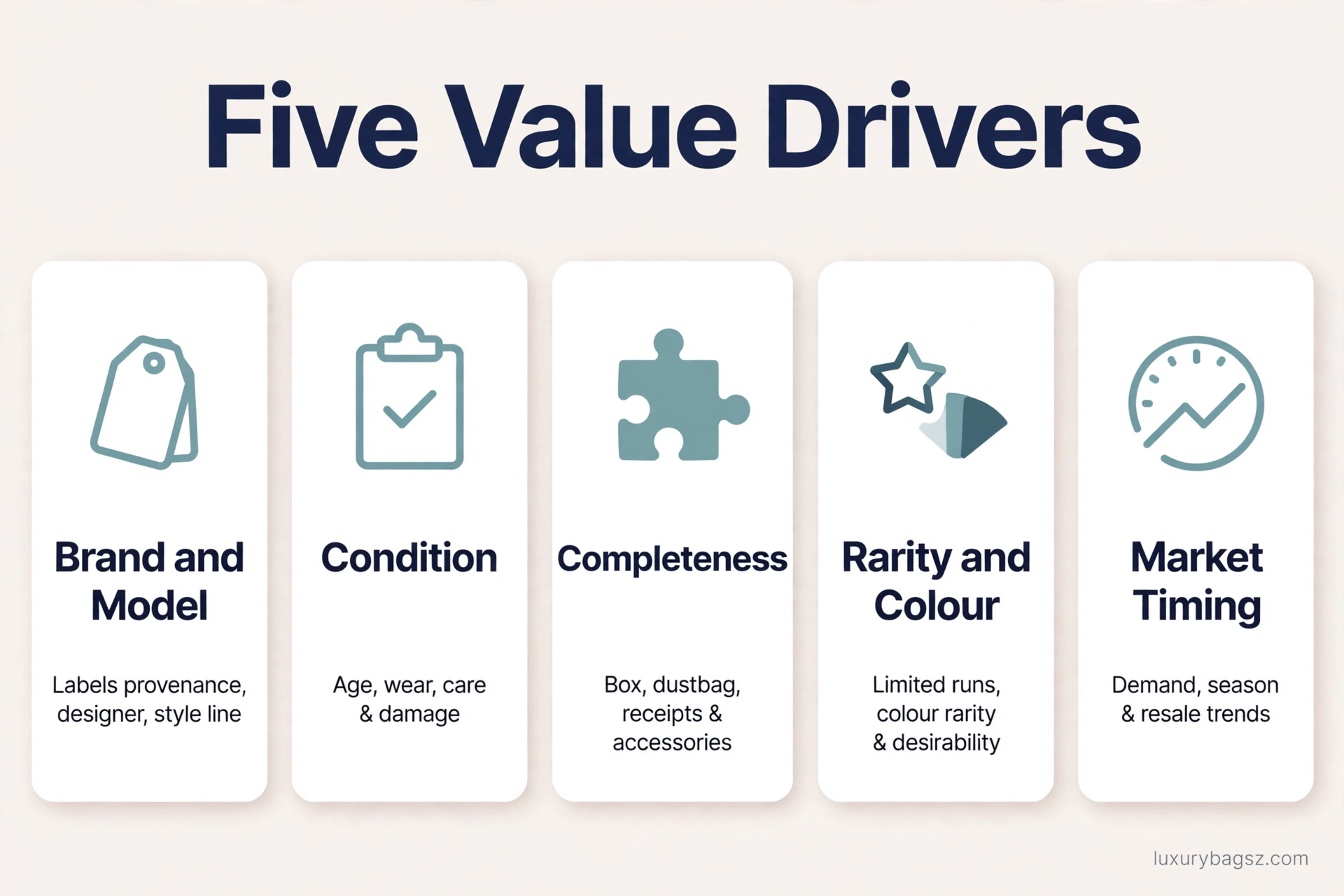
- Brand and model demand, honest condition, completeness, rarity and colour, and market timing move that range.
- Retail price, resale value and buyout price are three different numbers. A fair quote names which one it is.
- Consignment usually returns the most but takes longest. A buyout pays less for speed and certainty.
- Check sold listings yourself, and be wary of any figure that sounds too good.

The Five Things That Set The Number
Every honest valuation comes back to the same five drivers. Change one and the range moves. Understand all five and you can predict, roughly, where your own bag will land.
Brand And Model Demand
Demand does most of the work. Continuously produced classics with loyal followings hold value best, because buyers are always looking for them. Seasonal styles and oversized versions of a popular model usually soften fastest, however famous the house name is. Size matters too, which is why whether Chanel bags are worth the investment depends on which flap, in which size, you own.
Condition, Graded Honestly
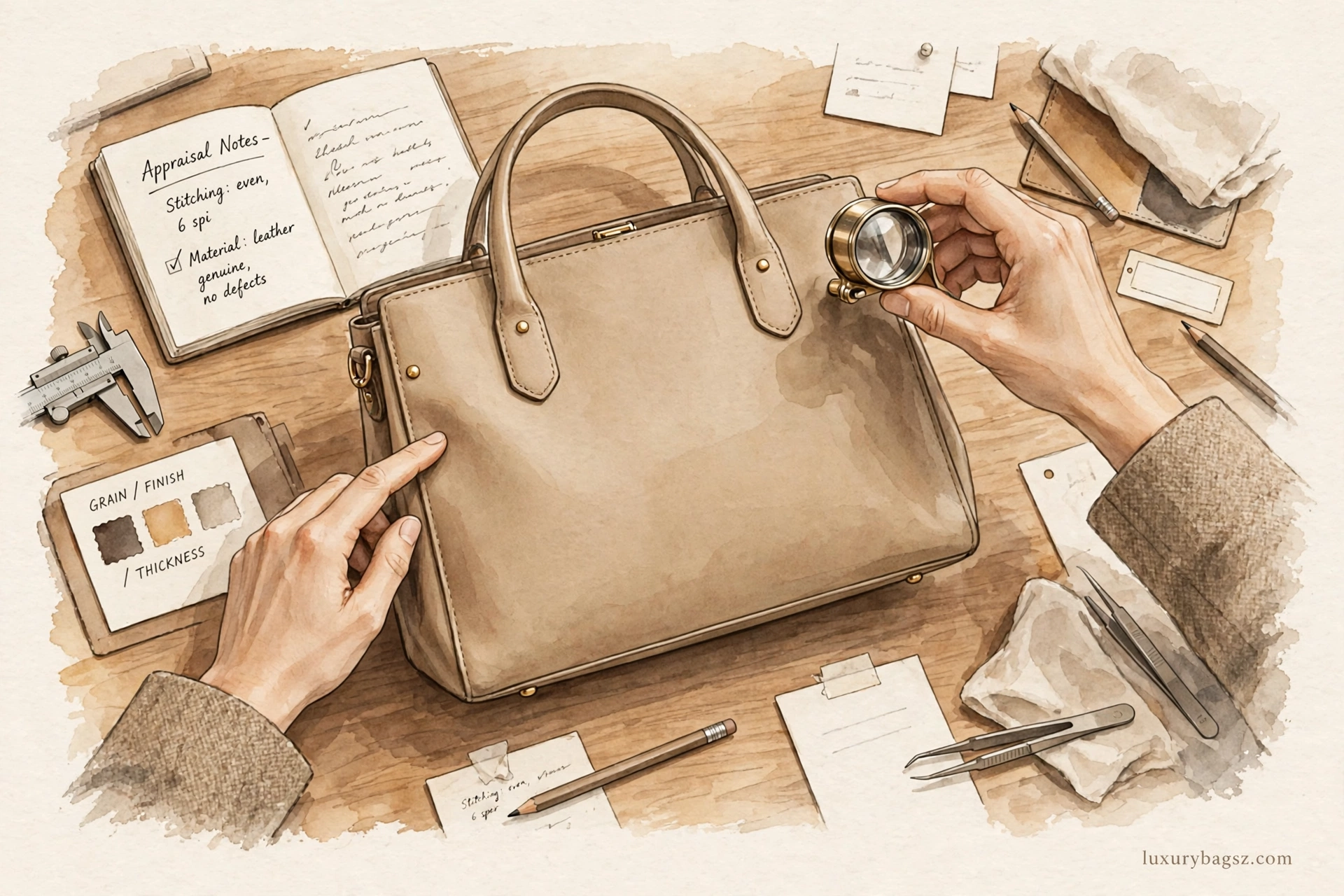
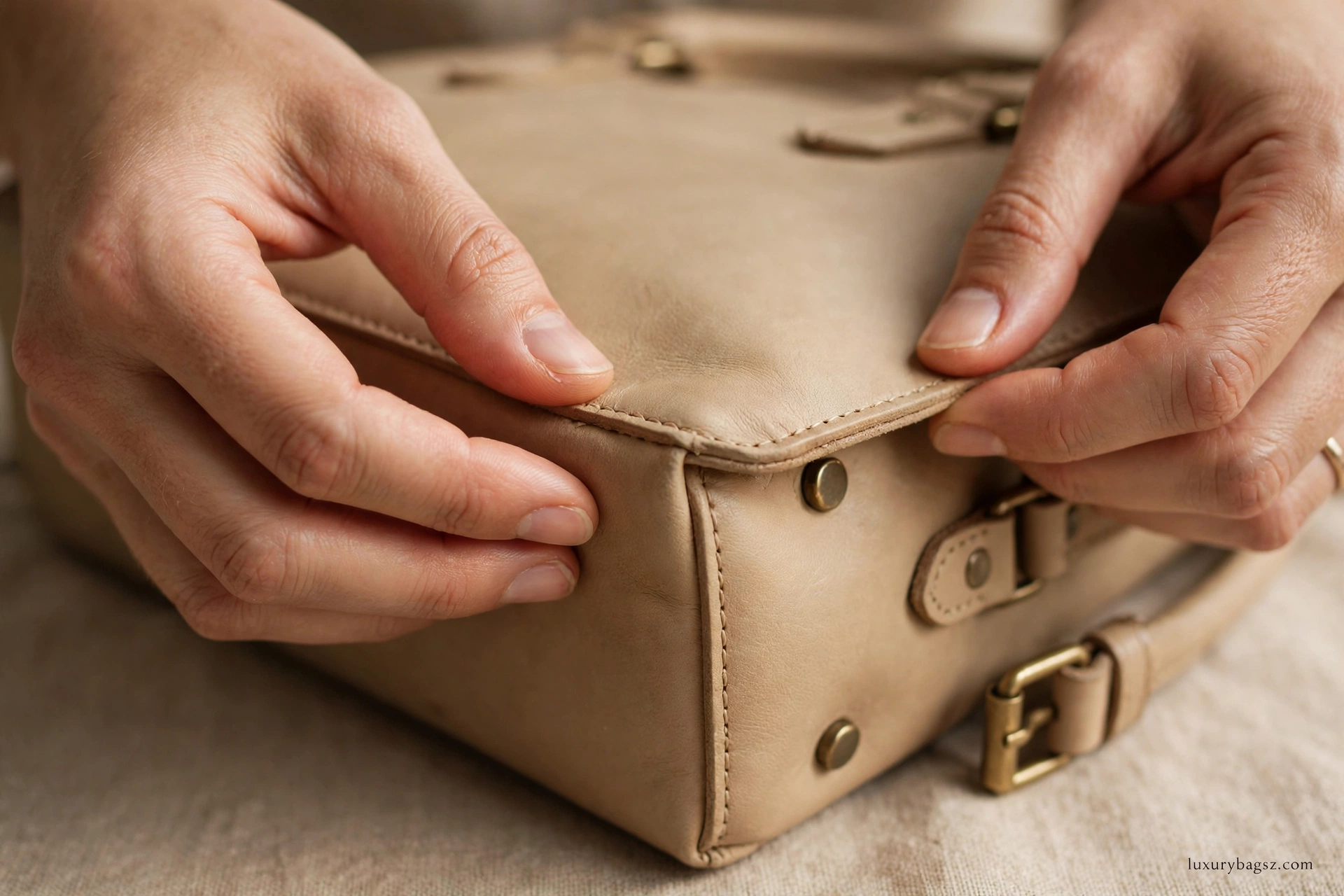
Condition is the biggest single mover within a model. Corners, handles, flap edges, the interior and the hardware are checked first, because that is where wear shows. A bag graded one step lower can sit in a noticeably lower price band, even when everything else matches.
Grade your own bag harshly before anyone else does. Look in daylight, check for odour, colour transfer and sagging, and photograph every flaw. In over ten years in the bag industry, examining more than 500 bags, I have found that sellers who disclose wear early almost always get firmer, faster offers.
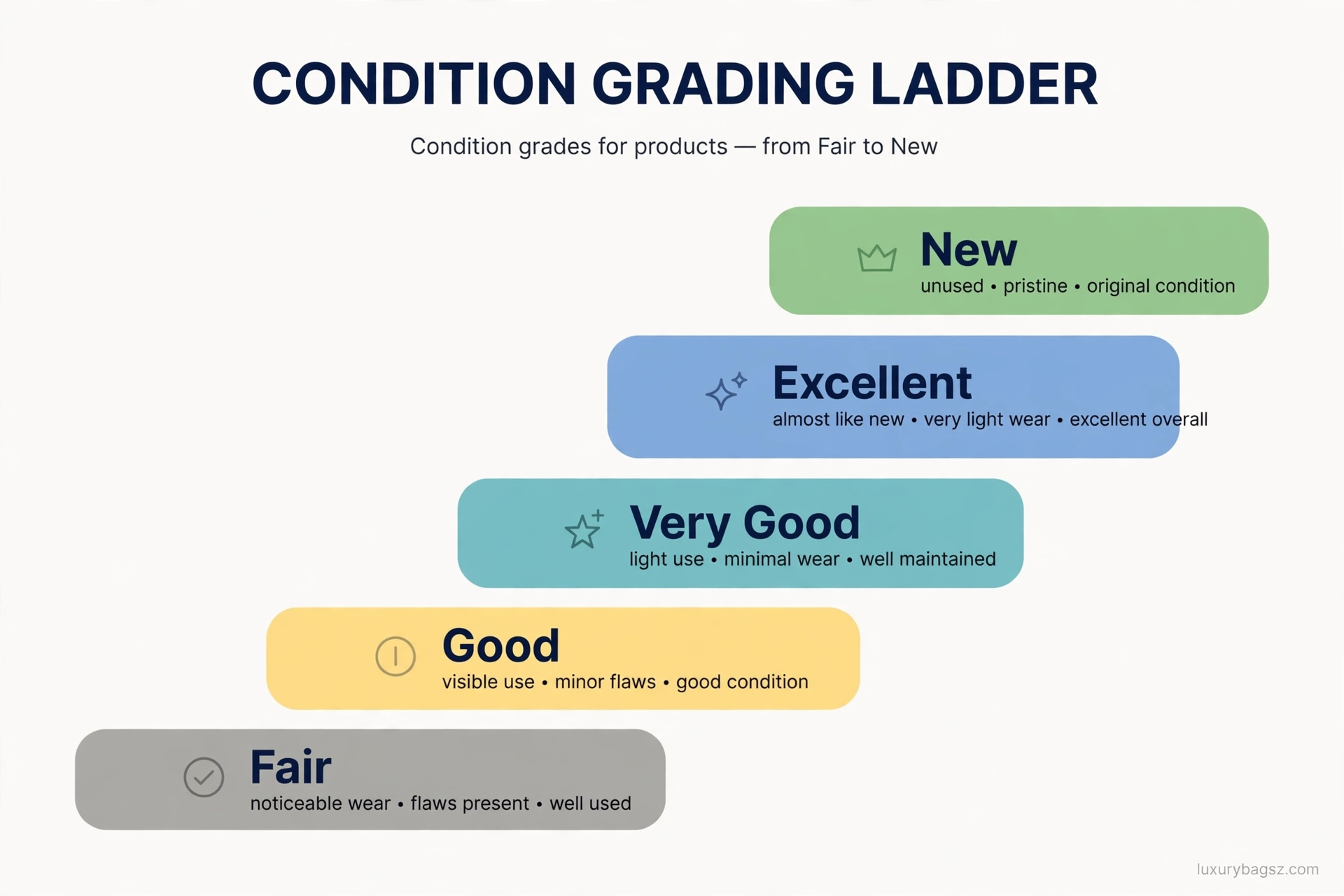
Most graders use the same ladder, even if the names vary slightly. Learning it lets you grade your bag the way a buyer will, rather than the way you remember it when it was new.
- New or unworn: no signs of use, structure firm, hardware bright, interior clean, often with protective film or tags still in place.
- Excellent: carried a few times, with only the faintest corner softening or hairline hardware marks visible on close inspection.
- Very good: light, honest wear, such as slightly softened corners, gentle handle darkening and small interior marks.
- Good: visible wear, such as rubbed corners, scratches, colour transfer or a softened shape, but no damage needing repair.
- Fair: clear damage or heavy wear, such as exposed piping, tears, strong odour or staining, which limits which buyers will consider it.
Completeness: Box, Dust Bag And Receipt
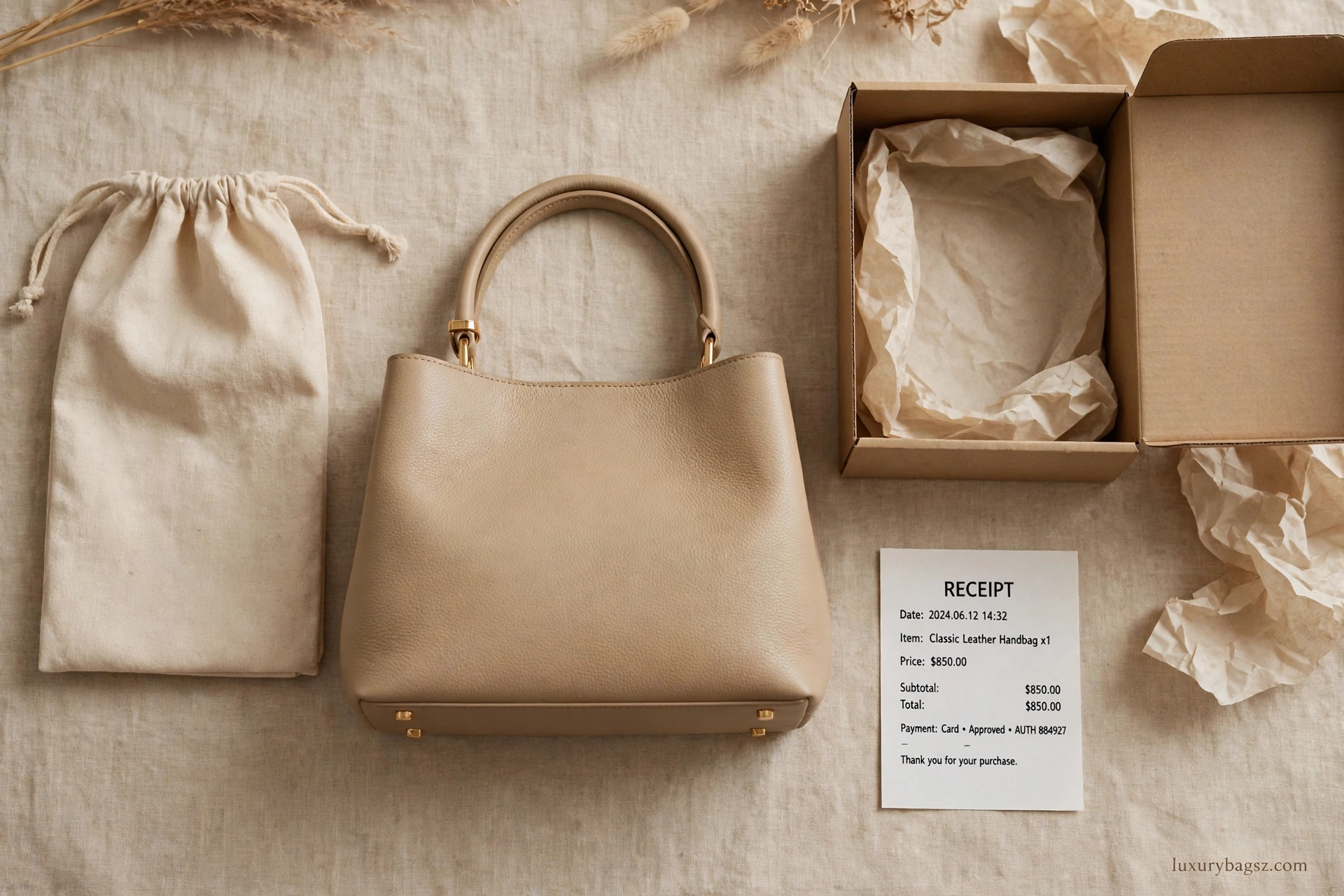
A full set means the box, dust bag, receipt, care booklet and, where fitted, the lock, keys and clochette, plus the authenticity card or microchip record. A complete set sells faster and usually for more, particularly for Chanel and Hermès, because it reassures the next buyer.
A missing box is not a disaster, and a genuine bag without packaging is still sellable once authenticated. A missing strap, lock set or detachable pouch hurts more, because those are parts of the bag itself.
Rarity And Colour
Black, gold, beige and other neutrals are the most liquid colours, so they usually achieve the strongest prices. Seasonal colours and prints still sell, but they wait longer for the right buyer. True rarity helps only when buyers want the rare thing, not simply because few were made.
Leather changes the same model’s range, too. Grained leathers such as caviar usually show wear less readily than smooth lambskin, so they often hold a stronger position within the range. Very soft or delicate leathers need a stricter condition grade for the same visible wear.
Market Timing
Resale prices move. A model can soften when a trend cools or many owners sell at once, and firm again when a style is discontinued or returns to fashion. A valuation is a snapshot, not a promise.
Three Prices, Not One
Most disappointment comes from comparing the wrong numbers. A shop offering less than a listing you saw may simply be quoting a different one of these three figures, so always ask which number you are being given.
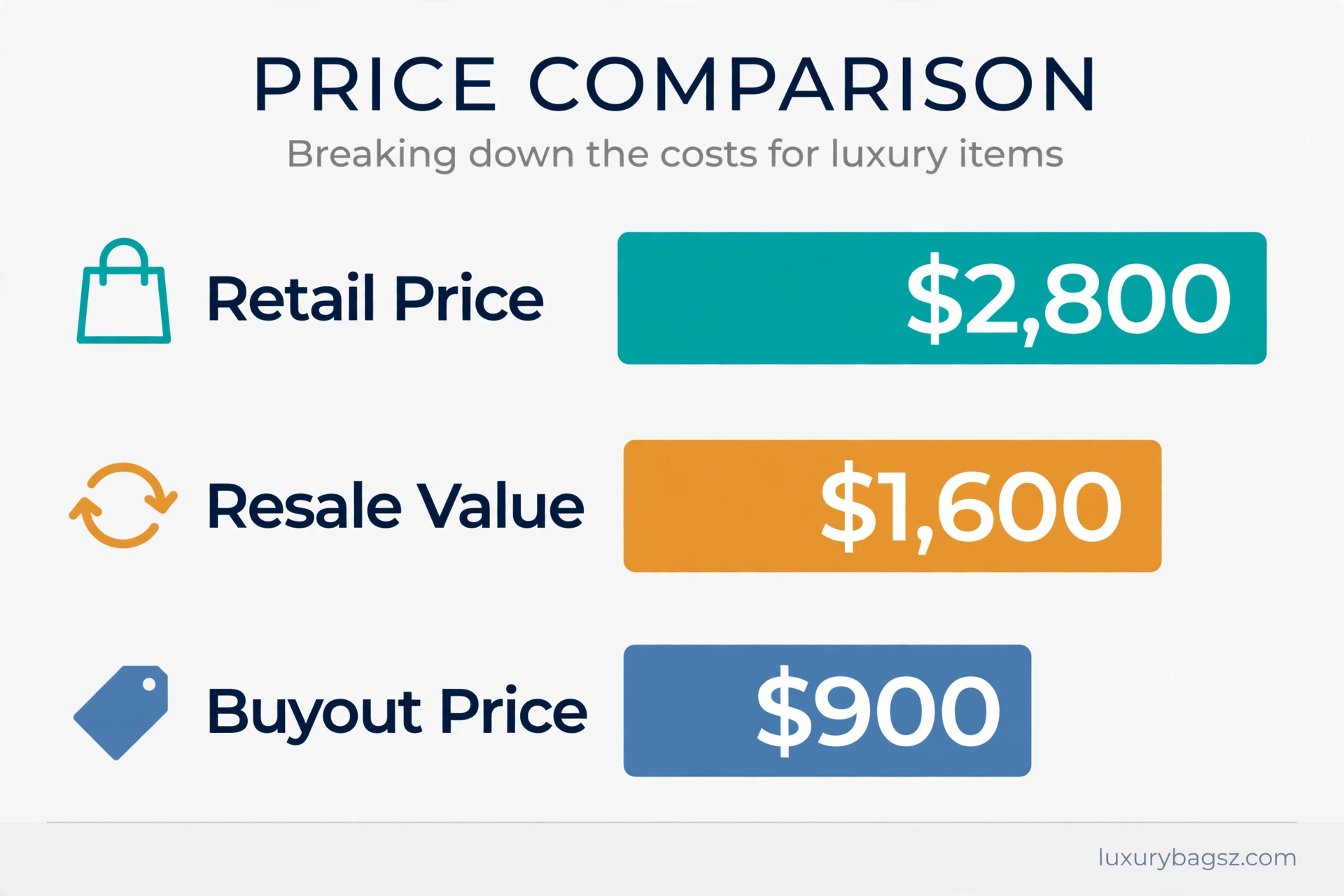
| Number | What it means | Who receives it |
|---|---|---|
| Retail price | What the boutique charges for the bag new today | The boutique |
| Resale value | What a buyer pays for your pre-owned bag | Shared between you and the selling platform |
| Buyout price | What a shop pays you outright, before it resells the bag | You, paid quickly |
For context, current Hermès handbag prices show why that house breaks the usual pattern. Because a Birkin or Kelly cannot simply be bought on demand in a boutique, the pre-owned price effectively becomes the market price, and strong examples can exceed retail.
How Resale Platforms And Buyout Quotes Are Calculated
A platform starts with sold data for your exact model, size, leather and colour, then adjusts for the condition grade it expects after inspection. From that expected selling price it deducts its costs and margin, and what remains becomes your consignment share or your buyout offer.
Those costs are real. Authentication, photography, listing, storage, shipping and returns all come out of the same pot. On a buyout the shop also prices in risk, because it pays you before knowing when the bag will sell.
Commission structures vary, so read the published terms. Consignment is normally calculated on the final sold price after any discount, not the first listed price, and some platforms add a bonus if you take store credit.
Understanding how luxury consignment works helps here, because consignment and buyout are not rival prices for the same thing. Consignment shares the eventual sale with you. A buyout buys your certainty today, and certainty is what you are paying for in the gap.
Why Two Quotes For The Same Bag Differ
Two honest quotes can differ without either being wrong. One firm may have a buyer waiting for your colour, whilst another already holds three similar bags. One may grade from your photographs generously and revise later, whilst another grades cautiously from the start.
Business models differ, too. A buyout desk, a consignment house and a marketplace take different risks and different cuts, and quotes expire as the sold data behind them ages.
How To Research Sold Prices Yourself
Start with completed sales, not live listings. On marketplaces that show them, filter for sold items and match the exact model, size, material and colour. Asking prices show hope, whilst sold prices show what buyers actually did, and the gap between them can be wide.
Collect three to five close matches from recent months, then adjust honestly for condition and completeness. Ignore the single highest result, and trust the middle of your matched range when judging any quote.
A Worked Example, Step By Step
Take a fictional black medium classic flap in caviar leather, in very good condition, with its dust bag and card but no box or receipt. The example uses round figures for illustration only, so you can follow the method and replace them with your own sold matches.
First, find three to five recent sold prices for that exact size, leather and colour. Say they cluster around a middle figure of 4,000 in your local currency. Next, grade honestly: very good, rather than excellent, places your bag below the cleanest matches, so stay at or below that middle figure.
Then check completeness. The dust bag and card help, and the missing box matters far less than a missing strap would. As a resale value, 4,000 is what a buyer pays. On consignment you would receive that figure less the agreed commission, and a buyout would pay less again, sooner.
That is the whole method: sold matches first, condition second, completeness third, and the selling route last. Replace the round figure with your own matches, and you can test any quote you receive against the same four steps.
Photo Appraisal Versus In-Person Appraisal
A photo appraisal is a useful first step. Send clear daylight photographs of the front, back, base, all four corners, handles or strap, interior, hardware, and any card, sticker or microchip, plus everything you still have from the original purchase. Expect a range, confirmed later.
An in-person appraisal can firm that range into a figure, because structure, leather feel, odour and small repairs are hard to judge from photographs. When I check bags personally, I also use Entrupy, including for microchip checks, alongside stitching, engravings, hardware and date codes.
Visiting leather factories in Spain and France taught me how much of a bag’s value sits in material and construction that a photograph simply cannot show.
Red Flags In Inflated Valuations
- A guaranteed figure given before the bag has been seen or authenticated.
- A valuation based only on the current boutique price, with no sold evidence behind it.
- Pressure to hand the bag over quickly before the offer expires.
- Fees, commission or return costs that only appear after you agree.
- A consignment estimate presented as if it were cash in hand today.
A trustworthy valuation explains itself. It names the model and grade it assumes, points to comparable sold prices, and states clearly what you would receive and when. If a firm cannot explain its number in plain language, treat the number itself with suspicion.
Preparing Your Bag To Maximise Its Number
Clean gently and honestly. Empty the bag, dust the interior, wipe the exterior with a soft dry cloth, and stuff it lightly so it holds its shape for photographs. Do not use scented products to mask odour, because appraisers notice, and buyers do too.
Gather everything before you ask for quotes. Find the dust bag, box, receipt, booklet and any detachable parts, and photograph them with the bag. Presenting a complete set from the first message avoids a revised, lower offer when pieces turn out to be missing.
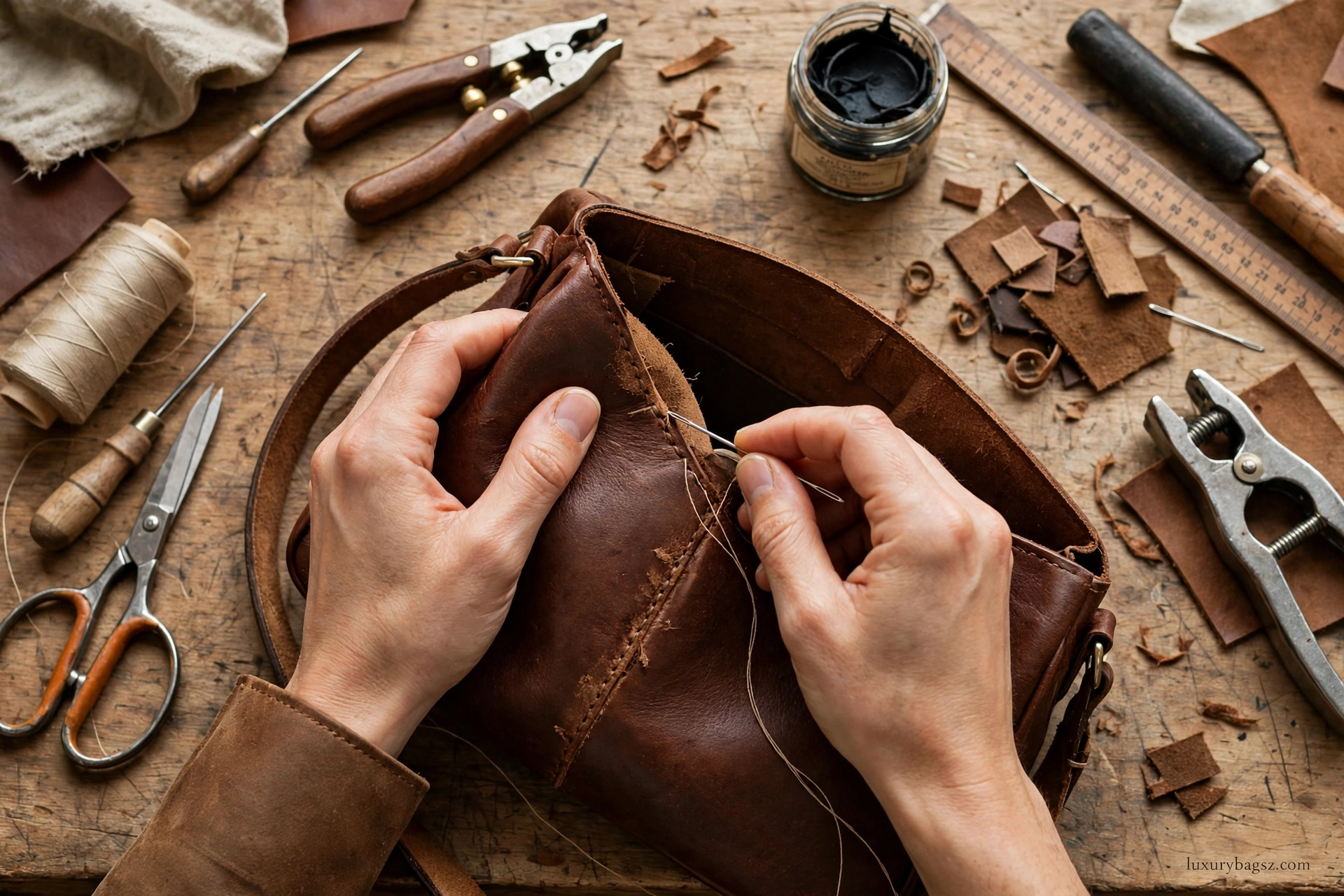
Think twice before paying for restoration first. Re-dyeing, repainted edges and replaced linings narrow the pool of buyers, and many prefer an honest original bag. Ask for a quote as the bag is first.
Frequently Asked Questions
How much of the retail price will my bag keep?
It varies widely by model. Many designer bags resell for a modest share of today’s boutique price, strong classics keep considerably more, and the most demanded Hermès pieces can exceed retail. Your exact model, condition and colour matter far more than any average.
Does a missing box or receipt lower the value?
Usually a little. A complete set sells faster and often for more, especially for Chanel and Hermès. A genuine bag without its box or receipt is still sellable once authenticated, so do not assume a missing box makes the bag worthless.
Why is my buyout offer lower than prices I see online?
Most prices online are asking prices, not sold prices, and many listed bags never sell at those figures. A buyout also deducts authentication, selling costs and the shop’s risk, because it pays you before the bag has found its buyer.
Is consignment or a buyout better for me?
Consignment usually returns more if you can wait for a buyer and accept that the final price may move. A buyout suits you if speed and certainty matter more than the highest possible figure. Ask for both numbers on the same bag before deciding.
Can a photograph give an accurate valuation?
Good photographs can give a realistic range, and that is enough to spot a poor offer. A firm figure normally needs the bag in hand, so that structure, leather, odour and authenticity can be checked properly rather than guessed from images.
Should I restore my bag before getting a valuation?
Usually not. Gentle cleaning and reshaping help, but re-dyeing, repainted edges or a replaced lining often reduce what buyers will pay. Get a valuation for the bag as it is first, then weigh any restoration cost against a written estimate.
Final Verdict
Your bag is worth a range, set by demand for its model, its honest condition, its completeness, its colour and rarity, and the market on the day you sell. Research sold prices first, ask whether any quote is a buyout or a consignment figure, and favour the valuation that explains itself clearly. That calm approach protects you from both low offers and flattering, inflated ones.