

Chanel Cambon Bag: History, Styles, Sizes, Prices, and How to Spot a Real One
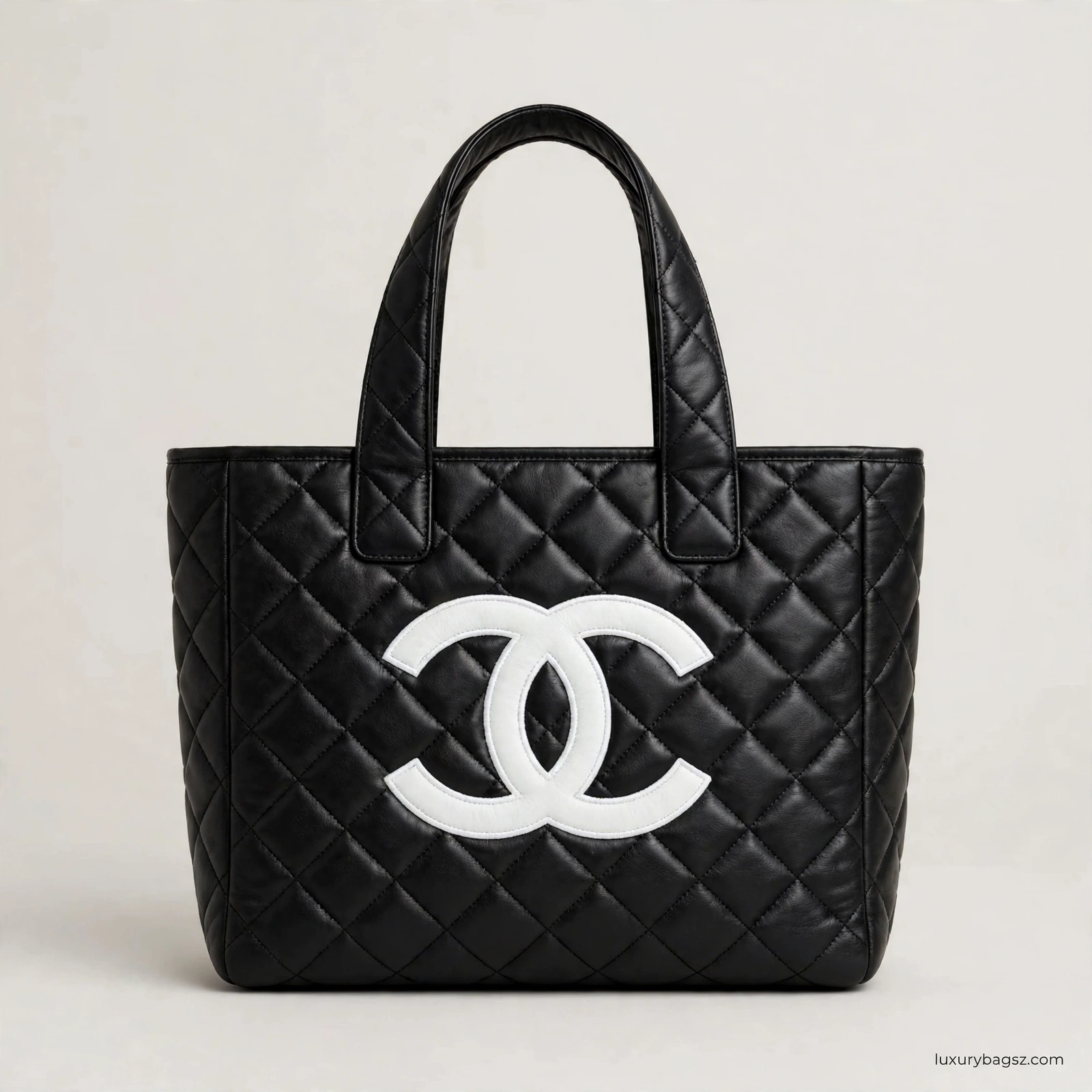
A chanel cambon bag is easy to recognise and hard to buy well. It is the Chanel bag with the oversized, two-tone interlocking CC patch on a diamond-quilted body, a fuchsia-pink lining inside, and a very 2000s attitude. It was a defining it-bag of the mid-2000s, it was discontinued years ago, and it is now back in demand because of the Y2K revival.
That combination — discontinued, widely counterfeited, and sold only on resale — is why most Cambon listings tell you almost nothing useful. A listing gives you one bag, one price, and one set of dimensions. It does not tell you how the styles differ, why two Reporters can cost £795 and £2,350, why dimensions differ between listings, or why sources disagree about when it was discontinued, what leather it is made from, and where it was made.
This guide puts those pieces together. It covers history, styles, sizes, colours, prices, comparisons, authentication, buying, and care for a vintage Cambon, in one place. It also flags, plainly, where sources disagree, so you do not mistake one listing’s claim for a fact about every Cambon.
This guide is general information only. It is not an authentication service, and it is not affiliated with, endorsed by, or sponsored by Chanel.
Key Takeaways
- The Cambon was designed by Karl Lagerfeld, launched in 2004, and named for 31 rue Cambon, Gabrielle Chanel’s historic Paris address.
- It is discontinued and resale-only. Sources disagree on the end date, giving around 2010 in some guides and 2012 in some resale listings, so treat the end date as approximately 2010–2012, not as a single exact year.
- The signature look is an oversized contrasting CC patch on a diamond-quilted body, with a fuchsia-pink lining inside.
- Main styles are the Ligne Tote, Bowling, Reporter, Multipocket, and Clutch/Pochette, plus matching wallets and small leather goods.
- Resale prices vary widely by style, colour, and condition, roughly $450 for a well-used small piece up to $2,700 for a near-new example in the sources checked, with rare colours and Multipocket Reporters at the higher end.
- No single check proves a Cambon real. Use the CC patch stitching, quilting, lining, hologram and card, hardware, and listing together, and get independent authentication for a valuable purchase.
- Conflicting claims about leather and origin exist in older guides. Do not reject a bag, or accept it, on a single “Made in” stamp or leather name alone. Check the exact bag against its style and serial period.
Table of Contents
What Is the Chanel Cambon Bag?
The Cambon, also called the Cambon Ligne, is a Chanel line from the mid-2000s that swapped the house’s usual tonal quilting for a bold, two-tone logo. Instead of a small, tone-on-tone CC, the Cambon puts a large interlocking CC patch, cut from contrasting leather, on the front of the bag.
On the signature colourway, that patch is white leather on a black quilted body. On other colourways, the contrast is reversed or changed: white on black, beige on black, and pink on black are the ones most often listed.
Inside, the Cambon is just as distinctive. Many examples have a fuchsia-pink or neon-pink lining, sometimes in a CC monogram fabric, with an interior zip pocket and slip pockets. That pink interior is one of the quickest visual tells that you are looking at a Cambon, not a Classic Flap, but it is not proof on its own, because fakes copy it too.
The line was not a single bag. It was a family of bags and small leather goods, all sharing the same contrasting CC patch. That is why “Cambon bag” can mean a large tote, a rounded bowling bag, a messenger, a multipocket reporter, a clutch, or a wallet, and why a price or size for one style tells you almost nothing about another.
History and Discontinuation
2004: a Lagerfeld it-bag
The Cambon was launched in 2004 under Karl Lagerfeld. It was named for 31 rue Cambon, the Paris street where Gabrielle Chanel opened her first shop in 1910, and where the house’s historic boutique still stands. The name was a deliberate link to Chanel’s history, but the design was deliberately of its moment: large logo, quilted leather, and a casual, everyday shape, rather than the more formal Classic Flap.
It became one of the defining it-bags of its era. Resale guides and listings consistently link it to mid-2000s celebrity sightings, including Victoria Beckham and Paris Hilton, and to paparazzi and red-carpet photos of the time. Whether you like that association or not, it explains why the Cambon reads today as a specific, nostalgic moment in Chanel’s history, rather than as a timeless classic in the same way as a flap bag.
Discontinued, and why the date is fuzzy
The Cambon is no longer sold by Chanel. Every piece now trades on the resale market. What is less certain is exactly when it was pulled.
One well-researched resale guide, JoliCloset, says the line was quietly pulled from Chanel’s catalogue around 2010. Several What Goes Around Comes Around listings say it was discontinued in 2012. Other listings give production years of 2004–2005, 2005–2006, and 2004–2008 for individual bags, which are production years for those bags, not the end of the whole line.
The honest way to state this is: the Cambon was launched in 2004 and discontinued around 2010–2012, with sources disagreeing on the exact end year. If a seller gives you a single, confident end year as if it were settled, ask what source they are using. If a bag’s serial number points to a year outside that range, that is a reason to check further, not a reason to walk away on that fact alone.
The Y2K revival since 2022
Demand for the Cambon has surged since 2022, driven by the Y2K revival on TikTok and by celebrity sightings of vintage pieces. JoliCloset reports resale prices climbing more than 40% in three years, and lists around 320 authenticated Cambon bags at the time of its guide, from roughly $450 for a well-used small format up to $2,700 for the rarest near-new examples.
That revival matters for buyers in two ways. First, prices are no longer just “old Chanel, cheap Chanel” — rare colours and good-condition examples now command real premiums. Second, higher demand means more fakes and more misleading listings, especially for the signature black-and-white colourway, which is the most counterfeited and the most sought after at the same time.

How to Recognise a Cambon at a Glance
Use these five markers together. No one marker alone proves a bag is a Cambon, or that it is real.
- Oversized CC patch. A large interlocking CC, cut from contrasting leather and applied to the front, not embroidered or printed. The stitching around the patch should be even, tight, and aligned, with no loose threads or glue marks.
- Diamond quilting. A quilted body, usually in black, white, beige, or pink combinations. The quilting should be even, with a consistent diamond pattern, and it should line up where it meets pockets and seams, not break or skew.
- Fuchsia-pink lining. A bright pink leather or fabric lining inside, often with a CC monogram pattern, and an interior zip pocket. Check for dirtying and wear on the pink lining — it shows age more clearly than a dark lining.
- Silver-tone hardware. Most Cambon examples listed use silver-tone hardware, with rolled leather handles or straps, sometimes with knotted ends on tote straps. Hardware should feel weighty and match across all pieces.
- Knotted or rolled straps. Tote straps are often knotted at the ends, and reporter straps are long, rolled leather straps. Check knots and strap ends for fraying, creasing, and stretching, which are common wear points on a 20-year-old bag.
If a bag has none of these markers, it is probably not a Cambon. If it has all of them, it is probably a Cambon — but it could still be a fake Cambon.

Styles Compared
| Style | What it is | Best for | Watch out for |
|---|---|---|---|
| Ligne Tote | Shoulder tote, open top with zip closure, rear slip pocket, interior zip and slip pockets | Everyday carry, work, travel | Shape loss at the base, white CC dirtying, pink lining wear |
| Bowling | Rounded, two-handle carry, more structured than a tote | A classic Cambon look, hand carry | Corner rubbing, handle creasing, smaller interior than it looks |
| Reporter | Long-strap messenger, often with external flap pockets | Crossbody wear, hands-free days | Flap pocket wear, strap stretching, dimension confusion (see below) |
| Multipocket | Reporter-style bag with multiple external patch pockets | Storage, everyday essentials, collectors | Pocket flap wear, CC turnlock wear, higher price for rarity |
| Clutch / Pochette | Small clutch, often with a top handle or chain | Evening, minimal carry | Limited space, hardware wear, condition varies widely |
| Wallets and small leather goods | Cambon wallets, card holders, and small accessories with the same CC patch | Entry point, matching set | Small items do not always come with a dust bag, so do not expect one |
The Bowling is often called the most iconic Cambon shape. The Reporter has ridden the Y2K wave hardest with younger buyers, because it wears crossbody and looks like a messenger from the 2000s.

The Ligne Tote is the most practical everyday choice, because it is larger and simpler. The Multipocket is the collector’s choice, because its external pockets and turnlocks make it rarer and more expensive.
Do not buy a Cambon by style name alone. Two bags both called “Reporter” can differ in size, pockets, and hardware, depending on year and variant. Always check the exact bag’s measurements, photos, and interior.

Sizes and What Fits Inside
This is where competitors are weakest, because they give one bag’s dimensions as if they were the style’s dimensions. In reality, listing dimensions for the same style name differ, sometimes sharply.
Dimensions from real listings, with a warning
| Style example | Dimensions from a real listing | Notes |
|---|---|---|
| Ligne Tote, large, black | 40 x 24 x 13.5 cm, handle drop 55 cm | EBV London listing, good condition, white CC with light discolouration |
| Ligne Tote, large, white calfskin | 29 x 25 x 15 cm, strap drop 20 cm | What Goes Around Comes Around listing, 2004–2005 |
| Ligne Tote, large, beige calfskin | 30 x 25 x 15 cm, strap drop 20 cm | What Goes Around Comes Around listing, 2004–2005 |
| Ligne Tote, mini, black | 15 x 20 x 8 cm, strap drop 15 cm | What Goes Around Comes Around listing, 2004–2005 |
| Reporter, black, one listing | 42 x 22 x 13 cm | Bagista listing, 2004–2005, excellent condition with natural creasing |
| Reporter, black, another listing | 28 x 6 x 10 cm | Bagista listing, 2005–2006 — the height figure looks like a listing error, which is exactly why you must check photos, not just numbers |
| Shoulder Mini, black | 21 x 12 cm, strap drop 17 cm, depth 10 cm in another variant | What Goes Around Comes Around listings, 2004–2006 |
| Cambon bag, small, Irene Buffa | 29 x 17 x 10 cm | Irene Buffa listing, black and white, Made in France |
The lesson is not to memorise one table. It is to ask the seller for the exact bag’s measurements, taken with a tape, and to compare them with photos showing the bag next to a known object, or with the seller’s own listing photos from multiple angles. If dimensions look impossible — a Reporter 6 cm high, for example — treat that as a listing error to clarify, not as a new size.
What fits inside, by style
- Ligne Tote, large: Phone, wallet, keys, sunglasses, a small book or tablet, and a water bottle in most large examples. This is the only Cambon style that reliably works as a work tote.
- Bowling: Phone, wallet, keys, sunglasses, and small essentials. It looks larger than it is, because of its rounded shape, so do not expect a laptop or a large book.
- Reporter: Phone, wallet, keys, and small essentials, plus more if it is the larger Multipocket variant. The external flap pockets are useful for a phone and cards, but they add bulk and wear points.
- Multipocket: Similar to a Reporter, with more organised pockets, but the pockets themselves take up space and add weight.
- Clutch / Pochette: Phone, cards, keys, and lipstick only. Do not buy a clutch expecting everyday carry.
- Wallets and small leather goods: Cards and cash only, by design.
If you need a bag for work, buy a large Ligne Tote, not a Bowling or a clutch, no matter how good the price looks on the smaller style.

Colours and Materials
Colourways, in rough order of demand
- Black with white CC — the signature colourway, and the most sought after. It is also the most counterfeited, so authentication matters most here.
- White on black — white body with black CC, the reverse of the signature. Also popular, but white leather shows dirt and yellowing more clearly.
- Beige on black — beige body with black CC, or beige and black combinations. Less common than black/white, and often priced higher in good condition.
- Pink on black — pink body or pink CC on black, hard to find, and often priced at a premium when in good condition.
- Python CC variants — a contrasting python leather CC patch on a quilted body, for example white calfskin with a python CC. These are niche collector pieces, with python trim that can peel or wear, so check the CC patch closely.
Other colours exist in listings, including olive green and brown, but they are less common and harder to price from public listings alone. Do not pay a “rare colour” premium without checking recent sold prices for that exact colourway, not just asking prices.
Materials: why sources disagree
Older guides, especially LEAFtv, say the Cambon is made from high-quality calfskin, not lambskin. Newer resale guides, especially JoliCloset, describe it as a diamond-quilted lambskin body. Real listings show both: some Cambon totes are listed as calfskin, some as lambskin, and some as quilted calfskin with a python CC.
The most accurate way to state this is: Cambon examples are listed in both calfskin and lambskin, depending on the specific bag and year, and you should check the exact bag’s material, not assume one leather for the whole line. The same applies to origin: LEAFtv says Made in Italy, not France, and that a Made in France tag means a fake. JoliCloset says a Made in France stamp is a marker of a genuine Cambon. Real listings show both Made in Italy and Made in France examples.
Do not use a single leather name or a single country stamp as a pass/fail test. Use the full set of checks in Section 11, and check the bag’s serial period and style against known examples.
Hardware and lining
Most Cambon examples use silver-tone hardware, with rolled leather handles or straps. The lining is usually fuchsia-pink leather or a CC monogram fabric, sometimes described as neon pink or hot pink nylon. Check the lining for dirtying, staining, and wear, especially on the pink leather zip and on the interior pockets, which are common wear points in listings.
Price Guide
Prices below are resale ranges from the sources checked for this guide, not boutique prices, because the Cambon is discontinued and has no current boutique price. Prices vary by style, colour, condition, full set, and seller, and they change with the Y2K market. Always check recent sold prices, not just asking prices, before you pay.
| Style / condition | Resale range from sources checked | Notes |
|---|---|---|
| Well-used small format, any style | From about $450 | JoliCloset entry-level range, heavily worn pieces |
| Large Tote, 1stDibs average | About $1,235 average, range $650–$2,810 | 1stDibs marketplace page, all conditions and colours combined |
| Bowling, black/white, good condition | $1,100–$1,900 | JoliCloset range for a black-with-white-CC bowling in good condition |
| Large Tote, black, good condition | About £1,350 in one UK listing | EBV London listing, with white CC discolouration and pink lining wear noted |
| Reporter, pre-loved, different conditions | £795 and £2,350 in two Bagista listings | Same style name, very different condition and price — condition drives the gap |
| Multipocket Reporter, Singapore guide | S$4,500–S$5,800 | Carousell SG guide, rare and structured, at the high end |
| Rare hues, pink/beige, good condition | Often over $2,200, up to $2,700 near-new | JoliCloset range for rare colours and near-new examples |
| Launch price, for context | $1,800–$2,600 depending on format | JoliCloset launch range, 2004, not a current price |
For context, a Medium Classic Flap now retails north of $11,000 new, according to JoliCloset. The Cambon remains a comparatively accessible entry point into Chanel, with a signature design and a rising resale curve, but it is not a “cheap Classic Flap” — it is a different bag, with a different look, size, and resale story.

What drives the price gap?
- Condition: White CC yellowing, pink lining dirtying, corner rubbing, shape loss, and hardware tarnishing all lower price. A bag with a clean white CC and clean pink lining commands more.
- Full set: Dust bag, box, authenticity card, and original receipt, where present, add value, but a missing dust bag on a wallet or small leather good is normal, not a red flag on its own.
- Colour: Black/white is most in demand, but pink and beige in good condition often clear higher prices because they are rarer.
- Style: Multipocket and Reporter styles, especially in good condition, often cost more than a basic tote, because of rarity and Y2K demand.
- Seller and platform: A dealer with authentication, returns, and a reputation costs more than a private seller with no returns, but it also lowers risk.
Do not pay a near-new price for a bag with a dirty white CC, a stained pink lining, and rubbed corners, no matter how good the photos look from a distance. Ask for close-up photos of those exact wear points before you pay.
Cambon vs Classic Flap, Boy, and Deauville
| Bag | Look | Best for | Cambon difference |
|---|---|---|---|
| Cambon | Oversized contrasting CC, quilted, pink lining, casual shapes | Y2K style, everyday carry, collectors | The bold logo is the point — it is not subtle |
| Classic Flap | Tonal CC turnlock, quilted, chain strap, formal flap | Timeless, formal, long-term classic | More expensive new, more formal, smaller logo, different resale story |
| Boy Bag | Bold, structured, larger CC, chain strap, edgier | Modern, structured, evening and day | Boy is still in production, Cambon is discontinued and resale-only |
| Deauville | Canvas tote, “31 Rue Cambon” print on some versions, large tote | Beach, travel, casual tote | Deauville is a different bag, even though some guides call it “31 Rue Cambon” — do not confuse the two |
The Deauville confusion is worth a paragraph on its own. Some guides call the Deauville tote the “Chanel 31 Rue Cambon” bag, because it has that address printed on it. The Cambon Ligne is named for the same street, but it is a different line, with a leather CC patch and a quilted body, not a canvas tote with a printed address. If a seller calls a canvas Deauville tote a “Cambon”, or a leather Cambon a “Deauville”, ask for photos and check the CC patch, quilting, and lining — those will tell you which bag it actually is.
If you want a timeless, formal Chanel that you can wear anywhere, a Classic Flap is a better choice than a Cambon. If you want a bold, 2000s, collector piece that reads as vintage Chanel, a Cambon is a better choice, and it is usually far cheaper on resale than a new Classic Flap.
Real vs Fake: Cambon Checks
This section is general information only, not a guarantee. No single check proves a Cambon real or fake. Use all of the checks together, and get independent authentication for a valuable purchase.
CC patch and stitching
The CC patch should be cleanly cut, evenly stitched around its edge, and aligned on the bag, not crooked or off-centre. Stitching should be even, tight, and consistent, with no loose threads, skipped stitches, or glue marks around the patch. On a fake, the patch is often slightly off-centre, the stitching is uneven, or the CC overlap is wrong.
For retail Chanel bags, a common guide is about 9 to 11 stitches per diamond on quilted leather, depending on bag size. Use that as a general sign of care — even, tight, and consistent is good; rushed and uneven is not — not as a pass/fail test for a Cambon, because stitch count varies by style and size.
Quilting alignment
Quilting should be even, with a consistent diamond pattern, and it should line up where it meets pockets, seams, and the back pocket, not break or skew. Check the back of the bag, where the pocket lies, because fakes often fail to keep the diamond pattern aligned there.
Lining and interior
The pink lining should be clean in colour, not dull or patchy, with a CC monogram pattern where applicable, and an interior zip pocket and slip pockets that match the style. Check the interior label: it should be cleanly stitched, with clear, evenly spaced lettering. A label with thin, uneven lettering, poor kerning, or thick, uneven stitching at the bottom is a warning sign, but it is not proof on its own.
Hologram sticker and authenticity card
A Cambon should have a holographic serial sticker on the tag sewn inside the bag, and a serial number card that matches that number. JoliCloset notes that pieces produced between 2004 and 2010 have 8-digit serials typically beginning with 9, 10, or 11. If the sticker has been removed, or part of it has been ripped off, do not buy without further checks — a sticker does not just peel off on its own, and a removed sticker can also indicate a stolen bag.
Do not accept a serial number alone as proof. A fake can copy a serial number, and a real bag can have a worn or damaged sticker. Check the serial against the style, year, and other markers together.
The old fake-serial list: use with caution
LEAFtv, updated in 2021, lists a set of serial numbers it calls the most commonly used counterfeit serial numbers for Cambon bags as of 2010. That list is now more than a decade old, and it cannot be used as a sole test in 2026. If a bag’s serial appears on an old fake list, that is a reason to get independent authentication, not a reason to declare it fake on that fact alone. If a bag’s serial does not appear on that list, that does not prove it real.
Hardware, dust bag, and packaging
Hardware should feel weighty, smooth, and consistent across all pieces, with a finish that matches — gold-tone should match gold-tone, silver-tone should match silver-tone, and it should not be tarnished, chipped, or rough in a way that does not match the bag’s stated condition.
For dust bags, LEAFtv says to look for black shopping and dust bags with “C H A N E L” across the front, and that a white see-through dust bag saying “Chanel France” or “Chanel Italy” is a giveaway for a fake. Use that as a warning sign, not as a sole test, because dust bags can be bought, copied, or replaced, and wallets and small leather goods do not always come with a dust bag.
The conflicting claims, explained
This is the section most competitors miss, and it is the most important one for Cambon buyers.
- Leather: LEAFtv says calfskin, not lambskin. JoliCloset says lambskin. Real listings show both. Check the exact bag.
- Origin: LEAFtv says Made in Italy, not France. JoliCloset says Made in France. Real listings show both. Check the exact bag.
- Discontinued date: JoliCloset says around 2010. What Goes Around Comes Around says 2012. Treat it as approximately 2010–2012.
- Boutique authentication: LEAFtv suggests meeting a seller at a Chanel boutique and asking the manager to authenticate. In practice, Chanel does not generally authenticate resale items in writing, and a boutique manager’s verbal opinion is not a written authentication. If someone claims to have a letter of authenticity from Chanel, that claim itself is a red flag, because Chanel does not offer written proof in that way.
If a seller’s authentication story relies on a single one of these conflicting claims — “it must be real because it says Made in Italy” or “it must be fake because it says Made in France” — that seller is oversimplifying. Walk away from a seller who will not show you the full set of photos and markers, not just one stamp.

Buying Checklist and Photos to Ask For
Before you pay, ask for these 8 photos
- Front, straight on, showing the CC patch and quilting alignment
- Back, showing the rear pocket and quilting alignment
- Close-up of the CC patch stitching, from a short distance, not just a wide shot
- Interior, showing the pink lining, interior label, and interior pockets
- Hologram sticker and authenticity card, with numbers visible enough to check, but not shared publicly in a listing
- Corners and base, showing rubbing, shape loss, and protective feet if present
- Handles and straps, showing knots, creasing, fraying, and stretching
- Hardware close-up, showing tarnishing, scratches, and finish consistency
Questions to ask the seller
- What is the exact style, year, and serial period, and how was it dated?
- What is the exact material and origin stamp on this bag, not just “Cambon”?
- What is the condition of the white CC patch and the pink lining, in close-up?
- Does it come with a dust bag, box, card, and receipt, and if not, why not?
- What is the return policy if independent authentication fails?
- Has the bag been repaired, re-dyed, or re-stitched, and if so, where?
Safe buying rules
- Buy from a seller or platform with authentication, returns, and a reputation you can check, especially for a bag over $1,000.
- Do not buy a Cambon from a seller who will not show you the hologram, card, lining, and corners, or who pressures you to pay quickly.
- Do not pay a near-new price for a bag with a dirty white CC, stained pink lining, and rubbed corners.
- Get independent authentication for a valuable purchase, and understand its limits: an authenticator can check markers and photos, but they cannot guarantee a bag’s full history.
- If you already bought a Cambon and you are unsure, do not resell it as authentic until you have it checked. Keep your receipt, photos, and seller messages, and check the platform’s time limits for a dispute.
For a general example of how authentication limits and serial myths work on another Chanel item, see VIP gift bags.

Care for a Vintage Cambon
A Cambon is already 15 to 20 years old, so care is about preserving what is left, not making it look new.
White CC patch
The white CC patch is the most visible wear point. It yellows, dirties, and scuffs more easily than the black body. Do not scrub it with a harsh cleaner, and do not use a smooth-leather polish on it without testing first in a hidden spot. For a general leather-care example, including spot-testing first, see clean Chanel bags.
For a Cambon specifically: brush dust off lightly, spot-test any cleaner in a hidden area, and accept that some yellowing on a 20-year-old white patch is normal wear, not a defect you can safely remove at home. If the patch is heavily yellowed or peeling, ask a professional leather restorer, not a home cleaner, before you try to fix it.
Pink lining
The pink lining shows dirt, staining, and wear more clearly than a dark lining. Do not soak it, and do not use a harsh cleaner on it. Brush dust off, spot-clean lightly if needed, and let it air dry fully before storing. If the lining is stained through, a professional cleaner is safer than a home soak, which can spread a stain or damage the lining’s colour.
Shape, storage, and handling
- Stuff the bag lightly with tissue when storing, so it keeps its shape, especially for a tote that has already lost shape at the base.
- Store it in a breathable dust bag, not in plastic, which traps moisture and can cause mildew or a sticky surface.
- Store it away from direct sunlight, which fades colour unevenly, and away from radiators and heat, which dry leather and crack edges.
- Do not hang a Cambon by a thin strap for months, which stretches the strap and sags the bag out of shape.
- Handle the bag by its handles or straps, not by the CC patch, which can loosen with repeated pulling.
When to go professional
Go professional if the white CC is peeling, the pink lining is stained through, the quilting is coming apart, the hardware is broken, or the bag has lost its shape badly. A professional leather restorer can clean, re-stitch, and reshape a Cambon in a way home cleaning cannot, and they can tell you when a bag is too worn to restore safely. Do not try to re-dye a white CC patch at home — a bad re-dye is harder to fix than yellowing.
Is a Cambon Worth It?
Who should buy a Cambon
- Collectors who want a discontinued, Y2K Chanel piece with a signature look.
- Buyers who want a bold, everyday Chanel bag at a resale price far below a new Classic Flap.
- Buyers who like crossbody and tote shapes, and who do not mind a bag that reads as vintage and 2000s, not as timeless.
- Buyers who are willing to check authentication carefully, and to accept normal wear on a 20-year-old bag.
Who should not buy a Cambon
- Buyers who want a subtle, formal, timeless bag for work or formal events. A Classic Flap is better for that.
- Buyers who want a perfect, near-new bag at a well-used price. A Cambon in perfect condition commands a premium, and a cheap Cambon is cheap for a reason, usually condition.
- Buyers who do not want to deal with authentication, resale platforms, and condition checks. A Cambon is a resale-only bag, so those checks are part of buying it.
- Buyers who need a large, structured work bag for a laptop. A large Ligne Tote can work, but a Bowling or clutch cannot.
Resale outlook
The Cambon has risen with the Y2K revival since 2022, and JoliCloset reports prices up more than 40% in three years. That does not guarantee future prices. Rarity, condition, and colour will continue to matter more than the style name alone.
A black/white bowling in good condition is likely to hold value better than a heavily worn, common colourway in poor condition, but no resale guide can promise a future price. Buy a Cambon because you like it and will wear it, not only because you expect it to appreciate.

Frequently Asked Questions
Can I still buy a Chanel Cambon bag from Chanel?
No. The Cambon is discontinued, around 2010–2012 depending on the source, and it is not sold in Chanel boutiques now. Every Cambon for sale today is a resale or vintage piece.
What is a Chanel Cambon bag made from?
Cambon examples are listed in both calfskin and lambskin, depending on the specific bag and year, with some python CC variants. Check the exact bag’s material, not just the line name, because sources disagree on this point.
Is a Chanel Cambon bag made in Italy or France?
Both appear in real listings and in guides. LEAFtv says Italy, JoliCloset says France, and listings show both. Do not use a single country stamp as a pass/fail test. Use the full set of authentication checks together.
How much does a Chanel Cambon bag cost?
On resale, roughly $450 for a well-used small piece up to $2,700 for a near-new example in the sources checked, with large totes averaging about $1,235 on 1stDibs, and rare colours and Multipocket styles at the higher end. Price depends on style, colour, condition, and full set.
What sizes does the Cambon come in?
It comes in multiple styles and sizes, from a mini tote at about 15 x 20 x 8 cm to a large tote at about 40 x 24 x 13.5 cm, with Reporters and Bowlings in between. Listing dimensions differ for the same style name, so always check the exact bag’s measurements.
How can I tell if a Chanel Cambon bag is real?
Check the CC patch stitching, quilting alignment, pink lining, interior label, hologram sticker and card match, hardware, and dust bag together, and get independent authentication for a valuable purchase. No single check, including a serial number or a Made in stamp, proves a bag real or fake on its own.
What is the difference between a Cambon and a Deauville?
The Cambon Ligne is a quilted leather line with an oversized CC patch and a pink lining, launched in 2004. The Deauville is a different, canvas tote line, sometimes called “31 Rue Cambon” because of a printed address. They share a street name, not a design. Check the CC patch, quilting, and lining to tell them apart.
Is the Cambon a good investment?
It has risen with the Y2K revival, but no guide can guarantee future prices. Condition, colour, and style matter more than the name alone. Buy it because you like it and will wear it, and treat any resale gain as a bonus, not a promise.
Conclusion
The Chanel Cambon bag is a discontinued, Y2K it-bag that is easy to recognise and hard to buy well. Its oversized CC patch, quilted body, and pink lining make it instantly identifiable, but its resale-only status, conflicting sources, and wide price range make it a bag you should buy with checks, not just with enthusiasm.
If you remember three things, you will buy better than most Cambon buyers: check the exact bag, not just the style name, because dimensions, materials, and origins vary; check condition, especially the white CC and pink lining, because condition drives price; and check authentication as a set, not as a single stamp or serial number, because fakes copy single markers and older guides oversimplify them.
Buy a Cambon in good condition, in a colour you will actually wear, from a seller who will show you the full set of photos and accept a return if authentication fails, and you will have a distinctive, collectible Chanel piece that still works as an everyday bag, twenty years after it was first launched.






