Is It Illegal to Buy a Fake Handbag? The Law Explained Simply
The Short Answer on Buying a Fake for Yourself
In the US and the UK, simply buying a fake handbag for your own use is not, by itself, the crime the law aims at. The crime is selling, importing for sale, or otherwise trading in counterfeits.
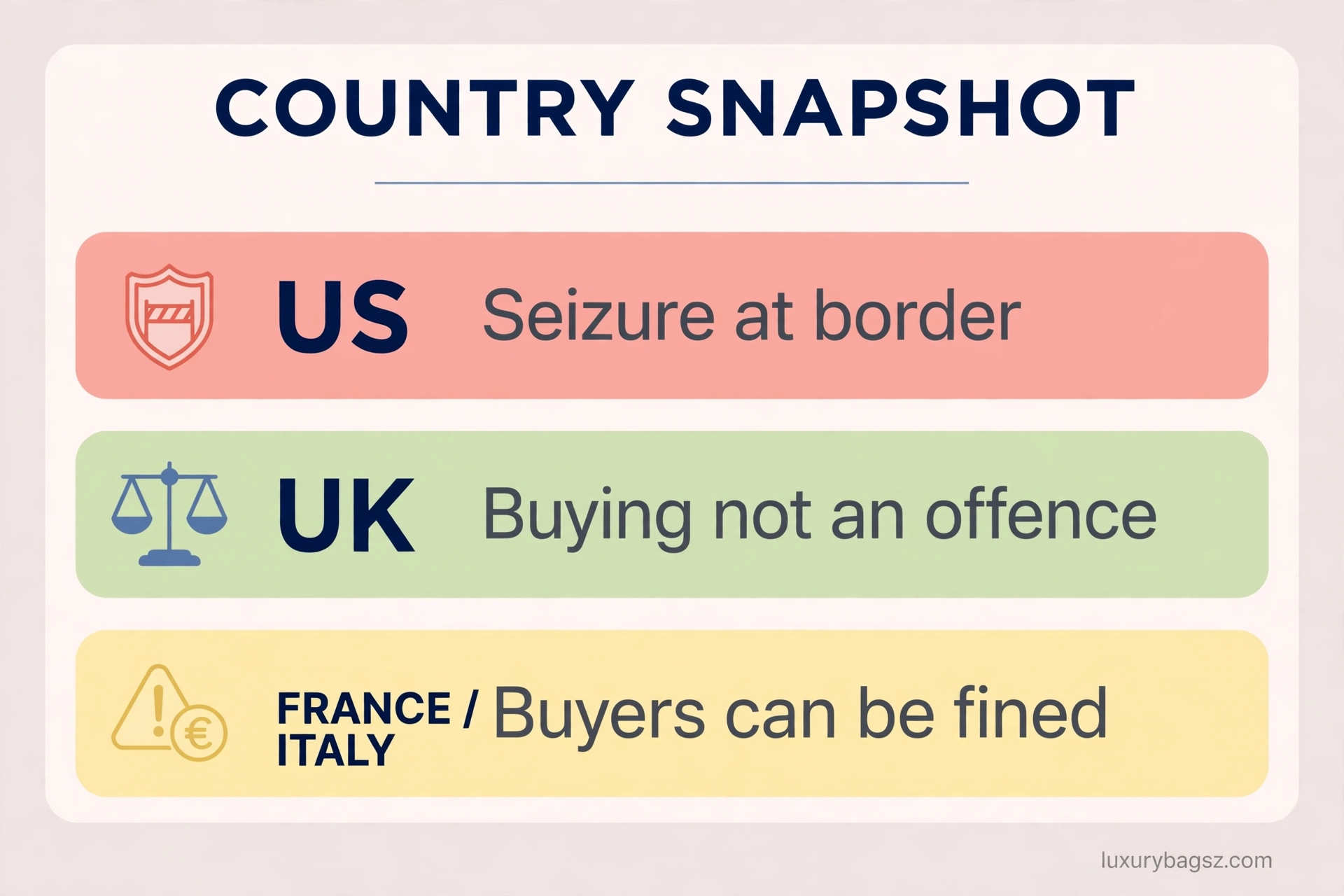
That does not make buying risk-free. Customs can seize a fake at the border, some countries fine the buyer, and France and Italy treat buyers far more harshly than Britain or America do.
This article is general information only and is not legal advice, so please check the rules where you live or travel if your own situation is at stake.
Key Takeaways
- Buying one fake bag for personal use is not a federal crime in the US, and buying is not listed as an offence in the UK.
- Selling counterfeits is a crime in the US, the UK and across the EU, with prison among the penalties for serious cases.
- Customs in the US, the UK and the EU can seize and destroy fakes, even when they were bought for personal use.
- France fines people for holding counterfeits, and Italy fines the final buyer, so travelling with a fake carries real risk.
- If you were sold a fake as genuine, you did nothing wrong by buying it, and you may have refund and chargeback rights.
- A bag with no copied logo is a different legal question from a counterfeit, but superfakes are making checks harder.
What Counts as a Counterfeit Bag?
A counterfeit bag carries a copy of a brand’s registered trade mark without permission. That might be the logo, the monogram canvas, the brand name, or hardware engraved to look like the real thing.
The label sellers use does not change that. Calling a bag a replica, a rep, a mirror copy or a 1:1 does not make it lawful if it copies a protected mark.
I am Jessica, founder of Luxury Bagsz and a handbag specialist with more than 10 years in the bag industry. I personally check bags and have examined more than 500 of them.
In that work I see the same pattern again and again. The bags that cause legal trouble are not the plain lookalikes. They are the bags built to pass as the real thing.

Buying for Personal Use in the US, the UK and the EU
The United States: Trafficking Is the Federal Crime
Federal law in the US targets trafficking. The Department of Justice has said that purchasing goods bearing counterfeit marks for personal use is not a crime under that federal trafficking law.
US Customs and Border Protection puts it more bluntly for imports. It says purchasing counterfeit goods is illegal, importing them is against the law, and a consumer may face a fine even without intent.
Both points can be true at once. You are unlikely to be prosecuted for buying one bag to carry, yet a parcel from overseas can still be seized, and you can lose the bag and your money.
State law can be stricter than federal law. Some states criminalise knowingly holding counterfeit goods above set quantities, treating that possession as evidence of intent to sell, with fines that vary widely by state.
The United Kingdom: Buying Is Not the Listed Offence
In the UK, the main criminal law here is the Trade Marks Act 1994. Its offences cover applying a fake mark, selling or distributing goods that bear one, and holding them to sell.
Buying a bag for your own use is not one of those listed acts. Buying to resell is different, because selling is listed, and so is holding stock in a business with a view to selling it.
That does not give UK buyers a free pass at the border. Border Force can detain suspected fakes arriving in parcels, and small consignments can be destroyed under customs procedures.
The European Union: Selling Is Banned, Buyers Depend on the Country
Across the EU, a trade mark owner can stop anyone using its mark in the course of trade without consent. Offering, importing and exporting counterfeit goods all fall within that ban.
For buyers, EU customs rules do not generally apply to non-commercial goods in a traveller’s personal luggage. National law then decides how a buyer is treated, and it varies a lot.
An EU court ruling also matters for online orders. A fake bought from a website outside the EU for personal use could still be detained when it reached the EU border.
Why Selling Counterfeits Is a Crime Everywhere Covered
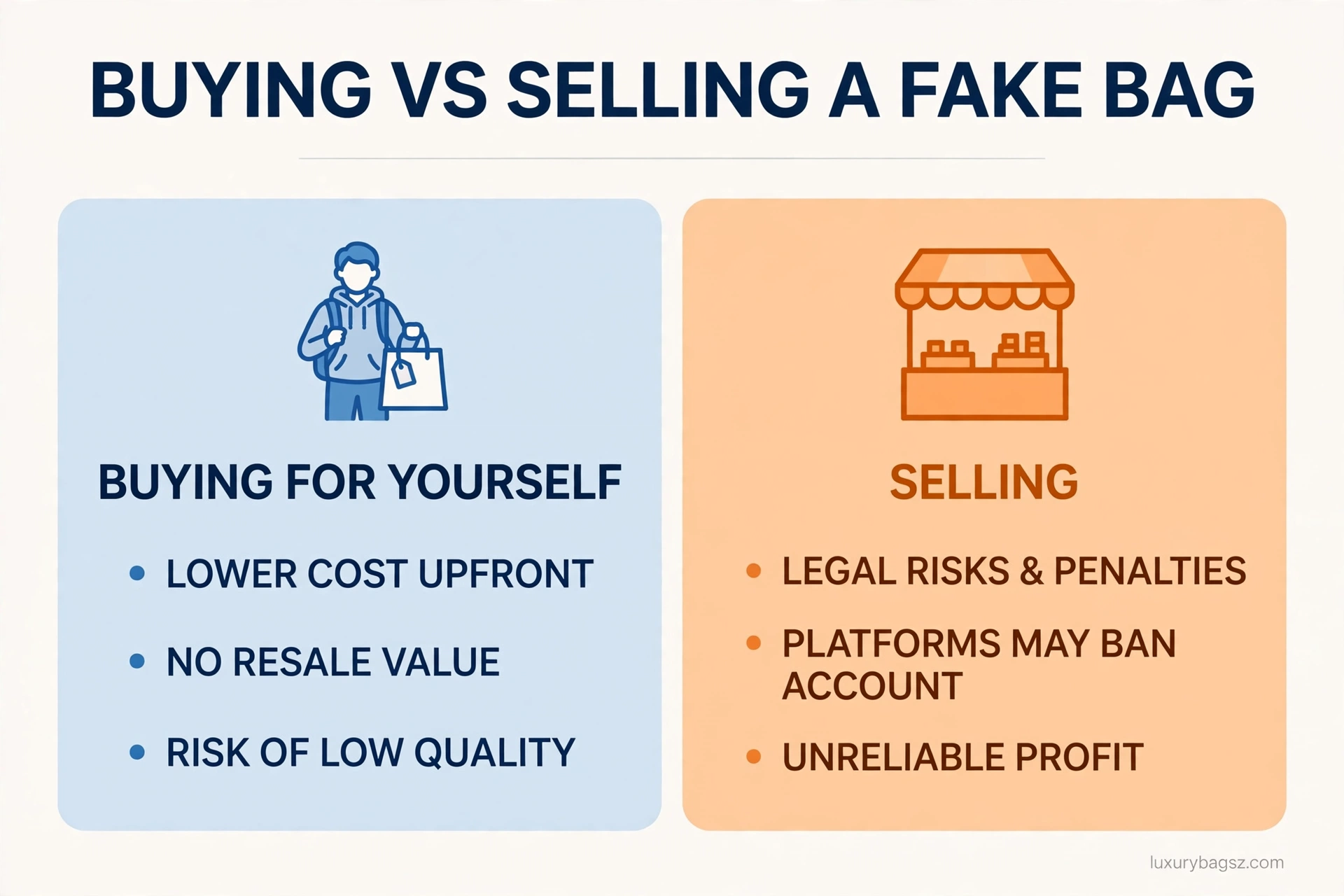
Selling is where every system covered here agrees. A seller uses someone else’s trade mark to trade, takes sales from the real brand, and misleads the wider public, not just one buyer.
In the US, intentionally trafficking in goods with a counterfeit mark is a federal crime. For an individual, a first offence can bring a fine of up to $2 million, up to 10 years in prison, or both.
In the UK, selling goods bearing a fake mark with a view to gain can bring an unlimited fine, up to 10 years in prison, or both, in the most serious cases heard on indictment.
US penalties rise for repeat trafficking, to up to $5 million and up to 20 years for an individual. Brands can also sue civilly for profits, damages and costs, with treble damages normally required where a known fake mark was used intentionally.
Telling the buyer it is fake is not a defence. The confusion the law cares about goes beyond that one sale, because the bag will be seen, gifted and resold as if it were real.
That is why my guide to superfake bags matters here. The better a fake is, the more harm a seller can do before anyone spots it.
Customs, Airports and Travelling With a Fake
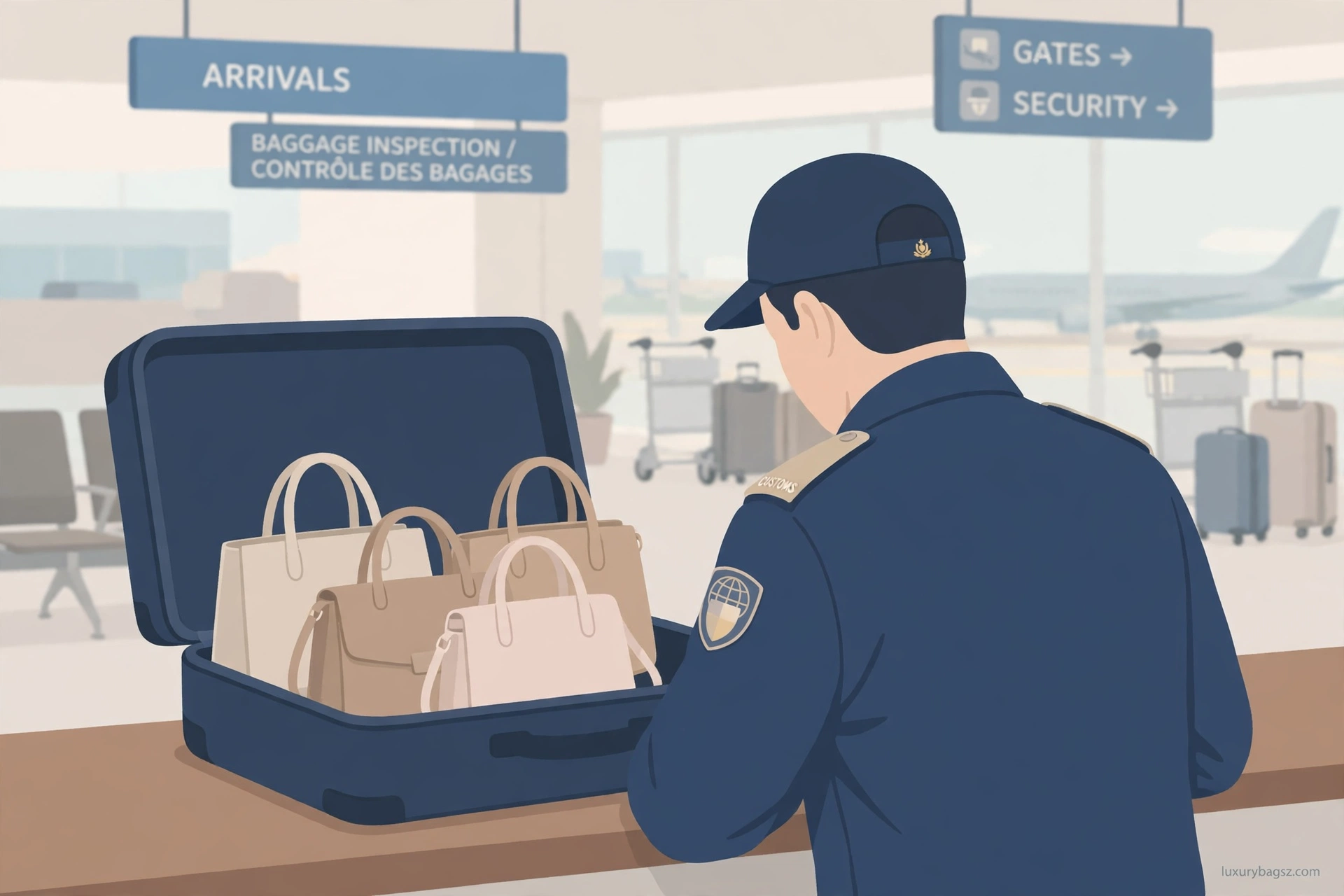
Travel is where many ordinary buyers meet this law. A bag that sits quietly at home can become a customs problem the moment it crosses a border in your suitcase or by post.
In the US, travellers get one narrow allowance. A person arriving may bring one article of each type bearing a counterfeit mark, if it travels with them, is for personal use, and is not for sale.
That allowance can be used only once every 30 days. Extra items can be seized and forfeited, and the allowance for carried goods does not read as a general allowance for online parcels.
If CBP seizes a parcel, you will get a notice explaining the seizure. You can abandon the goods for destruction, or petition for relief with evidence they are not counterfeit. Importing for sale can also bring a civil fine up to the genuine retail value, doubled for a second seizure.
France is much stricter. French customs describe counterfeiting as a customs offence, and official French guidance says holding or bringing in a counterfeit is illegal, even in your luggage.
That guidance gives a fine of between one and two times the value of the genuine item, and it also mentions up to 3 years in prison and a €300,000 fine in counterfeiting cases.
Italy fines the buyer as well as the seller. Current guidance on the Italian rule puts the final buyer’s administrative fine at €100 to €7,000, with the goods confiscated.
| Place | Buying for yourself | Main risk for a traveller |
|---|---|---|
| United States | Not a federal trafficking crime on its own | Seizure; one item of each type only, once in 30 days |
| United Kingdom | Not a listed offence under the Trade Marks Act | Parcels detained and small consignments destroyed |
| France | Holding a counterfeit is prohibited | Confiscation and a fine of one to two times the genuine value |
| Italy | Buyer can be fined as a final purchaser | Fine of €100 to €7,000 and confiscation |
Marketplaces, Platform Bans and Payment Disputes
Even where a buyer faces no criminal case, the sale itself usually breaks marketplace rules. The big platforms ban counterfeit listings in their own policies, separate from the law.
eBay does not allow counterfeit items, Amazon says products offered for sale must be authentic, and Meta’s commerce policies bar content that infringes another firm’s rights.
For sellers, a ban can mean removed listings, withheld funds, lost selling privileges and, on Amazon, possible referral to law enforcement. A warning is not guaranteed first.
US law does not make a marketplace liable for every fake a third-party seller lists. Liability generally needs knowledge of the fake, while the INFORM Consumers Act requires marketplaces to disclose contact details for high-volume sellers and offer a way to report suspicious conduct.
Payment disputes work differently when you were deceived. If you paid for a genuine bag and a fake arrived, that is a goods-not-as-described dispute, not a change of mind.
If a Fake Arrives When You Expected the Real Thing
Receiving a fake unknowingly is not the same as choosing one. If a bag was sold to you as genuine and it is not, the fault lies with the seller, not with you.
In the UK, Citizens Advice says you are legally entitled to a full refund on fake goods within 30 days of paying, because the goods do not match their description.
Between 30 days and 6 months, the seller may offer a genuine replacement instead. If it cannot provide one, it must refund you, and later claims may lead to a part refund.
If the seller refuses, payment routes can help. Citizens Advice points debit card buyers to chargeback, and credit card buyers to chargeback under £100, or a claim against the card provider for items from £100 to £30,000.
In the US, credit card buyers must dispute in writing within 60 days of the statement showing the charge; a fake sent as genuine can qualify as a billing error. PayPal Purchase Protection treats a fake sold as authentic as significantly not as described, via its Resolution Center.
Keep everything: the listing, messages, receipt, packaging and clear photos. Do not resell the bag to recover your money, because reselling a known fake creates a new legal problem.
You can also report the sale. In the US, the National Intellectual Property Rights Coordination Center is the central hub for reports, and you can also report to the Federal Trade Commission, the platform and the brand, keeping receipts, screenshots and photos to support the report.
An independent check helps your case and your confidence. Our authentication process shows the checks used, including Entrupy and microchip checks where a bag has one.
I use Entrupy, including for microchip checks, alongside stitching, hardware, engravings, materials and date codes. I have also visited leather factories in Spain and France.
The Grey Areas: Inspired-By Bags, Dupes and Superfakes
An inspired-by bag borrows a shape or mood without copying the brand’s name, logo or monogram. From a trade mark point of view, that is a different and often lawful position.
It is not a complete safe harbour. A very close copy can still raise design or trade dress disputes, and using a brand’s name in a listing to sell a lookalike can cause trouble.
Gift and promotional bags sit in another grey area. My look at whether a Chanel VIP gift bag is real or fake shows why origin matters more than looks.
Superfakes blur the line from the other side. They copy marks, materials and details so closely that customs officers, resellers and even experienced buyers can struggle to tell.
That is changing enforcement in practice. Brands share more reference data with customs, platforms ask sellers for proof, and a receipt or authenticity card alone carries less weight.
For buyers, the lesson is simple. The closer a fake gets to the real bag, the less protection you have from saying you could not tell, especially when you import or resell it.
Practical Steps Before You Buy or Travel
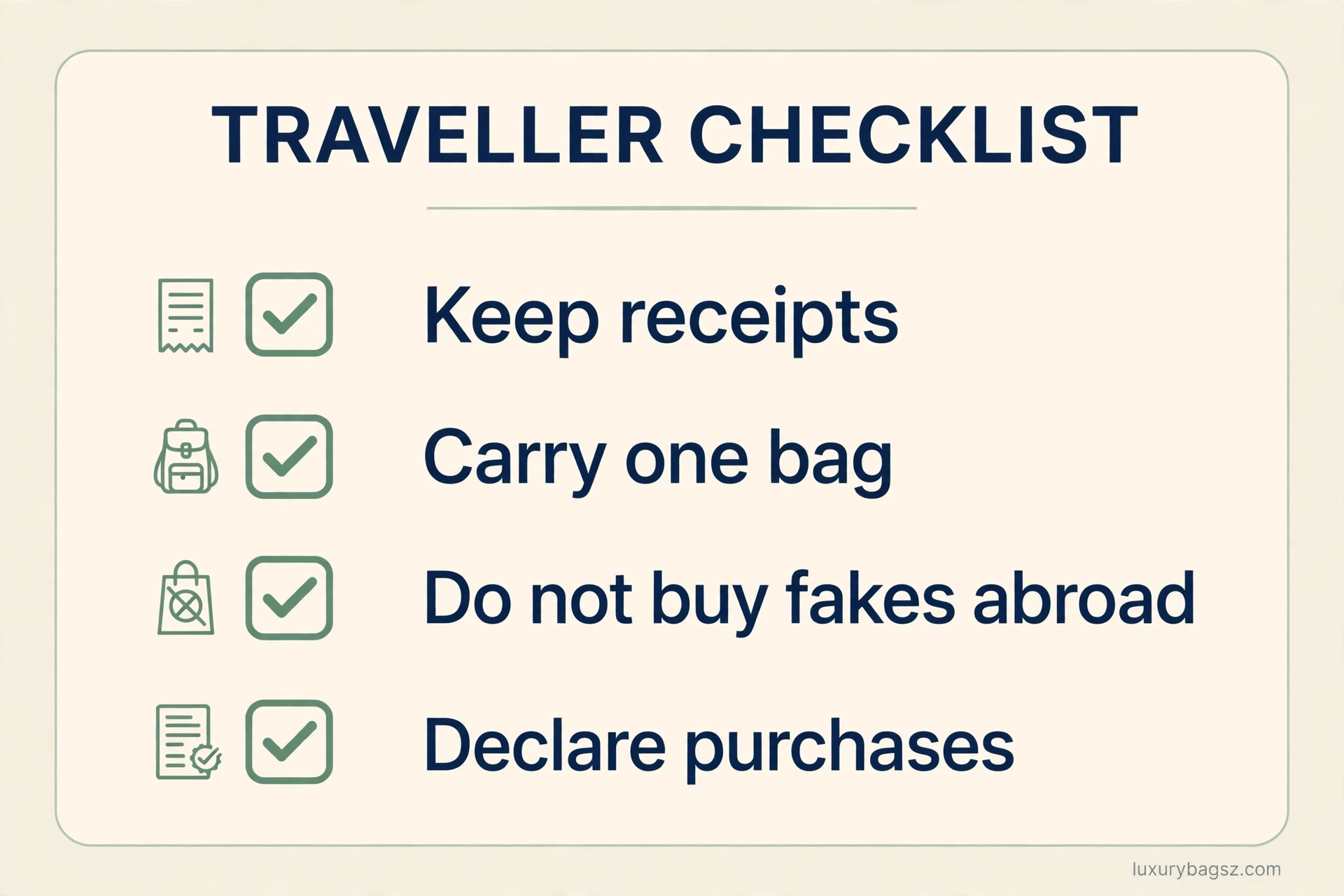
- Buy from the brand, an authorised retailer, or a reseller who offers independent authentication and a clear refund promise.
- Treat a very low price, no receipt, stock photos and pressure to pay by transfer as warning signs, not bargains.
- Keep receipts and order records for genuine bags, and carry copies when you travel with an expensive piece.
- Do not pack a known fake for trips to France or Italy, and do not order fakes from overseas websites to your home.
- Never list a bag you know or suspect is fake, even with words like replica or inspired in the listing.
- If a fake arrives by mistake, stop, keep the evidence, contact the seller, then use the platform or your card provider.
Frequently Asked Questions
Can I be arrested for buying one fake handbag for myself?
In the US and the UK, buying one bag for personal use is not the conduct the main criminal laws target. Seizure at the border is far more likely than arrest for a single personal purchase.
Is it illegal to wear a fake bag?
Wearing one at home in the UK or the US is not, by itself, the offence described above. In France, holding a counterfeit is prohibited, so wearing or carrying one there carries more risk.
Can I sell a fake if I clearly say it is fake?
No. A replica label or an honest listing does not remove the trade mark problem. Selling, offering and distributing counterfeits are the acts the law and platform policies ban.
What happens if customs seizes a fake I ordered online?
You will usually get a seizure notice, and the goods are normally forfeited and destroyed. You can challenge it if the bag is genuinely authentic, but a known fake is rarely returned.
I bought a bag in good faith and it turned out fake. What should I do?
Keep the bag, packaging and listing, and ask the seller for a refund promptly. If that fails, contact the platform and your card provider about chargeback or a card-provider claim in the UK.
Are inspired-by bags with no logo legal to buy and sell?
Often, yes, from a trade mark view, if no protected mark is copied and the listing does not misuse a brand name. Very close copies can still face design or trade dress claims.
Final Verdict
The legal line is mostly about trade, not taste. Buying a fake for yourself is treated lightly in the US and the UK, while selling one is a serious offence in every place covered here.
Borders are the exception that catches people out. Customs seizure, French fines for holding a counterfeit, and Italian fines for buyers can turn a cheap bag into an expensive lesson.
My honest advice, after years of checking bags, is to skip the fake and save towards a genuine preloved piece. You keep your money, your trip and your peace of mind intact.