Amy Winehouse Ballet Shoes: The Pink Satin Slippers, Prices and Getting the Look Safely
Real Dance Slippers, Not Fashion Flats
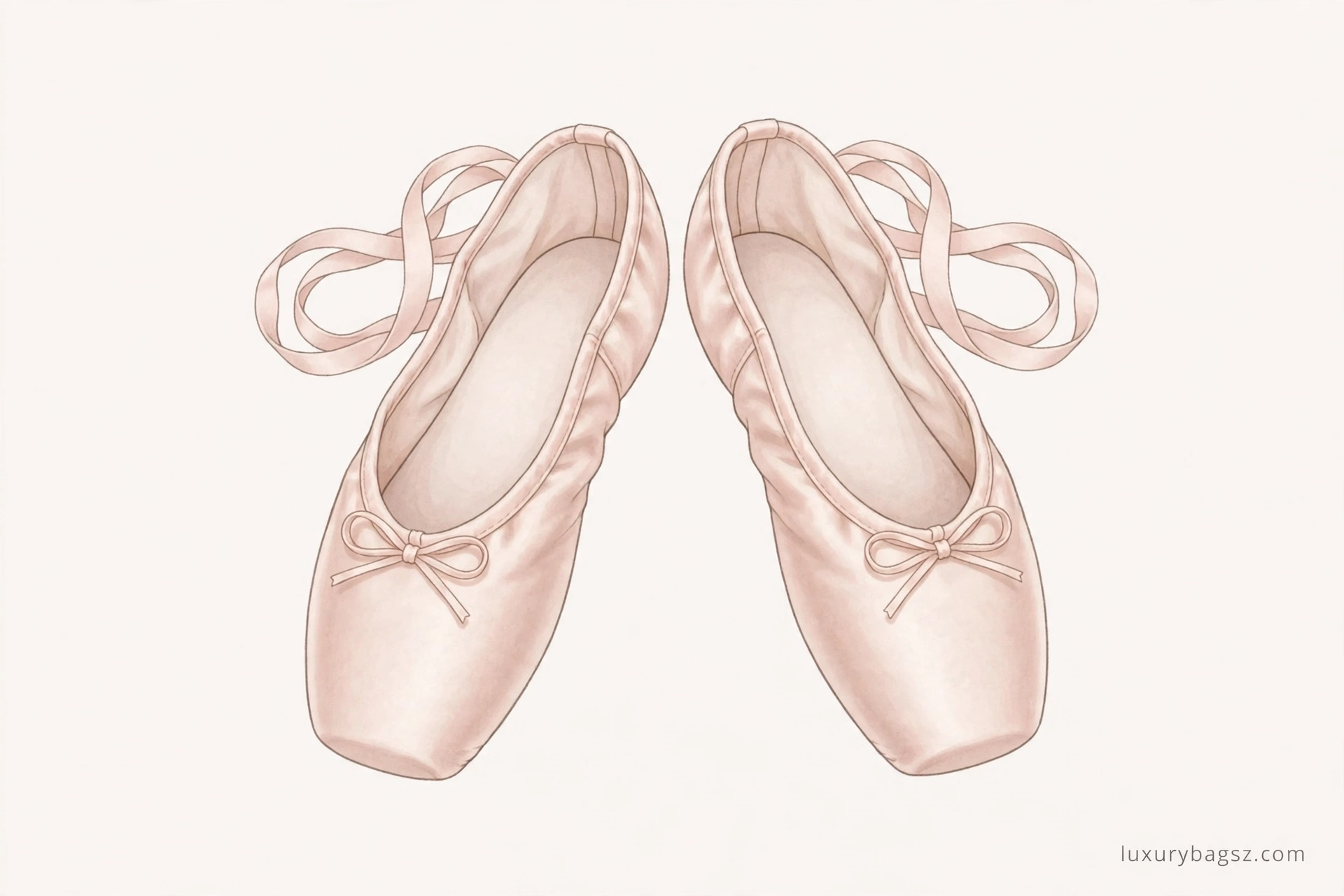
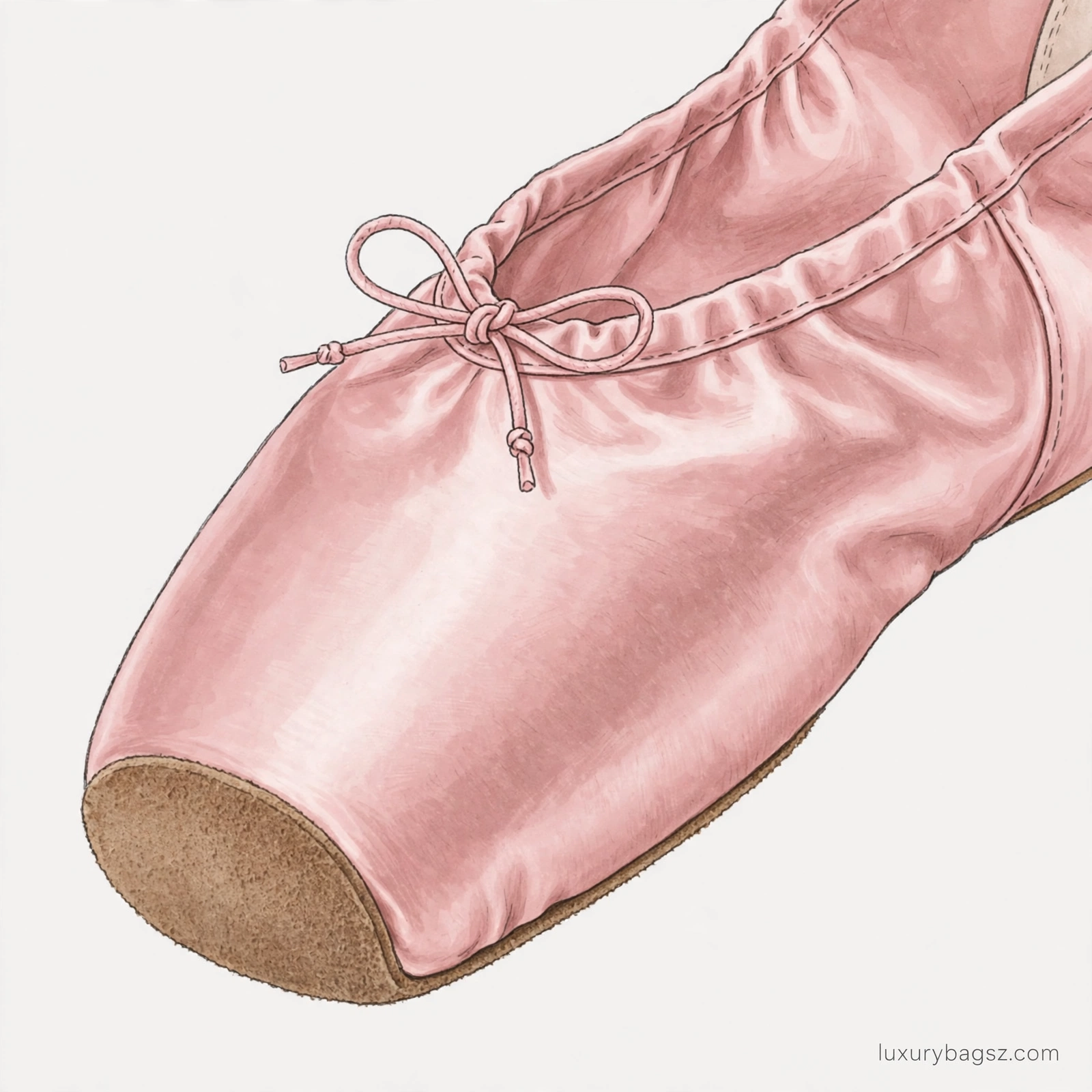
Amy Winehouse’s familiar shoes were genuine dance slippers in pale pink satin, not flats made for the street. They had cotton canvas edging, suede soles and tiny matching bows, and she wore them on stage as well as off duty, in white and black at times too.
Which maker supplied them remains disputed: most accounts name Freed of London, while another points to Gandolfi as her favourite from theatre school onwards. A fresh pair costs roughly £20 to £30, offers no arch support and will wear through quickly on pavement.
If you close your eyes and think of Amy Winehouse, you probably see the beehive first, then the eyeliner. If you look down, she is almost always wearing battered, wafer-thin pink slippers. That look — a 1950s pin-up silhouette on top, a dancer’s slipper on the bottom, worn on stage, on the street in Camden, and in paparazzi photos — became a visual shorthand for her style: glamorous, fragile, and deliberately unpolished.
The shoes were not fashion flats. They were actual dance slippers, designed for a studio floor, not for pavement. That is why they looked the way they did after a night out: satin scuffed, soles worn thin, bows undone, and why she bought them in bulk and kept, in friends’ words, a “graveyard” of them in her closet. It is also why copying the look exactly, with a real dance slipper, is a bad idea for most people today: a dance slipper has no arch support, no rubber sole, and no protection from rain or concrete.
This guide separates what is known from what is disputed. The brand question — Freed of London or Gandolfi — is not settled in the sources, and this guide says so plainly instead of picking one version and hiding the other. The auction prices are for specific, famous pairs, not for a new pair of slippers, and one later sale is now the subject of a legal dispute over provenance, which is also stated plainly. It gives the versions, materials, sizing and comfort reality, prices, how to get the look safely today, memorabilia checks, care, and a buying checklist.
Short and Quick Answer
What were Amy Winehouse’s ballet shoes?
Pink satin dance slippers, worn on stage and off duty, with cotton canvas trim, suede soles, and matching bows, in pale pink most often, with white and black versions too.
What brand were they?
Most often named as Freed of London. Another source names Gandolfi. The sources disagree, so a listing that claims a single, certain brand for every pair should be checked, not taken on trust.
How much are they new?
Roughly £20 to £30 for a pair of dance slippers, according to a style guide. That is the price of a consumable dance shoe, not a fashion shoe.
How much are her actual shoes at auction?
Far more, because they are memorabilia: $19,200 for two stage-worn pairs in 2021, against a $600 estimate, and about $4,000 reported for a separate pair in 2023, with provenance for that later sale now disputed.
Are they comfortable for the street?
No. They have no arch support, no rubber sole, and satin that does not survive rain or pavement. They are for a studio, a stage for a short set, or a photo, not for a day on concrete.
Should you buy a real dance slipper to copy the look?
No, not for street wear. Buy a street ballet flat that looks like a dance slipper — satin, split-sole look, tiny bow — with a rubber sole and some support, as described in Section 7.
What the Ballet Shoes Actually Were
Amy Winehouse, who died aged 27 on 23 July 2011, was known for a retro, 1950s-inspired style: beehive, thick eyeliner, skinny jeans or micro hot pants, Fred Perry polos, and, on her feet, pink satin ballet flats, perpetually dirty and worn down by the asphalt of Camden Town, in the words of one style retrospective.
Her footwear fell into two broad groups. On stage and at formal appearances, she often wore stilettos, peep-toe heels, and “sky-high” pumps. Off duty, and often on stage too, she wore classic ballerina slippers — literally, dance slippers — especially with casual looks: denim shorts or skinny jeans and a basic tank top. That contrast — a pin-up top half, a fragile slipper on the bottom — is the Amy Winehouse ballet shoe look.
The slippers themselves, as described in auction listings, were pink stretch satin with cotton canvas trim, suede leather soles, and matching bows. They had no insole, in the description given by one style magazine, which explains both their wafer-thin look and their lack of support. They were dancer-grade, not fashion-grade: made to pivot on a dance floor, not to walk on pavement.
She wore them in places where a fashion shoe would have been expected, which is part of why they became a signature. One style magazine notes she wore them to a court hearing in 2009, and paparazzi photos of her on nights out in her staple ballet shoes are what made them her signature — a touch of feminine and vintage flair to a style that would now be called early “indie-sleaze.”
The Sylvia Young connection
Winehouse trained at the Sylvia Young Theatre School in her early years, and one source says that from those years onward she always popped in to buy her favourite pink satin ballet shoes. That background explains why a singer, not a dancer, would wear dance slippers as everyday shoes: they were familiar, cheap, and part of her theatre-school life, not a fashion choice made for a red carpet.
The Versions: Pink, White, Black, and Fendi
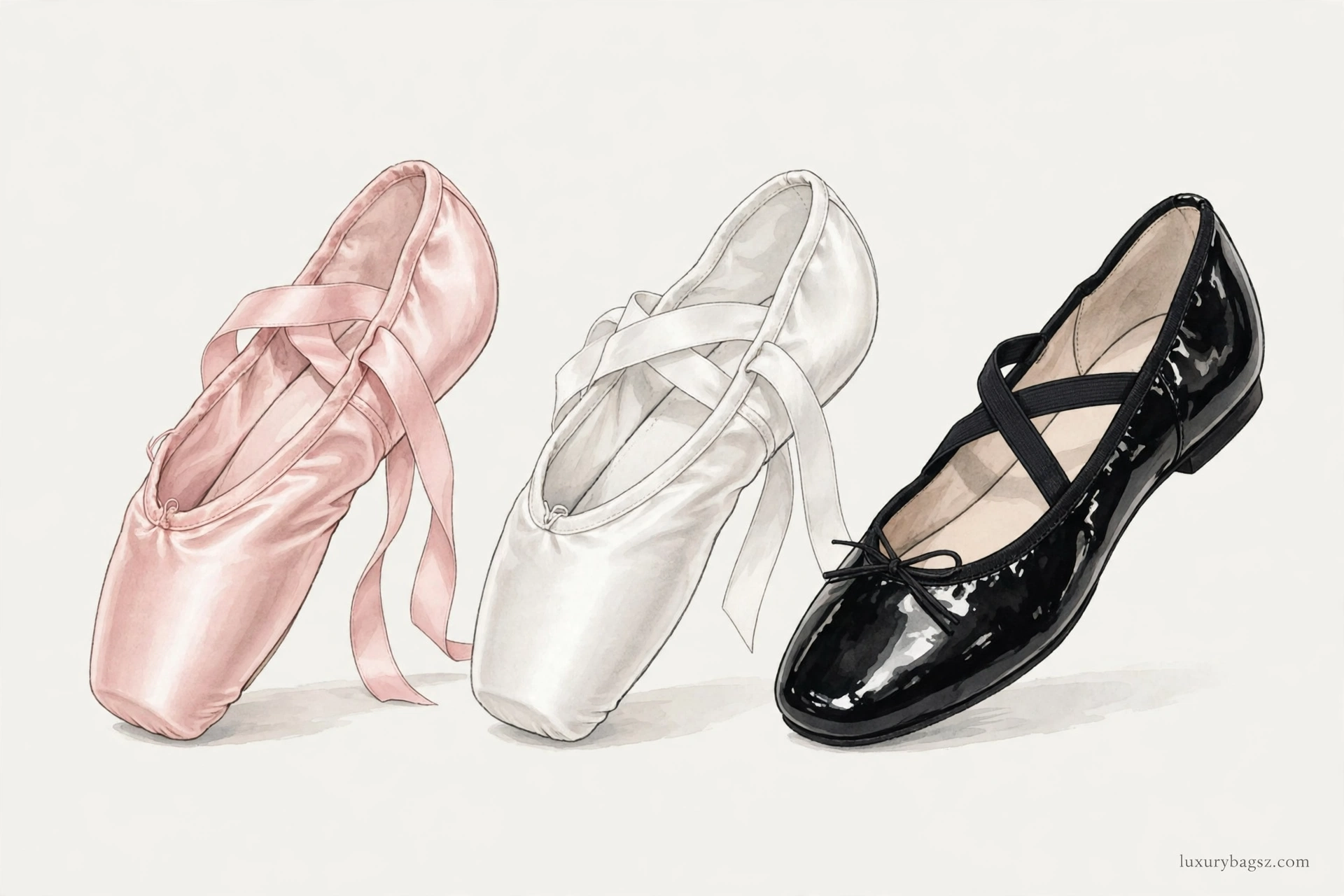
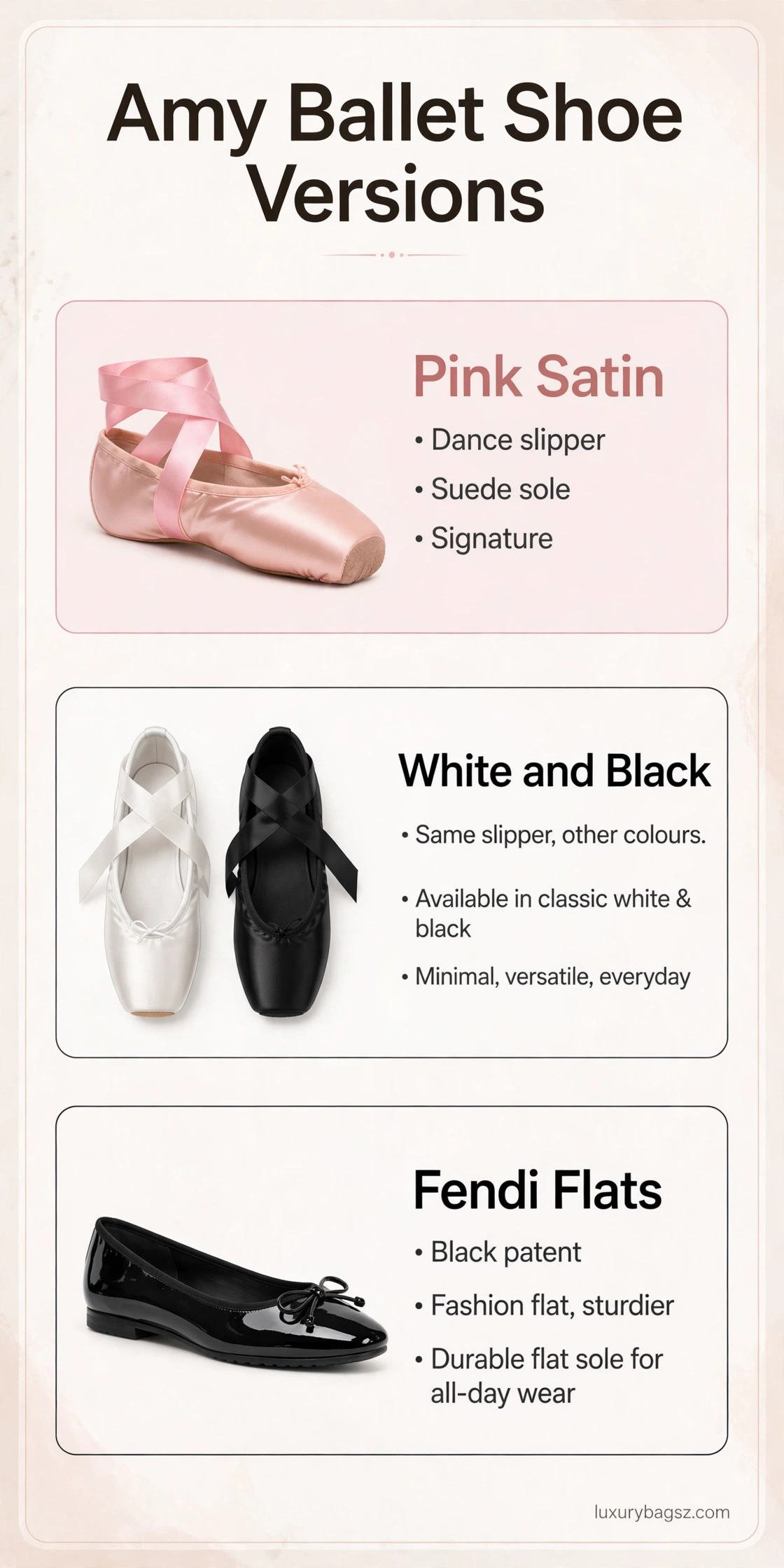
“Amy Winehouse ballet shoes” covers at least three versions, and they should not be priced or judged as if they were the same shoe.
Pink satin dance slippers (the signature)
- What they are: Pale pink satin dance slippers, with a tiny bow, suede or thin leather sole, and cotton canvas trim.
- Look: The most photographed version, and the one that became her visual shorthand. Pink, satin, slightly dirty, with a crinkled arch from the split sole.
- Wear: The most fragile version, because pink satin shows dirt and scuffs immediately, and a suede sole wears through on pavement.
- Price new: Roughly £20 to £30, according to a style guide. That is a consumable price, not a fashion price.
White and black dance slippers
- What they are: The same dance slipper, in white and, occasionally, black, bought in bulk alongside the pink pairs.
- Look: White is slightly more formal and slightly less forgiving of dirt than pink; black is the most practical colour, but the least associated with her signature look.
- Wear: The same fragility as pink, with the same suede sole and no support.
- Price new: In the same £20 to £30 range as pink, according to the same style guide.
Fendi ballet flats (the “fancy” versions)
- What they are: Fashion ballet flats, reported as Fendi, in black patent leather, elasticated, with small gold Fendi charms, worn in connection with her relationship with Karl Lagerfeld, who called her a genius and a muse.
- Look: Sturdier than a dance slipper, with a patent leather upper and a fashion sole, not a suede dance sole.
- Wear: More wearable than a dance slipper, because patent leather survives pavement better than satin, and a fashion flat has at least some sole structure.
- Price: Not given in the sources for a specific Fendi pair, and Fendi ballet flats generally should be priced as Fendi fashion flats, not as Amy Winehouse dance slippers. A listing that calls a Fendi flat a “dance slipper” is mixing two versions.
What is not an Amy Winehouse ballet shoe
- Her stilettos and peep-toe heels: Worn on stage and at awards, but not ballet shoes, and not part of the ballet-shoe look.
- Her Frank album-cover boots: The boots photographed on the cover of her first album, Frank, in 2003, which sold for $19,200 in a later auction. They are boots, not ballet shoes, and that $19,200 should not be confused with the $19,200 for the ballet pumps in the 2021 auction (a coincidence of price, not the same pair).
- A generic pink ballet flat: A pink fashion flat by another brand, with a rubber sole and a large decorative bow, is not an Amy Winehouse dance slipper, whatever a seller’s title says. The bow, the sole, and the satin matter, as described in Section 4.
Materials: Satin, Canvas, Suede, and the Bow
Stretch satin
The upper is pink stretch satin, which is why the shoes catch light and look glamorous in photos, and why they look dirty so quickly on the street. Satin is a woven fabric with a smooth, shiny face, not a leather. It stains, it scuffs, it does not survive rain, and it cannot be cleaned like leather. One rainstorm, in a style guide’s words, and a satin dance slipper is “basically paper.”
Cotton canvas trim
The trim is cotton canvas, which gives the slipper its structure at the edges and its drawstring casing. Canvas is more durable than satin, but it also absorbs water and dirt, and it shows wear at the edges first.
Suede leather sole
The sole is suede leather, or thin leather, meant for pivoting on a dance floor. Suede is soft, grippy on a smooth floor, and completely unsuited to concrete: it wears through, it absorbs water, and it gives no cushioning. Most modern “ballet flats” have a rubber sole. Amy’s did not, which is why they felt, in a style guide’s words, like feeling “every single pebble” on concrete.
The bow
The bow matters, because it is the detail that separates a dance slipper from a fashion flat. Amy’s bows were tiny, functional drawstring bows, not big decorative ones. A large, decorative bow on a fashion flat is not the Amy look, even if the shoe is pink and satin.
No insole, no arch support
Dance slippers have no insole and no arch support, in the descriptions given. That is why they look wafer-thin and why they crinkle in the arch (the split-sole look). It is also why they are not a street shoe: a foot with no support, on a thin suede sole, on concrete, will tire and ache quickly, and a foot with a pre-existing arch or ankle issue should not wear them for long at all.
Sizing, Fit, and Comfort: The Honest Reality
Dance slippers are sized by dance size, not by fashion size, and they fit differently from a fashion flat. A dance slipper is meant to fit snugly, like a second skin, with no extra room at the toe, so that a dancer can feel the floor. A fashion flat is meant to fit with a little room, so that a foot can walk in it all day.
For general shoe fitting principles, including how to measure feet and how fit differs from size, see our guide to dress shoes — the same measure-first, try-in-the-evening principles apply, with extra caution for a slipper that has no support and no sole structure.
Fit issues specific to dance slippers on the street
- No arch support: Real ballet slippers have zero arch support. None. A foot that needs support will not get it from a dance slipper.
- No cushioning: A suede sole on concrete gives no cushioning, so every step is felt directly.
- No grip on wet pavement: Suede on wet concrete is slippery and wears through fast. Rain is the enemy of a satin dance slipper.
- Satin stretches and scuffs: Stretch satin stretches with wear, so a snug fit becomes loose, and scuffed satin cannot be restored to new.
- Split sole crinkles: A split sole gives the authentic crinkled look in the arch that Amy always had, but it also means the shoe has no continuous sole structure, so it twists and folds on uneven ground.
Who they suit
Dance slippers suit a dancer in a studio, a performer for a short set, or a photo shoot, where the look matters more than comfort or durability. They do not suit a full day on your feet, walking on uneven ground, dancing for hours on concrete, or anyone who needs support, cushioning, or weather resistance. If you buy them to wear on the street, plan for a very short wear, bring a second pair, and do not wear them in rain.
For a fragile, seasonal, collector’s shoe judged by condition first, the same discipline applies as for our guide to Prada chandelier shoes — a beautiful, fragile shoe is not an everyday shoe, whatever its price.
Price: What Amy Winehouse Ballet Shoes Actually Sell For
Prices below are for specific pairs and sales, not for a new pair of slippers. Always check the individual listing or auction lot on the day.
New dance slippers
- Freed or Gandolfi dance slippers, new: Roughly £20 to £30, according to a style guide. That is the price of a consumable dance shoe, bought in bulk by a dancer, not a fashion price. A new pair at that price is not memorabilia, and it should not be sold as such.
Auction prices for her actual shoes (Julien’s, 2021)
Julien’s Auctions held a two-day auction, “Property from the Life and Career of Amy Winehouse,” on 6 and 7 November 2021 in Beverly Hills and online, presenting hundreds of her stage, photo shoot, and performance-worn dresses, shoes, jewellery, and accessories for the first time at auction. The sale raised more than $4 million in total, with proceeds going to the foundation her parents set up to help young people with addiction issues, according to contemporary coverage.
- Two pairs of petal pink satin ballet pumps, worn on stage with Mick Jagger: Expected to fetch $600, sold for $19,200. That is the most cited ballet-shoe price from the 2021 sale, and it shows how memorabilia value works: the price is for who wore them and where, not for the shoe itself.
- Three pairs of pink satin ballet slippers, often photographed performing in or out wearing: Estimated at $600 to $2,000 in the auction announcement, for three pairs together. That is a lot estimate, not a per-pair price, and it should not be confused with the $19,200 above.
- Frank album-cover boots (not ballet shoes): Sold for $19,200 in a later auction, according to coverage of the 2025 case. That is a coincidence of price with the ballet pumps above, not the same pair, and it should not be used as a ballet-shoe price.
A separate pair in 2023, and a provenance dispute
A separate pair, photographed after a 2007 incident, was reported sold for about $3,900 (one source) to $4,000 (another source) in a Los Angeles auction in 2023, to a Turkish collector in one account. That sale is now part of a larger dispute: in December 2025, the High Court in London heard that Mitch Winehouse, as personal representative of his daughter’s estate, is suing former stylist Naomi Parry and friend Catriona Gourlay, seeking more than £700,000 from the sale of about 155 items in Los Angeles auctions in 2021 and 2023, which he says were deliberately concealed from him, and which he had intended to raise money to build a school in his daughter’s memory in Saint Lucia. The items in dispute include a custom-made dress worn at her final performance in Belgrade in 2011, which sold for $243,000, the Frank boots above, and the ballet shoes above.
That dispute does not, by itself, prove that a specific pair is or is not genuine, but it does mean that provenance for a 2023 pair should be checked carefully, with auction-house records, not taken from a seller’s title alone. A buyer who pays a memorabilia price for a pair whose provenance is disputed is taking a risk that should be priced in, or avoided.
What the price range tells you
The range — £20 for a new dance slipper, $600 estimated for three pairs at auction, $19,200 for two stage-worn pairs, about $4,000 for a separate pair with disputed provenance — is the point. There is no single price for “Amy Winehouse ballet shoes,” because a new slipper, a stage-worn pair, and a disputed pair are three different markets. A new slipper sold at a memorabilia price, with no provenance, is a warning, not a find. A stage-worn pair with auction-house provenance, at a memorabilia price, is a different market, and it should be judged on its provenance, not on its condition as a shoe.
Video note: this is a general Amy Winehouse personal-style video, not a ballet-shoe-only video.

Getting the Look Today Without Ruining Your Feet
If you want the Amy Winehouse ballet shoe look in 2026, do not wear a real dance slipper on the street. Wear a street ballet flat that looks like a dance slipper, with the following details:
- Satin over leather: Satin catches light and gets the lived-in, slightly dirty look that fits the aesthetic. Leather looks too much like a “shoe,” in a style guide’s words, and it does not give the same soft, dancer look.
- Split-sole look: Look for a split-sole design, which gives the authentic crinkled look in the arch that Amy always had, even if the sole itself is rubber and structured underneath.
- Tiny bow: The bow has to be the tiny, functional drawstring bow, not a big decorative one. A big bow is a fashion flat, not a dance slipper.
- Pale pink first: Pale pink is the signature colour. White is a close second. Black is more practical, but less associated with her look.
- Rubber sole and some support: A street flat with a rubber sole and at least some arch support will survive pavement, rain, and a full day in a way a suede-soled dance slipper will not. That is the trade-off: a street flat is less authentic as a dance slipper, and far more wearable as a shoe.
- Wear them with the right clothes: Skinny jeans or micro hot pants, a basic tank or a Fred Perry polo, and minimal jewellery, in the Amy off-duty style, will read as Amy more than a pink slipper worn with an unrelated outfit.
What not to do
- Do not wear a real dance slipper in rain, on wet pavement, or for a full day on concrete.
- Do not wear a dance slipper if you need arch support, cushioning, or ankle support.
- Do not buy a “dance slipper” that is actually a fashion flat with a large bow and a rubber sole and then claim it is a dance slipper — it is a street flat that looks like one, which is exactly what you want for street wear, but it should be described honestly.
Real vs Fake: Memorabilia Checks for Amy Winehouse Shoes
A new pair of dance slippers is not memorabilia, and it should not be sold as such. A pair claimed to be Amy Winehouse’s own shoes is memorabilia, and it should be judged on provenance, not on its look alone. Use the checks below together, never one alone. For general authentication principles, see our guide to fake Rolex — the principle is the same: no single check proves a piece, and a piece that fails several checks should not be bought on a seller’s word alone.
Auction-house provenance must be checkable
A genuine memorabilia pair should come with auction-house records: lot number, auction date, auction house name, and, where available, a catalogue entry or a letter from the auction house. Julien’s 2021 auction, for example, is a checkable sale with a catalogue and contemporary coverage. A pair with no auction-house record, no lot number, and no catalogue entry is a warning, not a find.
Photos must match the pair, not just the style
A genuine pair should be matchable to photos of Winehouse wearing that specific pair, where such photos exist — for example, the stage pair worn with Mick Jagger, or a pair photographed in a specific performance. A photo of Winehouse in pink slippers generally does not prove that a specific pair in a listing is hers. It proves she wore pink slippers, which is already known.
The brand question must be handled honestly
A listing that claims a single, certain brand for every pair, without acknowledging the Freed vs Gandolfi disagreement in the sources, is overselling its certainty. A listing that says “Freed of London, as most often named” or “Gandolfi, as named in one source” is more honest than a listing that says “the exact brand, guaranteed” with no evidence.
Condition must match the story
A pair claimed to be stage-worn should show wear consistent with stage and street wear: scuffed satin, worn suede soles, and a crinkled arch. A pair claimed to be stage-worn but in pristine, unworn condition, with no wear at all, is a warning. Conversely, a pair with heavy wear but no provenance is just a worn pair of dance slippers, not memorabilia.
The provenance dispute must be disclosed
A pair from the 2023 Los Angeles auction, or from a sale involving Parry and Gourlay, should be disclosed as such, with the 2025 High Court dispute noted, so that a buyer can judge the risk. A seller who hides that dispute, or who claims a 2023 pair has undisputed provenance, is a warning.
Price and seller as a check, not a verdict
A pair at a memorabilia price, from a seller with no history and no returns, is a warning, not a bargain. A pair at a memorabilia price from a reputable auction house, with checkable provenance and a returns or authenticity policy, is a much safer buy, even if it is not the cheapest listing.
What not to rely on
- A seller’s claim of “Amy’s own shoes” without auction-house records.
- A single photo of pink slippers, with no lot number, no catalogue entry, and no photo match.
- A price that matches a famous sale ($19,200, $4,000) but with no provenance to support it.
- A brand claim that ignores the Freed vs Gandolfi disagreement.
Condition and Care: Satin and Suede
Satin
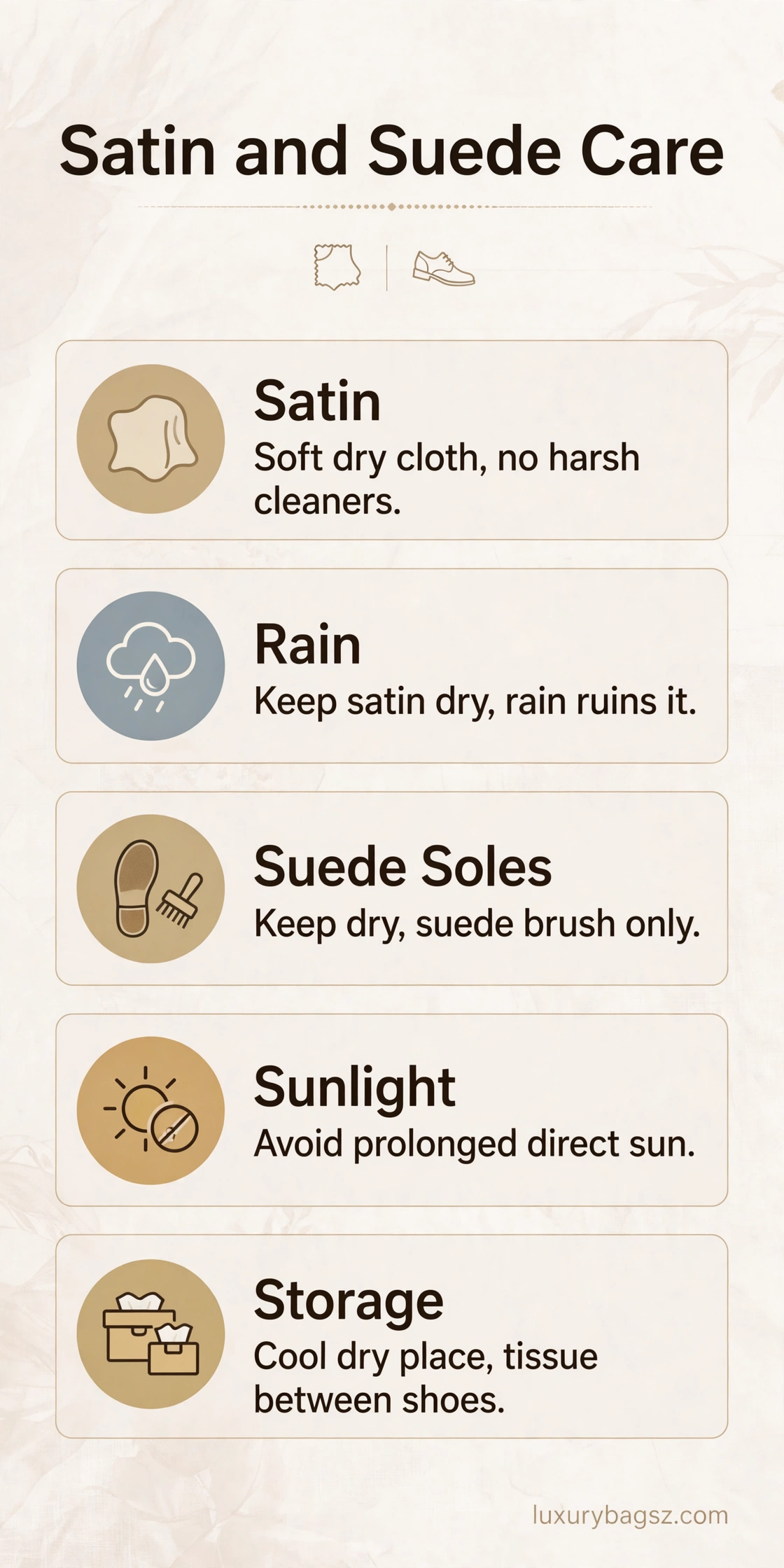
- Clean satin gently with a soft, dry cloth, or with a cleaner made for satin, following the product’s instructions. Do not use harsh cleaners, bleach, or abrasive cloths, which can stain or damage satin.
- Keep satin out of prolonged direct sunlight, which fades pink satin, and out of rain, which stains and weakens it.
- Store satin slippers in a cool, dry place, in dust bags, with tissue between the shoes so satin does not rub against satin or against other shoes.
- Do not stack heavy items on satin slippers, and do not store them in a sealed plastic bag in a humid room, which can trap moisture and stain satin.
Suede soles
- Clean suede soles gently with a suede brush, if at all, and do not soak them in water.
- Keep suede soles dry, because wet suede wears through faster and loses its grip.
- Store with shoe trees or tissue to hold shape, where appropriate, but do not force a shoe tree into a dance slipper in a way that stretches the satin.
General care
For general storage principles, including keeping a delicate item in a cool, dry place and avoiding stacking, see our guide to store Hermes Kelly for bag storage principles that also apply to keeping a delicate piece in shape.
Buying Safely: The Photo and Provenance Checklist
Ask for, or check for, these before you pay. A seller who cannot provide them is a seller to be cautious about.
- Front, back, both sides, and top of both shoes, not just one shoe.
- Close-up of the satin, showing scuffs, stains, and wear, in natural light.
- Close-up of the sole, showing suede wear and whether it is a dance sole or a rubber street sole.
- Close-up of the bow, showing whether it is a tiny drawstring bow or a large decorative bow.
- Close-up of any brand label or size marking inside the shoe, if present.
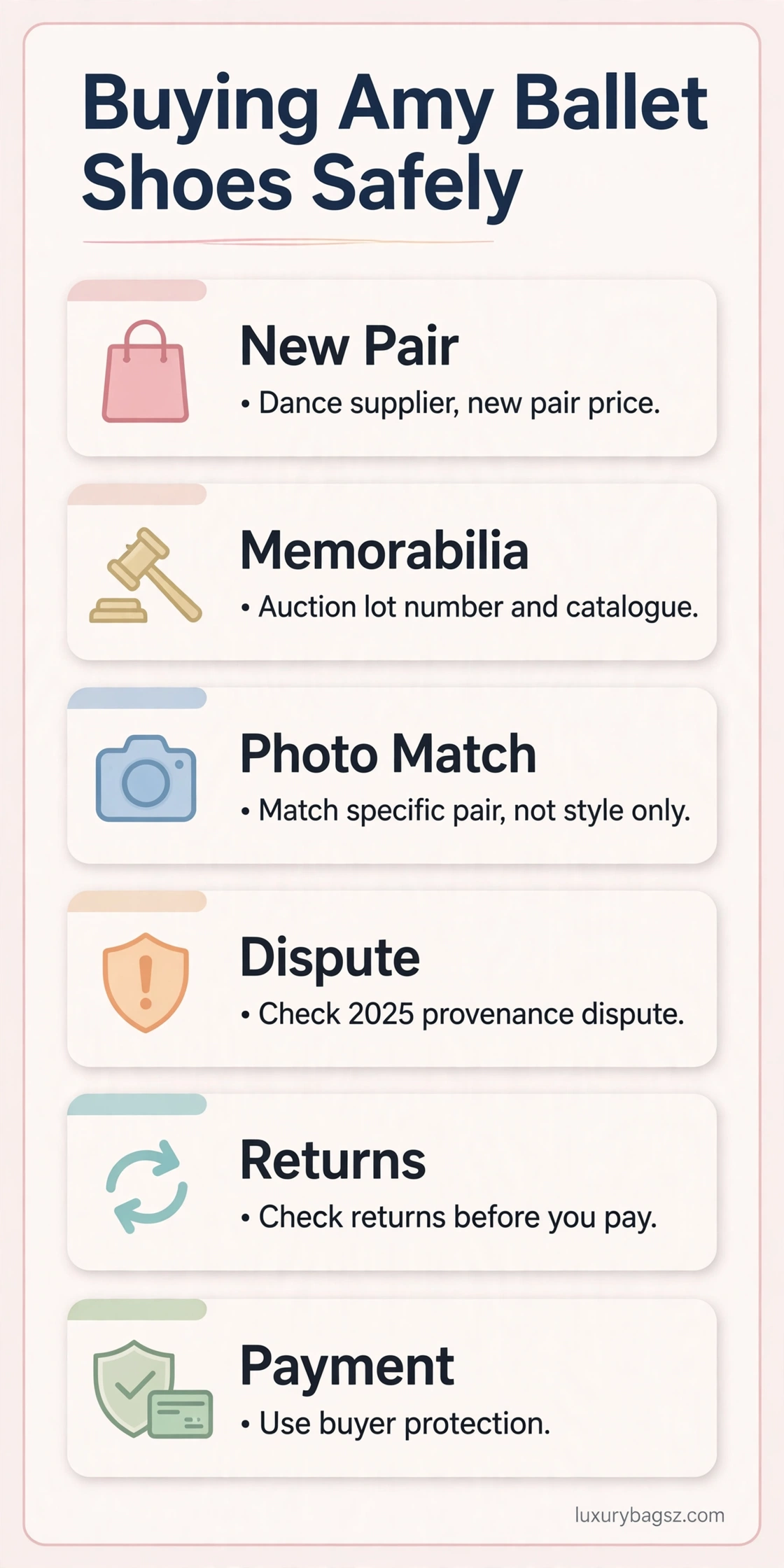
- Auction-house provenance, if claimed as memorabilia: lot number, auction date, auction house name, and catalogue entry.
- Photo match, if claimed as stage-worn: a photo of Winehouse wearing that specific pair, not just pink slippers generally.
- Disclosure of the 2025 provenance dispute, if the pair is from the 2023 sale or involves Parry and Gourlay.
- A photo of both shoes together, so you can compare wear between left and right.
- A photo in natural light, if the listing photos are all studio-lit, so you can judge true satin colour.
Buying rules
- For a new pair, buy from a dance supplier or a reputable retailer, not from a memorabilia seller, and pay a new-pair price, not a memorabilia price.
- For a memorabilia pair, buy from a reputable auction house with checkable provenance, or from a seller with a strong, checkable history and a returns policy.
- Compare at least two or three listings for the same type before you pay, so you know the range.
- Do not pay by unprotected transfer, especially for a memorabilia pair.
- If a listing price is far below the range for a memorabilia pair, ask why. A condition reason can explain a low price. No reason given, and no provenance, is a warning.
- For a high-value memorabilia pair, consider an independent authentication service before the return window closes, not after it.
For pre-owned buying generally, the same discipline applies to other limited pieces — our guide to the Arty ring works through the same photo, condition, and returns checks for a different kind of limited piece.
Frequently Asked Questions
What ballet shoes did Amy Winehouse wear?
Pink satin dance slippers, with cotton canvas trim, suede leather soles, and matching bows, worn on stage and off duty, in pale pink most often, with white and black versions too.
What brand were Amy Winehouse’s ballet shoes?
Most often named as Freed of London. Another source names Gandolfi pink satin ballet shoes as her favourite from her Sylvia Young years onward. The sources disagree, so a single certain brand claim should be checked.
How much do Amy Winehouse ballet shoes cost new?
Roughly £20 to £30 for a new pair of dance slippers, according to a style guide. That is a consumable dance-shoe price, not a memorabilia price.
How much did her actual ballet shoes sell for at auction?
Two pairs of petal pink satin ballet pumps worn on stage with Mick Jagger were expected to fetch $600 in Julien’s 2021 auction and sold for $19,200. Three pairs in the same auction announcement were estimated at $600 to $2,000 for three pairs together.
What about the blood-stained pair?
A separate pair was reported sold for about $3,900 to $4,000 in a 2023 Los Angeles auction. That sale, and about 155 items in total, is now disputed in a High Court case brought by Mitch Winehouse against Naomi Parry and Catriona Gourlay. Provenance for that pair should be checked, not assumed.
Can I wear real dance slippers on the street?
No, not practically. They have no arch support, no rubber sole, and satin that does not survive rain or pavement. Use a street ballet flat with a rubber sole, satin, a split-sole look, and a tiny bow, as described in Section 7.
Are Amy Winehouse ballet shoes the same as Fendi ballet flats?
No. Fendi ballet flats, in black patent leather with gold charms, are fashion flats, sturdier than dance slippers. They are a different version, and they should be priced as Fendi fashion flats, not as dance slippers.
What should I ask a seller before buying a memorabilia pair?
Ask for the ten items in Section 10, including auction-house lot number, auction date, catalogue entry, photo match, and disclosure of the 2025 provenance dispute if relevant. If any of those are refused, reconsider the purchase.
Final Verdict
Amy Winehouse ballet shoes are worth understanding, and worth copying carefully, if you copy them for what they actually were: pink satin dance slippers, worn by a singer who knew theatre school, who bought them in bulk, who wore them on stage and on the street in Camden, and who made a fragile, dancer’s shoe into a signature.
Buy a new pair if you want to wear the look, but buy a street ballet flat that looks like a dance slipper — satin, split-sole look, tiny bow, rubber sole, some support — not a real dance slipper on pavement. Start with pale pink, from a reputable retailer, before you consider a rarer colour or a more expensive fashion flat.
Buy a memorabilia pair only if you have checkable auction-house provenance, a photo match where one exists, and a price that reflects provenance, not just a pink satin shoe. Skip a memorabilia pair, or wait for a better listing, if the provenance is missing, the brand claim ignores the Freed vs Gandolfi disagreement, the condition does not match the story, or the 2025 dispute is hidden.
Worn well, the Amy Winehouse ballet shoe look is one of the most honest looks in pop: a glamorous top half, a fragile slipper on the bottom, and a refusal to dress up for anyone else’s idea of a red carpet. That is the value, and it is worth copying — safely, with a shoe that will survive the street, and with respect for the singer whose look it was.
For pre-owned buying generally, the same discipline applies to other discontinued and limited pieces — our guide to the Cambon bag works through the same version-by-version price and condition checks for a different discontinued piece, and our guide to snail jewellery shows how another nature-motif, fragile piece should be judged by condition and provenance first.